Cheonjeyeon Waterfall
Cheonjeyeon Waterfall, South Korea
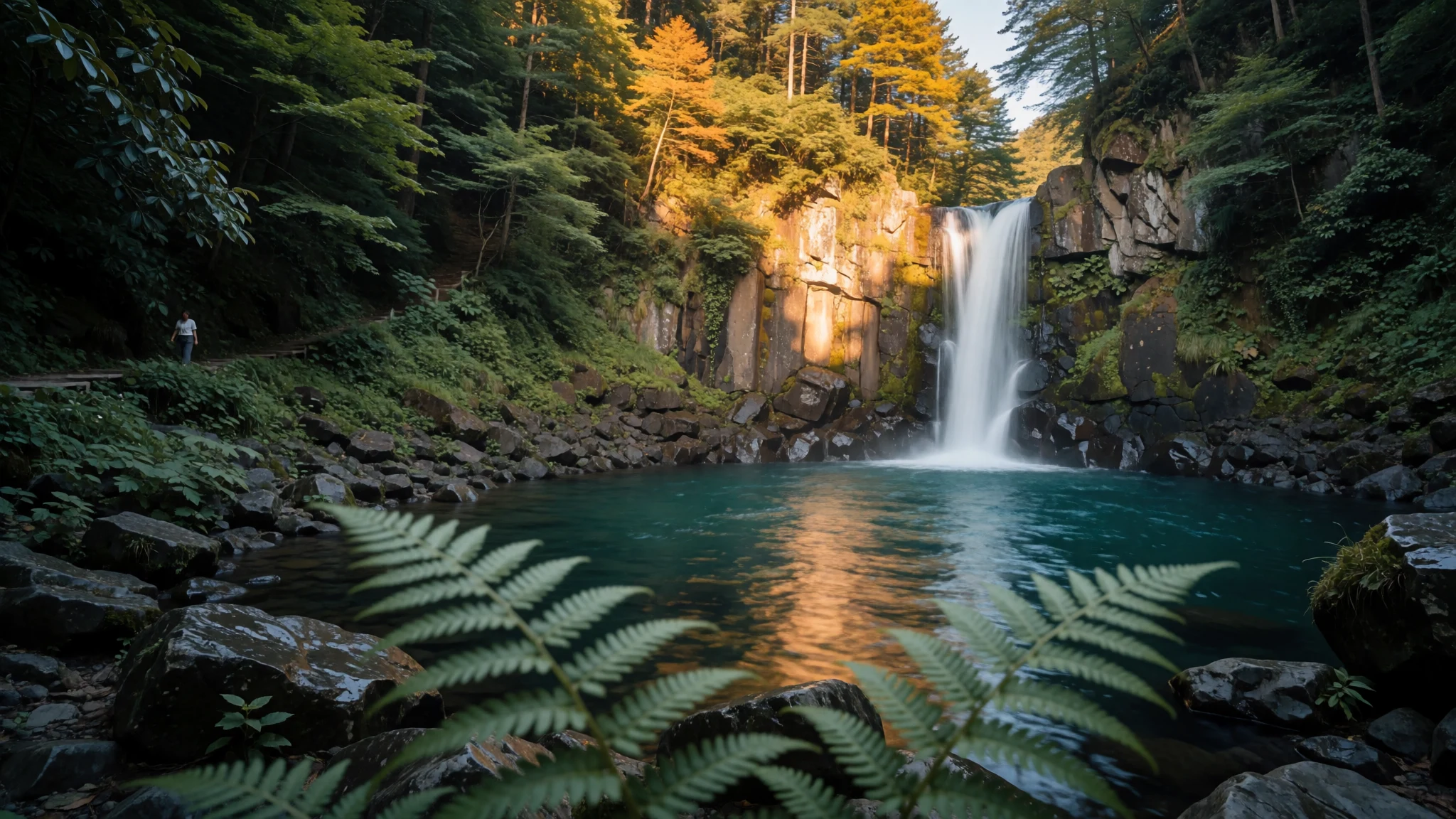
Cheonjeyeon Waterfall is a three-step cascade on Jeju's south coast, tied to a legend of bathing nymphs and set in protected forest.
The place
Cheonjeyeon Waterfall (천제연폭포) lies on the southern side of Jeju Island, South Korea, and its name means the Pond of the Emperor of Heaven. It is a staircase of three falls, each feeding the next, rather than a single drop. The first fall, the one on most postcards, tumbles about 22 m from a rim of dark columnar basalt into a pool roughly 21 m deep, hemmed in by cliffs and trees. The water then runs on to a second fall of about 30 m, reaches a third, and eventually finds the sea. The source is unusual. Cold water seeps out of a cave ceiling and from a spring line where the cliff meets the clay layer below. That dependence on rain and springs means the first fall can look slim after a dry spell and loud after summer downpours. Around the gorge grows a warm temperate forest, protected as Natural Monument No. 378, with small ferns wedged into rock crevices. Locals rank this fall alongside Cheonjiyeon and Jeongbang as Jeju's three famous waterfalls. The site is tidy and well signposted rather than wild: a paved walk, viewing points and a bridge. It is busiest with tour groups in mid-morning and in holiday weeks, and the pool, which shifts from jade to turquoise with the light, is for looking at only, as swimming is not allowed.
Its story
Cheonjeyeon Waterfall carries one of Jeju's best-loved legends. Seven nymphs, the story says, slipped down from the heavens after dark to bathe in the pool, which is how it came to be thought of as a pond belonging to the Emperor of Heaven. Seonimgyo, the bridge above the falls, stands as a symbol of that tale. An older belief held that standing under the water at the proper moment in the seventh lunar month would drive out illness by the next, a practical sort of pilgrimage that long predates tourism. Today the pool is closed to swimmers, so the cure remains theoretical. The scientific chapter is more recent. In 1993 the surrounding warm temperate forest was designated Natural Monument No. 378 because of its rare plants and its value for research. Among them are the skeleton fork fern and the solipnan, which cling to cracks in the rock. The legend is brought back to life in May of even-numbered years, when the Chilseonyeo festival, named for the Seven Nymphs, takes place at the falls. That mix of myth, protected woodland and a modern festival is why the place feels more like a small cultural park than a bare stretch of river.
What to see
- The first fall and plunge pool — Jungmun area, Seogwipo, Jeju
Cheonjeyeon Waterfall's top cascade is the main event: a ribbon of water falling about 22 m over basalt into a deep, colour-shifting pool. The viewing platform gives the classic angle. Late morning light often brings out the turquoise, while after heavy rain the flow thickens and the spray carries across the rail.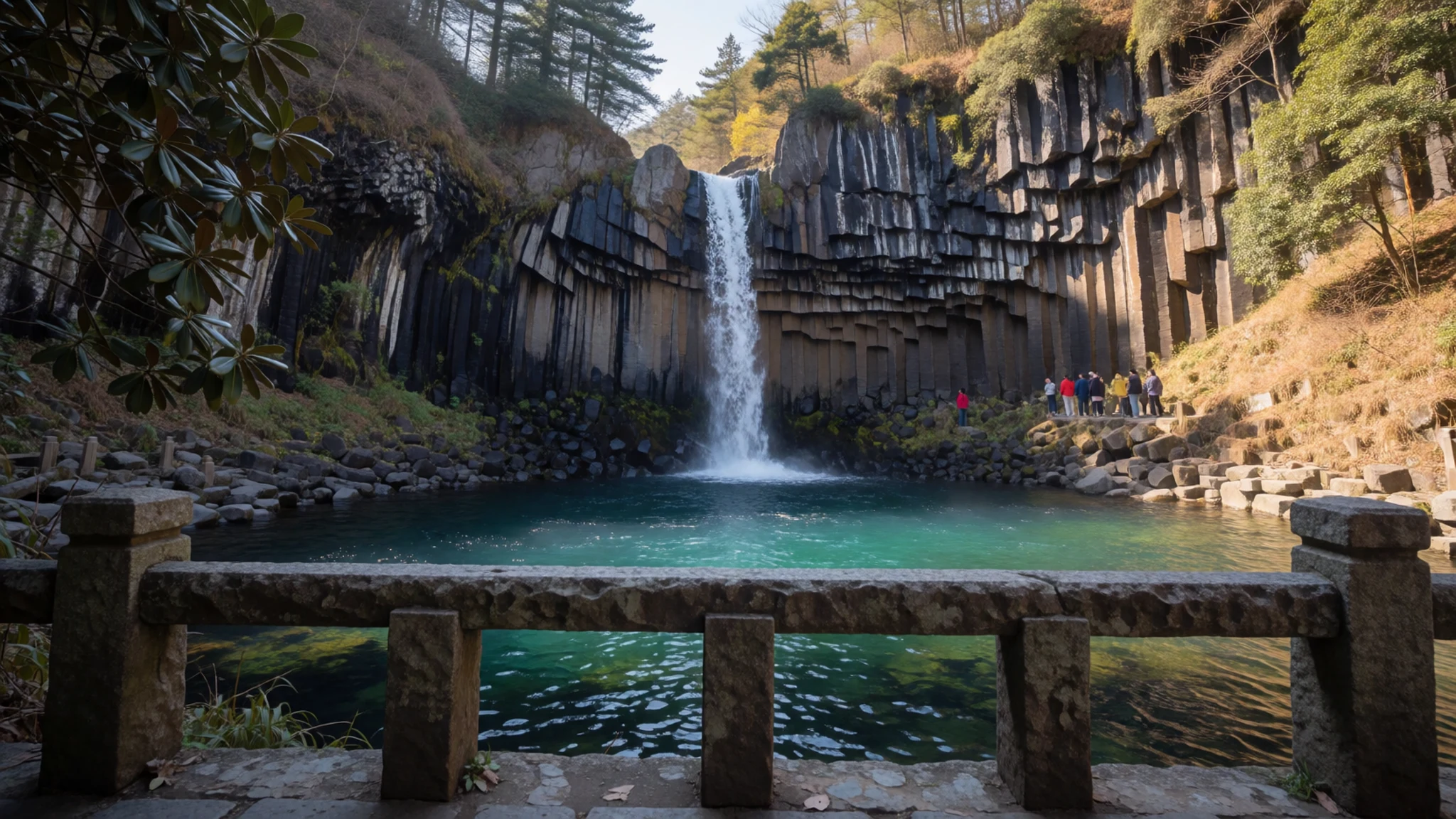
- Seonimgyo Bridge — Above the falls
Seonimgyo Bridge crosses the gorge above the falls and stands as a symbol of the Cheonjeyeon legend. It gives a view along the line of the stream and down into the forested chasm. It is a good place to pause, particularly early, before the tour groups arrive.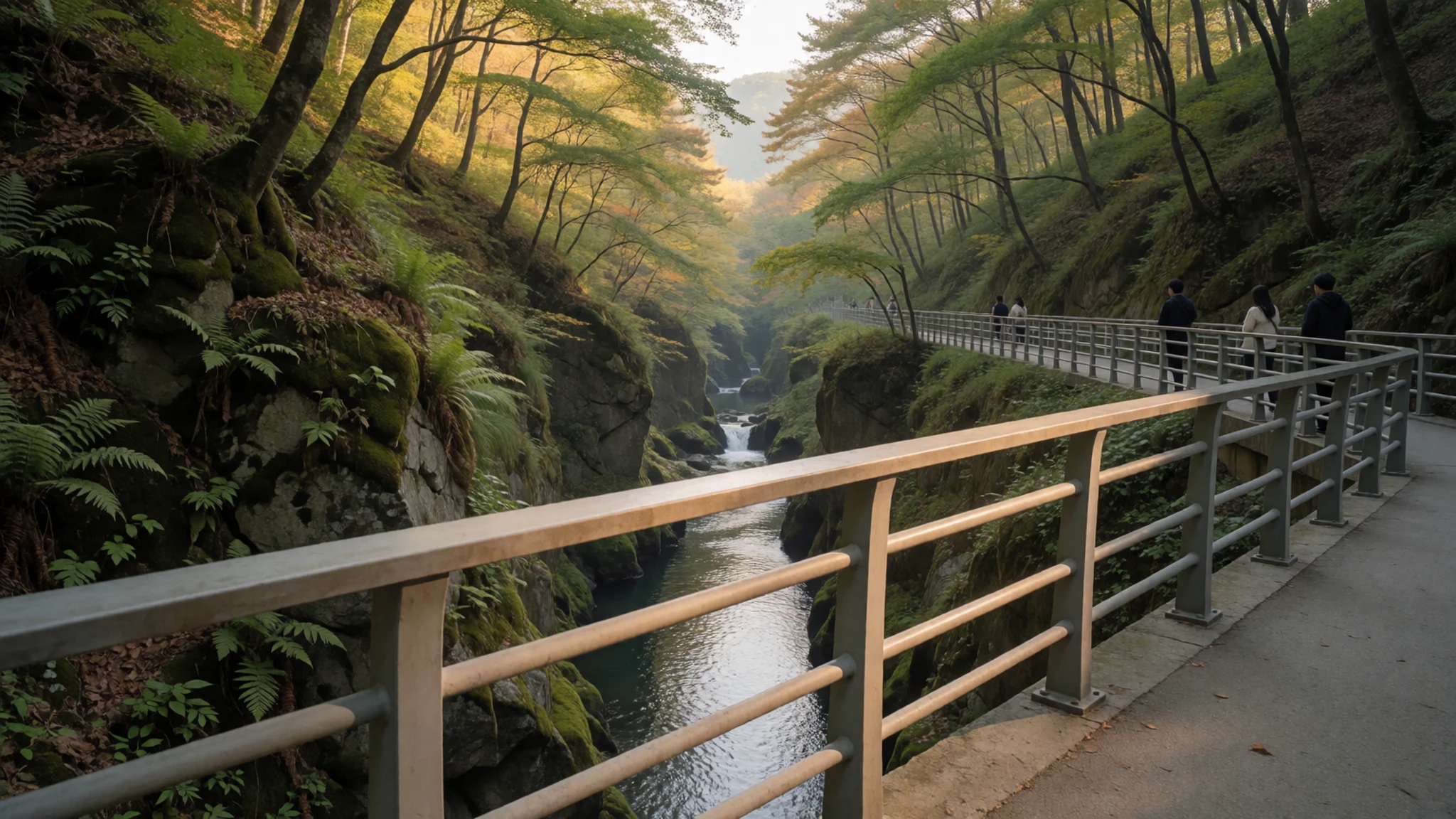
- Second and third falls — Downstream gorge
Below the pool, the water drops about 30 m in the second fall before reaching the third. These lower cascades are quieter than the first and reward the walk down. The path winds through trees, so the sound of water guides you before any fall comes into view.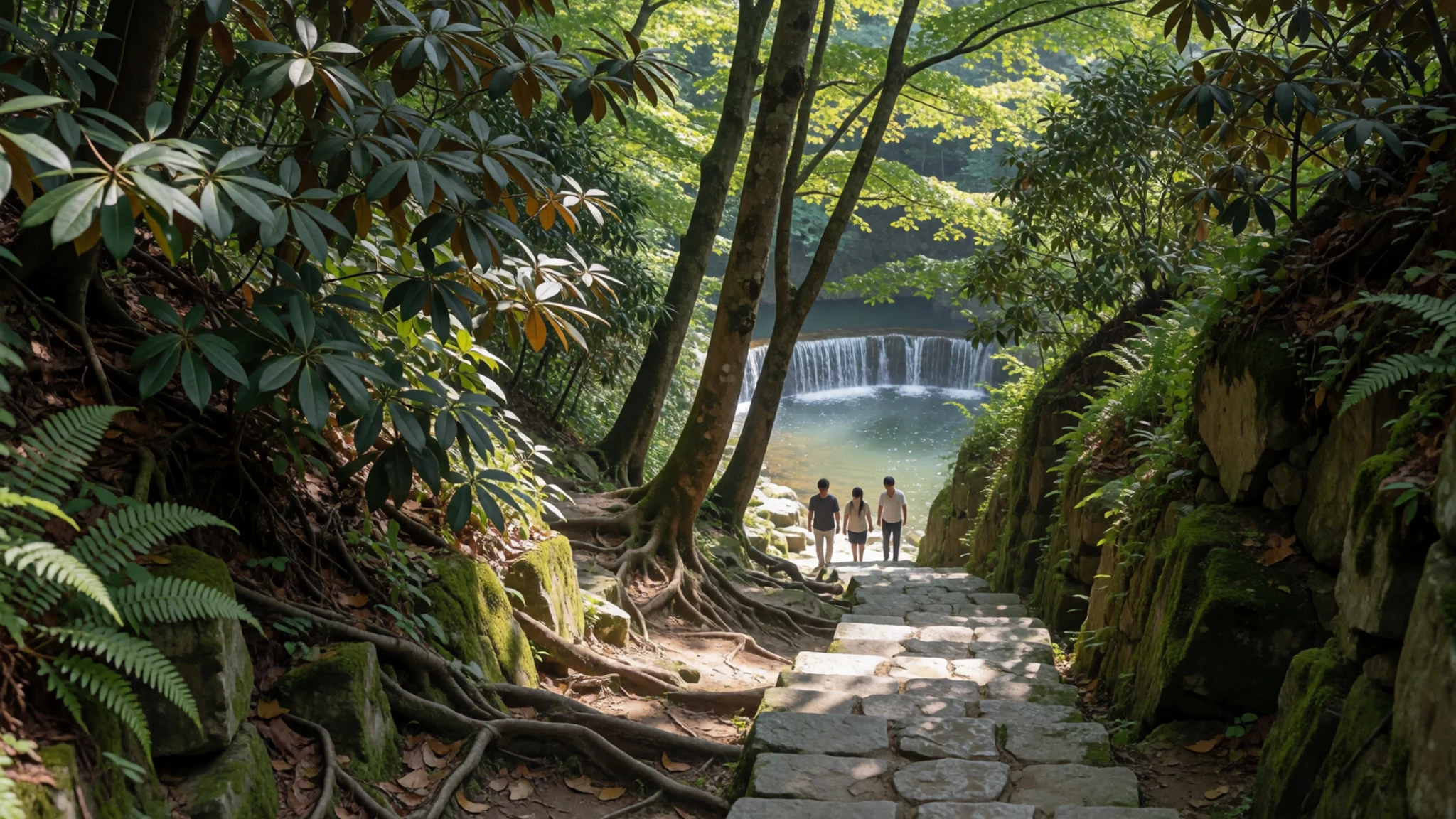
- The warm temperate forest — Around the gorge
The woodland around Cheonjeyeon Waterfall is a protected natural monument, and a slow walk shows why. Look at the rock crevices for tiny ferns, among them the skeleton fork fern. Broad evergreen leaves keep the gorge shaded and humid, which is welcome relief on a hot Jeju afternoon.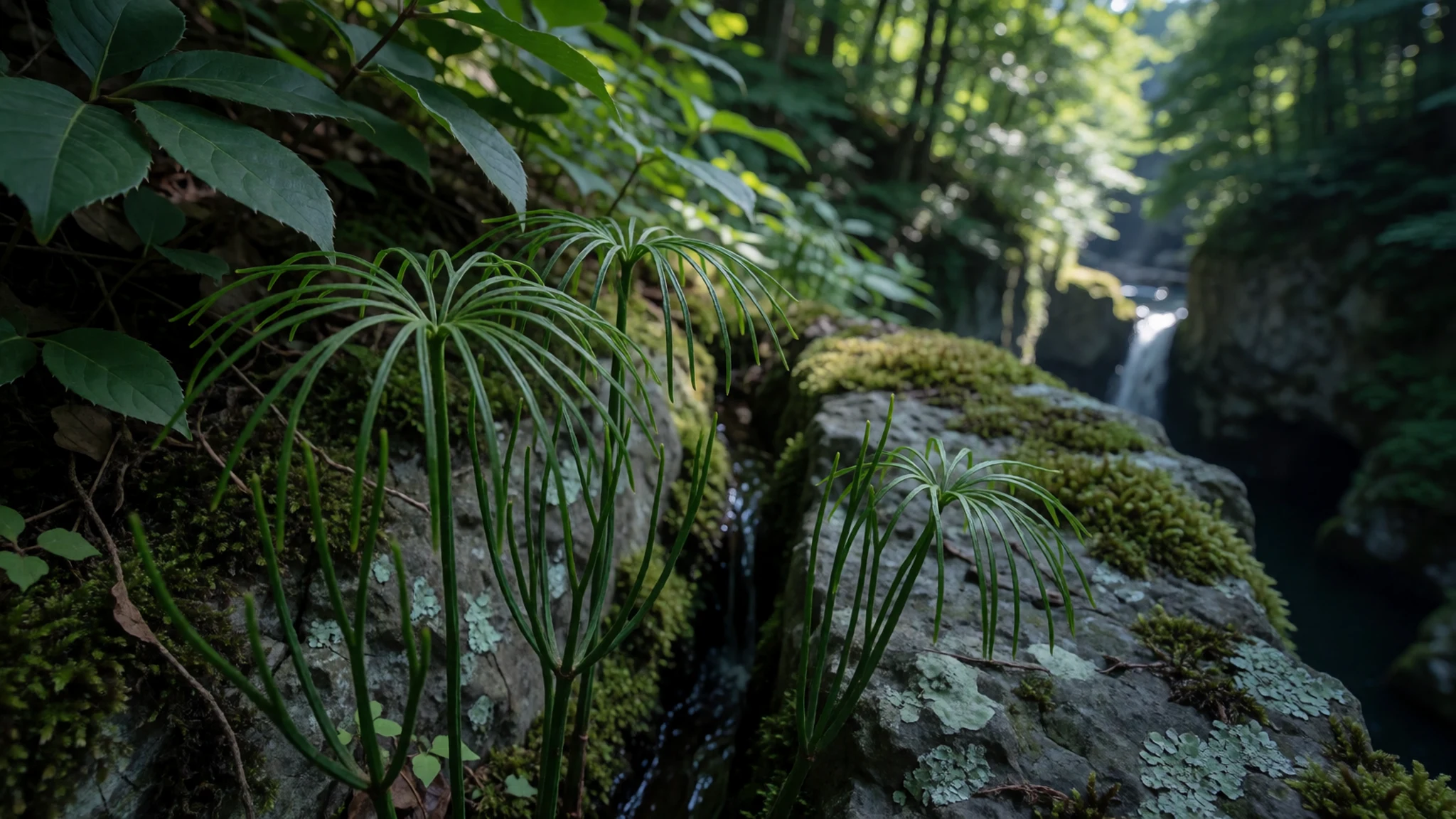
- Where the stream meets the sea — Jungmun coast, Seogwipo
The water from Cheonjeyeon Waterfall eventually reaches the ocean along Jeju's south coast. The stream's mouth is a gentler counterpoint to the gorge, with a coastal breeze and open horizon. Allow time for the walk or a short drive to see how the falls connect to the shoreline.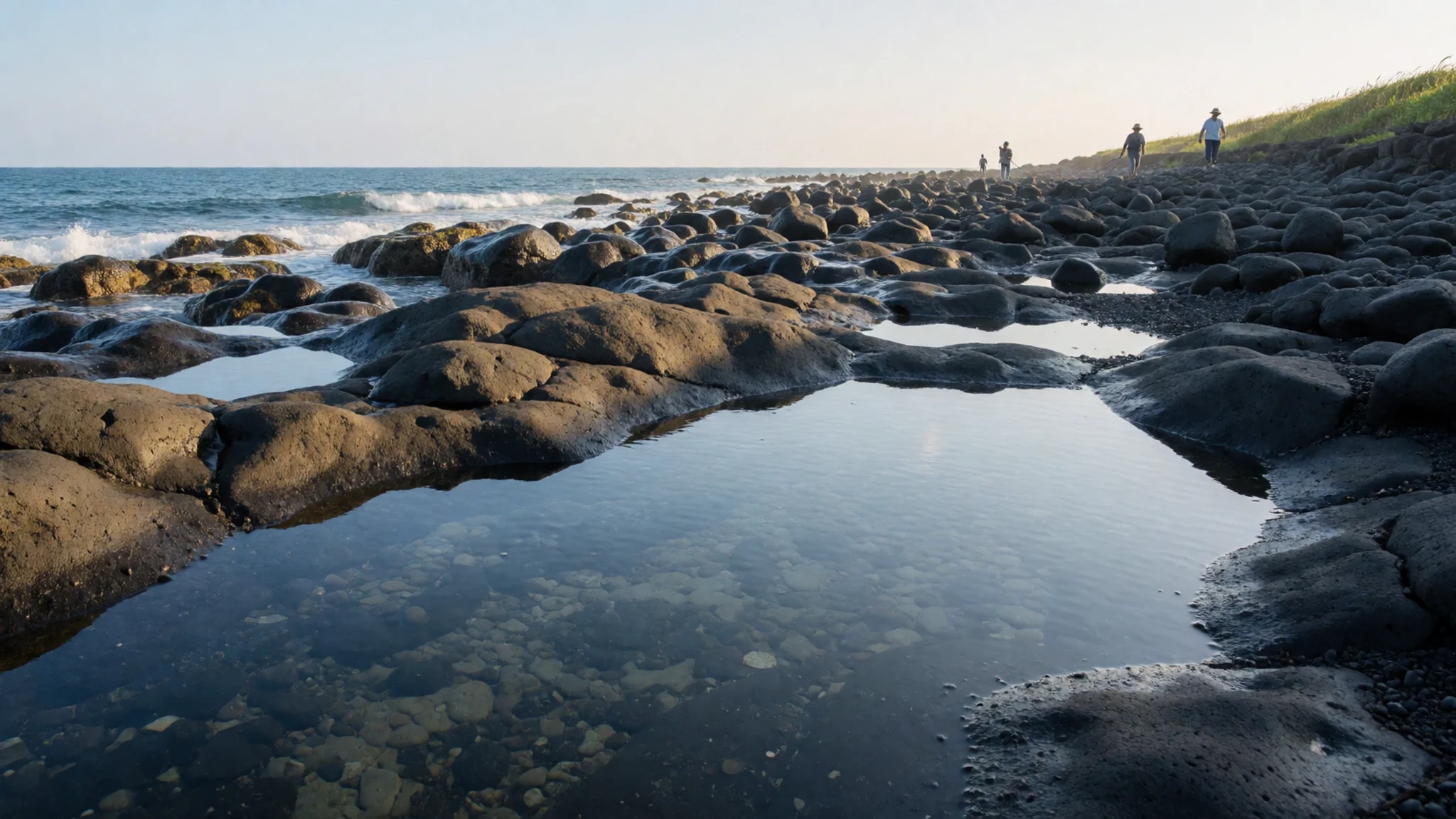
Culture
Cheonjeyeon Waterfall sits in a part of Korea with its own island identity. Jeju has a distinct dialect, a strong tradition of shamanic belief and a habit of explaining its landscape through myth. The nymph legend is a good example: the falls are not just scenery but a place where heaven briefly touched the island. That is why the bridge, the festival and the name itself all point back to the same story. Jeju is also known for its haenyeo, the women divers who harvest seafood by free-diving, and for the stone figures called dol hareubang that guard villages and roadsides. Visitors will meet these across the island, and they give the waterfall a wider context. The festival in May of even-numbered years brings performance and ritual to the site, though dates and programmes change, so check with local tourism offices before planning around it. Even on ordinary days, many Korean visitors treat the walk down as a small outing for family and friends, with photographs at the railings and a pause at the bridge. The mood is relaxed, a little festive and generally quiet at the edges of the day. Keep to the marked paths and railings, stay out of the water, and keep your voice low on the platforms so that others can hear the falls.
What to wear
Cheonjeyeon Waterfall belongs to a Korean island where traditional dress comes in two forms. The national hanbok, with its short jacket (jeogori) and full skirt (chima) or trousers, is made from silk for formal wear and from ramie or cotton for summer, and is worn today mainly at festivals, weddings and holidays. Jeju has its own working garment, galot, a loose cotton outfit dyed with the juice of unripe persimmons, which turns it a rusty brown and makes it tough and quick-drying for fieldwork. The haenyeo divers have their own practical dress too. In daily life, people at the falls wear what is common across Korea: outdoor-brand jackets, trainers, caps and sun visors, with smart casual for family outings. Hiking-style clothes are normal even for short walks. A visitor should dress for weather rather than ceremony. Summer is hot and humid, so light, quick-drying layers and a hat help, while spring and autumn can be breezy and cool, and a rain jacket is useful in any season. The steps and paths down to the pool can be damp, so wear shoes with grip rather than flip-flops. No special dress code applies, but modest, comfortable clothing suits any nearby temple or village visit.
What to eat
- Heuk-dwaeji (Jeju black pork) — Barbecue restaurants in Seogwipo and Jungmun
Jeju's black pork is usually grilled at the table and eaten in lettuce wraps with salted shrimp paste and garlic. Look for specialist grill restaurants in Seogwipo town and around the Jungmun area. The meat is firm and rich, and it suits a group meal after the waterfall walk.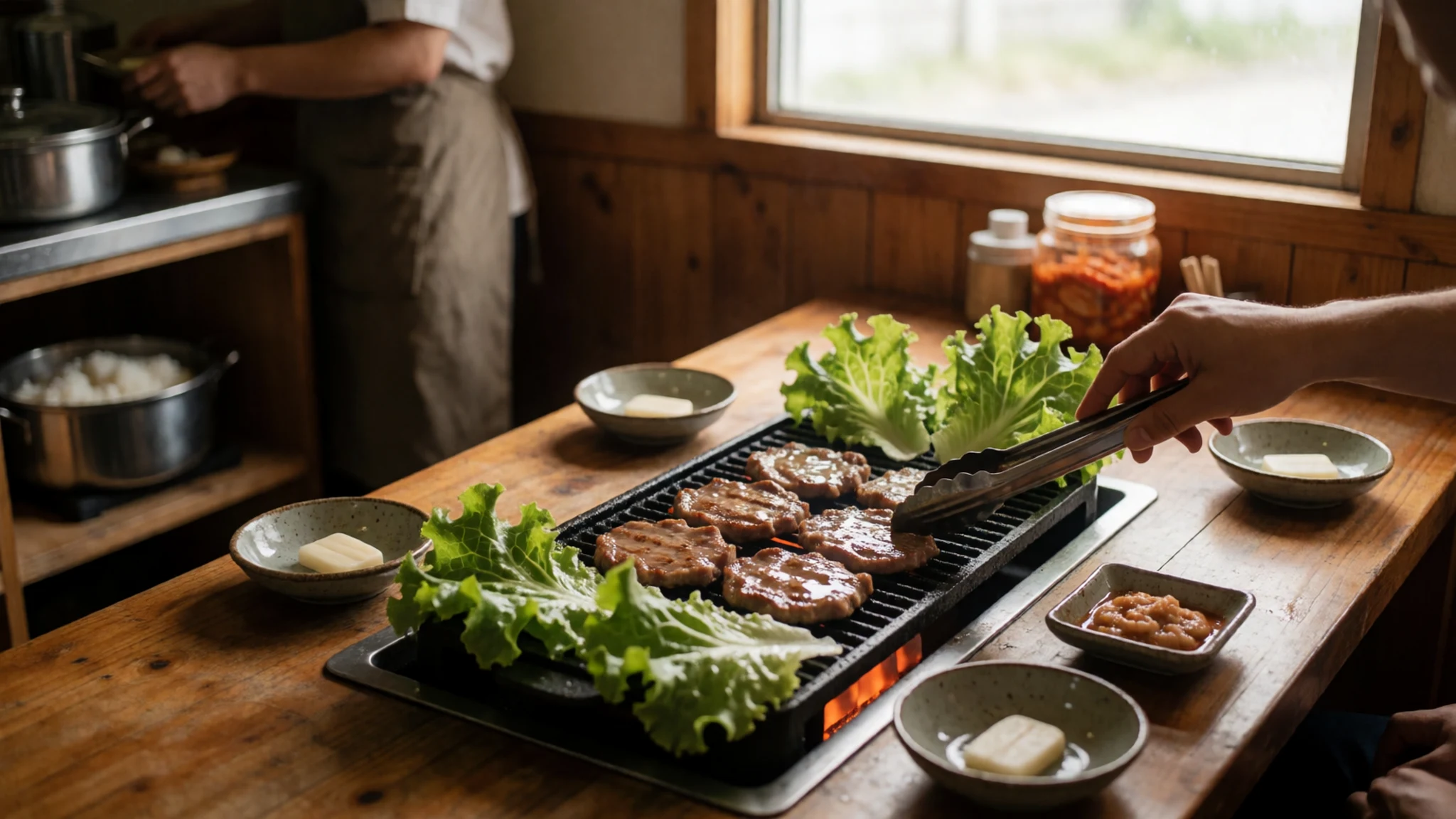
- Galchi-jorim (braised cutlassfish) — Local seafood eateries and Seogwipo's market streets
Cutlassfish, a long silver fish, is braised in a spicy soy and chilli sauce with radish or potato. It is a Jeju staple and comes with rice and side dishes. Family-run eateries and the daily market in Seogwipo town are reliable places to find it.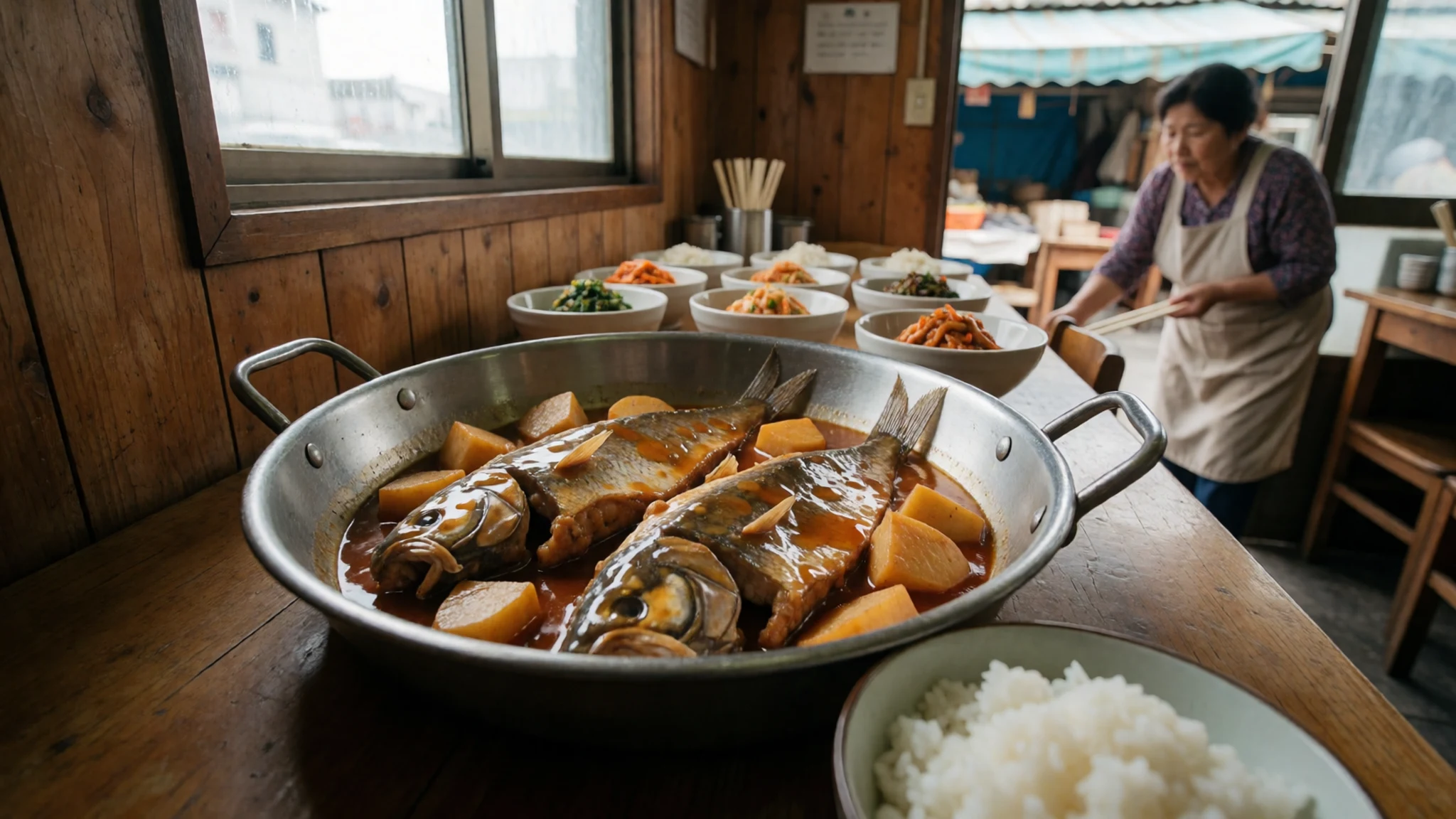
- Jeonbok-juk (abalone porridge) — Coastal restaurants on the south shore
This smooth, savoury rice porridge is cooked with abalone, often finished with a little of the creamy innards for colour and depth. It is gentle, filling and a good choice on a cool or rainy day. Coastal restaurants near the south shore usually serve it. - Hallabong and other citrus — Roadside stalls and island markets
Hallabong is a sweet, knobbly Jeju tangerine, sold fresh in winter and early spring and turned into juices, jams and sweets year-round. Roadside stalls and market stands offer samples, and a few segments make a refreshing stop between waterfall viewpoints. - Momguk (seaweed soup) — Neighbourhood set-meal restaurants
Momguk is a broth made with Jeju seaweed, sometimes with pork bones, and has a deep, mineral taste. It is traditional home cooking rather than showy dining. Small neighbourhood restaurants that serve set meals are the best bet, and it pairs well with plain rice.
Plan it
Best time. April–May and October–November are the most comfortable months, with mild weather and green or turning foliage; May in even-numbered years adds the Chilseonyeo festival. June and July bring rain, which fills the falls but makes paths slippery, August is hot and humid, and winter is cool and quieter.
How long. 1 (half a day at the falls; 3–4 for Jeju's south coast)
Getting there. Fly to Jeju International Airport, then take a taxi or a regional bus to Seogwipo or the Jungmun area (allow around an hour by road). The last leg is a short walk or taxi ride from the nearest bus stop to the entrance. Check local transport sites for current routes.
Budget. mid
Tips
- Go early or late in the day to avoid tour-group crowds
- Check the official Jeju tourism site or local tourist office for opening hours and entry details before you go
- Wear shoes with good grip, as the steps and paths are damp
- Carry water and a rain jacket, as weather on Jeju can change quickly
- Combine the falls with other Jungmun sights to make a full day
Etiquette
- Stay behind railings and out of the water
- Keep noise down on viewing platforms
- Take your litter with you
Nearby
Sources
- Wikidata Q495557 (CC0)
- Wikipedia: Cheonjeyeon Waterfalls (rev 1364571783) (CC BY-SA 4.0)
- Wikivoyage: Jeju (CC BY-SA 4.0)
- Photo: lumoplank, Cheonjeyeon Waterfall, Jeju (2548) (CC0 1.0)
- Photo: Olga Lipunova, Jeju Cheonjeion Waterfall 3 (CC BY 3.0)
- Photo: lumoplank, Cheonjeyeon Waterfall, Jeju (2555) (CC0 1.0)
- Photo: LUNA REX, Jeju-island-falls-cheonjeyeon (CC0 1.0)
- Photo: Engin Cukuroglu, Jeju Island Cheonjeyeon Waterfalls (CC BY-SA 4.0)
- Photo: lumoplank, Cheonjeyeon Waterfall, Jeju (2547) (CC0 1.0)
- Photo: Norton Ip, Cheonjeyeon Waterfall (14338693447) (CC BY-SA 2.0)
- Photo: Norton Ip, Cheonjeyeon Waterfall (14523695834) (CC BY-SA 2.0)


