Cheonjiyeon Waterfall
Cheonjiyeon Waterfall, South Korea
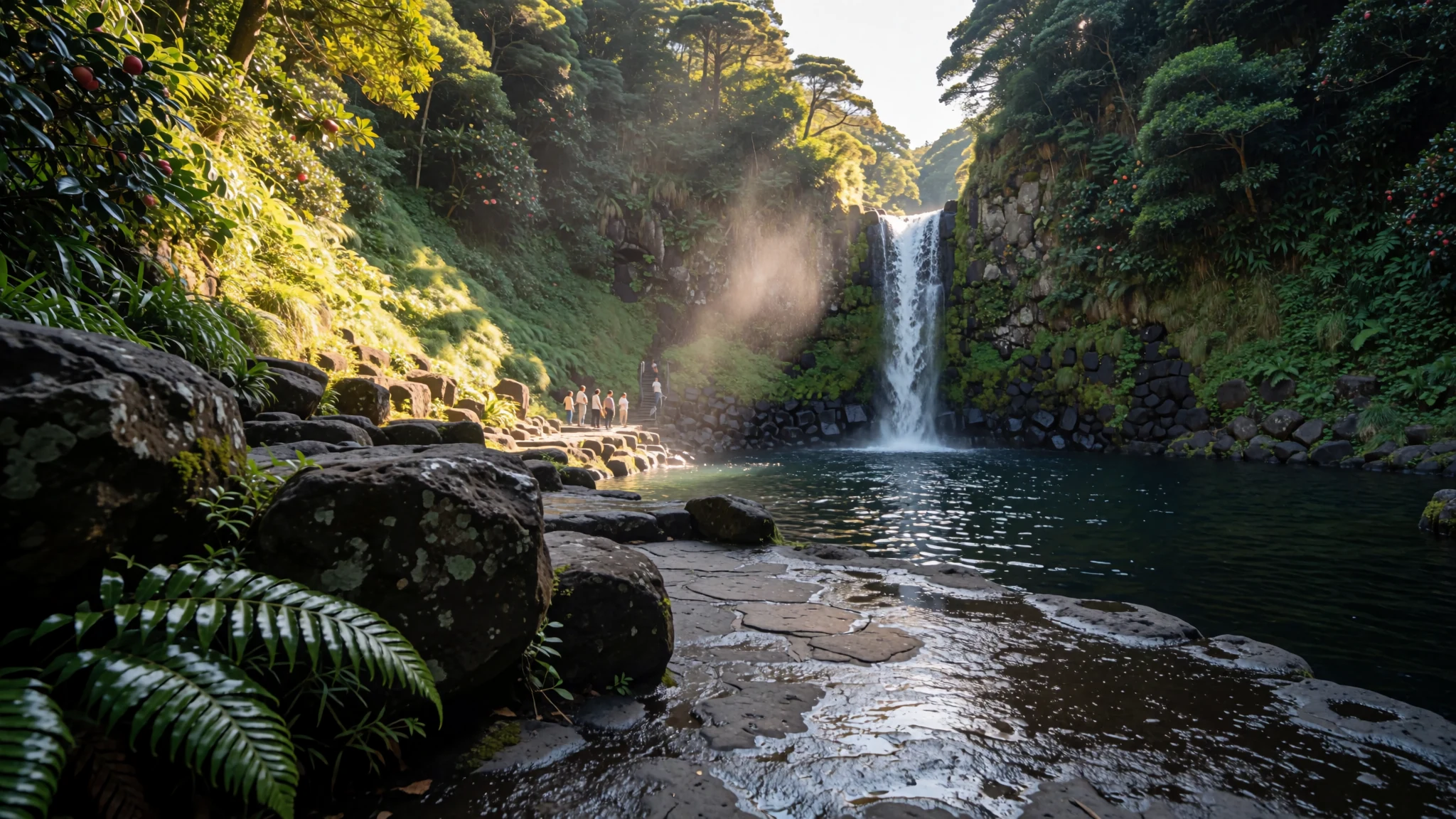
Cheonjiyeon is a short, lush walk to a 22 m fall that is especially worth seeing when the night lights come on.
The place
Cheonjiyeon Waterfall (천지연폭포) sits in Seogwipo on the south coast of Jeju Island, South Korea. The fall drops about 22 m and is roughly 12 m wide. Those figures are modest for a waterfall, but the fall makes a strong impression in a narrow, green valley. Its name joins the Chinese characters for sky (cheon) and land (ji), and the spot is often described as a meeting point between the two. Water always drops over the same lip, but after heavy rain it spreads across the rock face, so the fall can look quite different from one visit to the next.
At the foot of the cascade, an artificial pond about 20 m deep is held at a steady level by two small dams. Trachyte andesite, a volcanic rock, shapes the banks and forms the rocky ledges that visitors use for photographs in front of the water. The water comes from a spring rising through the bed of the Somban Stream, which helps keep the flow going through drier spells.
Jeju counts Cheonjiyeon as one of its three famous waterfalls. The walk in is a landscaped path through subtropical planting, and the pond is home to marbled eels that come out mainly after dark. The park gets busy with tour groups through the day, so an early start makes the valley much more pleasant.
Its story
The story of Cheonjiyeon is partly a story of water coming up out of the ground. The fall is fed by a spring that rises from the bed of the Somban Stream, so the water that tumbles over the rock has, in a sense, started below the valley floor. The trachyte andesite that shapes the cliffs gives the valley its character, and the falling water has worn a pool into the rock below. The artificial pond at the base is held by two small dams, so the water level stays steady for people walking around its edge.
The name gives a way of reading the place. Cheon means sky and ji means land, and the valley is treated as the spot where the two meet. Visitors still come here to pause, and that sense survives in the paths, the viewing points and the way the valley narrows around the water.
The park's living story is in its plants and animals. The path passes through a subtropical garden, and the pond is a habitat for the marbled eel, known in Korea as the Mutae eel and protected as a Natural Monument. It is mainly active at night, which is one reason the illuminated evening visit is worth considering. Near the start of the trail you will see a traditional Korean raft called a teu, and a bridge just before the falls lets you look down on a range of koi. These small details suggest the park is best approached slowly, not simply as a backdrop for photographs.
What to see
- Jeongbang Waterfall — Seogwipo, south coast
Jeongbang Waterfall sits right at the ocean's edge, with the islets of Seopeom and Beomseom offshore. Sources describe it as the only waterfall in Asia to fall directly into the sea, a claim worth checking but striking either way. It is one of Jeju's three famous waterfalls, so pair it with Cheonjiyeon. Go early, before tour coaches arrive.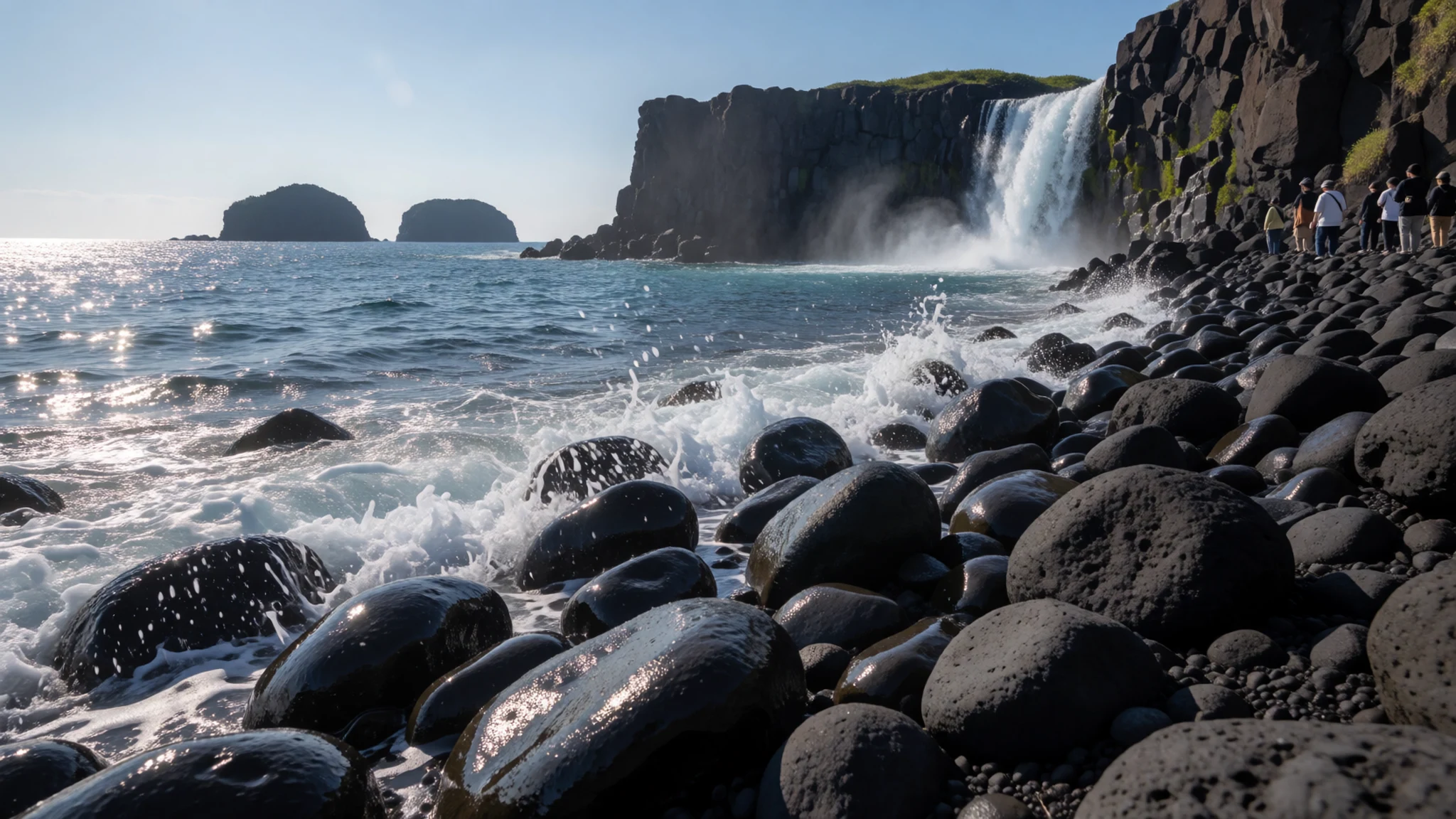
- Andeok Valley — Western Jeju, inland from Seogwipo
Andeok Valley is often called the most beautiful valley on Jeju, a judgement rather than a measurement. Strange rock cliffs rise around you like a folding screen, and clear water runs slowly over flat bedrock. The mood is calm and a little theatrical. It suits anyone who wants stone and water rather than sea views, so bring shoes that grip on wet rock.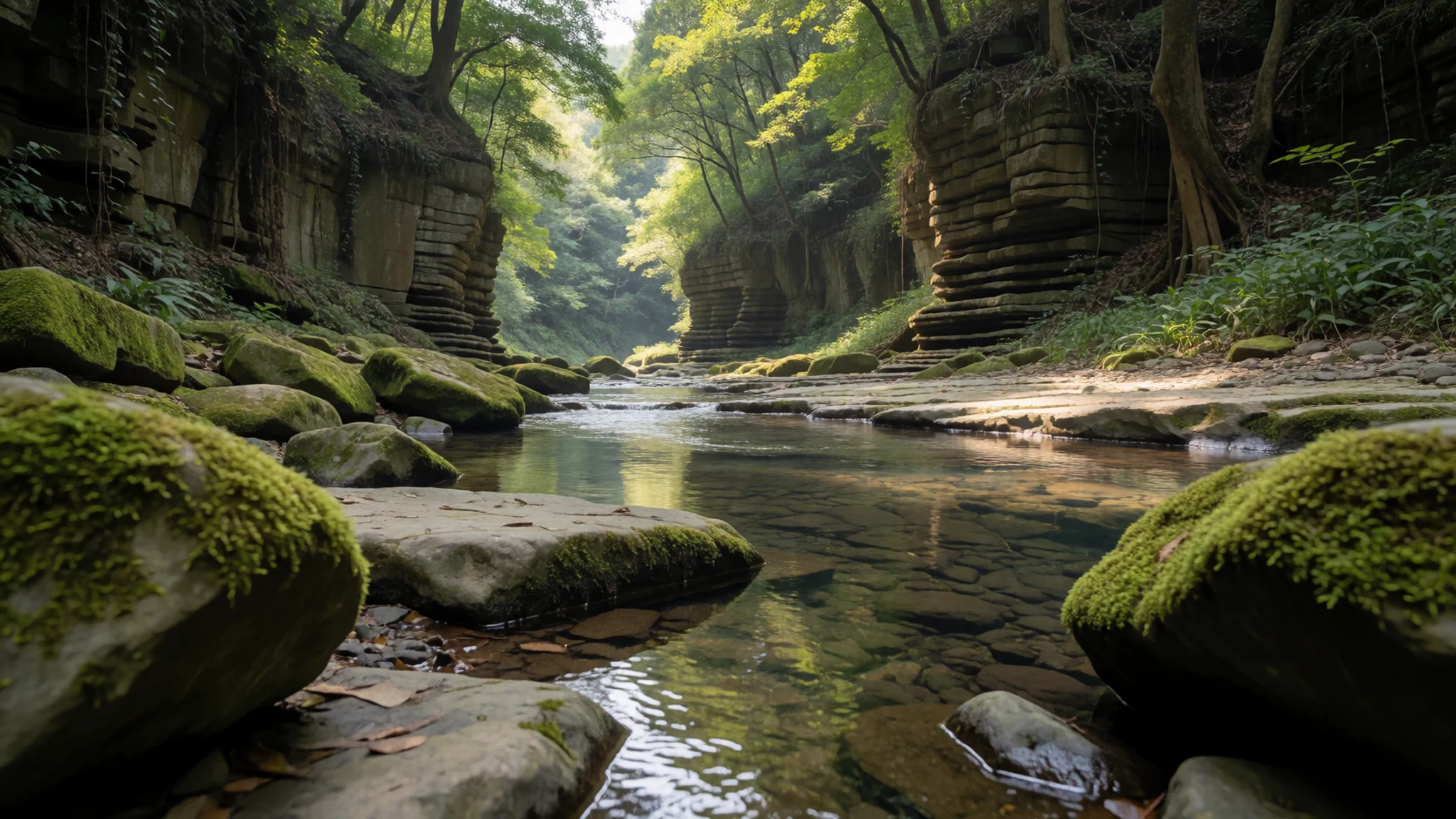
- Jeju Sculpture Park — Near Mount Sanbang, south-west Jeju
Jeju Sculpture Park sits near Mount Sanbang and is a relaxed place to walk among more than 160 sculptures. The paths are wide enough to spread out, and the park has an observation tower with views over the surrounding land. It makes a gentle contrast to the wet rock of the falls, and the outdoor pieces work in sun or light rain.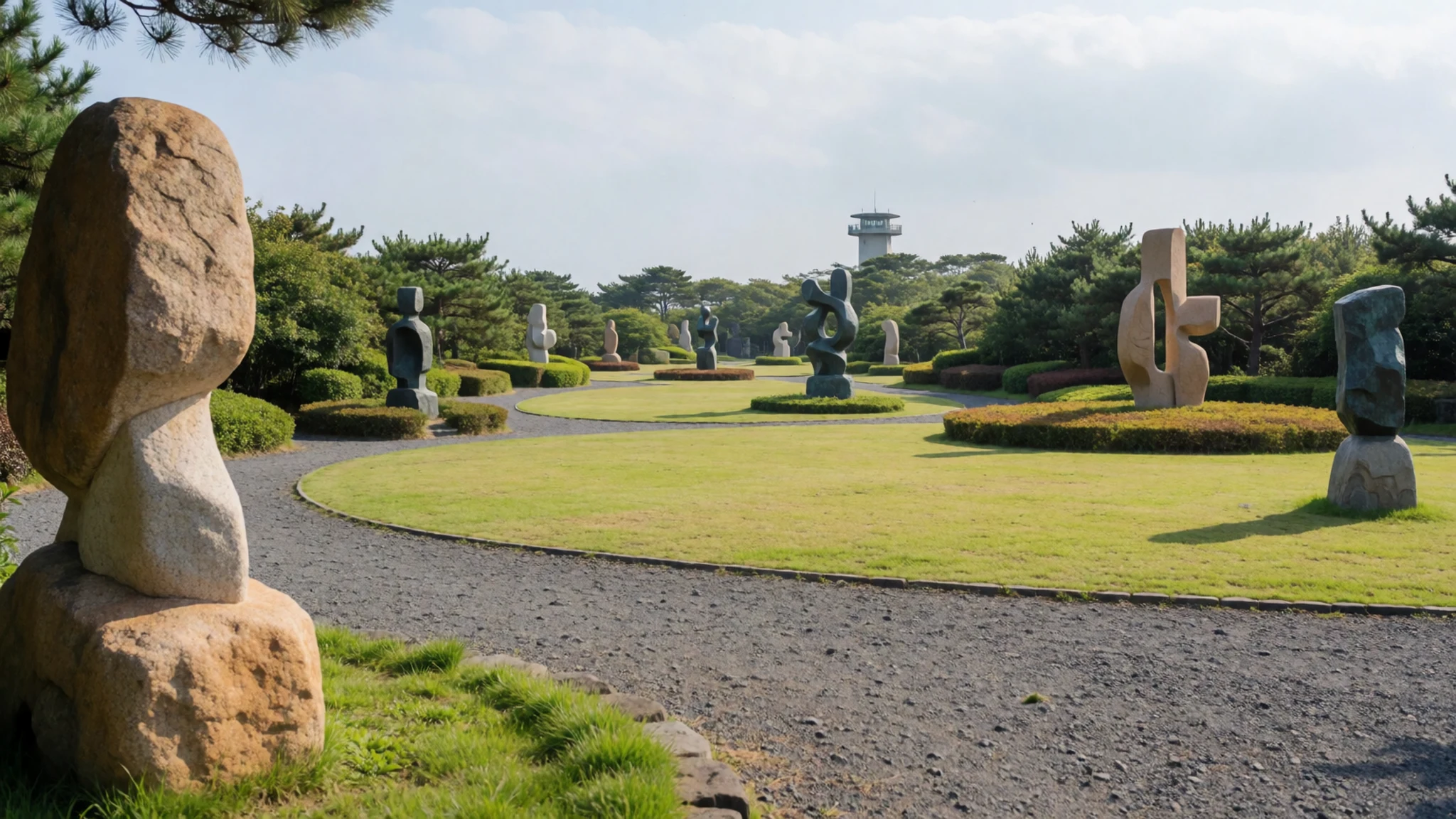
- Gaetkak Jusangjeolli Cliff — South coast, west of Seogwipo
Gaetkak Jusangjeolli Cliff is a rough coastal stretch where the access road is narrow and the last part is an unpaved rocky track by the sea. Stepping across the bumpy rocks, you get the smell and sound of the sea close up. It is less polished than the falls, which is part of its appeal. Wear shoes with proper grip, and keep back from the water, where waves can surge.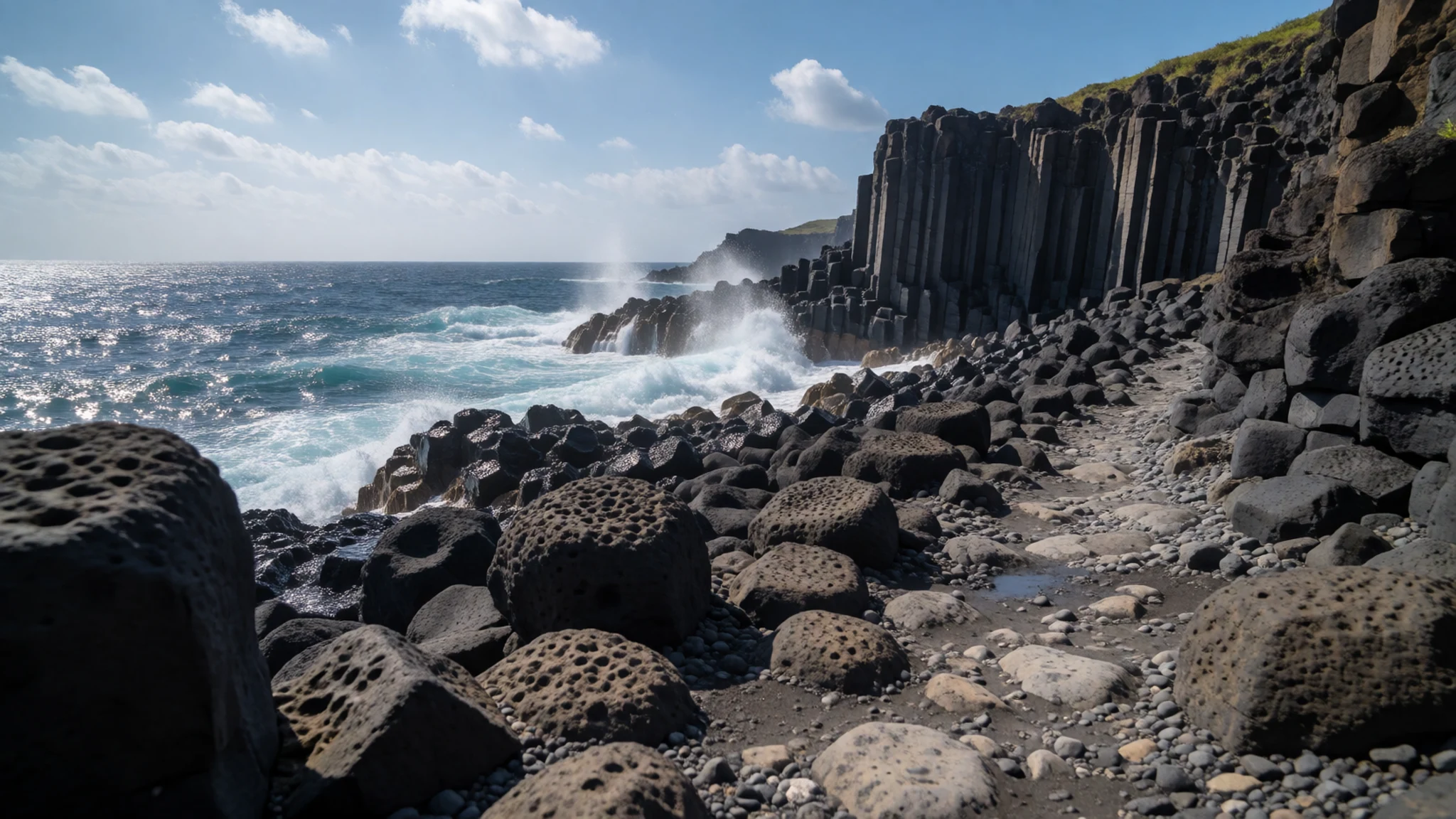
- Seongeup Folklore Village — Seongeup, northern Jeju
Seongeup Folklore Village is an authentic traditional Jeju village, and some people still live there, so it is a place to walk quietly rather than treat it as a stage set. Stone walls, thatched roofs and narrow lanes give a clear picture of older island life. Keep to the lanes, ask before photographing people at work, and check the official site for opening details.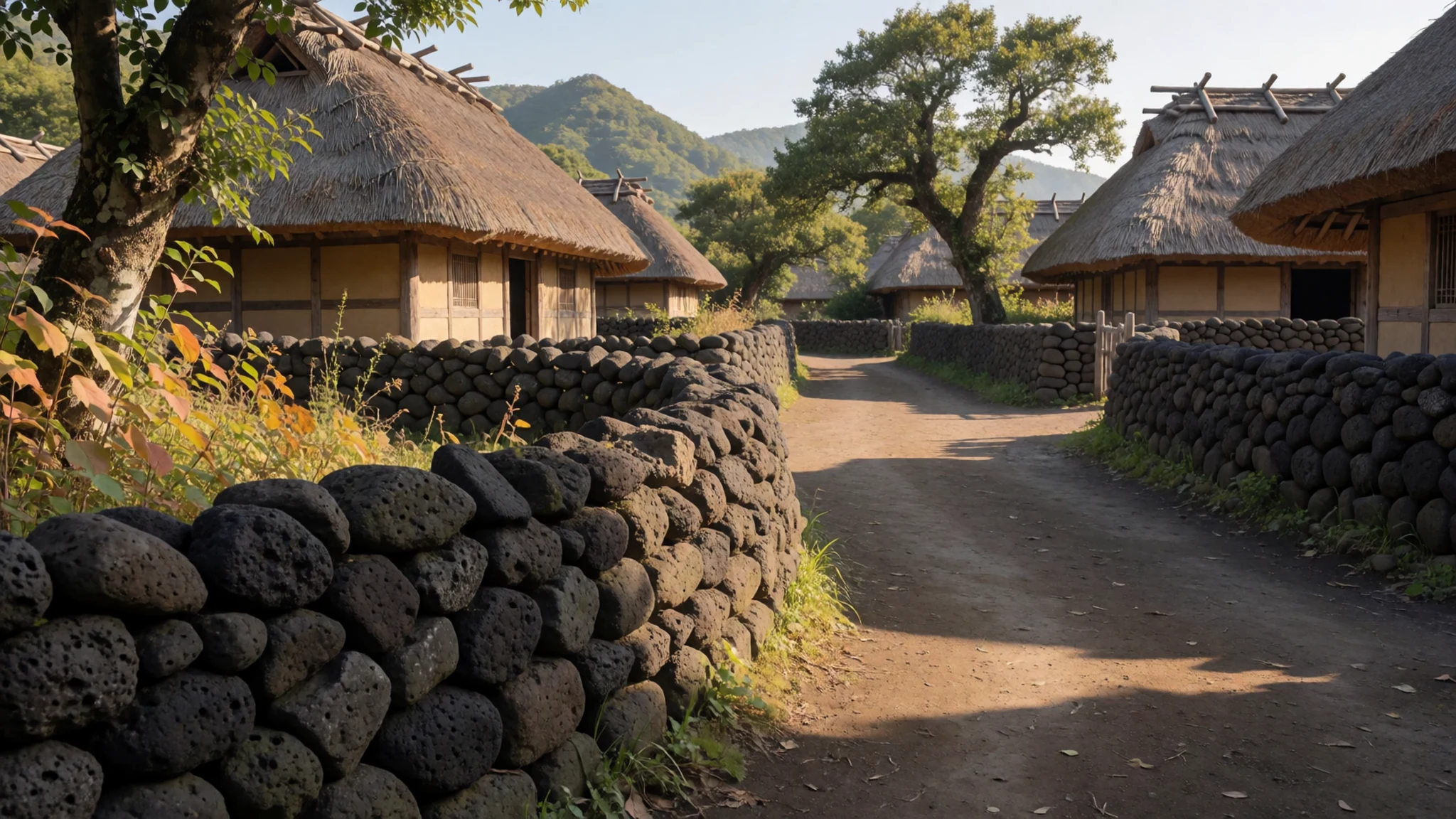
Culture
Cheonjiyeon is a public park as well as a waterfall, and on a typical day it is busy with local families, tour groups and couples on short trips. The walk is landscaped and shared, so keep to the marked trail, step aside for people coming the other way, and leave the planted banks alone. The falls are easy to photograph from the viewing points, but ask before taking pictures of people who are not in your group, especially children and older visitors. The pond at the base is home to marbled eels that come out mainly after dark, so the evening walk calls for low voices and no lights shone into the water. Keep your voice down near the pond after dark and take all your rubbish home with you.
What to wear
Traditional dress in Korea is the hanbok: for women a fitted jacket (jeogori) worn over a high-waisted skirt (chima), and for men a jacket with loose trousers (baji). Hanbok are usually cut from silk or ramie and are often bright in colour for celebrations. They are worn at festivals, weddings and some palace visits, and rented outfits for a day out are common in historic districts. Most people in Seogwipo wear everyday clothes now, such as jeans, trainers, sun hats and light jackets, and the hanbok is a special-occasion choice rather than daily wear. For a visit to Cheonjiyeon, dress in layers that dry quickly, because spray from the falls and damp steps are common. Choose shoes with real grip, since the rocks and paths are wet near the base, and carry a light waterproof for showers. In summer, a sun hat and breathable fabrics help; in cooler months a fleece layer does the job. Modest, comfortable clothing suits the natural park well, and no formal dress is required at the falls.
What to eat
- Jeju black pork skewers — Seogwipo Olle Market, downtown Seogwipo
Jeju black pork, grilled over charcoal on sticks, is a common sight at the traditional market in downtown Seogwipo. The meat is chewy with a rich flavour, so eat it hot from the grill while you wander the stalls.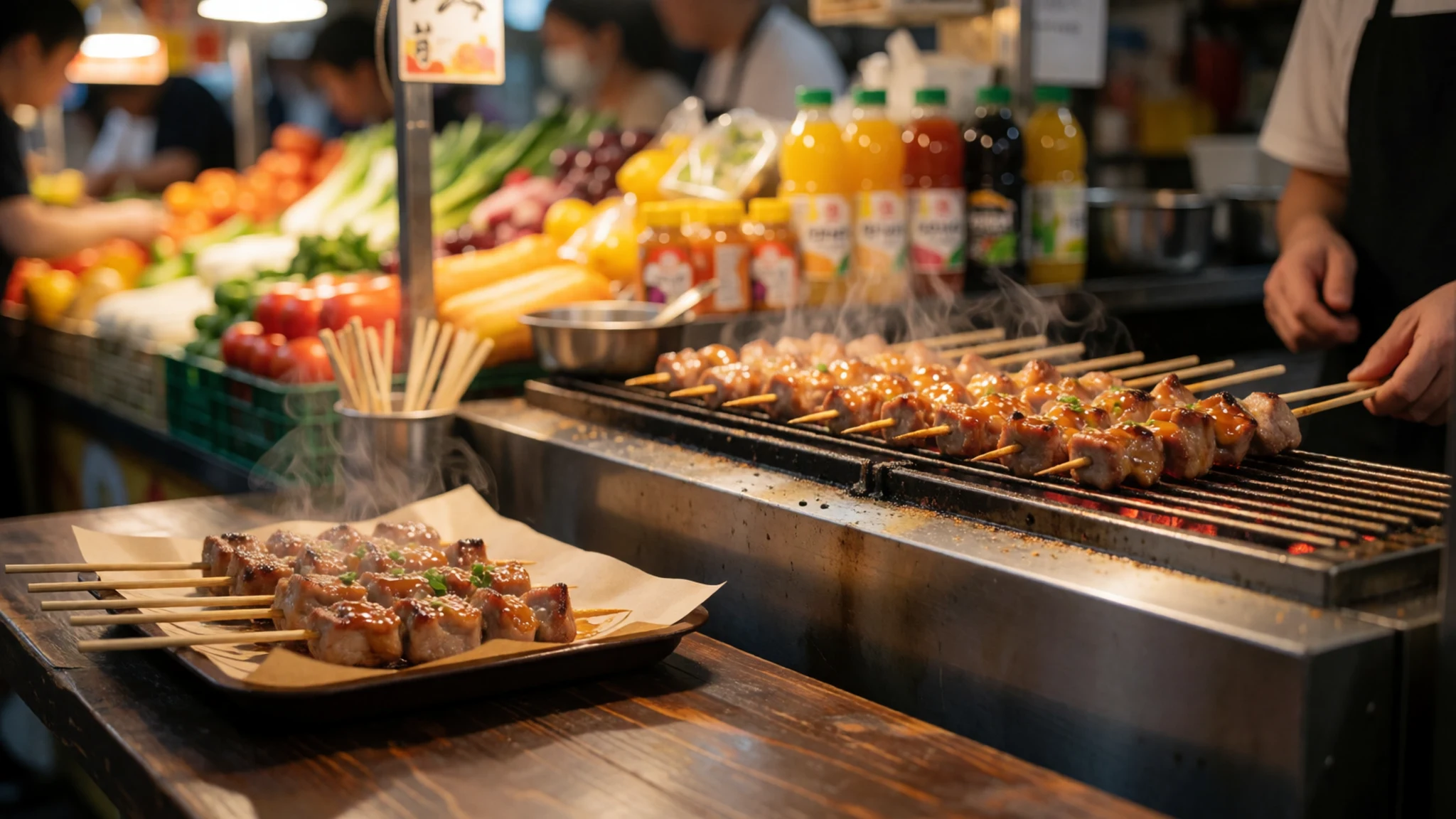
- Grilled black pork at the table — Black pork restaurants in central Seogwipo
Look for a popular black pork barbecue spot in central Seogwipo, where thick slices are grilled on a tabletop griddle in front of you. Wrap the pieces in lettuce with garlic and a little sauce. It is a sociable meal that suits a group.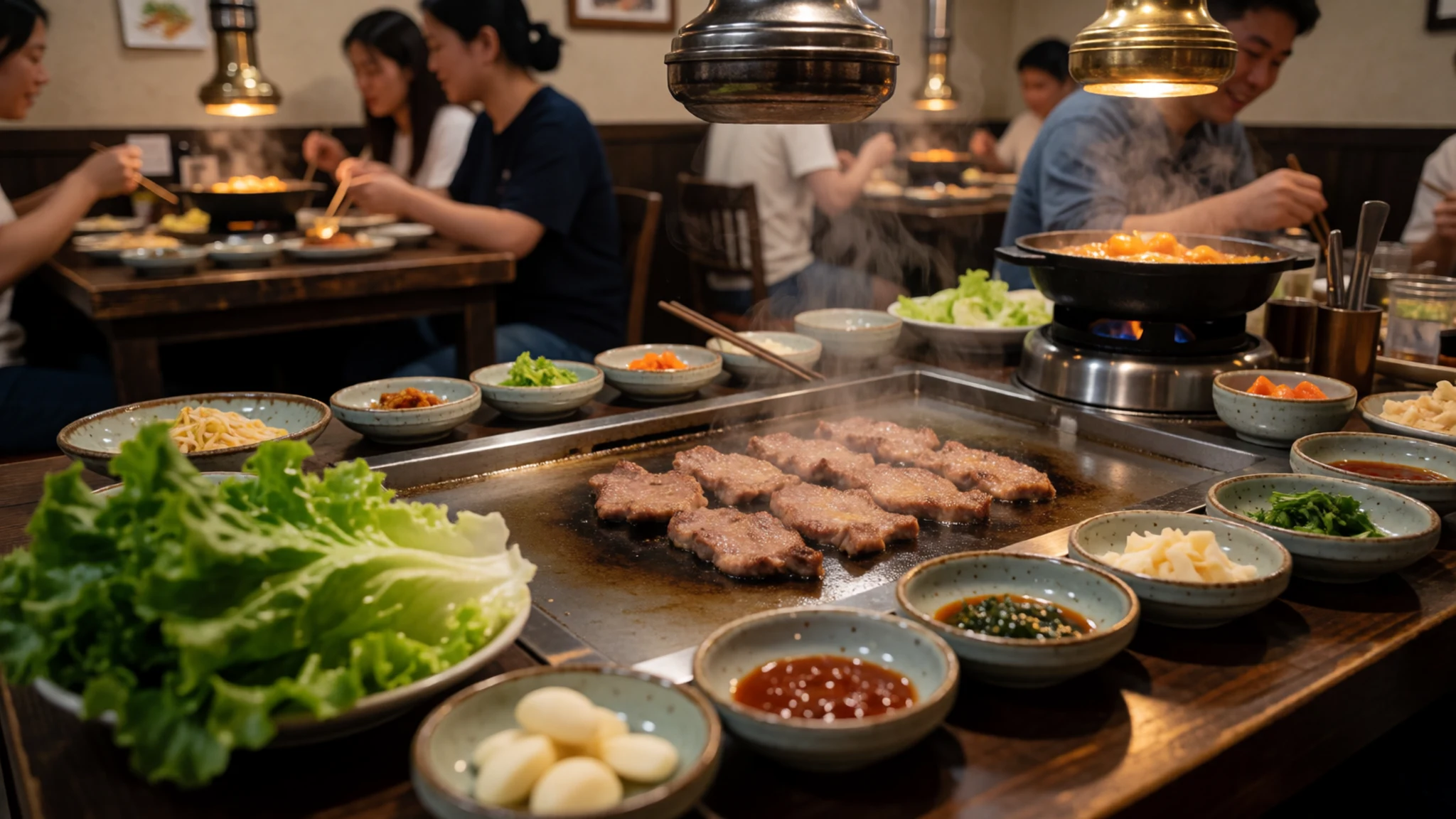
- Hoe sashimi platter — Sashimi restaurants in downtown Seogwipo
Sashimi is a strong choice on an island this size, and the platter arrives with an array of small side dishes. Order a generous set and let the fresh raw fish set the pace of the meal. Ask what came in that morning if you are unsure. - Bomal kalguksu — Coastal eateries near the falls
Bomal are top shells, a shellfish harvested from Jeju's clean waters, and they turn up in this knife-cut noodle soup. The broth is light and savoury, and it is a local dish worth trying once. Ask for it at a coastal eatery. - Gogi-guksu — Restaurants around the Sanbang area
Gogi-guksu is a traditional Jeju noodle dish built on a thick pork broth. It is hearty and filling, and it has become a regional staple. Restaurants around the Sanbang area specialise in it and are a good base for a lunch break. - Fresh hallabong juice — Seogwipo Olle Market and cafes around the falls
Hallabong is a citrus that grows on Jeju, and fresh juice from it is sold at market stalls and cafes. It is a refreshing stop after a walk along the wet valley. Buy it from a stall where you can watch it being pressed.
Plan it
Best time. Spring (April and May) and autumn (September and October) are the most comfortable for the walk and the spray. Summer is hot and humid, and wet weather can make the rocks slippery at any time of year, since the flow changes with recent rain.
How long. 1–2
Getting there. Fly into Jeju International Airport, then take the Airport Limousine bus (route 600) to Seogwipo, about an hour and twenty minutes. From Jeju city, bus 100 goes to the bus terminal, and buses to Seogwipo leave from there about every 10 minutes. Check the official site for current timetables.
Budget. mid
Tips
- Start early, because the park is busiest with tour groups through the middle of the day.
- Check the official site for the evening lighting times if you want to see the falls illuminated.
- Carry water and a light waterproof, since spray and damp steps are common at the base.
- Wear shoes with grip for the wet rock and the rough path.
- Pair the falls with Jeongbang Waterfall and Andeok Valley in one day by bus or taxi.
Etiquette
- Keep to the marked trail and leave planted banks alone.
- Ask before photographing people who are not in your group.
- Keep noise low around the pond after dark, when the eels are active.
Nearby
Sources
- Wikidata Q626162 (CC0)
- Wikipedia: Cheonjiyeon Waterfall (rev 1383094633) (CC BY-SA 4.0)
- Wikivoyage: Seogwipo (rev 5391545) (CC BY-SA 4.0)
- Cheonjiyeon Waterfall, Jeju Island (Yhnn0065) (CC BY 3.0)
- Cheonjiyeon Waterfall, Jeju-do (Martin Chen) (CC BY 2.5)
- Cheonjiyeon Valley (Abasaa) (Public domain)
- Cheonjiyeon Waterfall (Norton Ip) (CC BY-SA 2.0)
- Cheonjiyeon Waterfall 2 (Thomas Park) (CC BY 3.0)
- Cheonjiyeon Waterfall at night (Yoo Chung) (CC BY 3.0)
- The Cheonjiyeon waterfall park 1 (Sgroey) (CC BY-SA 4.0)
- The Cheonjeyeon waterfall park 2 (Sgroey) (CC BY-SA 4.0)


