Osaka
Osaka, Japan
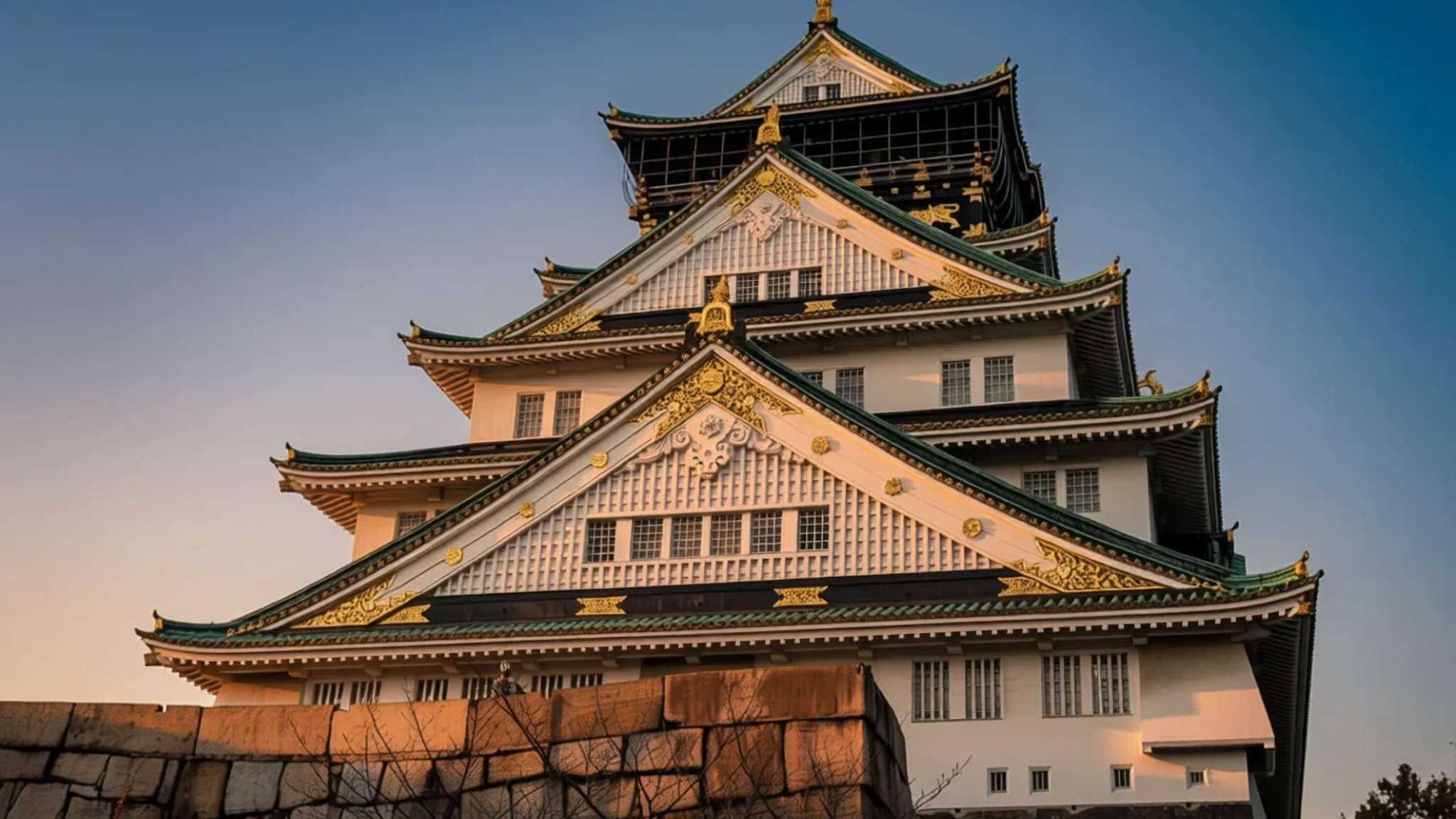
Go to Osaka for boisterous street life, legendary food markets, and centuries of merchant heritage in Japan's most unpretentious major city.
The place
Osaka sits on Honshu island within the Kansai region, serving as the capital and most populous urban core of its prefecture. As a major designated city and vital port, it anchors the expansive Keihanshin metropolitan area with a population of about 2.8 million residents living across its bustling wards. Historically recognized as a premier commercial powerhouse, the city developed outward from the Uemachi Plateau, an elevated tongue of land that once divided a shallow bay from the Seto Inland Sea. Geography dictated its rise: protected waters, rich alluvial soil, and a strategic coastal position turned early fishing communities into a thriving regional harbour.
Today, Osaka functions as a distinct cultural counterpart to Tokyo, possessing a direct, fast-paced personality and an egalitarian culinary obsession encapsulated by the local philosophy of kuidaore, meaning to ruin oneself through extravagant dining. The urban landscape layers ultramodern skyscrapers alongside labyrinthine shopping arcades known as shōtengai, narrow canal-side entertainment quarters, and quiet residential lanes that maintain the rhythm of everyday Kansai life. Wards such as Kita and Chūō concentrate much of the commerce, blending gleaming department stores with traditional wholesalers that have operated for generations. Unlike the hushed temples of nearby imperial capitals, Osaka thrives on noise, neon, and interpersonal warmth, inviting visitors to wander without a rigid itinerary and engage directly with the spirited character of its streets.
Its story
Osaka holds a deep prehistoric and medieval heritage that began long before concrete towers lined its rivers. During the ancient Jōmon period, much of the present-day municipal area lay beneath water, leaving the Uemachi Plateau as a narrow peninsula separating Kawachi Bay from open marine waters. Early hunter-gatherers gravitated toward this ridge because its elevated terrain offered safety from floods and military skirmishes, while providing abundant freshwater springs and rich surrounding vegetation.
Archaeological digs at the Morinomiya ruins in the central Chūō district have unearthed remarkable testimony from these early eras, including ancient shell mounds filled with oyster shells, discarded fish hooks, stone arrowheads, and pottery bearing traces of early rice preparation. These strata preserve millennia of daily existence, bridging the transition from nomadic foraging to settled agricultural communities as natural sediment gradually transformed the marine inlet into a tranquil lagoon.
As centuries progressed, political fortunes shifted. The port served briefly as an imperial capital during ancient times before evolving into a formidable feudal stronghold under samurai governance, culminating in the construction of its monumental castle. Following the Meiji Restoration, the settlement underwent rapid industrialisation, transforming into a powerhouse of manufacturing and urban planning that shaped modern Japanese commerce while retaining its distinct regional identity.
What to see
- Osaka Castle — Chūō-ku
Osaka Castle stands as a striking reconstruction surrounded by extensive parklands and defensive moats. While the exterior faithfully mirrors historic fortifications, the interior functions as a modern museum housing cultural artifacts and exhibits chronicling the samurai era and the broader history of the surrounding region.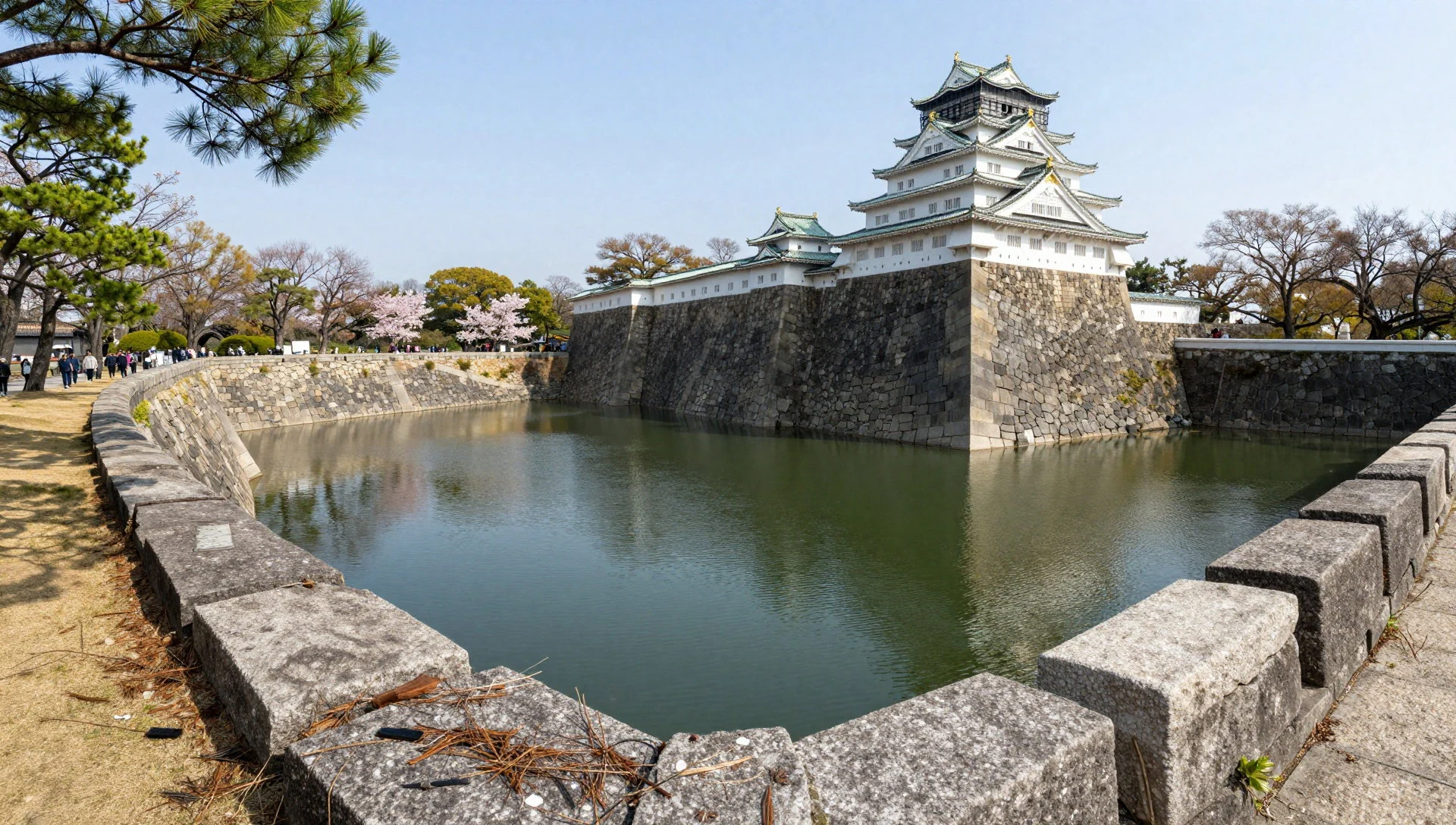
- Dōtonbori Canal — Namba
Dōtonbori Canal acts as the beating heart of the entertainment district, framed by towering neon advertisements, giant mechanical sea creatures, and bustling pedestrian bridges. It represents the ultimate expression of local food culture, where visitors stroll past endless street food stalls and lively taverns overlooking the water.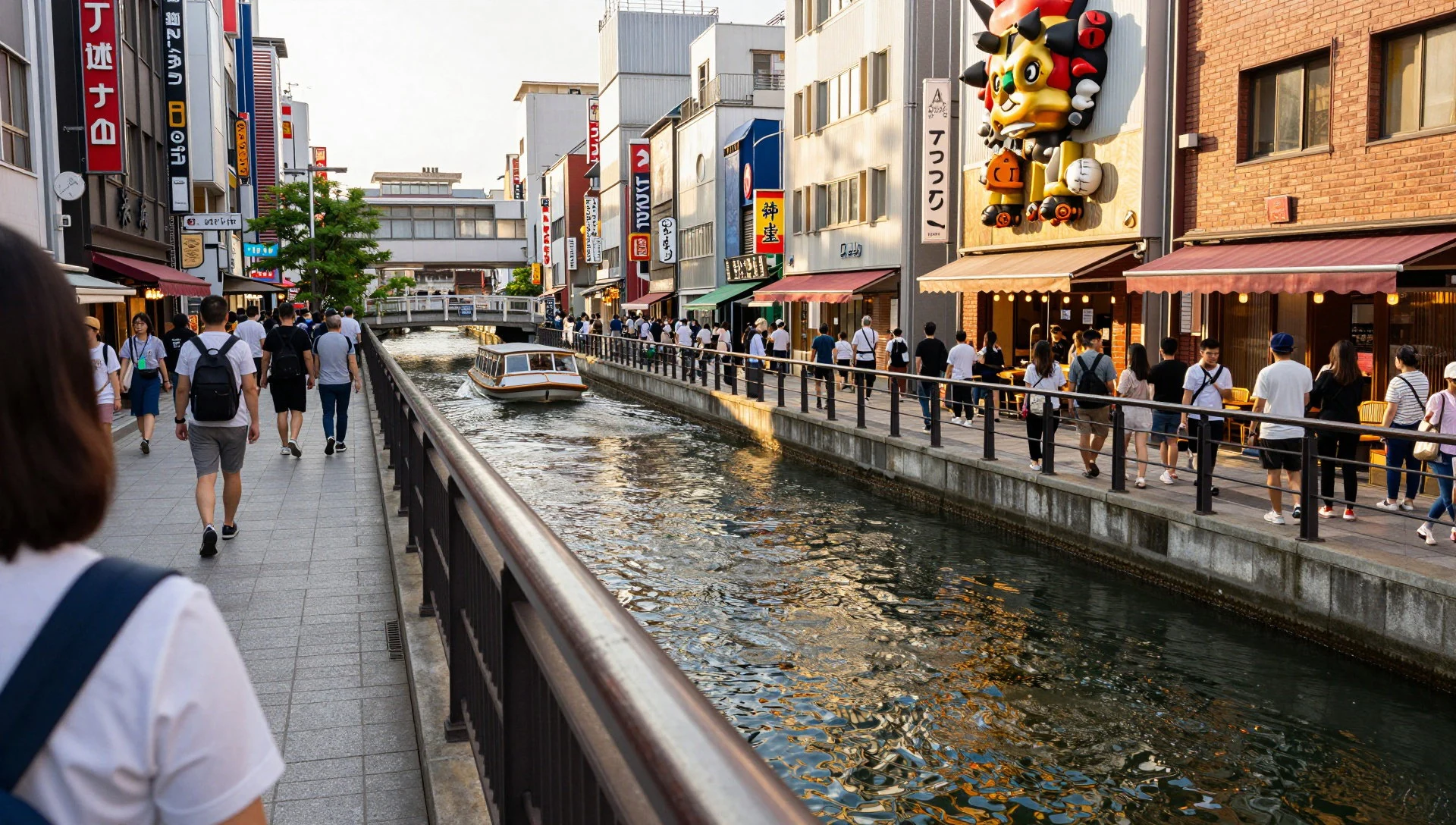
- Sumiyoshi Taisha — Sumiyoshi-ku
Sumiyoshi Taisha is one of Japan's oldest Shinto shrines, established long before continental architectural influences transformed local shrine design. It features a unique style with straight roofs and distinctive gable boards, set within peaceful grounds traversed by a dramatic curved vermilion bridge arching over a tranquil pond.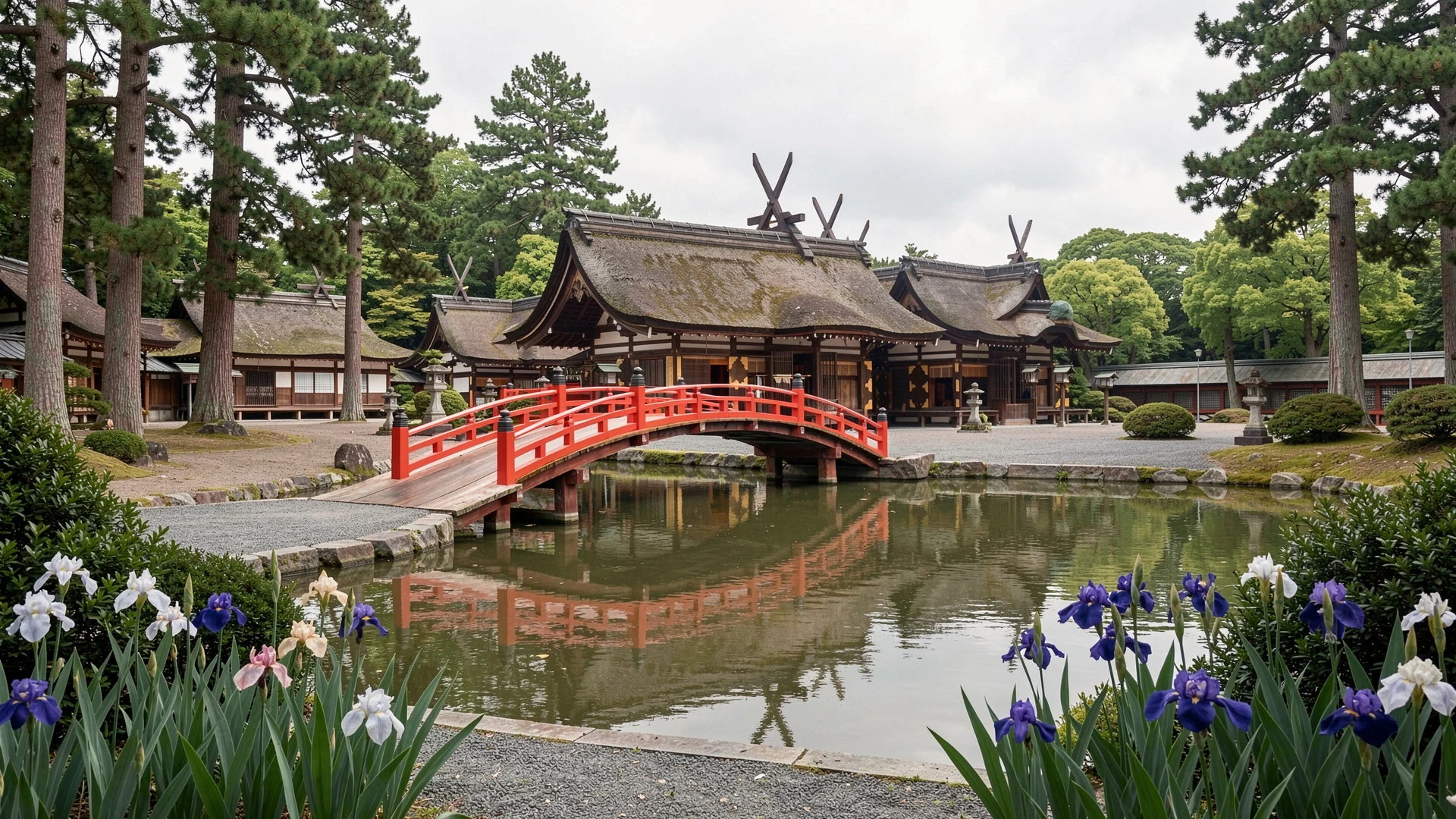
- Shinsekai and Tsūtenkaku Tower — Naniwa-ku
Shinsekai is a nostalgic retro neighbourhood planned around the steel framework of the Tsūtenkaku landmark tower. Developed in the early twentieth century with inspiration from Western cities, the district maintains a wonderfully gritty character filled with traditional game parlours, casual eateries, and lively neighbourhood shops.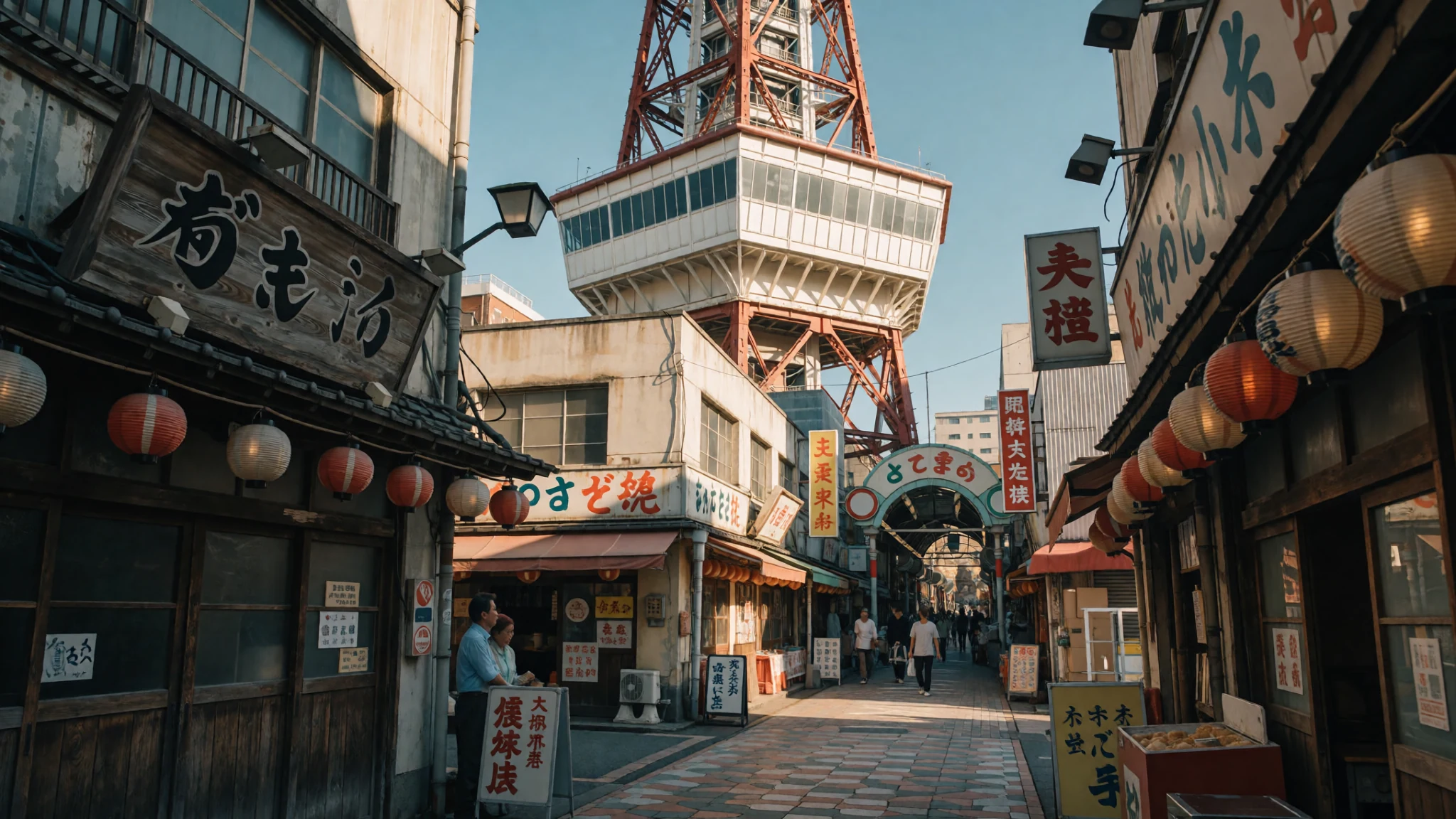
- Shitennō-ji — Tennōji-ku
Shitennō-ji is widely regarded as one of the country's earliest officially sponsored Buddhist temples, founded to promote spiritual harmony. The sprawling monastic complex features symmetrical multi-tiered pagodas and tranquil gardens that offer a serene spiritual retreat amidst the surrounding urban expansion.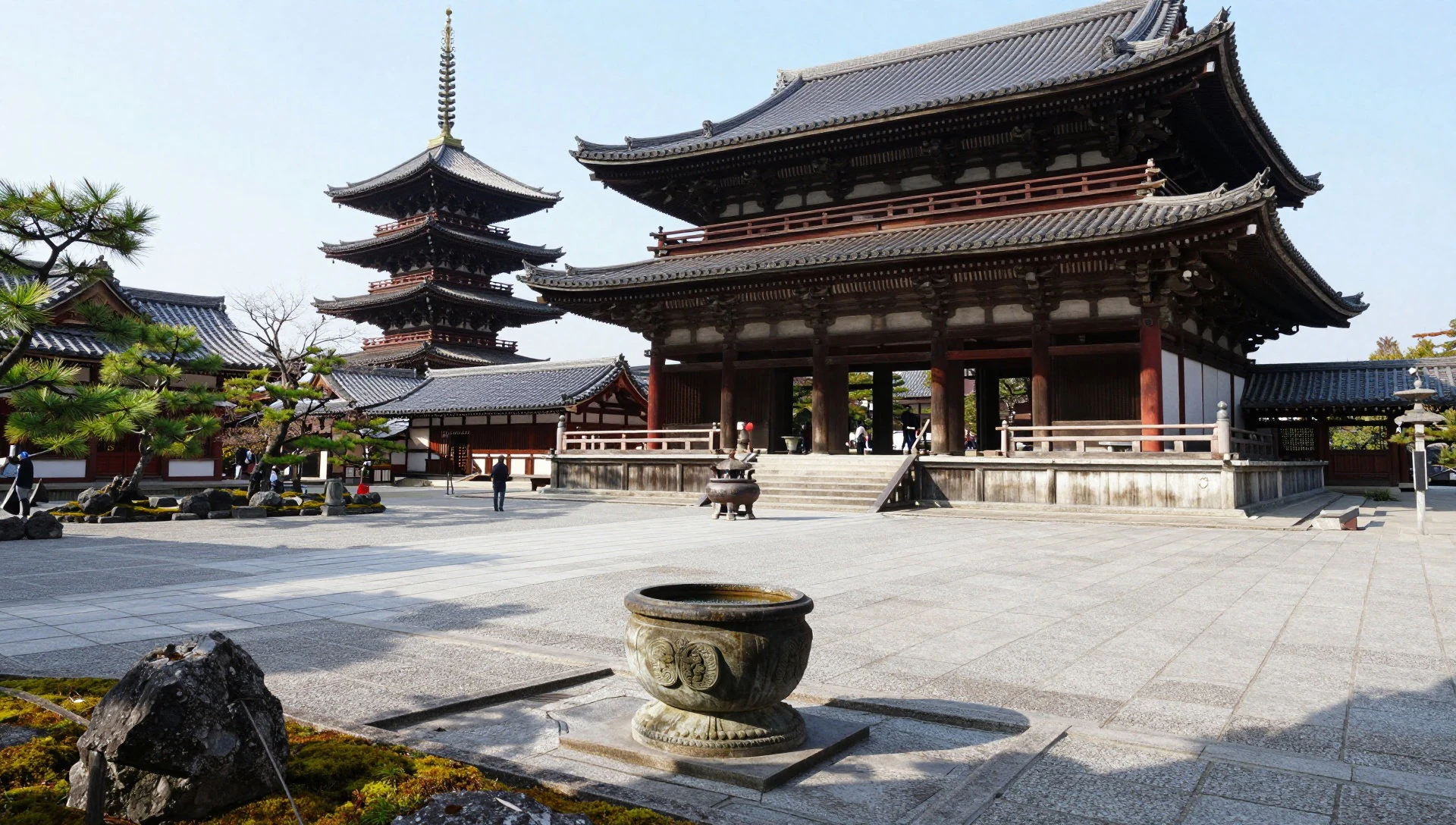
Culture
Osaka nurtures a fiercely independent cultural identity defined by mercantile pragmatism, warmth, and an infectious enthusiasm for social gatherings. Unlike more reserved regions of Japan, locals embrace direct conversation, expressive humour, and a relaxed approach to daily interactions. Commerce has driven the municipal rhythm for centuries, resulting in vast networks of covered shopping arcades known as shōtengai, including the remarkably long Tenjinbashi-suji arcade that stretches over two kilometres of continuous clothing boutiques, spice merchants, and family-run bakeries. This industrious spirit pairs with an absolute devotion to gastronomy, turning eating into a communal art form where sharing generous portions across crowded counter seating is standard practice. Modern creative subcultures thrive alongside traditional crafts in districts dedicated to electronics, manga, and vintage fashion. Visitors should always step off street footwear and slip into provided indoor slippers before entering traditional tatami dining rooms.
What to wear
Osaka balances historical textile traditions with a bold, contemporary street style that distinguishes its inhabitants from Tokyo's monochromatic commuters. Traditional attire such as silk kimono and summer cotton yukata still appear during seasonal shrine festivals, New Year celebrations, and classical arts performances, crafted using heritage dyeing techniques passed down through generations. In everyday modern life, residents favour practical yet expressive clothing, often incorporating vibrant patterns, streetwear influences, and comfortable footwear suited for navigating endless kilometres of covered arcades and railway platforms. Travellers exploring the city should pack versatile layers appropriate for the changing seasons, alongside slip-on shoes that can be easily removed when entering temples, traditional restaurants, and historic homes. Modest, neat attire is appreciated when visiting sacred sites, though the local aesthetic remains welcoming and unpretentious.
What to eat
- Battera Sushi — Historic sushi shops and traditional eateries across Chūō-ku
Battera is a pressed block sushi originating in Osaka, featuring cured mackerel layered over seasoned rice and firmly squeezed inside a traditional wooden box before being sliced into neat bite-sized rectangles.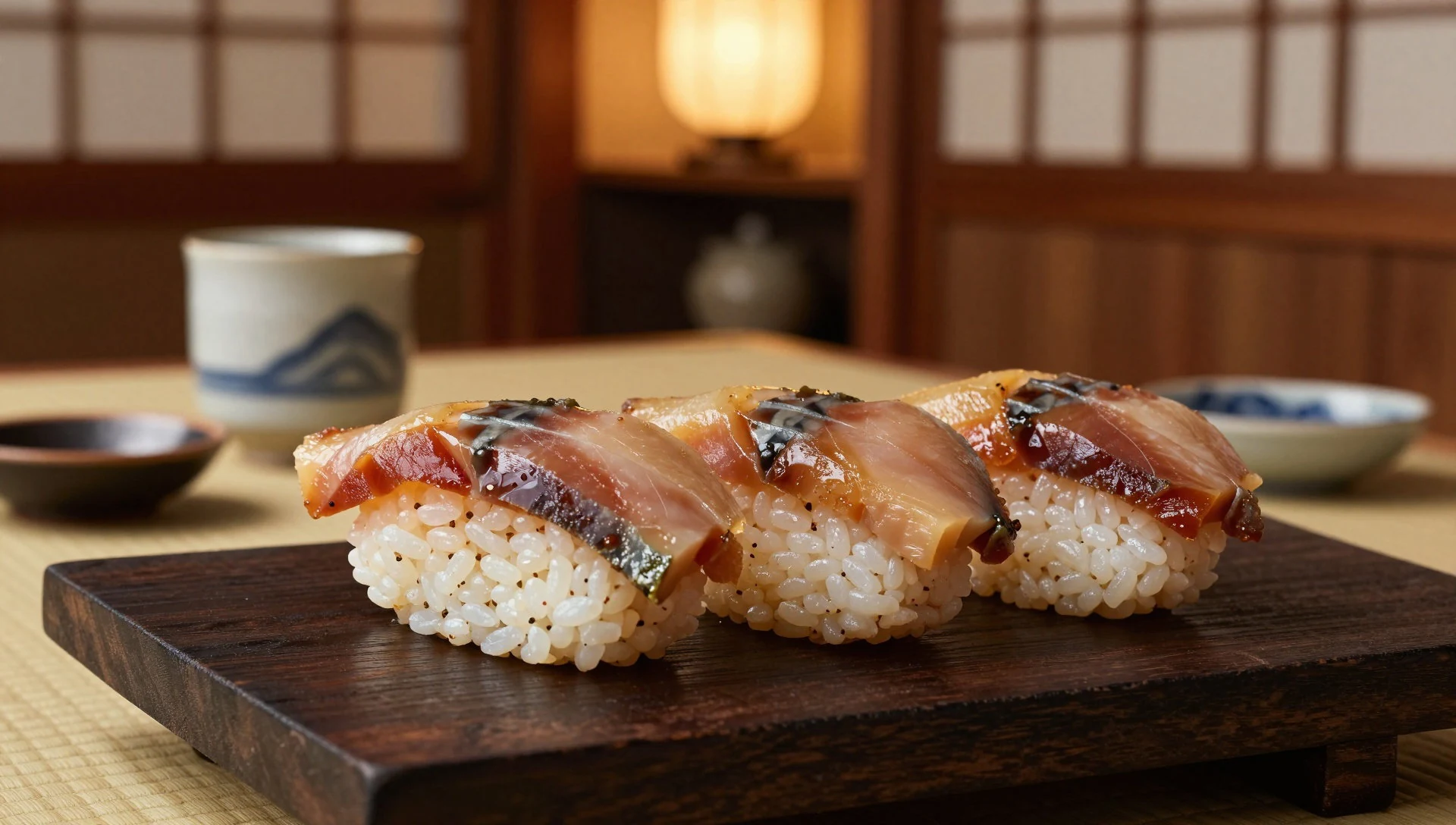
- Takoyaki — Street stalls throughout Dōtonbori and Shinsekai
Takoyaki are savory wheat-flour batter balls cooked in special molded pans with chunks of octopus, tempura scraps, and pickled ginger, served piping hot with sweet brown sauce, mayonnaise, and dancing bonito flakes.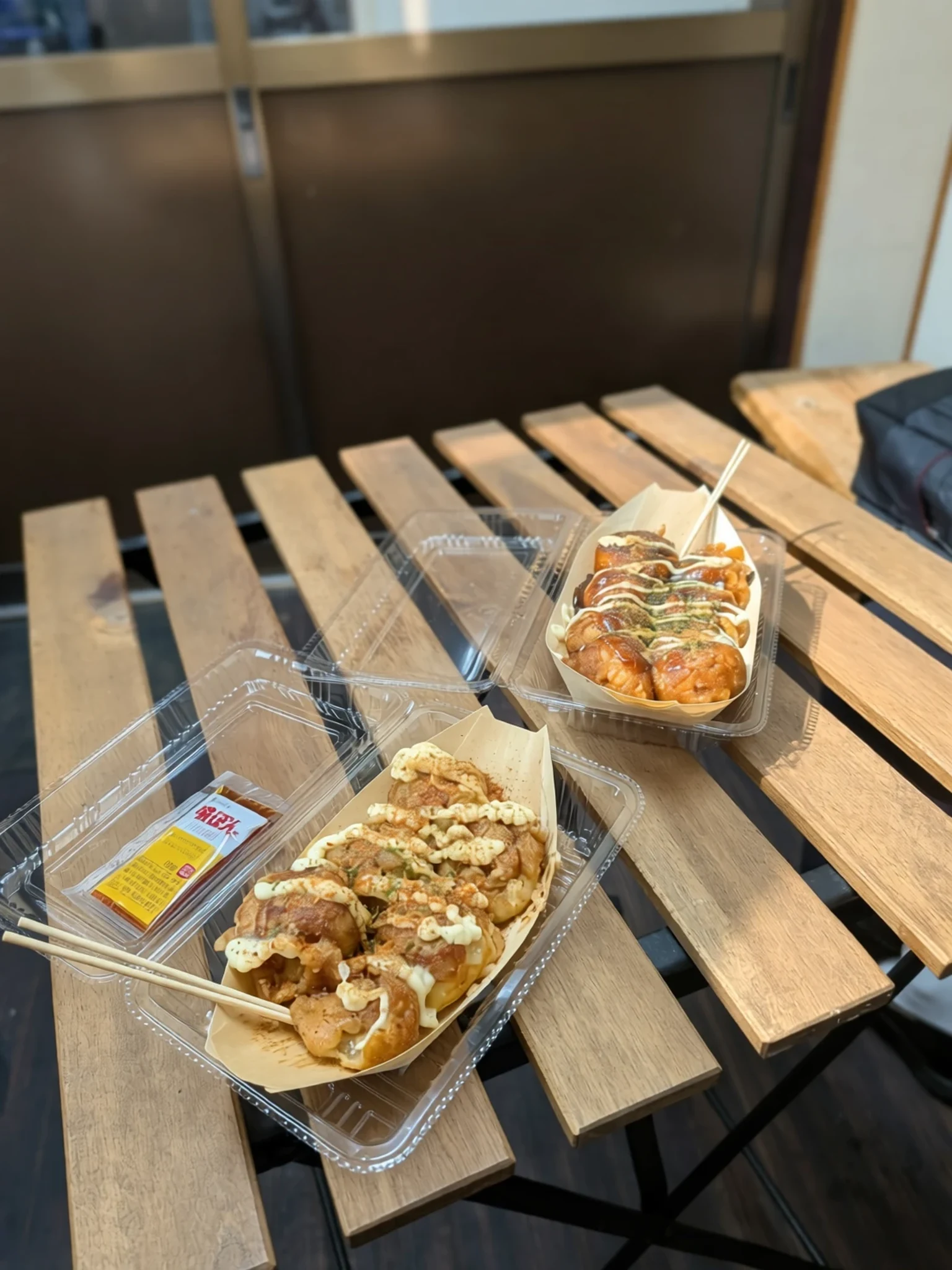
- Okonomiyaki — Dedicated grill restaurants in Umeda and Namba
Okonomiyaki is a savory pan-fried pancake composed of shredded cabbage, batter, meat or seafood, cooked on a sizzling iron griddle right in front of the diner and finished with tangy sauce and dried seaweed.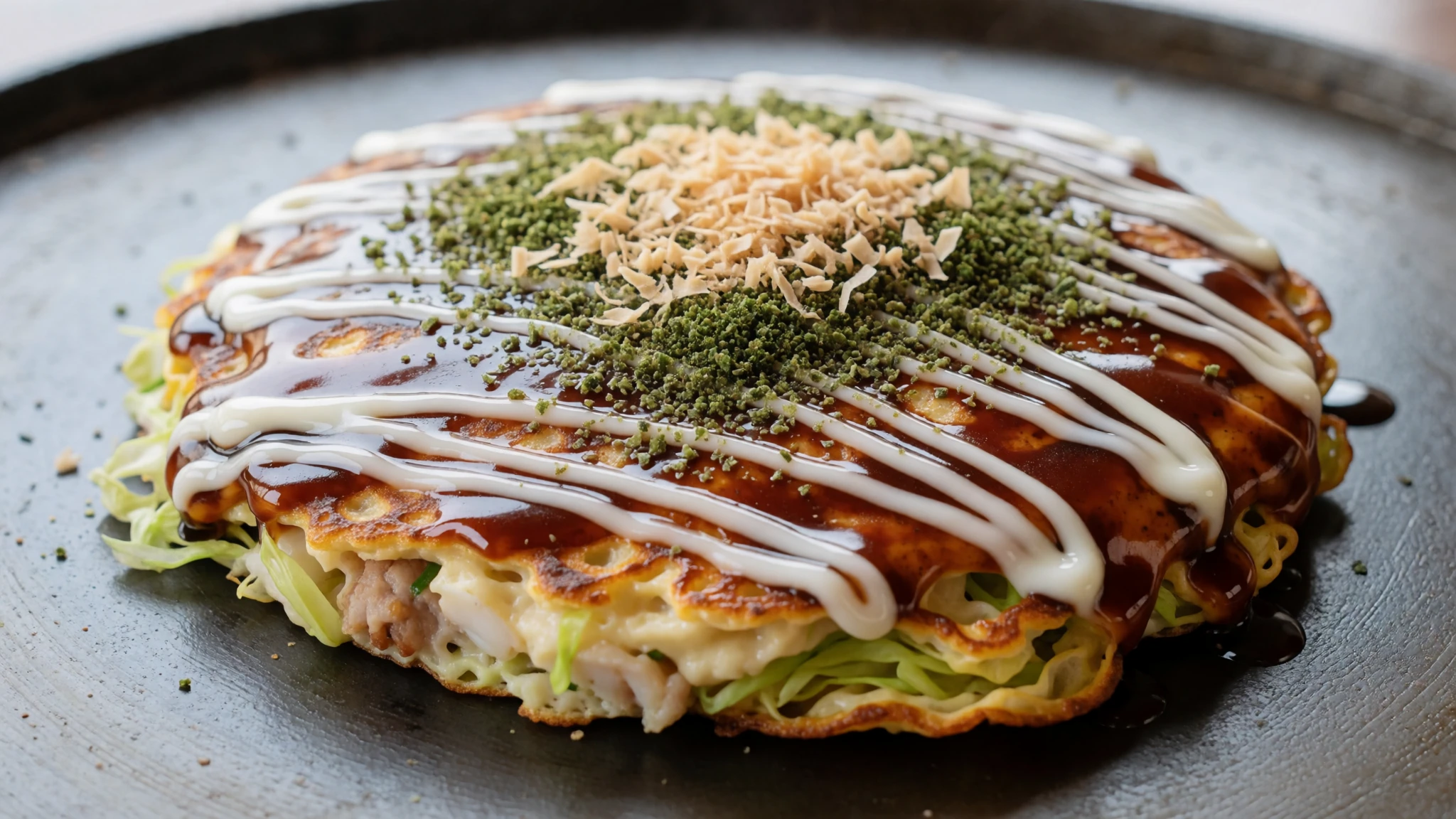
- Kushikatsu — Informal tavern alleys throughout the Shinsekai district
Kushikatsu consists of skewered meats, seafood, and vegetables coated in light breadcrumbs and deep-fried to a golden crunch, accompanied by a communal tin of savory dipping sauce where double-dipping is strictly forbidden.
Plan it
Best time. March to April for cherry blossoms along the riverbanks, and late October to November for vibrant autumn maple colours; June brings the humid rainy season, while August is intensely hot.
How long. 3–4
Getting there. Fly into Kansai International Airport, then take the rapid train service into the city center; Shinkansen bullet trains arrive directly at Shin-Osaka station from Tokyo.
Budget. mid
Tips
- Purchase an IC transit card for effortless travel on subways and buses
- Carry cash for small shrine donations and market food stalls
- Explore covered shopping arcades during sudden summer rain showers
- Visit popular canal areas early in the morning before crowds peak
Etiquette
- Remove footwear when stepping onto traditional tatami mats
- Never double-dip skewers into communal sauce containers
- Keep mobile phone conversations quiet while riding public transit
Nearby
Sources
- Wikidata Q35765 (CC0)
- Wikipedia (rev 1381570509) (CC BY-SA 4.0)
- Wikivoyage (rev 5385821) (CC BY-SA 4.0)