Rab
Rab, Croatia
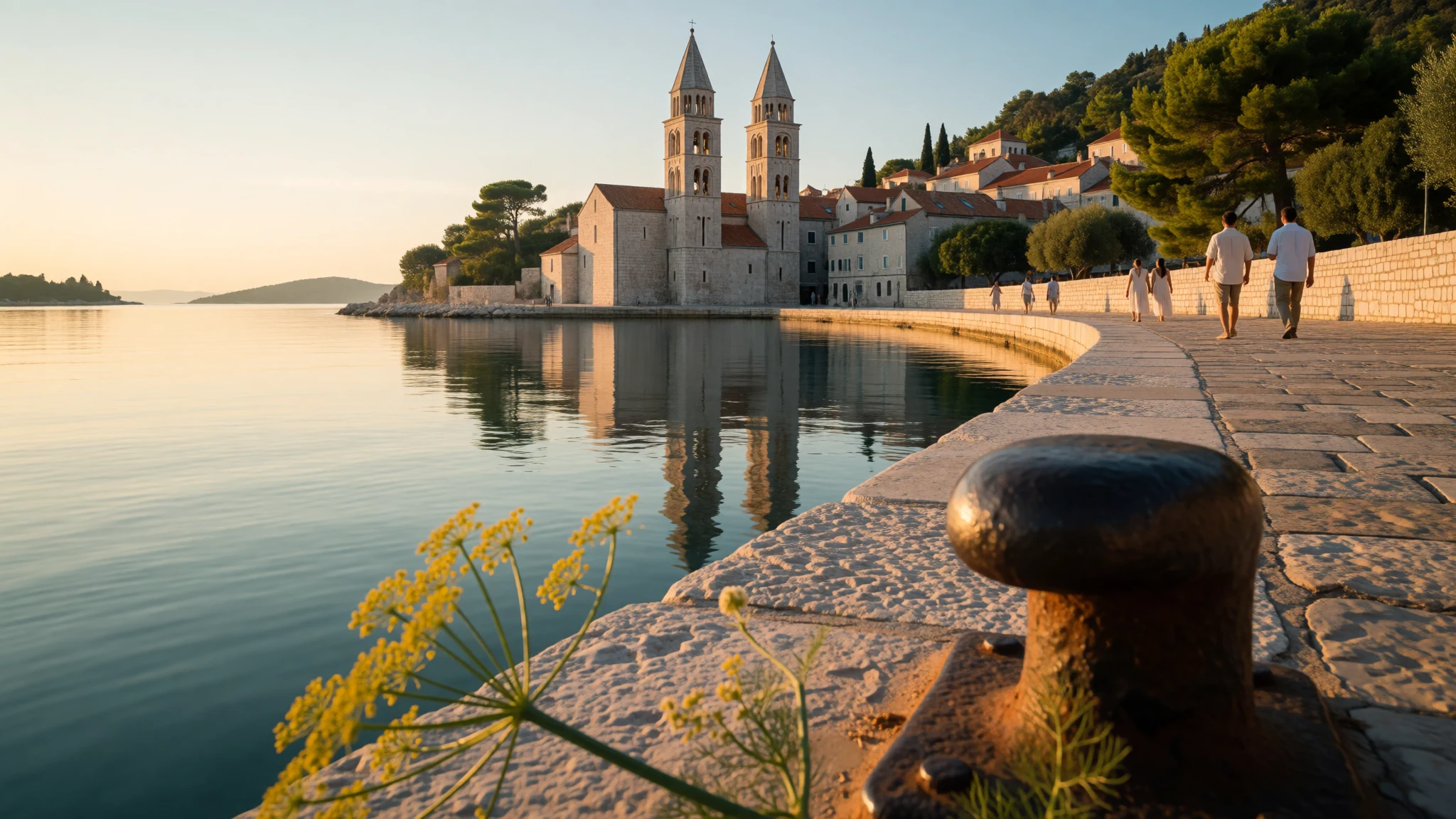
Rab feels like a whole holiday island in one: compact town history, long beach days, and inland walks when the sea gets busy.
The place
Rab is an Adriatic island just off the northern Croatian coast, in Primorje-Gorski Kotar County, with the town of Rab as the main settlement. The island measures 22 km from end to end and covers 93.6 km², but you can still get a sense of variety in a single day: barren karst on the north-east, and greener Mediterranean woodland further south-west.
For visitors, the appeal is how easy it is to switch modes. Morning light works well around the historic Rab town streets and harbour edges, then the afternoon can drift towards the beaches—Rab’s coastline is known for packing in plenty of beach options within its microregions. If the heat climbs or the crowds swell, the island also offers quieter escape routes: hiking on established trails, cycling around gentler stretches, or stepping into the island’s open-air archaeology theme.
On Rab, the “island time” is real, but it’s not empty. During peak summer weeks, Rab feels busy, and some paths near the town can get crowded. Outside high season—early spring and the shoulder months later in the year—Rab feels calmer, with cooler walking weather and a more dramatic-looking landscape.
The island sits at 408 m at its highest point, which is handy for planning: if the sea day is too hot, a climb inland can reset the mood quickly.
Its story
Rab’s story starts long before beach umbrellas. The island is first mentioned under the Illyrians in 360 BC, then it moved through the cultural gravity of empires—later part of the Roman world. Rab also became a recognised town in imperial times.
Religion and legends keep threading through the history. Saint Marinus, linked with the tiny republic of San Marino, is remembered in connection with Rab, and the present-day twin-city relationship between Rab and San Marino keeps that story close. Rab’s church history also appears in documented bishops, and the diocese’s administrative changes show how shifting borders and authorities reshaped local life.
In the Middle Ages, Rab operated like a Dalmatian city-state with degrees of autonomy while also being tied to the Byzantine sphere. Political control repeatedly flipped—Venice later held sway, a period of Napoleonic influence followed, and later the Habsburgs brought Austrian rule until the end of the First World War era.
Even the 20th century leaves a mark. During the Second World War, the Rab concentration camp was established on the island, a sobering contrast to today’s relaxed holiday pace.
What to see
- Old Town (Rab town) — Rab town
Old Town is Rab’s historic centre, where the harbour edge and street layout give a strong sense of the island’s civic life. Walk slowly: the stone lanes and viewpoints help you understand why the town became the island’s hub. It’s a good place to start in softer light.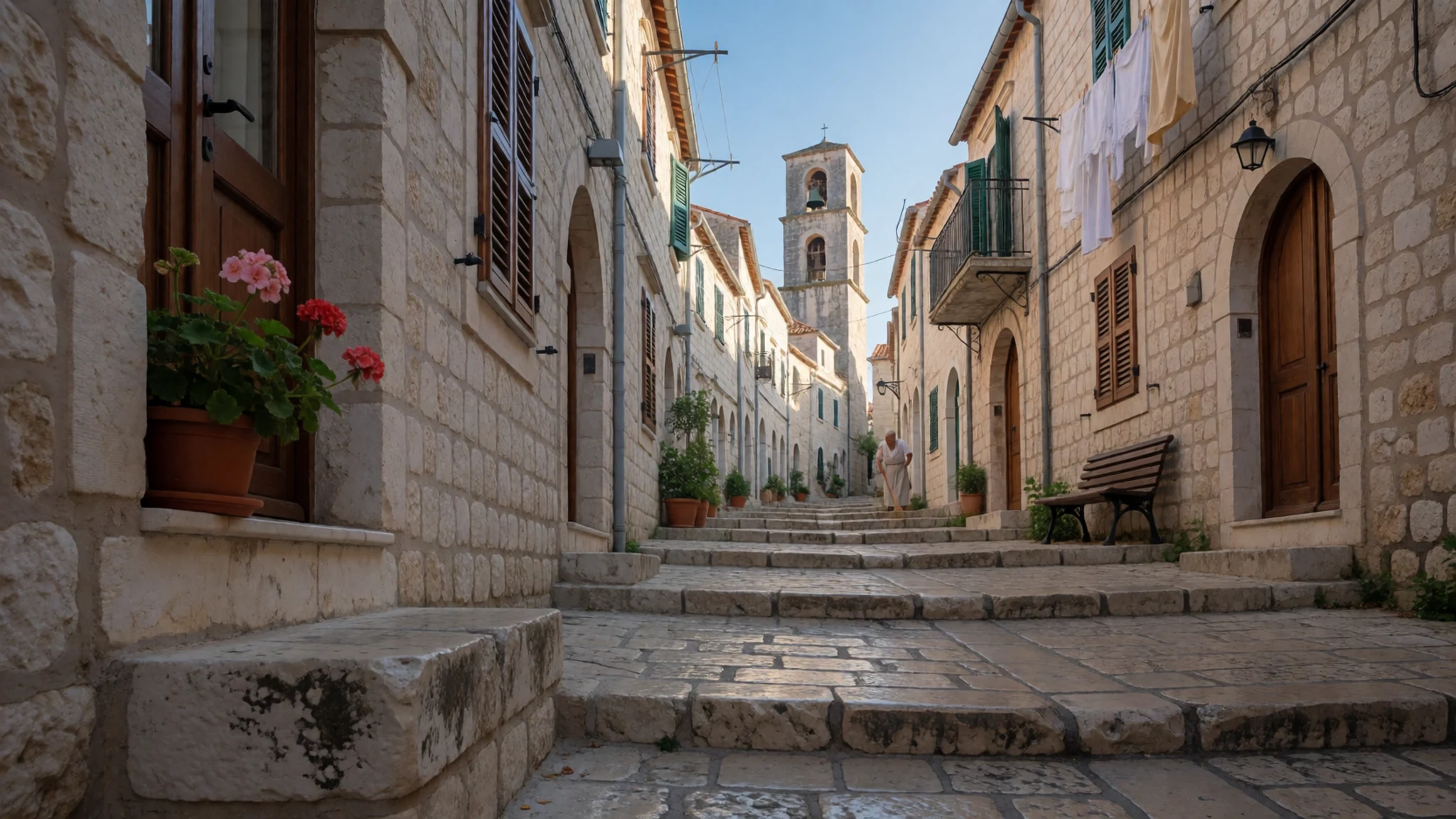
- Rab archaeological traces (open-air museum) — Kampor, Lopar & Supetarska Draga
Rab archaeological traces are set up as an open-air museum, with multiple sites connected by educational routes. The idea works well for visitors who like “on-foot discovery” rather than indoor tickets. The trails link parts of the island including Kampor, Lopar and Supetarska Draga.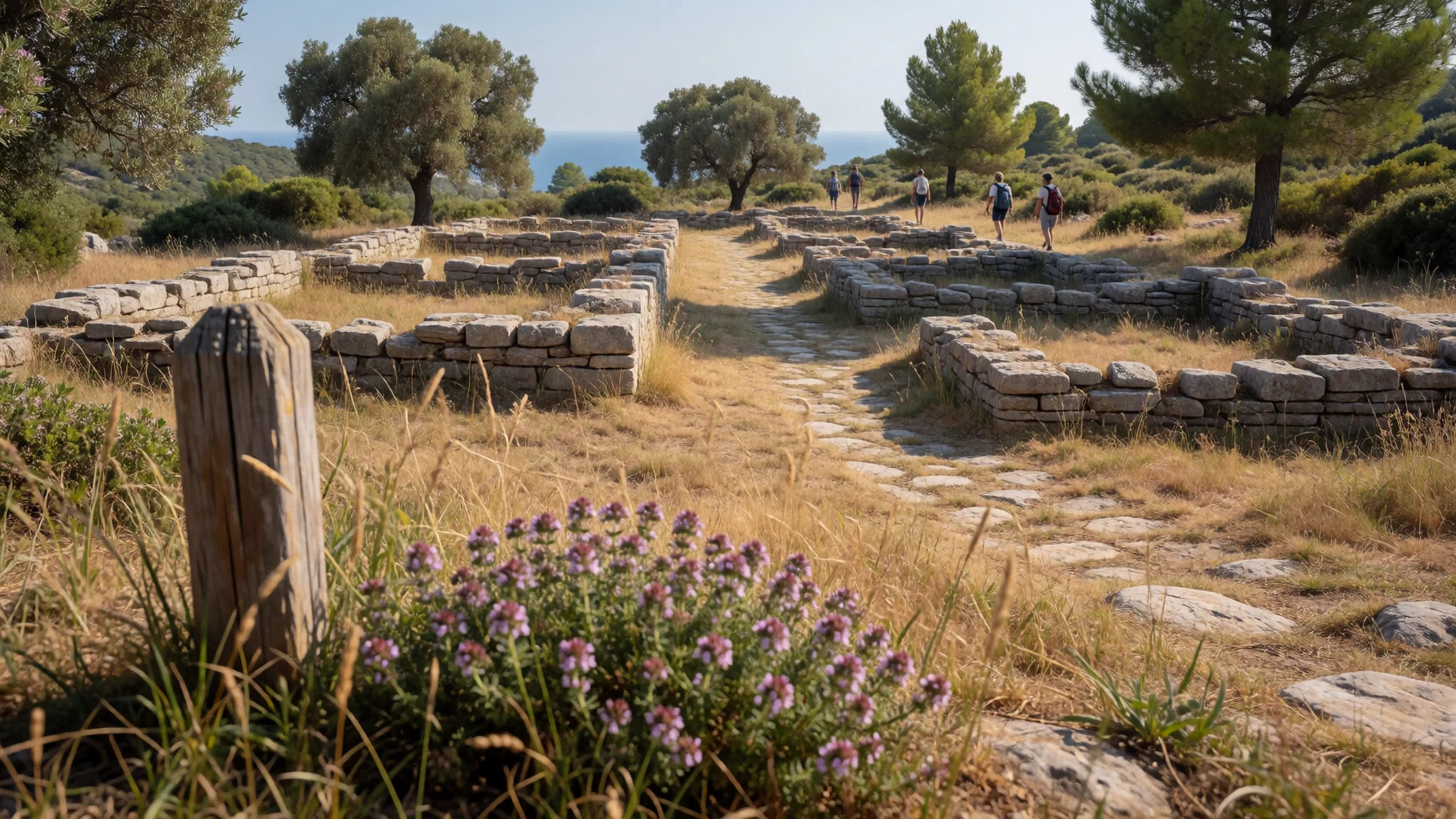
- Mišnjak–Lopar hiking trail — Lopar & Mišnjak area
The Mišnjak–Lopar hiking trail is the kind of route that makes the island feel bigger than its map. Expect a countryside-to-coast rhythm: dry stretches in places, then greener patches that change the light through the day. It’s one of the better bets for a longer, active afternoon.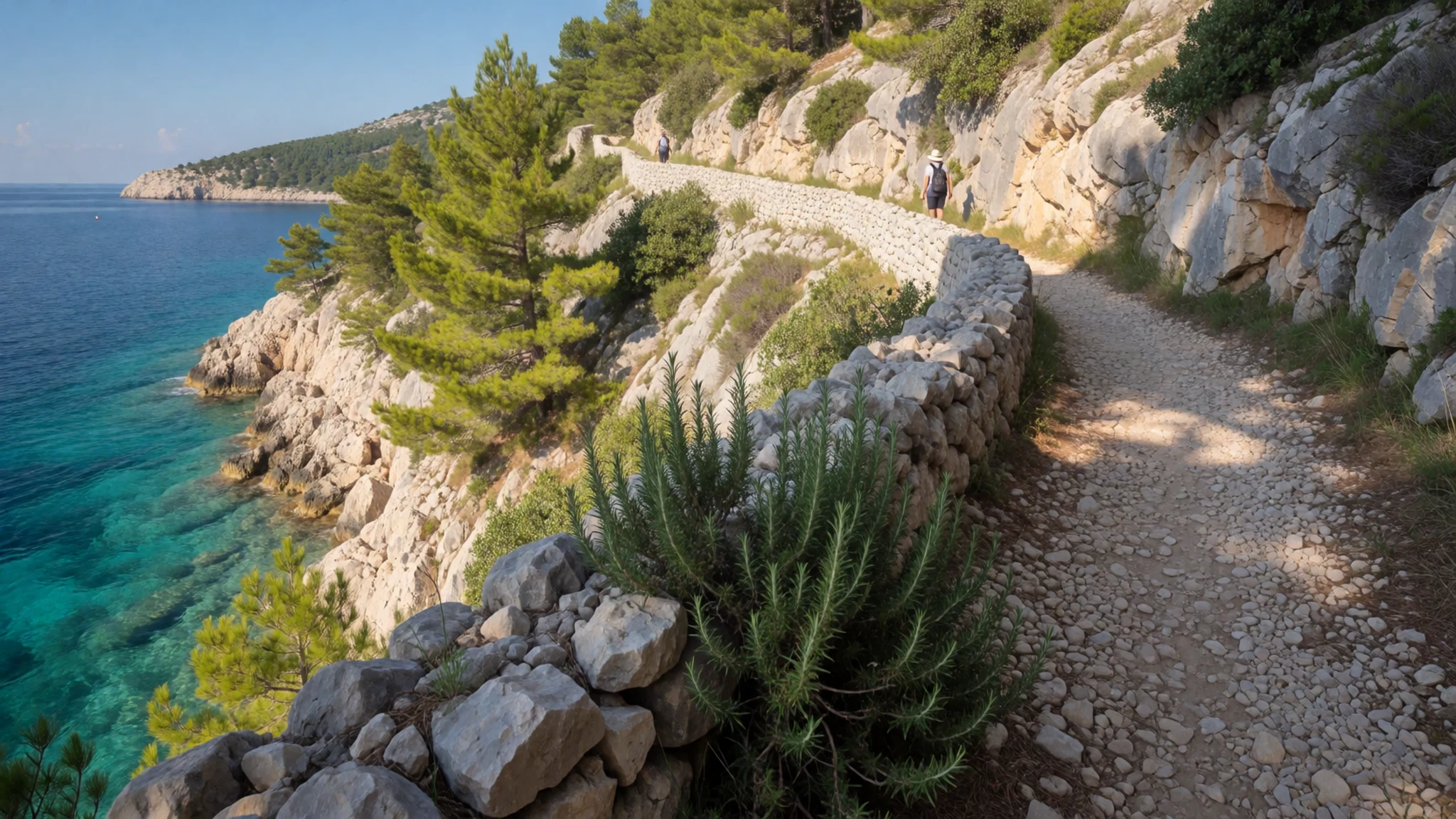
- Rab beaches — Coastline around Rab
Rab is known for a dense concentration of beaches across its microregions in Croatia. That doesn’t mean they’re all the same: some feel sheltered and easy for lounging, while others are more exposed and suited to a swim-with-a-view. Pick based on the day’s wind and the mood.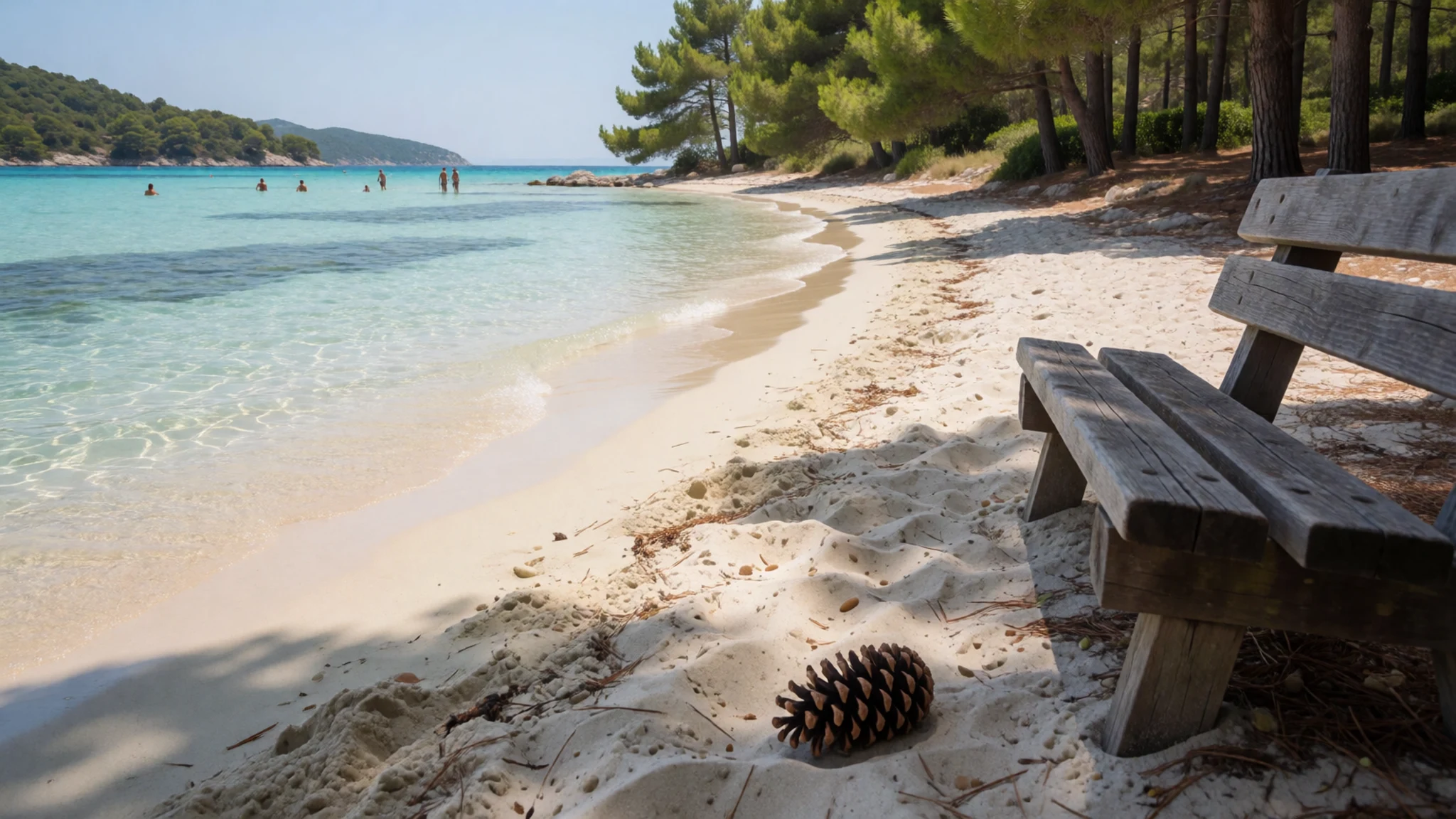
- Cycling around the island — Between Rab town, Lopar and Kampor
Cycling is a straightforward way to explore Rab without committing to steep climbs every time. The island’s layout makes it easy to plan short loops from settlements and then lengthen the ride when legs feel good. It’s also handy on hotter days when you want breeze more than deep shade.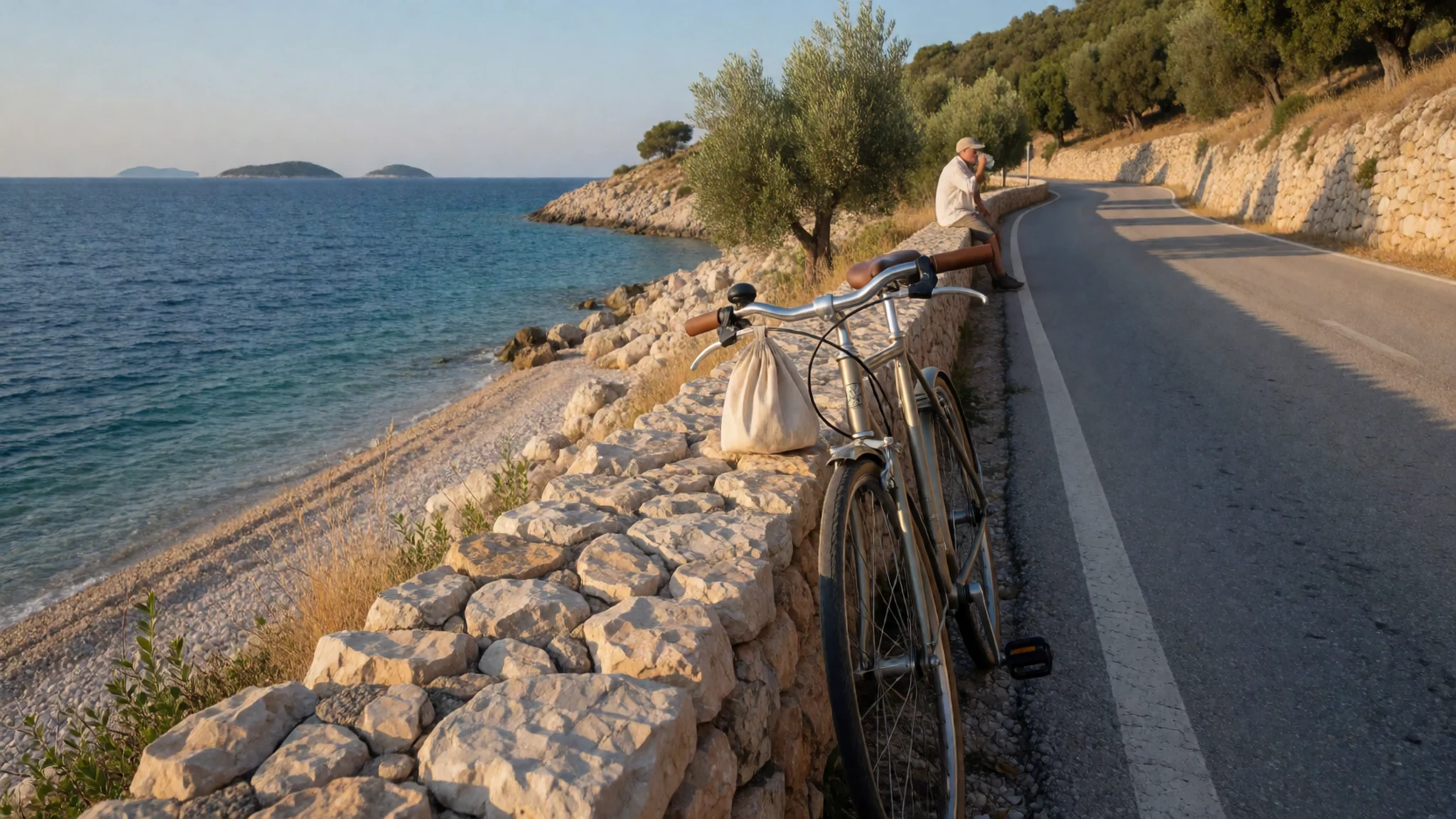
Culture
Rab’s culture is island culture: civic pride in the town centre, daily rhythms shaped by the Adriatic, and a noticeable mix of traditions that come from its history of shifting rulers. You can feel it in the way the island presents itself—town-first for arrivals, then outward into beaches, trails and countryside routes.
A big part of Rab’s identity is how it has long sat between regions and influences. The island was a frontier between Liburnia and Dalmatia, and over time it moved through Roman and Byzantine worlds and later came under Venetian control, with further changes through the modern era. Even if visitors come for the sea, the landscape and archaeology routes remind you that Rab was built to be lived in, defended, and connected.
There’s also a distinct holiday culture here: Rab became well known in the Kvarner archipelago as a holiday and wellness destination after Opatija, and it’s associated with the growth of nudism in the region. That means you’ll see different expectations depending on the beach and the stretch of coast.
Respect the space, especially at shoreline spots where people choose how they want to spend their day—follow local norms for swimwear and keep your distance from others’ comfort zones.
What to wear
On Rab, the most visible “traditional” clothing is hard to spot day-to-day, because the island’s everyday style is shaped by sun, sea and summer cycling. Rab is still part of Croatian coastal culture, so you’ll commonly see lightweight shirts, linen dresses, shorts and practical sandals or trainers—clothes that handle heat and allow easy movement for beach time.
That said, visitors should pack for two modes. For beaches and walks, breathable fabrics win: tops you can reapply sunscreen on easily, a sun hat, and quick-dry layers for breezier evenings. For religious or historic sites around Rab town, keep things modest—cover shoulders when entering churches or chapels, and choose longer hems if possible. Footwear matters too: some lanes and trailheads involve uneven ground, so wear shoes you can walk in comfortably, not only flip-flops.
If nudism or minimal swimwear appears at certain beaches, that’s not a “you” decision to force—observe first and follow what others do there. When in doubt, choose standard swimwear and let the beach’s local vibe guide your next step.
What to eat
- Grilled seafood and Adriatic-style fish — Rab town waterfront eateries
On Rab, seafood is the obvious go-to: look for simple grilled fish or squid-style plates that taste like the coast. You’ll typically find these around Rab town’s waterfront eateries and casual beach-front cafés.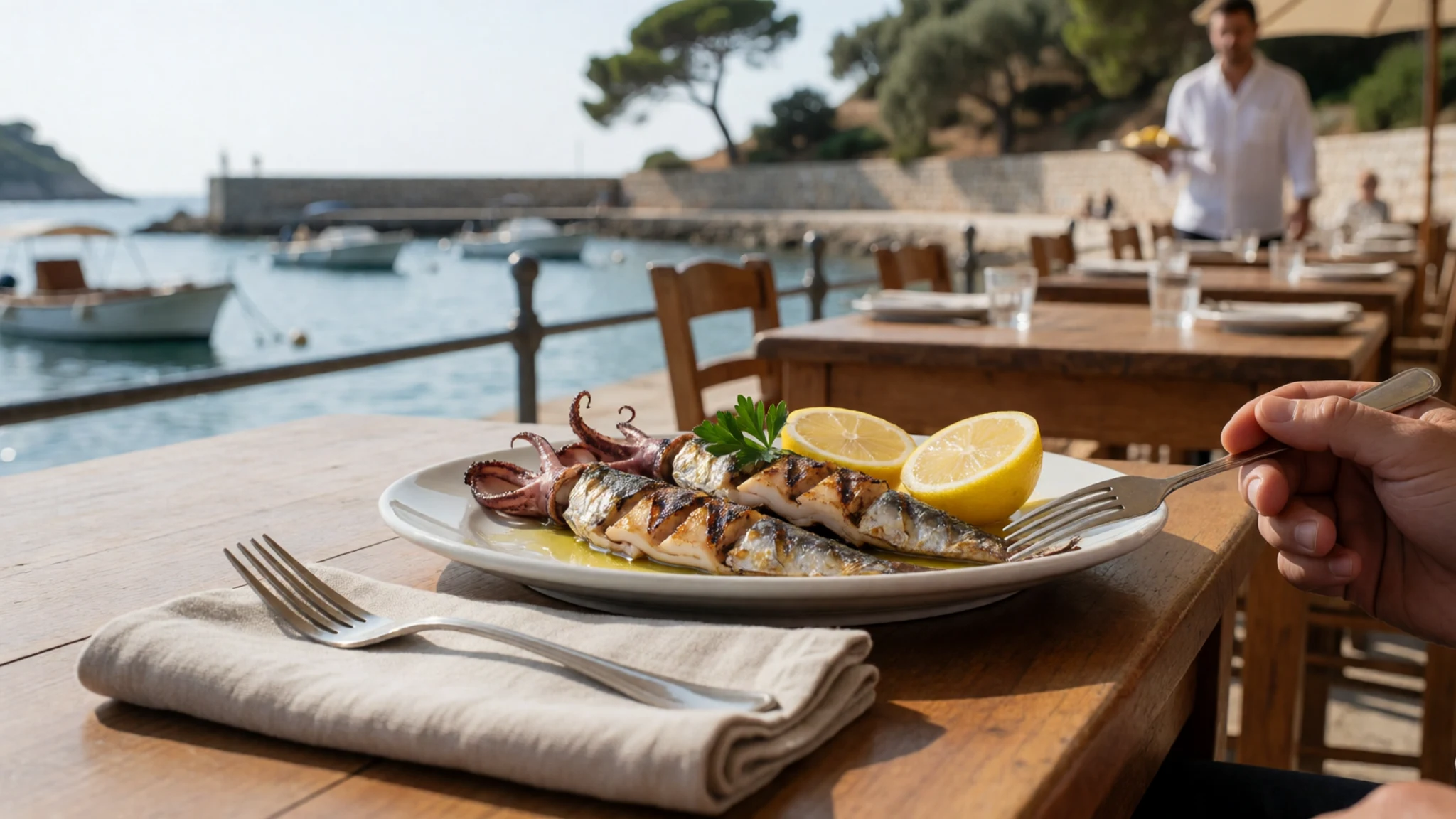
- Peka-style meat dishes — Local restaurants around Rab town
Peka-style cooking (slow-cooked under a cooking bell) shows up across Croatian islands, and Rab is no exception. It’s the sort of hearty meal that feels right when the evening cools down after a long beach day.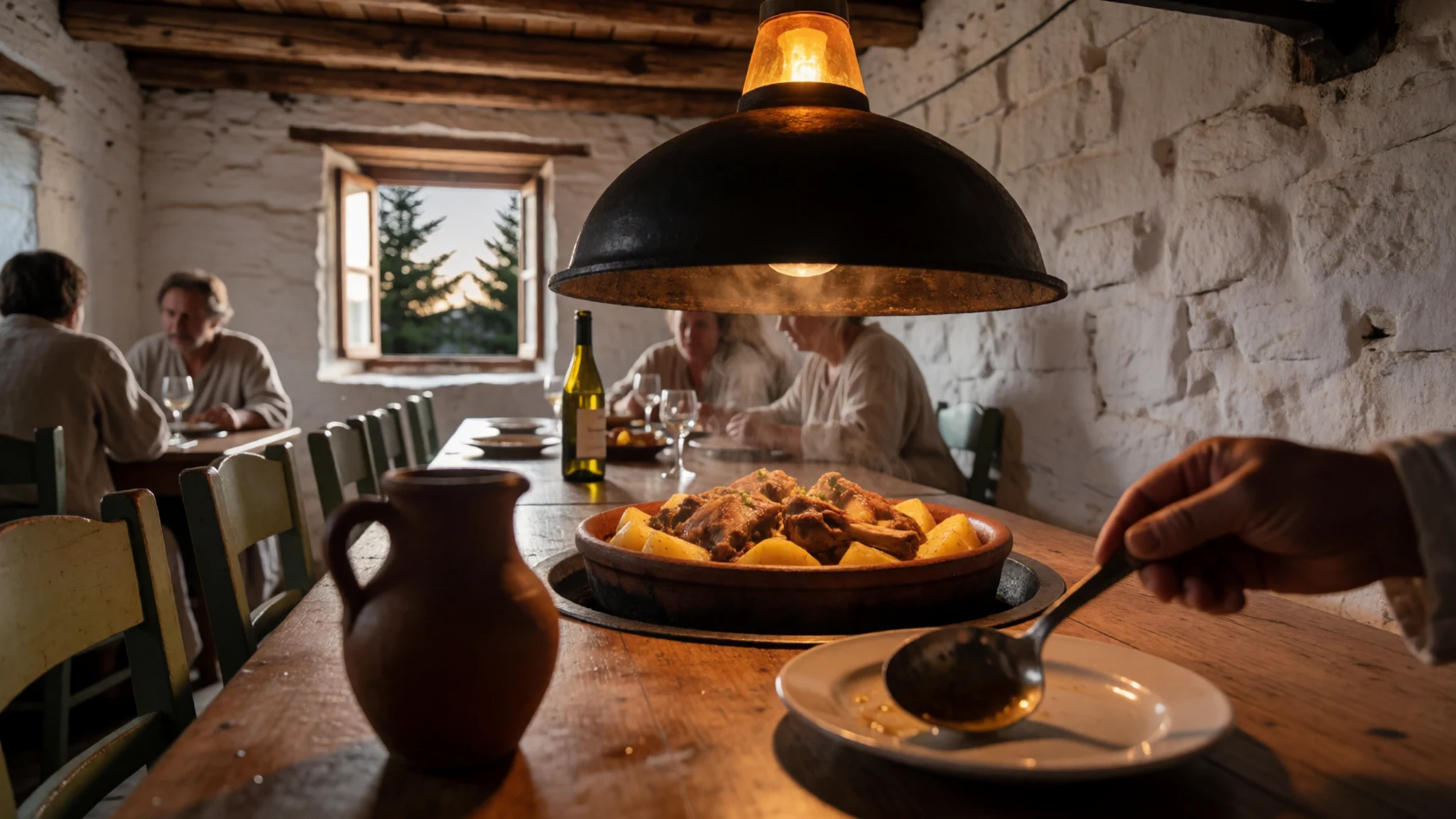
- Fresh salads with olive oil — Town-centre eateries
Fresh local salads and olive-oil plates are common on Rab, especially when the weather is hot and everyone wants something light. You can usually find them as appetisers or side dishes with meals in town. - Local cheese and cured meats — Markets and deli-style counters in Rab
For something quick between swims, try a platter of cheese and cured meats. It’s easy to share and keeps well for a snack day, particularly if you’re cycling or moving around the island. - Seasonal fruit and simple pastries — Bakery stops around Rab town
Late spring and summer bring fruit that feels made for island grazing, and bakeries often have straightforward sweet pastries for tea. Grab something light and keep it moving—Rab’s days are best spent outdoors.
Plan it
Best time. Best months for comfortable visits are May to early June and September, when days are warm but not at their hottest; it’s driest in July and August but that’s also when it’s hottest and rain is lowest. The wettest months are November and September, so they suit quieter trips, while winter is cool and quieter.
How long. 3–4
Getting there. Ferry from Stinica on the mainland near Jablanac, or from Valbiska on the island Krk by car ferry; there is also a ferry from Tovarnele near Lun on the island Pag for pedestrians and cyclists.
Budget. mid
Tips
- Plan Rab town for the morning, when streets and viewpoints feel easier to walk
- Do at least one inland route (hike or cycling) to balance beach-heavy days
- Use the archaeological trails for a structured walk that connects different areas
- Bring a light layer for breezier evenings near the harbour
- If you’re travelling by ferry, build in buffer time in the peak season
Etiquette
- Dress appropriately in religious spaces and cover shoulders where you’re expected to
- Follow local norms for swimwear at beaches—observe first, then match the vibe
- Keep noise down in small-town lanes, especially around early-evening dining
Nearby
Sources
- Wikidata Q13277 (CC0)
- Wikipedia (rev 1384104872) (CC BY-SA 4.0)
- Wikivoyage (rev 5235343) (CC BY-SA 4.0)
- Photo photos/01-rab-island-from-velebit.jpg (CC BY 3.0)
- Photo photos/02-rab1.jpg (CC BY 3.0)
- Photo photos/03-rab-town-from-the-vraag.jpg (Public domain)
- Photo photos/04-rk-2409-2080111-rab.jpg (CC BY-SA 4.0)
- Photo photos/05-arbe-purger-12533.jpg (CC BY 4.0)
- Photo photos/06-rab-how-to-see-my-friend-panoramio.jpg (CC BY 3.0)
- Photo photos/07-20140505-rab-misnjak-memorial.jpg (CC BY 3.0)
- Photo photos/08-dalmatian-islands-seen-from-the-vratnik-pass-2025-05-18.jpg (CC BY-SA 4.0)


