Dubrovnik
Dubrovnik, Croatia
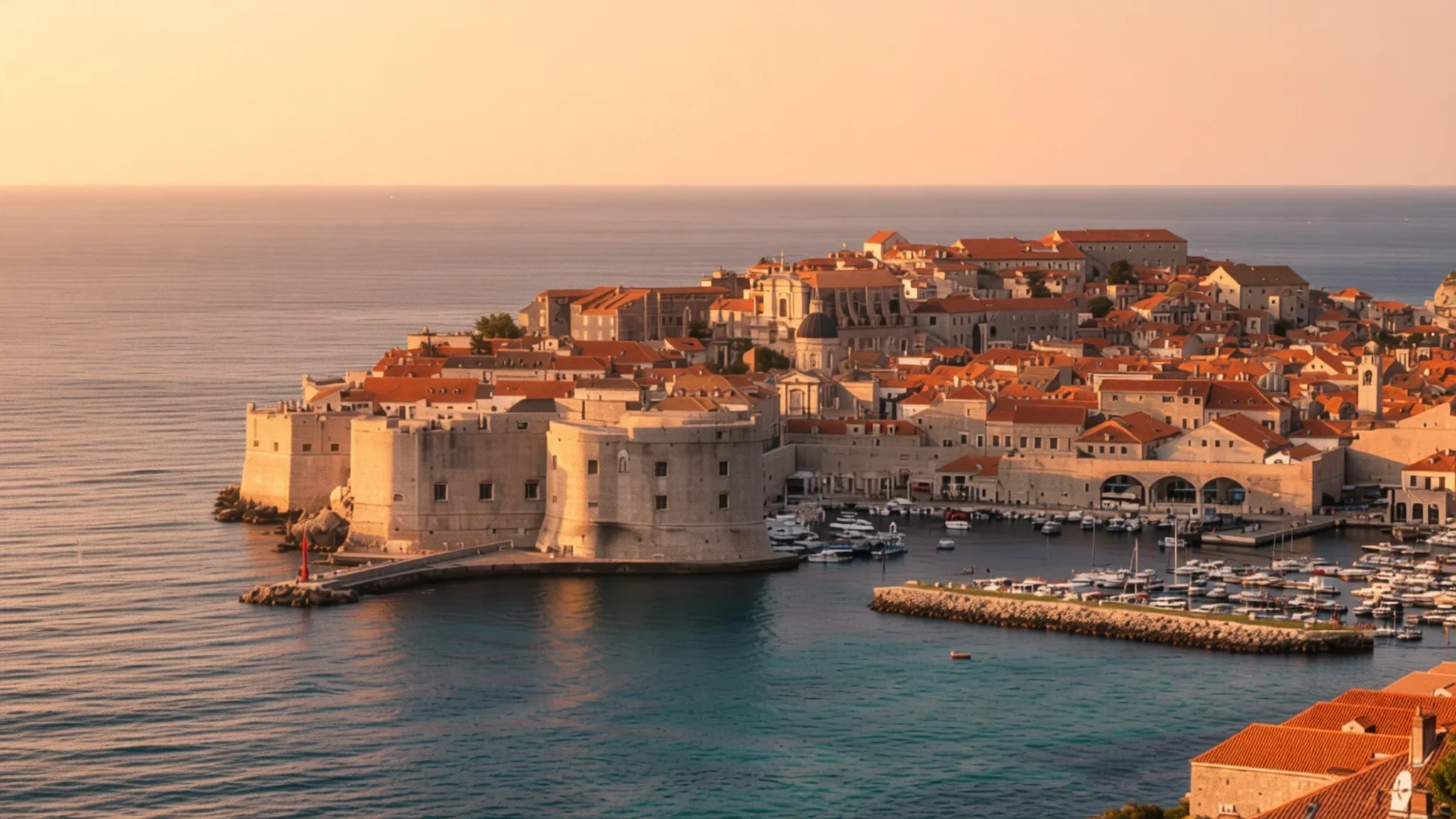
Dubrovnik enchants visitors with its majestic stone ramparts, historic maritime heritage, and stunning Adriatic coastline views.
The place
Dubrovnik stands proudly in southern Dalmatia along the gleaming expanse of the Adriatic Sea, functioning as a vibrant seaport and the administrative hub of Dubrovnik-Neretva County. Recognized globally for its remarkably preserved medieval architecture and formidable fortifications, the historic old city draws travellers from across the globe to wander its gleaming limestone pedestrian streets. According to local records, the settlement maintains a resident population of 41,562 people, giving the ancient fortress a lively residential heartbeat behind its heavy stone gates.
The geographical setting of Dubrovnik is nothing short of dramatic, wedged between steep, barren coastal mountains and the intensely blue sea. Centuries of maritime trade shaped the compact urban layout, where narrow alleyways climb steeply away from the main thoroughfare, the Stradun, like ribs from a spine. Small squares open unexpectedly around baroque churches and Renaissance palaces, providing shady respites from the Mediterranean sun. While the ancient port once launched merchant fleets across the known world, today it serves as a bustling harbour for local boats and coastal excursions.
Visitors walking the perimeter encounter an unbroken line of defensive architecture that has protected the citizenry through numerous historical eras. The mild Mediterranean climate nurtures palm trees and oleander against the pale stone, while the constant sea breeze tempers the warmth of summer afternoons. Despite the modern influx of tourism, Dubrovnik retains a distinct character shaped by its rugged topography and centuries of maritime independence, offering a fascinating glimpse into a coastal realm where land and water meet in striking harmony.
Its story
Dubrovnik traces its earliest origins back to antiquity, when the site was inhabited by the Illyrian tribe known as the Pleraei. Historical accounts note that the settlement of Ragusa was established upon a rocky island by refugees fleeing the destruction of the nearby Roman city of Epidaurum. Archaeological excavations have continually unearthed older layers of habitation, including the remains of an early Byzantine basilica and ancient coins that point to lively pre-Christian trading activities along this rocky coast.
Throughout its formative centuries, Dubrovnik navigated a complex web of regional powers, existing under the protectorate of the Byzantine Empire and later submitting to the sovereignty of the Republic of Venice. However, the turning point in the local narrative occurred when the community began ruling itself as a free state. Through shrewd diplomacy and formidable maritime commerce, the maritime Republic of Ragusa achieved a remarkable level of economic prosperity and cultural sophistication. This golden age fostered vibrant local literature, earning the port its storied reputation as a brilliant crown among regional urban centres.
Yet the resilience of Dubrovnik has faced severe trials throughout the ages. A cataclysmic earthquake struck the entire city, bringing widespread devastation and reducing many Gothic and Renaissance structures to rubble. Through painstaking reconstruction, the community preserved its architectural identity, creating a unique urban tapestry where survivors of the catastrophe stand proudly beside later restorations. Today, every restored stone archway and quiet cloister reflects the enduring spirit of a populace that repeatedly rebuilt its coastal sanctuary.
What to see
- Pile Gate — Western entrance of the Old Town
Dubrovnik features the historic Pile Gate as a magnificent stone portal, serving as the main western entrance into the pedestrian-only Old Town. Visitors cross a sturdy bridge over a former moat, entering through defensive double gates that once guarded the medieval city from unwanted intruders.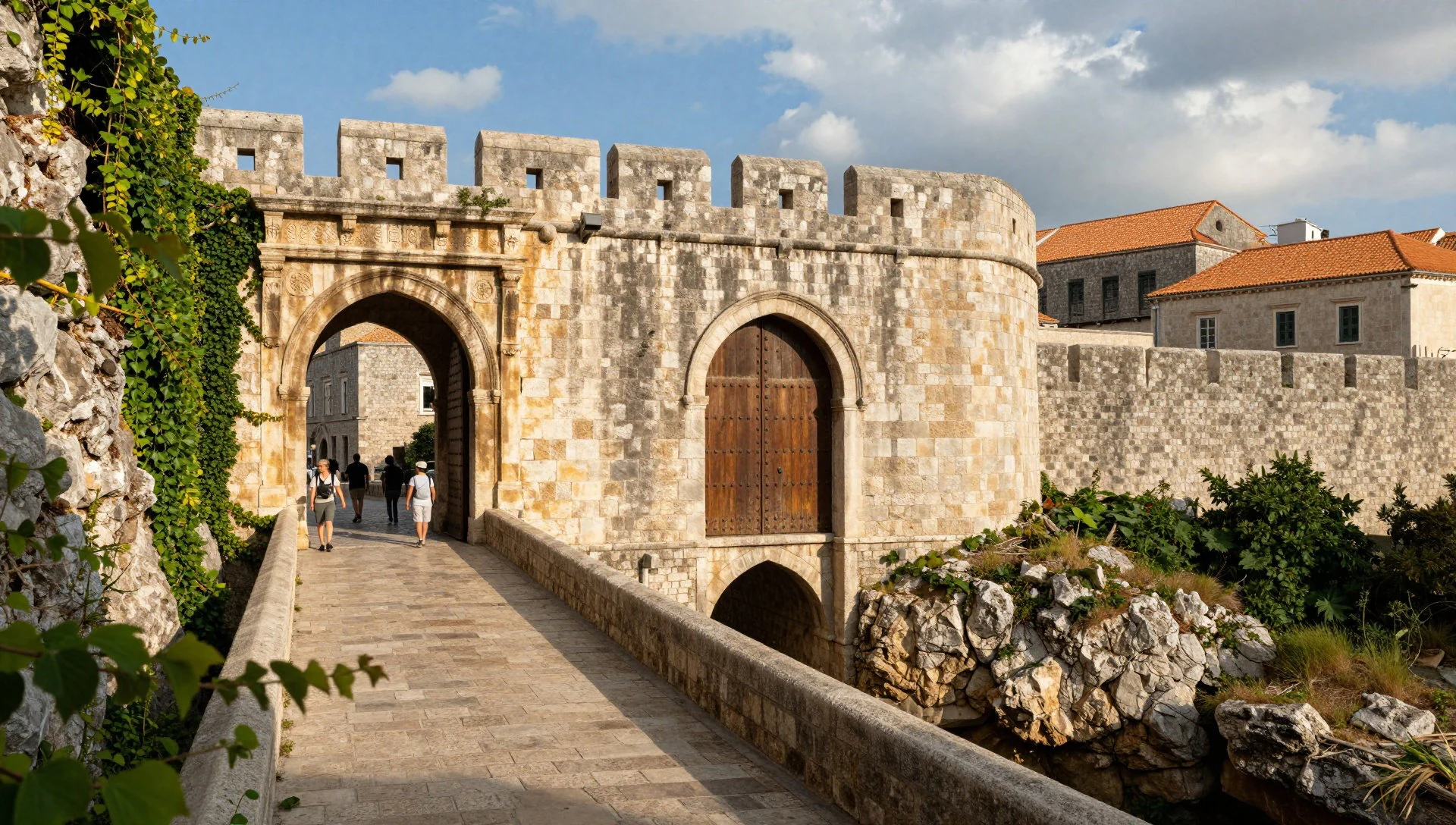
- Big Onofrio's Fountain — Western entrance near Pile Gate
Dubrovnik places the grand Big Onofrio's Fountain just inside the western gate, displaying carved stone masks that continually pour fresh spring water into cascading basins. The weathered steps around the monument provide a lively gathering spot where locals and weary travellers rest.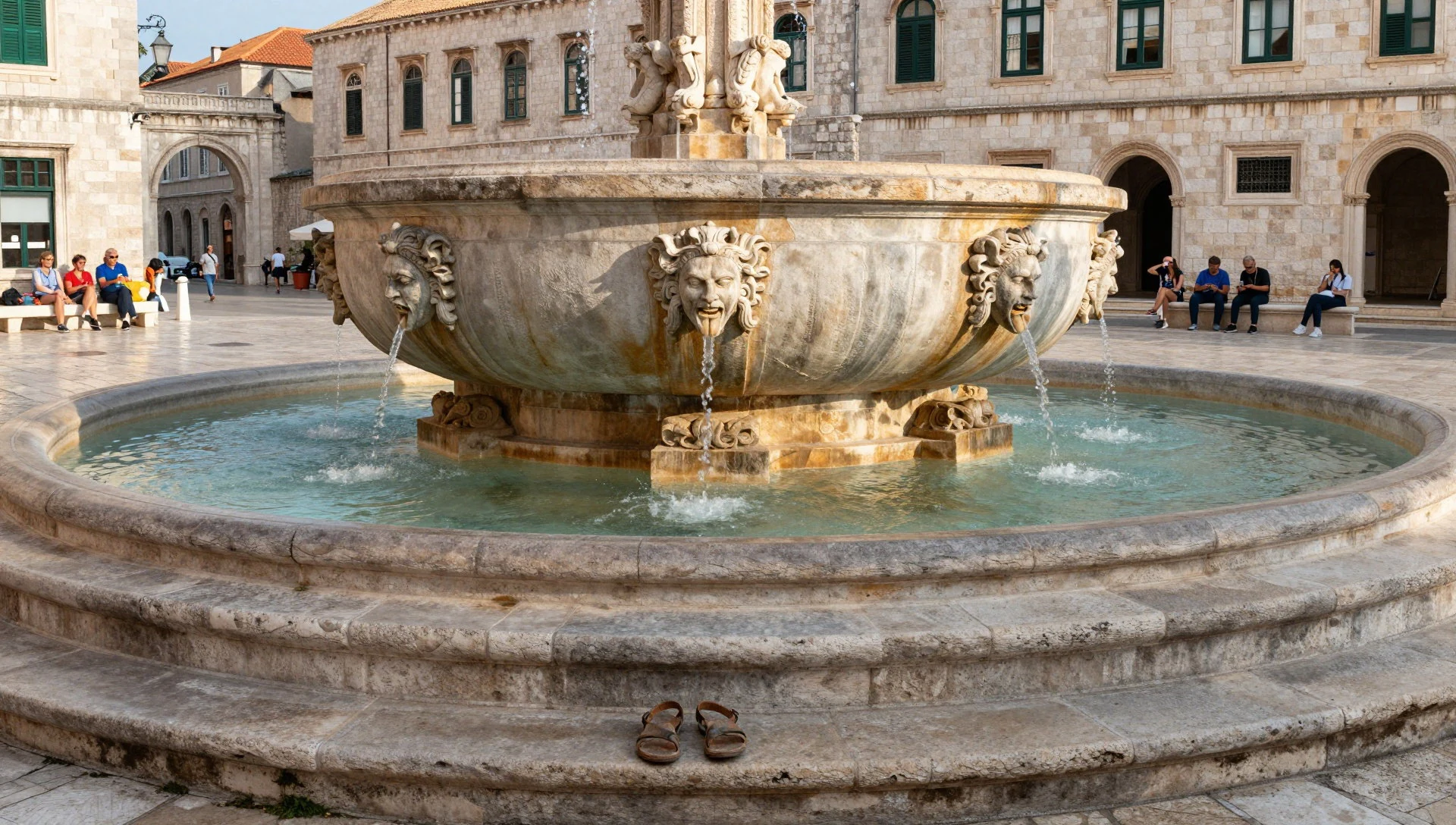
- Roland's Column — Luža Square
Dubrovnik exhibits Roland's Column as a slender stone flagpole depicting a legendary medieval knight, standing tall in the bustling central square. Also known as Orlando's Column, this historic monument anchors civic pride and marks the spot where traditional summer festivities commence.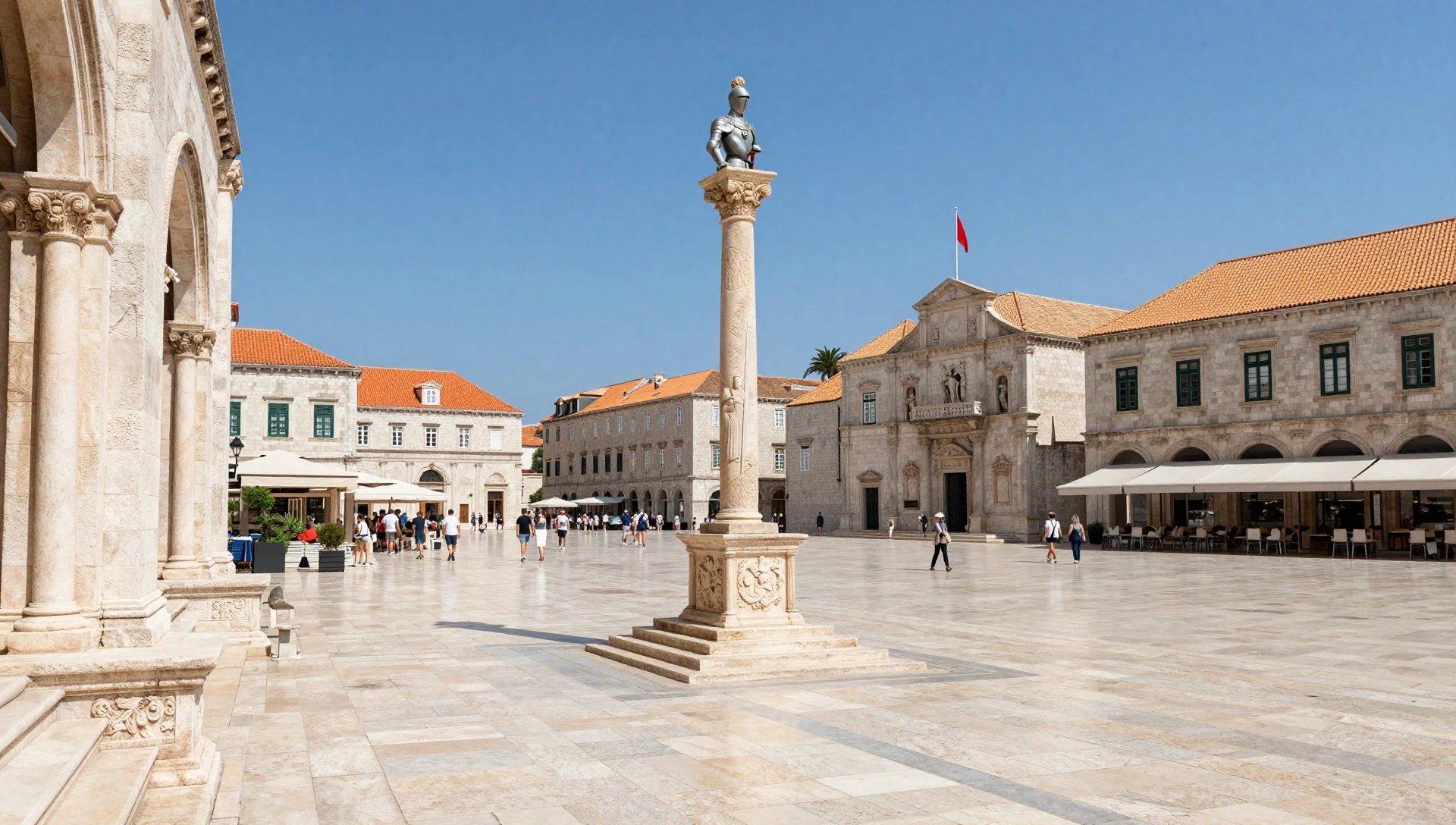
- Bell Tower — Eastern end of the Stradun
Dubrovnik anchors its skyline with the historic Bell Tower, featuring the famous bronze statues known locally as the Green Ones. These metallic figures strike the massive bell on the hour, marking the passage of time above the stone-paved streets of the historic centre.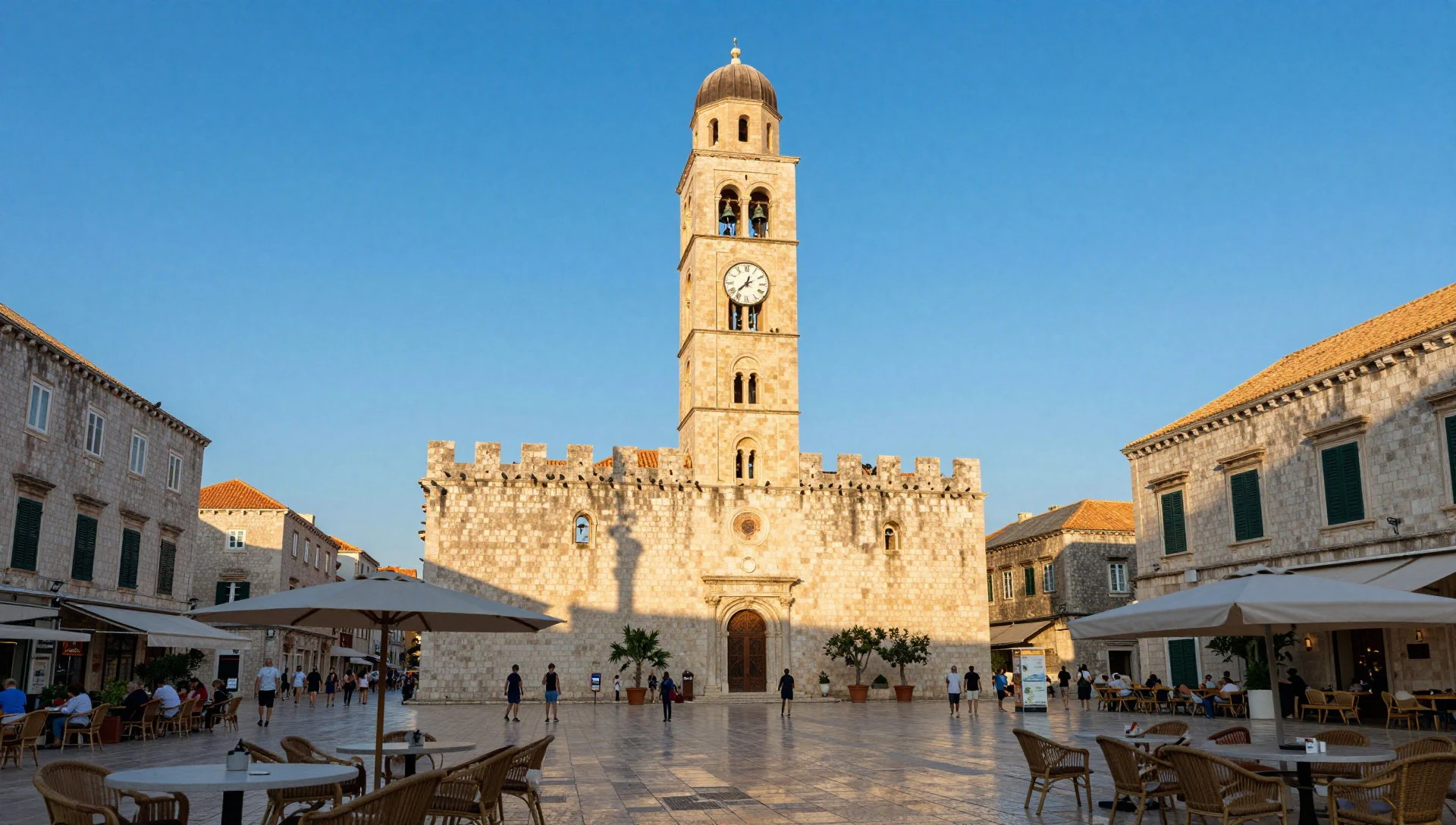
- Sponza Palace — Luža Square
Dubrovnik preserves the magnificent Sponza Palace as a rare surviving example of Gothic Renaissance architecture that withstood a major historical earthquake. The elegant arcade and tranquil inner courtyard now house precious municipal archives spanning centuries of maritime history.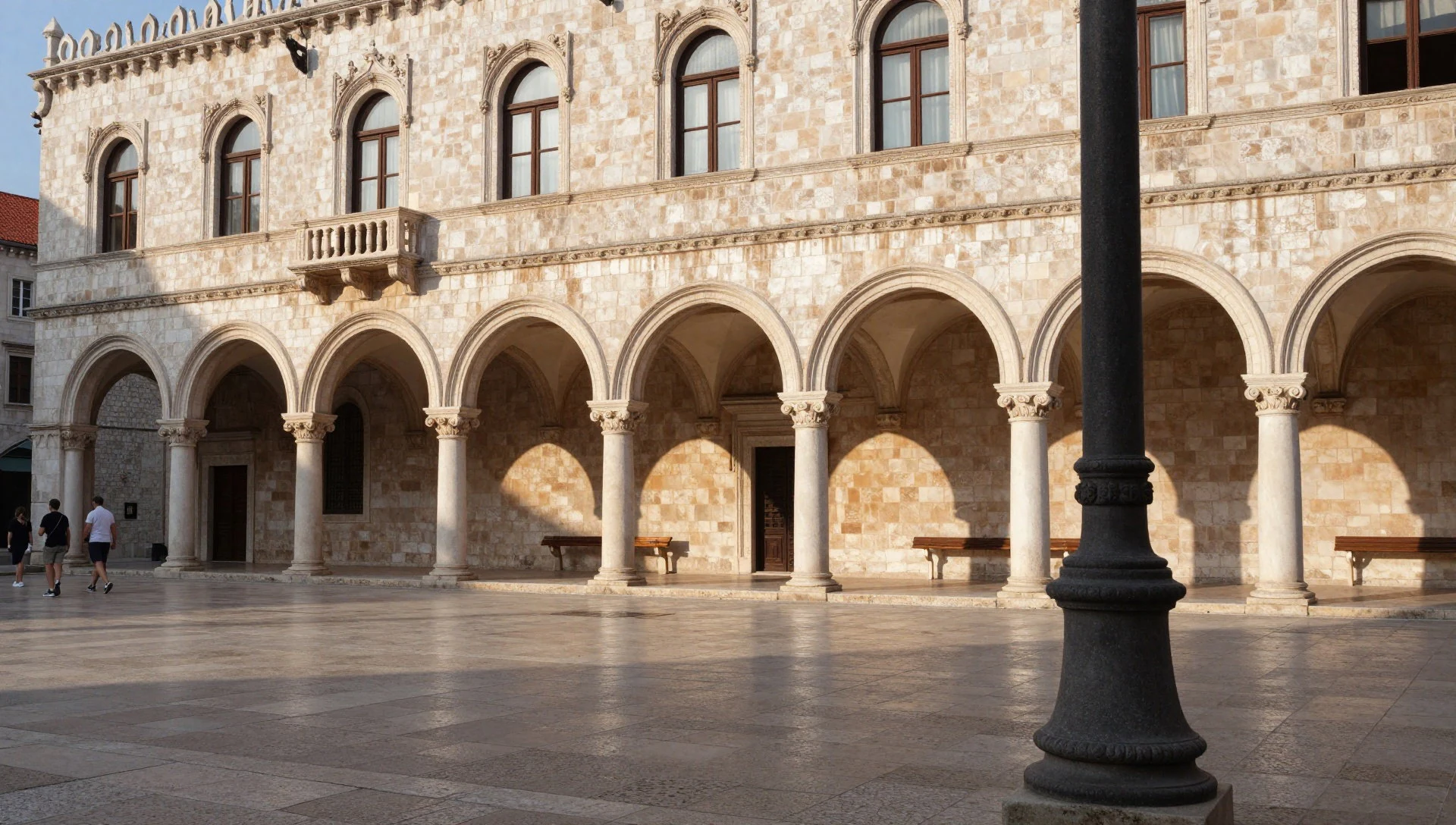
Culture
Dubrovnik maintains a rich social fabric rooted in its proud maritime history and Dalmatian traditions, where community life often spills out onto sun-drenched limestone squares and outdoor cafe terraces. Residents value polite discourse, family gatherings, and the unhurried enjoyment of coffee along the main promenade, reflecting a relaxed Mediterranean rhythm despite the busy seasonal influx of international visitors. Cultural life thrives through summer festivals, classical concerts in historic courtyards, and traditional religious processions honoring Saint Blaise, the city's patron protector. Visitors should note that local municipal regulations take heritage preservation very seriously, including strict rules regarding noise, street furniture, and luggage transport within the ancient stone core. Please lift wheeled suitcases rather than rolling them loudly over the historic stone paving slabs of the old city.
What to wear
Dubrovnik residents traditionally dressed in practical coastal garments suited for seafaring and agricultural labour, featuring woven wools and durable linen shirts crafted to withstand the maritime climate. Traditional folk attire, worn today primarily during cultural festivals and holiday celebrations, incorporates intricately embroidered vests, layered skirts, and distinctive headwear adorned with silver filigree buttons and coral beads reflecting centuries of Mediterranean trade.
Today, everyday fashion in Dubrovnik mirrors contemporary European trends with a distinctively relaxed coastal sensibility. Locals favour lightweight cottons, breathable linens, and comfortable footwear designed for navigating steep stone staircases and polished limestone alleys. Sunglasses, tailored shorts, and stylish casual wear dominate the warmer months, while autumn brings a shift toward light jackets and sweaters as evening breezes sweep in from the sea.
Visitors exploring Dubrovnik should pack clothing that balances comfort with modesty and respect for local sacred spaces. Breathable, loose-fitting garments are ideal for coping with summer warmth, while a sturdy pair of flat shoes with good traction is essential for walking safely on slippery, polished stone streets. When entering churches or monasteries, travellers must ensure shoulders and knees remain covered as a sign of respect.
What to eat
- Local Prosciutto and Cheese — Buffet Škola inside the Old Town
Dubrovnik serves exceptional cured ham paired with artisanal regional cheese at casual eateries, offering a quick and savoury bite reminiscent of traditional Mediterranean boards.
- Seafood Street Food — Barba near the historic centre
Dubrovnik offers generous portions of fresh seafood served in paper cones, making it easy to enjoy calamari or fish bites while sitting on nearby stone steps.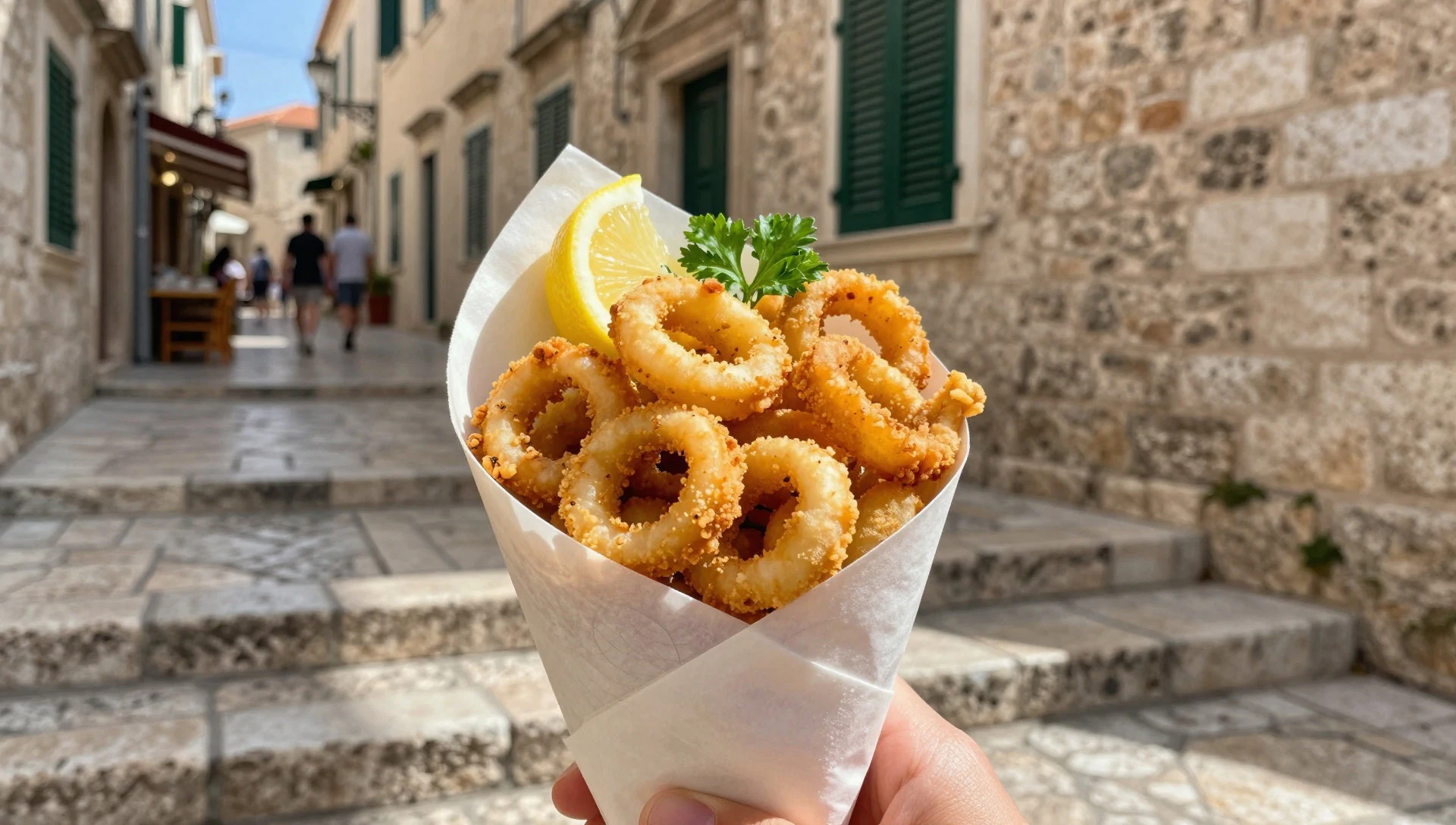
- Traditional Dalmatian Pizza — Pizzeria Tabasco near the cable car station
Dubrovnik bakes hearty, authentic pizzas topped with fresh local ingredients, providing a comforting and satisfying meal just outside the ancient defensive walls. - Fresh Adriatic Fish — Konoba Tabak in the surrounding residential districts
Dubrovnik prepares daily catches of local fish in traditional neighborhood taverns, serving authentic coastal dishes beloved by neighborhood residents away from the main tourist crowds.
Plan it
Best time. May to June and September to October offer pleasant weather and fewer crowds compared to the peak summer heat.
How long. 2–3
Getting there. Fly into Dubrovnik Airport, then take the airport shuttle bus or a taxi to Pile Gate outside the Old Town.
Budget. mid
Tips
- Explore the historic walls early in the morning before cruise ship crowds arrive
- Carry cash for small bakeries, markets, and tipping in local cafes
- Wear flat shoes with good grip to navigate slippery, polished limestone streets
- Book accommodation well in advance if visiting during the peak summer months
Etiquette
- Lift wheeled suitcases instead of rolling them across the stone paving of the old city
- Cover shoulders and knees when entering churches and religious sanctuaries
- Greet shopkeepers and servers politely in Croatian when entering establishments
Nearby
Sources
- Wikidata Q1722 (CC0)
- Wikipedia (rev 1382702369) (CC BY-SA 4.0)
- Wikivoyage (rev 5401308) (CC BY-SA 4.0)
- Photo photos/01-the-walls-of-the-fortress-and-view-of-the-old-city-panorama.jpg (CC BY-SA 4.0)
- Photo photos/02-dubrovnik-28.jpg (CC BY 3.0)
- Photo photos/03-rector-s-palace-20180820.jpg (CC BY-SA 4.0)
- Photo photos/04-dubrovnik-palazzo-sponza-01.jpg (CC BY 3.0)


