Venice
Venice, Italy
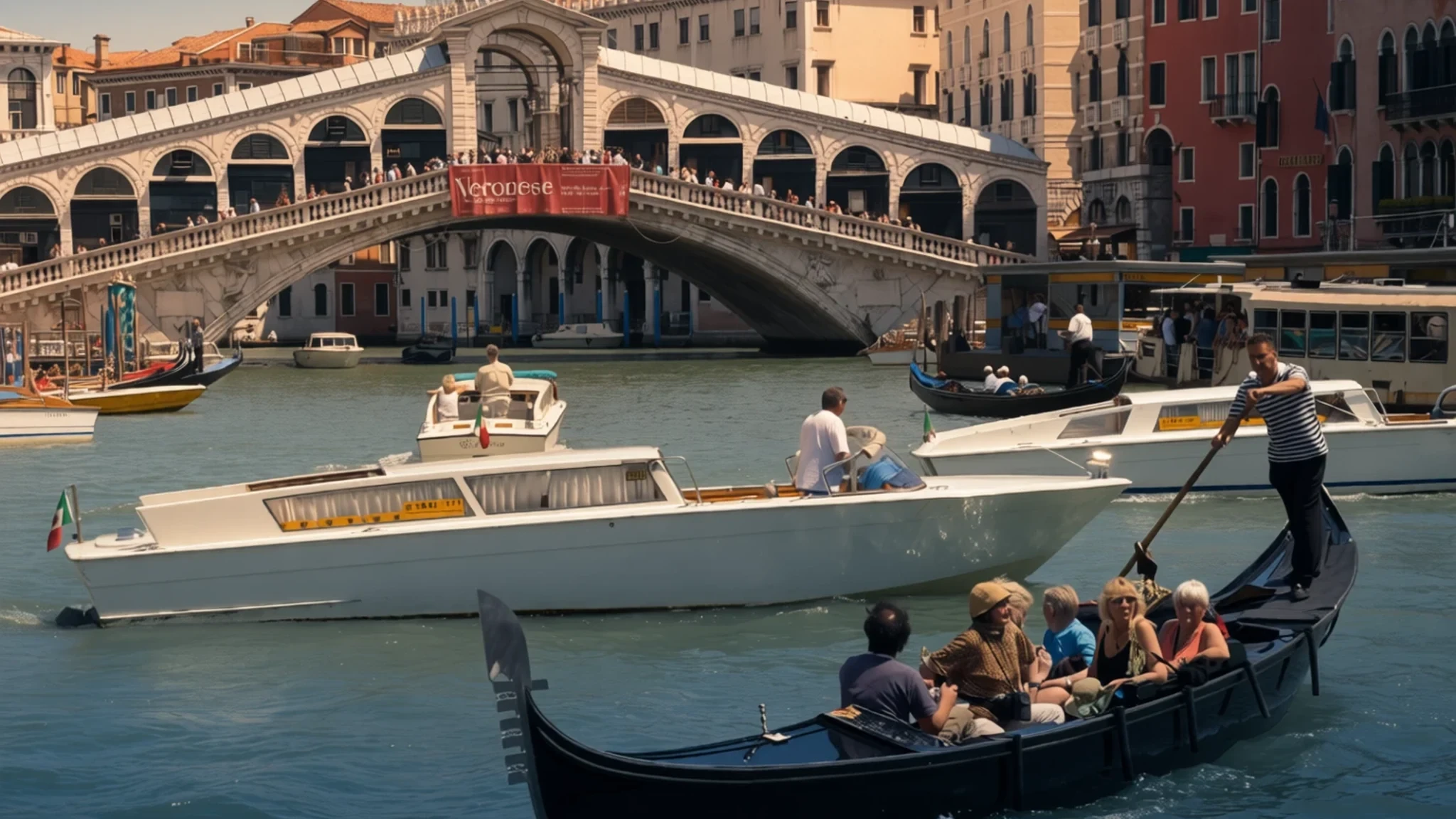
Venice is a pedestrian city of canals, bridges, and historic architecture, floating peacefully upon a shallow coastal lagoon.
The place
Venice is a water-bound city set within the shallow lagoon of northeastern Italy, built across an archipelago of small islands divided by historic canals. Navigating the settlement is an experience governed entirely by foot traffic and waterborne craft, as motor vehicles are restricted from entering the inner canal network. Slender alleys known as calle wind between centuries-old brick structures, opening unexpectedly into stone-paved squares termed campi, where neighbourhood life unfolds around central stone wells.
The main artery through Venice is the Grand Canal, a sweeping waterway framed by elegant marble palaces that showcase centuries of Venetian Gothic and Renaissance architecture. Gondolas and public waterbuses, known as vaporetti, navigate this aquatic avenue, carrying residents and travellers across the waterways. Beyond the iconic central districts lie quieter residential quarters like Cannaregio and Castello, where laundry hangs between tall apartment walls and local markets trade fresh seafood directly from lagoon boats.
With an average elevation of just two metres above sea level, Venice maintains an intimate relationship with the surrounding marine environment. High tides periodically submerge lower plazas, bringing temporary wooden walkways to the major thoroughfares. The city offers a unique urban structure shaped entirely by its geography, where every journey involves crossing bridges over silent waters and listening to the soft rhythmic lapping against ancient stone foundations.
Its story
Venice owes its origins to early centuries of political instability and migration across northern Italy. According to regional tradition, the settlement was officially founded in 421 when refugees escaping mainland invasions sought safety among the marshy, isolated islets of the lagoon. These early coastal communities relied on fishing and salt harvesting, gradually transforming the marshlands into a permanent sanctuary protected by shallow tidal waters.
Over subsequent centuries, Venice evolved from a humble refuge into a dominant maritime empire and economic powerhouse. Venetian merchants built extensive trade routes connecting Western Europe with the eastern Mediterranean and Asia, importing silks, spices, and precious materials. The Republic of Venice established a stable political system governed by an elected doge and councils of noble families, maintaining independence for nearly a thousand years while creating immense wealth.
This commercial success funded extraordinary architectural and artistic achievements throughout the city. Master builders drove thousands of timber piles deep into the clay mud beneath the lagoon floor to support massive stone foundations for churches, palaces, and public monuments. Artists such as Titian, Tintoretto, and Veronese decorated public halls with expansive paintings celebrating civic pride. Although the republic eventually collapsed under foreign invasions in the late eighteenth century, the architectural heritage constructed during its golden era remains remarkably intact across the islands.
What to see
- Doge's Palace — San Marco
Venice's historical seat of political authority stands on Saint Mark's Square, showcasing pink marble facades and gothic arcades. Guided tours lead visitors through grand council halls filled with Renaissance paintings and across the famous Bridge of Sighs into the historic prison chambers where Casanova was once held.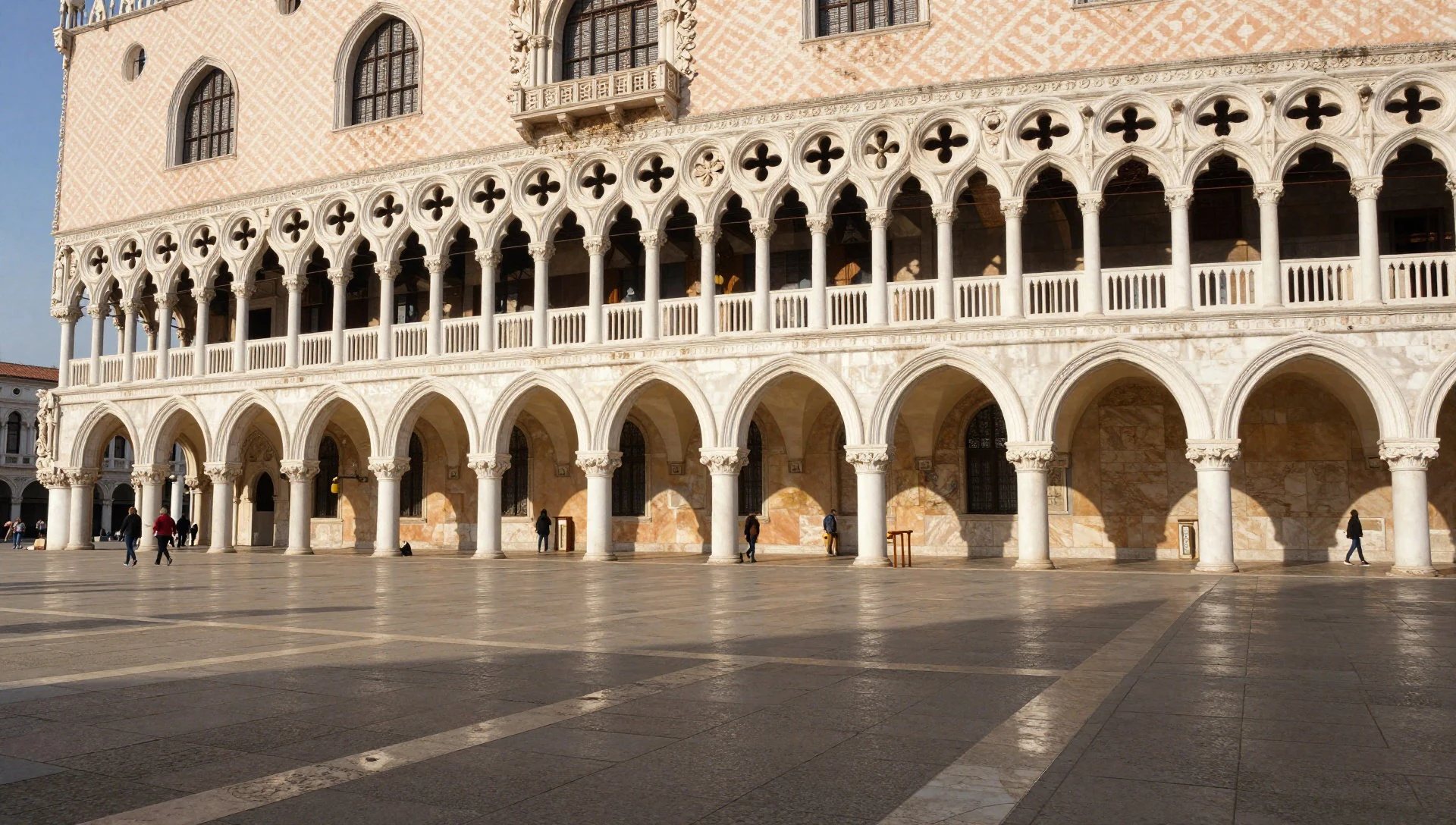
- Saint Mark's Basilica — San Marco
Saint Mark's Basilica overlooks the central piazza with its distinctive Byzantine domes and intricate exterior mosaics. Inside, millions of gilded glass tiles illuminate the interior vaults, depicting biblical stories and historical legends above marble floors, reflecting centuries of Venetian trade wealth and maritime conquests across the Mediterranean.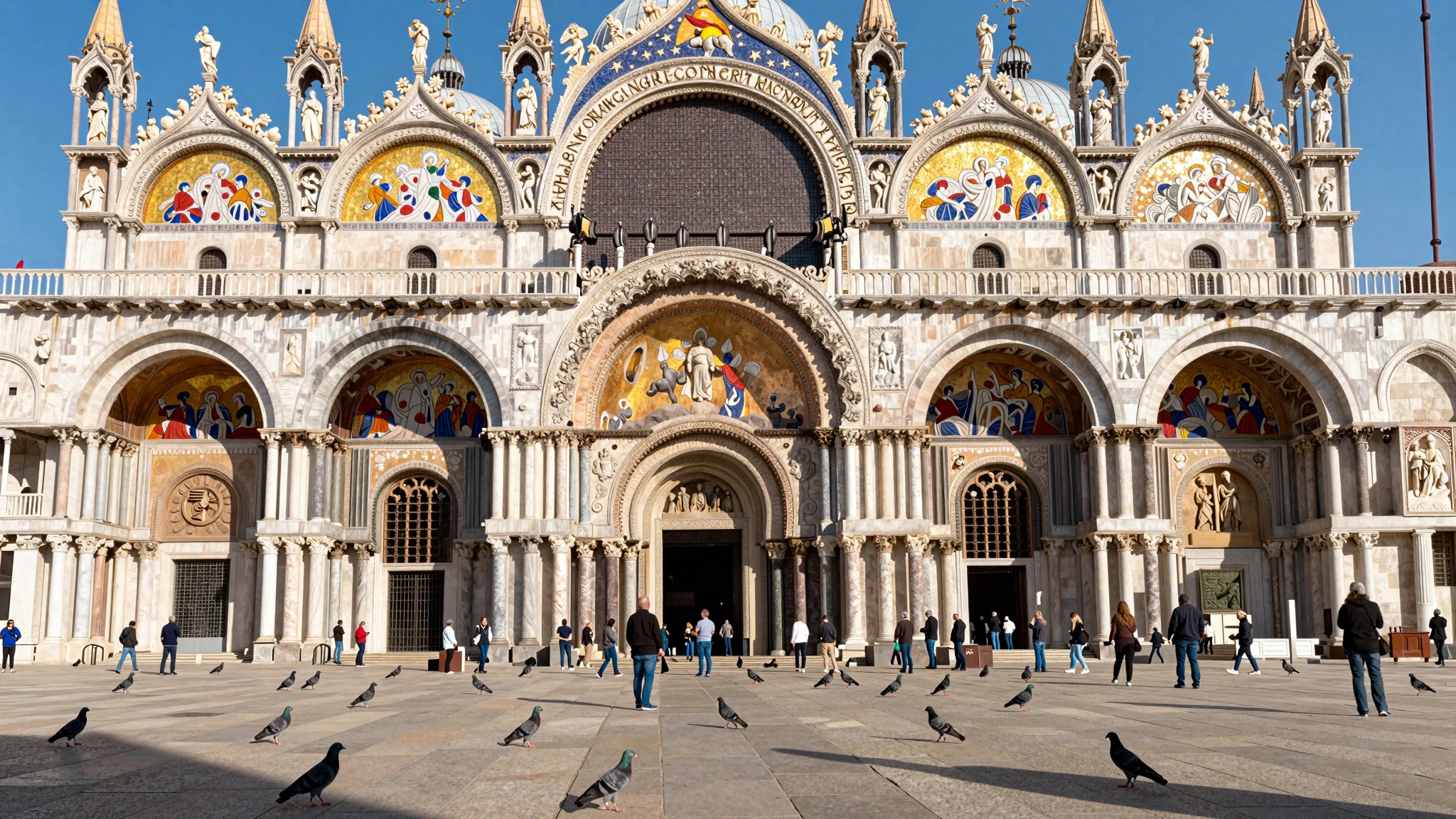
- Rialto Bridge — San Polo / San Marco
The Rialto Bridge spans the narrowest point of the Grand Canal, serving as a primary pedestrian crossing since its stone construction. Central arcaded shops line the sloped stone steps, offering views of passing watercraft below. Early mornings provide quieter moments to observe delivery boats supplying nearby market stalls.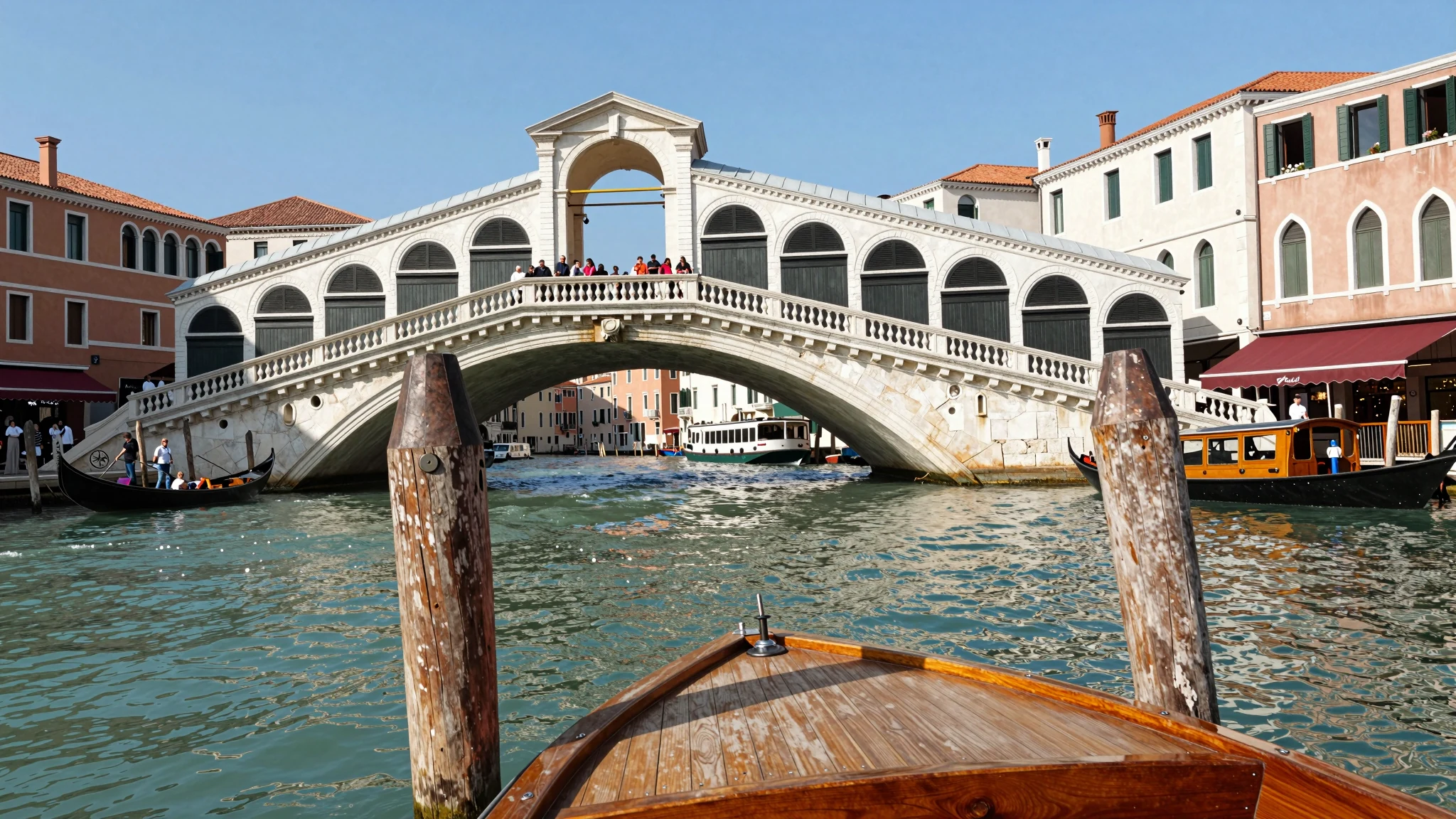
- St. Mark's Campanile — San Marco
Standing tall above Saint Mark's Square, this brick bell tower offers wide panoramas across Venice and the surrounding lagoon waters. Rebuilt after an unexpected collapse in the early twentieth century, the tower features an elevator that ascends to the belfry, providing clear views of red tile roofs and distant mountain peaks.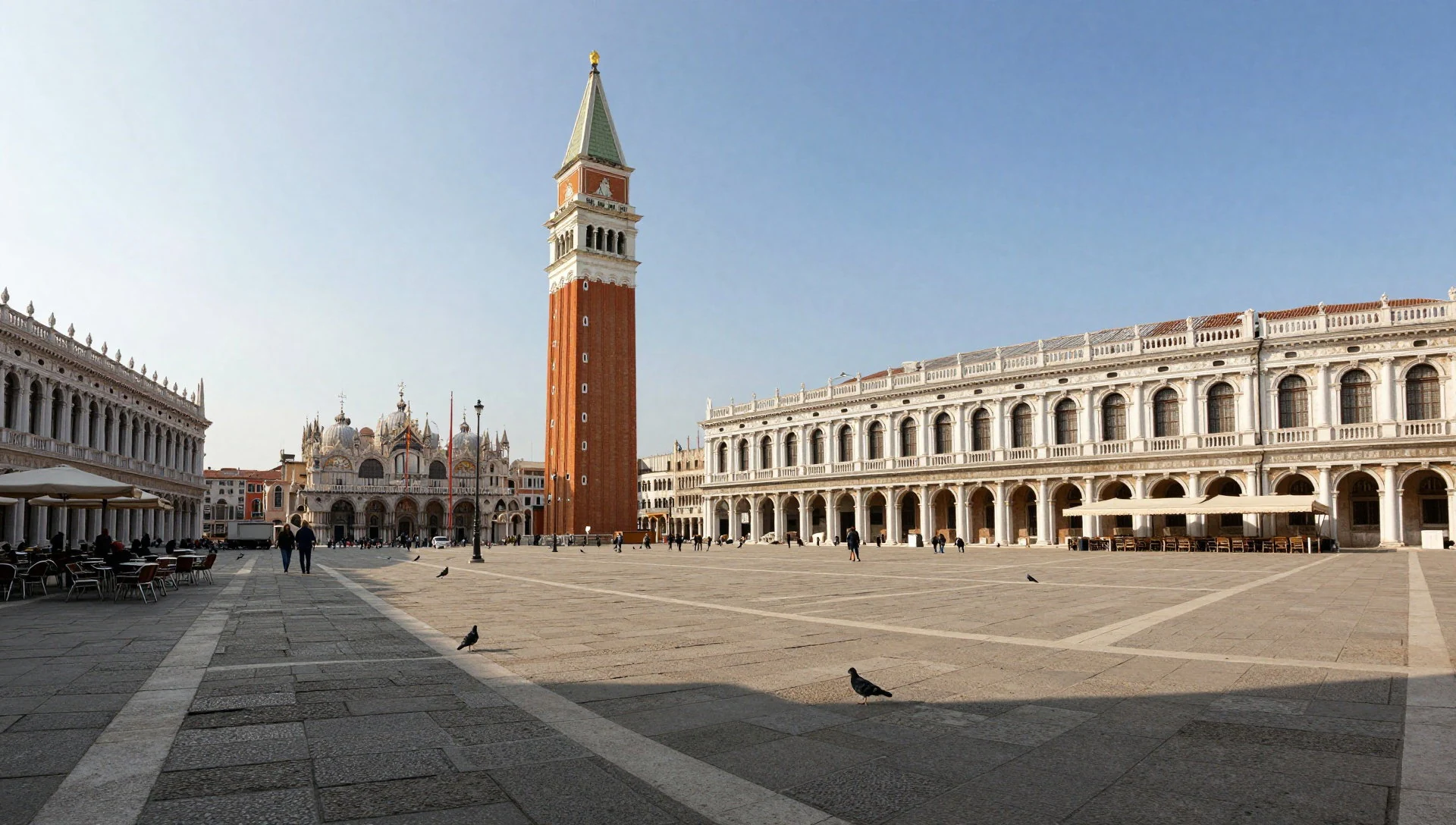
- Scuola Grande di San Rocco — San Polo
Located in the quiet district of San Polo, this historic guild house contains an extraordinary collection of works by Mannerist master Tintoretto. The grand halls feature dramatically painted ceilings and walls portraying scenes from the Old and New Testaments, preserved in their original architectural setting away from larger tourist crowds.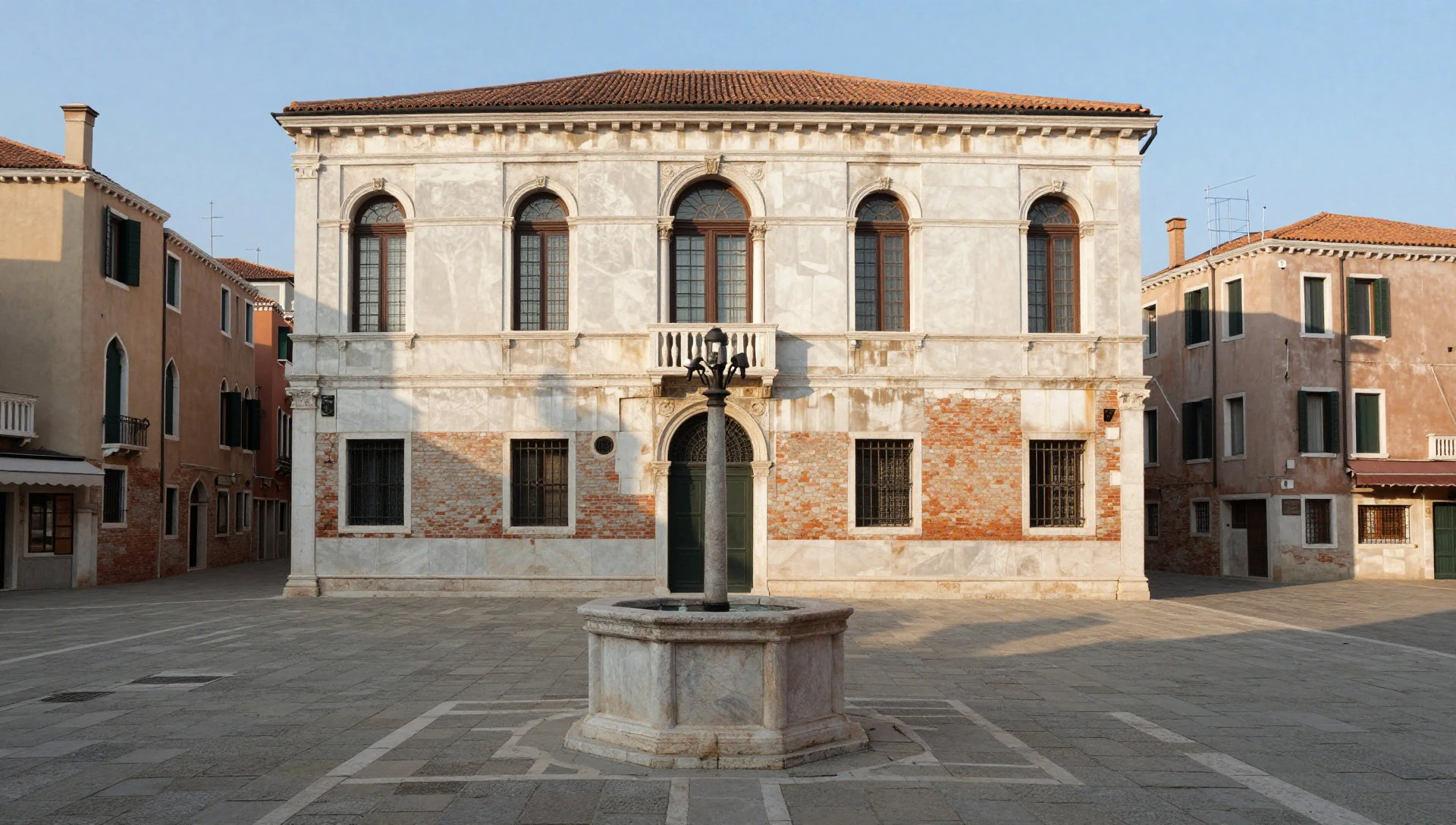
Culture
Venice maintains a distinctive cultural identity forged through centuries of maritime independence and artistic creation. Literary figures, playwriters, and travellers have long drawn inspiration from the city's labyrinthine passages and floating architecture. Renowned Venetian figures include merchant explorer Marco Polo, whose medieval travel logs introduced distant Asian civilizations to European readers, and adventurer Giacomo Casanova, whose detailed memoirs documented eighteenth-century society. Theatre traditions also flourished here, particularly through commedia dell'arte and the plays of Carlo Goldoni, which captured local dialects and humour.
Visual art and printing played vital roles in shaping civic life. During the Renaissance, Venice became a prominent European publishing hub, producing finely bound books alongside masterworks of oil painting. Today, traditional crafts such as hand-blown glassmaking on Murano and lacemaking on Burano carry forward centuries of skilled artisan production. Local life centres around neighbourhood plazas, where residents gather for conversation and evening aperitifs outside neighborhood bars. When exploring these tight alleyways and residential areas, carry trash to public bins and never sit or eat food on the steps of historic monuments or churches.
What to wear
Venice developed a rich textile and sartorial history driven by its medieval trade routes with Asia and the Middle East. Historically, Venetian weavers produced luxurious silks, brocades, and heavy velvets decorated with metallic threads, worn by nobility and doges during state ceremonies. Traditional attire also included the dark woollen tabarro cloak and tricorn hat, paired with white porcelain or leather masks during the annual Carnival celebrations to allow anonymous socialising across classes.
Modern Venetian residents dress in refined, practical Italian attire suited to a walking city with damp maritime weather. Tailored wool coats, structured jackets, and lightweight scarves are common during cooler months, while light cotton and linen clothing prevail in summer heat. Footwear is universally comfortable and functional, as daily life requires navigating damp flagstones and hundreds of stepped bridges.
Visitors to Venice should pack well-cushioned, water-resistant walking shoes or sturdy sneakers to tackle miles of stone alleyways. Modest dress covering shoulders and knees is mandatory when entering churches and basilicas, so carrying a lightweight shawl is helpful during warm summer days. Layered clothing is essential for shifting coastal winds, and flat boots or water boots prove invaluable during autumn high tides.
What to eat
- Cicchetti — Traditional bacari wine bars throughout Cannaregio and San Polo
Cicchetti are small Venetian bar snacks served alongside a glass of wine or spritz. These bite-sized dishes include marinated seafood, meatballs, and cured meats served on small slices of crusty baguette, perfect for sharing during evening neighbourhood walks.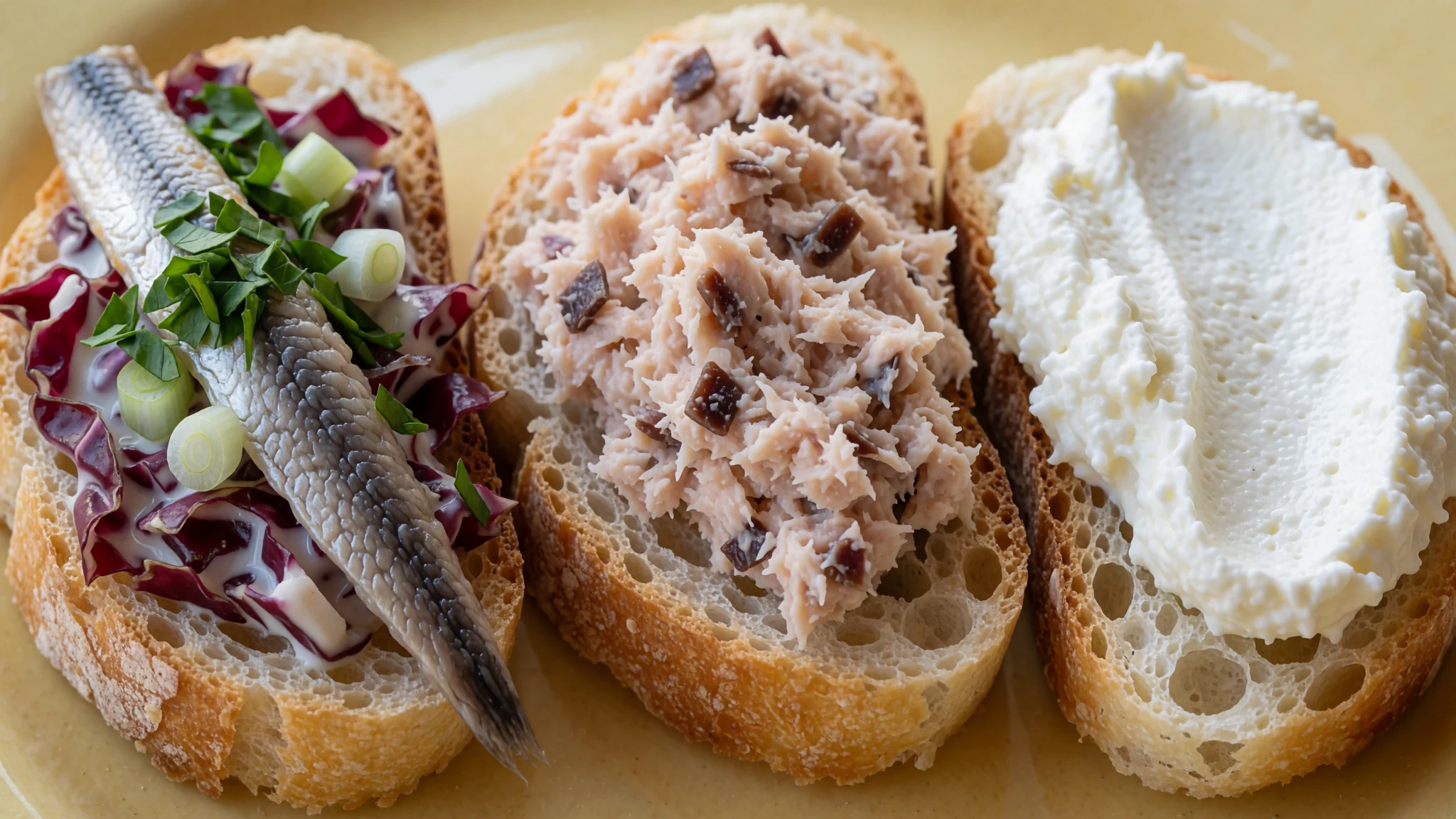
- Sarde in Saor — Osterie and traditional eateries near the Rialto Market
Sarde in saor is a classic Venetian dish of fried sardines marinated in sweet-and-sour onions, raisins, and pine nuts. Historically preserved by sailors during long sea journeys, this savoury dish balances rich fish flavours with gentle acidity.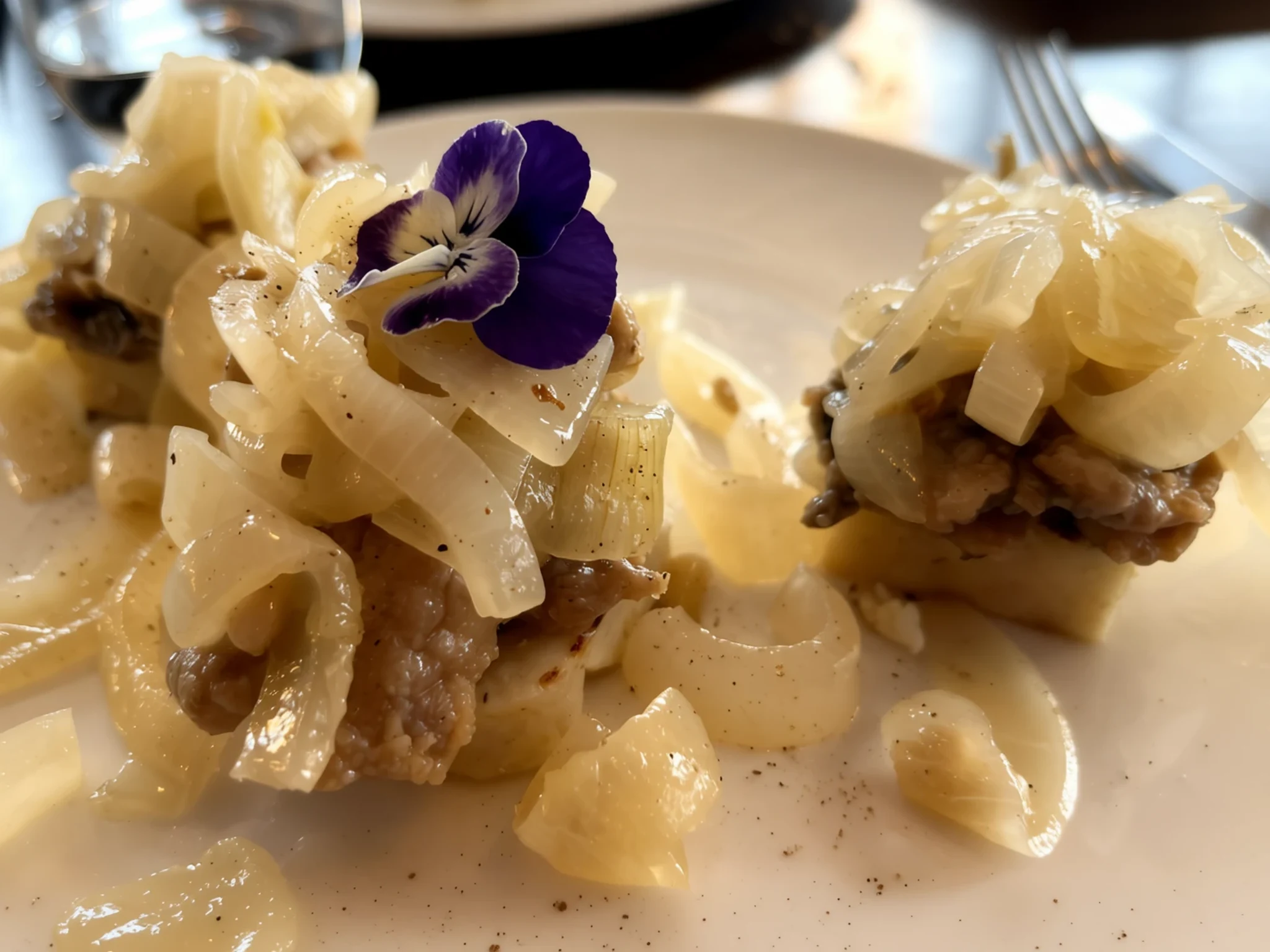
- Risotto al Nero di Seppia — Trattorias along the back canals of Dorsoduro
Risotto al nero di seppia features slow-cooked arborio rice stained a deep black with natural cuttlefish ink. Prepared with tender cuttlefish pieces, white wine, garlic, and parsley, this rich seafood dish offers a distinct taste of lagoon marine cooking. - Fritto Misto — Street food stalls and seafood bars around the lagoon edge
Fritto misto is a light, crispy mix of battered seafood including small fish, squid rings, and lagoon prawns, fried to order. Served hot in paper cones, it offers a quick and traditional lunch option while exploring the waterside promenades. - Bigoli in Salsa — Family-run trattorias in residential Castello
Bigoli in salsa is a traditional Venetian pasta dish made with thick, whole-wheat spaghetti served in a slow-cooked sauce of melted anchovies and sweet white onions. Simple yet deeply savoury, it was historically eaten during traditional fasting periods.
Plan it
Best time. April–May and September–October offer pleasant temperatures and lighter crowds; July–August can be hot, humid, and crowded, while late autumn brings high tide flooding.
How long. 3–4
Getting there. Fly into Marco Polo Airport or Treviso Airport, then catch a waterbus, airport bus, or train to Santa Lucia station; final legs are completed on foot.
Budget. mid
Tips
- Book major museum tickets and access fees online in advance to avoid long lines
- Explore famous sights early before 8:30 am or late in the evening when day-trippers depart
- Use waterbuses (vaporetti) for long distances across the lagoon rather than single short rides
- Carry a lightweight water bottle to refill at free municipal drinking fountains
Etiquette
- Do not sit, lean, or consume food and drink on church steps or historic monuments
- Keep to the right side when walking on narrow footpaths and bridges to allow residents to pass
- Cover shoulders and knees when visiting churches and active religious sites
- Avoid dragging heavy rolling hard-wheeled suitcases across delicate marble bridges late at night
Nearby
Sources
- Wikidata Q641 (CC0)
- Wikipedia (rev 1381565361) (CC BY-SA 4.0)
- Wikivoyage (rev 5347882) (CC BY-SA 4.0)
- Photo photos/01-venizi-lanscape-from-san-giorgio-maggiore.jpg (CC BY 3.0)
- Photo photos/02-venezia-aerial-view.jpg (CC BY-SA 4.0)
- Photo photos/03-rialto-vista-dietra-camerlenghi.jpg (Public domain)
- Photo photos/04-campanile-of-st-mark-s-basilica-remote-view.jpg (CC BY-SA 4.0)
- Photo photos/05-basilica-santa-maria-della-salute-venice-1.jpg (CC BY-SA 4.0)
- Photo photos/06-rialto-2025-4.jpg (CC BY-SA 4.0)
- Photo photos/07-venezia-basilica-di-san-marco-fassade-2.jpg (CC BY-SA 4.0)
- Photo photos/08-doge-s-palace-venice-at-night-2023-msu-2023-0i9a6405.jpg (CC BY-SA 4.0)


