Lastovo
Lastovo, Croatia
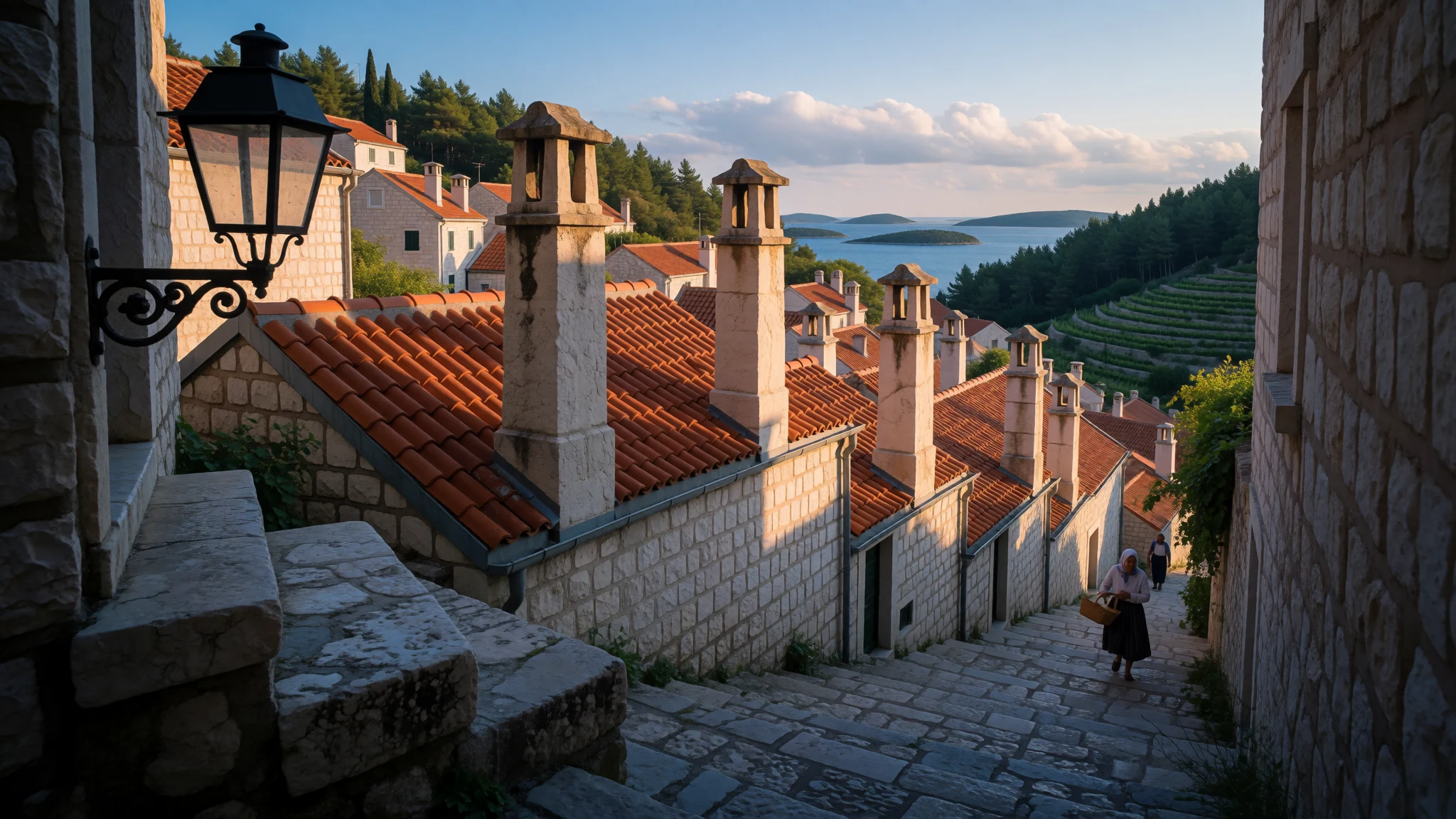
Lastovo is a quiet, wooded Adriatic island of 835 people, where the pace is slow, the sea is clear and the nights are dark.
The place
Lastovo is a long, green island in the southern Adriatic, off the Dalmatian coast of Croatia. It has 835 residents and a highest point of 415 metres, which is small for a place with its own town, its own carnival and a scatter of islets around it. The main settlement, also called Lastovo, does not sit on the shore. It climbs a bowl-shaped slope facing inland, a layout usually explained as protection from raiders. Stone houses with tall, decorative chimneys step down the hillside, and from the upper lanes the roofs fall away towards farmland and pine forest. Away from the town the island is mostly woodland, scrub, vineyards and olive groves, broken by small harbours and coves where boats shelter. The wider archipelago is a protected nature park, and the quiet shows: few cars, no large resorts, shops that close for the afternoon. Summer brings sailors, divers and ferry visitors, yet numbers stay modest beside Korčula or Dubrovnik, both reachable from the mainland side. Heat in July and August is real, shade by the water is limited, and some services close outside the warm months, so a visit rewards a little planning. In return Lastovo offers clear water, long walking paths and the unusual feeling of being far from any schedule. It suits people who like to read, swim, walk and eat slowly rather than collect sights.
Its story
Lastovo has been inhabited for a very long time. The earliest evidence comes from the Rača cave, where traces of people reach back to the late Neolithic. Later the Illyrians lived here, and Greek pottery found on the island suggests it sat on a trading route up the Adriatic, probably within the orbit of the Greek colony of Issa. A Greek historian's text, passed down through a later writer, gives the oldest known name, Ladesta, with an ending typical of Illyrian settlements. The Romans renamed it Augusta Insula, the Emperor's Island, and left farm estates and stone water catchments called lokve. Over the centuries the name drifted through Lagusta and Lagosta, the Italian form that survived for a long time, before a Slavic ending produced today's Lastovo. After the Roman world fragmented, the island stayed independent for a time under nominal Byzantine authority. Venetians later attacked and destroyed the settlement because islanders had been involved in piracy on the Adriatic. Afterwards Lastovo joined the Republic of Ragusa, modern Dubrovnik, and for several centuries enjoyed a fair degree of self-government. That arrangement ended when Napoleon's French forces conquered the republic. The layers still show in the place names, the old church foundations, the water tanks and the island's habit of managing quietly on its own.
What to see
- Lastovo town — Island interior, central Lastovo
Lastovo town fills a natural amphitheatre of hillside, so the best way to see it is to wander up and down its lanes. Look for the stone houses with ornate chimneys, the shaded squares and the way every roof faces away from the open sea. Early morning light flatters it most.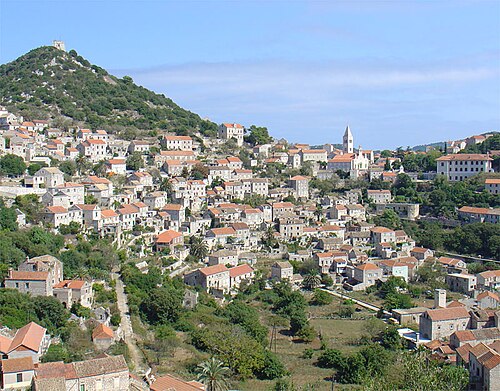
- Skrivena Luka — Coastal bay, Lastovo nature park
Skrivena Luka, the Hidden Harbour, is a sheltered bay on the island's coast, ringed by low green hills. It has long been a refuge for boats caught by weather. Swimming here is calm and clear, though facilities are minimal, so bring water, shade and your own food for the day.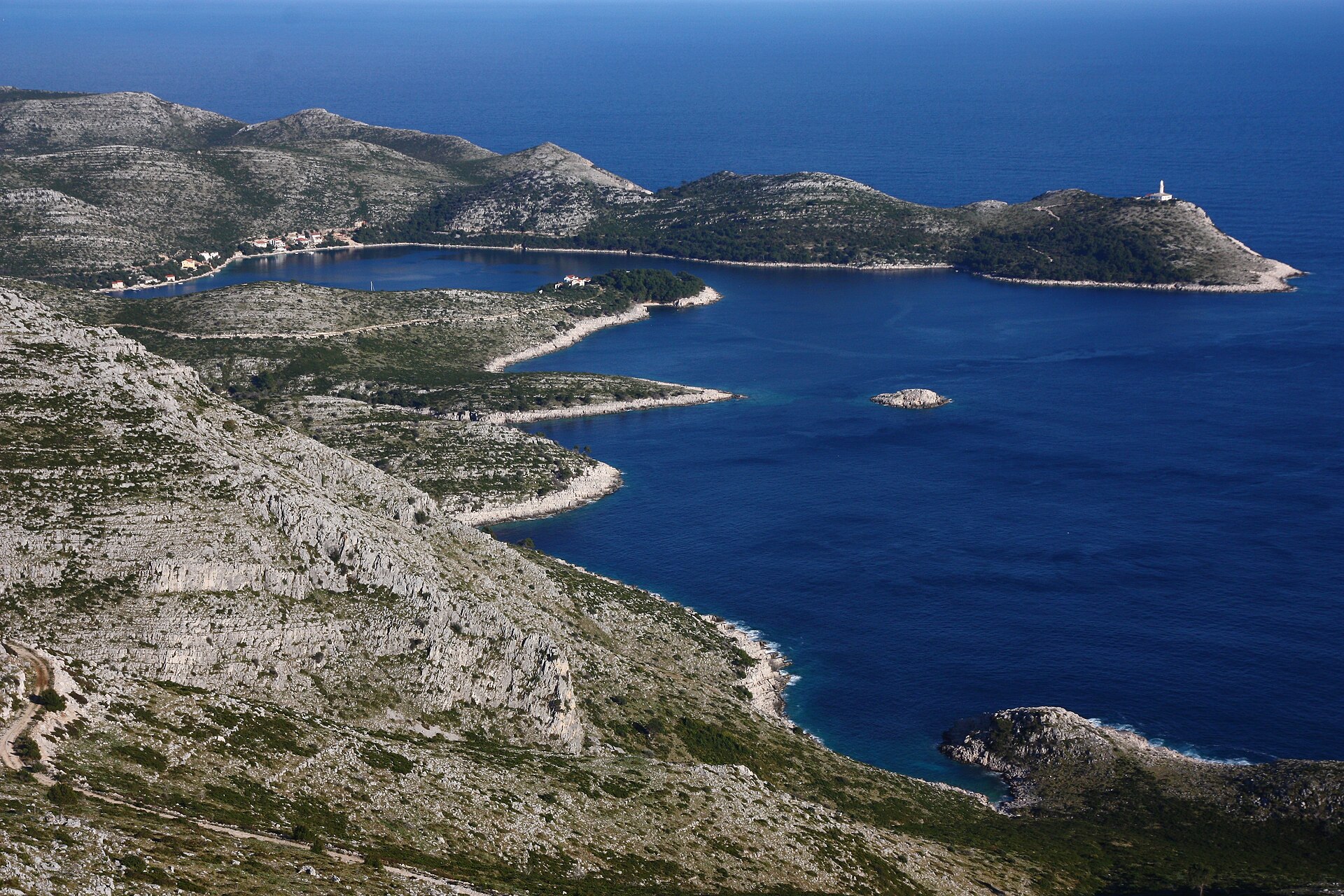
- Lučica — Coast of Lastovo island
Lučica is a small cove and harbour with a handful of boats and a quiet, working feel. It works well for a slow morning: a swim off the rocks, a coffee if anything is open, and a walk along the shore. Outside high summer it can be almost empty.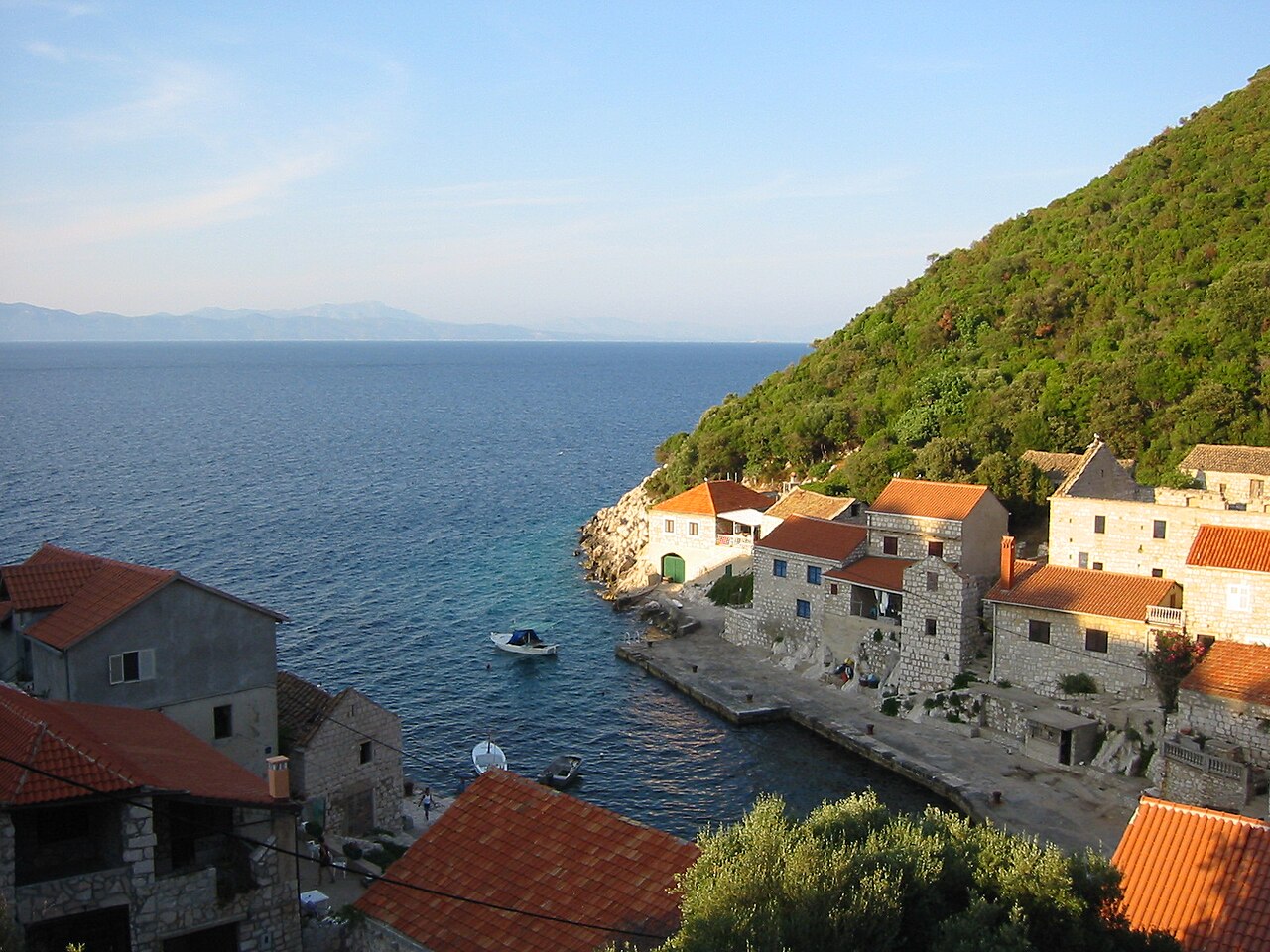
- Vineyards and olive groves — Farmland around Lastovo town
Lastovo's farmland sits in the island's hollows, where vines and olive trees grow behind low stone walls. Walking tracks cross this country between the town and the coast. Go early or late in summer, wear a hat, and expect to meet more lizards than people.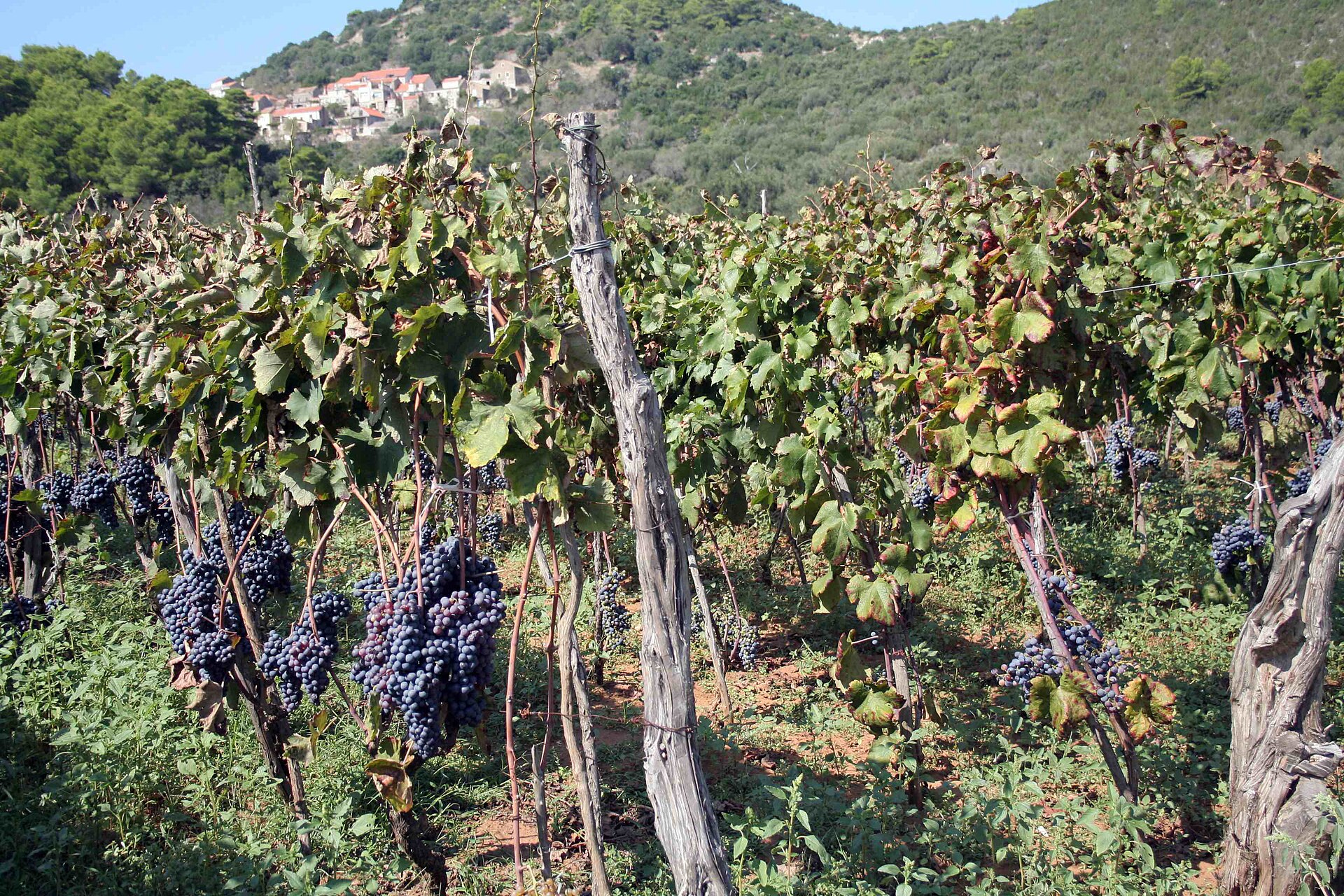
- Former military tunnels and the lighthouse viewpoint — Coastal headlands, Lastovo
Parts of the coast carry traces of former military use, including tunnels cut into the rock beside very deep, clear water. Photographs from the lighthouse show open sea, and on a very clear day the distant Italian coast is said to be visible. Check local advice on access before exploring.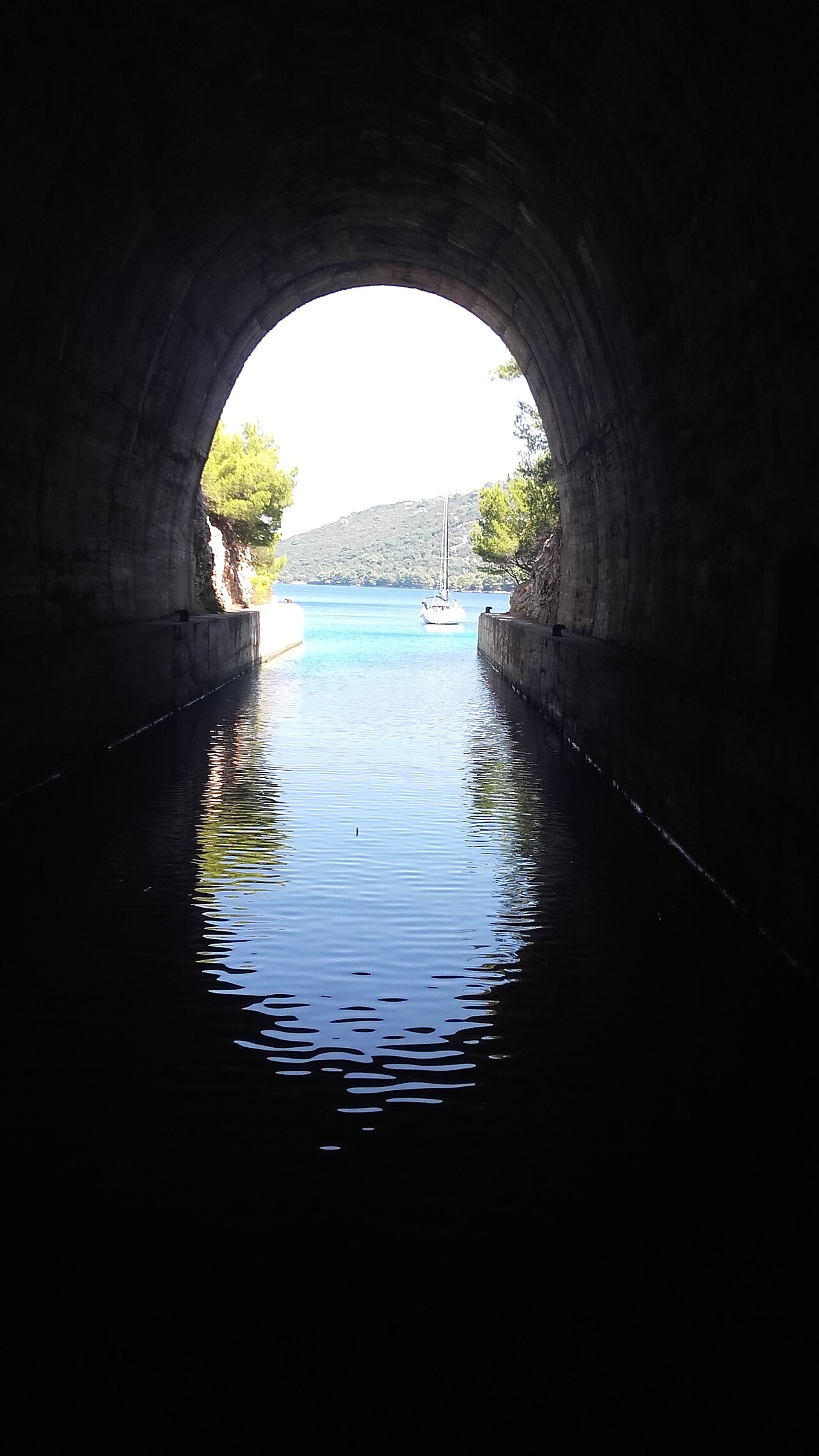
Culture
Lastovo's cultural year turns on Poklad, the island carnival, held over three days in the middle of February. Almost everyone takes part, dressed in folk costume, and islanders who now live elsewhere in Croatia travel home for it. The story behind it is a local legend. Catalan pirates, having raided neighbouring Korčula, sent a messenger demanding that Lastovo surrender. The islanders refused and armed themselves, the women and children prayed to St George, and a storm wrecked the pirate ships. The captured messenger was paraded through the village on a donkey and then put to death, and the carnival re-enacts that mockery. It is a community event first and a tourist attraction second, although outsiders have been welcomed in growing numbers in recent years. Faith is also visible in the buildings. The Church of Saints Cosmas and Damian stands in the oldest part of the town square and replaced a much smaller early church. It holds a Pietà by an unknown Venetian painter. The Church of St Blaise, older still, stands near the entrance to the settlement. Both reflect centuries of Venetian and Ragusan influence. Everyday life is unhurried, with a strong sense of neighbourliness, and winter is when the island feels most itself. At churches on Lastovo, cover bare shoulders and knees, keep your voice low during services, and ask before photographing people in carnival costume.
What to wear
Lastovo's traditional dress is best seen at Poklad, when islanders put on folk costume for the carnival. Dalmatian island clothing was historically made from wool, linen and cotton, with embroidery and simple trims, and festive outfits were kept for church and celebration rather than work. Details differ between islands, so local people are the best guide to what is specific to Lastovo. In daily life the island dresses practically. Expect shorts, T-shirts, sun hats, sandals and deck shoes in summer, with fleeces and waterproofs in winter, plus work clothes for farming and boats. Nobody dresses up for dinner. Visitors should plan around sun, sea and rough ground. Bring light cotton or linen layers, a wide-brimmed hat, sunglasses and high-factor sunscreen, because shade by the water is scarce and the Adriatic sun is strong. Footwear matters more than fashion. Sturdy trainers or walking sandals suit the stony paths, and water shoes help on rocky shores where sea urchins live. Pack a light jacket for evenings and for ferry crossings, which can be windy even in summer. For churches and village visits, carry a scarf or shirt that covers shoulders and knees, and change out of swimwear before walking through town. In February, bring proper warm layers if heading for the carnival.
What to eat
- Grilled fresh fish — Family-run konobas (small taverns) in Lastovo town and harbour villages
Grilled whole fish, dressed simply with olive oil, lemon and garlic, is the island's staple. It usually comes with blitva, a mix of chard and potato. Ask what was caught that day rather than ordering from a fixed list. - Spiny lobster — Seafood konobas, mostly in summer
Lagosta, the spiny lobster, gave the island its old Italian name and is a celebratory dish, usually grilled or served in a tomato sauce. It is expensive and seasonal, so ask about availability and price before ordering. - Peka — Traditional island taverns, by advance order
Peka means meat, octopus or vegetables slow-cooked under an iron bell covered with embers. It tastes of smoke and herbs. Konobas often need notice, because the cooking takes hours, so ask a day ahead. - Local wine — Family cellars and konobas
Lastovo has small vineyards, and the wine is usually a simple, honest table wine from family producers. Try it with fish and cheese. Quantities are limited, so it rarely travels far from the island. - Olive oil — Village shops and farm gates
Olive groves cover much of the island's farmland, and local oil is often served with bread, fish and vegetables. It makes a practical souvenir. Look for small bottles from households or village shops. - Rakija — Taverns and private homes
Rakija is the local fruit brandy, with šljivovica, made from plums, the best known. It is often offered as a welcome or after a meal. Sip it slowly, as it is strong.
Plan it
Best time. May–June and September–October are the best months: the sea is swimmable, days are warm rather than hot, and services are open. July and August are hot, dry and busiest with boats. February suits Poklad but expect cool weather and fewer open businesses.
How long. 3–4
Getting there. Fly into Dubrovnik airport, which has year-round flights from several European cities, then continue by road to a ferry port and cross to Lastovo; check current sailings and booking rules with the ferry operator, as services are less frequent outside summer. Split is another mainland gateway.
Budget. mid
Tips
- Book ferries and rooms early for July and August, because space is limited
- Carry cash, as small taverns and shops may not take cards
- Bring drinking water and sun protection for coastal walks, where shade is scarce
- Check opening times before travelling outside the summer season, as many places close
- Hire or bring a car or bike if you want to reach coves away from the town
Etiquette
- Dress modestly in churches, covering shoulders and knees
- Ask before photographing people, especially in Poklad costume
- Take litter away and keep noise down at night, as this is a quiet protected area
Nearby
Sources
- Wikidata Q216878 (CC0)
- Wikipedia: Lastovo (CC BY-SA 4.0)
- Wikivoyage: Dubrovnik-Neretva (CC BY-SA 4.0)
- LastovoTown.jpg, Unknown author (CC BY 3.0)
- Skrivena luka, Lastovo, Dijana Župan (CC BY-SA 4.0)
- Island of Lastovo and surrounding islets, Hansueli Krapf (CC BY 3.0)
- Lučica, Lastovo, elinenberg (CC BY 3.0)
- Lastovo, Ort, Björn Ehrlich (CC BY 3.0)
- Lastovo, Weinberg, Björn Ehrlich (CC BY 3.0)
- A view from one of the ex navy tunnels, Andreams111 (CC BY-SA 4.0)
- Big blue, Andreams111 (CC BY-SA 4.0)


