Dugi Otok
Dugi Otok, Croatia
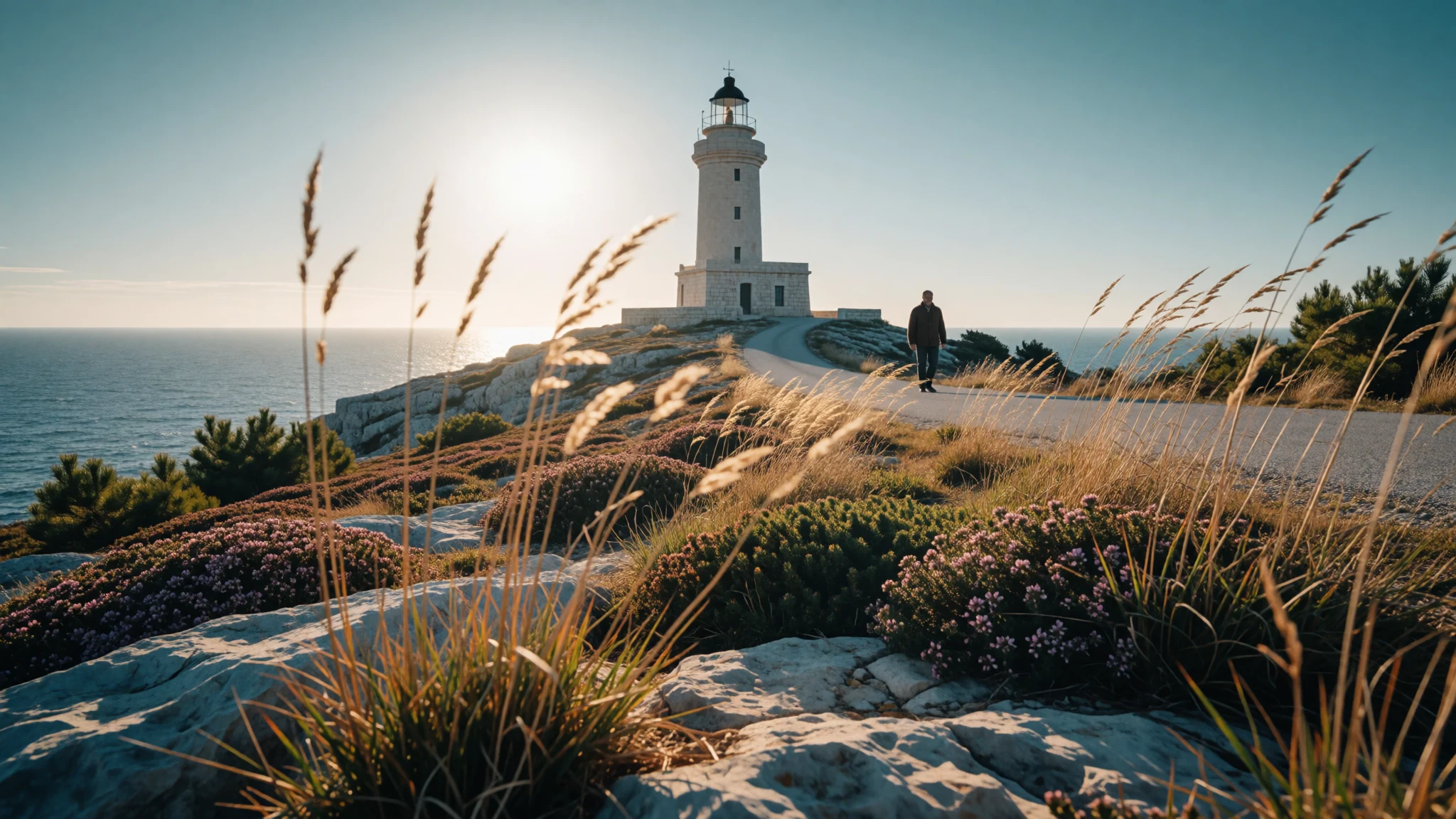
Dugi Otok is a long, quiet Adriatic island of cliffs, olive groves, a lighthouse and a sheltered bay, reached only by ferry from Zadar.
The place
Dugi Otok, whose name means Long Island in Croatian, is a thin ribbon of limestone lying off the Dalmatian coast, west of Zadar. The shape explains almost everything about it. The island is many times longer than it is wide, and one paved road threads its whole length, from the lighthouse at Veli Rat in the north to the Telašćica end in the south. The western flank faces open sea and drops in tall, rugged cliffs. The villages sit on the sheltered eastern side, looking towards the mainland, and most are small fishing harbours: Sali, Zaglav, Žman, Božava, Brbinj and others. The highest ground reaches 337 m, and the upper slopes carry stands of Maritime Pine, while olives, vines, orchards and pasture fill the gentler land, especially in the north and centre. In the south, Telašćica nature park wraps a deep bay with islets and cliffs, and the Kornati islands lie right beside it. Compared with better-known Croatian islands, Dugi Otok is calm. There is no resort strip, only one cash machine, one sizeable supermarket, and a ferry timetable that sets the rhythm of the day. Summer brings yachts and day-trippers to the southern bay, but the villages stay sleepy, and the island suits walkers, rock-swimmers and long lunches far better than anyone hoping for nightlife.
Its story
Dugi Otok has been lived on since the Stone Age, and the evidence lies scattered across the island: hillforts and burial sites running through the Copper, Bronze and Iron Ages, many of them still barely studied. The names tell much of the rest. In the tenth century the Byzantine emperor Constantine VII wrote of it as Pizuh. Later documents called it Insula Tilagus and, in Latin, the larger island, and by the Middle Ages it was simply the Great Island. Venetians and Italians knew it as Isola Lunga, a direct translation of the Croatian. The main settlement once stood in the south. Life moved towards the north-eastern shore during the Ottoman wars of the fifteenth and sixteenth centuries, and today's villages grew there, living mostly from fishing, with salt-making as an older sideline. Before that, much of the land belonged to Zadar's monasteries and citizens. Later layers turn up in unexpected places: Roman ruins, a pre-Romanesque chapel on a tiny islet near Savar, a pilgrimage church above Dragove, and the concrete submarine pens that the Yugoslav army cut into hillsides and then abandoned. Even Franz Joseph of Austria-Hungary came to look at a cave near Luka. This is a story of long, quiet use rather than grand events, which is why the traces feel so unforced.
What to see
- Veli Rat lighthouse — Veli Rat, northern tip
Veli Rat sits at the northern tip, where the island's single road ends at a lighthouse that has guided ships for well over a century. The cape is open, windy and low, good for sunset and for watching ferries pass. Apartments inside the lighthouse buildings can be rented, which suits anyone wanting a very quiet night.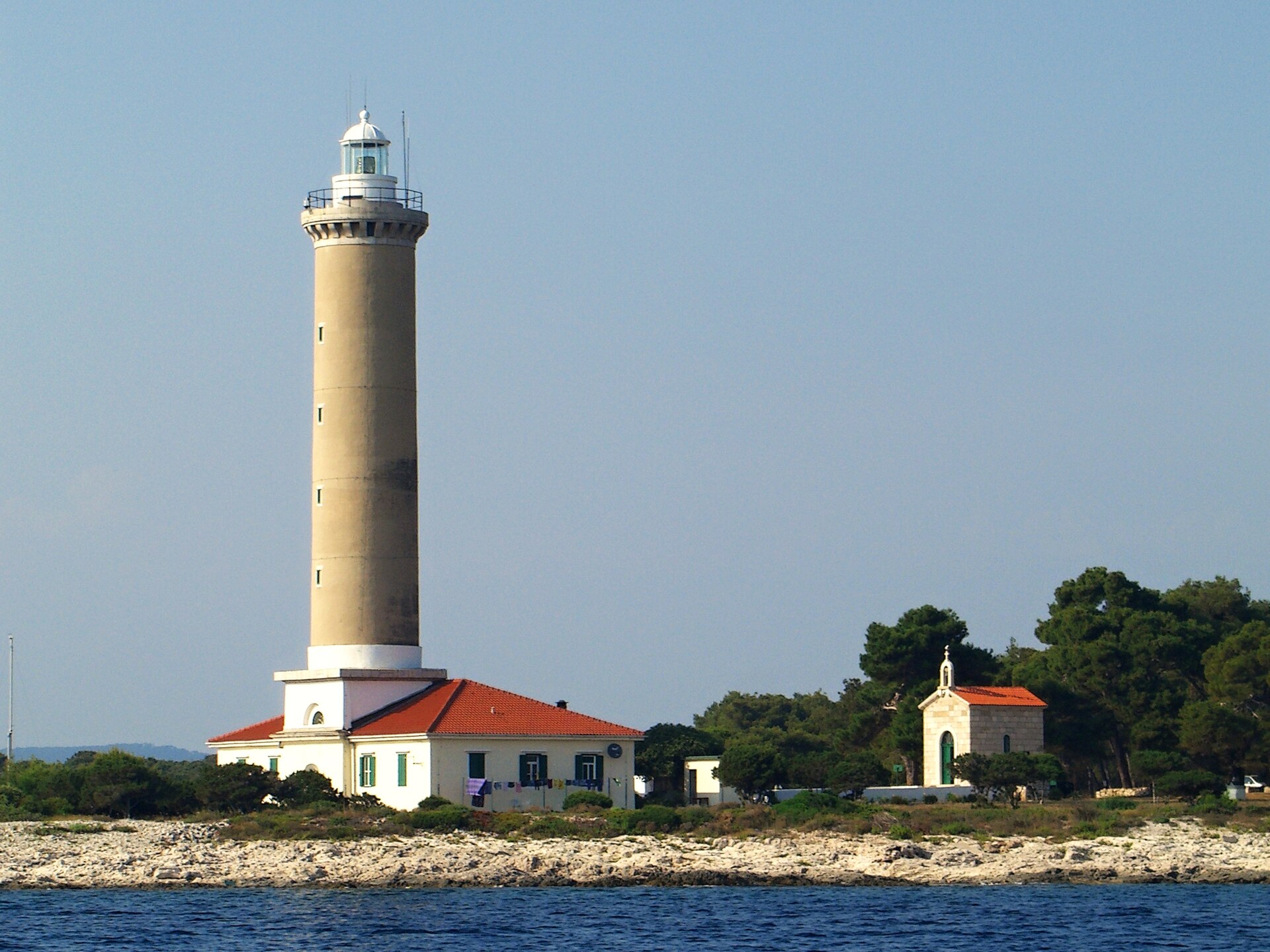
- Strašna peć cave — Between Savar and Luka
Strašna peć is a cave beside the road between Savar and Luka, in the south-central part of the island. Its name means something like Dreadful Rock, and it has a distinguished visitor in its history: the Austro-Hungarian emperor Franz Joseph once came to look. It makes an easy stop on the drive south; ask locally about access. - Church of Sv. Pelegrin — Islet near Savar
The pre-Romanesque church of Sv. Pelegrin stands on a small islet joined to the land near Savar. Pre-Romanesque means it comes from before the heavier stone style of the later Middle Ages, and the simple walls with water on every side are what make it memorable. Combine it with a swim nearby. - Saljsko Polje olive groves — South-east, near Sali
Saljsko Polje is a plain of old olive groves in the south-east, near Sali. Locals say the trees are centuries old, and a legend credits the ancient Greeks with planting them, which nobody can prove, though the gnarled trunks look the part. Walk or cycle through in the morning, before the heat builds. - Telašćica nature park — Southern end of the island
Telašćica nature park fills the southern end of the island and wraps a deep, sheltered bay dotted with small islets. On the seaward side tall cliffs drop to open water, and a small salt lake sits just inland. The park borders Kornati National Park, so boat trips often combine both. Check the park's official site for entry rules.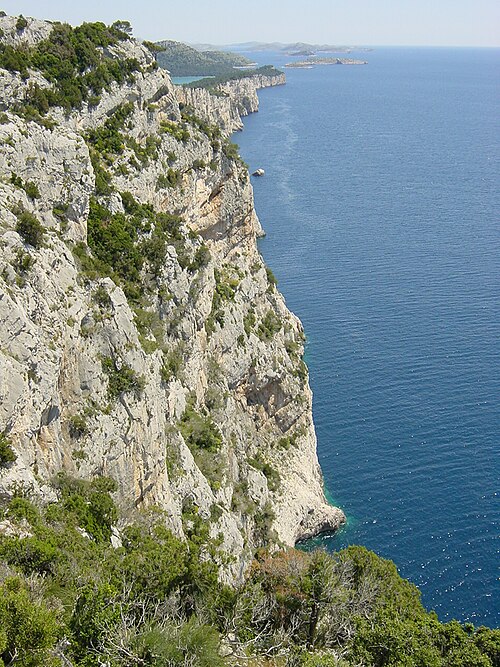
Culture
Dugi Otok's culture is that of a small Dalmatian island community: fishing, olive oil, sheep's cheese, figs and wine, with a Catholic calendar that still shapes village life. The villages are Croatian-speaking, with a long Venetian and Italian heritage visible in the old name Isola Lunga and in the stonework of harbour houses. Because almost everything except fish arrives by ferry, people are practical and unhurried, and shops, post offices and boats keep their own rhythm. Church feasts matter. A pilgrimage church stands on the slopes near Dragove, and the weekend before the Assumption in mid-August Sali holds its Saljske Uzance festival, a local celebration with a loyal island following. Many families also have roots in the mainland or abroad and return for summer, so August feels livelier than any other month. Winter is the opposite: some eateries close, and the island belongs to its residents. Visitors who greet people in the shop or on the quay with a simple dobar dan are usually met warmly, and a little patience when the ferry or the shop shuts for lunch goes a long way. In village churches and at the pilgrimage site, cover your shoulders and knees, keep your voice low, and ask before photographing anyone working on a boat or at a net.
What to wear
Dugi Otok has no single famous costume that the sources describe, so the honest picture of traditional dress here is the wider Dalmatian island pattern: wool and linen made for working life, dark waistcoats and head coverings for women and men on feast days, and embroidered or lace details saved for weddings and church celebrations. Such clothes are mostly seen today at festivals like Saljske Uzance in Sali, rather than in daily life, and details differ from village to village. Day to day, islanders dress for boats, olive groves and heat: shorts, cotton shirts, rubber-soled shoes, waterproofs for the bora wind and rain, and a decent hat. Smarter clothes appear for Sunday Mass and feast days. Visitors should plan for sun, salt water and rough ground. Bring a wide-brimmed hat, sunglasses, a light long-sleeved shirt and sunscreen for the exposed coast, plus a fleece or windproof layer for evenings on the ferry and shoulder-season mornings. Footwear matters more than fashion: sturdy trainers or walking sandals for the stony paths and olive groves, and water shoes for rocky swimming spots. Keep a scarf or shirt in the bag for visiting churches, where covered shoulders and knees are expected.
What to eat
- Grilled fresh fish — Harbour eateries and family konobas in Sali, Božava and Zaglav
Fish is the one food the island produces reliably, so a simple grilled catch with olive oil, lemon and blitva (chard with potato) is the safest order. Ask what came in that morning. Prices follow the weight of the fish, so check before it reaches the grill. - Brodet fish stew — Konobas in the eastern villages, often by request
Brodet is a Dalmatian fish stew of several kinds of fish cooked slowly with tomato, onion and wine, usually served with polenta or bread. It is a dish for sharing and often needs ordering in advance, so ask earlier in the day. - Island olive oil — Family producers and village shops, especially around Sali
Olive oil is a staple here, pressed from groves such as those at Saljsko Polje. Good oil tastes green and slightly peppery, and a little poured over bread and tomatoes makes a decent lunch. Small bottles pack easily as gifts. - Sheep's cheese — Village shops, small farms and starter platters in konobas
Island sheep's cheese is firm, salty and sometimes cured in oil or aged with herbs. It turns up on platters with figs, olives and cured ham, and goes well with a glass of local white wine. - Figs and local wine — Village konobas and household stalls in late summer
Figs ripen in late summer and appear fresh on cheese boards or dried and sweet in winter. Island wine, from vineyards on the gentler north and centre, is usually served by the jug in simple eateries and suits fish.
Plan it
Best time. May–June and September–October have warm sea, workable ferry schedules and thinner crowds; July–August is hot and busiest, especially around the August festival; winter is mild but quiet, with some eateries shut.
How long. 2–4
Getting there. Fly or travel overland to Zadar, then take a ferry. Jadrolinija vehicle ferries run from Zadar to Brbinj and Božava, and G&V Line passenger boats run to Sali and Zaglav. Sailings change with the season, so check the operators' official sites before travelling.
Budget. mid
Tips
- Carry cash: the only cash machine is in Sali, though post offices can exchange money
- Shop for groceries in Sali, as almost everything except fish arrives by ferry and vegan food is hard to find
- Book accommodation early for July and August, especially near the festival weekend
- A car or scooter helps, as one road links every village from Veli Rat to Telašćica
- Bring sun protection and water for walks; shade is limited on the coast
Etiquette
- Cover shoulders and knees in churches and at the pilgrimage site
- Ask before photographing people at work on boats or in the olive groves
- Take rubbish with you from coves and trails
Nearby
Sources
- Wikidata Q725802 (CC0)
- Wikipedia: Dugi Otok (CC BY-SA 4.0)
- Wikivoyage: Dugi Otok (CC BY-SA 4.0)
- Isola Lunga.JPG (Ivana51, assumed) (CC BY 3.0)
- Northern Dalmatia location map (Dr. Blofeld) (CC BY-SA 2.0)
- Dugi-Otok salt lake Croatia (lecoq max) (CC BY 3.0)
- Dugi Otok Telascica (InterPixel.de) (CC BY 3.0)
- Mala Proversa, Dugi otok (Ivo Finka) (CC0 1.0)
- Veli Rat lighthouse (Dominik Matus) (CC BY 3.0)
- Dugi otok 0405-mod (Krešimir Bikić) (CC BY 3.0)
- Zaglav, Zlata, Straža and Gračina (Harald Hetzner) (CC0 1.0)


