Brač
Brač, Croatia
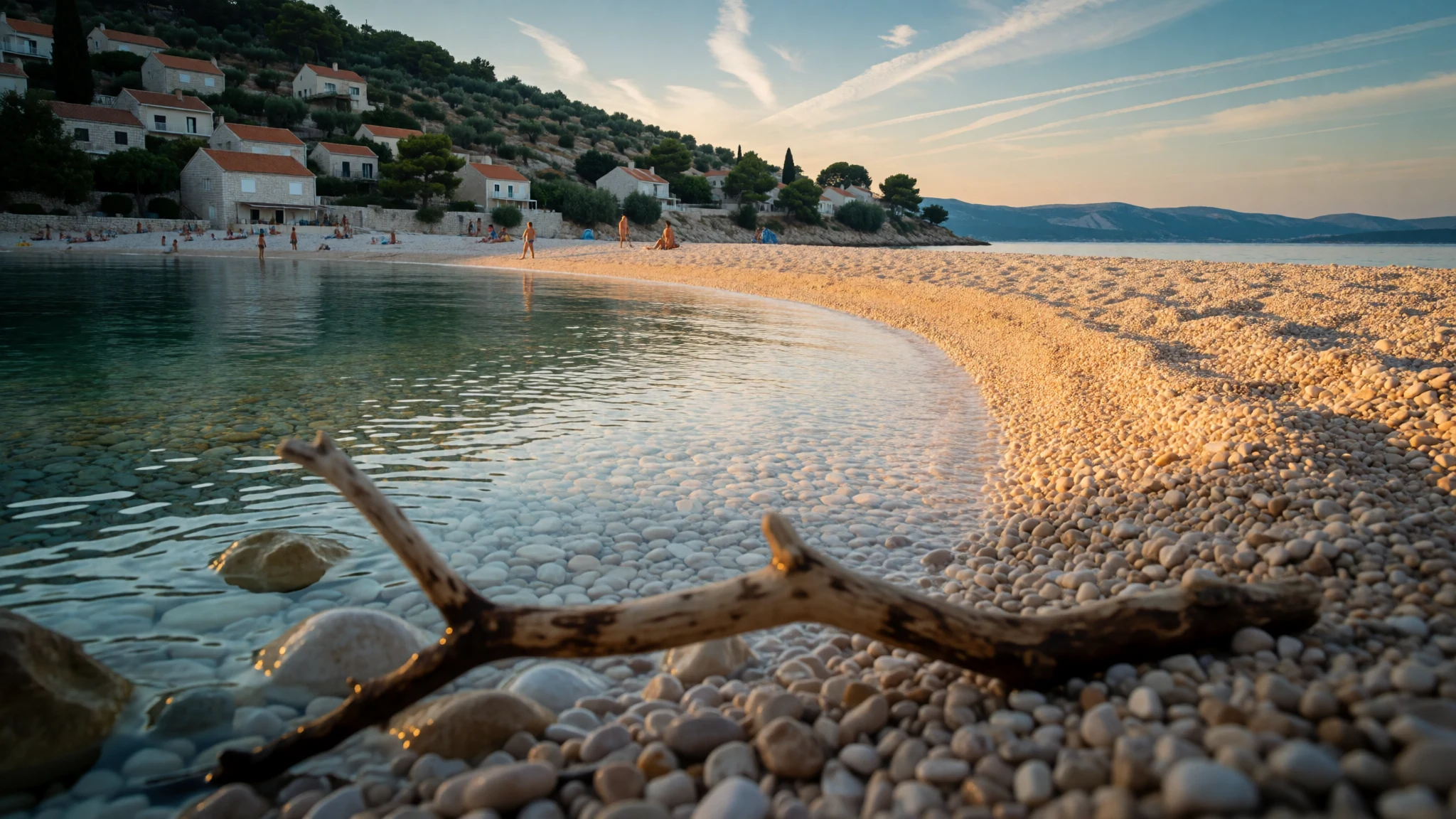
Brač offers Adriatic coves, a long pebble spit at Bol, stone-built villages and a summit with views across to Hvar.
The place
Brač is an island in the Adriatic off the Dalmatian coast, cut off from the mainland by a channel that ferries cross in under an hour. At about 396 square kilometres it is the largest island in Dalmatia, roughly oval, some 40 km from east to west and 14 km from north to south. The coastline is long and crinkled, more than 180 km of small bays and coves, which is why so much island life faces the water. The population is 14,434, spread over twenty-two settlements. Supetar, the main town and ferry port, has a little over 3,300 people, while Murvica has fewer than two dozen. Inland the island is dry, stony karst with olive groves, vineyards and pine, rising to Vidova gora at 780 m, the highest point on any Adriatic island. Bol on the south coast is the beach town, with the Zlatni Rat spit pointing into the sea. Milna has a marina, Pučišća has a school for stonemasons, and the pale local limestone has been shipped out for centuries. Brač is a working island as much as a holiday one: tourism, fishing, farming and quarrying all count. The airport near Bol handles seasonal and charter flights rather than a year-round schedule. Anyone who stays only on the beach misses the upland villages, so the island rewards a hire car, or a careful read of the bus timetable, and some patience.
Its story
Brač was called an island without history by its best-known writer, Vladimir Nazor, and there is some truth in the joke. Finds in the Kopačina cave near Donji Humac go back to the 12th millennium BCE, yet the Illyrians, Greeks and Romans, unlike on neighbouring islands, never founded a large town here. Proper settlements came later, after Slavs arrived in the 8th century and Venice took over the administration in the 10th. The island's capital then moved from Gradac to Nerežišća, and finally to Supetar in 1827. Pirates are a big part of why towns grew so slowly. Raiders, first the Narentines and later the Kačić family from Omiš, kept the coast poor and unsafe into the 15th century, so people lived inland and built in the hills. Rulers changed often: Rome and Venice held the island for centuries, the Normans for a single year. Through all of it Brač ran its own local affairs under its statutes, first written down in 1305, which gave it continuity whether the overlord sat in Byzantium, Vienna or Paris. Stone is the other thread. Quarrying here has gone on for millennia, and Brač limestone went into Diocletian's Palace in Split and, much later, the Canadian National Vimy Memorial. The Blaca hermitage, dating from 1551 in the dry hills of the south, belongs to the same story of an island that often preferred to keep out of sight.
What to see
- Vidova gora — Above Bol, central-south Brač
Vidova gora is the summit of Brač, and at 780 m the highest point of any Adriatic island. On a clear day the view drops to the Zlatni Rat spit at Bol and runs across the water to Hvar and Vis. Go early and carry water, since the top is exposed and shade is scarce.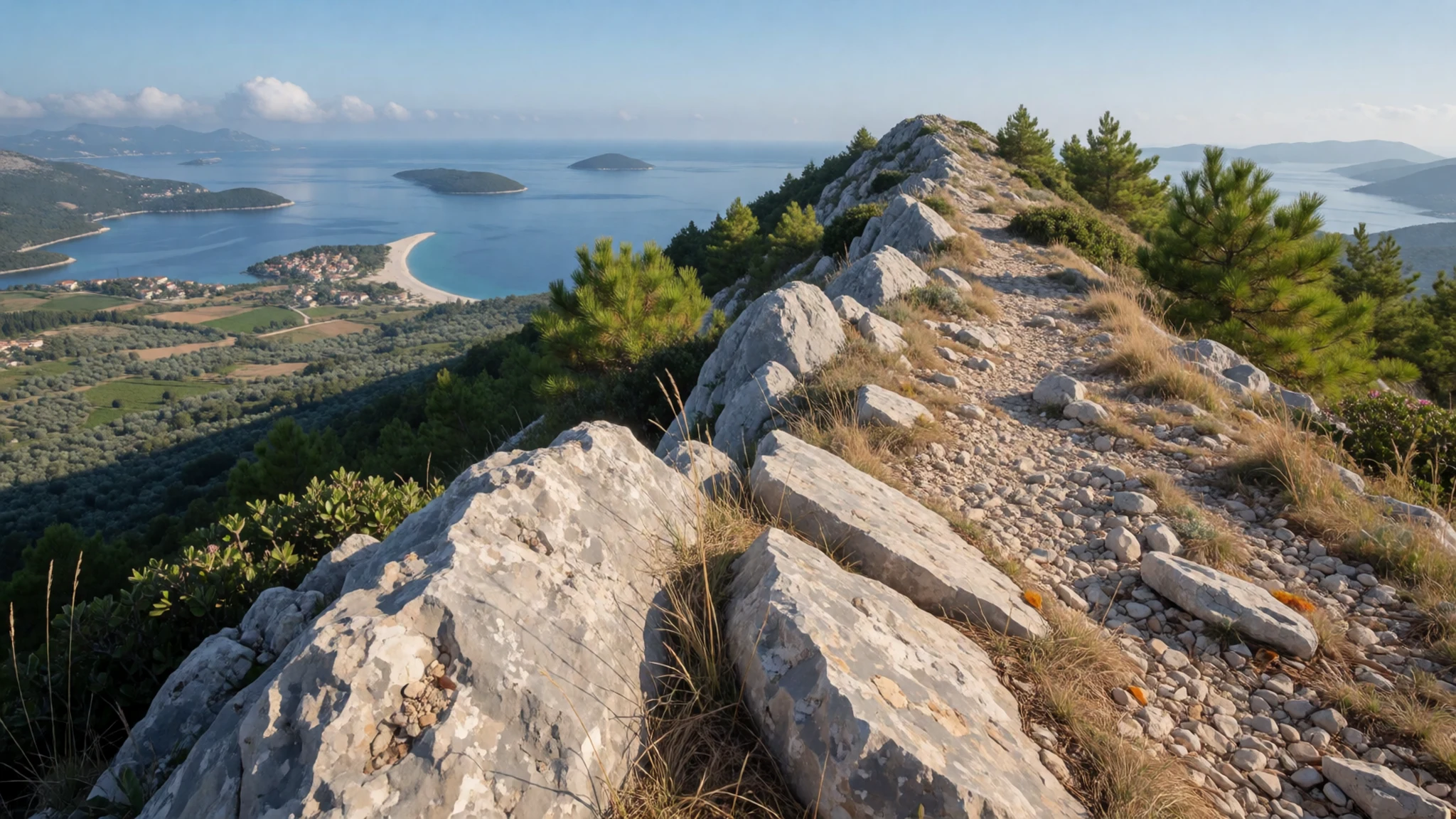
- Blaca hermitage — Southern side of Brač
The Blaca hermitage began as a monastery in 1551 and is now a museum run by two brothers. It was added to Croatia's UNESCO Tentative List in 2007. Access can be rough and opening arrangements change, so ask locally or check an official source before setting out.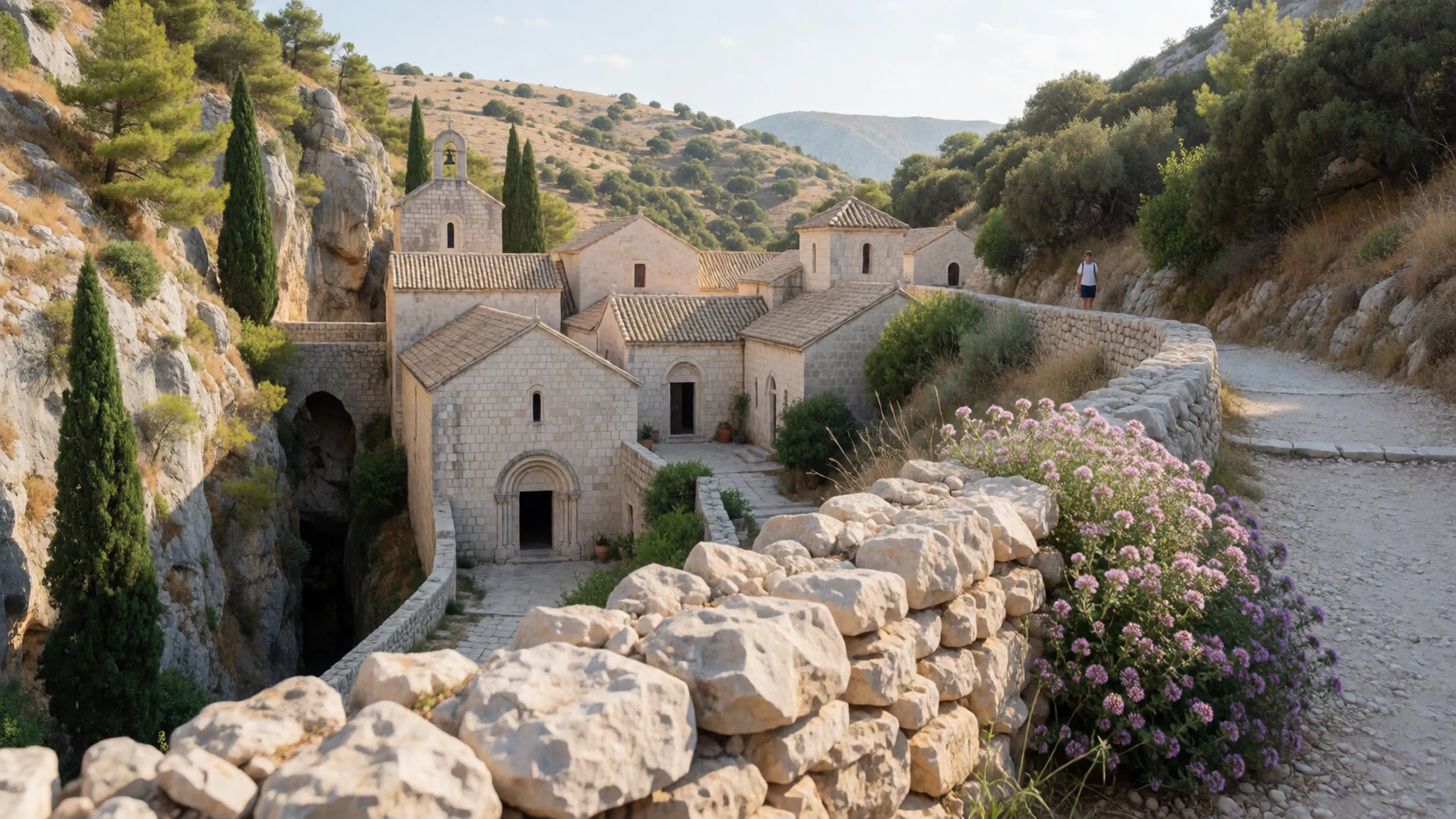
- Bol and Zlatni Rat — Bol, south coast
Bol is the island's main beach town, and Zlatni Rat, the pebble spit reaching out from it, is the image most visitors carry away. July and August are crowded. The Dominican monastery in Bol holds prehistoric objects, amphorae and coins, a cool indoor hour in the afternoon heat. Windsurfing and kitesurfing are popular here.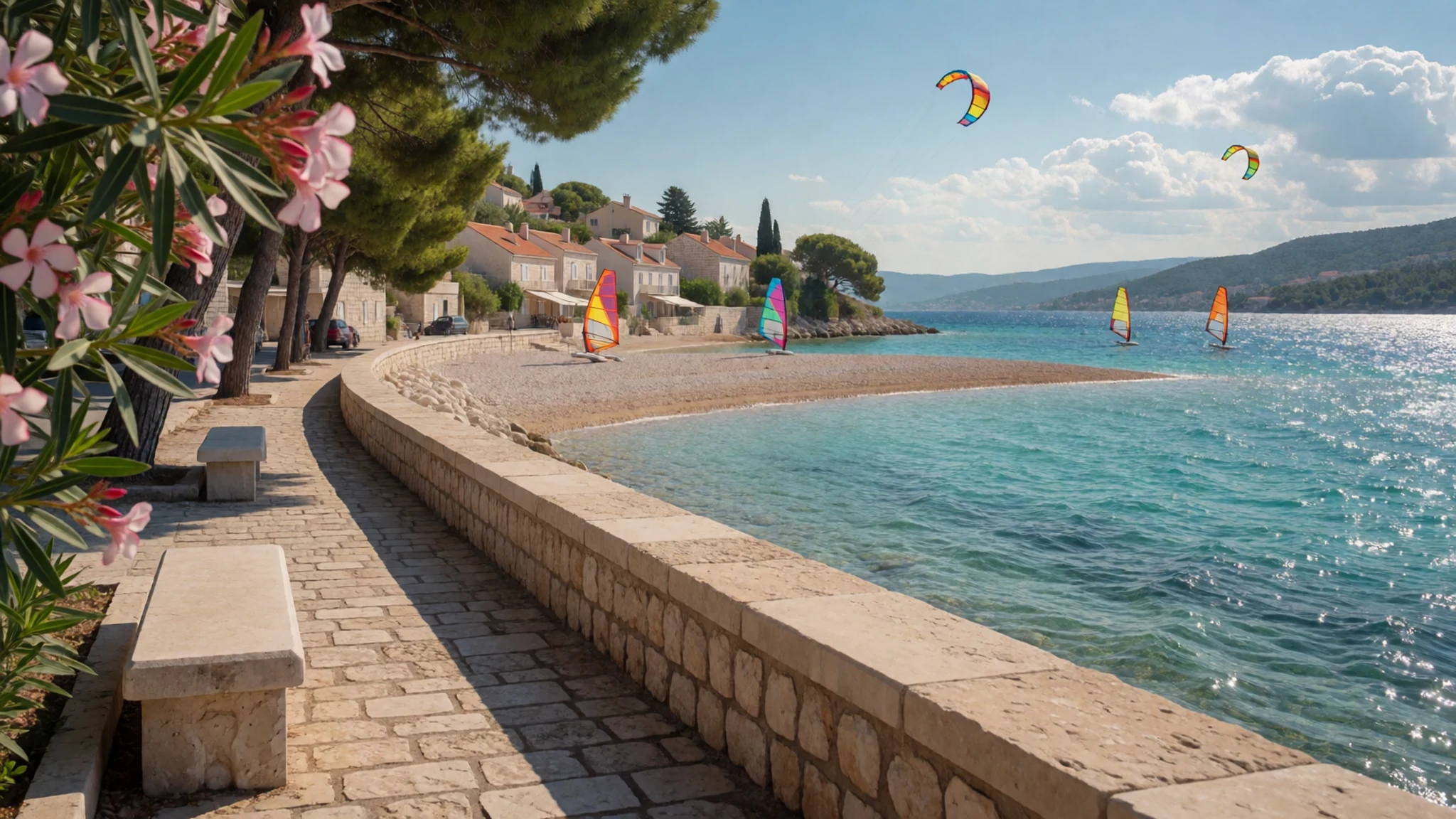
- Škrip — Inland, near Splitska
Škrip is a small inland village that holds the island museum and the old Illyrian walls of the Radojković citadel. It is a good place to grasp how early islanders lived and worked stone. The drive across the interior, past olive groves and dry-stone walls, is part of the visit.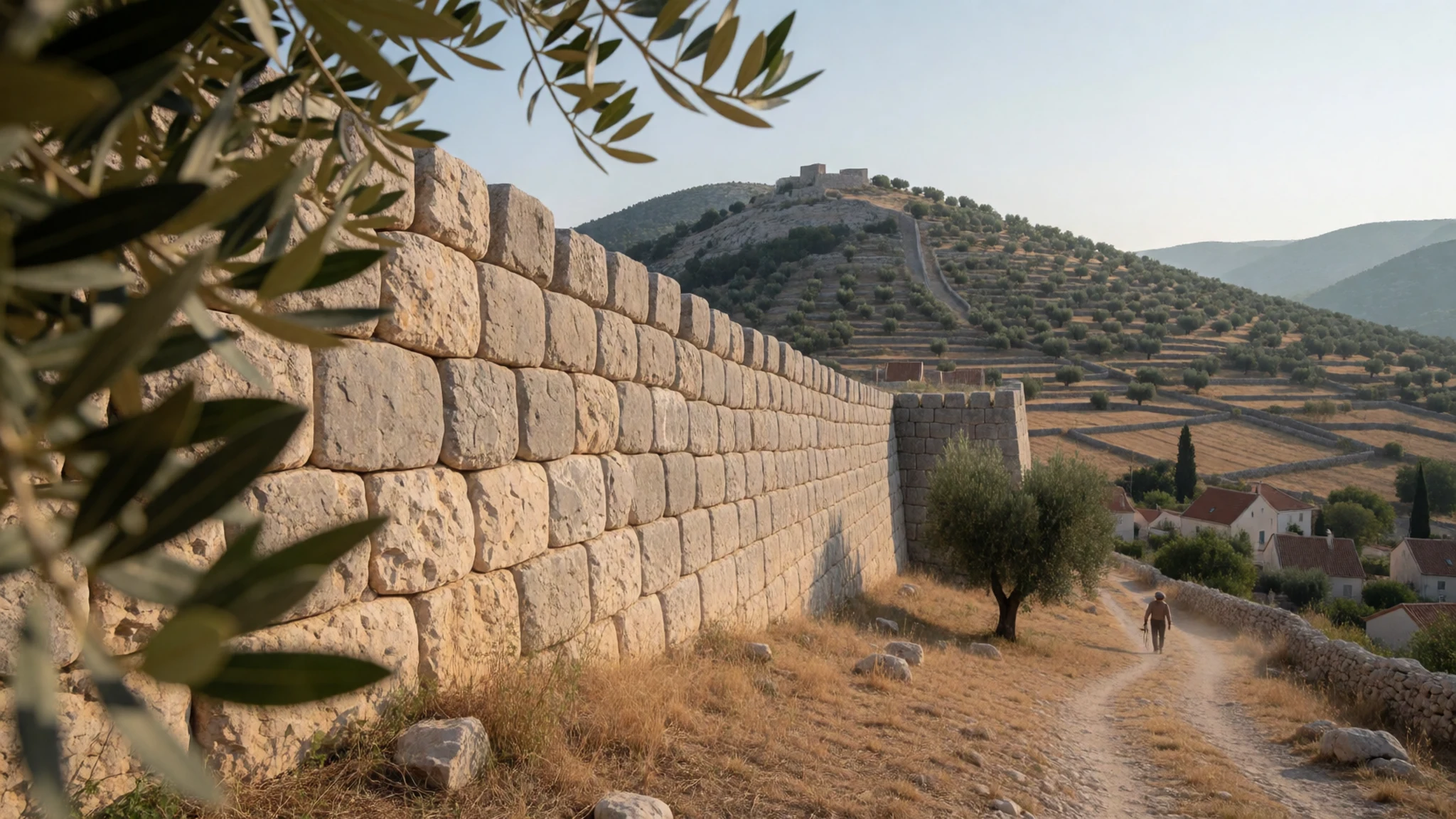
- Kopačina and Dragon's cave — Near Donji Humac; near Murvica
Kopačina cave, between Supetar and Donji Humac, produced finds from the 12th millennium BCE, among the earliest traces of people in Dalmatia. Dragon's cave, near Murvica on the south side, is also recommended. Both are off the main beach circuit, so check access and visiting arrangements locally first.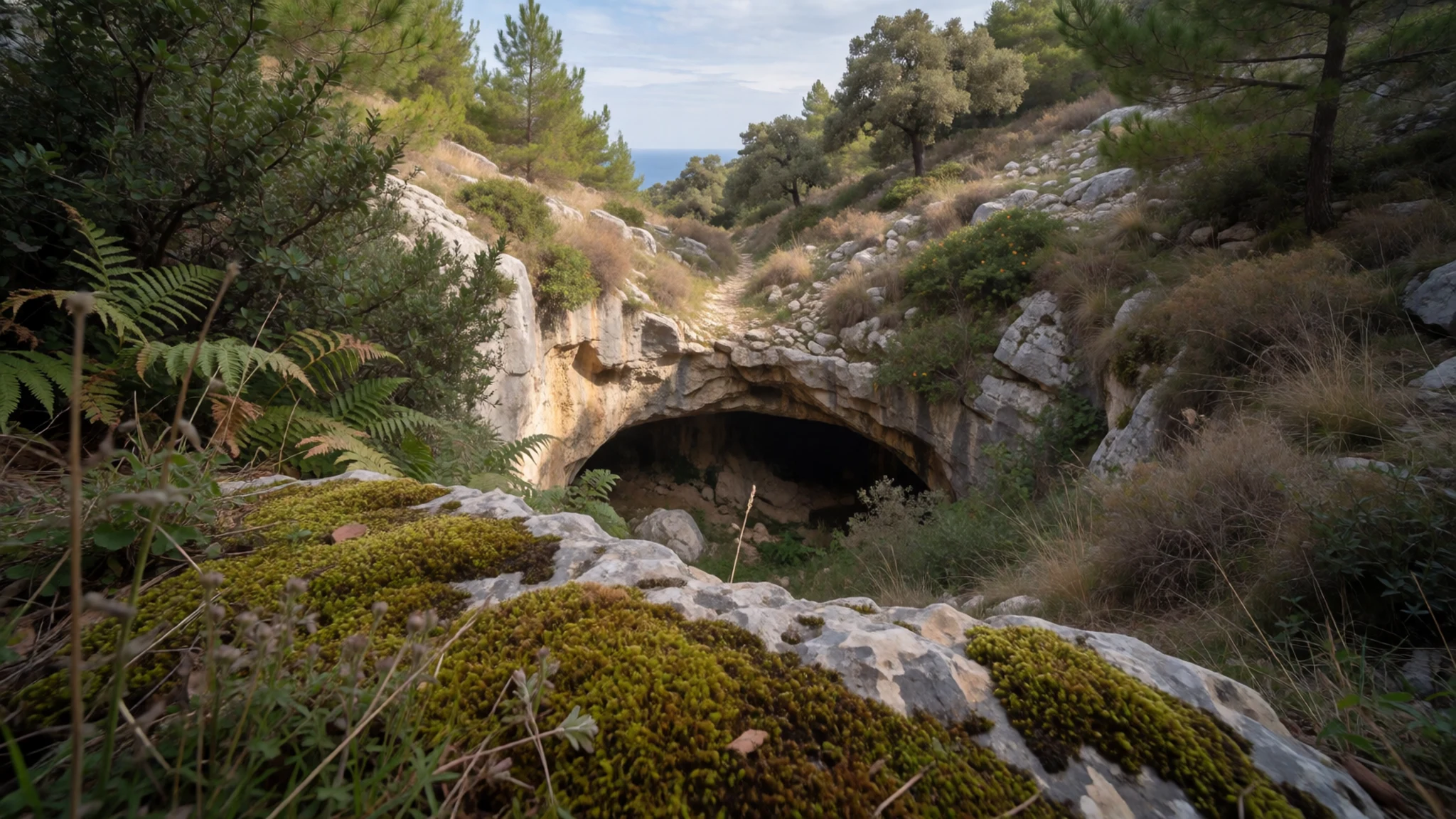
Culture
Brač has a culture shaped by stone, sea and the Catholic parish. Villages are built from the local pale limestone, and the craft of working it is still taught at the stonemasons' school in Pučišća. Church feast days and village gatherings matter more to island life than nightlife does, and many inland settlements are very quiet outside the summer. The island has a strong sense of its own identity, rooted in statutes that let it manage its affairs under a long line of rulers. Vladimir Nazor, the island's best-known author, gave Brač its wry label of an island without history, a phrase locals quote with a mix of pride and irony. Olive oil with a protected designation of origin, and varenik, a syrup from a local grape variety with protected geographical indication, are points of local pride. Croatian is spoken everywhere; English is widely understood in tourist areas, though a greeting in Croatian, such as dobar dan for good day, is always appreciated. Summer brings crowds to Bol and Supetar, while the interior keeps a slower pace of family farms, dry-stone walls and small chapels. Weekday mornings are when villages feel most like themselves, with shops opening and older residents chatting outside the church. Cover your shoulders and knees before entering a church, and keep your voice low when walking through the inland villages.
What to wear
Brač has no dress code that a visitor will notice day to day, and its traditional costume is now mostly seen at feast days, folklore events and weddings. Island dress in the past, as across Dalmatia, was made from home-woven wool, linen and cotton, practical for farming, fishing and quarrying. Details differ from village to village, so festivals and the island museum at Škrip are the best places to see it. Everyday clothing today is relaxed and sun-minded: linen or cotton shirts, shorts, sandals and caps in summer, with fleeces and windproof jackets for cooler evenings and the strong winds that can blow in spring and autumn. Work clothes are still common in the interior, where olive growers and stonemasons dress for dust and heat. A visitor should pack light, breathable layers, a hat and sunscreen for the summer months. Swimwear belongs on the beach and boat, not in village streets or shops. Shoes matter more than clothes: water shoes make pebble beaches and rocky coves far kinder on the feet, while sturdy trainers or light trail shoes are needed for Vidova gora and the track towards Blaca. For churches, carry a light scarf or shirt to cover shoulders, and wear something that covers the knees.
What to eat
- Vitalac — Family-run taverns in the inland villages
Vitalac is a Brač speciality built on local lamb, traditionally cooked slowly and shared at celebrations. Pliny noted the island's goats, and meat from grazing animals remains central to the table. Look for it in traditional taverns inland, often by arrangement and often at weekends.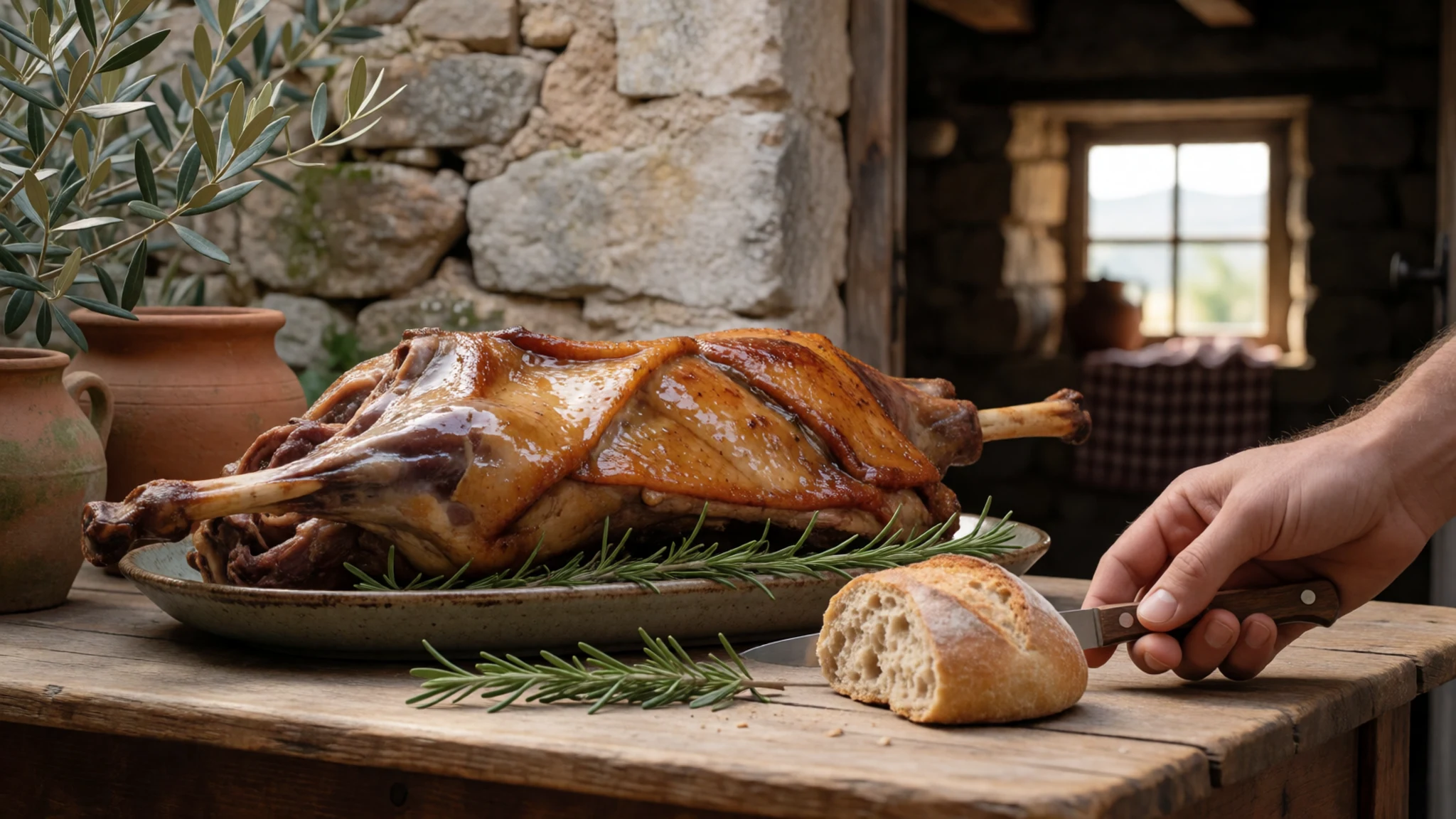
- Brač cheese — Village shops, farm stalls and markets
Brač cheese is a farm cheese made on the island and widely praised by locals. It is usually eaten simply, with bread, olives and a glass of local wine. Buying it from small producers in the interior is more rewarding than choosing from a supermarket shelf.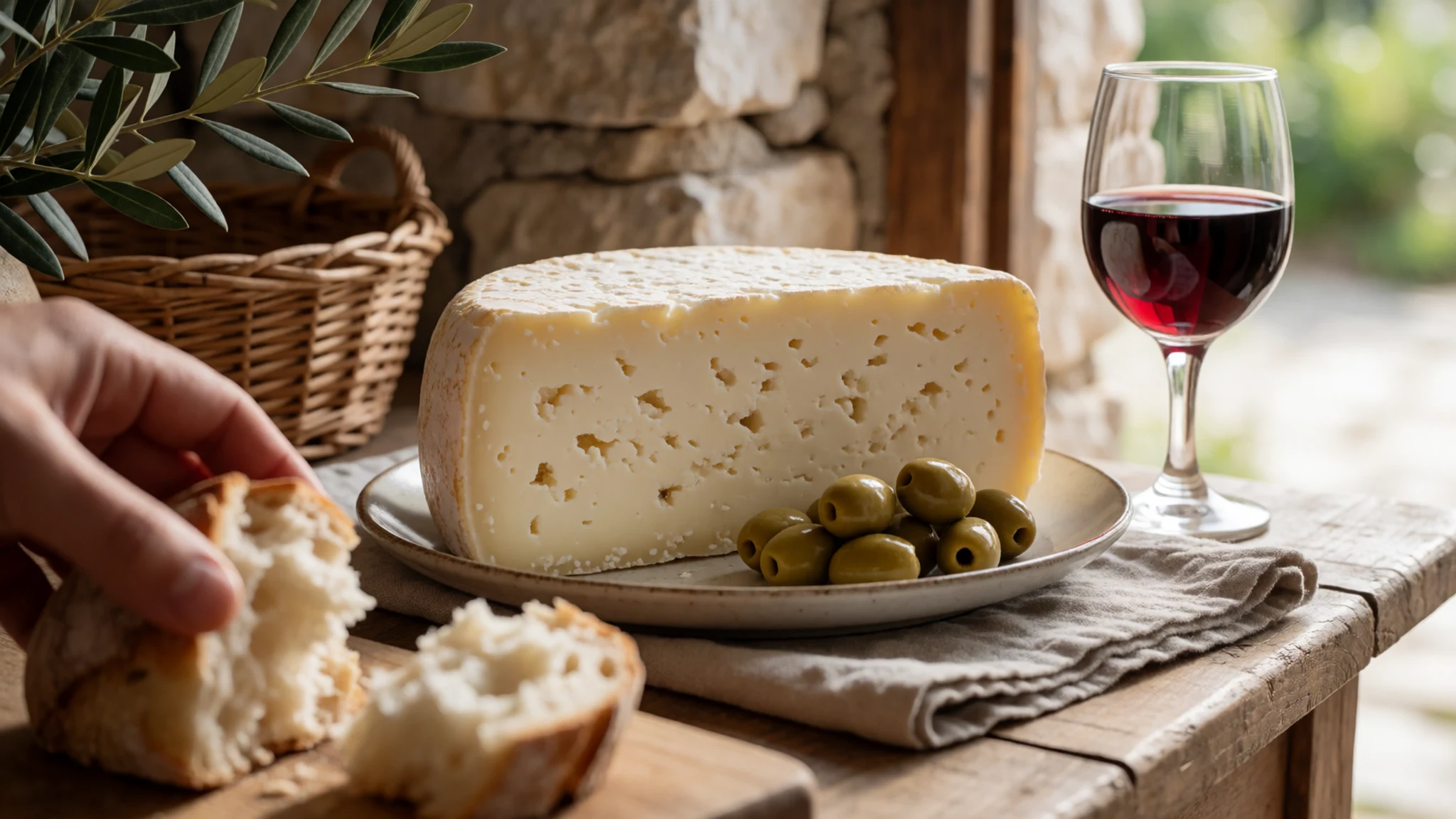
- Brač olive oil — Farm shops and tastings in the olive-growing villages
Olive oil from Brač carries a protected designation of origin, and groves cover much of the dry interior. Taste it on bread before buying, and ask the producer about the harvest. A small bottle makes a light, practical souvenir for the journey home. - Bolski plavac — Wine cellars and taverns around Bol
Bolski plavac is the island's best-known red wine, grown on sunny slopes near Bol. It is a robust wine that goes well with lamb and strong cheese. Cellar visits and tastings are the easiest way to try it, and many taverns pour it by the glass. - Varenik — Village shops and small markets
Varenik is a syrup made from a local grape variety and protected by geographical indication. It is sweet and dark, used in traditional desserts and drizzled over cakes. Ask for it in shops and markets, where it is usually sold in small bottles. - Herb grape spirit — Family taverns, offered after meals
Spirits distilled from grapes and flavoured with local herbs are a common end to a meal on Brač. Each household has its own recipe. Accept a small glass when it is offered, sip slowly, and ask what herbs went in.
Plan it
Best time. Late May–June and September–October, when the sea is warm, the days are bright and the crowds are thinner. July and August are the hottest and busiest months, with full ferries and packed beaches in Bol. Winter is quiet and many seasonal places close.
How long. 3–4
Getting there. Ferries run from Split to Supetar (about 50 minutes) and from Makarska to Sumartin (about 30 minutes); check the operator's current timetable. A passenger-only catamaran links Hvar with Bol. Brač has an airport near Bol with seasonal and charter flights.
Budget. mid
Tips
- Book car space on the ferry well ahead in July and August, or travel as a foot passenger and hire a vehicle on the island
- Carry water, a hat and sun protection for Vidova gora and any inland walks, since shade is scarce
- Keep some cash for small village shops, farm stalls and taverns, as card acceptance can be patchy
- Visit Bol's beaches early or late in summer to avoid the middle-of-the-day crowds
- Allow time for the interior villages; the coast alone gives only half the island
Etiquette
- Cover shoulders and knees before entering a church
- Avoid walking through villages or shops in swimwear
- Leave dry-stone walls, olive groves and farm gates as you find them and take rubbish with you
Nearby
Sources
- Wikidata Q922 (CC0)
- Wikipedia: Brač (rev 1384670975) (CC BY-SA 4.0)
- Wikivoyage: Brač (rev 5349134) (CC BY-SA 4.0)
- Photo: Brac-Hafen.jpg (CC BY 3.0)
- Photo: Golden Cape (Szabolcs Emich) (CC BY 2.5)
- Photo: Brač sa Smočiguzice (Zoran Knez) (Public domain)
- Photo: Illyrian walls, Skrip (Gaius Cornelius) (CC BY-SA 4.0)
- Photo: Muzej otoka Brača 2017 (August Dominus) (CC BY-SA 4.0)
- Photo: Ruins of St. Jadra church, Splitska–Škrip road (August Dominus) (CC BY-SA 4.0)
- Photo: Pagania/Neretva in the 9th century (CC BY-SA 4.0)
- Photo: Statutes of Brač (Public domain)


