Krk
Krk, Croatia
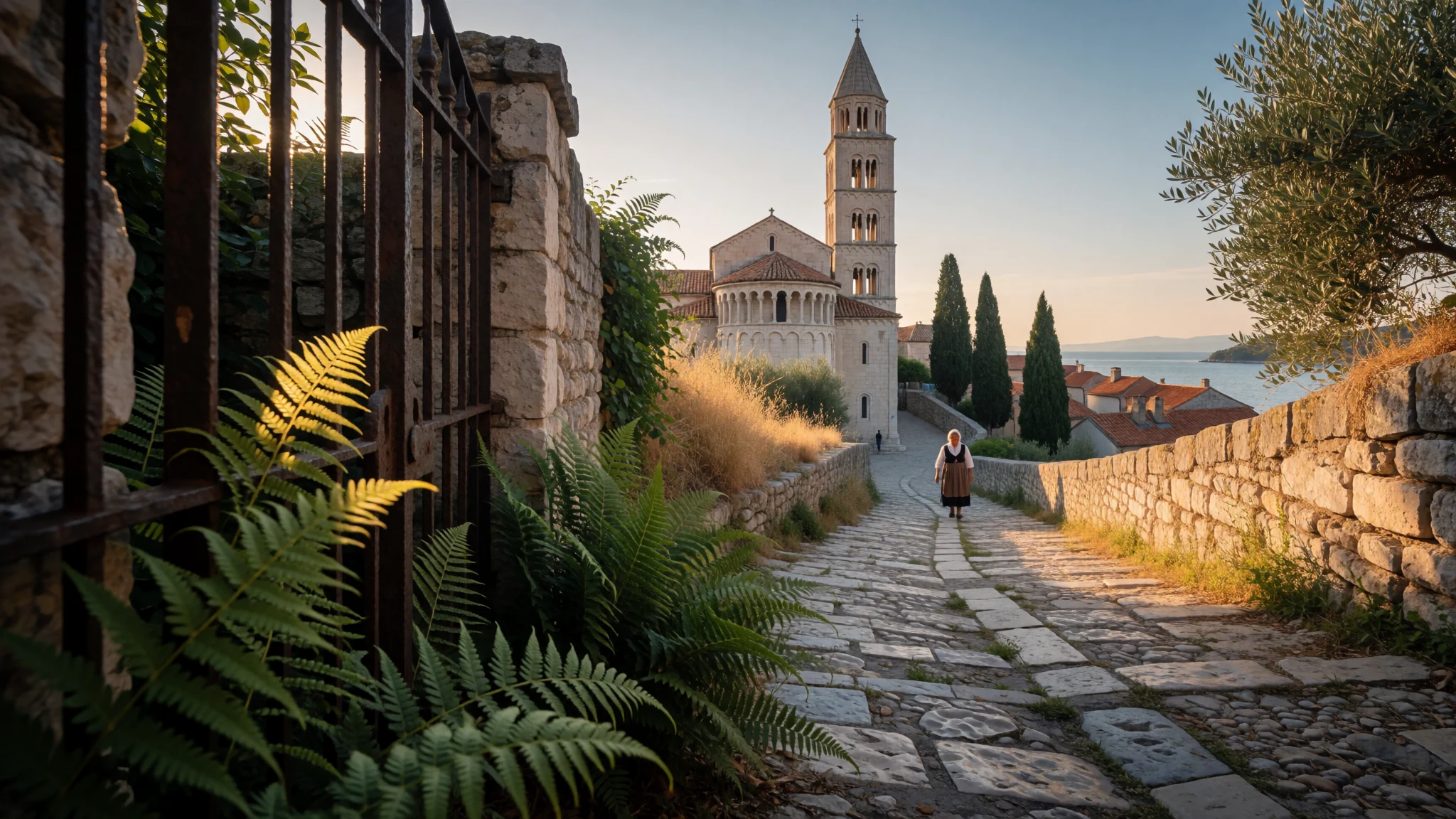
Krk is a Croatian Adriatic island reached by road bridge, with walled towns, pebble coves, wine villages and karst walking paths.
The place
Krk lies in the Bay of Kvarner in the northern Adriatic, close to Rijeka and within Primorje-Gorski Kotar county. Italians know it as Veglia. The island no longer feels cut off, because a concrete bridge about 1,400 m long has joined it to the mainland since 1980, and most visitors cross it by car without a second thought. The ancient name for it is the golden island.
The ground is karst, rocky and hilly, and the south-east is largely bare because the bora, a cold, gusty northerly wind, scours it. Obzova, at 568 m, is the high point, and Vela Luka is a harbour at the south-eastern end. Elsewhere there are woods with fox, roe deer, wild cat and marten, and stone villages sit on hilltops above pebble coves.
The towns have distinct characters. Krk town has old walls and a cathedral quarter, Baška has a long beach, Vrbnik is a hilltop wine village, and Malinska is a quieter resort. Much of the island belongs to a Natura 2000 site and to the Kvarner Islands bird area, and griffon vultures breed in a protected stretch called Kuntrep. Dozens of marked paths run through the woods and along the shore, and local diving clubs operate around the coast.
Be realistic about the season. July and August are hot and busy, the roads fill with drivers from across central Europe, and the bora can blow hard at any time of year. Late spring and September suit the island better.
Its story
Krk has been inhabited without a break since the Neolithic, though little is known about its first people. Greek and Latin writers knew it as Kyrista or Curicta and counted it among islands held by the Liburnians, a seafaring people of the eastern Adriatic. They are thought to have used the name Curicum, which may come from the earliest settlers. Traces of prehistoric settlement survive near Draga Bašćanska, and Bronze and Iron Age earthworks lie near Malinska, Dobrinj, Vrbnik and Baška.
Rome took the island after defeating the Liburnians. The town of Curicum, today's Krk town, rose to the rank of a municipality under Roman law. Remains of baths have been found near the Franciscan monastery. Its defensive walls were begun around the time of Rome's civil war in 50 BCE and strengthened in the 160s CE, when the Quadi and Marcomanni were threatening the Adriatic. The walls were among the best defended on that coast.
For much of the Middle Ages Krk belonged to the Republic of Venice, and after Venice fell its fortunes followed those of Dalmatia. In 1920, after the First World War, it became part of the Kingdom of Serbs, Croats and Slovenes, later called Yugoslavia. Krk town then remained the only mainly Italian-speaking municipality in the new state, although most Italians left after the Second World War. The island also became a centre of writing in the Glagolitic alphabet, which gives it a place in Croatian literary history well beyond its size.
What to see
- Krk town old quarter — Krk town
Krk town is the island's historic centre, built on the Roman settlement of Curicum. Walk the old lanes, look for the remains of the ancient defences and the area near the Franciscan monastery where Roman baths were found, then finish on the harbour front. Go early; by midday in summer it is hot and crowded.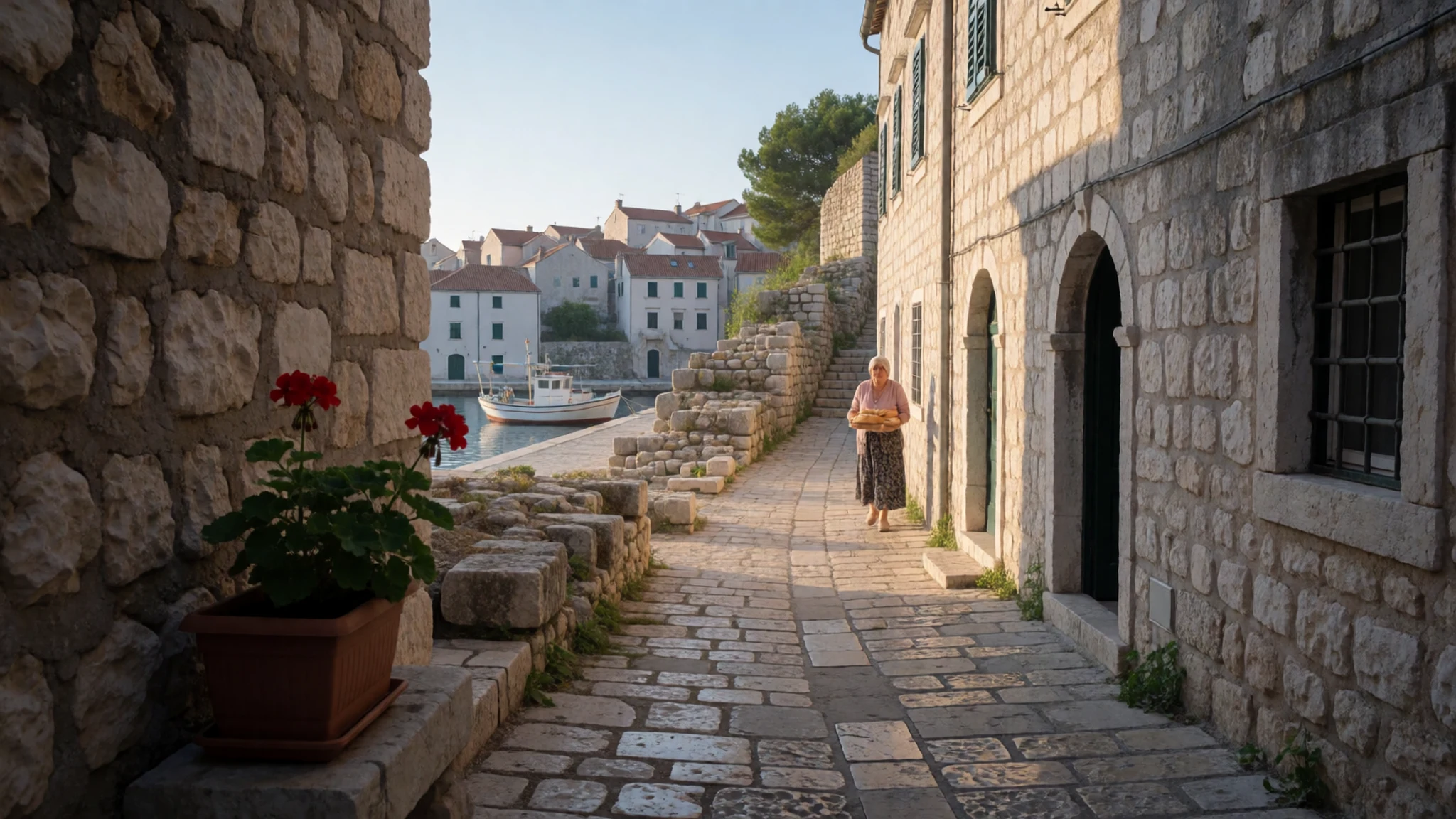
- Baška and its Glagolitic heritage — Baška, southern Krk
Baška, at the southern end of the island, is known for its long pebble beach under bare hills. It is also tied to the Baška tablet, an early Croatian text in the Glagolitic alphabet. The Lungomare Art project here includes a permanent installation, Drops, that draws attention to local drystone architecture.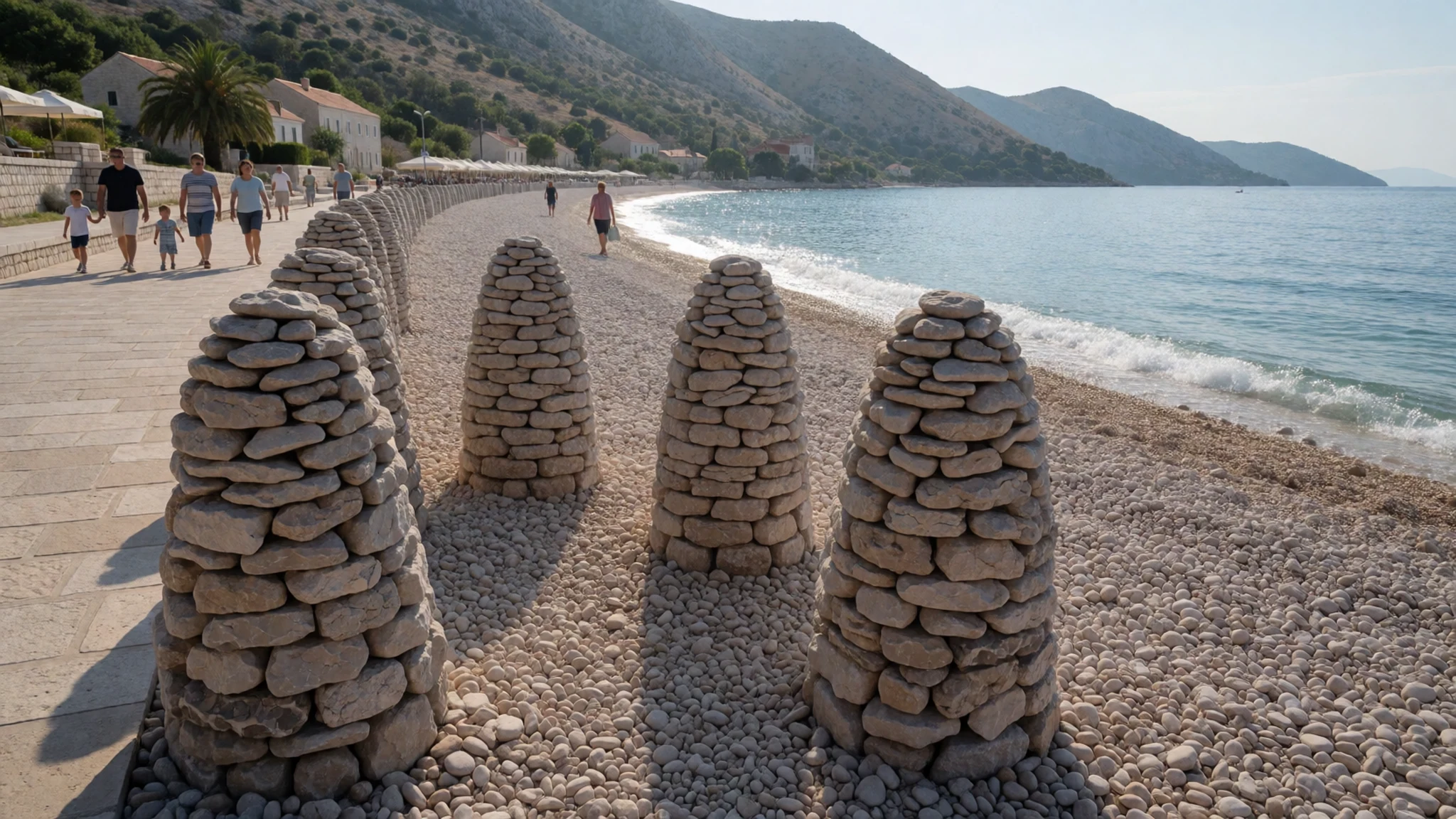
- Vrbnik — Vrbnik, north-east Krk
Vrbnik is a hilltop village above the sea and the home of the white wine Vrbnička žlahtina. It is worth visiting for the stone lanes and the views, and for tasting the wine where it is made. It took part in the island's 2020 European Capital of Culture programme. Wear shoes with grip, because the steps are steep and worn.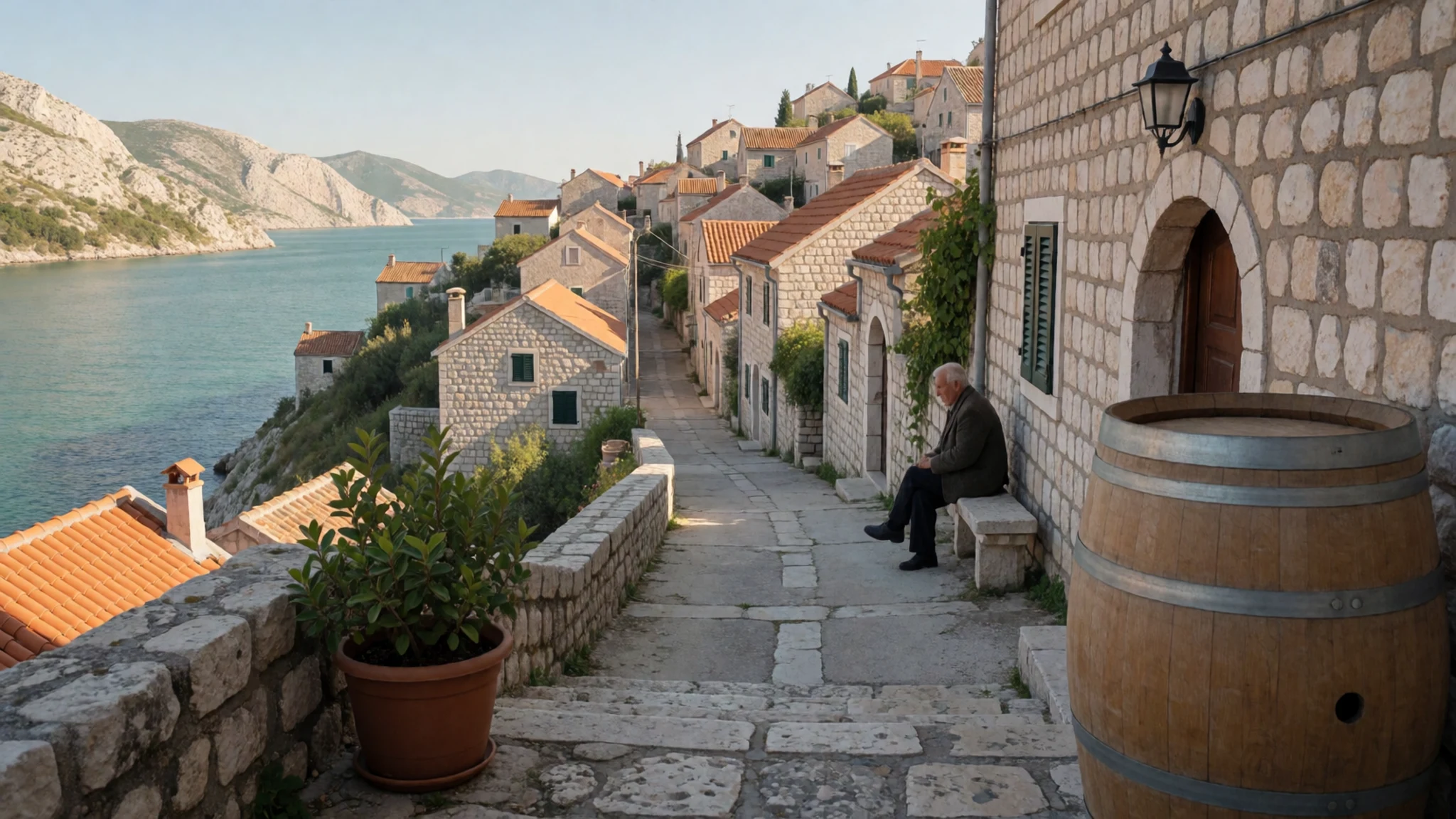
- Košljun monastery island — Bay near Punat
Košljun is a small island in a bay off Krk with a monastery on it. It is a calm contrast to the beach towns and connects to the island's long tradition of Glagolitic writing. Boats usually run in the warmer months, so check locally for crossings, and expect a quiet, reflective visit.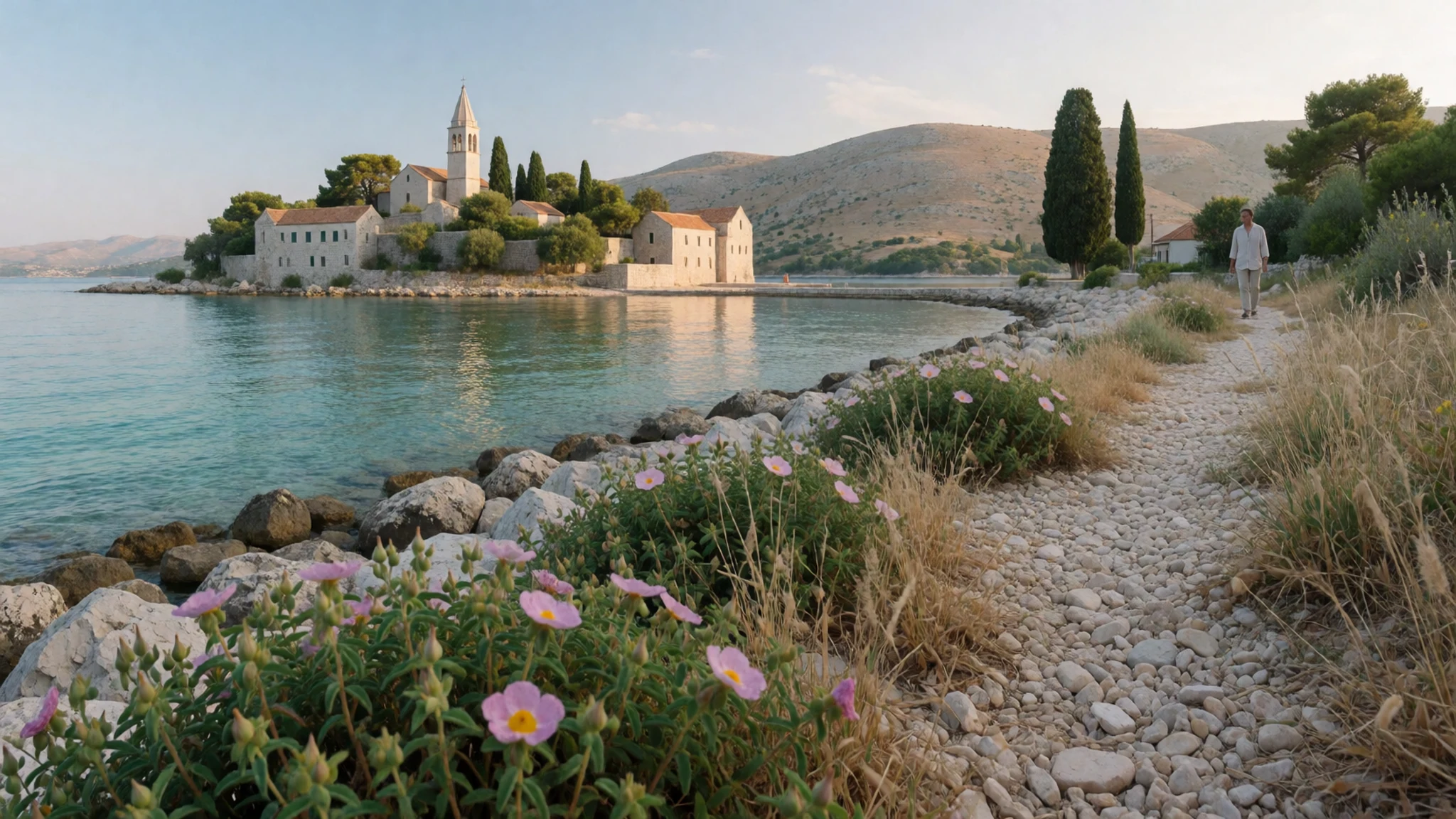
- Kuntrep griffon vultures — Protected coastal area, Krk
Kuntrep is a protected area where griffon vultures breed, some nests sitting as low as 10 m above the sea. The birds are used to people, so sightings are fairly common, but keep your distance and never approach nests. Binoculars help, and the vultures are most active on warm, calm mornings.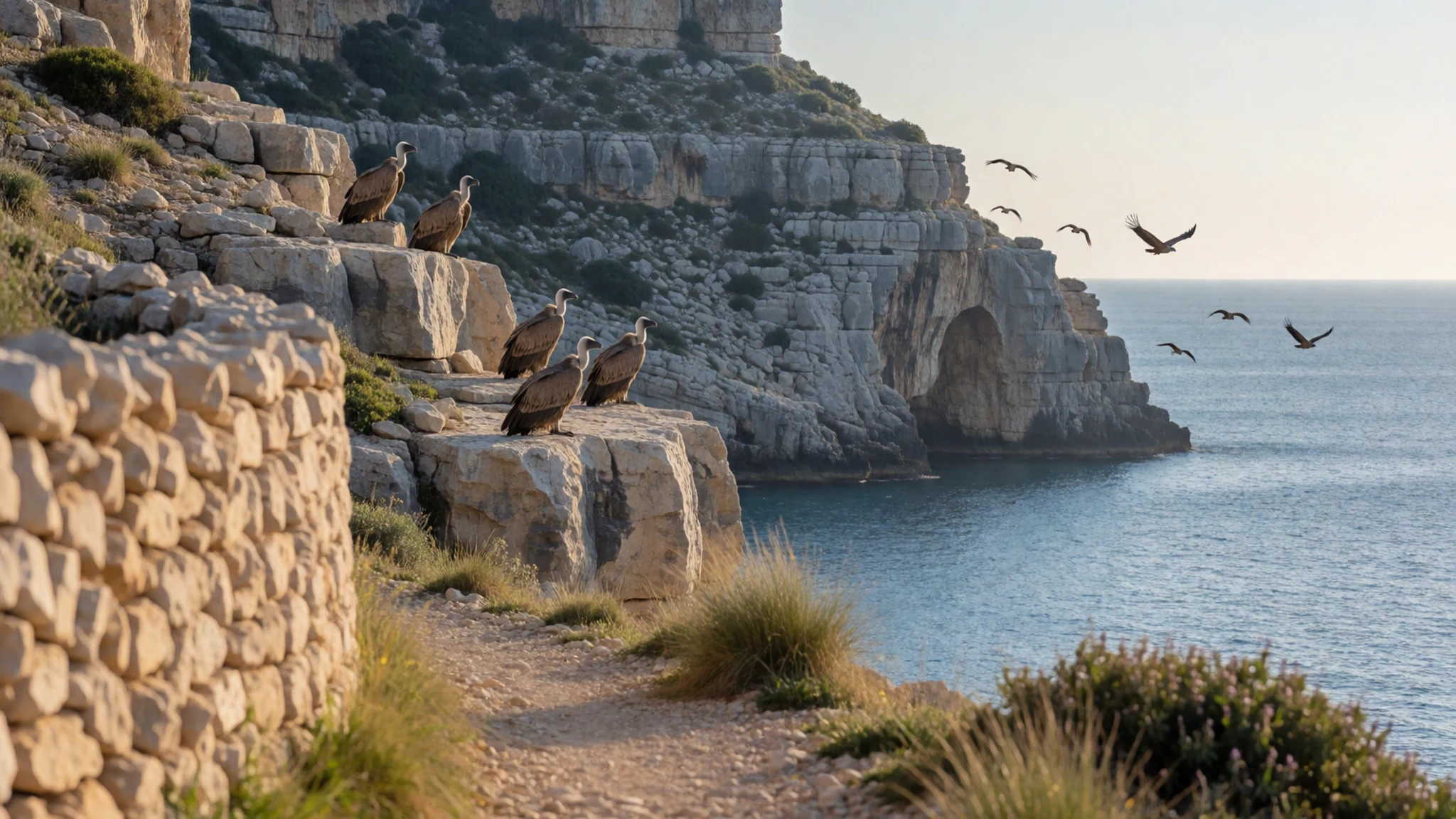
- The Krk bridge — Northern approach to the island
The concrete bridge that has joined Krk to the mainland since 1980 is the island's front door and a landmark in itself. Most people see it from the car, but a stop on the approach gives a good view of the channel. Traffic can queue here in peak summer.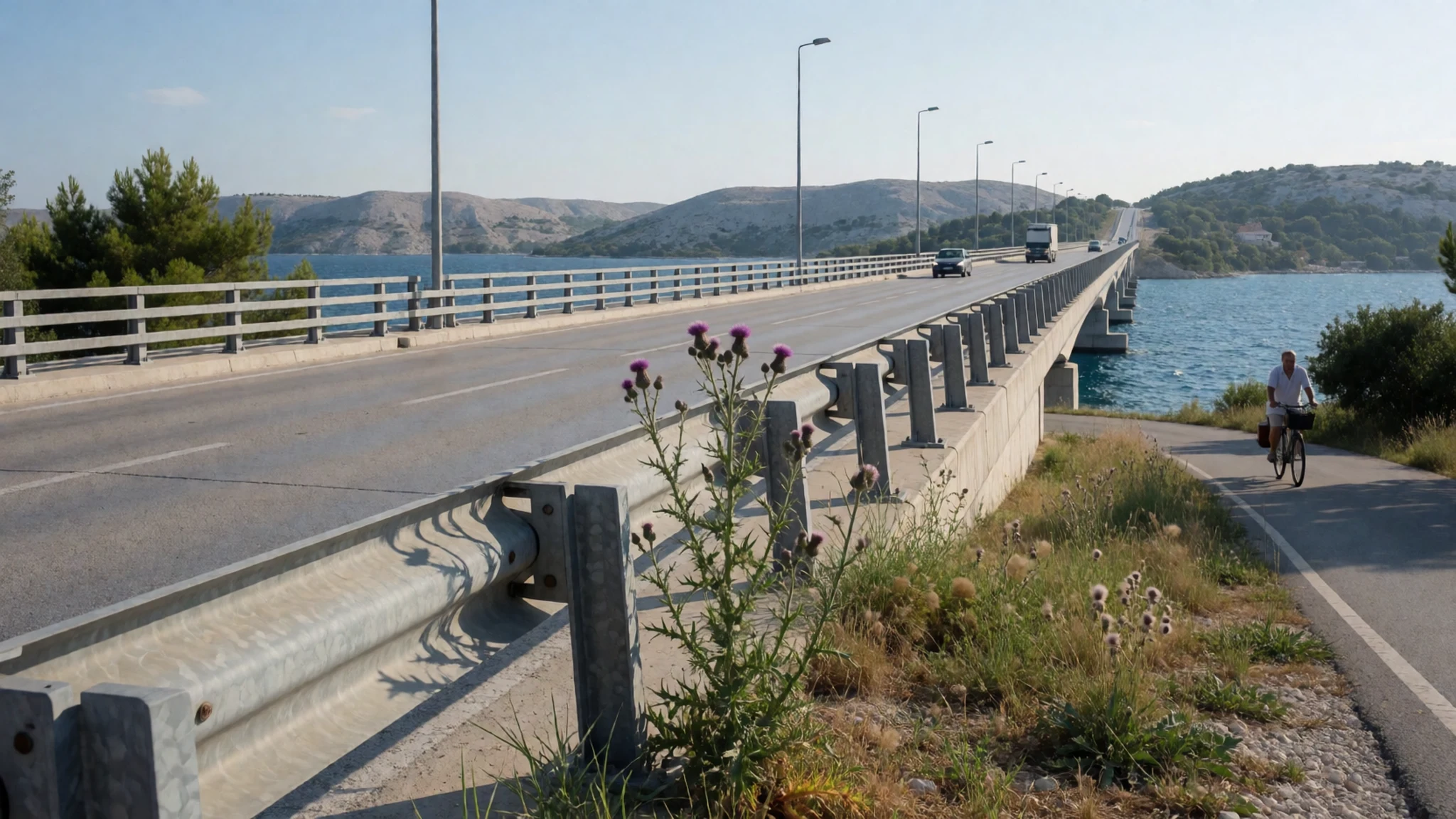
Culture
Krk has long been a centre of Croatian culture. Texts in the Glagolitic alphabet were written and in part kept here, and the Baška tablet is the best-known example. A monastery stands on Košljun, the small island in a bay off the main coast, and religious life still shapes village calendars, with church bells, processions and saints' days marked in the towns.
The island's history is layered. Venice ruled it for much of the Middle Ages, which is why Italian names, stonework and food habits remain visible, and why many street and place names appear in two languages. After 1920 Krk town stayed mainly Italian-speaking for some decades, though most Italians left after the Second World War. Today the island is firmly Croatian, with a strong local identity in each village.
Culture is also lively in a modern way. The island took part in the 2020 European Capital of Culture project, with events in Krk town, Malinska and Vrbnik, and a permanent installation in Baška called Drops that celebrates traditional drystone walls. Summer brings concerts and festivals in the old squares, and winter is quiet, with many seasonal businesses closed.
When entering a church or monastery on Krk, cover your shoulders and knees, keep your voice low, and ask before photographing inside or taking pictures of worshippers.
What to wear
Krk's traditional dress belongs to village life and church festivals rather than everyday wear. As on much of the Croatian coast, it usually combines locally woven wool or linen with embroidered details, and it varies from one village to the next. The brief for this reading gives no specific names for the island's costumes, so it is best to ask at a local museum or tourist office, or watch for folk groups at festivals, saints' days and summer events.
What people actually wear now is relaxed and practical. Locals dress for sun and sea in light cotton, linen, shorts, sandals and swimwear by the water, with a smarter shirt or dress for dinner in town. Older residents in villages tend to dress more modestly, and in the evening even a warm day can feel cool near the sea.
Visitors should pack for sun and rough ground. Bring a hat, sunglasses and high-factor sunscreen for the exposed karst, and shoes with grip for pebble beaches and polished stone lanes; water shoes help on rocky coves. If you walk inland, wear higher boots, because vipers are a possibility. Carry a light windproof layer in case the bora blows. For churches and monasteries, take a scarf or shirt that covers your shoulders, and keep beachwear for the beach rather than the old town streets.
What to eat
- Pršut — Village taverns and local produce shops
Pršut is the domestic dry-cured ham of the island, sliced thin and served as a starter with cheese, olives and bread. Look for it on platters at village taverns and in small shops selling local produce, and ask for the home-cured version.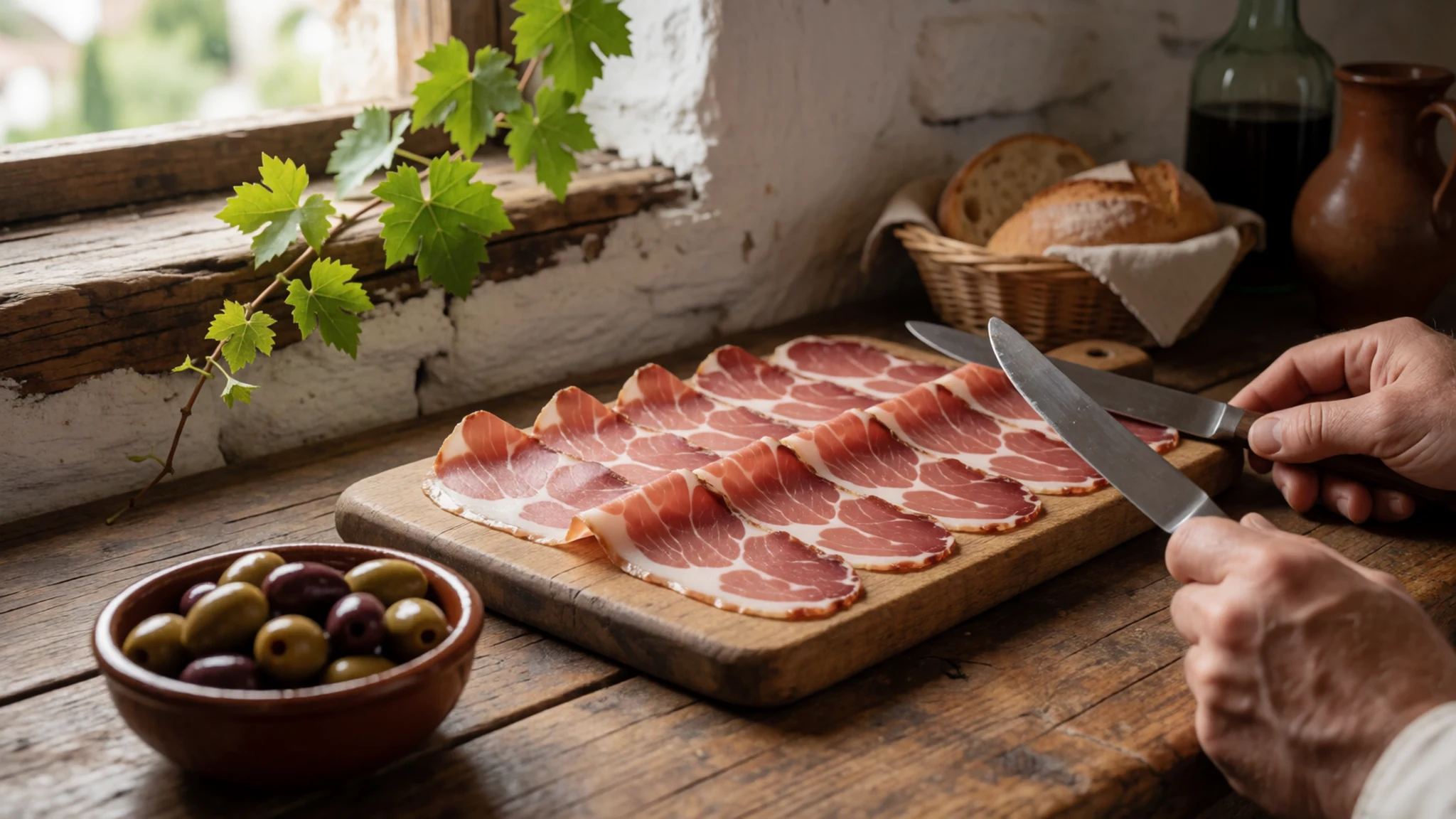
- Island cheese — Village shops and roadside stalls
Local cheese is a staple of Krk tables, often served alongside pršut or with a glass of wine. It tends to be firm and savoury. Ask in a village shop or at a roadside stall which cheeses are made nearby.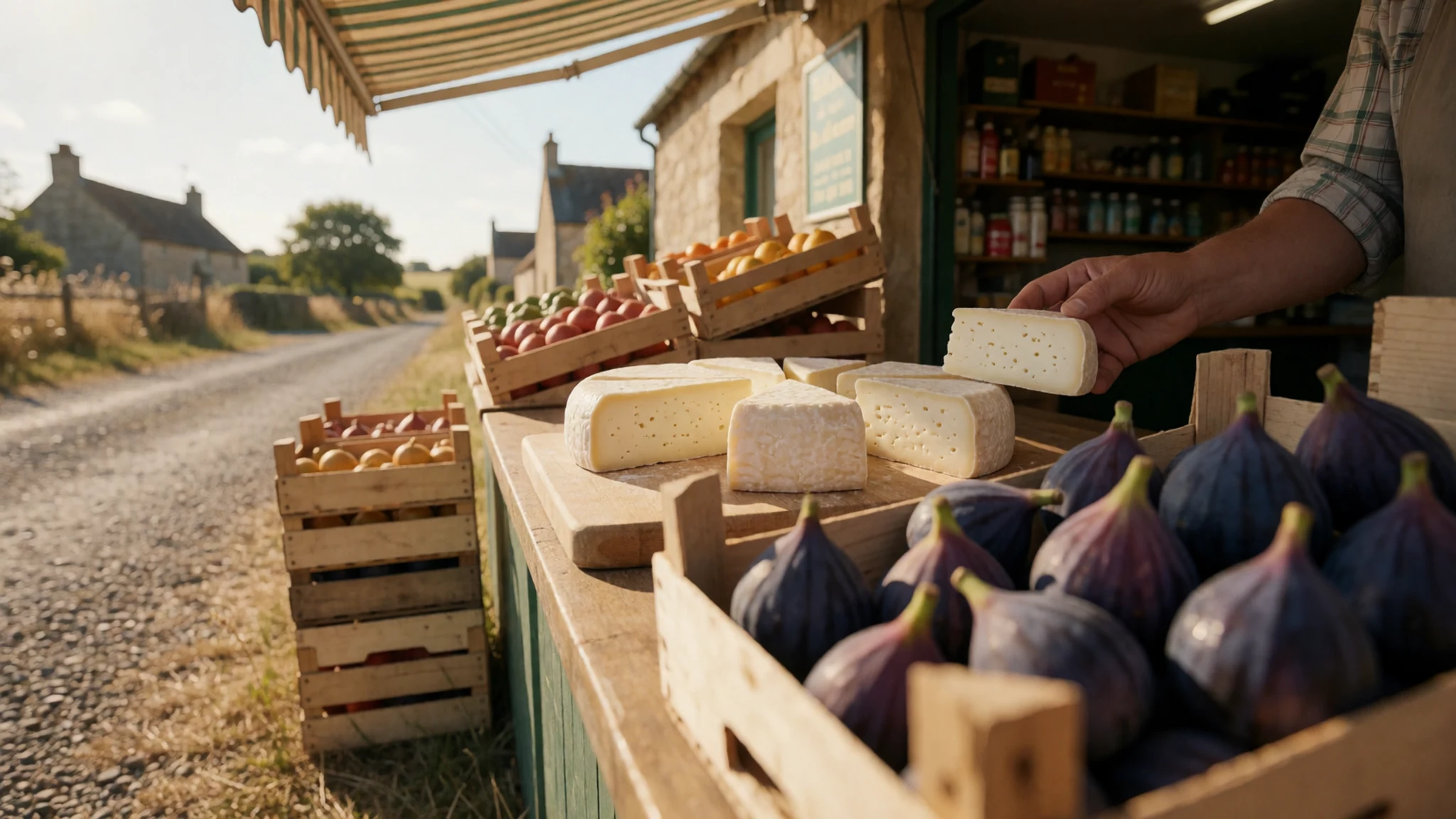
- Fresh seafood — Harbour-front eateries in Krk town, Baška and Malinska
The Adriatic around Krk supplies fish, shellfish and squid, usually grilled simply with olive oil and lemon. Choose a harbour-side eatery or a family tavern, and ask what came in that day rather than ordering from a long menu. - Barbecued lamb — Traditional taverns in hill villages
Lamb roasted or grilled over an open fire is a classic island meat dish, richly flavoured and often shared. It is typically a main course for a hungry table. Seek it out at traditional taverns inland, away from the busiest beach strips. - Vrbnička žlahtina — Wine cellars and taverns in Vrbnik
This white wine from the Vrbnik area is the island's signature drink, crisp and good with seafood and cheese. Try it by the glass in Vrbnik itself, or visit a local cellar where it is made. Drink it chilled on a warm evening.
Plan it
Best time. May–June and September are best: the sea is swimmable, the days are long and the island is less crowded than in July and August, which are hot and busy. Winter is quiet and many seasonal places close, and the bora wind can blow at any time.
How long. 2–4
Getting there. Rijeka airport handles flights, and Rijeka also has the nearest railway station, about 30 km from Krk, with coach lines to other European cities. Krk has no railway of its own. The last leg is by road, over the bridge to the island, so a car or bus from Rijeka is the usual way.
Budget. mid
Tips
- Visit in late spring or September if you want quieter beaches and easier parking
- Book accommodation early for July and August, when the island is at its busiest
- Carry sun protection and water, as the bare karst gives little shade
- Wear higher boots on inland paths, because vipers are possible
- Pick up printed walking guides at any tourist office, and check the official site (http://www.krk.hr/) for current events
Etiquette
- Cover shoulders and knees in churches and monasteries
- Keep your distance from the griffon vultures and their nests
- Keep beachwear for the beach and cover up in village centres
Nearby
Sources
- Wikidata Q6059 (CC0)
- Wikipedia: Krk (rev 1384104278) (CC BY-SA 4.0)
- Wikivoyage: Krk (rev 5235342) (CC BY-SA 4.0)
- Photo: Krk, Krk, Croatia (Arne Müseler) (CC BY-SA 3.0 de)
- Photo: Bašćanska Draga (Roberta F.) (CC BY 3.0)
- Photo: Map of Krk, Croatia (Dr. Blofeld) (CC BY-SA 2.0)
- Photo: Bridge Krk–mainland (Toffel) (Public domain)
- Photo: Vrbnik, Krk, Croatia (Arne Müseler) (CC BY-SA 3.0 de)
- Photo: Beach Haludovo, Malinska (eowoniel) (CC BY 2.5)
- Photo: Griffon vulture (Markel Olano, goierritarra1) (CC BY-SA 2.0)
- Photo: 45th parallel sign on Krk (Einaz80) (CC BY-SA 4.0)


