Lošinj
Lošinj, Croatia
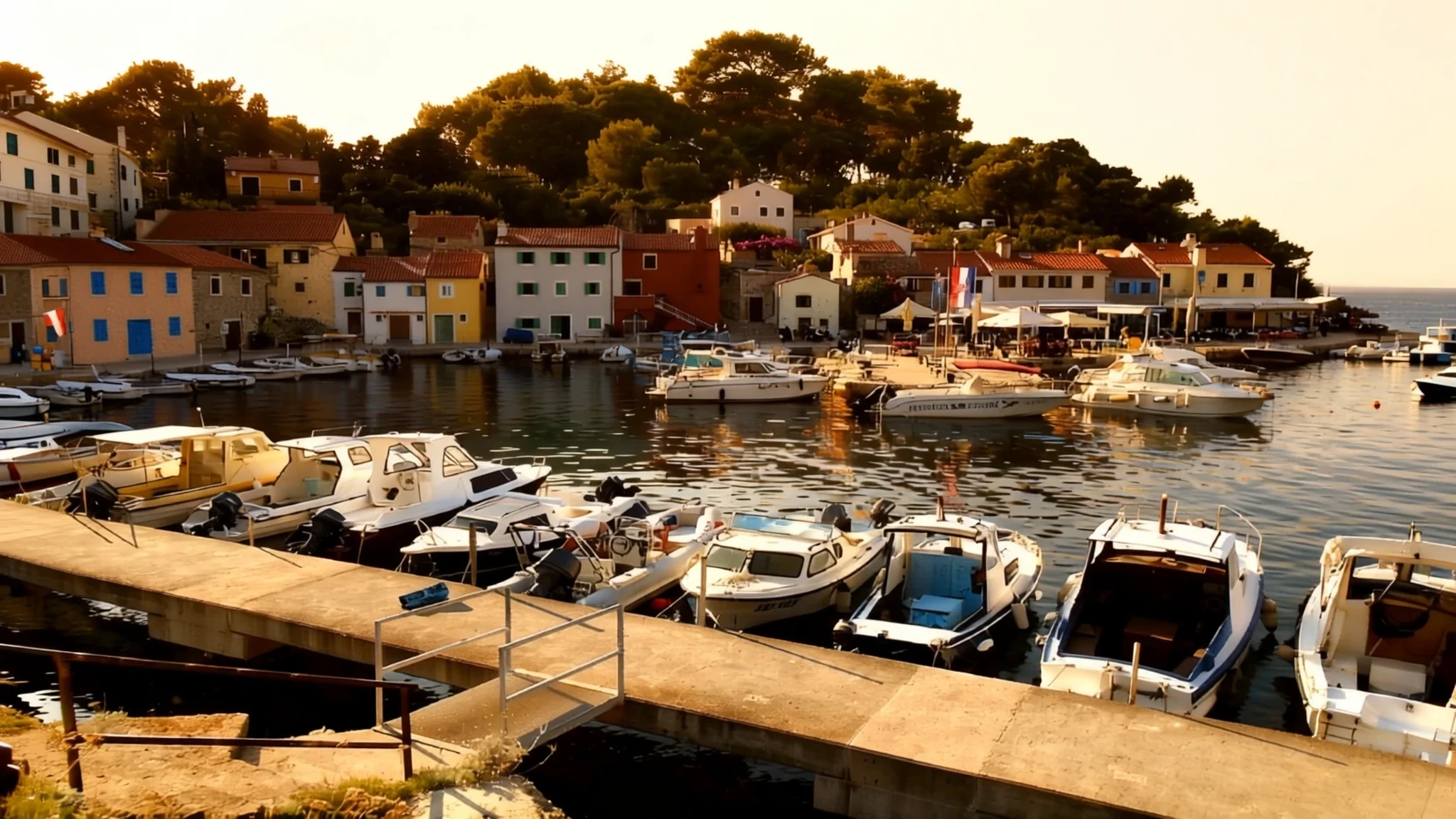
Lošinj is a long, pine-scented Adriatic island of quiet harbours, sunny coves and slow seafaring towns, easy to reach from Rijeka, Zadar or Pula by ferry.
The place
Lošinj is a Croatian island in the Kvarner Gulf of the northern Adriatic, lying almost due south of Rijeka. It is long and narrow, about 33 km from end to end, and in places the land pinches to a strip only a few hundred metres wide. Around 9,587 people live here, mostly in the two main towns, Mali Lošinj and Veli Lošinj, with smaller villages such as Nerezine, Sveti Jakov, Ćunski and Artatore scattered along the route. A single regional road runs the length of the island, crossing the sea channel to neighbouring Cres by a small moveable bridge near Osor. The two islands together form the Cres-Lošinj archipelago, which also includes the smaller islands of Unije, Ilovik, Susak and the Srakane pair. The high ground is in the north, where Televrin, also called Osoršćica, rises to 588 m and the hill of Sv. Nikola is only a little lower. The rock is chalk limestone and dolomite, and the south-west coast is ringed by pine forest. Myrtle, holm oak and laurel stay green all year. The island gets around 2,600 hours of sunshine a year, with summer temperatures averaging about 24 °C and winter about 7 °C. Summer brings many Slovenian, German and Italian visitors, so July and August feel busy; the shoulder months are calmer. Winds are a regular feature of the northern Adriatic and shape the sailing and the ferry schedules.
Its story
People have lived around this part of the Adriatic since prehistoric times, and the hill-forts above Mali Lošinj and at the foot of Osoršćica are the visible traces. The Romans knew Lošinj and Cres together as the Apsirtides, and the ruins of farming villas turn up at Liski, Sveti Jakov and near Ćunski. For much of the Middle Ages the island belonged to the nobility and clergy of Osor and was largely empty. Settlers from the mainland arrived from 1280, won self-government in 1389, and the name Lošinj first appears in writing in 1384. As Osor declined, Veli Lošinj and Mali Lošinj took over, growing rich on trade, shipbuilding and seafaring in the following centuries. After Venice fell in 1797 the island passed to Austria. Tourism began in 1885 with health visitors drawn by the mild air, and the first hotel, the Vindobona, opened in 1887. After the First World War Lošinj went to Italy, and it stayed Italian until 1943, when German and Croatian troops occupied it. In 1947 it became part of Yugoslavia, and Croatia declared independence in 1991. The Italian-speaking community largely left for Italy and elsewhere after the Second World War, which is why Italian names such as Lussino still sit beside the Croatian ones.
What to see
- Veli Lošinj harbour — Veli Lošinj
The smaller of the two towns curls around a tight, picturesque harbour with tall, colourful houses facing the water. It is a calm place for a morning coffee, and the pine-shaded paths leading out along the coast start almost from the quayside.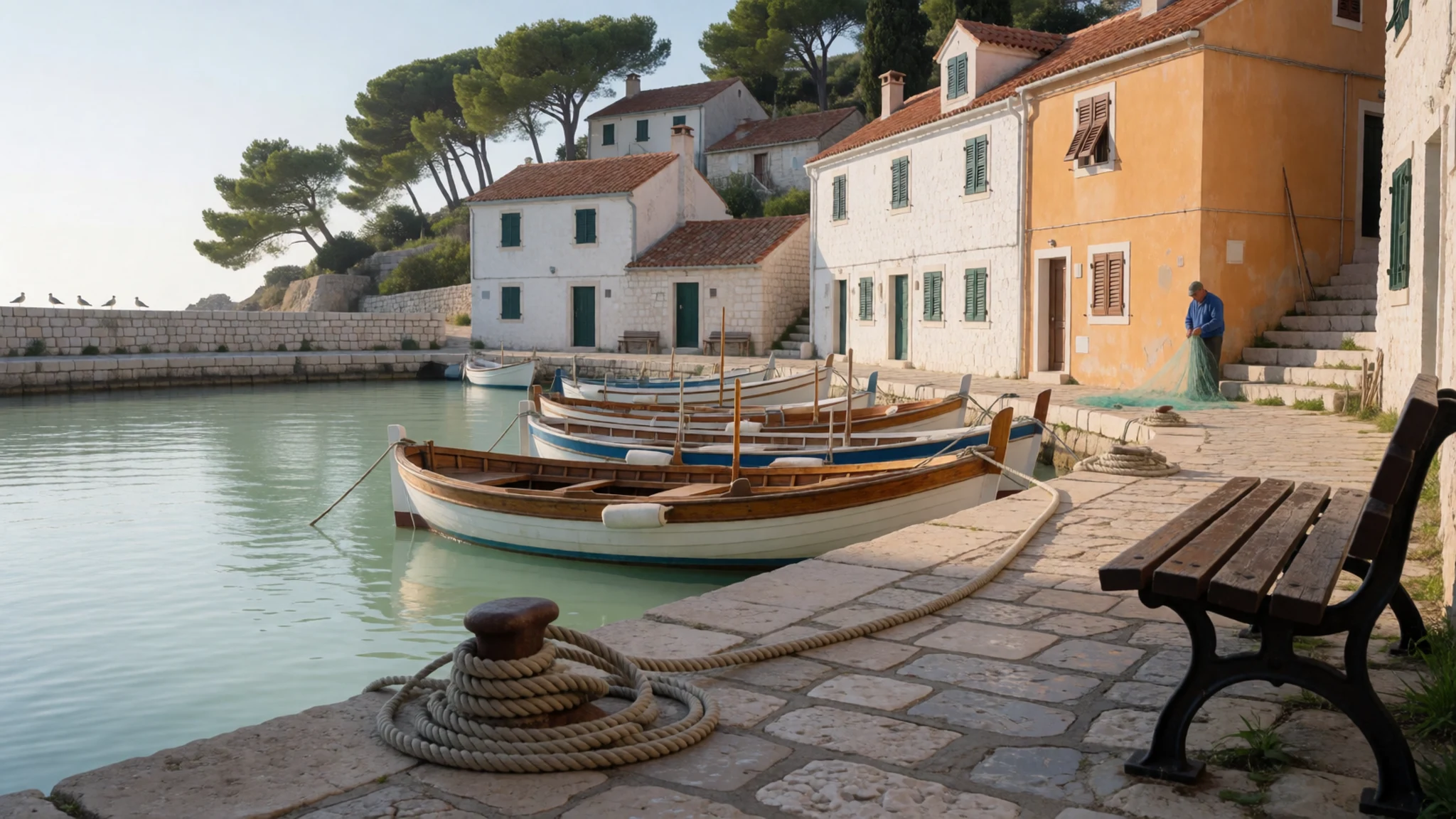
- Mali Lošinj waterfront — Mali Lošinj
The island's main town and ferry port wraps around a deep harbour, with cafés and shops along the front. It is the best base for onward boats to Zadar and Pula, and an easy place to wander in the evening when the quay fills up.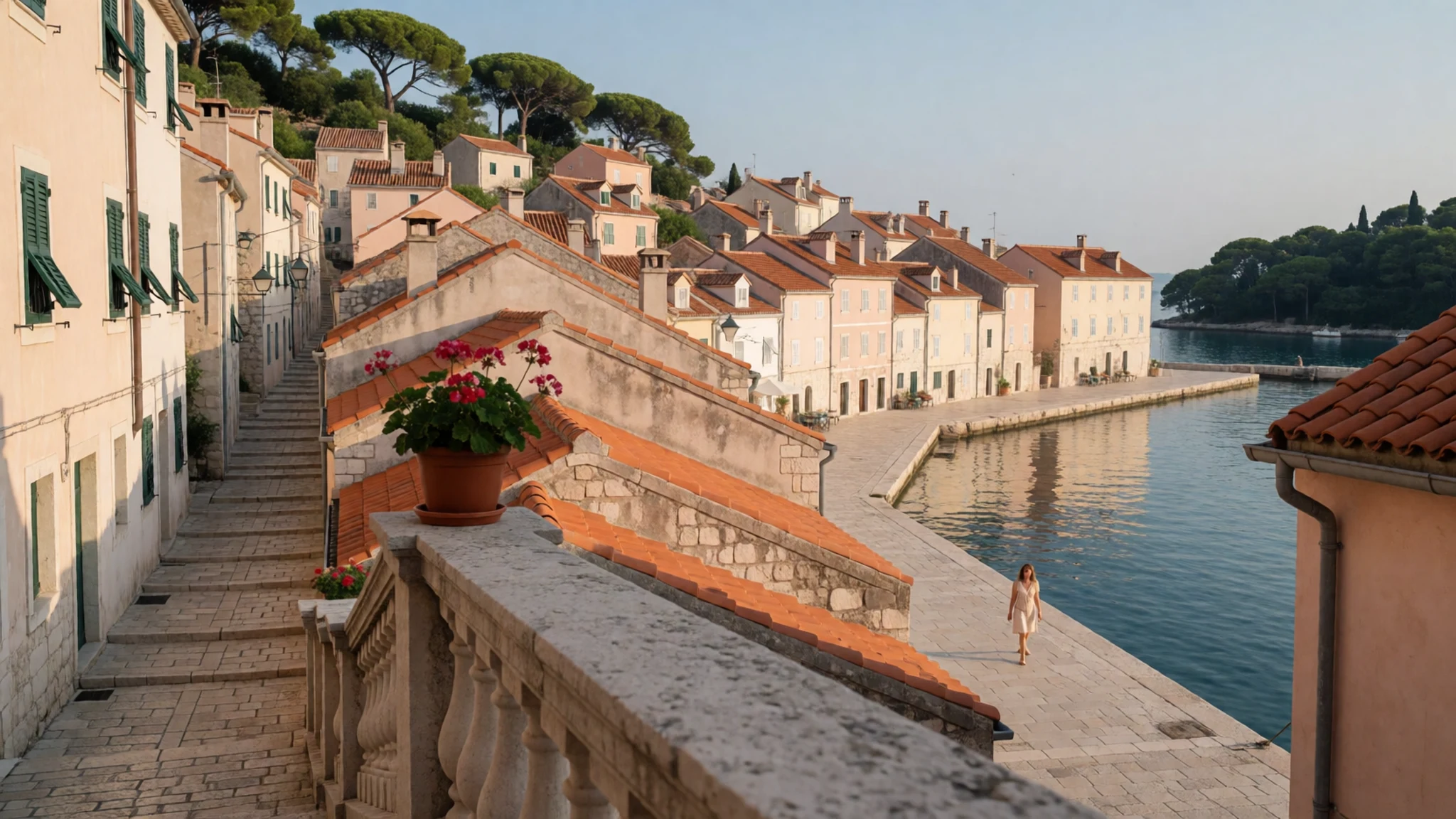
- Rovenska beach — Near Veli Lošinj
A small cove beside the village of Rovenska, close to Veli Lošinj, with clear water and a pebbly shore. It is a good example of the island's low-key bathing spots, where shade comes from pines rather than concrete, and mornings are the quietest time.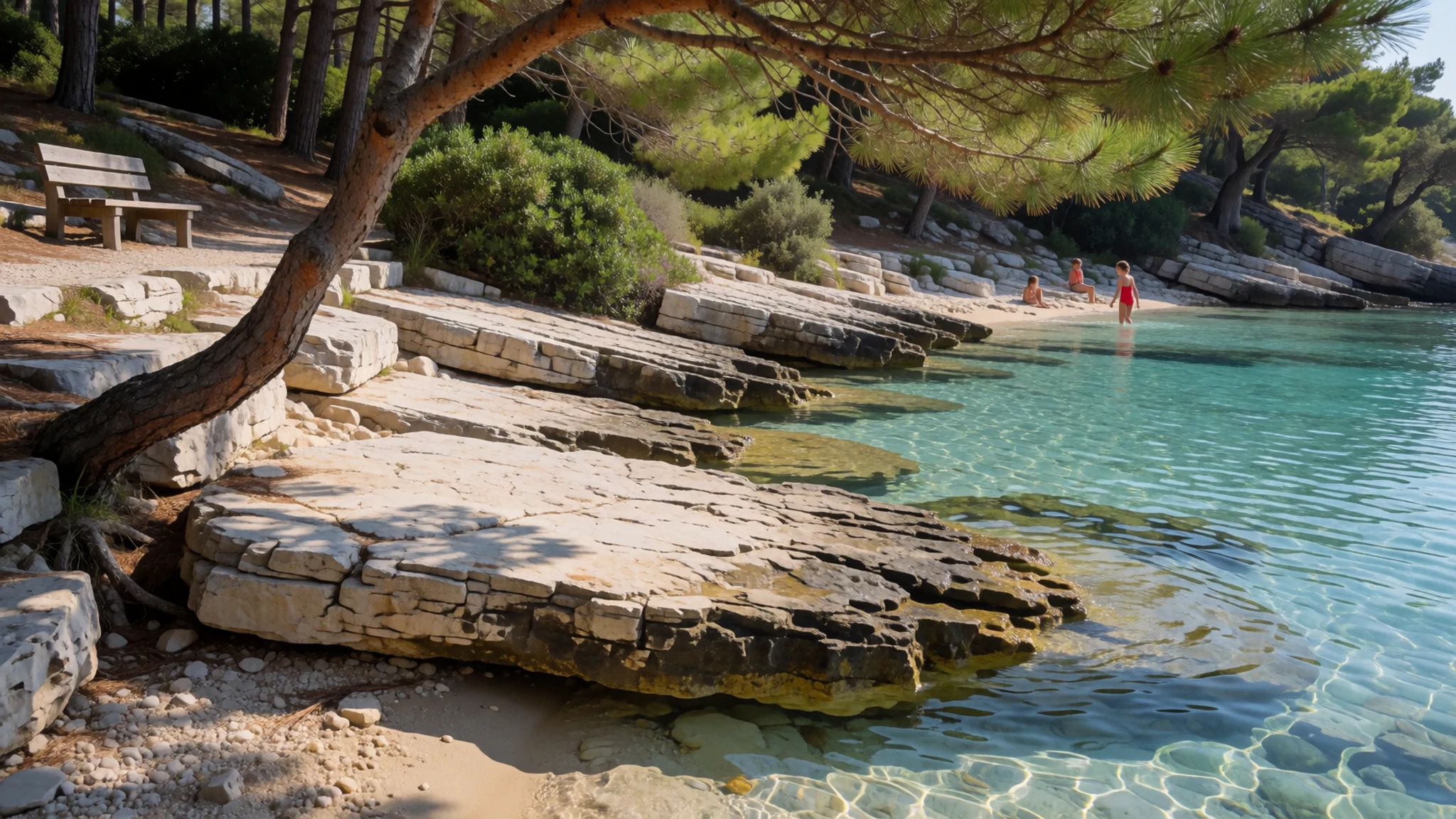
- Osoršćica ridge — Near Nerezine
The mountain called Televrin, at 588 m, is the high point of the island group and a rewarding walk for views over both islands and the sea. Start early, carry water and wear proper shoes, since the limestone is rough and shade is thin near the top.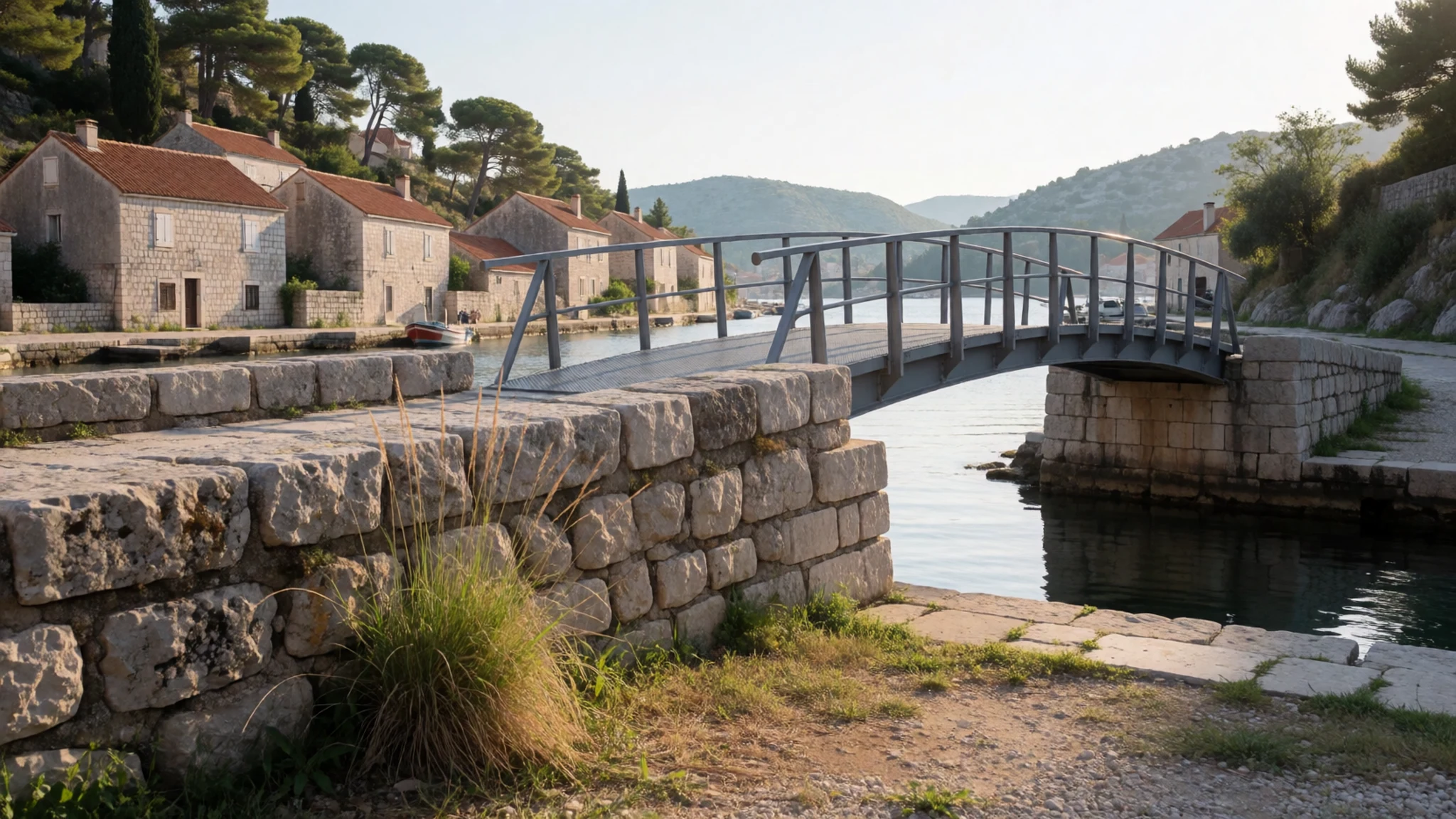
- Osor and the bridge — Osor, Cres
At the narrow channel where Cres and Lošinj meet, the small town of Osor was once the area's main centre. Cross the moveable bridge, stroll its quiet lanes and look for the old stonework that hints at its earlier importance.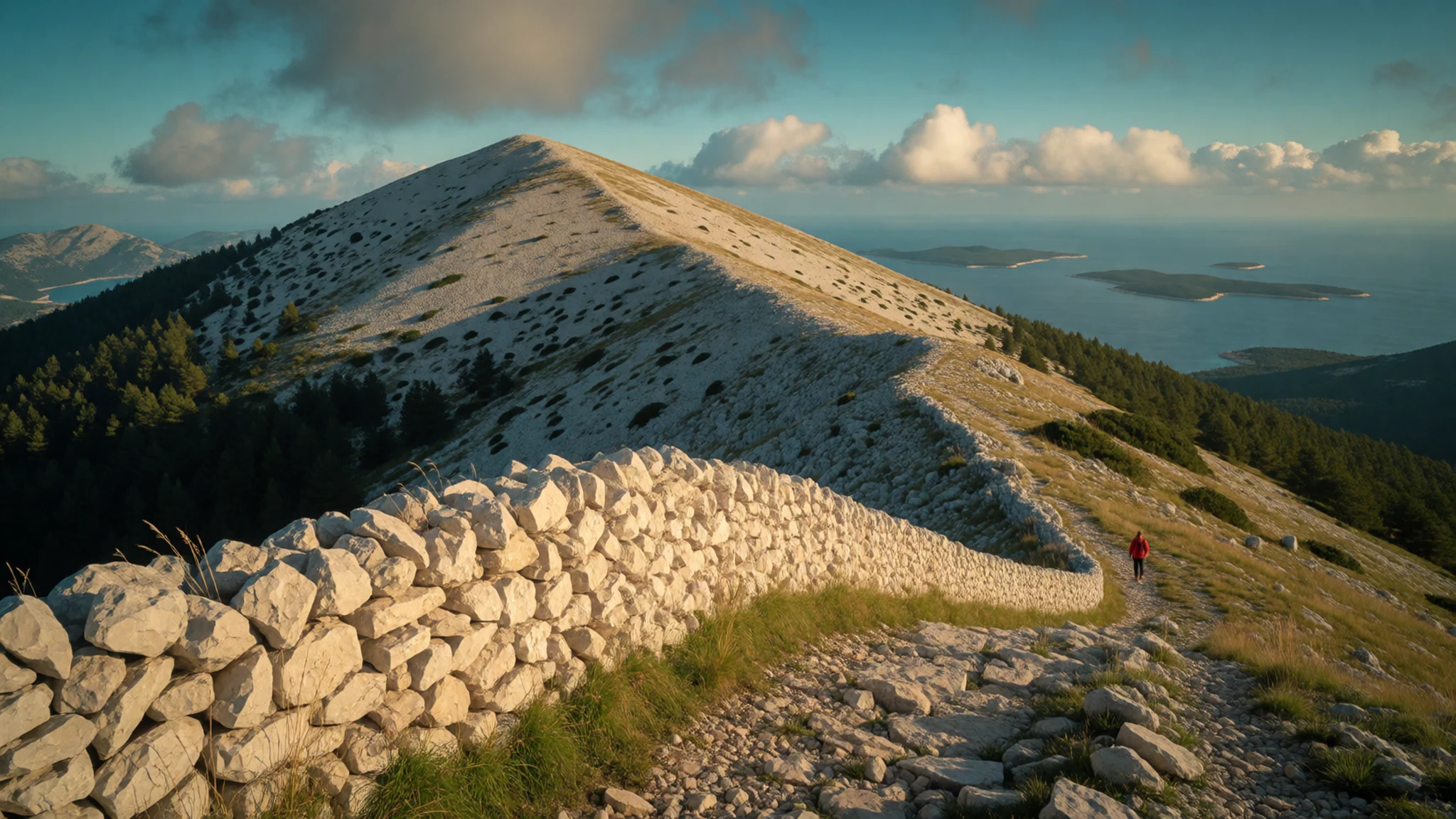
- Sveti Jakov — Sveti Jakov
This small hamlet on the coast holds a little church of Roman-era origin and the remains of a farming villa nearby. It is a quiet corner, good for a short detour by car or bike and a swim from the rocks below.
Culture
Lošinj's culture is shaped by the sea and by several flags. The towns grew from fishing, shipbuilding and trading, and the tall harbour houses of Mali and Veli Lošinj were built by captains and merchants who sailed far beyond the Adriatic. Austrian rule left a taste for promenades and for the idea of the island as a health resort, while the Italian years left their mark in place names, in cooking and in the family histories of many who left after the war. Today the island is Croatian and the main language is Croatian, though you will hear Italian, German and Slovenian in the cafés in season. Life follows the weather: the wind decides whether boats go out, and summer evenings are spent on the quay. Village feast days and small local events are held through the year, but dates change, so ask at the tourist office when you arrive. Sundays are quiet in the smaller villages, and many small shops close for a few hours in the afternoon. Visitors who arrive outside July and August find an island that feels more like a working community than a resort. When swimming off pebble coves or walking through villages, keep voices low in the afternoon rest hours and never leave litter or cigarette ends in the pine woods, where fire is a real danger.
What to wear
Lošinj has no single famous costume of its own, and traditional dress here is mostly a matter of museum displays and folklore events rather than daily life. Historically, islanders wore practical clothes made of wool, linen and heavy cotton, suited to fishing and farming, with women often in dark skirts and headscarves; festival outfits, when worn, appear at village celebrations. If you want to see them, ask locally about feast days. Day to day, people dress simply and casually: shorts, linen shirts, sundresses, boat shoes and sandals in summer, and fleeces and light waterproofs in the cooler months. Sailing jackets are common in the harbours. For a visitor, light breathable clothes, a hat and sunglasses work for the warm months, with sun cream, because the island is very sunny. Bring sturdy shoes with a good grip for the limestone paths and for walking up Osoršćica, and water shoes for pebble beaches, where stones can be sharp and sea urchins live on the rocks. Carry a windproof layer for ferry crossings and evenings, especially in spring and autumn. Cover shoulders and knees when stepping into a village church, and swimwear belongs on the beach rather than in the town streets or in shops.
What to eat
- Grilled fresh fish — Harbourside eateries in Mali and Veli Lošinj
Fish caught in the Adriatic is usually grilled whole with olive oil, garlic and a little parsley, and served with boiled potatoes and chard. Ask what came in that morning and choose from the day's catch.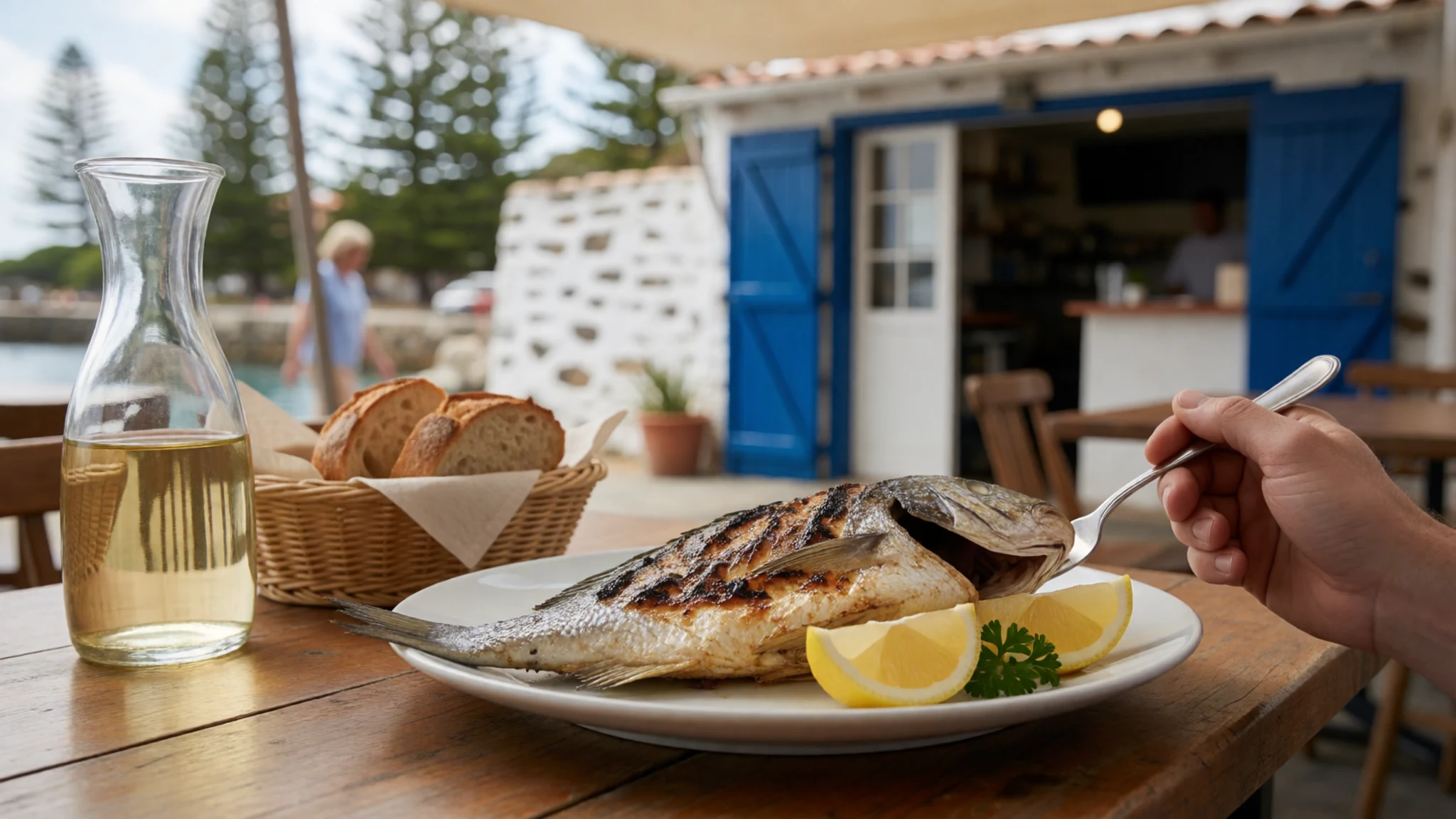
- Cres-Lošinj lamb — Family-run konobas in inland villages
Lamb from the neighbouring pastures grazes on salty, herb-covered ground, which gives the meat a distinct flavour. It is often roasted slowly, sometimes under a bell-shaped lid with potatoes, and best ordered a little ahead.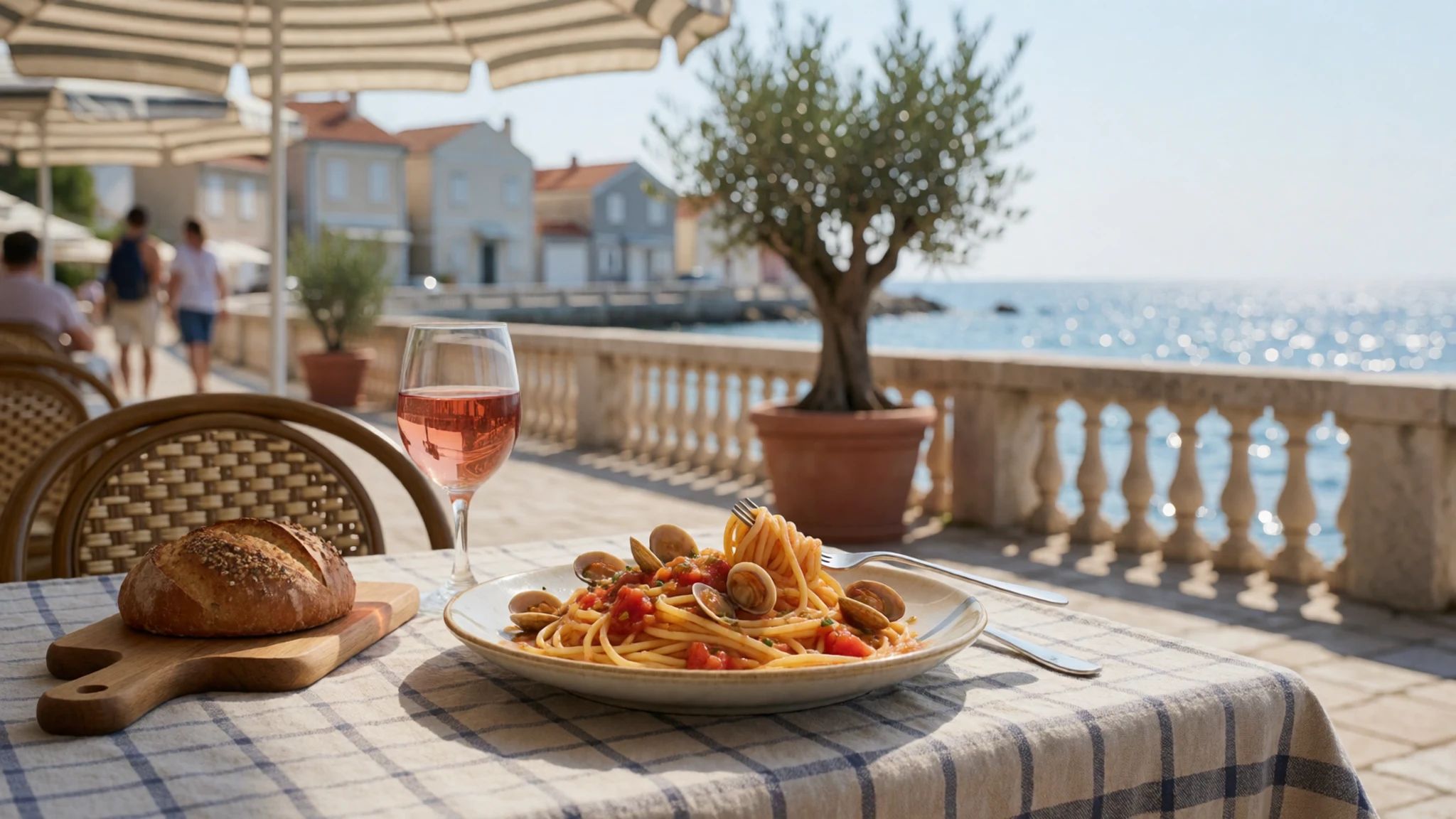
- Scampi buzara — Seafood restaurants around the harbours
Scampi are cooked in a quick sauce of white wine, garlic, breadcrumbs and olive oil. It is a classic of the Kvarner coast, eaten with bread to mop up the juices, and worth getting messy for. - Black risotto — Coastal restaurants and konobas across the island
Rice coloured and flavoured with cuttlefish ink, usually with small pieces of squid or cuttlefish folded through. It is rich and briny, tastes strongly of the sea, and will leave your teeth dark, so expect a smile of black. - Olive oil and bread — Village producers and the town markets
The island's olive groves produce oil that appears at every table, poured over salads, fish and bread. It is a simple and good thing to buy as a gift, and you can taste it at small producers. - Pršut and local cheese — Konobas, delis and the town market stalls
Air-dried ham is cut thin and served with hard sheep's cheese, olives and bread as a starter or a light lunch. The cheese from neighbouring Cres has a strong, salty flavour that goes well with local wine.
Plan it
Best time. May–June and September–October are the best months: warm, sunny and calmer than July and August, when summer temperatures average about 24 °C and the island is at its busiest. Winters average about 7 °C and many places close.
How long. 3–5
Getting there. Lošinj Airport is on the island, though services are limited, so check current flights. Most visitors drive or take the bus from Rijeka, Pula or Zadar. Ferries run via Cres (Brestova–Porozina, Merag–Valbiska), and boats run from Mali Lošinj to Zadar and Pula. A moveable bridge links Cres and Lošinj.
Budget. mid
Tips
- Book ferries and accommodation well ahead for July and August
- Check ferry timetables on the operator's official site, as winds can disrupt crossings
- Carry water, a hat and sun cream; shade is limited on the higher paths
- Bring some cash for small villages and market stalls
- Walk or swim early in the morning to avoid the crowds
Etiquette
- Cover shoulders and knees when entering village churches
- Keep noise down in the evenings in residential harbour streets
- Take litter with you and never light fires in the pine woods
Nearby
Sources
- Wikidata Q461426 (CC0)
- Wikipedia: Lošinj (rev 1384104453) (CC BY-SA 4.0)
- Wikivoyage: Lošinj (rev 5409844) (CC BY-SA 4.0)
- The Town of Veli Losinj — Daniel Niederl (CC BY-SA 2.5)
- Harbour of Mali Lošinj — K. Korlevic (Public domain)
- Rovenska beach — Silverije (CC BY-SA 4.0)
- Admiralty Chart No 515 — UK Hydrographic Office (Public domain)
- Aerial photograph of Croatia — flightlog (CC BY 2.5)
- cotton — renato agostini (CC BY 3.0)
- Croatia - Losinj — M.Minderhoud (Public domain)
- Desantne jedinice IV armije — unknown author (Public domain)


