Diocletian's Palace
Diocletian's Palace, Croatia
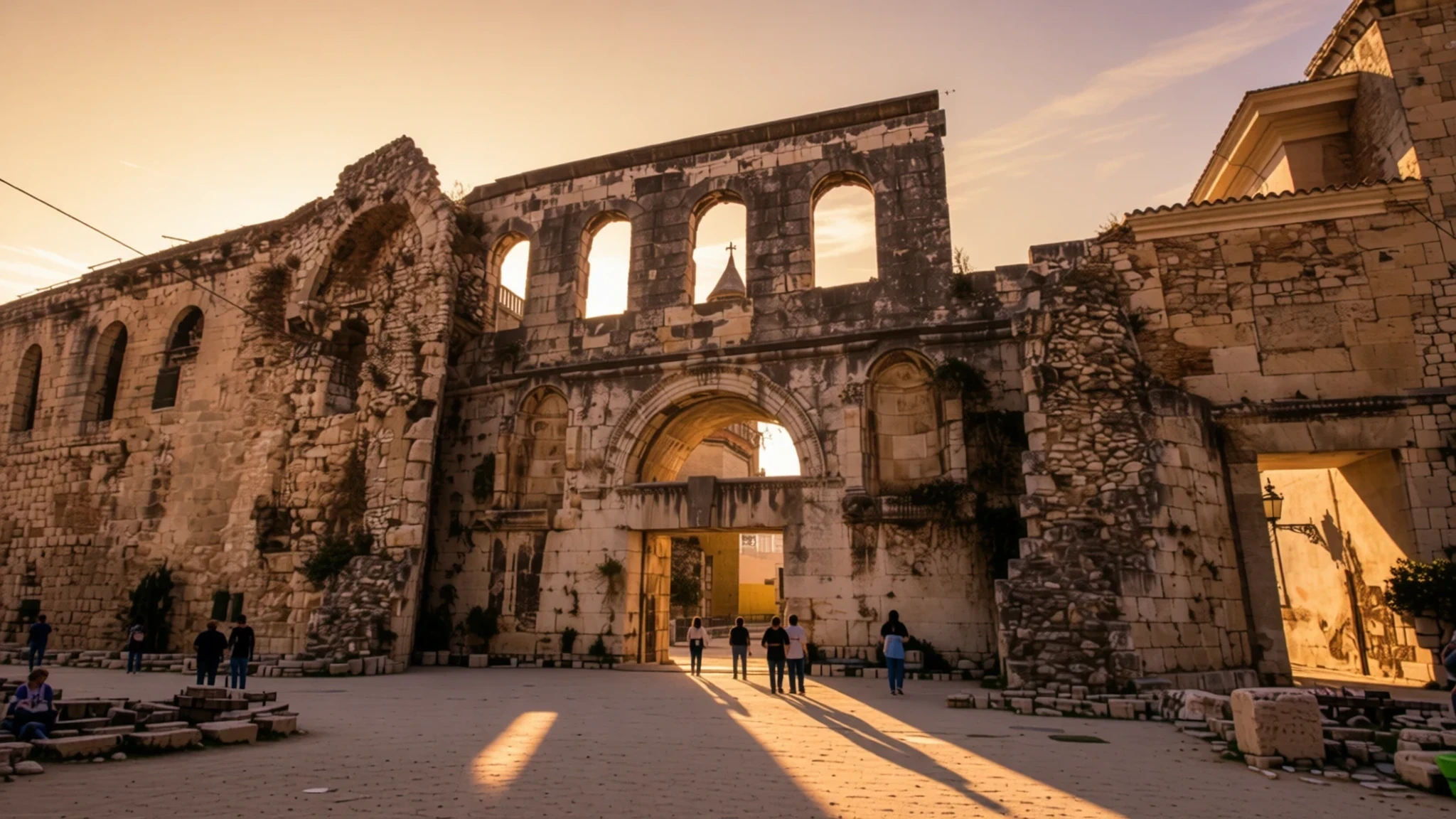
Walk through a Roman emperor's retirement home that is still a working neighbourhood, with cafés and families living behind its ancient walls.
The place
Diocletian's Palace is a fortified Roman residence in Split on the Croatian coast, and it still forms about half of the old town. The emperor Diocletian ordered it as his retirement home, and roughly half of the walled site was his private quarters; the rest housed the soldiers who guarded it. Its plan borrows from the military camps of the third century, so a visit feels part fort, part town and part palace. Stone gates, colonnades and vaulted halls survive in the streets, and the old town grew up inside and around them over many centuries. Shops, cafés and bars now fill the lanes, and families still live in apartments tucked behind Roman walls, which is what keeps the place from feeling like a museum. UNESCO has listed it as a World Heritage Site, but for most visitors the appeal is simply wandering: a Roman square opens suddenly off a narrow lane, and a bell tower rises above an ancient temple. Summer crowds gather in the main lanes from late morning into the evening, and the stone paving turns slippery after rain. The palace rewards a loose plan, with time kept aside for the cellars and the cathedral.
Its story
Diocletian's Palace was planned as a retirement home. The emperor chose ground near his home town of Spalatum, on a short peninsula facing the sea and not far from Salona, the provincial centre of Dalmatia. He stepped down in 305, and the palace seems to have still been unfinished then, with work continuing while he lived there. Historians have never settled when building began; it is generally placed in the years after the Tetrarchy, the system in which four rulers shared power across the empire. Nor is it known who designed the palace or who built it, though Greek names carved by some workers point to builders from the eastern half of the empire. The complex follows the plan of the fortified camps that the army built along the frontiers, with straight walls and gates, and a comparable fort across the Rhine from Cologne is often cited as a model. Once the emperor had gone, the site was not abandoned. Over later centuries its halls were reused, its temples were turned into churches and new streets grew up between the walls, so Roman and later building now sit one upon another. The useful way to read the palace is as a sequence of reuses rather than a single finished monument.
What to see
- The Peristil — Old town, palace centre
The Peristil is the central court of the palace, a rectangular space ringed by columns at the heart of the complex. Today it is the centre of the old town, with café tables spilling across the paving and the cathedral entrance on one side. Arrive before mid-morning for photographs without crowds, and sit for a while to watch the square at work.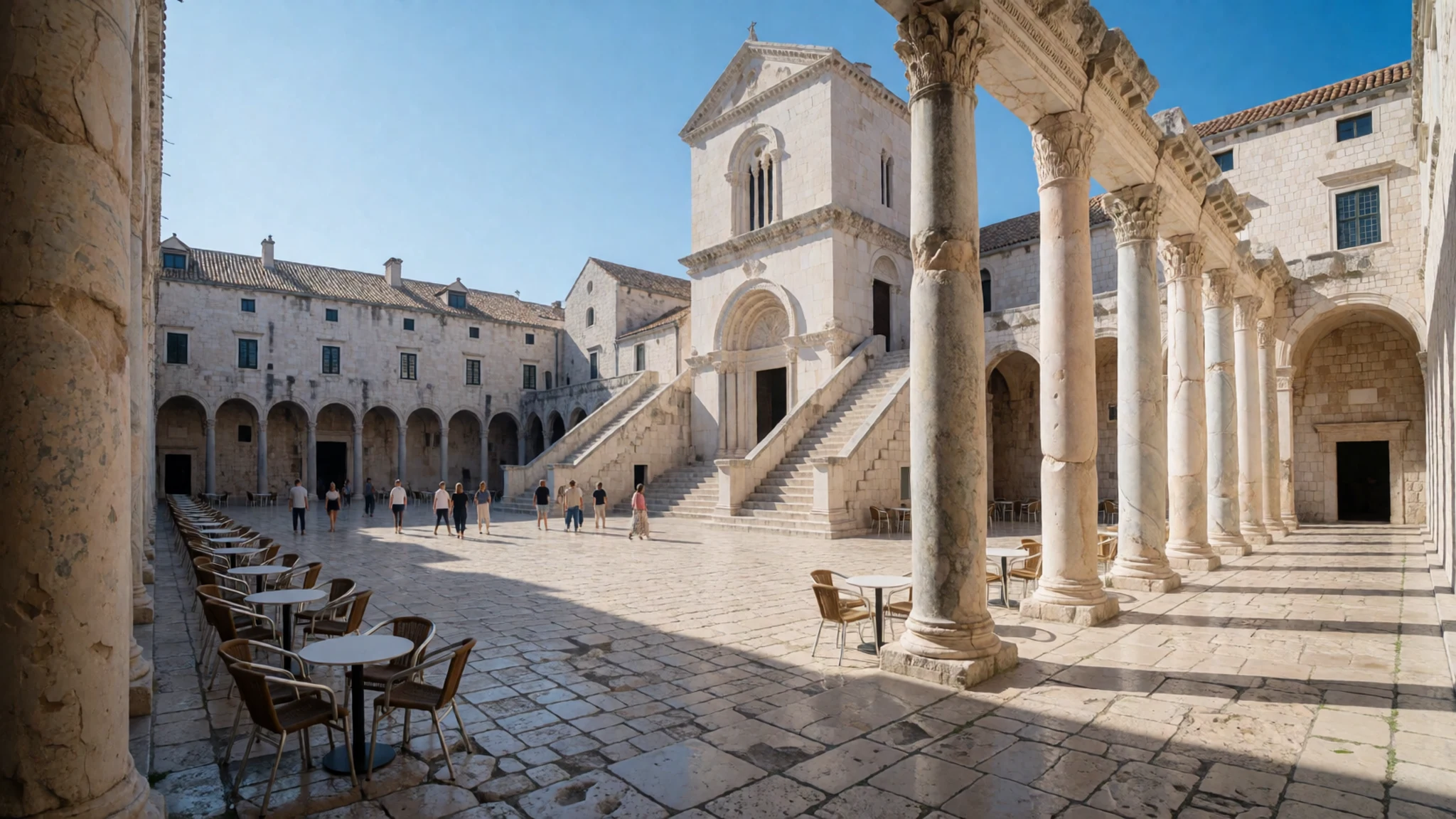
- Cathedral of St Duje (Katedrala sv. Duje) — Palace centre, beside the Peristil
The cathedral of St Domnius (Katedrala sv. Duje) began as a mausoleum built for Diocletian, and its present form blends a Roman temple-like structure with later Catholic church additions. Inside, the ancient fabric sits beside centuries of later additions. It remains an active church, so visits follow service times. Enter quietly, cover shoulders, and expect queues on busy summer days.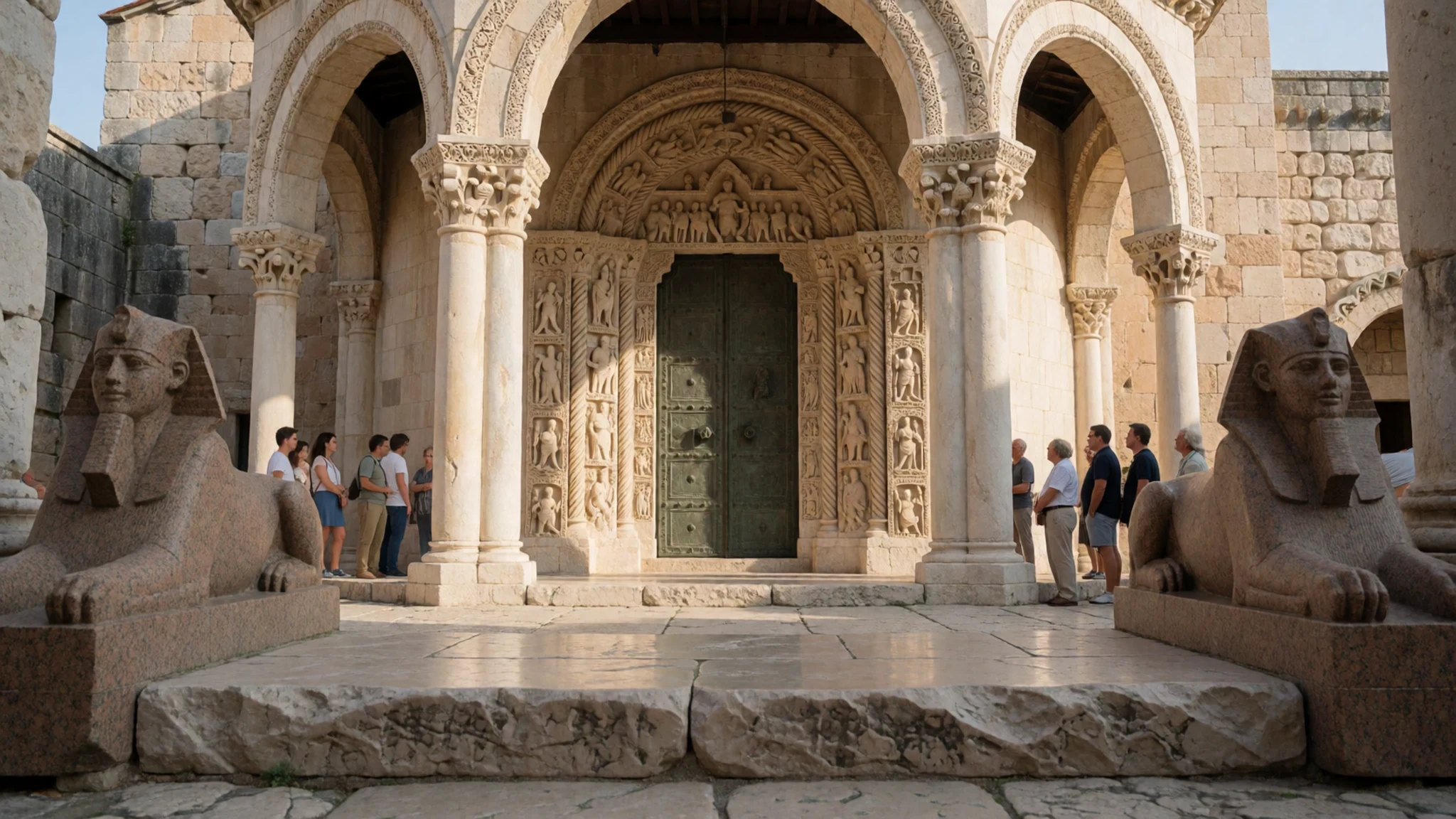
- St Duje's bell tower — Palace centre, beside the cathedral
The bell tower of St Duje rises beside the cathedral and is one of the city's best-known landmarks. The climb is narrow and steep, so it is unsuitable for anyone troubled by vertigo. From the top the view covers the old town roofs, the nearby islands and the wooded hill of Marjan. Check opening times on arrival, since they can change with the season.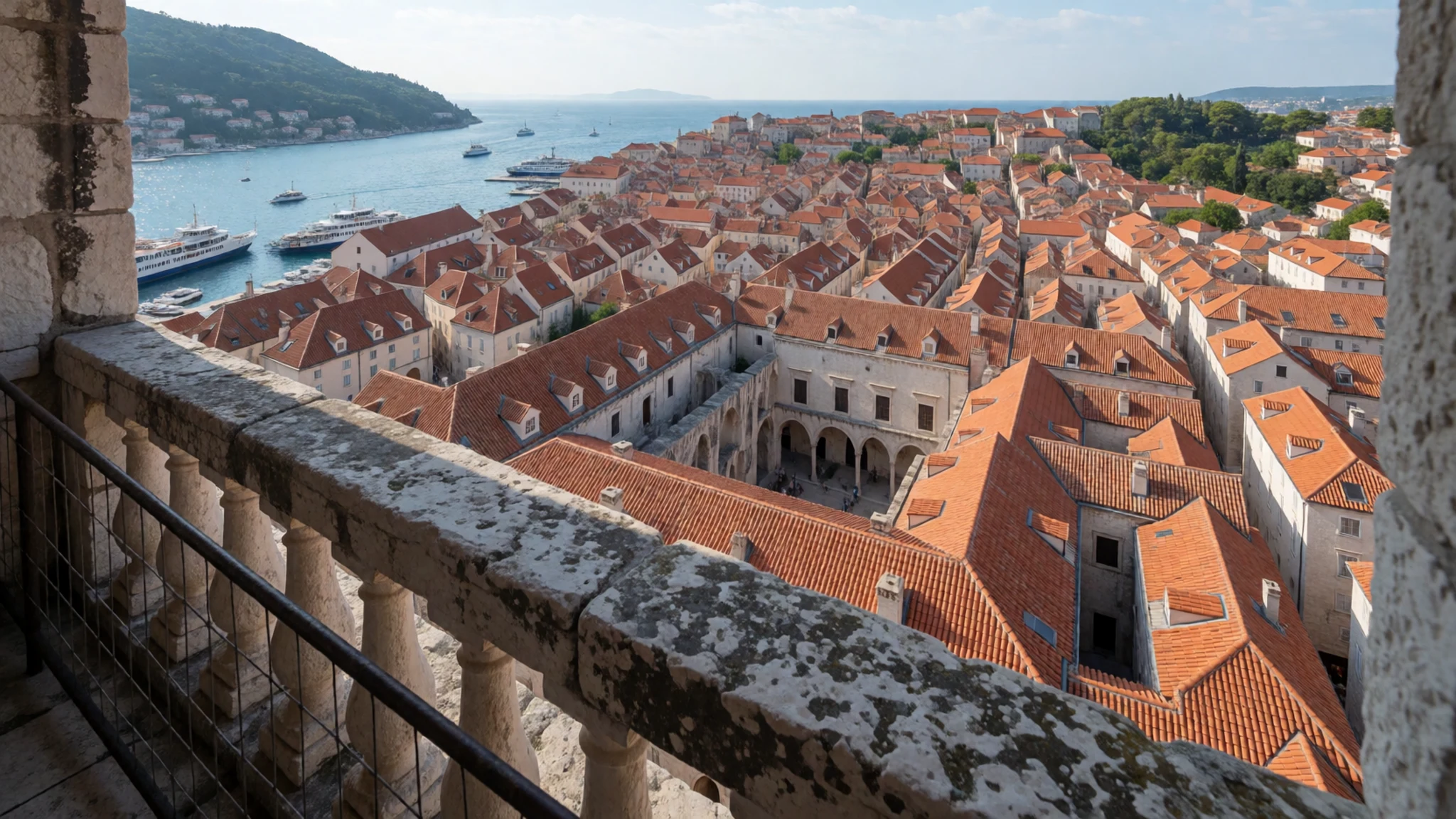
- Temple of Jupiter — Palace centre, next to the cathedral
The Jupiter temple is an ancient Roman temple that was later turned into St John's church. Standing beside the cathedral, it shows how the palace's buildings were reused over the centuries. Look closely at the stonework to read the different phases, and check the entrance times before you walk in, as the church keeps its own hours.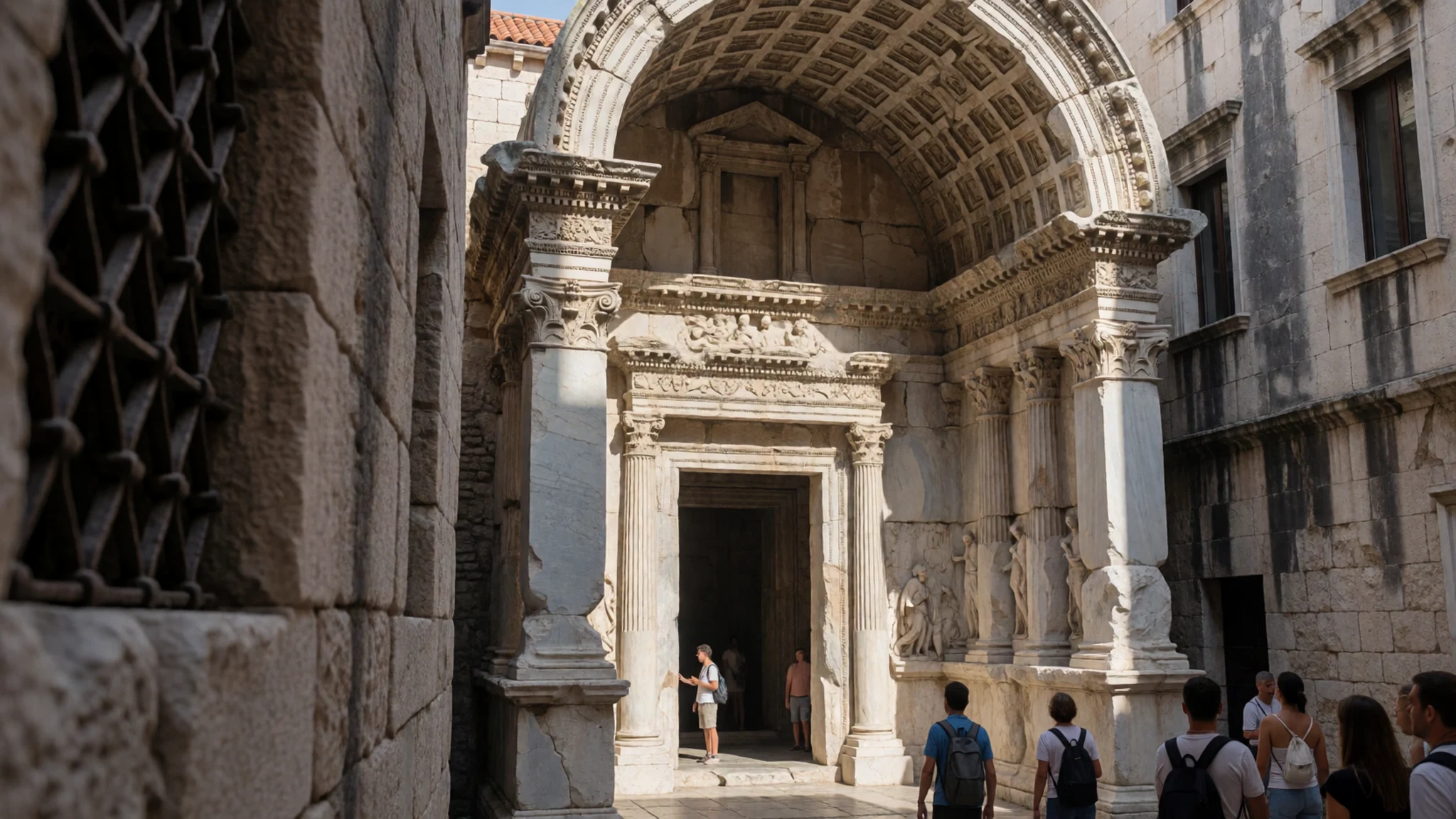
- Basement halls — Beneath the palace, reached from the old town
The basement halls, the substructure of the palace, are a vaulted network of rooms beneath the upper levels, now open as a museum. They are cool even in summer and give a clear sense of the platform the palace was built on. Visit them early, when the corridors are quieter, and allow time for a steady walk through the chambers.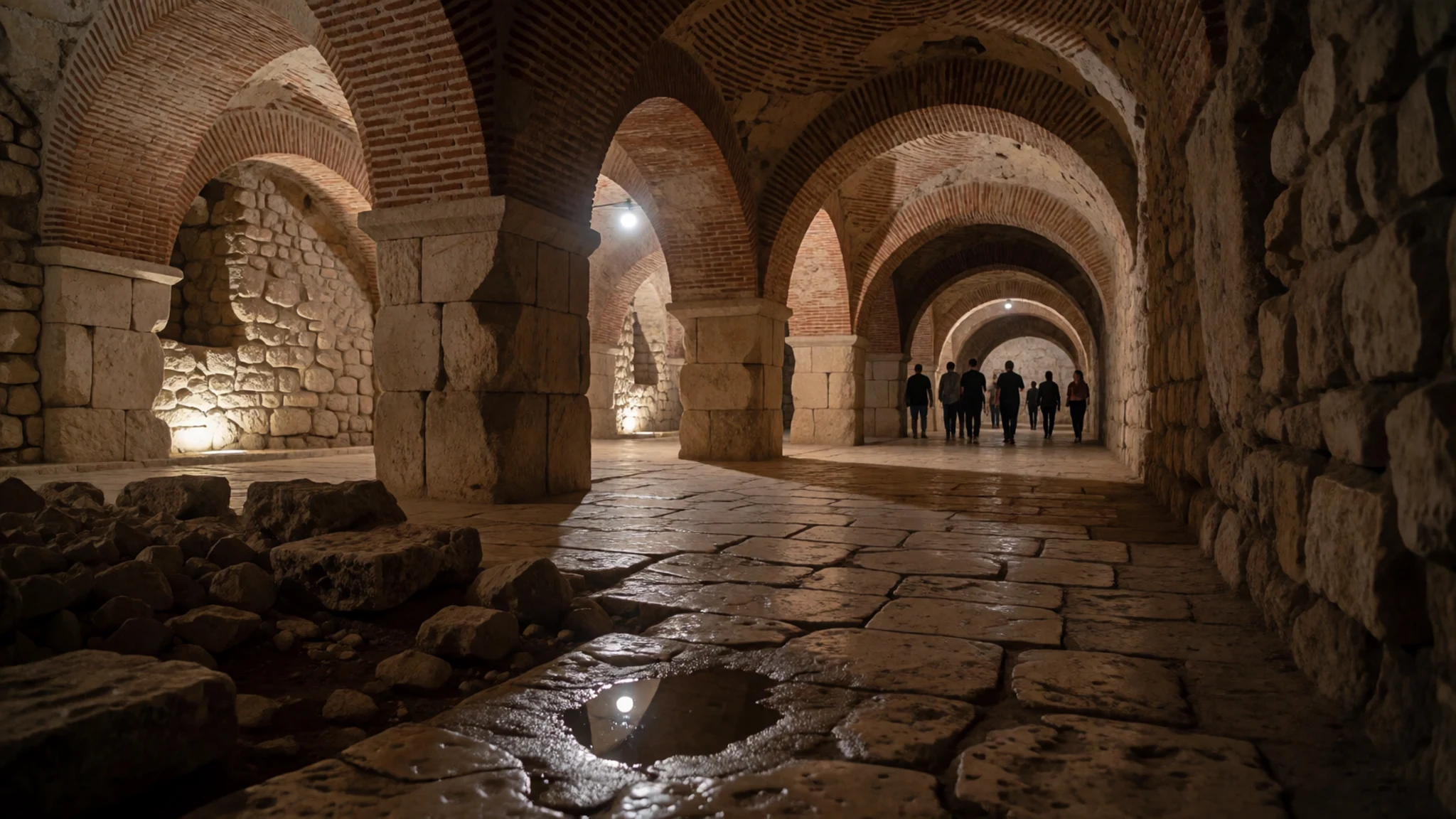
Culture
Diocletian's Palace is far from a relic behind glass. Roughly half of the historic centre is built on its footprint, and residents, workers and worshippers still carry on their daily lives within its walls. Daily life runs at a local pace, with families in apartments behind Roman stone and café owners setting out tables each morning. Football matters a great deal to many residents, and the colours of the local club, Hajduk, are painted across large parts of the city. Torcida, one of the oldest supporters' groups in Europe, is part of that story. Locals linger over coffee, so a café table is rarely a quick stop, and rounding up the bill is customary when you pay. The cathedral still holds services, so visits can be interrupted by ceremonies and the building needs quiet. Noise carries between the stone walls after dark, so keep conversations relaxed rather than loud. Keep your voice low inside the cathedral, cover your shoulders there, and ask before photographing anyone at prayer.
What to wear
Diocletian's Palace is a place where practical clothing suits most visitors, though the church and the sun both shape what people wear. Traditional Dalmatian costume survives in folk groups and at festivals, with embroidered waistcoats, full skirts and aprons in wool and linen, and women's head cloths in dark colours. Such dress is now seen mostly on feast days and for performances rather than daily use. Locals on the palace's streets wear the same mix as in any Mediterranean city: linen shirts, cotton dresses, shorts in summer and dark jackets in the evening, with trainers or sandals rather than formal shoes. For a visit, wear light, breathable layers for the midday sun and a hat for the open squares. Choose shoes with good grip, because the old stone paving is smooth and slippery when wet. Cover shoulders and knees when entering the cathedral, and carry a light scarf for that purpose.
What to eat
- Ćevapi — Balkan-style grill houses in the streets around the palace
Minced meat, well spiced and grilled, served with flatbread and sauces. It is a Balkan staple and a quick, filling lunch. Look for a grill house in the streets near the palace, where the meat is cooked to order.
- Pizza by the slice — Pizzerias in the old town, some offering several flavours by the piece
Pizzerias around the old town sell freshly baked dough with a crisp base and a range of toppings. A few places let you try several flavours in small pieces, which suits a day of walking. Choose a counter that is turning pizzas over, as the bases are best served fresh.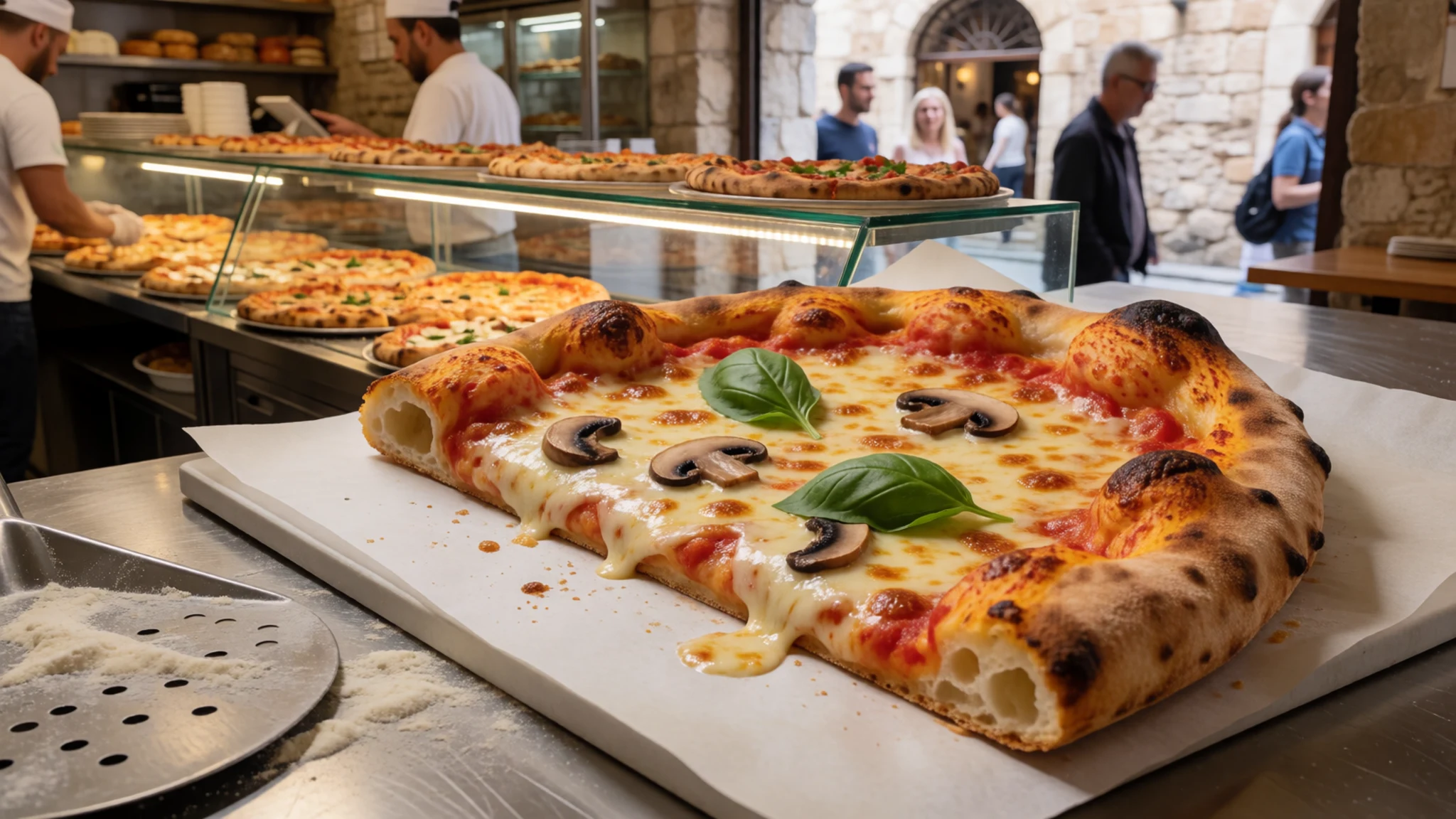
- Filled sandwiches — Sandwich bars in the centre, near the old town
Sandwich bars in the centre make filled rolls with fresh fillings, often built to order. They are a practical choice for a picnic on the waterfront or a quick break between churches. Ask what is freshest that day. - Grilled fish and seafood — Waterfront taverns near the old town harbour
Seafood is the obvious choice on the Dalmatian coast, and the simplest version is grilled fish with oil, lemon and bread. Small taverns near the waterfront serve the day's catch, so ask what came in. Check the menu before ordering. - Vegetarian and vegan plates — Vegan and vegetarian cafés in the centre
Vegan and vegetarian food is easy to find in Split, with several kitchens making dishes from seasonal vegetables and legumes. Look in the centre for a café that cooks to order, where the plates change with the market. It is a good option for a lighter lunch between sightseeing stops.
Plan it
Best time. Late spring (May) and September to October suit the palace best, when the weather is comfortable and the streets are less packed, while June is nearly as hot as July and August. July and August are hot and busy, and the stone holds the heat well into the evening. Winter is quieter and cooler, and some cafés may close for part of the season.
How long. 2–3
Getting there. Split Airport is a short ride from the centre: the airport shuttle bus takes about 30 minutes to the inter-city bus station, and bus 37 runs from the airport into Split's local bus station, Sukoišan, though it does not reach the inter-city station. Long-distance buses from other Croatian cities arrive at the inter-city station.
Budget. mid
Tips
- Visit the Peristil and the cathedral early or late, as midday brings the heaviest crowds
- Climb the bell tower only if you are comfortable with narrow, steep stairs
- Carry some cash for small cafés and kiosks, and check opening times on the official site at http://www.diocletianspalace.org/
- Carry water and a hat, since the open squares offer little shade at midday
- Plan the basement halls for a quieter part of the day
Etiquette
- Dress modestly when entering the cathedral
- Ask before photographing people, especially during services
- Keep noise down in the narrow lanes after dark
Nearby
Sources
- Wikidata Q322287 (CC0)
- Wikipedia: Diocletian's Palace (CC BY-SA 4.0)
- Wikivoyage: Split (CC BY-SA 4.0)
- Diocletian's Palace (original appearance), Ernest Hébrard, recoloured by DIREKTOR (Public domain)
- Croatia-01239 - The Peristil, Dennis Jarvis (CC BY-SA 2.0)
- Luftbild vom Diokletianpalast in Split, dronepicr (CC BY 2.5)
- Sv. Duje cathedral, Split, Minestrone (CC BY-SA 2.0)
- Peristyle of Diocletian's Palace in Split, Robert Adam, 1764 (Public domain)
- Fig. 002 Plan des Palastes nach R. Adam, George Niemann (Public domain)
- Der Palast Diokletians in Spalato, Niemann, Tafel 19 und 20, southern wall, 1906 (Public domain)
- Der Palast Diokletians in Spalato, Niemann, Tafel 02b, northern wall, c. 1907 (Public domain)


