Krka National Park
Krka National Park, Croatia
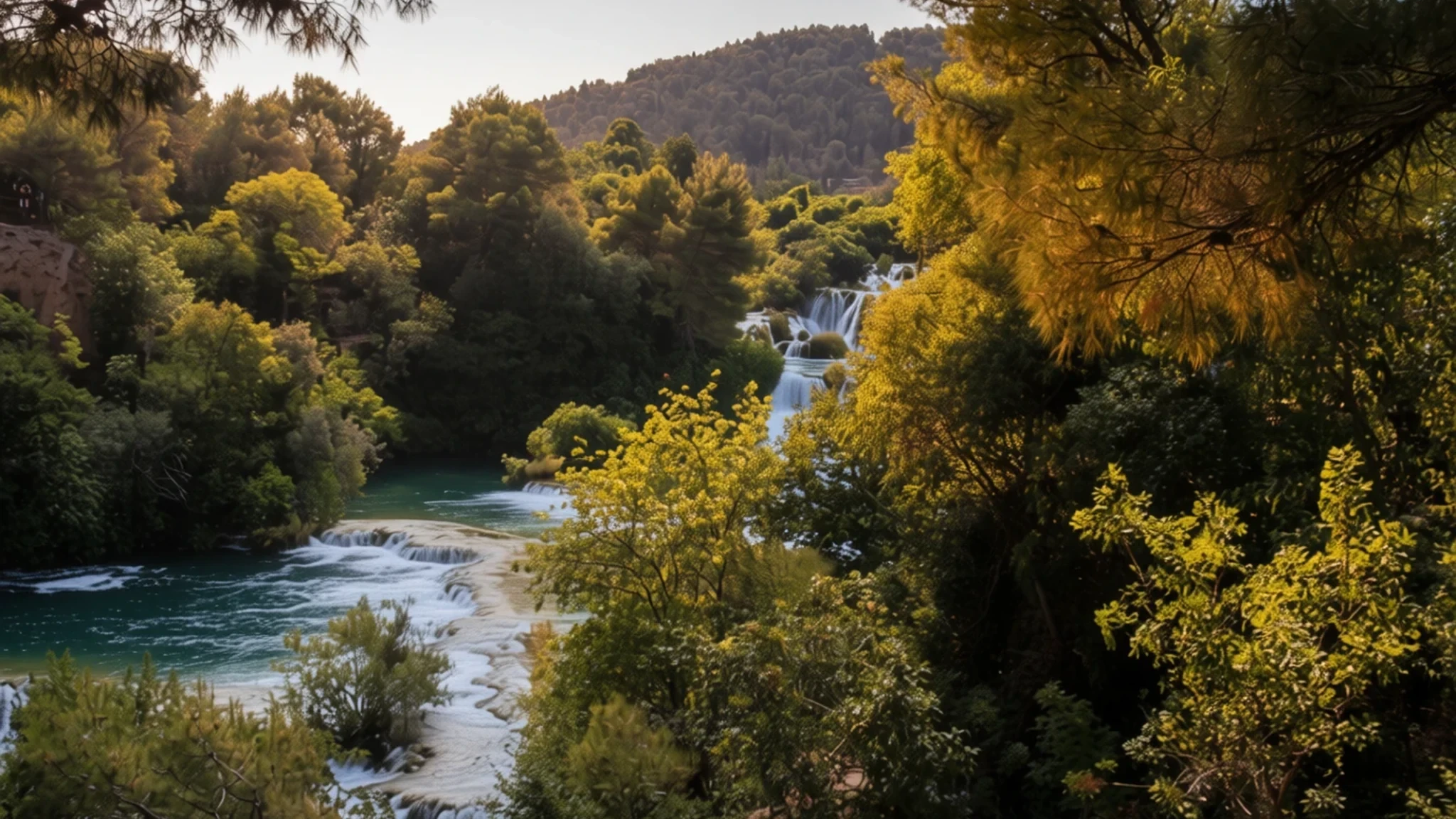
Come for travertine waterfalls and lake pools near the Adriatic coast, and arrive early before the day-trippers do.
The place
Krka National Park sits in central Dalmatia, a few kilometres northeast of Šibenik, and takes its name from the river that runs through it. It was proclaimed a national park in 1985 and is the seventh in Croatia. The park covers about 109 square kilometres along a stretch of the river of roughly 45 kilometres, running between Knin and Skradin, together with the lower reaches of the Čikola tributary. What draws people is the water. The river drops through a sequence of cascades, lakes and limestone gorge walls, and much of the surrounding landscape has changed very little. The park does not offer a single loop you can walk. Its sights are spread along the river, and most are not linked by road or footpath, so getting between them usually means a boat. A full day here often feels more like a river journey than a standard sightseeing stop. The main attraction, Skradinski buk, lies close to the principal entrances. Further along the river, the island of Visovac, with its Franciscan monastery, is reached only by water and remains a place of pilgrimage. Walkers and cyclists have separate trails, and cycling is not allowed on the walking routes. Lavender grows in the area, so expect plenty of bees and wasps in warm weather.
Its story
The park was created to protect the river itself. Its water and the travertine it deposits, a soft limestone formed where calcium carbonate settles out of flowing water, are both fragile, and the authorities decided that the most valuable parts of the valley needed a formal shield. Over the decades the park has been shaped around that aim, with boardwalks, marked swimming areas, ferry routes and a museum that explains the geology and the landscape. Human history runs deep here too. Burnum, on the edge of the park, preserves the remains of a Roman amphitheatre and other excavated structures, and several unrestored fortresses in the surrounding hills, including Čučevo, Nečven, Bogočin and Ključica, date back to Roman times. Along the river there are old mill sites, a reminder that water once turned wheels for local communities. The monastery on Visovac has drawn pilgrims for centuries, and its island setting in the middle of the lake gives it a calm presence that has held up through many changes around it. Today the park balances conservation with the visitors who arrive each year, and much of the management effort goes into controlling where people walk, swim and moor their boats so the fragile formations survive.
What to see
- Skradinski buk — Skradin, main entrance
The park's major attraction. Here the river spreads into a broad natural pool, with high falls at one end and cascades at the other. The stretch is roughly 400 metres long and 100 metres wide and holds 17 waterfalls, with a total drop of about 47.7 metres from the first to the last. The lower lake is a designated swimming area, but it has no changing booths and getting into the water is not especially safe.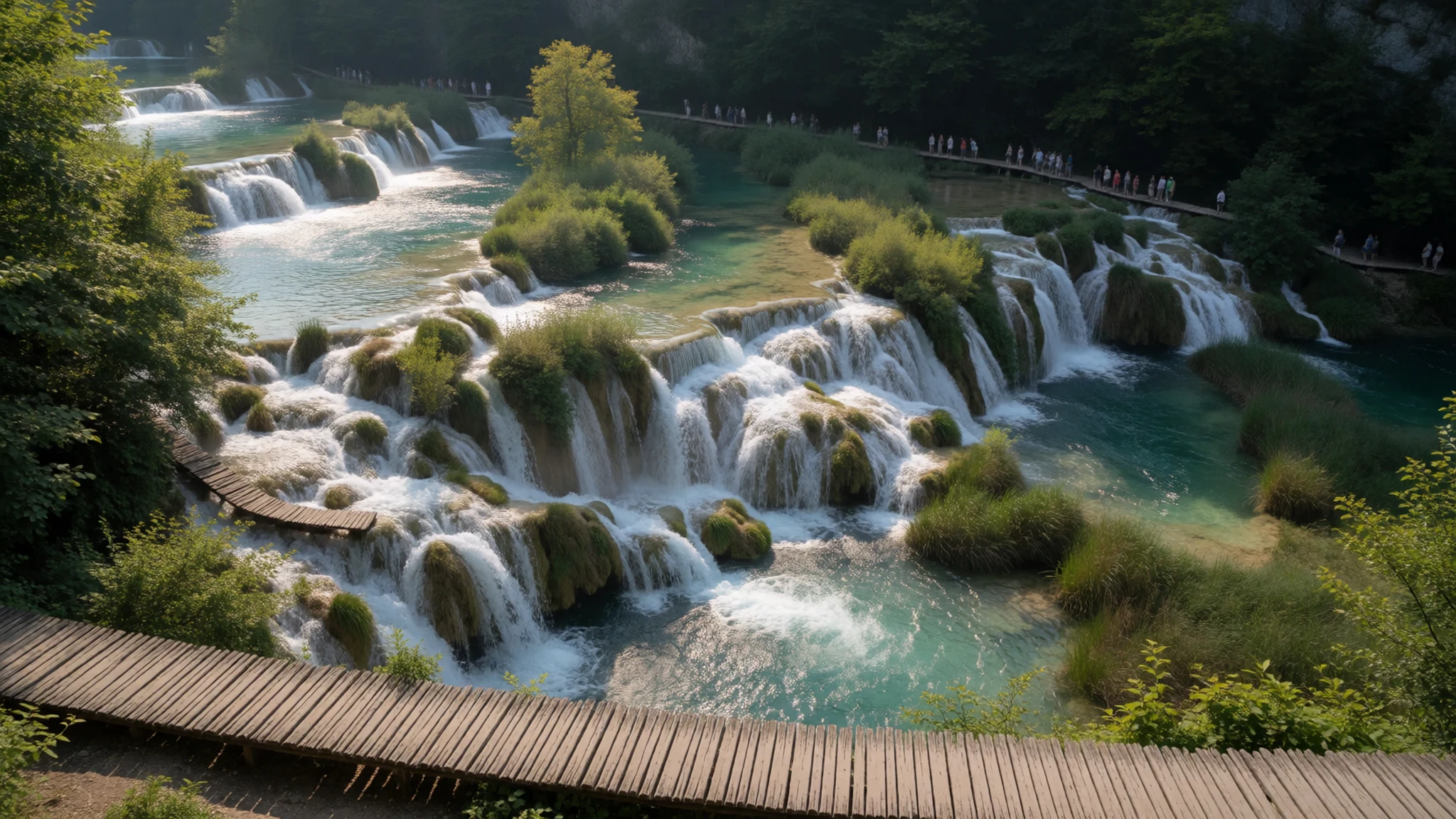
- Visovac island — Lake Visovac, reached by boat
A small island in the middle of the lake, home to a Franciscan monastery and still a place of pilgrimage. It is reached by boat, and the usual route from Skradinski buk takes roughly two hours there and back, including about half an hour ashore. Visitors wander the monastery grounds quietly, so dress modestly and keep your voice down.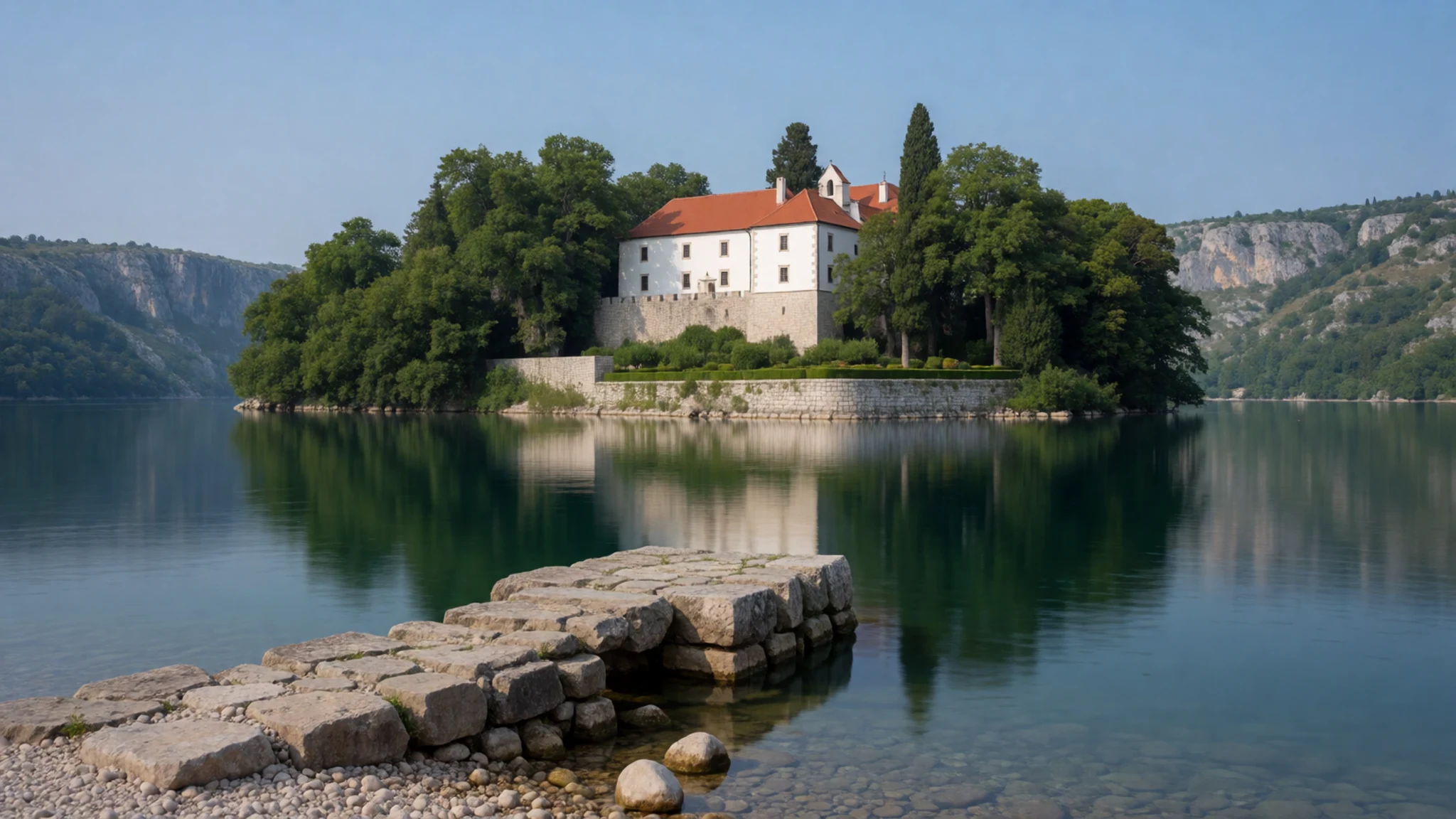
- Roški slap — Upper park, by boat
A separate group of waterfalls further up the river, usually combined with the Visovac trip for a longer boat day. Allow about an hour to look around the falls properly. The area has a hotel nearby, which makes it a useful base if you want to see the park without rushing back to the entrance.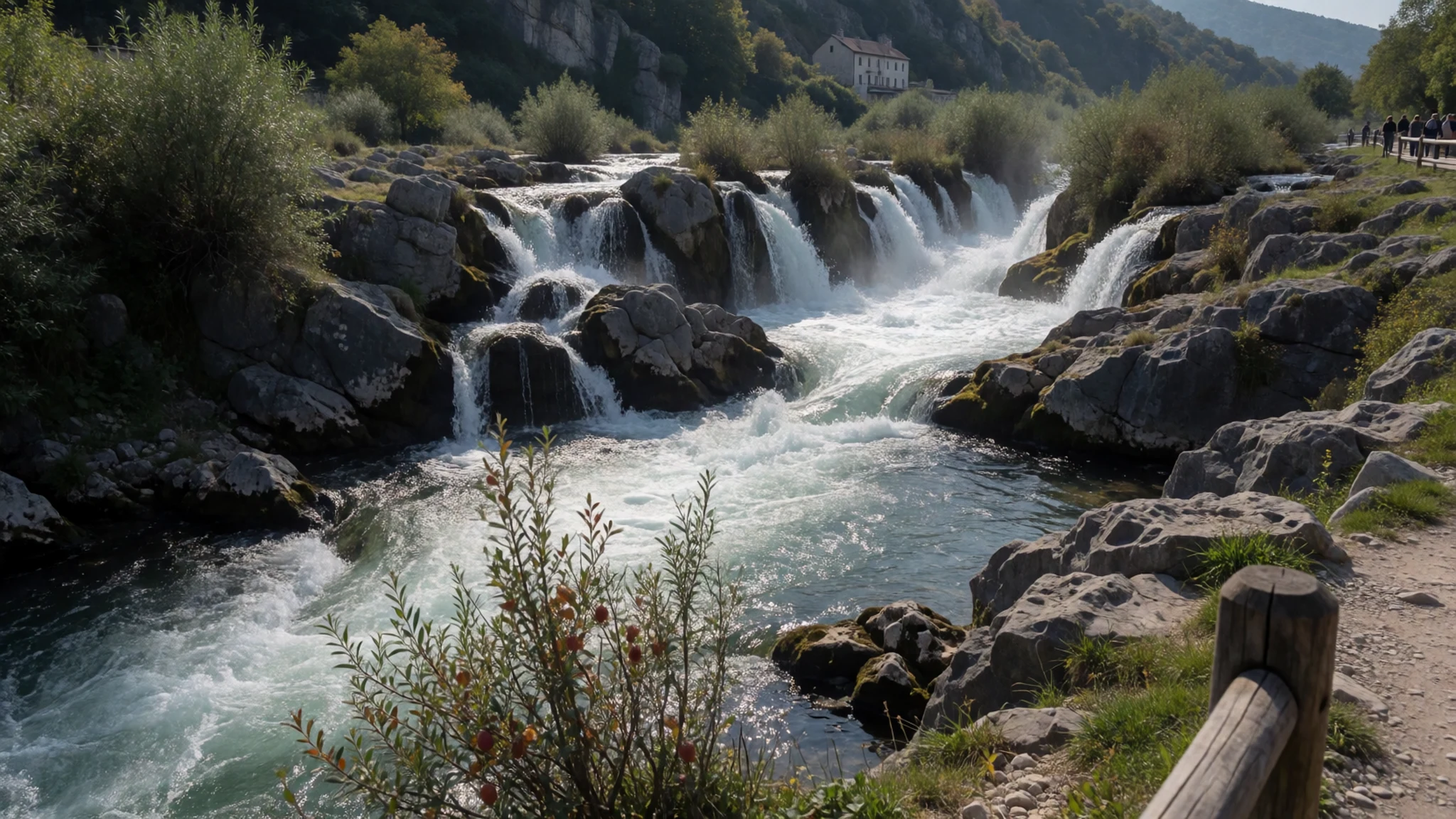
- Burnum archaeological site — Northern edge of the park
The remains of a Roman amphitheatre and several other excavated structures, set in the landscape beyond the falls. It suits anyone who wants history alongside the water. The site is quiet compared with the falls, and it rewards a slow walk with a guidebook or the park's information material.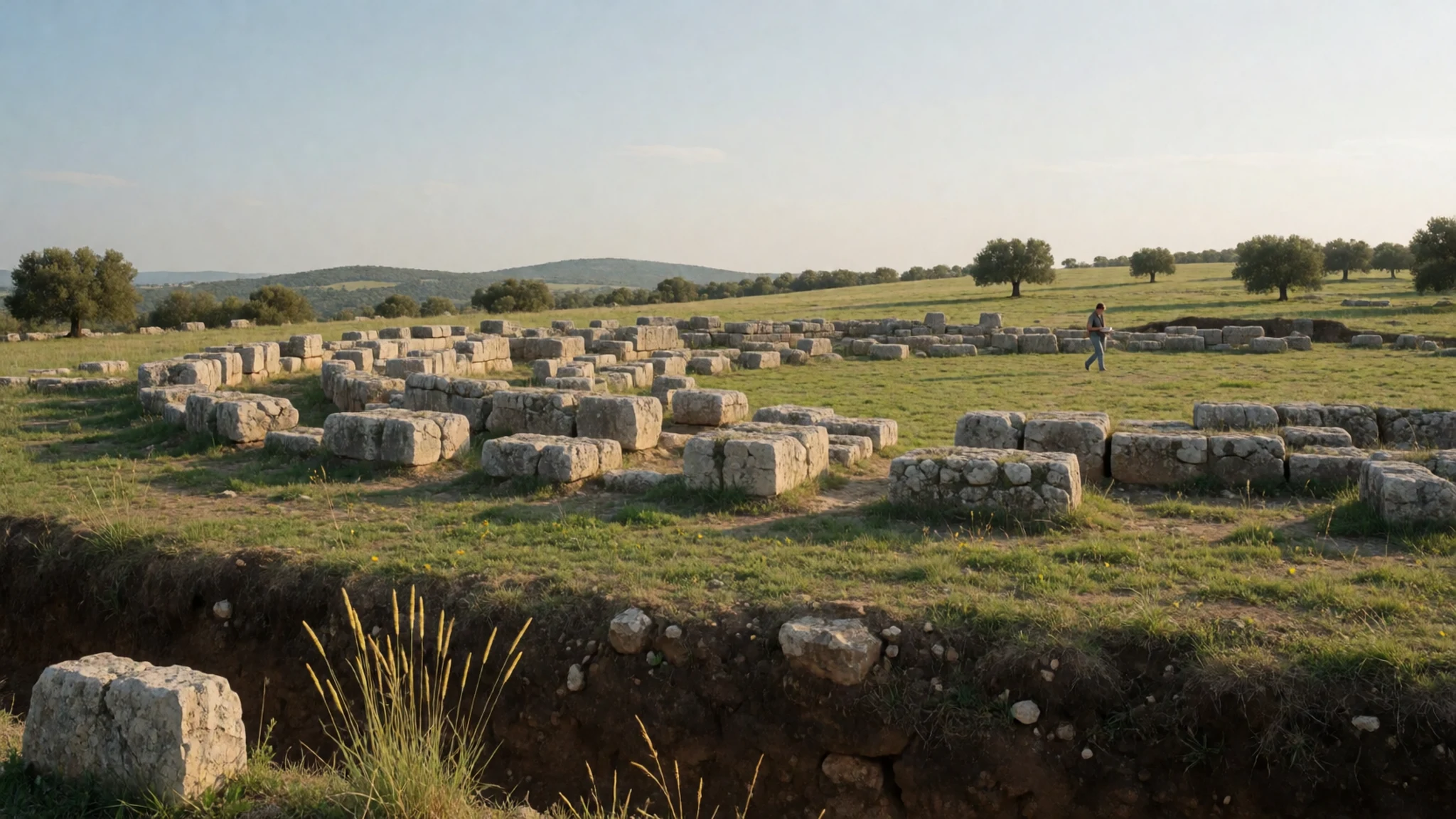
- Manastir Krka — Upper river, by boat
A monastery site within the park, reached on the longer river excursions rather than on a short walk. Its setting, with the river and the surrounding hills, is the reason to go. Check the official site for current boat schedules before planning a day that includes it, as departures change with the season.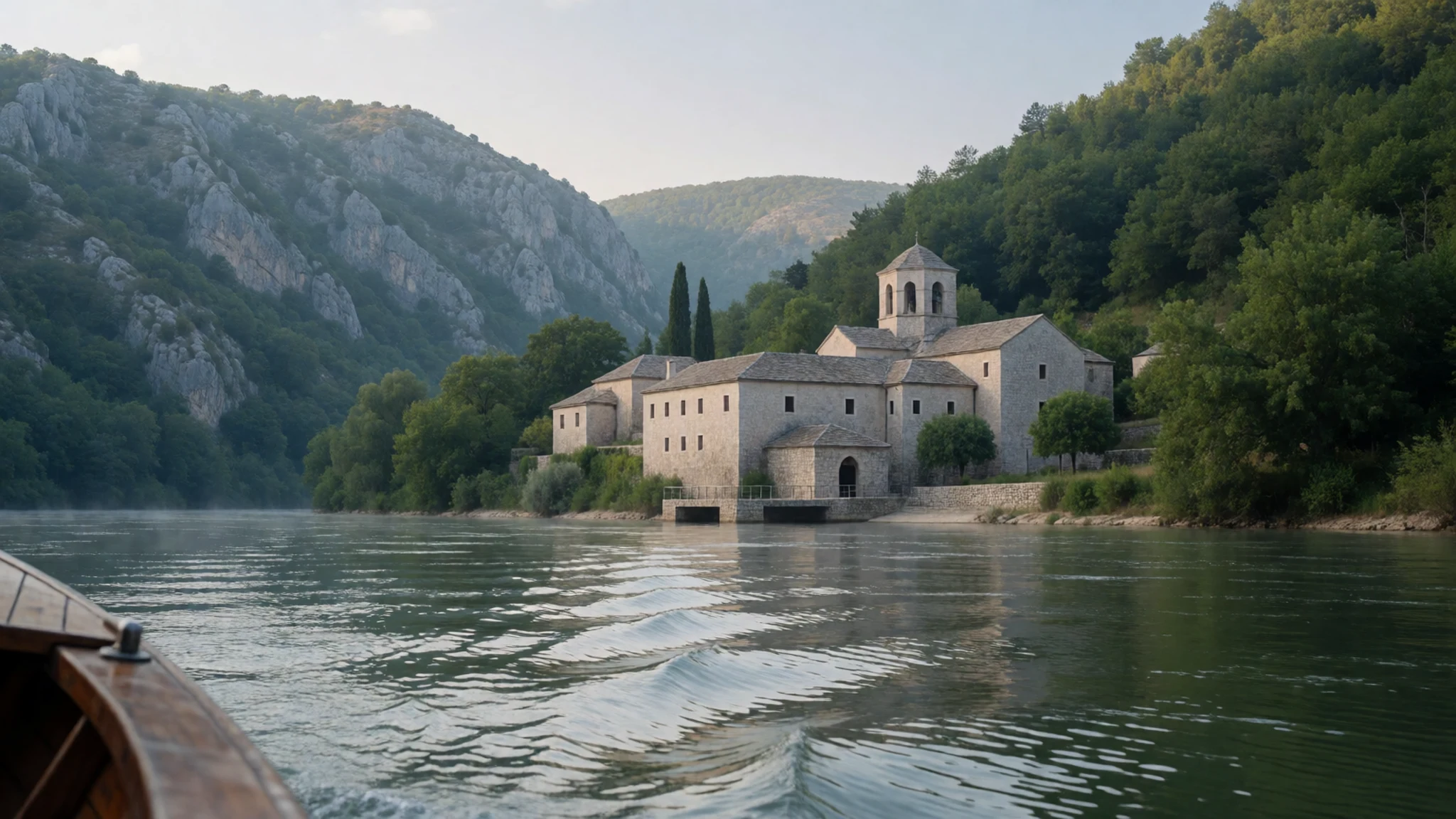
Culture
Krka sits at the crossroads of Dalmatian village life and Croatian Catholic tradition, and the monastery on Visovac is the clearest sign of that. Franciscan monks have lived on the island for centuries, and the church and grounds are still used for worship and pilgrimage. Visitors are welcome, but the atmosphere is that of a working religious place, so conversations stay low and phones stay off during services. Most people in the park are on holiday, yet the boat crews, stallholders and guesthouse owners who serve them are local, and a simple greeting in Croatian, dobar dan, goes a long way. Tipping is modest and informal: rounding up a bill or leaving a small note for good service is normal in restaurants and cafés. The park's rules also reflect a sense of responsibility towards the landscape. The travertine formations are delicate, and the river has marked areas where walking and swimming are allowed. Keep to the designated zones and do not wade or swim elsewhere, because casual bathing damages the soft stone that gives the falls their shape.
What to wear
Krka National Park is a river landscape rather than a fashion destination, so the traditional dress worth knowing comes from the wider Dalmatian hinterland. Women's costume there traditionally used dark wool for skirts and bodices, with white linen blouses and embroidered aprons, and men wore dark woollen trousers, waistcoats and a sash. Patterns and cuts differed from village to village, and the best examples are seen in museums and at local festivals rather than on everyday streets. Today people in the area dress much as Croatians do anywhere in summer: light cotton, linen, shorts and sandals in the heat, with sturdier shoes for hillside paths. Visitors should dress for a wet, sunny day. Choose shoes with good grip for the slippery boardwalks and wet stone around the falls, and pack a light layer for the boat, which can feel cooler on the water. A hat, sunglasses and sun cream are essential, and a swimsuit under your clothes helps if you plan to bathe in the designated area. Modesty matters at the monastery: cover shoulders and knees, and carry a scarf or light shawl to wear over shorts or a vest.
What to eat
- Pršut with sheep's cheese — Village konobas and farm stalls around Skradin and Lozovac
Dalmatian dry-cured ham, thinly sliced, served with a crumbly sheep's cheese and bread. It is the classic starter in the region and a good lunch on a boat day. Eat it at the village konobas, or the farm stalls and guesthouses in the villages around Skradin and Lozovac.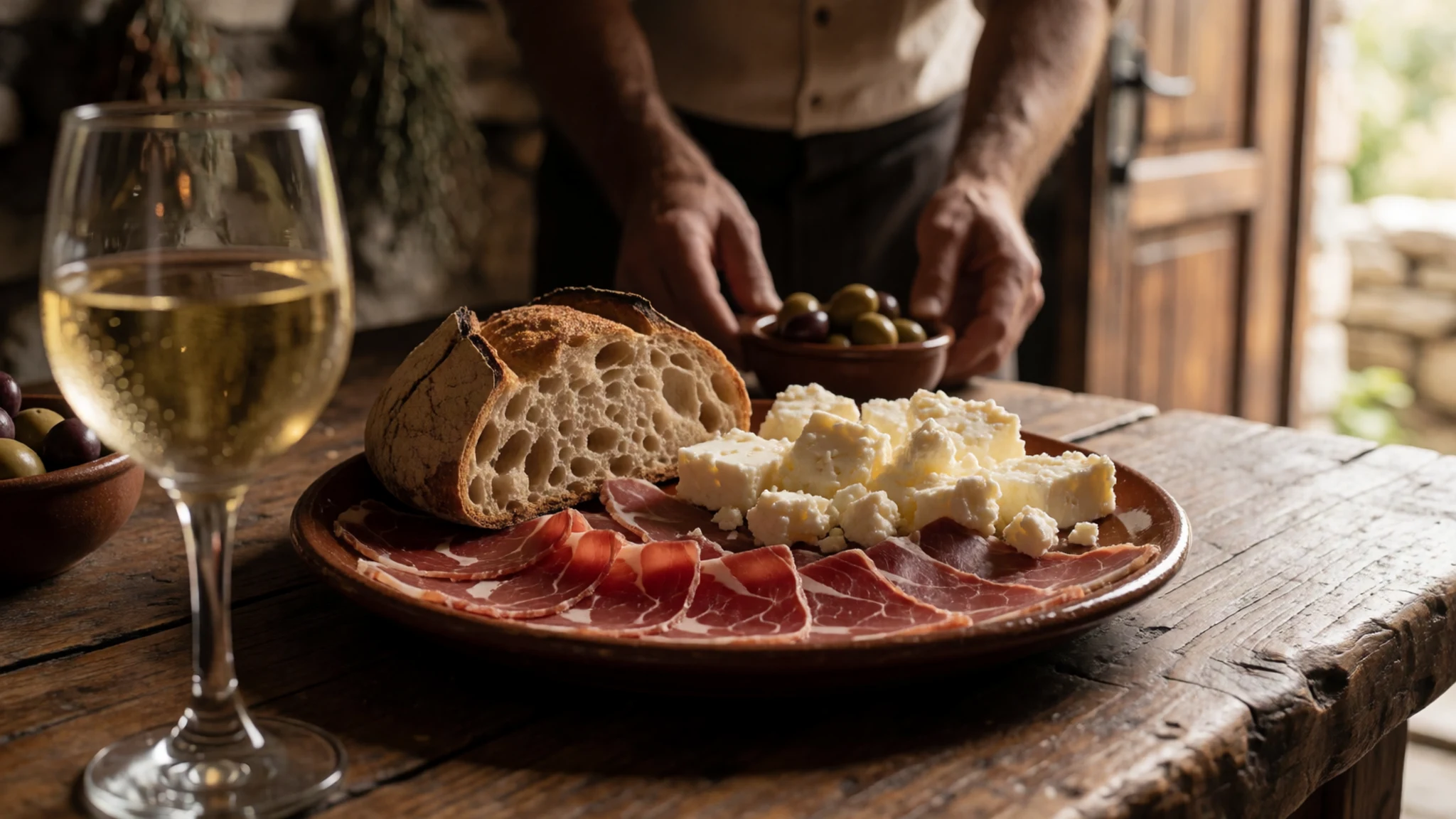
- Peka — Family restaurants in the villages around the park
Lamb or veal, sometimes with potatoes and vegetables, cooked slowly under a heavy iron bell covered with embers. The cooking takes time, so order it early in the day at a family restaurant. It is a dish for sharing and a good reason to linger over a long lunch.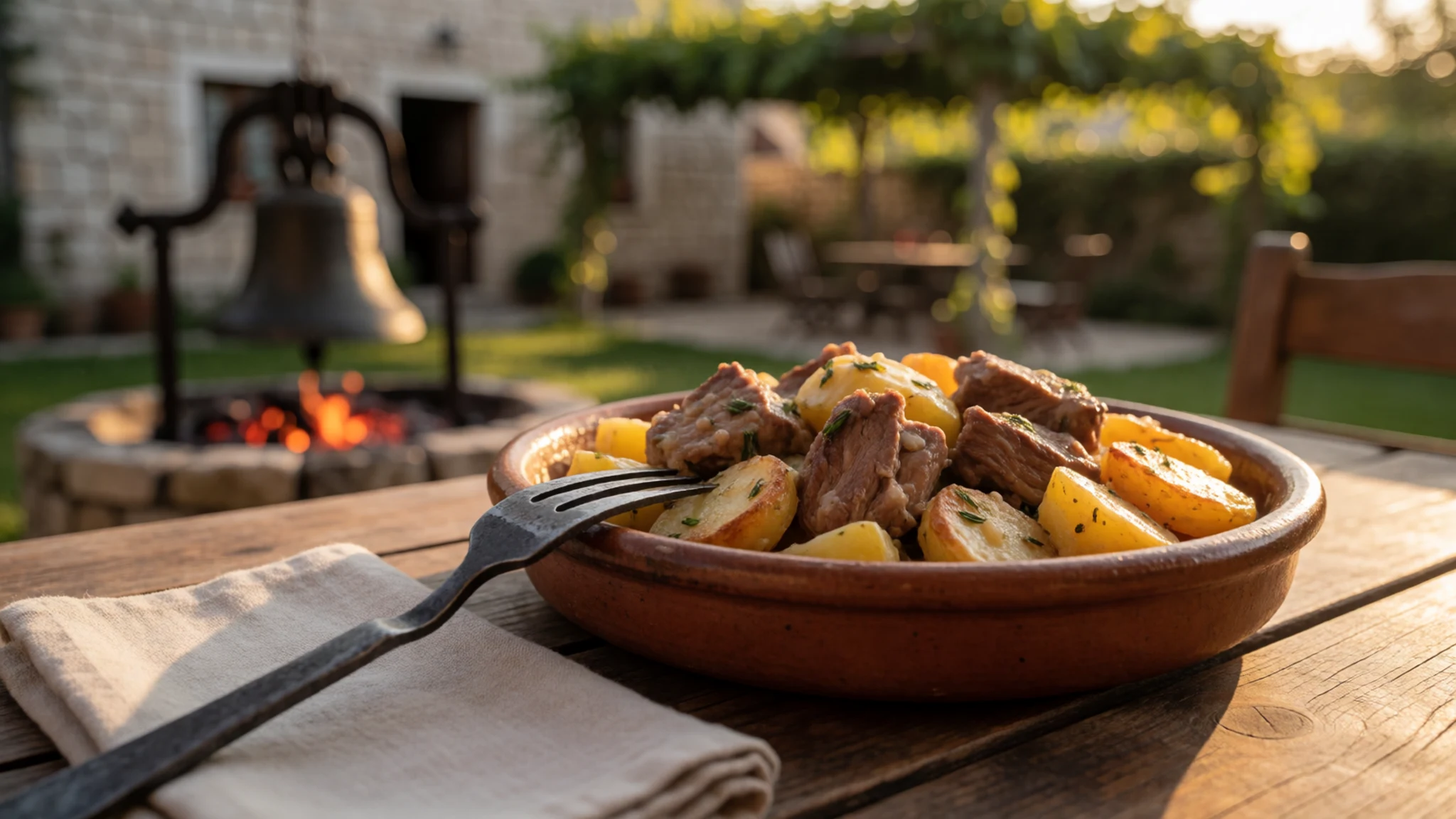
- Brodet — Seafront taverns in Šibenik
A Dalmatian fish stew, rich with tomato, wine and garlic and usually made with several kinds of fish or shellfish. It is more of a coastal dish, so it is worth saving for a seafront evening in Šibenik, a short drive from the park.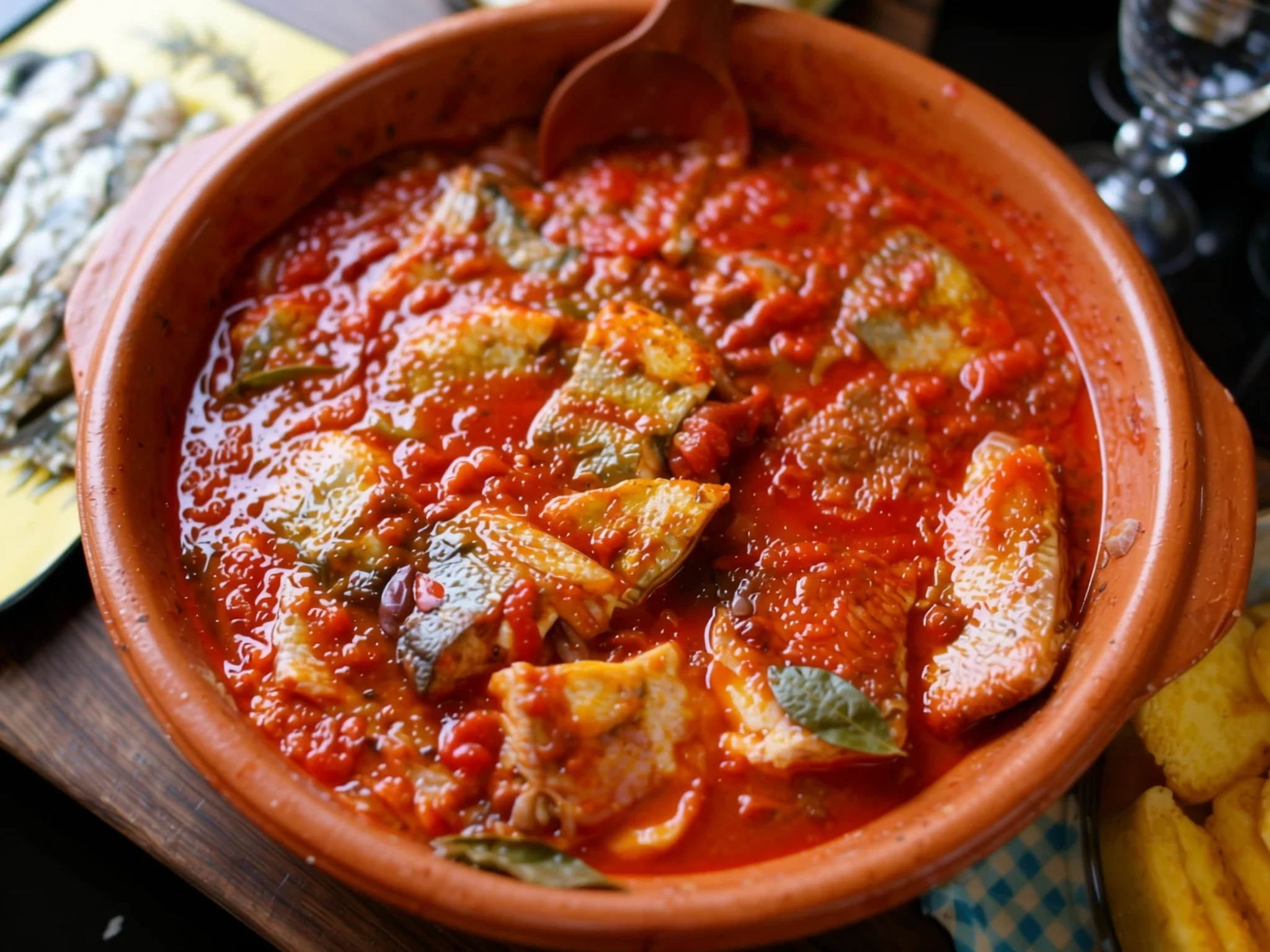
- Lavender honey — Roadside and market stalls in the Krka area
Honey from the bees that work the lavender growing around the park. It makes a practical souvenir, and the flavour is floral and light. Buy it at roadside or market stalls in the Krka area, and check the label for the origin before you pay. - Buffet food by the falls — Buffets beside Skradinski buk, at the old mill sites
Simple buffet meals served in the old mill setting beside Skradinski buk. The surroundings are the main reason to eat here. The food is functional rather than memorable, so treat it as a convenient lunch and eat more heartily in a village konoba later in the day.
Plan it
Best time. April to June and September to October suit a visit best. Boat trips run only from April to October, the falls carry plenty of water in spring, and the heat is more manageable outside midsummer. July and August are hot and busy, with the largest crowds at Skradinski buk.
How long. 2
Getting there. Fly into Split or Zadar, then take a bus or hire a car to Šibenik and on to Skradin, the usual gateway village. From there you reach the main entrances by road and continue by boat between the sights. Check the official site for current timetables before you travel.
Budget. mid
Tips
- Arrive at Skradinski buk early to beat the tour groups and get a good view of the cascades
- Plan the boat from Skradinski buk to Visovac and back, which takes roughly two hours
- Bring water and a hat, as there is little shade on the walkways
- Carry cash for small stalls and kiosks, and confirm card payment at the entrances
- Book a bed in Skradin or Lozovac in summer, since there is no accommodation inside the park
Etiquette
- Stay in the marked areas and do not wade or swim outside the designated zone
- Dress modestly when visiting the Visovac monastery and keep your voice down
- Keep cyclists off the walking trails and walkers off the cycling routes
Nearby
Sources
- Wikidata Q828155 (CC0)
- Wikipedia: Krka National Park (rev 1379303367) (CC BY-SA 4.0)
- Wikivoyage: Krka National Park (rev 5407641) (CC BY-SA 4.0)
- Photo: 01-7-np-krka.jpg, Matea Bolčević (CC BY-SA 4.0)
- Photo: 02-krkawatervallen.jpg, Rkoster (CC BY 4.0)
- Photo: 03-pearls-of-river-krka.jpg, Mladen Bozickovic (CC BY-SA 4.0)
- Photo: 04-krka-juga-krka-waterfall-2.jpg, Kristian Pikner (CC BY-SA 4.0)
- Photo: 05-krka01167.jpg, Nerijp (CC BY-SA 2.0)
- Photo: 06-1-np-krka.jpg, Matea Bolčević (CC BY-SA 4.0)
- Photo: 07-31-03-2016-bogati-kroatien-panoramio-13.jpg, Sandor Bordas (CC BY 3.0)
- Photo: 08-31-03-2016-bogati-kroatien-panoramio-17.jpg, Sandor Bordas (CC BY 3.0)


