Queen Elizabeth II Botanic Park
Queen Elizabeth II Botanic Park, United Kingdom
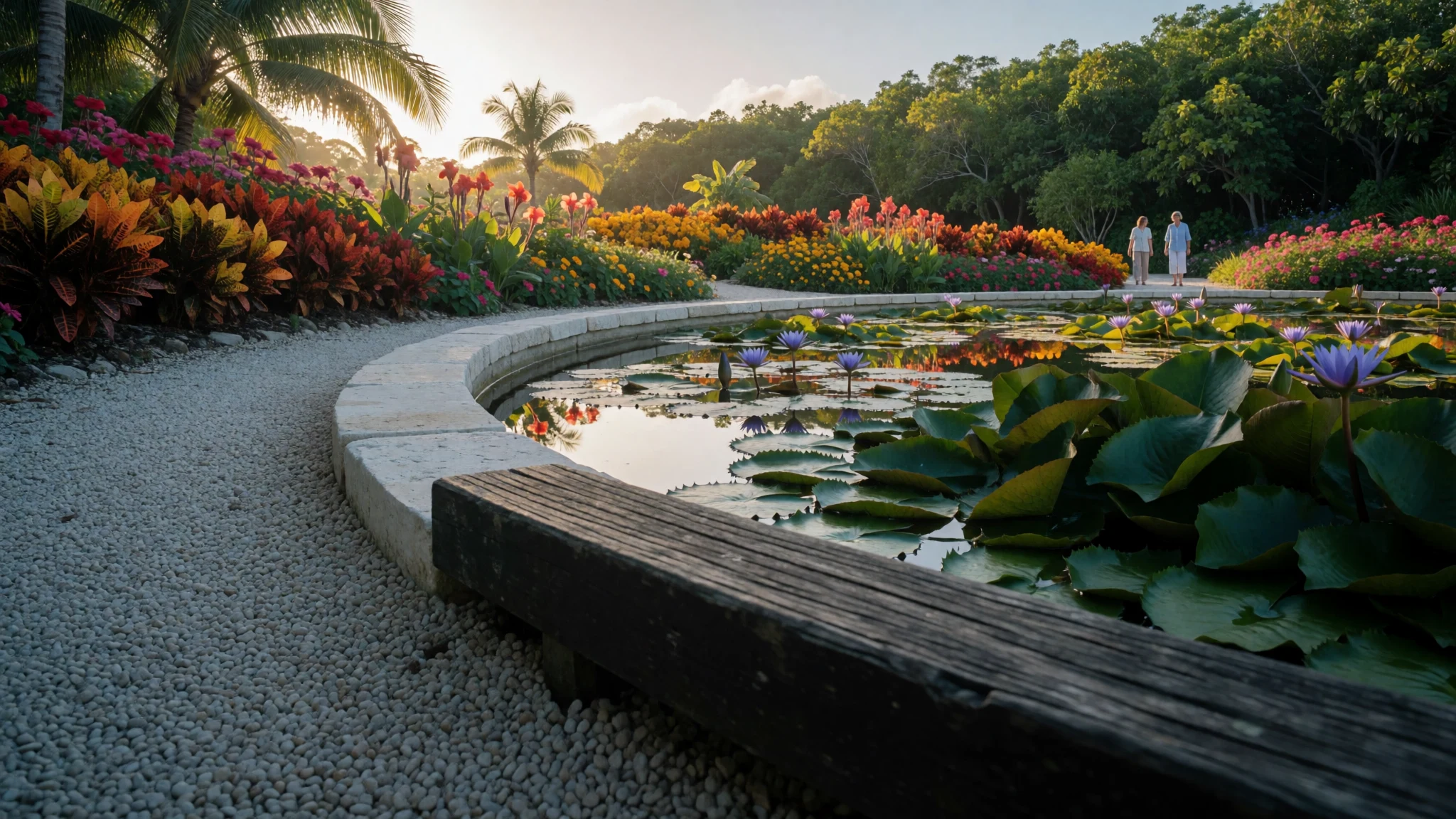
Queen Elizabeth II Botanic Park holds Grand Cayman's colour garden, native plants and blue iguanas on a single inland walk.
The place
Queen Elizabeth II Botanic Park sits inland on Grand Cayman, east of the hotel coast, on low limestone where the island still reads as scrub, wetland edge and garden rather than beach. Paths loop through the Floral Colour Garden, past a landlocked lake of about three acres, once a buttonwood swamp, and beds planted for colour through the year, then give way to a woodland trail with thicker shade. The contrast is the point. The tended beds show what horticulture can do in strong sun and thin soil; the woodland shows what already belongs. Grand Cayman blue iguanas, large and pale, occupy protected ground along that wilder loop, and green Cuban amazons — the Cayman parrot — move through the canopy, often in pairs, with a harsher call than their colour suggests. A green heron may hold still at the water. Near the garden's cultural corner stands a traditional Caymanian wooden house in a sand yard: raked white sand instead of lawn, useful trees close to the walls, the old pattern of a family plot. The wild banana orchid, a national flower of the islands, is part of the living collection. Heat shapes the visit. Mornings are kinder, midday glare is serious, and after rain in the wetter season the paths soften. Frank Sound and the road towards North Side are the human landmarks outside the gate. The sea is absent from the view, which is why the park matters: it is the interior of Grand Cayman, organised so a person can walk it in a morning.
Its story
Queen Elizabeth II Botanic Park is best understood as Grand Cayman's answer to a disappearing interior. As the island turned towards tourism and offshore business, woodland, seasonal ponds and old house-yards were the pieces most easily lost, because they were never the postcard. A botanic park inland, near Frank Sound, gave those pieces a public address. The garden side of the story is instructional in the plain sense: beds and a landlocked lake that show colour, form and shade on limestone, so residents can see the difference between a plant that merely survives the climate and a plant that is of the Cayman Islands. The wildlife side is more urgent. Grand Cayman blue iguanas depend on protected ground, and the park is where that work is visible to anyone willing to walk quietly. Animals bred under care and animals living on the woodland trail turn an abstract conservation headline into a creature with a burrow, a diet and a startle distance. The wooden house adds the human chapter. Older Caymanian homes sat in sand yards that could be swept, with fruit and medicinal plants within reach, and with silver thatch — the palm whose leaves were once worked into rope — among the useful species of the yard. Queen Elizabeth II Botanic Park keeps those chapters in a single walk: ornamental garden, animal refuge, and a house that remembers how the island lived before the waterfront was the whole story.
What to see
- Floral Colour Garden — Floral Colour Garden, Frank Sound
The Floral Colour Garden at Queen Elizabeth II Botanic Park is a level loop of beds planted for leaf and bloom, bright flowers against pale ground. A lake of about three acres sits beside the display, with a gazebo, and gives the walk a cool pause among West Indian whistling ducks. Visitors linger to look and to photograph. On a cruise day the paths fill, then clear as groups head for the woodland.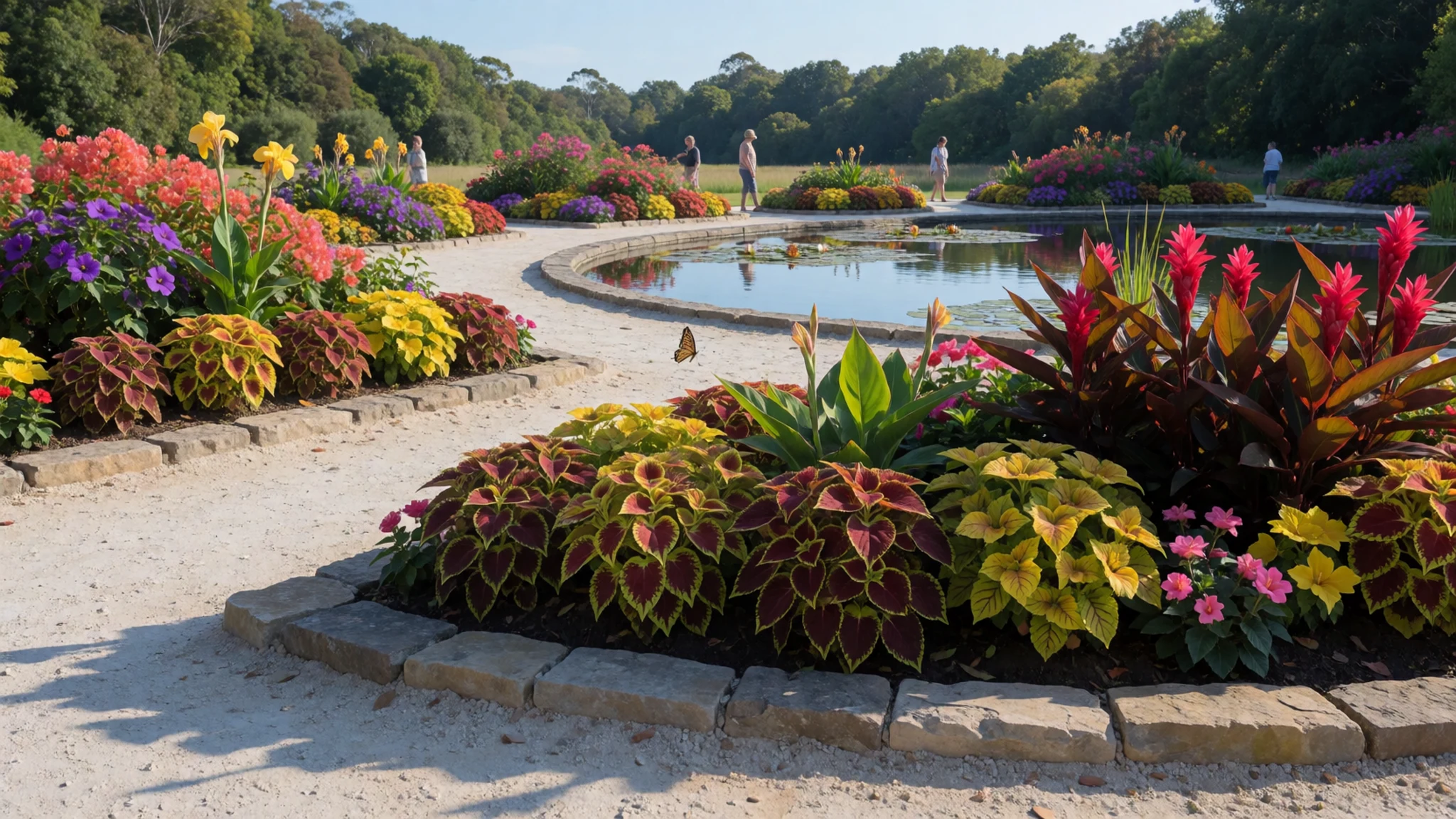
- Blue iguanas on the Wilderness Trail — Wilderness Trail, Frank Sound
Blue iguanas at Queen Elizabeth II Botanic Park are the reason many people take the Wilderness Trail, a wooded loop beyond the planted beds. The animals are large, pale and unhurried, often near the path on protected ground. They are wild residents, not a handled display. Food from visitors harms them, and so does a crowd pressing in for a closer photograph.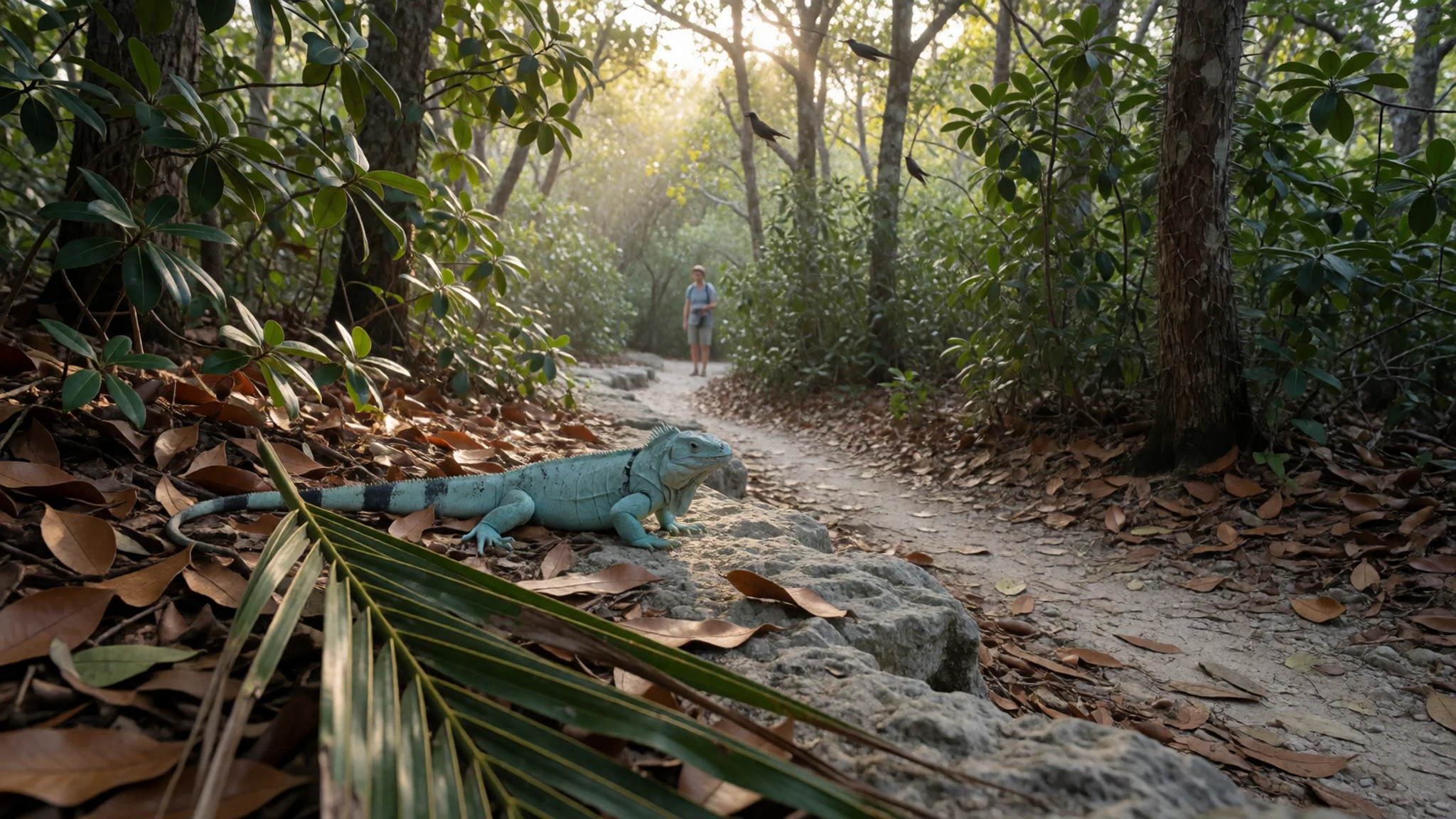
- Traditional Caymanian home — Heritage garden, Frank Sound
The traditional Caymanian home at Queen Elizabeth II Botanic Park stands in a sand garden, a wooden house with a swept white yard rather than a lawn. Fruit trees and useful plants sit close to the walls, as they did when a yard had to feed and shade a family. The building is a lesson in an older island pattern: timber, shade, and sand that could be raked clean.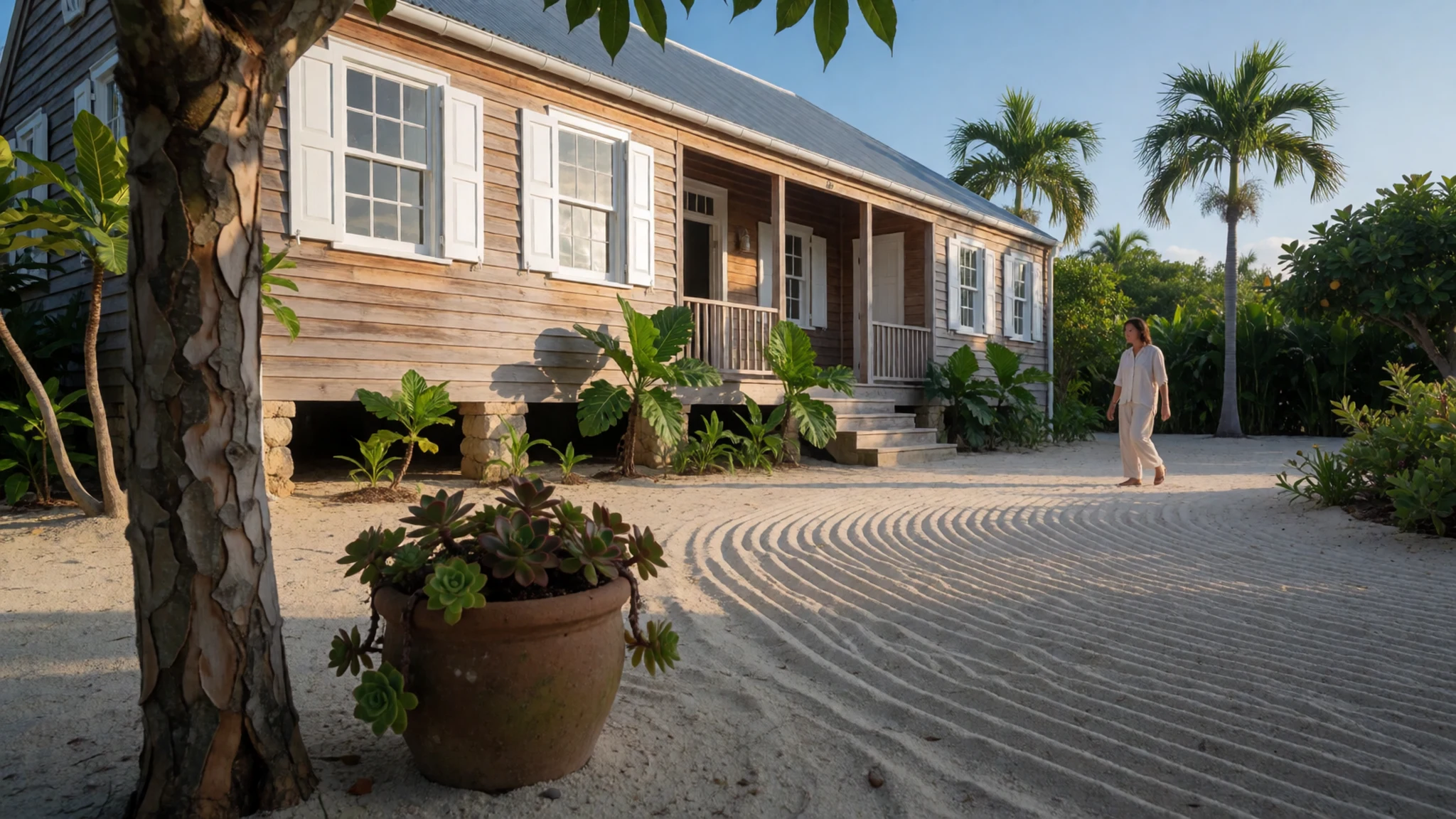
- Wild banana orchid — Orchid beds, Frank Sound
The wild banana orchid at Queen Elizabeth II Botanic Park is a tall, spare plant, not the corsage orchid many visitors expect. Long pseudobulbs and pale flowers mark it out as a Cayman species, and islanders treat it as a national flower. In the garden it is labelled and left to grow, which is the right encounter: a living emblem, not a souvenir to cut.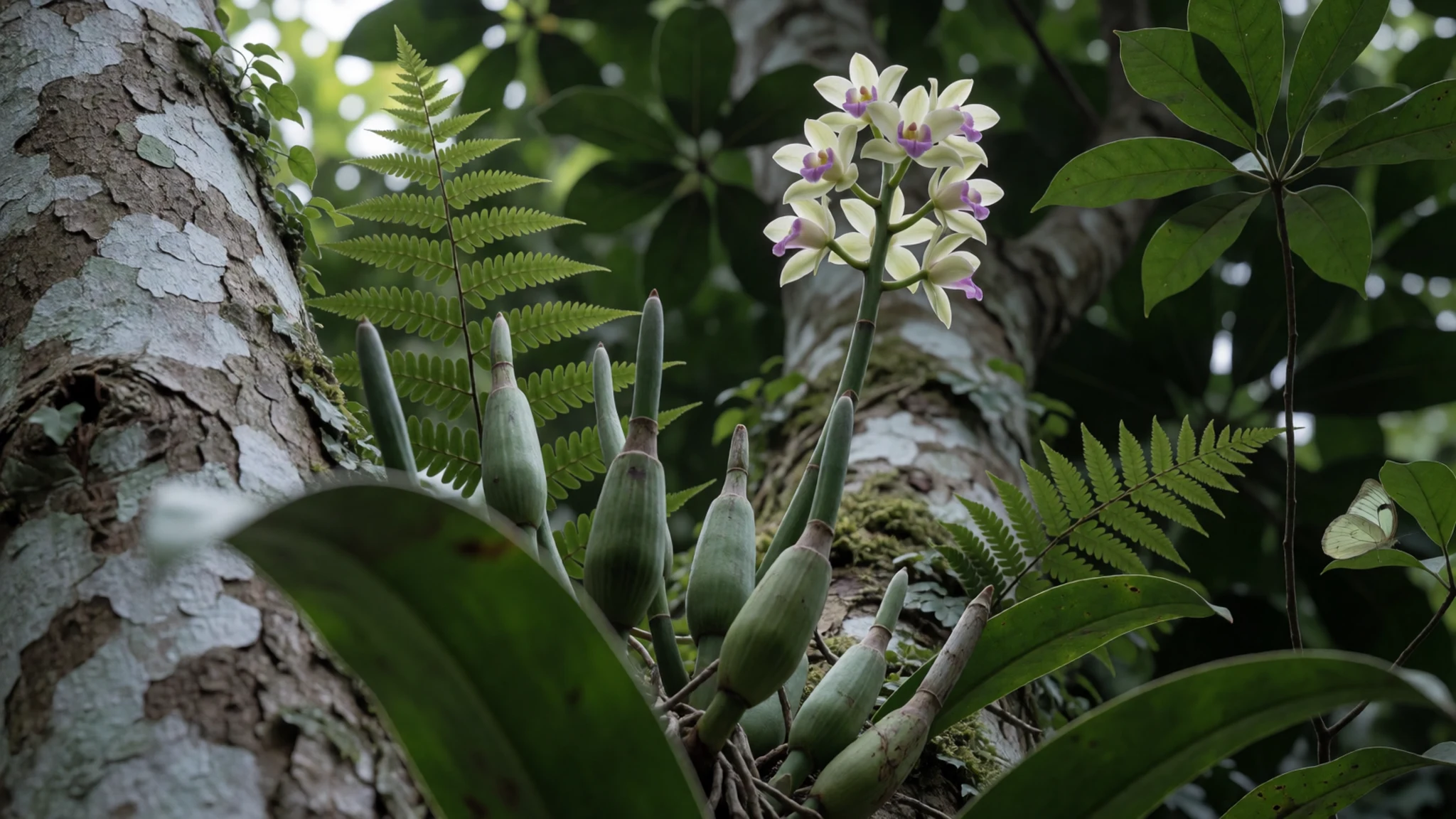
- Parrots, herons and butterflies — Woodland and lily pond, Frank Sound
Birds at Queen Elizabeth II Botanic Park reward a slower circuit than the flower beds demand. Cayman parrots, green Cuban amazons, cross the canopy in noisy pairs, while a green heron may freeze at the lake as if painted there. Butterflies, including the Mexican fritillary, work the colour garden on bright days. The mix is the interior of Grand Cayman rather than a beach bird list.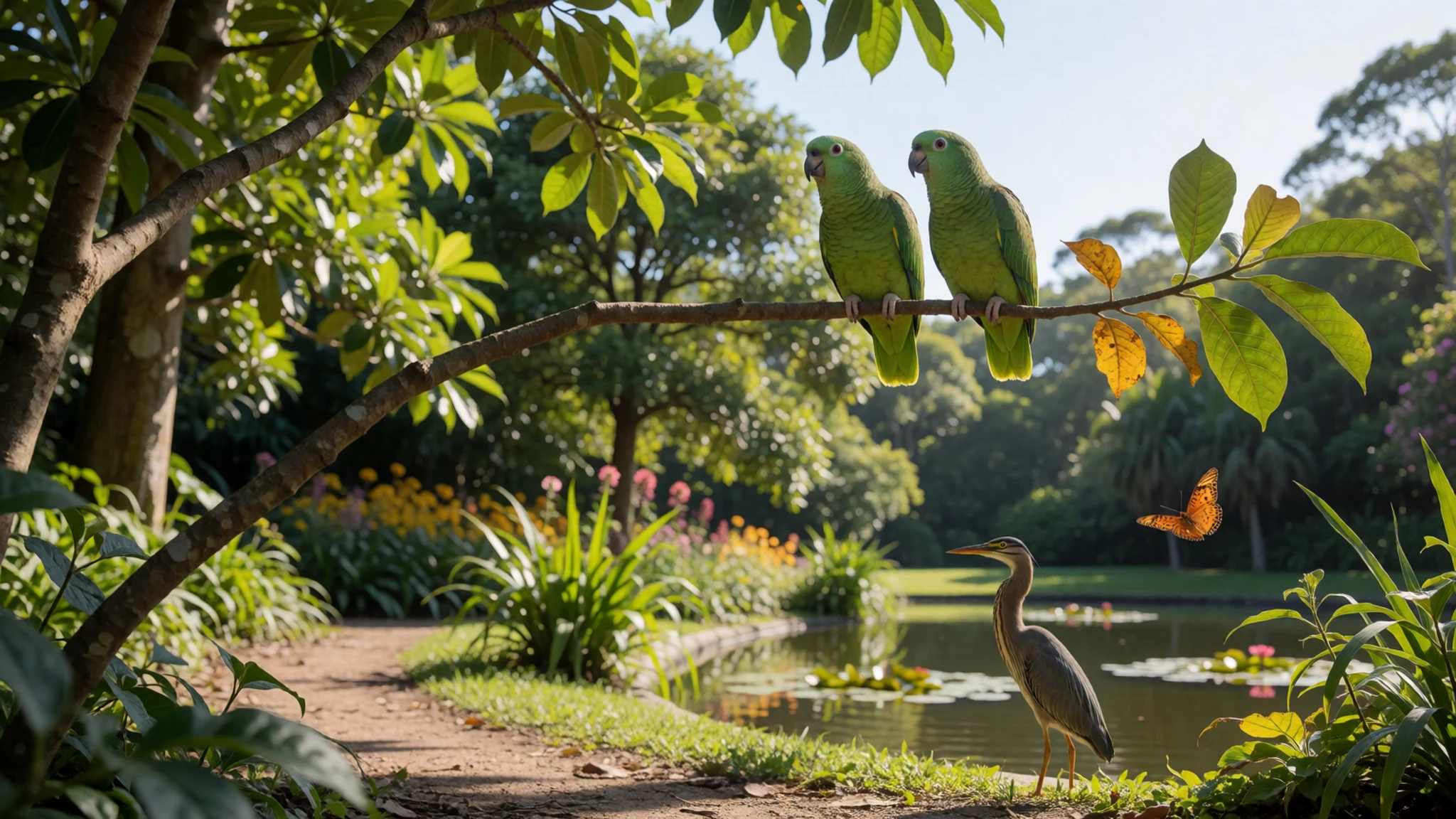
Culture
Queen Elizabeth II Botanic Park sits inside a Caymanian culture that is Caribbean in climate and cooking, and British in law, schooling and a certain reserve. English is the language of the island, spoken in a local cadence that drops articles and softens pace; a visitor who listens in George Town or at a district supermarket hears it more clearly than on a resort beach. Churches still structure the week for many families, and Sundays remain quieter inland than the cruise schedule would suggest. National emblems are not abstract here. The blue iguana, the Cayman parrot and the wild banana orchid are things a person can meet on these paths, which is why the park feels civic as well as scenic. Older skills hover in the background of the sand yard: rope from silver thatch, boats, and a diet built on fish and ground provisions. People will name the district they come from, Bodden Town, North Side, East End or West Bay, and the distinction matters. Treat the animals and the planted collection as neighbours' property: stay on the paths, do not feed the iguanas, and do not pick orchids or step into a burrow for a photograph.
What to wear
Queen Elizabeth II Botanic Park does not demand formal dress, but the heat and the paths do ask for thought. Traditional Caymanian clothing was practical cotton for a hot, bright island: women in long, light dresses, often with a head covering for sun and for church, and men in shirtsleeves, trousers and a hat. Festival dress still nods to that palette, white and clean colours, straw or a simple hat, more often now at Heritage Day and district celebrations than in daily life. Silver thatch belongs to the textile story as rope and craft rather than as cloth for gowns; the plant was a working fibre of boats and bundles. What people wear now is resort-island clothing, adjusted by role. In George Town offices the look is international business dress in light wool or cotton. Everywhere else, shorts, linen shirts, sundresses and sandals dominate, with swimwear kept for the beach and the pool rather than a shop or a church. At the park, the sensible model is other walkers. Breathable cotton or linen, a sun hat, and shoes that can take gravel and woodland are the right kit. Flip-flops slip on uneven ground and leave ankles open to insects. Shoulders and knees need no special covering; there is no shrine rule. Sun cream and insect repellent matter more than style, and a colour that can survive dust or mud is kinder than a new white hem after rain.
What to eat
- Rundown — Caymanian cookshops in George Town and the eastern districts
Rundown is the coconut-milk fish stew to seek after Queen Elizabeth II Botanic Park. A firm fish, often snapper, is simmered with vegetables until the sauce turns savoury. Caymanian cookshops in George Town and the eastern districts serve it as a lunch plate, usually with rice or ground provisions.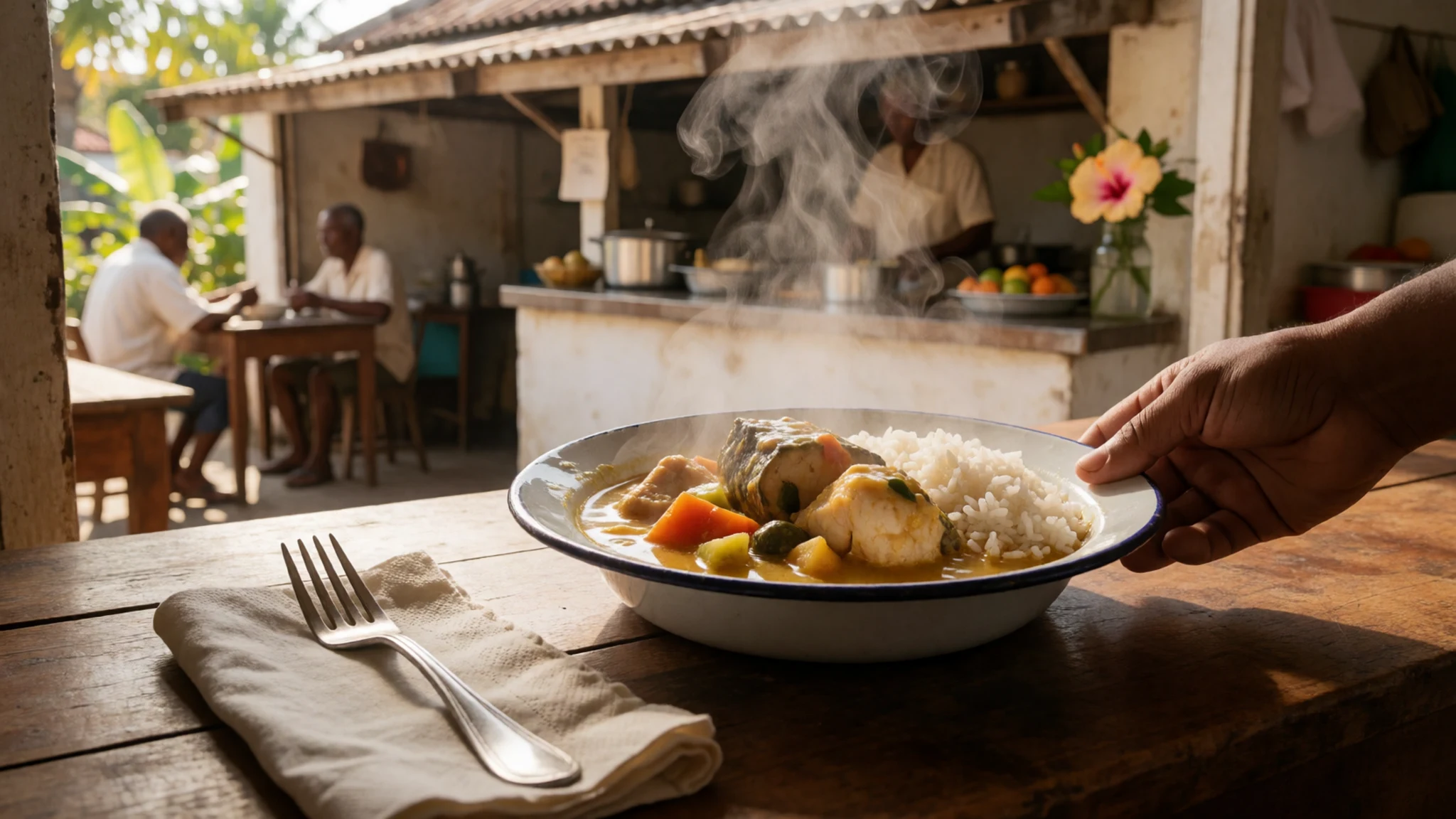
- Heavy cake — Heritage stalls and bakers in the outer districts
Heavy cake is the cassava sweet of Caymanian gatherings, often around on a day that includes Queen Elizabeth II Botanic Park. Grated cassava and coconut bake into a dense, moist cake, closer to pudding than to sponge. Heritage stalls and bakers in the outer districts are the usual source.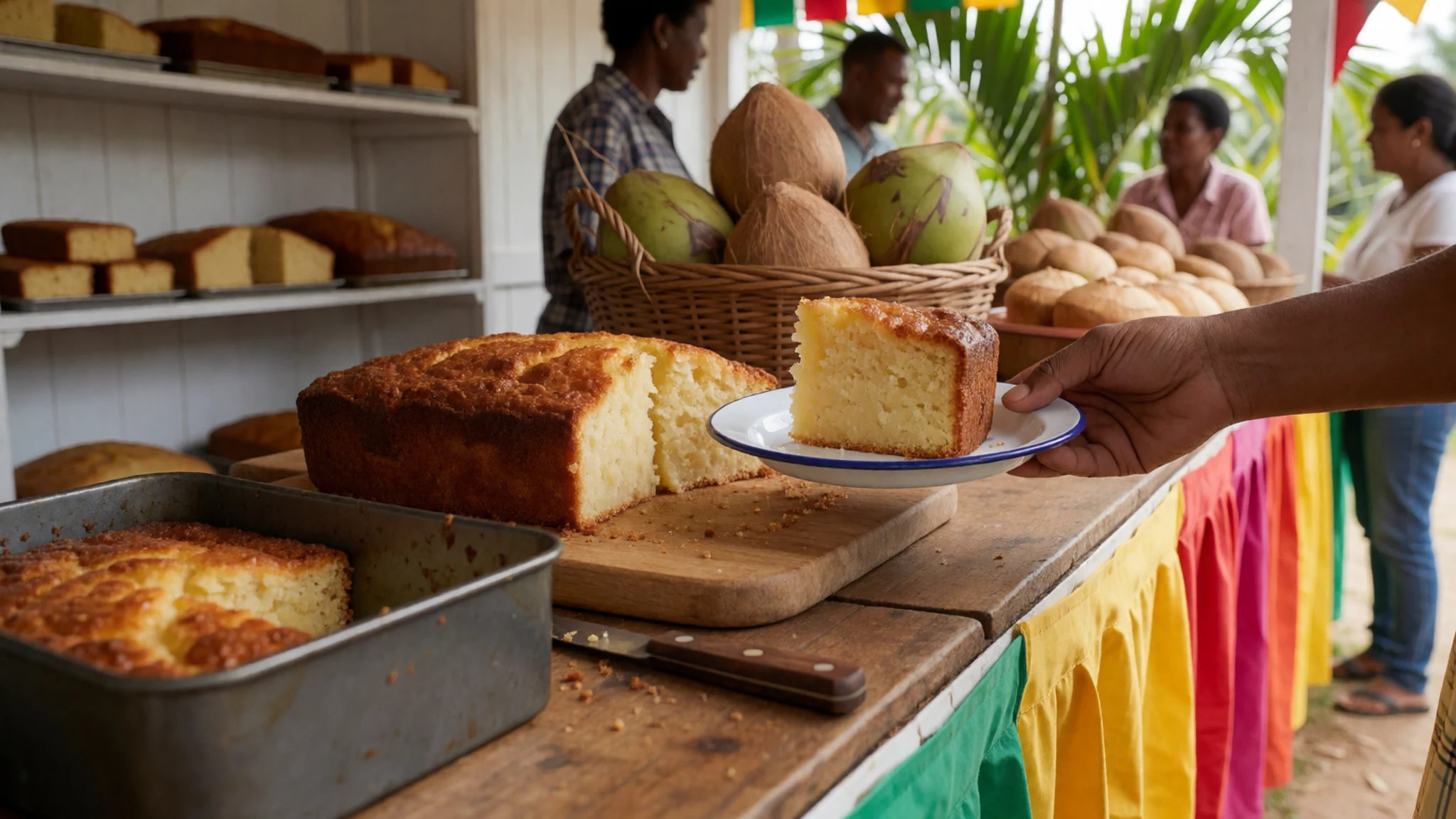
- Conch fritters — Roadside stalls and cookshops towards George Town
Conch fritters turn up wherever Caymanian food is sold near the route back from Queen Elizabeth II Botanic Park. Chopped conch is seasoned, bound in batter and fried until the outside is crisp and the centre stays savoury. They are a roadside and cookshop snack, eaten hot with pepper sauce. - Johnny cake — Cookshops in George Town, Bodden Town and the eastern districts
Johnny cake belongs with a savoury meal after Queen Elizabeth II Botanic Park. The dough is flattened and fried until puffed and golden, then split around fish or eaten plain beside stew. Cookshops in George Town, Bodden Town and the eastern districts treat it as an ordinary staple. - Fish tea — Cookshops and community gatherings in North Side and Bodden Town
Fish tea is a light, peppery broth that suits an afternoon after Queen Elizabeth II Botanic Park. Fish and vegetables are simmered into a thin soup and served in cups or bowls. Cookshops and community events, including gatherings in North Side and Bodden Town, are the places to find it.
Plan it
Best time. December to April is the drier stretch on Grand Cayman and the kinder window for Queen Elizabeth II Botanic Park, with shorter showers and firmer trails. May to November is the wetter stretch, October the wettest month and August the hottest, February and March the most comfortable, while hurricanes fall from June to November. The flower beds are hot at midday in every month, so morning walks are the comfortable ones.
How long. a day
Getting there. Owen Roberts International Airport serves Grand Cayman. A rental car or taxi runs east to Frank Sound and North Side, where Queen Elizabeth II Botanic Park stands inland off the road. There is no railway. Check the official site before setting out.
Budget. high
Tips
- Arrive at opening and walk the open beds before the midday glare.
- Carry water, a hat and insect repellent; woodland shade is incomplete.
- On cruise-ship days the garden fills, so choose another morning or arrive first.
- Take a card and some cash; small stops in the districts may not take cards.
- Check the official site on the morning itself in case storms have closed a trail.
Etiquette
- Stay on the marked paths and keep out of burrows and fenced areas.
- Do not feed, touch or crowd the blue iguanas.
- Do not pick orchids, flowers or fruit.
- Keep voices low on the woodland trail.
Nearby
Sources
- Wikipedia — Queen Elizabeth II Botanic Park (CC BY-SA 4.0)
- Wikivoyage — Grand Cayman (CC BY-SA 4.0)
- Wikidata (CC0)
Wildlife
- Blue iguana (animal)
The blue iguana is a big, pale lizard found nowhere else in the world but Grand Cayman, and it can live for a very long time, rather like a small dragon. In the park, look for it on the protected ground along the wilder loop. Ask staff when it is most likely to appear. Keep a respectful distance, walk softly, stay with a guide where one is offered, and never feed it. - Cayman parrot (animal)
Picture a green, medium-sized parrot of woodland and dry forest that looks gentle yet shouts harshly: that is the Cuban amazon, called the Cayman parrot here. Look high in the canopy, where it often travels with a partner. Ask staff when it is most active. Watch from a distance, stay quiet, let a guide lead if possible, and never feed wild birds. - Cayman parrot (bird)
Picture a green, medium-sized parrot of woodland and dry forest that looks gentle yet shouts harshly: that is the Cuban amazon, called the Cayman parrot here. Look high in the canopy, where it often travels with a partner. Ask staff when it is most active. Watch from a distance, stay quiet, let a guide lead if possible, and never feed wild birds. - Green heron (bird)
The green heron is a small heron that stands so still it seems carved from stone. At the park, look for it at the pond, where it may freeze in place. Ask staff about the best time to see it. Keep back, stay quiet and move slowly, so you do not disturb its stillness. A guide can help you spot it, and never feed it.