Bath, Somerset
Bath, Somerset, United Kingdom
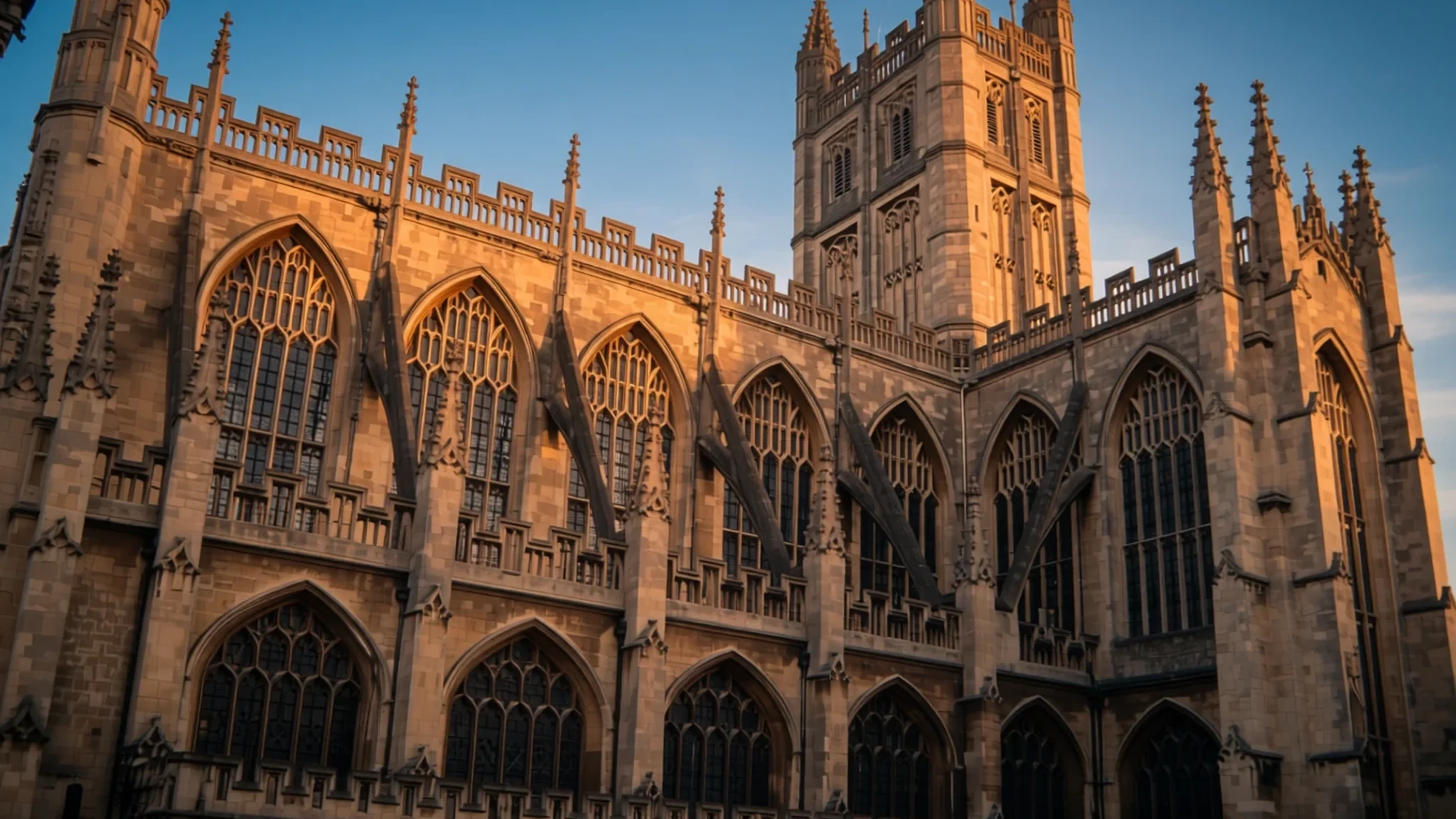
Bath is a Georgian spa city in a river valley, built around Roman baths you can still walk beside.
The place
Bath sits in a narrow valley cut by the River Avon, about 25 metres above sea level, in the south-west of England. The city has roughly 94,000 residents, which makes it small enough to cross on foot in an afternoon yet large enough to feel like a proper city once the shopping streets near the centre come into view. Almost everything is built from honey-coloured limestone, the local Bath stone, so the terraces and crescents glow gold in sunshine and turn grey in drizzle.
The city's identity comes from its water. Warm springs rise here, and the Roman baths sit over the main spring, a short walk from Bath Abbey. Around them, streets climb the valley sides in carefully planned sweeps of Georgian houses, which is why many visitors spend as much time looking up at facades as at shop windows.
The centre is compact, but the hills are steep, so sturdy shoes matter more than a map. Buses and taxis help for the outer districts. Crowds gather in the core from late morning, especially around the baths and the abbey, and the narrow pavements fill quickly in warmer months. Accommodation is not cheap, so many people come for a day from Bristol or London, though an overnight stay makes it possible to see the Royal Crescent and Pulteney Bridge in early light before the coaches arrive.
Its story
Bath's recorded past begins well before the Romans arrived, with people using the hills above the valley long before any town existed. Iron Age communities built a hill fort on Solsbury Hill, overlooking the site of the future city, and earlier groups raised burial mounds on the downs nearby. The hot spring on the valley floor seems to have drawn attention from the start.
The spring's importance is clearest from what it has yielded. Archaeologists believe the site was treated as a shrine and dedicated to Sulis, a water deity whom the Romans later linked with Minerva. Her name survived the conquest and appears in the Roman town's name, Aquae Sulis, meaning roughly "the waters of Sulis". Visitors left written pleas on thin sheets of metal, many of them Latin curse tablets aimed at personal enemies, and excavators have recovered these from the sacred water.
Building followed. A temple went up in the decades around the middle of the first century, and over the next few hundred years a bathing complex grew around it. The builders faced soft mud, so they drove oak piles into it to carry the weight, then enclosed the spring in an irregular stone chamber lined with lead. Much of that Roman work survives beneath the modern streets, and it still explains why the baths form the city's centre.
Century after century, the waters kept their reputation. Bath Abbey was founded in the seventh century and became a religious centre, and in later centuries the springs were praised for healing properties. The eighteenth-century spa boom, which the Georgian years brought to a peak, turned the valley into a fashionable resort. Architects, most notably John Wood, laid out streets and crescents in pale local stone, and the Assembly Rooms became the stage for a social life that a master of ceremonies, Beau Nash, ran for decades. Jane Austen later lived in the city in the early nineteenth century, and her novels reflect its polished, sometimes anxious, social world.
What to see
- The Roman Baths — City centre, beside Bath Abbey
The Roman Baths are the sight most visitors come for: a set of bathing pools and rooms built over the hot spring that gave the city its name. Much of the stonework dates from the Roman period, and the baths were rediscovered in the 18th century, helping to fuel the city's modern revival. The sacred spring can be seen within the complex. Go early or book a time slot in busy months, because the rooms fill through the afternoon.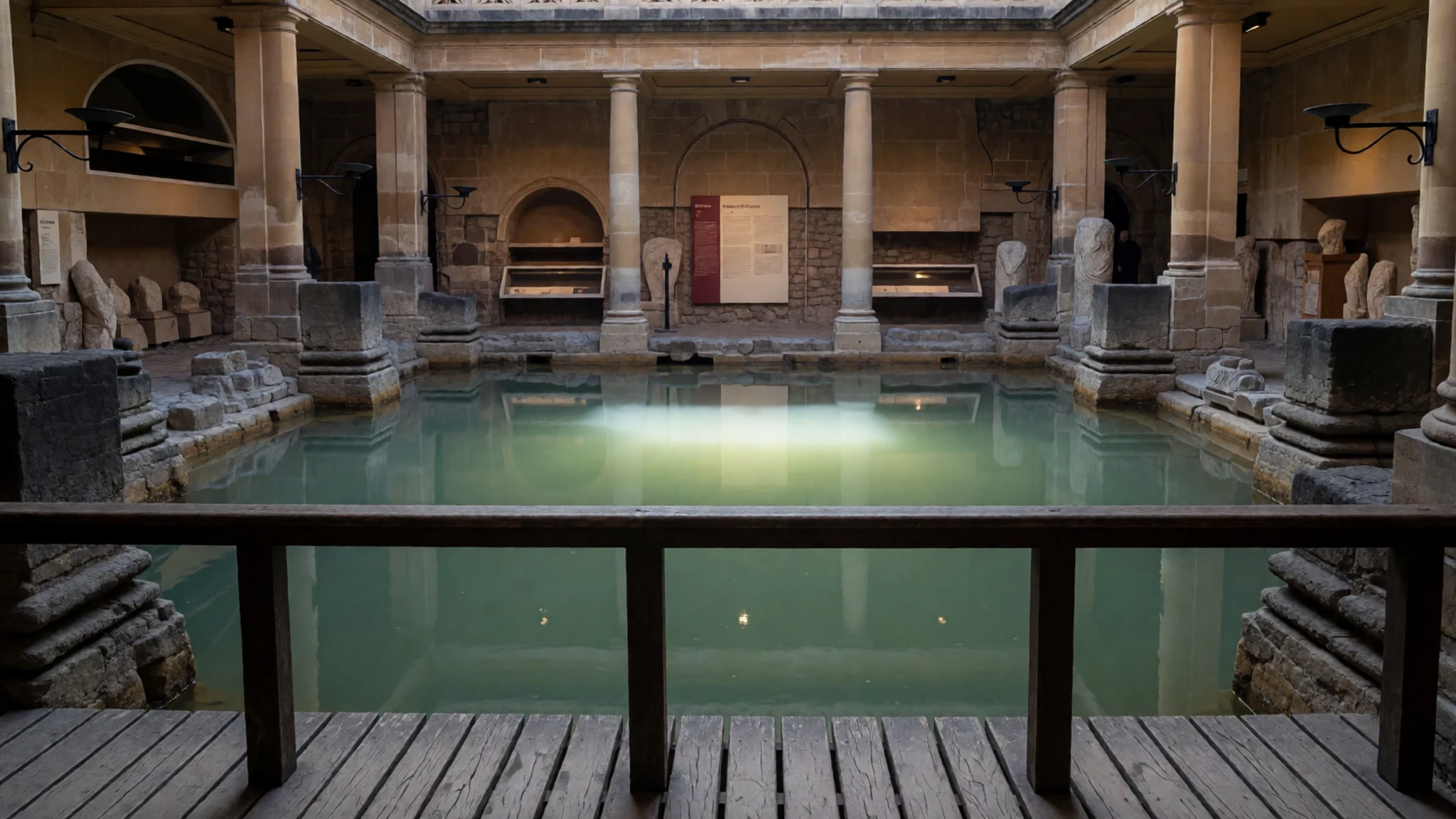
- Bath Abbey — City centre, by the Roman Baths
Bath Abbey stands next to the Roman Baths and is one of the last major Gothic churches built in England. It was raised on the ruins of an older Norman church, and its large interior feels closer to a cathedral than a parish church. Concerts and organ recitals take place through the year, and the building has a fine collection of memorials. Check the official site for opening arrangements before you go.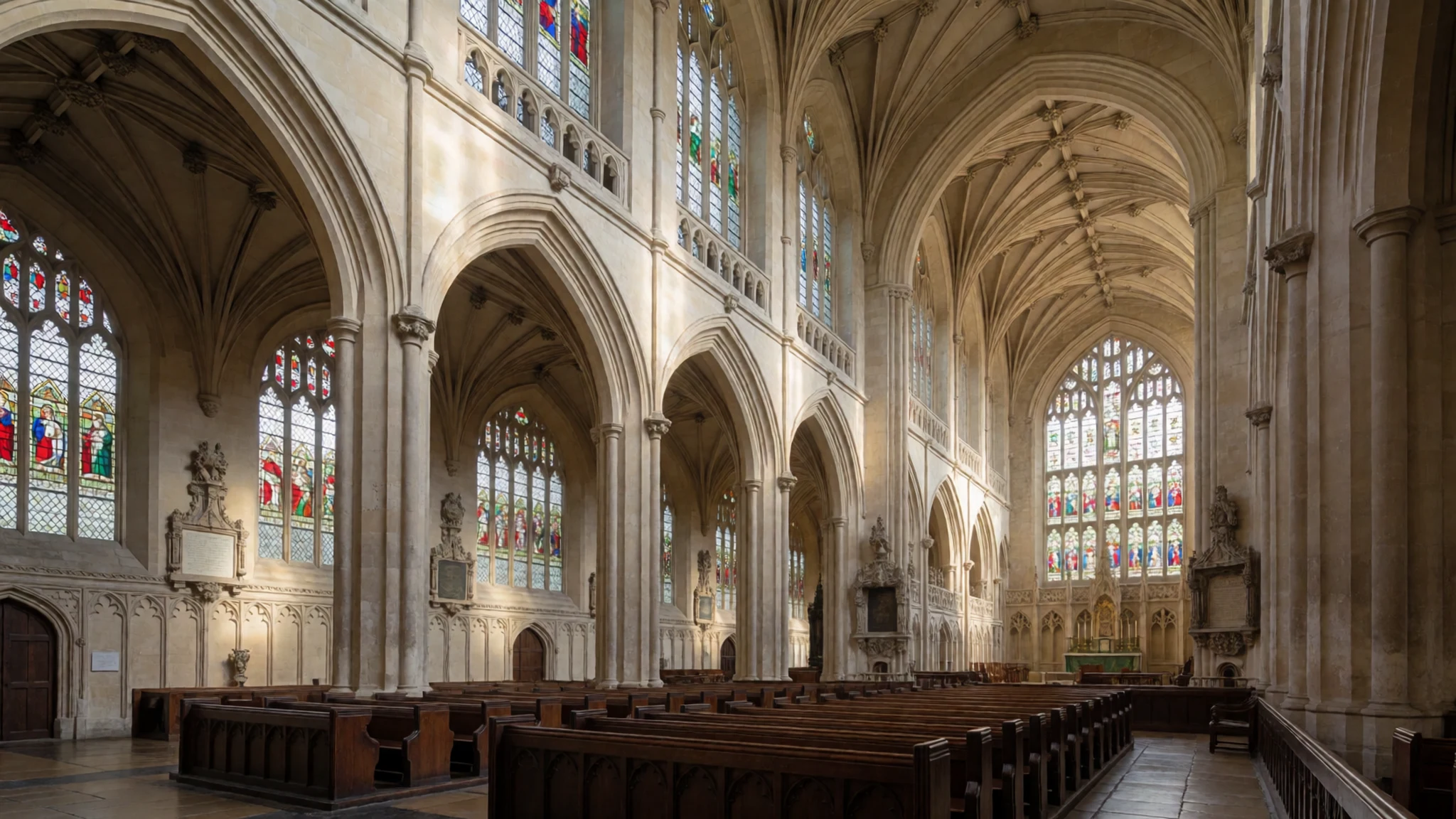
- Pulteney Bridge and Weir — River Avon, east of the centre
Pulteney Bridge was designed by Robert Adam and completed in 1773. It is one of a handful of bridges in the world with shops along its whole span, so you cross a street of small shops rather than a plain roadway. Below it, Pulteney Weir spills the river in a broad sheet. The view from the riverbank path is at its best in the late afternoon.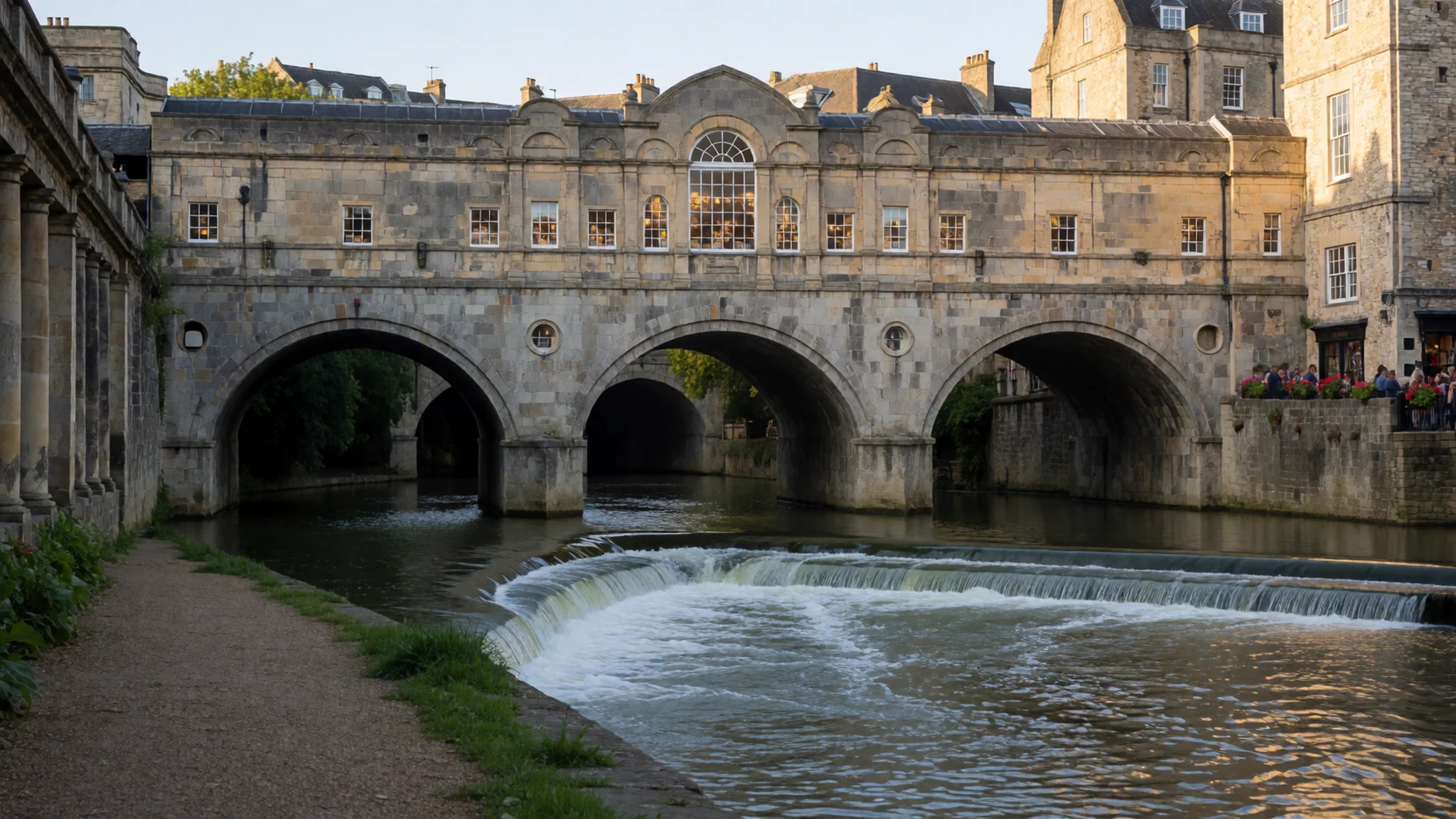
- The Royal Crescent — Lansdown area, north-west of the centre
The Royal Crescent is a sweeping curve of terraced houses designed by John Wood and completed in 1774. Its lawn slopes down to a ha-ha, a sunken boundary that keeps the grass open to the view without a visible fence. Walk the length of the curve for the classic Georgian scene, then climb the surrounding hill for a wider view of the valley.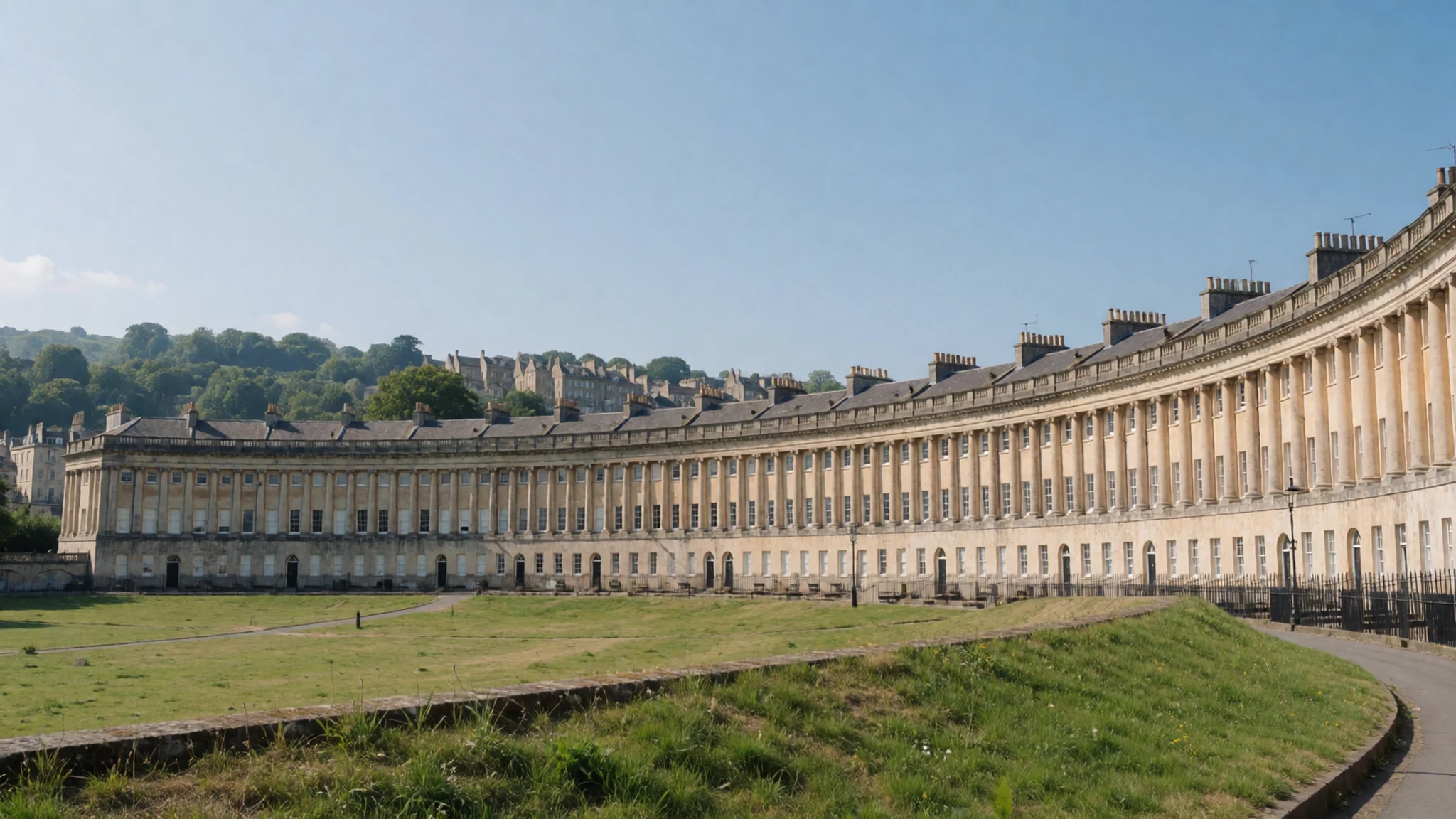
- Great Pulteney Street — East of the river, past Pulteney Bridge
Great Pulteney Street runs straight from the far end of Pulteney Bridge, a wide Georgian avenue of uniform terraces. It has been used as a film location, most famously for a 2005 adaptation of Vanity Fair. The street is quieter than the centre and makes a good place to slow down, with hotels and townhouses lining both sides.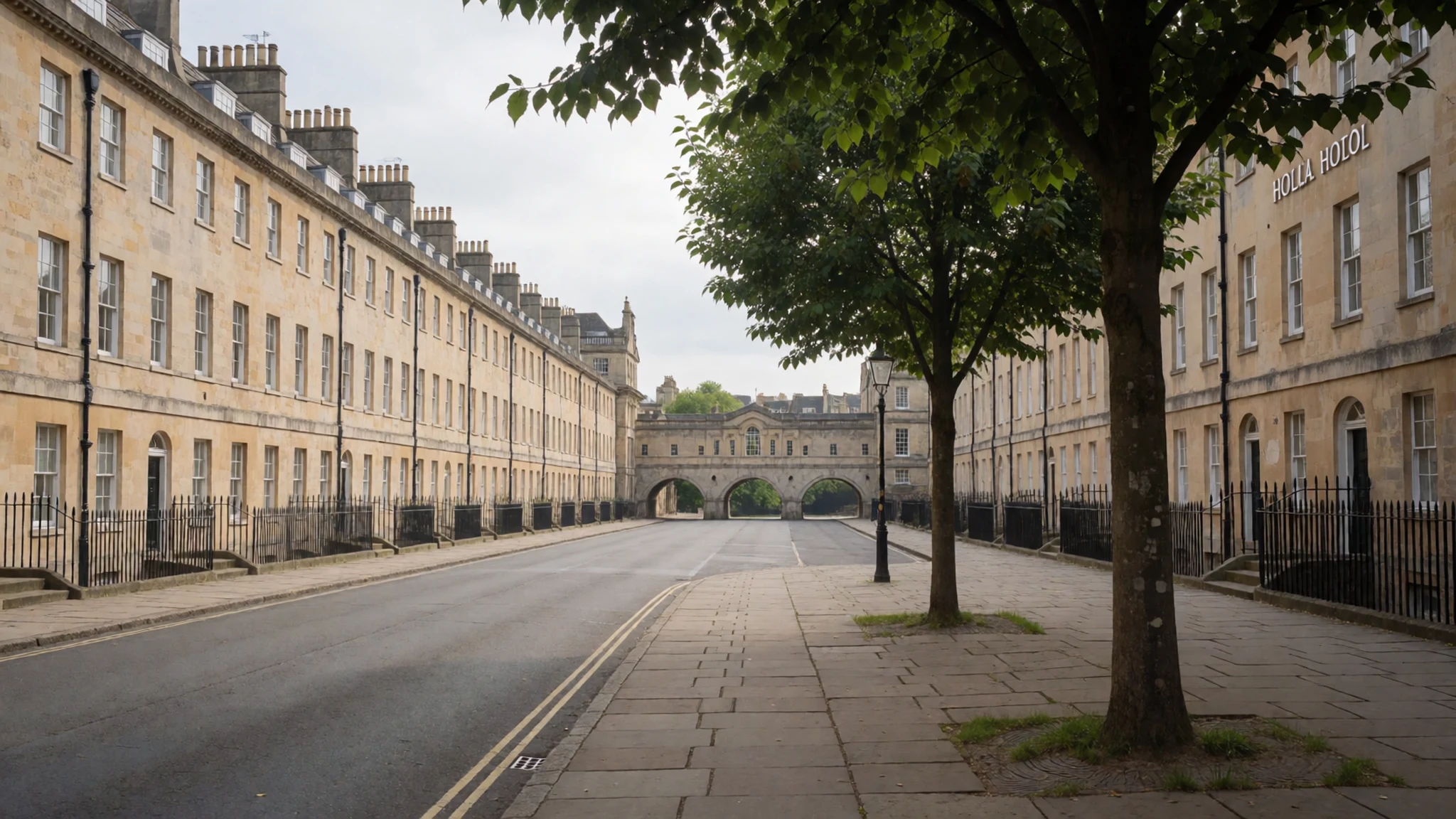
Culture
Bath's cultural life grew out of its spa past. During the Georgian period the city became a fashionable meeting point, with assembly rooms, promenades and crescents built for people who came to take the waters and to be seen doing so. That sociable habit survives in the theatre calendar. Several theatres, including the Theatre Royal and the Egg, host touring companies alongside local groups. Bath Abbey hosts concerts and organ recitals, while the Forum, an art deco venue that began life as a cinema, stages a wide range of shows. Festivals fill the year, covering music, literature, film and digital work. Keep your voice low in the Abbey, and ask before photographing other visitors close up.
What to wear
Bath's fashion story is tied to the Georgian period, when visitors arrived with trunks of silk, fine linen and lace for the assembly rooms. Men wore tailored coats and knee breeches, while women favoured full skirts and bodices in silk, satin or printed cotton, often with embroidered trim. Muslin was popular for lighter day dress. Several local costume events and museum displays recreate this look, and visitors can see examples of period clothing in the city's fashion collections.
Today people dress much as they would anywhere in England. Locals wear practical layers: a waterproof jacket, a light jumper, jeans or trousers, and comfortable shoes for steep pavements and worn stone. Smart clothes appear in the evening at theatres and concerts, but there is no formal dress code anywhere in the city.
For a visit, dress for changeable weather. A light waterproof and an extra layer cover most days, and sturdy, flat-soled shoes are essential for the hills and uneven stone. No special dress is required for the Roman Baths or the Abbey, but modest, neat clothing suits a church, and hats or sunglasses help on bright days when the sun reflects off the pale stone.
What to eat
- Sally Lunn bun — A historic tearoom in the city centre
A soft, yeasted bun that is traditionally split and toasted, often with butter. Despite the name, it is not the sweeter, currant-studded Bath bun. Look for it in the historic centre, in a tearoom near the Abbey, and eat it warm.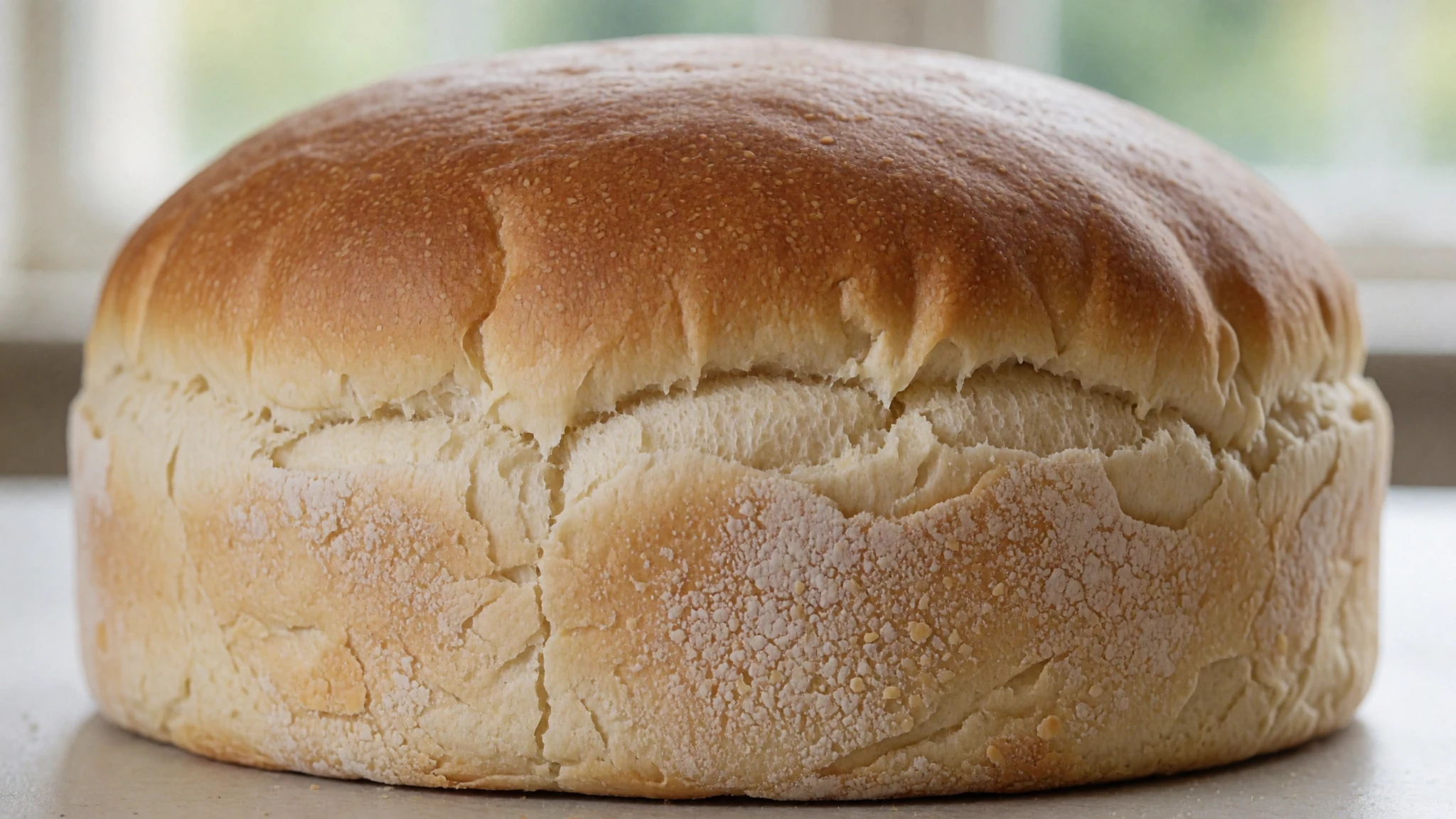
- Bath bun — Bakeries and tearooms around the city centre
A small round bun studded with sugar and currants, sweeter than its cousin. Bakeries and tearooms around the centre sell it, often in the morning when it is freshest. Buy one to take to Pulteney Bridge or the Abbey steps.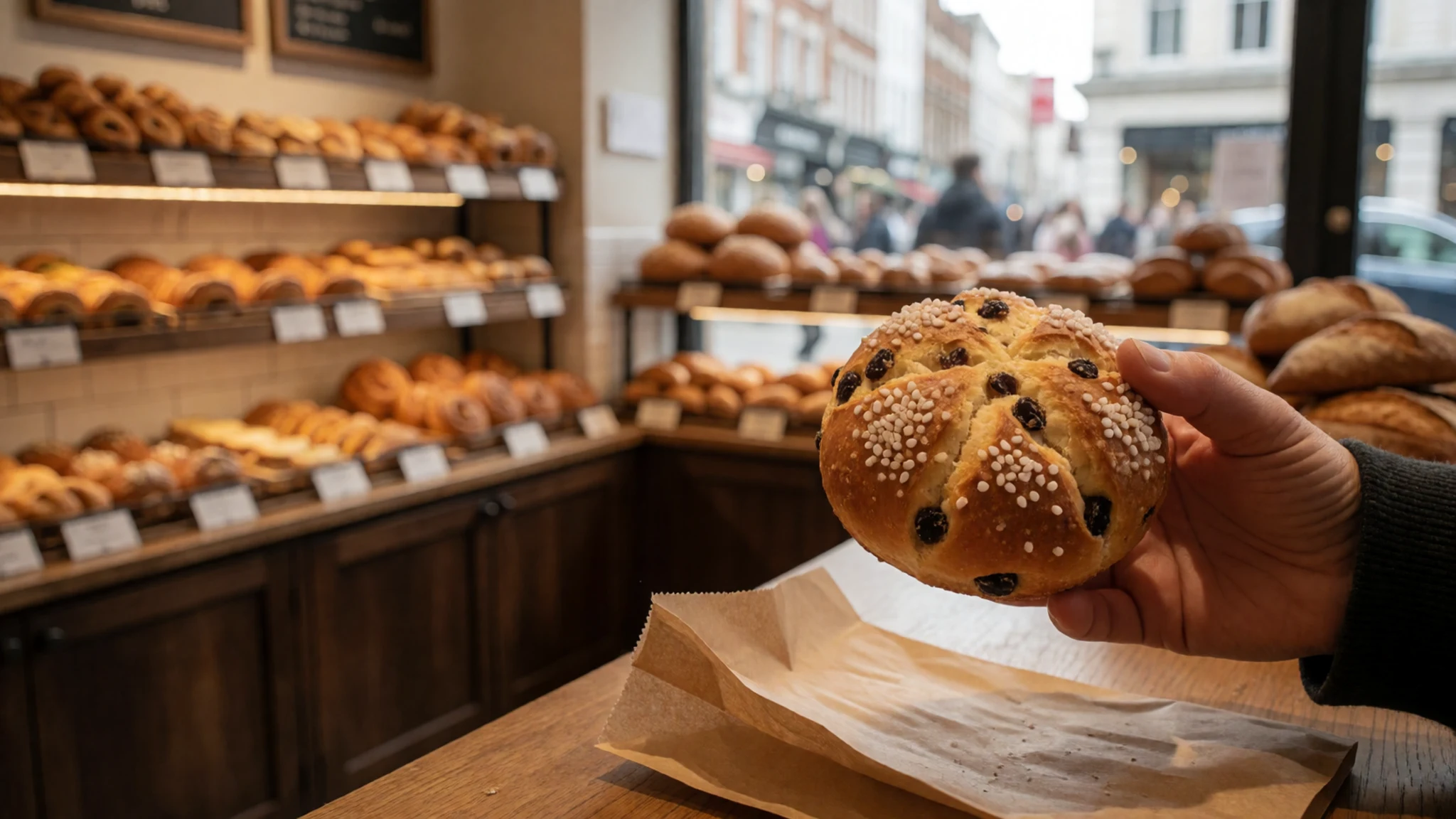
- Vegetarian burger — Takeaway counters in the city centre, eaten in Kingsmead Square
Vegetarian burgers from a takeaway counter in the city centre, a strong choice for anyone wanting a hearty lunch without meat. Take it to the benches in Kingsmead Square to eat, or find the second outlet on Walcot Street.
- Fish and chips — A long-established chip shop near the Abbey
Traditional fish and chips from a long-running shop near the Abbey, served to eat in or take away, which suits a rainy afternoon. The shop has been in business for decades, so it is a dependable choice for a simple, hot meal in a city full of cafés. - Coffee and sandwiches — A café in the streets close to the Abbey
A small, busy café with a reputation for good coffee and generous sandwiches, popular with locals as well as visitors. Seats are limited at lunchtime, so arrive early or be ready to share a table.
Plan it
Best time. April and May bring mild weather and longer days, and September and October offer softer light with fewer crowds than midsummer. Winter is quieter but cold and wet, and the peak summer weeks are the busiest in the centre.
How long. 2–3
Getting there. Bristol Airport is the nearest large airport, and a direct bus runs to Bath railway station in roughly an hour. Alternatively, take the Flyer bus to Bristol Temple Meads and a train from there. Direct trains from London also reach Bath.
Budget. mid
Tips
- Book a timed slot for the Roman Baths and check the official site for current arrangements, especially in summer.
- Start at the baths early in the morning, before the coach groups arrive.
- Wear sturdy shoes, since the centre is hilly and the pavements can be uneven.
- Carry a card and some cash, because small cafés and market stalls may not take cards.
- Walk up to the Royal Crescent in the morning light, and visit Pulteney Bridge at dusk. Check http://www.mayorofbath.co.uk/ for events and closures.
Etiquette
- Queue politely at the baths and the Abbey, and keep to the marked routes.
- Ask before photographing people, especially performers and staff.
- Keep noise down in the Abbey during services.
Nearby
Sources
- Wikidata Q22889 (CC0)
- Wikipedia: Bath, Somerset (rev 1381302252) (CC BY-SA 4.0)
- Wikivoyage: Bath (rev 5401894) (CC BY-SA 4.0)
- City of Bath, Raboe001 (CC BY 3.0)
- The Roman Baths, Diliff (CC BY 3.0)
- The Sir William Pulteney at Pulteney Weir, Anthony Parkes (CC BY-SA 2.0)
- Bath Abbey 2024, Julian Herzog (CC BY 4.0)
- Royal Crescent panorama, Tristan Surtel (CC BY-SA 4.0)
- Roman Baths photochrom c1900 (Public domain)
- Bath Abbey exterior, Diliff (CC BY 3.0)
- Prospect of Bath in 1673 (Public domain)


