Bristol
Bristol, United Kingdom
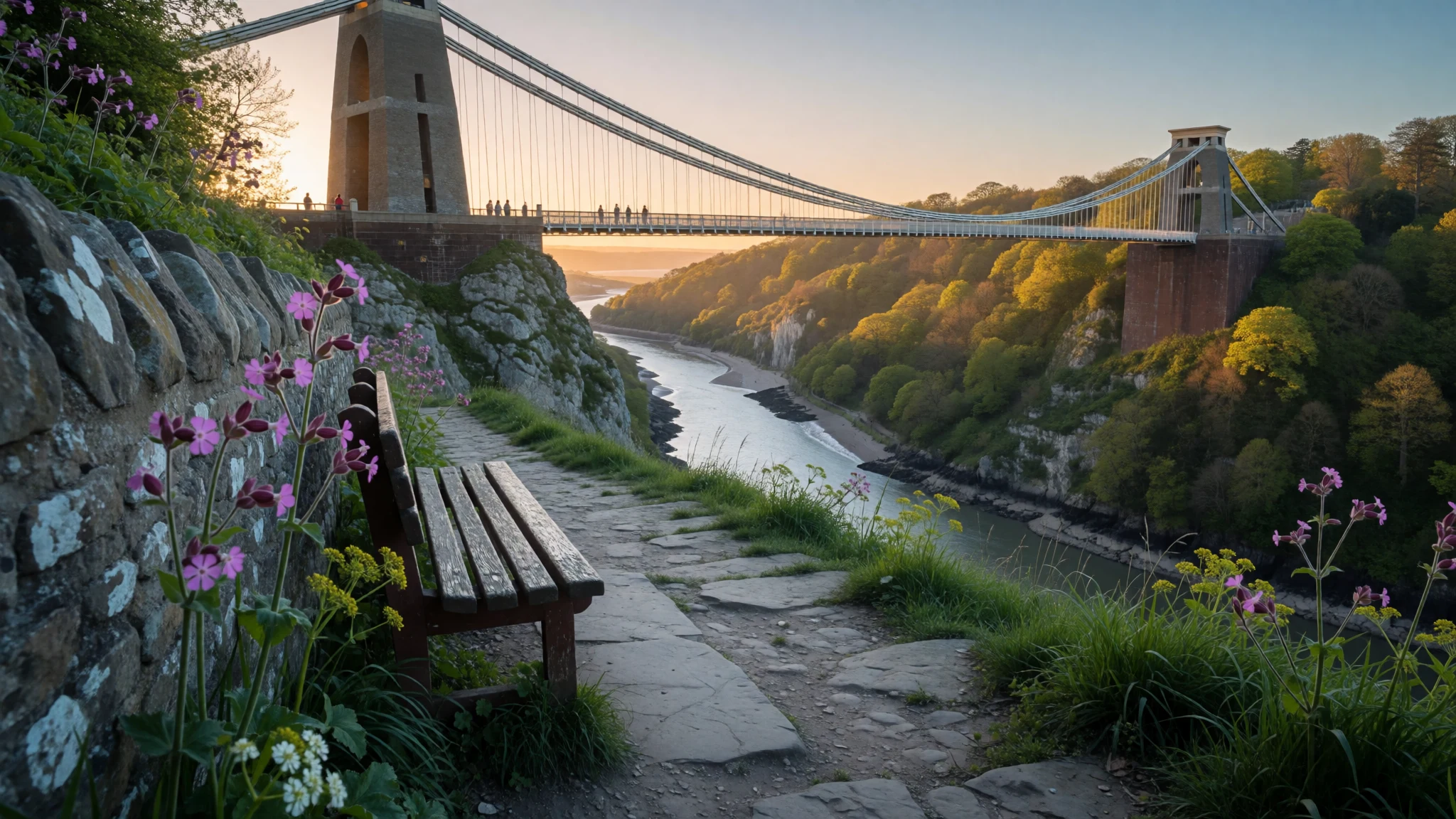
Bristol is a hilly, creative harbour city where old docks, a gorge bridge and street art sit within a short walk of each other.
The place
Bristol is a port city in South West England, set on the River Avon about 11 m above sea level, with Gloucestershire to the north, Somerset to the south and a short coastline on the Bristol Channel to the west. Nearly half a million people live in the city itself, and the built-up area spills well past the boundary into South Gloucestershire, Bath and North East Somerset, and North Somerset, so the line between city and suburb is hard to find on the ground. The Frome meets the Avon near the centre, and the old tidal harbour has been turned into a long ribbon of still water, the Floating Harbour, which still shapes how people move around: footbridges, small ferries, converted warehouses and museums where cranes once stood. West of the centre the land rises to Clifton and the Avon Gorge, where the river cuts through limestone and elegant terraces sit along the rim. Those hills matter. Bristol is not flat, and the walk from the waterside up to Clifton is steep enough to feel in the legs. It is a university city, a theatre and film city, and a working one, with aerospace still part of the local economy. Locally it is run as a unitary authority by Bristol City Council, which works with its neighbours through the West of England Combined Authority. The weather is mild and often damp, so the city suits wandering with a waterproof in the bag rather than a rigid itinerary.
Its story
Bristol's story starts long before any charter. Flint tools found in the Shirehampton and St Annes areas point to Neanderthals living here in the Middle Palaeolithic, and Iron Age hill forts guard the Avon Gorge at Leigh Woods and Clifton Down. The Romans ran a small port at what is now Sea Mills, linked by road to Bath and Gloucester, and scattered villas dotted the surrounding land. By the early eleventh century Bristol was a trading centre with its own mint, striking silver pennies that carried the town's name. The settlement was fortified, and in the following decades it gained one of the strongest castles in southern England. It also became a place of exile: the Irish king Diarmait Mac Murchada took refuge here after being overthrown. Bristol received a royal charter in 1155, and for a time it was split between Gloucestershire and Somerset before becoming a county in its own right. For several centuries it ranked just behind London among English cities for tax receipts, and its ships set out on early voyages across the Atlantic. That wealth was bound up with Atlantic trade, including the trade in enslaved people, and the city still argues over how to remember it, in street names, statues and museum displays. Walking the harbour today means walking through that mixed inheritance.
What to see
- Clifton Suspension Bridge — Clifton and the Avon Gorge
Clifton Suspension Bridge spans the Avon Gorge between Clifton and Leigh Woods, with the observatory on the hill beside it. The best views are from the paths on either side, especially at dusk. Wind and drizzle are common on the deck, so bring a layer.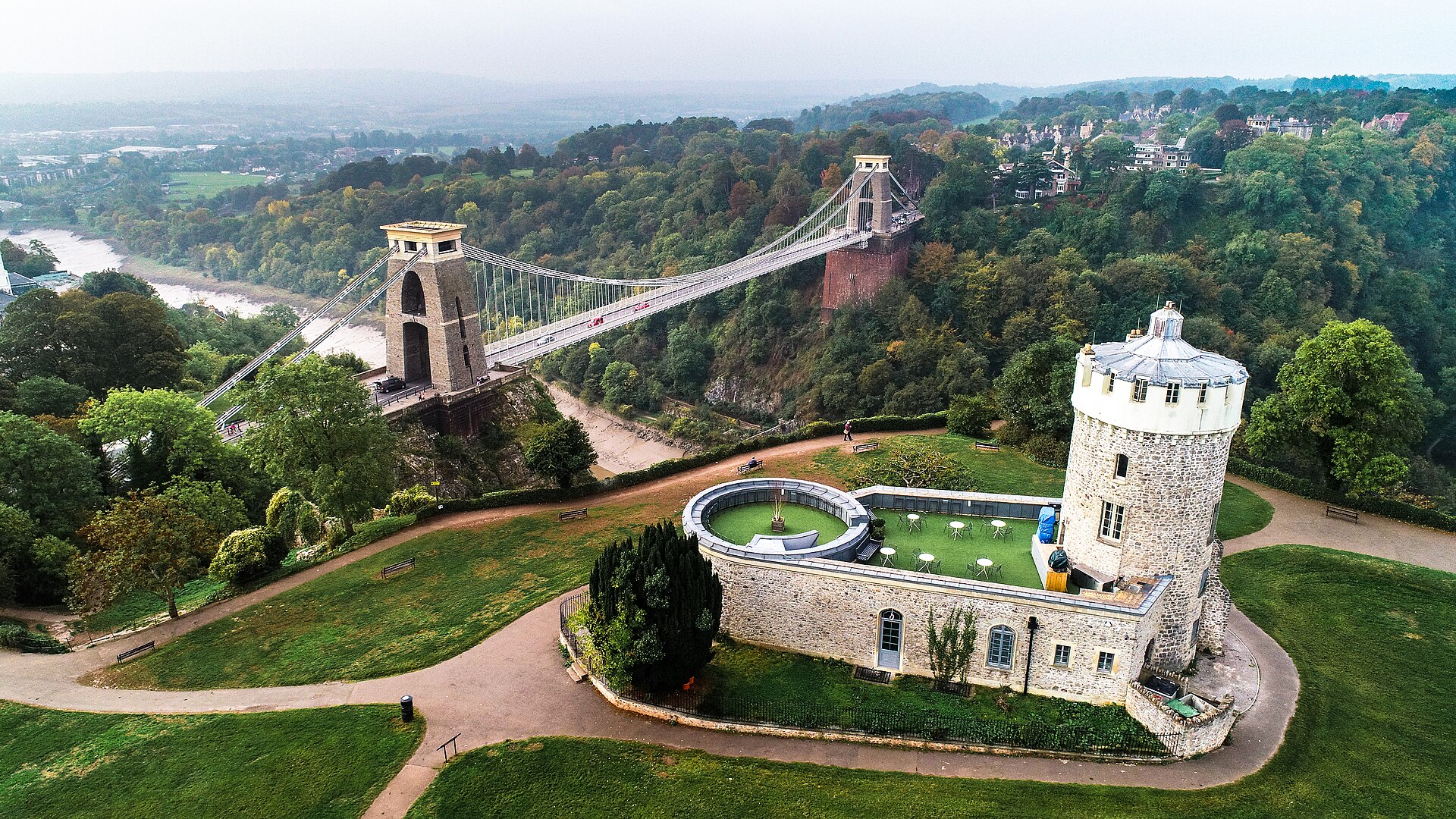
- Bristol Cathedral — College Green, city centre
Bristol Cathedral stands on College Green, close to the harbour and the main shopping streets. Its west front is a good starting point for the old centre, and the interior rewards a quiet half hour. Services and events can close parts of the building, so check the cathedral's own website before going.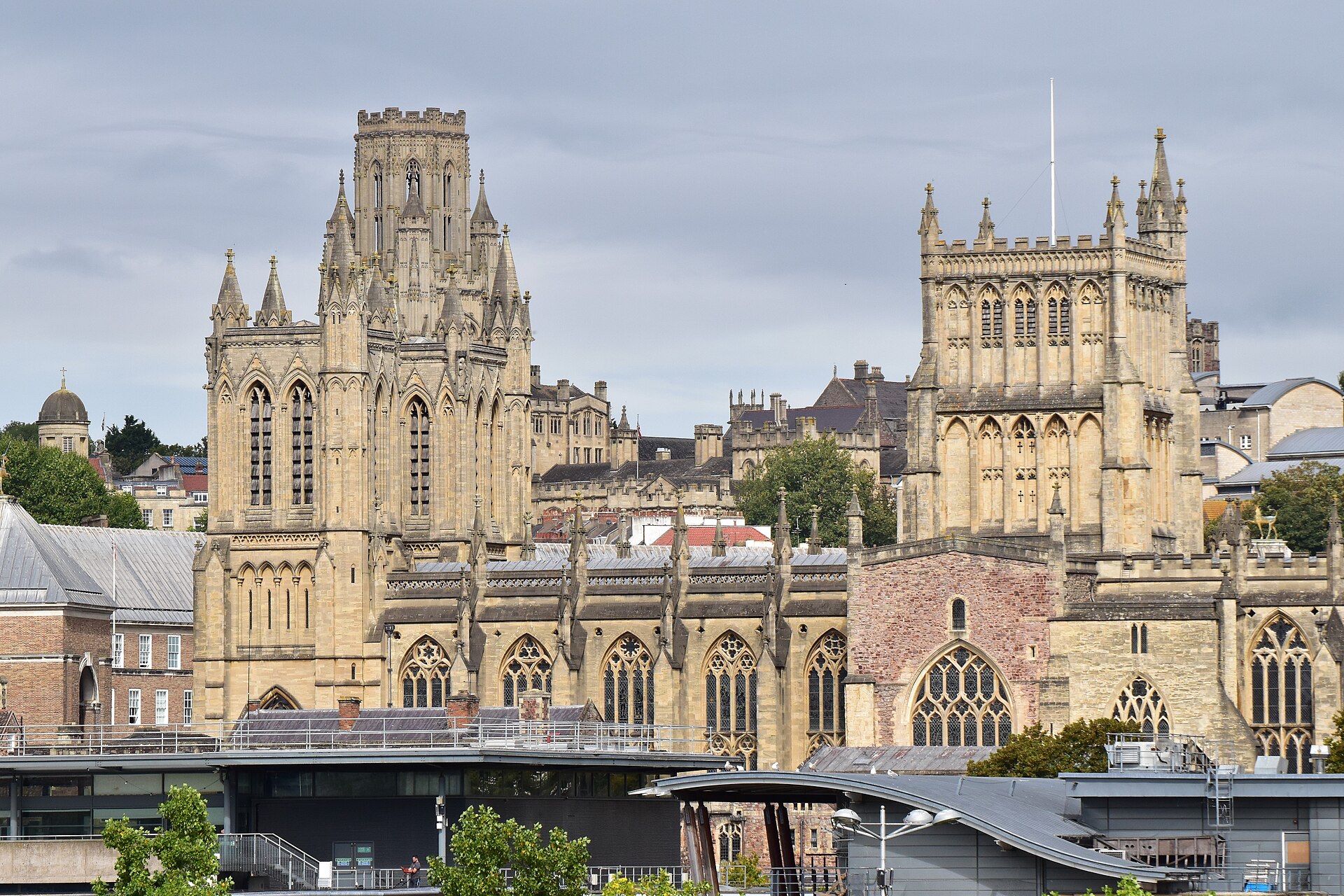
- Street art and Banksy — Stokes Croft, Park Street and around the centre
Banksy is from Bristol, and his work, along with that of many other artists, appears on walls around the city. Stokes Croft and the streets near Park Street are good for wandering. Pieces are painted over, vandalised or removed, so treat any list as a rough guide and let the walk lead. - Aerospace Bristol — Filton, north Bristol
Aerospace Bristol tells the story of the city's long flying tradition, which began with the first British biplanes made for the First World War. It sits north of the centre, so allow travel time. It suits families and anyone curious about engineering. Check the official site for opening times before setting out. - Cheese Lane Shot Tower — St Philips, near the centre
The Cheese Lane Shot Tower stands in St Philips, a neighbourhood near the centre. It is a small, odd piece of industrial history, best seen from outside as part of a wander east of the centre. - Bristol Blue Glass — Southville, south of the harbour
Bristol Blue Glass is a local craft with roots in the late eighteenth century. Cobalt oxide is added to the molten glass to give it a deep blue colour. A workshop visit shows the glassblowing at close range, and it is a good place to buy a small, easily packed souvenir.
Culture
Bristol has a lively arts scene, with new venues and digital production companies working alongside older companies based in historic buildings around the city. Theatre is a strong thread. Theatre companies perform in both new venues and historic buildings around the city. Music, film and animation all have local followings, and the harbourside and Stokes Croft are where much of the energy shows up. Street art is part of civic identity here rather than a fringe habit, and locals tend to have strong opinions about which pieces deserve to stay. Bristol is also a city that talks openly about its past, including its role in Atlantic trade, and museums and public debates reflect that. Day to day, the mood is informal, outdoorsy and a little irreverent. People cycle, picnic on the Downs and drink outside whenever the weather allows. Pubs, cafés and markets are the usual meeting places, and conversation with strangers is easy and usually good-humoured. In pubs, order at the bar, queue in a loose line and wait your turn, and when photographing street art or people at work, keep clear of doorways and pavements so that others can pass.
What to wear
Bristol has no single traditional costume, and visitors should not expect to see regional dress on the street. What the city does have is a practical, mixed wardrobe shaped by weather, hills and a large student and creative population. People wear layers, waterproof jackets, trainers or sturdy boots, and denim, with plenty of vintage and second-hand pieces from independent shops. Cycling clothes are common, as are wool jumpers and knitwear in cooler months. Smarter outfits appear for the theatre, weddings and the cathedral's formal services, but nothing is rigidly dressy, and a clean, neat look is enough almost everywhere. Style leans individual rather than polished, and bright colours, patterned shirts and dyed hair are unremarkable. For visitors, comfort comes first. The climate is mild but changeable, so pack a light waterproof, an extra layer and an umbrella in any season, and expect a warm day to turn cool by the water in the evening. Shoes matter more than clothes: the hills of Clifton, the cobbles near the old docks and long harbourside walks all favour flat, grippy soles. In churches and the cathedral, no special dress code applies, but covering bare shoulders and removing hats is a courteous habit, particularly during a service.
What to eat
- Fish and chips — a traditional fish bar in the centre or near the harbour
Fish and chips is the dependable British takeaway, and Bristol has fish bars in the centre that serve it hot in paper. Eat it by the water if the weather allows. Gulls are bold here, so keep the packet close. - Pastéis de nata — Portuguese shops near St Nicholas Market
Pastéis de nata are small Portuguese custard tarts with a blistered top and flaky pastry. A Portuguese food shop near St Nicholas Market makes them alongside home-cooked comfort dishes, and they are good with a coffee. - Market-aisle street food — the food aisle in St Nicholas Market
The glass arcade of St Nicholas Market has a food aisle with stalls from many cuisines, including Italian and Indian. It is a good place to share plates, try something unfamiliar and eat quickly on a rainy day. - Lebanese mezze — Lebanese restaurants in the city centre
Lebanese mezze is a spread of small dishes such as hummus, grilled vegetables and flatbread, served in generous portions at Lebanese restaurants in the city centre. It works well for groups and for vegetarians, and it is a good way to see the city's multicultural side. - West Country cider — a traditional pub or harbourside bar
Cider is the local drink of the wider West Country, and many Bristol pubs pour it on draught, from dry to sweet. Ask the bar staff for a taste before choosing. It is stronger than it looks, so pace yourself on hilly walks.
Plan it
Best time. May and September are the most comfortable months, with highs of 24 to 28 C and long daylight; June to August run hotter. Summer weekends bring crowds and festivals, while winter is damp and short on daylight, though the museums, theatres and pubs are cosy.
How long. 2–3
Getting there. Bristol Airport is the nearest, with a bus service into the city centre and Temple Meads station; check the operator's website for current times and fares. Bristol Temple Meads is the main rail station, with direct services from London and many other cities, and most central sights are a walk or short bus ride from there.
Budget. mid
Tips
- Book trains and popular events ahead, especially for weekends and festival dates
- Wear flat, grippy shoes for the hills and cobbles, and carry a light waterproof in any season
- Cards are widely accepted, but carry a little cash for small market stalls
- Start at Clifton in the morning for the bridge views, then walk down to the harbour
- Check opening times on each attraction's official website, as hours change by season
Etiquette
- Queue politely and order at the bar in pubs rather than waiting at a table
- Keep clear of pavements and doorways when photographing street art
- Be quiet during services if you visit the cathedral
Nearby
Sources
- Wikidata Q23154 (CC0)
- Wikipedia — Bristol (rev 1384357805) (CC BY-SA 4.0)
- Wikivoyage — Bristol (rev 5395940) (CC BY-SA 4.0)
- Photo: Clifton Suspension Bridge — Chris Lathom-Sharp (CC BY-SA 4.0)
- Photo: Harbour View, Bristol — Anthony O'Neil (CC BY-SA 2.0)
- Photo: Bristol Cathedral from the M-Shed — Bärbel Miemietz (CC BY-SA 4.0)
- Photo: Victoria Rooms in Bristol — Philip Halling (CC BY-SA 2.0)
- Photo: The Centre, Bristol — RedSquirrel (CC BY-SA 4.0)
- Photo: Bristol University — Colin Smith (CC BY-SA 2.0)
- Photo: City Hall, Bristol — IIya Kuzhekin (CC BY 3.0)
- Photo: Bristol Cathedral west front — Adrian Pingstone (Public domain)


