Niagara Falls
Niagara Falls, United States
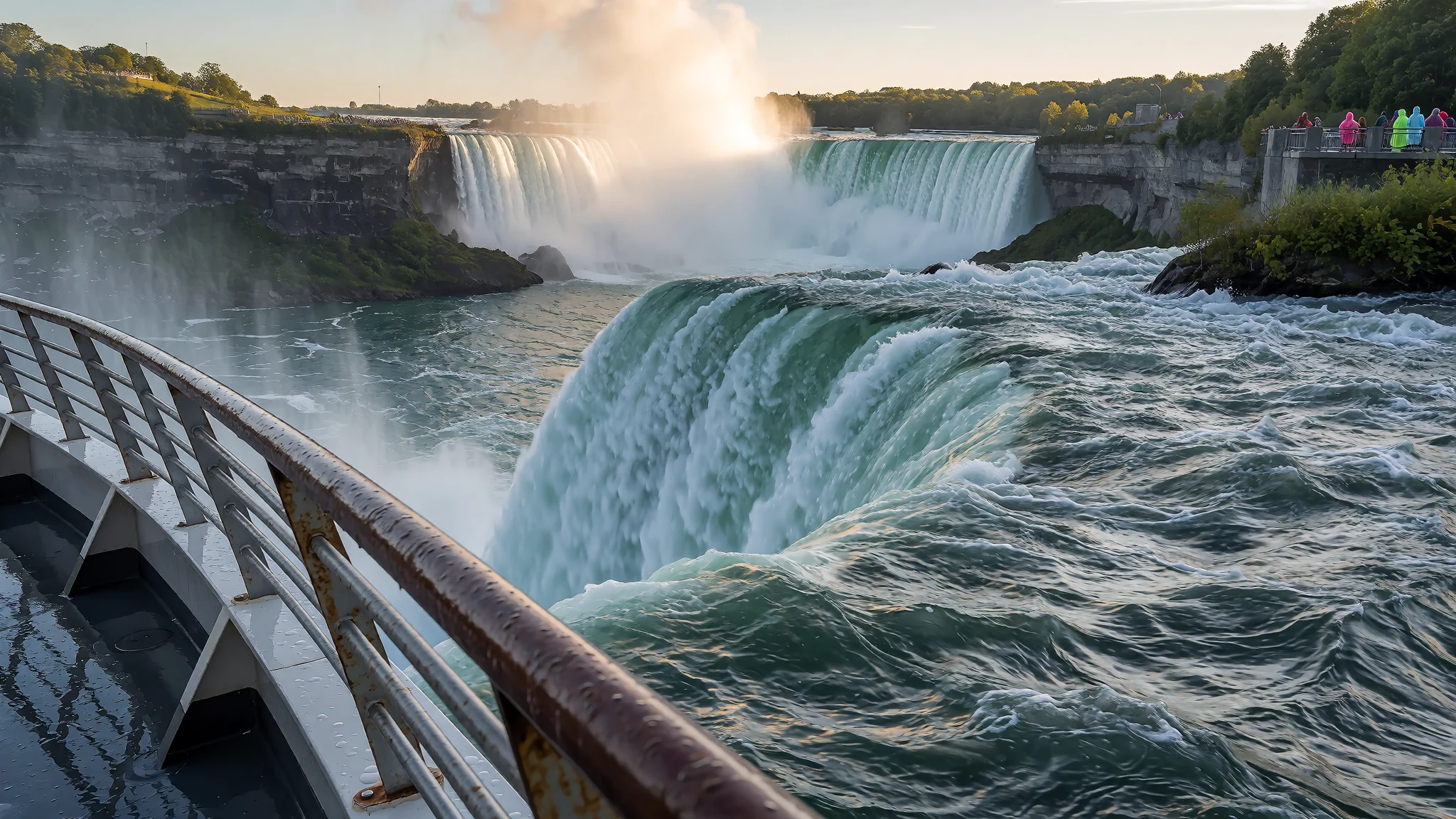
Witness the immense power and roaring mist of North America's most famous waterfalls, straddling the border between two nations.
The place
Niagara Falls comprises a trio of magnificent waterfalls situated at the southern terminus of the deep Niagara Gorge, forming a natural international boundary between the Canadian province of Ontario and the United States state of New York. The largest cataract is the sweeping Horseshoe Falls, which bridges both countries and is frequently referred to as the Canadian Falls. Positioned entirely within the American boundary are the smaller American Falls and the slender Bridal Veil Falls. Fed by the relentless flow of the Niagara River as it drains the waters of Lake Erie onward into Lake Ontario, the collective system yields an exceptional volume of moving water. This massive hydraulic energy has made the region both a celebrated scenic wonder and an important centre for hydroelectric generation.
The geological origins of Niagara Falls trace back to the end of the last ice age, when receding glacial sheets left behind colossal volumes of meltwater that carved deep paths through the rugged terrain of the Niagara Escarpment. Today, twin cities sharing the name of Niagara Falls anchor the banks on either side of the river, linked by bridges that overlook the churning white rapids. Visitors arrive in their millions each year to experience the frequent veils of mist, the thunderous roar of rushing water, and the sweeping parklands that line the gorge. Whether observed from the high observation towers on the Canadian skyline or the rocky pathways of the New York state parks, the spectacle remains one of the world's most enduring natural encounters.
Its story
Niagara Falls has inspired awe and exploration for centuries, beginning with Indigenous nations who fished and traded along the gorge long before European arrival. Early French explorers documented tales of the great cataracts in the seventeenth century, with Belgian missionary Father Louis Hennepin publishing the first formal European account following his travels in the region. Naturalists, surveyors, and landscape artists soon followed, capturing the raw scale of the rushing waters in journals and watercolours that sparked an international fascination.
By the nineteenth century, Niagara Falls had evolved into a premier destination for leisure travel and honeymooners seeking romance against a backdrop of natural drama. Prominent figures including politicians, writers, and abolitionists journeyed to the gorge to witness the phenomenon firsthand. Frederick Douglass stood before the rushing water and wrote of how its immense power left him entirely without words. Because of its unique geographic position directly on the international frontier, the region also served as a vital station on the Underground Railroad, offering freedom-seekers a path across the border to safety.
What to see
- Horseshoe Falls — Canadian Side
As the largest and most powerful of the three cataracts, Horseshoe Falls draws the eye with its sweeping curve and deep emerald green waters. View it from the Canadian park promenade where the rising spray creates constant rainbows on sunny afternoons.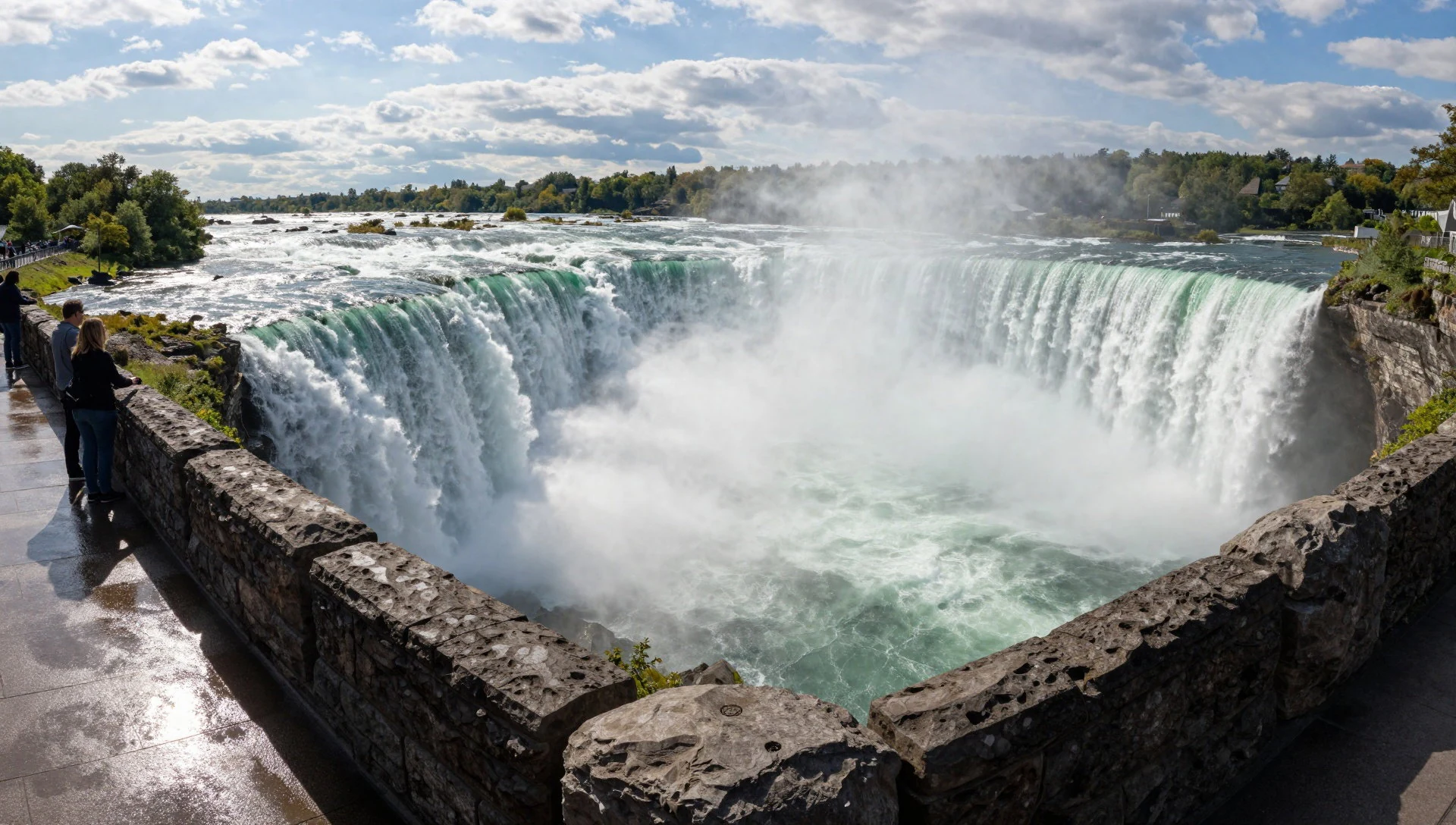
- American Falls and Bridal Veil Falls — Prospect Point, New York Side
These adjacent waterfalls on the United States side offer a straight-on perspective of tumbling water crashing over massive boulder fields below. Walk right up to the edge of the gorge via the timber walkways and observation structures.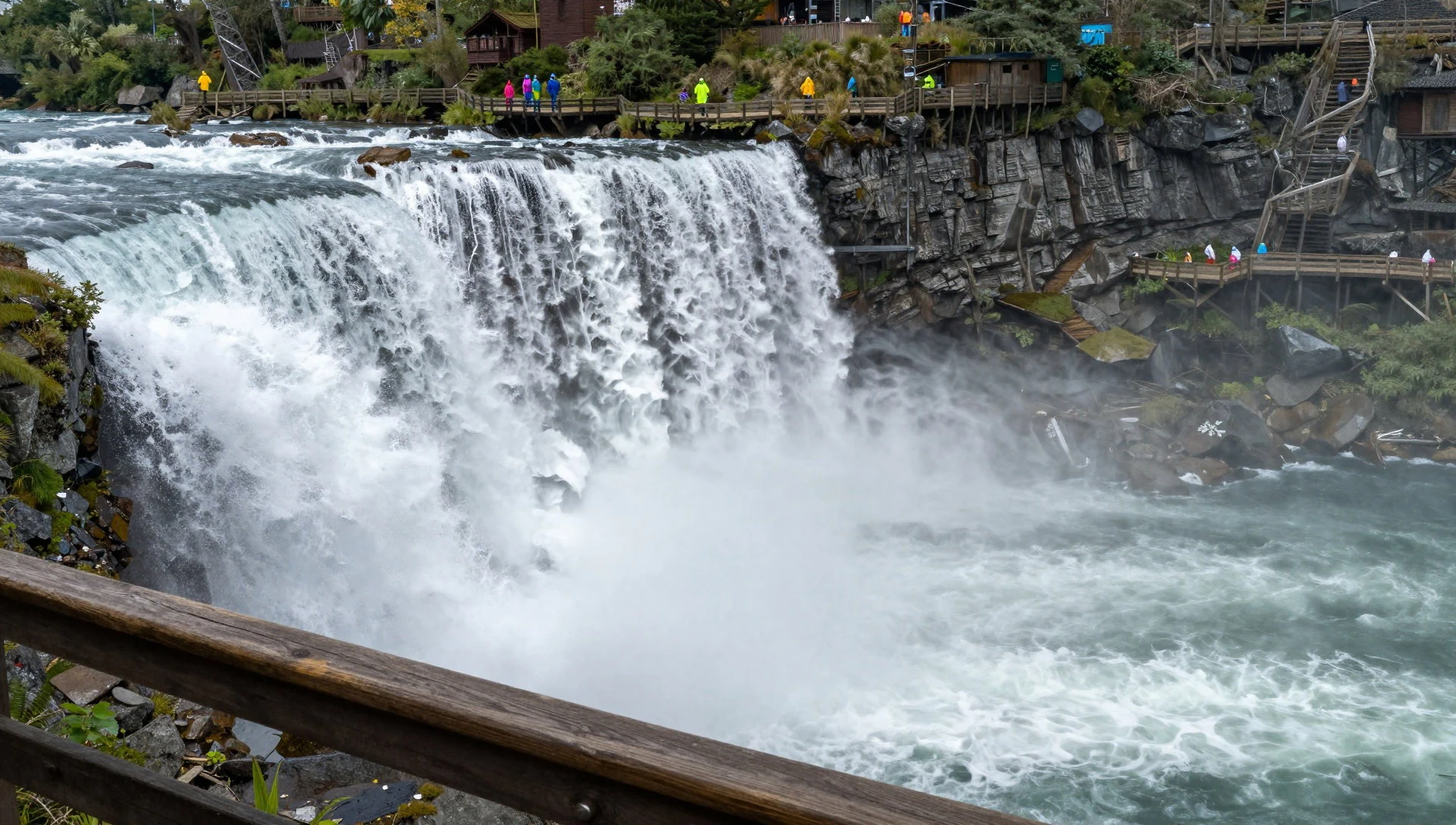
- Maid of the Mist Boat Tour — River level docks, US and Canadian sides
Operating continuously for generations, these iconic excursion vessels carry passengers straight into the churning basin at the foot of the roaring falls. Waterproof ponchos are essential as the boats approach the inner bowl of the cascade.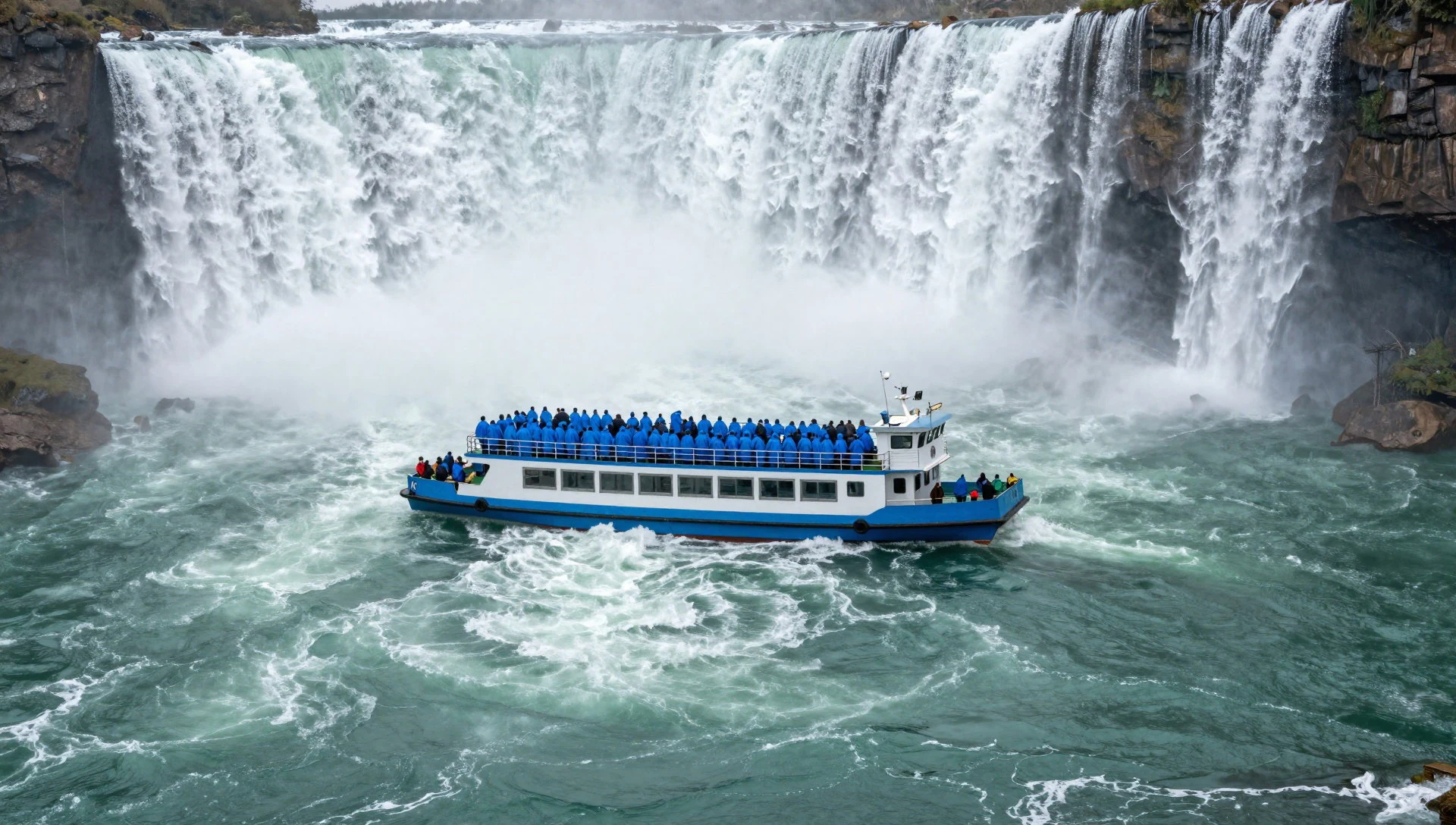
- Goat Island — Between American and Horseshoe Falls
Positioned squarely in the middle of the river within New York state, this wooded island separates the American and Horseshoe falls. Peaceful walking trails wind through the trees and lead right to the brink of the rushing water.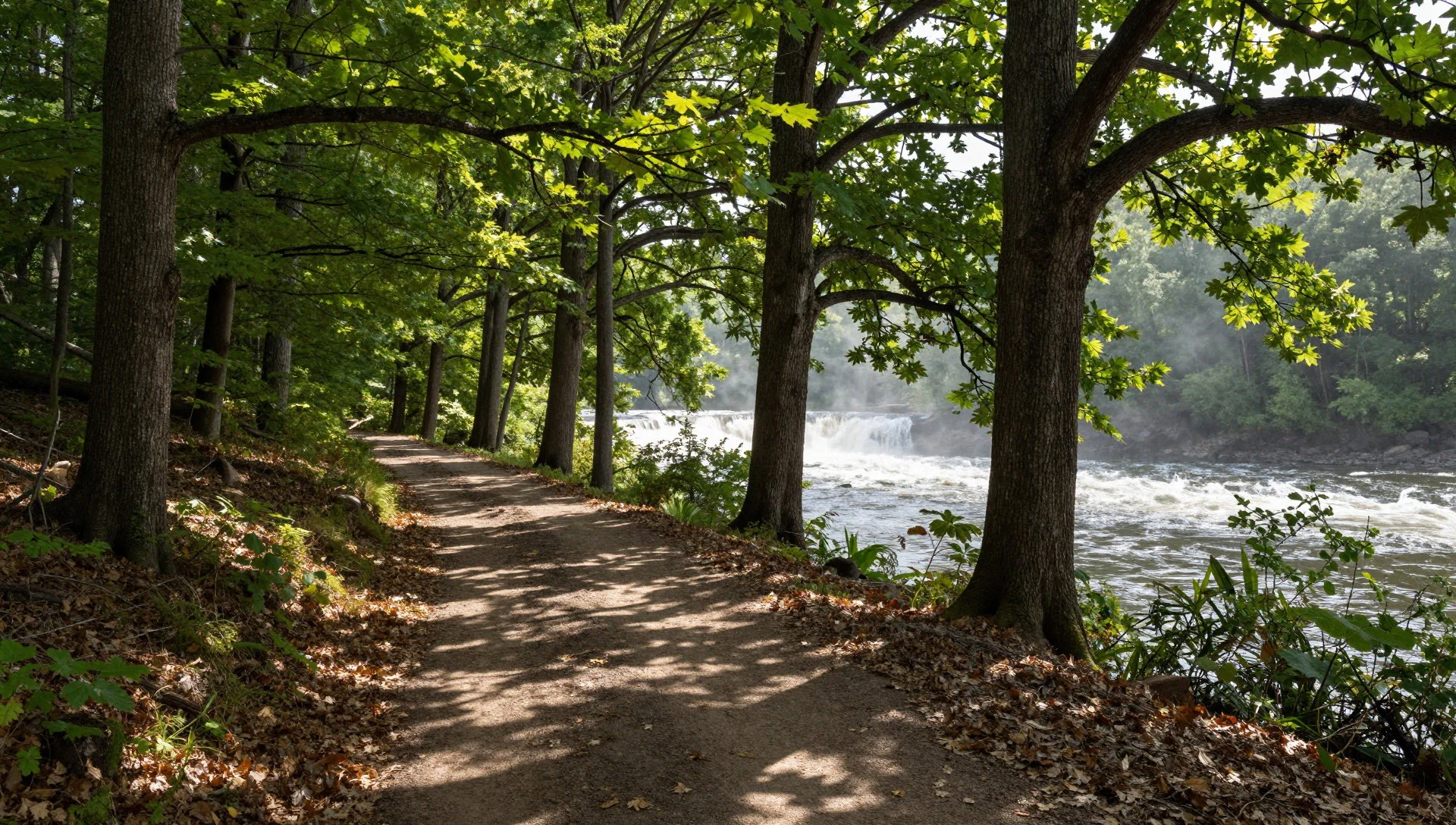
- Skylon Tower — Canadian Side
Rising high above the Canadian skyline, this observation tower provides an unmatched birds-eye perspective looking straight down across the entire amphitheatre of waterfalls, the winding gorge, and the distant lake shores.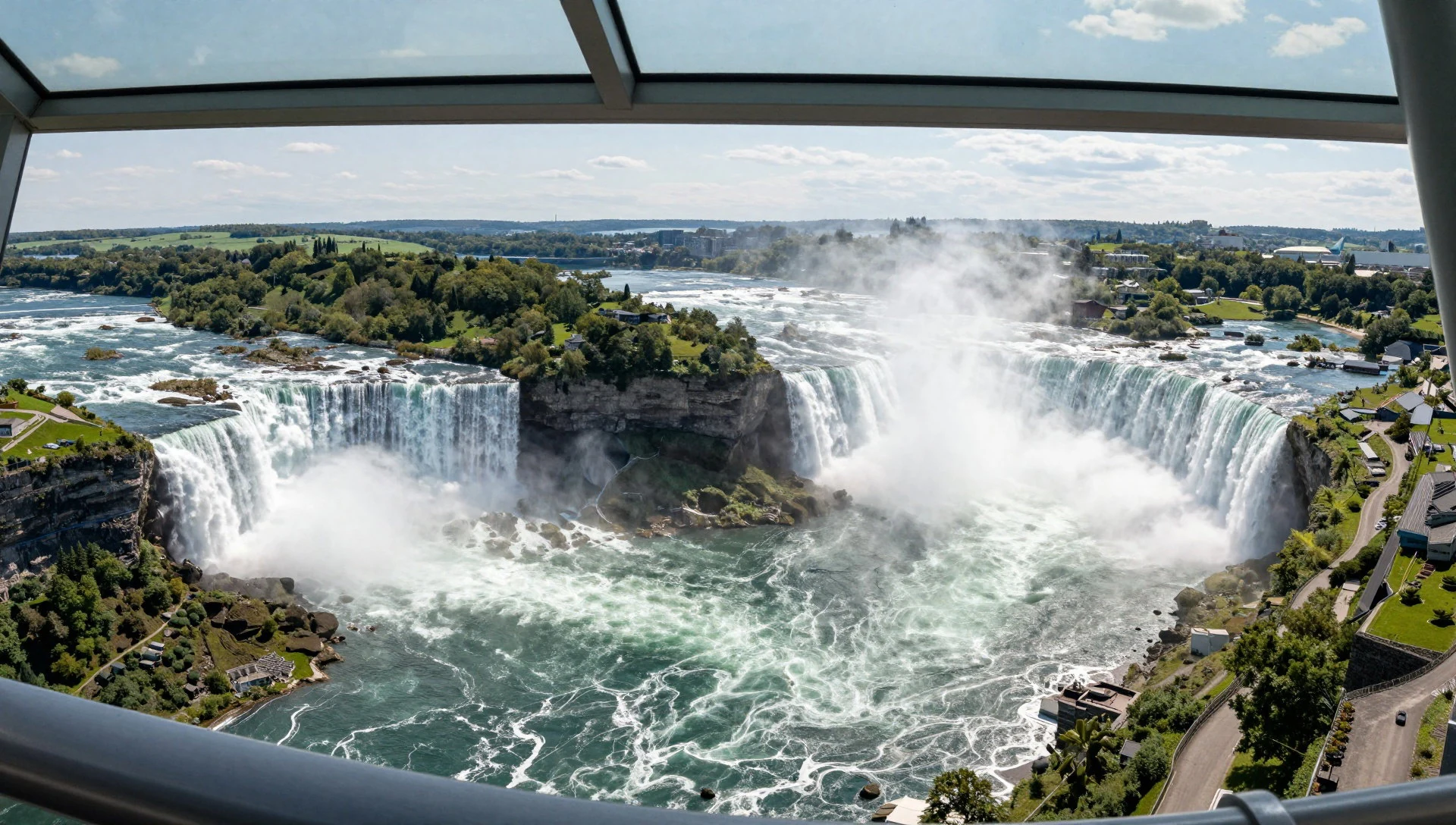
Culture
The cultural fabric of the Niagara region is deeply shaped by its shared borderland heritage, blending Canadian and American influences alongside the enduring presence of Indigenous First Nations and Native American communities whose ancestors originally cared for these lands. Local traditions celebrate the shared stewardship of a natural wonder that bridges two distinct nations, reflected in cross-border cooperation, park preservation efforts, and regional festivals. Visitors will encounter a friendly, hospitality-focused atmosphere driven by millions of annual travellers from across the globe, where museums, historical markers, and cultural centres interpret the complex history of the gorge, industrial development, and the Underground Railroad. When visiting sacred Indigenous sites or cultural markers within the parklands, always treat the area with quiet respect and heed local guidance regarding photography.
What to wear
Everyday attire around Niagara Falls is practical, casual, and built for outdoor exploration in all weather conditions. Because the falling water throws up frequent bursts of heavy mist and wind, visitors primarily dress in comfortable layers, athletic wear, and sturdy walking shoes suitable for damp stone pathways and steep staircases. Waterproof jackets, quick-drying fabrics, and hats with brims are standard wardrobe staples for anyone planning to take boat tours or walk the gorge trails close to the spray. In the surrounding towns, restaurants and evening entertainment venues maintain a relaxed, casual standard where denim, jumpers, and comfortable outdoor footwear are entirely appropriate.
What to eat
- Ontario Icewine — Local wineries and farm shops across the Niagara Peninsula
Harvested from grapes frozen naturally on the vine during cold winter nights, this sweet dessert wine is produced in the nearby vineyards of the Niagara Peninsula and celebrated worldwide for its rich honey and fruit flavours.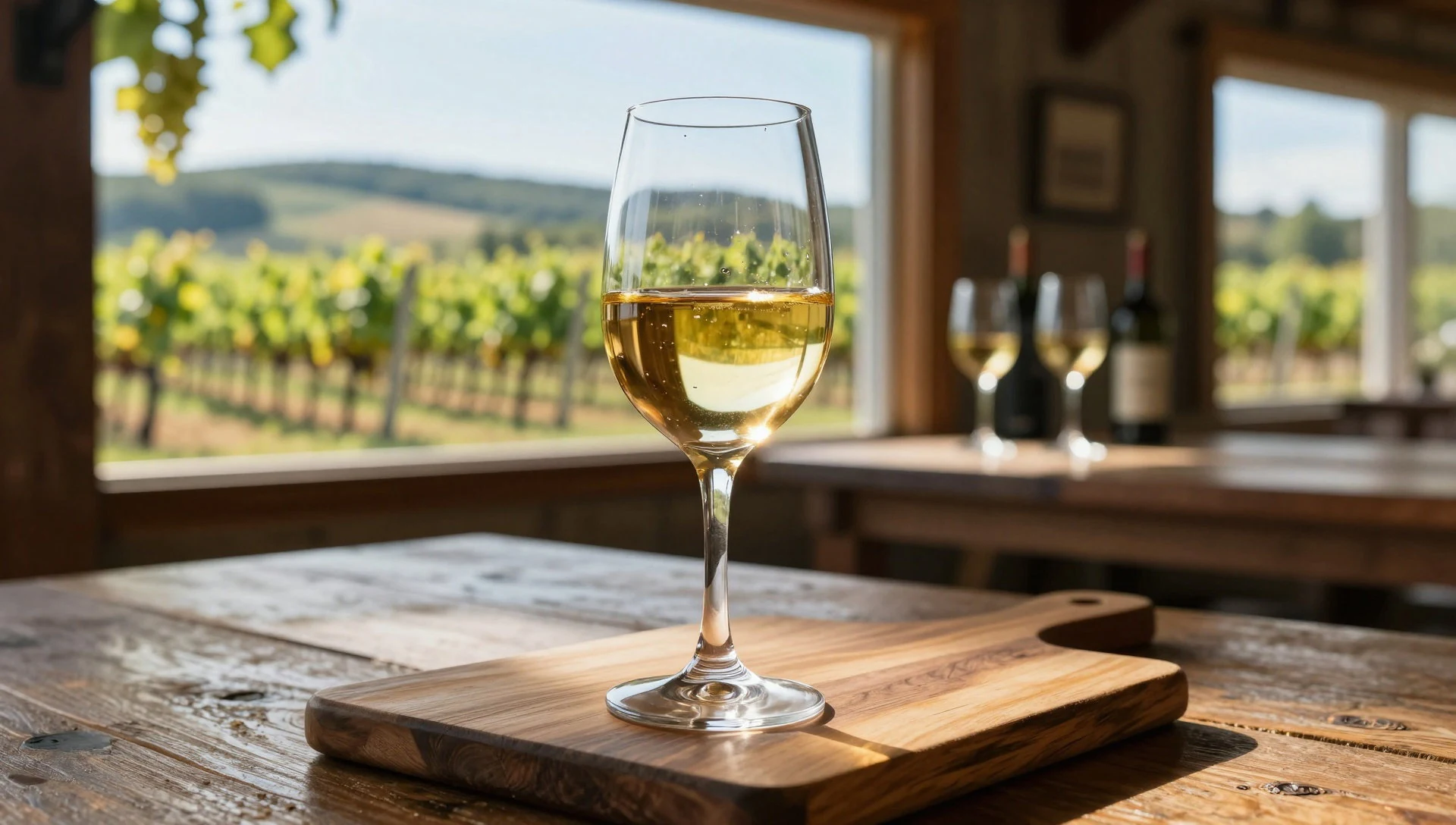
- Butter Tarts — Local bakeries and cafes throughout the Canadian side
A beloved Canadian classic featuring a flaky pastry shell filled with a rich, gooey mixture of butter, sugar, and egg, often customised with pecans, walnuts, or raisins.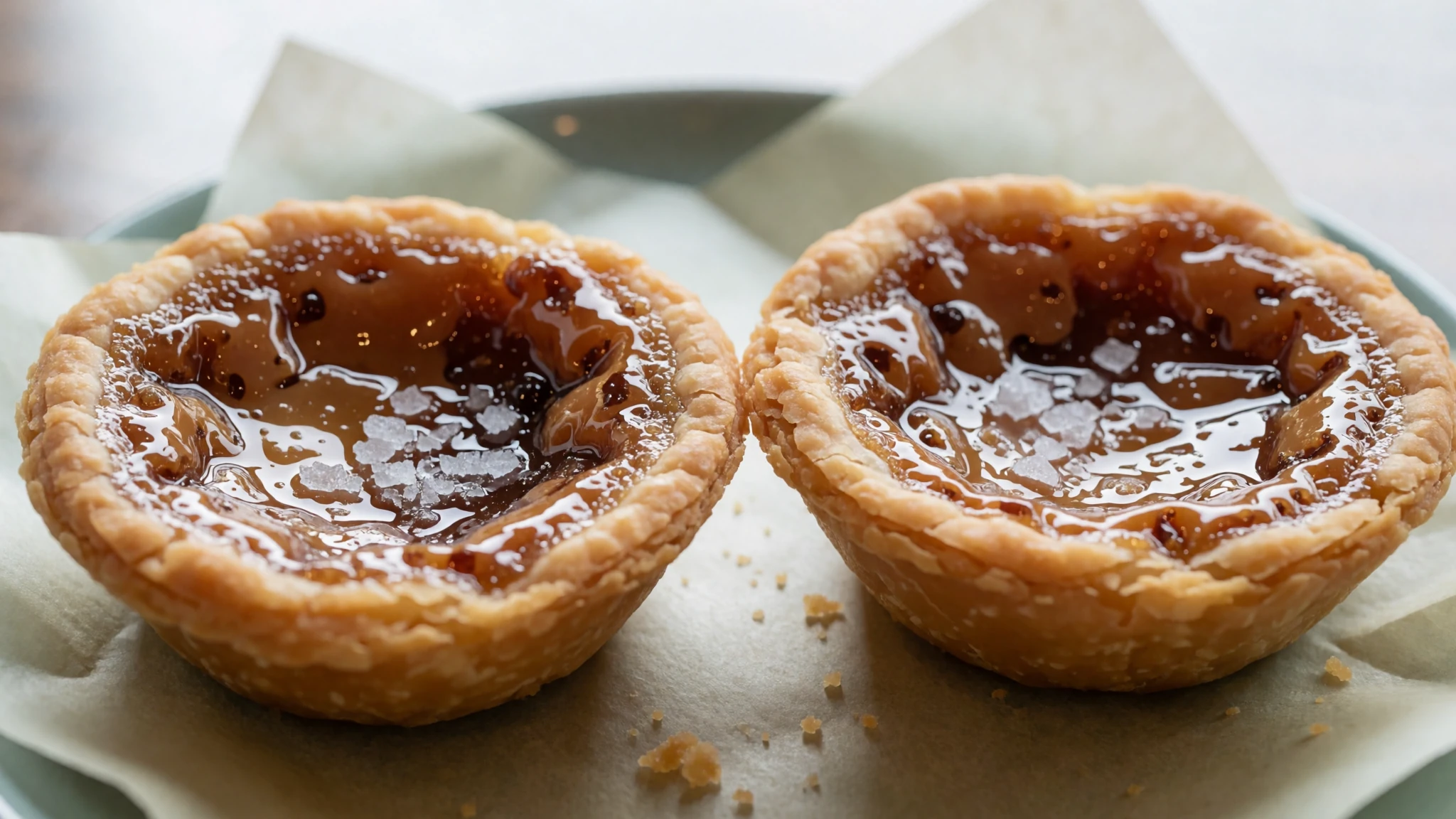
- Buffalo Wings — Traditional pubs and taverns on the American side
Crispy, deep-fried chicken wings tossed in a classic tangy cayenne pepper and butter sauce, served alongside cooling celery sticks and blue cheese dressing, originating just down the road in New York state.
- Local Craft Cider — Orchard cideries and farm markets across the region
Crisp, refreshing ciders pressed from apples grown in the fertile orchards lining the local escarpment, poured fresh in orchard taprooms and regional gastro-pubs.
Plan it
Best time. May to September brings warm weather, fully operational boat tours, and evening illumination, while autumn offers colourful foliage along the gorge.
How long. 2–3
Getting there. Fly into Buffalo Niagara International Airport on the US side or Toronto Pearson International Airport on the Canadian side, then hire a car or take regional shuttle buses to the falls.
Budget. mid
Tips
- Bring a sturdy waterproof jacket or purchase a reliable poncho before boarding boat tours.
- Visit the main viewing points early in the morning to beat the daytime crowds.
- Check passport and visa requirements if you plan to walk across the border bridges between Canada and the United States.
- Wear comfortable footwear with good grip for walking damp stone paths along the gorge.
Etiquette
- Respect local wildlife and stay behind safety railings along cliff edges and gorge trails.
- Observe quiet hours and photography restrictions inside Indigenous cultural centres and historical exhibits.
Nearby
In a traveller's words
When I came into its awful presence, the power of description failed me, an irresistible power closed my lips.
— Frederick Douglass, Life and Times of Frederick Douglass, 1892
Sources
- Wikidata Q34221 (CC0)
- Wikipedia (CC BY-SA 4.0)
- Wikivoyage (CC BY-SA 4.0)
- Gutenberg 23 (Public Domain)