Anegada
Anegada, United Kingdom
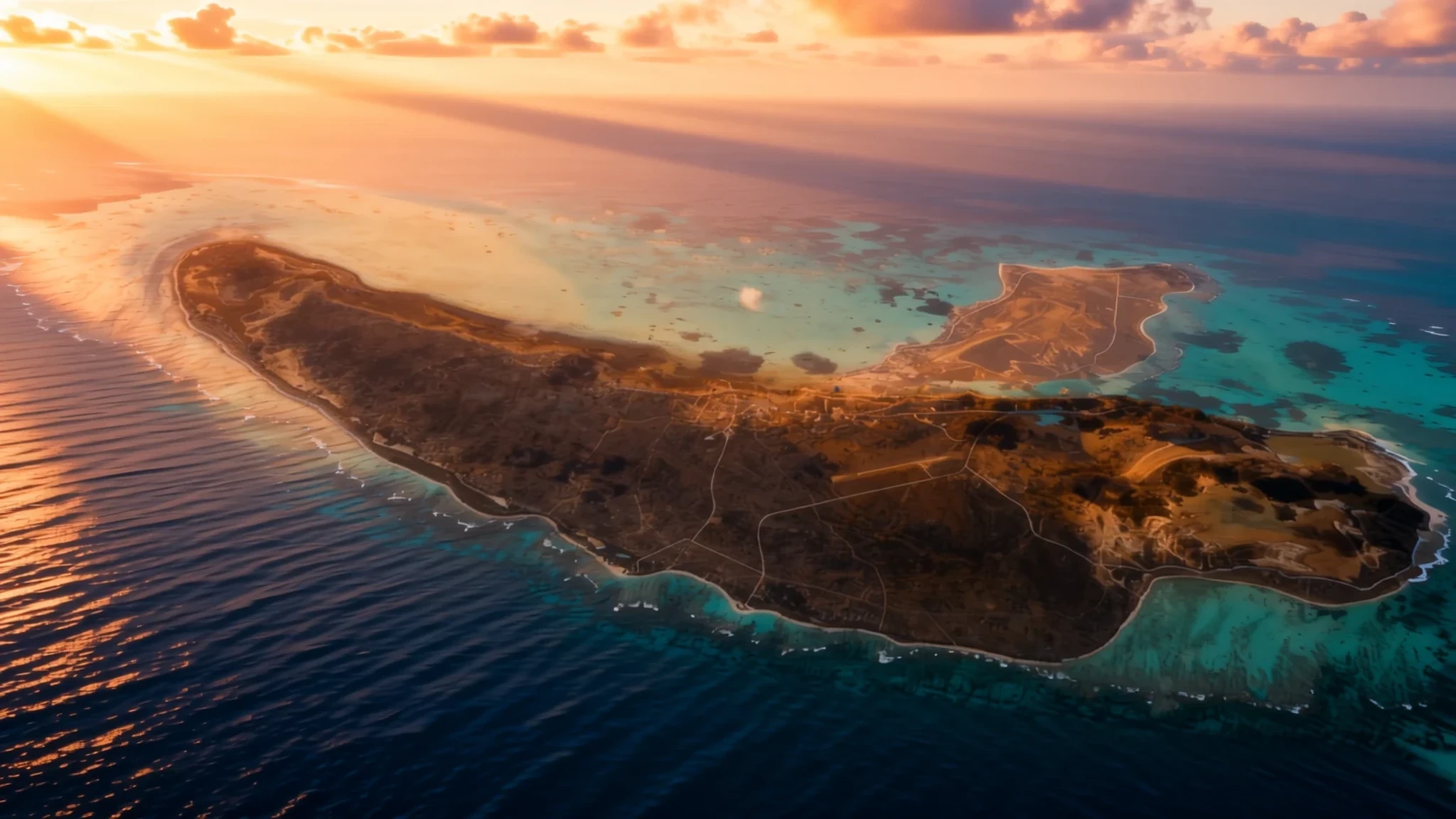
Anegada is a low coral island in the British Virgin Islands, with long pale beaches, a sheltering reef and a quiet village.
The place
Anegada sits in the British Virgin Islands, a low island of coral limestone and sand where the neighbours are steep and volcanic. The ground barely rises above the sea. A wide reef wraps the south and east, and the water inside it runs from pale green over sand to darker blue at the cuts. The Settlement, on the south side, is the village; beyond it lie ponds, pasture, scrub and beach rather than streets of buildings. Setting Point, at the west end, is where boats come in. From there, tracks lead to the Atlantic beaches on the north shore and back to the village lanes.
The island's name comes from Spanish and is commonly taken to mean flooded or drowned land, which fits a place ships could miss until they were on the reef. Horseshoe Reef has been that hazard for as long as the passage has been sailed. Inland, salt ponds sit in the limestone. Caribbean flamingos feed there, and the scrub holds the Anegada rock iguana, a heavy lizard watched over by a local conservation effort. Shade is thin. Rain sinks quickly into the rock, so drinking water and most goods arrive by boat or by the small plane, alongside whatever gardens, goats and fishing boats provide.
Evenings stay quiet: a few lights in The Settlement, surf on the north coast, and a dark sky. Anegada is a working island with a reef at the door.
Its story
Anegada's story is tied to a reef that is easier to strike than to see. Ships using the Anegada Passage, the seaway between the Virgin Islands and the islands further east, met Horseshoe Reef in darkness or in a storm. Wrecks became part of the island's reputation, and for a long stretch of its colonial life salvage sat alongside fishing as a way to live. Charts and the Spanish name agree on the same point: this is land that scarcely clears the water, simple to overlook and costly to approach from seaward.
Under British rule the island sat inside the territory's plantation world, yet thin soil and salt ponds never suited it to cane in the way Tortola's slopes were used. Households fished, kept small stock, cut wood and grew what the limestone allowed. After emancipation, those families remained. The Settlement took shape as the cluster of houses, church and school around a modest landing, not as a harbour town.
The later yachting boom that changed other British Virgin Islands largely passed Anegada by. A small airfield, Auguste George Airport, and the ferry to Tortola linked the island to Road Town while leaving it off the cruise circuit. The rock iguana had become scarce and has been rebuilt by guarding habitat and raising young lizards until they can live on their own; flamingos, gone from the ponds for a long time, were brought back and have stayed. What a traveller meets now is a community that still fishes, lives mainly by tourism, with about 200 to 300 visitors on a typical day in season and only about 450 residents, and still treats the sea as road, larder and risk.
What to see
- Horseshoe Reef — south and east of the island
Horseshoe Reef is the arc of coral along Anegada's southern and eastern sides, a pale line from the air and a wall of coral, fans and fish from a boat. The lagoon inside is shallow and clear; outside, the ocean deepens quickly. Snorkelling is done with a local boat, because the reef is broad and wind and tide change the safe water through the day.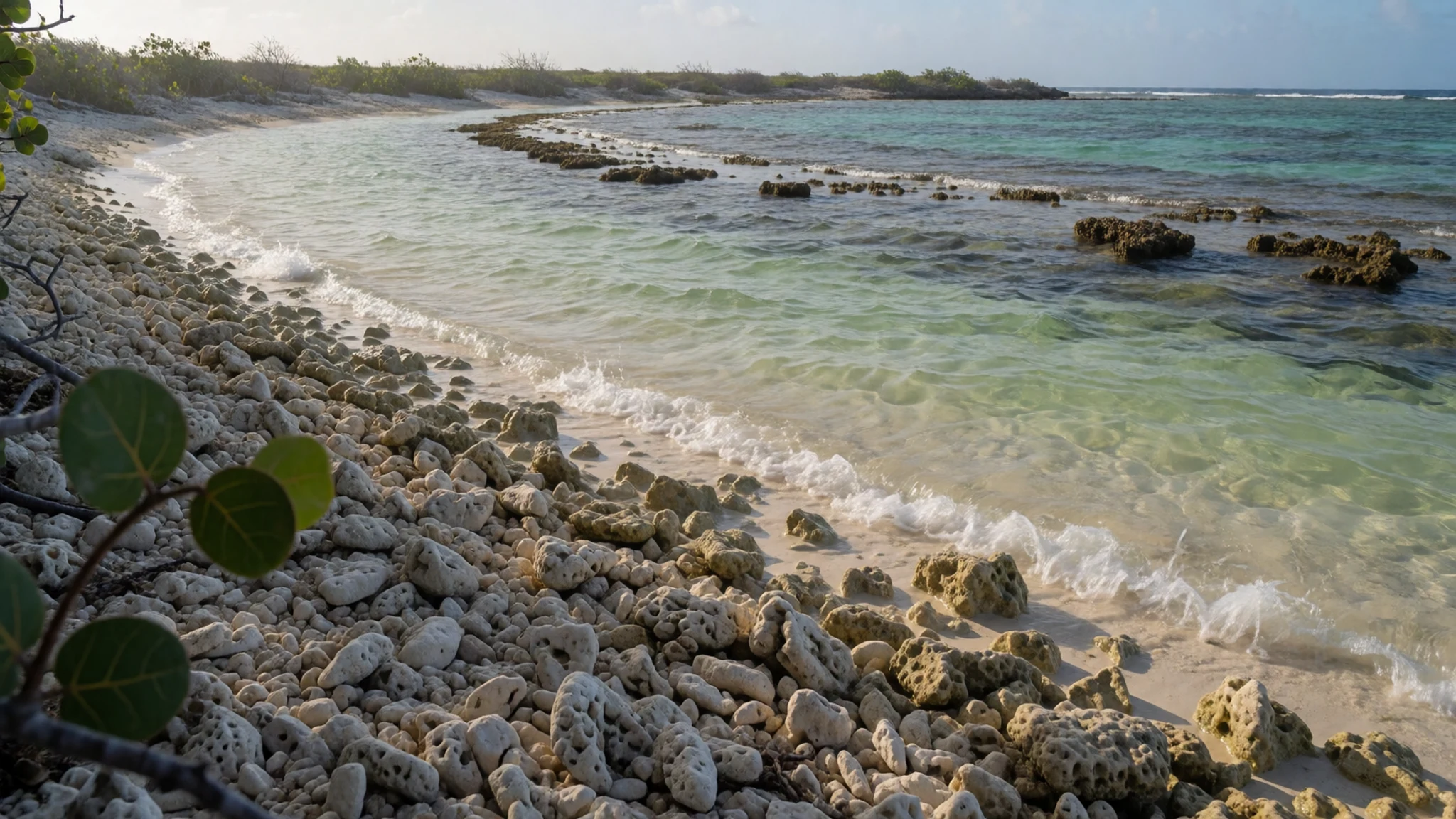
- Loblolly Bay — north-east shore
Loblolly Bay, on Anegada's north-east shore, is a long pale beach with reef close in and swimming water that stays shallow well offshore. Casuarina and sea grape throw a thin line of shade. The bottom mixes sand and coral heads, so water shoes are worth wearing. Small beach bars cook the day's fish, and the bay is the usual first swim for people staying on the north side.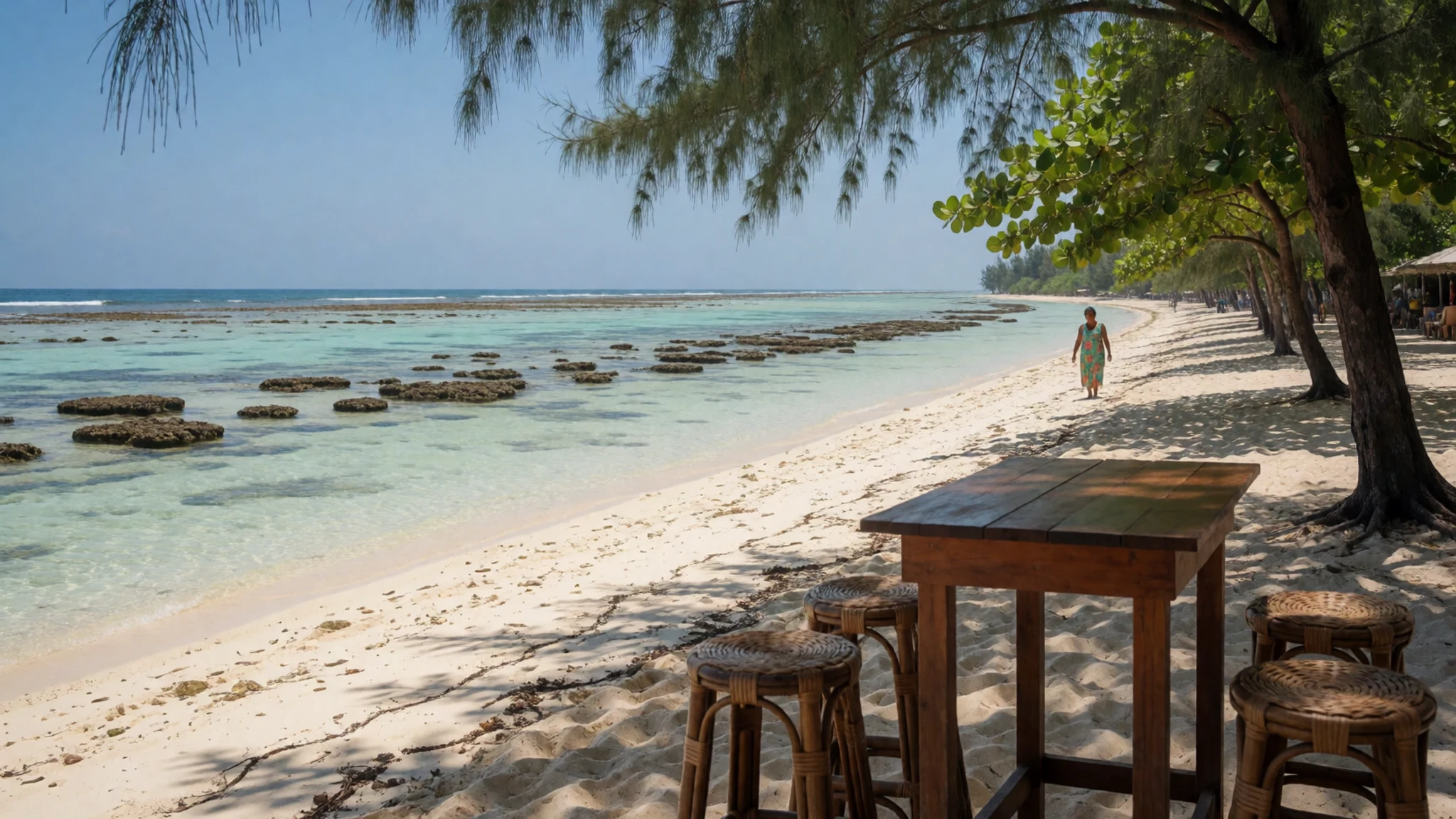
- Cow Wreck Beach — north shore
Cow Wreck Beach, on Anegada's Atlantic north shore, takes its name from a wreck. The beach is wide, the sand soft and the water lively when the trade wind rises. A hand-painted caution sign has become part of the local humour. A simple beach bar serves lobster and cold drinks, and little else is built here. The point is swimming and the open view.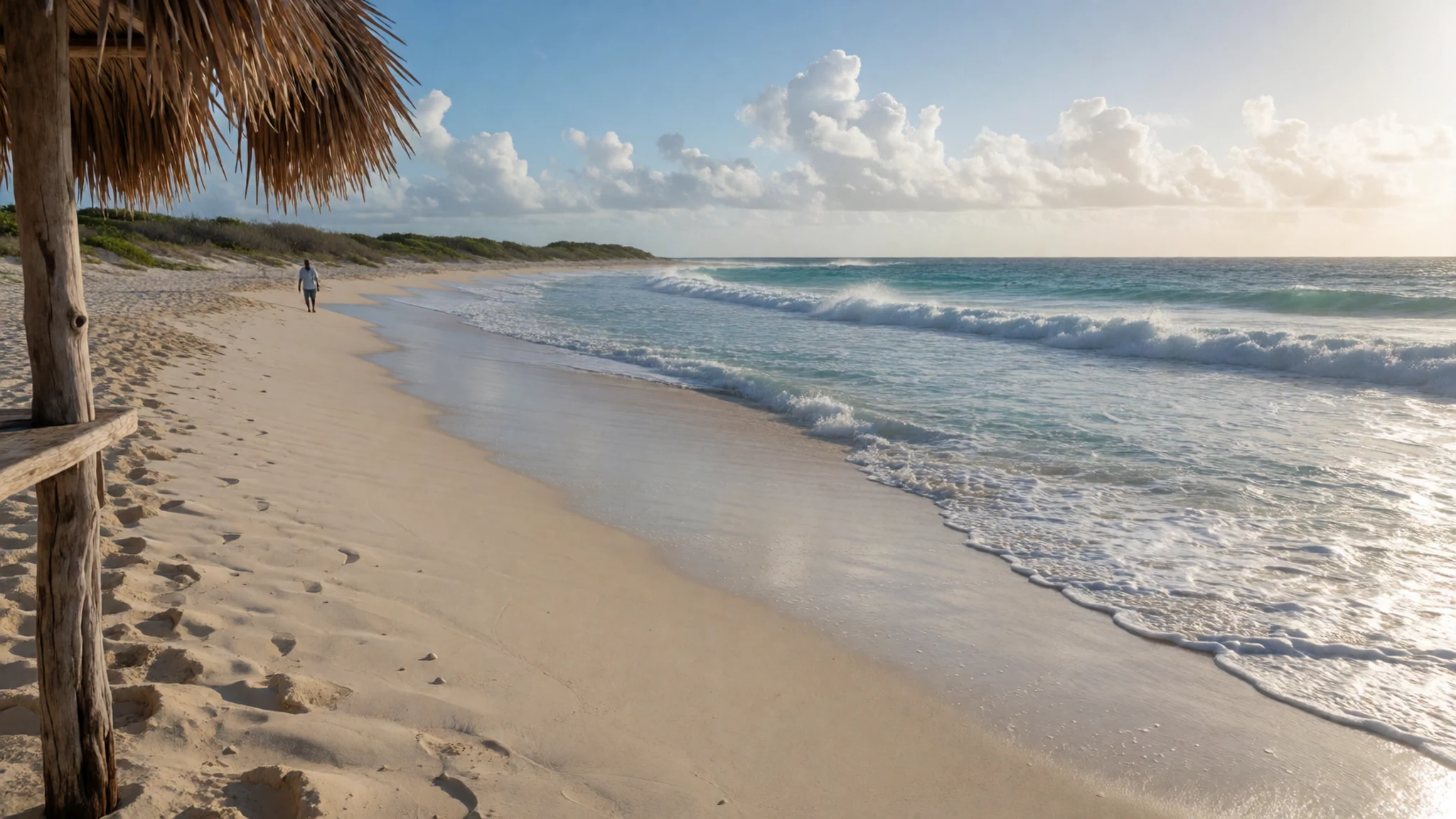
- The Settlement — south side
The Settlement is Anegada's village, a loose grid of houses on the south side with a school, churches, a clinic and small shops. Fishing gear, goats and garden plots sit between the lanes, and people talk from porches. Groceries, the post and ordinary errands happen here, away from the beach bars. The lanes are for walking through as a guest in a neighbourhood: a greeting matters more than a camera.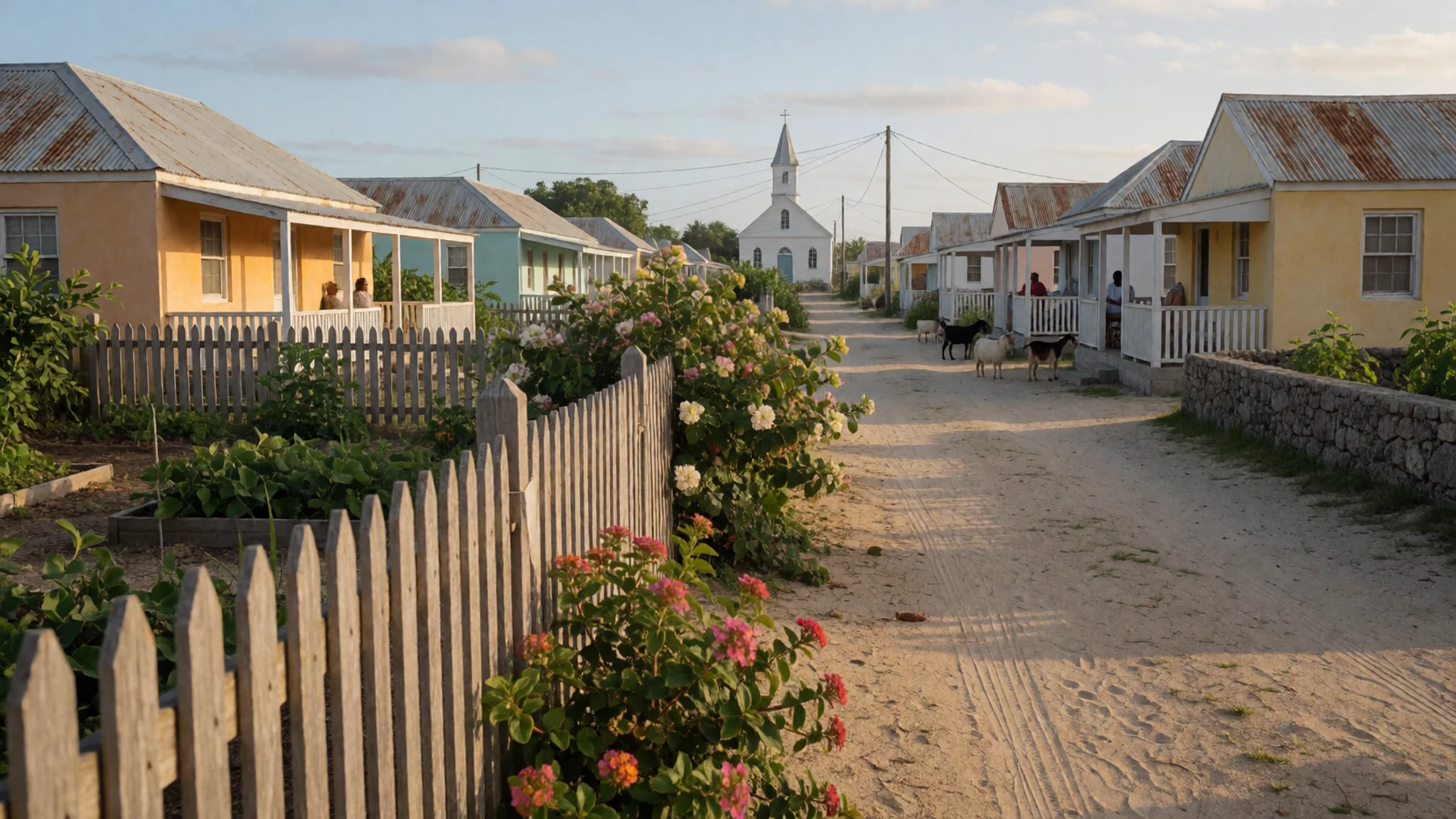
- The salt ponds — inland from The Settlement
The salt ponds inland from The Settlement hold Anegada's flamingos. Caribbean flamingos feed in the shallows, pink against grey-green water and a low ring of mangroves, while herons and other waders work the edges. The approach is the pond track, on foot and without entering the water. Islanders and conservation staff have sustained the birds' return. Early light is easier to bear than the hard midday heat.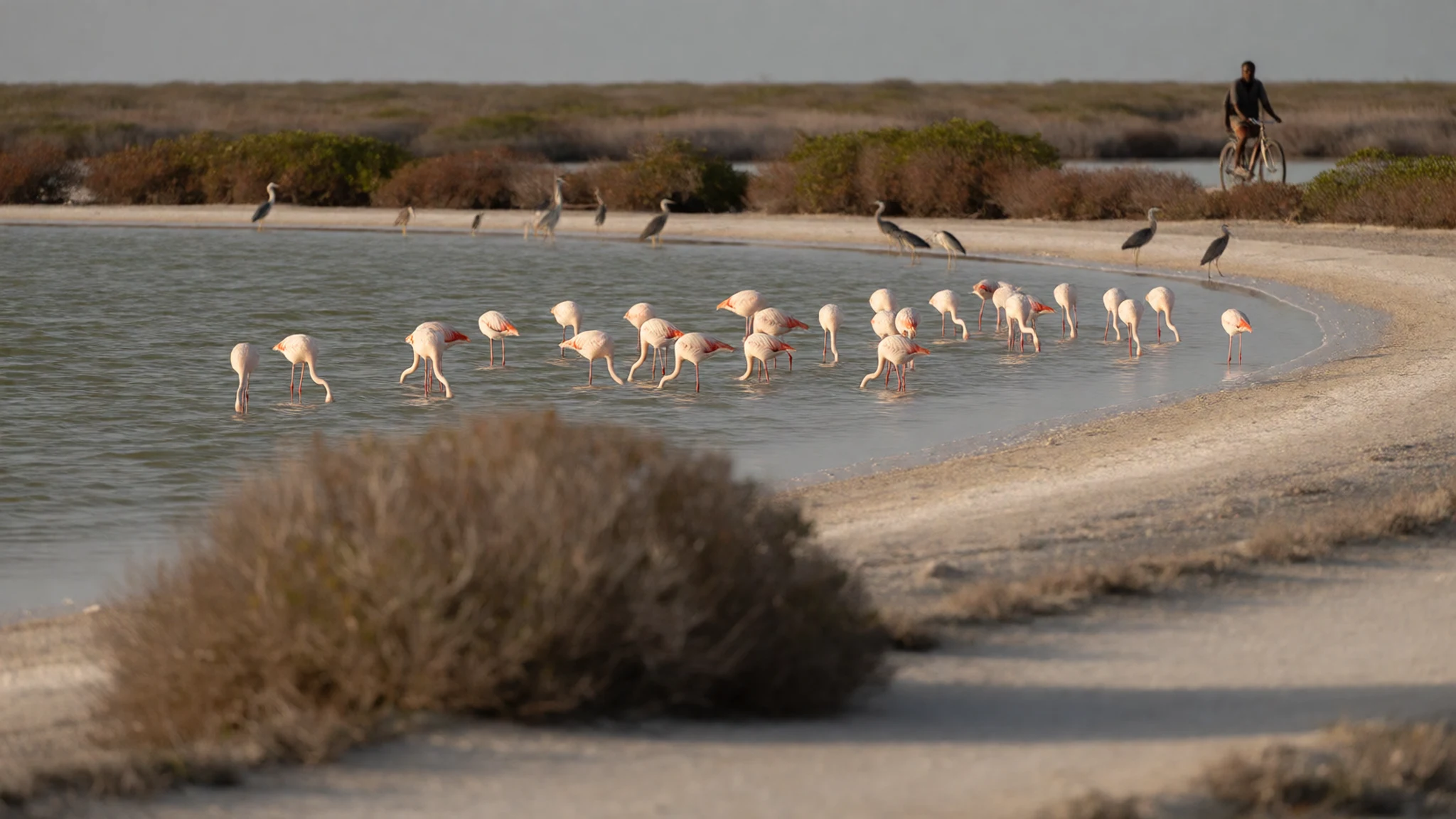
- Setting Point — west end
Setting Point, at Anegada's west end, is where the ferry and many small boats land. The coast is more sheltered than the Atlantic beaches. Auguste George Airport sits nearby, so arrival is a short taxi from the runway or a step off the dock into glare and a flat horizon. From the air this end shows how thin the land is between pond, scrub and sea.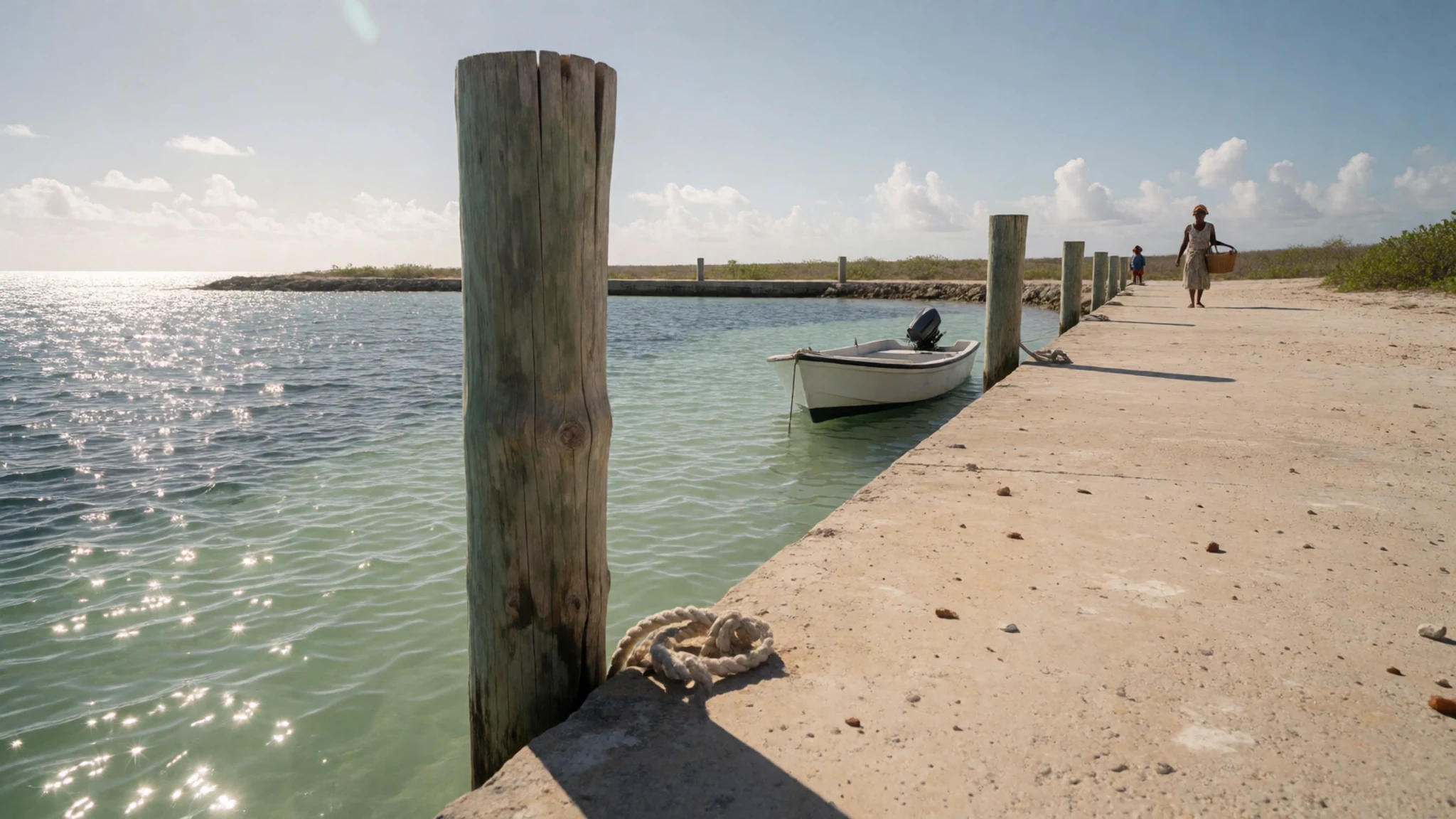
Culture
Culture on Anegada is the culture of a very small British Virgin Islands community: English-speaking, church-going, and organised around boats, cousins and the school year. The Settlement is the social centre. News travels by the jetty and the shop counter faster than by any noticeboard. Families have surnames that recur across the island, and many people have worked away, on other islands, on yachts, or in the United States, and come back. Emancipation is marked in summer with the territory's festival season, when music, food and a parade matter more than the beach. Fishing is still a respected skill, not a costume. Reggae, calypso and quieter church music all have a place; so does the dry humour visible on a hand-painted beach sign. Visitors are a normal part of the week in season and a rarity in a quiet month, and the island absorbs them without performing for them. Treat The Settlement as someone's home street: ask before you photograph people, and keep your voice down near houses at night.
What to wear
Anegada has no court costume and no single woven cloth of its own. What people call traditional dress shows up at festival time: bright cotton, lace and colour for a parade, the same family of Caribbean celebration clothes worn across the British Virgin Islands, with practical work clothes the rest of the year. For church, men wore shirts and trousers and women modest dresses and hats, in imported cotton rather than a local weave. Today the weekday uniform is shorts, T-shirts, sundresses, swimwear under a shirt, and sandals or bare feet. Fishers still wear long sleeves against the sun. A visitor should copy that split: swimwear on the beach, and a shirt or a wrap in The Settlement, at church and in any shop. The sun is the main dress code. A hat, sunglasses and a light long sleeve at midday matter more than style. Reef shoes or sturdy sandals help on coral rubble and on the rough tracks. Heavy shoes can wait for travel days. Dark colours drink the heat; pale, loose cotton breathes in the trade wind. Nudity is not the local norm off the beach, even on an empty stretch of sand near houses.
What to eat
- Grilled lobster — north-shore beach bars and Loblolly Bay
Anegada's name travels with lobster, usually grilled and served with rice, plantain or a simple salad. Beach bars on the north shore and at Loblolly cook it when boats have been out. It is a seasonal catch, so the board changes with the week.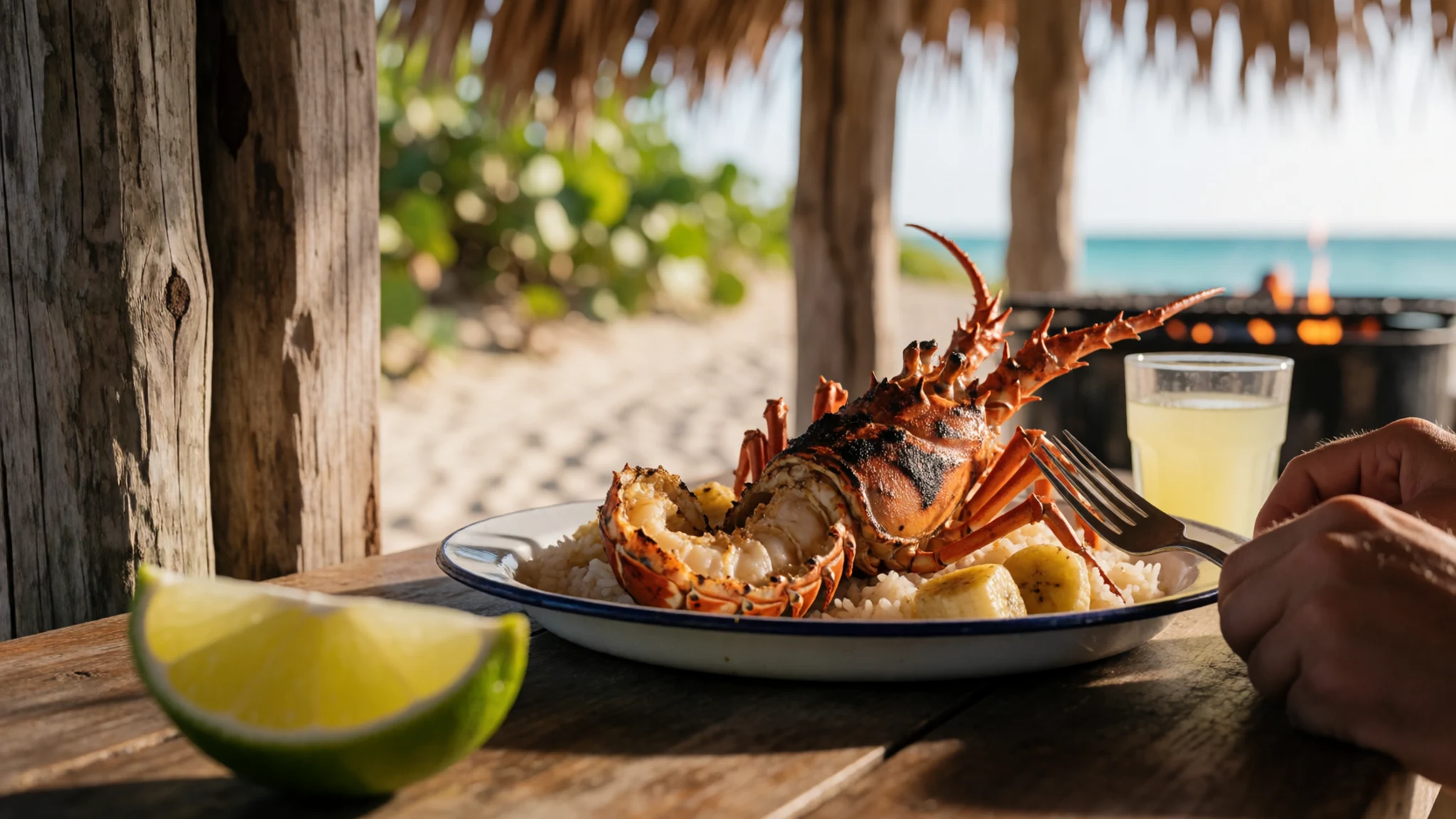
- Conch — beach bars and cookshops in The Settlement
Conch is the everyday shellfish: fritters, a curry, or a cold salad with onion, pepper and lime. Beach bars and cookshops in The Settlement serve it when someone has been out on the flats. Tender meat means it was pounded properly. It comes with bread or rice.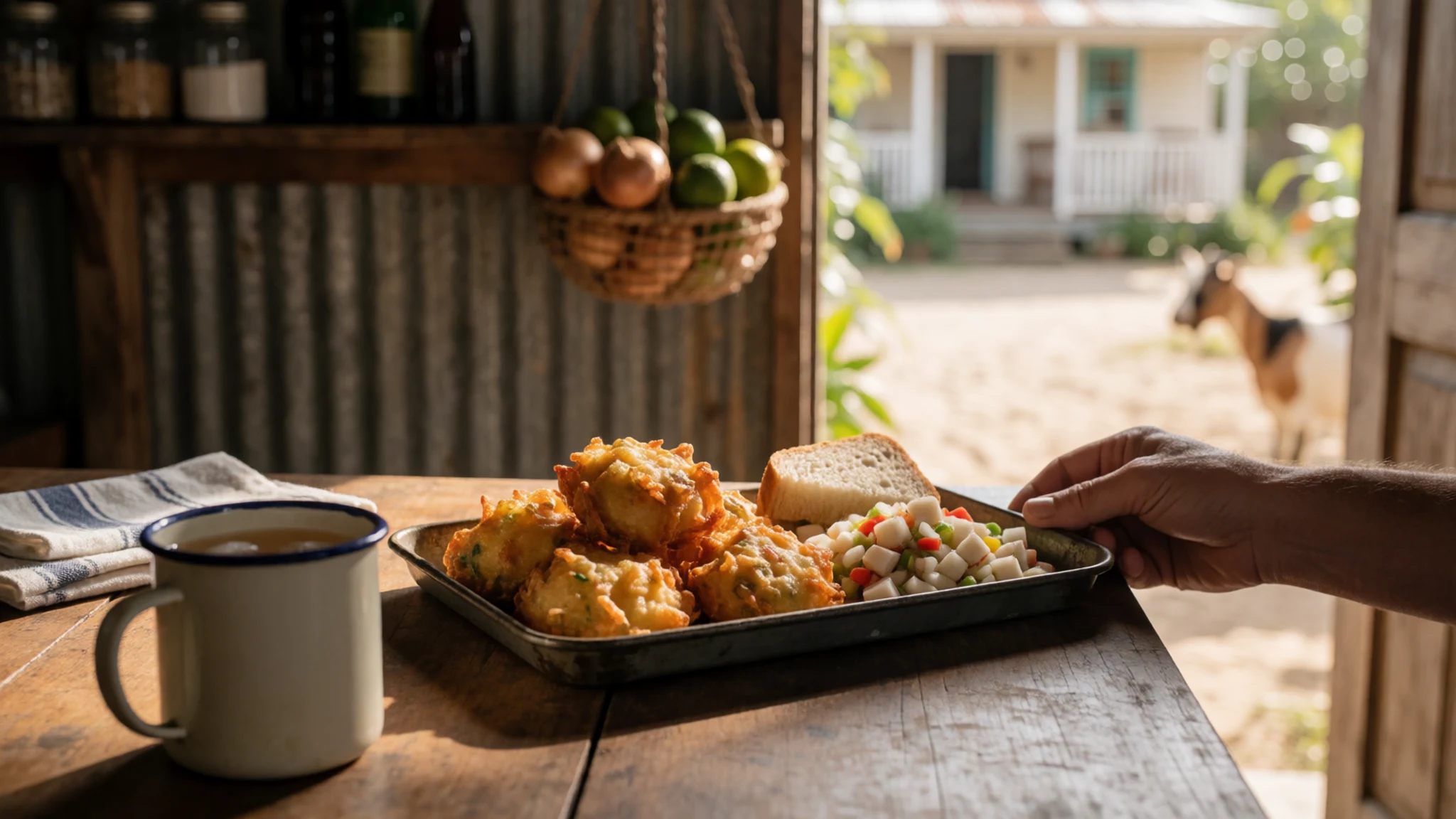
- Fried fish — north-shore beach bars, including Loblolly and Cow Wreck
Snapper and the rest of the day's catch are fried or grilled and plated with rice and peas, plantain and salad. Informal bars at Loblolly, Cow Wreck and other north-shore pull-ins serve it. The species depends on what came ashore that morning. - Rice, peas and johnny cake — beach kitchens and cookshops in The Settlement
Rice and peas, cooked with coconut milk, thyme and pepper, is the starch beside most plates on Anegada. Johnny cake, a dense fried or baked bread, comes with it, often next to fish. Beach kitchens and home-style cookshops in The Settlement both make them. - Callaloo — cookshops in The Settlement
Callaloo is stewed greens with onion, garlic and pepper, sometimes with a little crab or salt meat, served as a side. Cookshops in The Settlement are the likely place, especially on a weekday. It is soft, salty and green, and it balances a plate of fried fish.
Plan it
Best time. Anegada is most comfortable from January to March, when the days are mildest and the rain is lightest, February driest of all, and the seas are kinder for the ferry and for snorkelling. May is already warmer and much wetter. June to November is wetter and falls in the hurricane season, with the hottest days in August and October and the most rain in October: the island can be quiet, but forecasts matter and some beach bars close.
How long. 2–3
Getting there. Fly to Terrance B. Lettsome International Airport on Beef Island, Tortola, then a small plane to Auguste George Airport on Anegada, or continue by ferry from Road Town to Setting Point. The ferry from Road Town runs Monday, Wednesday and Friday morning and afternoon, and Sunday afternoon only. A same-day connection is a gamble if the wind is up.
Budget. high
Tips
- Book the plane or ferry, and a room, well ahead for December to April.
- Arrange a taxi or a hired vehicle; the beaches, ponds and village are too spread out to walk in the heat.
- Carry cash, because card machines are patchy at beach bars.
- Pack reef-safe sunscreen, a hat and extra drinking water. Shade is scarce.
- Use a local boat for Horseshoe Reef rather than swimming out alone.
- From June to November, read a hurricane forecast before travelling and keep the onward flight flexible.
Etiquette
- Ask before you photograph people, above all in The Settlement.
- Do not touch or stand on coral, and do not take coral, shells or sand.
- Stay well back from flamingos and iguanas, and do not feed them.
- Wear a cover-up off the beach, and keep voices low near houses after dark.
Nearby
Sources
- Wikidata (CC0)
- Wikipedia: Anegada (CC BY-SA 4.0)
- Wikivoyage: Anegada (CC BY-SA 4.0)
Wildlife
- Caribbean flamingo (animal)
Think of the American flamingo as a pink wading bird on stilt-like legs, also called the Caribbean flamingo and the sole flamingo found naturally in North America. On Anegada it searches for food in shallow water fringed with mangroves, where herons keep it company along the margins. Stay well back, speak softly, let a local guide choose the viewing spot, and never feed it.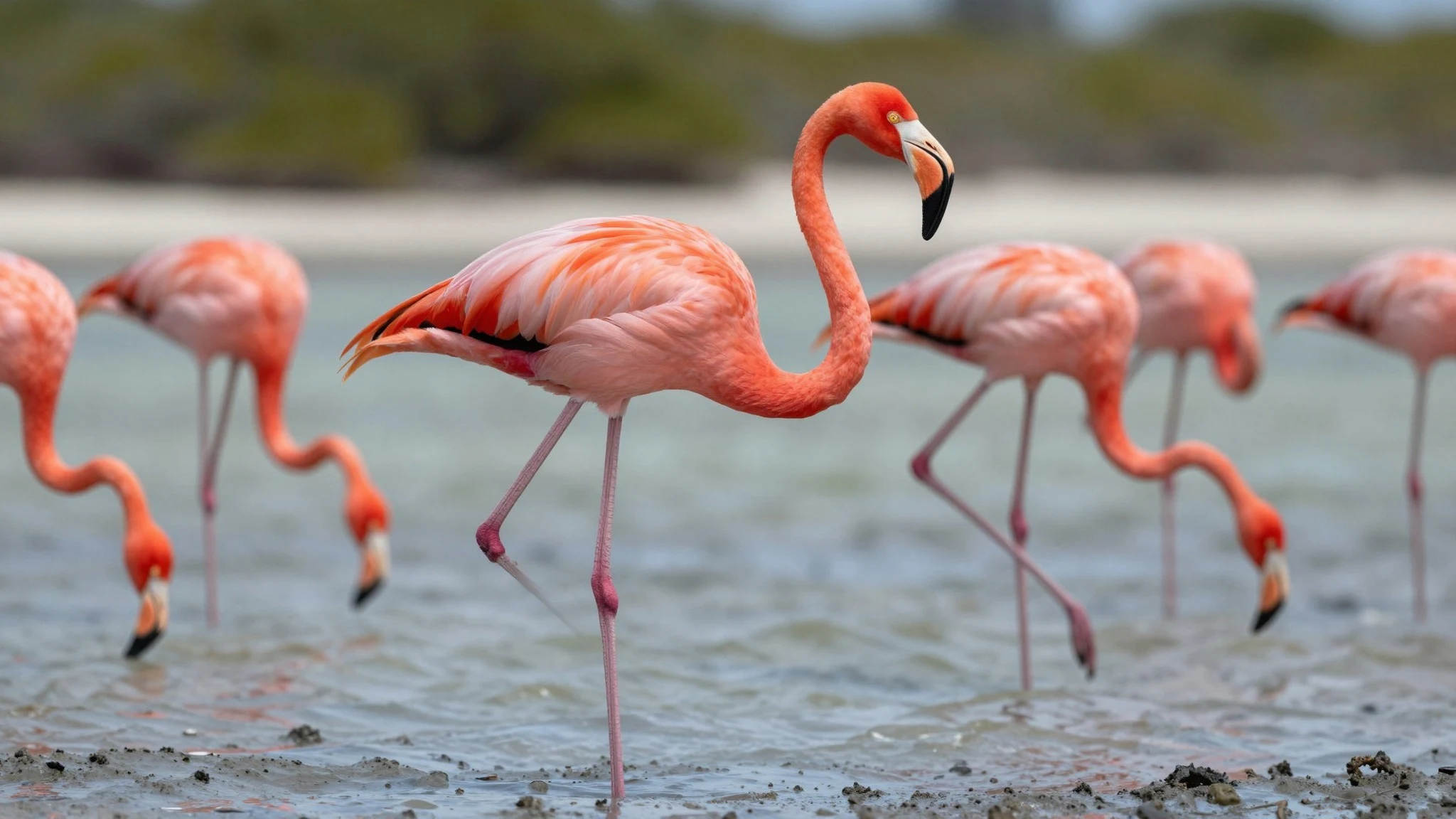
- Caribbean flamingo (bird)
Think of the American flamingo as a pink wading bird on stilt-like legs, also called the Caribbean flamingo and the sole flamingo found naturally in North America. On Anegada it searches for food in shallow water fringed with mangroves, where herons keep it company along the margins. Stay well back, speak softly, let a local guide choose the viewing spot, and never feed it. - Anegada rock iguana (animal)
The Anegada rock iguana is a weighty, stout lizard, a bit like a small dinosaur, and it is critically endangered. It lives in Anegada's scrub and is found only here and on Guana. A local conservation effort looks after it. Because it is so rare, give it plenty of room: watch from a distance, stay quiet and still, go with a guide, and never feed it.