Bodden Town
Bodden Town, United Kingdom
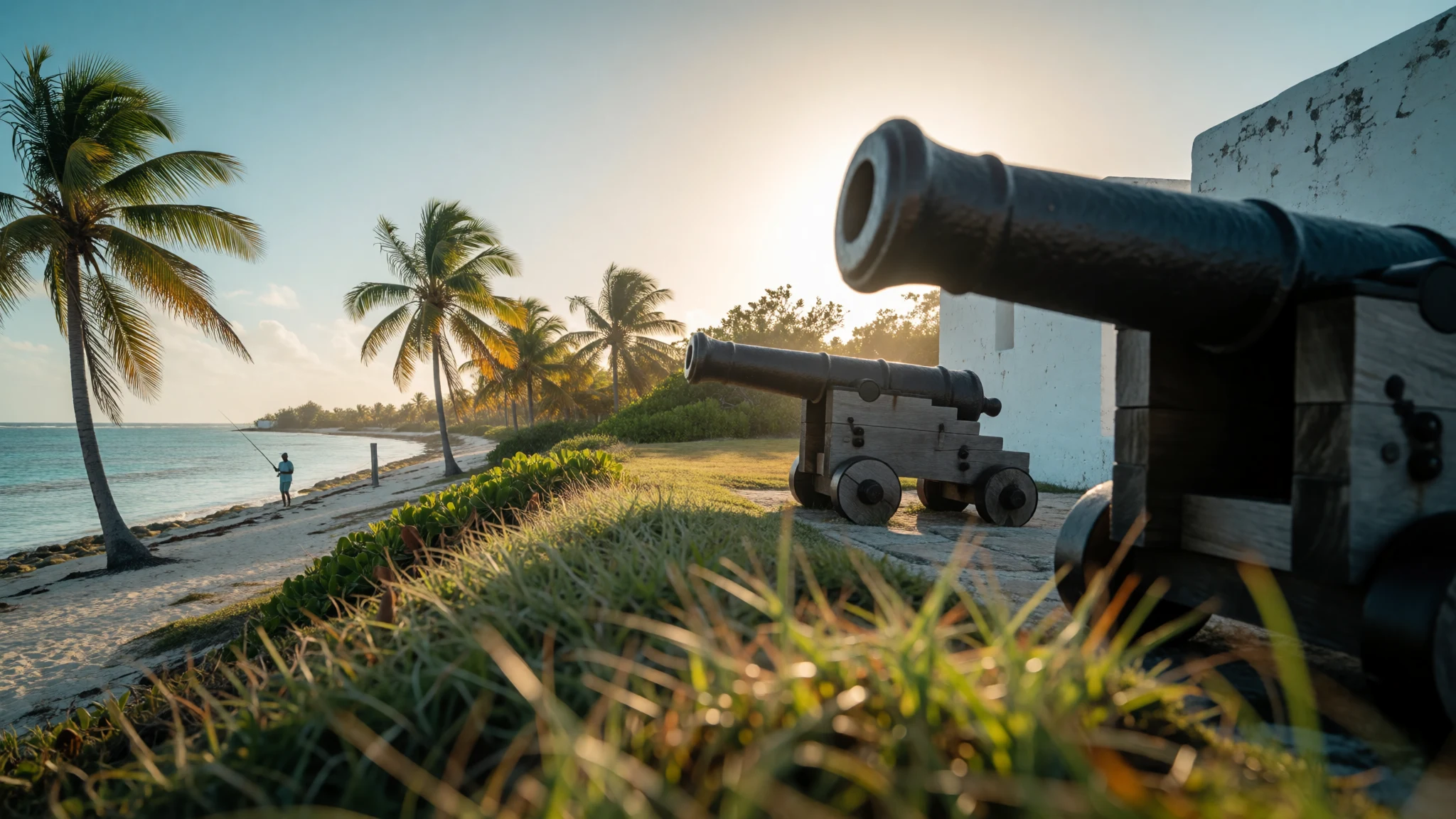
Bodden Town is a quiet old Caymanian capital where pirate-era cannon, a settler's house and a reef-fringed shore fit into a morning's drive.
The place
Bodden Town is a coastal district on the south side of Grand Cayman, sitting only about 10 m above sea level. It was once the seat of government for the Cayman Islands, and it remains a significant residential district in the territory. That figure shapes the feel of the place: this is a living, growing community of houses, churches, schools and roadside shops, not a resort built around a beach. The settlement grew up beside a natural harbour sheltered by a coral reef, and the reef still decides a good deal, from where boats anchor to where the water turns that pale turquoise seen from the road.
Heritage here is modest in scale and easy to miss. A small Guard House, a pair of little cannons and the traces of an old defensive wall recall the years when pirates and privateers made the islands dangerous. The Mission House, an old Caymanian home, shows how early settlers lived. None of it takes more than a morning, which is the honest way to think about a visit.
Most travellers stay elsewhere on the island, near the hotels, and come east by car or bus. The drive is part of the appeal: a coast road, low scrub, glimpses of the Caribbean and local life carrying on at an unhurried pace. Heat and humidity are constant, shade is scarce along the waterfront, and a car makes everything easier. Bodden Town suits people who like small places with a past more than those wanting organised entertainment.
Its story
Bodden Town's story begins before any town existed. Archaeologists find no sign that anyone lived on the Cayman Islands before Christopher Columbus sighted them in 1503. He called them Las Tortugas because of the turtles crowding the surrounding waters, and within a few decades the name had shifted to Caymanes, from a Carib word for the crocodile-like caimán that also lived there. Over time the spelling settled into the English form used today.
Turtles drove the early economy. Passing ships stopped to load turtle meat for the long return across the Atlantic, and once the local turtles had been wiped out, Cayman turtlers sailed to other islands to find more. For roughly the first two centuries the islands had no real authority: pirates, privateers, refugees, castaways and enslaved people made up the population.
England took formal possession, together with Jamaica, under the Treaty of Madrid in 1670, and the Cayman Islands were run loosely as a dependency of Jamaica. Settlers arrived from Jamaica over the following two centuries, while magistrates appointed from Kingston oversaw island affairs from a distance.
The settlement of Bodden Town was named after William Bodden, an early government leader, and it later served as the capital of the islands. The remains of a wall and cannon are reminders of the raids the village endured. Its role as capital has long since passed, yet the district keeps growing, and its heritage sites now stand among newer homes.
What to see
- The Guard House — Central Bodden Town
The Guard House in Bodden Town was built to hold and display the district's history, and it is the easiest place to start. A small building by the roadside, it gives context through photographs and objects before the other sights make sense. Allow a short stop, and check locally for opening times.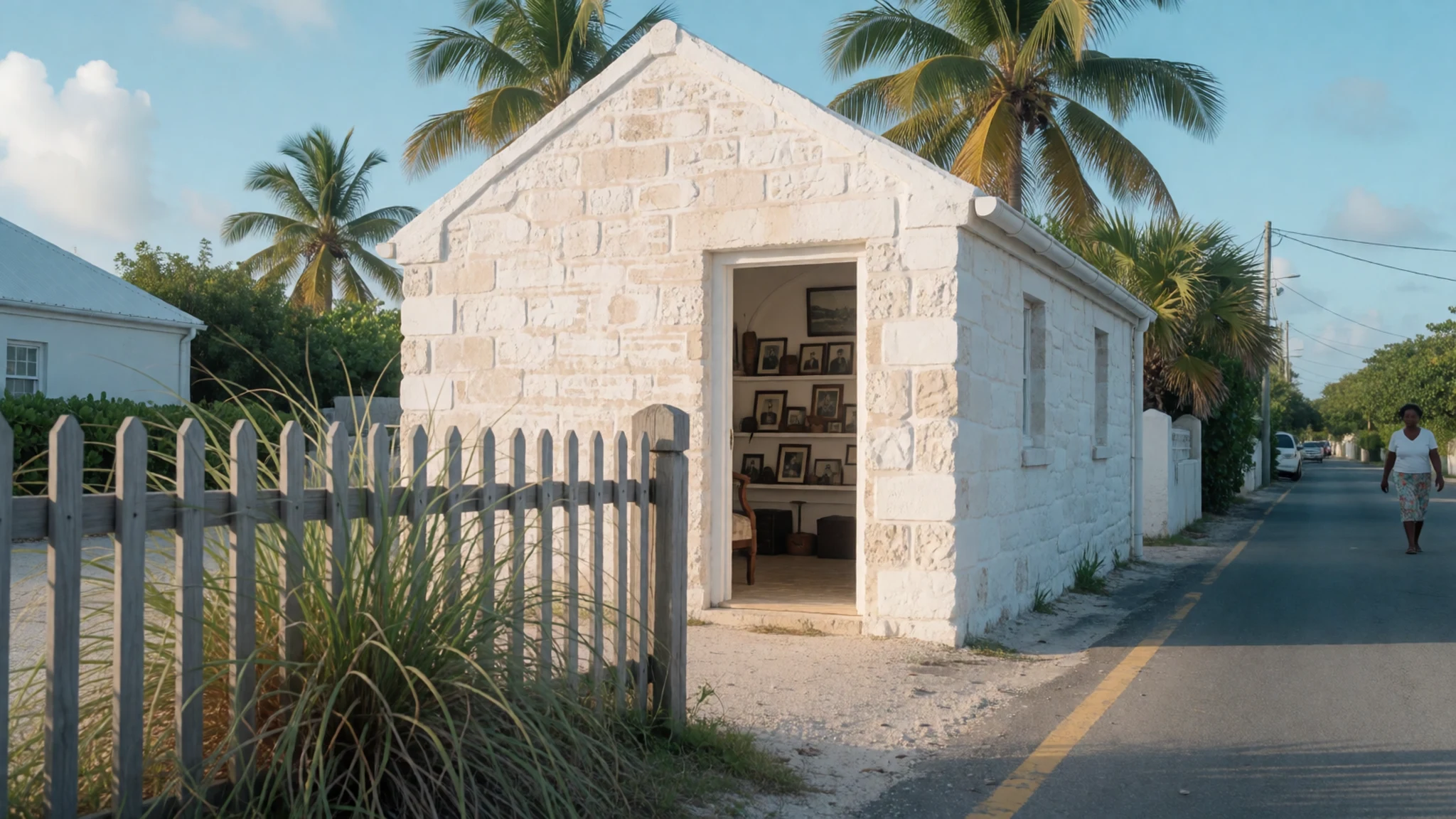
- The old cannons and wall — Near the Guard House
Bodden Town keeps two small cannons beside the Guard House, and remnants of a long defensive wall survive in the district. They are modest, weathered pieces, not a fortress, but they make the pirate years feel real. Look for the cannons first, then ask locally where wall sections can still be seen.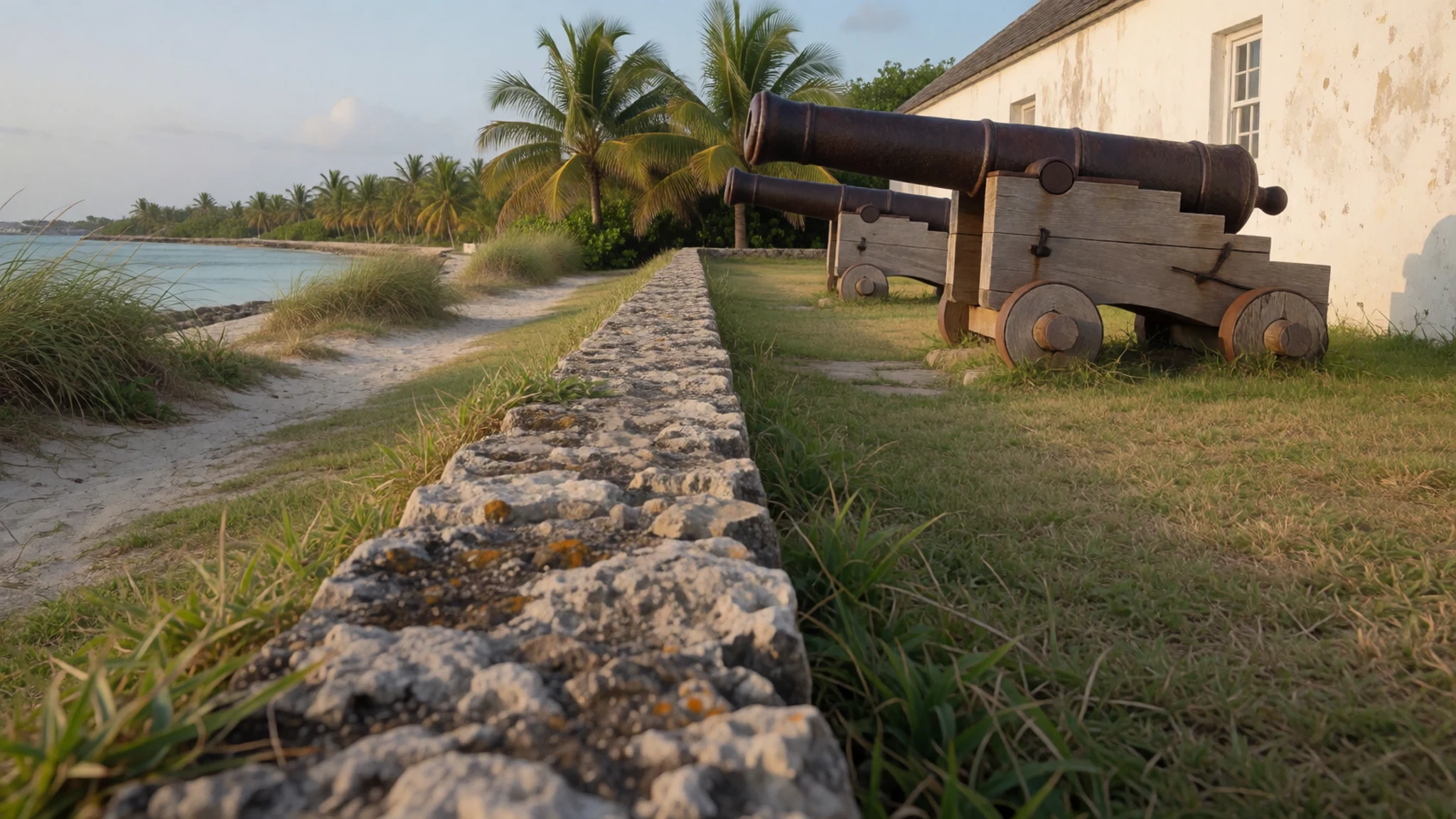
- Mission House — Bodden Town
Bodden Town's Mission House presents the daily life of early Caymanian settlers, from how they built and furnished a home to how they made a living from the sea. It is small and personal rather than grand, and works best as a slow half-hour. Check current opening arrangements before making a special trip.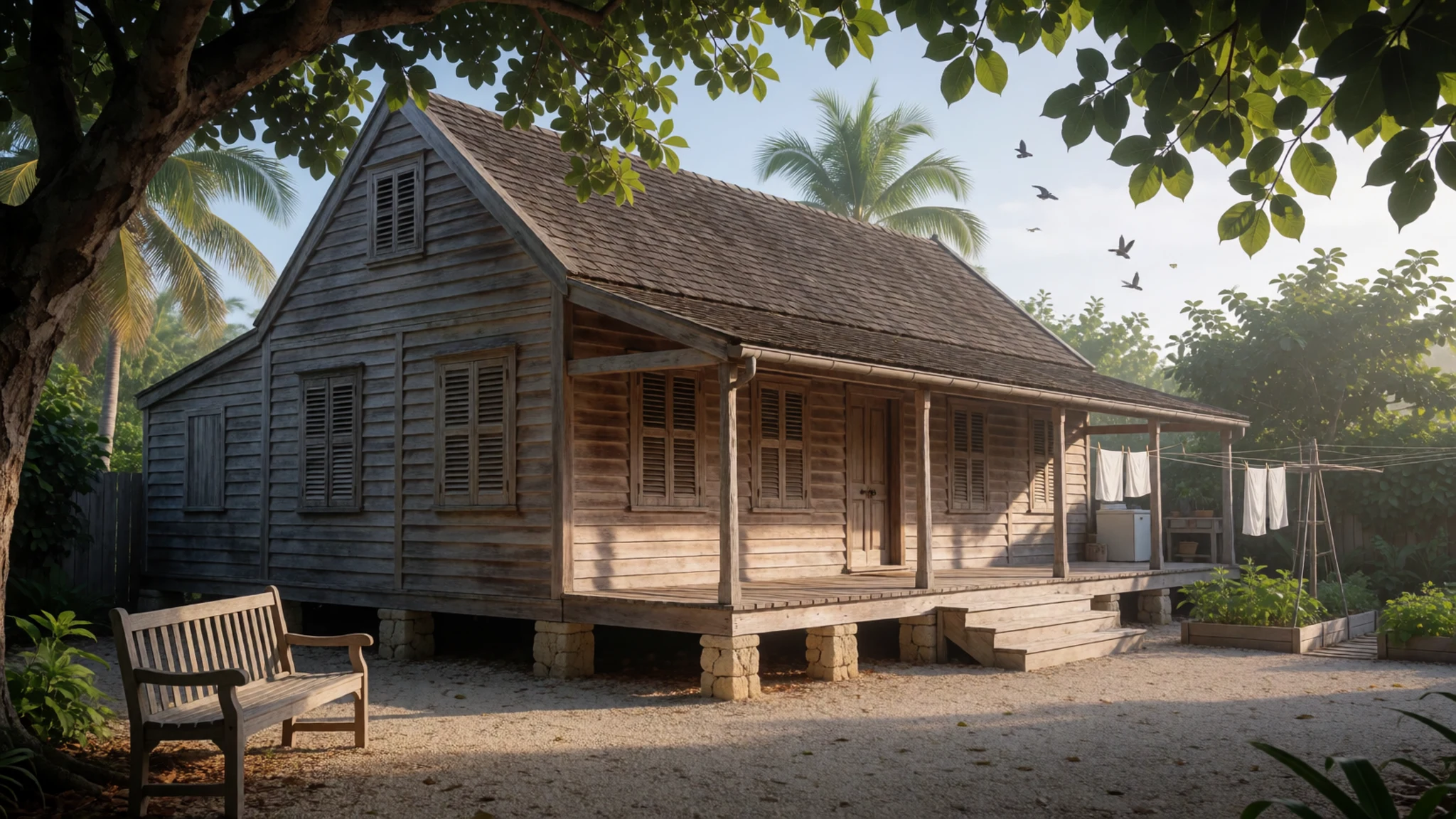
- The waterfront and reef — South coast
The shore at Bodden Town looks out over the Caribbean and the reef that once sheltered the harbour. The water is pale and clear, and the road runs close enough for easy stops. Shade is limited, so bring a hat. Walking the shoreline is allowed, though road access to the sand is limited in places.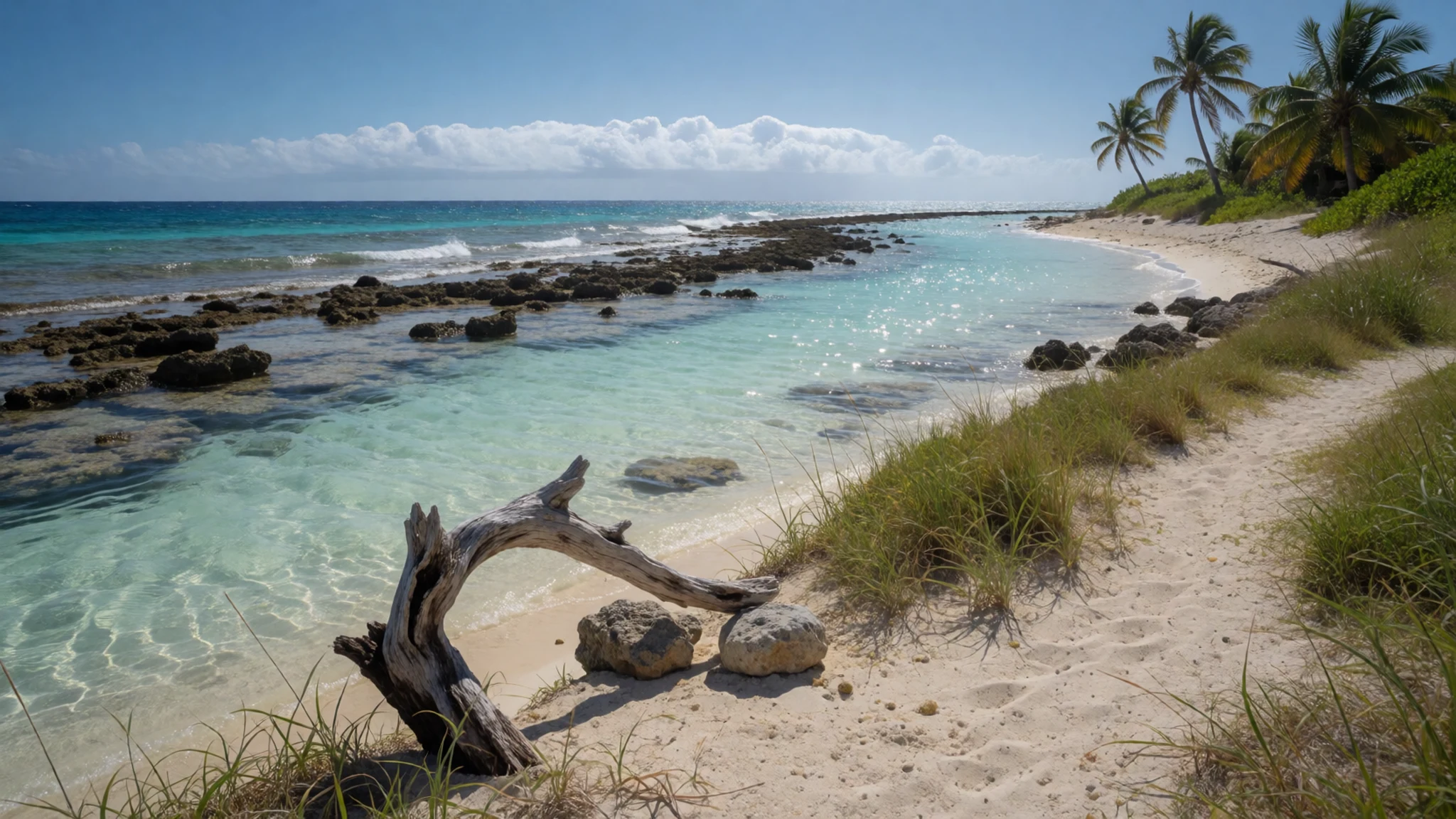
- Pedro St. James — Short drive west of Bodden Town
Pedro St. James is an old house and grounds on the ocean, a short drive west of Bodden Town. It is a national historic site, with a multimedia presentation on the house's history and an exhibition centre of Cayman historical displays. It pairs well with Bodden Town for a half-day of history.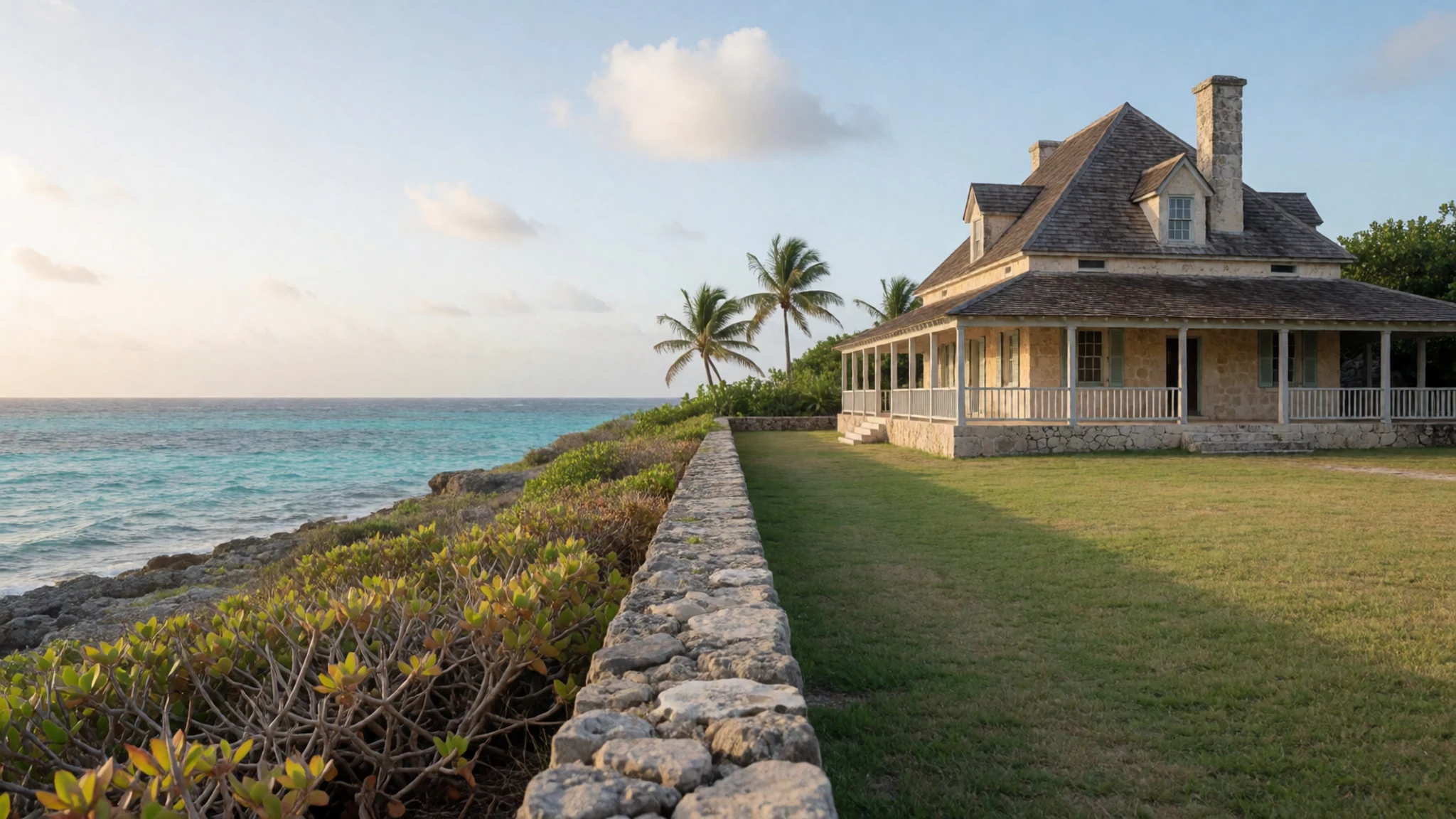
Culture
Bodden Town is a place where manners matter. Caymanians are known for courtesy, and greetings are expected as a matter of course, even when stepping into a small shop. People commonly address each other with a title such as Mr or Miss followed by a first name, a habit that carries a gentle formality and reflects a close-knit community in which most people know one another.
The culture here grew from the sea. Early settlers lived by turtling, fishing and seafaring, and later by working on ships and sending money home. That seafaring background still shows in the food, the stories told at gatherings and the pride in local history. Churches remain central to community life, and Sunday is quieter than the rest of the week.
History also gives the place a mixed character. Settlers, sailors, enslaved people and later arrivals from Jamaica and elsewhere all shaped the islands, and the Caymanian way of speaking and cooking carries those layers. Heritage sites in Bodden Town are small, community-run and personal, so they reward curiosity and a few questions.
Bodden Town is a residential community, not a theme park, so visitors are guests in an everyday neighbourhood. Noise, litter and stopping in the road to photograph people's homes cause real irritation. Walking the shore is fine, but respect private land behind it.
Greet people with a polite good morning or good afternoon when you enter a shop or pass someone on the road, and ask before photographing anyone.
What to wear
Bodden Town has no single costume that locals wear day to day. Historically, island people dressed for work at sea and on small plots of land: plain cotton and linen shirts and dresses, headscarves, and wide hats plaited from local palm fibre known as thatch. Fine plaiting of thatch is still a heritage craft, and heritage festivals in the islands are the usual moment when period clothing is worn.
What people wear now is practical Caribbean clothing. Light cotton shirts, shorts, sundresses and sandals are standard for a hot, humid climate, with neat, smarter outfits for church and formal occasions. Dress is relaxed, but locals tend to be tidy and put-together when going to work or to services.
Visitors should dress for heat first. Choose breathable cotton or linen, a brimmed hat, sunglasses and high-factor, reef-friendly sunscreen, since the sun is strong and shade is rare along the waterfront. Swimwear belongs on the beach: cover up with a shirt or wrap when going into shops, the Guard House or a restaurant. Footwear matters more than expected. Sandals are fine for the road, but water shoes protect feet from sharp coral and rock at the shoreline. A light rain jacket is useful in the wetter months, and a long-sleeved top helps against both sun and insects in the evening.
What to eat
- Jerk chicken — Roadside jerk stands along the main coast road
Roadside jerk stands are a long-standing island habit, with chicken or pork smoked over wood and heavily spiced. The brief's advice is to ask a local, even a taxi driver, which stand they favour. Expect smoke, a paper tray and a short wait.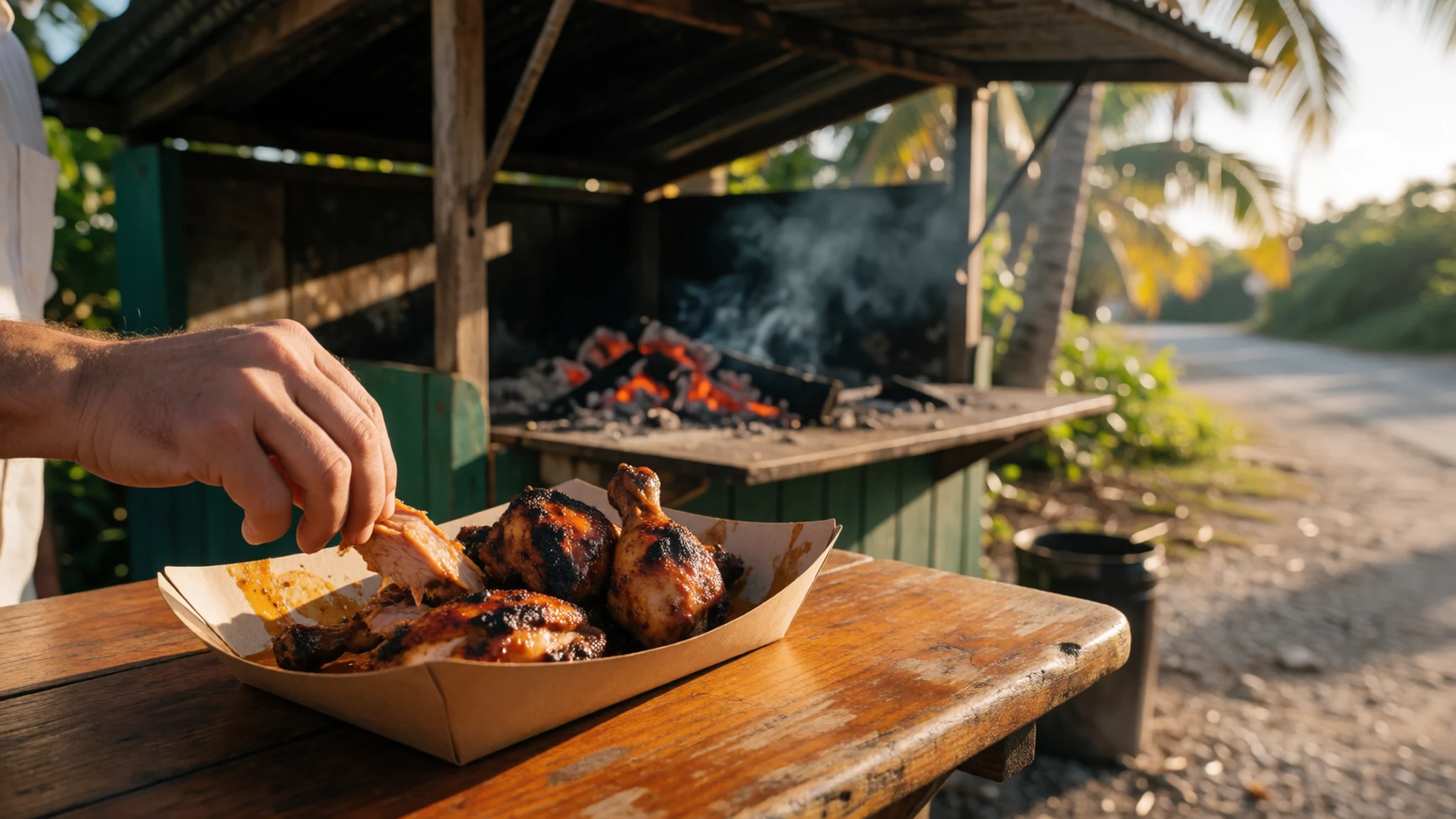
- Fresh fish — Casual eateries and seafood places near the shore
Local fish is a staple, grilled, fried or served in a spiced sauce with rice and plantain. It is usually better value than imported food because it does not have to travel. Ask what was caught that day.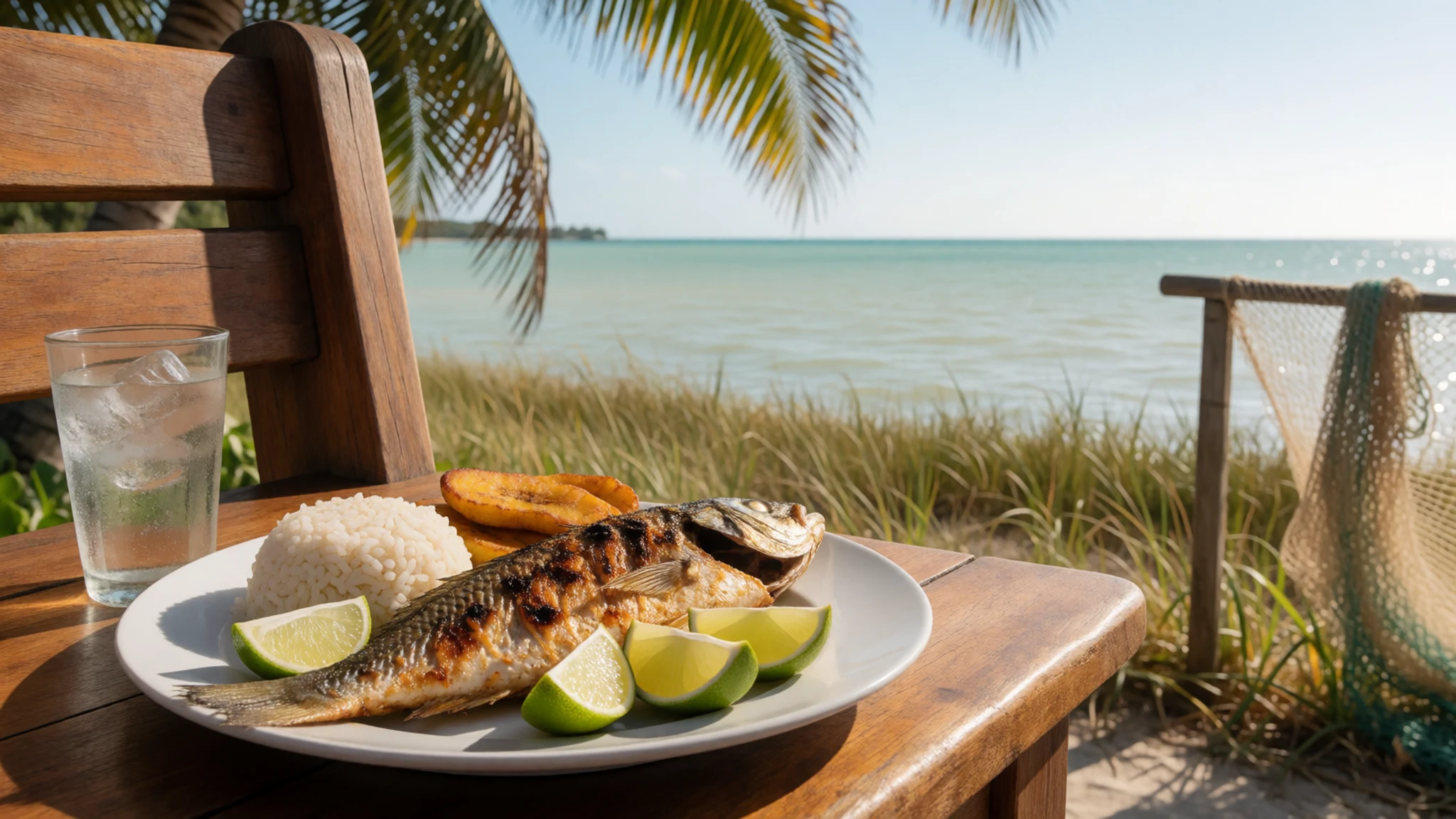
- Conch — Local restaurants and takeaway counters
Conch is the shellfish of the Caribbean, served as fritters, in a stew or marinated in citrus as a salad. Texture is chewy and flavour is sweet and briny. Fritters are the easiest first taste and are often shared as a snack. - Turtle stew — Traditional Caymanian restaurants
Turtle meat is a historic island dish, tied to the turtling trade that shaped early settlement, and it is still served in some Caymanian kitchens as a slow-cooked stew. Visitors with concerns about sourcing should ask how it is supplied before ordering. - Heavy cake — Local bakeries and community food stalls
Heavy cake is a dense, sweet, cassava-based Caymanian treat, baked until the top is dark and chewy. It is sold in slices and makes a good gift or snack for the road. Ask in a local bakery or at a community stall.
Plan it
Best time. December to April is the most comfortable stretch, with the lowest rainfall and slightly cooler temperatures. The wettest period runs from June to November, with October seeing the heaviest rainfall, though the islands lie just outside the main hurricane belt. Summer is hot and humid at any time.
How long. 1–2
Getting there. Fly into Owen Roberts International Airport near George Town on Grand Cayman, then drive east along the coast road to Bodden Town, or take a bus. Cruise ships dock at George Town, from where a car or taxi is the simplest last leg.
Budget. high
Tips
- Hire a car if possible, since buses reach most sights but a car is far more convenient
- Check opening times for the Guard House and Mission House locally, as small sites keep irregular hours
- Bring a hat, water and sunscreen, because shade is scarce along the waterfront
- Allow extra budget for food and drink, as imports raise prices across the islands
- Check entry requirements for your passport before travelling, as visa rules vary
Etiquette
- Greet shopkeepers and people you meet before asking a question or making a request
- Cover up when leaving the beach for shops and restaurants
- Ask before photographing people or their homes
Nearby
Sources
- Wikidata Q524789 (CC0)
- Wikipedia — Bodden Town (village), rev 1375143721 (CC BY-SA 4.0)
- Wikivoyage — Cayman Islands, rev 5418952 (CC BY-SA 4.0)
- Welcome to Bodden Town, Grand Cayman — Lhb1239 (CC BY 3.0)
- Bodden Town cannon at Guard House — Lhb1239 (CC BY 3.0)
- Bodden Town Guard House — Lhb1239 (CC BY 3.0)
- Bodden Town, Cayman Islands (1) — Anang M (CC BY 3.0)
- Bodden Town, Cayman Islands — Anang M (CC BY 3.0)
- Caribbean Ocean view from Bodden Town — Lhb1239 (CC BY 3.0)
- Frank Sound, Bodden Town, Cayman Islands — Anang M (CC BY 3.0)
- Jamaican woodcarver, Bodden Town, Grand Cayman — Lhb1239 (CC BY 3.0)


Wildlife
- Green sea turtle (animal)
The green sea turtle is a large sea turtle that eats only seagrass, a bit like a cow grazing underwater. Its name comes from the greenish fat beneath its shell, not the shell itself, which is olive to black. The old account tells how early visitors found the surrounding waters crowded with turtles and named the place after them. Watch from a respectful distance, keep quiet and calm, go with a local guide if you can, and never feed it.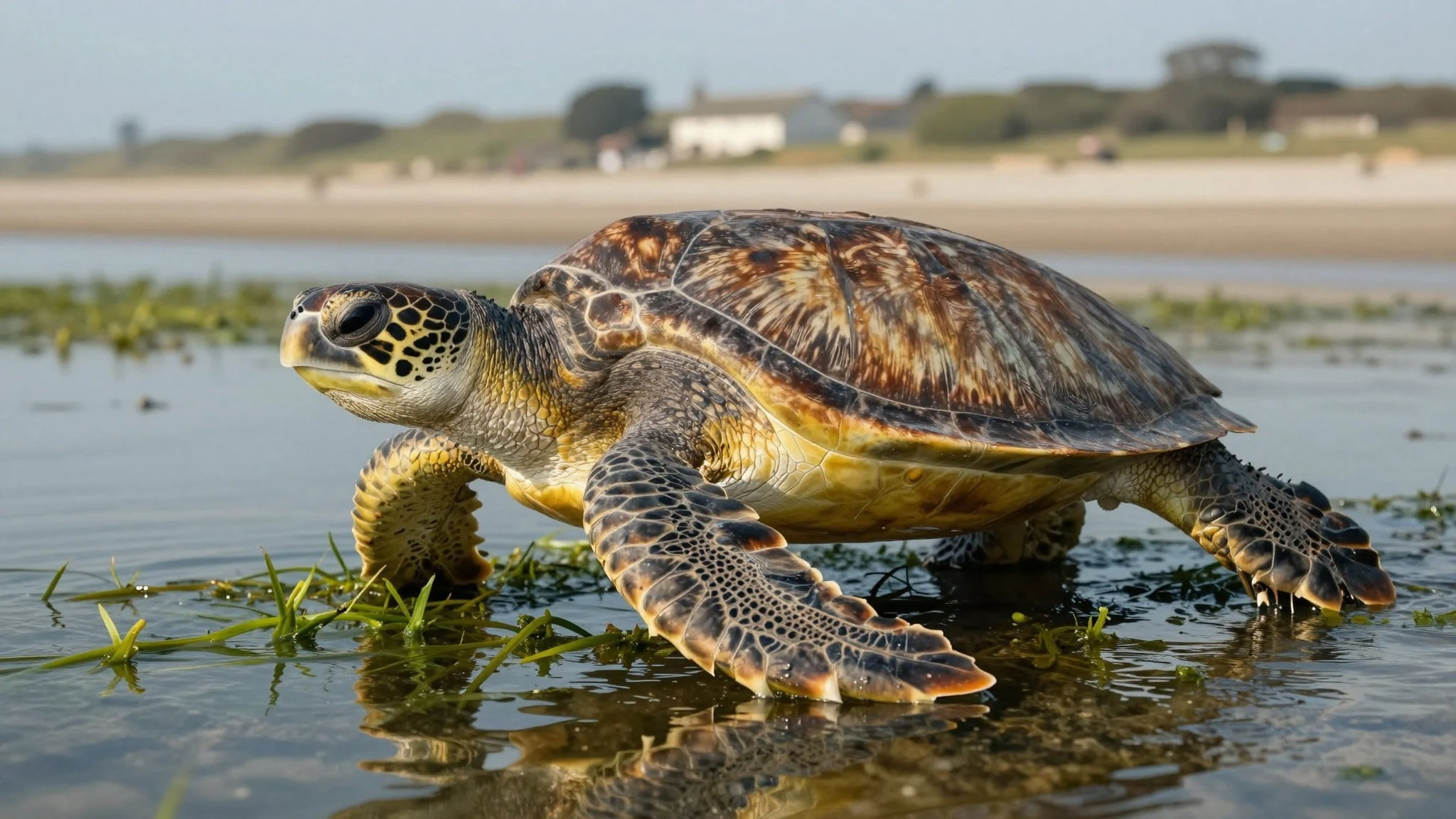
- Cuban crocodile (animal)
The Cuban crocodile is a small-to-medium crocodile whose true home is the island of Cuba. Most grow to about two metres, though big males can stretch well beyond three. The old account says a crocodile-like creature once lived here too, and its name helped shape the place's later name. Should you hope to glimpse one, keep well back, stay quiet, go with a knowledgeable guide, and never feed it.