Belfast
Belfast, United Kingdom
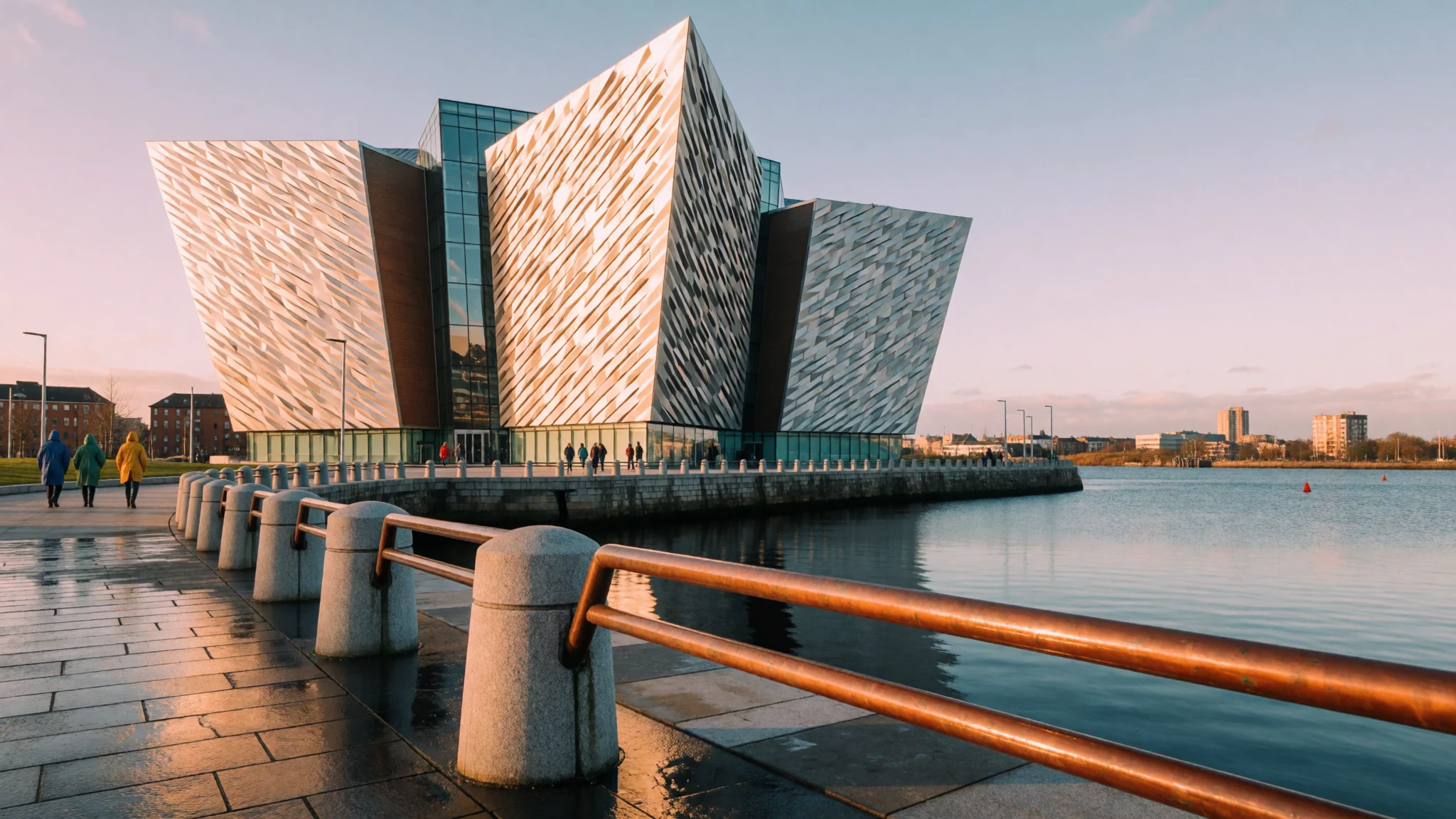
Belfast is a port city on the Lagan where linen, shipyards and a divided past sit beside a compact, walkable centre.
The place
Water defines Belfast, capital of Northern Ireland, its largest city and the port that still sets the city's scale. The Lagan meets the streets here, then broadens into Belfast Lough and the North Channel, so open sea is a continuation of the river rather than a distant coast. Elevation is only 3 metres, which is why the quays feel level with the pavements. The city population is 345,418. Day-to-day civic detail sits on the official site, https://www.belfastcity.gov.uk/. An English charter in the early seventeenth century marks the planned town, but growth came with Scottish Presbyterian families who settled in numbers. Their anger at Ireland's Anglican establishment later fed a rising, and after that the union with Great Britain. London money and export markets did the rest. Linen mills made the town famous, and by the time city status was granted in the late nineteenth century the linen trade here was, on the historical account, the largest centre of that manufacture in the world. Shipyards followed. In the early twentieth century they were turning out as much as a quarter of the kingdom's newly built ships. Mills and yards hired people from the Catholic countryside, and a town that had long been Protestant grew more divided as the workforce changed. That history is still written on gable walls and in the way districts face one another. The centre itself is compact and low, easy to cross on foot, with the river as one boundary and hills — older forts among them — closing the view. Rain is ordinary here: a maritime climate, softened by the Gulf Stream and the North Atlantic Drift, so winters rarely bite hard and summers rarely scorch.
Its story
Belfast is a name with a river inside it. In Irish it is Béal Feirste, which points to the Farset's outlet. That lesser stream's title, fearsaid, refers to a sandbank or to a ford usable when the tide dropped. The meeting of Farset and Lagan once lay on the line of High Street. Queen's Bridge is the landmark for that shallow crossing today. Late in the eighteenth century the Farset was covered over. The crossing that gave the city a name is now a street. Local speech keeps other shapes of the same word. Guides to Ulster Scots spelling record Bilfawst, Bilfaust and Baelfawst. Emigrants took the name overseas. In the United States it labels a whole scatter of towns, the largest of them in Maine. South Africa, New Zealand, Canada and Australia each have one as well. The ford is not the beginning. People used this ground from the Neolithic onward. Near the city, the Giant's Ring is a henge about five thousand years old, and hill forts of the Iron Age remain visible on the surrounding ridges. Early in the fourteenth century, church taxes recorded in papal rolls name two places of worship. One was the Chapel of Dundela at Knock, in the east; cnoc simply means hill. Some writers join that chapel to the seventh-century evangelist St. Colmcille. Ford, henge and tax entry tell the same kind of story. This was a practical place: a bar of sand, a hill, a church worth assessing. The industrial port came later, on top of that older usefulness.
What to see
- Belfast City Hall — Donegall Square, city centre
Belfast City Hall is the white civic building at the heart of the centre, raised in a baroque manner from Portland limestone in the early twentieth century. Council chambers and the city's administrative offices still work inside it. The same design was repeated for Durban's city hall in South Africa, a reminder of how widely this municipal style travelled.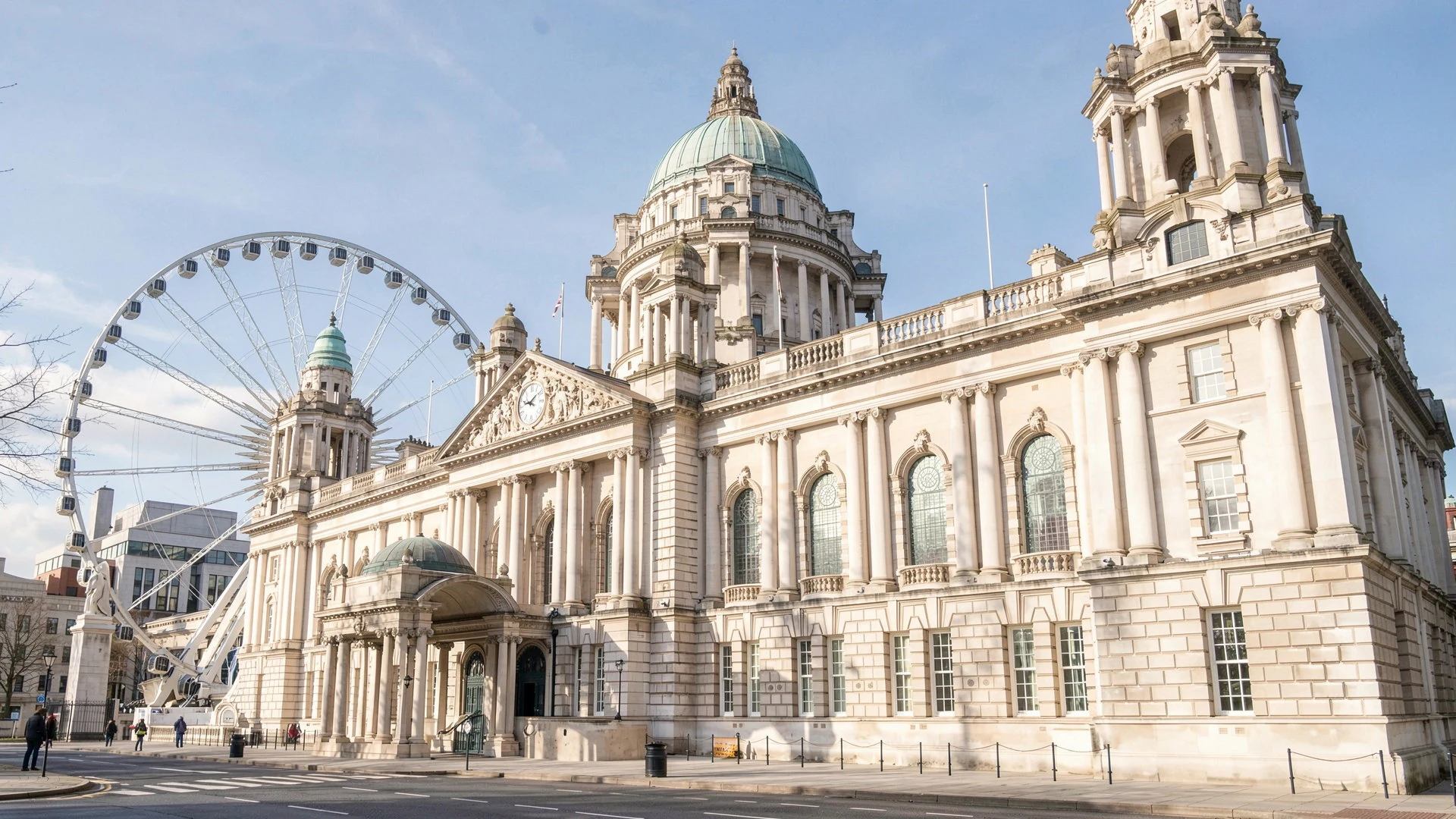
- Saint Anne's Cathedral — Cathedral Quarter
Saint Anne's Cathedral, in Belfast's Cathedral Quarter, is the Church of Ireland cathedral, built in a Romanesque style around an older parish church and opened in the early twentieth century. The older church was not cleared away first; the new walls went up around it. The interior is a working Anglican space, so a visit fits between the civic core and the warehouse galleries nearby.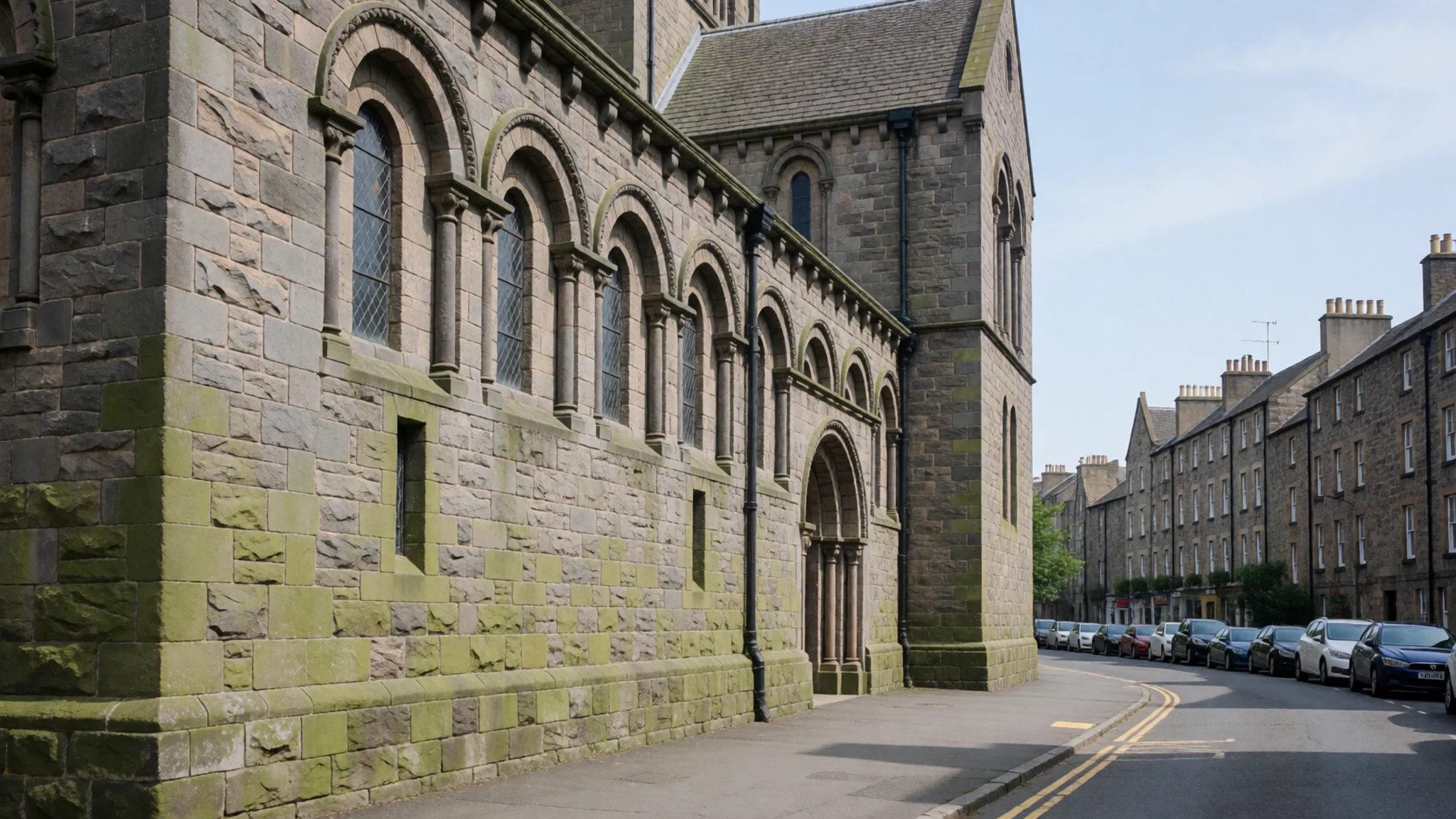
- Queen's University Belfast — Queen's Quarter, south Belfast
Queen's University Belfast stands in the south of the city, a red-brick Victorian range in a Tudor manner, with long grounds around it. The design looks toward Magdalen College, Oxford, in its brick and its collegiate plan. Students give the neighbouring streets their rhythm, and the lawns make this an easy pause between the centre and the museum quarter beside the botanic park.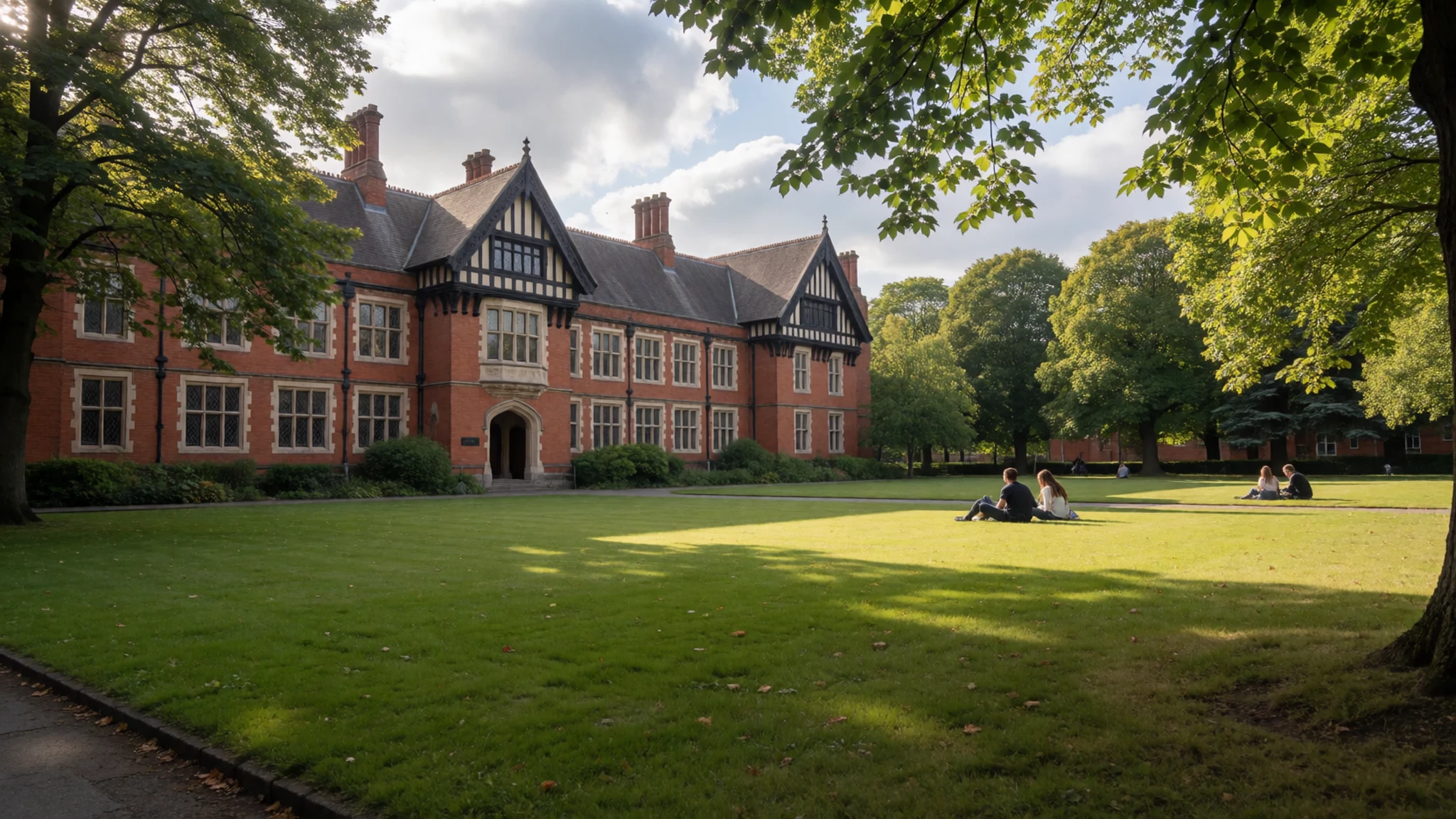
- Ulster Museum — Botanic Gardens
The Ulster Museum in Belfast sits by the botanic gardens, in a building the city has used for collections since the eighteen-thirties. It began with the Belfast Natural History Society as a municipal museum and art gallery, and it still joins natural history with art under one roof. Rooms reward a slow hour when the weather turns, which it often does.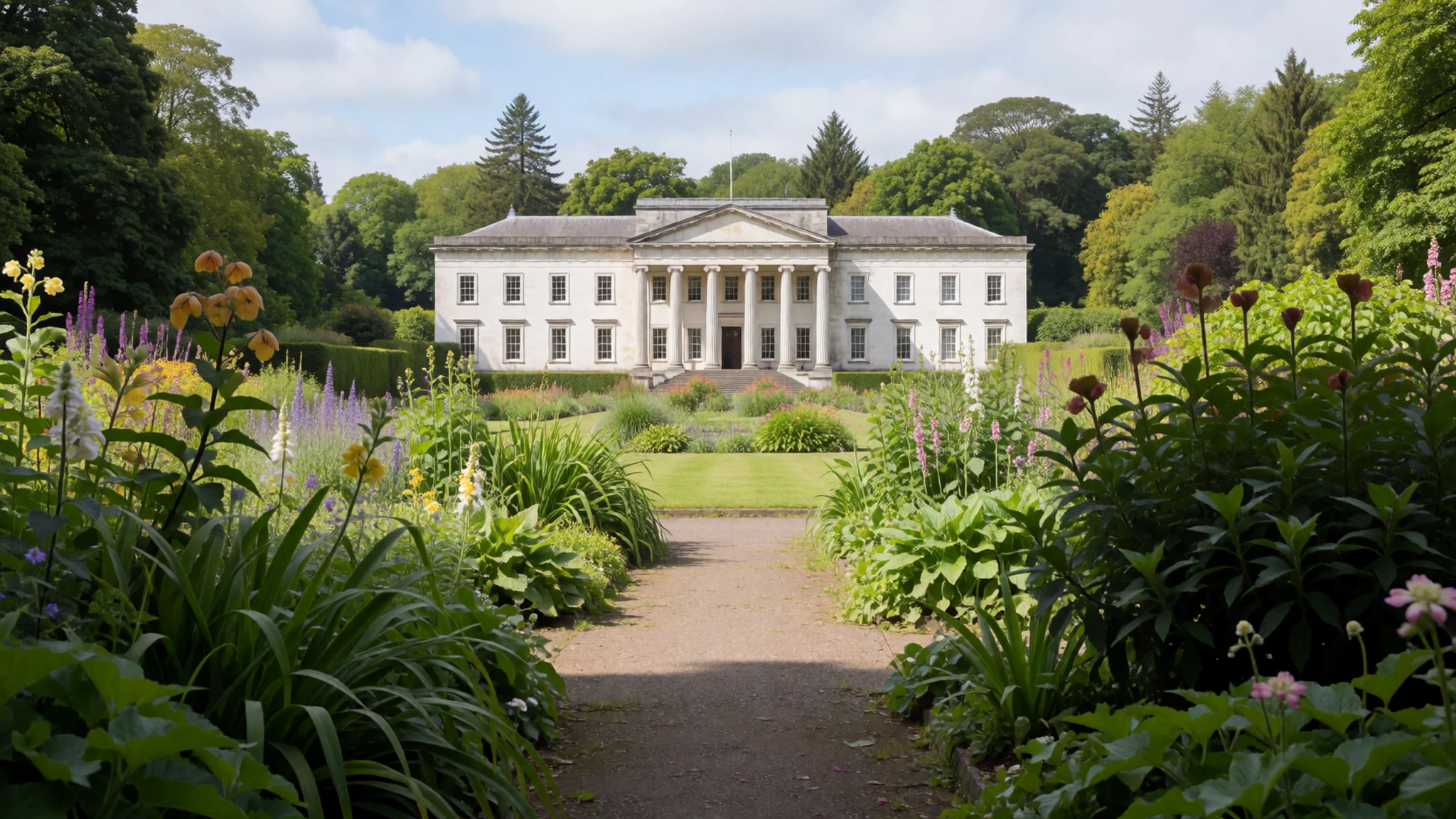
- Northern Ireland War Memorial Museum — Cathedral Quarter
The Northern Ireland War Memorial Museum in Belfast depicts city life during the Second World War. The emphasis is the urban story of a shipbuilding port — work, streets and the pressure of those years — rather than a tour of overseas battles. The collection is concentrated, so it fits a pause between Saint Anne's and the warehouse galleries of the cathedral streets.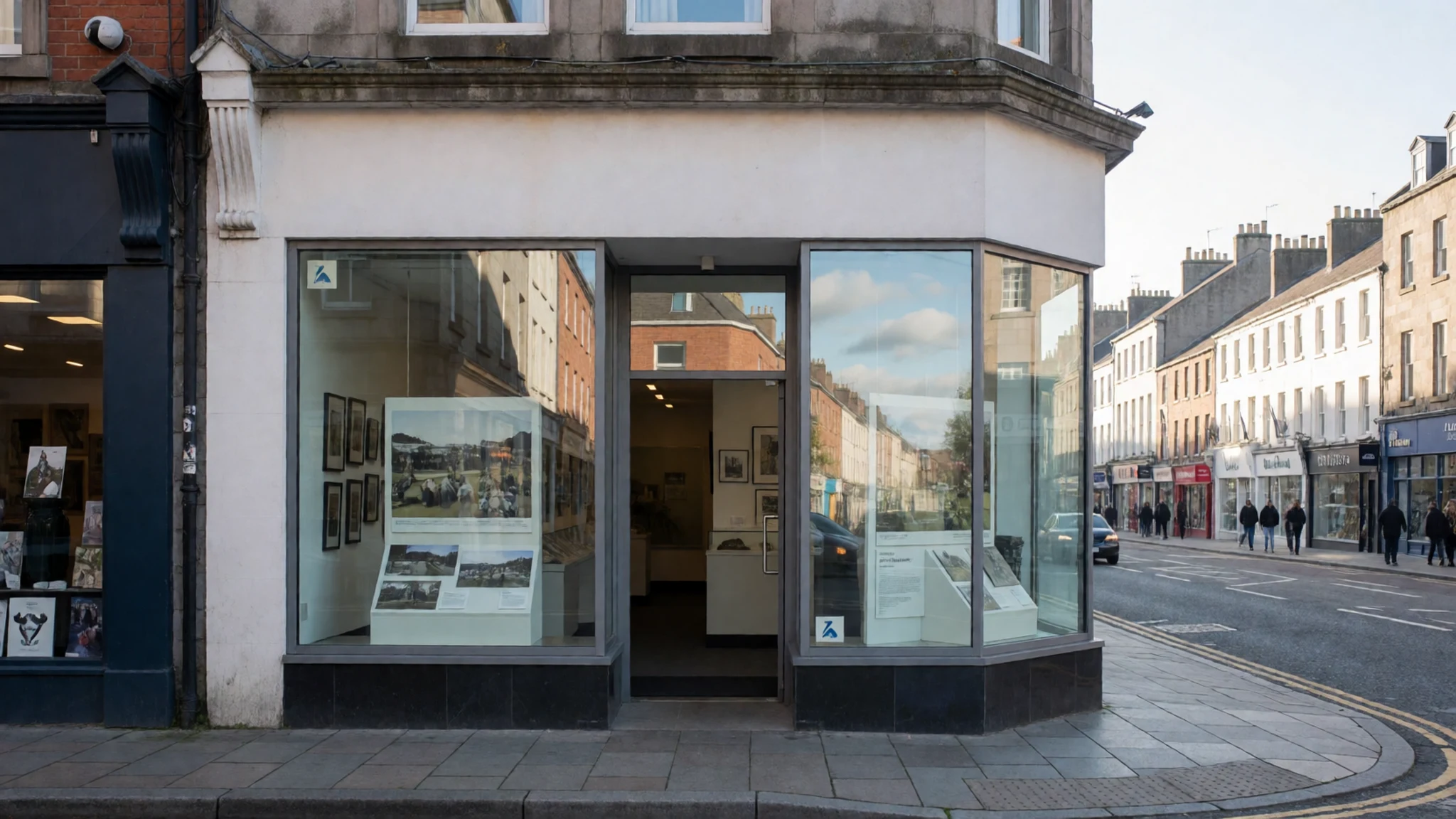
Culture
Belfast kept a Georgian habit of founding civic rooms, and several of them still do the city's cultural work. Clifton House belongs to the Belfast Charitable Society and dates from the late eighteenth century. The Linen Hall Library, begun by the Belfast Society for Promoting Knowledge in the same broad era, remains a members' library with a public face. The Ulster Museum grew out of the Belfast Natural History Society in the eighteen-thirties, first as a municipal museum and art gallery, and it still mixes those two purposes. Botanic Gardens, laid out in the eighteen-twenties by the Belfast Botanic and Horticultural Society, give the south of the centre its green room. In August the gardens host the Belfast Melā, a festival of cultures from beyond the city as well as within it. Photography has a home of its own at Belfast Exposed, a gallery in a converted warehouse with a deep archive behind the changing shows. The Victorian Belfast Central Library adds an Irish collection and files of Northern Irish newspapers. None of this is separate from the street. Murals and the memory of division are culture too, and they ask for manners. Ask before you photograph people, and do not treat a mural or a memorial as a neutral backdrop.
What to wear
Belfast's cloth is linen. When the mills were at their height, accounts call the linen trade here the largest of its kind anywhere. Flax, spun and woven in Ulster, was both a luxury cloth and ordinary household wear. Linen shirts, handkerchiefs and household cloth were the wearable form of that trade. There was no single folk costume that marked a Belfast citizen the way a court dress marks a capital; Sunday and civic dress followed the tailored habits of Britain and Ireland, in wool as well as flax. What people wear now is the clothing of a rainy north-European city. Office workers cross Donegall Square in coats and suits; students around Queen's favour jeans, trainers and layered jackets; a waterproof shell is the garment seen in every month. High Street fashion is ordinary and contemporary, not a costume for visitors to decode. A visitor should dress for wet stone and mild air. A coat that keeps rain out, shoes with a grip, and a layer that can be added or removed will do more than a formal outfit. At Saint Anne's and other churches, covered shoulders and a quiet pair of shoes match the room. Bright hiking gear is unnecessary in the centre, but linen-white trainers belong to a dry hour, because the pavements do not stay clean.
What to eat
- Ulster fry — a traditional cafe in the city centre
The Ulster fry is Belfast's long breakfast: bacon, sausage, egg, fried bread and soda bread on one plate, often with extras piled on. It is the meal people seek when they want something heavy and hot, in a traditional city-centre cafe that still cooks breakfast well into the morning.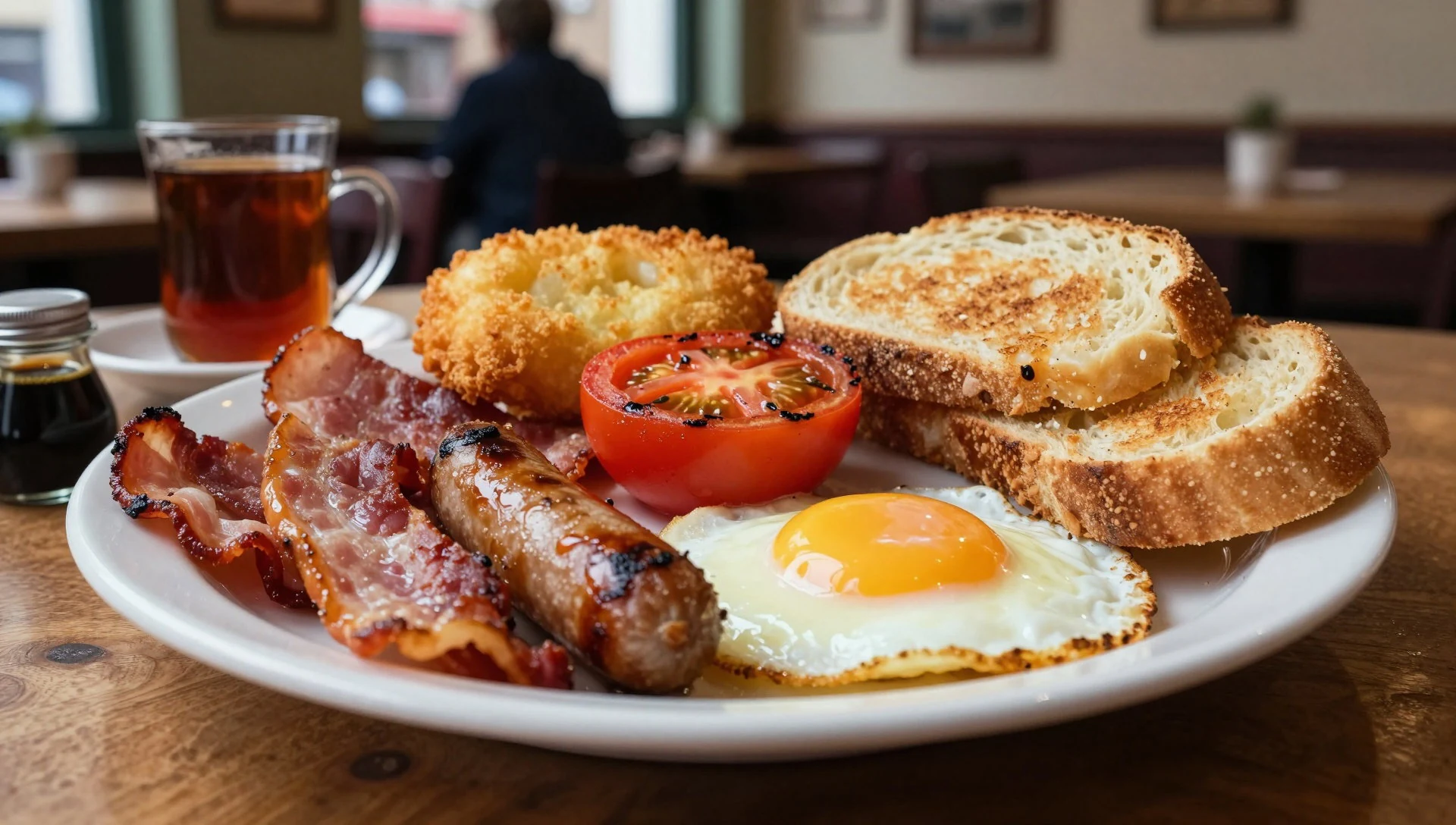
- Soda bread — a bakery or old-style cafe in the city centre
Soda bread is the soft, quick loaf that sits on a Belfast breakfast plate beside the fry, and it also appears with soup or as a side at a plain lunch. A bakery or an old-style cafe in the centre is the place to ask for it.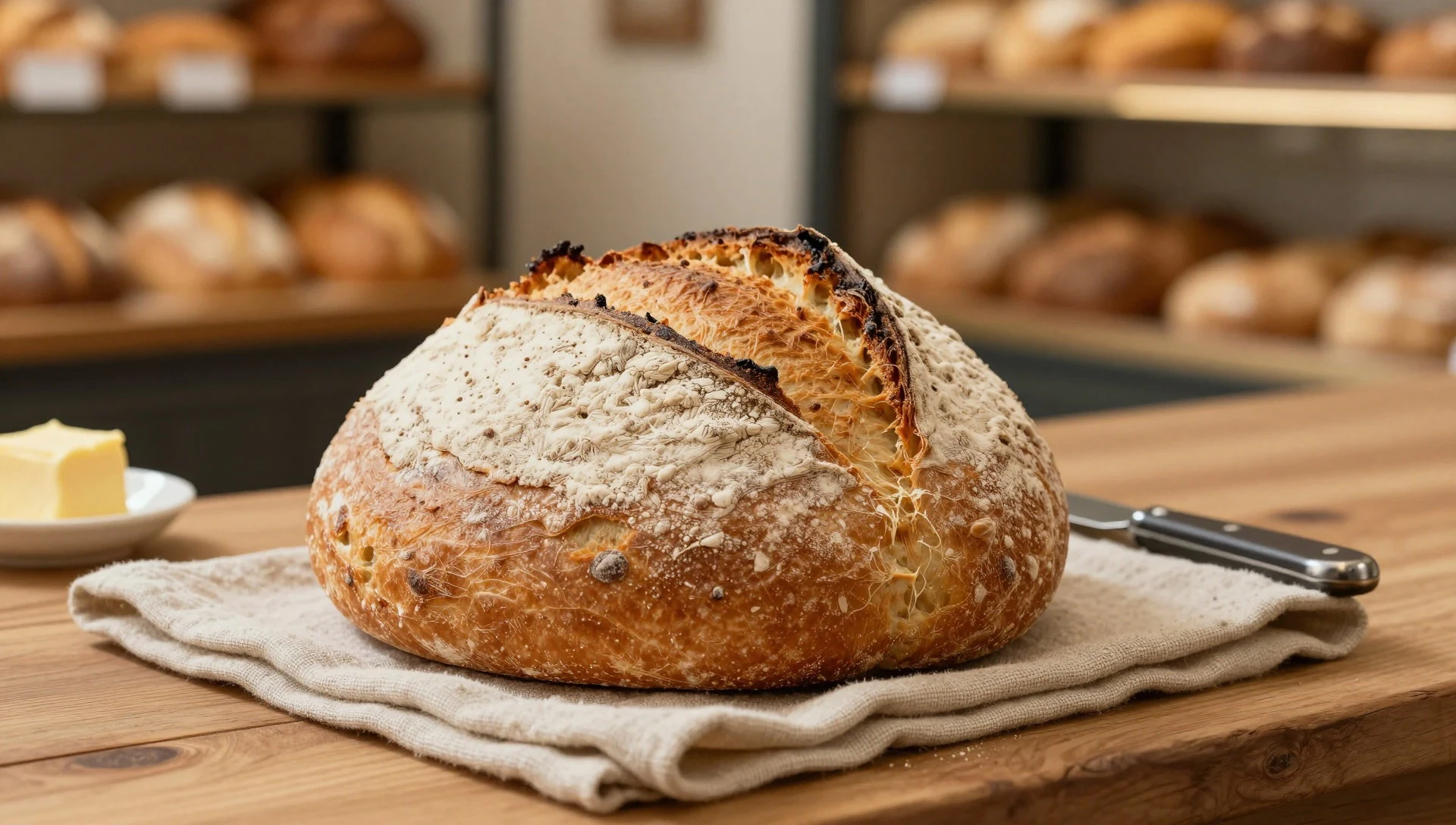
- Filled sandwich — cafes south of the centre and near the bus and railway station
A filled sandwich is the practical Belfast lunch when a full fry is too much: thick bread, a generous filling, and enough of it to count as a meal. Cafes south of the centre, and counters near the main bus and railway station, are known for that generous size. - Pub meal — a city-centre pub, including those near the stations
Pub food in Belfast is the dependable evening plate: a hot main, a pint if wanted, and a room that is as much local as it is for visitors. The reliable versions are ordinary city pubs, including the busy ones near the centre's stations, rather than a special booking. - Cooked lunch — an old-style cafe in the city centre
A traditional cooked lunch in Belfast is the midday sibling of the fry: simple hot food, an old-fashioned room, and no fuss about the menu. Cafes of that kind cluster in the centre, the sort of place where a regular still takes the same table.
Plan it
Best time. Late spring through early autumn is the easiest stretch, with mild air and long evenings. Summer heat rarely becomes harsh, because the Gulf Stream and the North Atlantic Drift moderate this coast, and winter cold rarely becomes severe, though the days grow short. Rain falls often in every season, so the better plan is a waterproof coat, not a hunt for a dry month.
How long. 3–4
Getting there. Fly into George Best Belfast City Airport, the city airport named in the travel notes. A bus runs from the terminal to Queens Square, Victoria Square, Wellington Place and Grand Central Station. Times change, so check the operator and the city site, https://www.belfastcity.gov.uk/, before you travel.
Budget. mid
Tips
- Book museum times ahead when schools are on holiday; the popular indoor rooms fill.
- Begin at City Hall early, before coach groups reach Donegall Square.
- Carry a card and some cash, because small cafes and stalls do not all take the same payment.
- Keep a waterproof layer to hand in every month; showers are ordinary.
- Use long summer evenings for the Lagan path, and shift winter afternoons indoors once the light fades.
Etiquette
- Ask before photographing people, murals or memorials.
- Let residents decide whether to talk about the conflict; do not press.
- Lower your voice in the cathedral, the Linen Hall Library and museum galleries.
- Follow shoe and silence customs if a church door asks for them.
Nearby
Sources
- Wikidata Q10686 (CC0)
- Wikipedia (rev 1384091238) (CC BY-SA 4.0)
- Wikivoyage (rev 5394954) (CC BY-SA 4.0)
- Photo: Belfast skyline, City Quays (CC0)
- Photo: Parliament Buildings, Stormont (CC BY 2.5)
- Photo: Belfast City Hall, March 2010 (Public domain)
- Photo: Belfast Castle, August 2011 (CC BY 3.0)
- Photo: Titanic Belfast (CC BY-SA 1.0)
- Photo: Ulster Museum (CC BY 3.0)
- Photo: Ground plan of Belfast, 1685 (Public domain)
- Photo: Bastille Day celebration, Belfast, 1791 (Public domain)


