Aberdeen
Aberdeen, United Kingdom
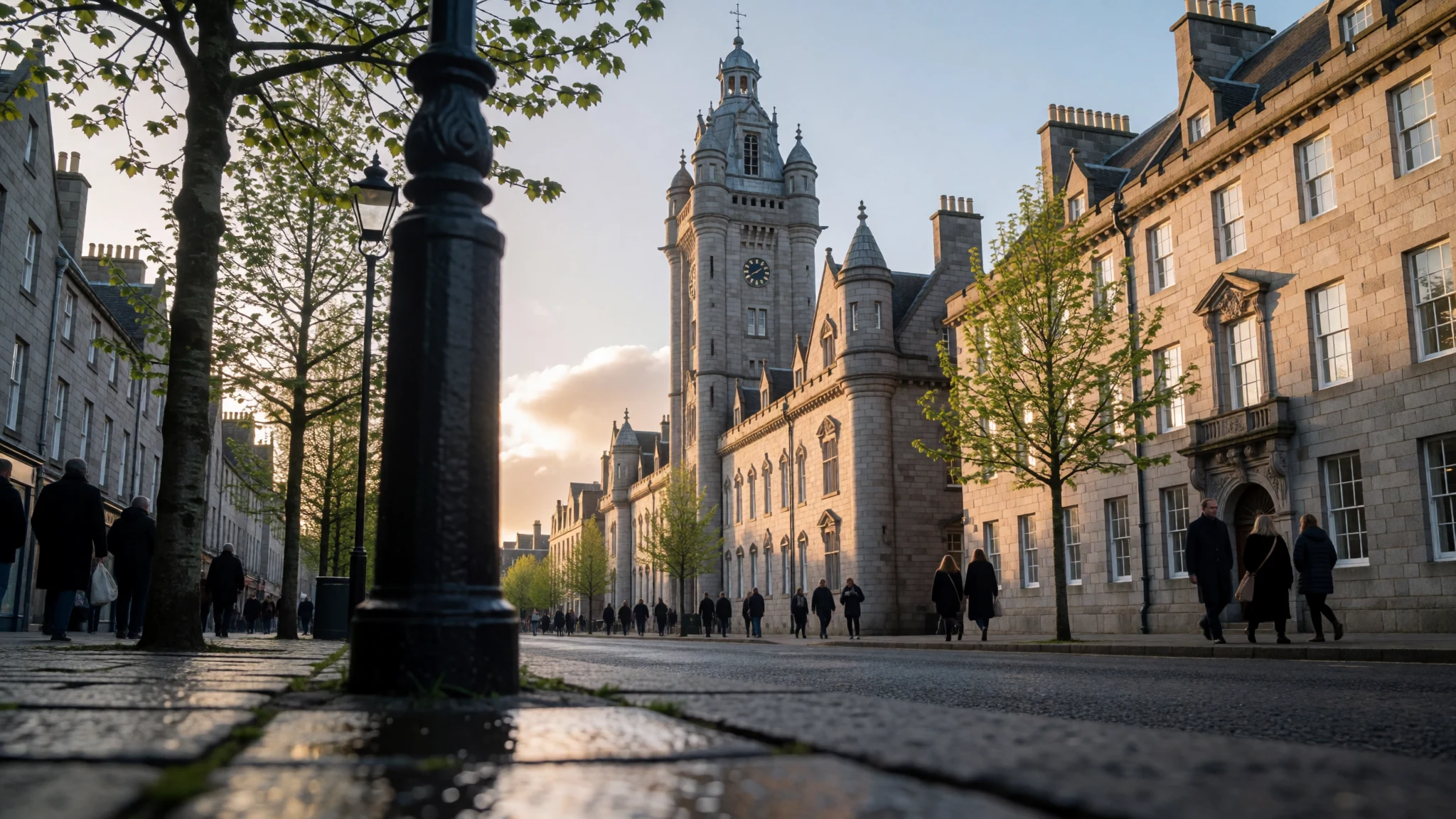
Aberdeen is a grey granite port city on Scotland's north-east coast, with fine galleries, big gardens and a sandy shore, best taken without hurry.
The place
Aberdeen is a port city on Scotland's north-east coast, where the rivers Dee and Don meet the North Sea. With around two hundred thousand residents, it is the third most populous city in the country. It is nicknamed the Silver City because so much of the centre is built in granite, which looks flinty grey in rain and glints when the sun appears. The climate is oceanic: summers are cool, winters mild but wet, and wind off the sea is almost constant. A long sandy beach runs along the edge of the city, better for a bracing walk than for swimming. Fishing, paper-making, shipbuilding and textiles once drove the economy. Oil and gas have since taken over, and the harbour, the heliport and the energy-company offices give the city a working, international feel that many Scottish towns lack. It is also a university city, and students fill the cobbled lanes of Old Aberdeen, the older settlement near the Don, during term. The two halves still feel distinct. New Aberdeen, around Union Street and the harbour, is busy and commercial, while Old Aberdeen is quiet and low-built. Aberdeen is a long way from other big cities by road or rail, so most visitors arrive by air, and many come for work rather than leisure. That makes it an honest, unpolished stop rather than a postcard one, and the reward is a city that is not performing for tourists.
Its story
Aberdeen began as two separate burghs. Old Aberdeen grew near the mouth of the Don, while New Aberdeen was a fishing and trading settlement where the Denburn stream reached the Dee estuary. People had lived in the wider area for at least 8,000 years before either took shape. The towns rose on royal favour. David I granted burgh status, which opened up trade and changed the local economy, and Wikidata gives 1175 as the city's founding date. A charter from William the Lion in 1179 confirmed the rights already granted, and in 1214 Alexander II allowed the burgesses to form a guild. That guild helped shape the town council and the daily business of Aberdeen for more than 700 years. The next big step came in 1319, when Robert the Bruce's Great Charter made the community a property-owner with its own financial independence. Some of that land survives as public parkland today, which is a rare case of a medieval gift still being used by ordinary people. The old trades of the harbour, mills and yards carried the city for centuries. Then the discovery of North Sea oil turned Aberdeen into a base for an entire offshore industry, and the sea that once supplied herring now supplies engineers, helicopters and supply ships. The city's history is one of practical, commercial people making the most of an exposed coast.
What to see
- Union Terrace Gardens — City centre, off Union Street
Union Terrace Gardens is a sunken park in the middle of Aberdeen, set below street level on the line of the old Denburn stream, which now runs under the railway. It is a calm green pocket beside the theatre and the shops, good for a coffee break between sights.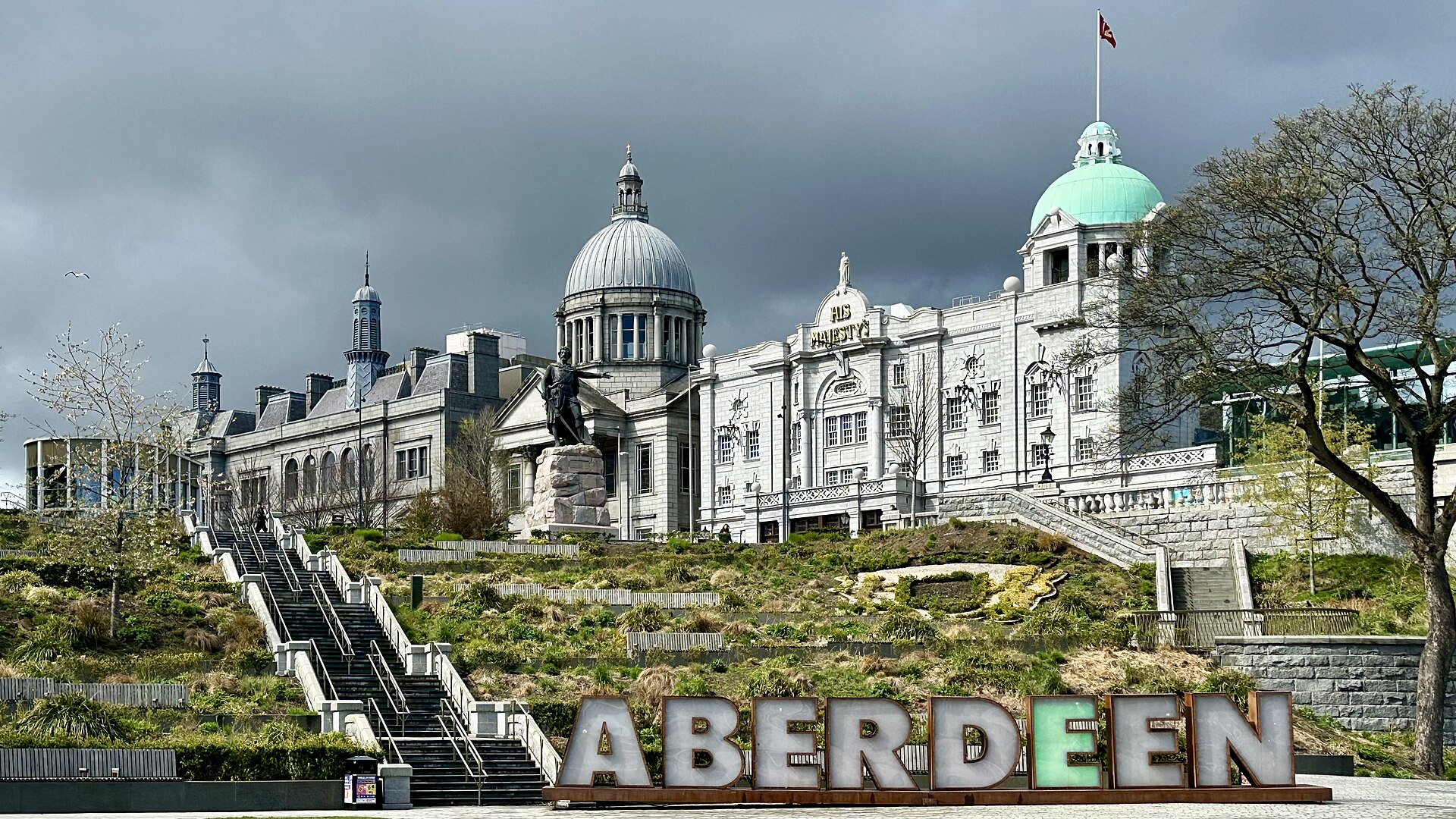
- Aberdeen Maritime Museum — Harbour area
Aberdeen Maritime Museum tells the story of the city's relationship with the sea, from fishing and trade through to North Sea oil. It sits close to the harbour, so the exhibits can be matched with a look at the working quayside outside. Check the official site for opening times.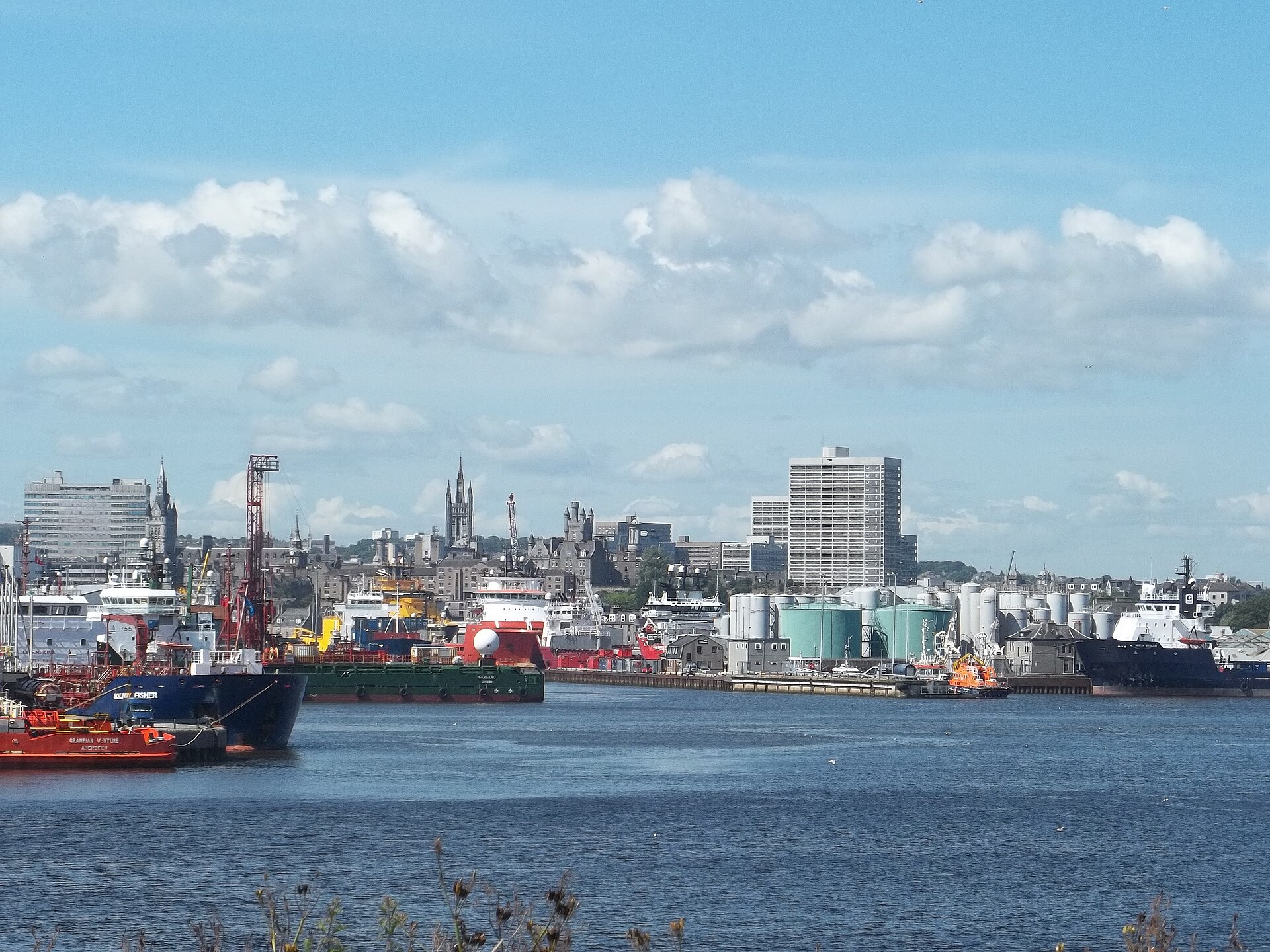
- Marischal College — Broad Street, city centre
Marischal College is a monumental granite building on Broad Street, and the clearest single picture of why Aberdeen is called the Silver City. Its frontage is best admired from the street. It is a good place to understand how a stone this hard became the city's signature material.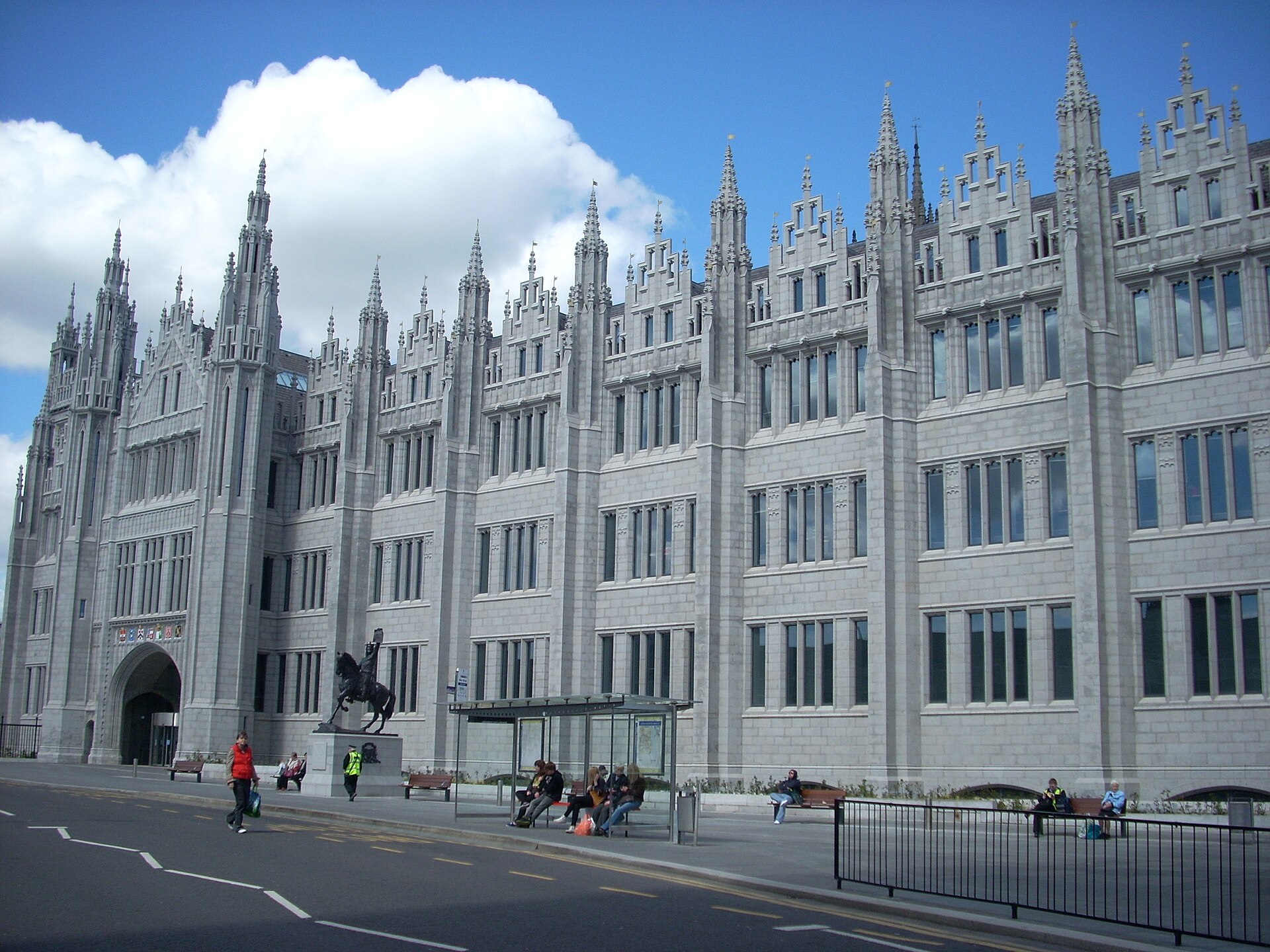
- Aberdeen Art Gallery — City centre
Aberdeen Art Gallery holds Impressionist, Victorian, Scottish and twentieth-century British paintings, along with silver and glass. It also houses the Alexander Macdonald Bequest of late nineteenth-century works, and rotating contemporary shows. It makes a dry, quiet choice on one of the city's wetter days. - David Welch Winter Gardens — Duthie Park, south of the Dee
The David Welch Winter Gardens are a set of glasshouses with tropical, arid, fern and Japanese plantings, and they are wheelchair-friendly. They are the answer to a cold, wet afternoon, warm and green when the sky outside is not. Entry is from either Polmuir Road or Riverside Drive.
Culture
Aberdeen has a broader cultural life than its size suggests. Scotland's national arts companies tour here regularly, there are theatres and an arts centre in a converted church, and the city has won recognition in the Britain in Bloom contest, including the Nicholson Trophy for the best-kept town. The Art Gallery and the Maritime Museum anchor the museum scene, and both are free of the crowds that fill the capital's equivalents. The north-east has its own way of speaking, called Doric, with rolling vowels and words that even other Scots find tricky. Visitors will hear it in shops, markets and on buses, and locals are usually happy to explain a phrase. The oil industry has brought people from around the world, so the city is more mixed than the granite suggests, and that shows in its restaurants, festivals and churches. Aberdonians have a reputation for dry humour and plain speaking, which is easy to mistake for coldness. It usually isn't. A short remark, a raised eyebrow and a joke at your own expense are the normal opening moves of a conversation. Sundays are quieter than in bigger cities, and some smaller places keep short hours. When ordering at a pub, go to the bar, wait your turn without waving, and do not expect table service unless you have been seated.
What to wear
Aberdeen's traditional dress is the Scottish kit that appears across the country: the kilt in a family or district tartan, woven from wool, worn with a jacket and sporran at weddings, ceilidhs and on Burns Night. Tweed and heavy knitwear belong to the north-east too, a legacy of fishing communities and cold coastal working life, when thick wool jerseys kept the wind out. Everyday dress now is practical and layered. Waterproof jackets, dark jeans and sturdy shoes are normal, and the oil sector gives the centre a smart-casual office crowd on weekdays. Evenings out are a little dressier, though nobody minds a tidy jumper. A visitor should plan for wind and rain in any month. Bring a waterproof, a windproof layer and a hat, even in summer, when the sea breeze can feel sharp. Shoes with a good grip help on wet granite pavements and on the sandy, windy beach path. No special dress is needed for churches or museums, though covered shoulders are a sensible courtesy in a service. A scarf and gloves are worth packing outside the warmer months, and an umbrella tends to be less useful than a hood when the gusts come in off the North Sea.
What to eat
- Aberdeen buttery (rowie) — Bakeries across the city
The buttery, or rowie, is a salty, flaky roll somewhere between a croissant and a pancake. It is heavy and rich, and is eaten plain or with butter or jam as a mid-afternoon snack with tea. Look in local bakeries. - Cullen skink — Pubs and seafood restaurants near the harbour
Cullen skink is a thick soup of smoked haddock, potato and onion, creamy and warming on a cold day. It is a north-east Scottish classic that suits Aberdeen's weather. Many pubs and seafood restaurants serve it as a starter. - Aberdeen Angus beef — Steakhouses and gastropubs in the centre
Aberdeen Angus beef is the local pride of the surrounding farmland, usually served as a steak or a burger. Quality varies, so ask where the meat comes from. Steakhouses and gastropubs in the centre are the usual places to try it. - Fish and chips — Chip shops near the harbour and beach
Fish and chips here means fresh white fish in crisp batter, with thick chips, salt and vinegar, taken away or eaten at a table. With a working port nearby, the fish is usually good. Shops cluster near the harbour and beachfront. - Indian and Asian restaurants — Streets around Union Street and the city centre
Aberdeen's oil-industry population has built a strong scene in Indian, Thai, Chinese and Georgian cooking, from contemporary Indian to small family-run eateries. For Indian travellers this can be a welcome change from pub food. Look around Union Street and the streets south of it.
Plan it
Best time. May to September, when summers are cool but the days are long and the rain is lighter. Winters are mild but wet, with short days, so the city feels greyer and quieter from late autumn.
How long. 2
Getting there. Aberdeen International Airport is at Dyce, northwest of the centre, with flights from many UK cities and several European ones. A regular airport bus runs to the main bus station beside the railway station and ferry terminal. By rail or road the city is far from the rest of Britain, so flying is usually quicker.
Budget. mid
Tips
- Book car hire in advance, as stock at the airport is limited
- Carry a waterproof layer in every season
- Check museum and garden opening times on their official sites before setting out
- Use the bus from the airport rather than a taxi, since it ends next to the rail station
- Cards are widely accepted, but carry a little cash for small cafés and markets
Etiquette
- Queue for buses and at counters, and thank the driver when getting off
- Order at the bar in pubs rather than waiting at a table
- Keep voices down on trains and in galleries
Nearby
Sources
- Wikidata Q36405 (CC0)
- Wikipedia: Aberdeen (rev 1380841940) (CC BY-SA 4.0)
- Wikivoyage: Aberdeen (rev 5418367) (CC BY-SA 4.0)
- Photo: Aberdeen Harbour, by Ragazzi00 (CC BY 3.0)
- Photo: Aberdeen City Centre from Tollohill Woods, by Ragazzi99 (CC BY-SA 4.0)
- Photo: Aberdeen town house clock tower, by Ikiwaner (CC BY 3.0)
- Photo: Silver City granite buildings, by Holger Uwe Schmitt (CC BY-SA 4.0)
- Photo: Union Terrace Gardens, by Florent Abel (CC BY-SA 4.0)
- Photo: Aberdeen Arts Centre, by Lucas Kendall (CC BY-SA 4.0)
- Photo: Union Street, Tram 9 (postcard) (Public domain)
- Photo: Marischal College (Public domain)


