Beauchene Island
Beauchene Island, United Kingdom
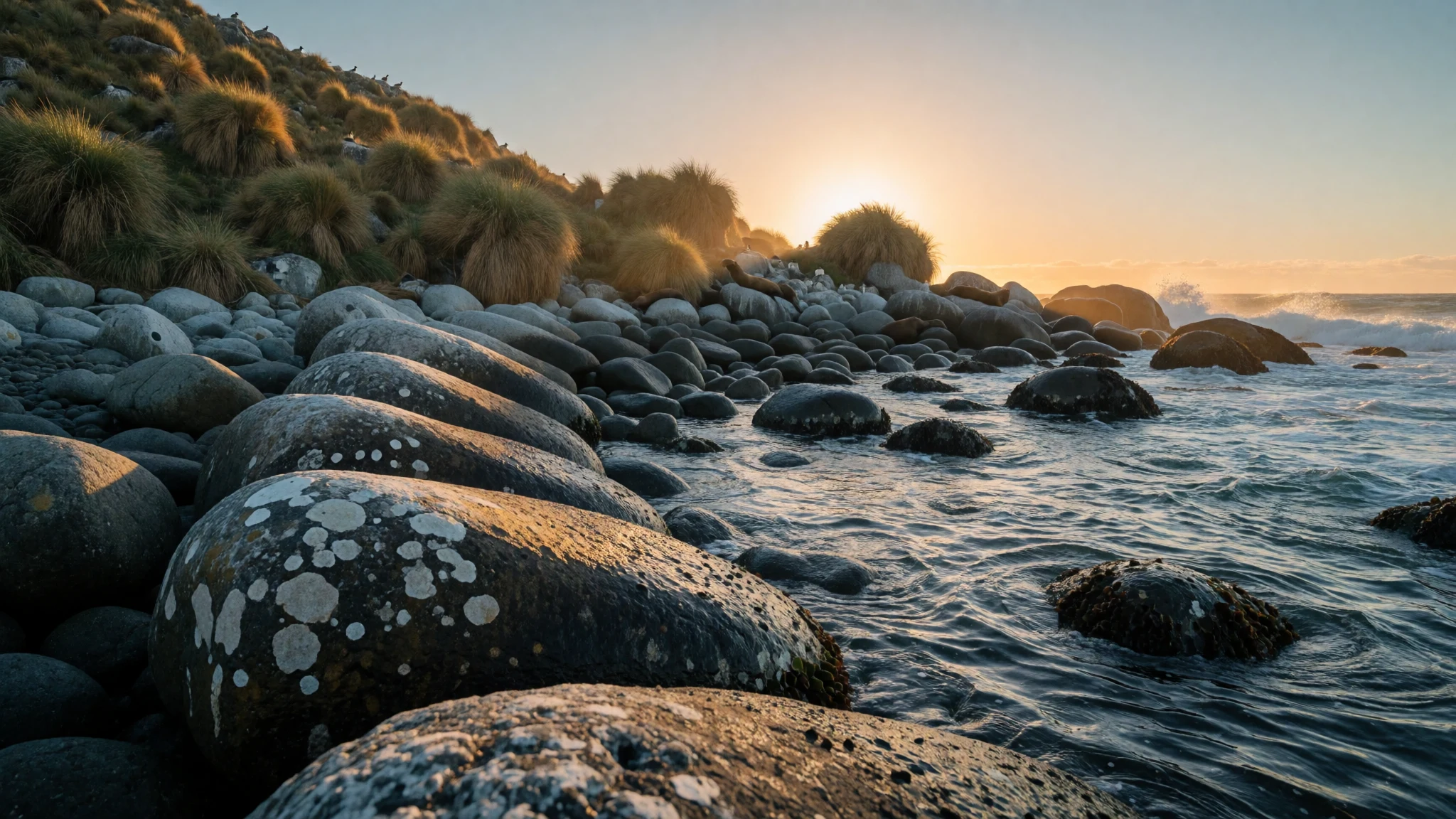
Beauchene Island is the Falklands' southernmost outpost, an uninhabited tussac-covered rock where seabirds and seals live almost undisturbed, and where landing needs official permission.
The place
Beauchene Island is the southernmost of the Falkland Islands, a small, uninhabited outcrop far beyond the low heathland of Lafonia. It covers 172 hectares, small enough to cross on foot in a short time, though almost nobody does. The island lies about 54 kilometres from Porpoise Point, across open South Atlantic water.
The two ends of the island look quite different. The north is cloaked in dense tussac grass, tall clumps that shelter nesting birds, and it rises gently from boulder beaches on the western shore to roughly 30 metres. Towards the south the ground climbs to around 70 metres, the cliffs on the eastern side grow higher, and the last stretch is almost bare of plants.
Isolation is the whole point of the place. No predators have been introduced, which is unusual now that rats and cats have reached so many islands, and the absence of visitors has kept disturbance to a minimum. Scientists treat it as a useful baseline for counting birds and watching the surrounding sea.
Boats can shelter in a natural anchorage off the east coast, though only when the weather is settled. Nobody lives here, and anyone wanting to land must first get approval from the Falkland Islands Executive Committee. Requests usually come from conservation or survey teams with a clear purpose, and long gaps between landings are normal.
Politics sits quietly in the background too. The Falklands are a British Overseas Territory that Argentina also claims, as the Islas Malvinas, so even a remote rock can touch a sensitive subject. For most travellers, Beauchene is a place to read about before exploring the main islands, rather than a stop on an itinerary.
Its story
Beauchene Island takes its name from Jacques Gouin de Beauchêne, the French navigator credited with finding it in 1701. Earlier claims are shaky. Anthony de la Roché may have seen land here in 1675 after getting off course around Cape Horn, though the island he actually reached is usually identified as South Georgia, given its icy peaks and deep bays. Supporters of Argentina's claim to South Georgia sometimes argue for Beauchene instead, so even this old puzzle carries a political edge.
After Beauchêne's visit, seal trappers tried to settle the island and failed. The grimmest episode came in 1834, when an American named McArthur put 100 people ashore. The hunting that followed wiped out the island's sea lions. They have since come back, which is the encouraging part of the record. Crumbling remains of houses from the 1830s still stand on the west side, a reminder that people once tried to make a living on a rock with almost no shelter.
Science arrived much later. The first proper scientific expedition came by helicopter in 1951 and stayed a month. During the Falklands War, an Argentine wreck lay on a reef just south of the island, and British soldiers spent around four weeks here. In recent years visits have been rare and tied to bird counts and marine surveys, with long stretches when nobody has landed at all.
The pattern is a familiar one for far southern islands: discovery, exploitation, abandonment, then a slow return of wildlife once people leave.
What to see
- The tussac slopes of the north — Northern end of the island
The northern end of Beauchene Island is where the dense tussac grass grows, in thick clumps that give birds cover and nesting ground. The land slopes gently here, which is why scientists favour it for counts. Anyone watching from a vessel offshore sees a green, shaggy fringe above the surf.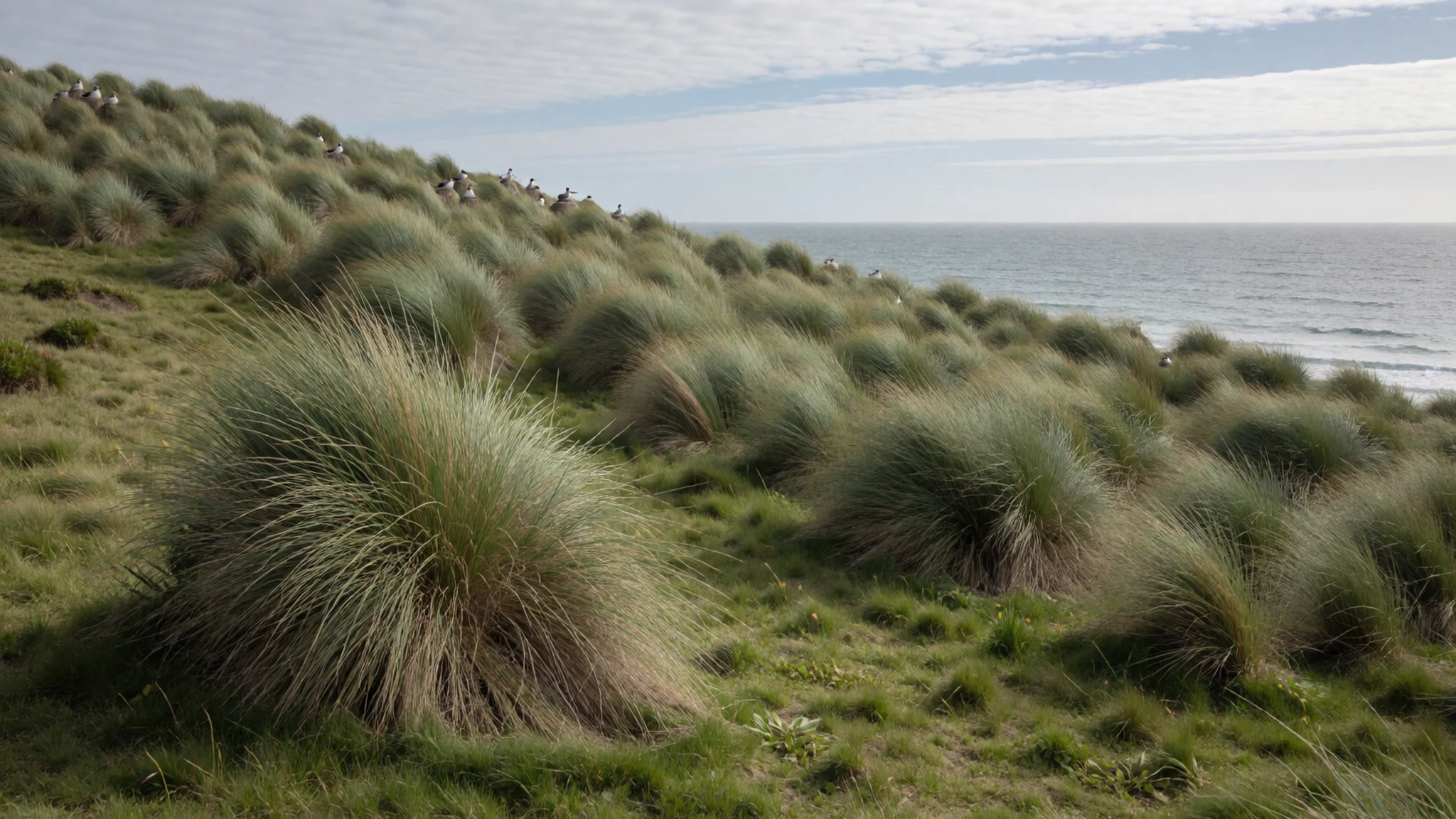
- The western boulder beaches — West coast
Along the west coast, the shore is made of rounded boulders rather than sand. These beaches are the likeliest spot for seals and sea lions to haul out, and they are also where the old house remains lie nearby. Landing is rough and only possible with official permission.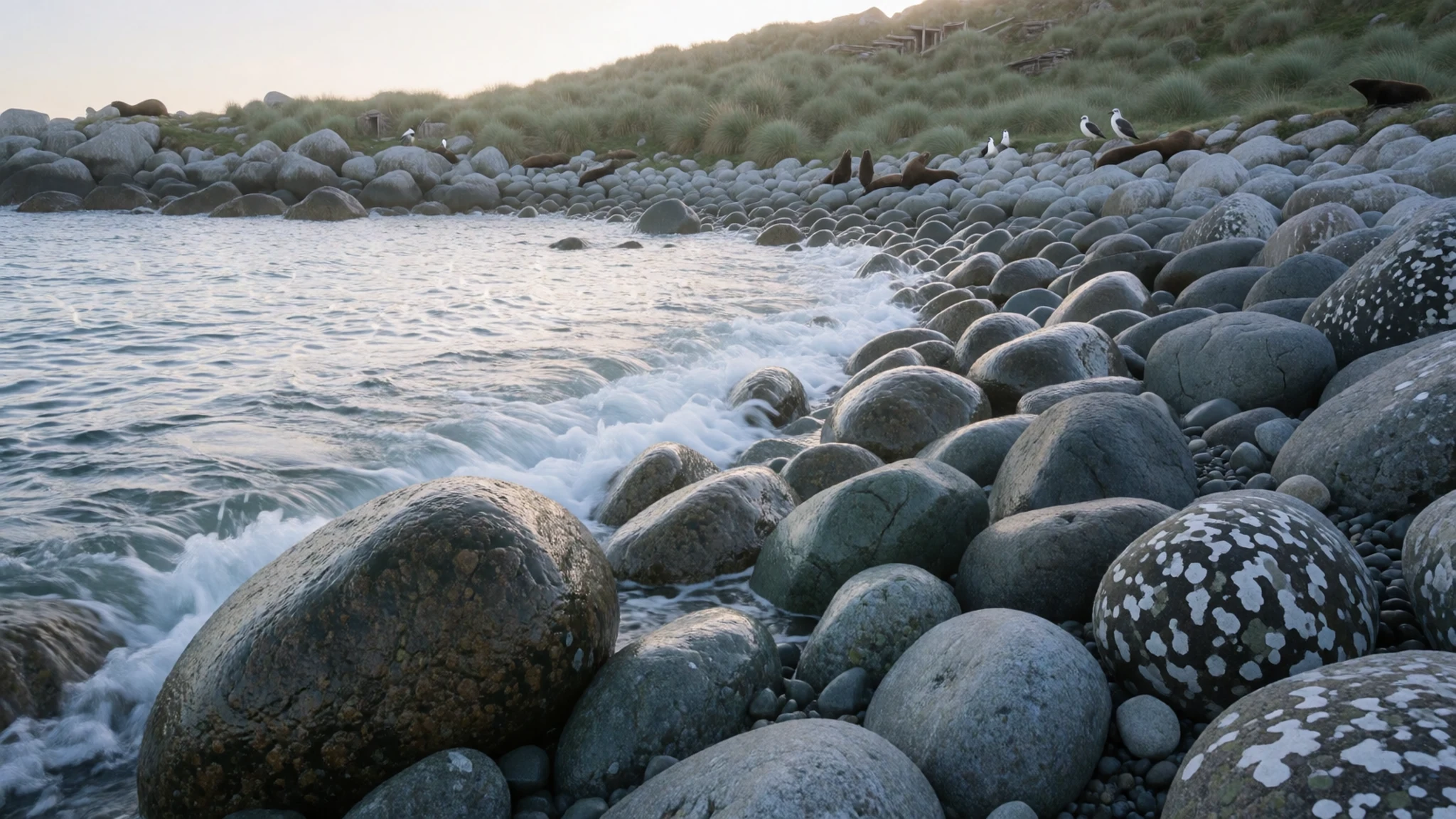
- The southern cliffs — Southern end of the island
The southern quarter of Beauchene Island is almost bare of vegetation, a stark contrast with the green north. The ground climbs to around 70 metres, and the cliffs on the eastern side are higher still. From the water, this end looks like a dark, wind-scoured wall.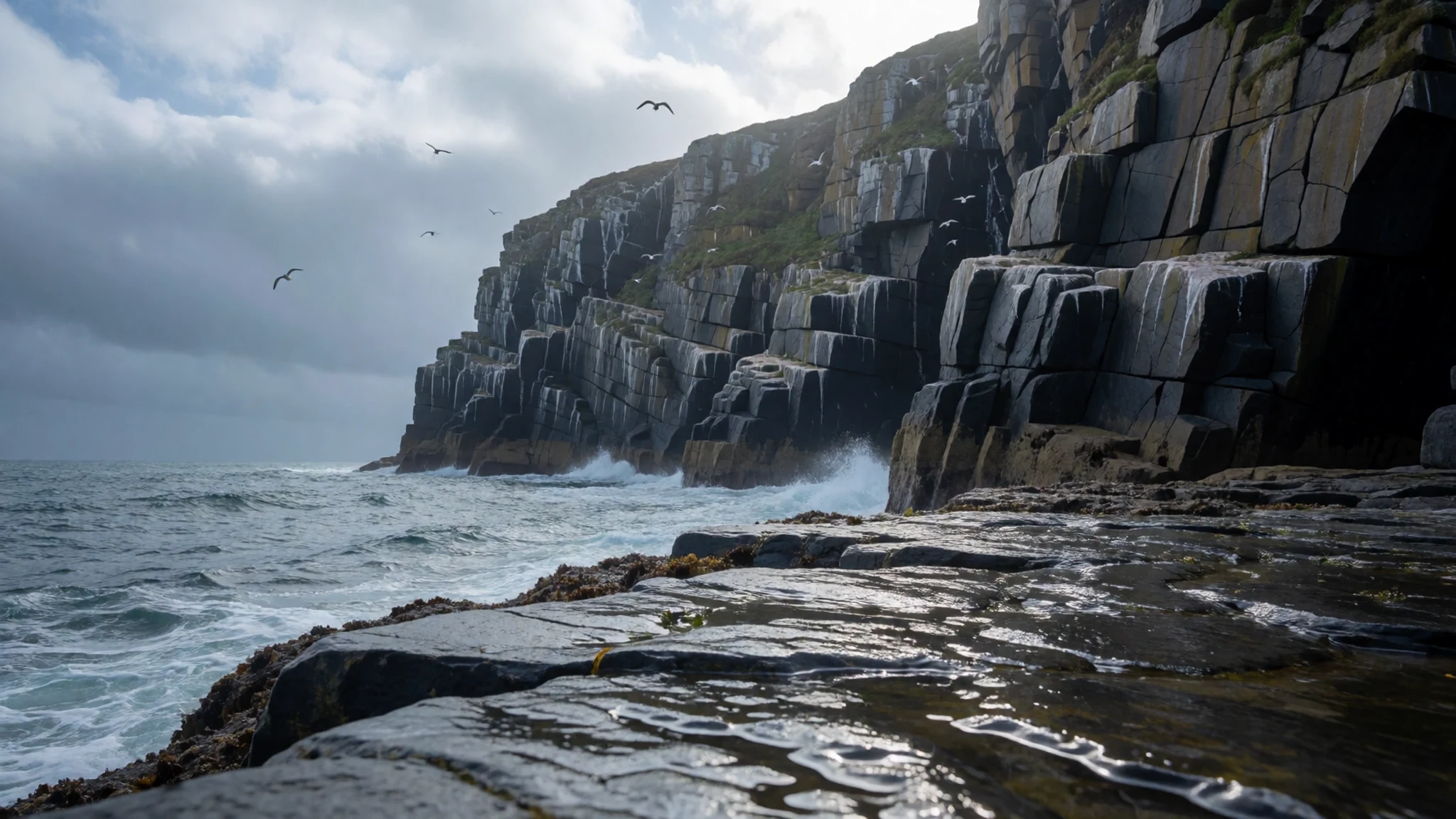
- Ruins of the 1830s houses — West side
On the west side, low remains of dwellings recall the failed attempts at settlement in the 1830s. They are not a developed site, only a few tumbled traces among grass and rock, but they give the island a human story. Looking and photographing from a respectful distance is the right approach.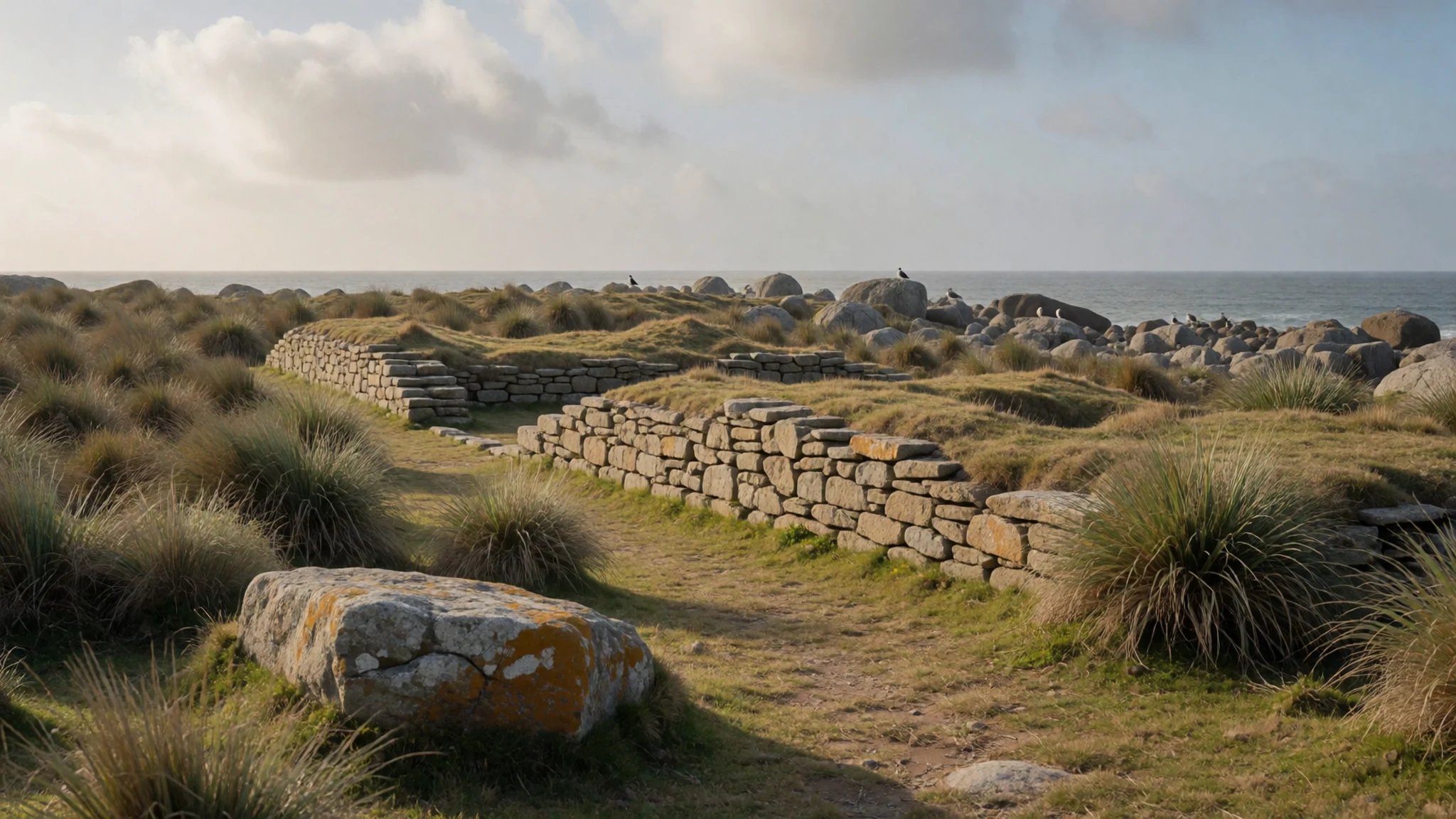
- The east-coast anchorage and surrounding sea — East coast
A natural anchorage off the east coast gives boats shelter in settled weather. The surrounding water is the best place to appreciate the island as a whole, with its green north and bare south, and to watch seabirds working the swell. Conditions change fast, so skippers plan with care.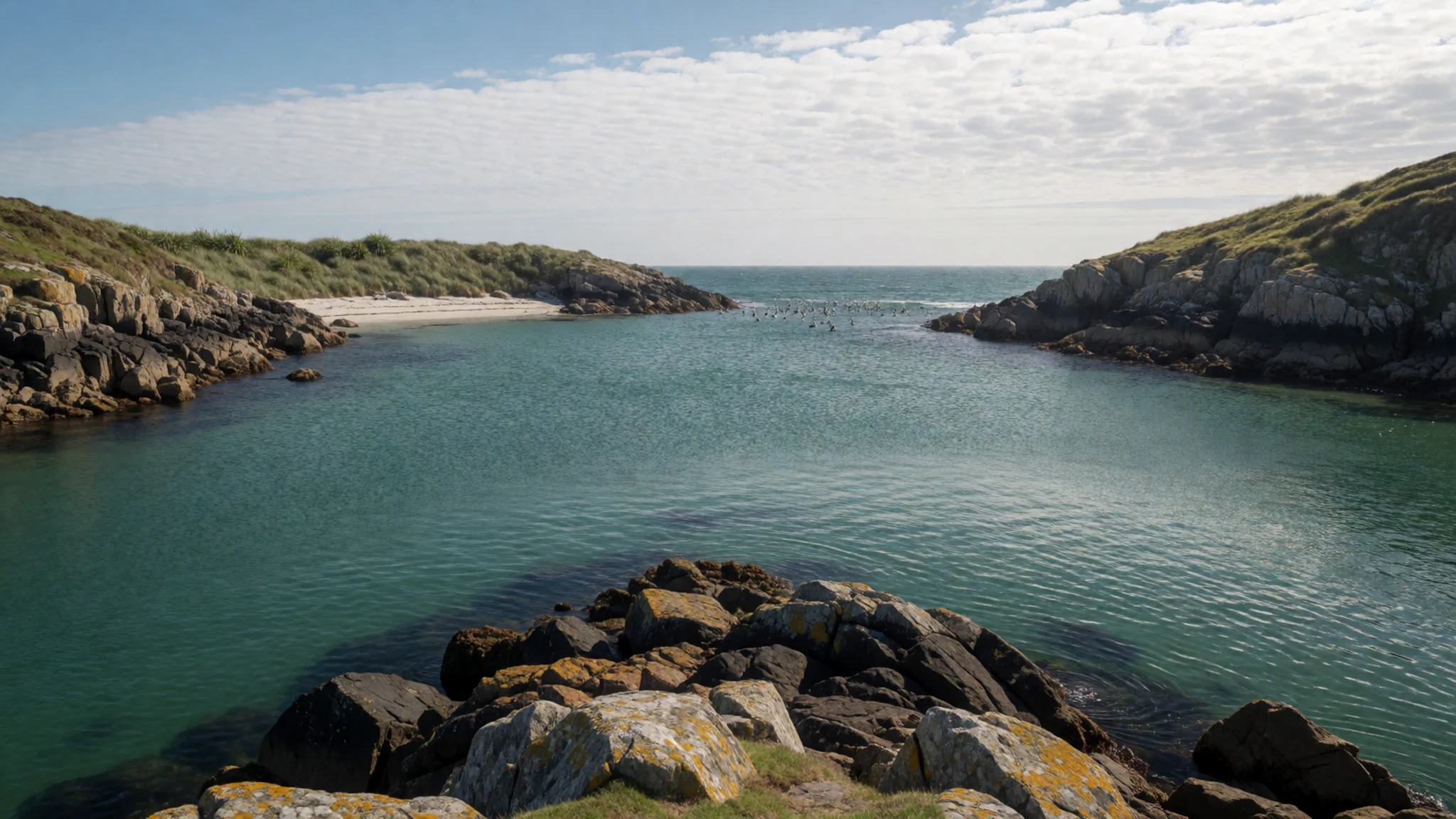
Culture
Beauchene Island has no residents, so the culture a visitor meets belongs to the Falkland Islands as a whole, centred on Stanley and on the farms and lodges of the countryside, which islanders call camp. Customs follow those of the United Kingdom, though often more conservatively, and life revolves around sheep farming, fishing, church, pubs and community events. Hospitality is warm and a little old-fashioned. Strangers are greeted, and lodges tend to feed guests very generously.
Social attitudes towards LGBT people are welcoming, and same-sex marriage is legal. Illegal drugs, on the other hand, are not tolerated. Margaret Thatcher is remembered warmly rather than divisively, which can surprise visitors from Britain.
Politics matters here more than a first-time visitor might expect. Many islanders remember 1982 at first hand, and a referendum in 2013 produced an overwhelming vote to remain British. Some residents are still wary of Argentines because of the war. Conservation is also part of local identity, and the closed status of Beauchene Island is a good example of how seriously the islands treat their wildlife.
Call the territory the Falkland Islands, never describe it as Argentine, and ask the landowner before camping or crossing farmland.
What to wear
Beauchene Island has no population, and the Falklands have no single national costume, so Falklands fashion is really a story of wool and weather. Sheep farming shaped local textiles: wool is spun, knitted and woven into jumpers, hats, socks and scarves, and farm and camp life is dressed in hard-wearing practical clothing. Such knitwear is worn year-round rather than on special occasions, and it is sold in gift shops in Stanley.
What people wear now is much like rural Britain. In Stanley, expect fleeces, waterproof jackets, jeans, wellington boots and woollen hats, with smarter clothes for church, weddings and community events. On farms, boiler suits, sturdy boots and waxed or windproof coats are normal. Nobody dresses to impress, but people are tidy.
Visitors should dress for wind, rain and sudden changes of temperature, even in the southern summer. Layers work best: a thermal base, a warm fleece or wool mid-layer, and a proper windproof, waterproof shell with a hood. Bring a hat, gloves and sunglasses, as the light on open ground can be harsh. Waterproof walking boots with good grip are essential for wet heath, boulders and slippery tussac. Anyone planning to land on a remote island like Beauchene, if permission is ever granted, needs expedition-grade waterproofs and boots that can be cleaned easily, since biosecurity rules are strict. No special modesty dress is expected anywhere.
What to eat
- Fish and chips — Pubs and cafés in Stanley
A staple of British-style eating that islanders still do well. Fish is cooked in batter and served with thick chips, often with peas and tea. It is a reliable, filling meal after a day in the wind and is easy to find in Stanley.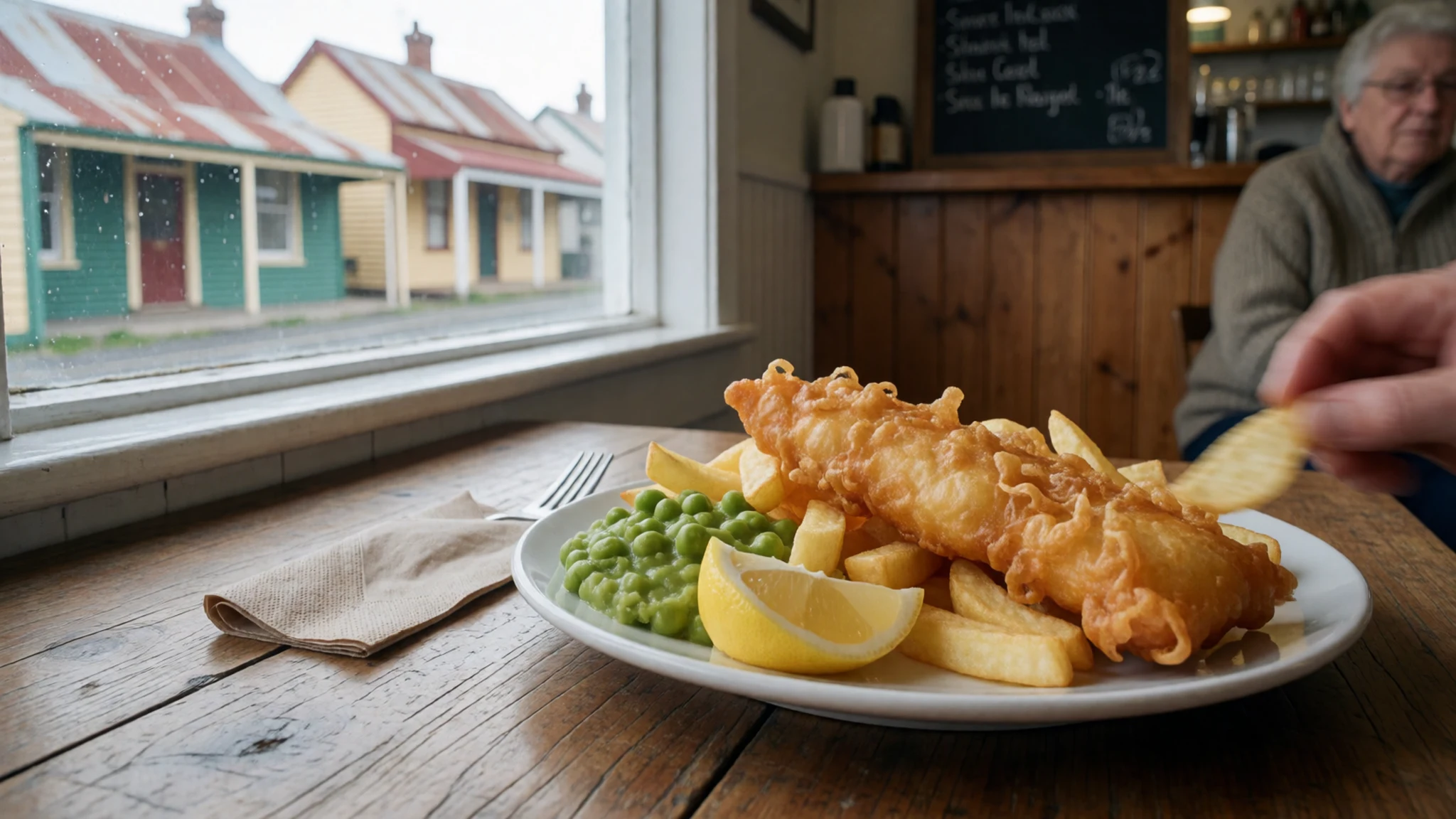
- Roast mutton — Farm and camp lodges, and Stanley restaurants
Mutton is the everyday meat of an island economy built on sheep, usually roasted and served with potatoes and whatever vegetables are available. Portions are generous, and the flavour is stronger than lamb. Many visitors find the lodge version the most satisfying meal of the trip.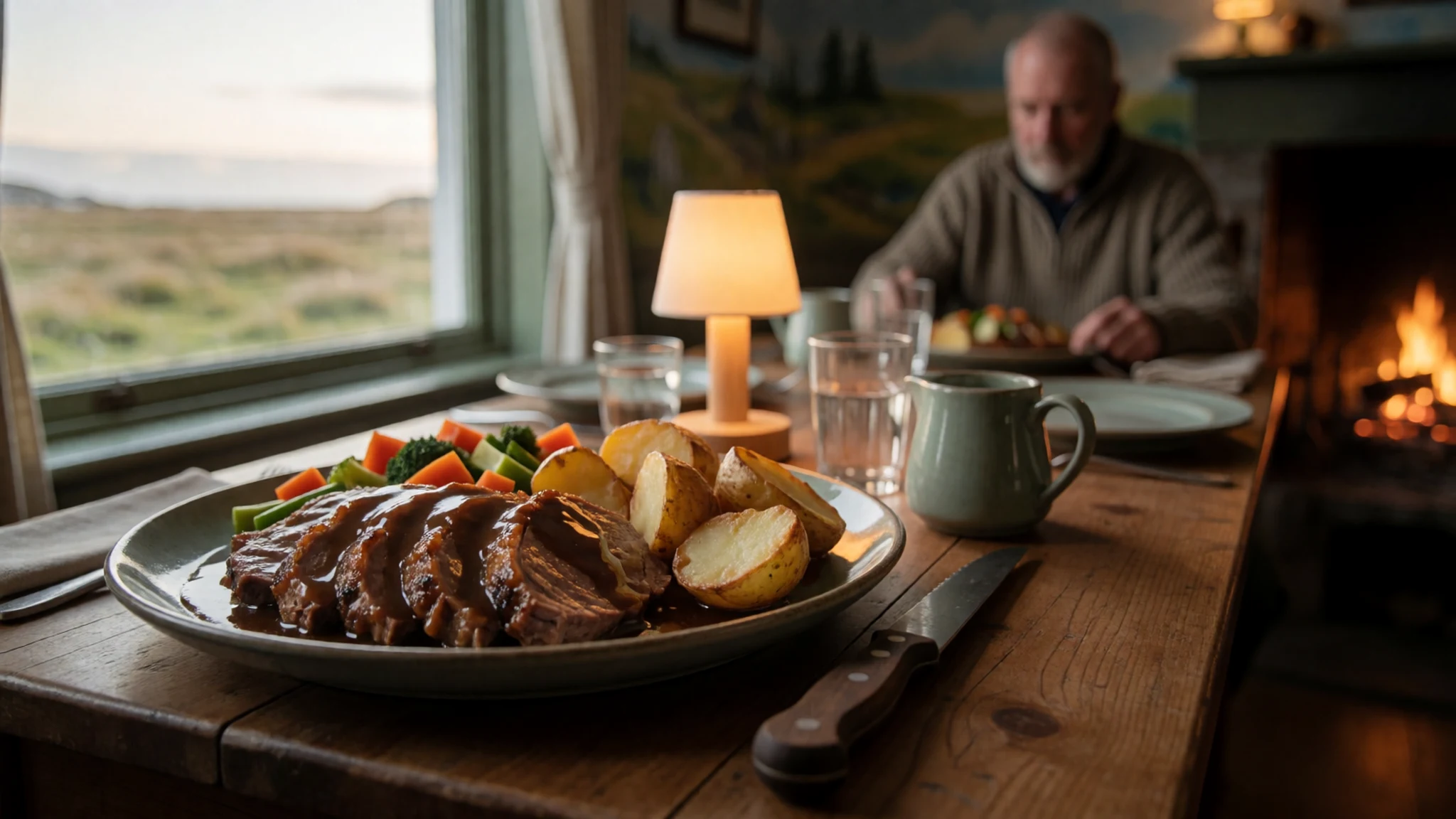
- Diddle-dee jam — Gift shops and farm tea tables
A local preserve made from the red berries of diddle-dee, a low heath shrub that grows wild across the islands. It is tart, slightly earthy and good on bread, scones or with roast meat. It is also easy to carry home as a souvenir. - Milanesa — A few restaurants in Stanley
A Spanish-influenced dish of breaded, fried meat, usually served with chips or salad. It reflects the Latin American links that sit oddly alongside the British menu. It is less common than fish and chips, but a few Stanley restaurants include it. - Local craft beer — Bars in Stanley and gift shops
Small breweries make drinks inspired by the surrounding landscape. Alcohol is not taxed here, so beer is comparatively reasonable in a place where most imported food costs a lot. Most bars serve it from bottles or cans, though a few have it on tap.
Plan it
Best time. November to February, the southern summer, when days are long and the weather is at its mildest; expect wind, rain and cold at any time of year. Fishing runs from September to April, and past bird counts have been planned for spring and late summer.
How long. 4–5
Getting there. Beauchene Island is not a tourist destination, and landing needs permission from the Falkland Islands Executive Committee and a suitable boat. Most travellers fly to the Falklands, then reach Stanley by road from the airport. Check current flight routes and entry rules with the Falkland Islands Government before booking.
Budget. high
Tips
- Carry a passport even if British; entry rules are set by the Falklands, not the UK
- Be ready to show a return ticket, accommodation, funds and travel insurance that covers medical evacuation
- Book flights, lodges and any boat trips well ahead, as places are limited
- Pack layers and waterproofs, and expect weather to change within an hour
- Buy fresh supplies in Stanley, since many lodges are self-catering and fresh produce is scarce
Etiquette
- Keep a safe distance from seals and sea lions; if an animal notices you, you are too close
- Never refer to the islands as Argentine
- Ask the landowner before camping or crossing farmland
Nearby
Sources
- Wikidata Q813355 (CC0)
- Wikipedia: Beauchene Island (CC BY-SA 4.0)
- Wikivoyage: Falkland Islands (CC BY-SA 4.0)
- Richard William Seale (1744), photo 01-seale-1744.png (CC BY 2.5)

Wildlife
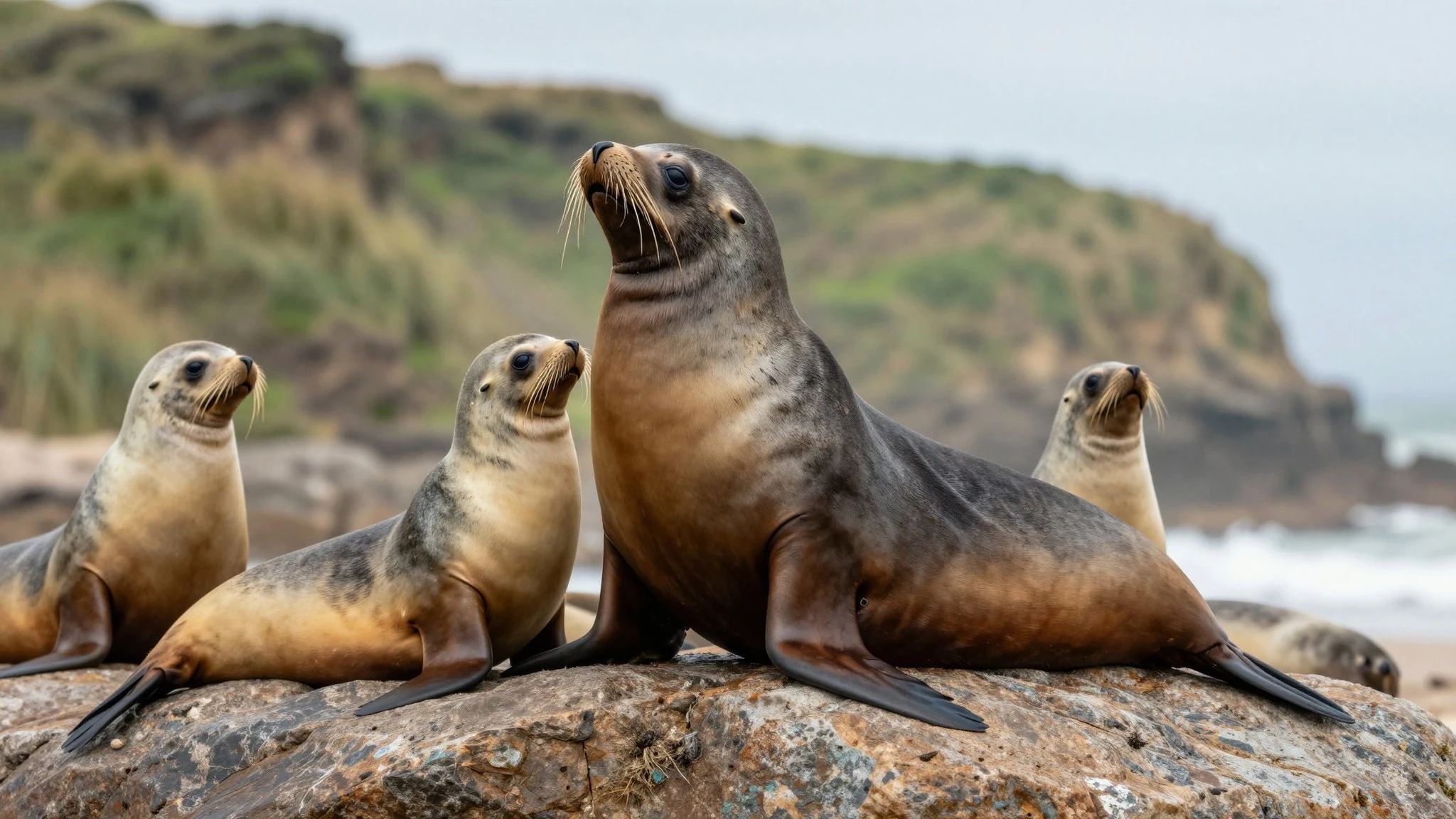
- South american sea lion (animal)
The South American sea lion is a big, whiskery seal relative, and the males wear a shaggy mane like a lion, which is easy to remember. On Beauchene Island, look for them on the beaches, which are the likeliest places for sea lions to come ashore and rest. The notes give no season or time of day, so ask locally. Watch from a good distance and keep quiet, ideally with a guide, and never feed them.