Metz
Metz, France
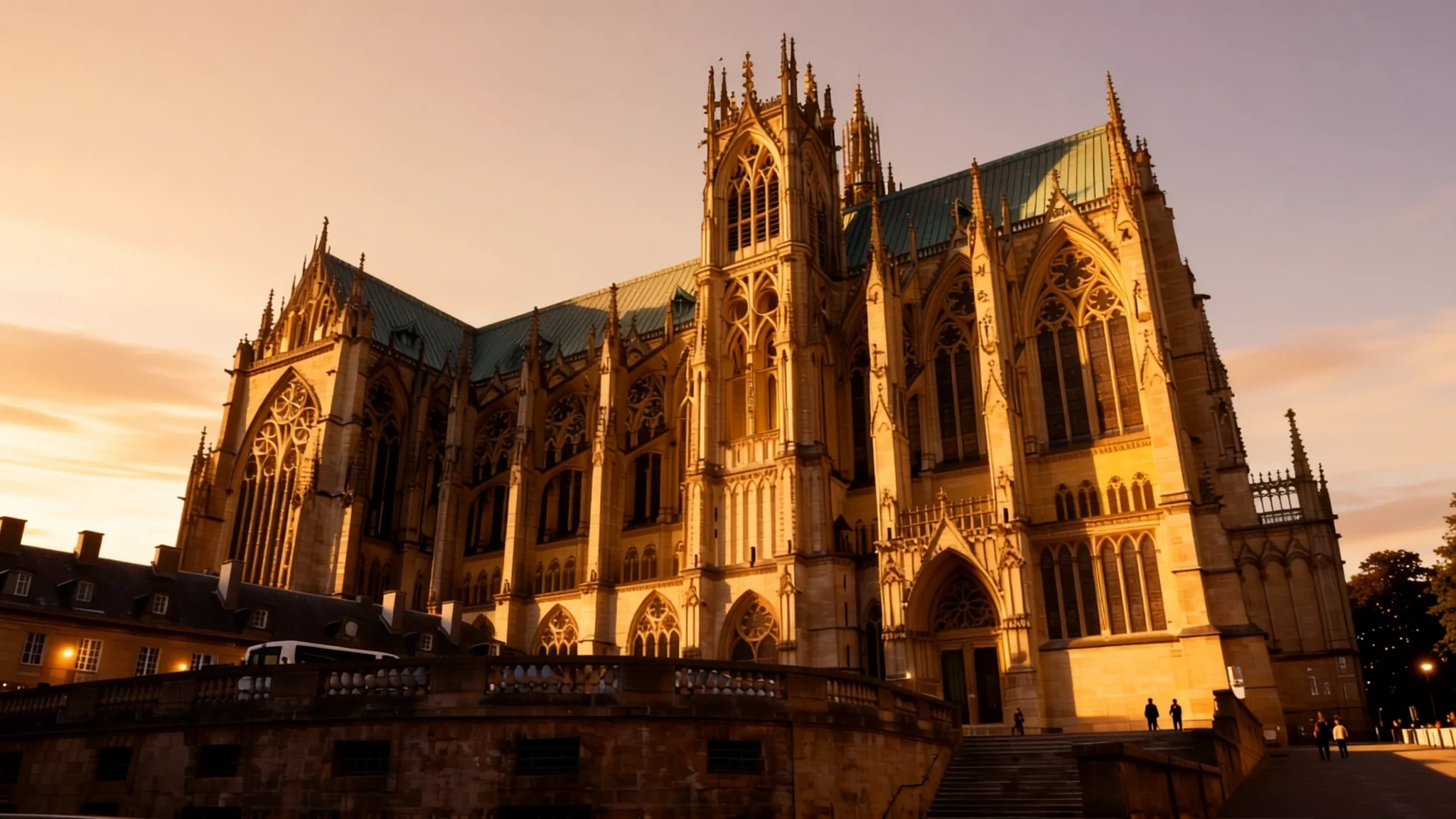
Metz is a calm, golden-stone city on two rivers, with a vast glass-walled cathedral, Roman remains and a French-German character.
The place
Metz sits in north-eastern France where the Moselle and the Seille rivers meet. It is the prefecture of the Moselle department and the seat of the Grand Est regional parliament. The city has about 122,572 people and stands at roughly 179 m above sea level, so the centre is easy to cover on foot, with the rivers and their bridges never far away.
The border is close. Germany and Luxembourg are both a short journey away, and Metz belongs to the cross-border region known as SaarLorLux. That shows in the streets: the language and the daily habits are French, but the grand station, the boulevards and some of the civic buildings carry a clear German imprint from the years when the city belonged to the German Empire.
The old centre is a tight grid of lanes, squares and honey-coloured stone, built around a cathedral that rises over the river. Cafés spill onto the squares, a covered market occupies a former bishops' palace, and the Moselle is lined with walks, small islands and a Protestant church standing almost in the water. Metz has been put forward for France's UNESCO Tentative List, though it is not yet inscribed.
It is a city for slow walking rather than ticking off. Crowds are modest compared with Paris, prices are gentler, and the pace suits a weekend or a stop on the way between Paris, Strasbourg and Luxembourg. Winters are grey and cold, so most visitors do better between spring and early autumn.
Its story
Metz has a recorded history of more than 2,000 years. Before Julius Caesar conquered Gaul in 52 BC, it was the stronghold of a Celtic tribe, the Mediomatrici. Under Rome it became a leading town of Gaul, with a population of 40,000, and the Latin name Divodurum still echoes in the street plan around Place Saint-Jacques, where the Roman forum is thought to have stood.
After Roman power faded, the city passed to the Franks. Metz then served as a residence of the Merovingian kings of Austrasia, and it is counted as the birthplace of the Carolingian dynasty and a cradle of Gregorian chant. When the Carolingian realm was divided at the Treaty of Verdun in 843, Metz became the capital of Lotharingia and later fell within the Holy Roman Empire with semi-independent status.
In the 12th century it became a republic, and that republic lasted into the 15th century. French power arrived with the Treaty of Chambord in 1552, when German Protestant princes handed Metz, with Toul and Verdun, to the French crown in exchange for military help. The princes had no real right to give away imperial land, so the Empire did not accept the change until the Treaty of Westphalia in 1648.
Under the French, Metz became the capital of the Three Bishoprics and a heavily fortified garrison town. The gates and ramparts that survive, such as the Porte des Allemands, come from that long military age, and the later German period left the station and the new quarter beside it.
What to see
- Saint-Stephen's Cathedral — Old centre, beside Place d'Armes
The Gothic cathedral overlooks the river and the old centre. Its stained glass covers an enormous area, which earned it the nickname the Good Lord's Lantern. Go inside on a bright morning, when the colour falls across the nave, and look up at the height of the vaults.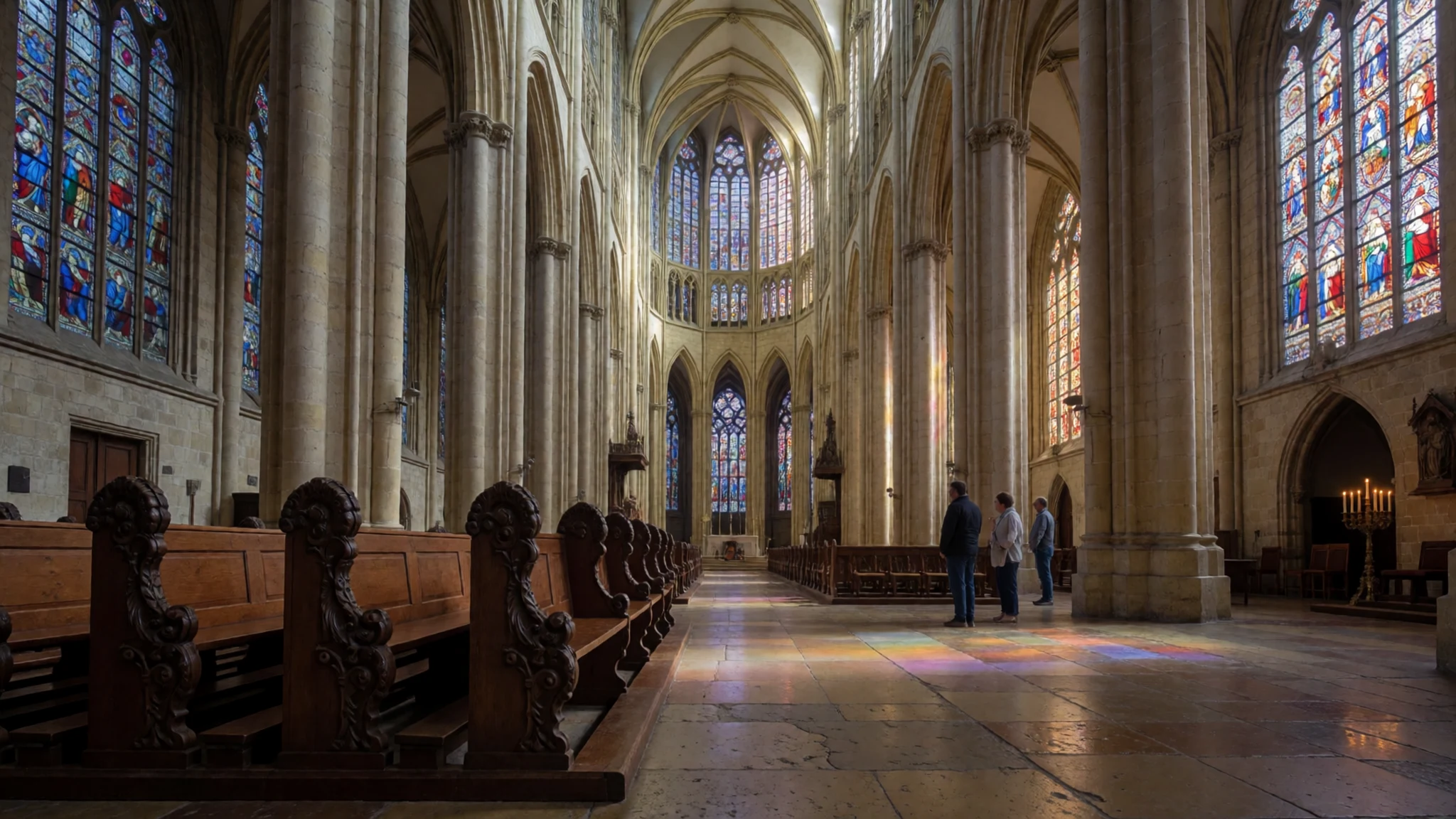
- Place d'Armes — Old centre
The square is framed by four buildings that were planned to show the balance between local powers, with the church on one side and the military on another. It is a good place to sit with a coffee and take in how the city once organised itself.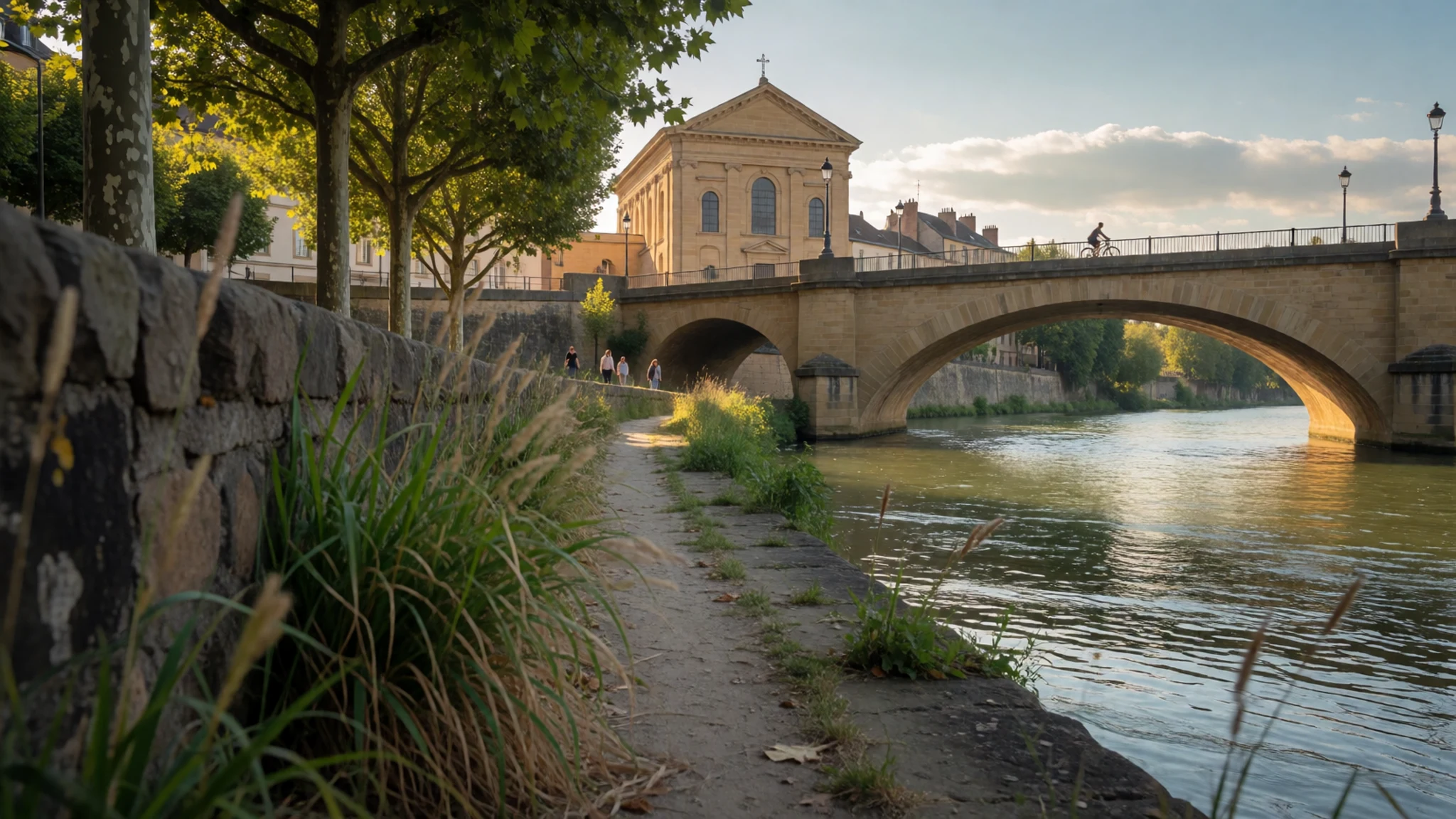
- Covered Market — Beside the cathedral, old centre
Once the bishops' palace, this building now holds stalls selling meat, cheese and other regional produce. Come in the morning when the counters are full, buy something for a picnic by the river, and notice the old stonework above the sellers.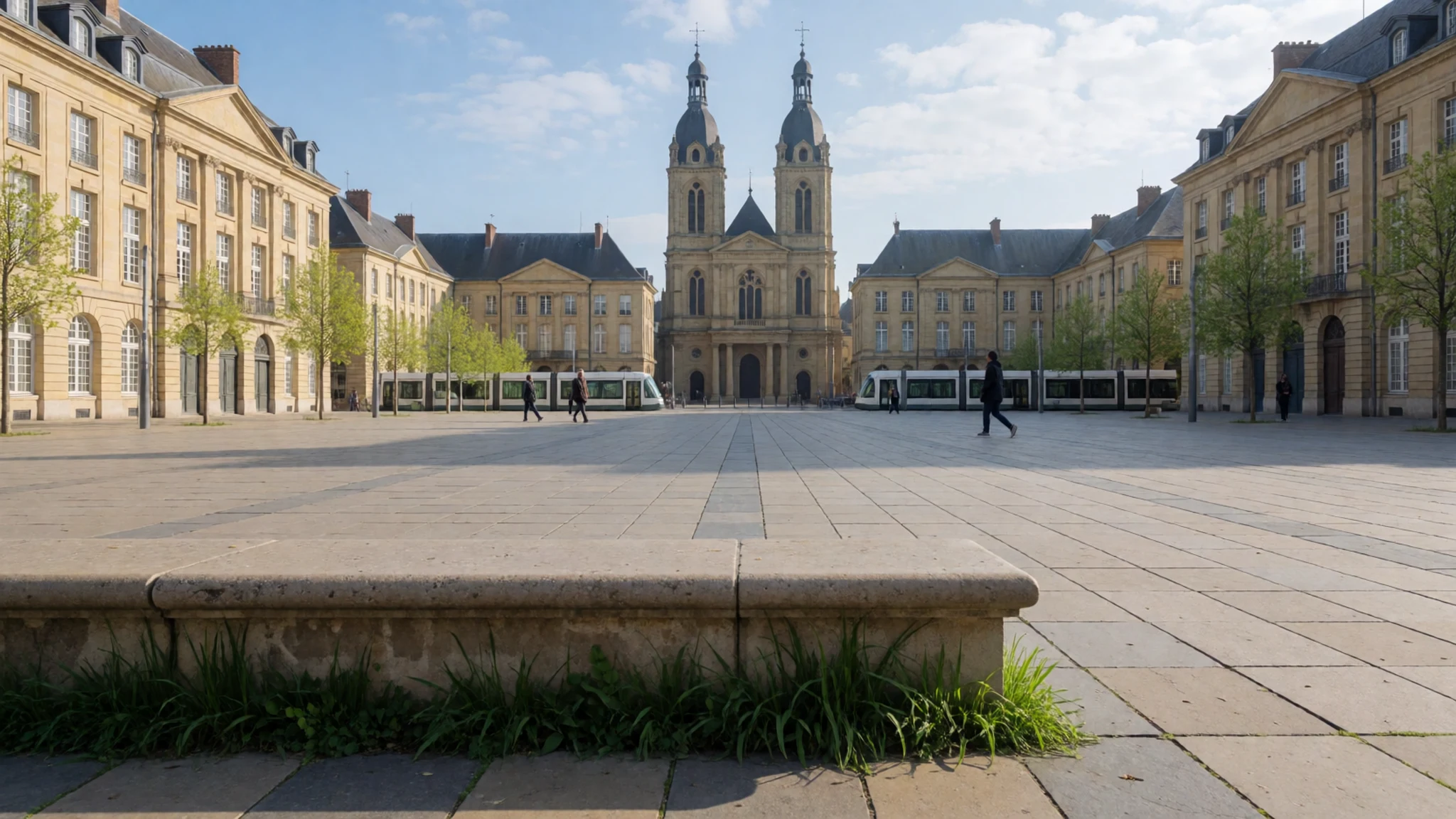
- Opera-Théâtre — Île du Petit-Saulcy, on the river
Built in the 18th century, this theatre is described as the oldest opera house still working in France. It stands on a small island in the Moselle, and the façade looks particularly good lit up in the evening. Check the official site for performances.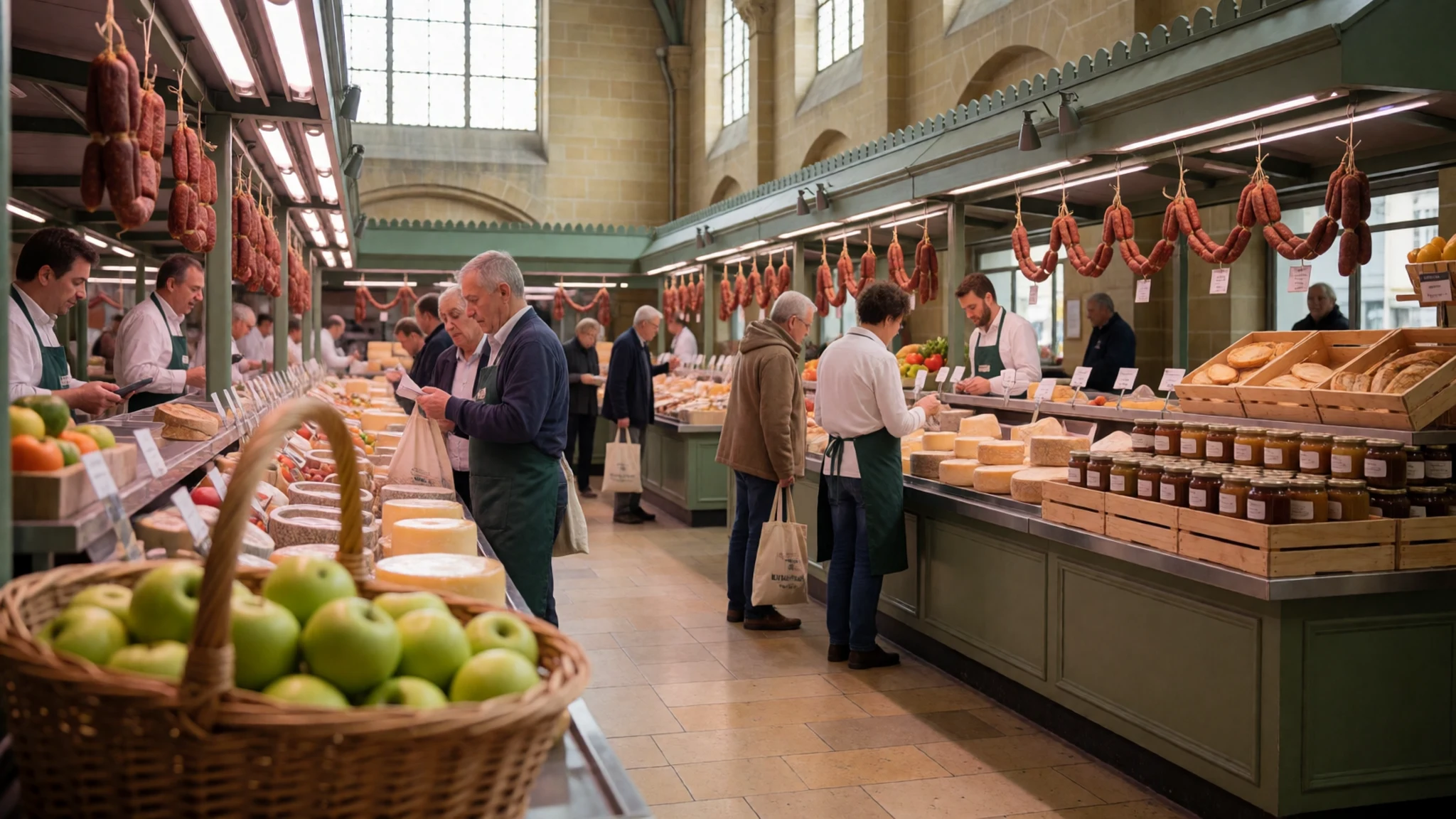
- Basilica of Saint-Pierre-aux-Nonnains — Near the Moselle, south of the centre
This building began in the late fourth century as part of a Roman bath complex. It later became a chapel in a Benedictine nunnery, and it is regarded as the oldest church in France. The plain, thick walls are a striking contrast to the cathedral.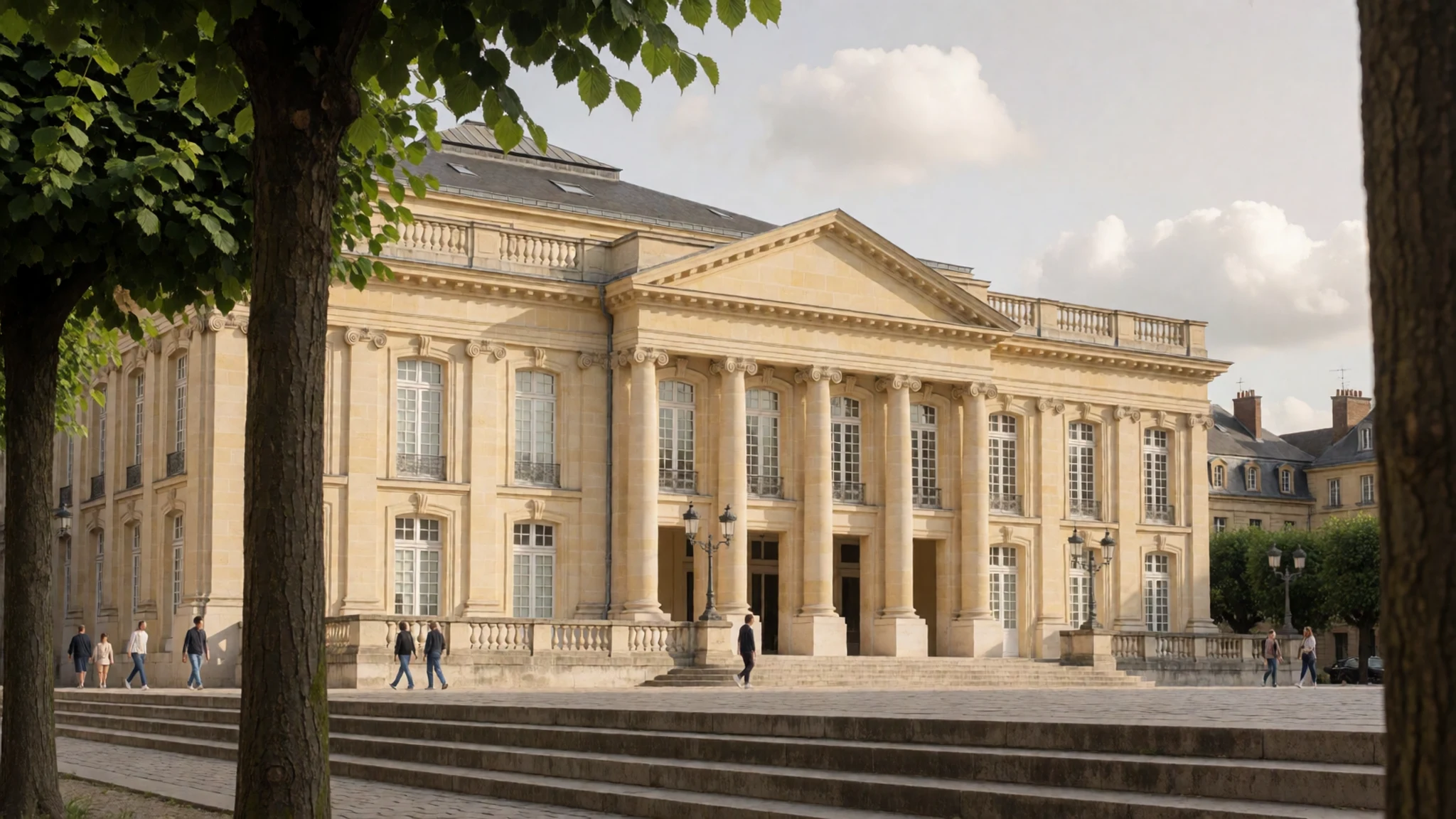
- Centre Pompidou-Metz — Near the station, Amphithéâtre quarter
A modern art museum whose temporary shows draw on the national collection held in Paris. The building, with its sweeping roof, sits near the station and makes a useful counterpoint to the medieval centre. Check the official site for current exhibitions.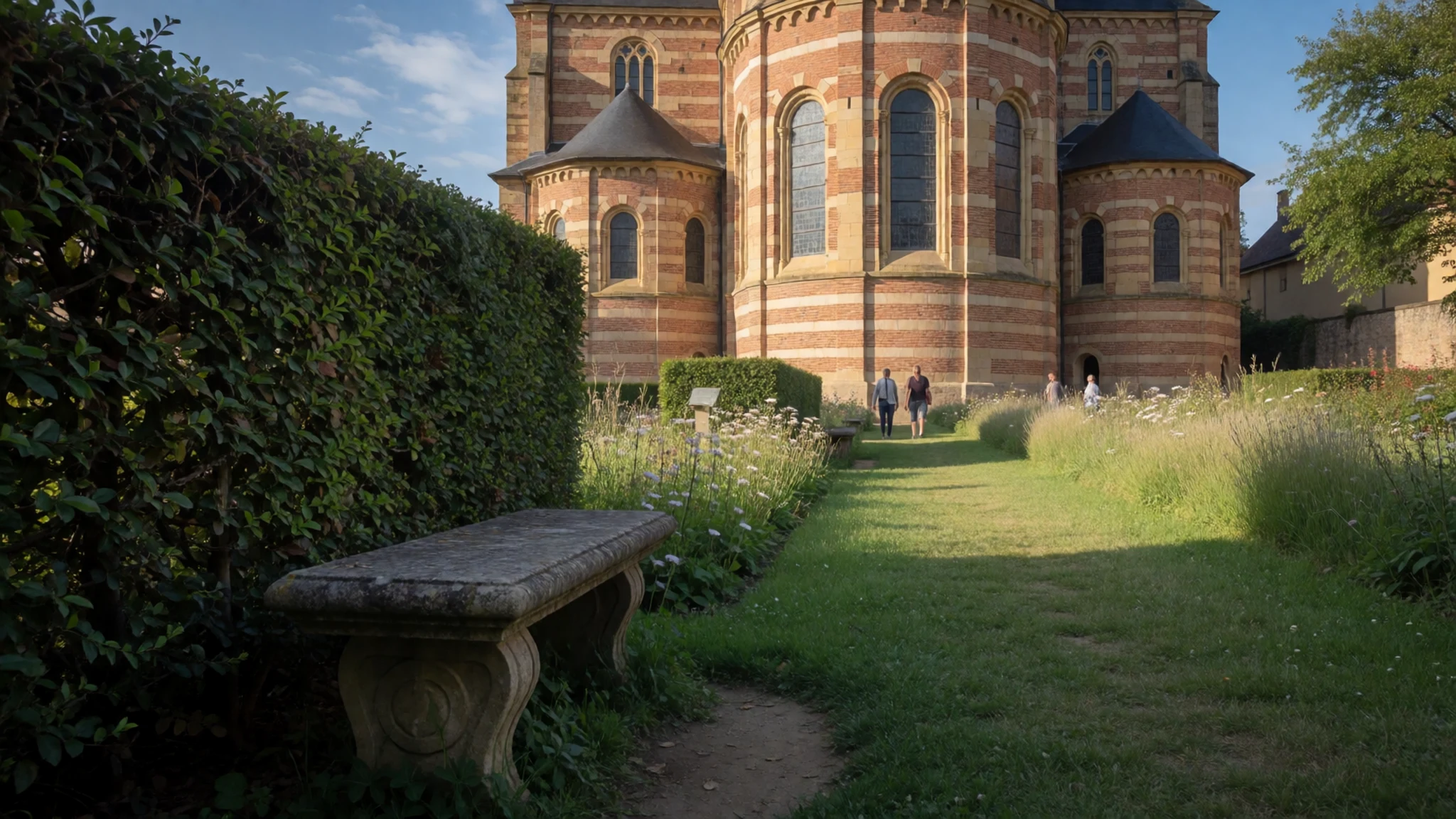
Culture
Metz has a culture shaped by being both French and borderland. Its history under Rome, the Franks, the Holy Roman Empire, France and Germany means each period has left something visible, from Roman bath masonry to a Kaiser's apartment in the station. People speak French, but German influence appears in architecture, in beer and in the habits of the wider Lorraine region.
The city takes its arts seriously. The cathedral holds a collection of church objects, including vestments and vessels used in the Eucharist, and the opera house is still in regular use. The modern art museum near the station brings contemporary exhibitions to a city of modest size, and there are concerts in churches and squares through the warmer months.
Daily life follows French rhythms. Lunch is a proper sitting, shops often close for a break in the middle of the day, and Sundays are quiet, with many businesses shut. Cafés and brasseries are where people meet, and a long coffee is perfectly normal. Greet staff with a bonjour when you enter a shop or café; it is expected and changes the tone of everything that follows.
In the cathedral, visit quietly and keep your voice low and your camera away from anyone at prayer, particularly during services.
What to wear
Metz has no regional costume that anyone wears in the street today. Older Lorraine dress, with embroidered bodices and linen or wool skirts, appears only at folklore festivals and in museum displays. The region's textile history is better known for fine linen and later for factory-made cloth than for any single garment.
What people actually wear is smart-casual and fairly understated, in the French manner. Locals favour neutral colours, good jackets, scarves, and plain trainers or leather shoes. Students and the cross-border workforce from Luxembourg dress a little more formally on weekdays. Nobody expects flashy clothing, and sportswear is mostly kept for the gym.
For a visitor, the main issue is weather. Winters are cold and damp, so bring a warm coat, hat and waterproof layer from November to March. Summers can be warm, so light cotton and a sun hat help, though evenings cool quickly. Rain is possible in any season, so a compact umbrella is useful.
Comfortable shoes matter more than anything else. The old centre is cobbled in places and best explored on foot. Churches ask for modest dress, so cover bare shoulders if you can and avoid beachwear. For concerts at the opera house, people dress up a little, but a neat shirt or dress and clean shoes are enough.
What to eat
- Quiche lorraine — Bakeries and brasseries in the old centre
The regional classic, made with eggs, cream and smoked bacon in a buttery pastry case. Look for it at bakeries and traditional brasseries, usually served warm with a green salad at lunch.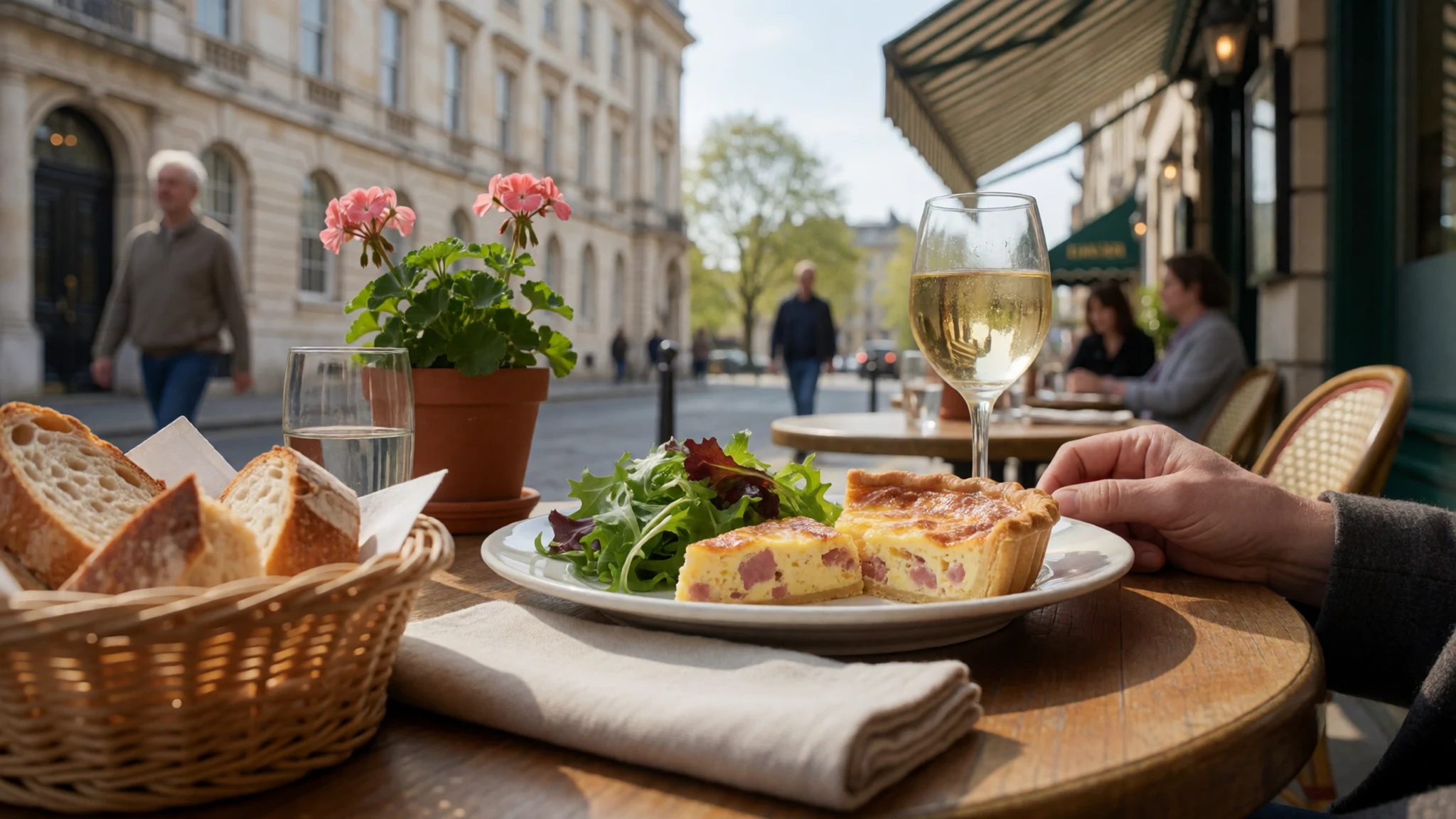
- Mirabelle plums — The covered market beside the cathedral
Lorraine is known for these small golden plums. In late summer they appear fresh at the market, and all year as jam, tarts and a clear fruit brandy that is sipped after a meal.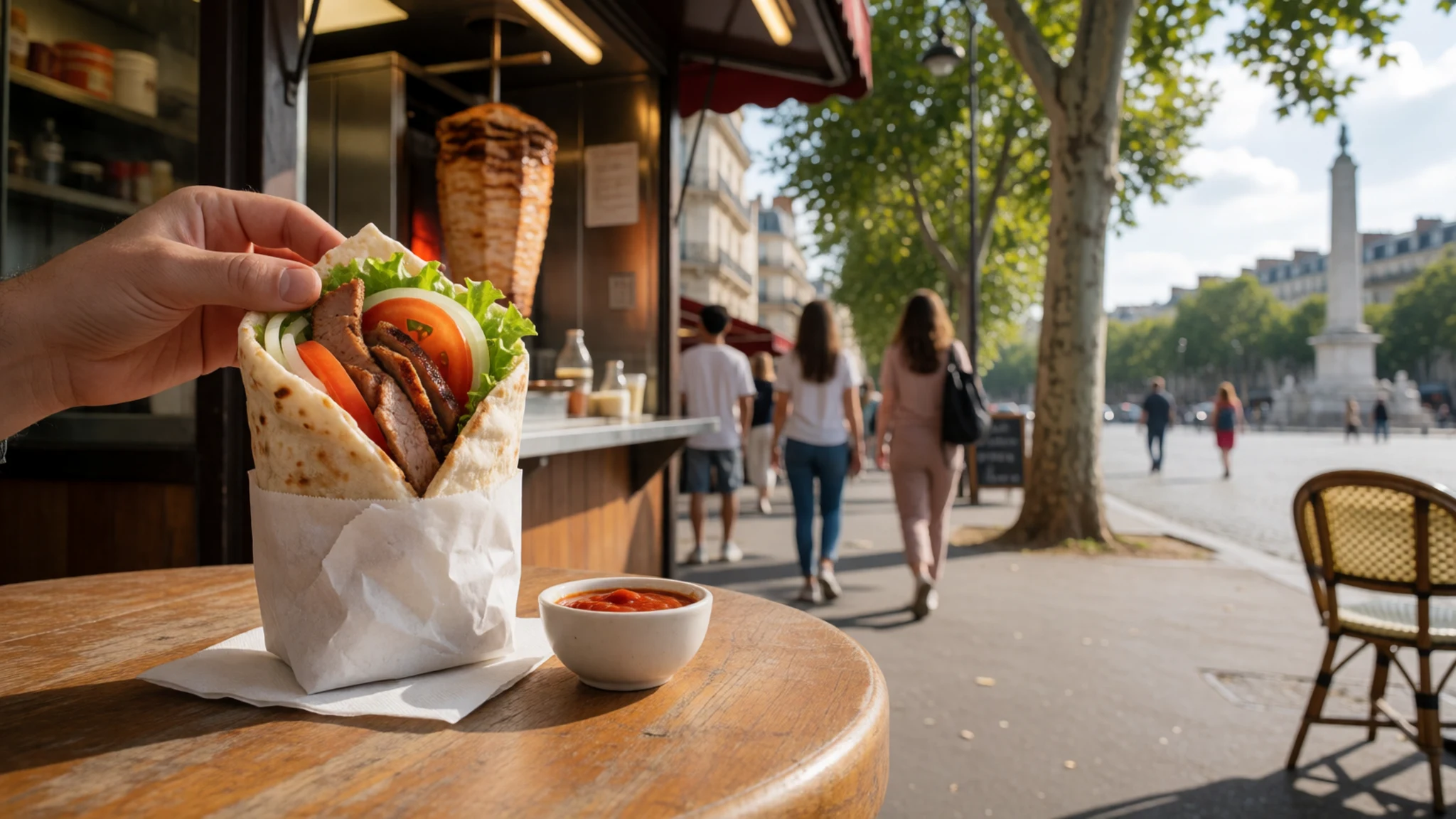
- Regional cheese and charcuterie — Covered market stalls
The market stalls sell local cheeses and cured meats. Buy a small selection with bread and fruit and eat it by the Moselle, which makes an inexpensive and very pleasant lunch. - Crêpes and galettes — Crêperies around the old centre
Brittany-style crêperies are popular here, serving savoury buckwheat galettes and sweet crêpes. Cider is the traditional drink alongside, and prices are generally friendly. - Pizza and pasta — Streets around Place de la République
Italian restaurants are common and dependable, a sign of the city's mixed population. They suit an easy evening meal after a day of walking, and many have outdoor tables in summer. - Kebabs — Old centre and near the station
Kebab shops are a cheap and quick option in the centre, and some are well regarded locally. They are open late and work well after an evening performance.
Plan it
Best time. May–June and September–October, when it is mild and the terraces are open. July and August are warm; winters are cold and grey, though Christmas markets add atmosphere.
How long. 2
Getting there. Metz-Ville station has direct trains from Paris, Strasbourg and Luxembourg, and the centre is a short walk from the platform. Airports at Paris Charles de Gaulle, Strasbourg and Saarbrücken are options, with the last stage by train. By car, the A31 passes the city.
Budget. mid
Tips
- Book trains early if you hold a rail pass, as reservations are needed
- Start with the cathedral in the morning light
- Buy picnic food at the covered market
- Avoid the small old-town alleys late at night, and take usual care with belongings
Etiquette
- Say bonjour when entering a shop or café
- Keep quiet in the cathedral and during services
- Do not photograph worshippers
Nearby
Sources
- Wikidata Q22690 (CC0)
- Wikipedia: Metz (rev 1382029627) (CC BY-SA 4.0)
- Wikivoyage: Metz (rev 5421129) (CC BY-SA 4.0)
- Stadtzentrum Metz, Philippe Gisselbrecht/Ville de Metz (CC BY-SA 4.0)
- Vue sur les immeubles de l'avenue Foch de Metz, JuJu939 (CC BY-SA 4.0)
- Temple Neuf in der Mosel, Michael (CC BY 3.0)
- Metz: Porte des Allemands, Marc Ryckaert (CC BY 3.0)
- Metz: Théatre, Andreas Praefcke (CC BY 3.0)
- Église Saint-Pierre-aux-Nonnains, MOSSOT (CC BY 3.0)
- Gare de Metz-Ville, Johan Bakker (CC BY 3.0)
- Paul Verlaine, Edmond Aman-Jean (CC BY-SA 2.0 fr)


