Abbey of Fontenay
Abbey of Fontenay, France
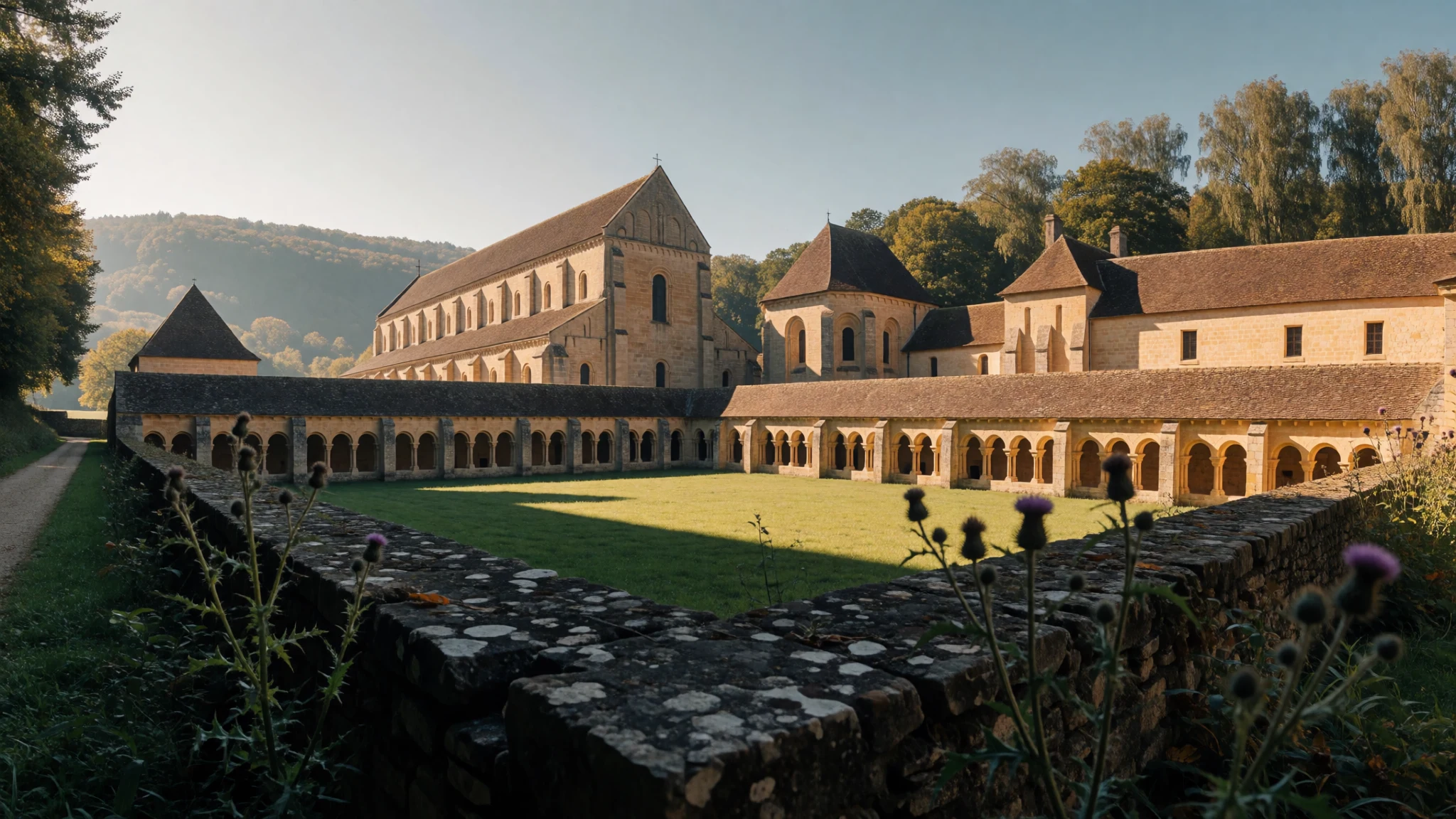
Abbey of Fontenay keeps a Cistercian monastery almost entire, in bare Romanesque stone, in a quiet Burgundy valley.
The place
The Abbey of Fontenay sits in a quiet Burgundy valley in the commune of Marmagne, close to the town of Montbard in the Côte-d'Or department of France. Founded in 1118, it is a former Cistercian monastery, and it is a UNESCO World Heritage Site (listing number 165). What sets it apart is how much of the monastic layout survives. The church, cloister, chapter house, dormitory, heated warming room, dovecote and a workshop building traditionally called the forge all still stand. Only the refectory is gone. Everything is built in plain Romanesque stone, with round arches and almost no carving, because the monks who planned it wanted nothing that might pull attention away from prayer and work. A walk round feels less like a palace tour than like reading a plan drawn in stone, with worship, living quarters and workshops each given their own place. The abbey also helps explain how building style moved from Romanesque towards Gothic, since Cistercian houses sit between the two. The surroundings are rural: woods, fields and small villages, with Dijon and Beaune and the Burgundy vineyards within reach by car or train. Crowds are likely to be thickest on summer weekends and in school holidays, and the cloister is small enough that one large group can fill it. Most visitors give it a half day or more. Paths and floors are stone and gravel, so sturdy shoes help. Opening arrangements change with the season, so the official site, abbayedefontenay.com, is the place to check before travelling.
Its story
The Abbey of Fontenay grew out of an argument about how monks should live. In the late eleventh century Robert of Molesme left the rich Benedictine world around Cluny, convinced it had drifted from the Rule of Saint Benedict. He helped found Cîteaux, where monks would own little, work with their hands and settle in remote places. Bernard of Clairvaux, who shaped the reformed order, felt even Cîteaux was not strict enough. In 1118 he founded Fontenay in a Burgundy valley, aiming for a harder, plainer life. The community moved to the site in 1130. In 1139 the Bishop of Norwich took refuge there from persecution and put his wealth towards the church, which Pope Eugene III consecrated in 1147. By 1200 the complex was complete and could house as many as 300 monks. Royal favour followed. In 1259 King Louis freed the abbey from taxes, and about ten years later it became a royal abbey. Troubles came too. English forces under Edward III plundered it in 1359 during the Hundred Years' War, and the Wars of Religion in the later sixteenth century caused further damage. The refectory was destroyed in 1745, which is why it is the one missing piece of an otherwise intact set of monastic buildings.
What to see
- The abbey church and its west façade — Marmagne, near Montbard
The church at Fontenay is the heart of the site and the reason for its reputation. The west façade is plain and flat-toned, with few openings and no showy sculpture, a deliberate statement of restraint. Seen in morning light, the pale stone is warm and the proportions feel calm rather than grand.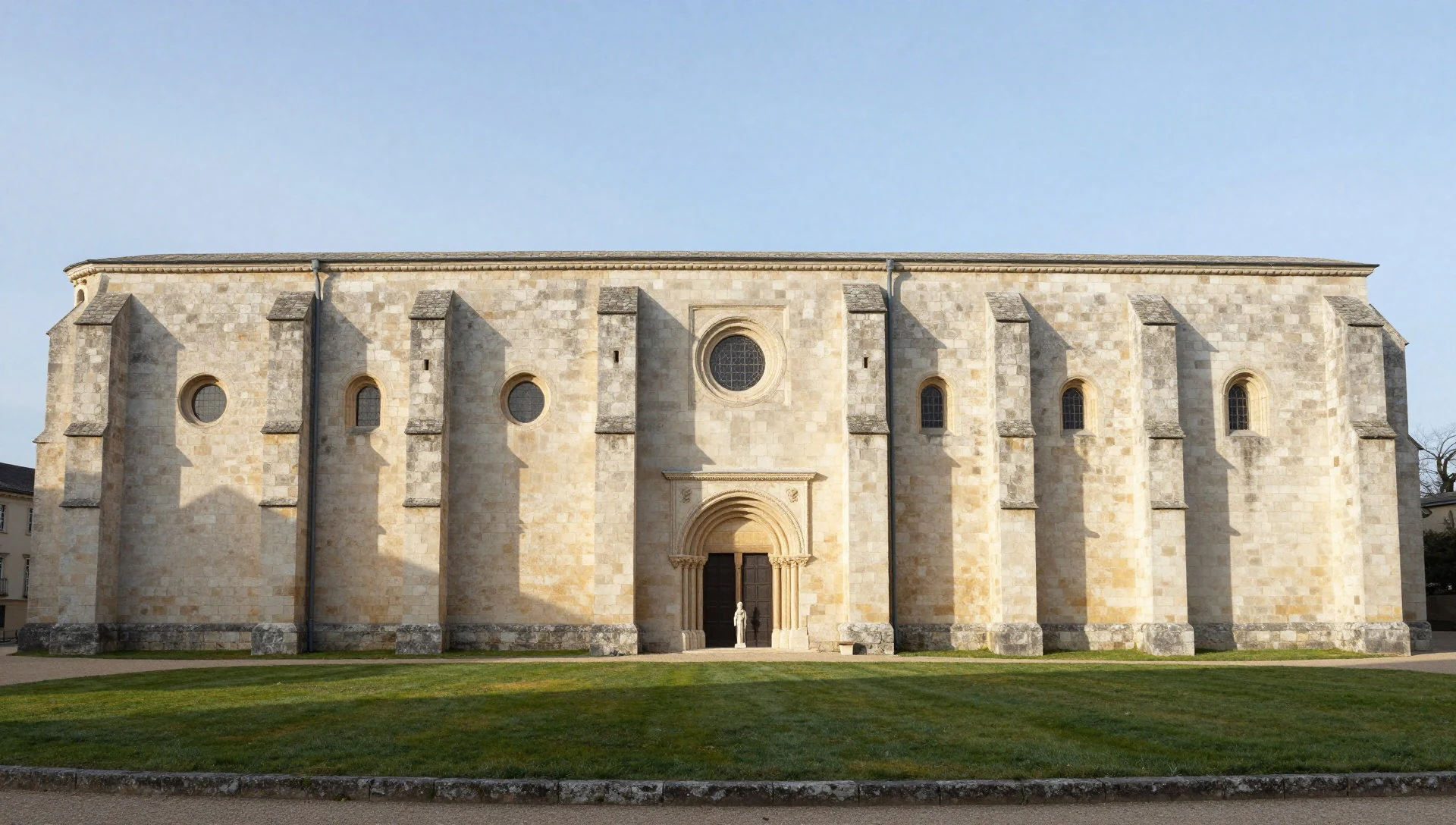
- The nave — Marmagne, near Montbard
Inside the church, the nave is long, high and almost bare. Rounded arches repeat down both sides, and light enters from modest windows rather than large ones. The quiet and the echo of footsteps make it easy to imagine the monks' daily round of services held here.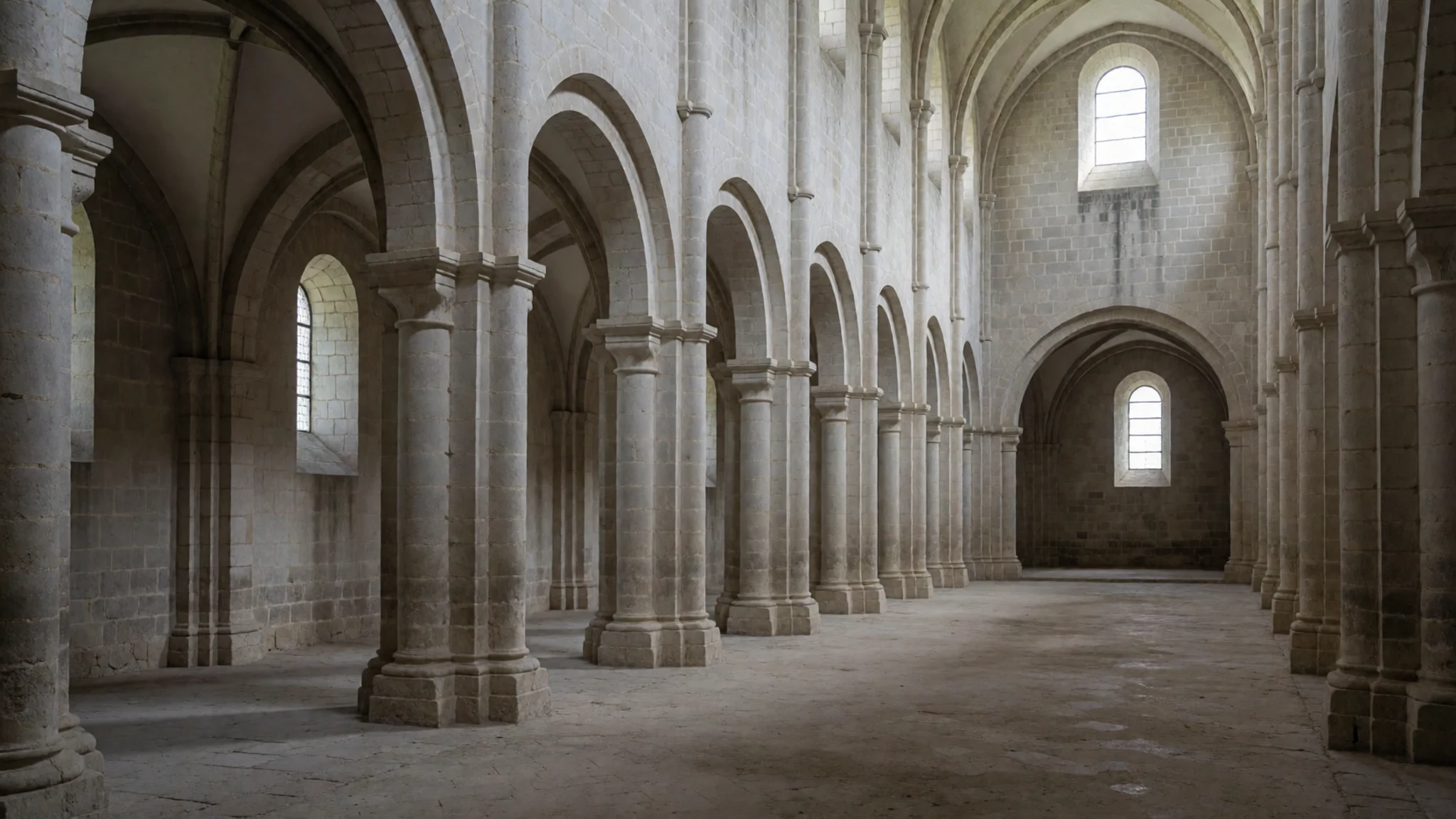
- Cloister and chapter house — Marmagne, near Montbard
The cloister is the connecting space of the monastery, with covered walks round a small open garth. The chapter house opens off it, the room where the community met each day to hear a chapter of the Rule and settle business. Both show Romanesque masonry at its most disciplined.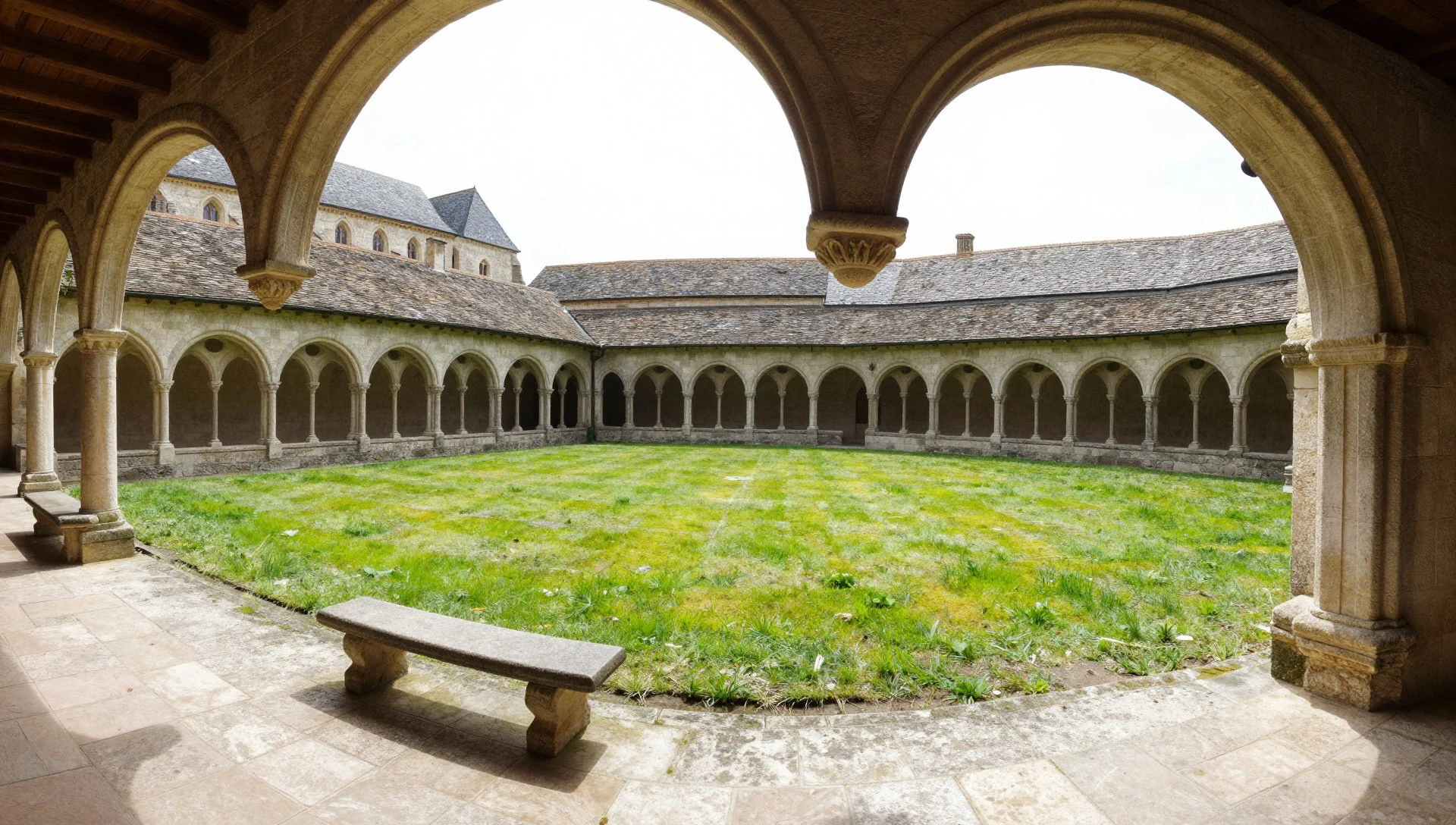
- The forge and the dovecote — Marmagne, near Montbard
Away from the church, the so-called forge and the dovecote show that Fontenay was a working estate as well as a place of prayer. Cistercians aimed to be self-sufficient, so metalwork, farming and storage mattered. The old site plan in the staged photos helps in understanding how these buildings relate to one another.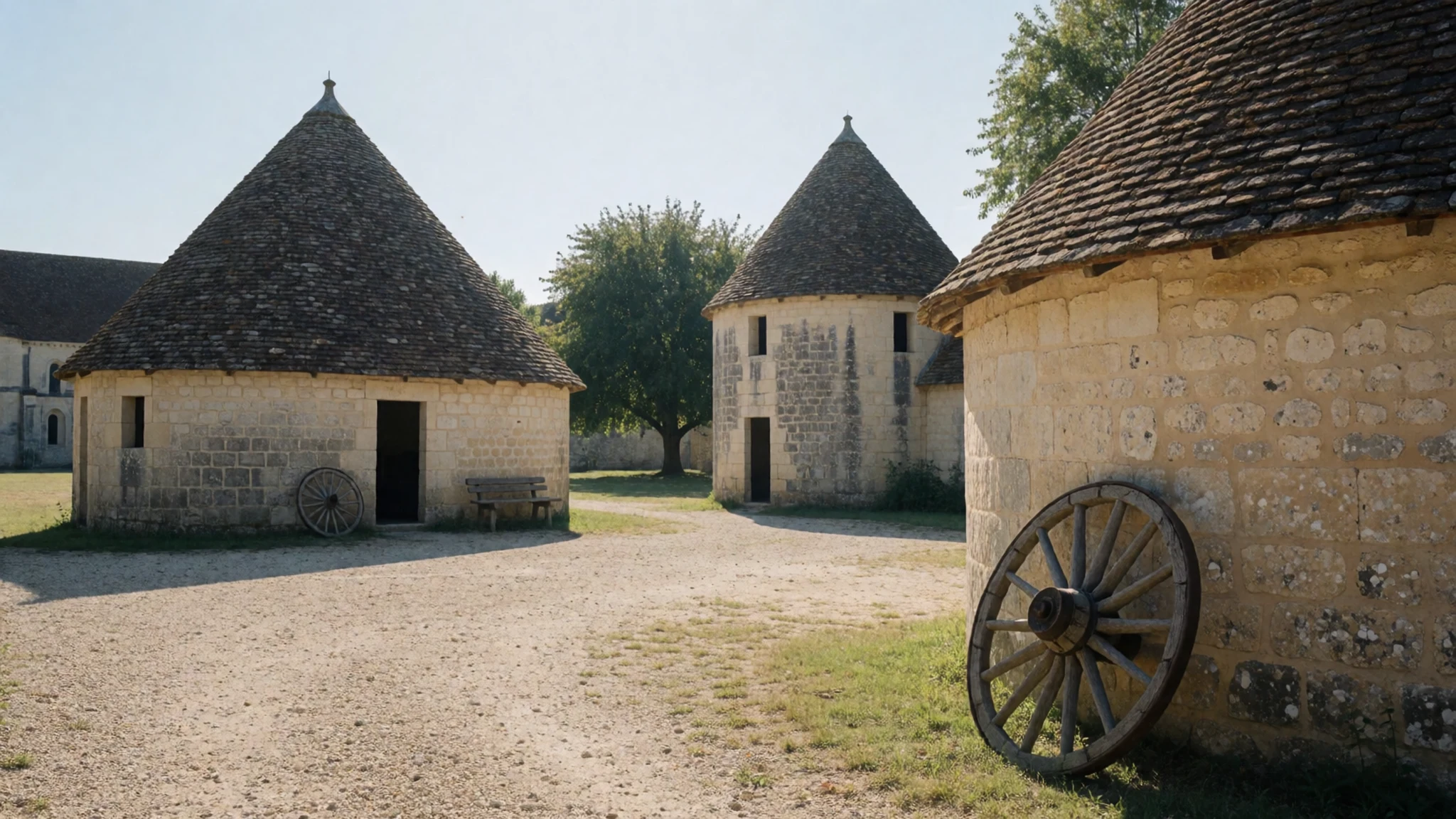
- Madonna and Child — Marmagne, near Montbard
A statue of the Madonna and Child from the 13th century stands in the abbey and is one of the few pieces of figurative art in an otherwise severe setting. Its softer, human scale makes a pleasing contrast with the surrounding stone, and it rewards a slow look at the carved folds.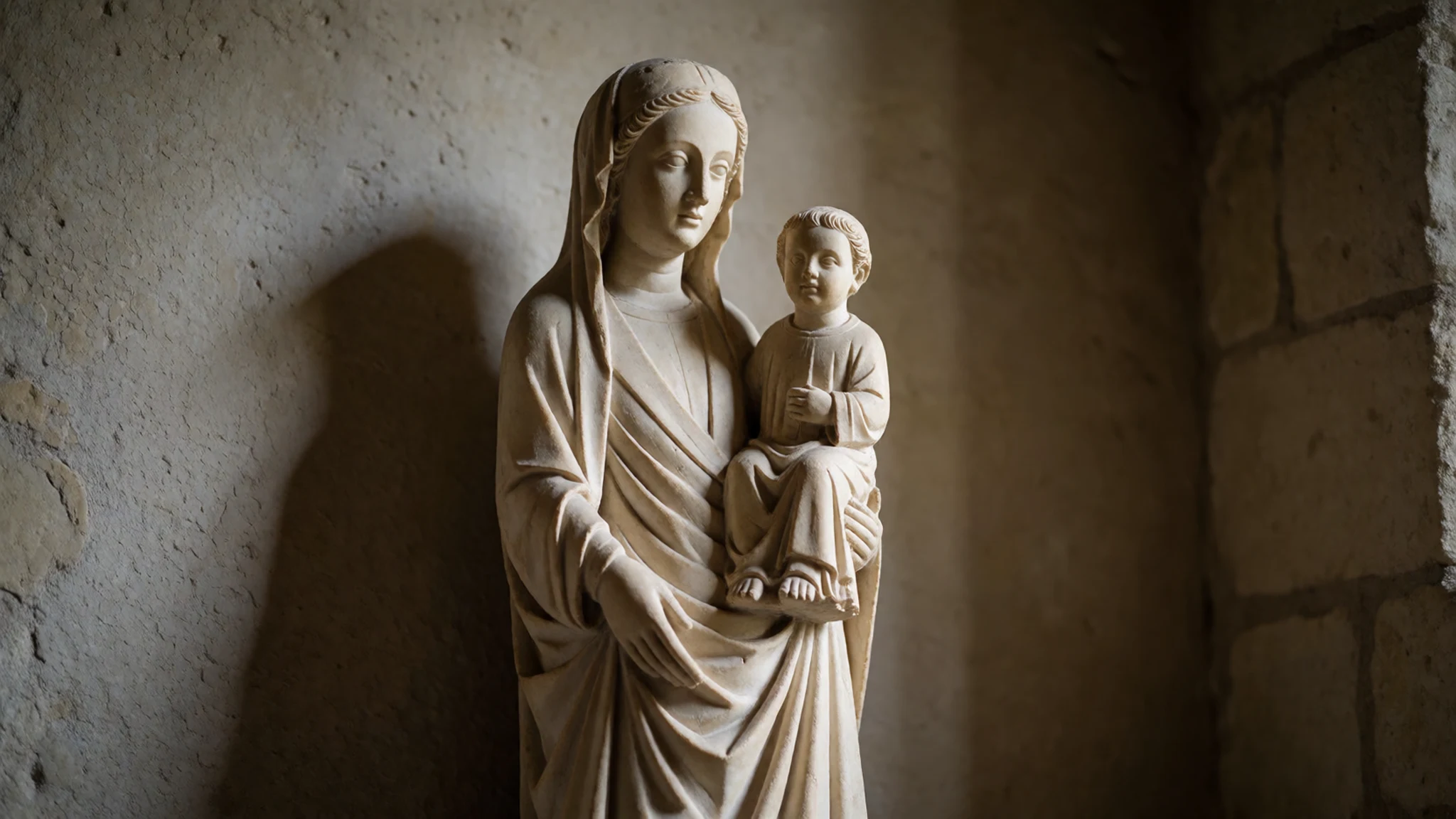
Culture
The Abbey of Fontenay carries the values of the Cistercian reform: poverty, silence, manual labour and a plain life lived by the Rule of Saint Benedict. The monks held that work was a form of prayer, so the abbey was designed to serve a day divided between worship, reading and labour, with no servants and as little distraction as possible. That outlook is visible in the buildings themselves. Decoration is held back, stone is left to speak, and light and proportion do the work that painting and carving did in richer houses. The order spread across Europe, and Fontenay is one of the places where its ideals can still be read directly in the layout. The surrounding region has a different reputation, built on wine, mustard and long meals, and the contrast is part of the pleasure of a visit: austere stone by day, generous Burgundian tables by evening. Today the abbey is a heritage site rather than a working monastery, and visitors tend to arrive in a quiet frame of mind, which the architecture encourages. Guides and printed notes are usually available in French and other languages, but availability changes, so it is worth checking the official site beforehand. Keep your voice low in the church and cloister, and ask before photographing other visitors or using flash near fragile stonework and sculpture.
What to wear
At the Abbey of Fontenay the traditional dress is the Cistercian habit, historically a tunic of undyed or white wool with a dark scapular and a belt, chosen for plainness rather than display. It was worn daily by the monks, in keeping with their vow of simplicity, and the woollen cloth suited cold, damp Burgundy winters. Burgundy itself has no widely worn folk costume that visitors will meet today. What people actually wear now is ordinary French smart-casual: dark jeans or trousers, knitwear, light jackets and sturdy shoes, with wine-country weekenders dressing slightly more neatly for dinner. Visitors should dress for the weather and the stone. Spring and autumn can be cool and damp, and the church and cloister hold the chill even on warm days, so a jumper or light jacket is useful in any season. Shoes with a good grip are best for worn stone floors and gravel paths, and a compact rain jacket is more practical than an umbrella in tight spaces. The abbey is no longer a working religious house, but it is a former place of worship, and covered shoulders and knees are a respectful choice in the church. In summer, bring a hat and water for the open grounds.
What to eat
- Bœuf bourguignon — Village eateries around Montbard and traditional restaurants in Dijon
Beef slowly cooked in red Burgundy wine with onions, mushrooms and bacon is the region's best-known dish. Look for it on the menu at village eateries and family restaurants around Montbard and in Dijon, especially in cooler months when it suits the weather.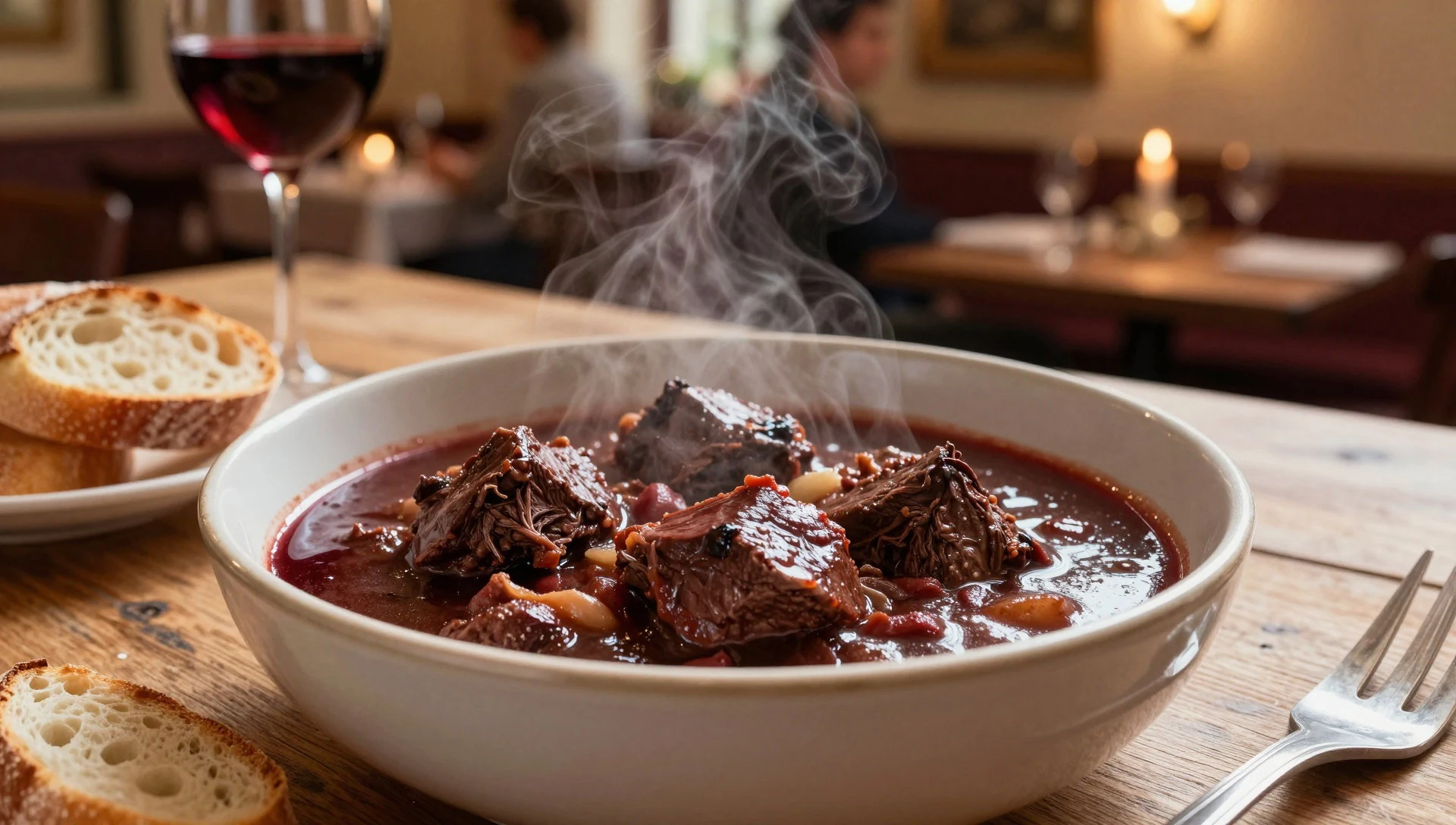
- Œufs en meurette — Traditional Burgundian restaurants in Dijon and Beaune
Poached eggs served in a glossy red-wine sauce with lardons and often croûtons are a classic Burgundian starter. It is richer than it sounds and works well as a light lunch after a morning among the abbey stones.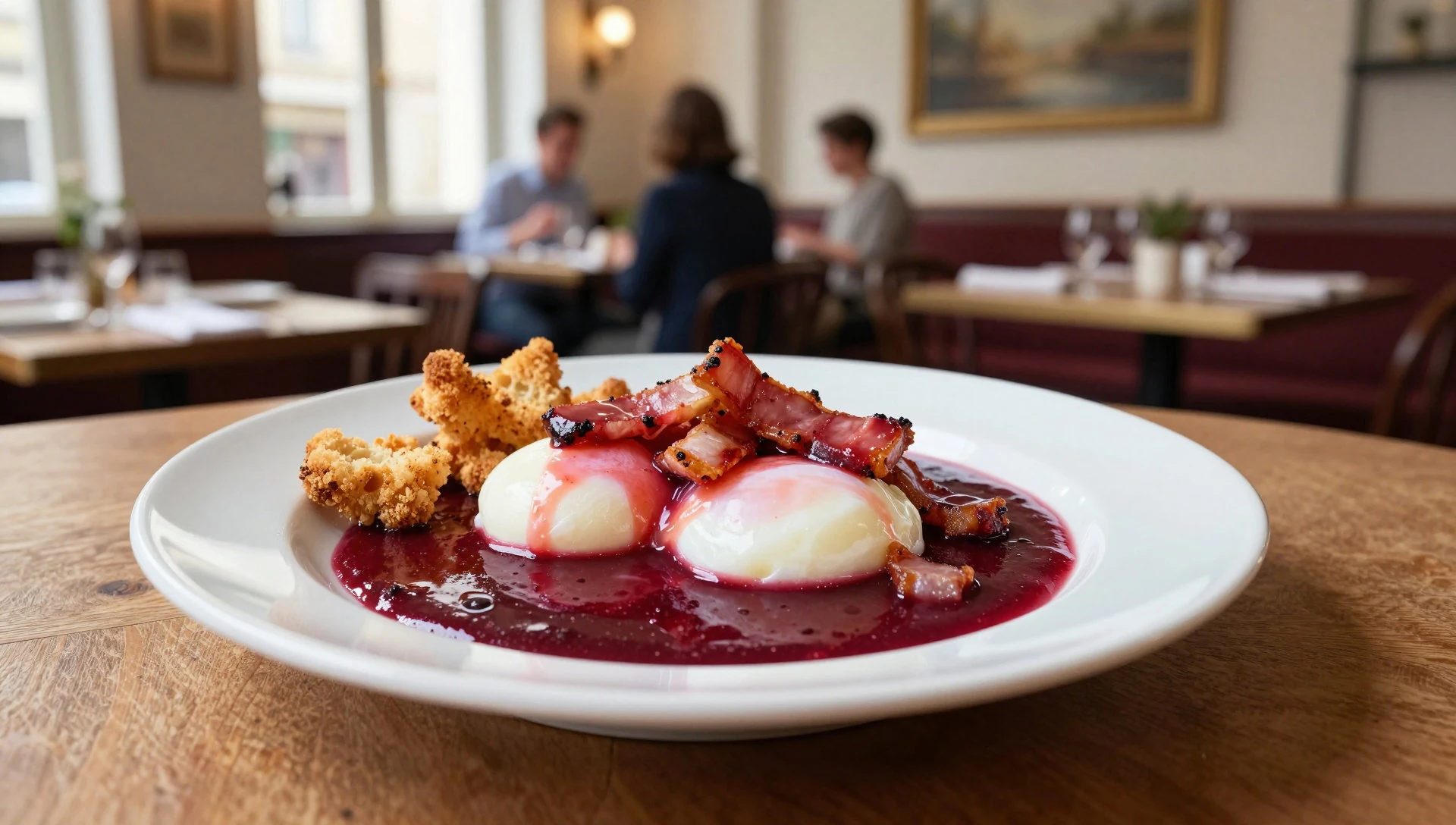
- Gougères — Local bakeries and wine cellars across the Côte-d'Or
These small, airy cheese puffs made with choux pastry are served warm with a glass of local white wine. They are easy to find in bakeries and as an aperitif snack at wine cellars, and they travel reasonably well for a picnic. - Époisses and other washed-rind cheeses — Cheese counters in covered markets in Dijon and Beaune
Burgundy is known for pungent, creamy cheeses, and Époisses is the one most often mentioned. Ask at a cheese counter for tasting advice and for how long it will keep, as the smell is strong in a car or bag. - Dijon mustard and jambon persillé — Dijon markets, delicatessens and charcuterie counters
Dijon is associated with sharp mustard, which turns up in sauces and on cold dishes such as jambon persillé, ham set in parsley jelly. Shops and market stalls sell small jars that make light, practical souvenirs.
Plan it
Best time. April–May and October, when the valley is green or turning and days are usually mild enough for walking the grounds. Summer is warmer and busier, especially at weekends and school holidays, while winter can be cold and damp inside the stone buildings.
How long. 1
Getting there. Fly or take the Eurostar to Paris, then a TGV to Montbard, about an hour from Paris, which is the closest station to the abbey. Dijon and Beaune also have TGV stations. The last leg from Montbard is a short taxi or drive, so check local transport and book ahead if you have no car. By road, motorways link Paris, Lyon and Dijon to the Côte-d'Or.
Budget. mid
Tips
- Check opening arrangements and ticketing on the official site, abbayedefontenay.com, before you set out
- Arrive early or late in the day to avoid group visits, especially on summer weekends
- Wear shoes with a good grip for stone floors and gravel paths, and carry a layer for the cold interior
- Carry a card and some cash for village shops and small eateries, and fill a water bottle before you go
- Pair the visit with Dijon or Beaune for a longer Burgundy trip if you have a car or a rail pass
Etiquette
- Keep your voice low in the church and cloister
- Ask before photographing other visitors, and avoid flash near sculpture
- Stay on marked paths and do not climb on walls or ruins
Nearby
Sources
- Wikidata Q464918 (CC0)
- Wikipedia: Abbey of Fontenay (rev 1366152166) (CC BY-SA 4.0)
- Wikivoyage: Côte-d'Or (rev 5388669) (CC BY-SA 4.0)
- Photo: Fontenay abbey, Marc Ryckaert (CC BY-SA 4.0)
- Photo: Chapter house and church, Benjamin Smith (CC BY-SA 1.0)
- Photo: Aerial image of Abbey of Fontenay, Carsten Steger (CC BY-SA 4.0)
- Photo: Madonna and Child, Benjamin Smith (CC BY-SA 1.0)
- Photo: Fontenay plan, Ori~ (Public domain)
- Photo: West façade of the abbey church, Benjamin Smith (CC BY-SA 1.0)
- Photo: Nave of the abbey church, Benjamin Smith (CC BY-SA 1.0)
- Photo: Nave seen from the left, Benjamin Smith (CC BY-SA 1.0)


