Blue River Provincial Park
Blue River Provincial Park, France
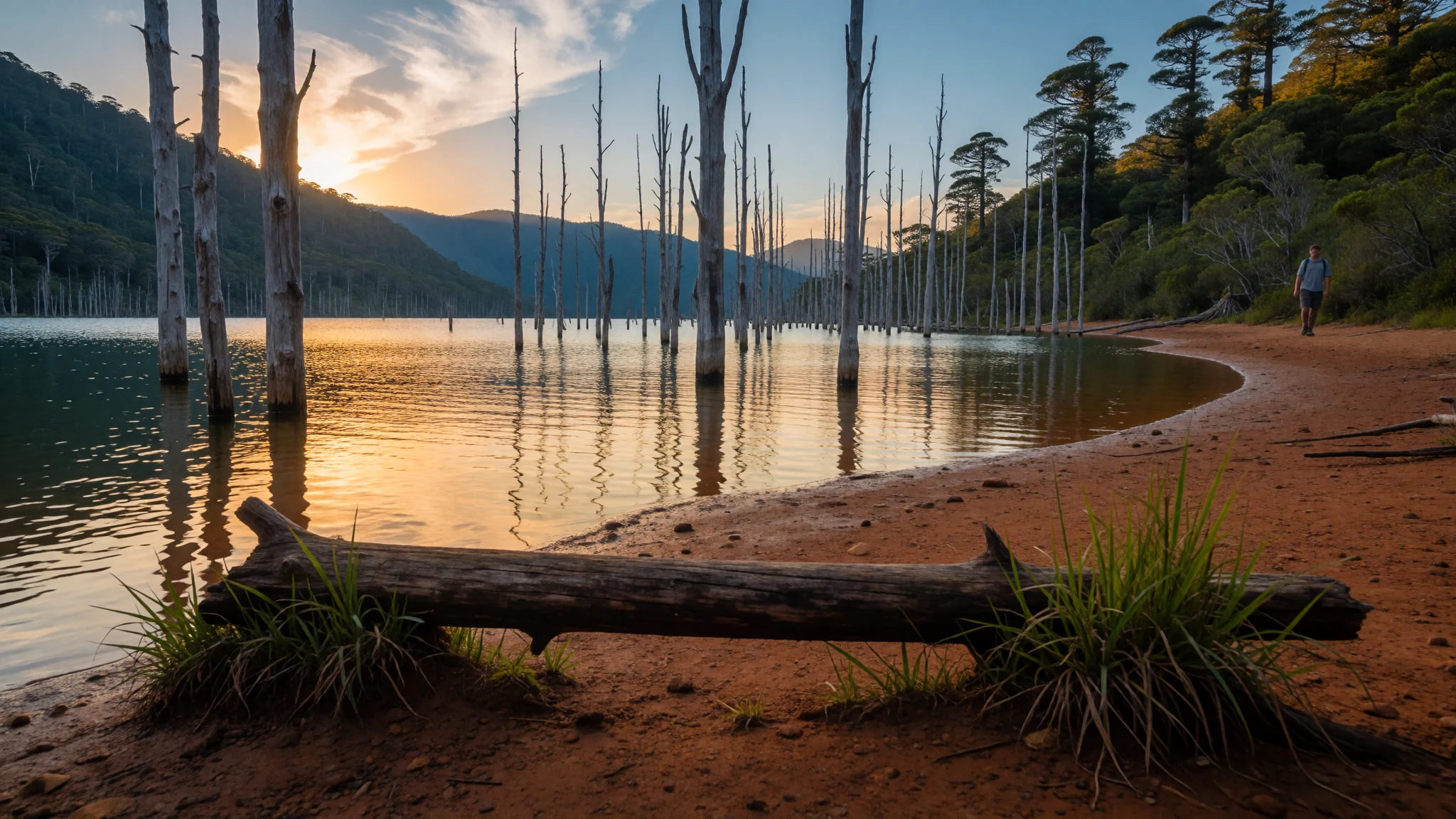
Blue River Provincial Park is a quiet corner of New Caledonia where a drowned forest, forest trails and an endangered native bird sit within reach of Nouméa.
The place
Blue River Provincial Park (Parc provincial de la Rivière Bleue) lies in the south of Grande Terre, New Caledonia's main island, within Yaté commune in South Province. It protects the valleys of the Blue, White and Month of May rivers; the last two now empty into Lake Yaté, which formed once the Yaté Dam was built. Part of the lakeshore belongs to the park, along with a large drowned forest whose pale dead trunks still stand in the water. The ground rises from the lake to high ridges, and the rivers drop through waterfalls, clear pools and round rock hollows known as giant's kettles. Much of the vegetation grows on the red, metal-rich soils typical of the south, so the park feels quite different from the palm-and-beach picture most people hold of the Pacific. It is also known as a refuge for the cagou, an endangered native bird, and spotting one is the small ambition many walkers carry in. South Province manages the park, and the Maison du Parc at the main entrance holds an exhibition, a library and a shop. Cars are stopped partway in, so the interior is covered on foot, by bike, by shuttle bus or by kayak, which keeps the place quiet. Weekends and school holidays bring local families from Nouméa, while weekdays are usually calmer. The park was founded in 1980.
Its story
Blue River Provincial Park carries marks of human life reaching back into prehistory; petroglyphs can still be found in the Blue River valley. The modern layers are industrial. In the early twentieth century, logging and chrome mining pushed roads and rails into the interior, and a good deal of that infrastructure survives. Old railway lines built to haul timber and ore remain, along with a steam traction-engine winch and the Pérignon bridge, a crossing made from local timber over an arm of the lake. That arm exists because of the Yaté Dam, whose construction reshaped the landscape: rivers that once ran freely were backed up into Lake Yaté, and a stretch of forest was left standing in water. What looks like natural scenery is therefore partly engineered, and the drowned trees are a reminder of how much was altered. The park itself was created in 1980. When New Caledonia was later divided into provinces, responsibility passed to South Province, which has since put a visitor centre at the entrance, set out picnic and camping areas beside the rivers and laid a network of walking and cycling trails. Rising visitor numbers, and a wish to protect the forest while teaching people about it, drove that development. Today the rusting rails and the timber bridge sit comfortably among the trees, a record of working life that the park has chosen to keep rather than clear.
What to see
- Pont Pérignon — Interior of the park, end of the vehicle road
Pont Pérignon is where the road ends for cars and the park proper begins. The timber bridge crosses an arm of the lake created when the White River was dammed, and it is a good place to pause, look at the water and decide whether to go on by bus, bike or kayak. Early light is softest.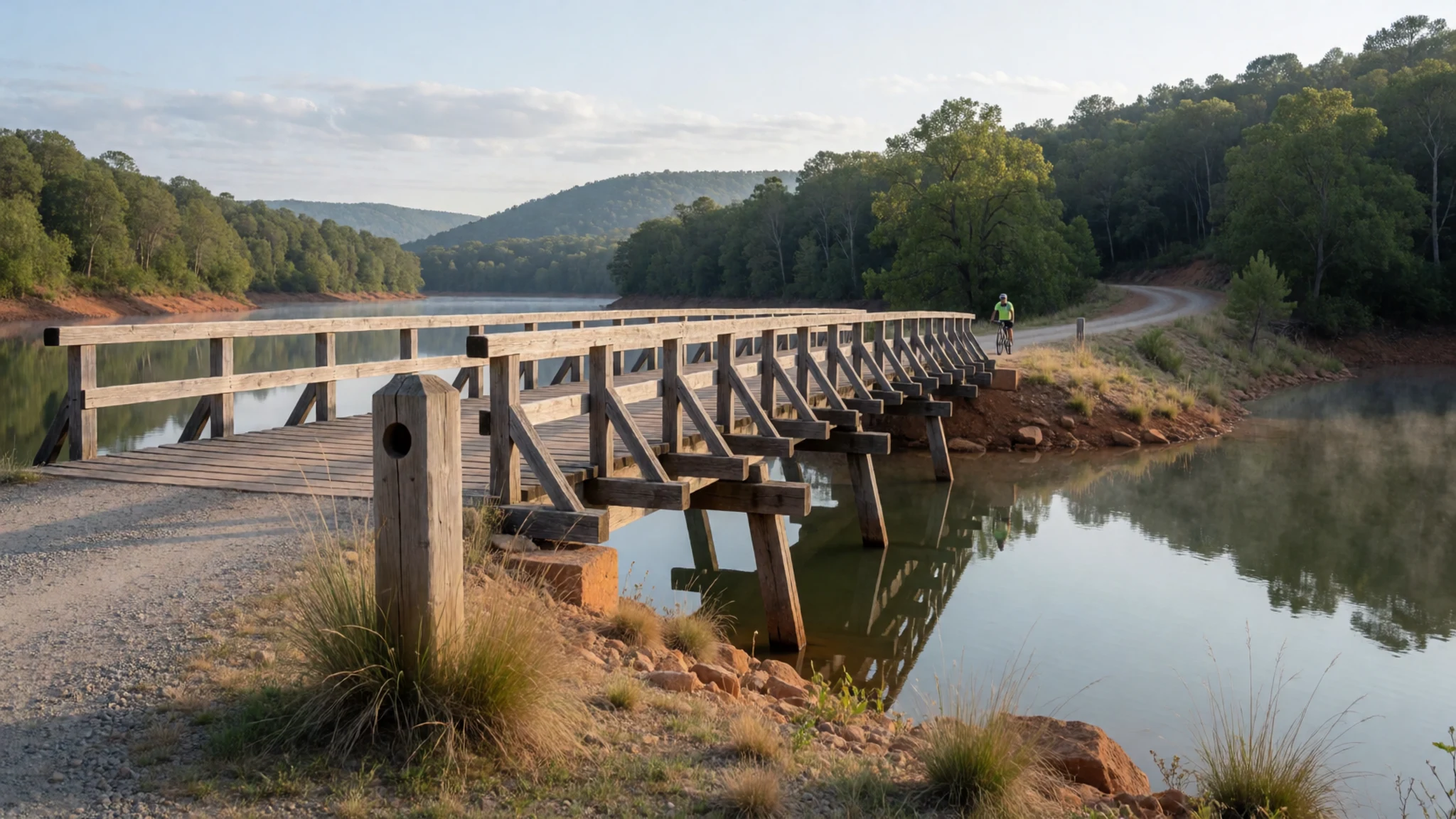
- The drowned forest by kayak — Rivière Blanche and Lake Yaté shore
Paddling the Rivière Blanche leads between the bleached trunks of the drowned forest, where the water is calm and the quiet is broken mostly by birdsong. Kayaks suit beginners in settled weather, but check the current rules and conditions first, because heavy rain changes the river quickly.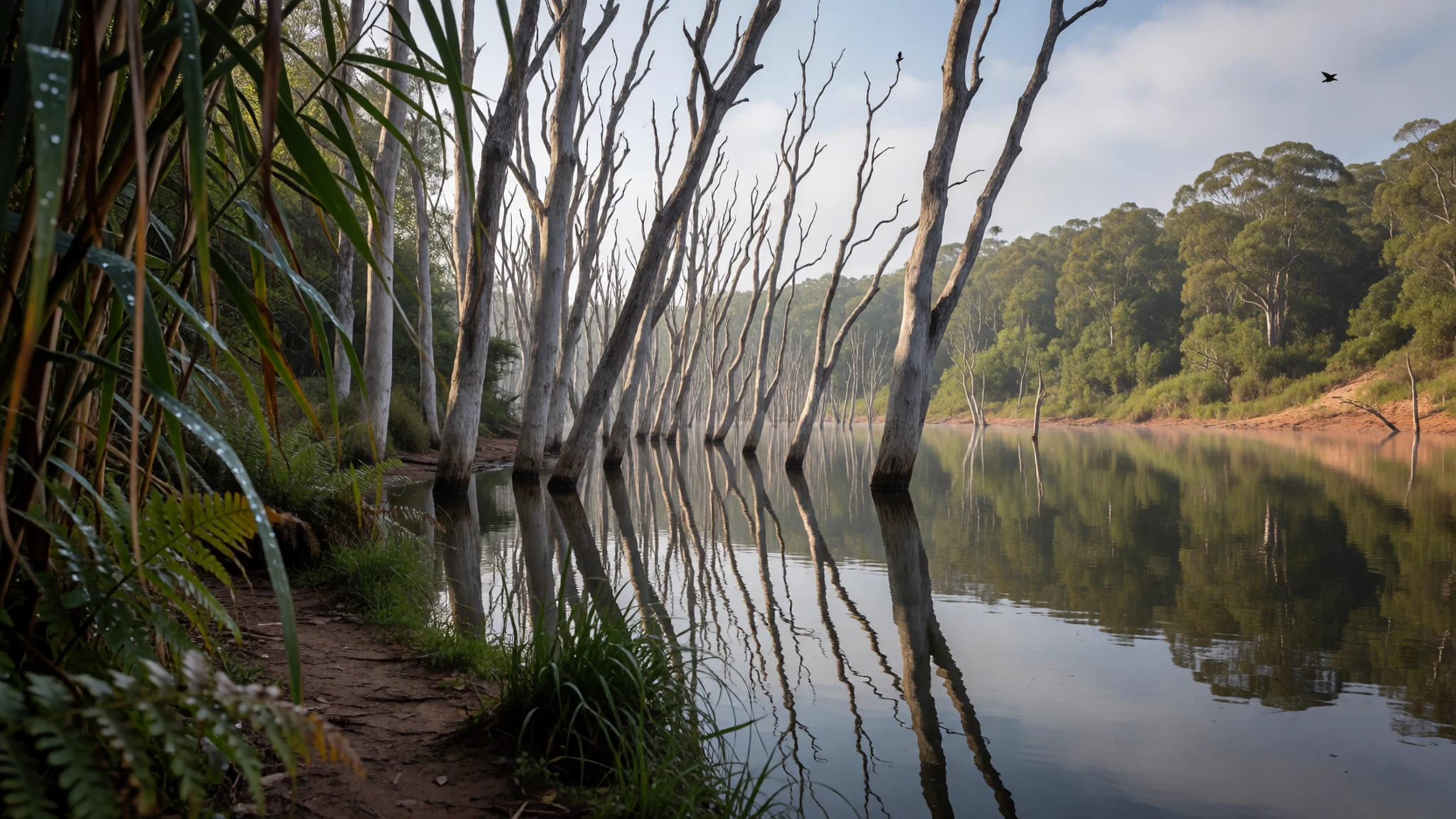
- The giant kaori — Forest trails near the Blue River
A giant kaori (Agathis lanceolata) in the park shows something of the older forest that logging once worked through. These conifers grow slowly, with straight pale trunks and crowns held high above the undergrowth. Ask at the Maison du Parc where to find large specimens, as routes and signs can change.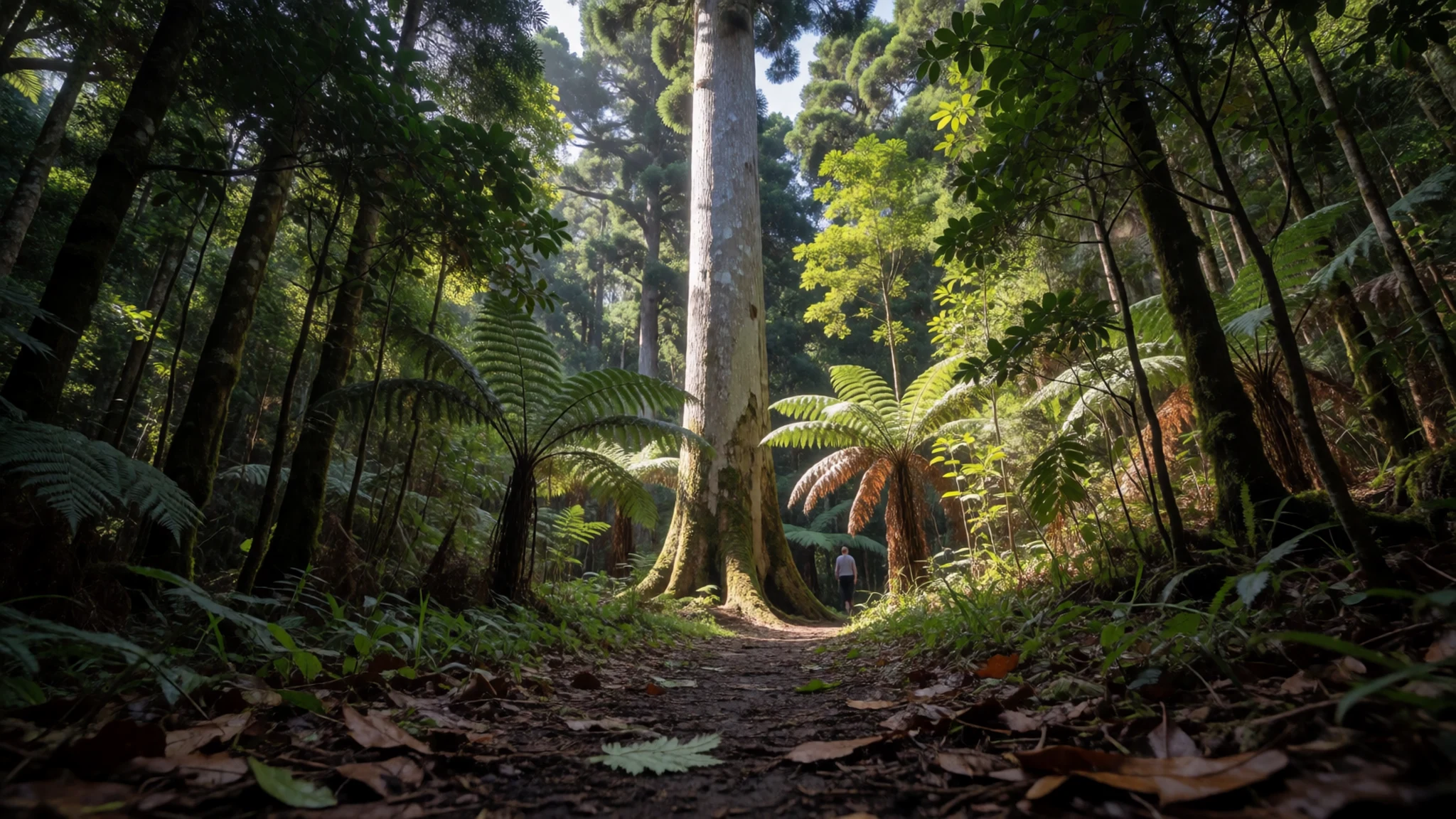
- Looking for the cagou — Forest edges along the walking trails
The cagou is a grey, crested native bird that often stands still and watches before running off, and the park is known as a haven for it. Walk quietly in the early morning, keep to the trails and never feed or chase it. Patience matters more than a long lens.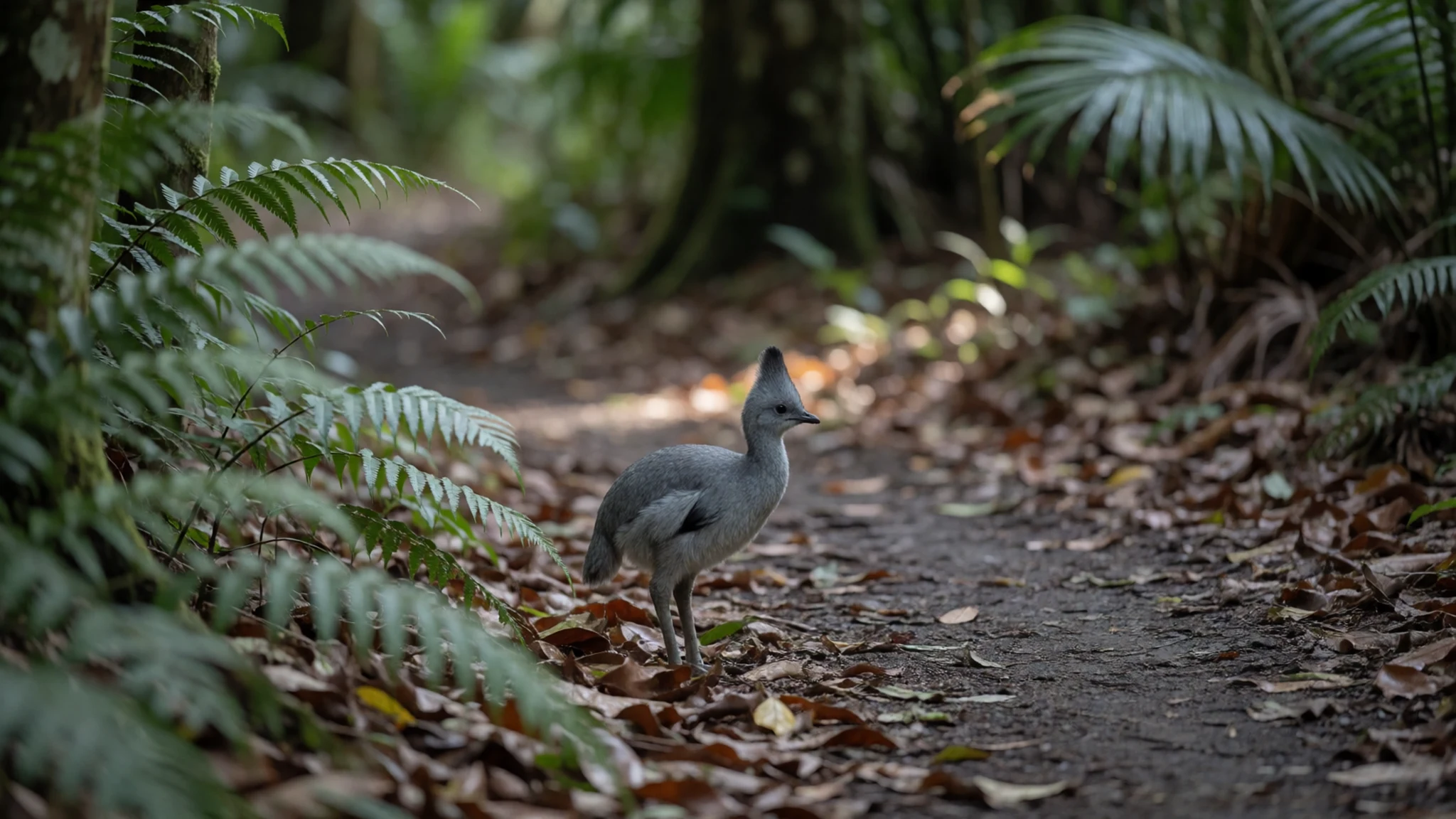
- Waterfalls, pools and giant's kettles — Blue River valley
Along the Blue River valley the rock has been worn into waterfalls, deep pools and giant's kettles, circular hollows cut by stones spinning in the current. Hiking trails reach several of them, and some climb to mountain viewpoints. Wear shoes with grip, since wet rock and red clay are both slippery after rain.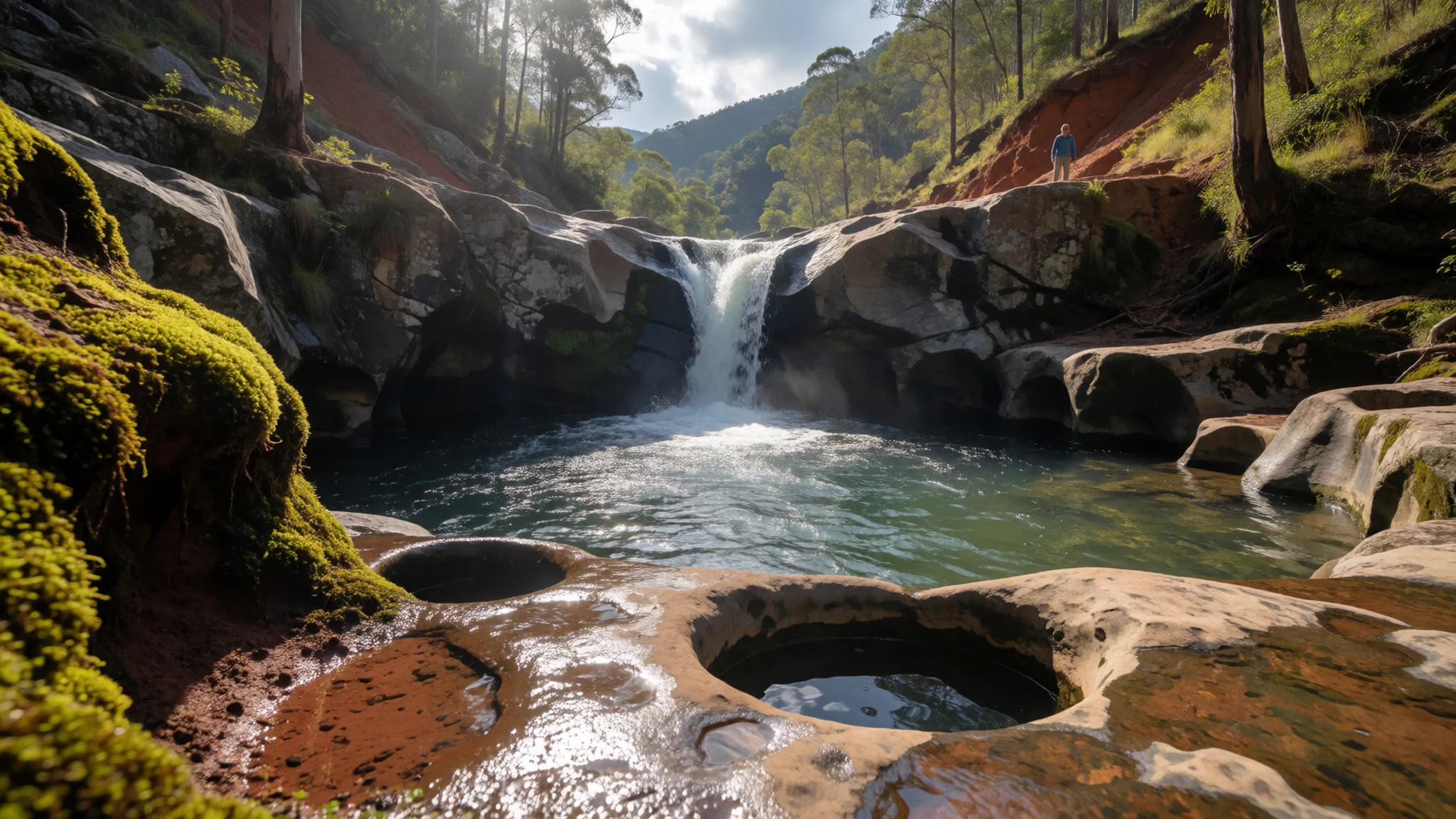
- Old rails and mountain biking — Park trails beyond the car stop
Old logging and mining rails still run through the forest, and the park's trail network is popular with mountain bikers. Bikes, regular or electric, can be rented, and cycling is the simplest way to cover the interior beyond the point where cars must stop. Take water and a repair kit.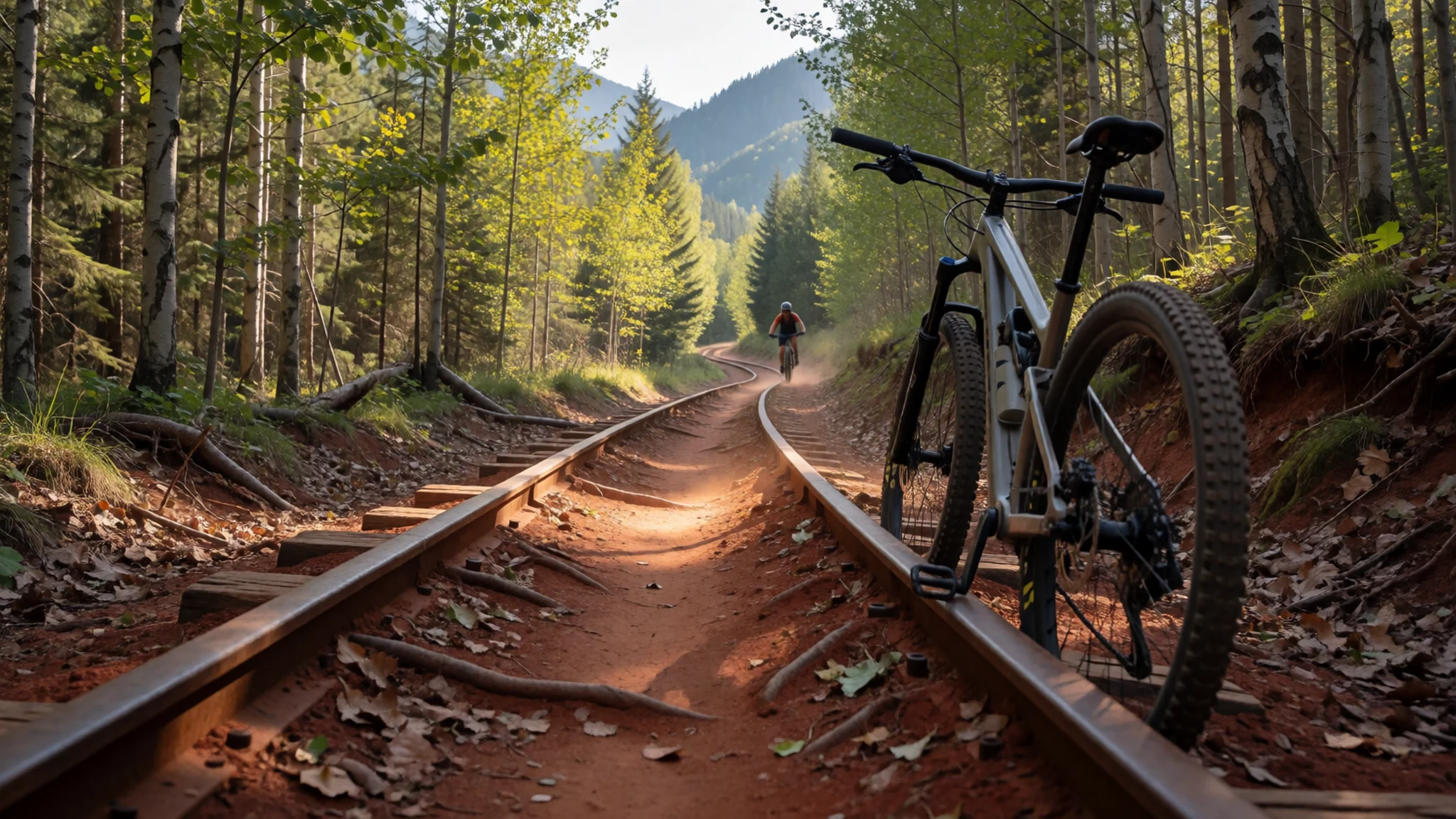
Culture
Blue River Provincial Park sits in the south of Grande Terre, where Kanak people, the Indigenous people of New Caledonia, and French-descended and other communities share a society shaped by several traditions. The land around Yaté belongs to that story, and the old logging and mining remains inside the park tie it to a colonial economy built on timber and metal. Kanak custom, known in French as la coutume, still guides relationships to land and clan, and visitors may notice it in small gestures such as a short greeting before asking a favour. French is the everyday language; the park's brochure is in French, with English information on the official tourism website. Outdoor life is central to local leisure: families from Nouméa come at weekends to picnic beside the rivers, swim, cook in the designated areas, and walk or cycle. Conservation is taken seriously here because the cagou is endangered and the forest is slow to recover from disturbance. The park suits patient visitors more than thrill-seekers, since the drowned forest, the pools and the birdlife reward time spent looking rather than rushing. Weekday mornings tend to be the quietest and the most likely to bring wildlife sightings. Say 'bonjour' to people you pass, stay on marked trails and take all your rubbish out with you.
What to wear
Blue River Provincial Park is a hiking and picnic destination, so dress is practical, but New Caledonia has its own clothing traditions. Kanak women's everyday and festive dress is the robe mission, a loose, long-sleeved cotton dress in bright printed fabric, introduced through missionary influence and still worn at church, ceremonies and festivals, especially by older women. For customary occasions, men have traditionally worn wrapped cloth, with ornaments made from shell, plant fibre and feathers. Visitors to the park are unlikely to see these outfits on the trails. What people wear now is what the climate suggests: shorts, T-shirts, swimwear for the river, caps and sturdy sandals or trail shoes, with locals from Nouméa often dressed for a picnic rather than a hike. French-style casual wear is the norm in town. A visitor should bring light, quick-drying layers, a wide-brimmed hat, sun cream and insect repellent, because the sun is strong and the forest can be humid. Shoes with real grip matter more than anything, as the red clay and wet rocks are slippery, and a thin rain jacket is worth carrying. Keep swimwear to the water's edge and picnic areas, and cover shoulders and knees when visiting villages, churches or any customary site beyond the park.
What to eat
- Bougna — Kanak community gatherings and food stalls around Nouméa
Bougna is the classic Kanak feast: yam, sweet potato, taro and banana, with chicken or fish, wrapped in banana leaves and cooked in an earth oven. It is usually served at gatherings and celebrations, so ask at a local market or tourist office about where it is offered.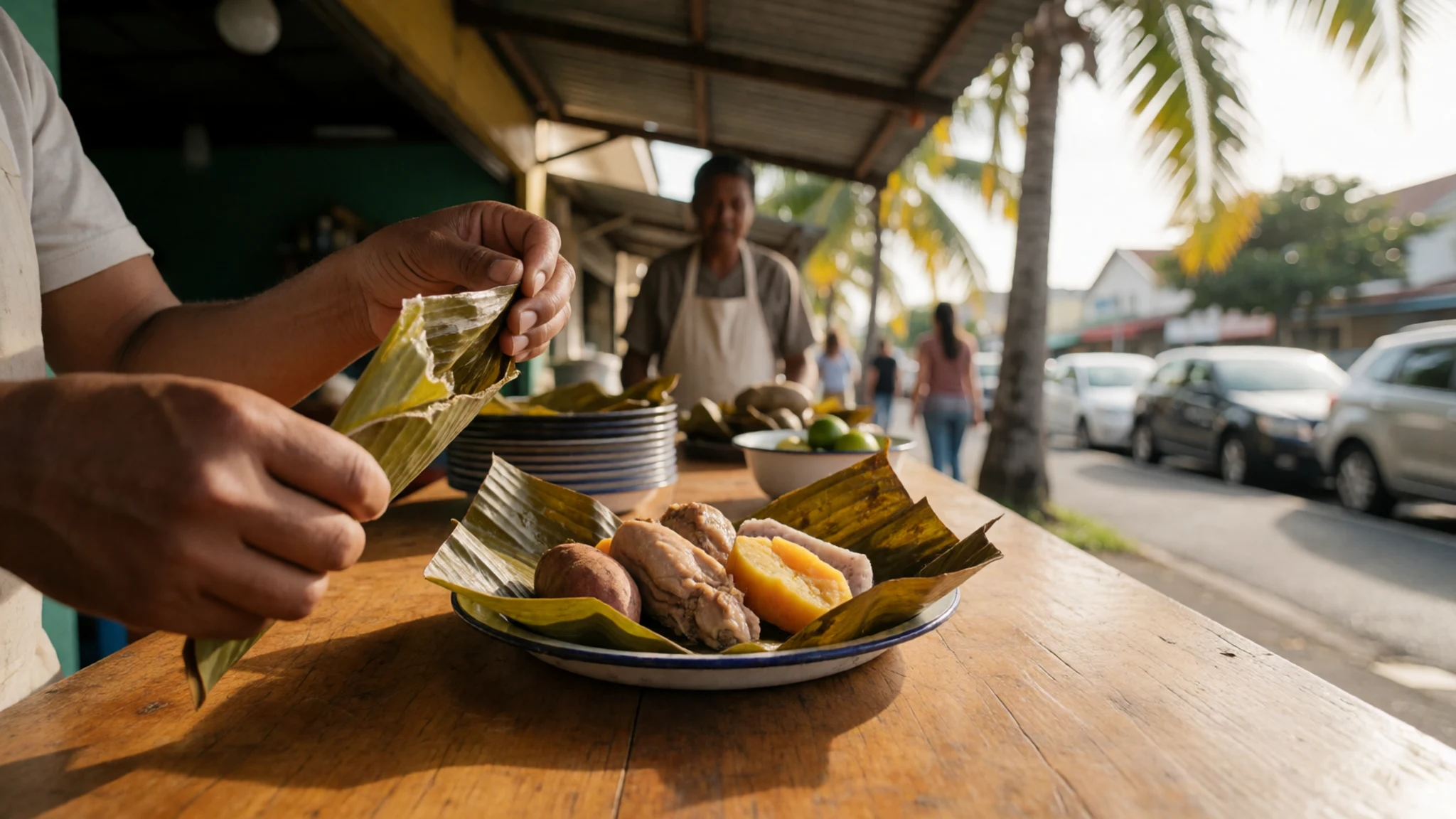
- Poisson cru — Seafood counters and casual restaurants in Nouméa
Poisson cru is raw fish, often tuna, marinated in lime juice and finished with coconut milk, cucumber and onion. It is light, cold and well suited to hot days, and it is a good thing to order after a morning on the trails.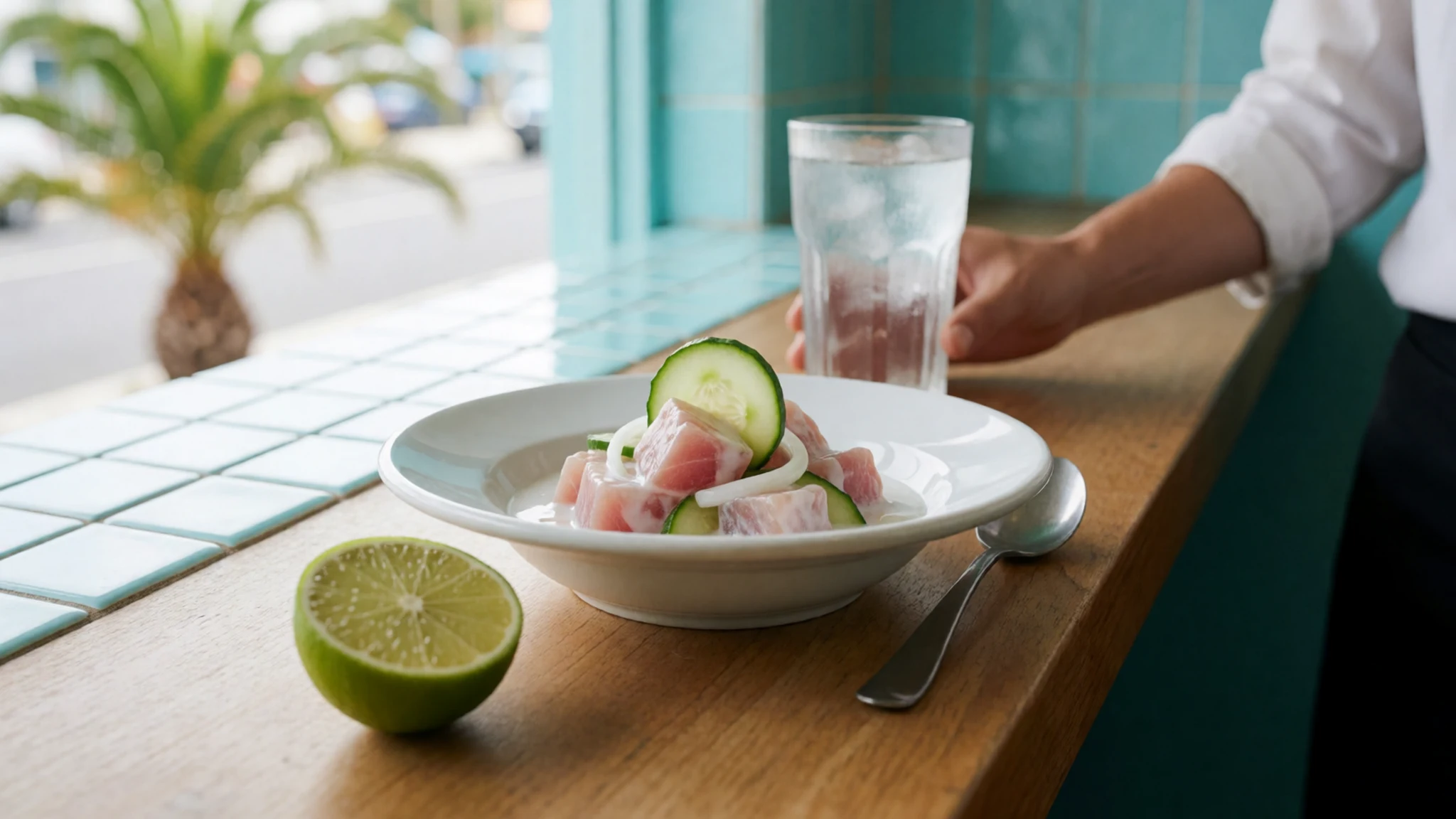
- Venison, cerf — French-style restaurants and the harbour market in Nouméa
Deer meat is a regional speciality in New Caledonia, served as roast, stew or sausage, often with a sauce reflecting French cooking. It reflects the island's mix of local ingredients and metropolitan technique, and it is a reasonable choice for a hearty evening meal. - Baguette picnic — Neighbourhood bakeries and supermarkets in Nouméa
The French baguette is a staple, and a picnic of fresh bread, cheese, cured meats and fruit is the standard way to eat in the park. Buy supplies before leaving town, because food options inside the park are limited and shops are not close. - Tropical fruit — The morning market by the harbour in Nouméa
Local markets sell bananas, papaya, pineapple, mandarins and other fruit according to the season, usually at modest cost. They are easy to carry and give a cool, sweet break on a long walk or cycle, and the market stalls are also friendly places to practise French.
Plan it
Best time. The southern spring and autumn, roughly September to November and May, are the most comfortable months, with milder temperatures than the humid, wetter summer; between December and March, rain and cyclone warnings can close trails and disrupt travel. Check the forecast before you go.
How long. 1–2
Getting there. Fly to the international airport near Nouméa, then drive about 90 minutes along the well-kept but narrow and twisty RP3 to the park entrance. Cars stop at Pont Pérignon, after which visitors continue by shuttle bus, bicycle or kayak.
Budget. mid
Tips
- Check the official site (https://www.province-sud.nc/aires-protegees/PPRB) for opening times, fees, bus and kayak details before setting out
- Hire a car in Nouméa and leave early, as the drive is slow and weekends bring local crowds
- Bring water, food, sun protection and insect repellent, since services inside the park are limited
- Carry some cash as well as cards, and check the official site if you plan to camp so you can book ahead
- Start walks and cycle rides in the morning to avoid the midday heat and increase your chance of seeing a cagou
Etiquette
- Stay on marked trails and never feed or chase wildlife, especially the cagou
- Take all rubbish away and use the designated picnic and camping areas only
- Greet people with a polite 'bonjour' and ask before photographing anyone
Nearby
Sources
- Wikidata Q3364739 (CC0)
- Wikipedia: Blue River Provincial Park (rev 1380342580) (CC BY-SA 4.0)
- Wikivoyage: Blue River Provincial Park (rev 5395388) (CC BY-SA 4.0)
- Photo: Parc de la Rivière bleue, Gwendal Audran (CC BY-SA 4.0)
- Photo: Blue River Provincial Park Scenery, Asamboi (CC BY-SA 4.0)
- Photo: New Caledonia relief location map, Sting (CC BY 3.0)
- Photo: Cagou, Glen Fergus (CC BY-SA 2.5)
- Photo: Agathis lanceolata, Mickaël T. (CC BY 2.5)
- Photo: Ducula goliath, Ben Keen (CC0 1.0)
- Photo: Lac de Yaté, Thomas Cuelho (CC BY 2.5)
- Photo: Parc provincial de la Rivière Bleue bannière, Gwendal Audran (CC BY-SA 4.0)


Wildlife
- Cagou (animal)
The cagou is a grey-blue bird with a feathery crest and long legs, the only living member of its family, found in dense mountain forest. Blue River Provincial Park shelters this endangered native bird, and catching sight of one is a quiet hope for many walkers. Ask a guide which paths and hours suit best. Keep a respectful distance, stay quiet and still, let it go about its day, and never feed it.