Basse-Terre
Basse-Terre, France
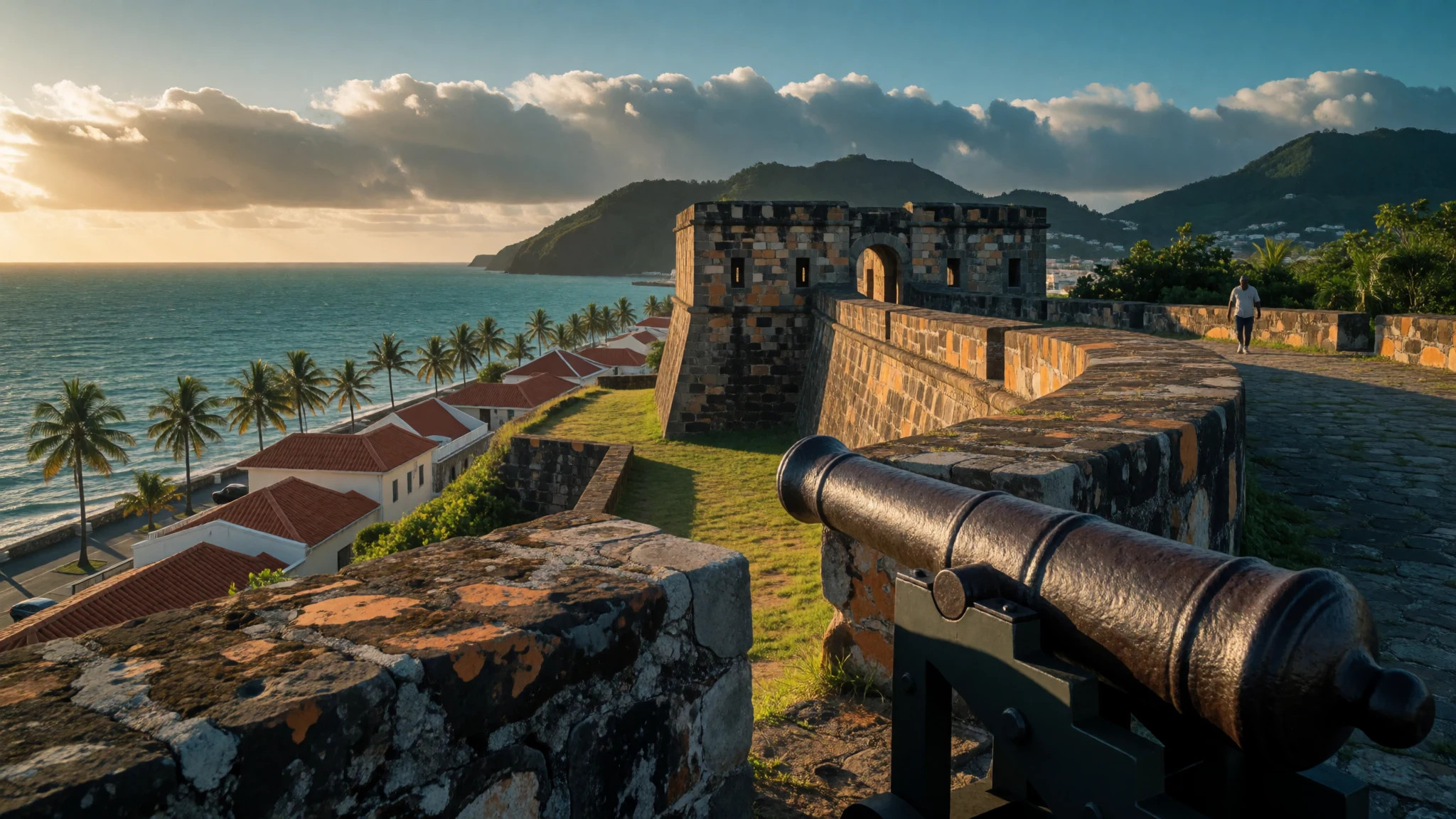
A small, unhurried French-Caribbean capital with a hilltop fort, a cathedral and the gateway to Guadeloupe's volcano and rainforest.
The place
Basse-Terre is the administrative capital of Guadeloupe, an overseas department of France in the Lesser Antilles, and it is far quieter than that title suggests. About 9,400 people live in the commune, on a narrow strip of land at the south-western end of the island half that shares its name. Behind the town the ground climbs fast into forested volcanic ridges; in front lies the Caribbean. The island sits roughly 100 km north of Dominica and 450 km south-east of Puerto Rico, which places it in the middle of the eastern Caribbean rather than on its fringe.
Pointe-à-Pitre, on the other wing of the island, is the bigger city and the commercial centre. That leaves Basse-Terre with the role of prefecture town: government offices, a cathedral, a fort, a few shaded squares and streets that thin out in the afternoon heat. The name is French for 'low land', a confusing label for the mountainous half of Guadeloupe. It comes from the old sailors' habit of calling the wind-sheltered side of an island the basse-terre. Speakers of Guadeloupean Creole say Bastè.
Signs, shops, the euro and the administration are French, while the pace, the music and the cooking are unmistakably Caribbean. The town works best as a base for the national park, the volcano and the southern coast, and as a place to see an ordinary working Guadeloupean town rather than a resort. Anyone expecting beach bars and nightlife will find them elsewhere on the island; here the draw is history, greenery and everyday life.
Its story
Basse-Terre was a settlement long before it had a French name. Archaeologists working during the restoration of the cathedral found that the site had been a village of Indigenous horticulturists and potters, with human remains and traces of daily life beneath it. Further digging in 2005, on an old rubbish heap, turned up food waste, pottery, tools of stone and shell, ornaments, charcoal and a tomb.
French colonisation of Guadeloupe began in 1635, when an expedition from Saint Kitts, steered by commanders Charles Liénard de l'Olive alongside Jean du Plessis d'Ossonville, arrived with four missionaries and 550 colonists. They came ashore at Pointe Allègre, a long way from the present town, and hunger soon pushed them south. Relations with the Indigenous inhabitants turned hostile, a war followed, and Liénard ended up building the small fort that still stands at Vieux-Fort.
The town itself dates from 1643, and the fort that dominates it was begun in 1649 by Charles Houël. Over the following centuries it was taken, lost and retaken between French and British forces, and carried a string of names including Fort Houël, Fort Matilda and Fort Richepanse. Since 1989 it has been called Fort Delgrès, after Louis Delgrès, the officer who led resistance to the restoration of slavery in the early nineteenth century. The renaming says a good deal about how Guadeloupe now chooses to remember its past: the fort is a military relic, and also a memorial to people who fought against bondage.
What to see
- Fort Delgrès — Upper town, above the harbour
The fort rises above the town on a stone-walled rise, with ramparts, bastions and a gatehouse that can be walked at an easy pace. Its best moment is the view from the walls, over the rooftops and sea one way and the forested mountains the other. Check the official site for opening times.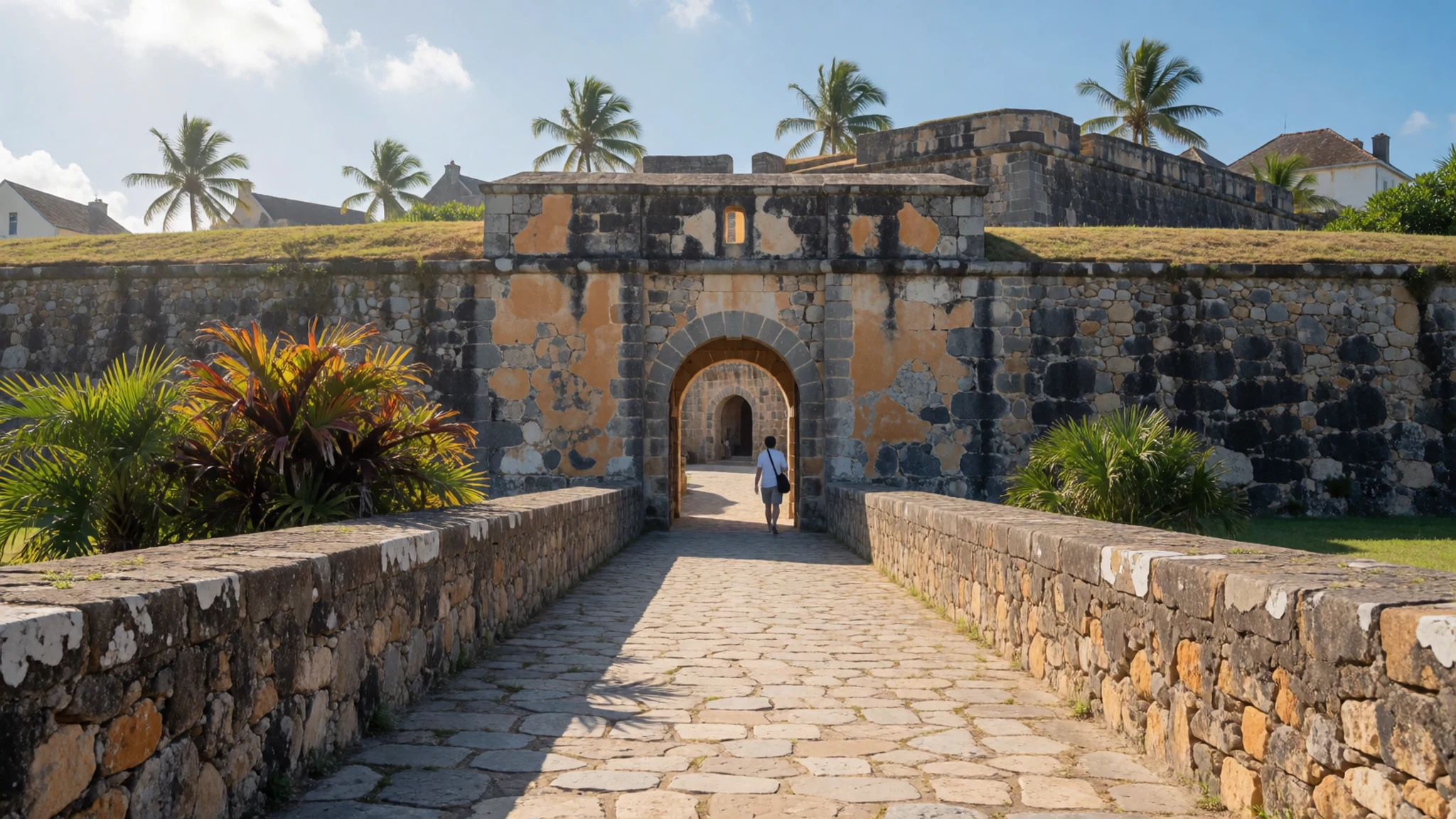
- Cathédrale Notre-Dame-de-Guadeloupe — Town centre
The cathedral stands on the site of the Indigenous village found by archaeologists during its restoration. Inside, it is a calm, cool refuge from the heat, and the façade is worth a slow look from the square outside. Services take priority, so visit outside worship times and dress modestly.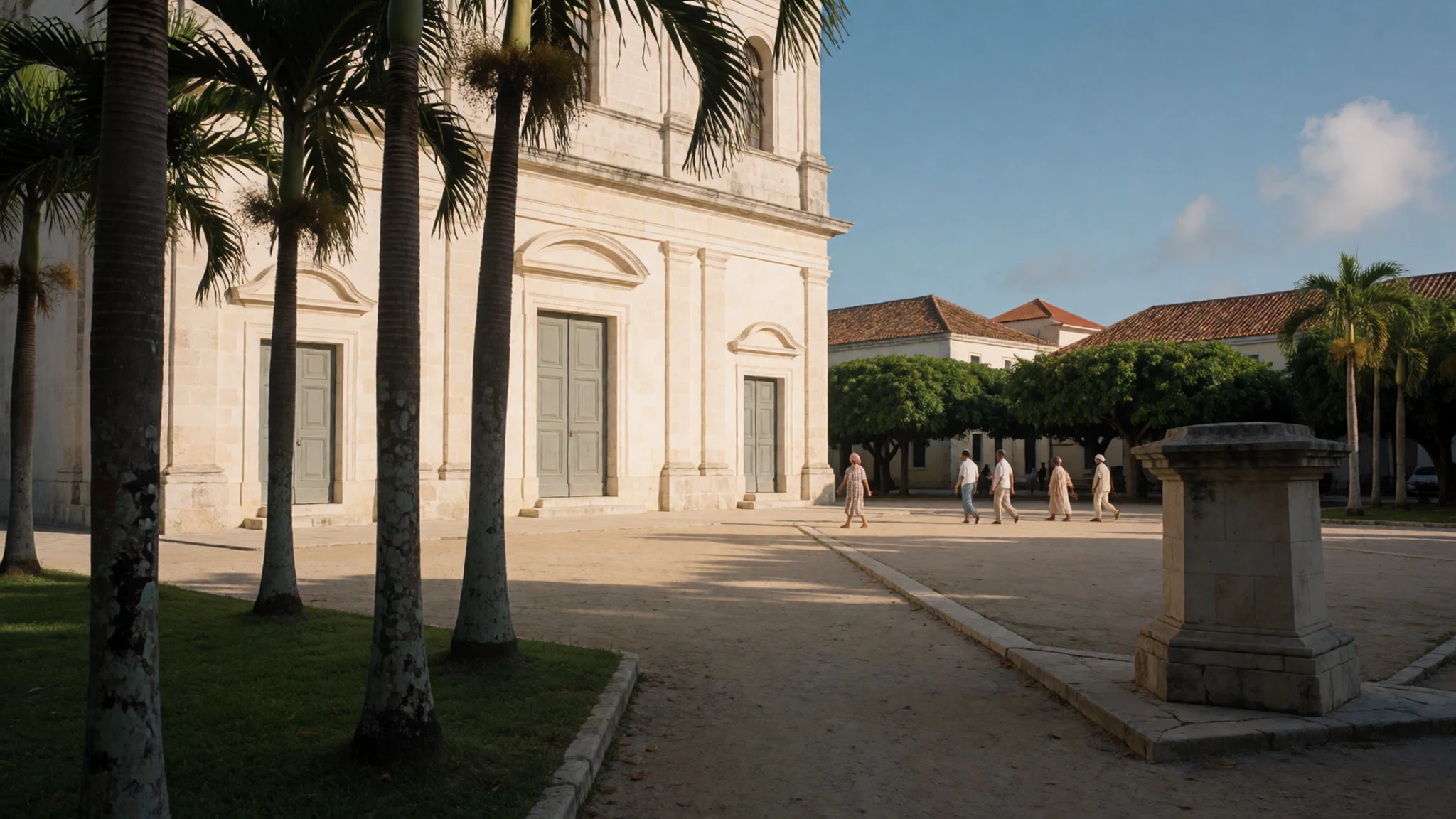
- Hôtel de Ville and Place de la Liberté — Town centre
The town hall, built in 1889, faces the Place de la Liberté, a shaded square that works as the town's living room. Benches, old trees and passing officials make it a good place to sit, watch Basse-Terre go about its business and plan the next stop with a cold drink.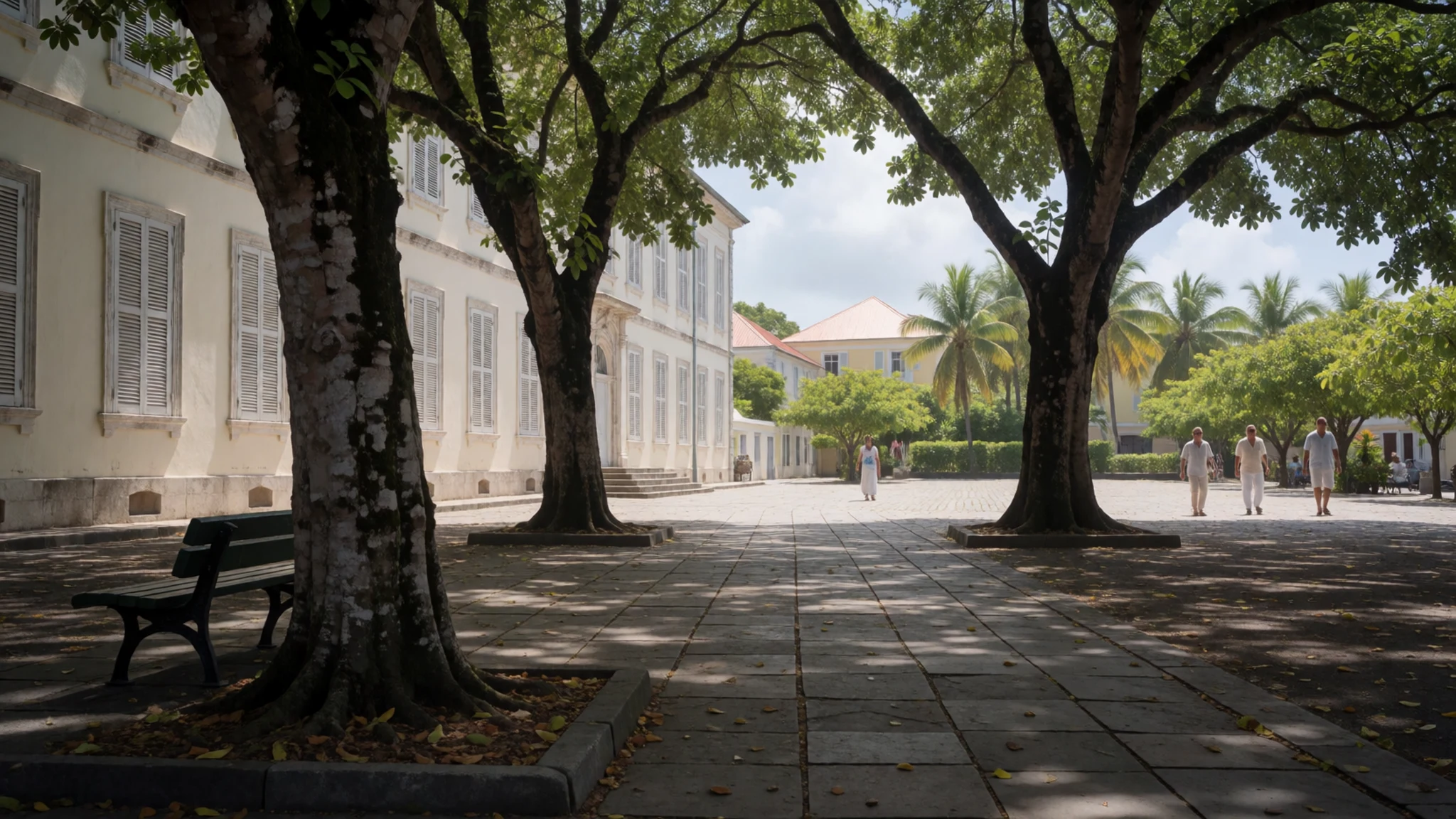
- Gerty Archimède Museum — Town centre
Opened in 1984 in the former home of the lawyer and politician Gerty Archimède, this small museum is a quiet, human-scaled stop. It suits a hot or showery hour and adds a personal, local angle to the forts and monuments. Check the town's official site before setting out.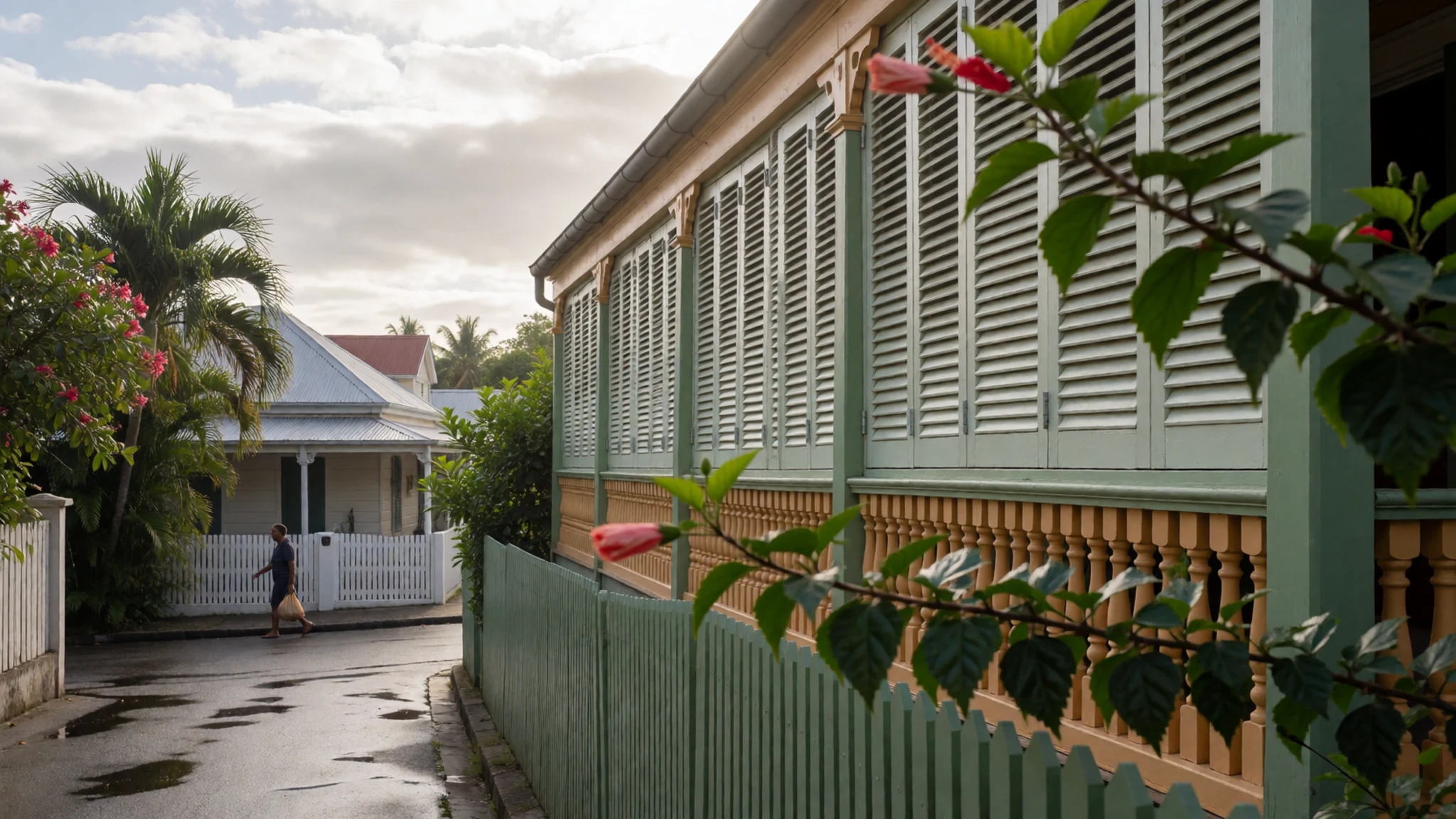
- La Soufrière and the national park — Mountains inland from the town
The Soufrière volcano rises 1467 m behind the town, inside the Parc national de la Guadeloupe, a protected rainforest with trails for experienced and casual walkers. Summits are often wrapped in cloud and rain, so start early, bring a waterproof and ask locally about path conditions.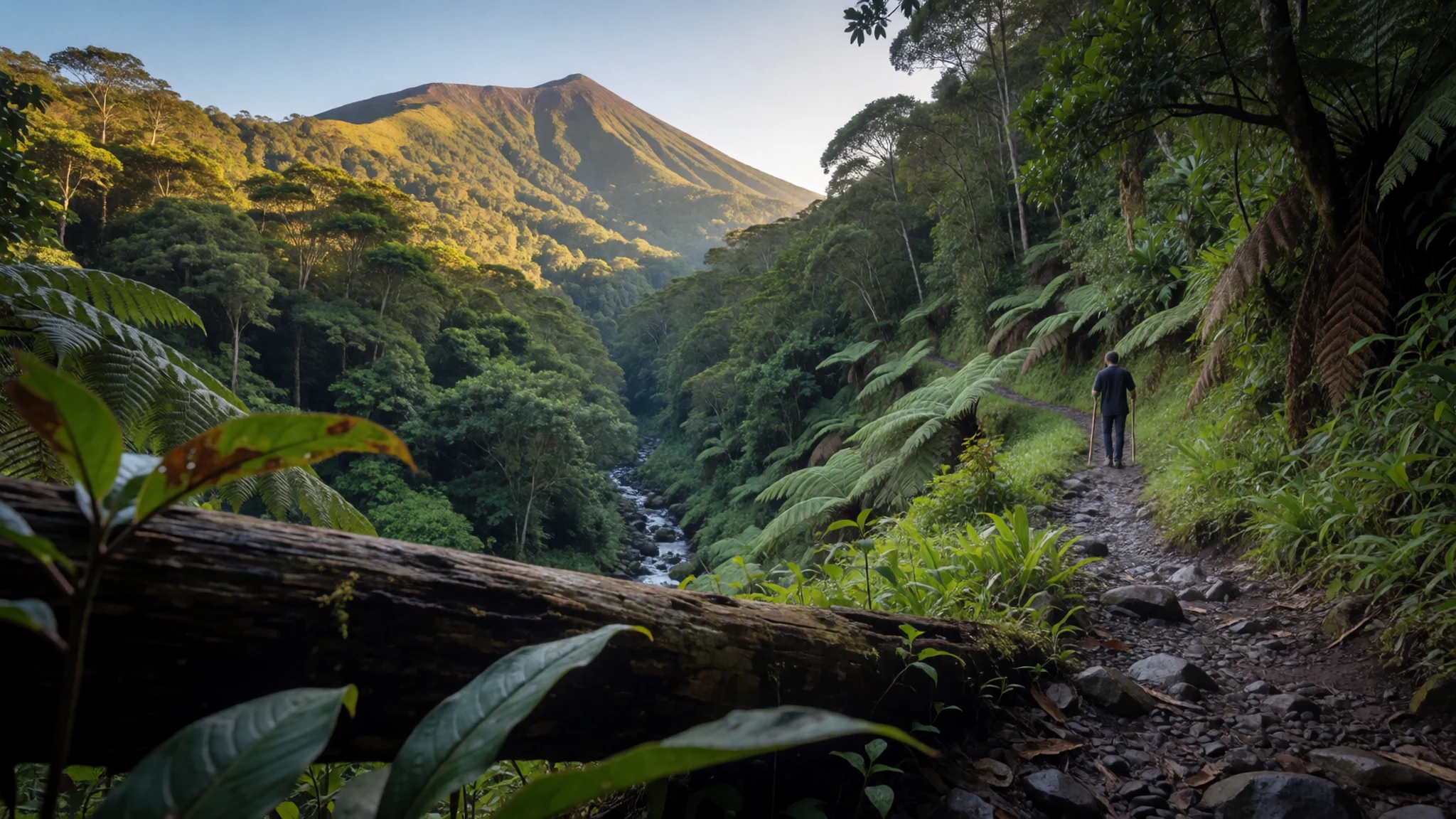
Culture
Basse-Terre has an unusual number of registered historic monuments for a town of its size, and together they show French colonial administration layered over Caribbean life. Fort Delgrès, the cathedral, the town hall of 1889 and the Gerty Archimède Museum, opened in 1984 in the home of the lawyer and politician it is named after, are all within a short walk of one another.
Everyday culture is a blend of French and Creole. French is the language of offices, schools and signs, while Creole is what people speak at home, in markets and on the radio, often switching between the two within a single sentence. Catholic tradition remains visible in church life and local festivals, and music and dance such as gwoka drumming and quadrille belong to the wider Guadeloupean calendar. Memory of slavery and resistance is part of civic life, from the fort's name to the war memorials in town.
The pace is unhurried. Midday is for a long lunch, shops can close for hours, and politeness counts for more than speed. Conversations usually start with a greeting and a question about the family or the weather before business begins, and that rhythm is worth following rather than fighting.
Before asking a shopkeeper, driver or official anything, say a clear "bonjour", and cover your shoulders and remove your hat before stepping into the cathedral.
What to wear
Traditional dress in Basse-Terre is Creole dress, built around madras, a brightly checked cotton cloth. Women's festive outfits combine a long skirt, a white embroidered blouse, a shawl and a madras headtie knotted in several styles, with heavy gold jewellery such as bead necklaces. Men's festive wear is simpler, usually a madras waistcoat or shirt with a sash. This costume appears at carnival, folk dance shows, weddings and heritage days rather than on ordinary weekdays.
Day to day, people in town dress much as they would in mainland France, adjusted for the heat. Light cotton and linen, shorts and sundresses at weekends, neat shirts and smart trousers for work in the administrative offices, sandals or trainers and sun hats are all normal. Many people dress up for church on Sundays.
Visitors will be most comfortable in breathable cotton or quick-dry fabric, with a light rain jacket, a sun hat and sunscreen, because showers arrive suddenly in all seasons. For the cathedral, cover shoulders and knees. Beachwear belongs on the beach, and swimsuits on town streets look out of place. For the volcano and forest trails, wear closed shoes with good grip, since paths are often muddy and steep, while sandals are fine for the town and the fort.
What to eat
- Colombo — Family-run Creole eateries and lunch counters in town
Chicken, rice and a curry-spice blend brought to the island from India, now treated as the typical Guadeloupean plate. It is mild, fragrant and filling, and other meats or fish sometimes replace the chicken. Order it at family-run Creole eateries at lunchtime.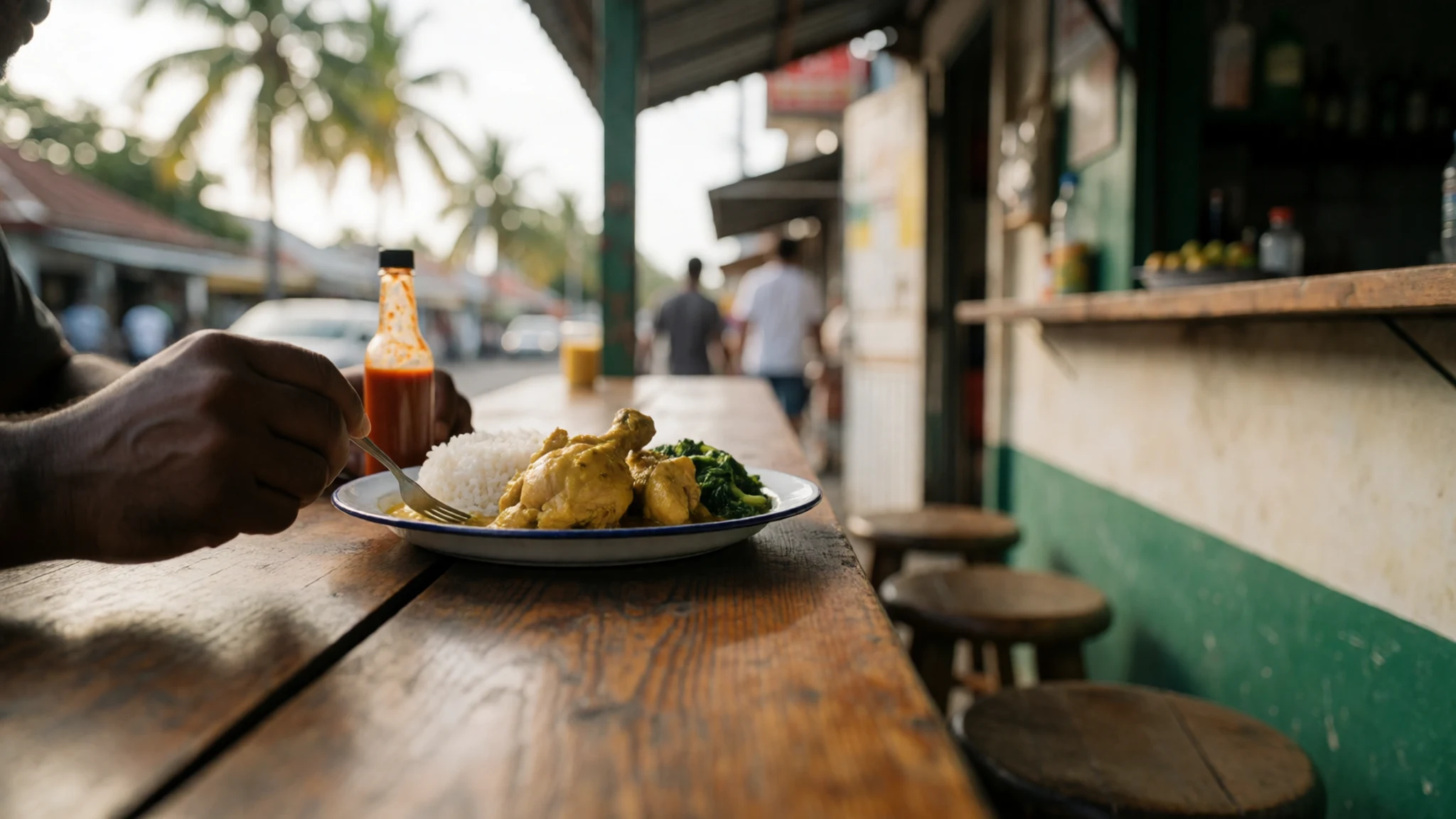
- Boudin créole — Butchers, market stalls and snack bars
A spicy black pudding made with Creole seasoning, served warm in short links, often with a splash of hot sauce. It is a snack as much as a meal and goes well with a cold drink at a bar or a roadside stall.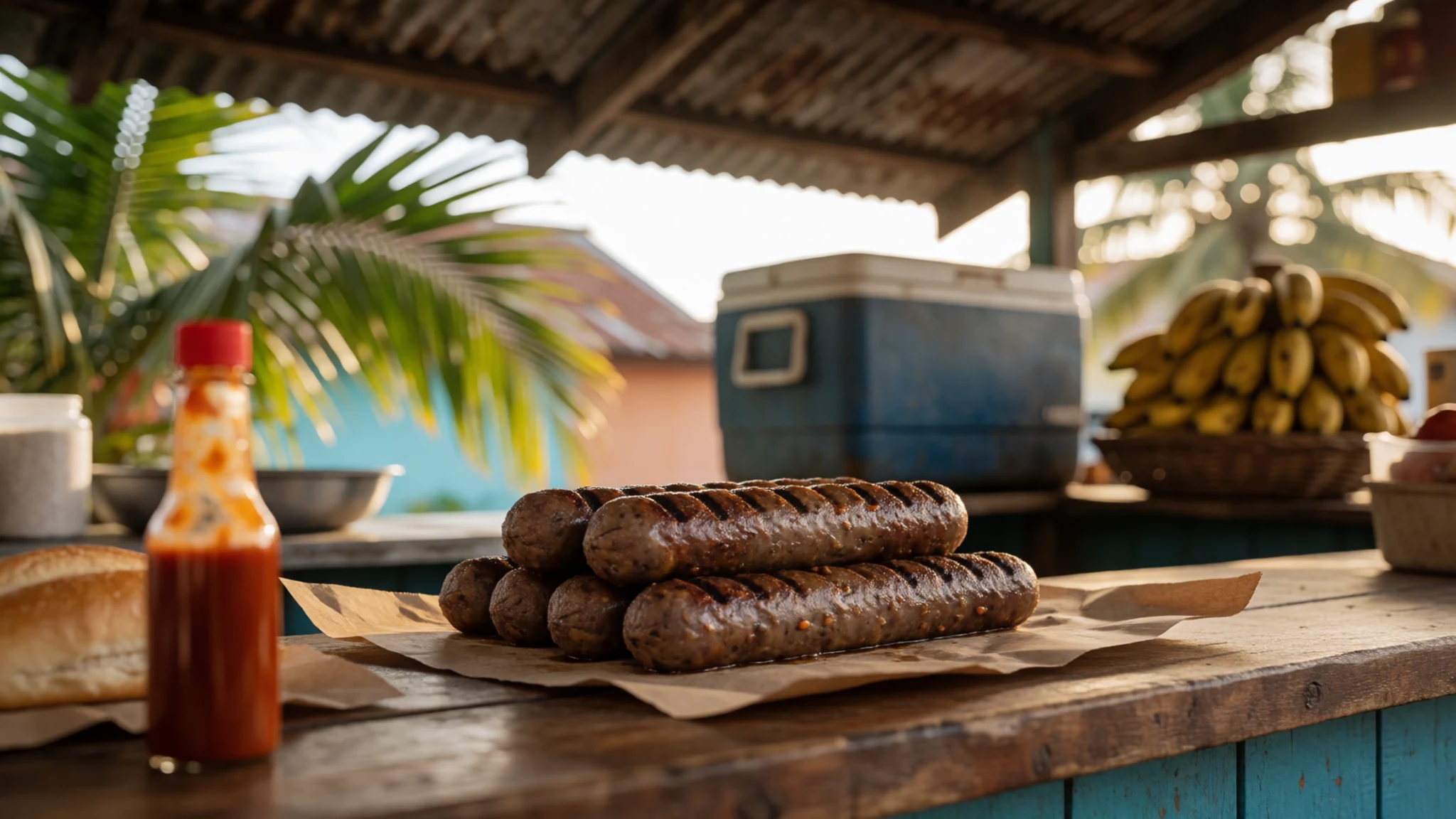
- Féroce d'avocat — Creole restaurants and market-side counters
A rough, spicy avocado mash, usually with salt cod, cassava flour and chilli. It is related to guacamole but hotter, and the heat varies from cook to cook, so taste a small amount first before piling it onto bread. - Accras de morue — Snack stalls, bakeries and Creole eateries
Crisp, golden salt cod fritters with chilli, eaten hot with the fingers as a starter or snack. They suit a drink in the late afternoon and are easy to share among a group. - Bananas — The town market and roadside fruit stalls
Bananas appear in several forms: ripe ones as fruit, green ones boiled as a starchy side, and plantain fried until sweet. They are cheap, filling and often served with fish or meat, and local varieties taste different from supermarket imports.
Plan it
Best time. February to April is usually the drier, more comfortable stretch. Temperatures stay fairly steady all year in Basse-Terre, so the main differences are rainfall and storms. Showers are likely at any time, particularly on the mountain slopes, and the hurricane season from June to November brings heavier rain and some risk of storms.
How long. 2–3
Getting there. Fly to Pointe-à-Pitre airport, then hire a car or arrange a road transfer south-west across the island to Basse-Terre. Ferries link Guadeloupe with Les Saintes and other islands; check the official operators for current sailings.
Budget. mid
Tips
- Carry a valid passport or EU ID card; Guadeloupe is outside the Schengen Area, so immigration checks apply on flights from mainland France.
- Most visitors who can enter Schengen visa-free may stay up to 90 days, but check the current rules for your passport before travelling.
- Start the volcano or forest walks early, before cloud and rain build, and carry water and a waterproof.
- Hire a car if you plan to explore the national park, since public transport is limited outside the main towns.
- Check the town's official site, http://ville-basseterre.fr, for opening times of the fort and museum.
Etiquette
- Greet people with "bonjour" before asking for anything.
- Dress modestly for church visits and keep voices low.
- Ask before photographing people, especially at markets and religious events.
Nearby
Sources
- Wikidata Q167024 (CC0)
- Wikipedia — Basse-Terre (rev 1381794698) (CC BY-SA 4.0)
- Wikivoyage — Guadeloupe (rev 5413121) (CC BY-SA 4.0)
- Monts Caraïbes depuis le Fort Louis Delgrès à Basse-Terre — Daniel Jolivet (CC BY 2.5)
- Cathédrale Notre-Dame-de-Guadeloupe — Filo gèn' (CC BY-SA 4.0)
- Cénotaphe (monument aux morts) — Filo gèn' (CC BY-SA 2.5)
- Le Fort Louis Delgrès (XVIIe–XVIIIe siècle) — Filo gèn' (CC BY-SA 4.0)
- Hôtel-de-Ville de Basse-Terre — LPLT (CC BY 3.0)
- Locator map of Basse-Terre 2018 — Tschubby (CC BY 3.0)
- La Soufrière — Anthony SIMONET (CC BY 3.0)
- Entrée principale du Fort Delgrès — Alexgrim (CC BY 3.0)


