Besançon
Besançon, France
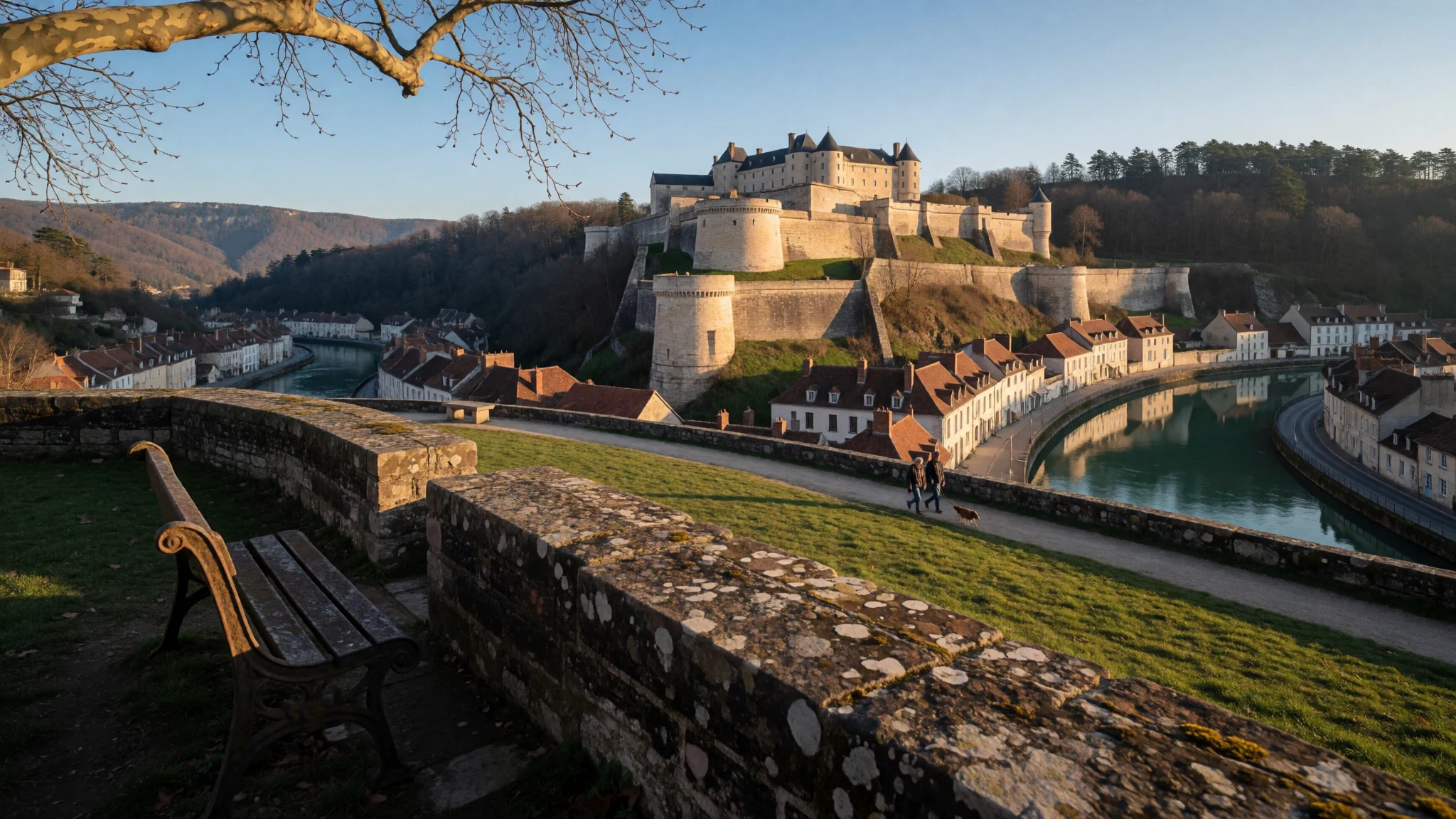
Besançon packs a hilltop fortress, Renaissance streets and a watchmaking past into a single loop of the river Doubs.
The place
Besançon is the capital of the Doubs department in eastern France, in the Bourgogne-Franche-Comté region, close to the Jura Mountains and the Swiss border. About 118,000 people live in the commune, which sits at 281 metres above sea level. The old centre occupies a tight loop of the river Doubs, known locally as La Boucle, and a hill blocks the one side the water does not wrap around. That geography explains much of what the city became: easy to defend, easy to control and awkward to bypass. Over the centuries it served as a garrison town, an administrative seat and a church capital, and it still houses regional government offices and a military headquarters. Beyond the loop the city spreads into neighbourhoods with their own names: Battant, Bregille, Chaprais, Palente, Planoise and others. Visitors spend most of their time inside the Boucle, where streets are walkable and the river is never far away. Besançon is also the historical watchmaking centre of France, and that craft has moved into microtechnology and biomedical engineering. The result is a city with a student-and-engineer feel rather than a resort one. It is a working regional capital that happens to have a handsome old core, so expect ordinary French town life of markets, cafés, trams and schoolchildren rather than a stage set built for tourists.
Its story
Besançon enters the written record in 58 BC, when Julius Caesar names it Vesontio in his account of the Gallic wars. By then it was already a fortified town of the Sequani, a Gaulish people who held the bend of the Doubs and used it to guard their trading interests. Their rivalry with the neighbouring Haedui centred on tolls along the Saône, and a stronghold here protected their route towards the Rhine. People had lived inside the loop since the Bronze Age, so Caesar was describing a place with a long habit of defending itself. The origin of the name is uncertain, though a common explanation is a Celtic root meaning 'mountain'. Around the 4th century the first letter shifted from V to B, and the name passed through forms such as Besontio and Bisontion before settling as Besançon in 1243. The Romans left traces that can still be seen, including Corinthian columns from a theatre in Square Castan. The military logic outlasted Rome: high ground to the south made the town a gatekeeper, and it stayed a garrison and frontier city, later crowned by Vauban's citadel in the 17th century. In the 1970s a different struggle played out. Quartz watches from Asia wrecked the traditional watch trade within a few years, and workers at the Lip factory refused closure and ran it as a cooperative. It folded soon afterwards, but it gave the city a lasting reputation for radical politics.
What to see
- The Citadel — Hill above La Boucle
Vauban's fortress, built in the 17th century, crowns the hill above the loop. Inside are several museums as well as a zoo, an aquarium and an insectarium, enough to fill half a day. The real draw is the view over the Boucle and the Doubs. Check opening times and tickets on the official site, besancon.fr.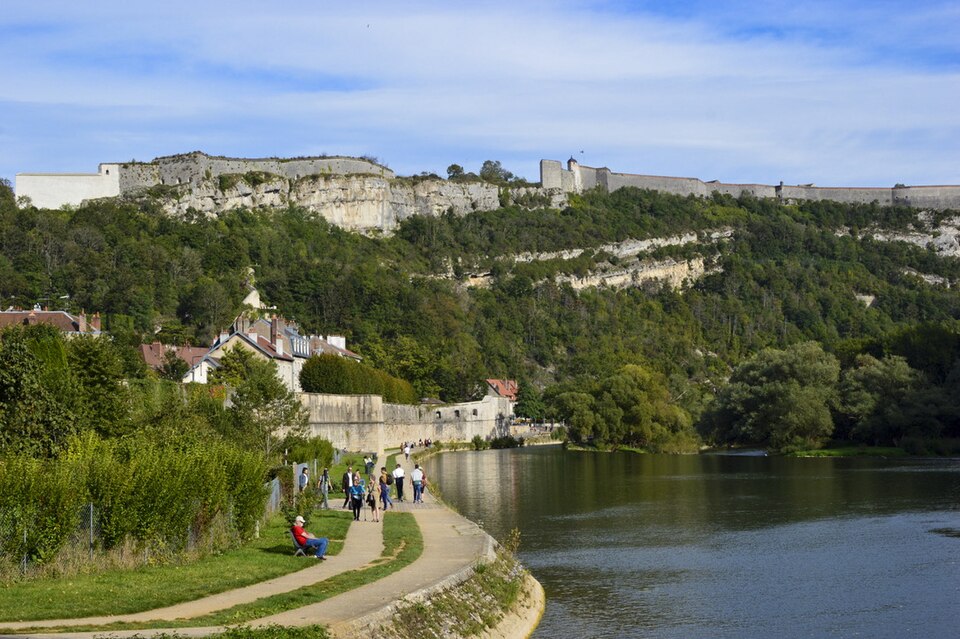
- Palais Granvelle — Old centre, inside the Boucle
This Renaissance mansion in the old centre now houses the Museum of Time, a fitting home in a watchmaking city. Look first at the façade, where Tuscan, Ionic and Corinthian columns frame Gothic windows. Opening hours change by season, so confirm them with the city's official site before planning around it.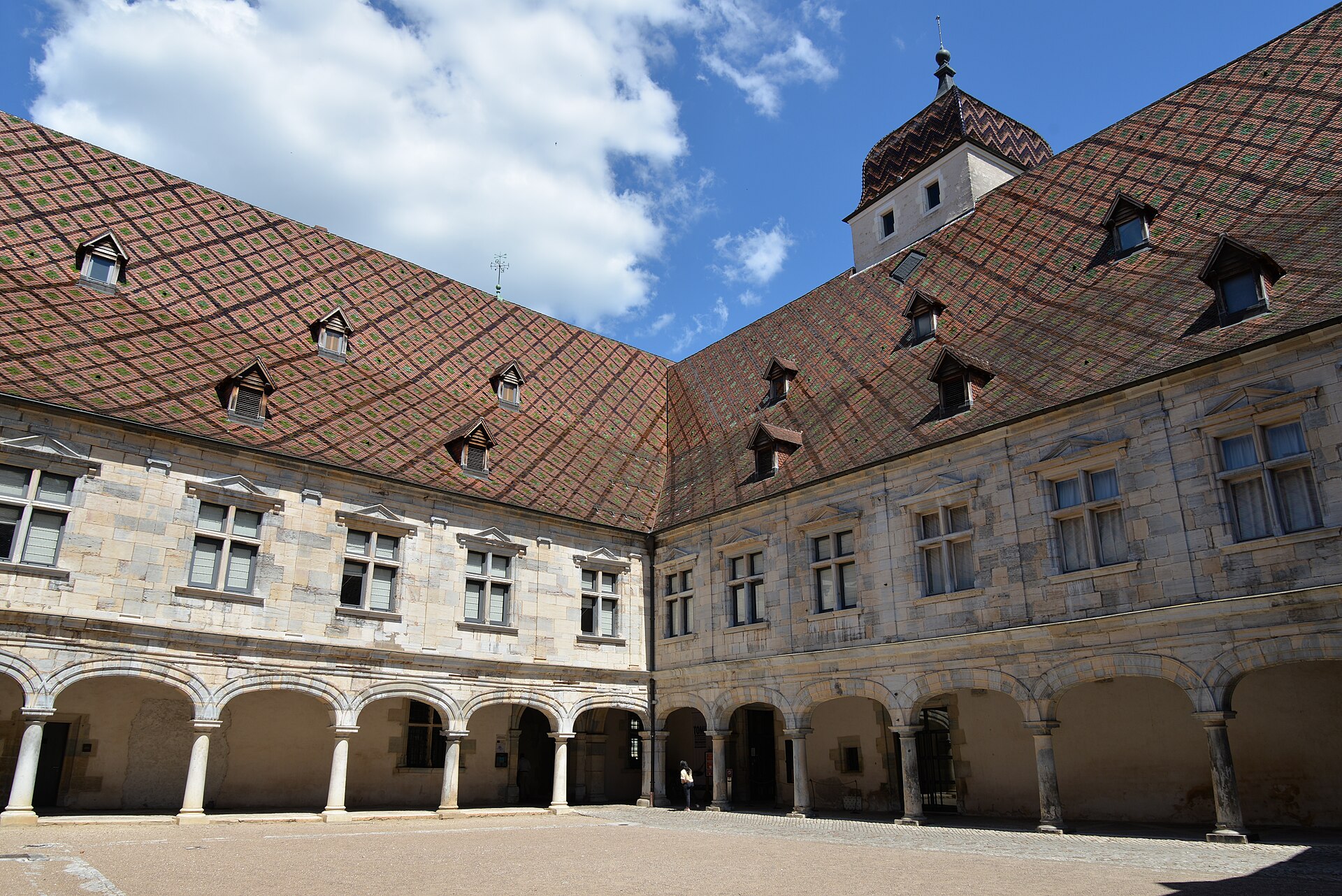
- Besançon Cathedral — Below the citadel, La Boucle
The cathedral stands near the foot of the citadel hill and anchors the religious side of the city's history, since Besançon is the seat of an ecclesiastical province. It is a working church as well as a sight, so visits fit best outside services. Pair it with a slow walk uphill afterwards. - Roman remains at Square Castan — Square Castan, La Boucle
Eight Corinthian columns from a Roman theatre stand in this small public square, a quiet reminder that Vesontio was an important town long before the Renaissance. It takes ten minutes, costs nothing and works well as a pause between the cathedral and the river on a walking loop. - Quai Vauban and the Doubs — Riverbank, La Boucle
The riverside quay follows the edge of the loop, with the old granary buildings and the Tour de la Pelote beside the water. A walk here shows how completely the river encircles the centre. Boat cruises of an hour or two leave from nearby, and canoes, kayaks and paddleboards can be rented upriver.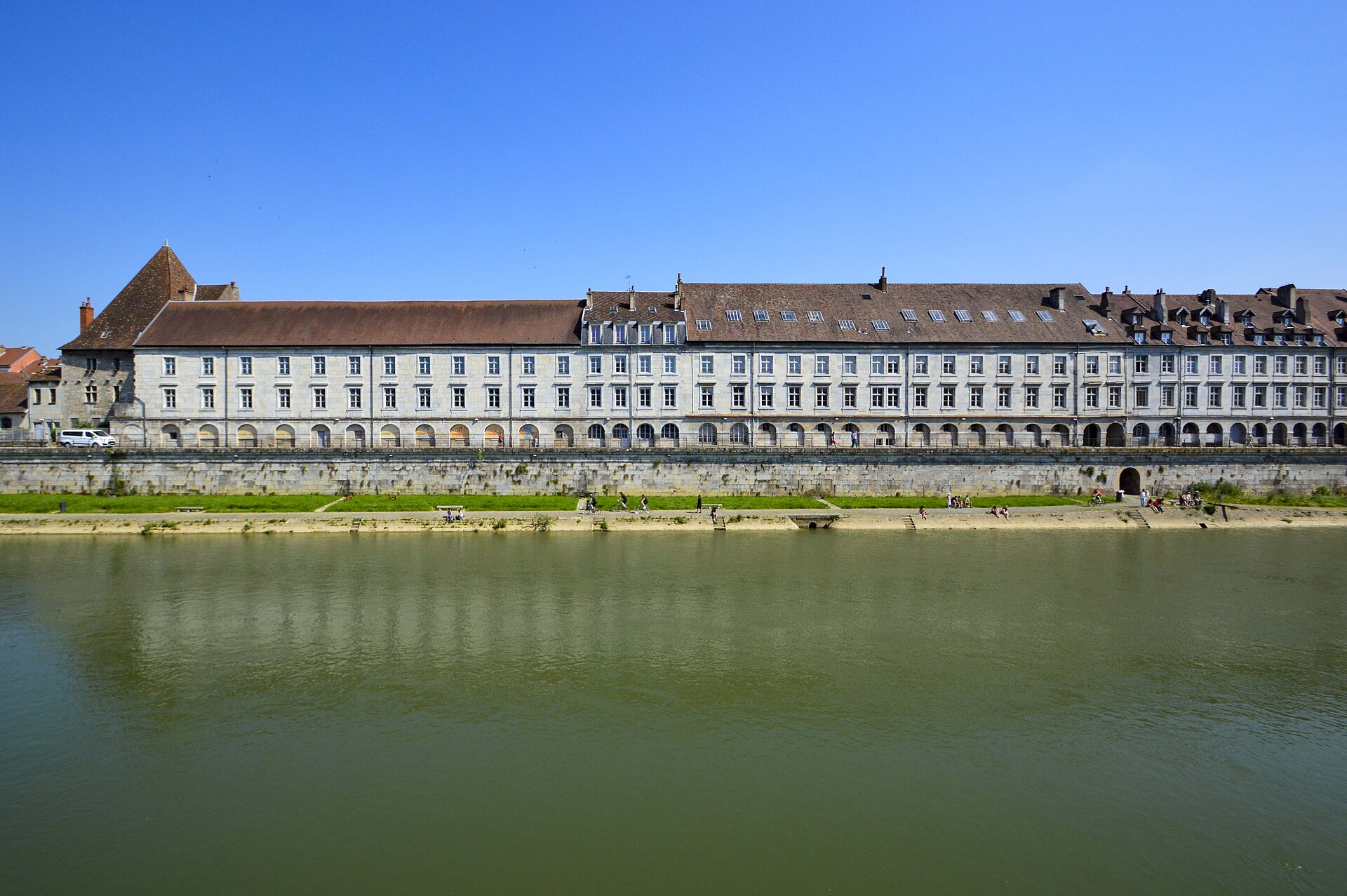
Culture
Besançon carries the manner of a provincial capital in Franche-Comté: reserved at first, unhurried, and proud of local craft. Its identity rests on three things. The first is watchmaking, which built the city's trades and now feeds a technology sector; the Micronora trade fair for microtechnologies is held here every second year. The second is its Christian heritage, with a cathedral and an archbishop's seat, alongside a Muslim community that has its own place in the city's modern life. The third is a left-leaning civic streak, born from the Lip factory occupation of the 1970s and still part of how people describe their town. A large student population keeps cafés, bookshops and the riverbanks busy in term time, while August can feel noticeably quieter as residents head away. Local pride shows up at the table too, in the cheeses and pastries of the Franche-Comté region, and in the habit of taking lunch seriously. Festivals and concerts fill the calendar through the year, but dates move, so check the city's official site rather than relying on a fixed schedule. Public life is polite and fairly formal in the French manner, and small courtesies carry real weight with shopkeepers and café staff. Always greet staff with a clear 'bonjour' before asking for anything in a shop, café or market stall, and keep your voice low inside the cathedral.
What to wear
Besançon has no single everyday costume today. The regional dress of Franche-Comté, built from wool, linen and cotton with lace caps, shawls and aprons for women, now appears mainly at folklore events and festivals, and is worn by performing groups rather than ordinary residents. What people actually wear is plain, tidy and practical: dark jeans or trousers, jumpers and light coats, leather or canvas trainers, and scarves when the weather turns. Students lean casual, office workers a little sharper, and nobody dresses up for the street the way larger fashion cities might. Besançon has a continental climate near the Jura, so winters are cold and damp while summers can be warm. For visitors, the sensible kit is layers, a waterproof jacket in spring and autumn, and comfortable shoes with decent grip, because the old centre has cobbles and the walk up to the citadel is steep. Sun hat and water bottle help in summer. Churches such as the cathedral do not enforce a strict code, but covered shoulders and knees are polite. Smart-casual is enough for restaurants and evenings out. Pack a compact umbrella and keep sandals for dry summer days, since wet stone can be slippery. A light scarf works in every season and helps in cooler churches.
What to eat
- Comté — Cheese shops and market stalls in the centre
The hard, nutty cow's-milk cheese of the Franche-Comté region is the local staple. Buy it from cheesemongers and market stalls, ask for different ages if you want a mild or sharper taste, and eat it with bread on a riverside bench. - Morbier — Cheesemongers and the city markets
A soft, semi-firm cheese recognisable by a thin dark line through the middle. It melts well and suits a simple picnic with bread and fruit. Look for it in the same cheese shops and market stalls that sell comté. - Cancoillote — Bistros and cheese shops in the old centre
A smooth, runny cheese spread from the region, often served warm over potatoes or with ham. Less well known outside Franche-Comté, it is a good local order for anyone curious about what residents actually eat at home. - Galette de Goumeau — Neighbourhood bakeries, around Epiphany
A traditional Besançon pastry eaten around Epiphany in place of the galette des rois found elsewhere in France. It is best sought in January, when local bakeries are most likely to have it in the window. - Escalope de veau — Traditional bistros across the centre
Veal escalope is one of the region's traditional main dishes, often served with a creamy sauce, and it appears on the menus of many ordinary bistros. Ask for the plat du jour and see what the kitchen suggests that day.
Plan it
Best time. May–June and September–October, when days are mild and the river and hills are green or turning colour. Summer can be warm, while winters are cold and grey, so the citadel views are less pleasant then.
How long. 2
Getting there. Fly to EuroAirport Basel-Mulhouse-Freiburg or Lyon Saint-Exupéry, or to Paris Charles de Gaulle and continue by train. The Besançon TGV station lies outside the city, with a regular shuttle to the central Viotte station; direct high-speed trains run from Paris and several other French and European cities.
Budget. mid
Tips
- Climb to the citadel early in the day for cooler air and clearer views
- Wear shoes with grip, as the old streets are cobbled and the hill is steep
- Check opening times and ticket details for the citadel and museums on the official site, besancon.fr
- Carry a card, but keep some coins for market stalls and small bakeries
Etiquette
- Say 'bonjour' when entering a shop, café or market stall
- Keep voices low and photography discreet inside the cathedral
- Wait to be shown a table in restaurants rather than choosing one yourself
Nearby
Sources
- Wikidata Q37776 (CC0)
- Wikipedia: Besançon (rev 1381799078) (CC BY-SA 4.0)
- Wikivoyage: Besançon (rev 5395003) (CC BY-SA 4.0)
- Photo: Besançon, la vieille ville vue depuis les Glacis (Wikipedro) (CC BY-SA 4.0)
- Photo: Besançon, la rue de la Convention (Wikipedro) (CC BY-SA 4.0)
- Photo: Hôtel de Ville, Besançon (Chabe01) (CC BY-SA 4.0)
- Photo: Palais Granvelle, Besançon (Calips) (CC BY 3.0)
- Photo: Besançon, le quai Vauban (Wikipedro) (CC BY-SA 4.0)
- Photo: Besançon, le Doubs et la citadelle (Wikipedro) (CC BY-SA 4.0)
- Photo: Flag of Besançon (AGRBLX) (CC BY-SA 4.0)
- Photo: Besançon, Doubs, Quai Vauban (Jean-Pol Grandmont) (CC BY 3.0)


