Ajaccio
Ajaccio, France
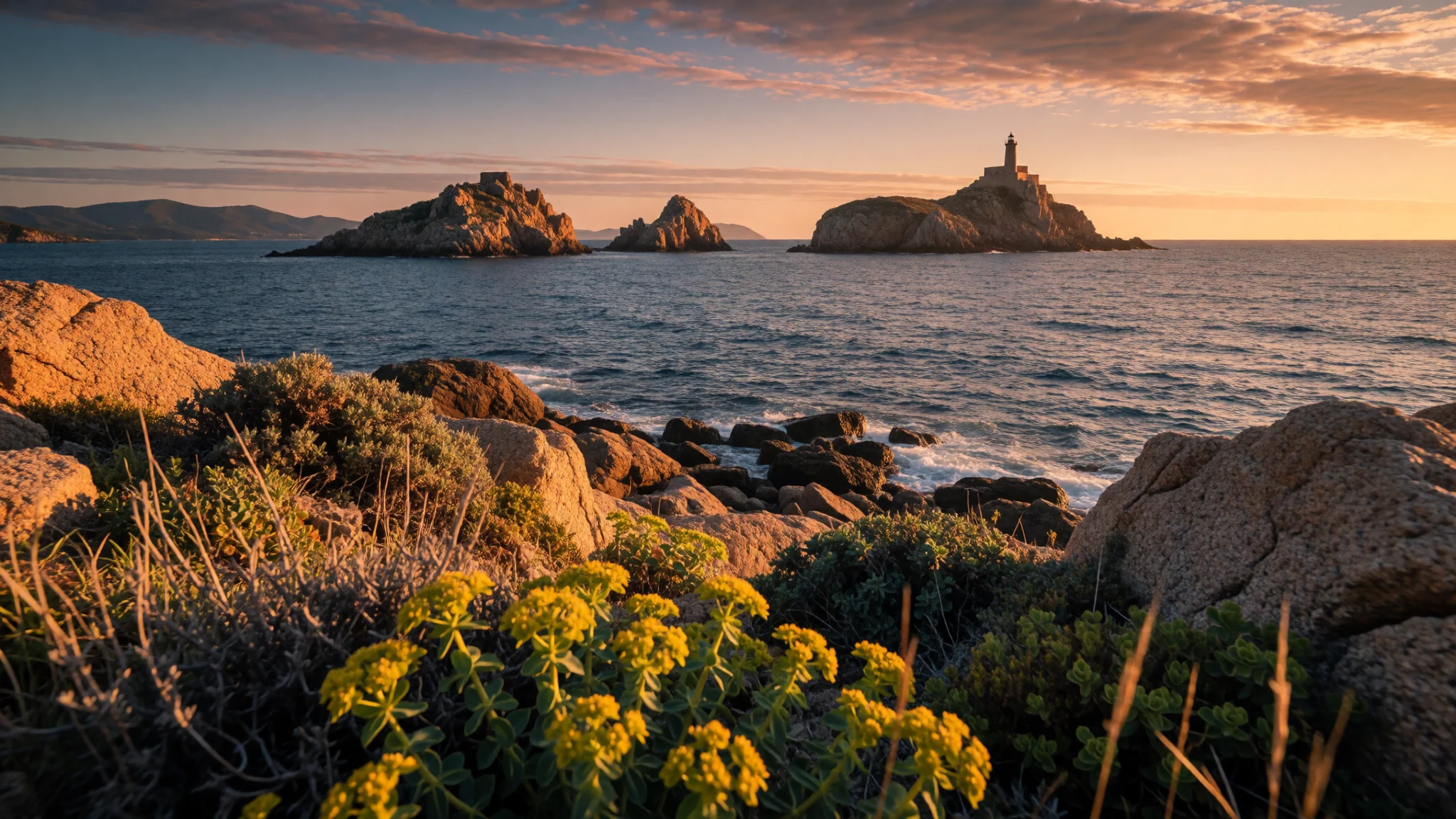
Ajaccio offers a sunny Mediterranean escape defined by Napoleonic heritage, rugged coastal views, and quiet mountain railways.
The place
Ajaccio sits on the sheltered west coast of Corsica, serving as the departmental seat and capital of the island. Occupying a protected position at the foot of wooded hills along the northern shore of the gulf, the settlement stretches between the Gravona valley and the Pointe de la Parata, looking out towards the rocky shapes of the îles Sanguinaires. Local residents are known as Ajacciens for men and Ajacciennes for women. The surrounding terrain blends coastal coves with steep interior uplands, creating a landscape where maritime air meets sharp elevations. As the largest population centre on the island, Ajaccio combines civic administration with maritime activity, centering around its main harbour stations where ferries connect the community to the French mainland. The urban fabric is marked by squares, neoclassical monuments dedicated to naval and military figures, and narrow residential streets opening towards the blue waters of the gulf. Visitors approaching by sea or land encounter a town shaped equally by its Genoese architectural legacy and its deep connection to its most famous native son, Napoleon Bonaparte, whose presence is commemorated in street names, museums, and public plazas across the settlement. The local climate remains mild through much of the year, supporting outdoor markets filled with regional produce, citrus fruits, and cured meats, while the surrounding hills offer panoramic vantage points across the Mediterranean.
Its story
Ajaccio developed an early port presence during antiquity to serve maritime trade routes across the Mediterranean basin, though it went unmentioned by the geographer Ptolemy despite nearby settlements. Archaeological underwater discoveries of Roman merchant vessels indicate that the area functioned as a viable harbour at the head of local river valleys during the Pax Romana. Subsequent excavations have revealed significant early Christian remains in the quarters of Castel Vecchio and Sainte-Lucie, suggesting a community large enough to warrant an episcopal seat mentioned by Pope Gregory the Great in late antiquity. After periods of medieval decline, the settlement experienced a profound shift when the Genoese constructed a fortified citadel to the south in 1492, establishing a secure military and administrative foothold. Following the declaration of the Corsican Republic in 1755, the Genoese maintained control of several key coastal citadels, including Ajaccio, until sovereignty eventually passed to France. Throughout these centuries of shifting political control, the local population maintained its distinct identity while the urban layout expanded beyond the original defensive walls. The birthplace of Napoleon Bonaparte in 1769 anchored the town permanently in modern European history, transforming a provincial Mediterranean port into a site of international pilgrimage and administrative prominence.
What to see
- Napoleon's House — Old Town
Located in the historic centre, this ancestral family residence is where Napoleon Bonaparte was born. It now operates as a municipal museum displaying period furniture, documents, and historical artifacts detailing the early life of the future emperor. - Musée Fesch — Rue Cardinal-Fesch
Housed in a grand 19th-century palace commissioned by Napoleon's uncle, Cardinal Fesch, this gallery holds an extensive collection of Italian paintings. Visitors can view masterworks by Titian, Raphael, and Botticelli alongside impressive regional sculptures. - Ajaccio Cathedral — Near the harbour
Also known as the Church of Sainte-Marie, this salmon-coloured baroque structure stands near the waterfront in the older quarter. Constructed following later Genoese expansions, the interior features rich marble altars and historical paintings. - Citadel — Harbour waterfront
Founded by the Genoese in 1492 with later modifications dating after 1559, this imposing fortification guards the harbour edge. While the interior remains an active military base closed to the public, the exterior walls and nearby lighthouse offer striking coastal views. - Train to Bocognano — Gare d'Ajaccio
Departing from the central railway station, the narrow-gauge train journey climbs away from the coast through dense forests and rugged mountain passes, arriving in the alpine-feeling village of Bocognano in under an hour for a quiet rural excursion.
Culture
Ajaccio maintains a distinct cultural rhythm that bridges traditional Mediterranean island life with French administrative influence. The city's architectural heritage is on display across public squares and historic mansions, featuring monuments dedicated to regional figures such as General Abbatucci, Cardinal Fesch, and the Bonaparte family. Cultural life revolves around civic celebrations, local artisan markets, and coastal traditions linked to the surrounding marine reserves. Residents take pride in their distinct heritage, speaking both French and regional dialects while preserving customs rooted in agriculture and seafaring. Visitors exploring the historic centre will find a welcoming atmosphere in local cafes and wine bars, where community conversations often focus on local history and regional autonomy. When entering churches or historical monuments in Ajaccio, dress respectfully with covered shoulders and knees.
What to wear
Traditional dress in Ajaccio historically reflected rural Mediterranean and mountain influences, featuring sturdy wool textiles, woven linens, and layered garments suited for both coastal breezes and interior chill. While historic ceremonial garb is now reserved for cultural festivals and historical reenactments, modern residents dress in contemporary European styles that prioritise comfort during warm summers and mild winters. Everyday attire for locals typically includes lightweight shirts, tailored trousers, and comfortable walking shoes suitable for navigating the sloping cobblestone streets and harbour promenades. Visitors should pack breathable linen or cotton clothing for warm daytime temperatures, alongside a light windbreaker or sweater for cooler evenings by the water or excursions into the nearby mountains. Sturdy footwear is essential for exploring rocky coastal paths and unpaved archaeological sites outside the centre. Modest attire—such as covering shoulders and knees—is recommended when visiting local churches and religious buildings.
What to eat
- Traditional Grandmother-Style Stews — Traditional family-run eateries in the old town
Hearty local dishes prepared with slow-cooked meats, seasonal vegetables, and rich herb broths, capturing authentic rustic island flavours. - Modern Bistro Plates — Sophisticated bistros near the central squares
Contemporary interpretations of classic Corsican recipes, blending fresh seafood and island herbs with refined culinary techniques. - Local Charcuterie and Cheeses — The central municipal market near the cruise port
A selection of cured pork products, artisanal cheeses, fresh olives, and seasonal citrus fruits representing local agricultural traditions. - Ajaccio AOC Wines — Local wine bars and cafes across the city centre
Regional red and rosé wines bearing the official appellation label, produced from vineyards cultivated in the surrounding hills and valleys.
Plan it
Best time. May to June and September to October offer pleasant temperatures and manageable visitor numbers, avoiding the intense summer heat and peak holiday crowds.
How long. 2–3
Getting there. Ajaccio International Airport lies close to the city centre, connected by public bus routes or taxis. Ferries arrive regularly from mainland French ports including Marseille, Nice, and Toulon.
Budget. mid
Tips
- Book ferry crossings and accommodation well in advance if travelling during the busy summer season
- Use local bus services or walk on foot to explore the compact historic centre
- Carry some cash for small purchases at the central municipal market and rural train stations
- Wear sturdy walking shoes to navigate the sloping streets and coastal paths comfortably
Etiquette
- Dress respectfully with covered shoulders and knees when entering local churches and historic religious sites
- Greet shopkeepers and staff politely with a standard French greeting before asking for assistance
Nearby
Sources
- Wikidata Q40104 (CC0)
- Wikipedia (rev 1383188103) (CC BY-SA 4.0)
- Wikivoyage (rev 5423751) (CC BY-SA 4.0)
- Photo photos/01-aiacciu-view-1.jpg (CC BY 3.0)
- Photo photos/02-port-tino-rossi-ajaccio-15148706455.jpg (CC BY 2.5)
- Photo photos/03-panorama-of-ajaccio-october-2026.jpg (CC BY-SA 4.0)
- Photo photos/04-korsika-ajaccio-mus-e-fesch-panoramio.jpg (CC BY 3.0)
- Photo photos/05-ajaccio-cathedral-october-2026.jpg (CC BY-SA 4.0)
- Photo photos/06-ajaccio-phare-citadelle.jpg (CC BY 3.0)
- Photo photos/07-porto-ajacio.jpg (CC BY 3.0)
- Photo photos/08-baie-ajaccio-voilier.jpg (CC BY 3.0)


