Awala-Yalimapo
Awala-Yalimapo, France
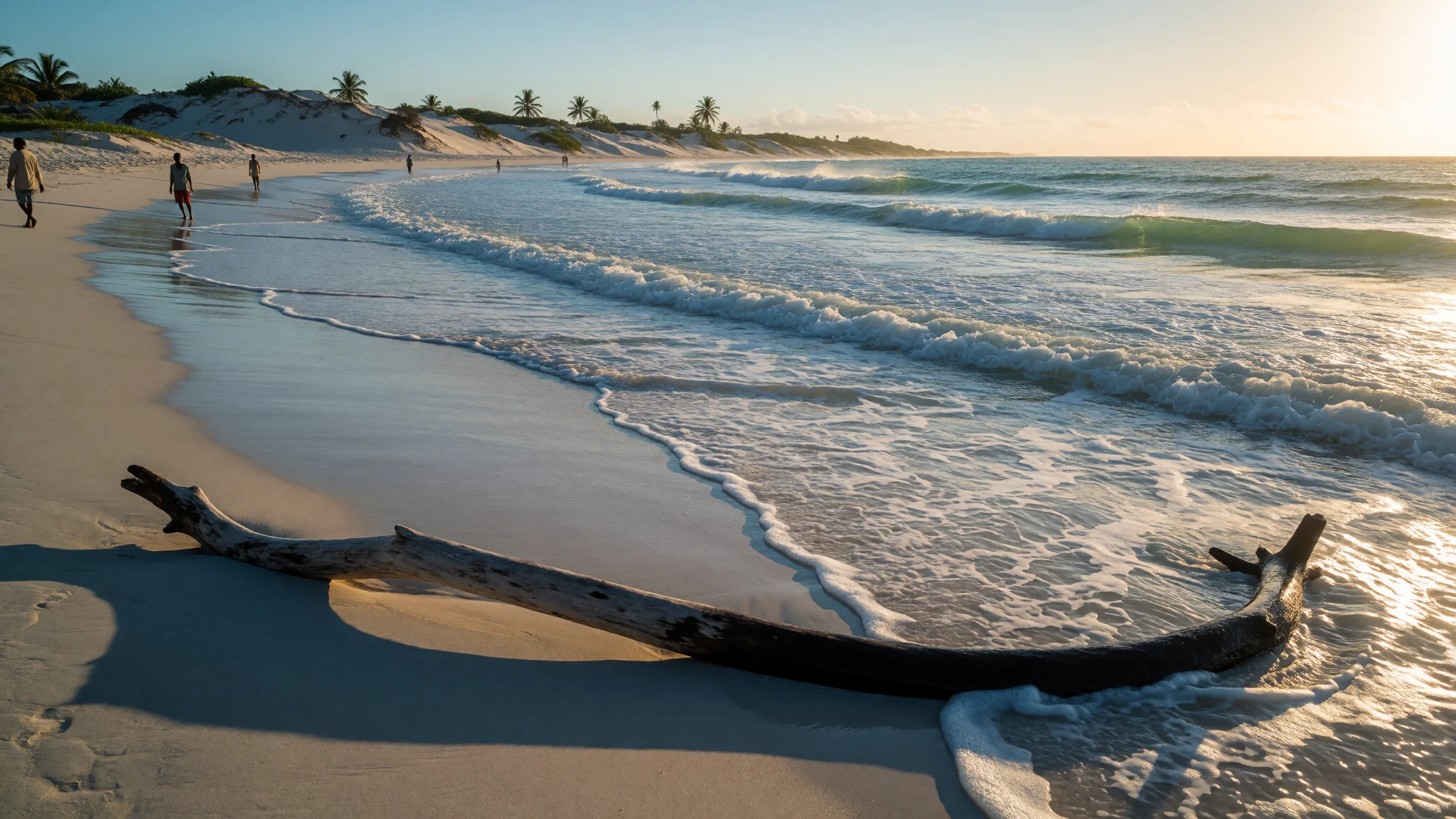
Awala-Yalimapo is a Kali'na commune where leatherbacks nest on the long sand of Plage des Hattes.
The place
Awala-Yalimapo is a coastal commune in French Guiana, set where the Maroni River widens toward the Atlantic and the Kali'na villages of Awala and Yalimapo share a long beach. That shore is Plage des Hattes, also called Les Hattes: open sand, surf, and the houses of Yalimapo a short walk inland, with fishing boats nearby and no resort front. It reads as a working Indigenous coast — a mairie, gardens, a school day and the ordinary noise of a small commune.
The villages stand inside France's overseas territory and inside the Kali'na world of the Guianas at the same time. Suriname lies across the Maroni, and relatives on that bank keep the river feeling like a road as well as a border. Pirogues and the coast road do the travelling; no railway comes this far. West of Cayenne, beyond Mana, mangrove and sand take over from town, and the commune is the French settlement gathered at this estuary.
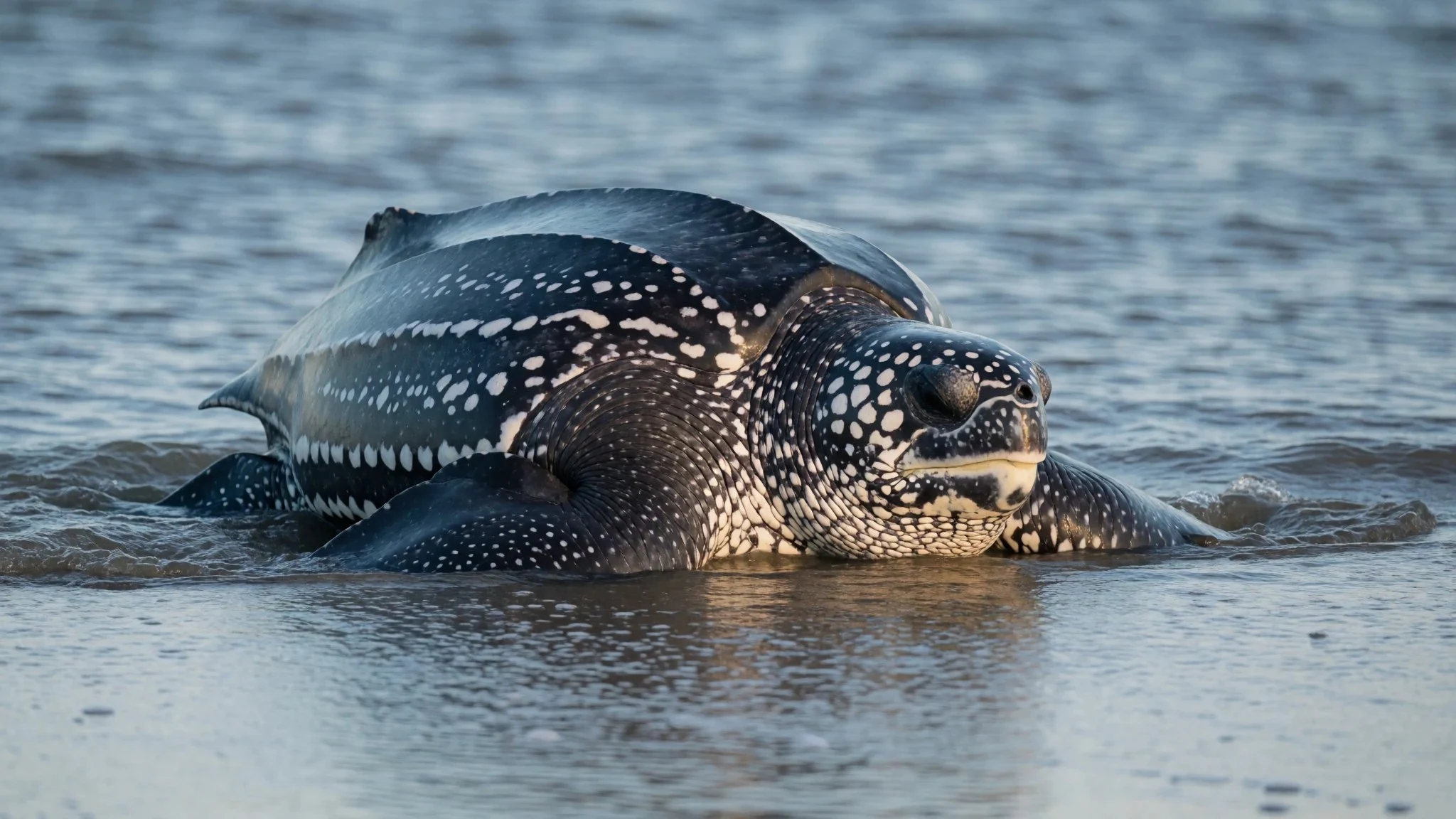
Leatherback turtles are why many outsiders learn the name. Females come up Plage des Hattes to dig and lay, and the beach is watched so nesting can continue next to village life. The Amana reserve takes in this stretch of coast, which limits vehicles, lights and crowds without turning the sand into a museum. Days stay hot and humid, rain arrives in heavy spells, and the sea breeze is the main relief. The place is quiet, sometimes uncomfortable, and serious about its beach.
Its story
The story of Awala-Yalimapo is older than the French commune that now carries the double name. Kali'na people, also known as Galibi, have lived along this coast and the lower Maroni for generations, shifting between fishing places, cassava gardens and family villages as rivers and colonial borders moved around them. Awala and Yalimapo grew as kin settlements: houses, a church, a school and a burial ground where the beach and the estuary made a life possible, not as a town drawn first on a plan.
France later wrapped those villages in a commune, and the mairie became the civic face of a community still ordered by family. Across the Maroni, Kali'na relatives in Suriname stayed part of the same social world. Marriages, funerals and small trade crossed even when states treated the water as a boundary. That double belonging — French in the register, Kali'na in speech and kinship, with cousins on the far bank — is the history a visitor is actually walking through.
A further chapter opened when leatherbacks made Plage des Hattes a place scientists and rangers had to watch. Lights, vehicles and careless nights were a threat to nesting, so the village, the reserve and outside researchers learned to share the sand. Conservation did not replace home; it added a night shift and a new kind of guest. Artwork in the commune, including pieces that tell the history of Yalimapo, holds the older thread in view: river migration, family memory and the turtles as neighbours. Morning in Awala-Yalimapo is still a village, whatever the beach hosted after dark.
What to see
- Plage des Hattes — Plage des Hattes, Yalimapo
Plage des Hattes is the long Atlantic beach of Awala-Yalimapo, the sand visitors mean when they say Les Hattes. Yalimapo sits just inland, so the walk from the village to the surf is short, and the horizon is open water rather than a bay. By day the beach is a wide, bright, lightly used shore; after dark it becomes a nesting ground.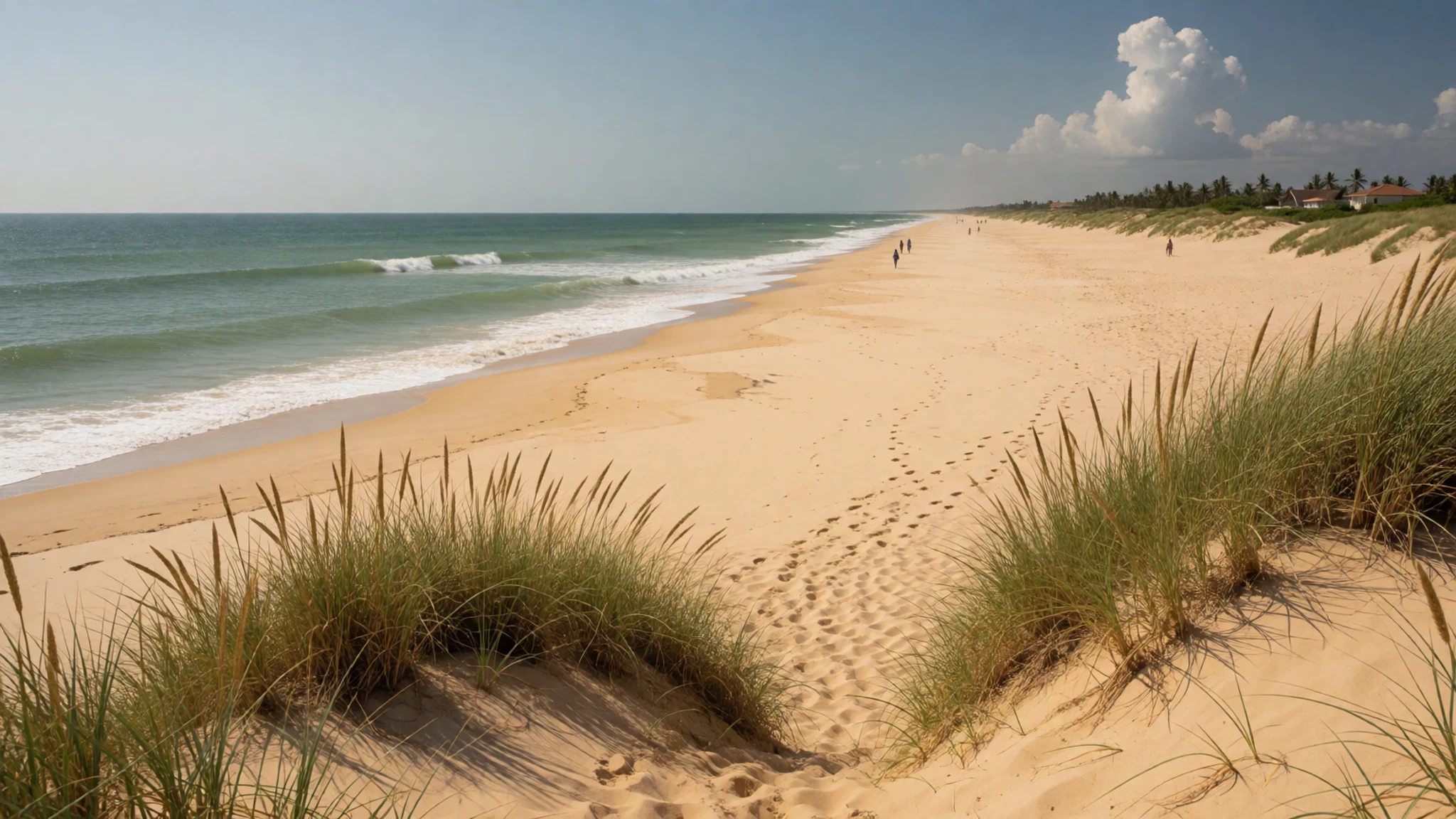
- Leatherback nesting — Plage des Hattes
Leatherbacks (Dermochelys coriacea) come ashore at Awala-Yalimapo to lay on Plage des Hattes, which is why outsiders make the trip. A female drags herself above the tide, digs and lays, then turns back to the sea, while residents and rangers keep the scene calm. A proper visit is quiet, guided and free of white light, with no hands on the animal and no walking over the nests she leaves.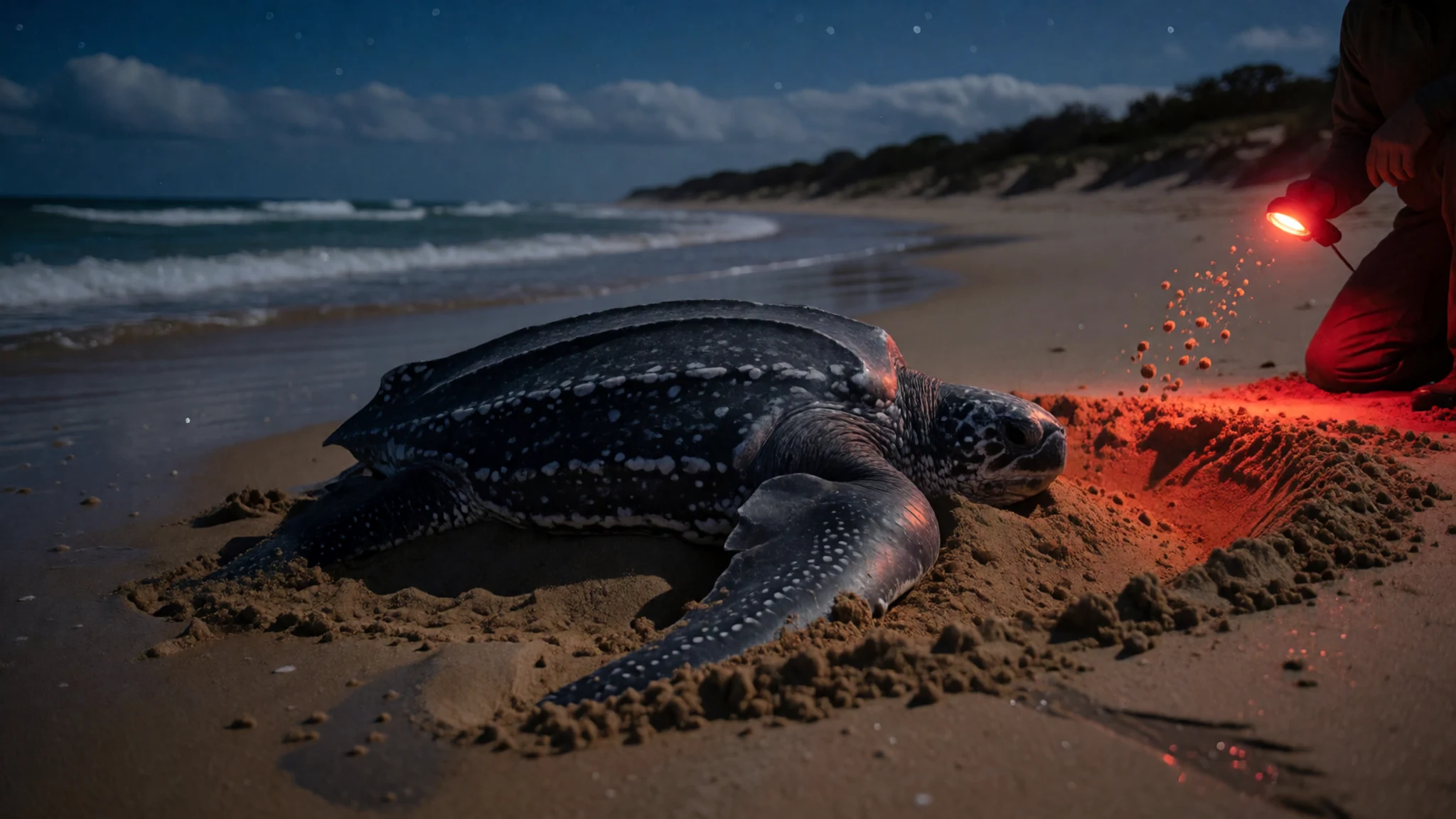
- Yalimapo — Yalimapo
Yalimapo is the Awala-Yalimapo village set just behind Plage des Hattes, usually seen from the sand looking inland. Houses, shade and a short path from the beach make a low skyline, not a promenade. Fishing, washing lines and the walk to the shore are ordinary daylight here. Guests should keep to public paths and leave private yards alone.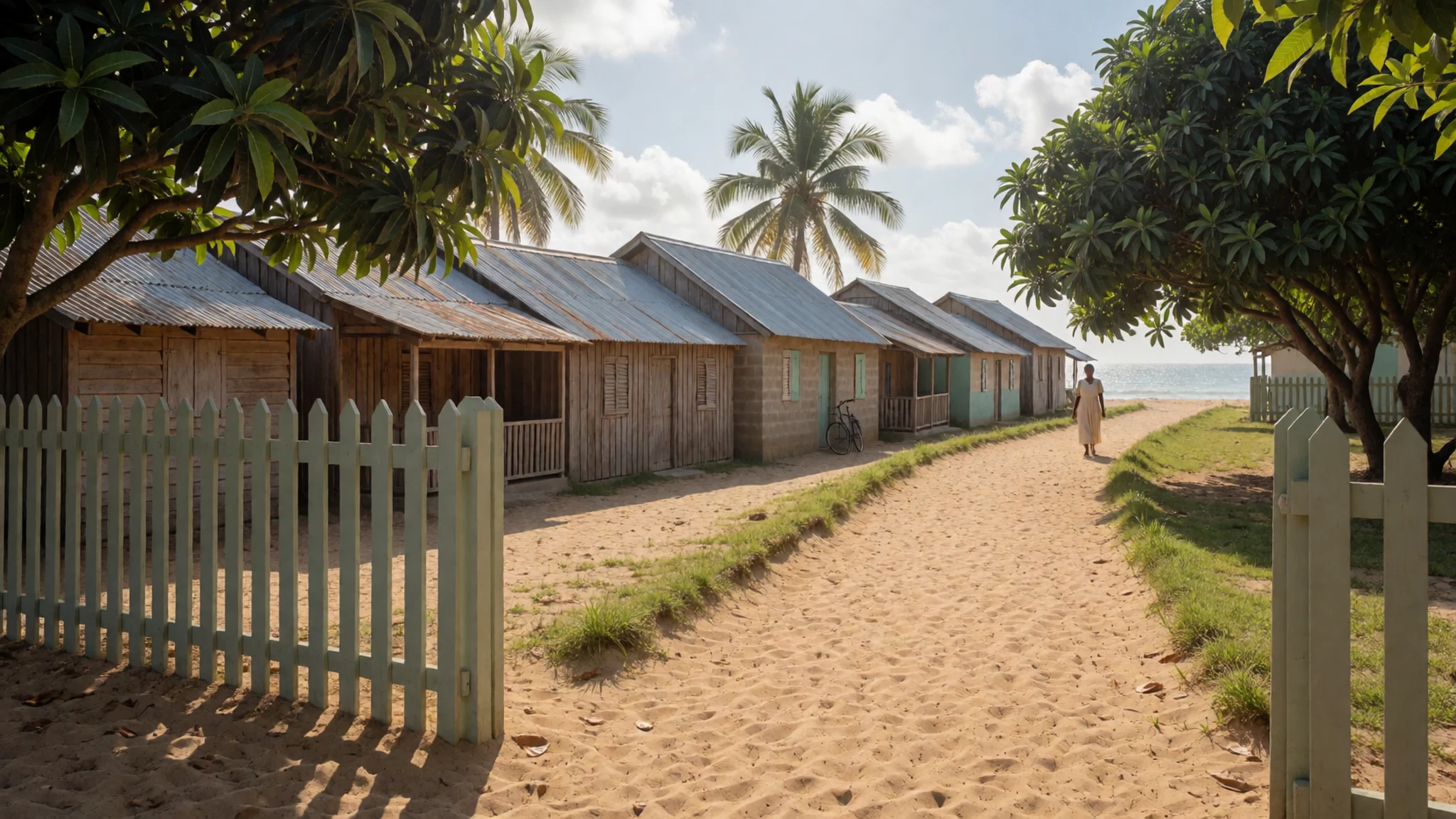
- Awala — Awala
Awala is the other village in the commune of Awala-Yalimapo, paired with Yalimapo in the name and in Kali'na family life. It shares this coast and the road toward Mana, with houses and compounds rather than a row of visitor shops. Daylight here is residential — children, church time and ordinary errands — and the beach, not a square, is the landmark.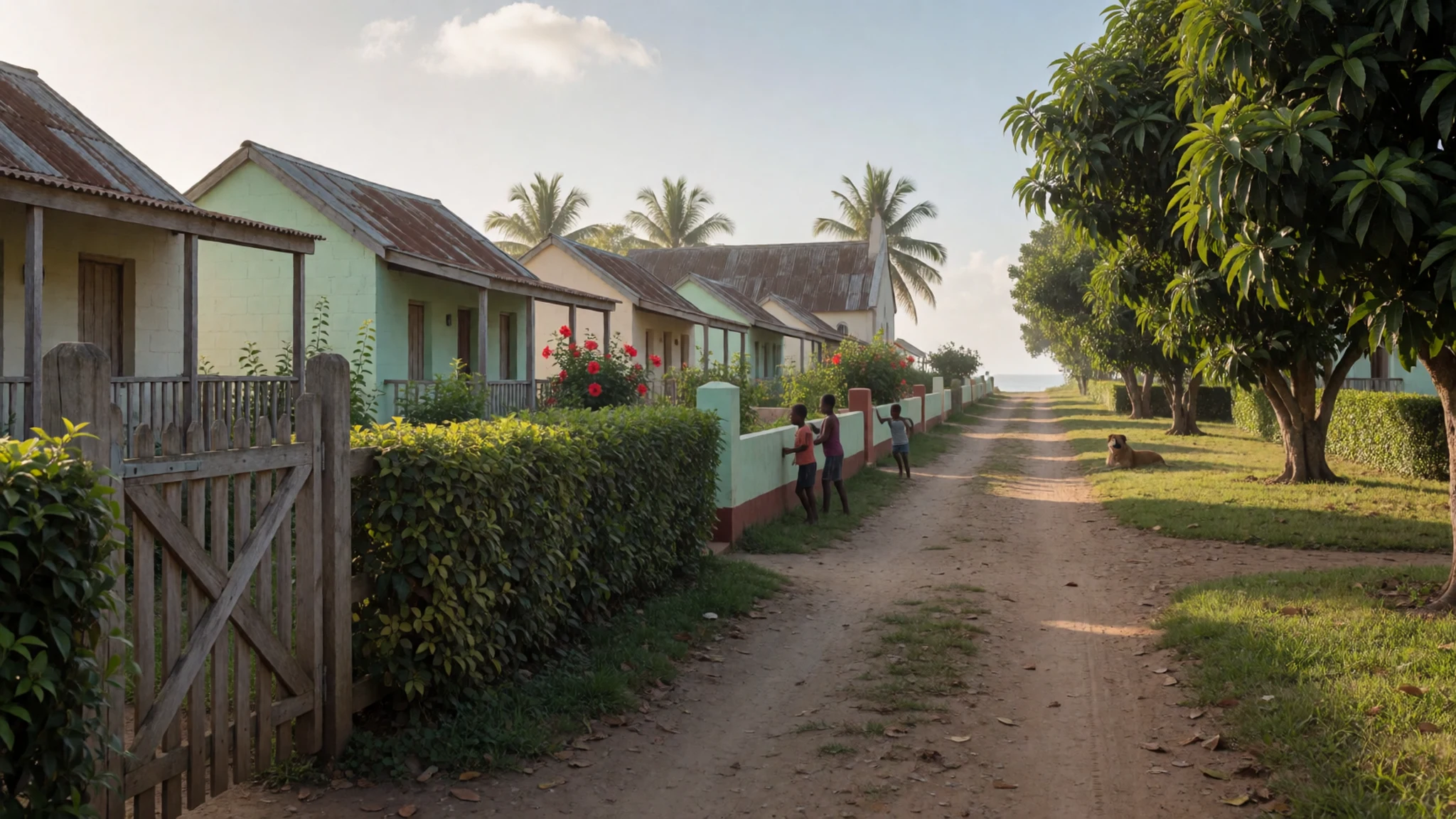
- The mairie — Awala-Yalimapo centre
The mairie of Awala-Yalimapo is the commune's town hall, a modest civic building that stands for French administration inside a Kali'na village. Paperwork, council business and public notices belong here, and the architecture is an office rather than a monument. Passing it tells a visitor the obvious truth of the place: a mayor and a school day share the road with a turtle beach.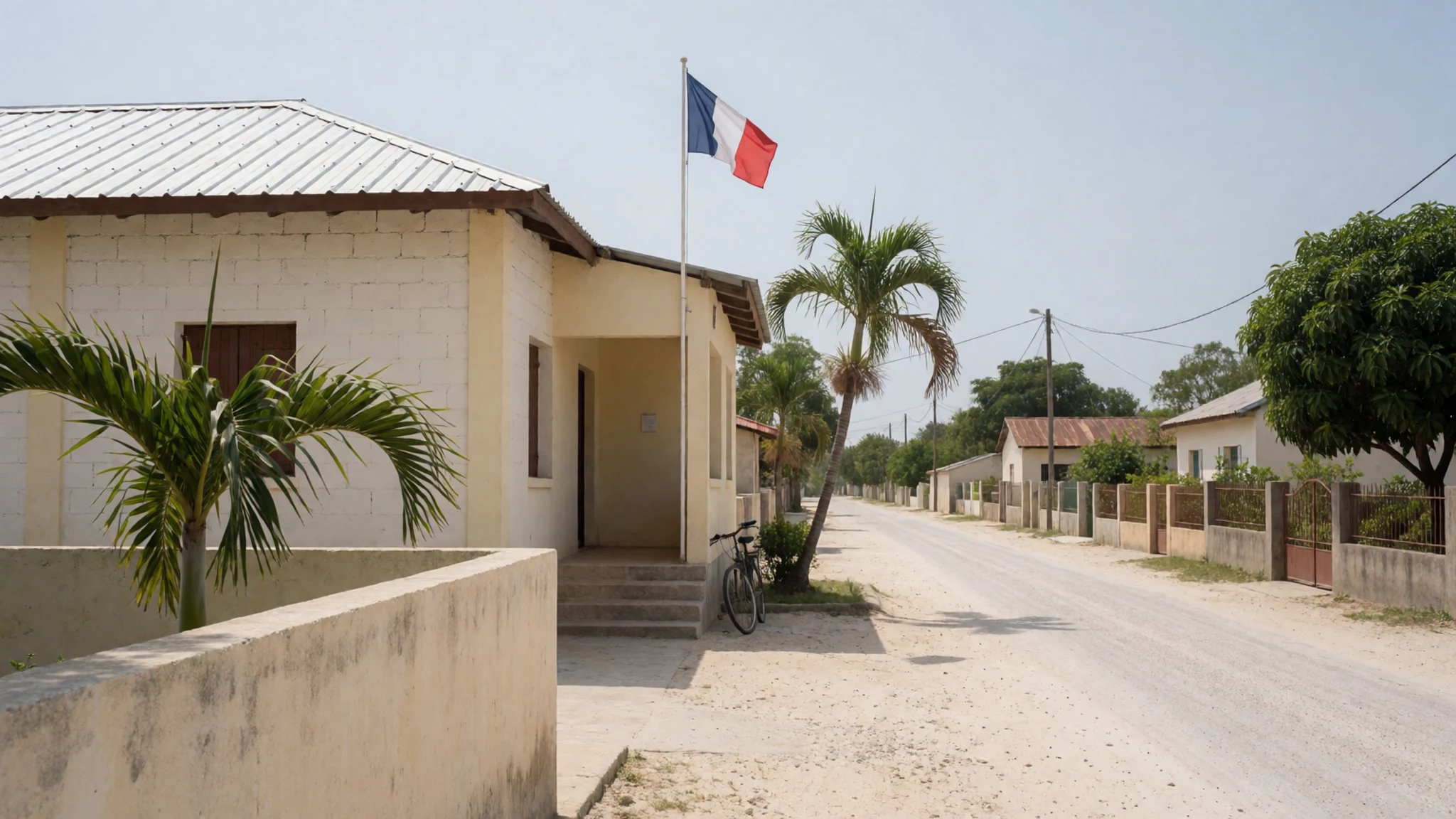
Culture
Culture in Awala-Yalimapo is Kali'na life carried on inside a French commune. Kali'na, the language of the Galibi, is still heard beside French and the Creole of the wider coast, and family lines run across the Maroni into Suriname, so a wedding or a funeral can be an international visit that feels entirely local. Cassava gardens, fishing and the pirogue shape the week more than any timetable posted for outsiders. Catholic feast days share the calendar with older habits of attention to the river, the forest and the animals that use the beach. The leatherback is part of that attention: night watches mix residents' knowledge of the sand with the rules of the Amana reserve, and the turtle is a neighbour with a scientific name, not a logo. Public days look familiar to anyone who knows French Guiana — school, the mairie, football, radios playing Caribbean and Creole music — while beadwork, song and stories of the river come out for gatherings. Visitors are received on the beach more readily than in private yards. Ask before photographing people, keep clear of houses, and on a nesting night follow local guides, leave turtles untouched and show no white light.
What to wear
Fashion in Awala-Yalimapo begins with Kali'na dress and then settles into ordinary clothes for a hot coast. For ceremonies, women wear a cotton wrap, the pagne, often with bead necklaces, and painting on the skin still appears when a gathering calls for it; men once wore a loincloth and, for important occasions, bead and feather ornaments. Those are the textiles of the Guianas — cotton, plant fibre, beads — made for heat and for marking a feast rather than a weekday. The colours that turn up in beadwork are worn because a dance or a community day asks for them, then put away.
On a normal morning the villages look like the rest of coastal French Guiana. T-shirts, football shirts, shorts, light dresses, caps and sandals are what people actually move in, with a rain layer when the sky drops. Younger residents mix French and Caribbean styles; the ceremonial beads are not an everyday uniform.
A visitor should follow that practical lead. Light, breathable cloth, a hat and sandals or water shoes suit the sand, and a long sleeve helps against mosquitoes once the sun falls. Dark, plain clothing is the right kit for a night on Plage des Hattes, swimwear belongs on the beach rather than in the village, and a modest extra layer is appropriate near houses, the church or a ceremony. Closed shoes earn their place on rough tracks inland of the sand.
What to eat
- Kassav — Home kitchens and small shops in Awala and Yalimapo
Kassav is the cassava flatbread of Awala-Yalimapo, griddled from bitter manioc that has been grated, pressed and dried. Families eat it with fish or alone, as everyday bread rather than a feast dish. It turns up in home kitchens and small village shops in Awala and Yalimapo.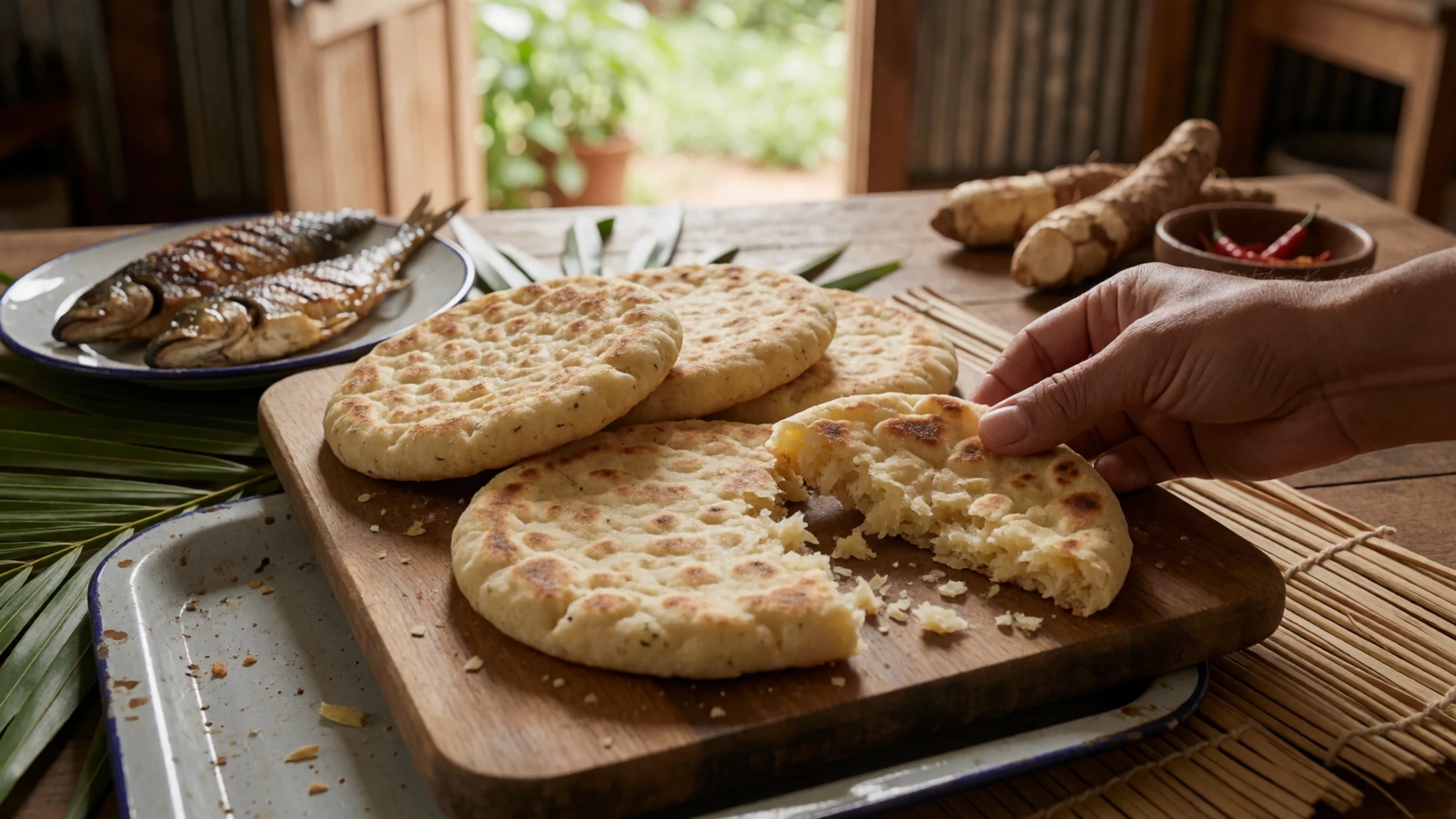
- Couac — Home kitchens and plain eateries in the commune
Couac is toasted cassava semolina, the durable form of manioc that Awala-Yalimapo cooks keep on hand in the humidity. It goes into stews or beside grilled fish so a meal stretches. Home kitchens and plain local eateries are where it shows up, usually beside a pot that is already cooking.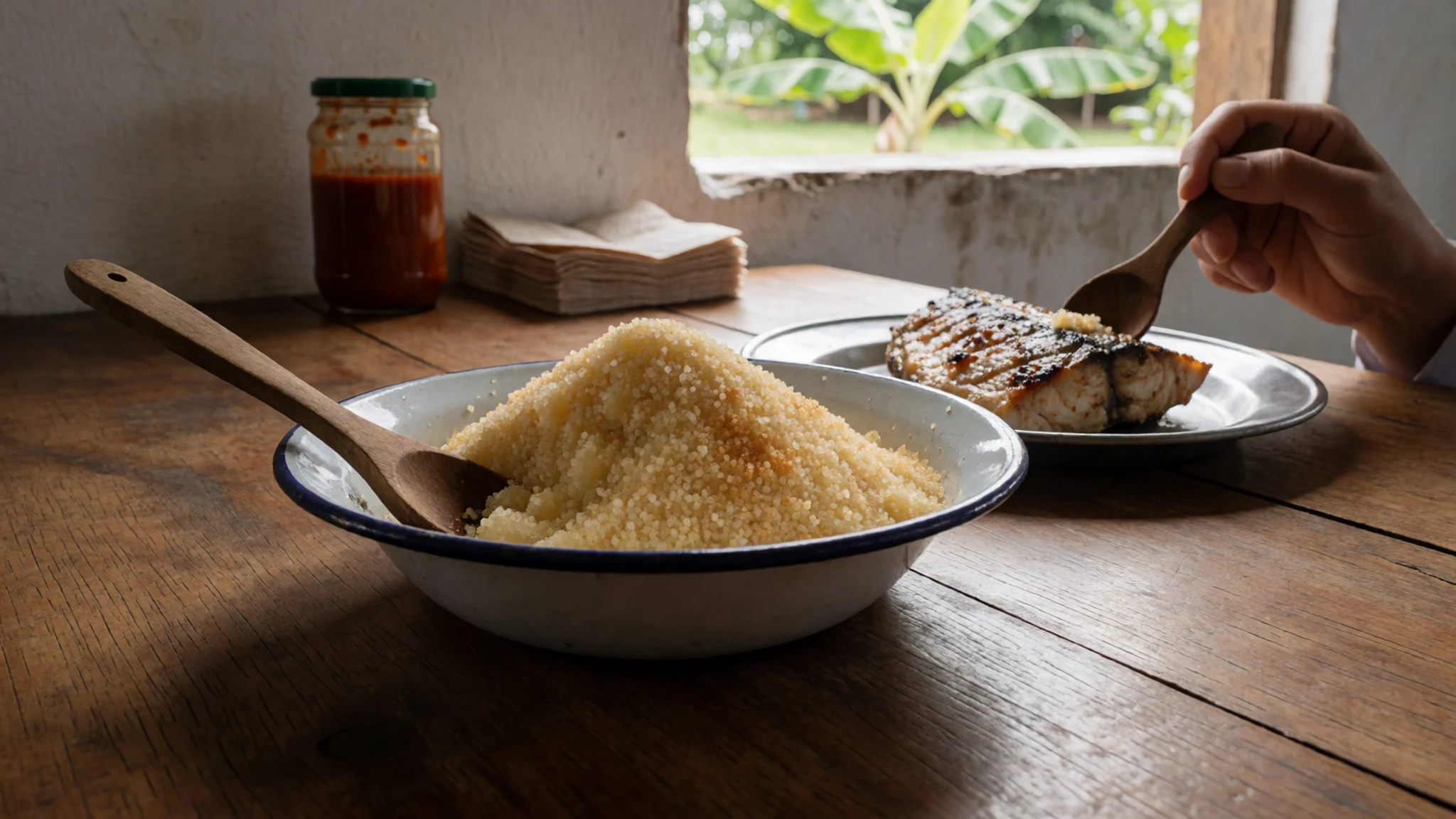
- Blaff — Simple eateries in Awala and Yalimapo
Blaff is the Creole fish stew that suits Awala-Yalimapo, because the coast and the Maroni put fish on the table. Lime, garlic, chilli and herbs make a sharp hot broth, with cassava alongside. Simple eateries in the villages serve it when a catch has just come in. - Grilled and smoked fish — Fishing households and informal stalls near the villages
Grilled fish is the straightforward meal in Awala-Yalimapo: the day's landing, cooked over a fire or a metal grill, with salt and chilli. Smoked fish turns up when a catch must last. Fishing households and informal stalls near the villages sell it once the boats are in. - Acras — Family gatherings and casual eateries
Acras are salt-cod fritters, a Creole nibble that reaches Awala-Yalimapo from the wider French Guiana coast. Spiced batter is fried hot and eaten with chilli sauce. Family gatherings and casual eateries are the likely places, or a home cook with a fresh batch.
Plan it
Best time. April to July brings the leatherback nesting season on Plage des Hattes, which is the reason to time a trip to Awala-Yalimapo, even though rain is frequent. The later months of the year tend to be a little drier, with fewer turtles. Humidity stays high throughout, and there is no cool season.
How long. 2–3
Getting there. Most visitors fly into Félix Éboué Airport at Cayenne and continue by road west through Kourou and Mana, then take the local road into Awala-Yalimapo. There is no railway. Pirogues belong to river life on the Maroni, while the road is the usual last leg onto the turtle beach.
Budget. mid
Tips
- Arrange a guide through the village or the reserve before you count on seeing a nesting turtle.
- Bring insect repellent, a rain layer and a torch with a red filter; white light is a problem on the beach at night.
- Carry cash for small shops and any local guide, and do not assume a card will work in the villages.
- Ask about simple lodging early in the nesting months, because Awala-Yalimapo has few rooms.
- Drink treated or bottled water, and plan the middle of the day around shade and heat.
Etiquette
- Do not touch a turtle, shine white light on her, or walk across marked or obvious nests.
- Ask before you photograph residents, and stay out of private yards.
- Keep voices low on the beach at night and follow the guide's pace.
- Dress modestly around houses and the church, and knock or call before approaching a doorway.
Nearby
Sources
- Wikidata — Awala-Yalimapo (CC0)
- Wikipedia — Awala-Yalimapo (CC BY-SA 4.0)
- Wikivoyage — French Guiana (CC BY-SA 4.0)
Wildlife
- Leatherback (animal)
The leatherback is the giant of the turtle world, a sea turtle with no hard shell, only tough, oily, leathery skin on its back. At Awala-Yalimapo, females haul themselves up Plage des Hattes to lay their eggs, and that is why travellers make the journey. Ask locally about the best season and hour before you go. Watch with a local guide, keep well back, stay quiet, and never touch or feed her.