Angers
Angers, France
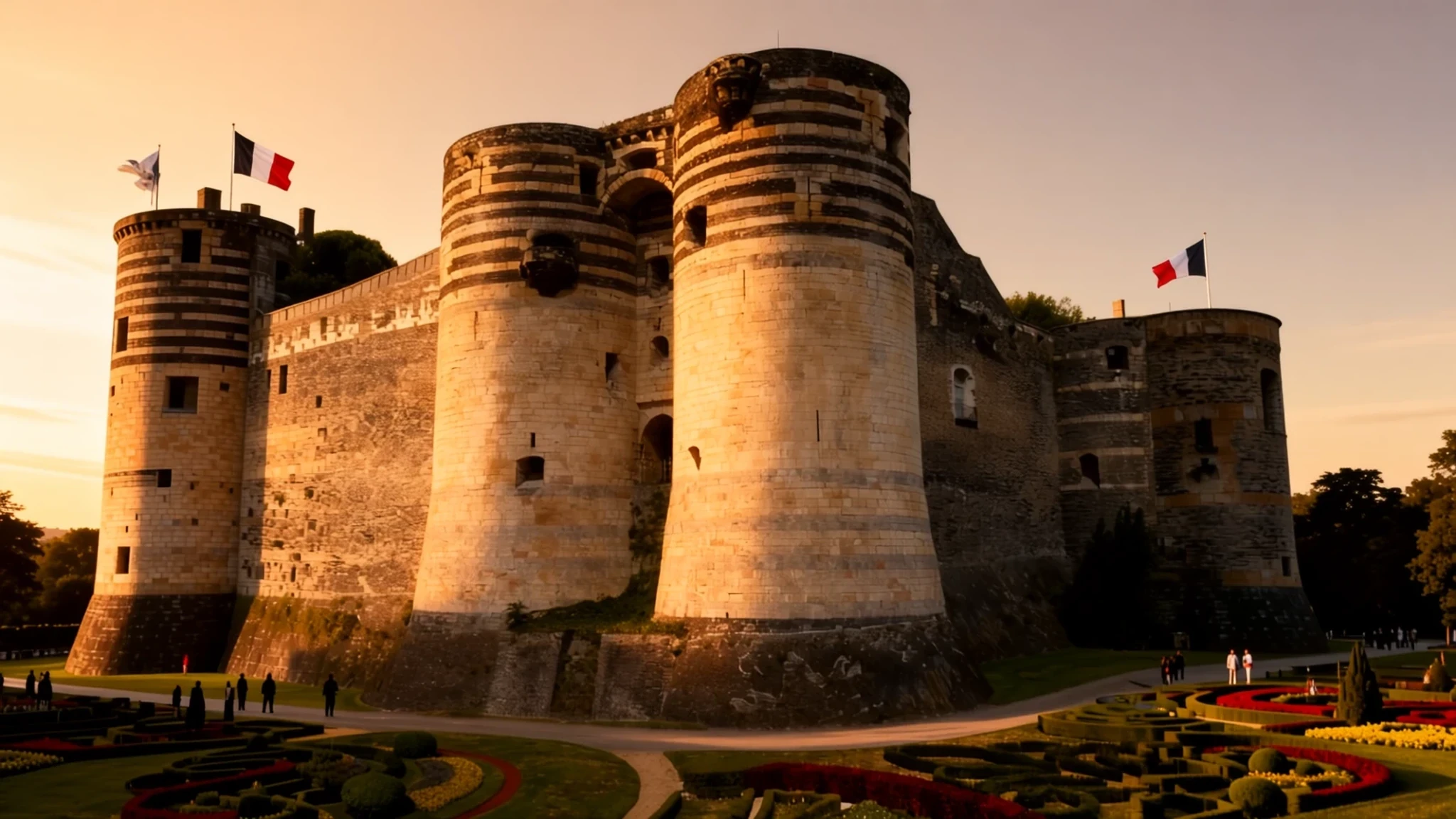
Angers pairs a striped medieval fortress and a famous tapestry with a relaxed, student-filled riverside city that few visitors rush through.
The place
Angers sits in western France, on the Maine river, in the Pays de la Loire region. About 159,000 people live in the commune, which makes it a proper city rather than a village with a castle, though it feels easy to walk. It is the prefecture of the Maine-et-Loire department and was the capital of the old province of Anjou until the Revolution. People from both city and province are called Angevins. The setting is low and green: the town stands about 20 metres above sea level, close to where the Mayenne, the Sarthe and the Loir, all flowing south, join the Loire system. A dark fortress on a rocky spur dominates the water, and the old centre spreads around it, with the cathedral a short walk uphill. Slate from nearby quarries once roofed most of the buildings, which earned the town the nickname the Black City; the grey roofs still set the tone, softened by pale stone and timber-framed fronts. Across the river lies the Doutre quarter, quieter and more residential. Because Angers is a university town, the evenings are lively without being rowdy, and the trams make getting about simple. Visitors tend to treat it as a calm base for the Loire valley, but it rewards two or three days on its own, especially in late spring or early autumn when the weather is kind and the gardens are at their best.
Its story
Angers has been settled for a very long time. Traces of people on the castle hill reach back thousands of years, including Neolithic burials. In the fifth century BC a Celtic people, the Andecavi, settled north of the Loire, and the town later became a Roman settlement known as Juliomagus, with villas, baths, an amphitheatre and a temple to Mithra. Germanic raids in the third century pushed the inhabitants onto the highest ground, where they built a small defensive wall. Angers gained its first bishop in 372, and abbeys followed in the centuries after, among them Saint-Aubin and Saint-Serge. When the tram line was built in 2008, workers found ten Frankish sarcophagi on the site of a vanished church, a reminder of how much lies under the streets. From the ninth century the town suffered as a frontier place, exposed to Brittany and Normandy, and the counts of Anjou built their first castle as protection against the Normans. Angers later became the cradle of the Plantagenet dynasty, whose rulers governed lands on both sides of the Channel, and in the age of René of Anjou it grew into one of Europe's centres of learning. The present castle, begun in the thirteenth century under Louis IX, is the great survivor of that long, restless past, and the town's slate trade and river commerce built the prosperity that followed.
What to see
- Château d'Angers — Old town, above the river
The fortress rises from a schist promontory above the Maine, its walls banded in pale tuff and dark schist and punctuated by 17 towers. Inside are gardens, a chapel and the ramparts, which give wide views over the river and roofs. Allow a good half day and check the official site for hours.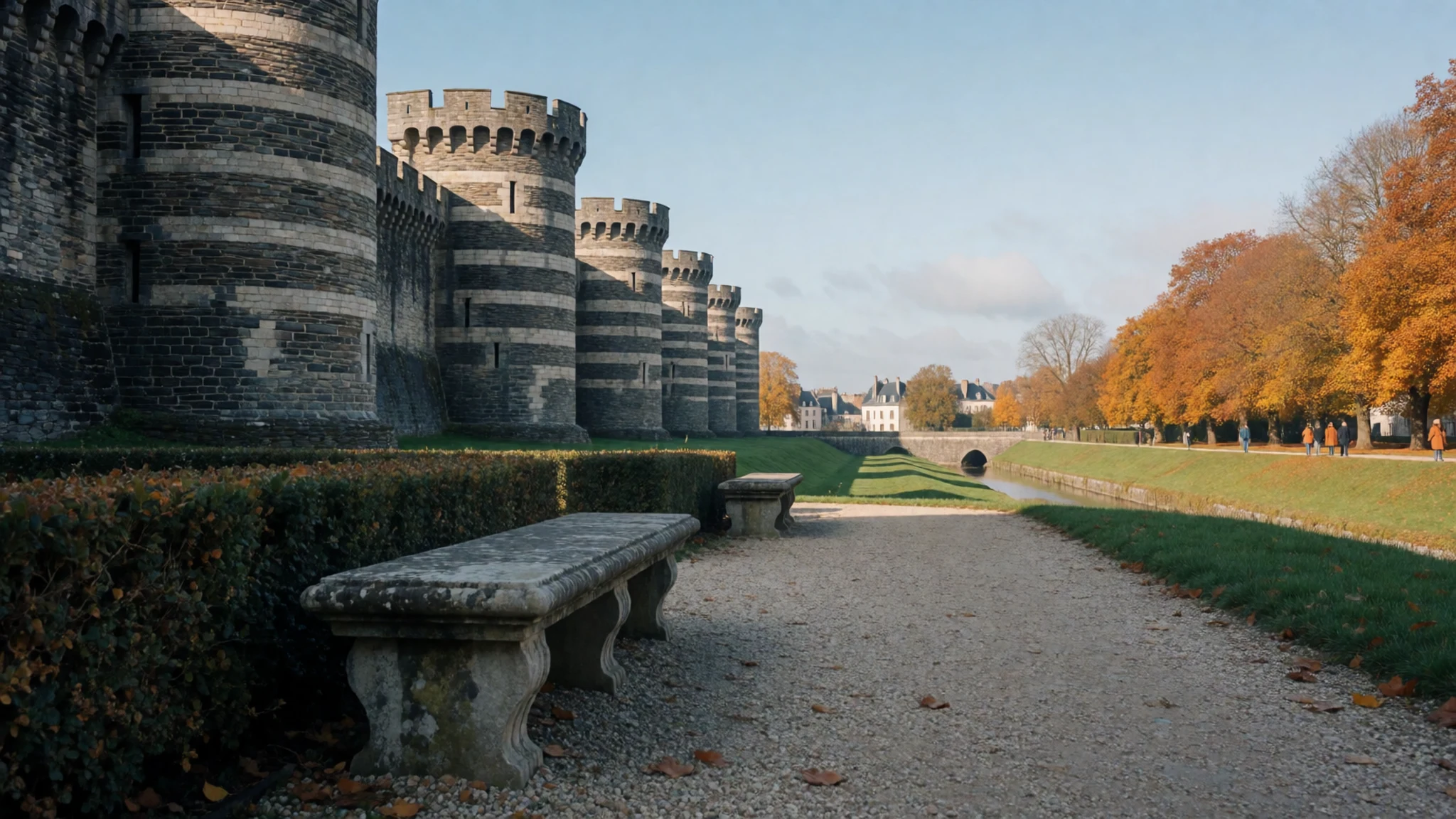
- Apocalypse Tapestry — Inside the Château d'Angers
Housed in a purpose-built gallery inside the castle, this huge medieval set of hangings was commissioned by Louis I, Duke of Anjou. It illustrates the Book of Revelation in strong blues and reds. The light is kept low to protect the wool, so give your eyes a minute to adjust.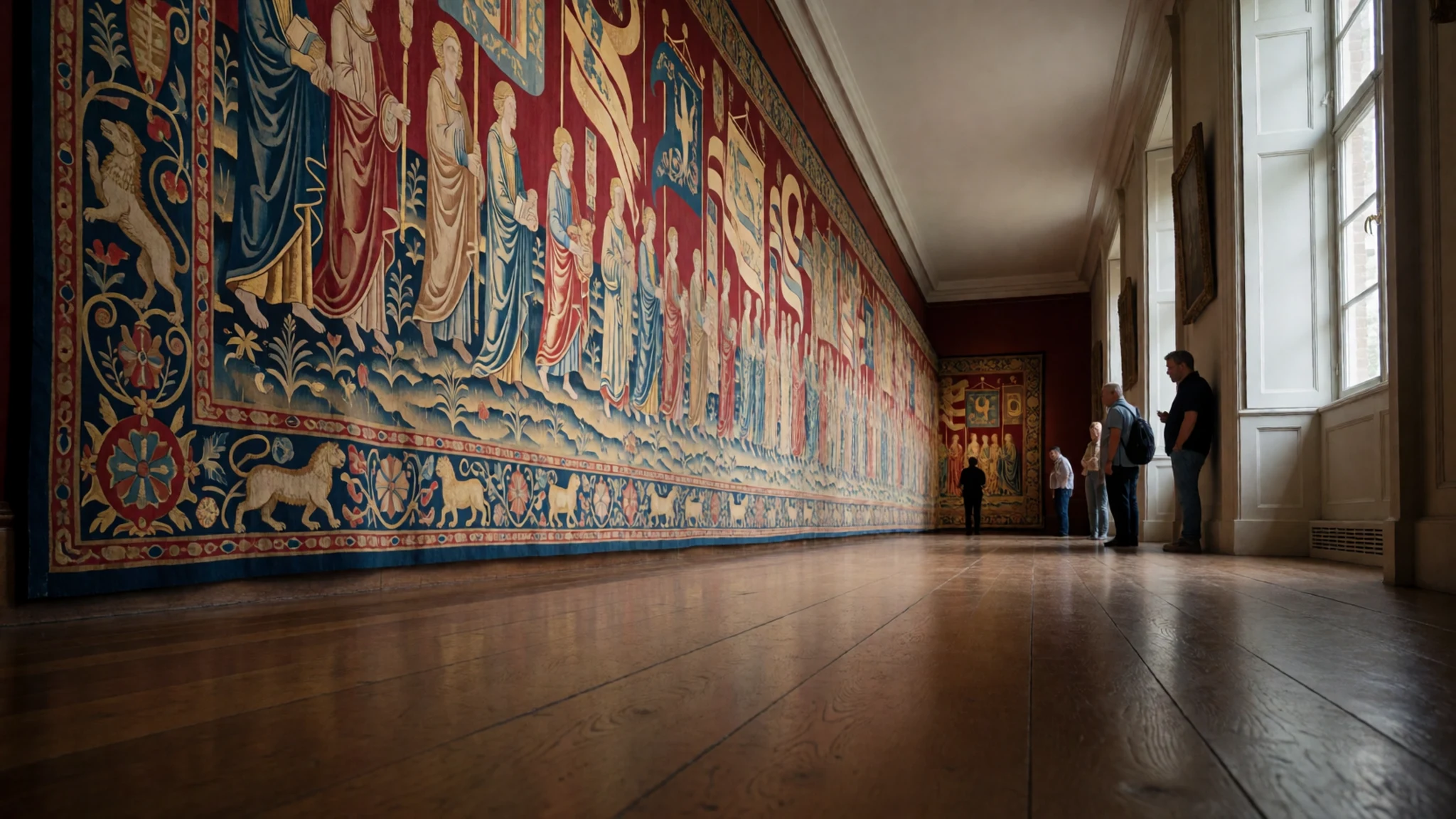
- Angers Cathedral — Old town, near the castle
Saint-Maurice cathedral was built mainly in the twelfth and thirteenth centuries and stands just uphill from the castle. Look for the carved doorway and the old glass inside. The square outside is a pleasant place to sit afterwards, and the cathedral appears in views from the castle walls.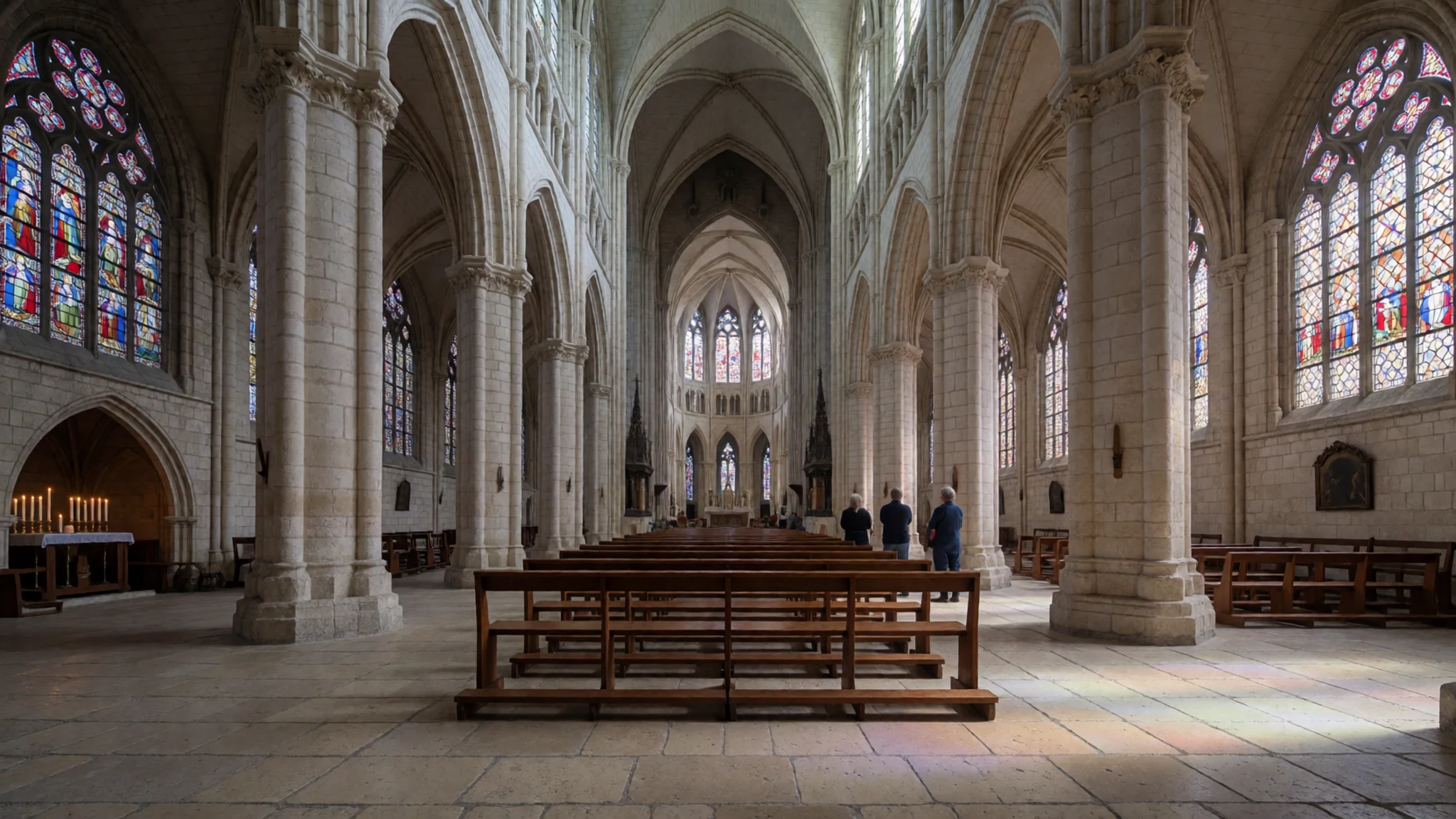
- Jardin du Mail and Jardin des Plantes — City centre
Two gardens give the city green breathing space. The Jardin du Mail is a formal nineteenth-century garden opposite the town hall, good for a short rest between sights. The Jardin des Plantes, a little north-east, is a botanical garden with mature trees, and suits a slow afternoon walk.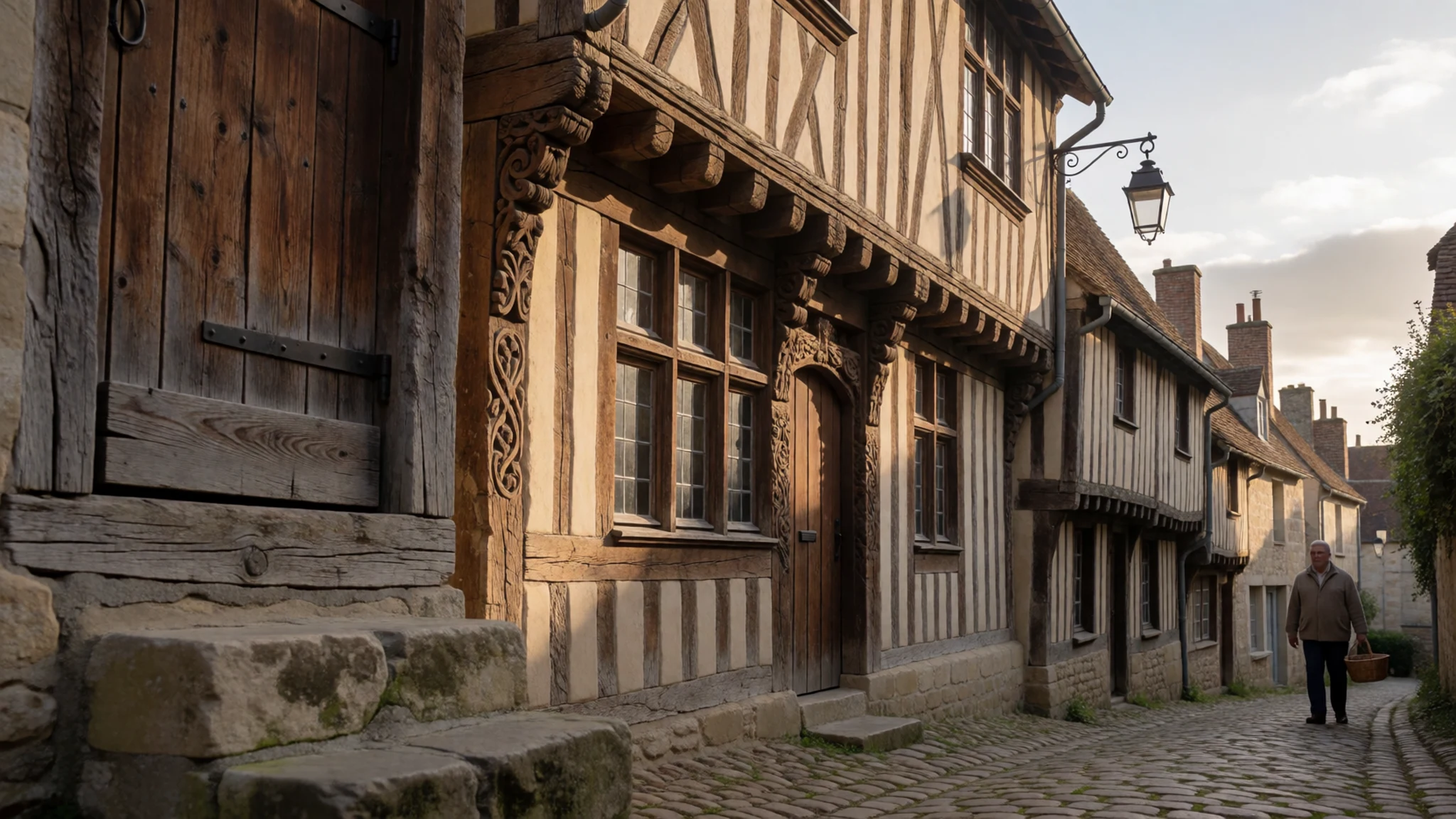
- Maison d'Adam and the old lanes — Streets around the cathedral
Behind the cathedral stands the Maison d'Adam, a medieval timber-framed house with carved figures along its front. Smaller half-timbered houses line the lanes near the castle, such as rue de l'Oisellerie. The Logis Pincé, a Renaissance mansion, and the Art Deco Maison bleue show later styles.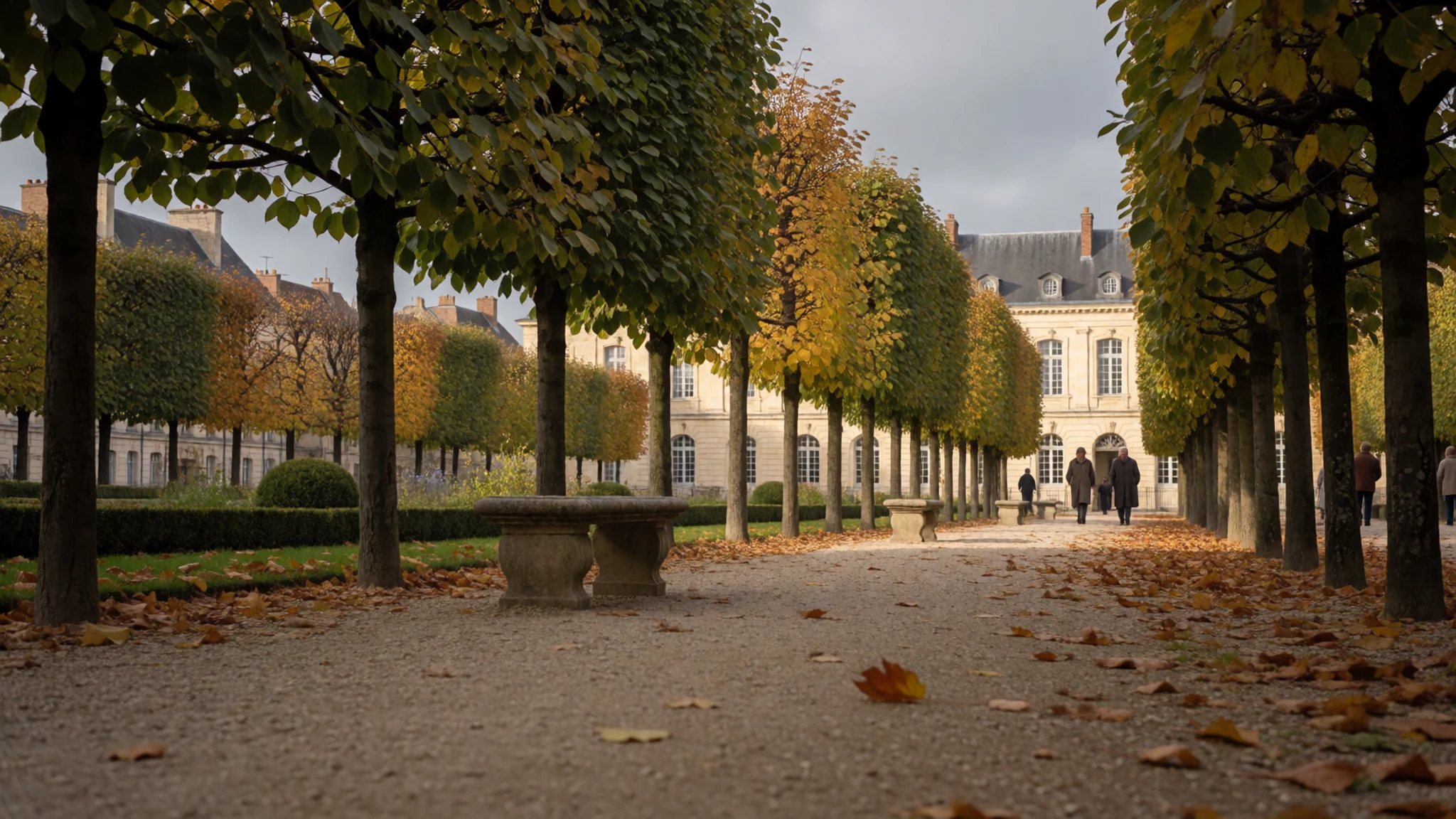
Culture
Angers carries its history lightly. The old province of Anjou gave its name to the Angevins, and locals still use the word with some pride, speaking of a gentle, unhurried way of life along the river. The city's cultural weight comes from the medieval court of René of Anjou, remembered as a patron of learning, and from the castle and the Apocalypse Tapestry, which anchor civic identity much as a cathedral would elsewhere. The stone and timber architecture tells a layered story: a thirteenth-century fortress, medieval half-timbered houses such as the Maison d'Adam, Renaissance mansions like the Logis Pincé, and the Art Deco Maison bleue built in 1927. Daily life has a university rhythm, with students filling cafés, bars and the tram, so the centre is busy in term time and calmer in the summer break. As in most of France, people expect a greeting on entering a shop or café, and meals follow a fairly fixed schedule, with lunch served roughly midday to early afternoon and dinner from evening. Sundays can be quiet, with many small shops closed, so plan errands accordingly. Markets and small museums run on their own local timetables, so check before travelling. Say a friendly "bonjour" when you enter a shop, café or museum desk, and keep your voice low inside the cathedral and the castle chapel.
What to wear
Angers has no single everyday costume today, but the Anjou region has a regional heritage of white lace caps and aprons worn by country women, usually in linen or cotton, now seen mostly at folk festivals and in museum displays. Linen and hemp were long made in the area, and the town's older trades included sailcloth and rope, so sturdy natural fibres run through its past. Day to day, the city dresses in the relaxed, understated way common across provincial France: dark jeans, plain shirts, knitwear, trench coats and leather trainers or boots, with a neat scarf in cooler months. Students keep the look casual, and few people wear anything flashy. Office workers lean towards simple tailoring in navy, grey or black. For a visitor, comfortable walking shoes matter most, because the old centre has cobbles and the castle involves ramparts, steps and uneven ground. Pack layers: the climate is mild and changeable, with rain possible in any season and cooler evenings even in summer. A light waterproof is wiser than an umbrella on windy riverbanks. Churches and the cathedral do not require special dress, but covering bare shoulders and avoiding beachwear is courteous. Sun hats and sunglasses are useful in July and August, when the castle ramparts offer little shade. Smart-casual clothes are fine for nearly every restaurant.
What to eat
- Rillauds d'Anjou — Charcuteries and the covered market
Pieces of pork belly slowly cooked until tender and golden, served warm or cold. They are a traditional Anjou speciality, often eaten as a starter or snack with bread. Look for them at the covered market or in a traditional charcuterie.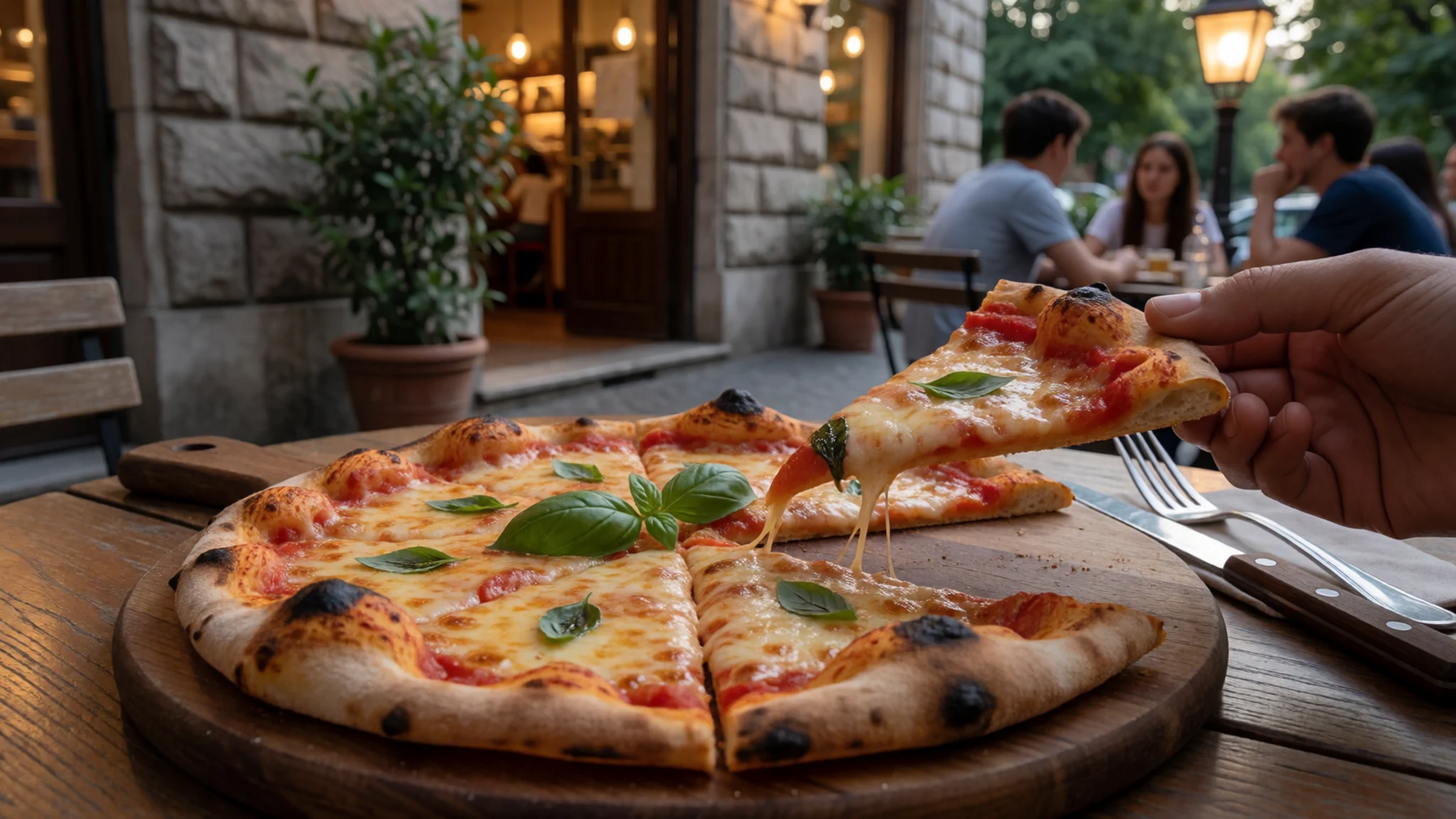
- Anjou white wines — Wine bars and cafés in the old town
The region is known for wines made from chenin blanc, ranging from dry to sweet. A glass makes a good match for river fish or goat's cheese. Many wine bars in the centre pour local bottles by the glass and will happily suggest one.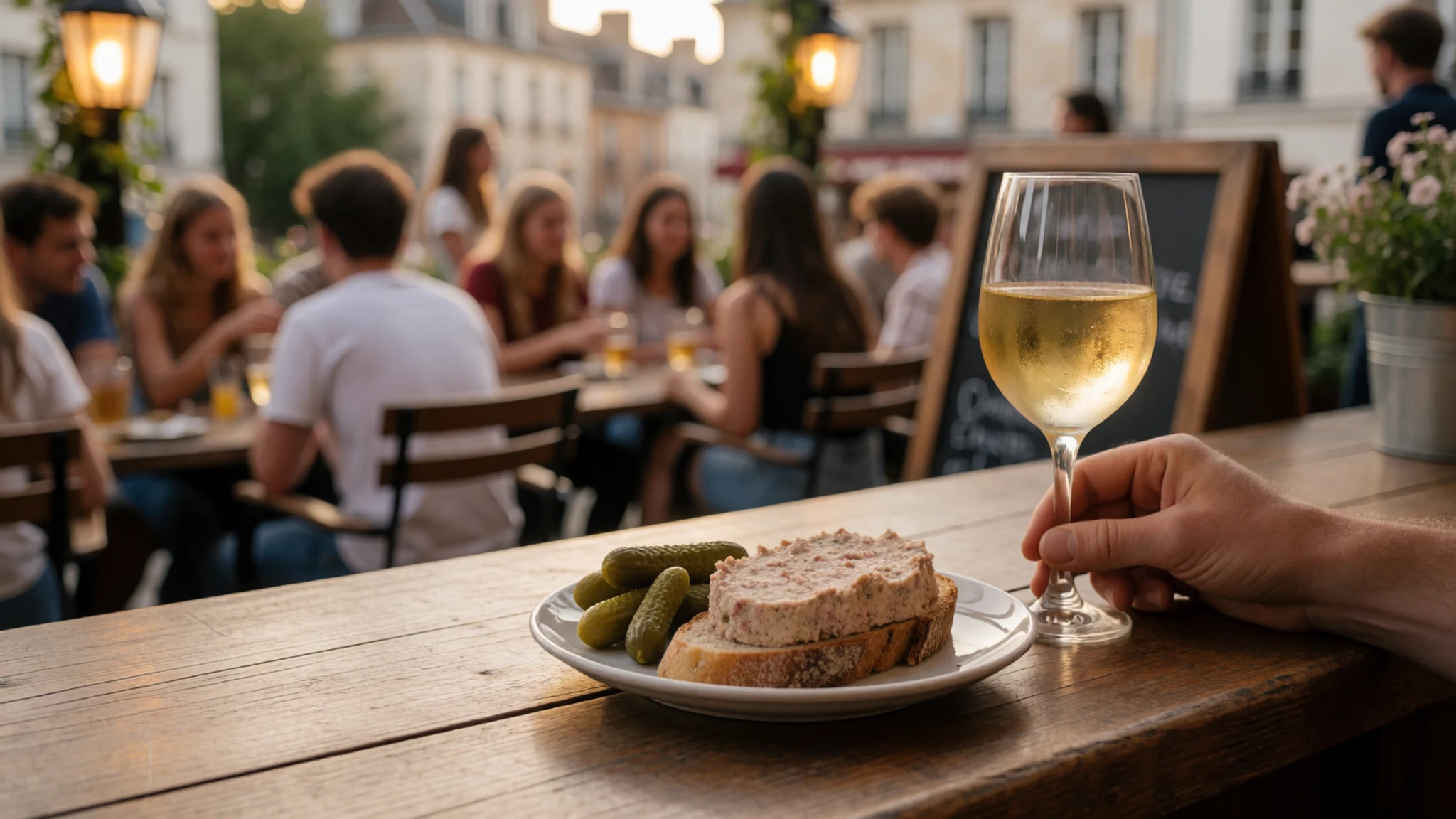
- Poisson de Loire — Traditional bistros near the river
River fish, often pike-perch or shad, is typically served with a buttery white sauce known as beurre blanc. It is a classic of the Loire valley and appears on menus across the city. Ask what the day's catch is. - Pâtisserie and Cointreau-flavoured sweets — Pâtisseries around the centre
Angers is the home of the orange liqueur Cointreau, and local bakers use orange flavours in cakes and chocolates. Look for pastries and confectionery in the shopping streets near the cathedral, and ask for a regional speciality. - Student-bar evenings — Bars in the centre, near the castle
Because the city has a large student population, bars fill up in the evening, with cheap drinks and small plates. Groups of young people move between venues near the castle at night. It is lively but generally friendly.
Plan it
Best time. May–June and September–October, when the weather is mild and the gardens look good; July and August can be warm, and winter is grey and damp.
How long. 2–3
Getting there. The nearest major airport is Nantes, with Paris Charles de Gaulle also an option. Fast TGV trains link Angers to Paris Montparnasse, Nantes, Le Mans and Tours; from the station, trams and a short walk reach the centre. Check the official site, http://www.angers.fr, for local transport.
Budget. mid
Tips
- Visit the castle early to avoid tour groups and midday heat
- Book rail tickets ahead for weekend travel from Paris
- Carry a card, but keep some coins for markets
- Wear flat comfortable shoes for the cobbles and ramparts
Etiquette
- Greet shop staff with a bonjour
- Keep voices down inside the cathedral and chapel
- Validate any tram or rail ticket before travelling
Nearby
Sources
- Wikidata Q38380 (CC0)
- Wikipedia: Angers (rev 1381703972) (CC BY-SA 4.0)
- Wikivoyage: Angers (rev 5378598) (CC BY-SA 4.0)
- Photo 01 Angers collage (CC BY 3.0)
- Photo 02 Angers vue générale (CC BY-SA 2.5)
- Photo 03 Tour des Anglais (CC BY 3.0)
- Photo 04 Angers Oisellerie (CC BY-SA 2.0)
- Photo 05 Vue sur la Doutre (CC BY-SA 2.0)
- Photo 06 Tramway place du Ralliement (CC BY 3.0)
- Photo 07 Douves jardins (Public domain)
- Photo 08 Île Saint-Aubin (CC BY-SA 2.5)


