Arena of Nîmes
Arena of Nîmes, France
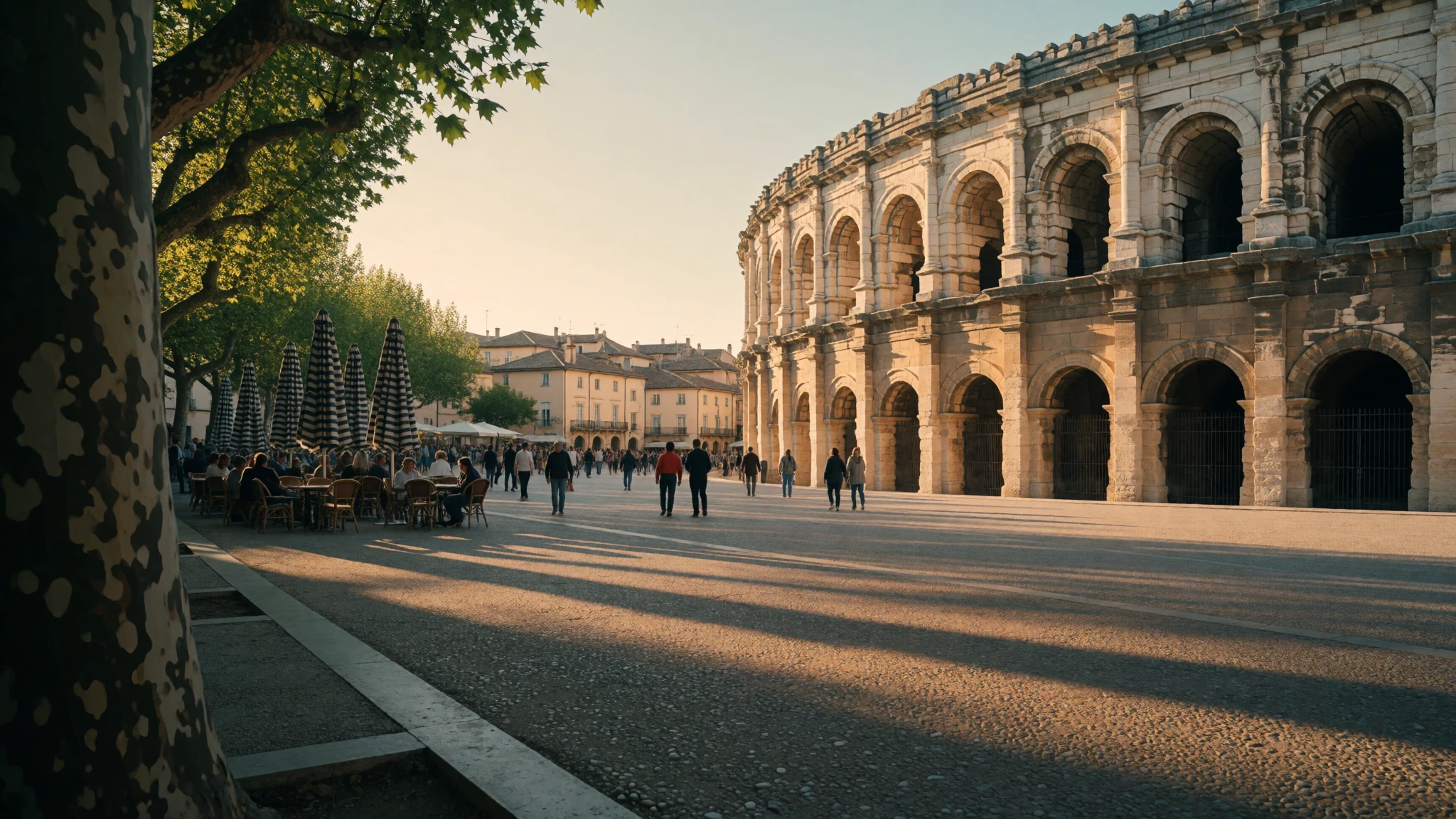
A Roman amphitheatre in the middle of a southern French town, still used for bullfights and concerts, and open to climb.
The place
The Arena of Nîmes stands in the middle of the old town of Nîmes, in southern France, a short walk from the cathedral and the ring of boulevards. It is a Roman amphitheatre from around the end of the first century AD, and it works as a living venue rather than a roped-off ruin. The oval measures about 133 m from end to end, and the outer wall rises 21 m in two tiers of arched openings, so the first impression from the street is of a vast stone ring stitched with repeating arches. Inside, the seating was once divided into four self-contained zones, and in Roman times the crowd could reach about 24,000. Today the stands hold fewer people, but they still feel steep and enormous, and the sand floor is used for bullfights during the Feria de Nîmes, for concerts, and for a staged re-creation of Roman games. That mix gives the place a character a purely archaeological site lacks: on an event day it is loud, full and local. On an ordinary day it is quieter, and the climb up the stairways to the upper rim rewards with a view across the terracotta roofs of the town. Wikidata classes it as a Roman amphitheatre, an archaeological site and a bullring, which sums up its three lives neatly. The official site, http://www.arenesdenimes.com, carries event dates and visiting details, and is worth checking before a trip.
Its story
The Arena of Nîmes belongs to a building type that Rome developed for staged combat: two theatres, in effect, joined face to face into an oval so that every seat had a clear line to the sand. Gladiator fights and animal hunts filled such buildings while Roman cities were prosperous. When the empire fell into civil war, epidemics and raids in the third century AD, urban life weakened and the spectacles faded with it. By the fourth century Nîmes had pulled in behind tighter defences, and the arena's arches were bricked up so that the structure became a stronghold. Townspeople sheltered inside, and it withstood several sieges. Control of the region passed from the Visigoths to forces from Spain and then to the Franks, and the city shrank to a faint echo of its Roman self. Meanwhile a small neighbourhood formed within the walls of the arena itself, with two churches of its own, and houses filled the interior for centuries. Revival came from the twelfth century, when the town built new walls whose line roughly survives in today's boulevards, yet the old amphitheatre stayed part of the defences. Only in the nineteenth century were the houses cleared out and the stonework restored, giving the building the open, arcaded face seen now. Its life as a bullring is a continuation of that long reuse: a Roman gathering space adopted by every era that followed.
What to see
- The Arena (Les Arènes) — Old town centre
The Arena of Nîmes is the reason to come, and the best approach is to walk the outer arcade first, then go inside and climb to the top tier. Allow time to sit in the stands and look down at the sand. Check the official site for event days, when visiting may be restricted.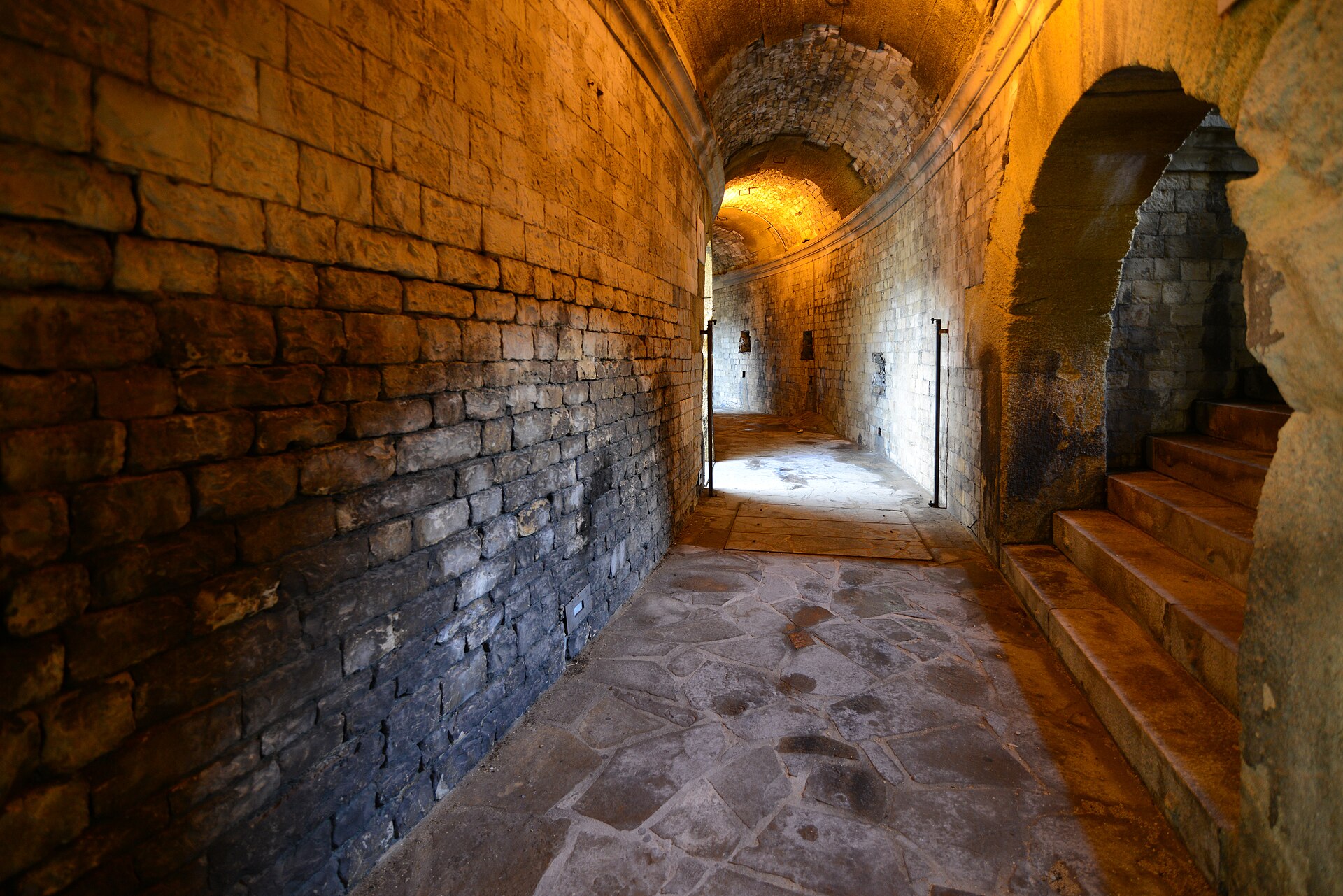
- Maison Carrée — Old town centre
Close to the arena, the Maison Carrée is a small Roman temple from the reign of Augustus, with a columned porch and a compact, rectangular body. Alongside the arena and the Tour Magne it makes up the core Roman trio of Nîmes, and it is easy to see in the same walk. - Jardin de la Fontaine — North-west of the centre
A formal garden laid out in the eighteenth century, with terraces, water channels and shade, and described in the brief's travel source as the first public park in France. It is a calm place to cool off after the stone and sun of the arena, and it sits close to the Temple de Diane. - Tour Magne — Hill above the Jardin de la Fontaine
The Tour Magne is a Roman tower on the hill above the gardens, part of the ancient town defences. The walk up through the park is gentle but sunny, so a hat and water help. From the top, the arena and the red roofs of the old town are laid out below. - Cathédrale Notre-Dame-et-Saint-Castor — Old town centre
The city's main cathedral has medieval origins from the eleventh century, though it has been renovated and altered many times. It is believed to stand over a vanished Roman Temple of Augustus. It is a short, quiet stop, and a useful reminder that Nîmes kept building on its Roman foundations. - Castellum — North of the old town
The Castellum is a former Roman water reservoir, the final point of the long aqueduct that fed the town. It is a modest site compared with the arena, but it explains how Roman Nîmes got its water and pairs well with a trip to the Pont du Gard.
Culture
The Arena of Nîmes is a rare case of Roman public entertainment that never fully stopped. The building that once hosted gladiators now stages the Feria de Nîmes, with bullfights in the Spanish tradition, plus concerts and a re-enactment of antiquity called the Great Roman Games. For many locals, the arena is simply the town's biggest room, used for celebration, music and big communal evenings, and the feria brings the old centre alive with crowds, bands and late-night terraces. Nîmes sits in a part of France where Occitan heritage still shows in street names and in the local name of the monument, Arena de Nimes, and where the cultural pull towards Spain and the Mediterranean is strong. Bullfighting is a living tradition here, but it divides opinion in France and beyond, and visitors should expect a mixed reaction among residents. Those who prefer to avoid it can still visit on non-event days and enjoy the stonework and the history alone. Visiting the other Roman monuments in the town, such as the Maison Carrée, makes it clear that Nîmes has treated its ancient past as a working part of civic life for generations rather than as a museum piece. At feria events, take the seat on your ticket, keep phone lights and chatter low during ceremonial moments, and keep any opinions about bullfighting to yourself while you are in the stands.
What to wear
Around the Arena of Nîmes, traditional dress belongs to the wider Provence and Languedoc tradition: the Arlésienne costume, with printed cotton gowns, lace-edged shawls and fine headwear, is still brought out for festivals and parades, and brightly printed Provençal cottons remain a regional signature. Nîmes also gave its name to a cloth: denim is traditionally traced to serge de Nîmes, a sturdy twill. At the feria, the Spanish influence shows, with bullfighters in the silk and gold-embroidered suit of lights, and many spectators wearing white shirts with red scarves or sashes. Day to day, people in Nîmes dress in relaxed southern European fashion: linen and cotton in summer, light jackets in the cooler months, and smarter clothes for evening terraces and event nights. Visitors should dress for the heat first, since the arena is mostly open stone with little shade in the stands. Light, breathable clothes, a sun hat, sunglasses and sun cream are sensible from late spring to early autumn. Footwear matters more than usual: the steps and terraces are worn and uneven, so flat shoes with a good grip are better than sandals or heels. Churches such as the cathedral are not strict, but covering bare shoulders and knees is polite. For a feria evening, a smart-casual shirt or dress fits in comfortably, and a light layer helps once the sun goes down.
What to eat
- Brandade — Traditional bistros around the old town
Brandade is the local speciality: salt cod worked into a creamy paste with mashed potato, milk, garlic and olive oil. It is rich and comforting, and usually served warm with bread or a green salad. - Gardiane de taureau — Regional restaurants near the arena and the old centre
Gardiane de taureau is a slow-cooked stew of bull meat and vegetables in a deep, savoury sauce. It suits the town's bullfighting culture, and it is typically served with rice or potatoes on cooler days. - Tapenade on toast — Café terraces and bars in the old town
Tapenade is a coarse purée of olives, olive oil and garlic, spread on toasted bread. It makes an easy starter or aperitif snack, salty and sharp, and goes well with a glass of chilled local wine. - Olives and market produce — Covered market and morning stalls in the centre
Southern French markets sell olives in many marinades, along with cheese, cured meats and fruit. Assembling a picnic is a pleasant way to eat cheaply, and the Jardin de la Fontaine is a good place to sit with it. - Croquants — Bakeries and confectioners in the old town
Croquants are crisp almond biscuits associated with Nîmes. They are dry and fragrant rather than sweet, ideal with coffee or as a small edible souvenir after a long morning among the monuments.
Plan it
Best time. April–May and September–October, when the weather is warm without the full heat of a Mediterranean summer; September also brings the Feria de Nîmes and its bullfights, along with bigger crowds and busier accommodation. July and August can be very hot, with little shade in the stands.
How long. 1–2
Getting there. Nîmes has its own railway station with services to other southern French cities, and the airports at Montpellier and Marseille are the usual larger gateways. Local liO buses run from Arles and the Pont du Gard, and the A9 motorway serves drivers. The arena is a short walk from the old town centre.
Budget. mid
Tips
- Check http://www.arenesdenimes.com for opening times, tickets and event days before you go
- Book ahead for the Feria in September, when rooms fill and the town is crowded
- Visit early in the day in summer to avoid the heat in the open stands
- Carry water and a hat, since shade inside is limited
- Combine the arena with the Maison Carrée and the Jardin de la Fontaine in one walking day
Etiquette
- Keep to marked routes and do not climb on restricted stonework
- Be quiet and respectful during ceremonies at events
- Cover shoulders and knees when stepping into the cathedral
Nearby
Sources
- Wikidata Q179656 (CC0)
- Wikipedia: Arena of Nîmes (rev 1375499205) (CC BY-SA 4.0)
- Wikivoyage: Nîmes (rev 5412952) (CC BY-SA 4.0)
- Photo: Nîmes-Arènes-20130923, Daniel VILLAFRUELA (CC BY 3.0)
- Photo: Arenes de Nimes Alt 1, Krzysztof Golik, edited by Janke (CC BY-SA 4.0)
- Photo: Door (2363993521), Wolfgang Staudt (CC BY 2.5)
- Photo: Arènes de Nîmes (1. Jhdt.n.Chr.), Herbert Frank (CC BY 2.5)
- Photo: Amphitheater von Nîmes HDR, Wolfgang Staudt (CC BY 2.5)
- Photo: Arènes de Nîmes (Arena of Nîmes), Jorge Láscar (CC BY 2.5)
- Photo: ACTA Nîmes, ACTA (CC BY-SA 4.0)
- Photo: Amphitheatre of Nimes, Peter Glyn (CC BY-SA 4.0)


