Les Saintes
Les Saintes, France
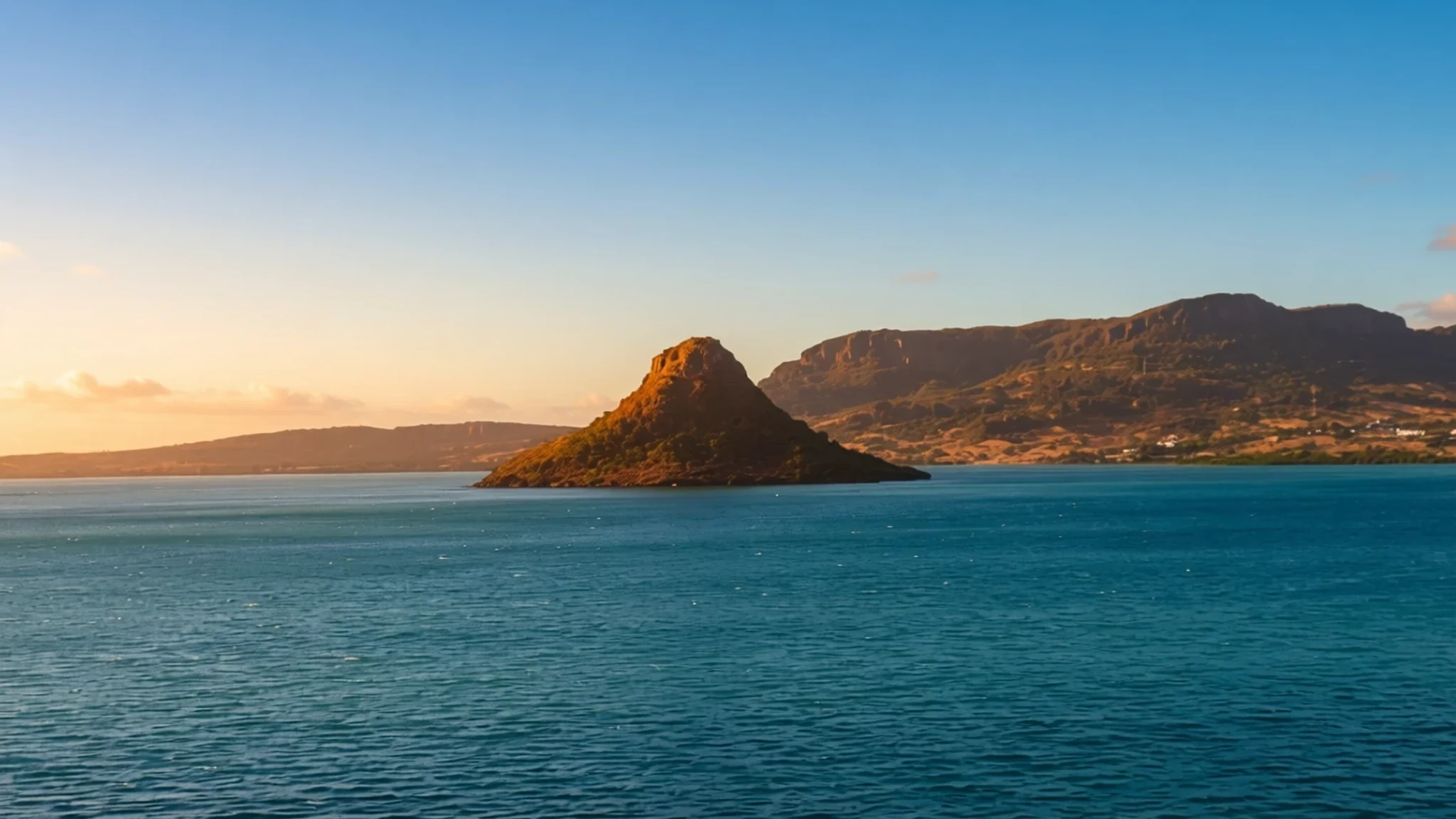
Les Saintes is a small French Caribbean archipelago of clear water, a working harbour and a Creole life still shaped by fishing.
The place
Les Saintes is a small French archipelago just south of Guadeloupe, a line of steep islets where the Atlantic meets the Caribbean Sea. People live mainly on Terre-de-Haut and Terre-de-Bas. Terre-de-Haut holds Le Bourg des Saintes, a compact harbour town of painted wooden houses and rust-red roofs above a quay of fishing boats and ferries. Terre-de-Bas is greener and quieter, a short boat hop away.
Le Bourg is built for people on foot. Lanes climb between gardens and verandas; scooters pass, but there is no room for ordinary cars, and the ferry quay is the front door. Fort Napoléon stands over the bay, a low stone fort whose interior is a dry garden of cactus and succulents, with the anchorage below. On the western side of Terre-de-Haut, Pain de Sucre is a pale spit of sand beneath a rounded headland, where the water starts shallow and deepens quickly. Other coves, including Anse Crawen and the windier eastern shore, are reached on foot. Windward slopes are dry and scrubby; sheltered folds hold thicker trees.
Les Saintes belongs to Guadeloupe and therefore to France, yet the temper is its own. French is the language of signs and school; Guadeloupean Creole carries the quay and the kitchen. Fishing is daily work: boats go out, nets are mended in sight of the harbour, and the catch still decides what is cooked. Midday heat lies hard on stone and sand, and the trade wind or the sea is the relief. Rain comes in short heavy showers, more often in the wetter half of the year. Evenings gather at the waterfront, and the day is paced by the ferry rather than by a road to the next town.
Its story
Les Saintes entered history because of the channel it sits in. Sailing ships moving among the eastern Caribbean islands needed a sheltered roadstead, and France and Britain both wanted the anchorage here: a place to watch the strait, water a fleet and wait for weather. The fight known as the Battle of the Saintes was joined in these waters. A British fleet broke the French line and defeated its commander, and in European accounts the islands' name stuck to that campaign rather than to the villages under the guns.
The people who remained were the Saintois. A fishing community took root under French rule, with settlers from Brittany and Normandy woven into the Creole world of Guadeloupe. That ancestry is still told locally as a reason Le Bourg looks as it does, with wooden houses, coloured roofs and a certain reserve, though daily life has long been Caribbean. The salako, a wide shallow hat still associated with Les Saintes, comes from the same layered past: a shape carried back from French possessions in Asia and kept because it shades a face on the water. Fort Napoléon, above Le Bourg, is a later French work meant to hold the bay; its walls did not see that sea battle, and the rooms now keep a small museum beside a garden of dry-country plants.
Naval histories skip the continuity on shore. Boats, the Catholic year and the crossing to Guadeloupe organised life long before visitors came for the beaches. Guadeloupe was hospital, market and capital; Les Saintes was home. Ferries and a small landing strip on Terre-de-Haut later tied the archipelago more closely to the mainland. What remains is the quay, the fort, the hat, and a town that calls itself Saintoise as readily as it calls itself French.
What to see
- Le Bourg des Saintes — Terre-de-Haut
Les Saintes keeps its daily life in Le Bourg, the harbour town on Terre-de-Haut. Painted wooden houses and rust-red roofs stand a short walk from the ferry quay, where fishing boats and yachts share the water. The church, the square and the bakeries are the indoor landmarks; the rest is lanes, verandas and the bay. This is the archipelago at street level.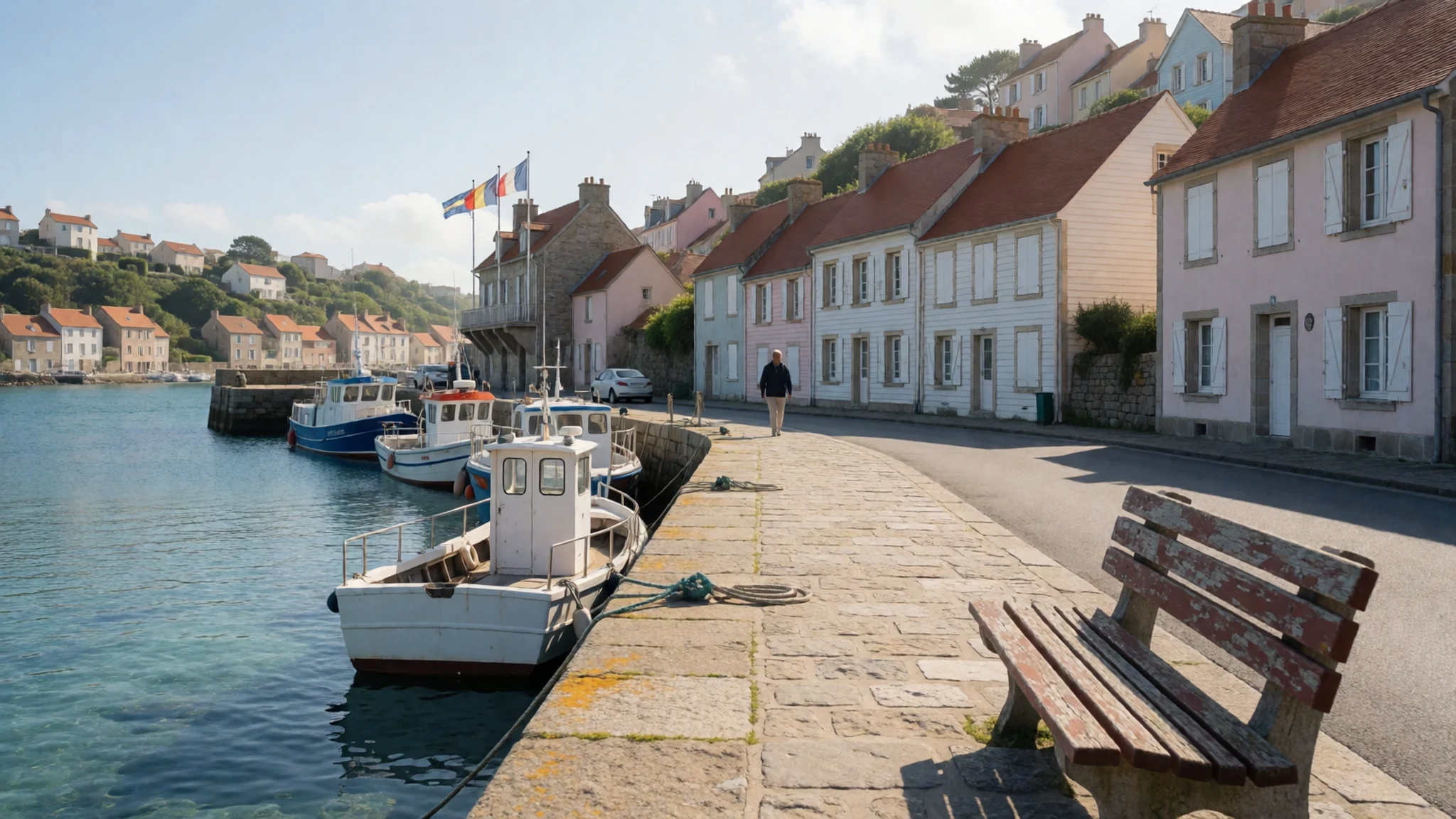
- Fort Napoléon — above Le Bourg, Terre-de-Haut
Les Saintes looks down on itself from Fort Napoléon, the stone fort above Le Bourg. The ramparts give a clear view over the anchorage, the red roofs and the channel beyond. Inside, a garden of cactus and dry-country plants fills the old courts, and a small museum holds the local story. The climb from town is short and hot, with little shade on the last stretch.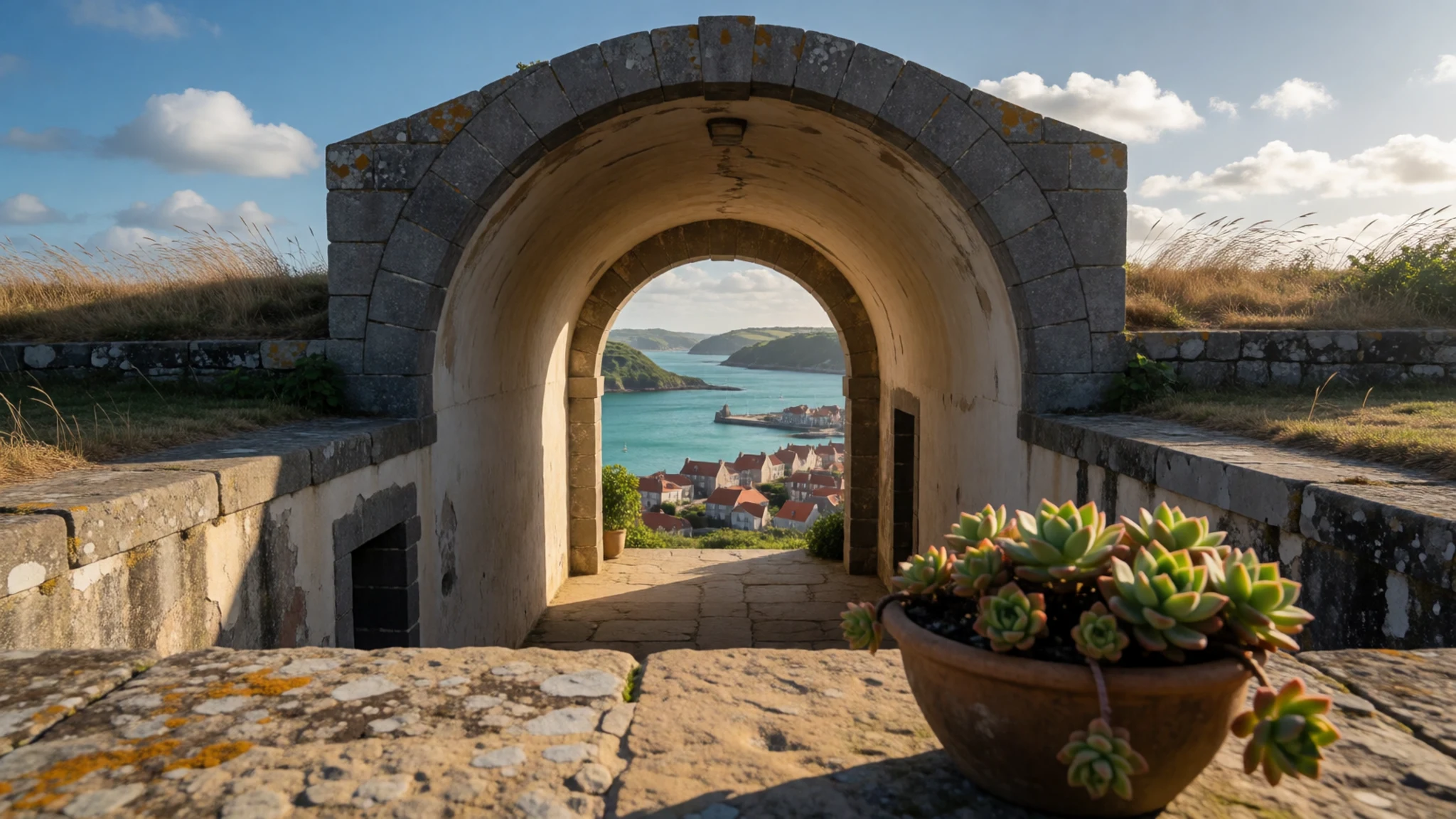
- Pain de Sucre — west coast of Terre-de-Haut
Pain de Sucre is where Les Saintes goes to swim: a pale tongue of sand under a rounded headland on the western side of Terre-de-Haut. The water is clear, shallow at the edge and soon deeper. A path crosses the island from Le Bourg; the walk is exposed, so morning is easier. Day-boats add to the crowd.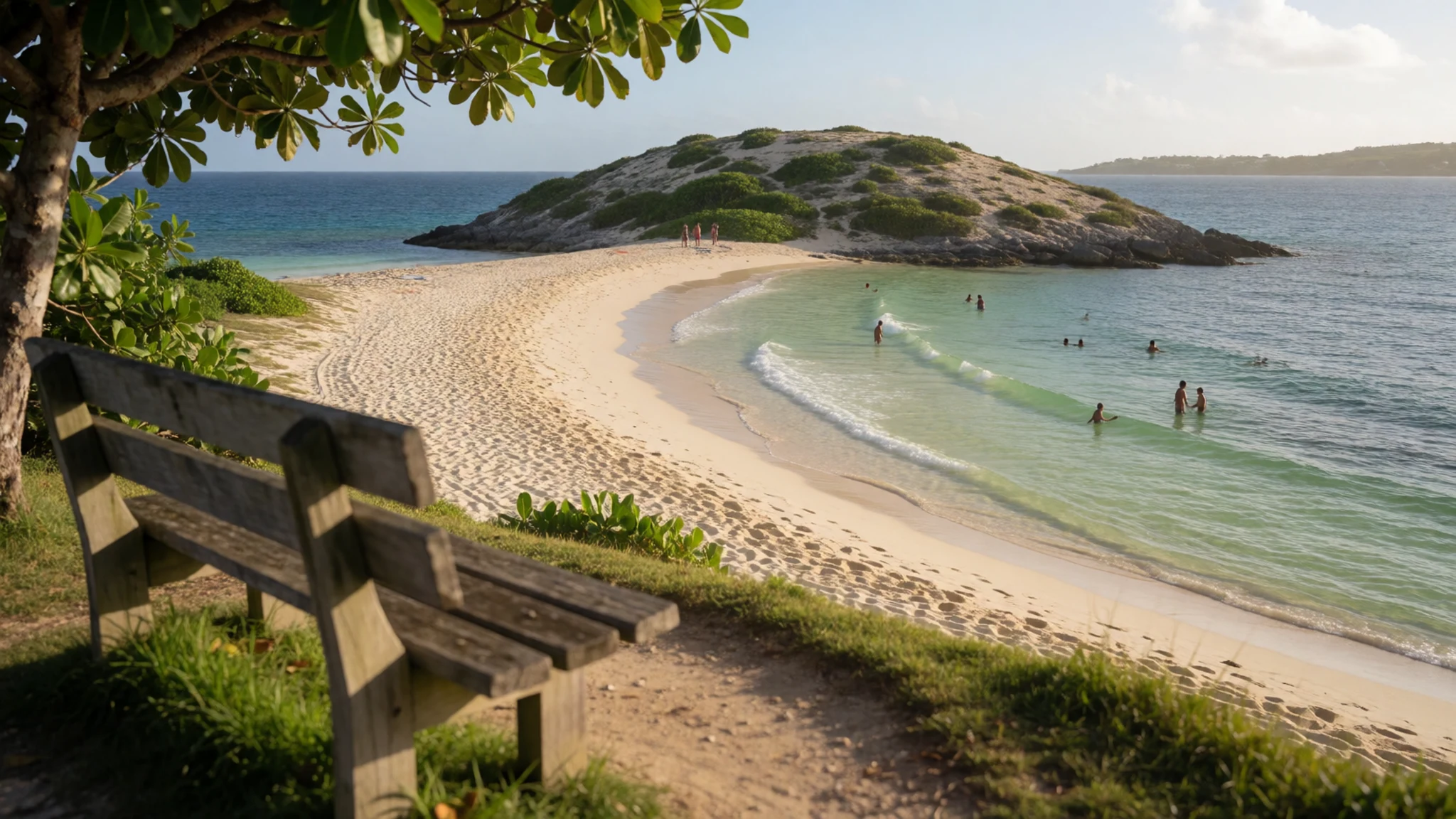
- Le Chameau — Terre-de-Haut
Les Saintes rises to Le Chameau, the high hill of Terre-de-Haut. A track climbs through dry scrub to a wide view over the archipelago, the southern coast of Guadeloupe and the channel between. The path is steep and shadeless, and early morning is when the heat is still kind. From the top the red roofs of Le Bourg sit below the ridge.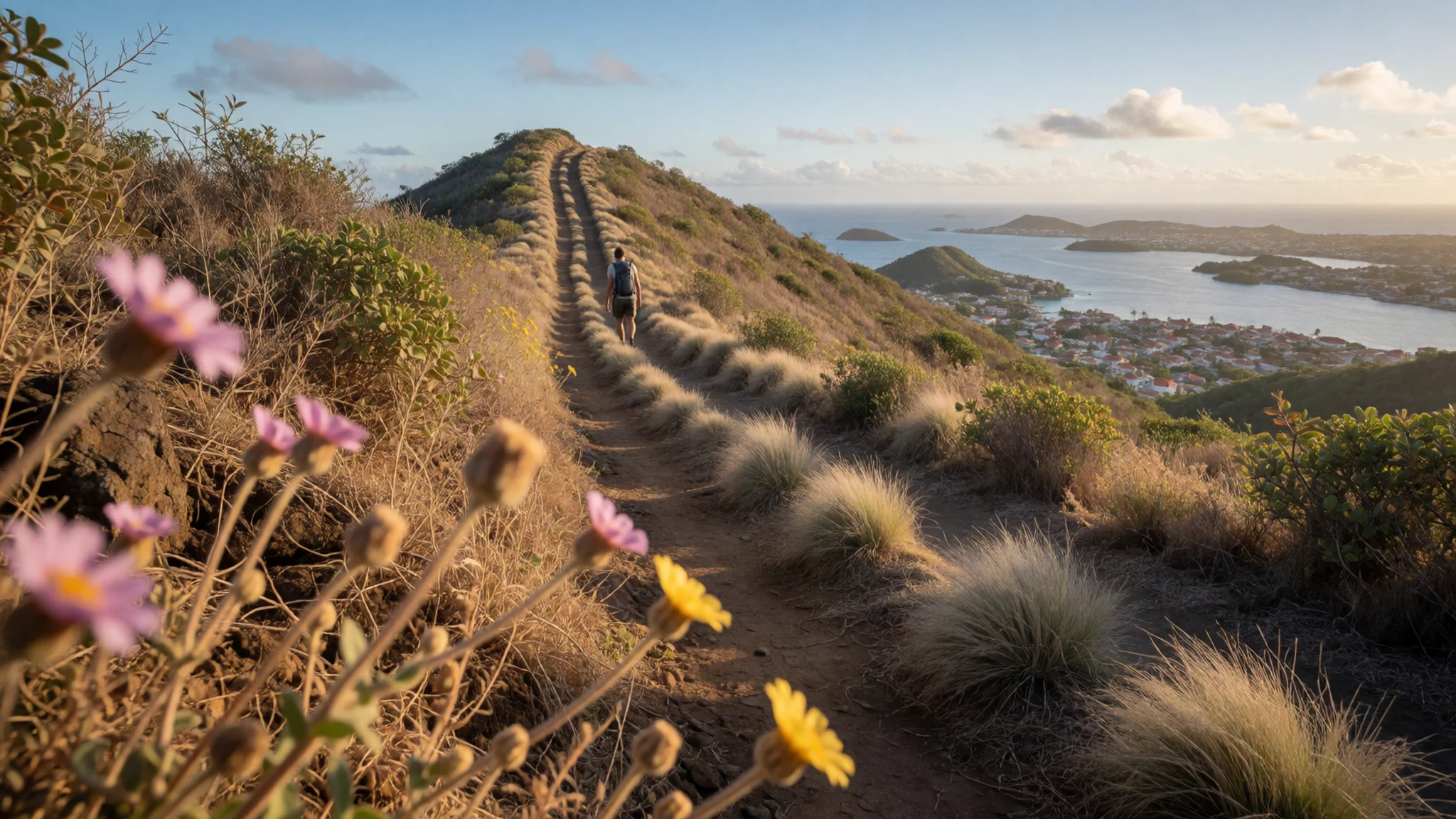
- Terre-de-Bas — Terre-de-Bas
Terre-de-Bas is a lived-in island of Les Saintes, greener and quieter than Terre-de-Haut. A short public boat links it with Le Bourg. Villages sit among gardens and hills, and the coast is for walking and swimming rather than for a harbour promenade. Fewer day visitors come across, so the pace stays local. It is the right half-day if Terre-de-Haut has started to feel small.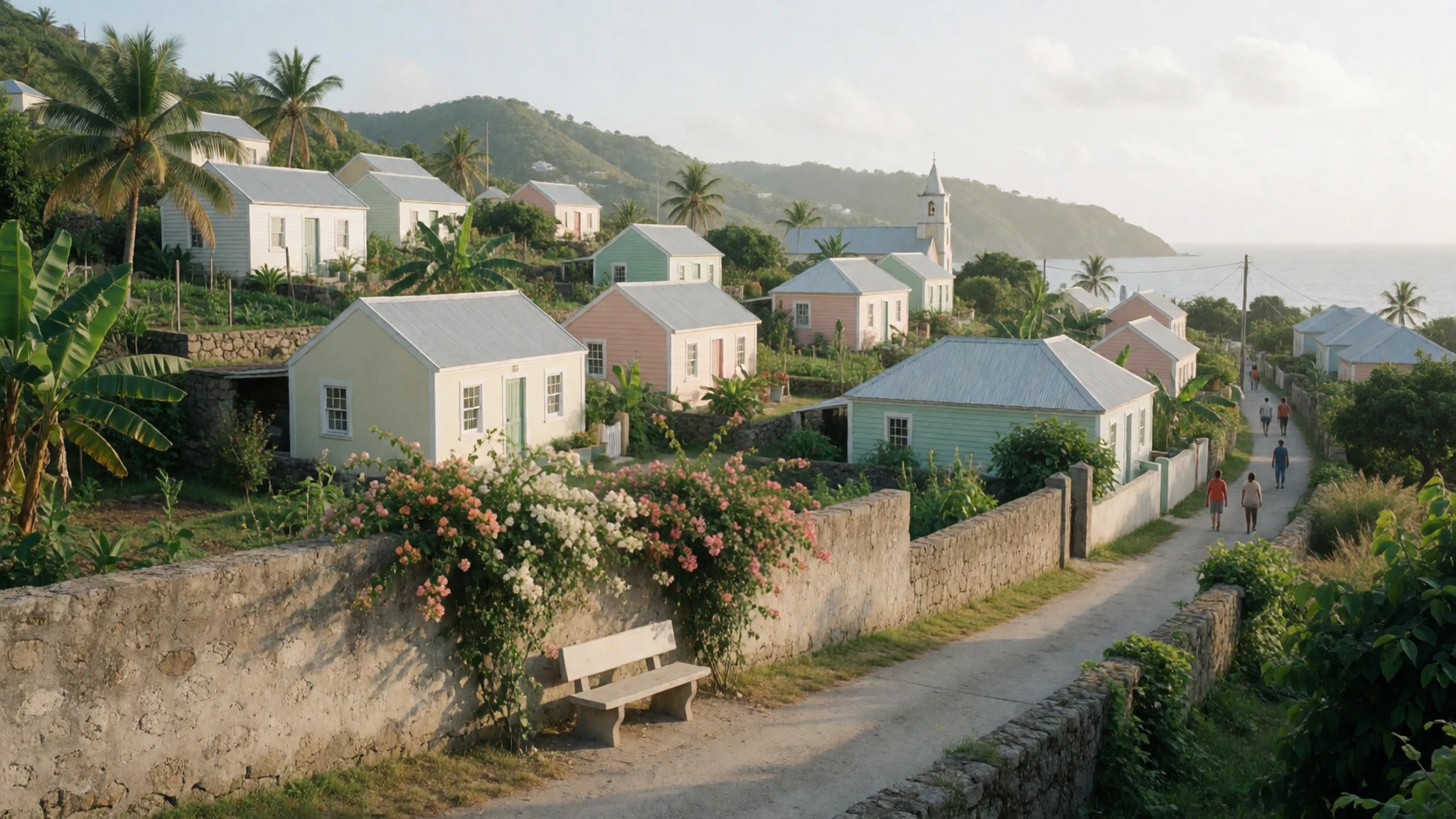
Culture
Les Saintes has a culture of the quay more than of the stage. The Saintois are French citizens of Guadeloupe with a strong sense of being from these islands in particular, and that distinction is pride, not a performance for outsiders. French and Creole share the day: French in school, church and official life, Creole in humour, family and much of the talk on the boats. Catholicism still marks the calendar. Feast days and processions are public occasions, and the church in Le Bourg is a social centre as well as a place of worship. When there is a fête, music draws on gwo ka and the wider Creole repertoire of Guadeloupe; ordinary evenings are quieter, often just the waterfront and the radio. Fishing remains an identity. People notice who went out, who came back, and whether the weather will allow another trip. Take off swimwear and put on a shirt before you enter the church or stand in a bakery queue in Les Saintes, and ask before you photograph anyone working on the boats.
What to wear
Les Saintes still has a costume that belongs to the islands rather than to a festival brochure. The salako is the piece people name first: a wide, shallow hat, often covered in cloth, with a shape that came from French Asia and was taken up here by people who worked in the sun on the water. It appears at festivals, in shops and in the local image of the Saintois, more as heritage and souvenir than as everyday kit. For fêtes and first communions, Creole dress comes out — madras headscarves and skirts, white embroidery, gold jewellery — shared with Guadeloupe and the wider French Caribbean, and worn when the occasion demands, not for the bakery run.
Fishermen wear shorts, caps and faded shirts; everyone else wears light cotton, sundresses, T-shirts and sandals. Scooter riders add a hat or a cloth against the sun.
A visitor to Les Saintes should dress for heat, glare and a town that is also a parish. Swimwear is right for Pain de Sucre and wrong for the church, the fort's museum rooms and the shops. A shirt or a cover-up, and sandals that can take hot paving and a rough path, will cover almost every plan. The wind can make a boat deck cool even when the beach is scorching, so a light layer is worth having in a bag.
What to eat
- Tourment d'amour — bakeries in Le Bourg
The tourment d'amour is the cake Les Saintes claims as its own: a small tart of pastry, coconut and a jammy or custard heart, sold warm from bakeries in Le Bourg. It is a snack for the quay or the walk, not a plated dessert.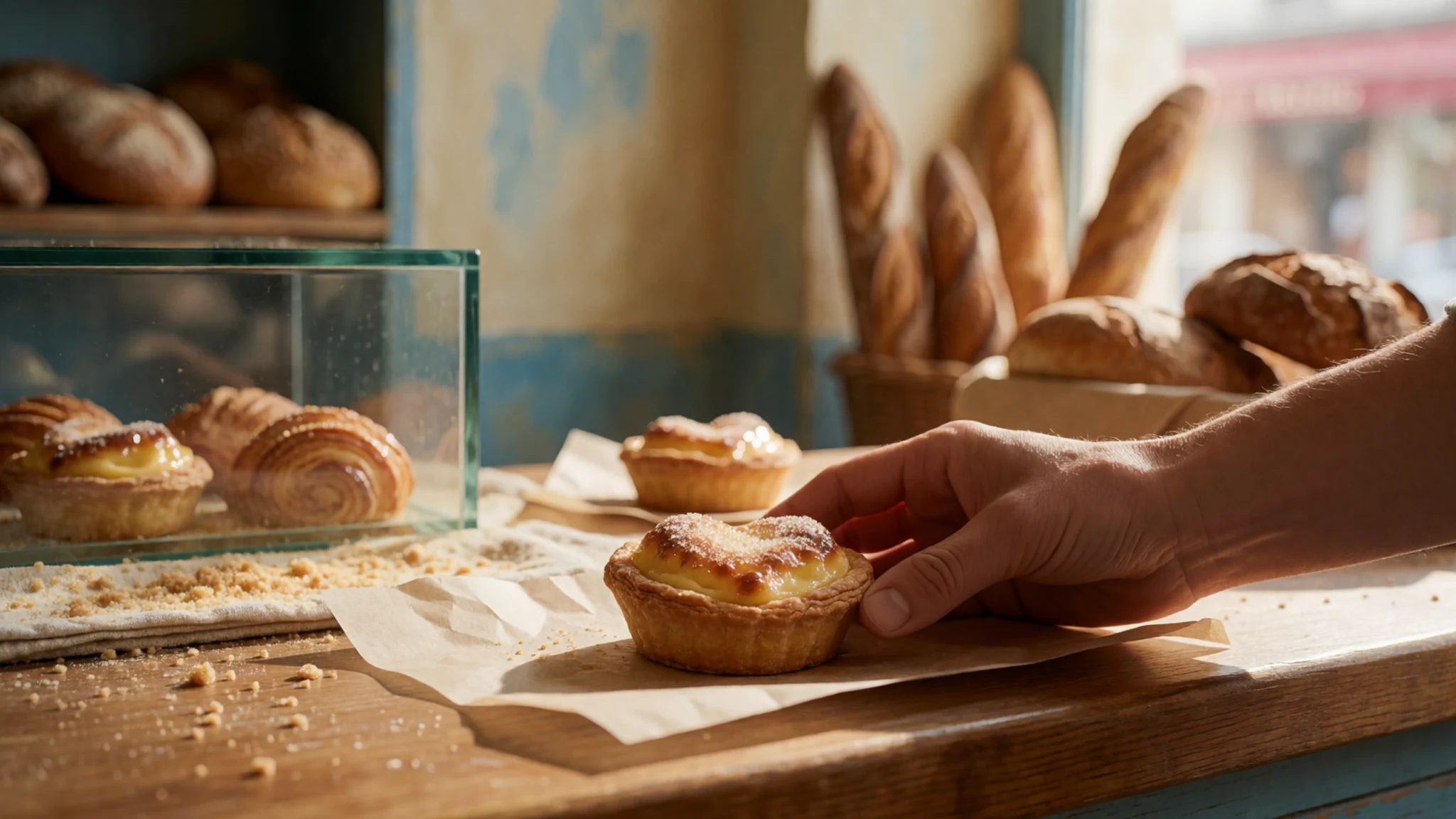
- Accras de morue — stalls and eateries on the quay in Le Bourg
Accras de morue are salt-cod fritters, crisp outside and soft inside, and in Les Saintes they belong to the harbour snack as much as to a table. Stalls and small eateries around the quay in Le Bourg fry them through the day.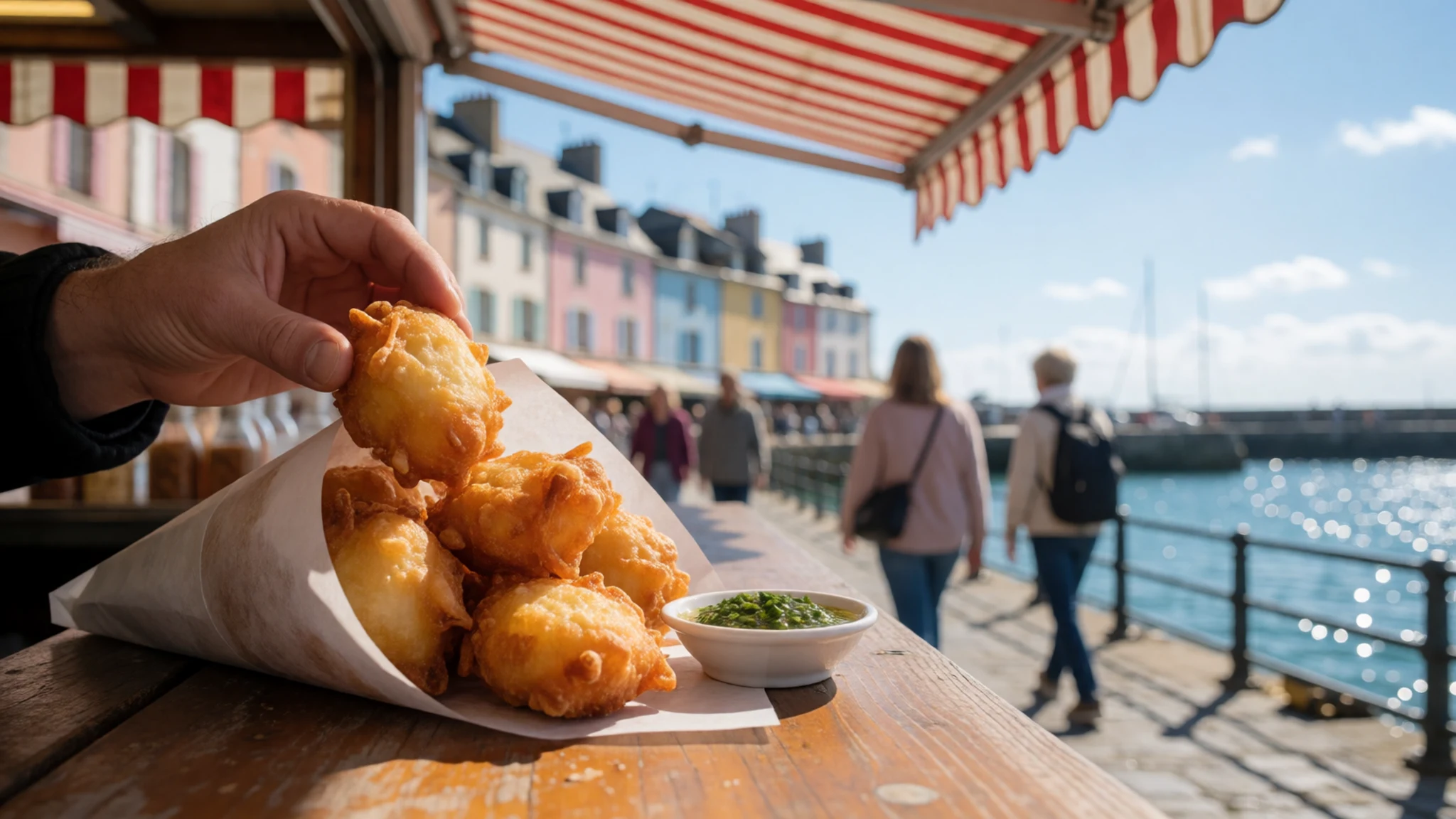
- Colombo de poisson — Creole eateries in Le Bourg
Colombo de poisson is fish in a Caribbean curry of turmeric, garlic, onion and hot pepper, and it is a standard plate on Creole menus in Les Saintes. Eateries around Le Bourg serve it with rice and beans or grated vegetables. - Blaff — Creole eateries in Le Bourg and on Terre-de-Bas
Blaff is fish poached in a sharp Creole broth of lime, garlic, chilli and herbs, and in Les Saintes it is a plain catch turned into a meal. Creole eateries in Le Bourg and on Terre-de-Bas cook it when the boats have come in. - Coconut sorbet — counters around the square and waterfront in Le Bourg
Coconut sorbet is the heat remedy in Les Saintes, sold from small counters and freezers around the square and the waterfront in Le Bourg. It is simple, very cold and enough of a pause between the fort and the beach. It is a street sweet, not a restaurant course.
Plan it
Best time. December to April is the drier, breezier stretch in Les Saintes, when the trade wind is steadier and long downpours are less common. The rest of the year is wetter, and the summer and autumn months bring heavier showers and the chance of tropical storms. Heat is year-round; what changes is the rain.
How long. 2–3
Getting there. Fly into Pointe-à-Pitre, the main airport of Guadeloupe, then cross to the south of Basse-Terre for the boat from Trois-Rivières, the usual last leg to Terre-de-Haut in Les Saintes. A small aircraft also links Pointe-à-Pitre with the landing strip on Terre-de-Haut. Confirm the day's boats and flights before you travel; there is no road.
Budget. mid
Tips
- Book the boat and a room ahead for the drier months and for French public holidays, when many people cross over from Guadeloupe.
- Start the walk to Le Chameau or Pain de Sucre early; the paths are hot and almost without shade by late morning.
- Carry cash. Small bakeries, snack stalls and some boats still prefer it, and cards are not a given.
- Bring water. There is little to buy on the paths between Le Bourg and the coves.
- If you hire a scooter, ride slowly in the lanes of Le Bourg; many people are on foot, and the paving is rough.
Etiquette
- Say bonjour before you ask for anything, in a shop, on a boat or at the fort.
- Do not stay in swimwear in the church, the bakeries or the museum rooms of Fort Napoléon.
- Ask before you photograph people, especially fishers and children.
- Keep to the paths and the public lanes; gardens and verandas that look open are private.
Nearby
Sources
- Wikidata (CC0)
- Wikipedia (CC BY-SA 4.0)
- Wikivoyage (CC BY-SA 4.0)