Kecskemét
Kecskemét, Hungary
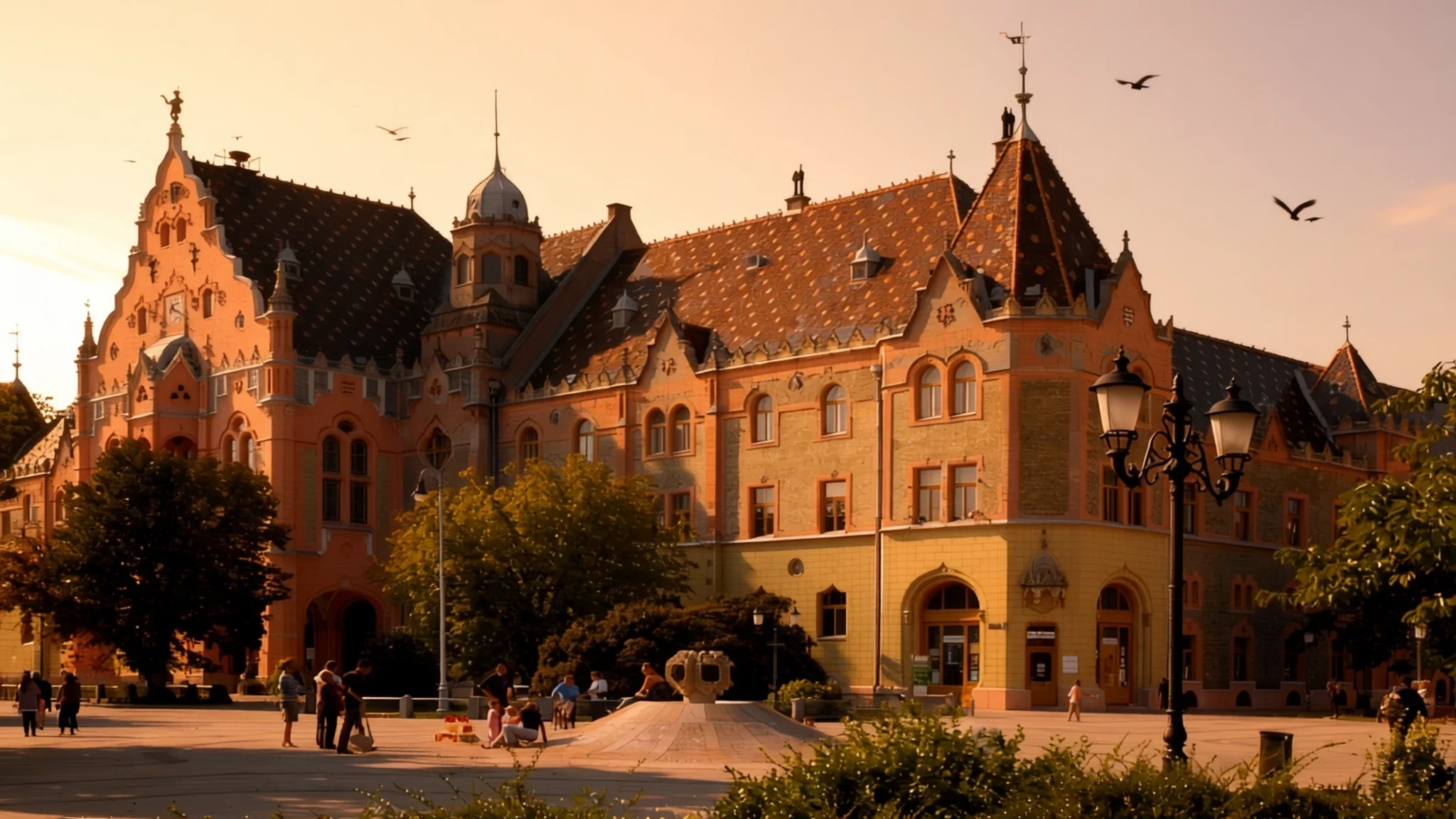
Kecskemét is a calm Great Plain town of colourful Art Nouveau facades, orchards and palinka, an easy stop between Budapest and Szeged.
The place
Kecskemét sits in central Hungary on the Great Plain, roughly halfway between Budapest and Szeged and about 90 km from each. It is a city with county rights and the seat of Bács-Kiskun county, with around 108,000 people, which makes it a mid-sized regional centre rather than a big-city destination. The land is flat, at about 105 m above sea level, and the horizon is wide and low.
The town grew where sandy ground meets richer yellow soil, and that mix still shapes what happens around it. West of the centre the country is made of wind-blown sand, with long dunes running north to south and flat hollows between them. Two centuries ago overgrazing stripped the pasture, the sand began to move, and the town was genuinely threatened. The answer was planting: forests, then orchards and vineyards, which is why the surrounding region is known for fruit.
Kecskemét is also the gateway to the Kiskunság, a plains region of grassland, sand and scattered villages, now partly protected as a national park. The centre is compact and mostly pedestrian-friendly, built around a handful of squares where the town hall, theatre, churches and museums stand within a few minutes' walk of each other.
It is not a place of big headline sights. Its appeal is in the pace: low buildings, ceramic-tiled facades, cafés on the squares, and a sense of a working provincial city that happens to have a very pretty middle. Foreign visitors are fewer than in Budapest, and so are the queues.
Its story
Kecskemét's story begins on the plain. People left traces here about 5,000 years ago, and later groups, including the Sarmatians, passed through. Historians now doubt older claims that a named Sarmatian settlement stood on this exact spot, and think lasting settlement followed the Hungarian conquest.
In the early 13th century there were seven small villages in the area, each with a few hundred people clustered around a church. The first Mongol invasion destroyed them all. Some revived when the Cumans were settled in the region.
What made Kecskemét a town was location. It lay on an important trade route and grew as a customs post and market. A royal charter of 1368, issued under King Louis I, calls it an oppidium, a market town. Trade drew craftsmen, merchants and new residents, among them Jews, who became an important part of town life.
During the Ottoman conquest, people from nearby villages crowded into Kecskemét, which was protected by wooden palisades. Many were also fleeing the heavy demands of the spahi landlords, the Ottoman cavalry holders who controlled the land. That inflow of refugees helped the town survive and grow when smaller places did not.
The later centuries brought a different struggle, against the sand itself. As pasture failed and dunes advanced, the town planted its way to safety. The churches of the 1700s, the town's largest, still stand as evidence of the prosperity that followed. Today the old centre reads as a layered record of that long survival.
What to see
- Piarist Church — Town centre
A single-nave baroque church with a tower at the south-west corner, designed by Andrew Mayerhoffer and built in the late 1720s. It stands near the centre beside the Piarist school, and the building is worth a look from outside even when the doors are shut.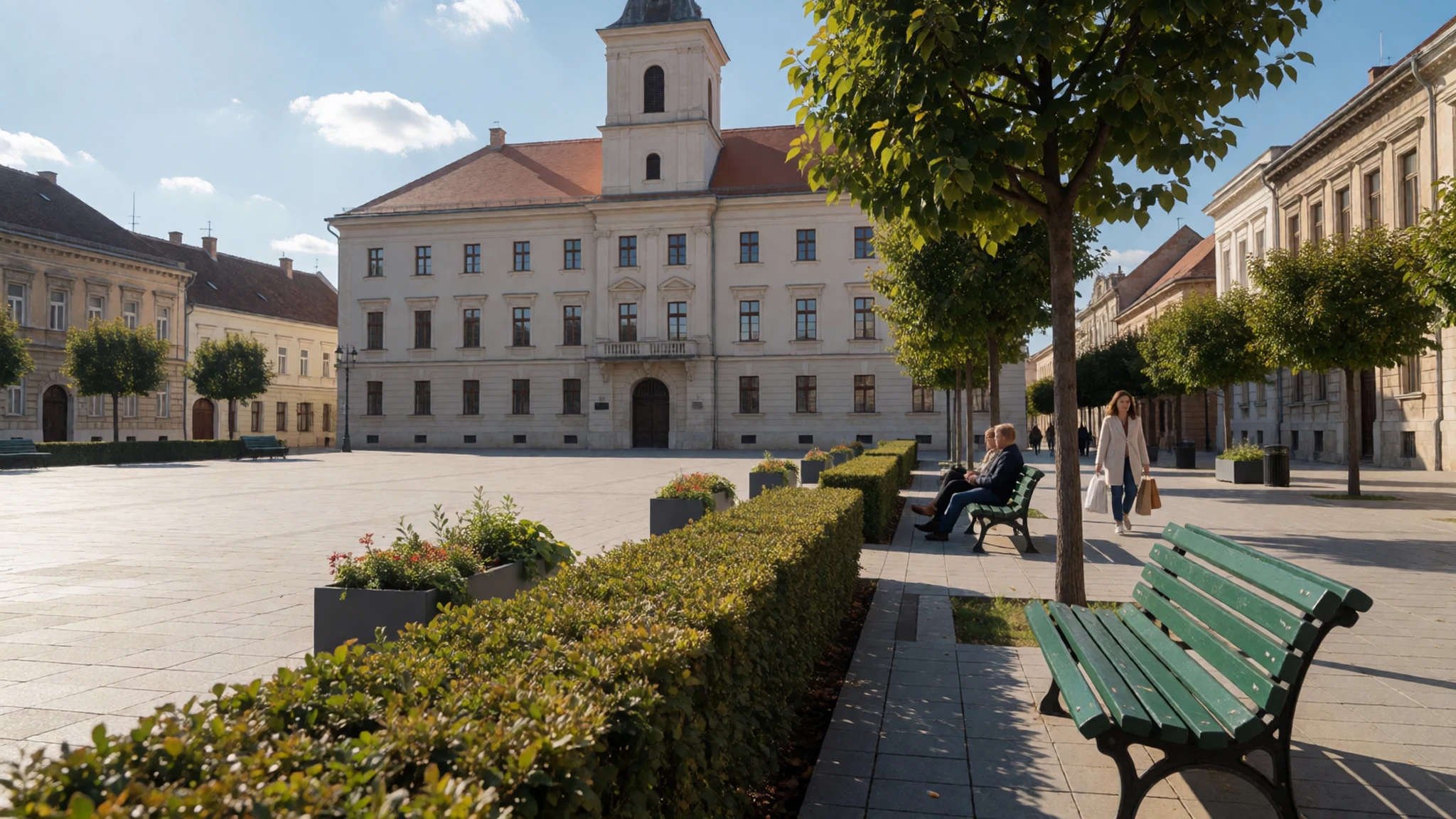
- Great Church (Nagytemplom) — Town centre
A late-baroque church with one broad nave and a fire tower with a balcony on the north-west side. Construction ran from 1774 to 1806, a long build for a town that was still battling drifting sand. It anchors the main square area.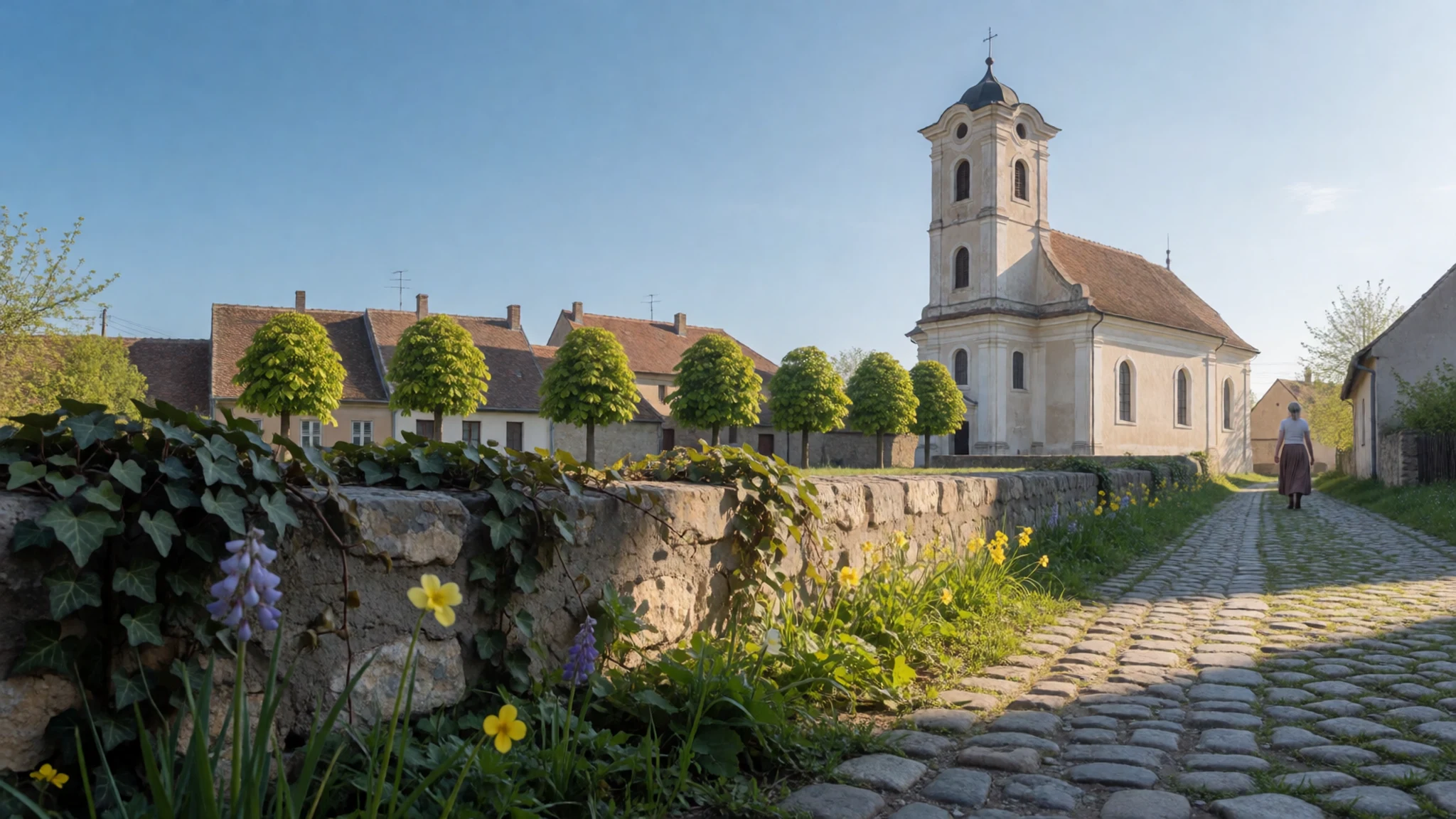
- Franciscan Church of Saint Nicholas — Kossuth tér
Built in 1786, this church mixes Romanesque roots with Gothic and baroque rebuilding. Along the fence wall on Kossuth square you will find the so-called purgatory relief, a sculpted group that is easy to miss if you only look at the church front.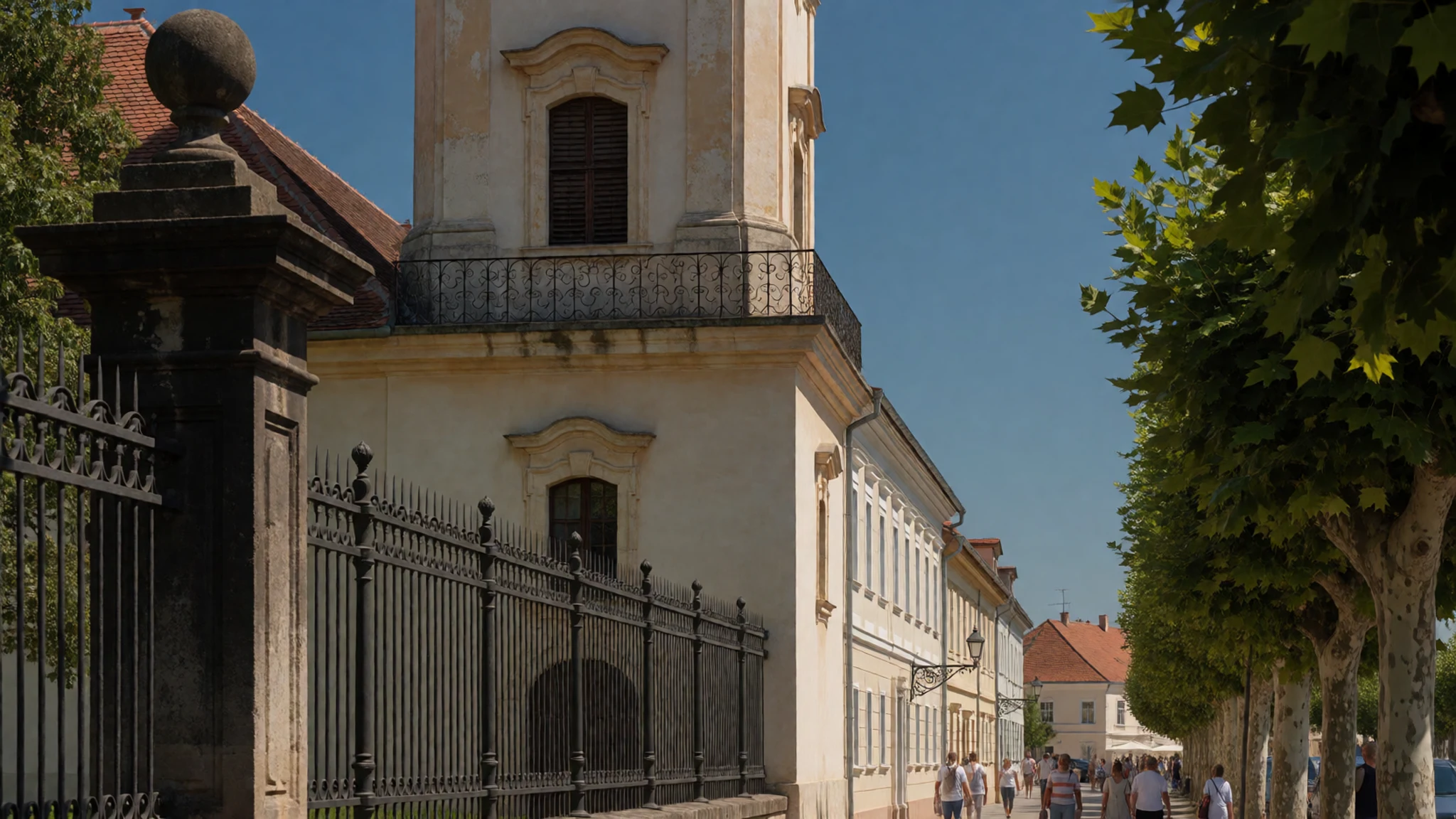
- Town Hall and Kossuth Square — Kossuth tér
The town hall faces the main square and is the building most people photograph. Around it sit churches, a statue of Kossuth and the colourful Cifra Palace, whose ceramic decoration came from the Zsolnay factory in Pécs. Sit on a bench and let the square work.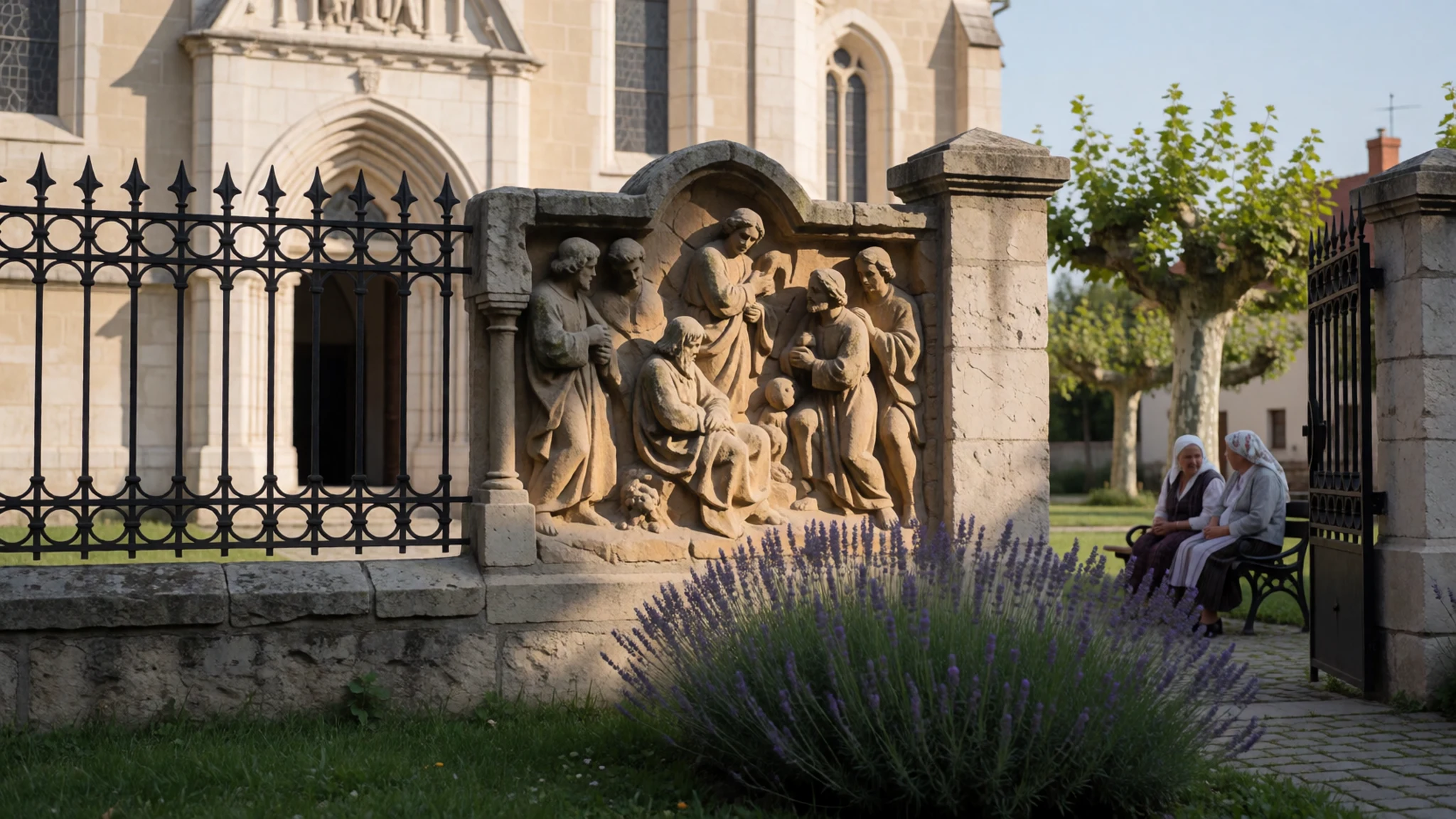
- Greek Orthodox Church — Town centre
A small neoclassical church from 1829 designed by Ágoston Fischer, with one nave, a rounded sanctuary and a tower at the south-west corner. It is a reminder that the town's trade attracted several communities, not only the Catholic and Reformed majorities.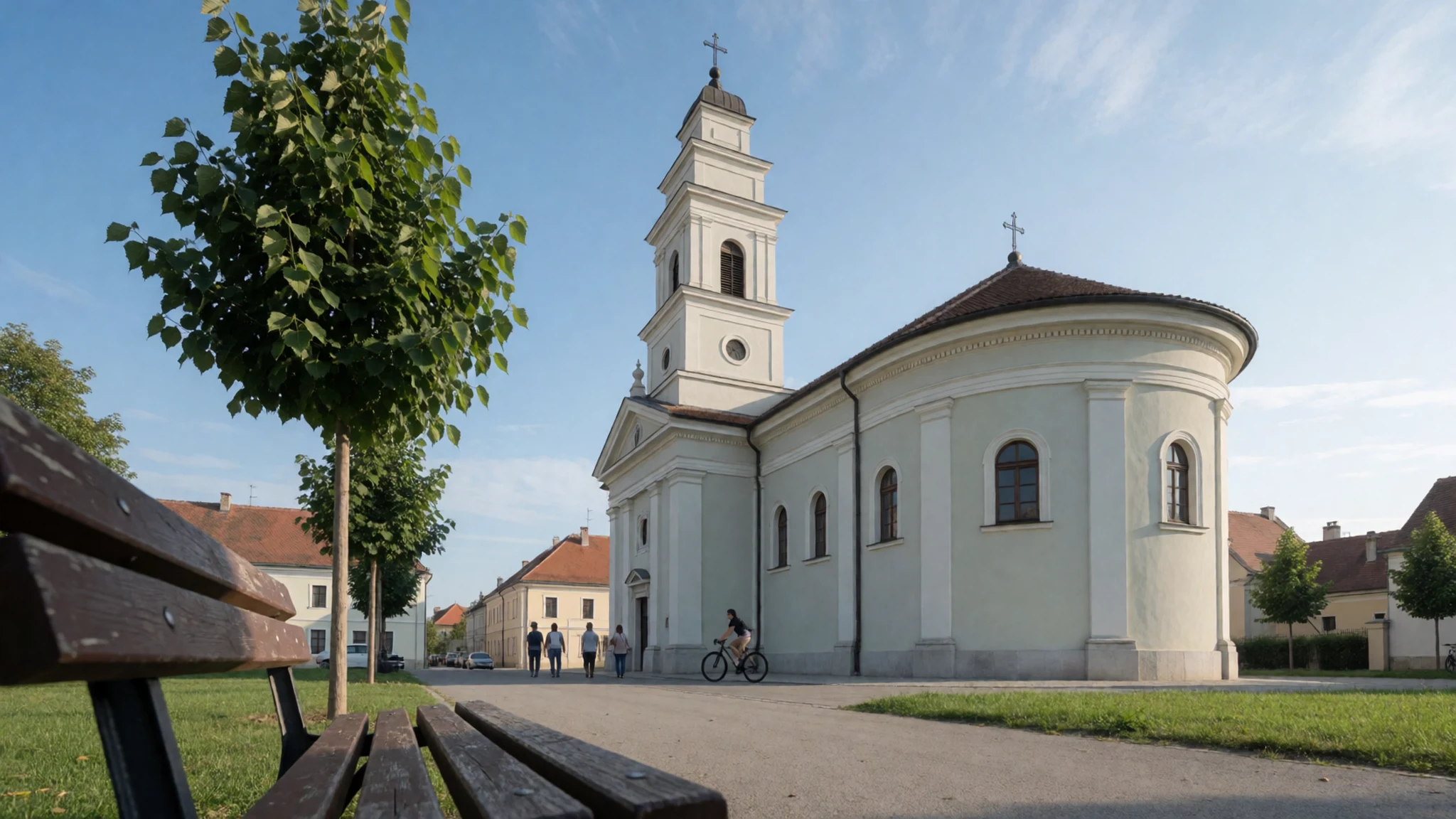
Culture
Kecskemét's culture is that of a market town on the Great Plain, where farming, fruit growing and trade shaped daily life. Churches of several denominations stand close together in the centre, Catholic, Reformed and Greek Orthodox among them, and that mix is a fair picture of how the town was built: by settlers, refugees and merchants arriving over centuries.
The plain beyond the town supplies a second layer of identity. The Kiskunság region is tied in Hungarian minds to open grassland, herding and an older nomadic past, and villages such as Bugac, near the steppe landscape of the national park, celebrate this heritage with festivals of nomadic and warrior traditions. In town, that rural side shows up in food, drink and a fondness for fruit.
Palinka, the Hungarian fruit spirit, is closely associated with Kecskemét. It is served as a welcome, a digestif and a gesture of hospitality, and refusing it outright can seem curt, though a small sip is perfectly acceptable.
The town also has a modern side. A large German car plant opened nearby in 2012 and has brought work and newcomers, so the city is a mix of old provincial habits and a busy industrial present. Evenings are quiet and low-key, with theatre and café life centred on the squares.
In churches, keep your voice low, cover bare shoulders if you can, and do not wander around during a service or photograph worshippers.
What to wear
Kecskemét does not have one famous costume of its own, but the Hungarian plains tradition is the reference point. Rural dress there was built around linen and wool, with embroidered shirts and aprons, pleated skirts, and for men wide-sleeved shirts, waistcoats and felt hats. Embroidery, often in floral patterns, and decorative leather work were the main ways of showing skill and status. Today these garments appear mostly at folk festivals, on stage, and at events celebrating the Kiskunság heritage, rather than in the street.
Day to day, people in Kecskemét dress much as they do elsewhere in central Europe: neat, practical and fairly understated. Jeans, shirts and light jackets are normal, and office workers lean smart-casual. Evenings at the theatre bring out a little more polish, though nobody expects formal dress.
For visitors, comfort comes first. Summers can be hot on the open plain, so pack breathable cotton or linen, a sun hat and sunscreen, and carry water. Winters are cold, so bring a proper coat, hat and gloves. The centre is flat and largely paved, so comfortable walking shoes are enough; if you plan to go out onto the sandy steppe or cycle, closed shoes are better than sandals. For churches, a light scarf or shawl to cover shoulders, and trousers or a skirt to the knee, will avoid any awkwardness.
What to eat
- Főzelék — Small central eateries serving lunch
A thick vegetable stew, often made from peas, lentils or marrow, usually served with a fried egg or sausage. It is everyday Hungarian comfort food and easy on the wallet. Look for the specialist főzelék eateries near the centre.
- Fresh fruit — Market stalls and greengrocers in the centre
The town sits in a fruit-growing region, so apricots, peaches, cherries and apples in season are worth buying by the bag. Eat them as they are, or look for them in cakes and jams. Summer is the best time.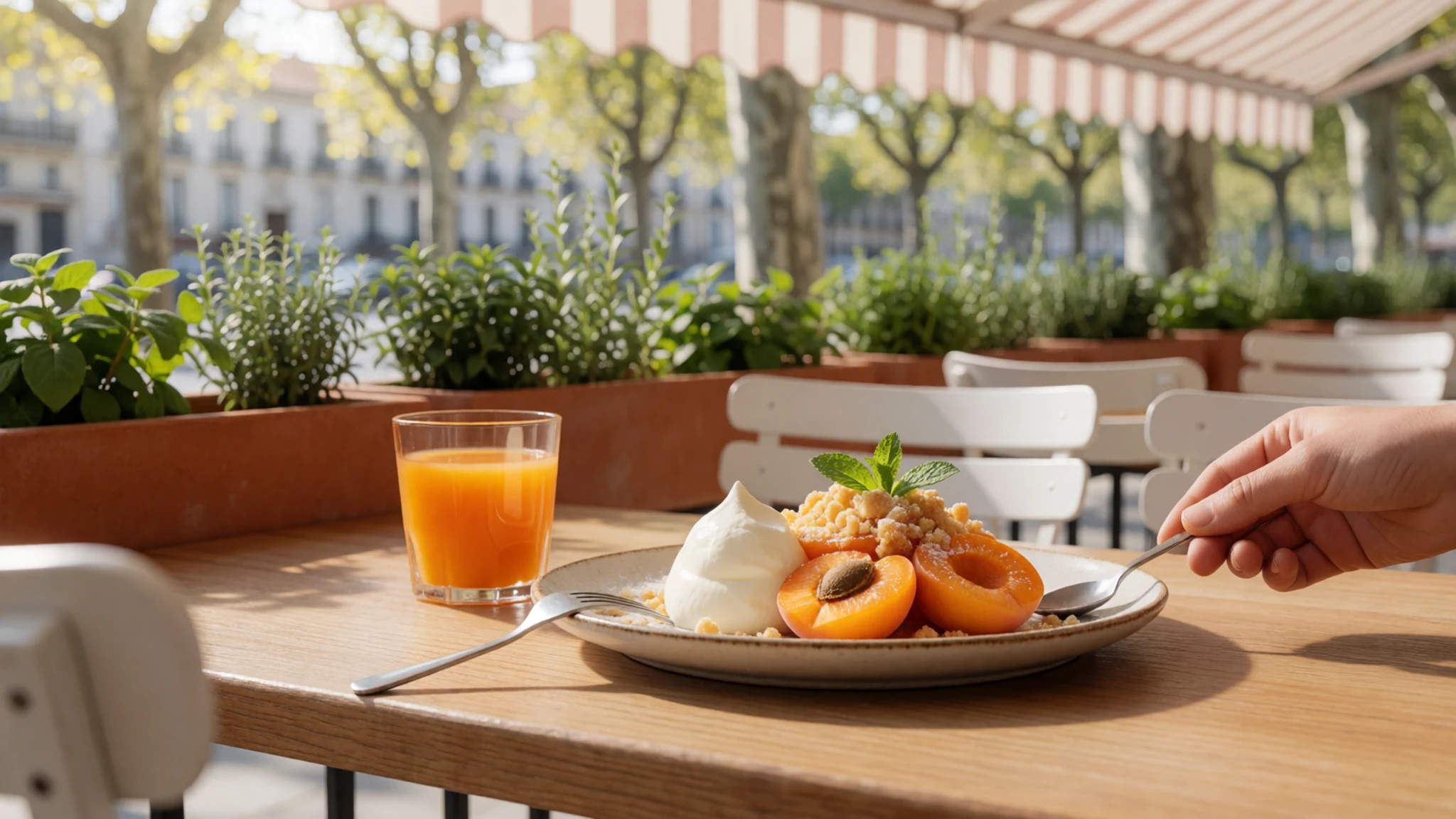
- Palinka — Restaurants, bars and shops around the main squares
The fruit spirit most associated with Kecskemét, made from plums, apricots, pears and other local fruit. It is strong, served in small glasses, and best sipped slowly. Ask for a local label, and have it with food rather than on an empty stomach. - Pizza and pasta — Pizzerias and Italian restaurants in the centre
Italian-style places are a common feature of the centre, with pizzas, pasta and grilled meat dishes on long menus. They are a safe choice for families and mixed groups, and many offer vegetarian options. - Vegetarian dishes — Small vegetarian restaurants near the main squares
A few vegetarian and vegan-minded eateries operate in the centre, offering plant-based plates alongside Hungarian staples. Useful for visitors who find the usual pork-heavy menus limiting, and a good lunch stop between sights.
Plan it
Best time. May–June and September–October, when the plain is mild and the squares are pleasant for sitting out. July and August can be hot on the flat, open ground, while winters are cold and quieter, with fewer visitors and shorter days.
How long. 1–2
Getting there. Fly to Budapest Ferihegy (BUD), then take a train from the Ferihegy station near Terminal 1, which takes under an hour to Kecskemét; buses link Terminal 2 to that station. The M5 motorway also connects Kecskemét with Budapest and Szeged. Check train times and fares on the national railway site before you go.
Budget. mid
Tips
- Kecskemét works well as a day trip from Budapest, but staying a night lets you enjoy the squares in the evening.
- Carry some Hungarian forint in cash for small cafés, market stalls and rural stops; cards are common in the centre.
- Walk the old centre in the morning for the best light and the fewest people.
- Consider a trip to Bugac or the Kiskunság National Park for the steppe landscape, ideally with a local guide or tour.
- Drink water in summer; the open plain has little shade.
Etiquette
- Dress modestly and speak quietly in churches, and do not photograph services.
- Accept a small glass of palinka graciously, and sip rather than gulp.
- Greet staff with a simple 'jó napot' (good day) in shops and restaurants.
Nearby
Sources
- Wikidata Q171357 (CC0)
- Wikipedia: Kecskemét (rev 1376624686) (CC BY-SA 4.0)
- Wikivoyage: Kecskemét (rev 5406901) (CC BY-SA 4.0)
- Városháza (Kecskemét, Kossuth tér 1.) — bree88 (CC BY-SA 2.5 hu)
- Piaristák iskolája Kecskeméten — Thaler Tamas (CC BY-SA 4.0)
- Hungexpo, Automotive 2017 — Globetrotter19 (CC BY 3.0)
- Kossuth-szobor Kecskeméten — Kriszti2083 (CC BY-SA 4.0)
- Ev. templom (Kecskemét, Arany János u.) — tilet (CC BY-SA 2.5 hu)
- Kecskemét — Bocskai László (CC BY 3.0)
- Katona József theatre, Kecskemét — Pilgab (CC BY 3.0)
- Cifrapalota Kecskemét Zsolnay (Public domain)


