Budapest
Budapest, Hungary
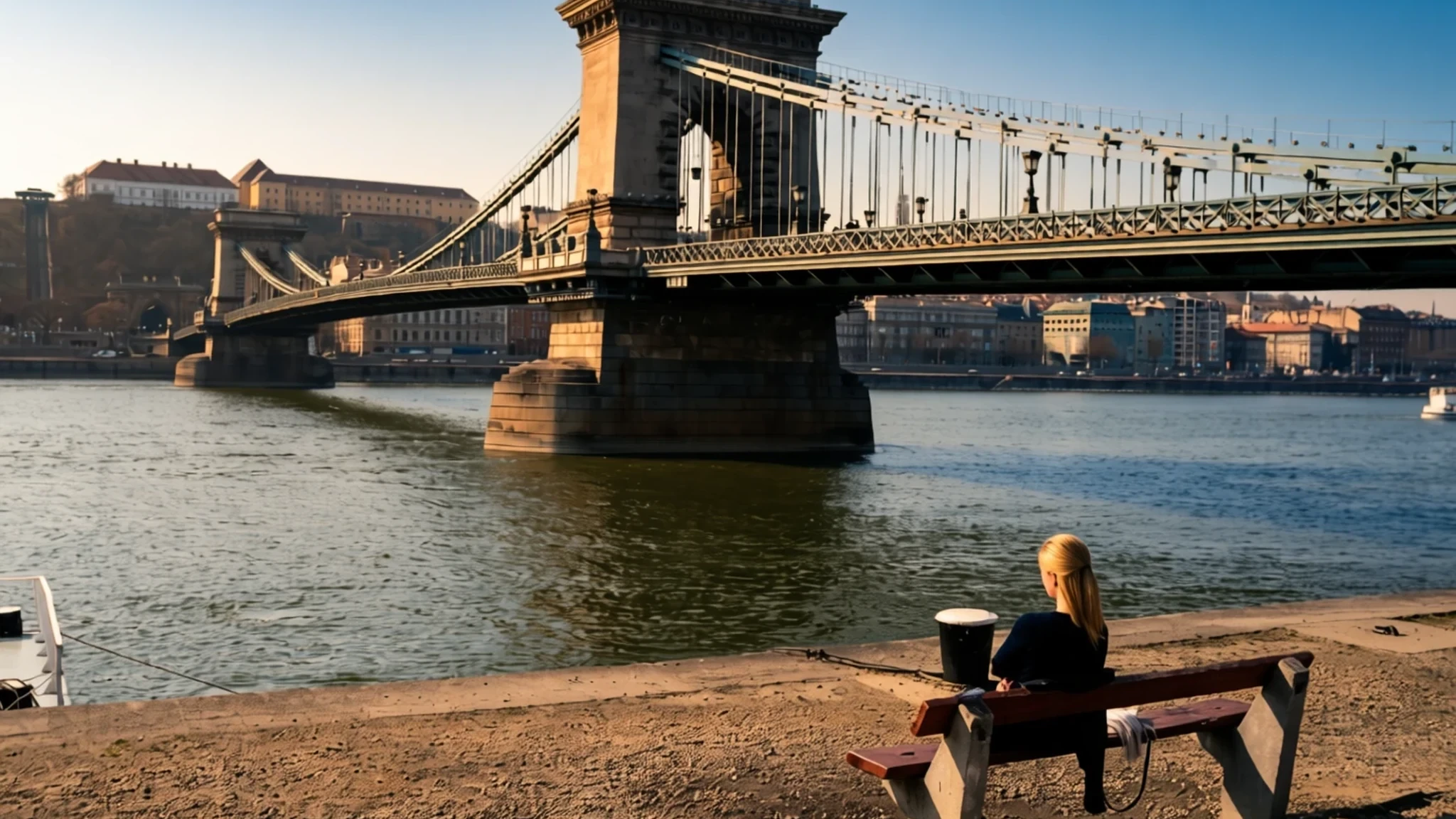
Budapest pairs grand imperial architecture with thermal bathhouses along the wide bend of the River Danube.
The place
Budapest straddles the River Danube in central Europe, anchoring the broad Pannonian Basin where western hills meet eastern plains. Formed by unification in 1873, the Hungarian capital splits naturally into two distinct halves facing each other across the water. On the western bank sits Buda, a district defined by steep limestone heights, quiet residential lanes and royal monuments. Across the river lies Pest, a wide and flat expanse of avenues, civic buildings, trade hubs and residential neighbourhoods.
The river itself forms the heart of urban life. Broad stone embankments line both sides of the water, connected by historic bridges that carry tram lines and footpaths between the shores. Thermal springs bubble up through geological faults beneath the city, supplying warm, mineral-rich water to public bathhouses built across different eras.
Elevated around 117 metres above sea level, the city serves as Hungary's primary administrative, cultural and commercial center. With a population of about 1.7 million, it concentrates much of the nation's civic life along the waterfront. Tall Parliament turrets, hilltop fortifications and riverboat landings create a striking architectural silhouette. Urban parks, tree-lined boulevards and historic market halls offer plenty of room for walking between the Buda hills and the flat avenues of Pest.
Its story
Budapest traces its urban heritage back to early Celtic settlements established along the banks of the River Danube. Roman forces later occupied the territory, establishing the fortified settlement of Aquincum in 106 AD as the administrative heart of Pannonia Inferior. Located in what is now the Óbuda district, this military post developed into a thriving commercial city. Roman engineers built paved roads, bathhouses fed by thermal springs, stone amphitheatres and multi-room villas featuring underground floor-heating systems. Today, the preserved ruins of Aquincum form an open-air historical site displaying Roman stone masonry and city layouts.
Over subsequent centuries, distinct towns grew independently along opposite sides of the river. Buda expanded atop the defensible western ridges, while Pest developed as a trading market across the flat eastern floodplain. For centuries, these settlements operated as separate municipalities under various rulers and empires.
The modern metropolis officially emerged in 1873 through the structural merger of Buda, Pest and Óbuda into a single unified capital. This unification sparked a major civic building surge. Architects designed grand avenues, sprawling public markets, monumental bridge crossings and major civic institutions across both banks. The resulting city combined ancient Roman foundations with nineteenth-century urban planning.
What to see
- Fisherman's Bastion — Buda Castle Hill
Perched on the Buda ridge, this neo-Romanesque terrace features conical stone towers and decorative arcades overlooking the Danube. Built near the historic castle walls, it provides sweeping views across the river toward Pest, the Parliament building and the central bridges. It is best visited early in the morning before crowds arrive.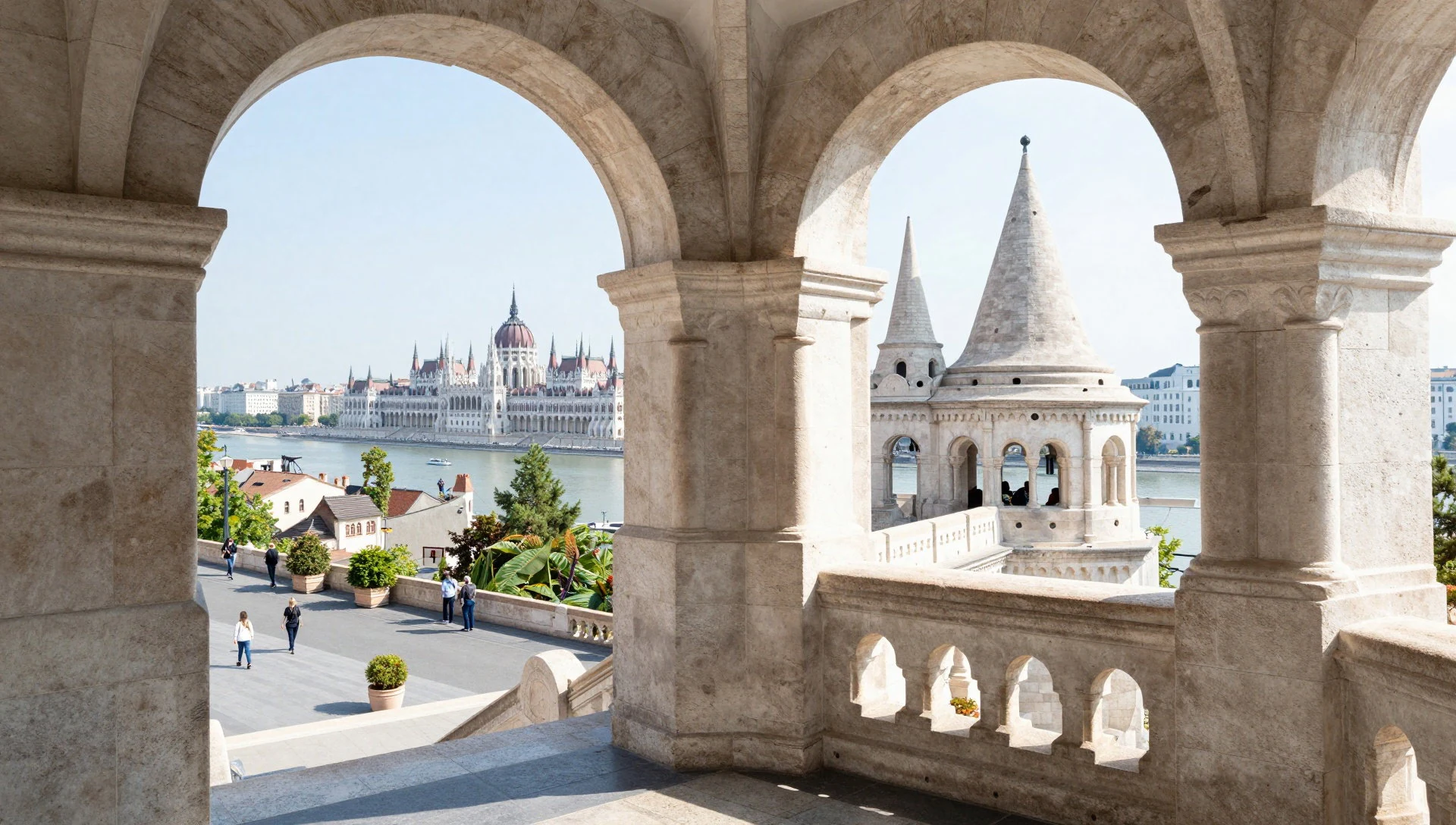
- Széchenyi Thermal Baths — City Park, Pest
This large neo-Baroque bath complex features open-air hot spring pools, steam chambers and indoor mineral baths. Thermal waters bubble up from deep underground sources, supplying heated pools year-round. Local residents regularly play chess on floating boards in the warm outdoor water even during cold winter mornings.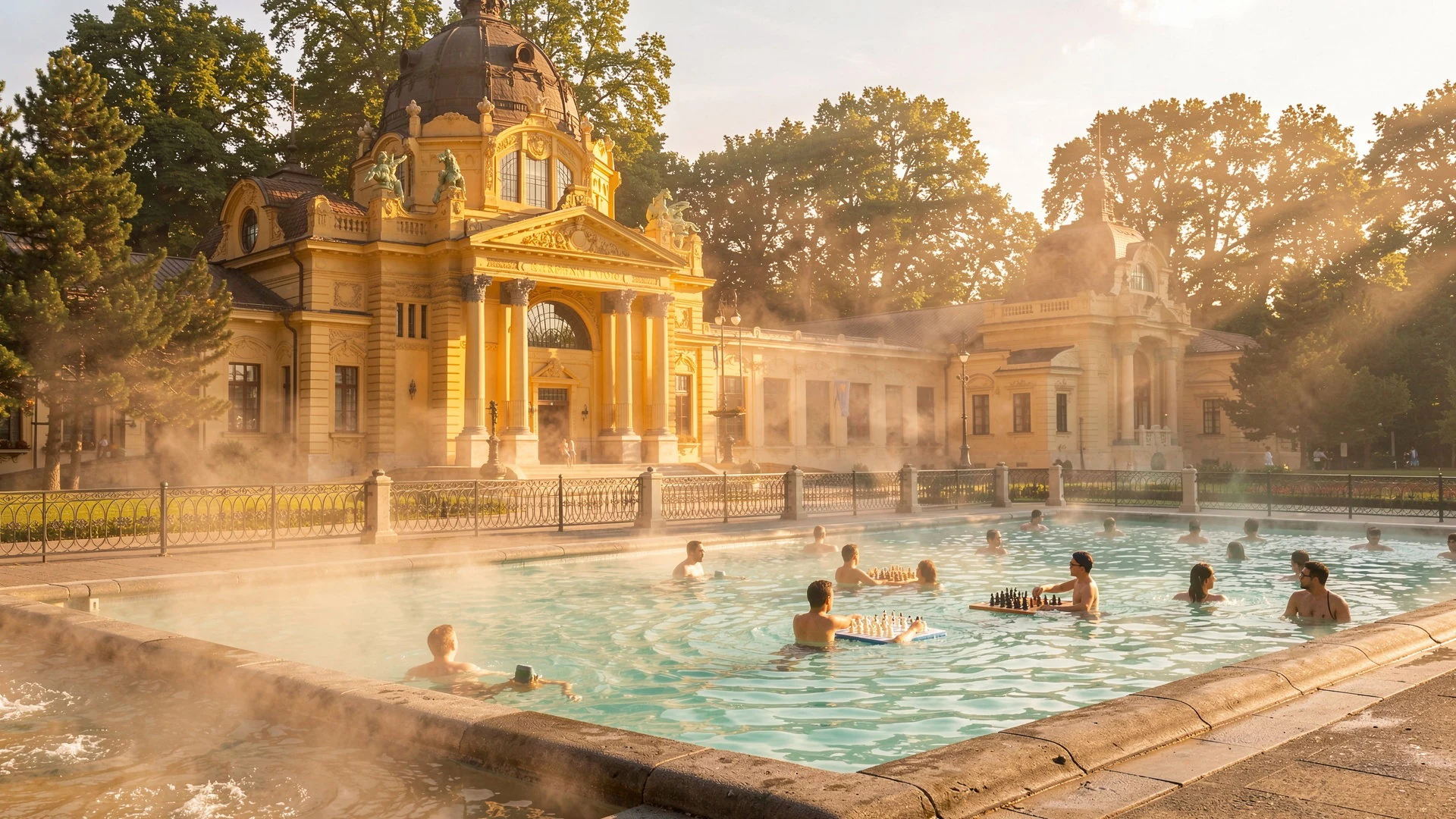
- Great Market Hall — Central Pest
Covered by a colourful tiled roof, this sprawling indoor market hall houses rows of stalls selling fresh Hungarian produce, cured sausages, paprika powders and local pastries. The ground floor focuses on meat, vegetables and spice traders, while upper galleries feature embroidery work, wooden crafts and casual food counters.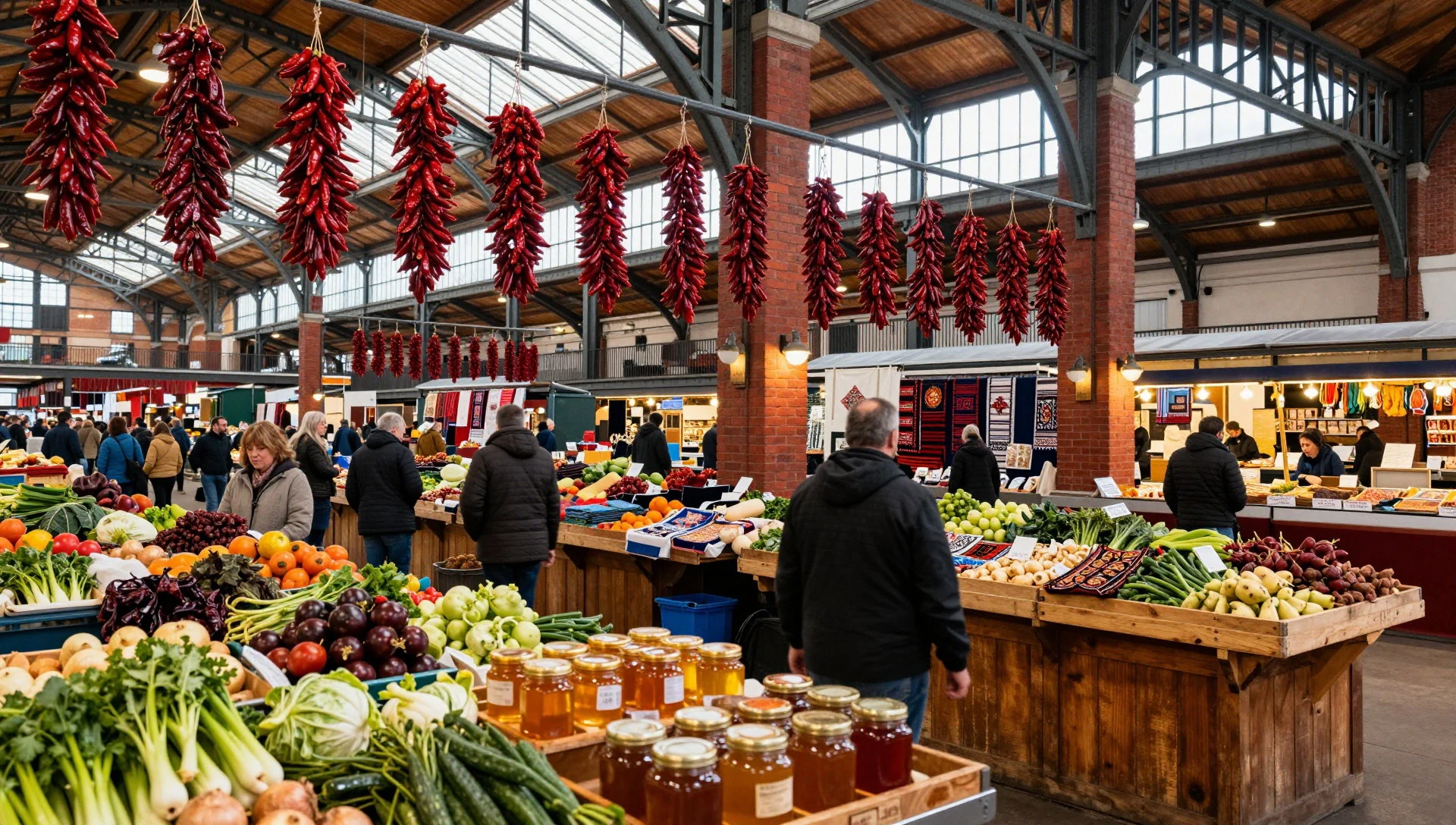
- Gellért Hill and Citadella — South Buda
Rising sharply above the river, Gellért Hill offers steep walking trails winding through wooded slopes to a hilltop fortress. The peak commands broad views over the Danube bridges, Buda Castle and the Pest skyline. Mineral springs at the foot of the hill feed historical bathhouses along the embankment.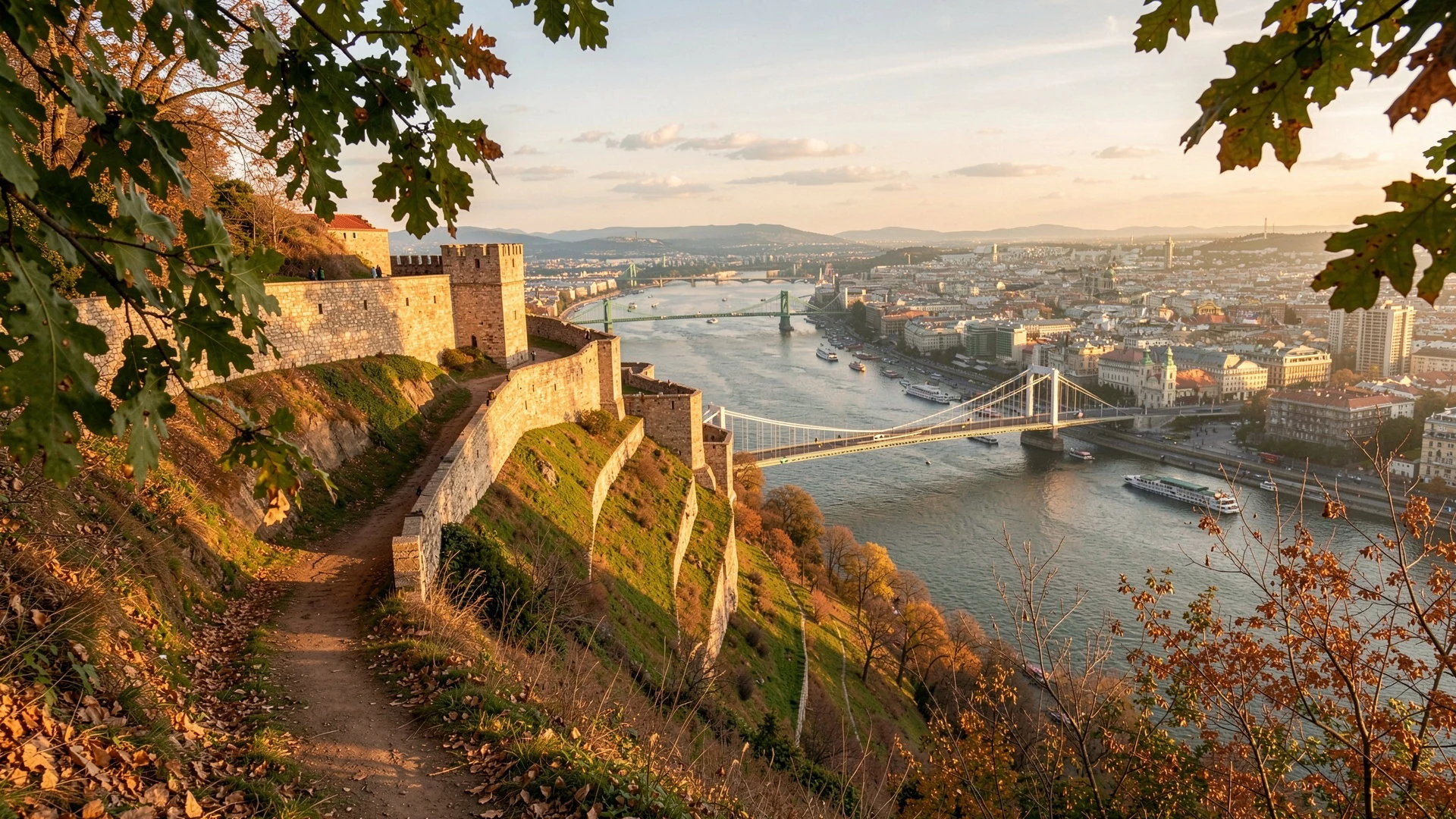
- Hungarian State Opera House — Andrássy Avenue, Pest
Constructed between 1875 and 1884 along Andrássy Avenue, this neo-Renaissance opera house features detailed stone carvings, vaulted marble foyers and rich interior gilding. The venue hosts classical opera and ballet performances throughout the main theatrical season, offering guided tours of the auditorium during daytime hours.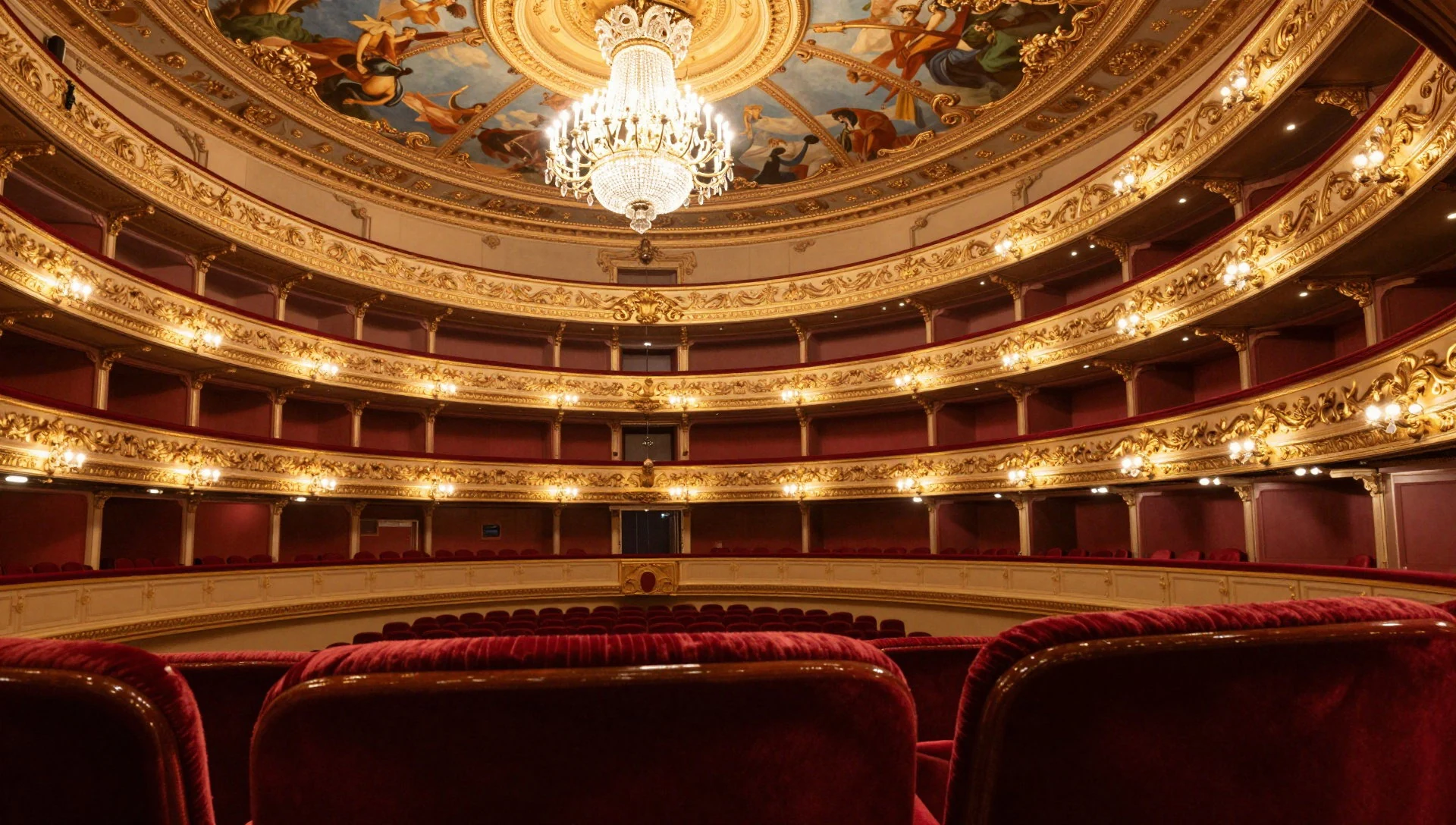
Culture
Budapest maintains a rich artistic tradition rooted in classical music, theatre and visual arts. As Hungary's primary cultural centre, the city operates over forty civic museums, municipal galleries and historic performance halls. Local institutions showcase Hungarian folk art, national paintings and European scientific heritage. Musical performance holds a central place in daily life, ranging from classical symphony concerts at major opera halls to traditional folk music gatherings in neighborhood venues.
The city also embraces contemporary design and urban renovation. Old warehouse structures, central courtyards and abandoned industrial spaces across Pest have been repurposed into art centres, creative workshops and open-air gathering venues. Seasonal cultural festivals celebrate classical composition, folk traditions and film throughout the year. Thermal bath culture remains an essential social ritual where people of all generations meet to relax and chat in mineral waters. When visiting thermal baths, shower thoroughly with soap before entering the waters and keep your voice quiet in designated relaxation rooms.
What to wear
Budapest clothing traditions showcase intricate Hungarian needlework, vibrant floral embroidery and woven linen textiles. Traditional regional attire, known as népviselet, features layered pleated skirts, stiffened petticoats, embroidered waistcoats and heavy wool felt coats called szűr. Women traditionally wore decorative head-dresses or silk headscarves, while men wore linen shirts with broad sleeves and leather boots. Today, these hand-stitched garments and woven fabrics appear mainly during national holidays, folklore festivals and traditional dance performances.
In daily urban life, residents dress in modern, practical European street wear. Contemporary city fashion leans towards tailored coats, casual trousers, dark denim, sturdy leather boots in winter, and lightweight cotton garments during warmer summer months.
Visitors should bring comfortable, flat walking shoes to navigate cobblestone alleys and hilly stone steps across Buda. Pack modest attire, such as clothing covering shoulders and knees, when visiting churches or religious landmarks. Bring proper swimwear and flip-flops for thermal bath complexes, where clean footwear is required around pool decks.
What to eat
- Gulyás — Traditional eateries in Pest
This traditional Hungarian meat soup features slow-cooked beef stewed with onions, sweet paprika powder, caraway seeds and root vegetables. Served hot with fresh crusty white bread, it remains a staple menu item across traditional taverns and family-run eateries throughout Pest.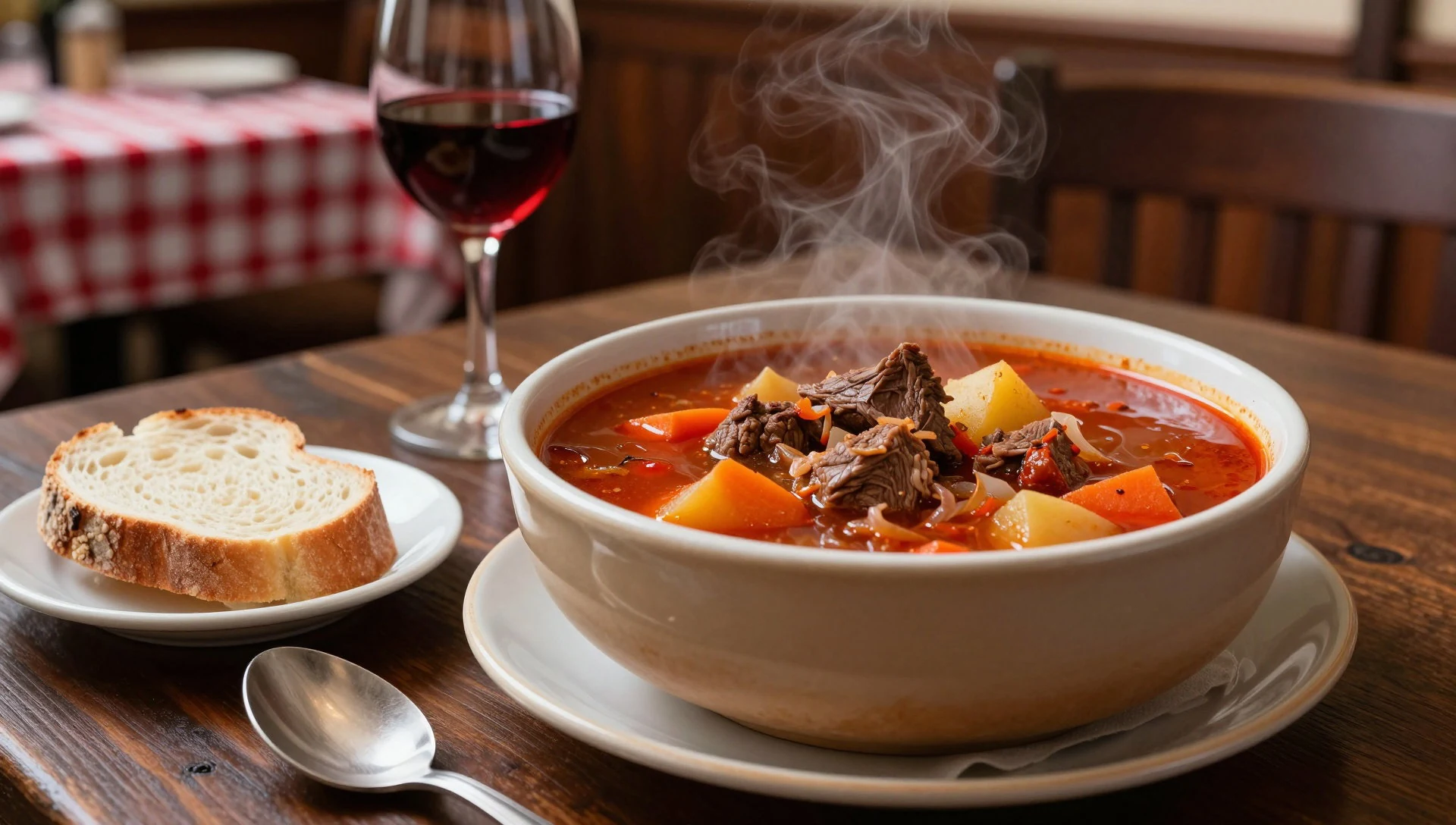
- Lángos — Street food stalls and covered market halls
A classic street food snack made from deep-fried yeast dough. Served piping hot, the crispy outer golden crust is typically brushed with garlic water and topped with thick sour cream and grated hard cheese. Found at covered market stalls and riverfront kiosks.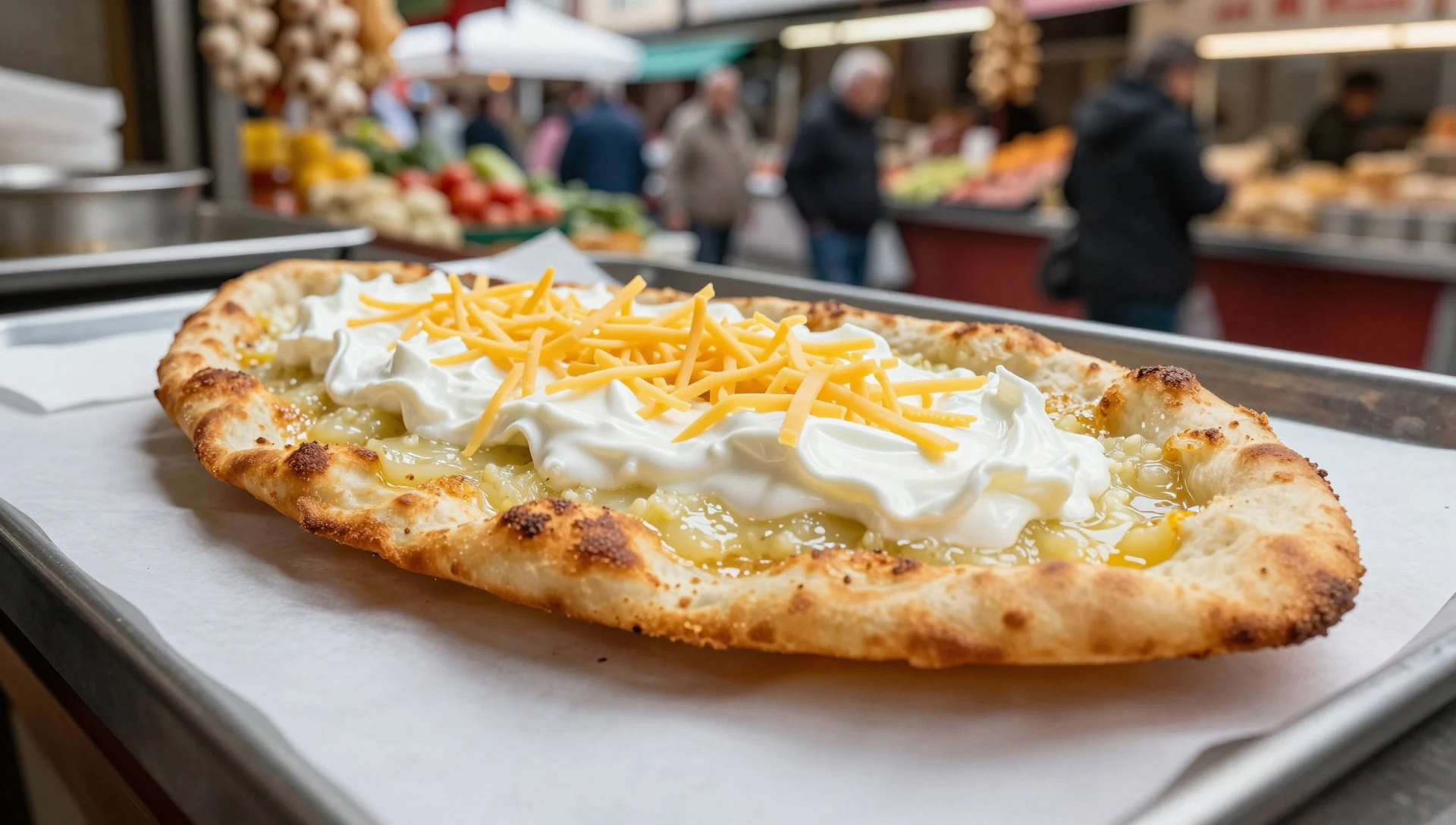
- Csirkepaprikás — Neighbourhood bistros across Buda and Pest
Chicken paprikash consists of tender chicken pieces simmered in a rich, creamy sauce made from sweet ground paprika, onions and sour cream. The comforting dish is traditionally served over small handmade egg dumplings called nokedli in neighbourhood bistros. - Kürtőskalács — Street bakeries and outdoor kiosks
Known as chimney cake, this sweet pastry is wrapped around a cylindrical wooden spit, rolled in sugar and baked over hot embers until caramelized. Vendors sprinkle the hot pastry with cinnamon, ground walnuts or cocoa powder at street bakery kiosks. - Dobos Torta — Historic coffee houses along central avenues
A traditional Hungarian layer cake made of thin sponge cake slices stacked with chocolate buttercream and topped with a hard caramel glaze crust. Enjoyed alongside espresso or filter coffee in historic grand coffee houses along the main avenues of Pest.
Plan it
Best time. March to April and October offer mild temperatures and pleasant walking weather; May through September brings a long, warm summer, peaking in July and August with high summer heat and larger crowds, while winter months are chilly but feature festive holiday markets.
How long. 3–4
Getting there. Fly into Budapest Ferenc Liszt International Airport, located southeast of the city center. Direct express buses connect the arrivals terminal to central transit hubs in Pest, while road routes lead onward to Vienna and Prague.
Budget. mid
Tips
- Purchase a multi-day transit pass for unlimited rides on trams, subways and buses
- Visit popular thermal baths early in the morning to avoid long mid-day queues
- Carry small notes of cash for local food stalls, markets and tip boxes
- Book online entry tickets in advance for major sights like Parliament and Buda Castle
Etiquette
- Shower thoroughly with soap before entering thermal bath pools
- Wear proper swimwear and rubber flip-flops on slippery bath deck areas
- Keep voice levels down when inside quiet thermal relaxation chambers
- Cover shoulders and knees when entering active places of worship
Nearby
Sources
- Wikidata Q1781 (CC0)
- Wikipedia (rev 1381556232) (CC BY-SA 4.0)
- Wikivoyage (rev 5396074) (CC BY-SA 4.0)
- Photo photos/01-budapest-hungary-explored-14995308504.jpg (CC BY 2.5)
- Photo photos/02-view-from-gell-rt-hill-to-the-danube-hungary-budapest-284932.jpg (CC BY 2.5)
- Photo photos/03-20190503-hungarian-parliament-building-1814-2263-dxo.jpg (CC BY-SA 4.0)
- Photo photos/04-budapest-sz-chenyi-baths-r02.jpg (CC BY 3.0)
- Photo photos/05-hungary-0158-budapest-opera-house-7307318540.jpg (CC BY-SA 2.0)
- Photo photos/06-szil-gyi-dezs-square-reformed-church-21-juli-2023.jpg (CC0 1.0)
- Photo photos/07-hungary-0217-great-market-hall-7335312170.jpg (CC BY-SA 2.0)
- Photo photos/08-infopark-budapest.jpg (CC BY-SA 4.0)


