Szeged
Szeged, Hungary
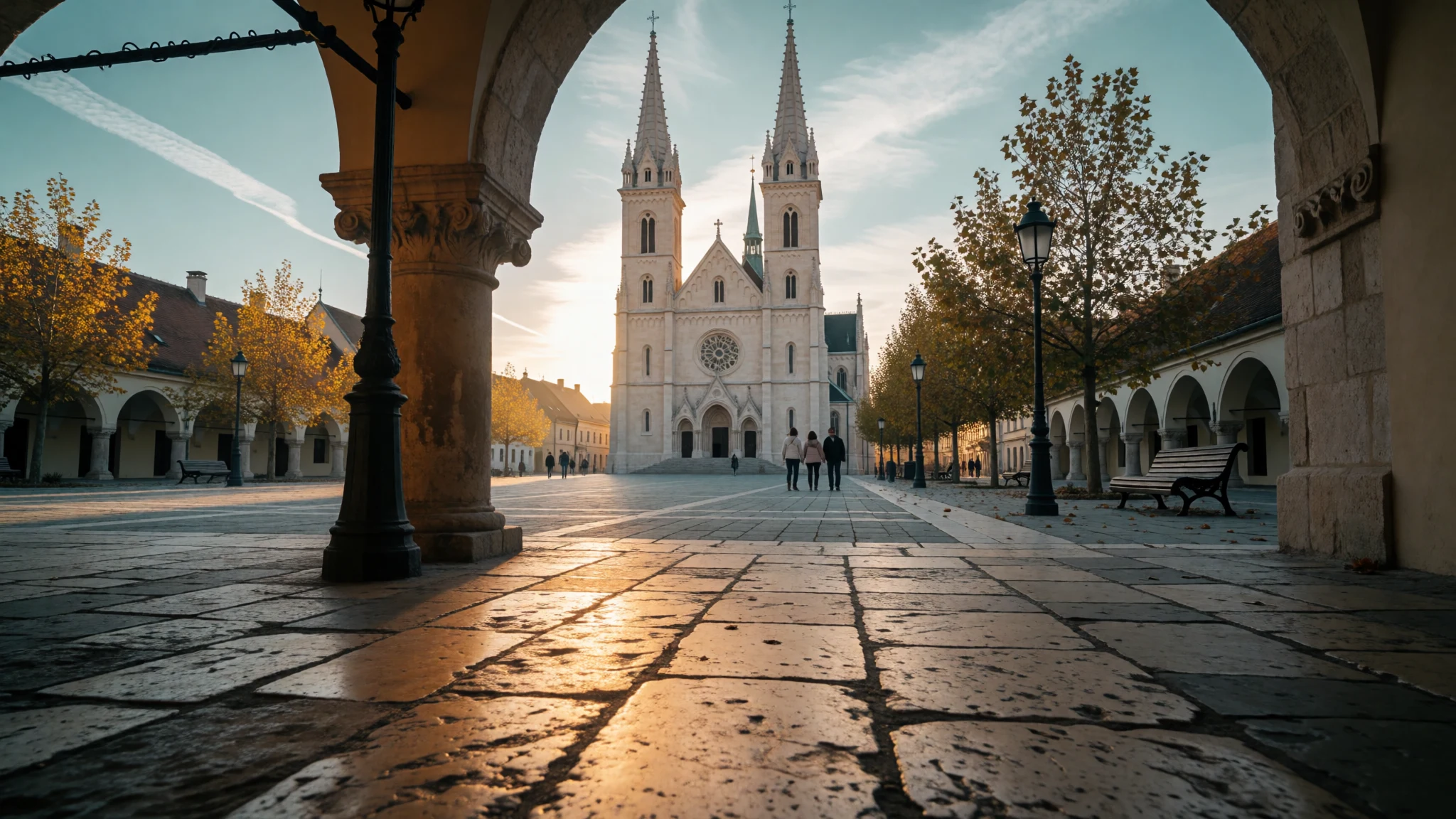
Szeged is a flat, sunny river city of grand squares, paprika-red fish soup and a university crowd, easy to enjoy slowly.
The place
Szeged sits on both banks of the Tisza in the south-east of Hungary, just downstream of where the Maros joins it, and a short drive from the Serbian frontier. The city has about 158,000 people and stands only 75 m above sea level, so the whole centre is flat, easy to cross on foot and even easier by bicycle. Locals call it the City of Sunshine, a nickname earned by long, bright summers, though the same climate brings hard frost in winter. It sits between humid subtropical and humid continental, with little rain through the year. As county seat of Csongrád-Csanád and regional centre of the Southern Great Plain, Szeged also has the University of Szeged, which gives the centre a young, bookish feel in term time, with students filling riverside benches and café terraces. The street plan is unusual for the region: broad ring boulevards and radial avenues wrap around the old core, a layout that dates from the rebuilding after a catastrophic flood. Along the water the mood is relaxed, with anglers, rowers and strollers sharing the embankment. Squares open between tall eclectic and Art Nouveau façades in soft colours, and the big churches punctuate the skyline. Szeged is not a city of one headline monument. It rewards slow days: a morning around the cathedral square, a long lunch of river fish, an afternoon by the Tisza and an evening at the theatre or in a courtyard garden. Budapest is about two hours away by train, which makes Szeged a natural base for the south of the country.
Its story
Szeged has been settled for a very long time, and the layers show even in its names. The Greek geographer Ptolemy recorded a place called Partiscum in this area, and a Roman trading post stood on an island in the Tisza in the second century. Some writers wonder whether Attila's Huns had a seat nearby, but that remains a possibility rather than a fact. The name Szeged first appears in writing in 1183, in a document of King Béla III. The Mongol invasion destroyed the town, and survivors hid in the surrounding marshes before drifting back to rebuild. In the 14th century, under Louis the Great, Szeged became the leading town of southern Hungary, and its strategic weight grew as the Ottoman frontier crept closer. King Sigismund of Luxembourg ordered a defensive wall, and of the old castle only a single corner survives today. The river that made Szeged prosperous also nearly ended it. In 1879 a great flood swamped the town, and the rebuilding that followed produced the ring roads, the confident public buildings and the vow to raise a monumental votive church that still define the centre. Old photographs of squares under water sit in the local museums as a reminder. The city that visitors walk through today is therefore largely a late nineteenth-century creation, built on a far older site and shaped by a lasting respect for the Tisza.
What to see
- Cathedral of Our Lady of Hungary — Dóm tér, city centre
The twin-spired Votive Church dominates Dóm tér and is the city's best-known landmark. It was promised by the municipal board after the flood of 1879 and now serves as the cathedral of the Szeged–Csanád diocese. Walk the arcaded square around it, and check the cathedral's own site for opening times.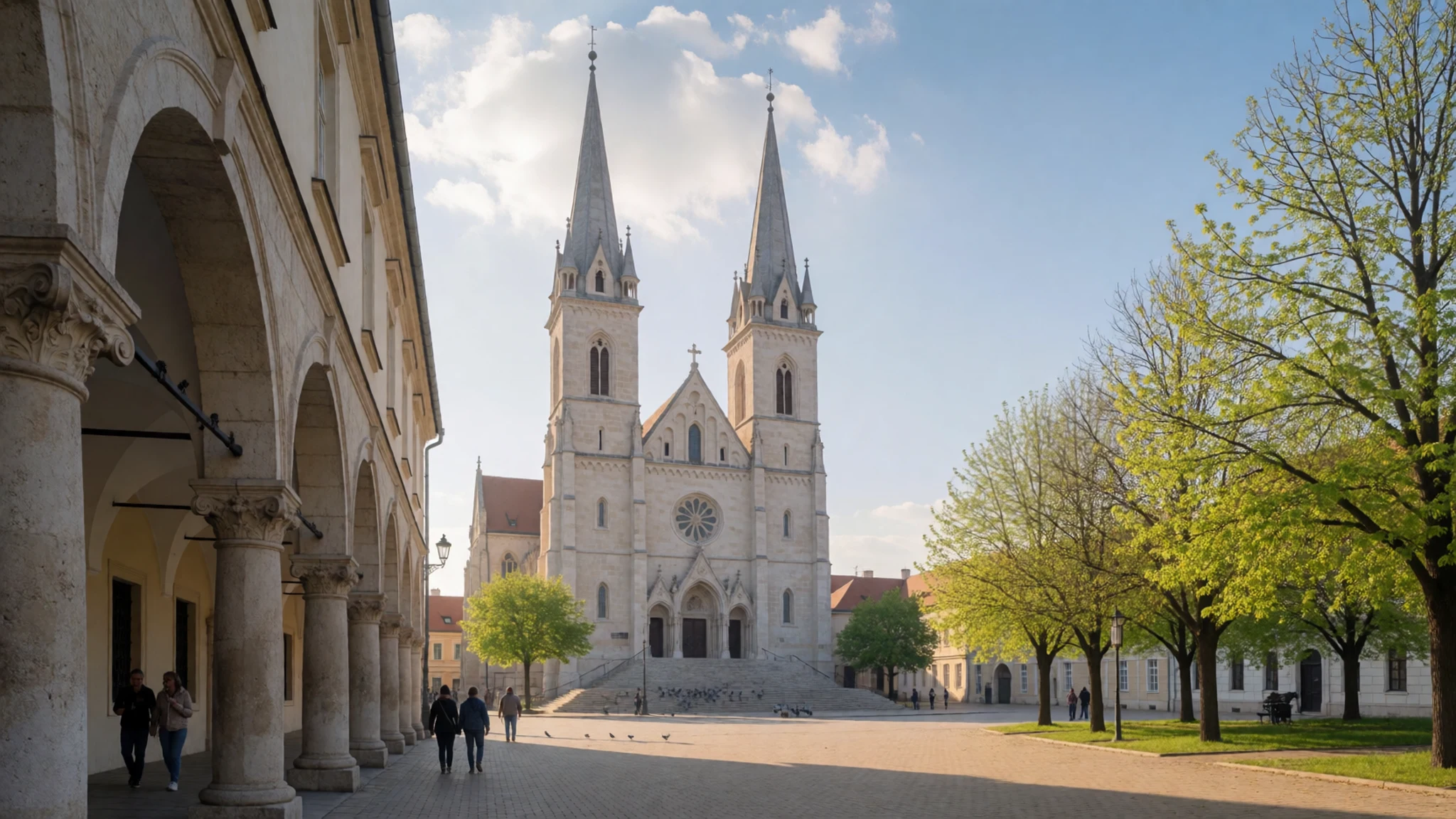
- Serbian Orthodox Church — Near Dóm tér
This Baroque church, designed by János Popovics, is dedicated to St Nicholas. Inside, Baroque-influenced icons, candlelight and incense give a hushed atmosphere quite different from the Catholic cathedral nearby. It is a small stop, best taken slowly. Dress modestly and keep voices low.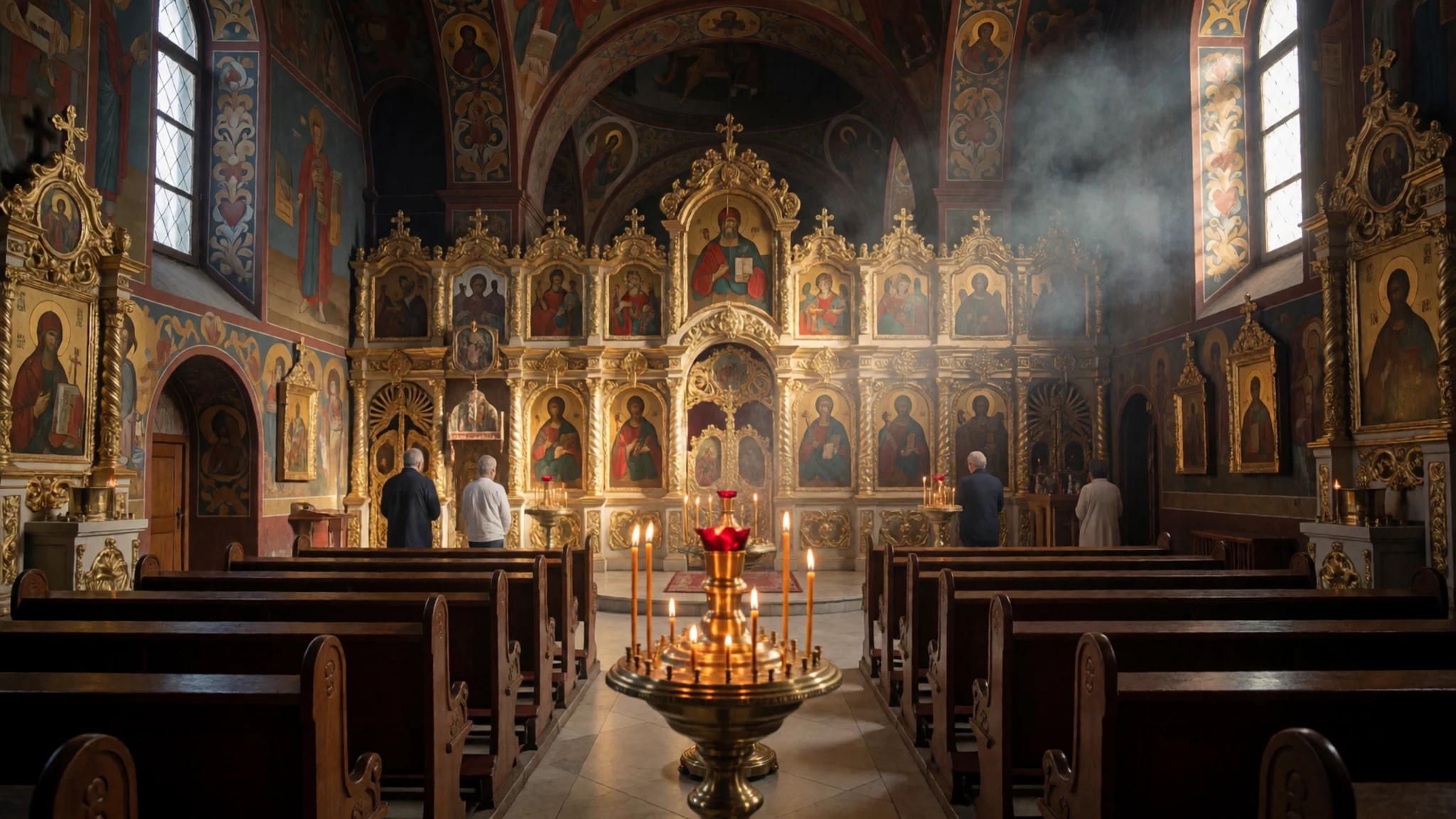
- Szeged Synagogue — North of the centre
Built in 1907 to designs by Lipót Baumhorn, this synagogue blends Art Nouveau with historicist styles in a way typical of Hungary around the turn of the twentieth century. The interior is richly decorated beneath its dome. Opening arrangements vary, so check ahead before making the trip.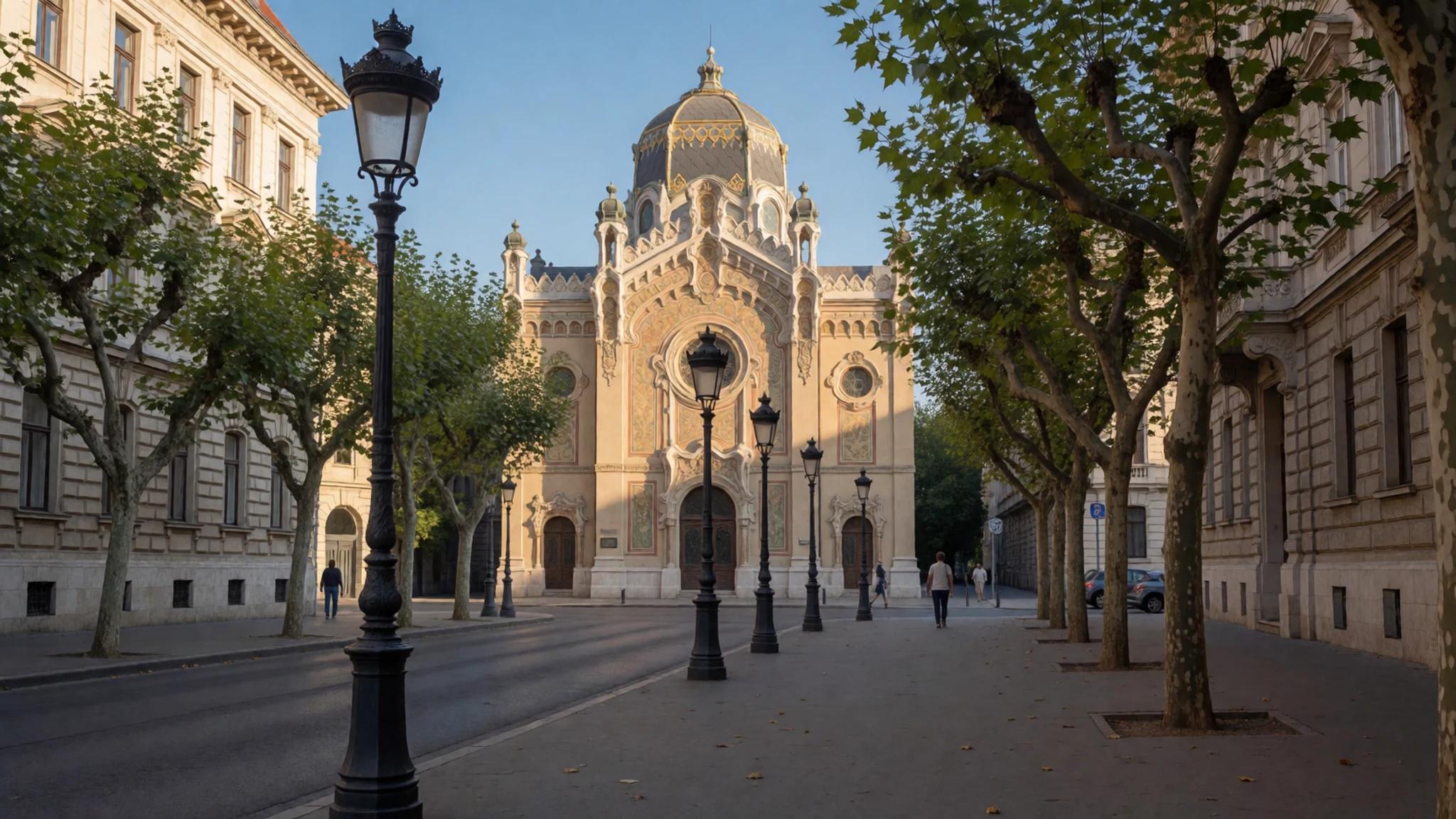
- St Michael's Church, Tápé — Tápé, east bank of the Tisza
In the old fishing district of Tápé, this Gothic church was built in the 1390s using walls from an earlier church. The buttressed early Gothic sanctuary and the lower tower still show the medieval work. It is a quiet trip out of the centre, worth combining with a stroll through the neighbourhood.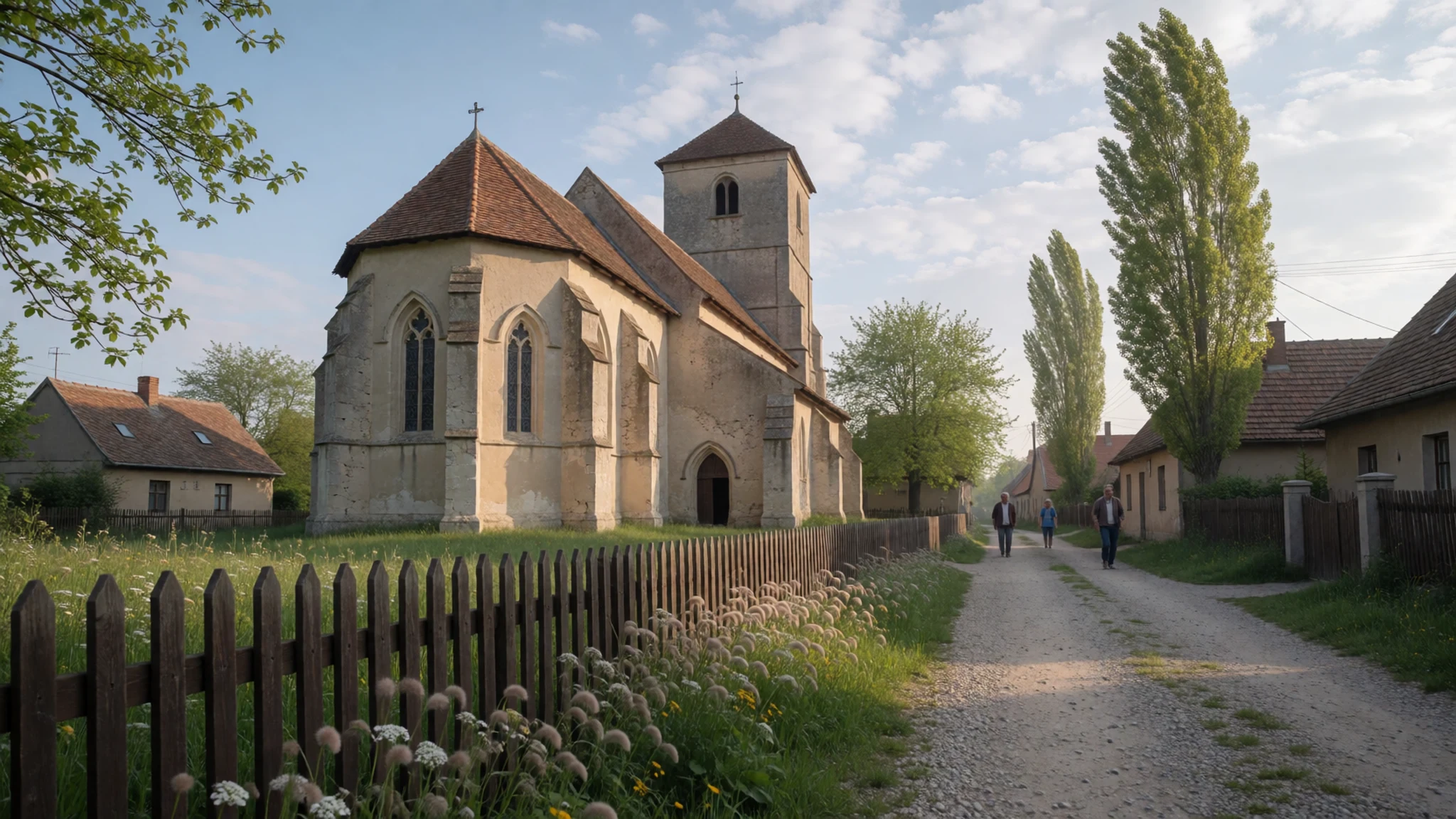
- Tisza embankment, Móra Museum and theatre — Tisza embankment, city centre
The riverside is where Szeged slows down. Pale façades face the water, among them the Móra Ferenc Museum and the National Theatre, both good for an hour indoors on a hot day. Come in the late afternoon, when the light softens and the benches fill with locals.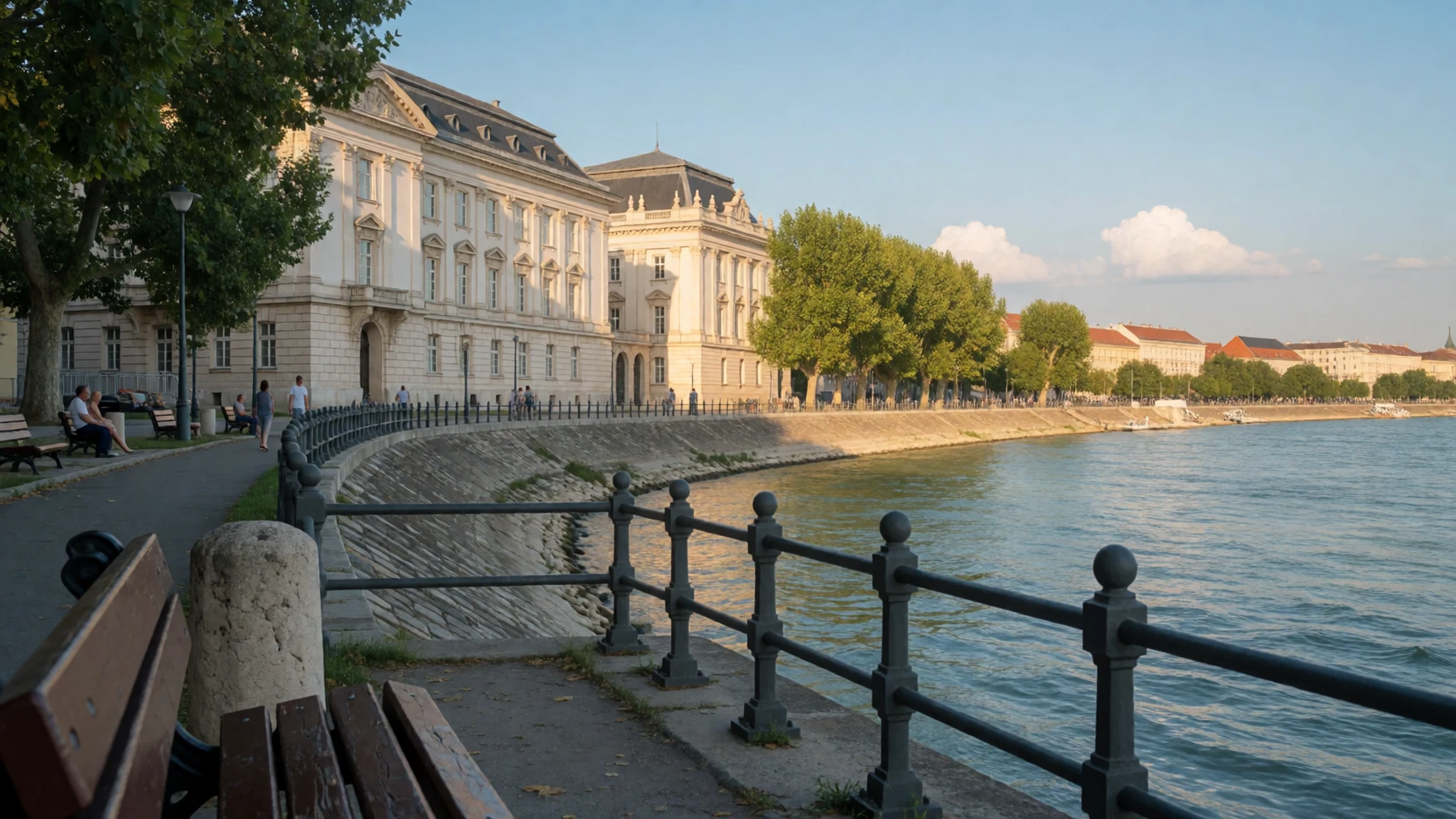
Culture
Szeged is a Hungarian city with a mixed religious past, and its buildings show it: Roman Catholic, Calvinist, Serbian Orthodox and Jewish communities have all left landmarks, and a fair share of residents today describe themselves as non-religious. Civic life centres on the university, the theatre and the squares, and the city takes pride in its theatre and its outdoor summer events. Locals are proud of their regional food, and conversation often turns to fish soup, paprika or salami within minutes of sitting down. Hungarian is the language of daily life, and it is unrelated to the Slavic and Germanic languages around it, so a few words of greeting go a long way. English is common among younger people and in the centre, less so in small shops and villages. Meals are unhurried and portions generous, and coffee-house habits survive: a single coffee can fill an hour without anyone minding. Cafés and bars are busiest in the evening, especially in term time. Szeged is also a border city, and its people are used to travellers from Serbia and Romania. Churches work as places of worship first and sights second, so quiet is expected during services. Visitors should dress modestly, keep voices low and avoid photographing worshippers or walking around during a service when entering a church or synagogue.
What to wear
Szeged's traditional dress belongs to the wider Hungarian folk tradition of the Great Plain. Women's festive outfits used linen and wool, with pleated skirts, embroidered bodices and aprons, and headscarves tied in local styles. Men wore wide linen trousers, waistcoats, felt hats and tall boots, often with a short embroidered jacket in cold weather. Shepherds' cloaks of thick felted wool were once common out on the plain. Such clothes now appear mainly at festivals, folk dance evenings, weddings and school celebrations, and in museum displays. Everyday dress in Szeged is casual and practical: jeans, trainers and light shirts among students, tidy smart-casual in offices, and linen or cotton through the long hot summers. People tend to dress up a little for the theatre or a good restaurant, though no one expects a jacket and tie. For visitors, the climate matters most. Summers are hot and sunny, so bring light, breathable clothes, a hat, sunglasses and sun cream. Winters are cold, with real frost, so pack a warm coat, gloves and a scarf. Spring and autumn call for a light jacket. Comfortable flat shoes suit the cobbles and paved squares, and sandals are fine in July and August. For churches and the synagogue, cover shoulders and knees, and carry a light scarf in your bag so you can cover up quickly when you step inside.
What to eat
- Halászlé (fisherman's soup) — A halászcsárda (fish inn) by the Tisza
The city's signature dish is a deep red soup of freshwater fish cooked with plenty of paprika. It is not automatically hot, but you can ask for it spicy. Look for it at a riverside fish inn (halászcsárda) near the Tisza, often served with bread.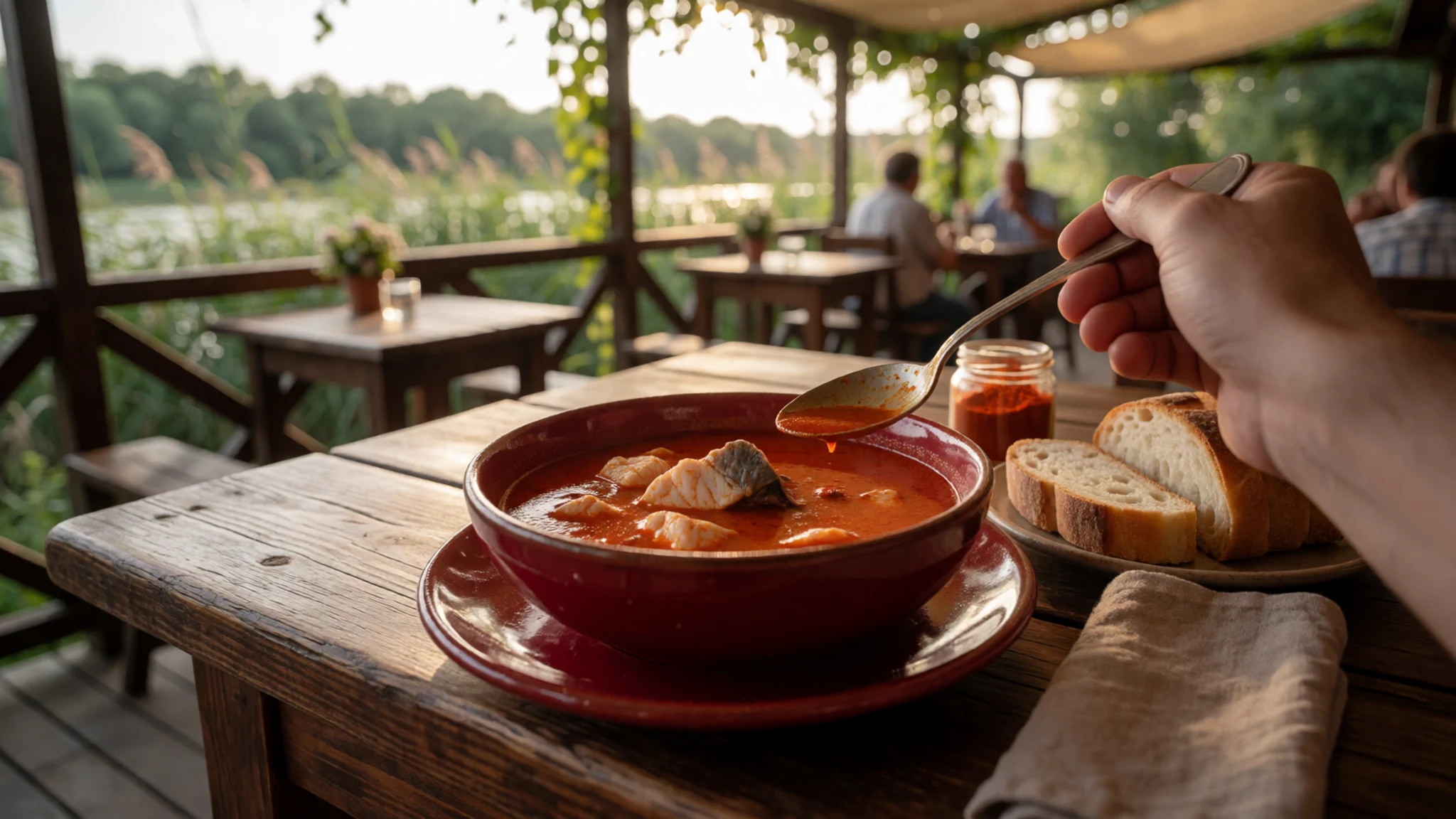
- Pick Szeged salami — Local grocery stores and small family-run shops
Pick is the local meat brand, and its salami and sausages are a standard souvenir. Buy a stick to take home, or slice it onto bread for a picnic by the river. Prices and variety differ, so compare a few shops before choosing one.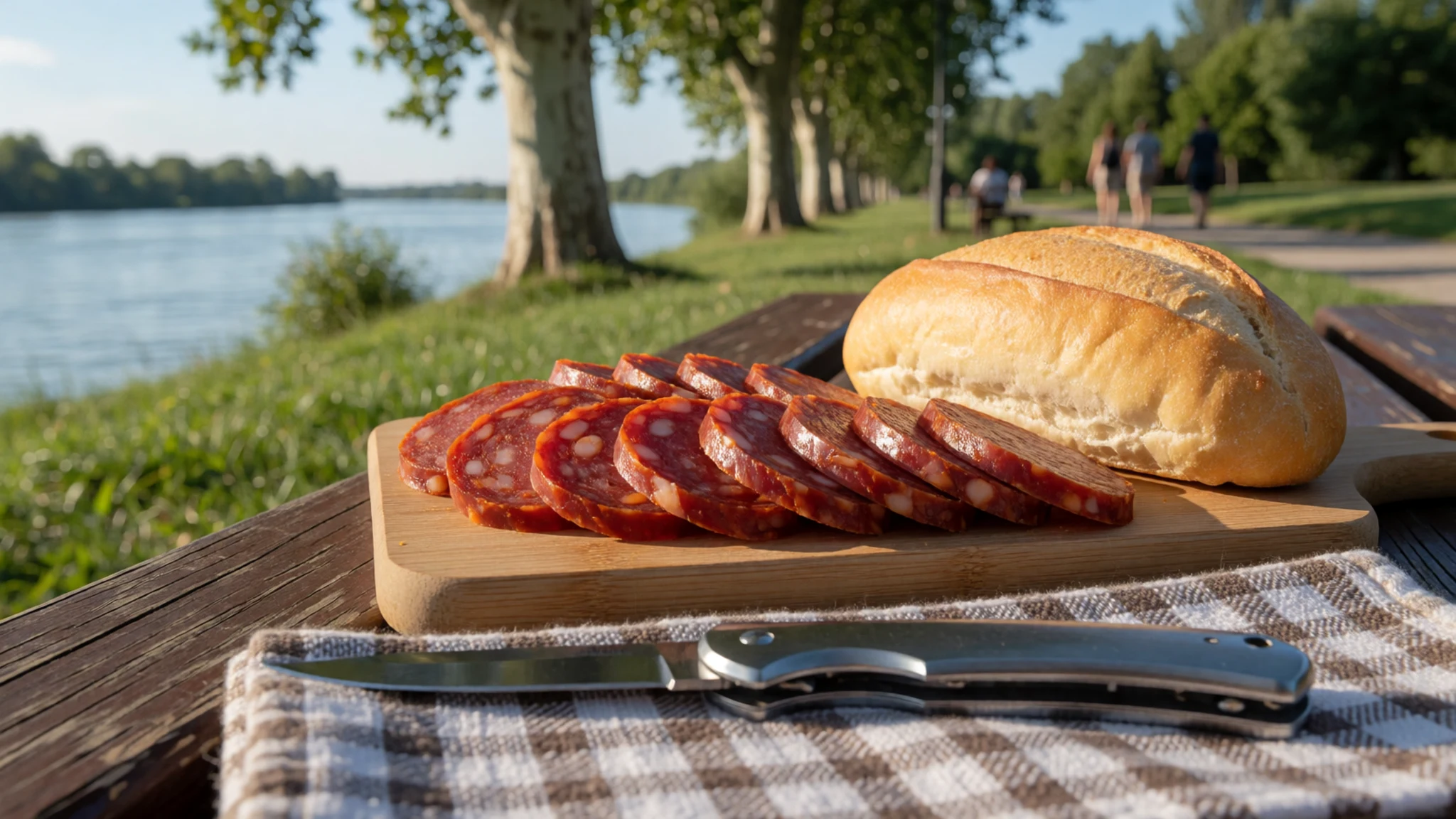
- Rántott hús (breaded fried meat) — Everyday restaurants and canteen-style eateries in the centre
A plain Hungarian classic: pork, chicken or sometimes cheese in crisp breadcrumbs, served with potatoes or rice and a pickled salad. Portions are generous, so one plate can feed a hungry adult easily. Good for a simple lunch after a morning of walking. - Paprika-rich stews — Traditional restaurants around the old centre
Szeged and its region lean heavily on paprika, and stews of beef, pork or vegetables carry its sweet, earthy colour. Heat varies by kitchen, so ask the server how it is prepared. Order with bread to mop up the sauce. - Pogácsa (savoury scones) — Neighbourhood bakeries and café counters
These small round baked snacks, often made with cheese, pork crackling or potato, are a quick breakfast or beer-time nibble. They are cheap, filling and easy to eat on a walk. Choose them warm in the morning, when the bakeries are busiest.
Plan it
Best time. May–June and September–October for mild, bright days and comfortable evenings along the river. July and August are very hot, and the city has recorded extreme summer heat, though terraces and the Tisza make it bearable. Winters are cold, with frost.
How long. 2
Getting there. Fly to Budapest Liszt Ferenc International Airport, then take a train from Budapest Nyugati towards Szeged (about two hours; some services also stop at the airport station). By car, drive the motorway south from Budapest and buy the road sticker (matrica) at a petrol station. There are also regional trains from Subotica in Serbia, and Timișoara airport in Romania is a less convenient alternative.
Budget. mid
Tips
- Come in late spring or early autumn to avoid peak summer heat and winter frost
- Do sightseeing in the morning and rest or sit by the river in the hottest part of summer afternoons
- Carry some cash for small shops and market stalls, though cards are widely accepted in the centre
- Check the official city website (https://www.szegedvaros.hu/) for events, as the summer festival season can fill hotels
- Parking uses a zone system, with tickets from newsagents and local shops, so the centre is easier on foot
Etiquette
- Dress modestly and speak quietly in churches and the synagogue
- Greet shopkeepers and servers with a short hello when you enter
- Do not photograph worshippers during services
Nearby
Sources
- Wikidata Q81581 (CC0)
- Wikipedia: Szeged (rev 1384726447) (CC BY-SA 4.0)
- Wikivoyage: Szeged (rev 5419315) (CC BY-SA 4.0)
- Photo: Dóm tér épületegyüttese, V.Mariann (CC BY 3.0)
- Photo: A Móra Ferenc Múzeum homlokzata Szegeden, Szilas (CC0 1.0)
- Photo: Belváros - Vaszy Viktor tér, Fred Romero (CC BY 2.5)
- Photo: Szeged Town Hall, Chmee2 (CC BY 3.0)
- Photo: The Dóm Square in Szeged, Pasztilla aka Attila Terbócs (CC BY-SA 4.0)
- Photo: Tisza riverside with Móra Museum and National Theatre, Takkk (CC BY 3.0)
- Photo: Dugonics tér a nagyárvízkor, Fortepan 15599 (CC BY 3.0)
- Photo: Kass szálloda, kávéház és étterem (Public domain)


