Pécs
Pécs, Hungary
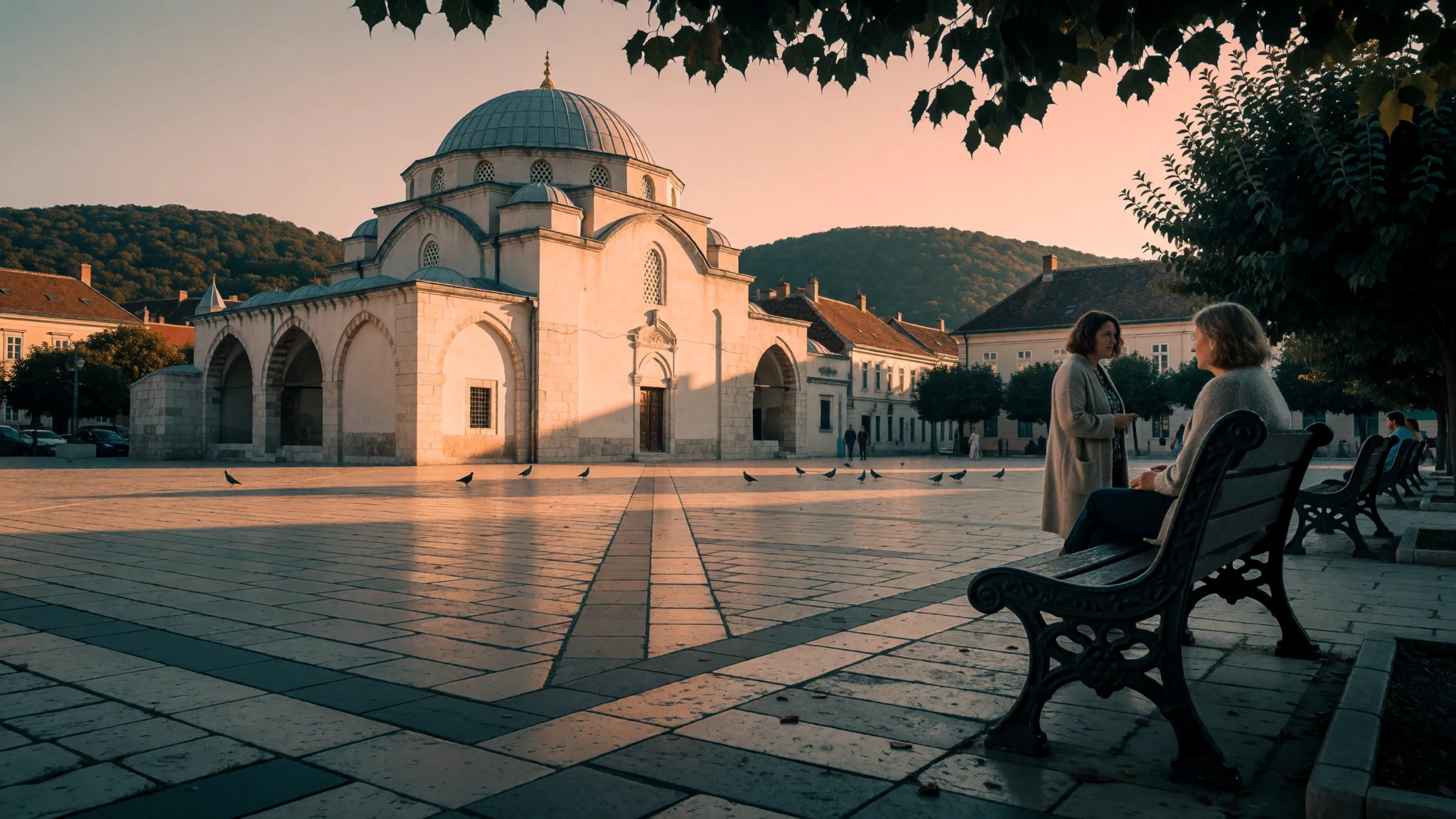
Pécs is a calm, walkable Hungarian town where Roman tombs, a cathedral and an Ottoman-era mosque-church stand within a short stroll.
The place
Pécs sits on the southern slopes of the Mecsek hills in south-west Hungary, not far from the Croatian border, and the town feels shaped by that tilt. The northern districts climb into woodland, while the southern side spreads out onto a gentle plain. With about 138,000 residents, it is a county town, the administrative and economic centre of Baranya County, and the seat of a Catholic diocese. The pace is quieter and more lived-in than in Budapest: students fill the cafés, the old centre is easy to cross on foot, and the green edge of the hills is never far from the streets. Layers of history show in the stonework. Roman burial chambers lie beneath the old town, a cathedral carries Romanesque, Gothic and Renaissance traces, and a former mosque stands as a church close to the main square. Many peoples have mixed here over two thousand years, which is why the town has different names in Croatian and Slovak. Mining shaped the surrounding area, and the Mecsek is also known for its mineral-rich spring water. The climate is humid and temperate, with hot summers, cold winters and rain spread through the year. Pécs has been a European Capital of Culture, and its Early Christian cemetery is on the World Heritage list, so the town draws visitors without ever feeling swamped.
Its story
Pécs began as a Roman town called Sopianae, founded in the early second century among Celtic and Pannonian communities who already lived in the area. When the province of Pannonia was divided, Sopianae became the capital of the new province of Valeria. By the fourth century it was an important early Christian centre, and that is the period that produced the cemetery now protected as a World Heritage Site: underground burial chambers beneath small memorial chapels, their walls painted with Christian scenes. Parts of the Roman aqueduct can still be seen, and the Bishop's Palace stands where the Roman centre once lay. As imperial control weakened, raiders including the Huns pressed in, and the Roman town faded. When Charlemagne arrived in the late eighth century, the area was ruled by the Avars. Pécs later emerged as a bishopric in early medieval Hungary, and the cathedral's story goes back to the reign of Peter Orseolo, the second Hungarian king. Ottoman rule followed and lasted well over a century, leaving behind a mosque built from the stones of a Gothic church and a stock of Turkish-era buildings that the town still treasures. Later centuries added coal mining, a university and a reputation as a cultural city, while the old Roman and medieval layers remained under and between the newer streets.
What to see
- Early Christian necropolis — Below the inner city, near the cathedral square
Pécs holds the remains of Sopianae in several spots under the old town, and the painted burial chambers are the finest of them. Each has a chapel above and a tomb below, with biblical murals still visible. Entry is through small museum buildings, and a guide is available, so check the official site for opening arrangements.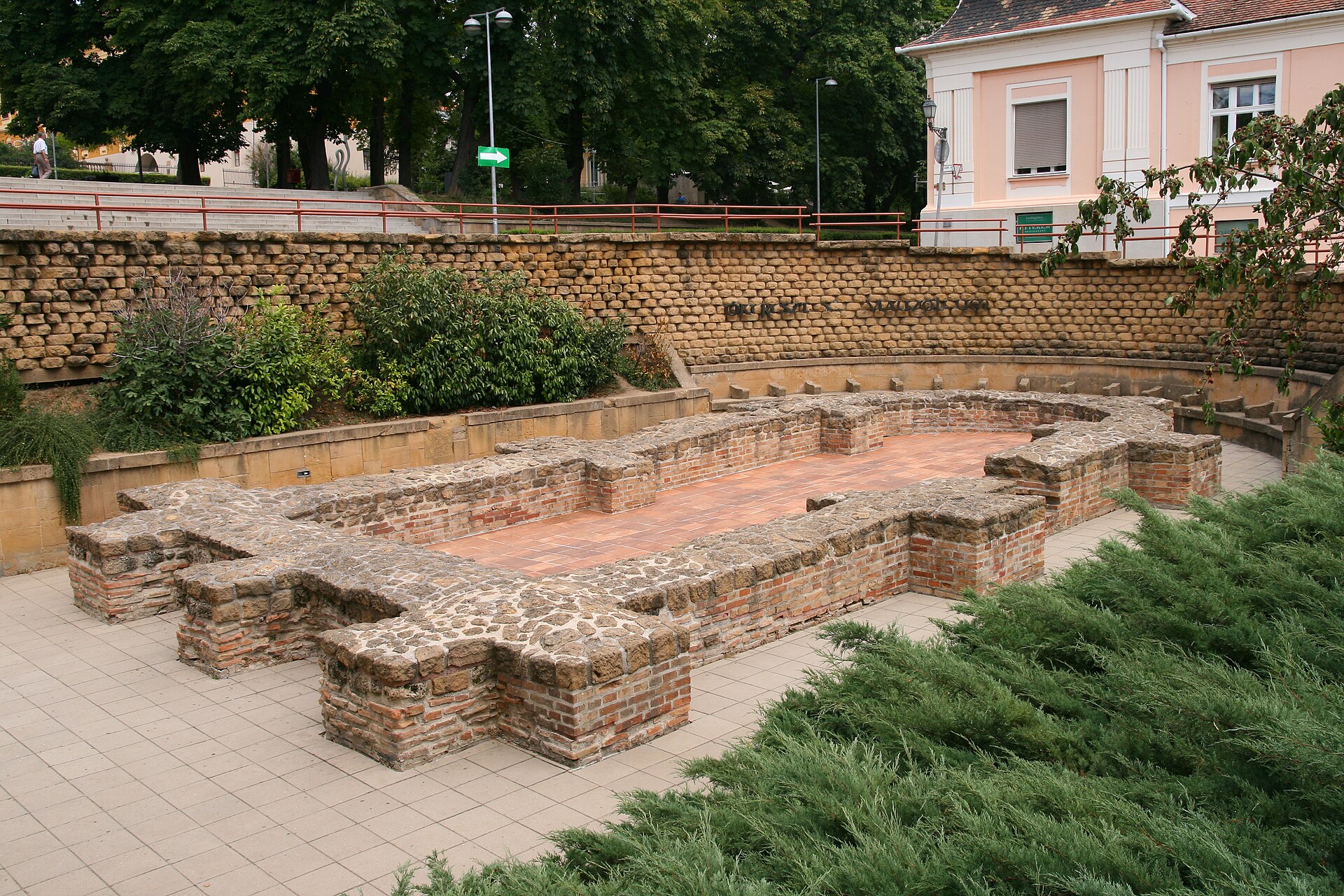
- Cathedral of Pécs — Cathedral Square, upper old town
The cathedral of Pécs goes back to the time of King Peter Orseolo and shows how many hands have rebuilt it, with Romanesque, Gothic and Renaissance elements and a period of Ottoman occupation in its past. The crypt is worth a look for its quieter, older atmosphere. Services take priority, so check visiting times before going.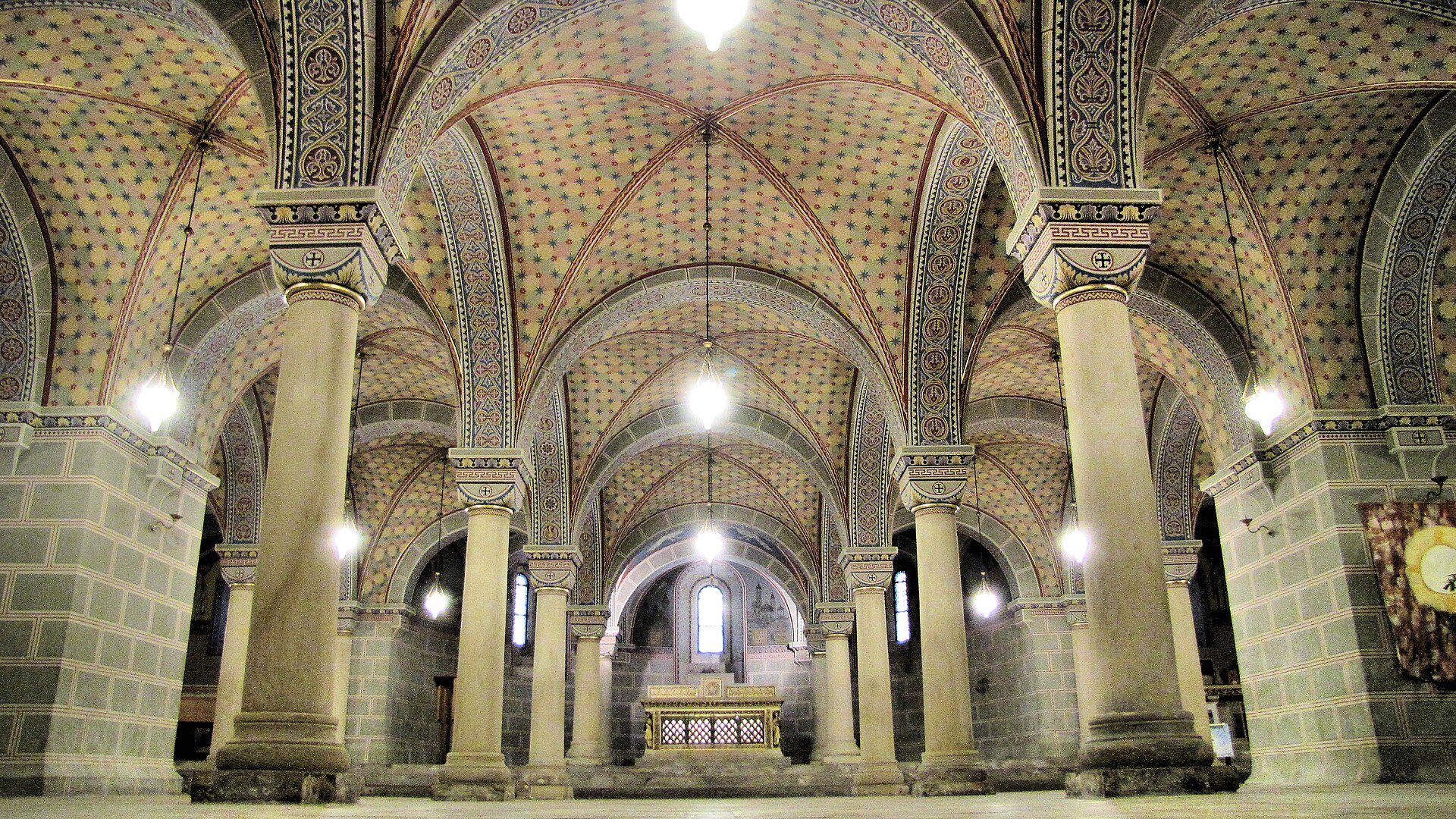
- Mosque of Pasha Qasim — Széchenyi Square, town centre
Pécs has a mosque-church beside its main square, built by the Ottomans from the stones of a Gothic church dedicated to Saint Berthold. Its dome and prayer niche reflect the Turkish period, which was emphasised again during renovation work in the twentieth century. It remains a place of worship, so treat it accordingly.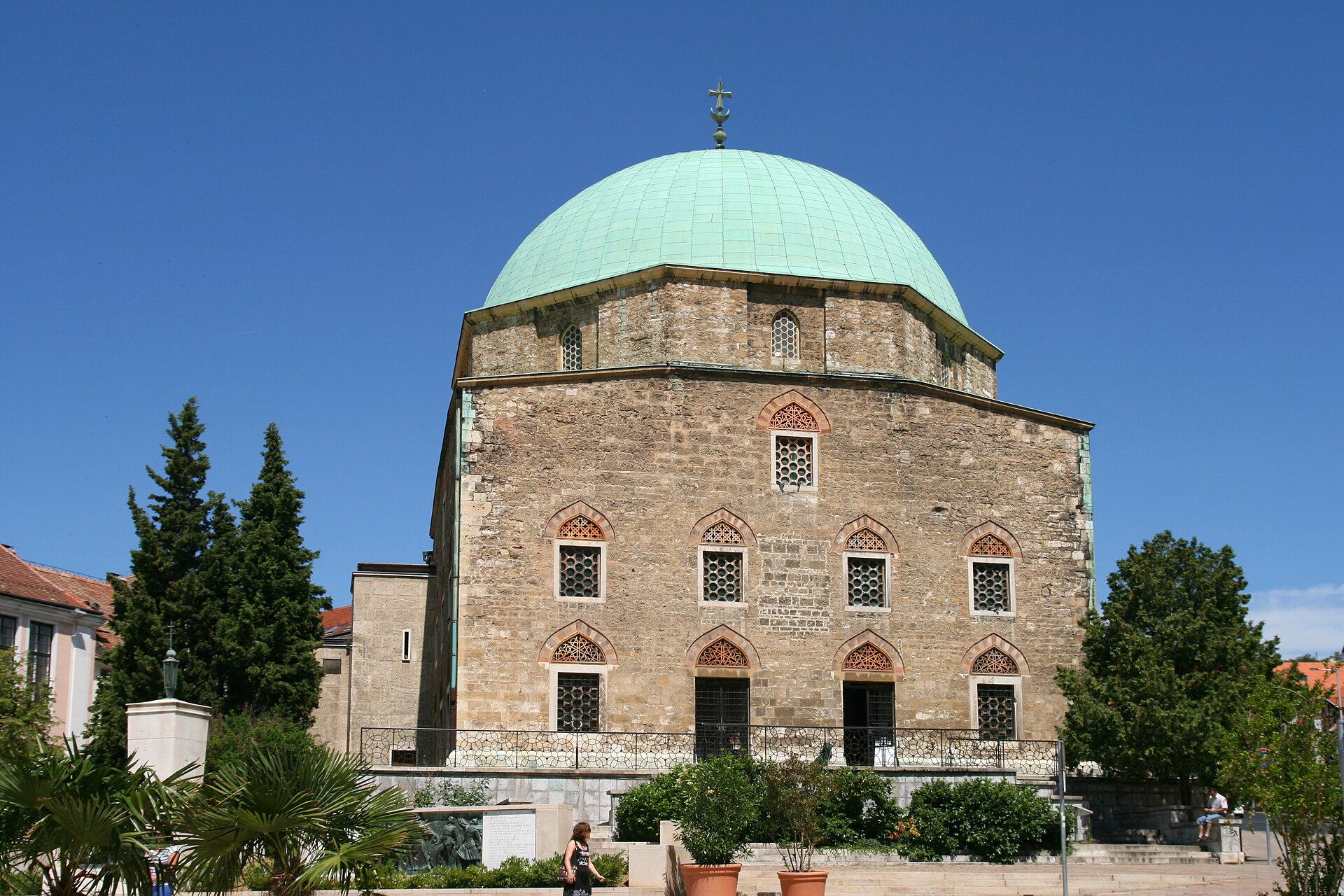
- Csontváry Museum — Old town, near the cathedral
This museum in Pécs is devoted to Tivadar Kosztka Csontváry, a visionary painter whose big, sun-soaked canvases are quite unlike anything else in Hungarian art. It holds the largest collection of his work. The rooms are modest in size, so a visit takes an hour or so and pairs well with a coffee afterwards. - House of Arts and Literature — Old town, in the Elaphat building complex
Two historic houses in Pécs, one late Baroque from the end of the eighteenth century and one from the later nineteenth, form an exhibition space that mostly shows contemporary work. Programmes change often, so look at the town's official site before going. It makes a good wet-weather stop between the heavier historic sights.
Culture
Pécs has long been a meeting place of peoples, and the town's culture still carries that mix. Hungarian is the main language, but Croatian, German and other minority traditions have shaped local festivals, church life and food in the wider Baranya area. The town is also a university and arts centre, so a lot of everyday culture happens in galleries, small theatres, concert rooms and student cafés rather than in grand set pieces. Religious life is visible in the Catholic cathedral and diocese, while the former mosque beside the main square is a reminder of the Ottoman centuries and now serves as a church. Evenings are quiet by European standards, with most socialising in cafés, wine cellars and small restaurants rather than loud nightlife, and the centre is safe to walk after dark, although pickpockets and overcharging taxis are the usual annoyances. Mining history and the Mecsek hills give the local identity a practical, outdoorsy streak, and weekend walks in the woods are as normal here as coffee in the square. Visitors tend to find locals polite and reserved at first, warming up quickly once a few words of Hungarian are attempted. When you enter the cathedral or the Mosque Church, dress modestly, keep your voice low, and do not photograph worshippers or take pictures during services.
What to wear
In Pécs, traditional dress belongs to folk festivals, dance groups and weddings rather than daily life. Hungarian folk costume typically combines embroidered blouses in linen or cotton, full or pleated skirts with aprons, waistcoats, and boots, with colours and patterns that differ from region to region. The Baranya area also has Croatian and German minority communities, each with its own costume traditions, and these appear at local celebrations. Wool, felt and embroidery are the textile signatures. Everyday clothing in the town is plain and practical, much like elsewhere in central Europe: jeans, jackets, trainers and layers, with a touch more polish for the theatre, concerts or a nice dinner. Students give the centre a casual feel, and nobody expects formality. For a visit, comfortable shoes matter most, because the old town has cobbles and slopes, and a walk into the Mecsek hills calls for something with grip. Summers are hot, so pack light cotton, a hat and sunscreen, while winters are cold enough for a proper coat, gloves and a scarf. Rain can arrive in any season, so carry a light waterproof. For the cathedral and the mosque-church, cover shoulders and knees, and keep a scarf or light jacket in your bag for that purpose.
What to eat
- Weekday set lunch with grilled chicken — Traditional lunch eateries in the town centre
Small, old-fashioned eateries in central Pécs serve plain weekday lunches built around grilled meat, a side and soup. It is the simplest way to eat like a local on a modest budget. Go around midday, when the choice is best and the room is full. - Kebab and gyros — Kebab counters around the central streets
Late-night kebab and gyro shops in the centre are a student staple and stay open into the early hours at weekends. The portions are generous, the sauces are direct, and it is the standard post-concert or post-club stop in Pécs. - Self-service canteen meals — Self-service restaurants on the edge of the centre
Large self-service restaurants just outside the centre fill with students and office workers at lunchtime. You point at stews, meats and sides and pay by the plate. They are noisy, cheap and a good test of Hungarian home-style cooking. - Street food and quick bites — Street-food counters near the central squares
Small street-food counters in the middle of town sell fast, filling food to eat standing or on a bench. Look for fried dough, sausages and wraps, and expect queues at lunchtime. This is the quickest option between museums. - Local wine in a cellar — Wine cellars in the old town and the hills
Wine is part of life in this part of Hungary, and old cellars in and around Pécs pour local whites and reds by the glass, often with bread and cold cuts. It is a slow, relaxed way to end the day.
Plan it
Best time. April–May and September–October are the most comfortable months: mild, green and good for walking in the Mecsek hills. June is the wettest month, July and August are hot, and January is cold and the driest.
How long. 2–3
Getting there. Fly to Budapest, then take a train from Déli or Keleti station to Pécs; the fastest express takes under three hours and the ride is scenic, while slower local trains take longer. Most international rail journeys connect through Budapest, and Zagreb is reached with a change at the border. Check the Hungarian railway timetable before travelling.
Budget. low
Tips
- Start with the Early Christian chambers and the cathedral in the morning, when they are quieter.
- Check the official site (http://www.pecs.hu) for museum and chamber opening hours, which vary by season.
- Carry a little cash for small cafés and cellars, though cards are widely accepted.
- Wear sturdy shoes for cobbles and for the lanes that climb towards the hills.
- Watch for pickpockets in crowded spots and agree taxi fares before setting off.
Etiquette
- Dress modestly and keep quiet in churches and the Mosque Church.
- Do not photograph worshippers or take pictures during services.
- Greet staff in cafés and shops with a brief hello before ordering.
Nearby
Sources
- Wikidata Q45779 (CC0)
- Wikipedia: Pécs (rev 1382055828) (CC BY-SA 4.0)
- Wikivoyage: Pécs (rev 5415302) (CC BY-SA 4.0)
- Pécs, Central Europe (Elekes Andor) (CC BY 4.0)
- Pécs montage (Imoti95) (CC BY-SA 4.0)
- Early Christian Mausoleum 01 (Lestat, Jan Mehlich) (CC BY 3.0)
- Early Christian Mausoleum 02 (Lestat, Jan Mehlich) (CC BY 3.0)
- Barbican in Pécs (Lestat, Jan Mehlich) (CC BY 3.0)
- Crypt of Pécs Cathedral (KovacsDaniel) (CC BY 3.0)
- Old Hungarian Script unearthed in Pecs (Public domain)
- Mosque Church in Pécs (Lestat, Jan Mehlich) (CC BY 3.0)


