Kiskunság National Park
Kiskunság National Park, Hungary
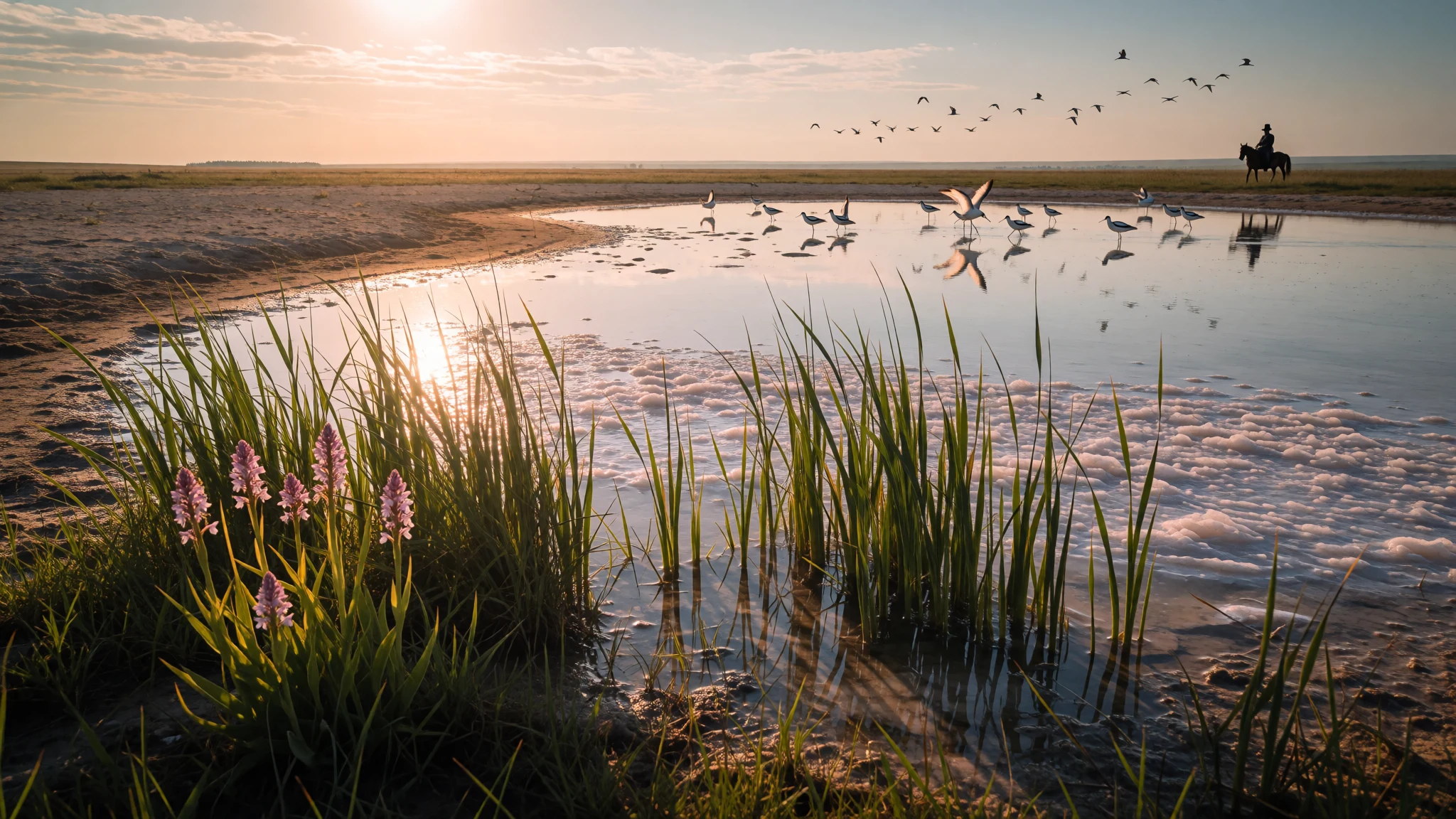
Kiskunság National Park offers soda lakes, wading birds and herding traditions on the open sandy plain between the Danube and the Tisza.
The place
Kiskunság National Park lies on the Great Hungarian Plain, in the sandy country between the Danube and the Tisza, mostly in Bács-Kiskun county. It is not one tract of land but a scatter of separate units, so a visit usually means choosing one corner and spending the day there rather than driving a single loop. The ground is flat and open: grazing pasture, juniper and poplar woodland on sand, reed beds, and shallow alkaline lakes that glitter white when the water retreats in summer. Those soda lakes are the park's calling card for birders, because avocets, black-winged stilts and geese nest around them and migrating flocks stop to feed in large numbers. Elsewhere, shifting dunes near Fülöpháza hold plants adapted to loose sand, and Lake Kolon near Izsák is known for marsh tortoises, herons and wide stands of untouched reed. Several lakes, including Szelid, Vadkert and Sós, are also used for swimming and camping, which gives the area a gentler holiday side. The main visitor centre, the House of Nature, is in Kecskemét, and the park's official website, https://www.knp.hu/hu, is the place to check current arrangements. Marked study trails, each named after a bird, flower or habitat, start from villages across the region, with lookouts and towers for watching wildlife. The scenery is subtle rather than dramatic. Distances are long, shade is scarce, and the reward comes from patience: a roller on a wire, a stilt wading in a pan, a herd of cattle crossing a skyline with nothing taller than a well-sweep to interrupt it.
Its story
Kiskunság National Park takes its name from Little Cumania, the historic region where the Cumans, a nomadic people from the steppe, were settled in the Middle Ages. The name stuck, and so did the grazing culture. For centuries the sandy land between the two rivers was herding country, where shepherds and cattlemen drove animals across open pasture and sheltered in simple reed-roofed huts. Farming spread only where the soil allowed, which left wide stretches of grassland, marsh and dune that later proved valuable to naturalists. The park was created in 1975, and its mix of habitats led to the area being declared a UNESCO biosphere reserve. Protection came in pieces, which explains the patchwork shape: seven separate units were set aside, each guarding a different kind of landscape. The map follows what was left, not a neat boundary. Older layers sit within them. Earthen fortifications and burial mounds known as kurgans survive on the plain, and a reconstructed village shows how people lived around the time the Hungarian tribes arrived in the Carpathian Basin. Quarry workings at Csólyospálos, protected since 1978, record a different kind of history, written in rock. Today the story is partly one of conservation, with grazing used to keep pasture open, and partly one of tradition kept alive through herding events on the puszta, the open grassland.
What to see
- House of Nature — Kecskemét
The House of Nature in Kecskemét is the park's main visitor centre and the sensible first stop. A permanent exhibition walks through the habitats of the Danube–Tisza interfluve, from sand dune to soda lake, and shows the traditional trades that grew up around them. Staff can point to current trails and seasonal closures.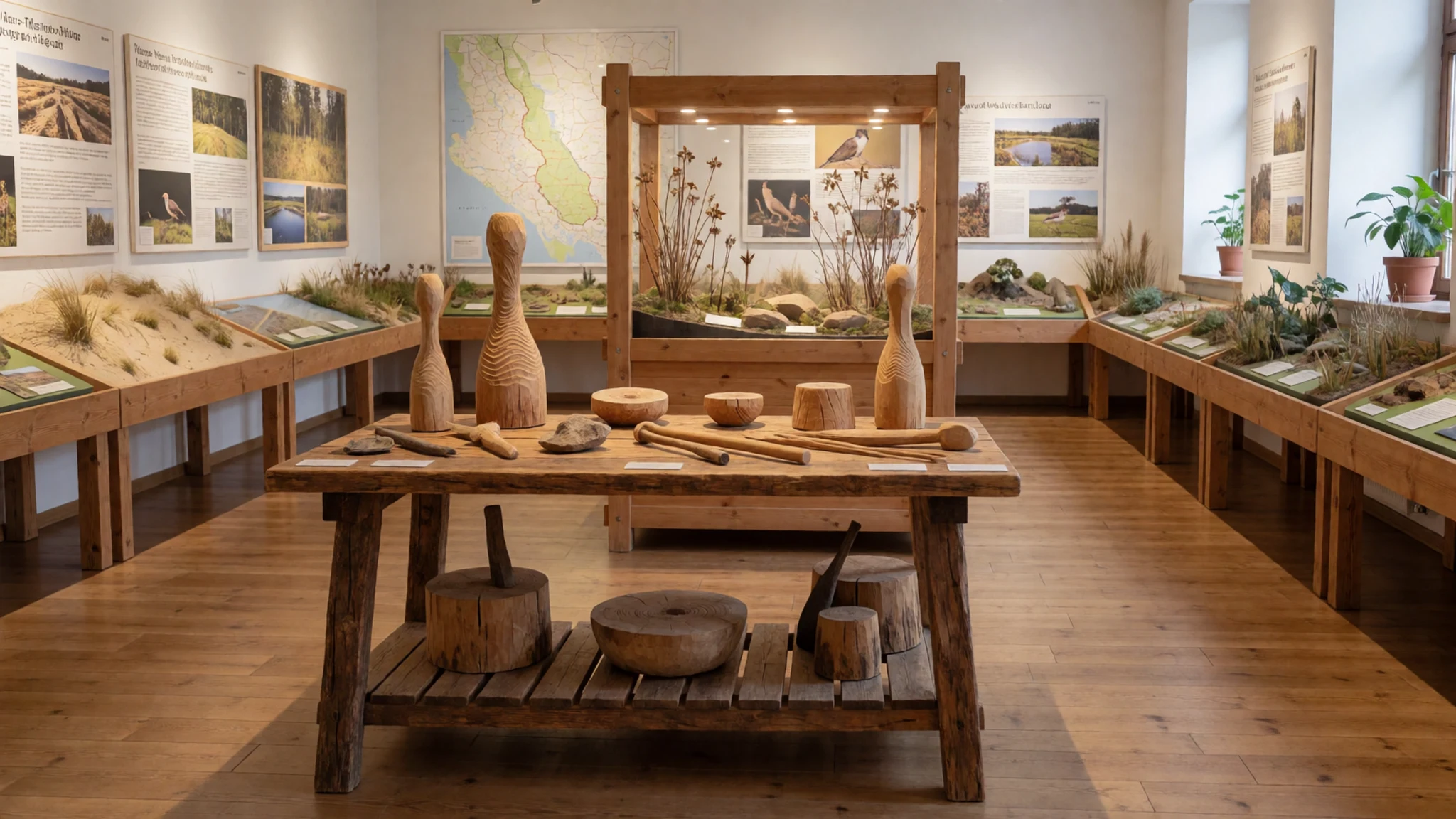
- Shepherd Museum — Bugac area
The Shepherd Museum near Bugac explains herding life on the puszta through tools, clothing and everyday objects. Entry has been tied to a walking ticket bought at the Karikás restaurant nearby, so ask there and check the current arrangement on the official site. It pairs well with a walk onto the grassland.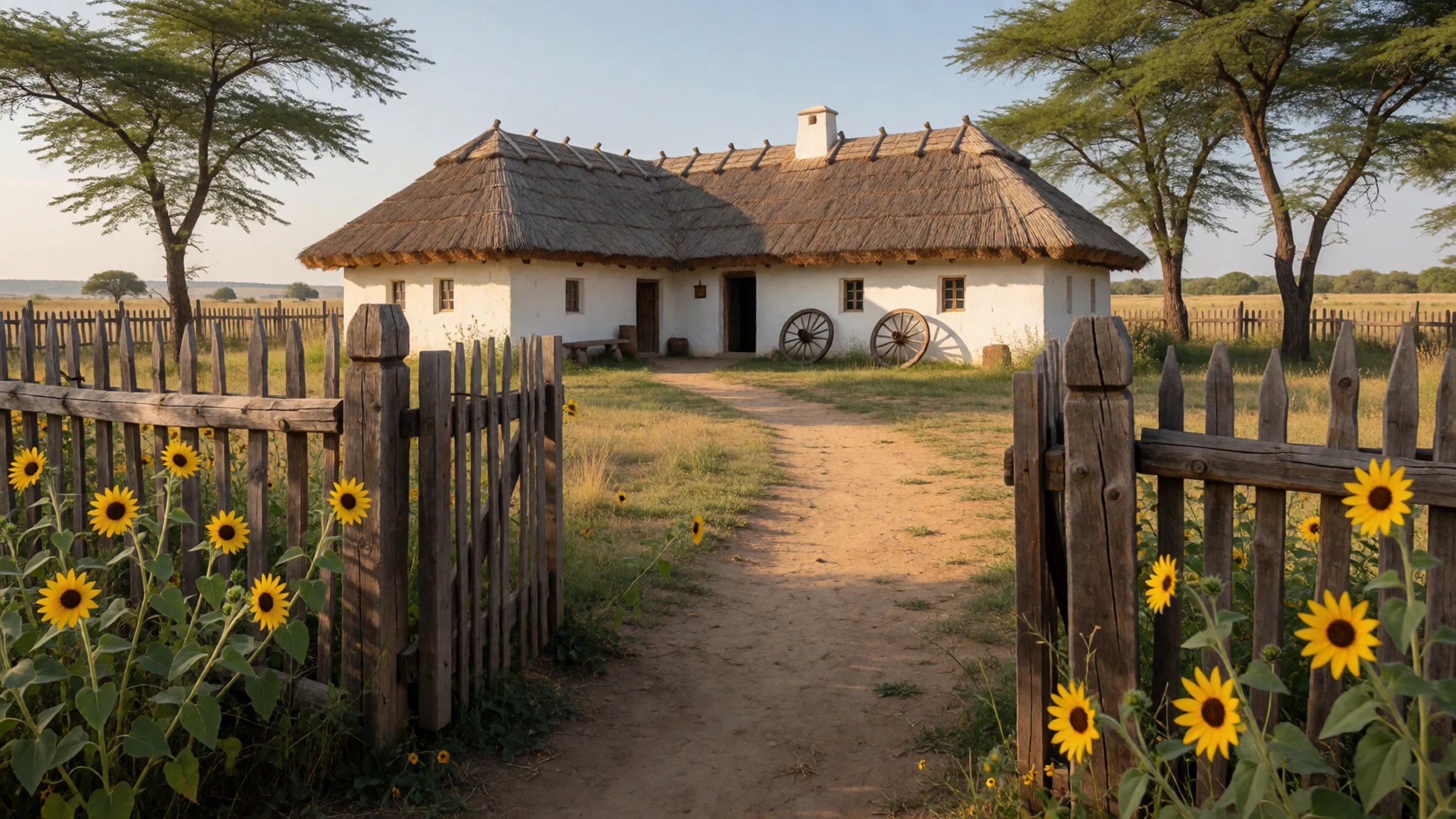
- Reconstructed Árpád-era village — Central-eastern part of the park
This reconstruction shows how a settlement may have looked when the Hungarian tribes arrived in the Carpathian Basin. Low houses, yards and working areas make the period easier to picture than a museum case does. It suits families and anyone curious about the people who lived on this plain before the herders.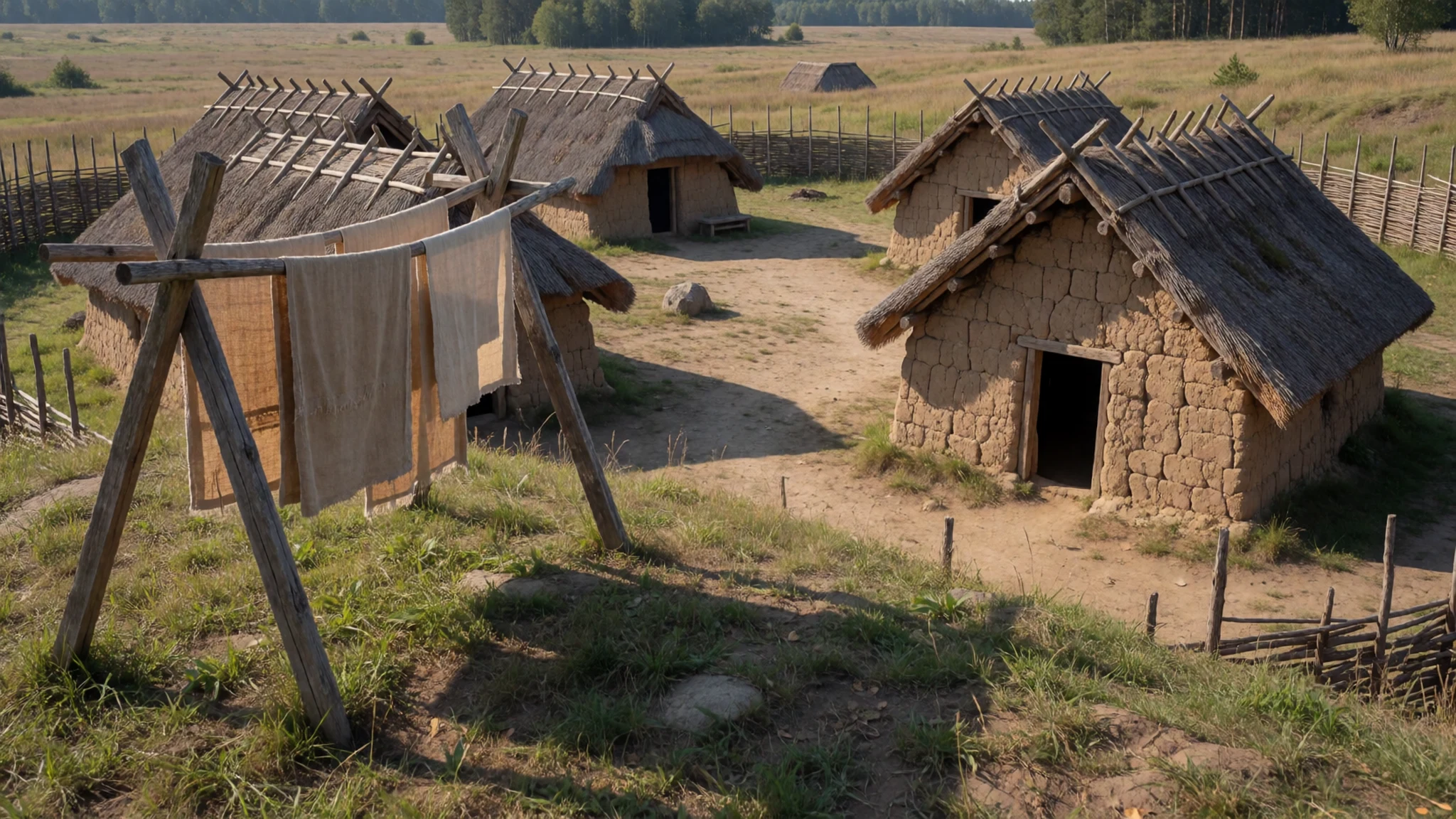
- Csólyospálos Geological Site — Csólyospálos, southern part of the park
Csólyospálos has a rock outcrop, a former quarry where dolomite, limestone and dolomite mud were dug. On a plain of sand it is an unusual sight, and the protected site makes a short, quiet stop, especially combined with the Toadstone Study Trail in the same village.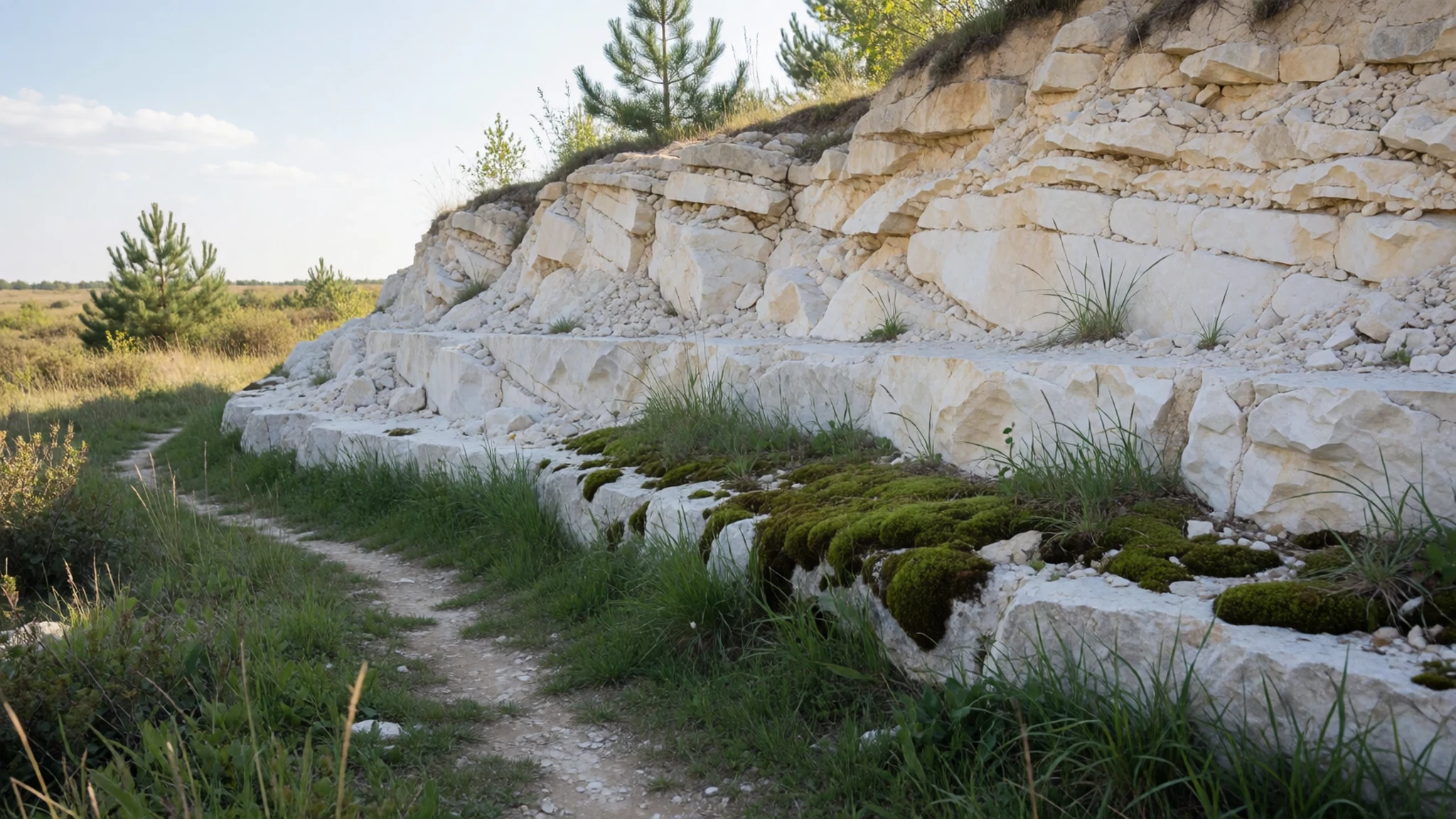
- White Lake Ornithological Camp — Southern lowland near the Romanian border
In the south of the park, the White Lake camp is a base for birdwatchers, set among alkaline pans where waders and wildfowl gather. Spring and autumn are the productive seasons. Bring binoculars, keep quiet and keep your distance from nesting areas; check access with the park before travelling.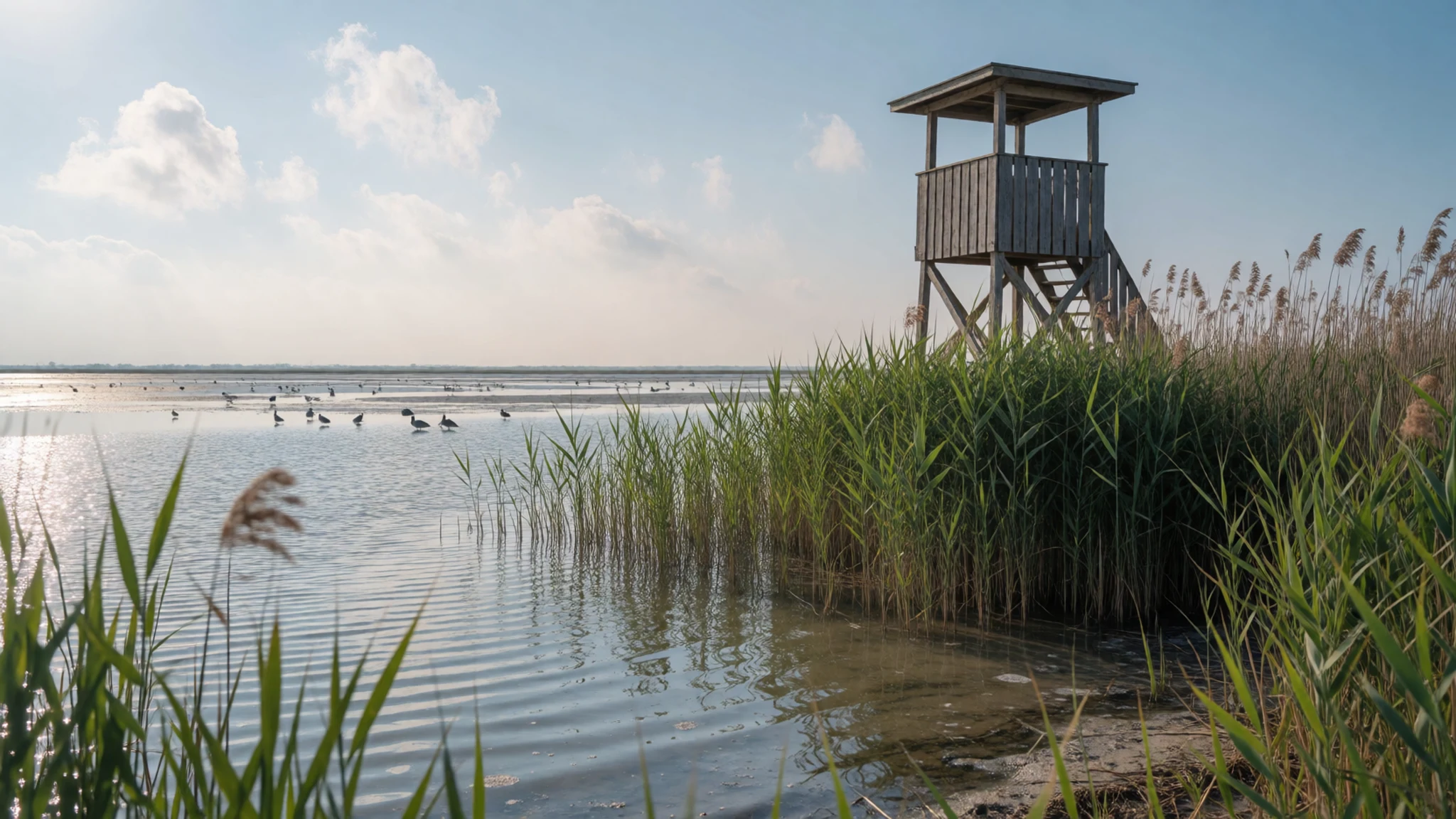
Culture
Kiskunság National Park carries the culture of the puszta, the open plain where herding shaped daily life. Shepherds, cattlemen and horsemen had their own vocabulary, songs, clothing and rules of work, and some of that survives in demonstrations and annual events that revive old pastoral customs. The csárda, a traditional roadside inn with a simple menu and a courtyard, was the social centre of that world, and several remain around Bugac. Visitor trails reflect the same respect for the land: names such as the Avocet or Orchid trails treat plants and animals as neighbours rather than scenery. Small villages around the park, such as Fülöpszállás and Izsák, are working farming communities, not heritage sites, so everyday life carries on around visitors. Hungarian is the language of nearly all signs; English is patchier than in Budapest, though staff at the House of Nature and other visitor facilities are used to foreign guests. A few words help: jó napot for good day and köszönöm for thank you are noticed and appreciated. Festival days bring horse displays and folk music, and are the best chance to see tradition performed rather than only explained. Keep to the marked trails and boardwalks and stay well back from nesting birds, because disturbed colonies can abandon their eggs.
What to wear
Kiskunság National Park sits in herding country, and the traditional clothing of the plain was built for open weather. Herdsmen wore wide linen trousers called gatya, shirts with full sleeves, sturdy boots and wide-brimmed hats against sun and rain. For cold and wet they had the szűr, a heavy felt cloak sometimes embroidered with flowers, and the suba, a sheepskin coat. Women's festival dress used pleated skirts, aprons, embroidered blouses and headscarves. These clothes now appear mainly at folk festivals, horse shows and pastoral events, worn by performers and enthusiasts rather than in daily life. Day to day, people in the towns and villages dress like most of central Europe: jeans, practical jackets, trainers, and a cap or hat for outdoor work. Visitors should dress for exposure. The plain offers little shade, so a hat, sunglasses and sunscreen matter from late spring to early autumn, while winter winds across the flat land are raw and call for a windproof layer. Long trousers and closed shoes protect against ticks and sandy, uneven paths; waterproof boots help after rain near lakes and reed beds. Muted greens and browns suit birdwatching. No special modesty rules apply, though slightly smarter clothes suit a meal in a village csárda.
What to eat
- Bográcsgulyás — A csárda near Bugac or any roadside inn on the plain
Kiskunság's herding past is best tasted in gulyás, a paprika-red beef and vegetable stew cooked slowly in a hanging cauldron over a fire. Expect it with fresh bread. It is hearty rather than fiery, and suits a cool day on the grassland.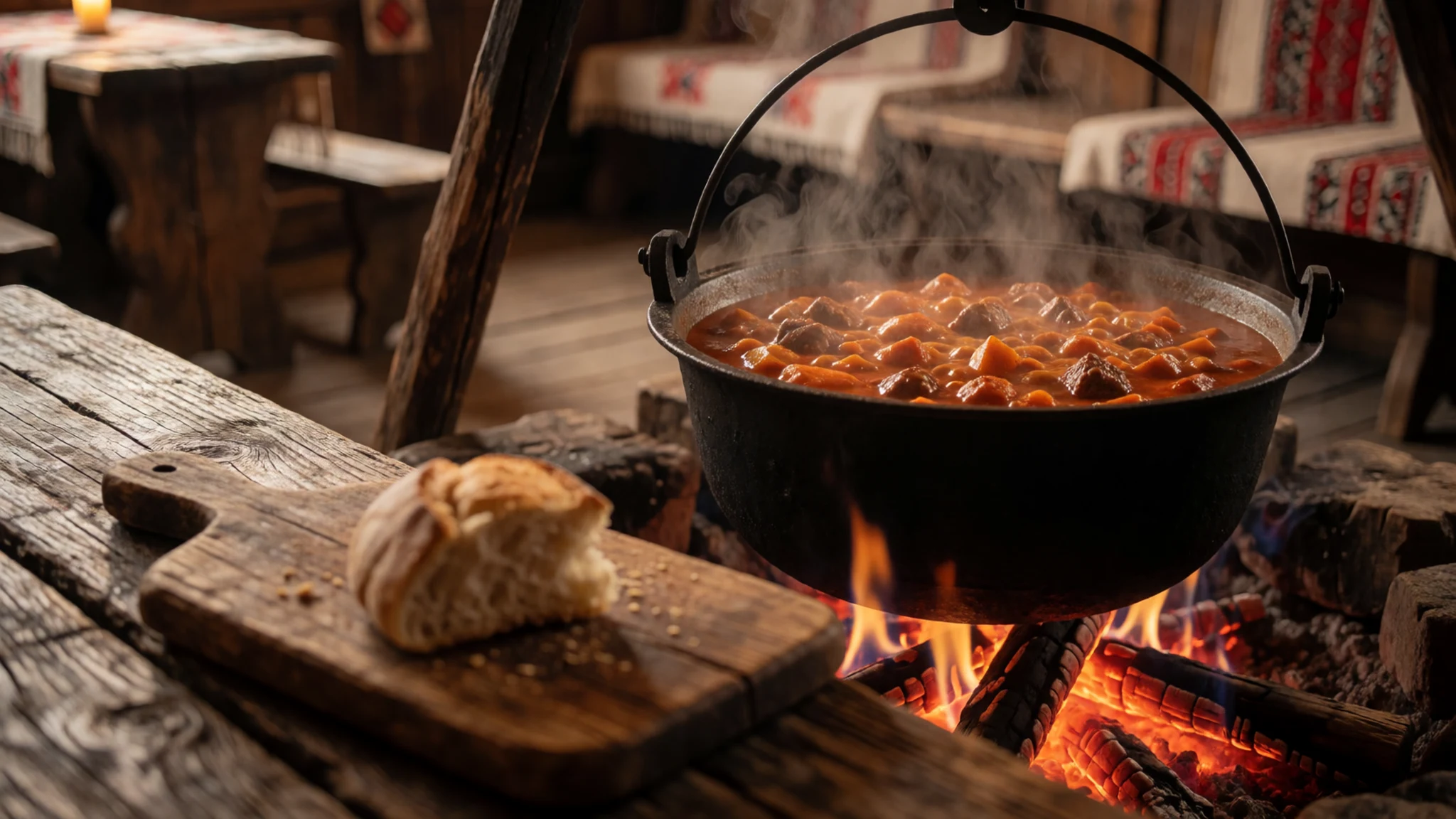
- Halászlé — Riverside villages and fish restaurants near the Danube and Tisza
Halászlé is a paprika-rich fish soup made from river fish, often carp, and served steaming with bread. Heat levels vary by cook. It reflects the wetlands and rivers that frame the park, and is most reliable at places that specialise in fish.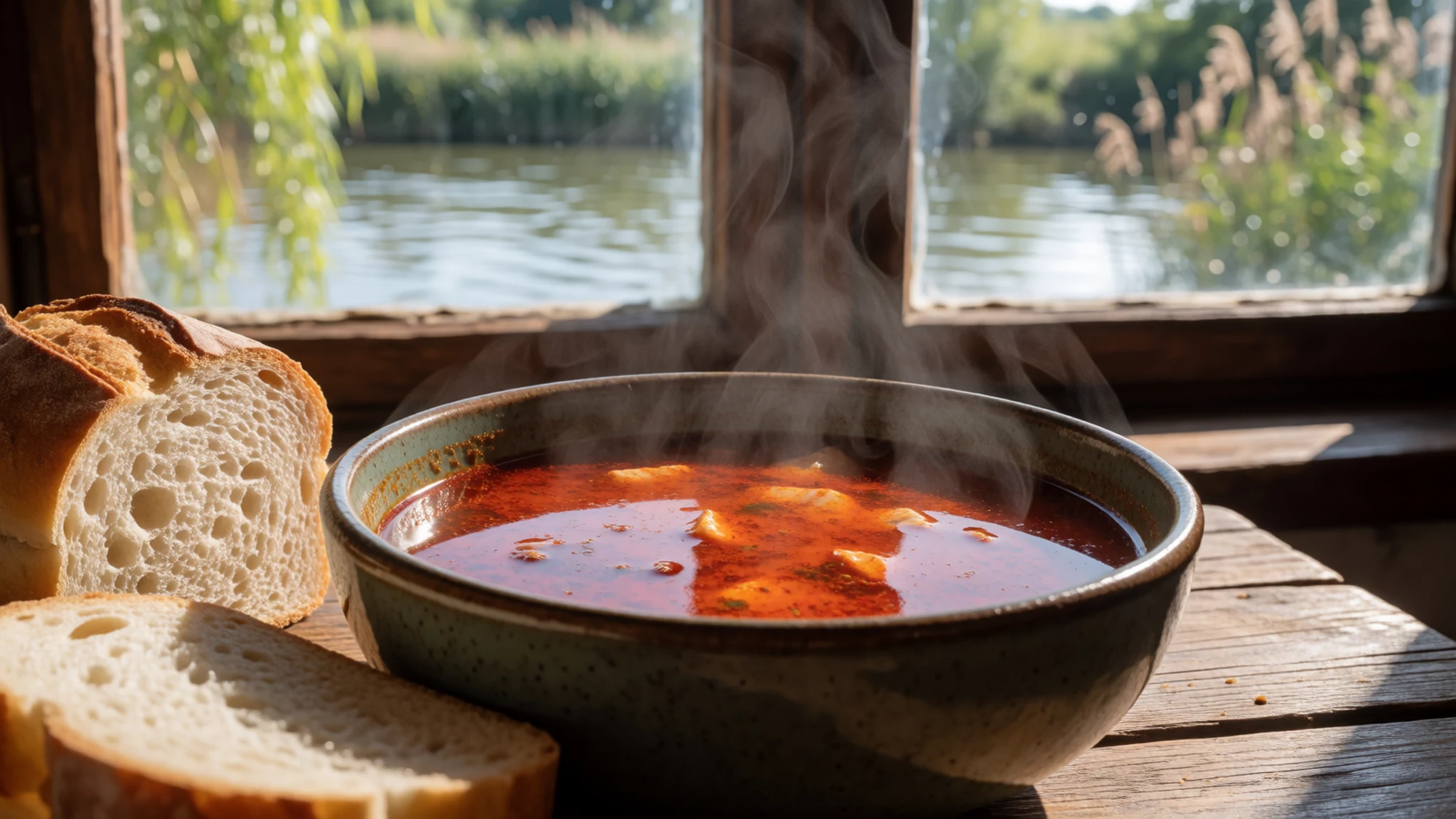
- Túrós csusza — Village eateries and family-run restaurants
Túrós csusza is wide noodles tossed with soft curd cheese, sour cream and crisp bacon pieces. It is plain, filling and inexpensive, a typical rural lunch. Vegetarians should ask for it without bacon, which most kitchens can do. - Lángos — Market stalls, lakeside kiosks and festival grounds
Lángos is a disc of deep-fried yeast dough, usually rubbed with garlic and topped with sour cream and grated cheese. It turns up at lakeside kiosks and fairs. It is greasy and filling, a good fuel stop between trails. - Apricot pálinka — Kecskemét shops and farm stalls around the park
Pálinka is a strong fruit brandy, and apricot is the style linked with the Kecskemét area. It is sipped in small measures, usually after a meal. Buy from a reputable shop or farm stall, and remember to drive only if you have not drunk.
Plan it
Best time. April–May for spring migration, flowering meadows and mild days, and September–October for autumn bird movements and comfortable walking. July and August are hot and shadeless, with mosquitoes near water; winters are cold, windy and quiet.
How long. 1–2
Getting there. Fly to Budapest, then take a train to Kecskemét, where the House of Nature is based, or drive on the motorway towards Szeged. Local trains serve towns on the edge of the park, but the last leg to most trails and lookouts needs a car, taxi or a local bus, so check timetables beforehand.
Budget. low
Tips
- Start at the House of Nature in Kecskemét for maps and current trail news
- Bring water, sun protection and insect repellent, as shade and shops are scarce
- Go early or late in the day for birds and cooler walking
- Check the official site for opening arrangements and access before travelling
- Carry some cash for small village eateries and kiosks
Etiquette
- Stay on marked trails and boardwalks and keep clear of nesting areas
- Take litter away and leave plants, eggs and wildlife undisturbed
- Greet people politely in Hungarian where you can and ask before photographing locals
Nearby
Sources
- Wikidata Q922898 (CC0)
- Wikipedia: Kiskunság National Park (rev 1362780705) (CC BY-SA 4.0)
- Wikivoyage: Kiskunság National Park (rev 5413734) (CC BY-SA 4.0)
- Photo: Tiszaalpár 045 (Lily15) (CC BY-SA 2.5)
- Photo: Kiskunság National Park sign (Goga504) (CC BY-SA 4.0)
- Photo: Himantopus himantopus (Alnus) (CC BY 3.0)
- Photo: European Roller (csv) (CC BY-SA 2.5)
- Photo: Menyanthes trifoliata (Archaeodontosaurus) (CC BY-SA 4.0)
- Photo: Romkert Ópusztaszer (Csanády) (Public domain)
- Photo: Otis tarda (zh:User:Snowyowls) (CC BY-SA 1.0)
- Photo: Mórahalom Nagyszéksós-tó (Mike Duchstein) (CC BY-SA 4.0)


