Aggtelek National Park
Aggtelek National Park, Hungary
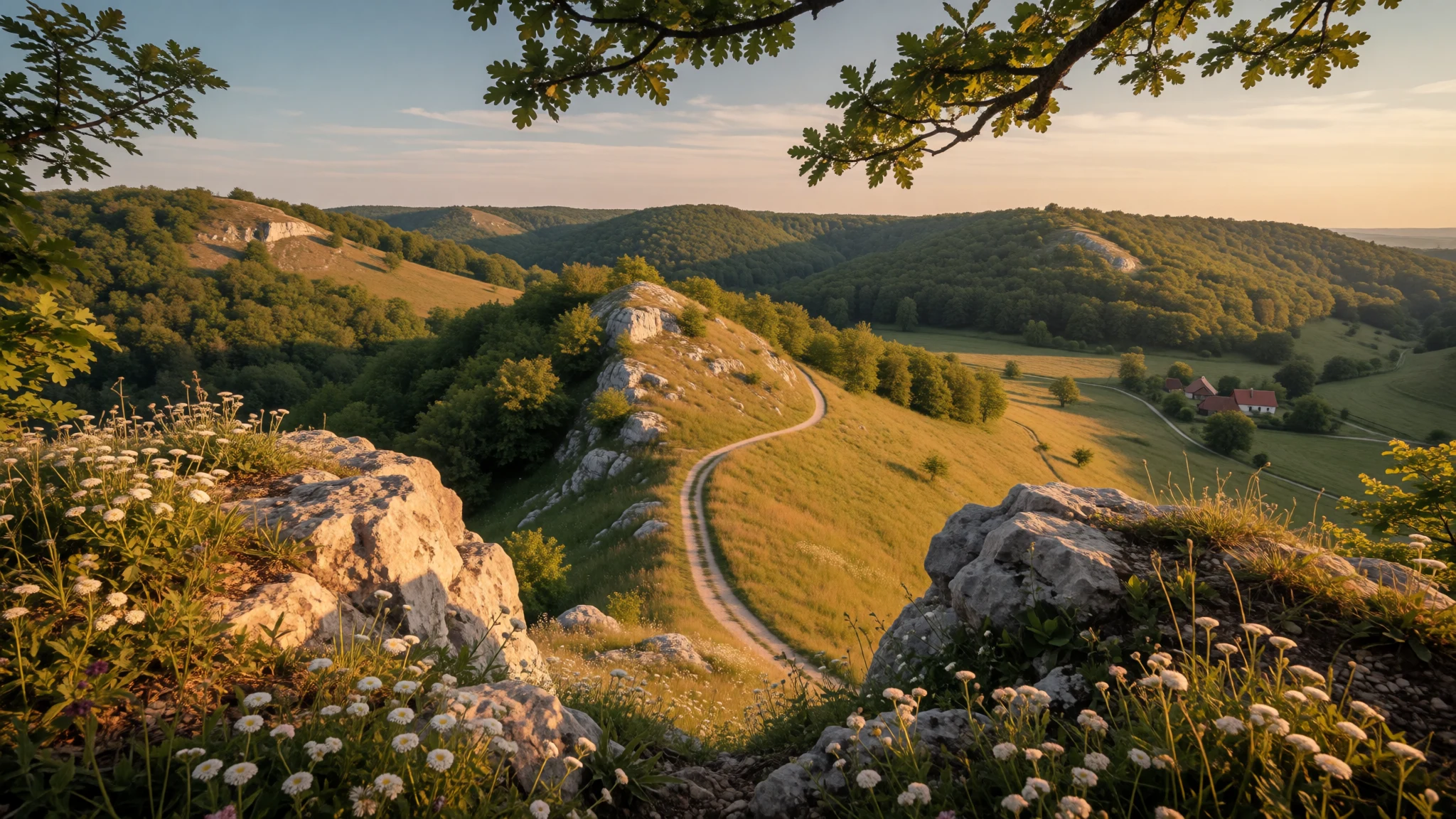
Aggtelek National Park is all about limestone caves—wet, echoing, and sculpted—where underground tours feel like stepping into another planet.
The place
Aggtelek National Park (Aggteleki Nemzeti Park) sits in Northern Hungary’s Aggtelek Karst, a limestone landscape that looks ordinary on the surface and then turns surreal underground. The headlines here are caves and surface formations, and the park delivers both in a big, cave-heavy way.
The park is made up of hundreds of caves—280 are counted—spread across a karst region shaped by water over long time. On paper, the scale is impressive: the national park covers 198.92 km², and 39.22 km² is under increased protection. What that means in practice is that many areas are managed for conservation, and cave access tends to be structured.
The standout for a first visit is Baradla Cave, linked to the Slovak side as Domica. In the park area, Baradla is described as 26 km long overall, with 8 km in Slovakia—so you can understand why it’s often treated as a “system” rather than one short cavern. Even if a tour route only covers a slice, the atmosphere stays consistent: limestone columns, warm damp air, and the steady hush of groups moving at a pace set by the guide.
If crowds are a worry, expect them to concentrate around the better-known cave entrances and tour slots—especially in the main travel months. Winter can feel quieter, but cave tours are still tour-based, not “explore on your own”. The upside is that the park experience is clear: come for the geology, go for the cave interiors, and expect a calm, controlled rhythm once you step inside.
Its story
Aggtelek National Park’s story starts above ground, with written records that point back to 1549 for documentation of the caves. Long before organised national-park branding, people were already paying attention to what was happening in the limestone darkness.
Tourism is also part of the park’s timeline. Since 1920, the caves have been used as a tourist attraction, which helps explain why the visitor experience today feels practical rather than purely “wilderness”. There are routes, guidance, and a sense that the park has been hosting travellers for generations.
The national park itself is newer. Aggteleki Nemzeti Park was founded in 1985, and later it became part of the UNESCO World Heritage listing in 1995, along with the Slovak Karst caves. That combination matters: the karst doesn’t stop at borders, so conservation and storytelling also cross them.
Geology is the main character here, but there’s also a human thread. One cave is highlighted for a Peace Cave sanatorium, described as helping treat people suffering from asthma. Whether someone is travelling for that specific historical angle or simply for the sheer visual impact, it gives the caves a second layer: they aren’t just scenery, they’ve been used and valued for practical reasons too.
When planning a visit, the timeline helps set expectations. This is not a place for roaming off-path and “discovering” caves at random; it’s a curated relationship with an underground world that has been attracting attention since the 1500s and welcoming visitors on tours since 1920.
What to see
- Baradla Cave (Domica across the border)
Baradla Cave is the big draw in Aggtelek National Park: a vast limestone cave with routes that make the scale feel immediate. The wider cave system is described as 26 km long overall, with 8 km in Slovakia as Domica, so expect a journey that feels more like a network than a single room.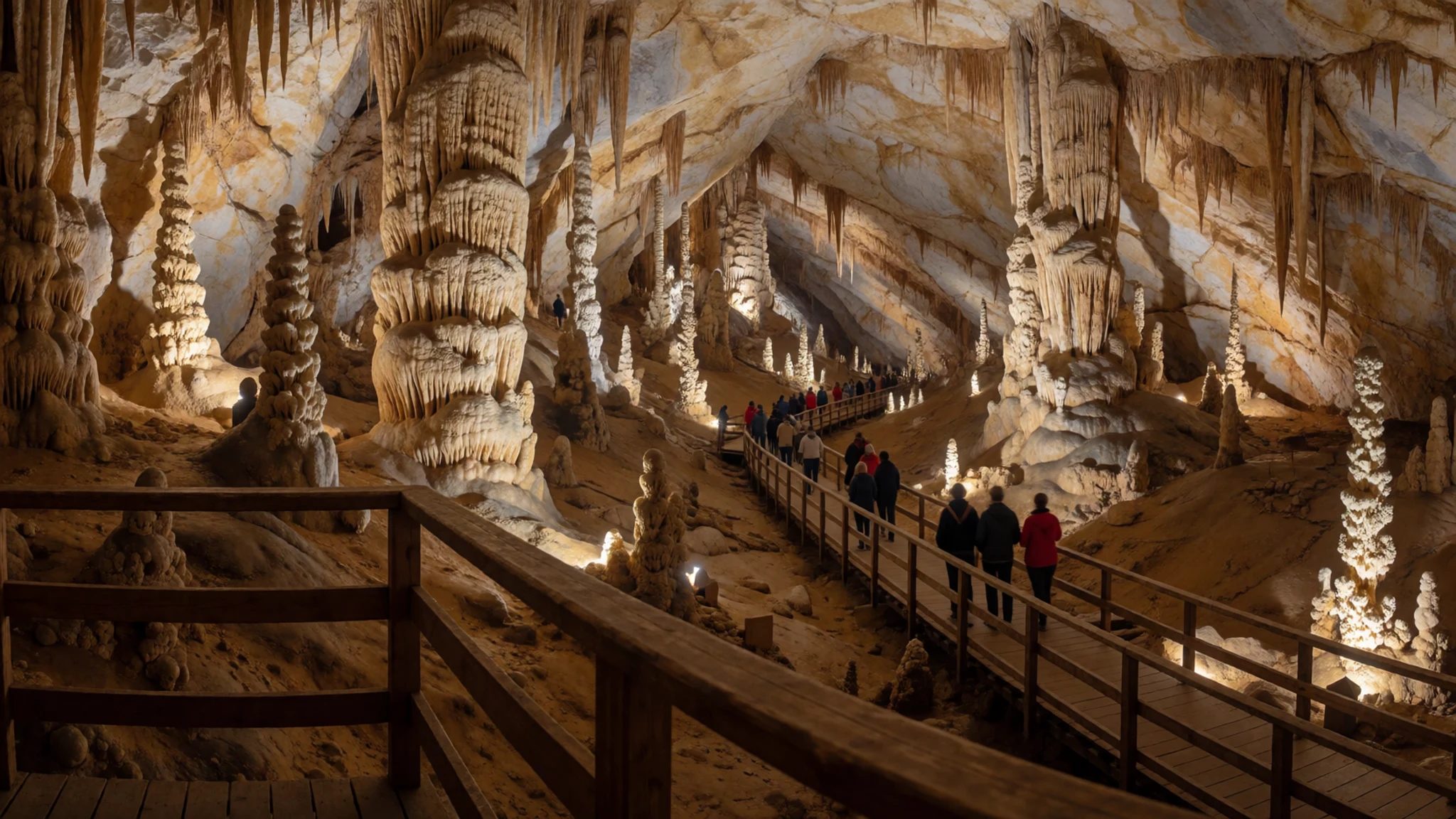
- Limestone stalagmites and stalactites inside tours
Aggtelek is known for special surface formations and cave interiors. Even on shorter tour routes, stalagmites and stalactites create a changing “forest” of rock shapes, with the lighting and damp air doing half the work of making it dramatic. It’s the texture and repetition that impress here.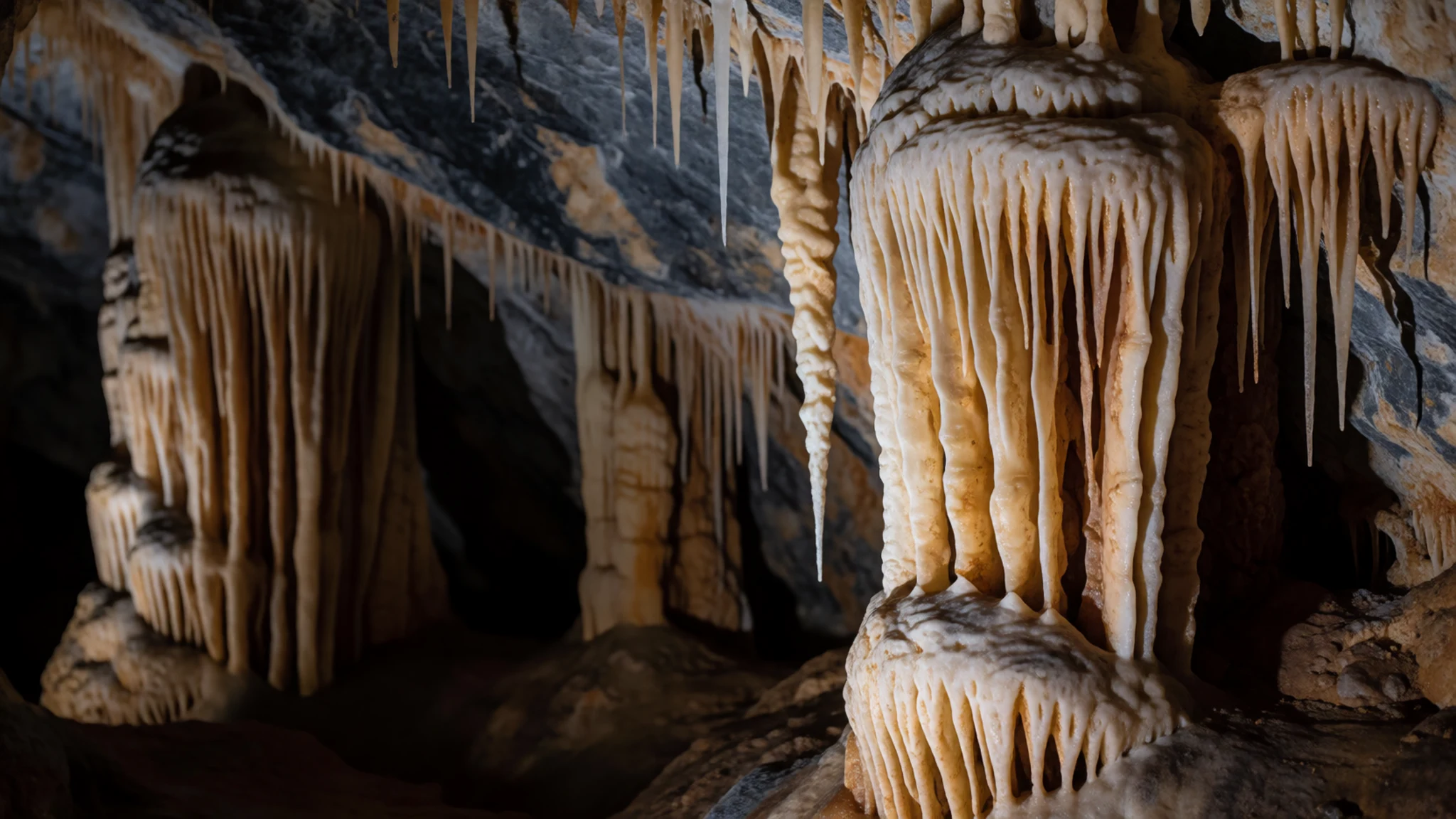
- Vass Imre Cave: the ‘Orange waterfall’ formation
In Vass Imre Cave in Jósvafő, one named feature is “Orange waterfall”. It’s a good stop when a visitor wants a sense of personality beyond generic cave columns—this formation is described by name, so you can look out for it as your tour progresses.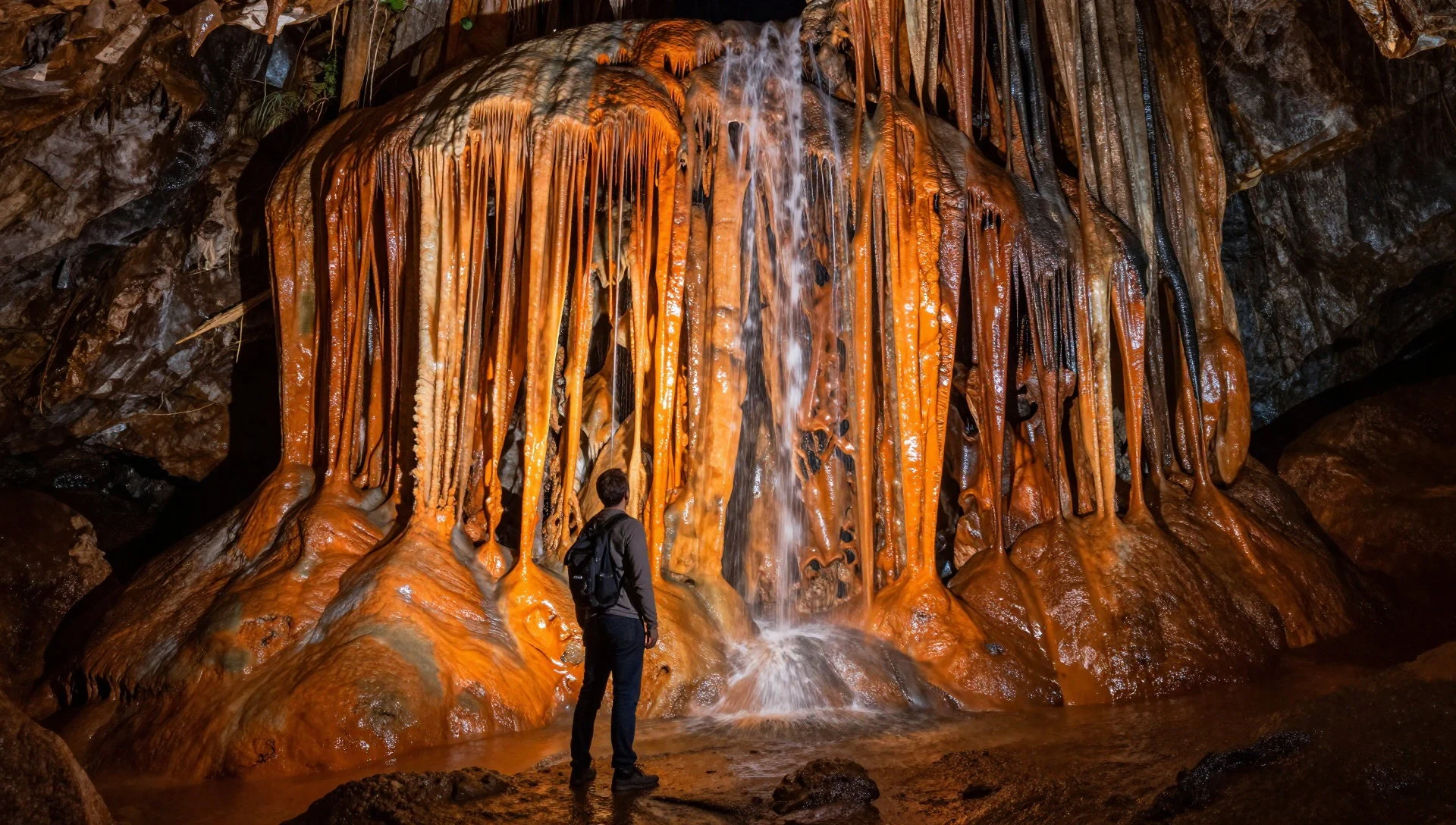
- Jósvafő and the river landscape near Jasov-Bodva
Aggtelek’s karst area isn’t just underground. Jasov-Bodva is a nearby landscape reference point—think river, valley edges, and the way the region looks before you go underground. If cave tours feel long, this kind of outdoor pause helps reset the senses.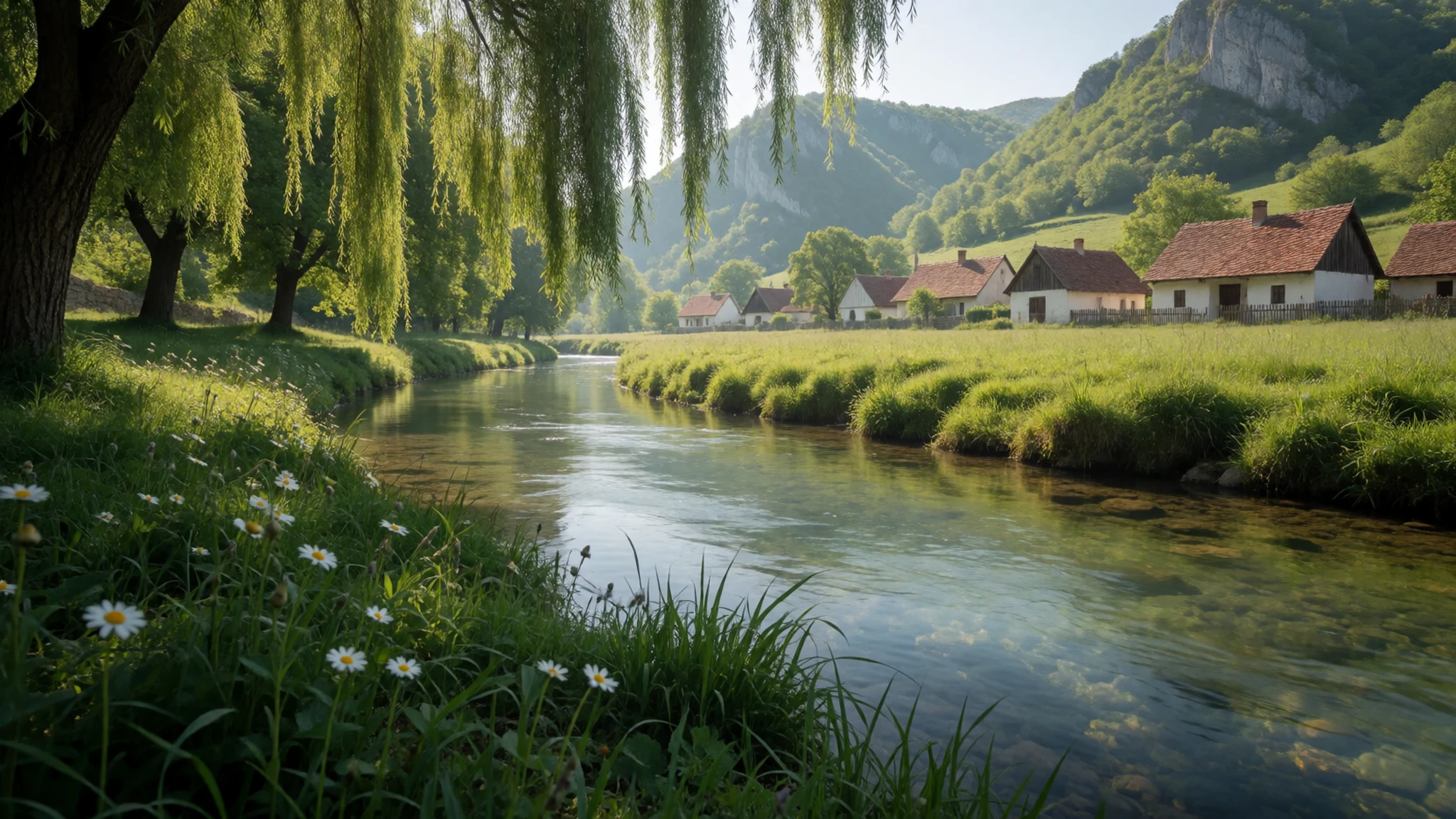
- Szinpetri viewpoints
Szinpetri offers a higher, open-air look at the region. It’s the sort of spot where the karst landscape becomes more understandable: you can connect what you saw underground with the broader geology above. Bring a layer—open views can be breezy.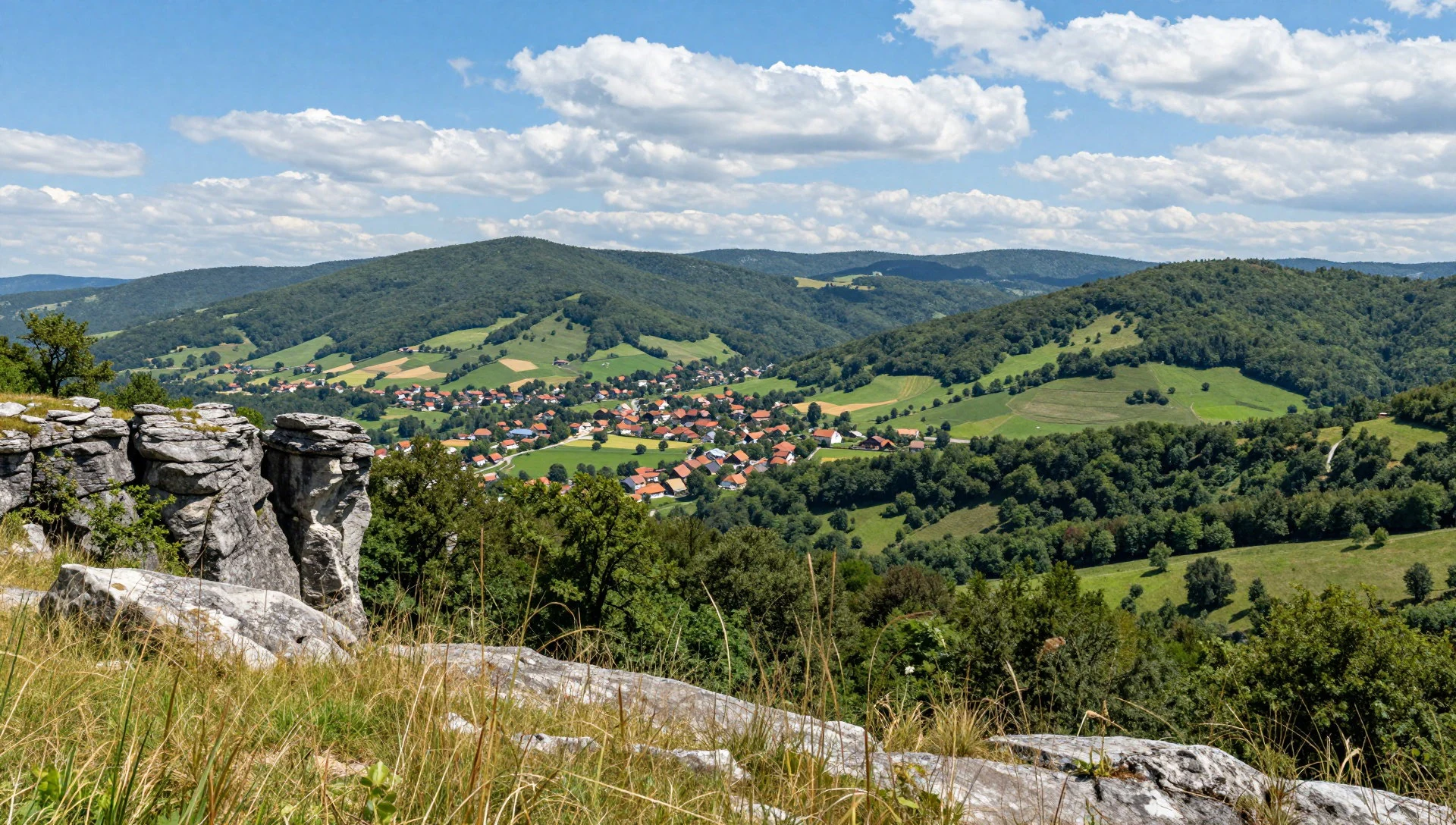
- Aggtelek National Park salamanders (seasonal sightings)
The park is also associated with salamanders, and one commonly shared image shows them as part of the area’s natural life. If wildlife is the goal, cave humidity and nearby damp microhabitats are where you’re most likely to notice signs of amphibian activity—just don’t expect guaranteed sightings.
Culture
Aggtelek National Park is a cave-first place, so the culture is less about monuments and more about how visitors behave in enclosed natural spaces. Inside caves, the air is cool and damp, and the surfaces can be slippery; that’s why tours run in controlled routes with groups moving together. Photography is usually possible, but it’s not the main point—listening to the guide and watching where you step matters more than chasing angles.
The park’s story also includes practical use of caves, such as the Peace Cave sanatorium connected with asthma treatment. That background adds a respectful tone: these are not “theme park” corridors, but environments that have been studied and used for a long time.
Finally, since the karst extends across the border with Slovakia (Baradla/Domica), it’s worth understanding that what you see is part of a wider system. The most helpful visitor mindset is to stay calm, follow staff directions, and treat the place as an ecosystem rather than a backdrop.
Visitor etiquette: keep to the marked tour route, avoid touching formations, and keep noise down so everyone can hear the guide.
What to wear
In Aggtelek National Park, clothing is practical because caves keep things cool and damp, and the ground can be uneven. There isn’t a single “traditional dress” moment that defines the park, but you’ll still see Hungarian everyday style in nearby towns—typically layers and simple fabrics suited to weather.
For a visitor, aim for easy layers: a warm top for cave interiors, plus something lightweight for walking between entrances and viewpoints. Sturdy footwear matters more than aesthetics—closed shoes with good grip help on slick surfaces and on outdoor paths around the karst region. If the weather outside turns wet (even outside peak summer), a rain layer is worth packing.
Because the park experience is mostly underground tours, you’ll likely be wearing whatever you can move comfortably in for hours at a steady walking pace. Bring a small day bag for a layer and a bottle of water, and consider gloves if visiting in colder months when outdoor temperature drops before you head back into the cave.
What to eat
- Hungarian goulash-style stews — Local restaurants in the Aggtelek/Jósvafő area
A hearty, slow-cooked stew—often paprika-forward—is a common comfort meal in Northern Hungary. Look for it at local restaurants in nearby towns before or after the cave tours.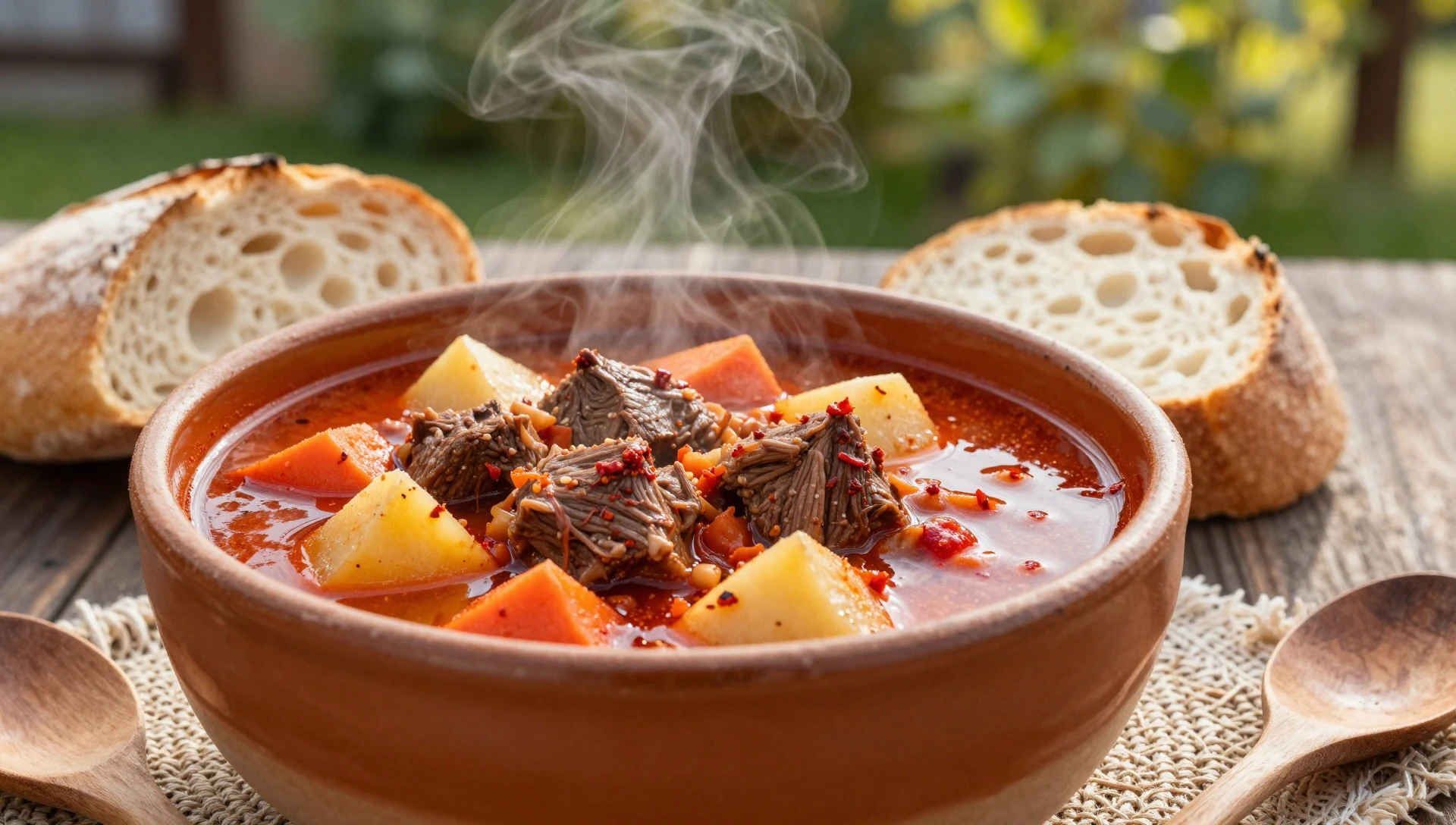
- Langos (fried flatbread) — Market stalls and street food areas in nearby towns
Langos is a fried, yeasted flatbread typically topped with garlic and cheese, sometimes sour cream. It’s the sort of street-style snack that fits well between daytime cave slots.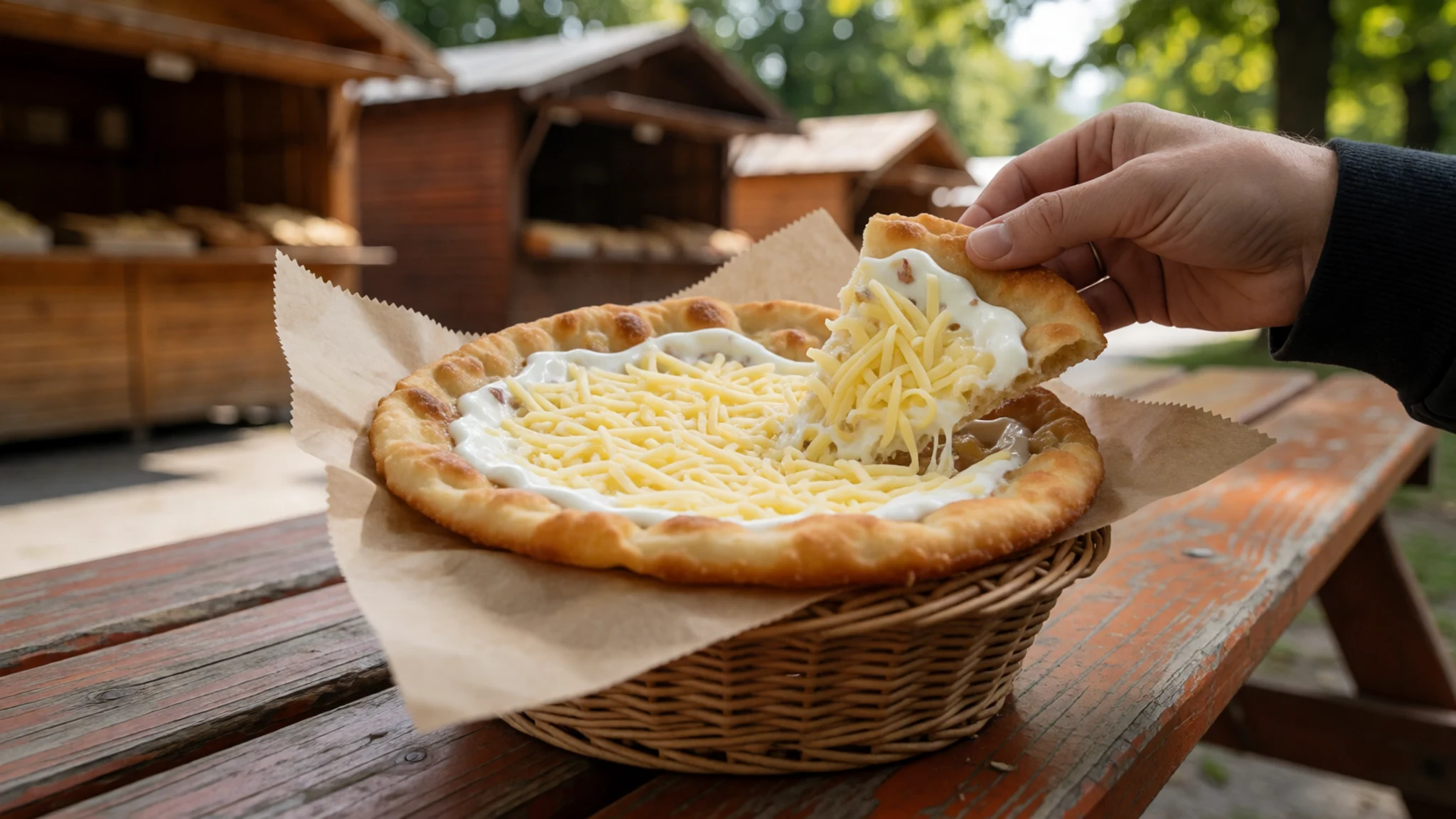
- Strudels and fruit pastries — Cafés and bakeries in nearby towns
If the weather is cool, fruit strudel and similar pastries feel like the right reward after a damp cave. Commonly found in cafés and bakeries around the region. - Dobos-style sponge cakes (or similar Hungarian sponge desserts) — Dessert counters and cafés
Hungarian sponge cakes and caramel-topped slices show up in many dessert menus. They’re easy to share, and they make a satisfying stop without committing to a long sit-down meal. - Seasonal river-valley produce and salads — Restaurant seasonal menus across the region
Outside the caves, meals often include seasonal vegetables and simple salads alongside main dishes. It’s a good way to balance a day of rich stews and fried snacks.
Plan it
Best time. April and May for comfortable outdoor walking around the karst, with July and August being the warmest. June is the wettest month by rainfall totals.
How long. 2–3
Getting there. Fly into Budapest, then take ground transport towards the Northern Hungary karst area; the last leg is by local roads to the cave entrances and nearby villages.
Budget. mid
Tips
- Book cave tours early and aim for the first slots, since popular routes can fill quickly
- Carry a light warm layer even in summer for the cooler cave air
- Plan buffer time between cave visits—walking out after a tour can feel slower than expected
- Keep shoes with grip; damp cave surfaces can be slippery around entrances too
- Bring some cash for smaller stops, while relying on cards where larger restaurants and transport accept them
Etiquette
- Keep to the guided route and do not touch cave formations
- Keep voices low underground so the group can hear instructions
- Follow staff guidance on where photography is permitted and how equipment should be handled
Nearby
Sources
- Wikidata Q516668 (CC0)
- Wikipedia (rev 1379769805) (CC BY-SA 4.0)
- Wikivoyage (rev 5337587) (CC BY-SA 4.0)
- Photo photos/01-hungary-baradla.jpg (CC BY-SA 2.5)
- Photo photos/02-aggtelek-national-park-baradla-cave.jpg (CC BY-SA 2.5)
- Photo photos/03-vass-imre-narancszuhatag.jpg (CC BY-SA 1.0)
- Photo photos/04-j-sz-52.jpg (CC BY-SA 2.5)
- Photo photos/05-aggteleki-nemzeti-park-l-tv-nyt-rk-pe.jpg (CC BY-SA 4.0)
- Photo photos/06-aggteleki-nemzeti-park-szalamandr-ja.jpg (CC BY-SA 4.0)
- Photo photos/07-baz1-szinpetri.jpg (CC BY 3.0)
- Photo photos/08-baz2.jpg (CC BY 3.0)


