DMZ
DMZ, South Korea
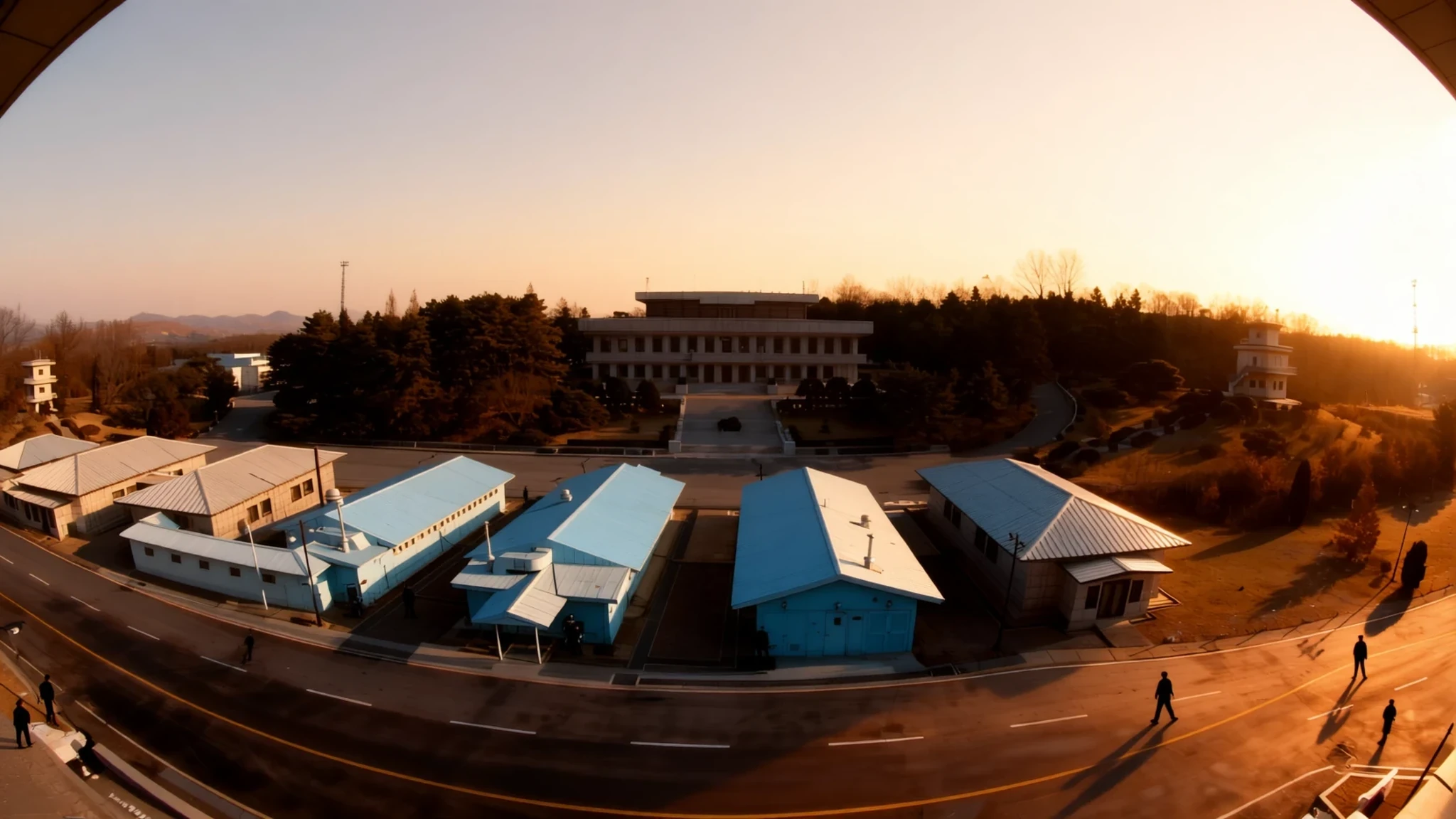
The DMZ is a tense, quiet strip where the Korean War halted and armed forces still face each other.
The place
The DMZ is the Korean Demilitarised Zone, a band of ground across the peninsula between South Korea and North Korea, held clear of ordinary life by the armistice that halted the Korean War. It is not a park with a ticket window. It is a military buffer of fences, watchtowers and, in places, minefields, with a civilian-control belt on the southern side that outsiders enter only with permission and a guide. Nearly everything a traveller is shown lies just south of the line, in the countryside around Paju, where rice fields, river fog and army posts occupy the same view.
From the south the zone looks like a long green absence. Farming was pushed back, hunting ended, and forest and marsh grew thick. Birds use that quiet. The wildlife is genuine, and so is the reason for it: soldiers on both sides, and a ceasefire that has never been replaced by a peace treaty. The villages pressed against the line, Daeseong-dong to the south and Kijong-dong to the north, belong to the standoff. They are not relics of a war that has finished.
A visit is almost always a guided outing from Seoul. Coaches stop at checkpoints, identity papers are inspected, and the route can be shortened if the military closes the area. What visitors are allowed to see shifts with the politics of the season. Crowds collect at the known viewpoints, and the rest of the strip stays closed.
Its story
The DMZ exists because the Korean War stopped with an armistice and never became a peace. Fighting had run the length of the peninsula, Seoul changed hands repeatedly, and the front finally rested near where the armies stood when the guns paused. Negotiators met among the huts at Panmunjom and signed a ceasefire. They left a buffer that neither army would fill in the manner of an ordinary border, and that buffer is the zone meant by the name DMZ.
Around the blue conference huts of the Joint Security Area, soldiers from each side still stand within speaking distance, the military demarcation line passing through the buildings themselves. Away from that compound the strip hardened into fences, cleared fields of fire and patrol tracks. Families split by the fighting gained no road home. Over the years since, the line has been a scene of infiltrations, clashes and display: villages maintained so each capital could point to people living on its side, and flagpoles raised so the other side had to look at them.
South of the civilian checkpoints a public story grew beside the military story. Coaches began to carry visitors to Imjingak, to lookout points, and to tunnels driven under the line from the north and later opened to tours. North of the fence the same ground remains a closed frontier. The DMZ therefore holds an argument that has not been settled, about a shared nation and separate states, written into guard posts and empty paddies. The ceasefire is still the law of this place.
What to see
- Joint Security Area — Panmunjom
The Joint Security Area at Panmunjom is a compound of low blue huts where guards from each side face each other across the military demarcation line. On an approved tour, visitors may enter a conference room that sits astride that line, then step back out. The escort decides where anyone may stand or take a photograph. Tours are often cancelled when the military wants the compound clear.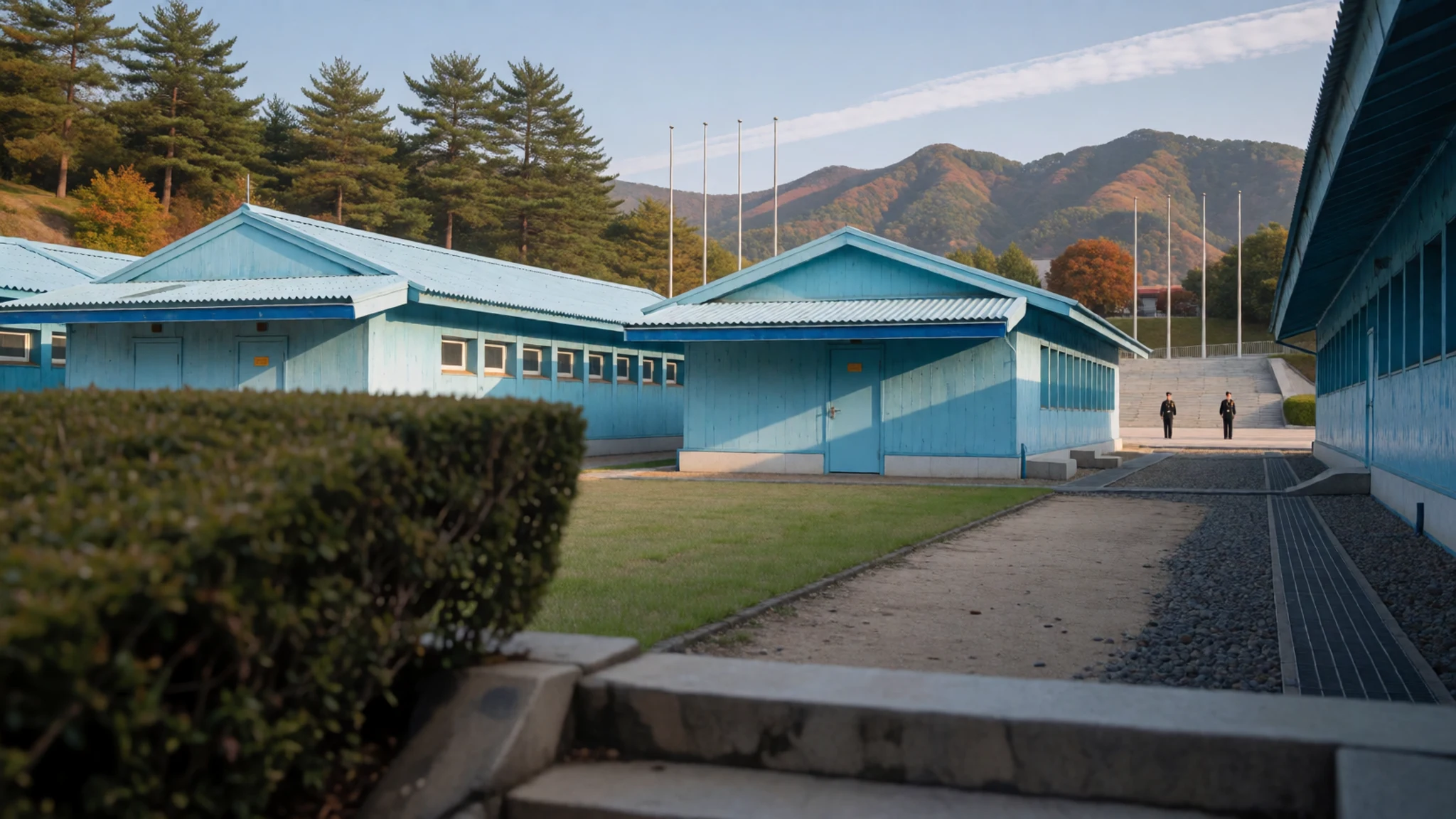
- Dora Observatory — Paju
Dora Observatory stands on a ridge above the southern civilian-control line and looks north over the DMZ towards Kijong-dong and the hills beyond. Binoculars and a viewing deck are the whole experience; distance is the point. In clear weather the northern flag and the empty fields show plainly, and in haze the same prospect sinks into grey-green ridges. Coaches stop briefly, so the rail is crowded.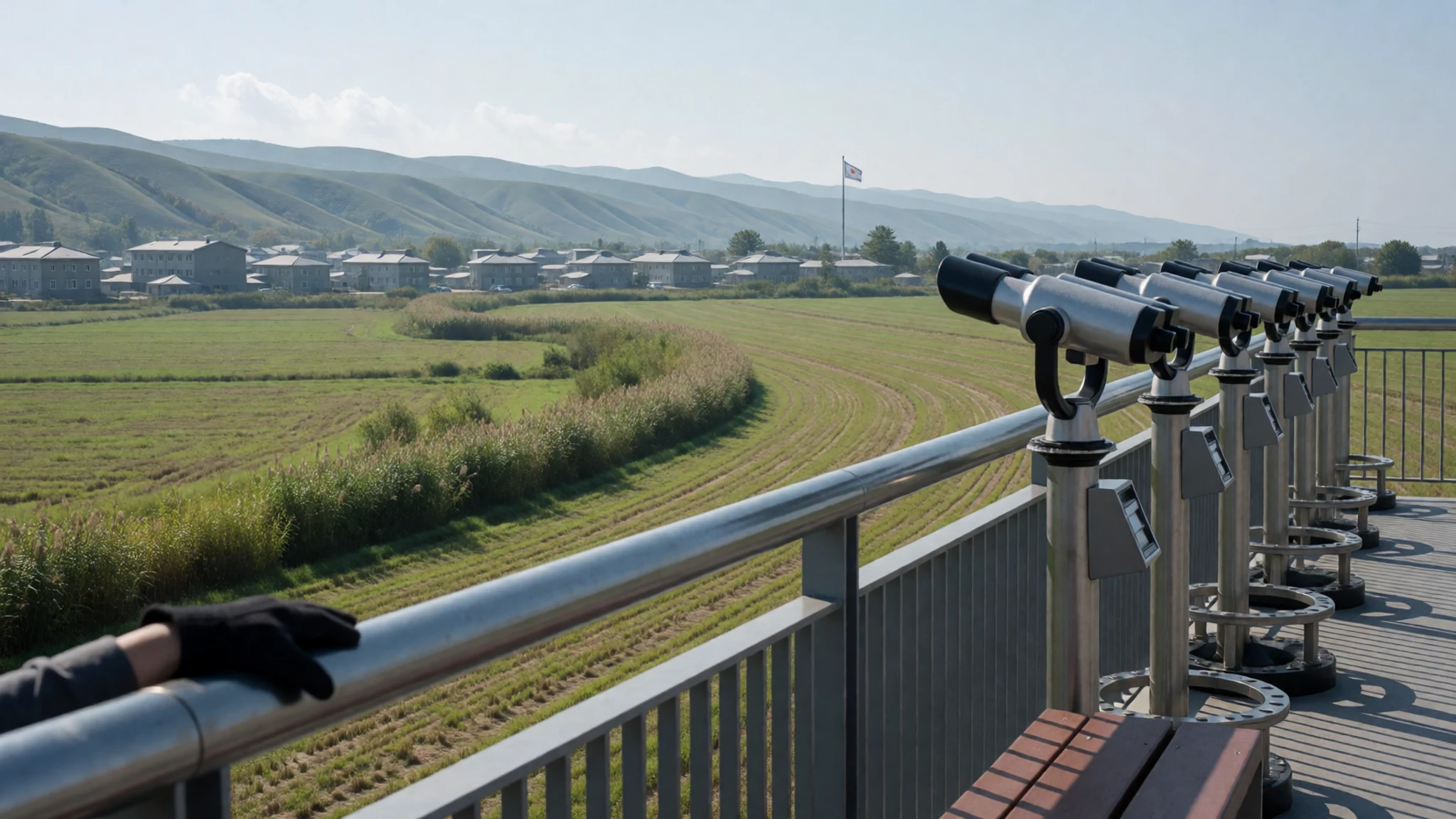
- Infiltration tunnel — Paju
The infiltration tunnel on the Paju circuit is a passage dug from the northern side towards Seoul, later found and opened to tours. Visitors walk down a long slope into a low rock corridor and wear hard hats. The air is cool and the ceiling close. Panels above ground tell the story of the find in blunt terms.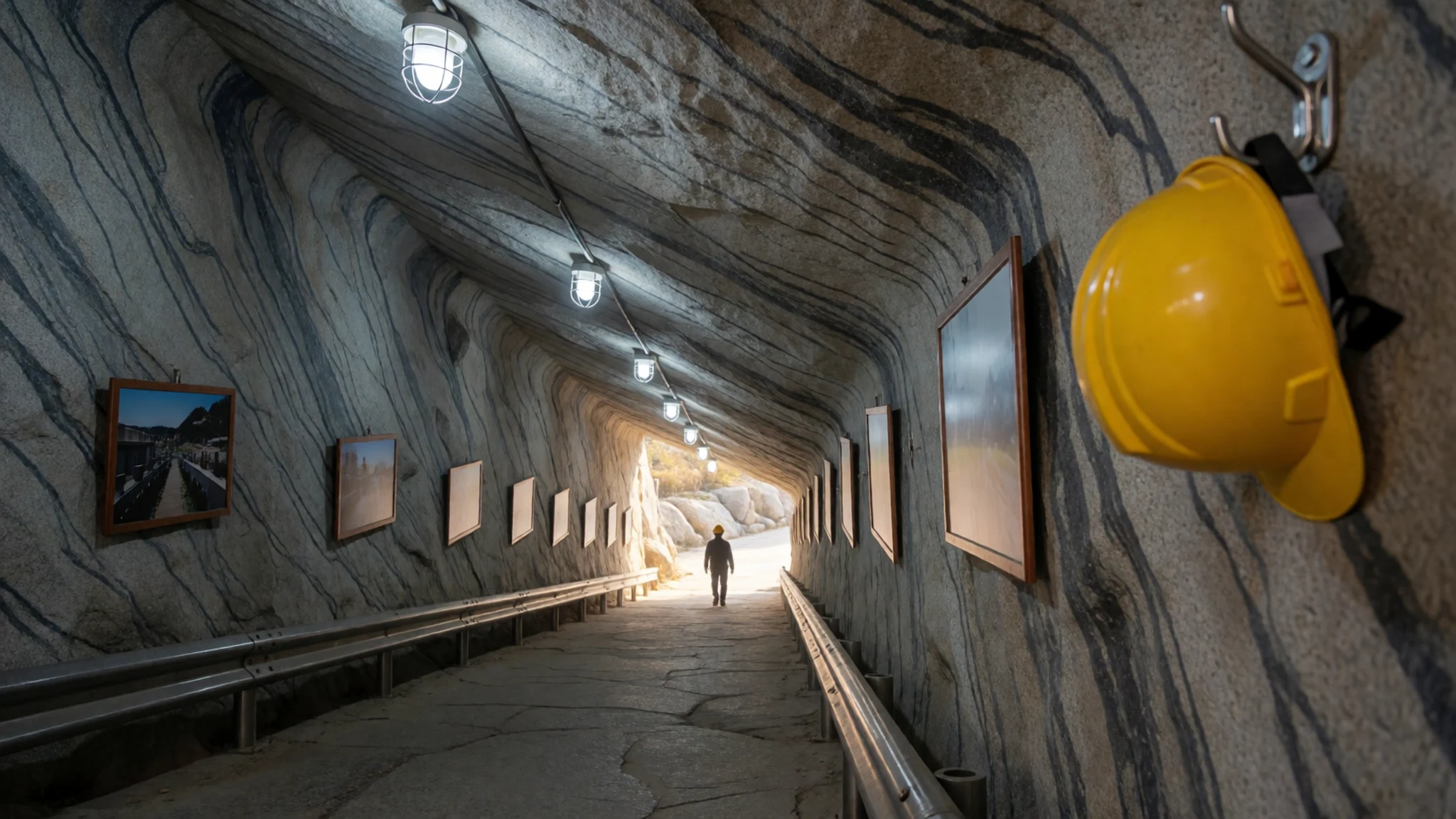
- Dorasan Station — Paju
Dorasan Station sits just south of the DMZ, a modern halt built for trains that would continue north if the line ever opened to ordinary traffic. The platforms are polished and usually empty. Visitors may walk them and study a departure board for a service that does not run. The oddness is the exhibit. Coaches stop briefly, and small stalls sell souvenirs outside.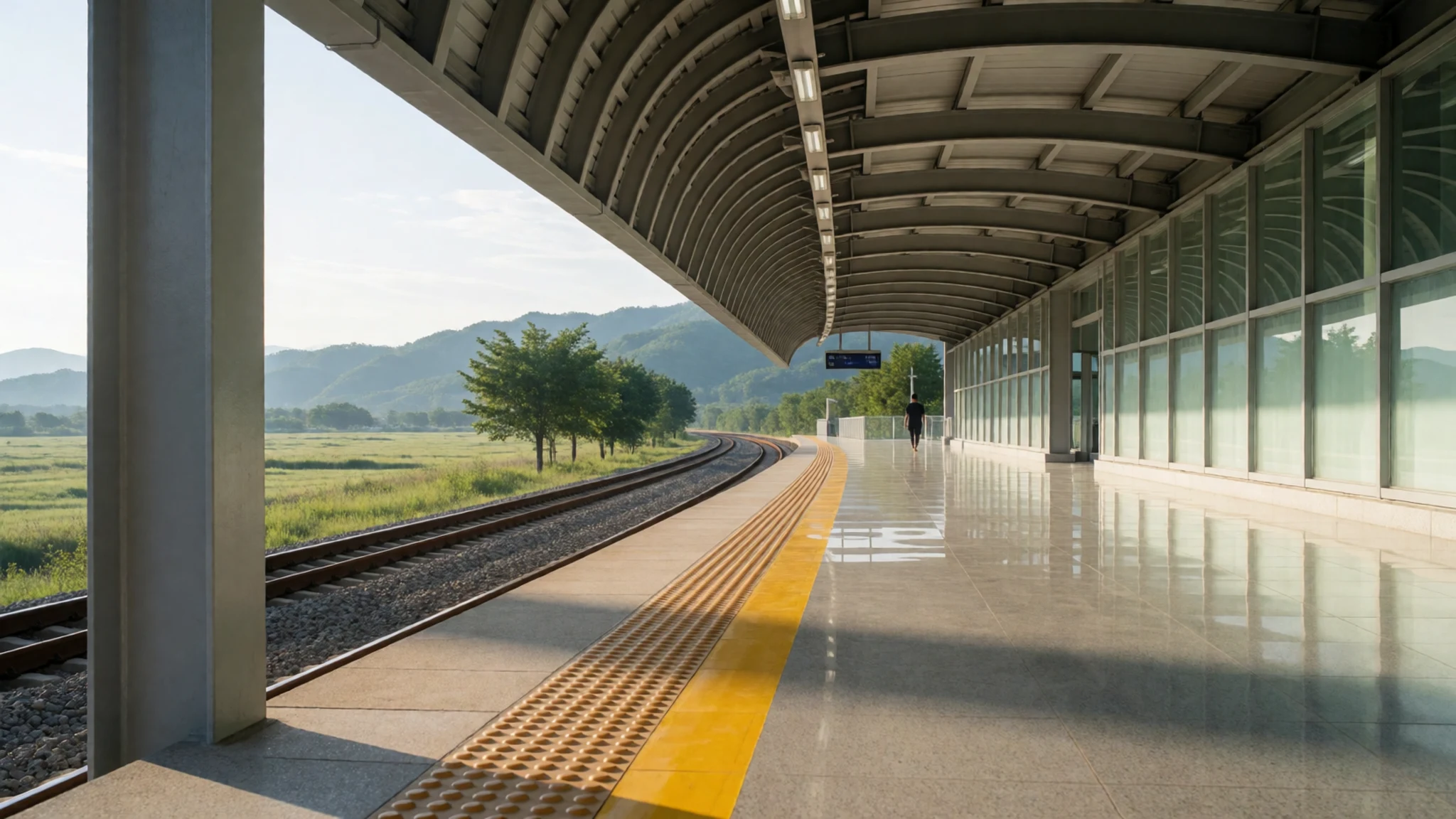
- Daeseong-dong — Joint Security Area
Daeseong-dong, called Freedom Village in English, is a small farming settlement inside the southern edge of the DMZ, visible from the Joint Security Area. Residents live under curfew and military rules, and a tall flagpole carrying the South Korean flag stands over the houses. The village is seen from the tour road, across fields, as proof that civilian life continues on this side of the line.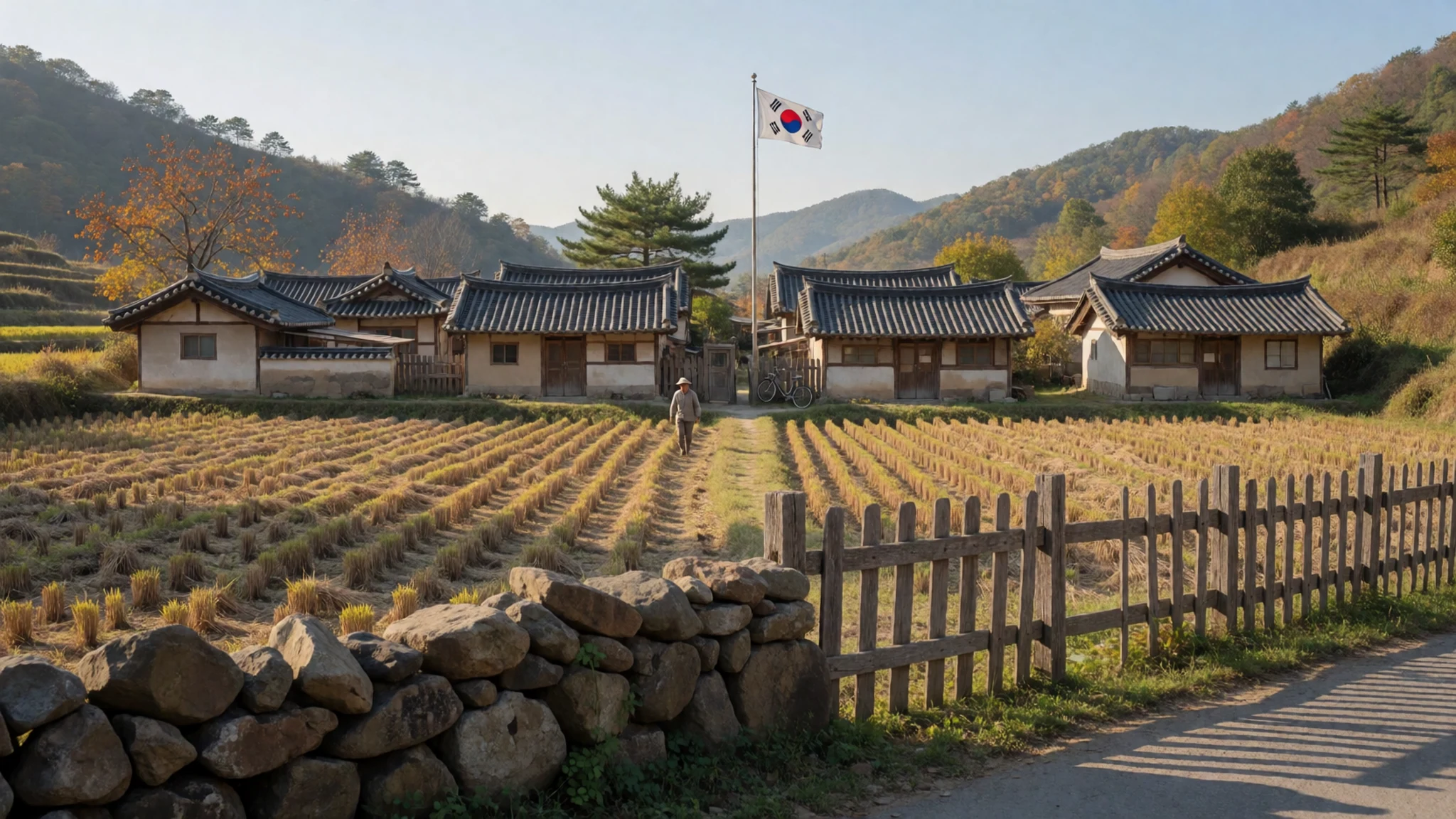
- Kijong-dong — north of Panmunjom
Kijong-dong is the northern settlement facing Daeseong-dong, often called a propaganda village because its blocks and flag were built to be read from the south. Tour groups never enter. From Dora Observatory the buildings look neat, quiet and strangely empty, which is the point of the view. It is a place to look towards, with no waving and no stepping past the rail.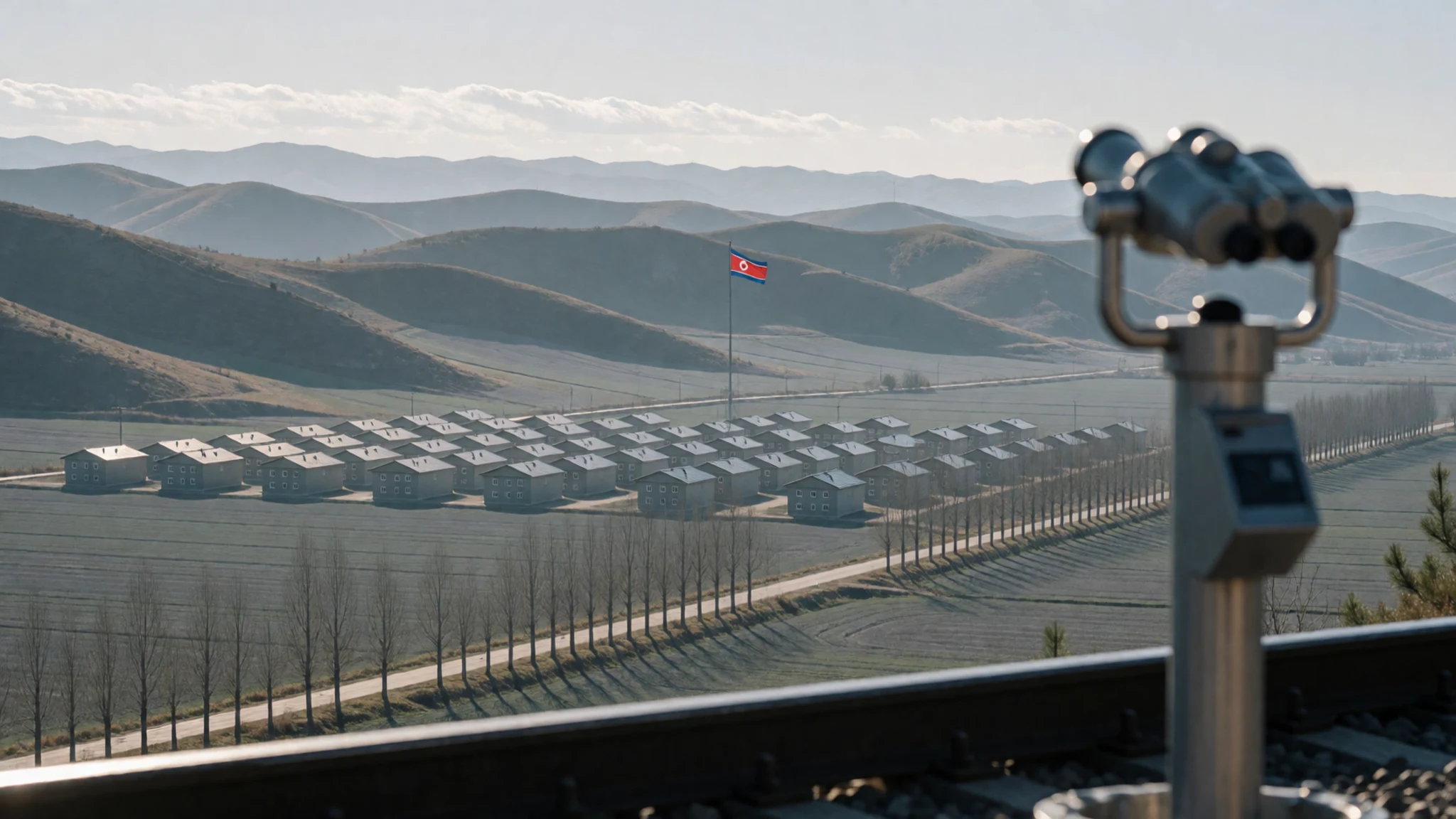
Culture
The DMZ is a military culture that civilians visit, not a neighbourhood with its own festivals. South Korean school groups, veterans and foreign travellers share the coaches, and the dominant mood mixes curiosity with drilled respect. Guides frame the strip as a wound and as an unintended nature reserve, and both descriptions arrive on the same afternoon. The northern side presents the zone as a frontier of resistance; the southern side presents it as evidence of division and of a state that held. Neither telling is neutral, and a visitor who wants only scenery will still be given a political story.
Memorials south of the line, especially around Imjingak, add family grief to the military narrative: ribbons, altars and objects left for relatives who never returned. That quieter register is easy to miss when a coach is running late. Photography belongs to the visit, yet soldiers' faces, certain interiors and anything an escort marks as forbidden are not souvenirs. When you are at the rail or inside the Joint Security Area, follow the guide's instructions exactly, keep your hands still, and do not point or wave towards the northern side.
What to wear
The DMZ has no costume of its own, so dress on a visit comes from Korean custom and from army rules. Hanbok, Korea's traditional clothing, pairs a jeogori jacket with a full chima skirt or baji trousers, in silk, ramie or hemp according to season and ceremony. People wear it at weddings, ancestral rites and cultural shows in Seoul and Paju, not on the tour coaches. Cloth and colour still mark the occasion: bright silk for celebration, pale hemp for mourning.
People who live and work around the southern checkpoints dress as other South Koreans do, in practical jackets, jeans and trainers, with a heavy coat in winter against the wind off the river plain. Soldiers wear uniform. Farmers near the civilian line wear work clothes. Distant figures at Kijong-dong, when any can be seen, are not a guide to style.
Visitors should dress as the tour operator requires. That commonly means modest, neat clothing: covered shoulders, long trousers and closed shoes, with no ripped cloth, no sandals and nothing that resembles a military uniform. Observatories are exposed and windy, so a layer for cold or sudden rain matters more than style. Camouflage prints and slogan shirts cause trouble at the checkpoints. Hanbok belongs at a city ceremony; at the fence, plain outdoor clothes and grip-soled shoes are the sensible choice.
What to eat
- Bibimbap — eateries at Imjingak and in Paju
Bibimbap is warm rice with vegetables, egg and gochujang, stirred at the table. Tour groups meet it in the canteens and eateries around Imjingak after the viewpoints, or in Paju on the way back towards Seoul. It is the reliable hot meal when a coach timetable is tight.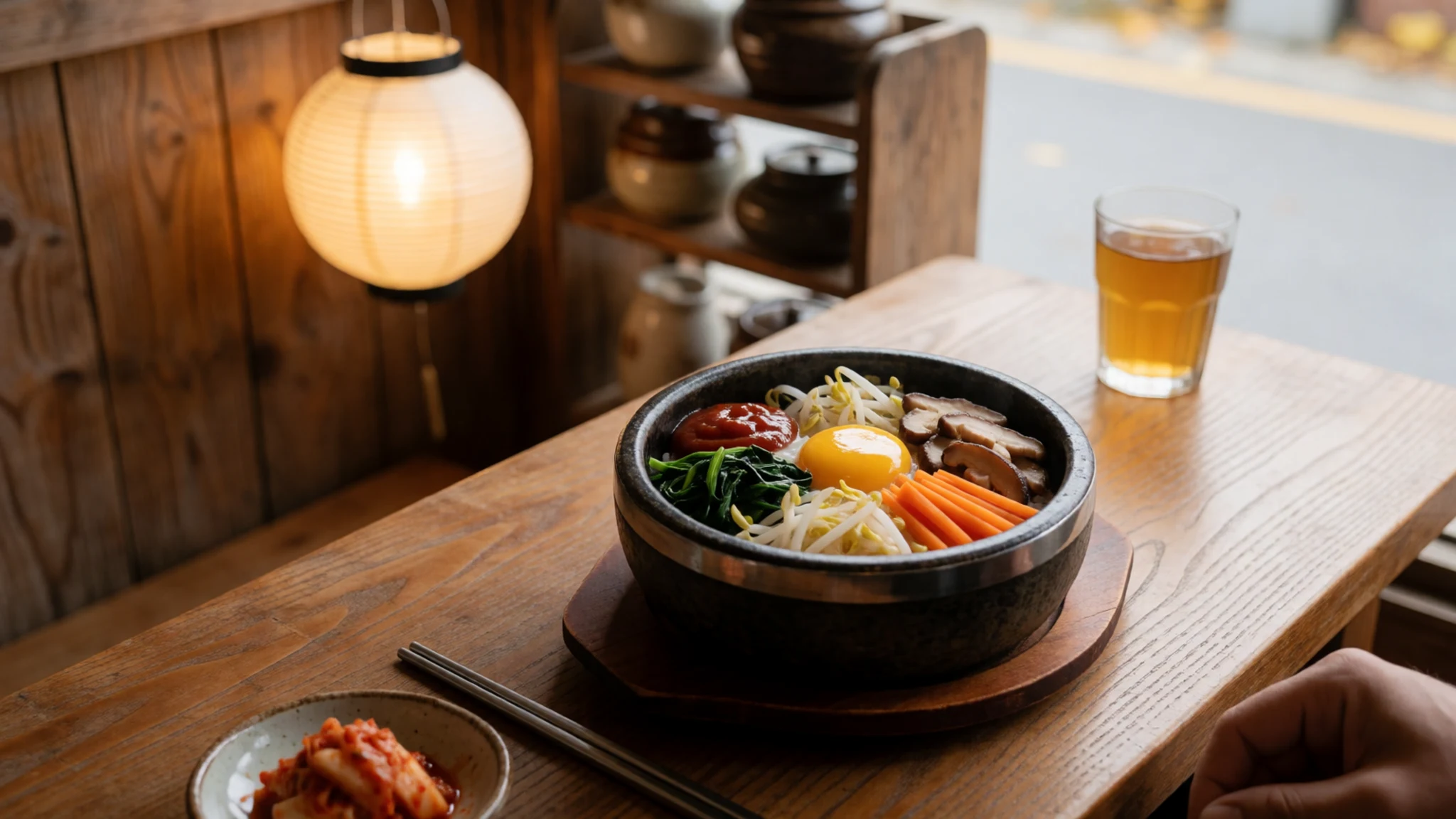
- Pajeon — restaurants in Paju
Pajeon is a thick scallion pancake, crisp at the edge and soft inside, often shared at the table with a dipping sauce. Paju restaurants along the roads south of Imjingak serve it in generous pans, especially in wet or cold weather. Order a small pan if the group is sharing.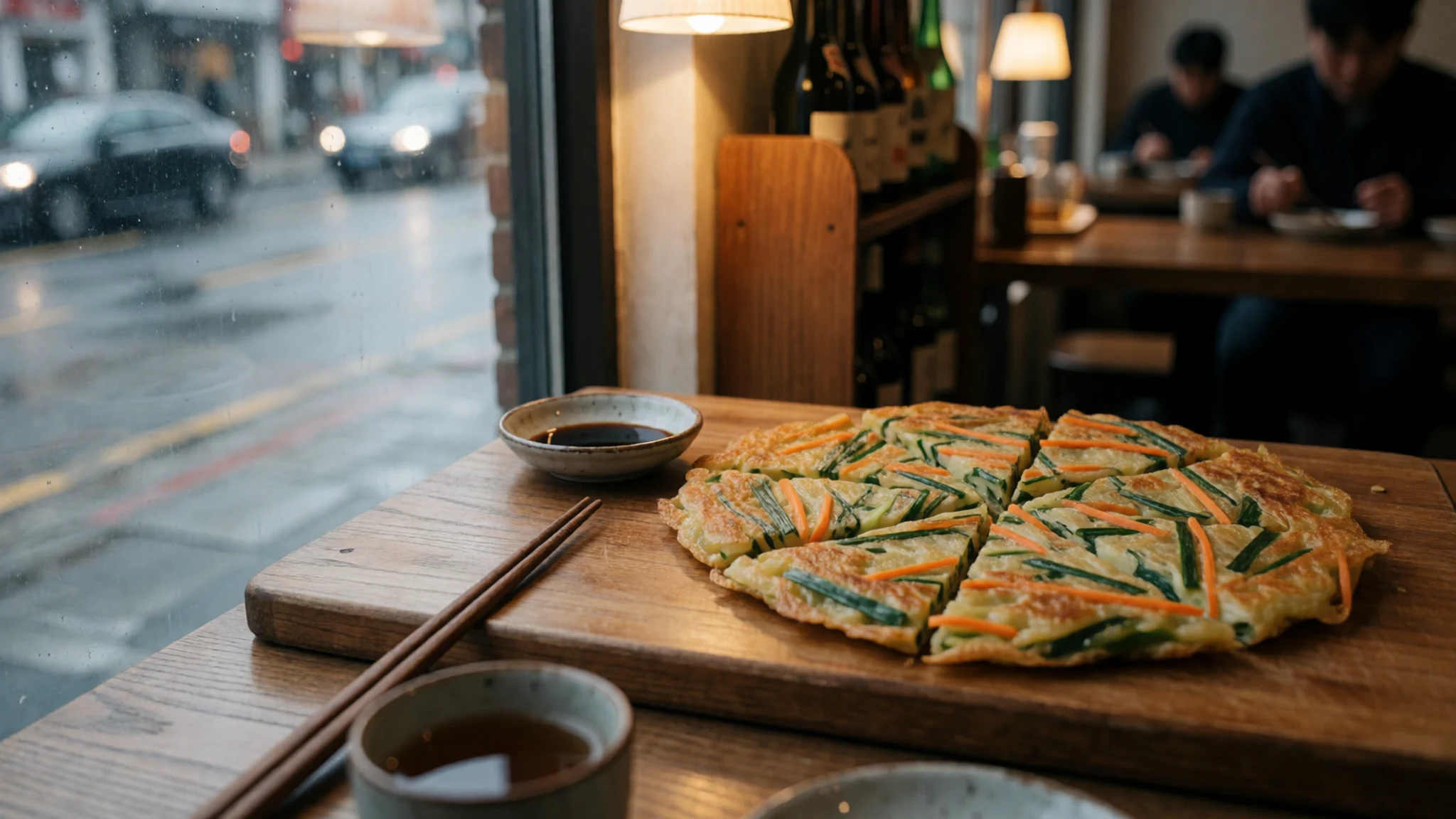
- Makgeolli — small eateries in Paju
Makgeolli is a milky, lightly fizzy rice brew, served in bowls and passed around the table. Small eateries in Paju still pour it with pancake and stew, and it is the local drink most closely tied to this farming plain. It is low in ceremony and easy to share. - Naengmyeon — restaurants between Paju and Seoul
Naengmyeon is cold buckwheat noodles in an icy broth, or tossed in a sharp sauce, a taste associated with the north of the peninsula and widely cooked in the south. Restaurants on the roads between Paju and Seoul serve it when the weather turns hot and heavy. - Budae-jjigae — eateries south of the civilian line
Budae-jjigae, army-base stew, is a hot pot of kimchi, instant noodles and sausage, a camp-side dish that grew up near military posts. Eateries just south of the civilian line serve it as a shared pot after a cold stint outdoors.
Plan it
Best time. Spring and autumn, when the ridges are clearer and the wind on the platforms is easier to bear. Winter is harsh, and high summer is hot, humid and often wet.
How long. 1–2
Getting there. Fly into Incheon International Airport or Gimpo Airport and continue to Seoul, then join a guided coach north through Paju to the civilian checkpoints. The last stretch is not a casual bus hop: the Joint Security Area and the main viewpoints admit visitors only on an approved tour, with a passport. The Gyeongui rail line runs towards Dorasan, but ordinary passengers do not simply ride it to the fence.
Budget. mid
Tips
- Book an authorised DMZ tour before travelling; walk-up entry is not how this place works.
- Carry a passport, because checkpoints compare the document with the holder.
- Accept that the military can close the Joint Security Area at short notice and still run the southern viewpoints.
- Wear what the operator specifies, and bring a windproof layer for the ridges.
- Leave Seoul early; checkpoints and viewing decks slow down once the coaches stack up.
- Cards are fine in Paju, yet a little cash helps at the small stalls by Imjingak and Dorasan.
Etiquette
- Stay with the guide and do not step past ropes, kerbs or signs.
- Do not point, wave or shout towards soldiers or the northern side.
- Photograph only where the escort allows.
- Keep voices low at the memorials around Imjingak.
- Do not wear camouflage or clothing that imitates a uniform.
Nearby
Sources
- Wikidata Q164226 (CC0)
- Wikipedia — Korean Demilitarized Zone (CC BY-SA 4.0)
- Wikivoyage — Korean Demilitarized Zone (CC BY-SA 4.0)