Dadohaehaesang
Dadohaehaesang, South Korea
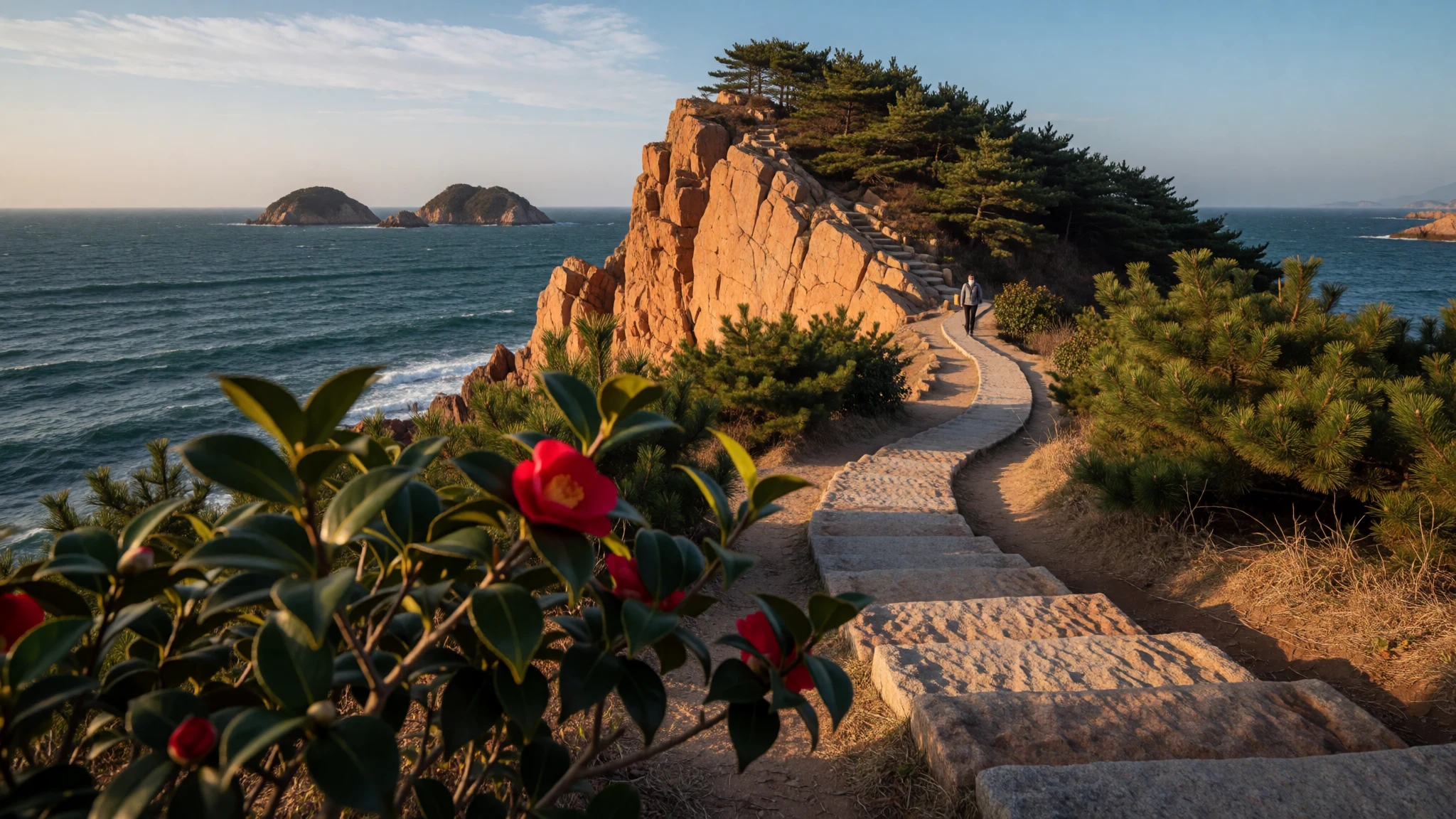
Dadohaehaesang is a maze of islands, cliffs and fishing harbours off South Korea's southwest, crossed by ferry and remembered for rock and tide.
The place
Dadohaehaesang (다도해해상) is the maritime park spread across the island-broken sea of Jeollanam-do, in the southwest of South Korea. It is not one bay or one beach. It is a long scatter of channels, headlands and islands, some inhabited, many only rock and scrub, stitched together by ferry rather than by road. Sinan County holds the names visitors learn first. Hongdo rises as red cliff and thick green cover, with a coast path and almost no cars. Heuksando is darker and more settled: a working harbour, steep lanes, and a ridge, Sangrabong, from which neighbouring islands sit in a ring. Candle Rock and other sea stacks stand offshore like worn pillars, and uninhabited islets show up on the charts as nothing but stone and grass. Villages tuck into the sheltered side of an island: stone walls, small fields, racks of drying seaweed, and the smell of salt and grilled fish long before anything like a resort strip. Weather is part of the map. A still morning makes the channels look easy; a rising wind decides which boats run and how rough the deck feels. In school holidays and on clear weekends the famous quays fill with hikers and day-trippers. Outside those rushes the same paths are quiet, shared with gulls and people who live there. The pleasure sits in the crossing as much as the landing. Each island is a short, separate world, and the scale of Dadohaehaesang is felt as hours on the water between one quay and the next.
Its story
Dadohaehaesang's story is a fishing story before it is a park story. These islands fed households from the sea long before anyone drew a park boundary around them: boats went out for rockfish, octopus and seaweed, and the drying grounds beside the harbour were as important as the fields. Isolation cut both ways. Communities on Hongdo and Heuksando kept their own speech, songs and ways of sharing a catch, and the mainland could feel far even when the weather was kind. Some islands were places people were sent, not places they chose; exile, in older Korean history, often meant a remote coast rather than a prison wall, and the southwest archipelago carried that memory. Faith left a visible mark too. Small shrines and, later, a quiet run of churches sit among the houses, because island life asked for ritual as well as nets. The modern park idea gathered an already peopled seascape into one name, Dadohaehaesang, so that cliffs, villages and empty islets could be cared for together. That care sits in tension with ordinary life. Ferry links brought hikers, cameras and new income, and also weekends when a path above the village is busier than the village itself. Residents still work the tide. Visitors walk through a landscape that is protected and inhabited at once, and the honest history of Dadohaehaesang is that double use: a national park whose harbours were never empty to begin with.
What to see
- Hongdo — Sinan County, Jeollanam-do
Hongdo is the red-cliff island in Sinan that many people picture when they think of Dadohaehaesang. A coast path winds between pine, camellia and sheer rock, with almost no cars inland, so the circuit stays a walk. Sunset turns the cliffs a deep rust against a darkening sea. The path and the light are the point, and kind weather brings company on the quay.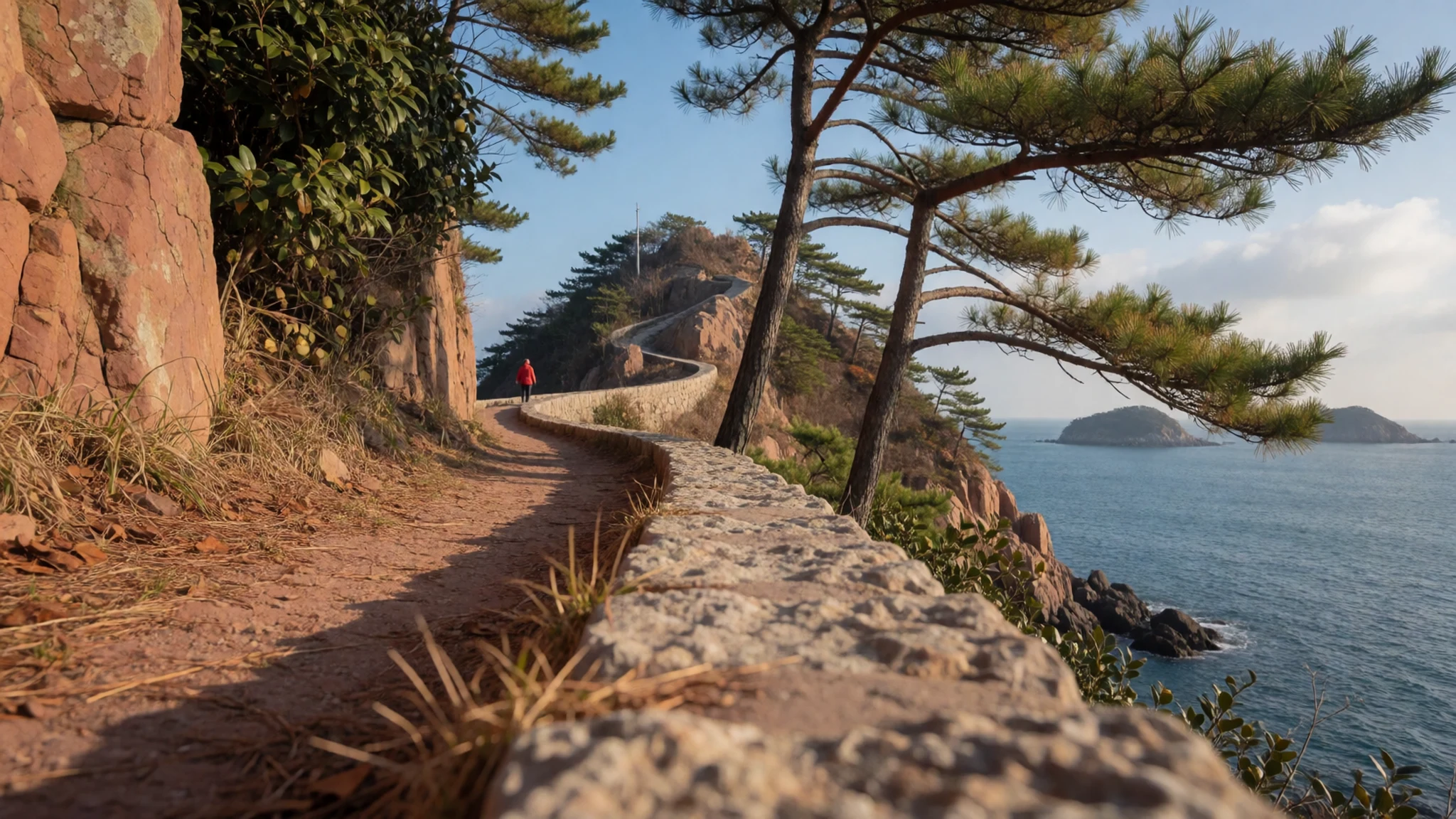
- Sangrabong — Heuksando, Sinan County
Sangrabong is the peak above Heuksando's harbour, and a fine place in Dadohaehaesang to see the islands sit in a ring. The climb is short and steep, and the top looks over water, rock and the island's triple peaks. Heuksando below is a working port, so the walk begins and ends among lanes, boats and drying fish. The summit wind can cut even on a mild day.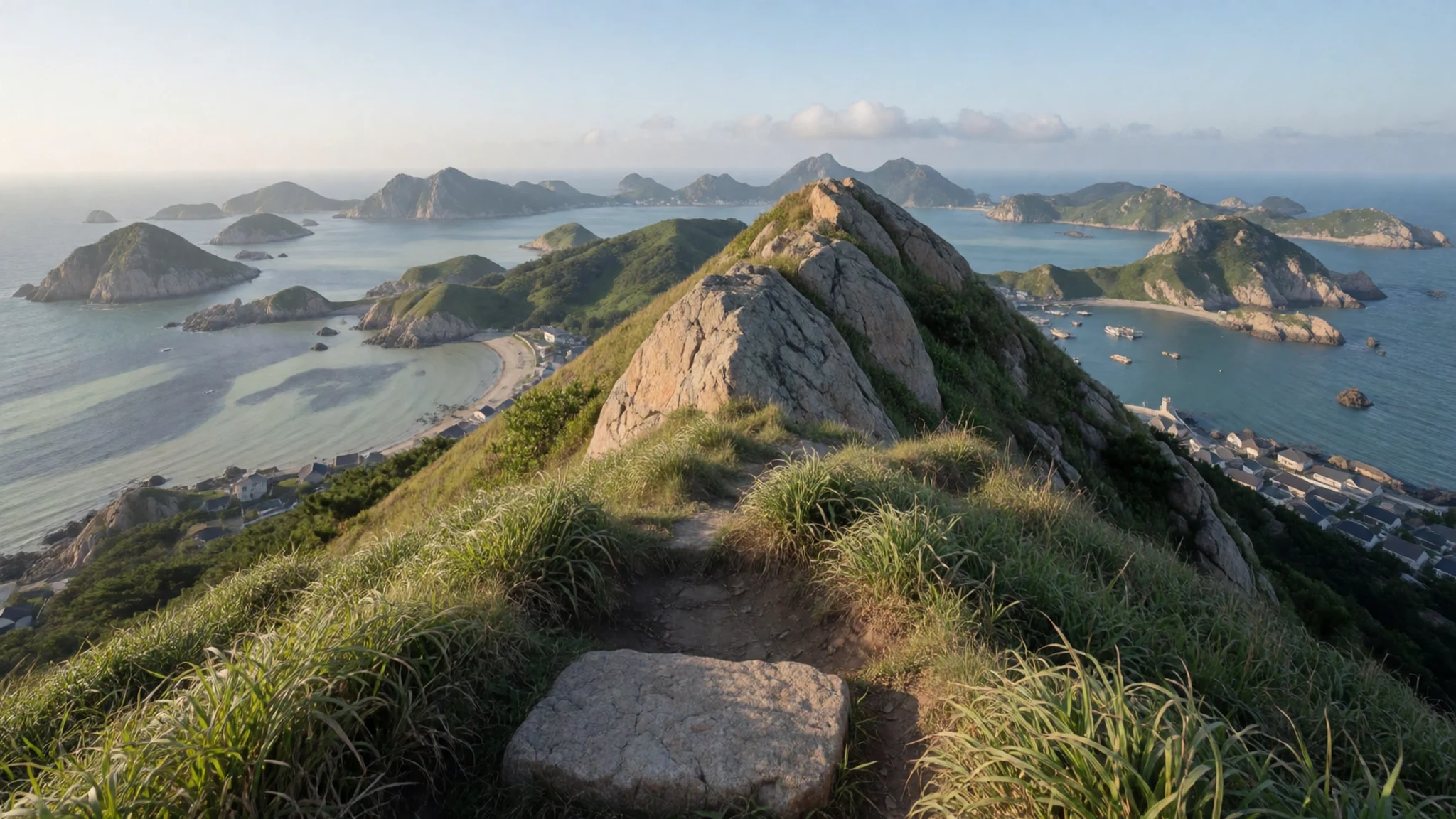
- Candle Rock — Dadohaehaesang coast
Candle Rock is a sea stack in Dadohaehaesang, named for the tall, slightly tapered shape the waves have left. It is less a place to enter than a form to watch from a boat or a nearby shore, a single column against open water. Neighbouring stacks repeat the idea at a smaller scale. Tide, grain and silhouette are the whole visit.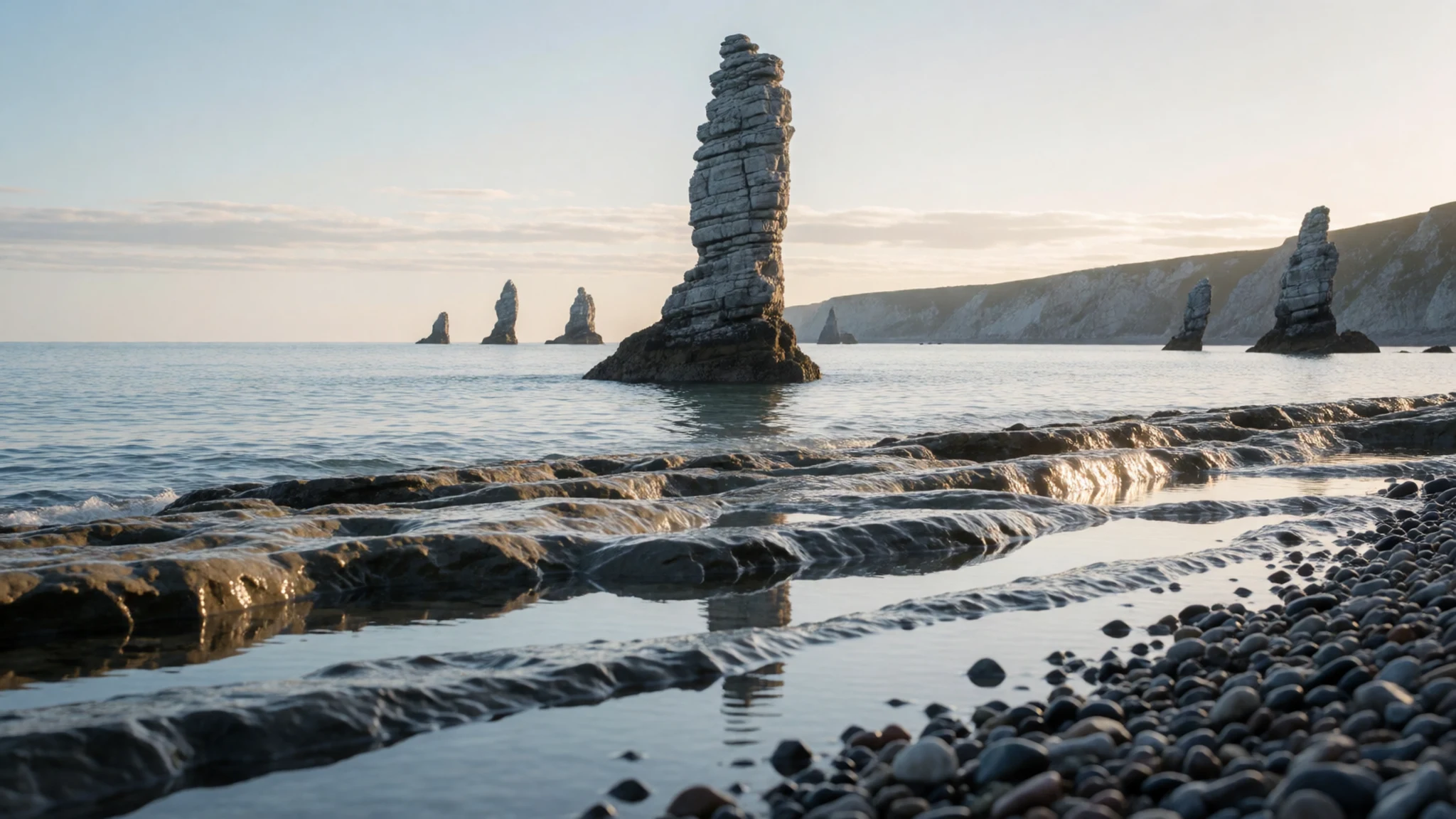
- Uninhabited islets — Offshore channels
Much of Dadohaehaesang is island with no village: grass, cliff and a landing that only a small boat would try. These islets are the park's quiet bulk, seen from a ferry window as a passing wall of rock or a low green back in the channel. There is no shop, no path and often no safe way ashore. Treat them as view and habitat, not as a landing to attempt.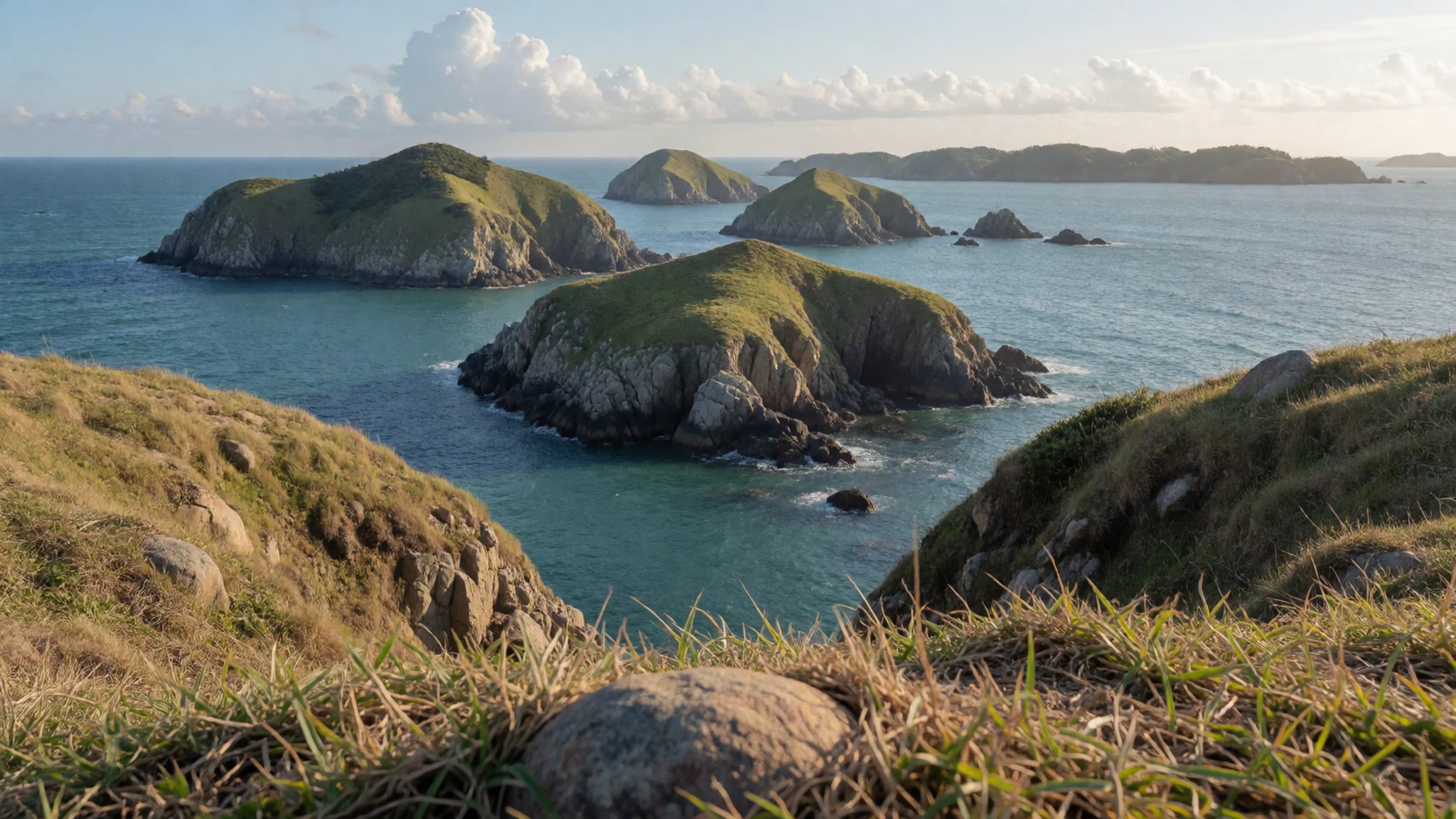
- Rock outcrops — Island shores
The rock outcrops of Dadohaehaesang are the park in its everyday form: folded stone, salt stain and a drop to clear water. Some are viewpoints a short walk from a village; others are only a shape passing the ferry rail. Camellia and pine take hold in cracks where soil is thin, which is why even a bare island reads green from a distance.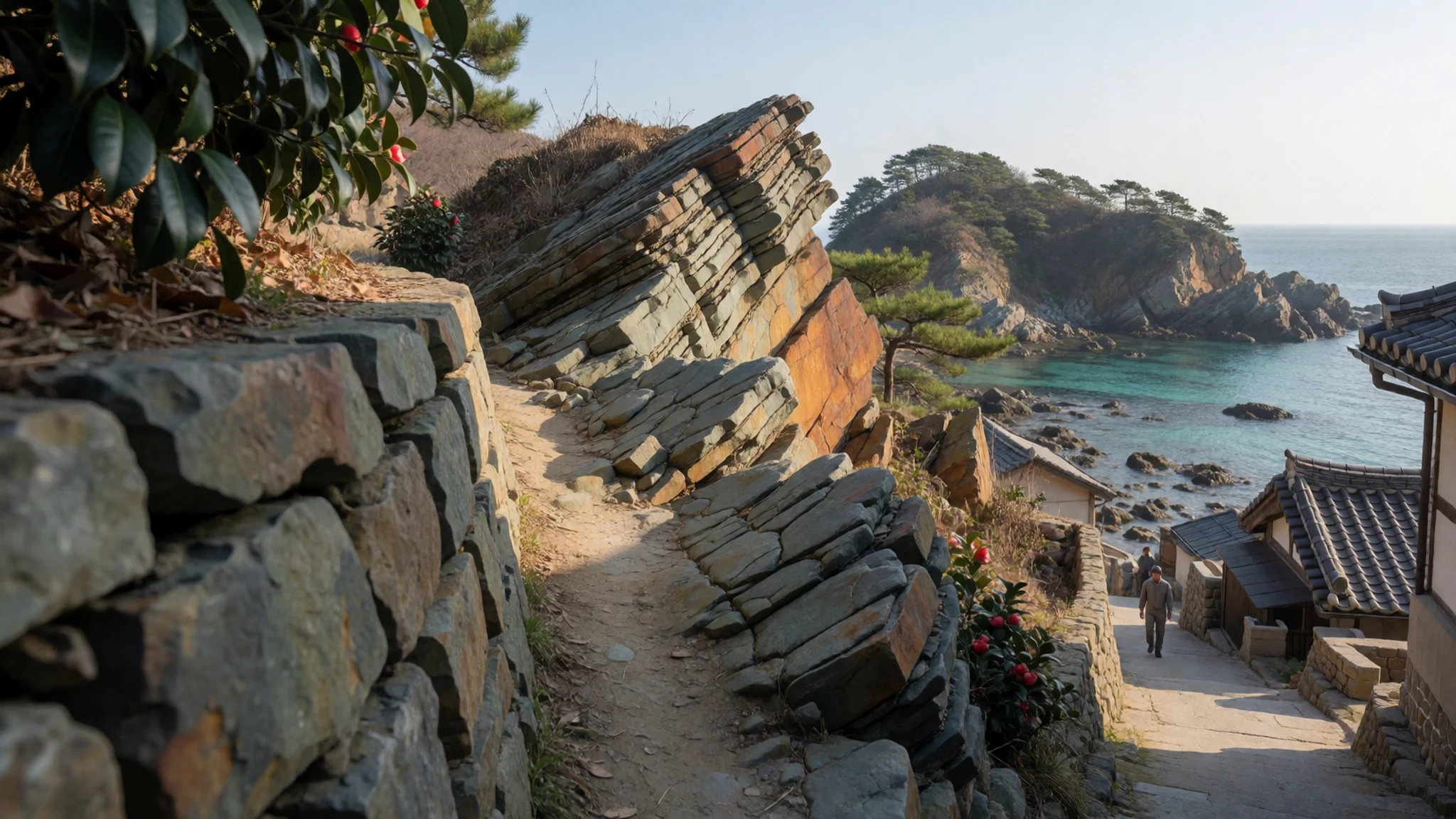
Culture
Dadohaehaesang's culture is island culture: work paced by tide and ferry, not by a city clock. Households still orient themselves to the harbour, where the day's catch, the seaweed harvest and news from the next island all arrive. Food is where that life shows itself in public. A meal is often shared, with grilled fish, greens and rice set out for the table rather than plated as a private portion, and an older person is served first. Seasonal rites and village festivals mark a good catch or a calm stretch of sea; the details differ from island to island, and a visitor who happens upon one is a guest, not the audience. Churches and small shrines stand close together in a way that surprises people who expect a single tradition. Both are part of ordinary weeks here — a Sunday service, a bow at a family rite — and both ask for the same restraint: quiet clothes, a soft voice, shoes off where the step and the slippers say so. Speak before you photograph a person at work on the shore or in a drying yard.
What to wear
Dadohaehaesang does not keep a costume that belongs only to these islands, but the dress around it belongs to Korea's south coast. For rites, weddings and festival days people still bring out hanbok: a jeogori jacket over a chima skirt or baji trousers, cut full enough to move, in silk for formal wear and in lighter ramie or cotton when the air is humid. Colours tend toward the practical and the festive rather than court excess — white and pale tones for solemn days, stronger dyes when a village is celebrating. Everyday clothing has long since moved on. On the quay and the path the usual clothes are hiking layers, a cap, sun sleeves and shoes that can survive salt water, because the sun is hard and the rock is wetter than it looks. Fishers wear waterproofs and boots; elders may still favour a simple jacket and a hat against the wind. A visitor should copy the practical half of that, not the ceremonial half, unless invited to a rite. Pack a light rain shell, a warm mid-layer even in the milder months, trousers you can sit on a ferry floor in, and shoes with a grip that you can also slip off at a doorway. Covered shoulders and knees are the safe choice at a shrine or a church. Save hanbok for a rental shop in a city; out here it reads as costume unless the day is actually ceremonial.
What to eat
- Hoe — Harbour eateries on Hongdo and Heuksando
Hoe, raw fish sliced and eaten with ssamjang, garlic and a wrap of leaves, is the harbour meal of Dadohaehaesang. Rockfish and other day-boat catch show up at eateries facing the quay on Hongdo and Heuksando. It tastes of that morning's tide.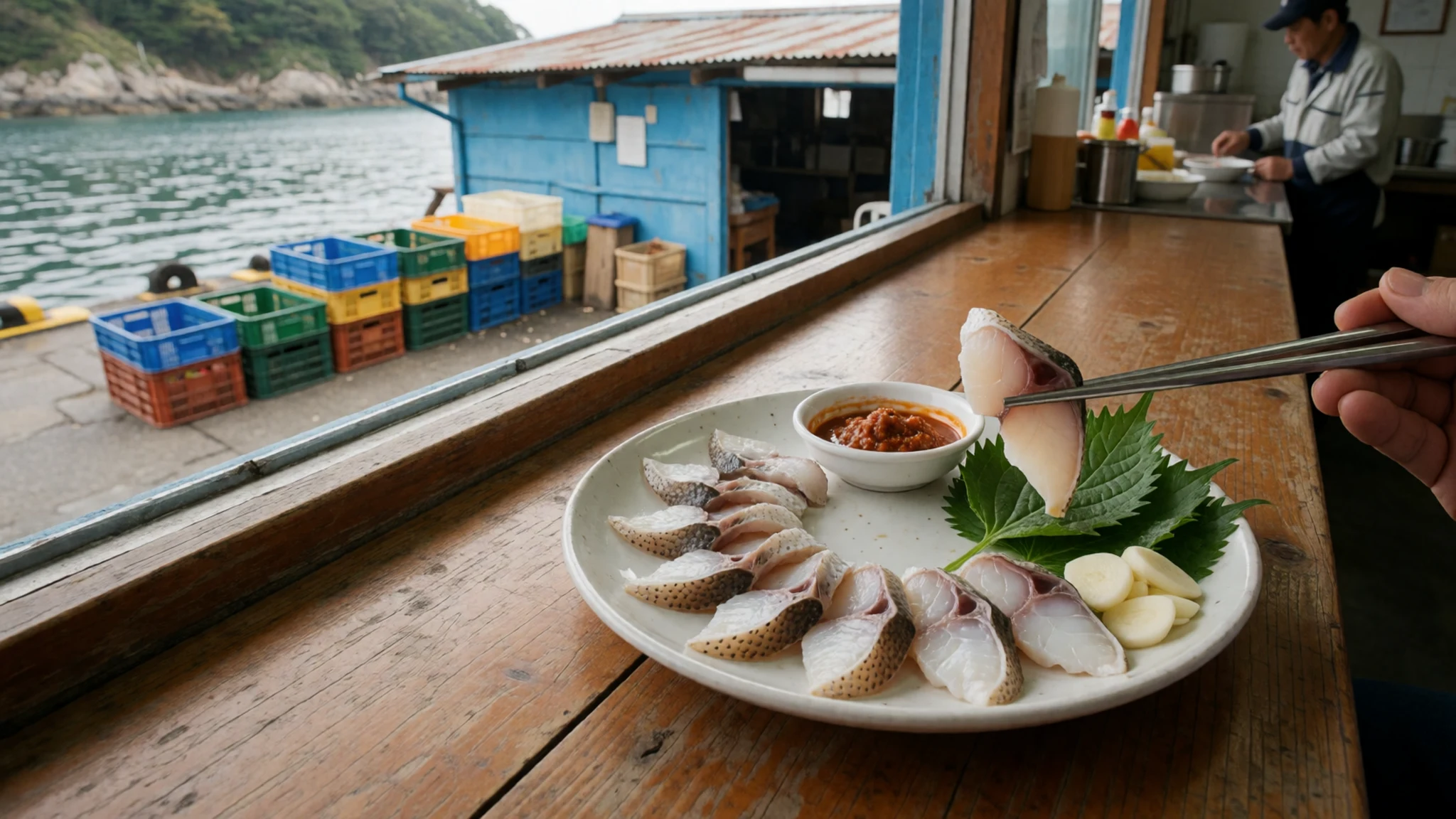
- Hongeo — Market eateries in Mokpo, and some island kitchens
Hongeo, skate left to ferment until it turns sharply pungent, belongs to the Jeolla coast that links Dadohaehaesang to the mainland, especially Mokpo. Island kitchens do serve it, yet a market eatery in Mokpo, before the ferry, is the straightforward place to try it.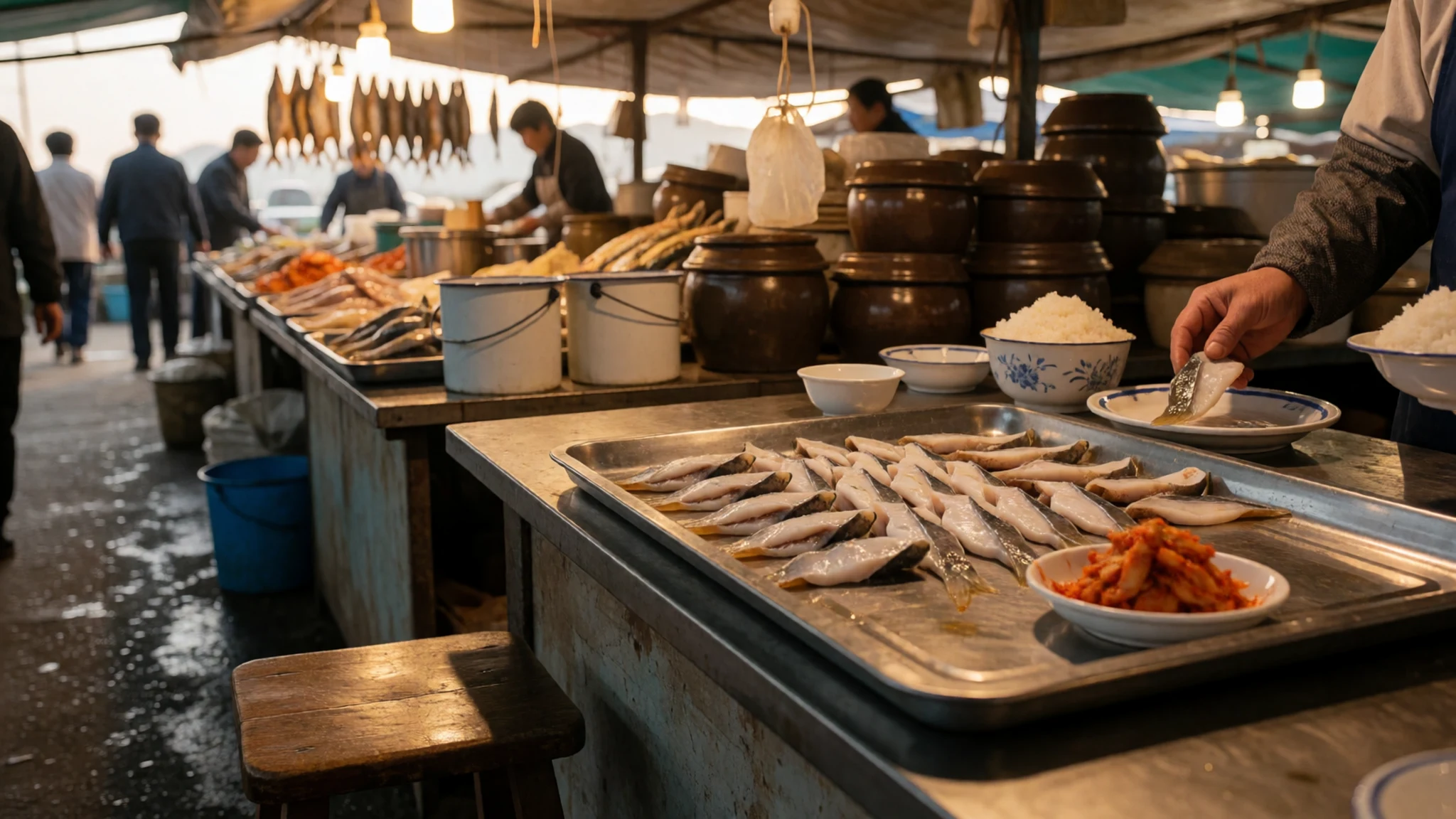
- Grilled rockfish — Harbour eateries on inhabited islands
Grilled rockfish, brushed with salt or a light seasoning and cooked over charcoal, is the ordinary feast after a landing in Dadohaehaesang. Order it at harbour eateries where the tanks or the morning boxes are in sight, on Hongdo, Heuksando and other inhabited islands. - Miyeok — Village shops, ferry-port stalls and small eateries
Miyeok, brown seaweed dried on racks along the Dadohaehaesang coast, turns up as soup, as a seasoned side and as a gift to take home. Here it is everyday food, not a speciality performance. Bowls of miyeokguk appear in small eateries and in homes that host visitors. - Ssambap — Mokpo market eateries and island eateries near the ferry
Ssambap, rice and leaves for wrapping with ssamjang and grilled meat or fish, is how a long lunch works in Dadohaehaesang. Jeolla tables add gat-kimchi, a mustard-leaf kimchi sharper than the cabbage kind. Look for it in Mokpo market eateries and in island eateries feeding ferry crowds.
Plan it
Best time. Dadohaehaesang rewards a visit in late winter and early spring, when camellia flowers on islands such as Hongdo and crossings are more often calm, and again in autumn, when the walking weather clears. Summer is hot, humid and crowded, and it is typhoon season. Winter is quiet and cold, and a hard wind can stop the ferries.
How long. 3–4
Getting there. Reach Dadohaehaesang via Mokpo, the usual ferry hub for Hongdo and Heuksando. Gwangju and Muan are the nearest airports, and the train from Seoul also ends at Mokpo. The last leg is always a passenger ferry; check the operator on the day, because wind cancels boats. There is no road that links the islands.
Budget. mid
Tips
- Book ferries and rooms on the islands ahead for weekends and school holidays.
- Begin walks soon after arrival; clear weather fills quays and viewpoints.
- Carry cash, because small village shops and some eateries do not take cards.
- Leave spare time in case a crossing is delayed or cancelled.
- Bring drinking water and an extra layer; shops thin out away from the main harbours.
- Confirm sailings with the ferry operator before you travel.
Etiquette
- Ask before you photograph residents, especially people working on boats or drying yards.
- Carry rubbish off uninhabited islets and cliff paths; bins are not the plan.
- Remove shoes when you step up into a home, a shrine or a temple hall.
- Offer seats to elders on the ferry and keep village lanes quiet early and late.
Nearby
Sources
- Wikidata (CC0)
- Wikipedia (CC BY-SA 4.0)
- Wikivoyage (CC BY-SA 4.0)
Wildlife
- Gull (animal)
Think of the black-tailed gull as a seabird of East Asian shorelines, a coastal neighbour with a name taken from its tail. Around Dadohaehaesang it turns up on the peaceful paths away from the busier stretches, sharing space with local residents. Enjoy it quietly, stay well back so it can go about its business, and let a guide help you if you can. Please never feed it; a wild gull should find its own dinner. - Black-tailed gull (bird)
Think of the black-tailed gull as a seabird of East Asian shorelines, a coastal neighbour with a name taken from its tail. Around Dadohaehaesang it turns up on the peaceful paths away from the busier stretches, sharing space with local residents. Enjoy it quietly, stay well back so it can go about its business, and let a guide help you if you can. Please never feed it; a wild gull should find its own dinner.