Shanghai
Shanghai, People's Republic of China
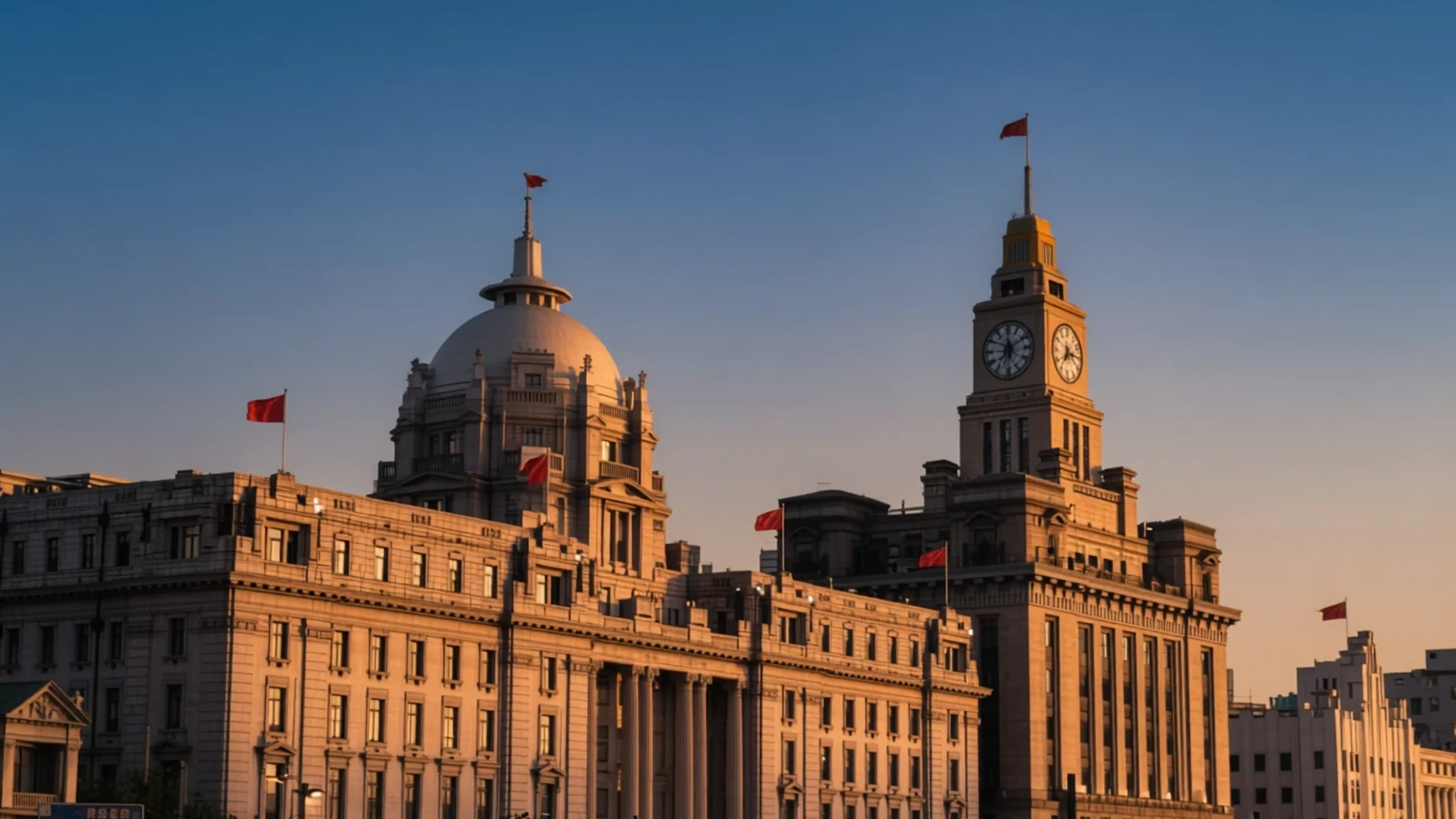
Shanghai merges soaring modern architecture with historic lanes, maritime trade history and an energetic culinary culture on the Yangtze delta.
The place
Shanghai sits upon the southern estuary of the Yangtze River, where the Huangpu River cuts directly through the municipality. As a direct-administered city in China, it functions as a primary global node for finance, commerce, science, and maritime logistics, anchored by a port handling immense container volumes. Originally established as a humble fishing settlement and market town, the locality expanded exponentially during the nineteenth century due to international trade and its advantageous maritime position. Following the First Opium War, the port was forced open to European commerce, leading to the creation of the Shanghai International Settlement and the French Concession. These foreign areas transformed the municipality into a major financial and commercial capital across Asia by the nineteen-thirties, leaving an architectural legacy of European neoclassical and art deco buildings alongside traditional Chinese lane structures. The modern urban landscape is defined by the sharp contrast between the historic waterfront promenade known as the Bund and the futuristic skyscrapers of Lujiazui directly across the water. Millions of residents navigate an expansive urban territory characterised by densely packed lanes, overhead elevated highways, and extensive transit networks linking commercial hubs, residential districts, and industrial zones. Despite intense urban renewal and rapid economic growth over recent decades, the municipality retains distinct geographic and cultural ties to its delta surroundings, remaining shaped by the river networks and maritime trade routes that initially spurred its growth from a local market town into an international metropolis.
Its story
Human habitation in the western territories of modern Shanghai dates back six millennia, establishing early communities across the delta marshes. During the Spring and Autumn period, the land belonged to the Kingdom of Wu before successive conquests brought it under the control of the Kingdom of Yue and later the Kingdom of Chu. In the era of the Warring States, the region formed part of the fief belonging to Lord Chunshen of Chu, one of the prominent lords of that period. Local folklore maintains that he directed the excavation work on the Huangpu River, an essential waterway for the entire territory, whose historical designation as the Chunshen River provided the city with its poetic abbreviation and local nickname of Shen. Early fishermen operating in the vicinity utilised a specific bamboo fishing implement known as a hu, which designated the mouth of Suzhou Creek just north of the Old City and subsequently became a standard abbreviation and alternative name for the settlement. During the imperial era under the Tang and Song dynasties, Qinglong Town within the modern Qingpu District operated as a vital commercial port. Founded in the eighth century, the settlement developed into a major trade hub for the southeastern region, facilitating active commercial exchanges with provincial ports along the Yangtze River and the wider Chinese coastline, as well as international partners including Japan and Silla.
What to see
- The Bund — Huangpu District along the waterfront
The Bund preserves a stately architectural line of nineteenth and twentieth-century bank buildings, commercial houses, and consulates facing the Huangpu River. Visitors walk along the grand stone promenade to observe European masonry facades that reflect the city's treaty port era, standing directly opposite the towering skyscrapers of Lujiazui.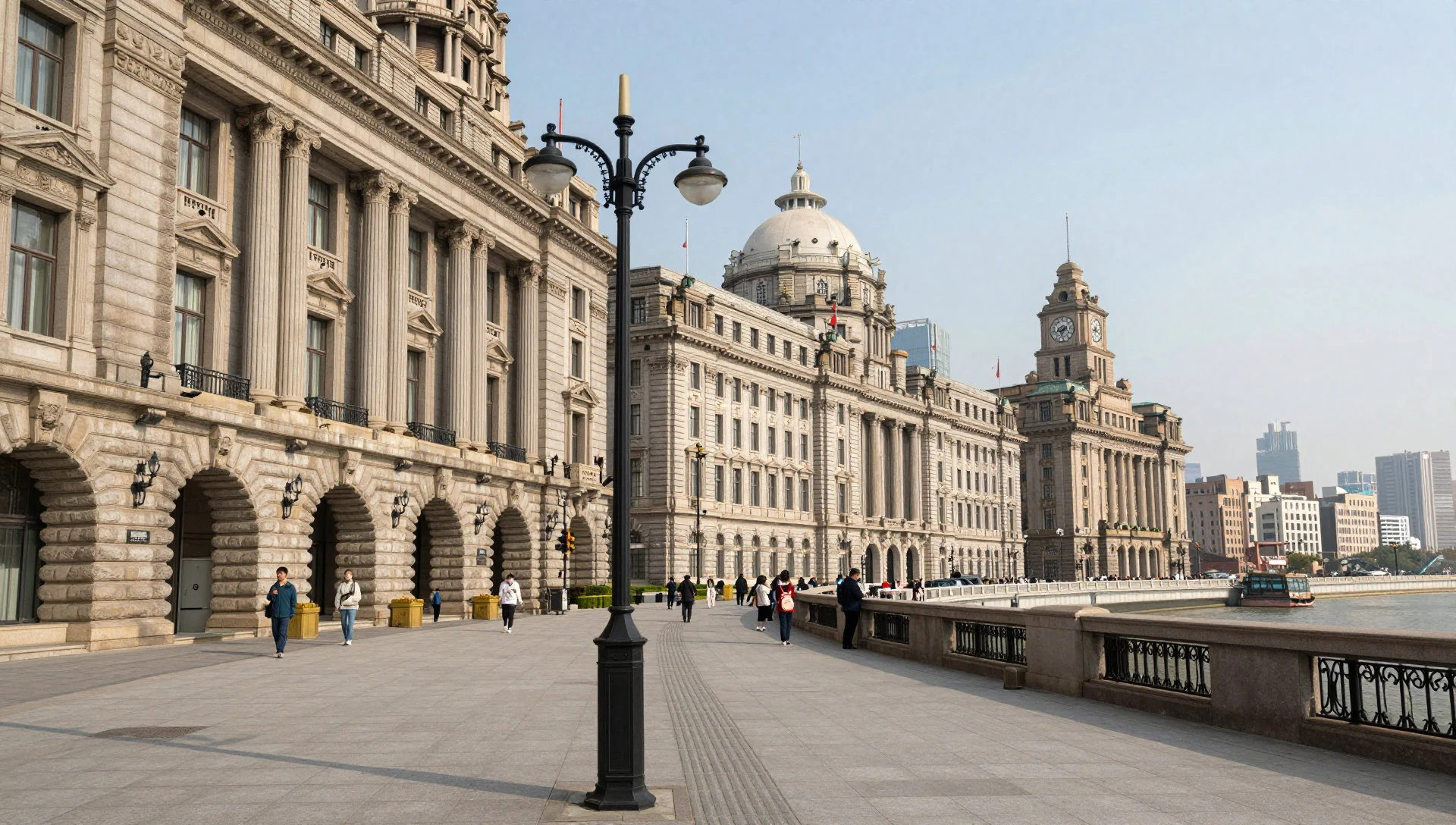
- Yu Garden — Old City near the Chenghuangmiao
Yu Garden offers an extensive classical landscape designed during the Ming dynasty, featuring traditional pavilions, ornamental rockery piles, zig-zag bridges, and quiet ponds. Situated adjacent to the crowded bazaars of the Old City, the walled garden complex provides a tranquil escape into historic Chinese landscape design.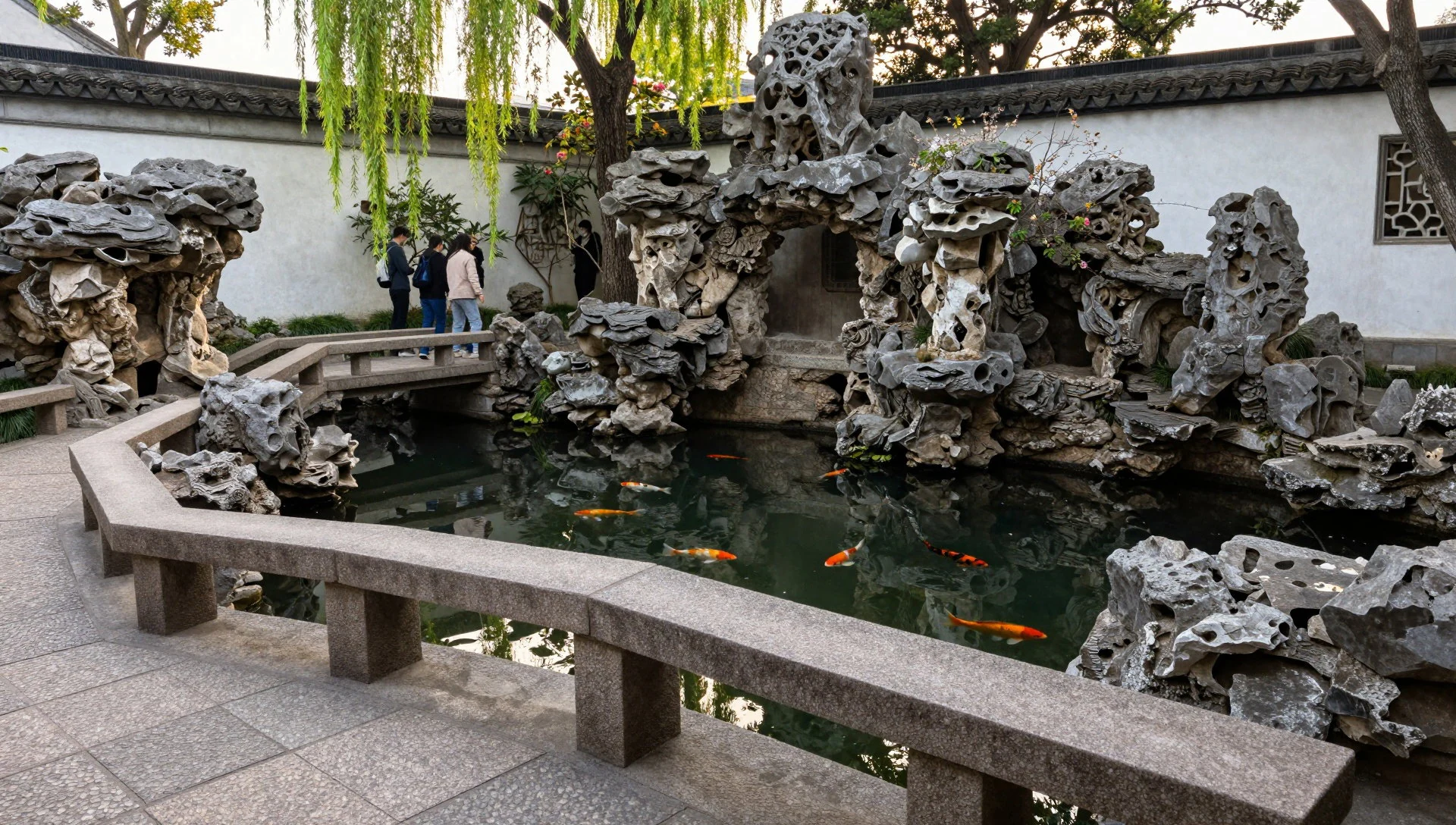
- Jing'an Temple — Jing'an District on West Nanjing Road
Jing'an Temple presents an active Buddhist sanctuary originally founded during the Three Kingdoms period, though the present structures reflect later rebuilding efforts. Located along a busy commercial thoroughfare, the complex features gilded roofs, large ceremonial halls, courtyard statues, and quiet halls for prayer and reflection.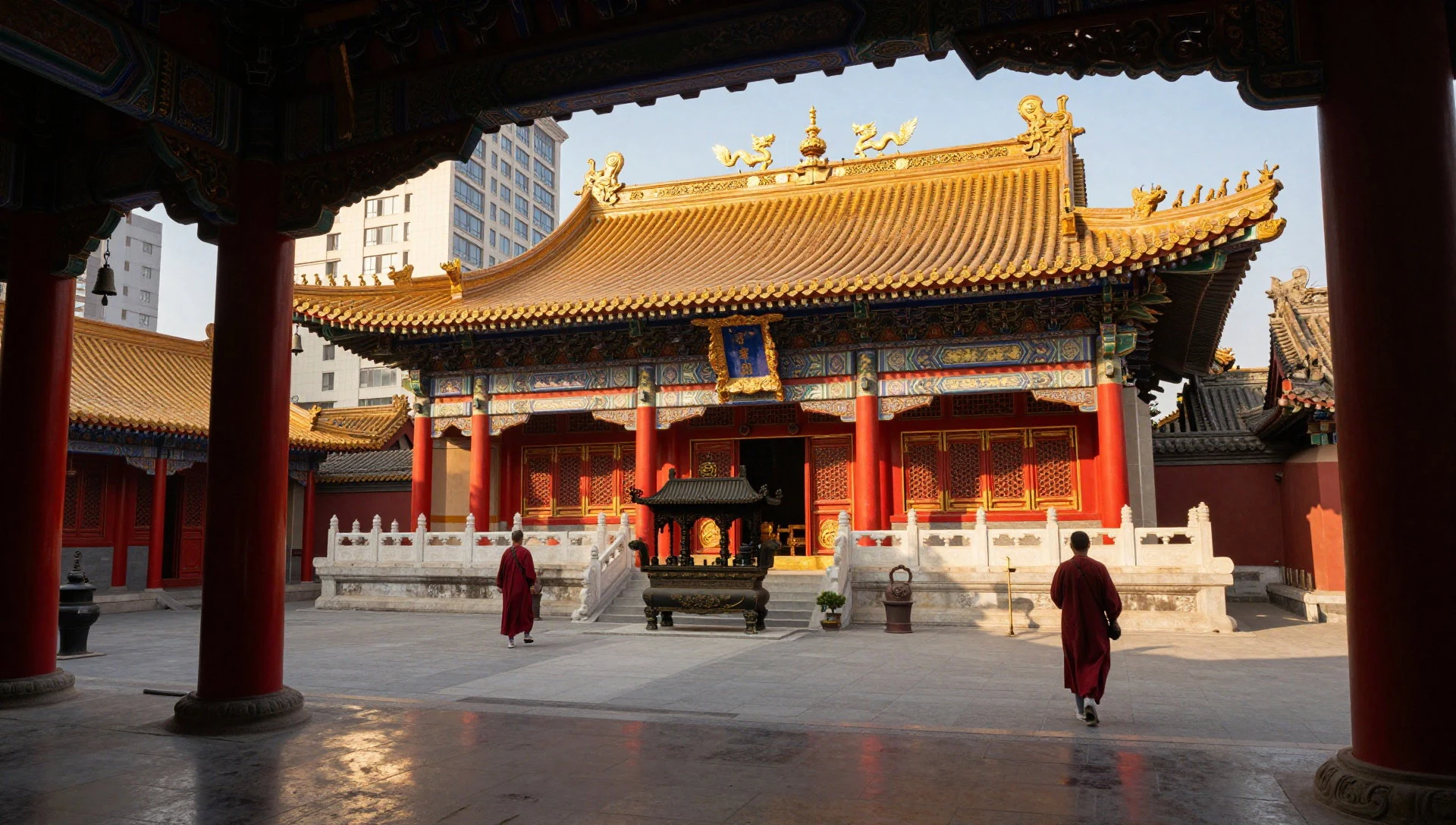
- The Old City and Shikumen Lanes — Huangpu District south of Yan'an Road
The Old City and the surrounding residential alleys preserve traditional shikumen architecture, which fuses Western terrace row housing with Jiangnan courtyard forms behind high brick walls and stone-framed gateways. Walking through these narrow alleyways reveals daily neighbourhood life away from the commercial towers.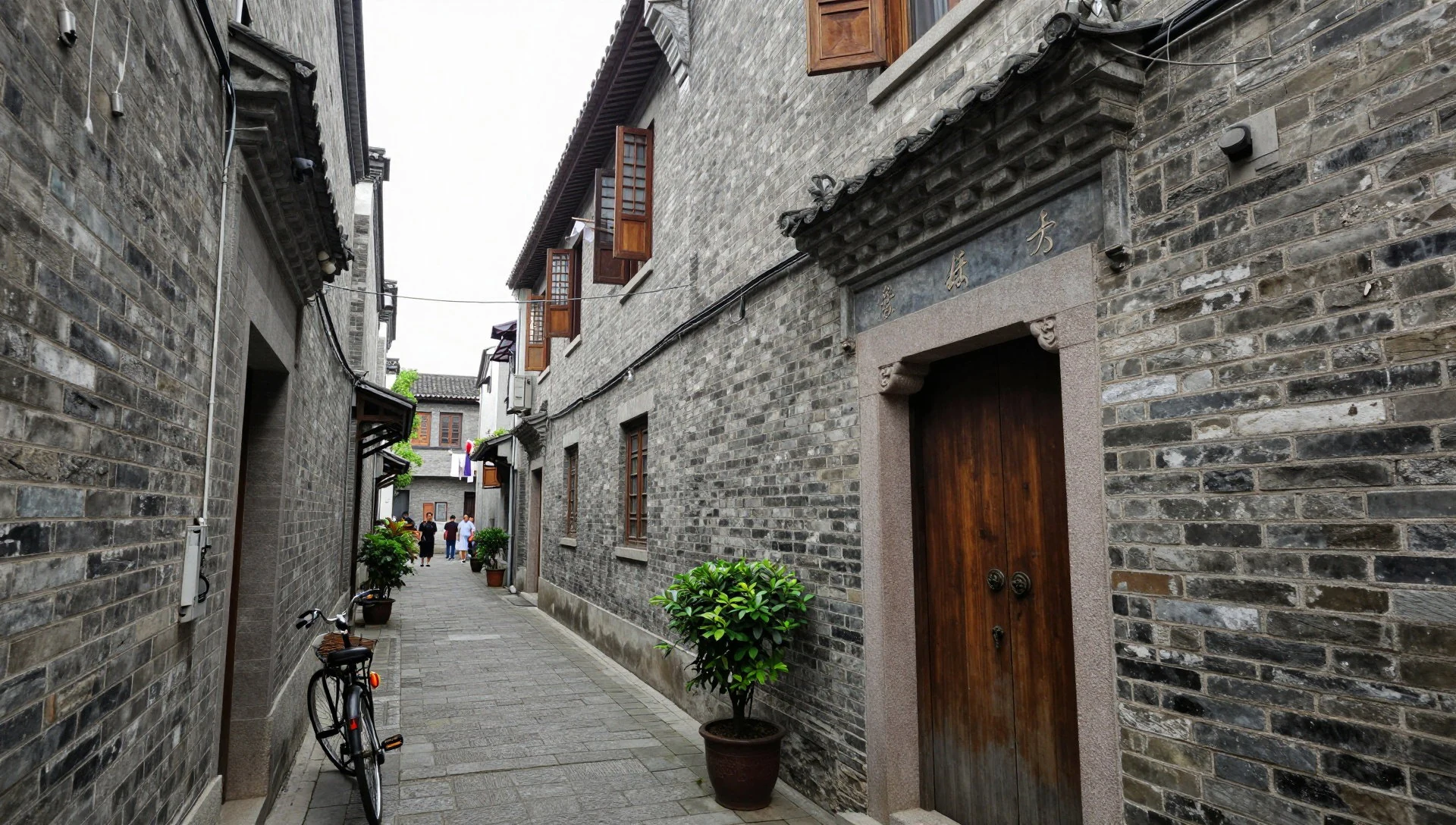
Culture
The cultural fabric of Shanghai stems from an interplay between regional Wuyue heritage and Haipai, an East-meets-West synthesis that developed after the port opened to international trade. Wuyue traditions survive in the local Shanghainese language, which incorporates dialectal elements from neighbouring cities like Suzhou and Ningbo, as well as in local culinary preparations. Haipai culture emerged as merchants, diplomats, and migrants from Europe, America, Japan, and India settled in the treaty ports, blending foreign innovations with local customs to influence literature, architecture, fashion, and music. Although initially criticised by inland writers for embracing commerce and external influences, this hybrid identity became a defining characteristic of the municipality. Today, the urban environment also serves as a source of inspiration for contemporary cyberpunk aesthetics, juxtaposing neon-lit high-rises with historic residential lanes. When visiting temples or sacred spaces, remove hats and maintain a respectful, quiet demeanour during active rituals.
What to wear
Traditional attire in the delta region historically drew from Jiangnan textile traditions, utilising fine silks and cottons crafted into robes and jackets suited to the damp, moderate climate. During the early twentieth century, Shanghai tailoring revolutionised Chinese dress by modernising the traditional changshan and creating the qipao, a fitted, high-collared dress that combined Manchu silhouettes with Western tailoring techniques and geometric textile prints. In contemporary public spaces, residents exhibit a polished, fashion-forward sensibility, blending global luxury brands with avant-garde streetwear, minimalist tailoring, and meticulous accessories, particularly in commercial districts like the former French Concession and along major shopping avenues. Visitors should pack versatile, comfortable clothing appropriate for changing weather conditions, including breathable fabrics for humid summer months and layers for damp winter chills. Bring sturdy walking shoes for navigating extensive concrete pedestrian zones, historic alleyways, and subterranean transit stations. Modest attire covering shoulders and knees is recommended when entering active religious shrines and temples across the municipality.
What to eat
- Xiaolongbao — Local dim sum restaurants and Yu Garden food stalls
These delicate steamed pork dumplings are filled with rich hot broth and wrapped in a thin dough skin. They are typically served steaming hot in bamboo baskets at specialized dumpling houses and street stalls across every district.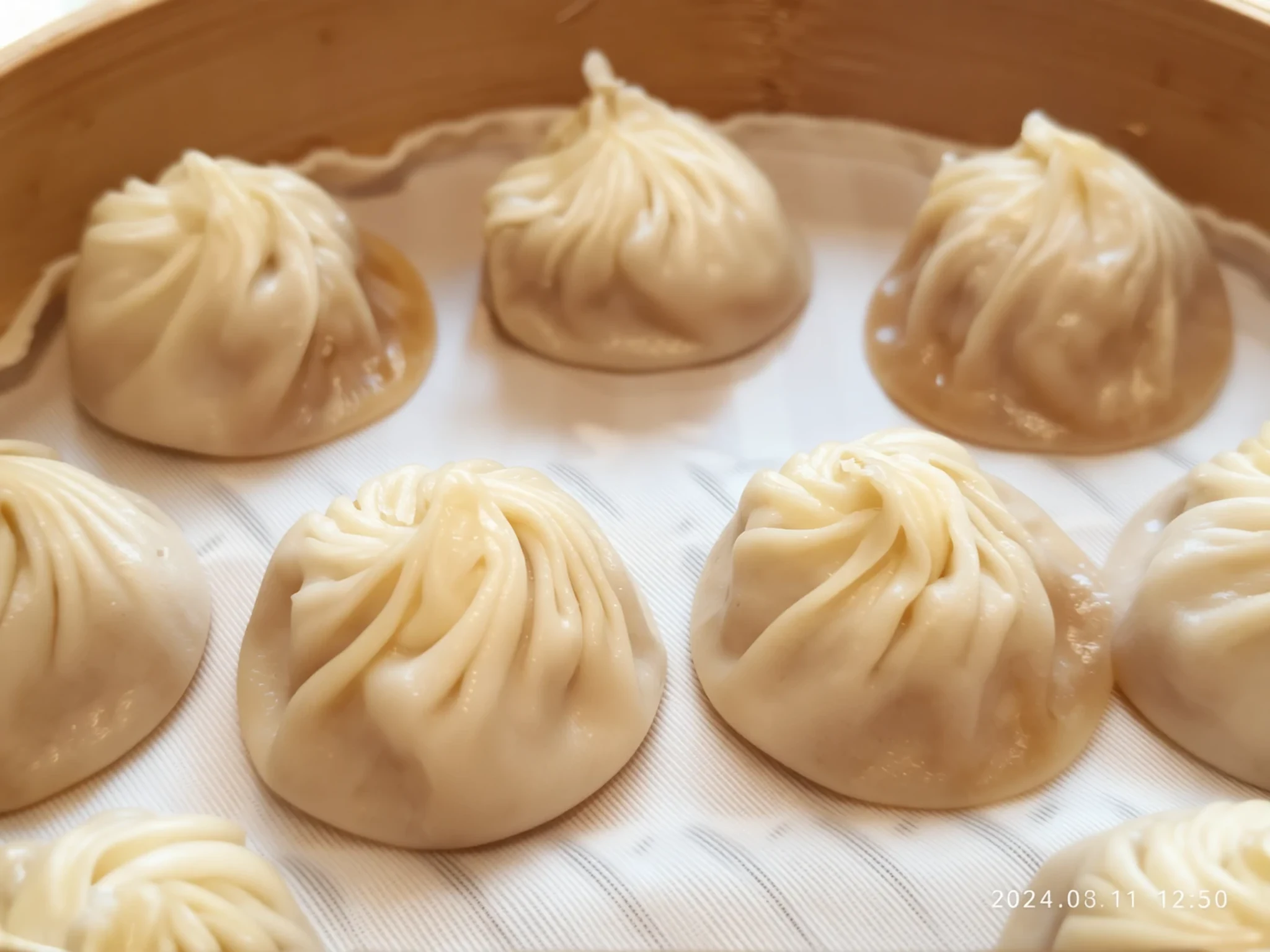
- Shengjianbao — Morning markets and neighbourhood breakfast stalls
Pan-fried pork buns feature a thicker yeast dough base that becomes crispy on the bottom while the top remains soft, filled with seasoned minced pork and savoury soup. Street vendors sell them fresh from large iron pans.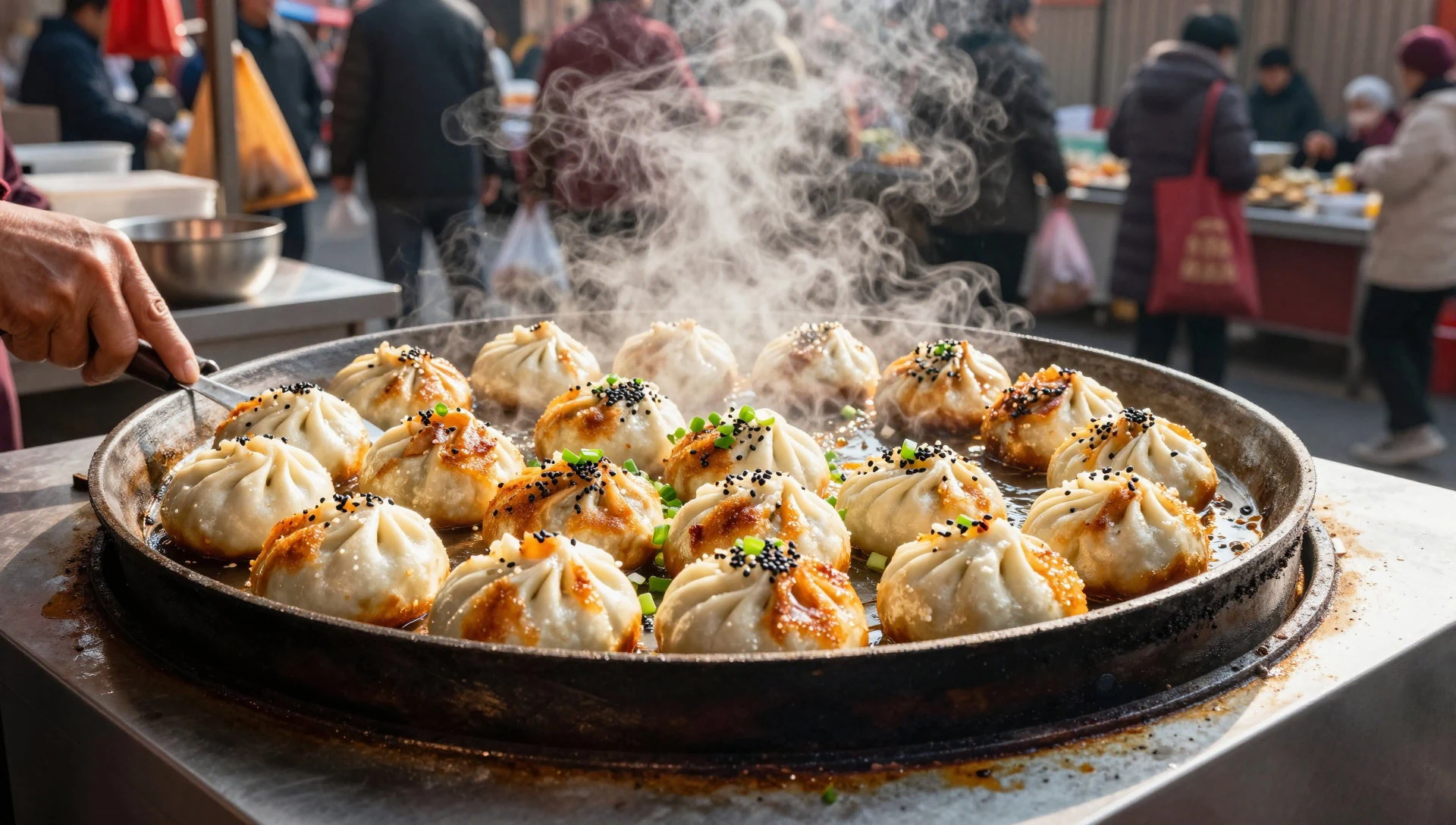
- Hongshao Rou — Traditional local restaurants and family-style eateries
This traditional braised pork belly dish stews thick cuts of pork in a mixture of soy sauce, rice wine, sugar, and aromatics until the meat is meltingly tender and coated in a glossy, sweet-savoury glaze.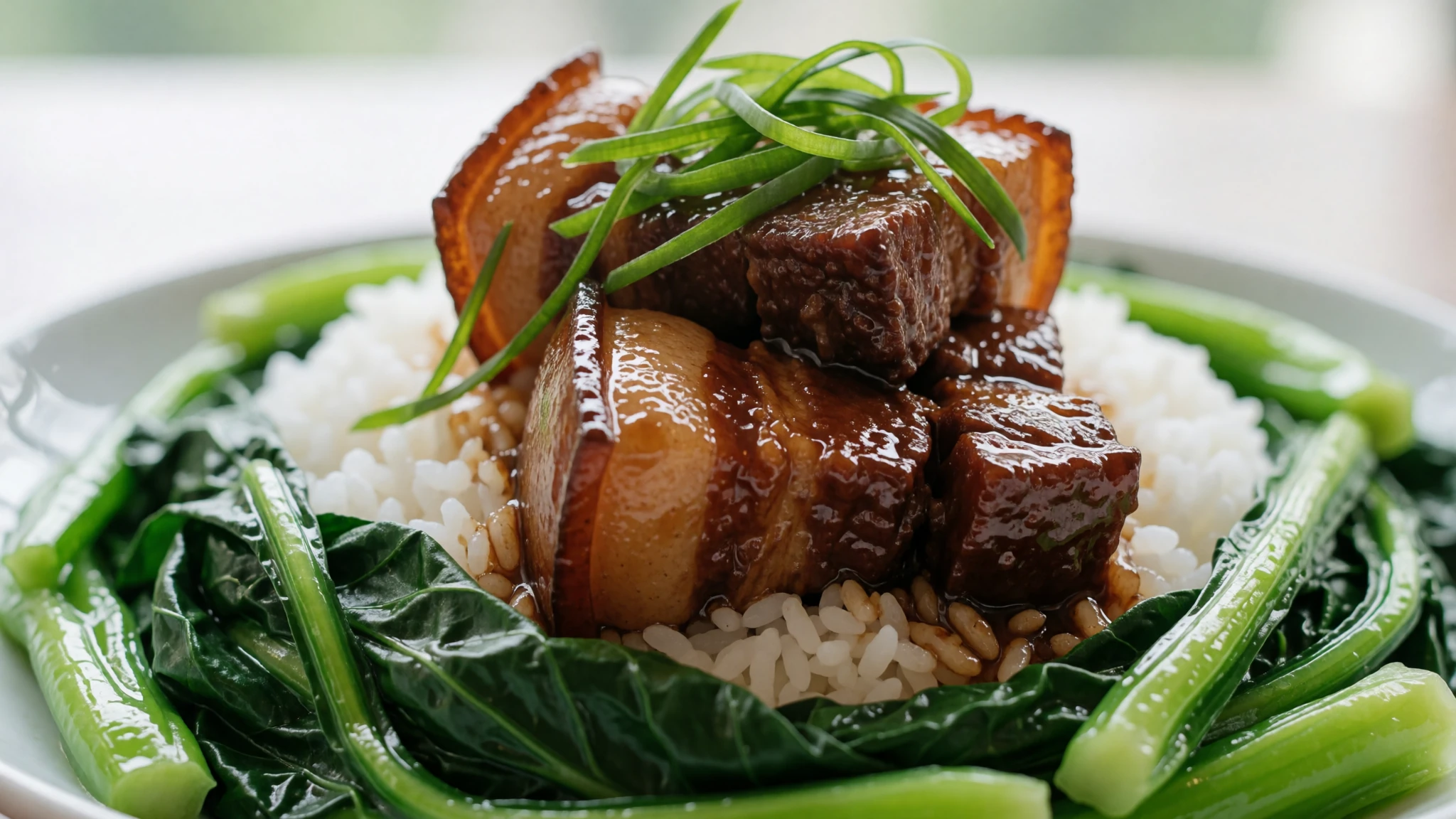
- Shanghai Hairy Crab — Seafood markets and specialty restaurants during autumn
Prized as an autumn delicacy harvested from nearby freshwater lakes, these river crabs are typically steamed simply with ginger and vinegar to highlight the rich, sweet roe and tender meat. - Congyou Banmian — Hole-in-the-wall noodle shops and local canteens
Scallion oil noodles combine simple wheat noodles tossed in a fragrant oil slow-cooked with fresh spring onions and soy sauce, resulting in a deeply savory, comforting bowl found at casual noodle shops.
Plan it
Best time. March to April brings pleasant spring weather with mild temperatures, though conditions can be changeable and often rainy, while October to November brings clear autumn skies and comfortable weather.
How long. 3–4
Getting there. Arrive via international flights into major aviation hubs or high-speed rail connections from regional Chinese cities, terminating at central railway stations.
Budget. mid
Tips
- Check visa-free transit eligibility requirements and ensure you hold a valid onward ticket to a third country or region
- Download local digital payment applications and translation software before arrival for convenience
- Wear comfortable footwear as exploring the extensive waterfront and alleyways involves significant walking
- Start visits to famous gardens and temples early in the morning to avoid heavy tour groups
Etiquette
- Remove hats when entering sacred temple halls and places of worship
- Keep voices low when riding crowded subway carriages and visiting residential alleys
- Use both hands when offering or receiving business cards and payment cards
Nearby
Sources
- Wikidata Q8686 (CC0)
- Wikipedia (rev 1382873693) (CC BY-SA 4.0)
- Wikivoyage (rev 5391873) (CC BY-SA 4.0)