Charyn Canyon
Charyn Canyon, Kazakhstan
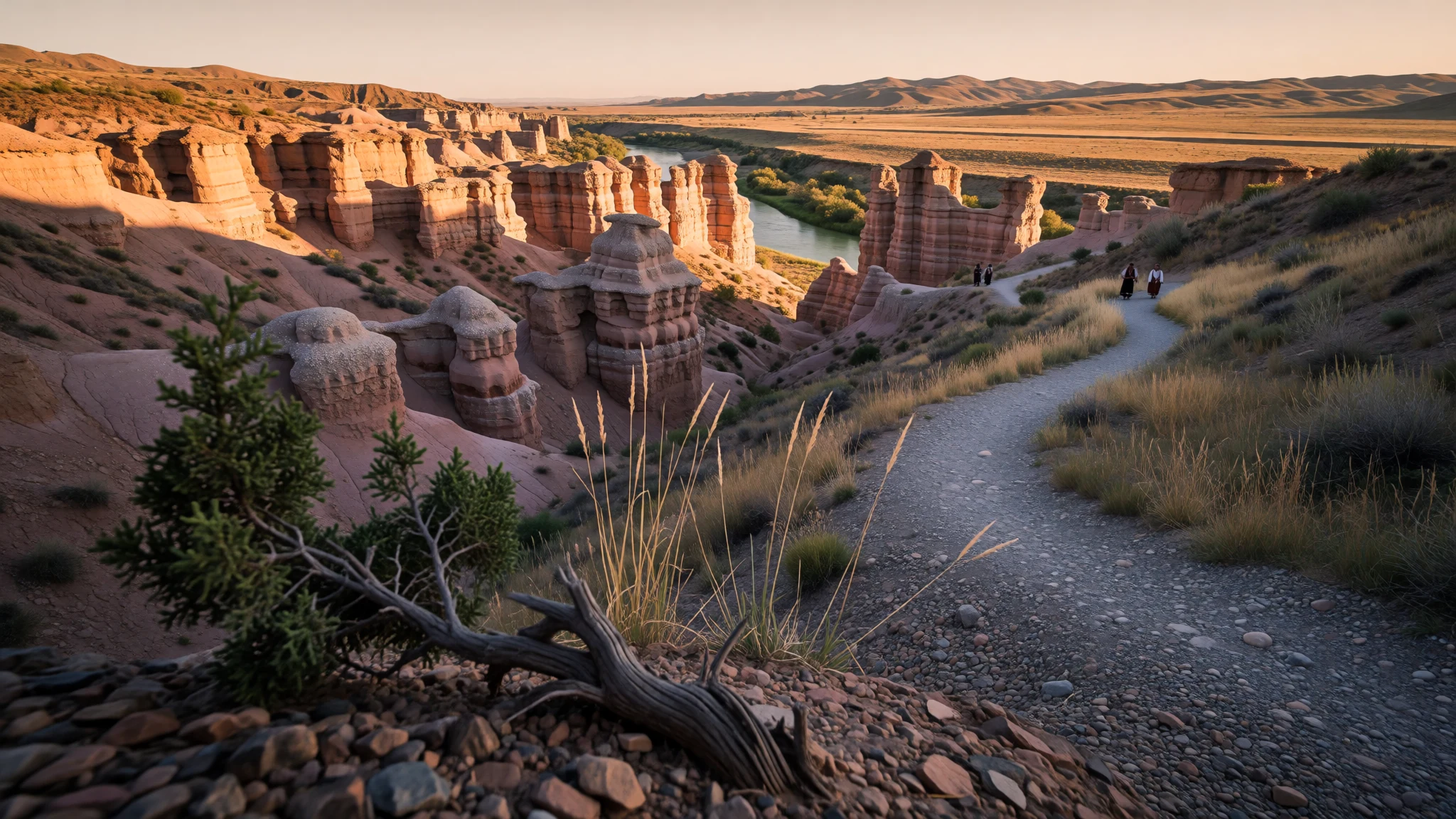
Charyn Canyon cuts a walkable maze of rock towers and a cold river into the dry steppe east of Almaty.
The place
Charyn Canyon is a dry-walled valley cut by the Charyn River through the steppe of south-eastern Kazakhstan, in the Almaty Region. The stretch people walk is the Valley of Castles: pale and rust-coloured sediment in columns, walls and broken ridges. From the rim the plain looks empty until the ground opens and the river shows, far below, as a narrow green line. The rock is layered and soft. Wind and rare hard rain keep shaping it, so the towers have edges, hollows and overhangs. Paths drop from the rim to the floor and follow the water between the formations. Shade is scarce once the sun is high, and the floor holds the heat. In the cooler months the same walk is kinder, and low sun picks out the bands in the sediment. Bends change the feeling of the walk: some are wide and bright, others pinch into corridors where the walls stop the wind. A line of willow and grass follows the water, sudden green after the bare stone. Charyn National Park wraps the canyon, with viewpoints and simple visitor infrastructure rather than a town on the rim. People come from Almaty for the day or sleep in yurts along the road. Coaches fill the middle of the day; early and late, the paths are quieter.
Its story
Charyn Canyon was cut by the Charyn River working down through soft sedimentary layers, with wind, frost and rare rain doing the rest. Those layers settled when this part of Central Asia held lakes and gravel fans; the land later rose and the river incised, leaving the towers people call castles. The Kazakh name Sharyn (Шарын) sits beside Charyn on signs. Valley of Castles is the local name for the towered stretch. Around Charyn Canyon the country was seasonal pasture long before it was a park. Kazakh herders moved between the Ili valley, the Kegen uplands and the mountains to the south, using the river as water rather than as a view. Soviet-era roads tied the canyon to Almaty. Since independence the valley has been run as a protected landscape, with staff, marked paths and a day-trip trade from the city. Guides now describe the drop to the floor as a change of climate, hotter and more enclosed, and they point to the river's edge as a strip of life that held on in the canyon while the steppe outside dried. Families pose among the towers. Wedding parties sometimes use the rim as a backdrop, then leave the floor to walkers. Horses and tea stalls stay on the same road. Above, the steppe is open and practical. Below, the river keeps a thin line of life between walls that only look built.
What to see
- Valley of Castles — Valley of Castles
Charyn Canyon's Valley of Castles is the group of sediment towers at the centre of a visit. Pale and rust bands stack into walls, pinnacles and broken ridges, with gaps between them wide enough to walk. Midday flattens the forms; low sun picks them out. The sediment crumbles off the trodden line, so the walk keeps to corridors the path already uses.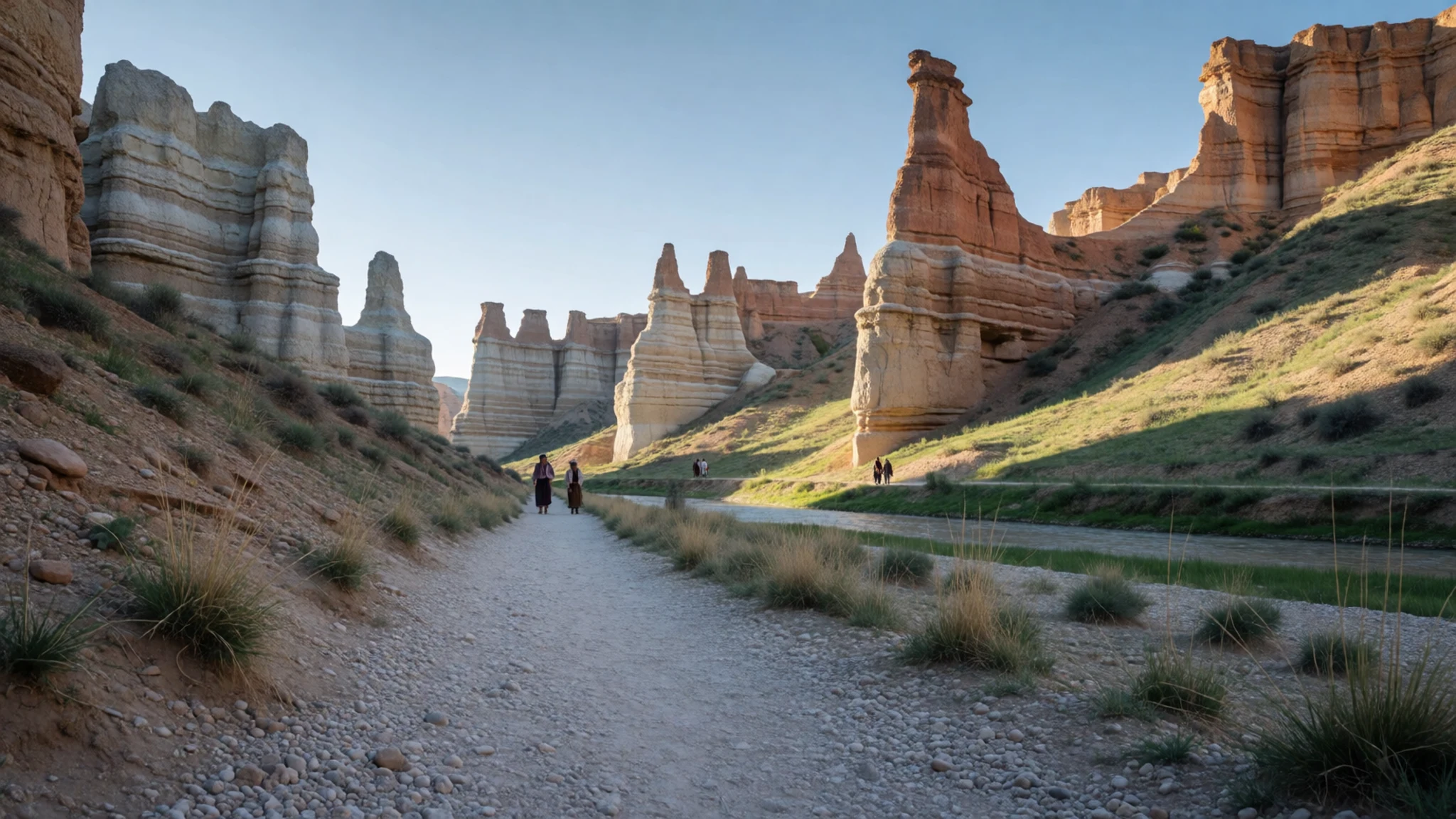
- Charyn River — Canyon floor
The Charyn River is why Charyn Canyon is here, and it is the cooler line on the valley floor. A narrow band of water runs between gravel banks and the feet of the towers, with willow and grass where the current has not scoured the bed. The water stays cold in warm weather, and the flow is stronger than it looks from the rim.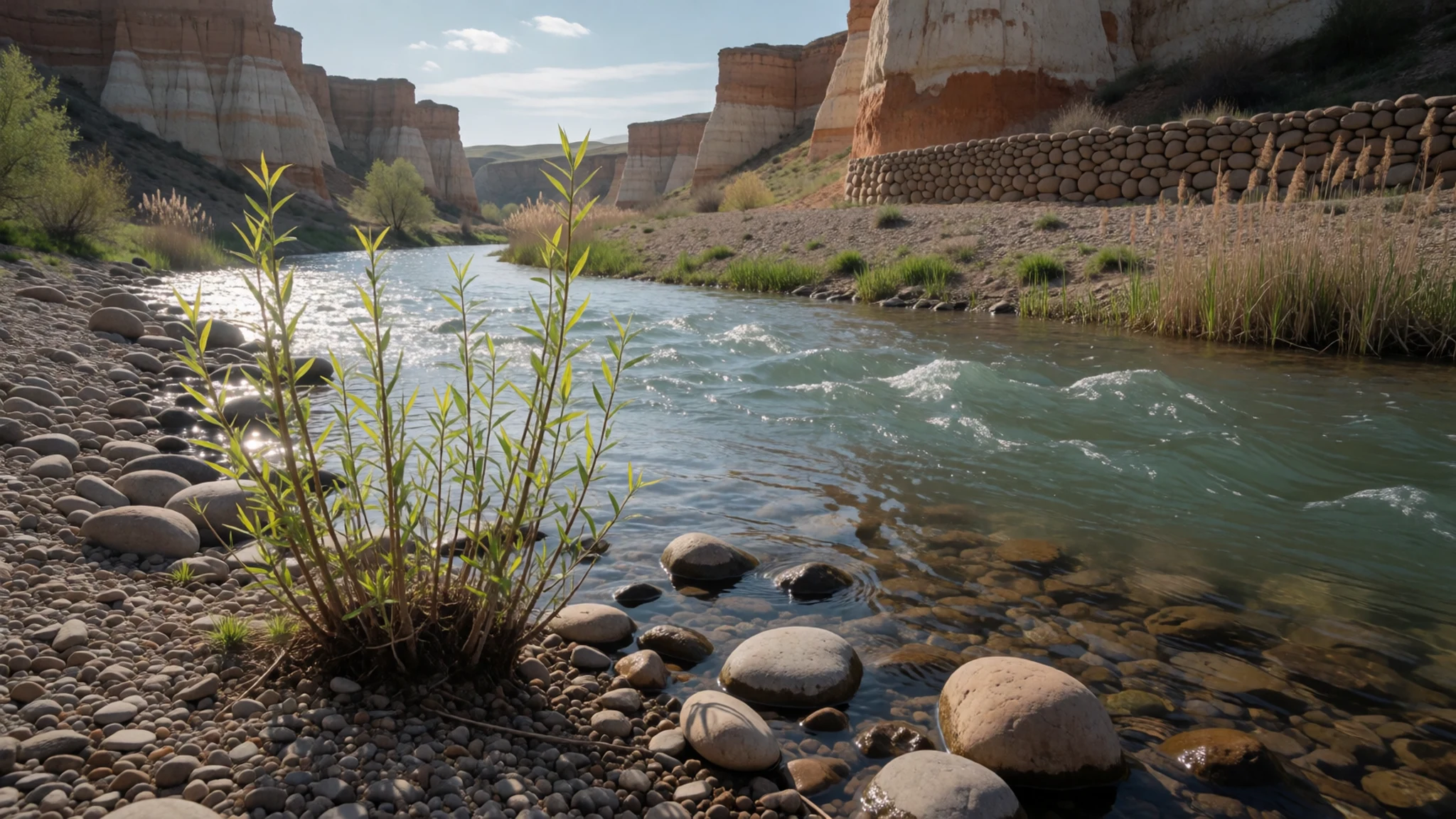
- Ash grove — River corridor in the park
The Relic Forest of Sogdian ash stands about 20 kilometres from the canyon, a dense knot of trees after so much bare stone. The trees are Sogdian ash, a rare species at home on Central Asian river corridors, rooting where floodwater and shelter meet. Birds and shade collect here in a way the open sediment does not. It is a short stop, and the undergrowth is best left as it was found.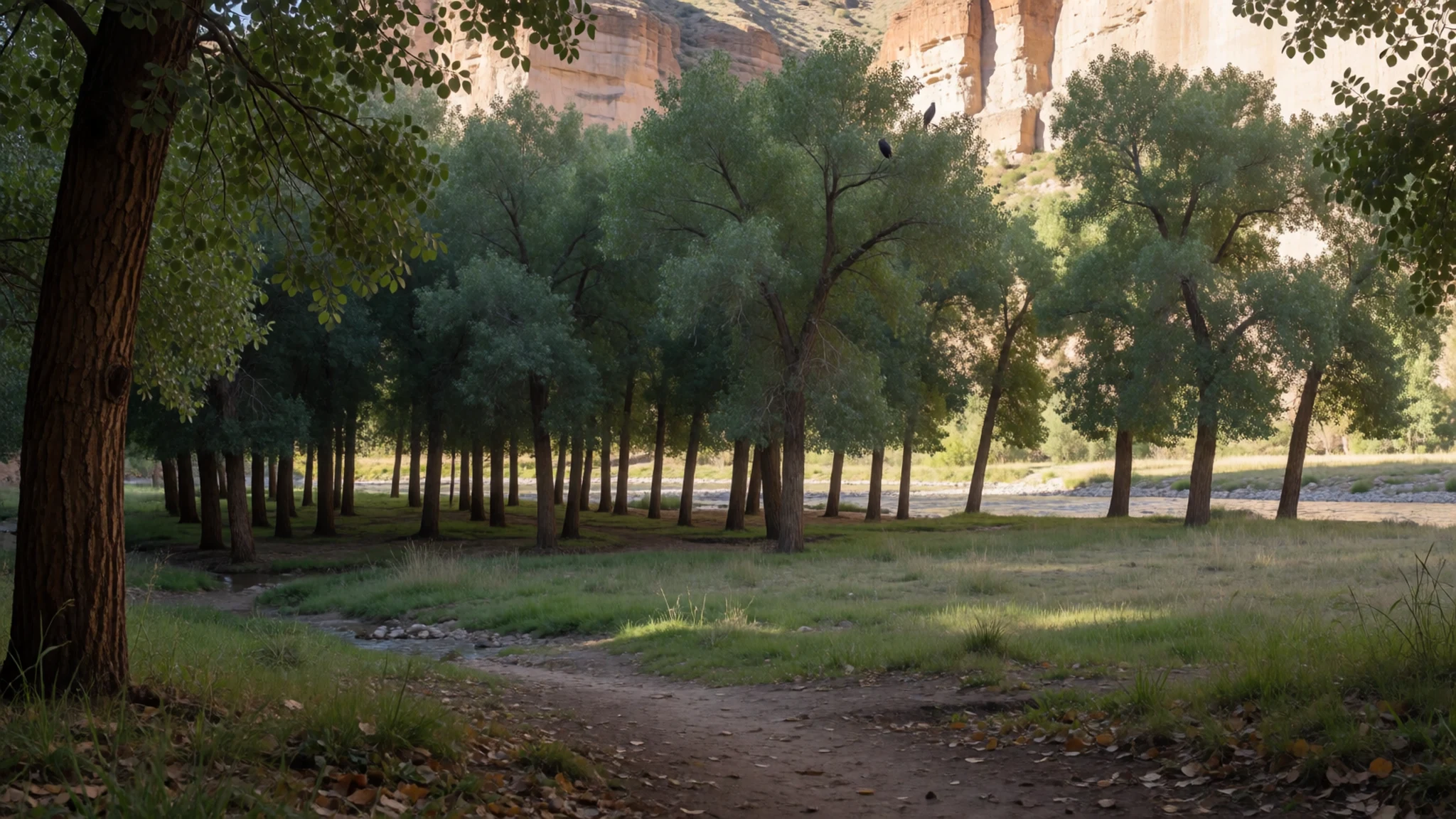
- Rim viewpoints — Canyon rim
Rim viewpoints at Charyn Canyon are where most visits begin. From the edge the Valley of Castles reads as one pattern: repeating towers, a pale river, and steppe running towards low mountains. A summer view shows the rock in warm colour, with little vegetation on the walls. Wind on the rim is stronger than wind on the floor.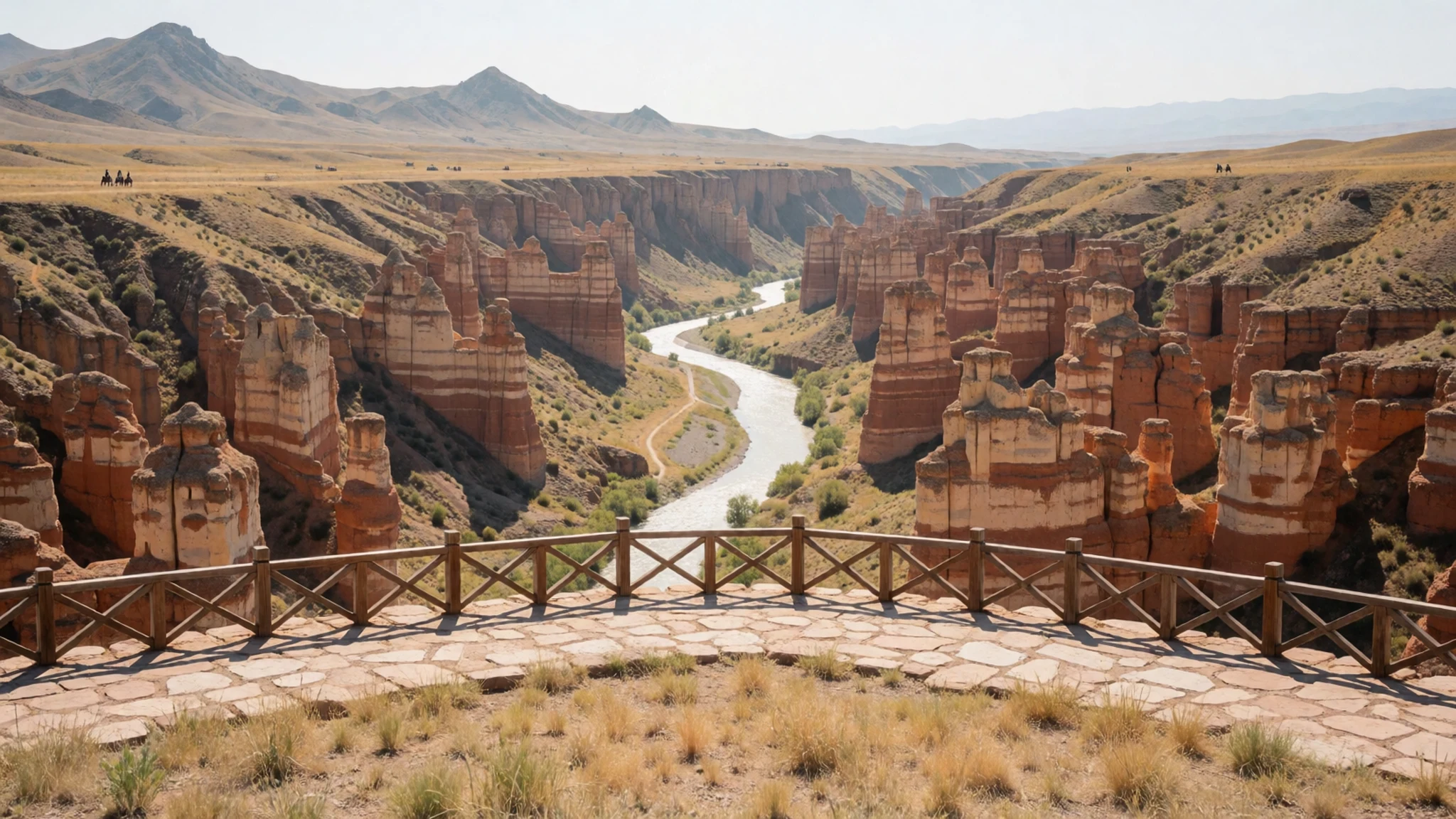
- Narrower bends — Upstream and downstream of the Valley of Castles
Narrower bends of Charyn Canyon lie upstream and downstream of the busiest towers. Walls close in, the path shrinks to a gravel strip, and river noise takes over from the rim wind. These stretches offer layered rock and moving water rather than a single formation to pose against. They are the right extra minutes when the main viewpoint is crowded.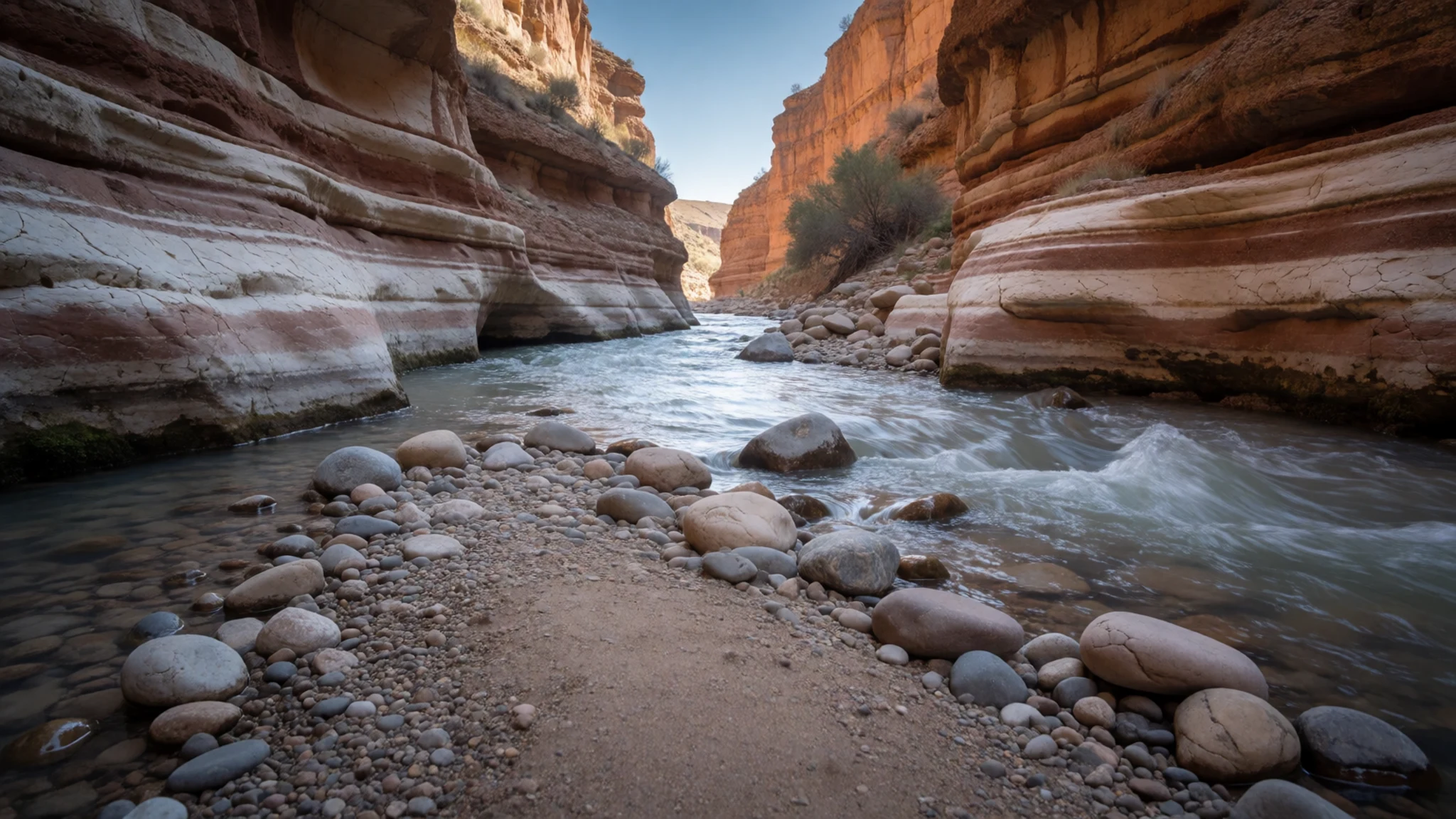
- Steppe approach — Steppe road east of Almaty
The approach to Charyn Canyon crosses open steppe east of Almaty, and that drive belongs to the visit. Low hills, grazing animals and long views arrive before any tower. In clear weather mountains sit on the southern horizon; in haze the land looks flatter. Tea stalls and yurt camps mark the last stretch before the park.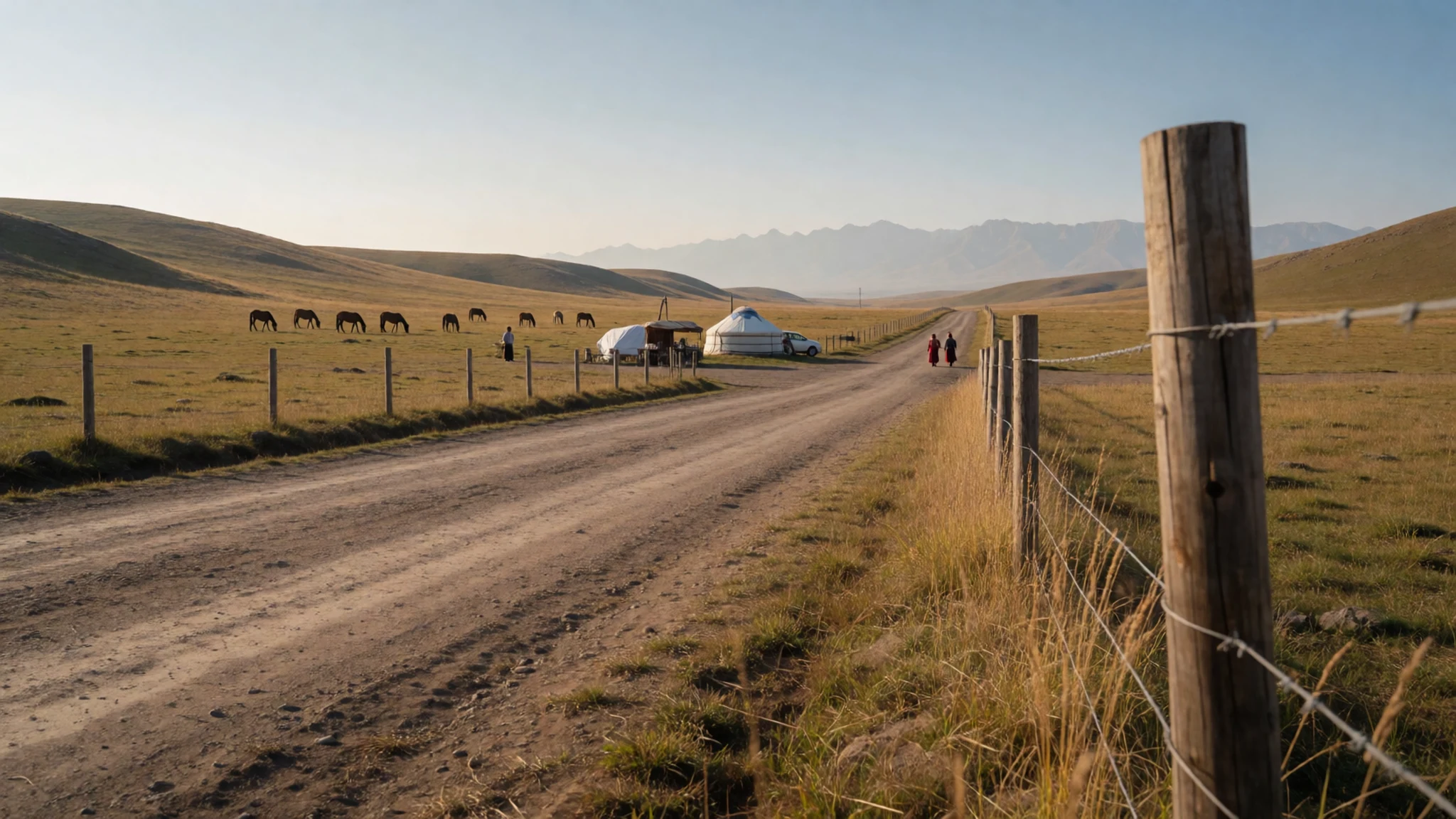
Culture
Charyn Canyon sits in a Kazakh cultural landscape even though the walk itself is stone and water. Hospitality on this road still follows steppe habits: tea comes before business, guests are pressed to eat, and a yurt remains a host's home when it takes paying visitors. A meal there is often one shared spread — meat, bread, tea — rather than a menu of separate plates. Nauryz, the spring new year, brings traditional dress, music and horse games to villages of the Almaty Region on the road to the canyon. Charyn Canyon itself stays a landscape, not a festival ground. Kazakh and Russian are both used by guides and drivers. A short Kazakh greeting is appreciated; English is patchy outside organised tours. Islam is the majority faith, clearer in the towns than on the roadside, and it sets no shrine rules on the valley floor. Local families sell tea, bread and beds. They are neighbours to the view, not part of the scenery. Ask before you photograph people, and do not climb or carve the sediment towers.
What to wear
Charyn Canyon is not where traditional dress is everyday clothing, but regional clothes still travel with the people who host visitors. Formal Kazakh dress centres on the chapan, a long padded robe in velvet, silk or cotton, often embroidered, worn for weddings, Nauryz and other gatherings. The saukele, a tall ceremonial headdress, belongs to weddings, not to the canyon road. Felt hats, embroidered caps and leather boots come from the pastoral wardrobe, made for wind and cold mornings. Felt, wool and silk remain the textiles that signal Kazakh making, mostly now as gifts rather than daily wear. On the rim and in the villages, clothes are ordinary and contemporary: jeans, trainers, sun hats, light jackets, and padded coats when it is cold. Visitors who expect costume will mostly see city day-trippers in sportswear. For the canyon itself, wear walking clothes. The floor is hot and shadeless in summer and the rim is windy, so take a hat, a light long-sleeved layer, and something warmer for the top. Closed shoes with a firm sole handle sand and gravel better than sandals. Cover shoulders and knees if you are invited into a family yurt.
What to eat
- Beshbarmak — Yurt camps and larger roadside eateries near the canyon
Beshbarmak is the Kazakh feast dish a Charyn Canyon yurt camp may set out for guests: boiled meat, wide noodles and onion, served as a shared spread with broth on the side. It shows up at yurt camps and larger roadside eateries, not at a small tea stall.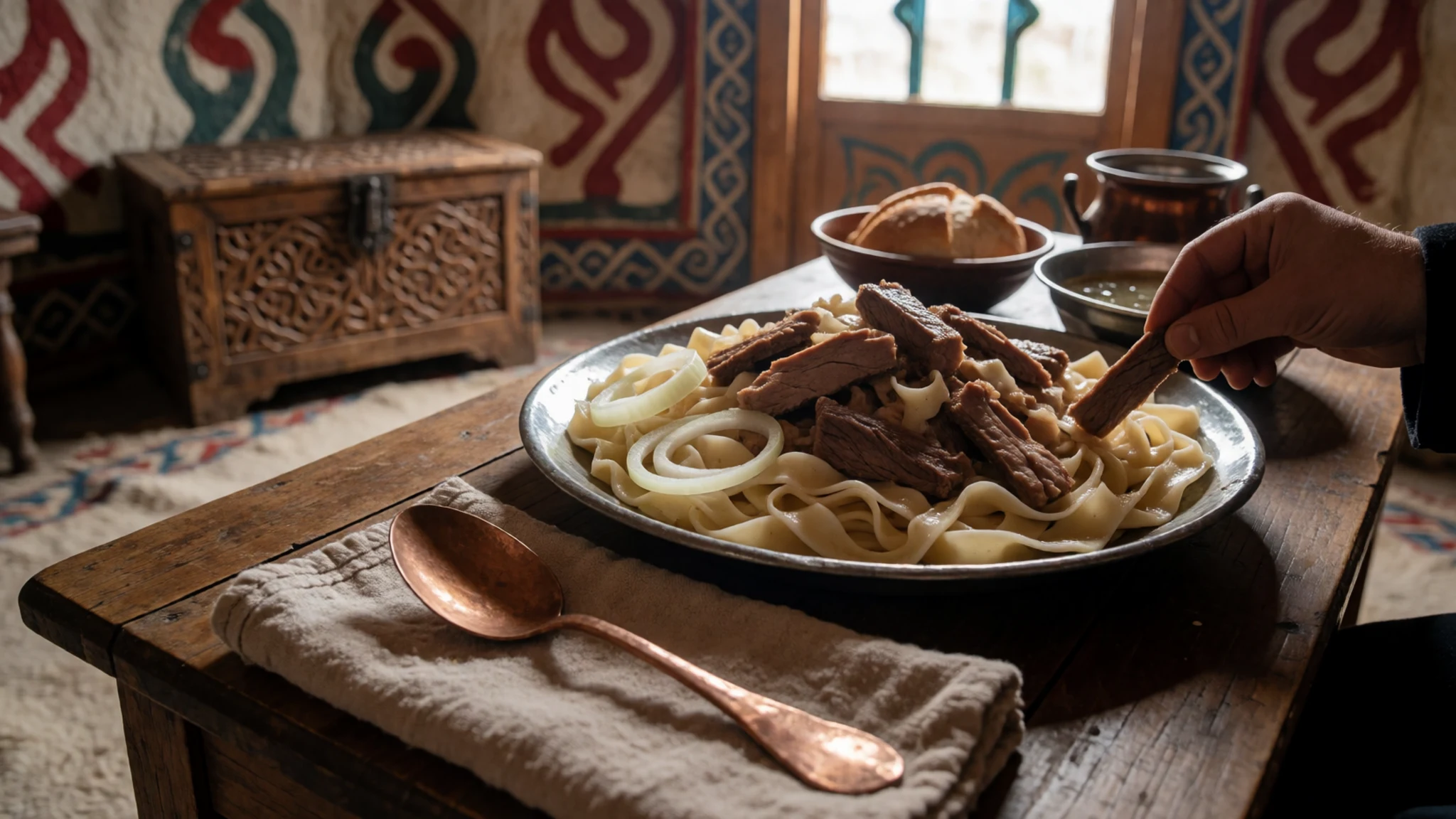
- Baursak — Tea stalls and yurt camps on the canyon road
Baursak is fried dough, puffed and slightly sweet, eaten with tea all along the road to Charyn Canyon. Stalls and yurt camps serve it warm in a basket, often before any savoury dish arrives. Pair it with black tea or the milky tea poured in Kazakh homes.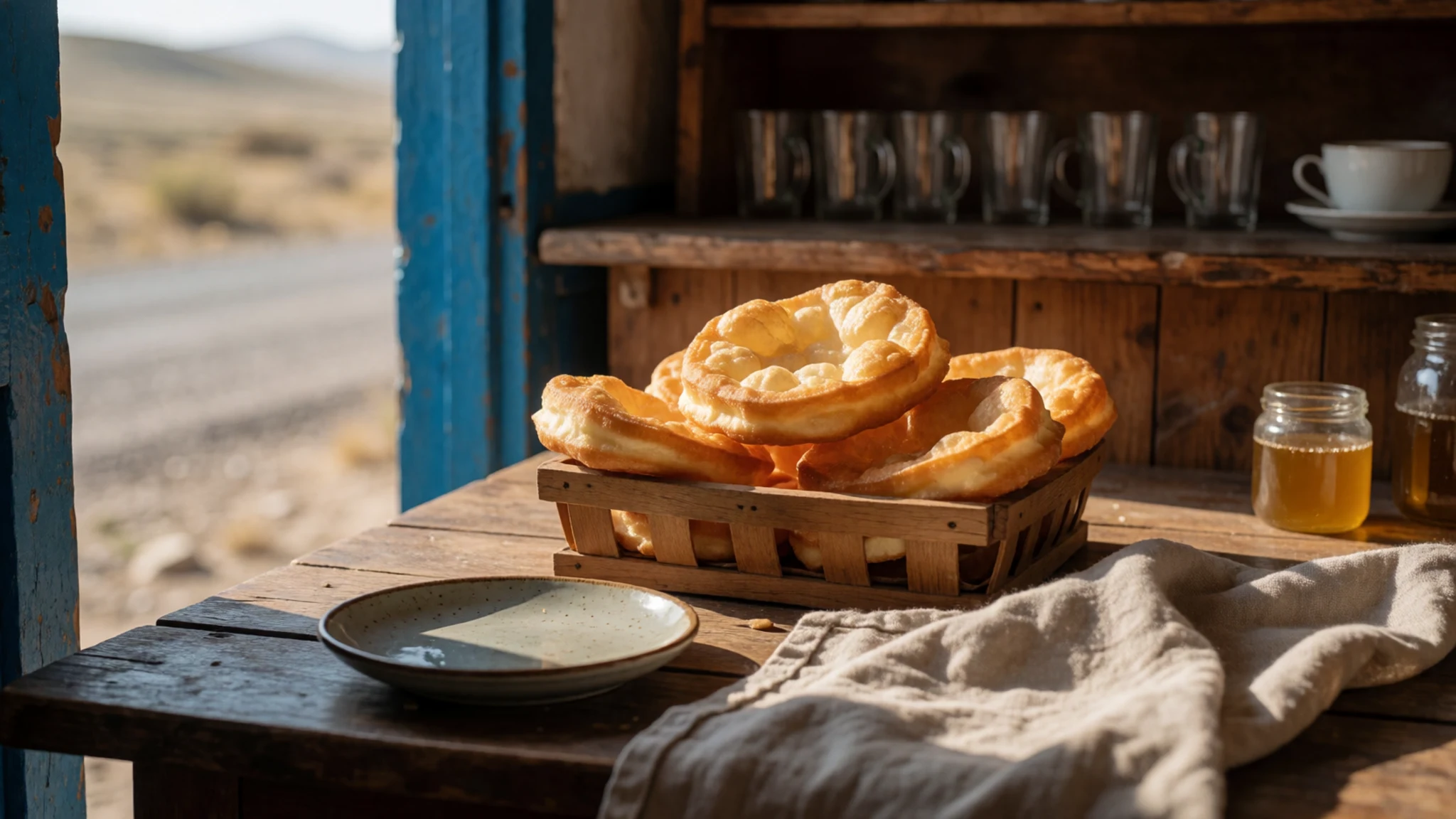
- Shashlik — Roadside eateries and yurt camps on the way in
Shashlik at Charyn Canyon means skewers of marinated meat grilled over coals at roadside eateries and yurt camps on the way in. Mutton and beef are the usual meats; the smell of the grill is often the first sign of a stopping place after a long stretch of steppe. - Lagman — Roadside canteens towards the canyon
Lagman is a Central Asian noodle soup or stir-fried noodle plate that cafes in the Almaty Region, including stops towards Charyn Canyon, treat as everyday cooking. Hand-pulled or cut noodles come with meat, pepper and vegetables in a savoury broth or sauce. Pepper and vinegar are often on the table. - Samsa — Bakeries and roadside stalls on the canyon road
Samsa is a baked pastry with a meat and onion filling, sold at bakeries and roadside stalls that serve the Charyn Canyon road. The dough is flaky and the filling is usually mutton. It travels well as an early breakfast or a pocket lunch on the rim.
Plan it
Best time. April and May, and again September and October, are the comfortable months to walk Charyn Canyon, when the valley floor is mild enough for a long descent. Summer is hot and almost shadeless among the towers; winter is cold, and the rim road can be difficult after snow. The steppe above is often windy in spring.
How long. 2–3
Getting there. Fly into Almaty, then continue by road east across the steppe to Charyn National Park. There is no train to the rim. Tours, hired cars and shared rides leave from the city; the last leg is a drive through open country to the park entrance and the Valley of Castles trailhead. Check the park's official site before you go for current access rules.
Budget. mid
Tips
- Start the descent early, before coach groups reach the towers and before the floor heats up.
- Carry more drinking water than a city walk would need; shade and taps are scarce on the valley floor.
- Wear shoes with grip. The paths are sand, gravel and smooth sediment.
- Bring cash for tea stalls and yurt camps; do not rely on cards at the canyon.
- If you are not driving, book a car or a tour from Almaty ahead of weekends in the mild months.
Etiquette
- Greet hosts and accept tea if it is offered; refusing the first cup can read as cold.
- Pack out all rubbish. There is little collection on the valley floor.
- Stay on existing paths so the soft rock is not broken into new tracks.
Nearby
Sources
- Wikidata (CC0)
- Wikipedia (CC BY-SA 4.0)
- Wikivoyage (CC BY-SA 4.0)