Bukhara
Bukhara, Uzbekistan
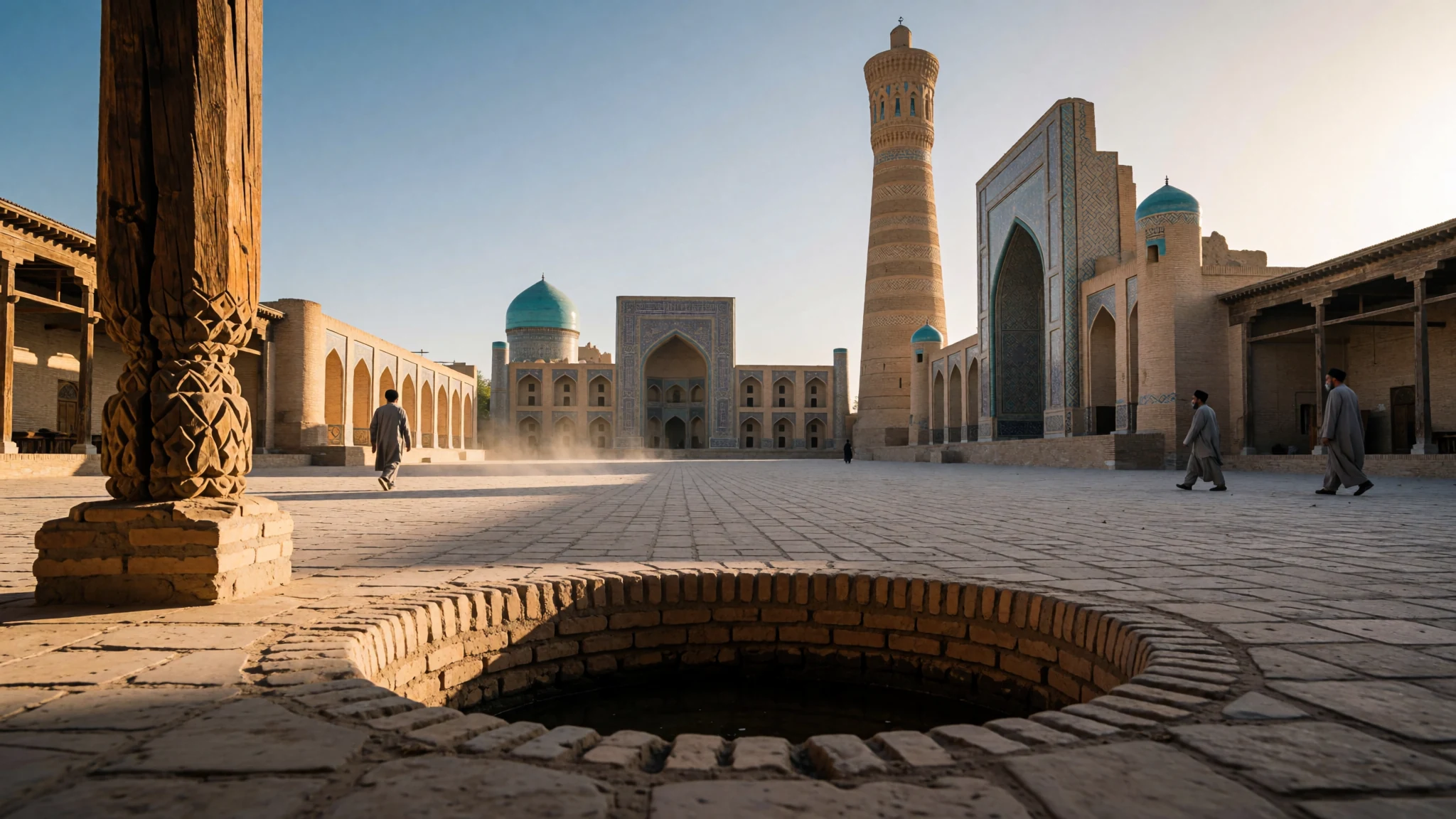
Wander through centuries of Silk Road heritage among ancient mud-brick domes, towering minarets, and bustling trading courtyards.
The place
Bukhara sits flat and sun-baked on the desert edge of Uzbekistan, elevated gently above the surrounding plain. Home to about 280,187 people, it functions as the capital of its regional province and preserves one of the most remarkable urban cores in Central Asia. For centuries, caravanserais and bustling bazaars defined its geography, serving as crucial waypoints for merchants carrying silk, spices, and ceramics between East and West. The historic heart of the municipality is entirely pedestrianized, a dense maze of honey-coloured sun-dried brick, turquoise domes, and timber-pillared verandahs that feel largely unchanged since the medieval era. Shade is precious under the harsh summer sun, usually found beneath ancient plane trees beside central water basins known as hauz, where locals gather to drink green tea. Surrounding the quiet plazas are scores of architectural monuments, ancient madrasas, and vaulted trading domes that still house carpet weavers, metalworkers, and embroiderers practicing crafts handed down through generations. Despite the growing hum of modern life just beyond the ancient walls, the old town retains a remarkably slow and contemplative rhythm. Walking its narrow alleys at dawn reveals the true character of the place before the heat settles and the day's travellers emerge from their guesthouses. It is a city that rewards unhurried exploration on foot, inviting visitors to pause in cool, vaulted archways and observe the daily routines of a community deeply rooted in its Silk Road past.
Its story
The heritage of Bukhara stretches far back into pre-Islamic antiquity, evolving into a powerhouse of Persian culture, scholarship, and commerce. During the height of the Samanid Empire, the city rivaled Baghdad as a premier intellectual capital of the Islamic world, nurturing brilliant minds, poets, and theologians who shaped regional thought. New Persian flourished within its libraries and palaces, celebrated by masters of verse who immortalised the city's elegance in song. Dynasties rose and fell across the centuries, from the Kara-Khanid Khanate to devastating invasions by Mongol armies that tested the resilience of its citizens. Recovery came under later empires, notably during periods when regional rulers poured wealth into monumental construction, raising vast madrasas, fortified citadels, and intricate prayer halls that still punctuate the skyline. Through centuries of shifting political tides, the municipality remained a steadfast stronghold of Islamic scholarship and traditional craftsmanship until the turbulence of the twentieth century brought dramatic administrative upheavals. The legacy of these eras endures not only in the weathered bricks of ancient shrines but in the living traditions of the people who maintain them, preserving a unique synthesis of Persian, Turkic, and Islamic influences that defines the identity of this ancient oasis.
What to see
- Kalan Minaret and Ensemble
Dominating the old town skyline, this monumental twelfth-century pillar of baked brick once served as a beacon for desert caravans. Standing tall alongside its adjacent mosque and active madrasa, the soaring tower miraculously survived the destruction of Genghis Khan because its sheer architectural brilliance awed the conqueror.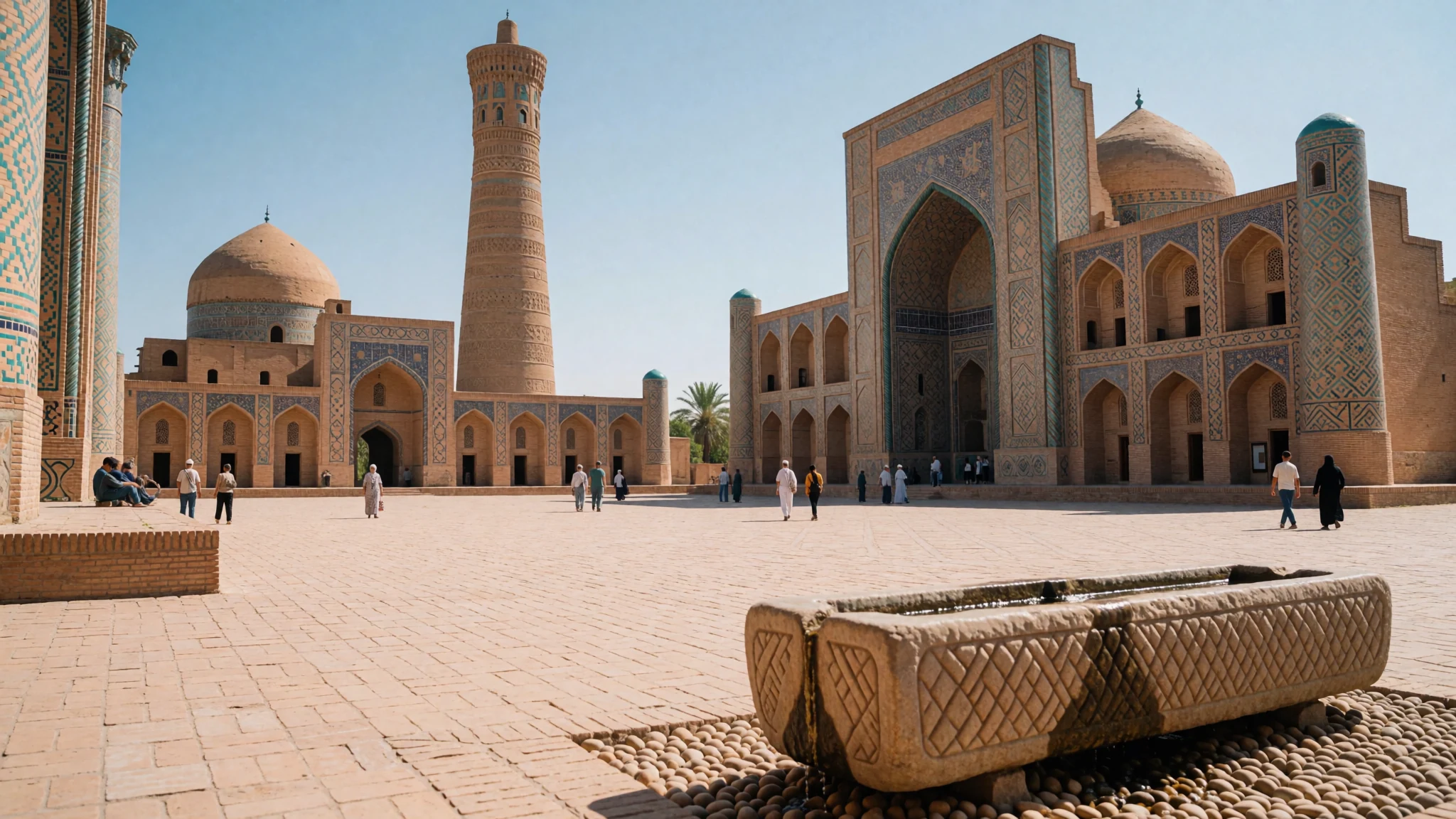
- Samanid Mausoleum
Tucked away in a leafy park just outside the central lanes, this early tenth-century masterpiece of baked brick showcases astonishing geometric precision. Its subtle facade patterns play endlessly with desert sunlight, masking a durable subterranean vault that outlasted the fall of the empire that built it.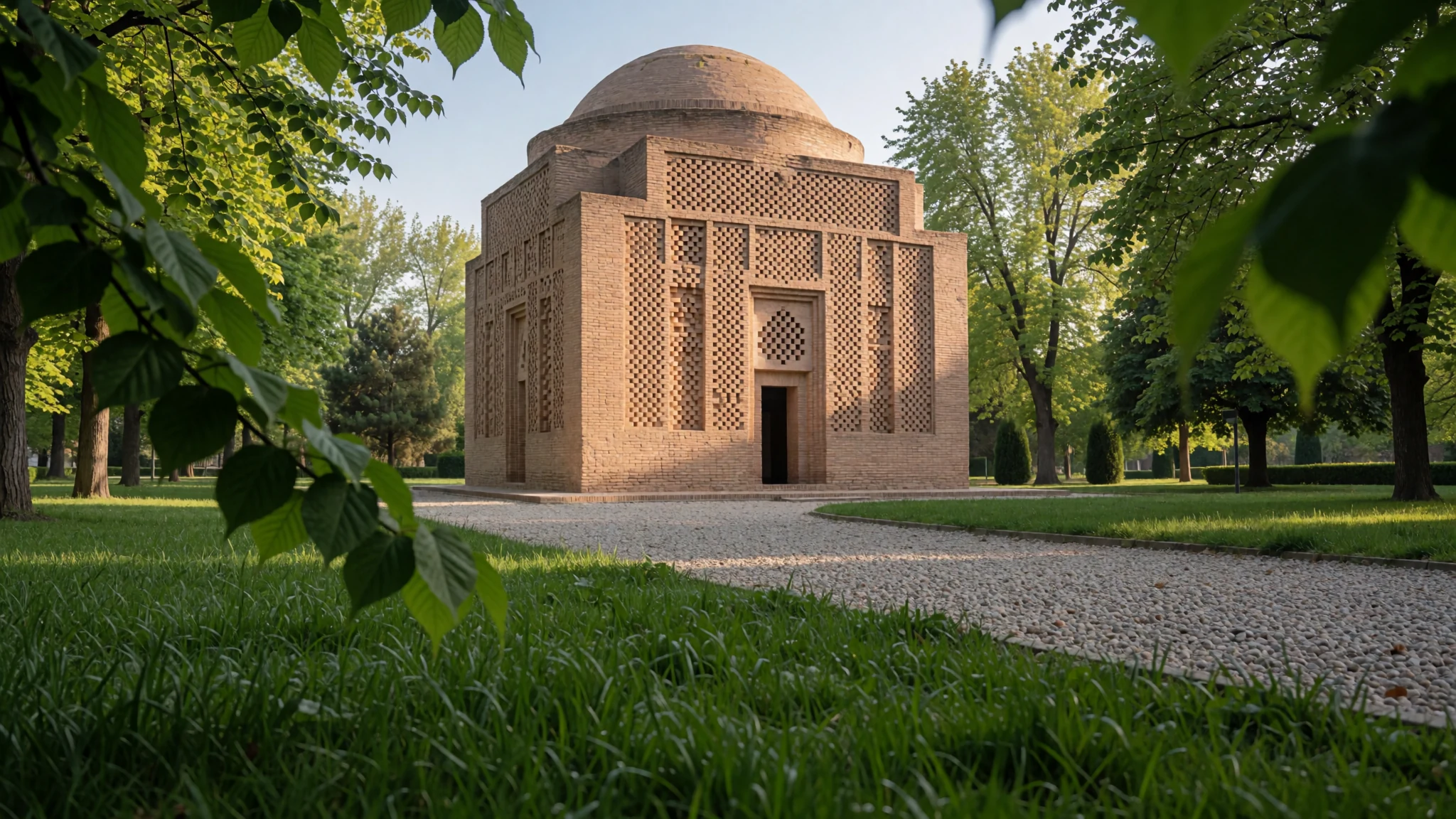
- Ark Citadel
Rising steeply above Registan Square, these massive fortified mud-brick walls once enclosed a sprawling royal city within a city. Inside the ramparts, visitors can explore cavernous coronation courtyards, historic coronation courts, and austere royal storehouses that once housed the absolute power of the local rulers.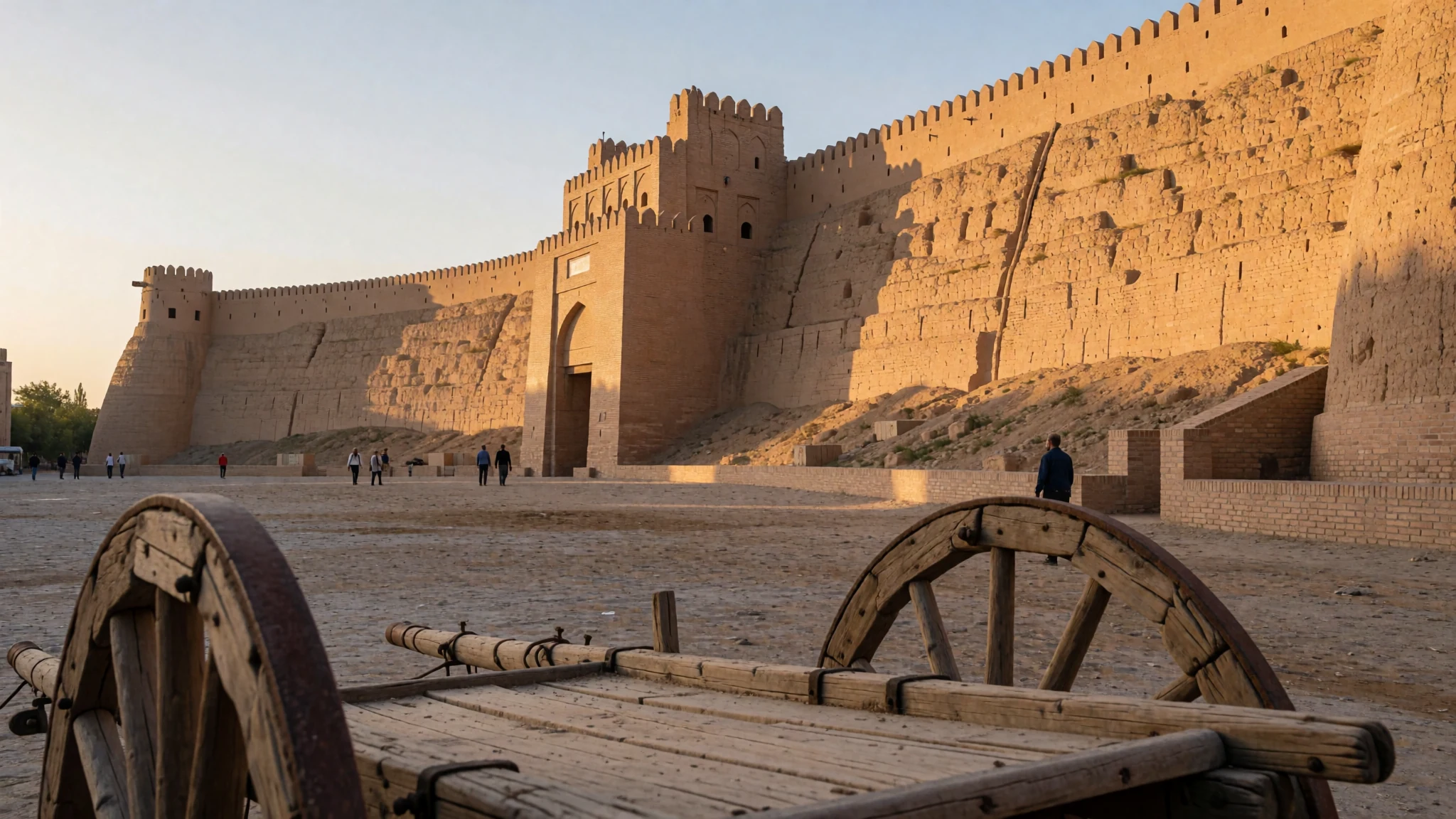
- Chor Minor
Built in the early nineteenth century as a mosque with dwelling rooms, this charming structure features four turquoise-capped towers decorated with distinct symbolic motifs. Each turret represents a different world religion, reflecting the cosmopolitan spirit of historic trade routes converging on the oasis.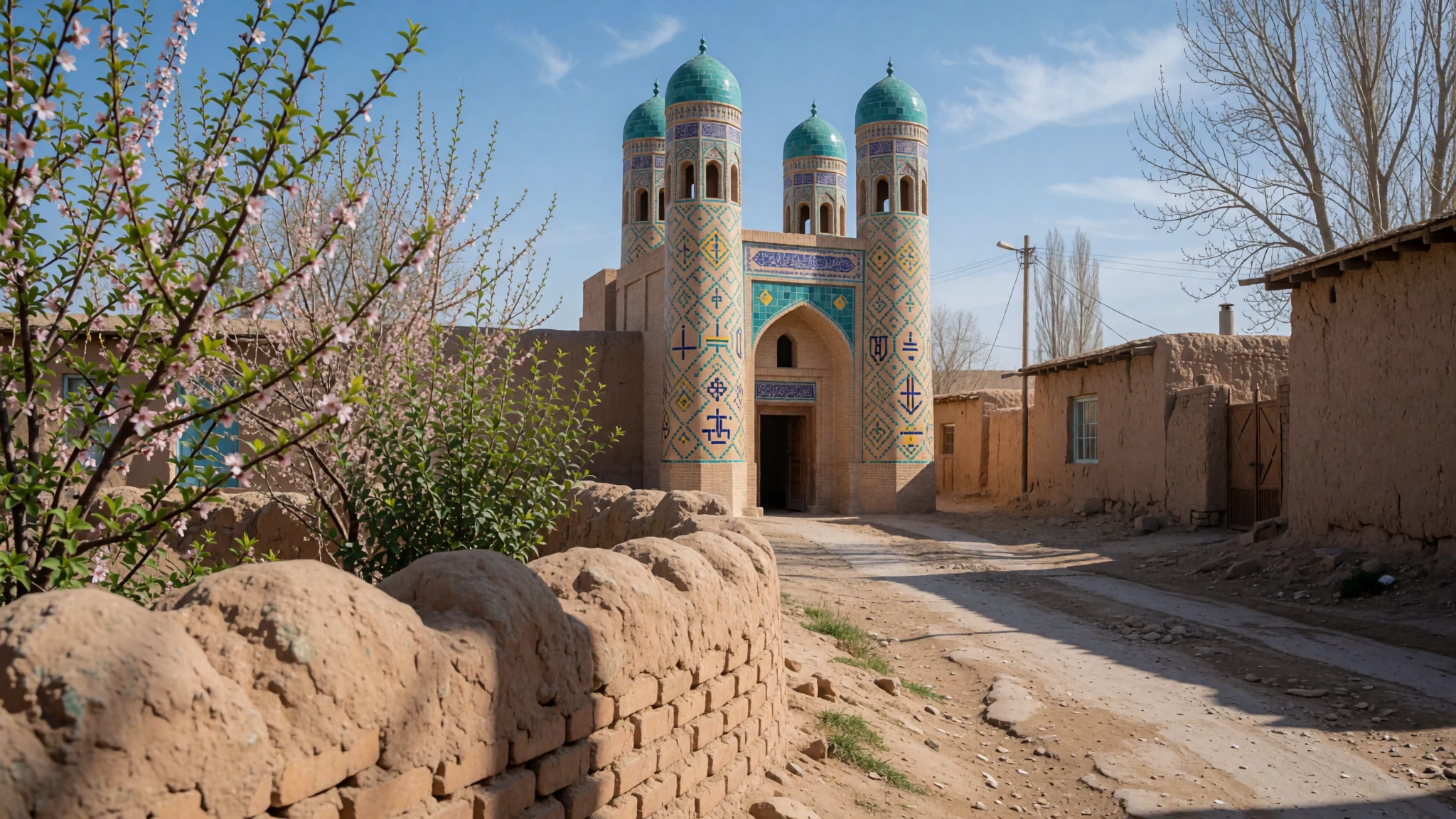
- Magok-i-Attari Mosque
Sunk deep below the modern street level, this ancient sanctuary stands on the foundations of pagan and Zoroastrian shrines dating back centuries before Islam. Its richly carved terracotta portal reveals layers of architectural history accumulated over successive reconstructions through the medieval era.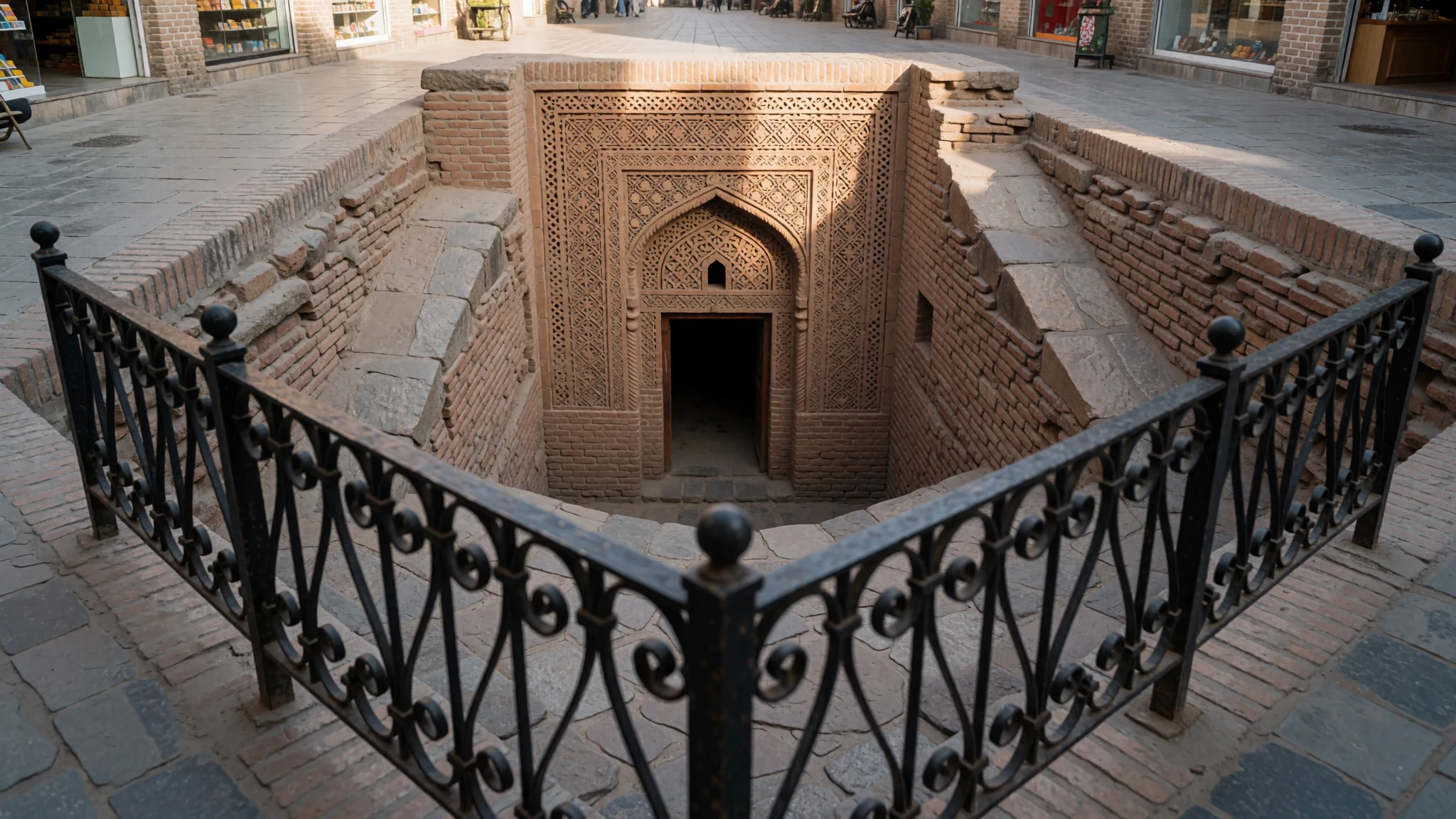
Culture
Daily life in Bukhara revolves around hospitality, family gatherings, and the unhurried rhythm of the tearoom. Traditional community bonds remain exceptionally strong, with neighbours frequently sharing meals and welcoming guests with customary bowls of hot green tea poured from decorated ceramic teapots. Hospitality is considered a sacred duty, and visitors are often greeted on the streets with genuine warmth and curiosity by elders wearing traditional embroidered caps and quilted coats. Craftsmanship is woven directly into the social fabric, as families pass down intricate skills in metalwork, carpet weaving, and Suzani embroidery from generation to generation within the ancient trade domes. Islam shapes the spiritual and moral landscape quietly yet deeply, evident in the reverence shown toward historical shrines, neighbourhood mosques, and seasonal holidays. When visiting holy shrines or active places of worship, always dress modestly with shoulders and knees covered, and remove your footwear before stepping onto interior carpets.
What to wear
Traditional attire in Bukhara reflects centuries of practical adaptation to desert extremes and vibrant cultural exchange along the Silk Road. Elders and artisans frequently wear heavy cotton-padded robes known as chapan, often patterned in striking geometric or floral motifs, paired with traditional black-and-white embroidered skullcaps called tubeteika. Women historically wore brightly coloured silk dresses layered over trousers, complemented by elaborate silver jewellery and embroidered headscarves. Today, most urban residents wear contemporary casual clothing, though traditional textiles remain highly visible through embroidered waistcoats, scarves, and handmade leather footwear sold in the vaulted bazaars. For travellers navigating the dusty lanes and sun-drenched monuments, lightweight, breathable fabrics made of cotton or linen are essential. Modesty is important in this conservative region; visitors should pack clothing that covers the shoulders and knees to ensure comfort when entering local neighbourhoods and sacred religious sites, alongside a sturdy pair of walking shoes for uneven medieval pavement.
What to eat
- Bukharian Plov — Local roadside chaikhanas and old-town family restaurants
A legendary regional variation of the national rice dish, slowly simmered in cast-iron cauldrons with tender chunks of mutton, sweet yellow carrots, onions, and whole garlic cloves, traditionally served during midday gatherings.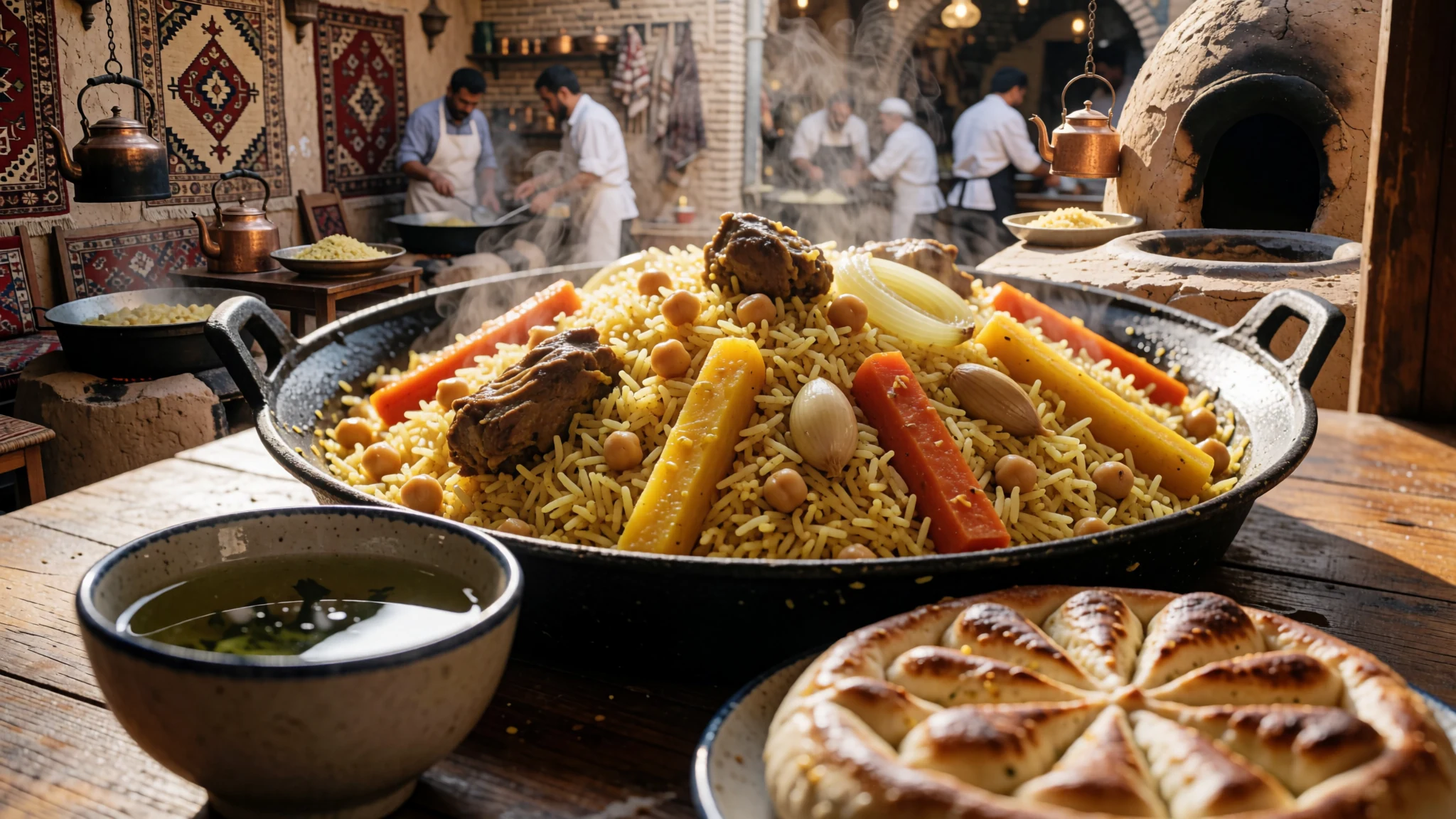
- Samsa — Street-side bakeries and market stalls throughout the historic centre
Flaky, multi-layered pastries stuffed with minced lamb and onions, heavily spiced with cumin, and baked until golden brown against the blistering interior walls of a traditional clay tandoor oven.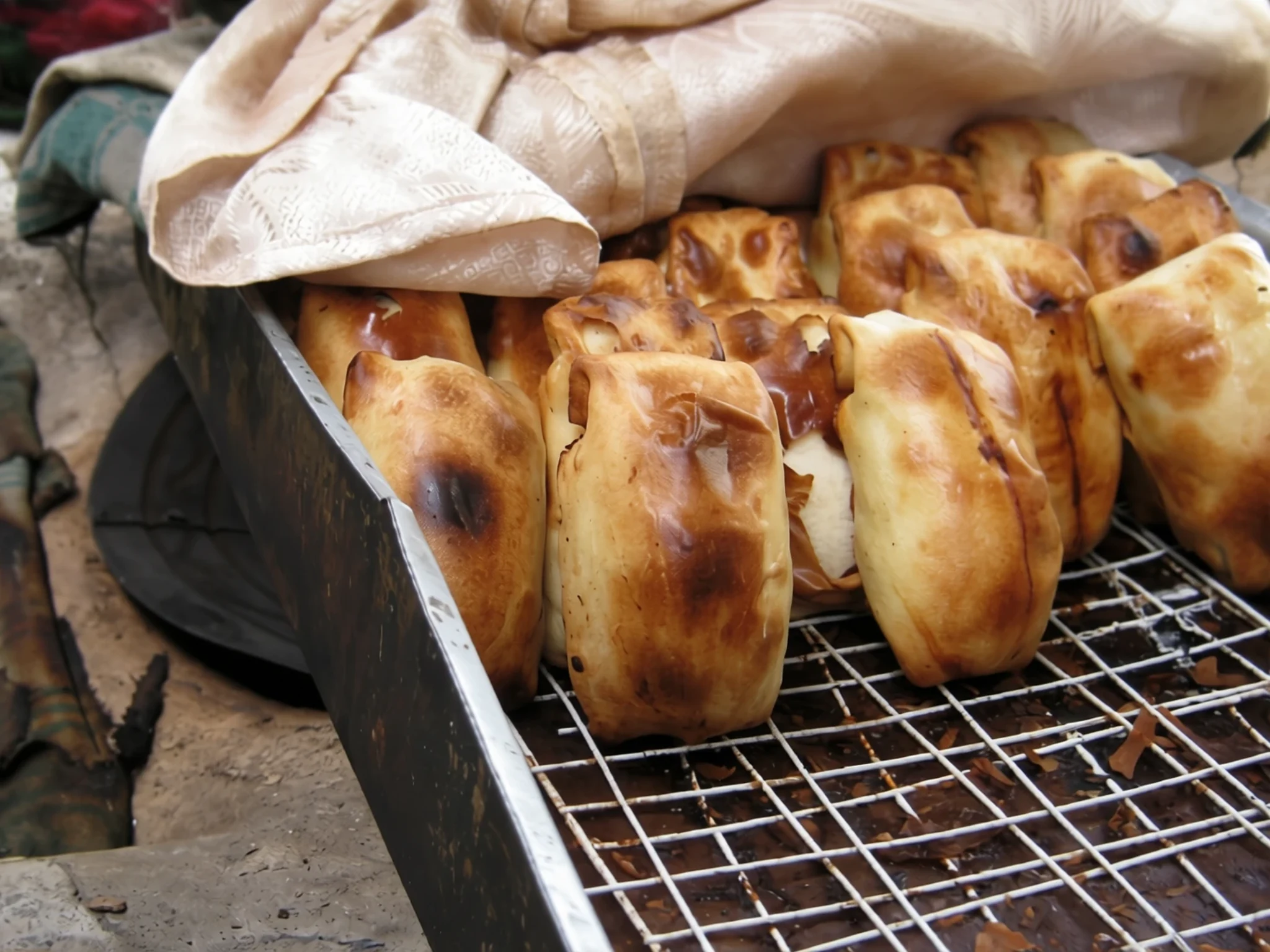
- Shivit Oshi — Traditional courtyard eateries near the trading domes
Bright green hand-rolled noodles infused with fresh dill, served warm under a generous topping of tender stewed beef, root vegetables, and a rich, savoury tomato and yoghurt sauce. - Manti — Guesthouse dining rooms and traditional tea houses
Large, delicate steamed dumplings stuffed with finely chopped spiced meat and onions, served piping hot with a dollop of rich sour cream and fresh herbs. - Spiced Silk Road Tea — Specialty tea houses and historic caravanserai cafes
A fragrant infusion of green or black tea blended with cardamom, ginger, saffron, and dried fruit, traditionally sipped slowly from small ceramic piala bowls in shaded garden pavilions.
Plan it
Best time. March and November are the most comfortable months for walking, with highs of about 30 to 34°C, while July and August are the hottest, with highs above 46°C and no rain.
How long. 2–3
Getting there. High-speed Afrosiyob trains run from Tashkent via Samarkand to Bukhara Railway Station in Kogon, fifteen kilometres southeast, taking about four hours from Tashkent, with local buses and taxis completing the final leg into the old town.
Budget. mid
Tips
- Book high-speed train tickets weeks in advance as seats sell out quickly.
- Carry sufficient cash, as card acceptance in smaller shops and guesthouses is limited.
- Start sightseeing early in the morning to avoid midday desert heat and tour groups.
- Drink bottled water rather than tap water throughout your stay.
Etiquette
- Always remove your shoes when entering homes and carpeted prayer halls.
- Ask permission before photographing local residents in the markets and neighbourhoods.
Nearby
Sources
- Wikidata Q5764 (CC0)
- Wikipedia (rev 1381868304) (CC BY-SA 4.0)
- Wikivoyage (rev 5375165) (CC BY-SA 4.0)