Samarkand
Samarkand, Uzbekistan
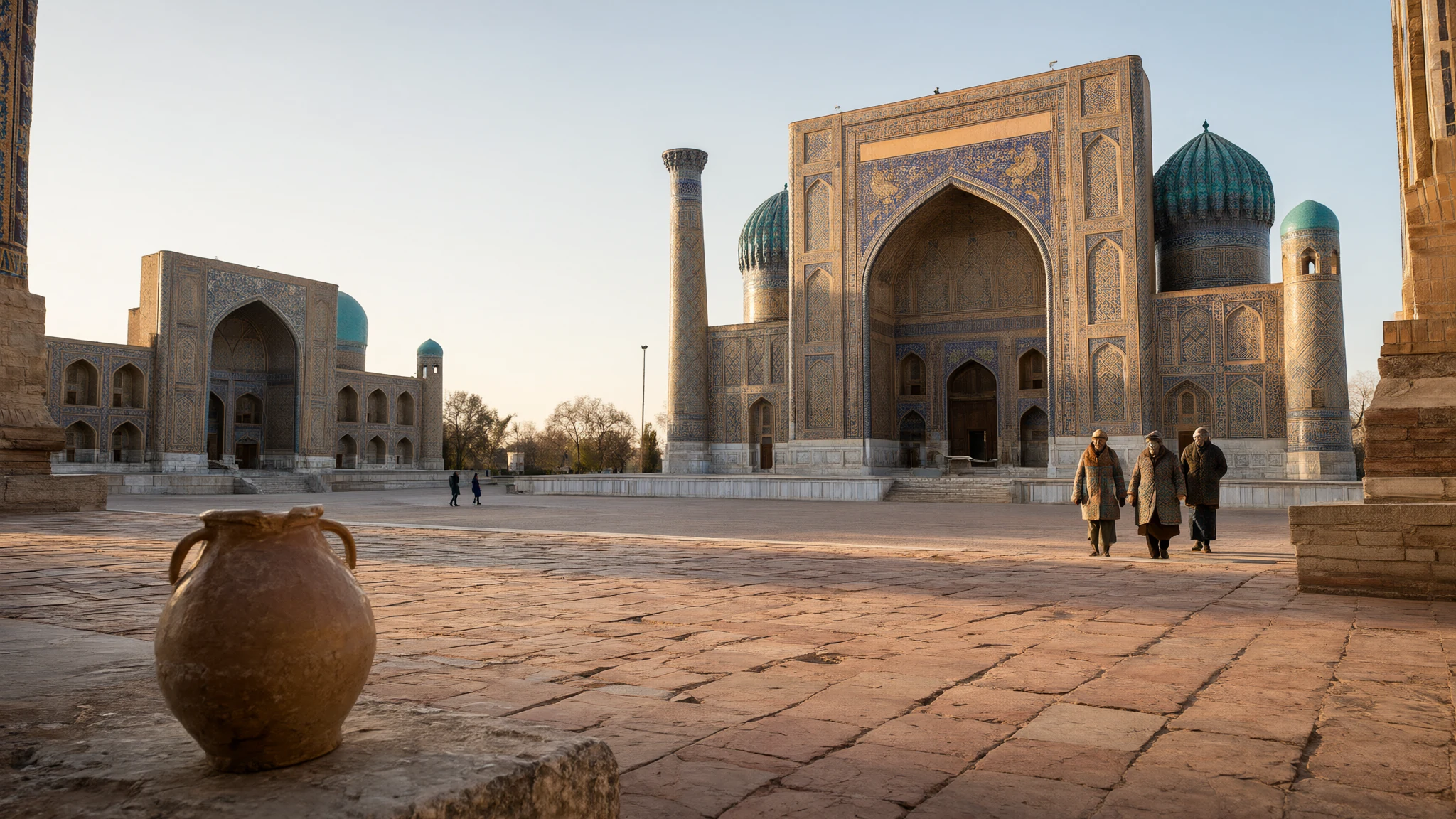
Journey to Samarkand to walk through legendary Silk Road history, framed by astonishing turquoise tilework and centuries of vibrant Central Asian trade.
The place
Samarkand is situated in southeastern Uzbekistan, rising at an elevation of about 702 metres above sea level. Home to a population of roughly 546,000 residents, it serves as an important administrative hub and stands as a vital touchstone of historical Iranian and Sogdian civilizations. The urban layout blends ancient foundations with Soviet-era administrative blocks and bustling modern avenues, creating a layered cityscape where old canals still channel mountain runoff past residential districts. Visitors arriving in the city are immediately struck by the sheer scale of the medieval monuments punctuating the skyline, their turquoise domes and towering portals visible from miles away across the surrounding valley. The climate is continental and dry, bringing scorching summer days and crisp, cool winters that leave the high peaks dusted with snow. Paved walkways and leafy boulevards connect the central districts, making it easy to wander on foot between bustling bazaars and quiet residential quarters. While the central squares draw crowds of curious travellers and pilgrims, turning down a dusty side street reveals tranquil courtyards, workshops where artisans hammer copper vessels, and bakeries scenting the morning air with fresh bread. The atmosphere carries the quiet dignity of a place that has witnessed empires rise and fall along the ancient overland routes, welcoming traders, scholars, and wanderers for millennia.
Its story
Samarkand is counted among the most ancient continuously inhabited urban centres in Central Asia, with human presence in the local area stretching back tens of thousands of years to the Upper Paleolithic. Archaeological investigations indicate that permanent settlement began around the first millennium BC, eventually blossoming into the capital of the Sogdian satrapy under the Achaemenid dynasty of Persia. The strategic location along the vital trade arteries connecting China with Europe made the settlement an irresistible prize for conquerors. Alexander the Great seized the city in 329 BC, recording it in Greek chronicles under the name Maracanda. Centuries later, the arrival of Arab armies in the eighth century introduced Islam, transforming the religious landscape and paving the way for a golden age of intellectual and architectural achievement. The city suffered devastation during the Mongol invasions led by Genghis Khan in the early thirteenth century, which obliterated the ancient settlement site of Afrosiab. However, it rose from the ashes under later dynasties, notably during the Timurid era from the fourteenth century onwards, when master architects and craftsmen were gathered from across the empire to adorn the streets with the breathtaking madrasahs, mausoleums, and mosques that define the cityscape today.
What to see
- Registan — Central Samarkand
This magnificent public square serves as the defining architectural masterpiece of Samarkand and the wider Silk Road network. Surrounded by three towering madrasahs adorned with intricate blue tilework, it became the civic heart of the city following the abandonment of the ancient Afrosiab site.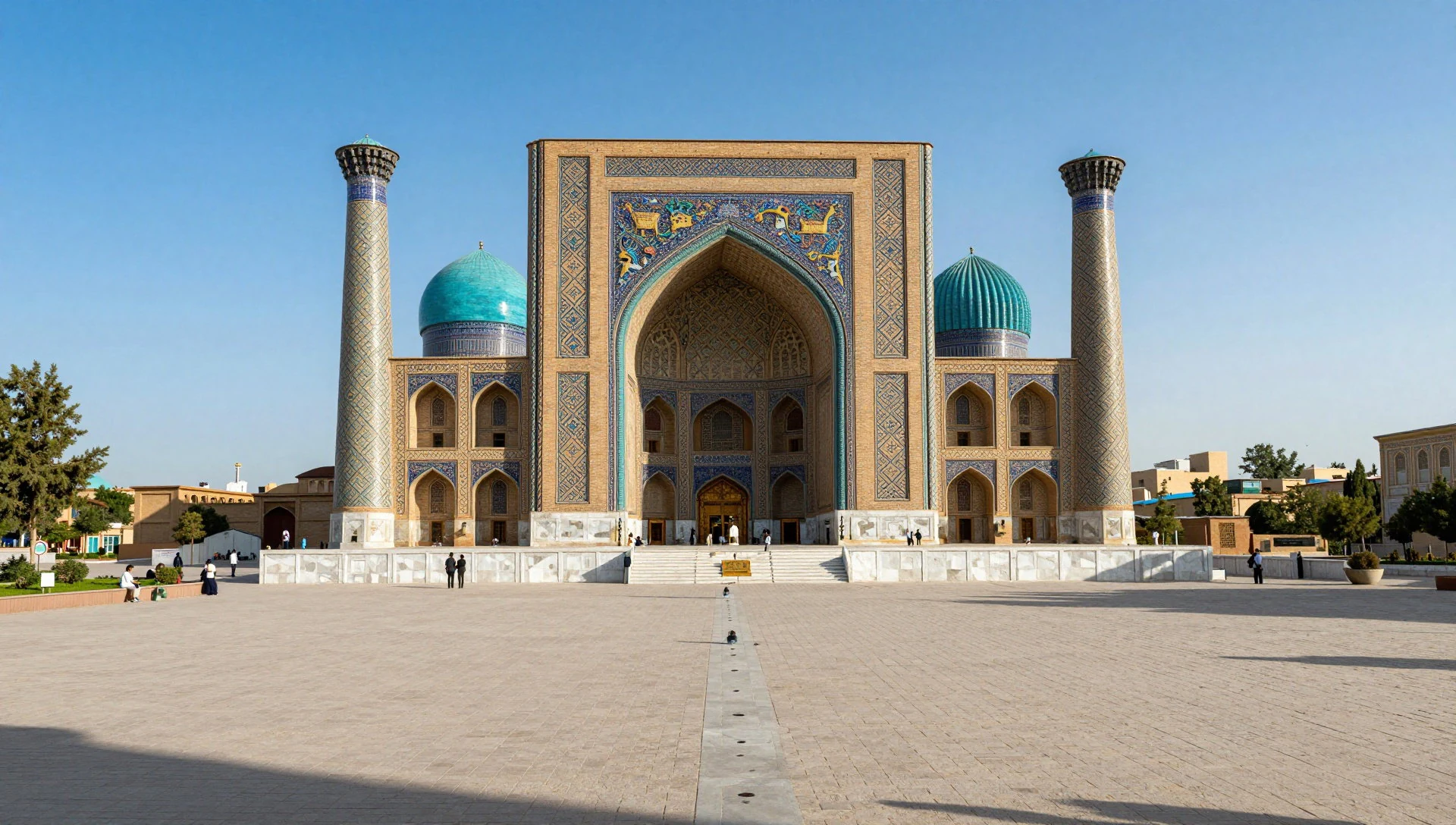
- Shah-i-Zinda Ensemble — Northern Samarkand, near Afrosiab
A breathtaking avenue of mausoleums climbing a gentle slope, featuring some of the finest fourteenth- and fifteenth-century tilework in the Islamic world. The necropolis grew around a sacred shrine dedicated to a cousin of the Prophet Muhammad, creating a serene, deeply atmospheric sanctuary.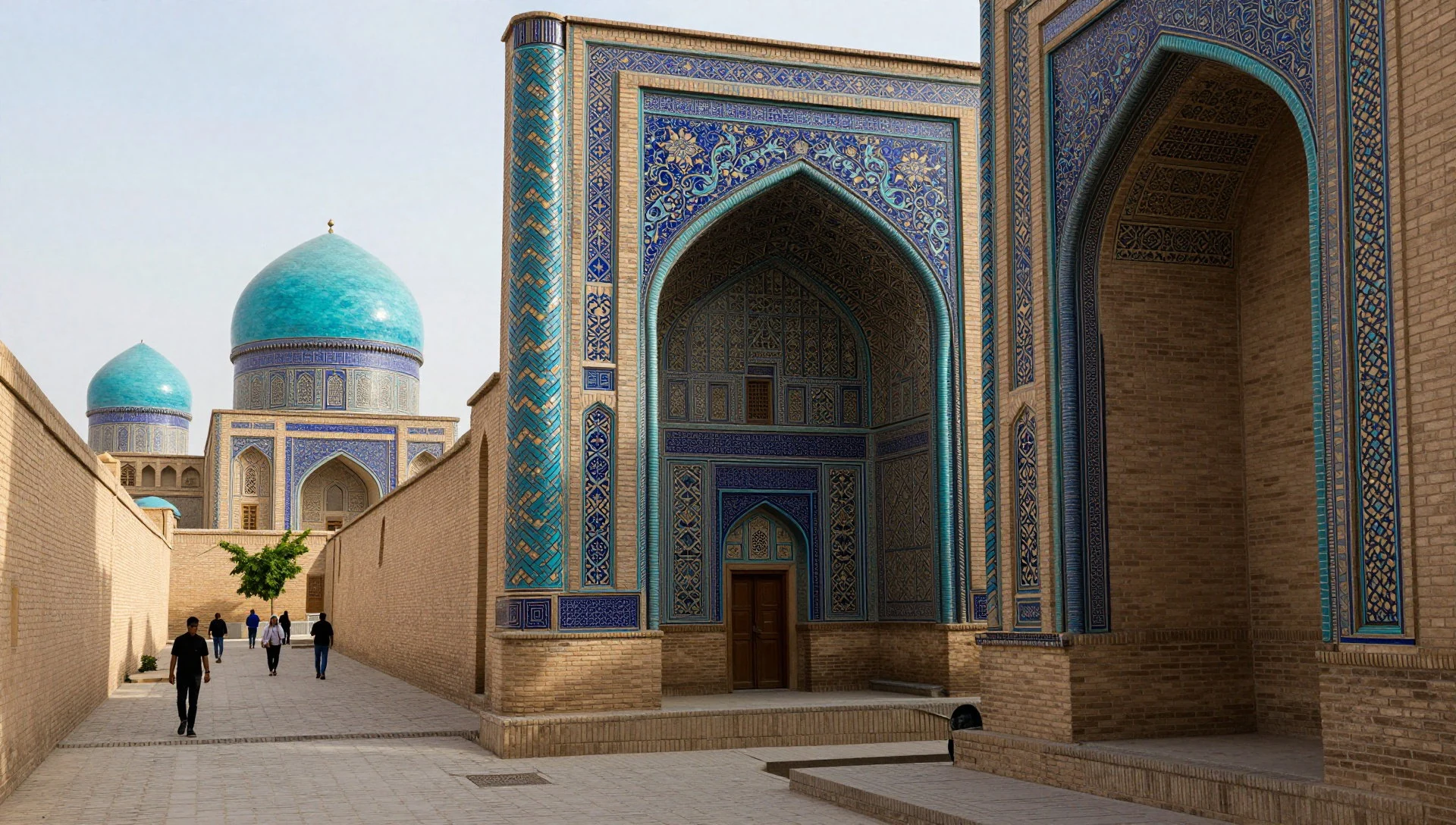
- Bibi-Khanym Mosque — Near the central bazaar
Erected after a victorious campaign in India at the close of the fourteenth century, this colossal mosque was commissioned by the ruler's principal wife. Though construction was rushed and portions famously suffered structural failures over the centuries, its massive ruined portals retain an awe-inspiring presence.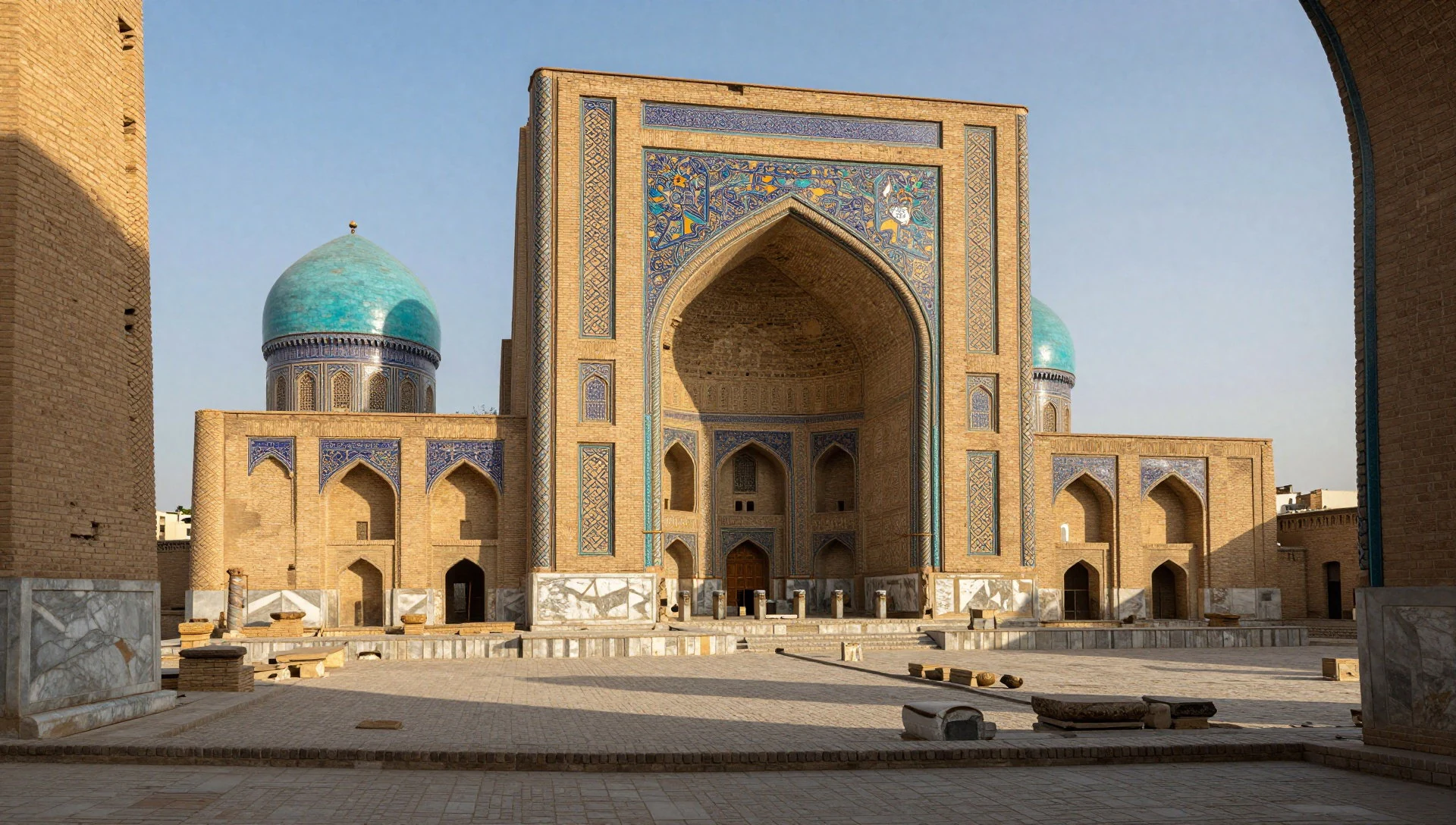
- Afrosiab — Northern outskirts
Sprawling across dusty hills on the northern edge of the modern city, this expansive archaeological site marks the original location of ancient Samarkand. Occupied for centuries before being destroyed by invading Mongol forces, the mounds yield invaluable artifacts housed in the adjacent museum.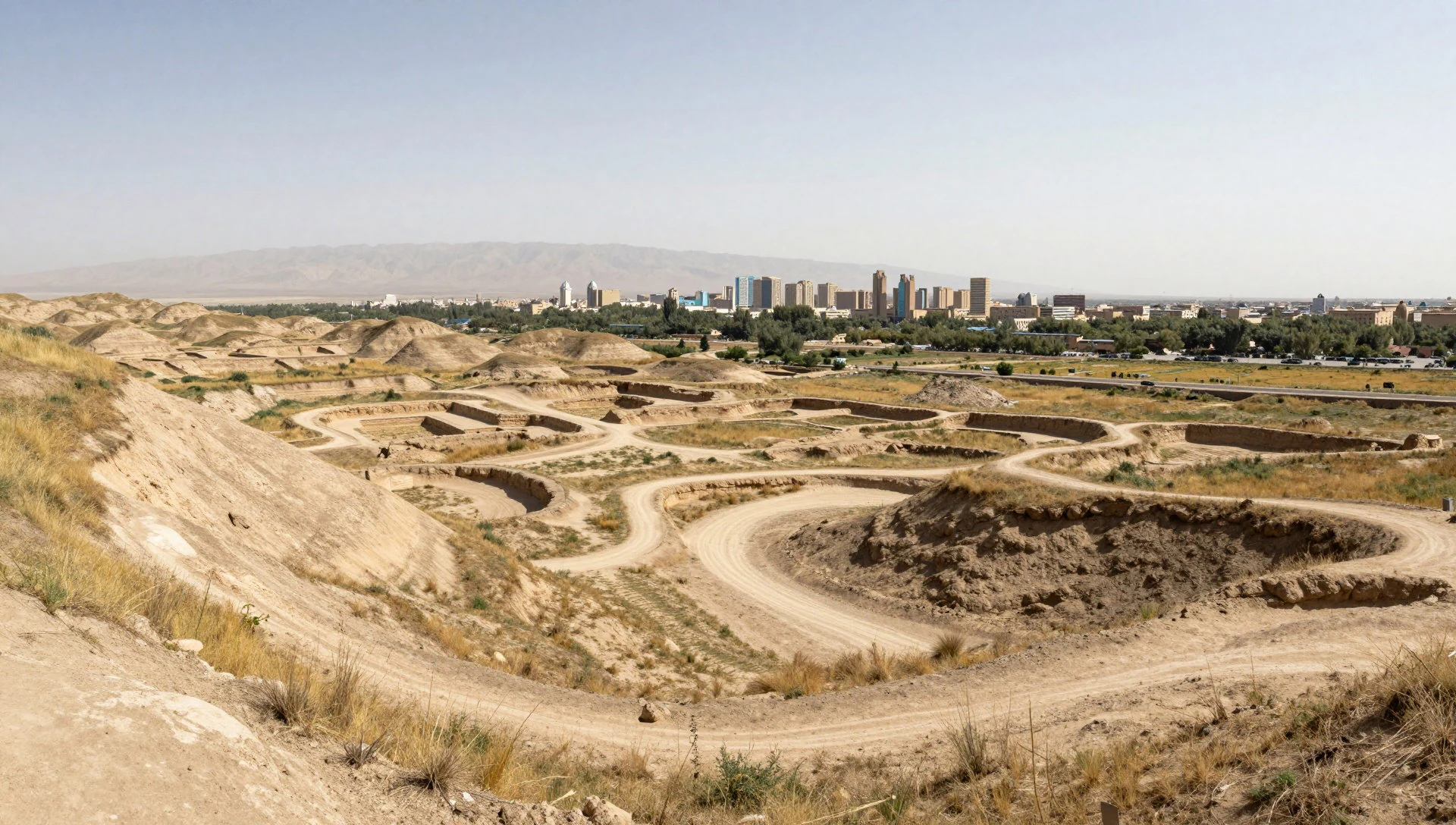
- Khazrat-Khizr Mosque — Near the Shah-i-Zinda complex
Perched on an elevated ridge, this historic house of worship stands upon foundations that trace back through centuries of successive reconstruction following earlier invasions. Its elegant wooden pillared veranda offers sweeping views over the surrounding rooftops and distant monuments.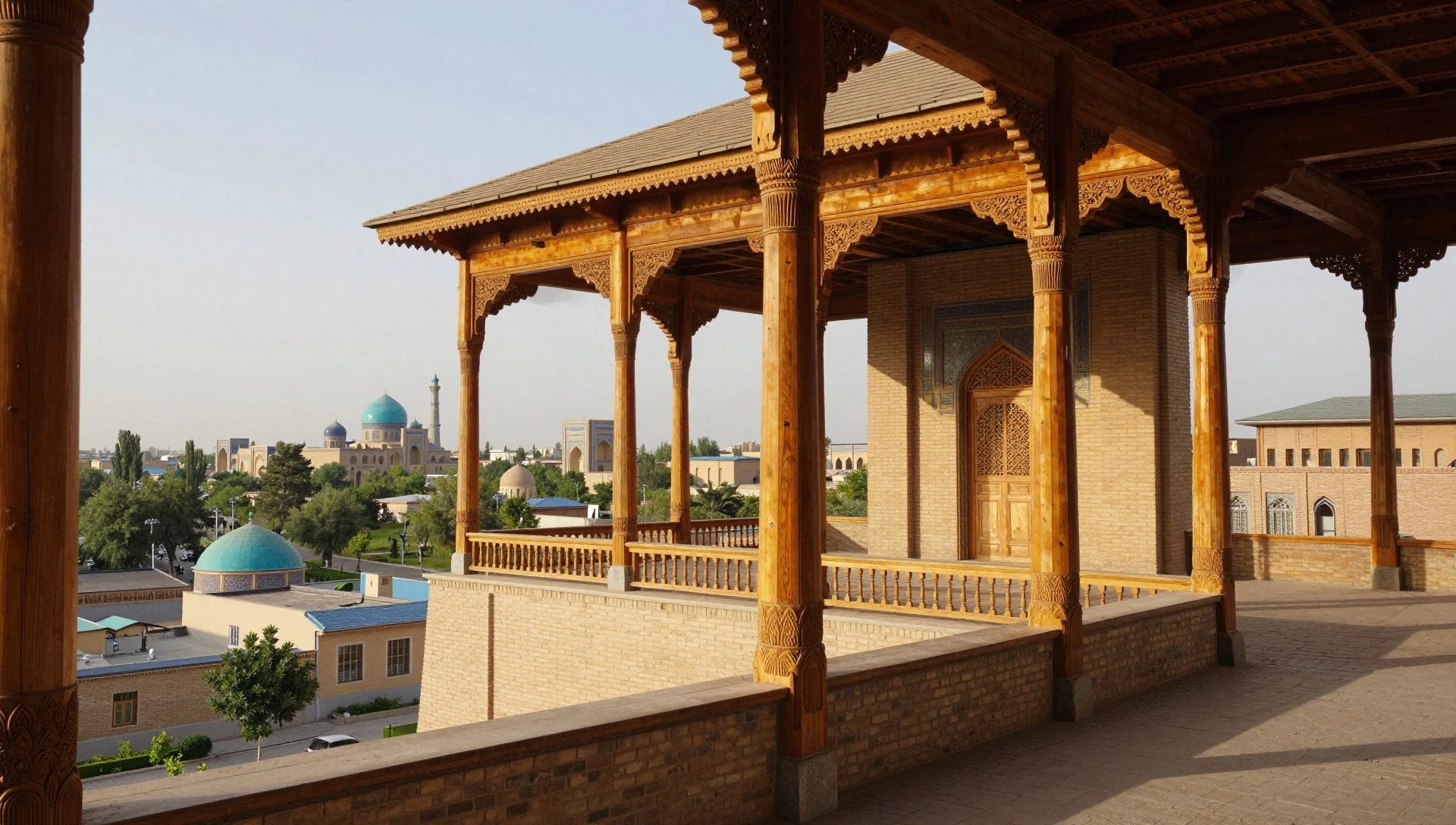
Culture
Islam arrived in the local area during the eighth-century campaigns of the Umayyad Caliphate, sweeping away older Zoroastrian, Nestorian, and Buddhist traditions to shape centuries of spiritual and cultural life. The landscape filled with minarets, theological schools, and quiet shrines, including the revered memorial complex of the eminent Islamic scholar Imam al-Bukhari. Hospitality is deeply embedded in everyday interactions, with guests routinely welcomed with hot tea and dried fruits in homes, workshops, and guesthouses. Traditional social structures emphasise respect for elders, community solidarity, and family ties. When entering active mosques or sacred mausoleums, dress modestly with shoulders and knees covered, and remove your footwear where requested at thresholds.
What to wear
Traditional Uzbek attire features vibrant, hand-loomed ikat fabrics dyed in striking geometric patterns of crimson, gold, and turquoise, historically crafted from locally spun silk and cotton. While older generations in rural districts still wear traditional robes and embroidered skullcaps on daily outings, urban residents in Samarkand generally dress in contemporary Western styles. For travellers visiting the city, practical and modest clothing is essential due to the warm climate and conservative local norms. Lightweight, breathable linen or cotton trousers and shirts shield against the strong sun while respecting cultural expectations. Women will find it useful to carry a lightweight scarf for covering the head when stepping inside holy shrines or active prayer spaces, and comfortable walking shoes are a must for navigating uneven cobblestones and ancient stone courtyards.
What to eat
- Plov — Specialist eateries and morning markets across the city
The quintessential national dish, consisting of rice slow-cooked in a large cauldron with tender chunks of meat, yellow carrots, onions, and aromatic spices.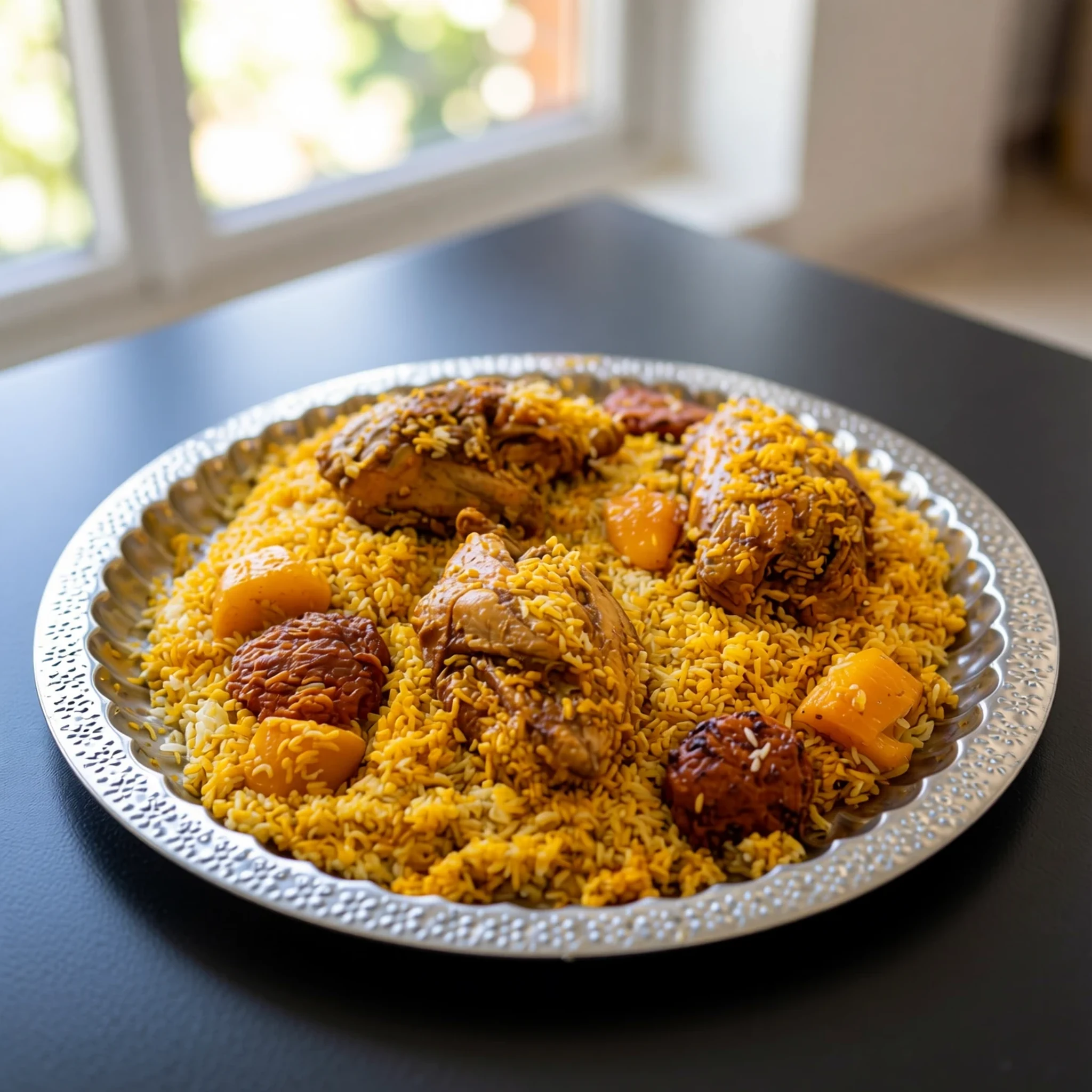
- Shashlik — Traditional side street grill houses near the Registan
Skewers of marinated lamb, beef, or chicken grilled over hot charcoal coals, typically served sliced with raw onions and fresh flatbread.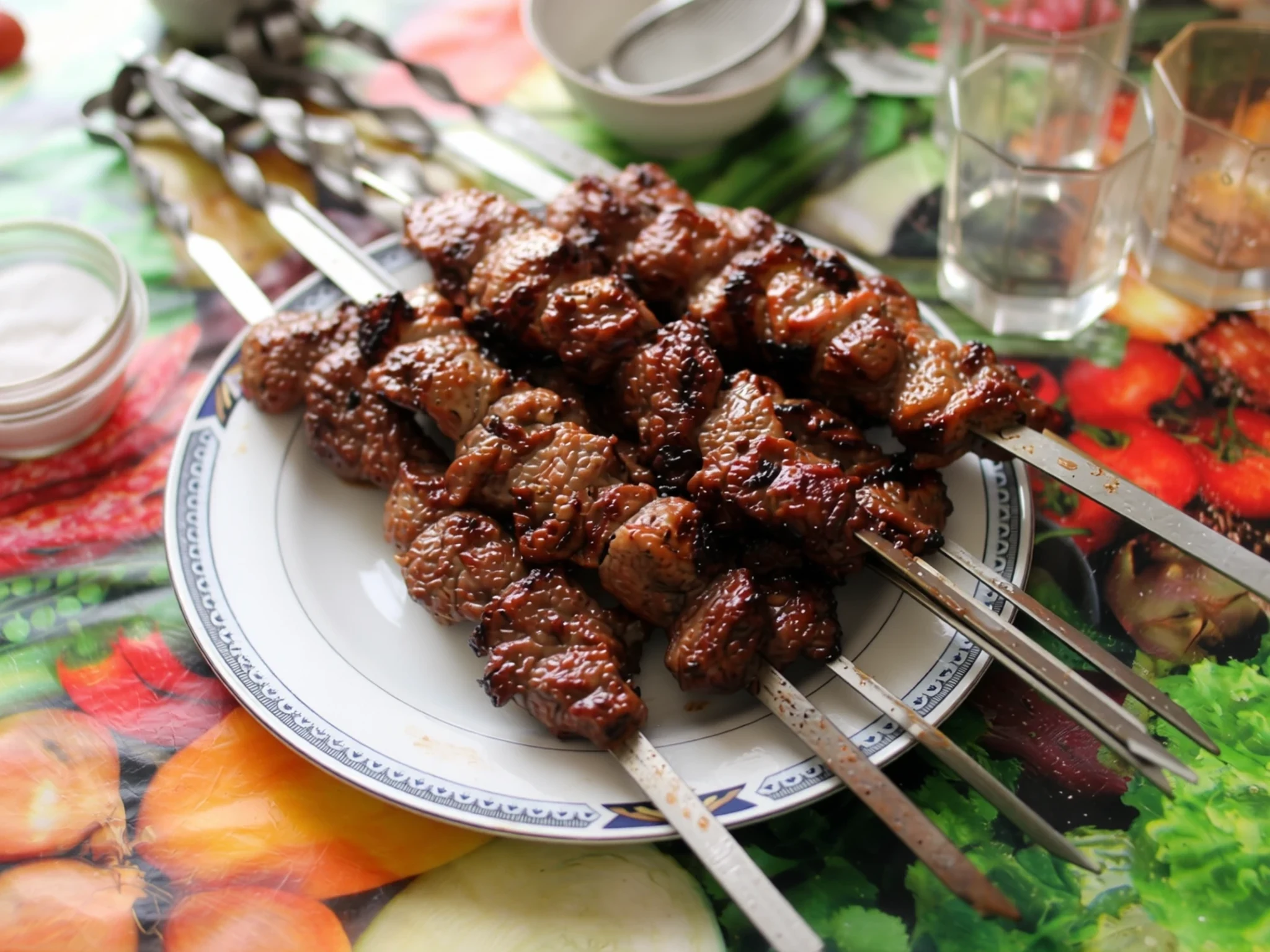
- Samarkand Non — Local bakeries and central bazaar stalls
Thick, dense rounds of traditional baked bread stamped with intricate geometric patterns, prized across the region for its unique smoky crust. - Lagman — Family-run neighbourhood restaurants
Hand-pulled wheat noodles served in a rich broth or stir-fried with diced meat, peppers, garlic, and savory garden vegetables.
Plan it
Best time. March and November offer the most comfortable daytime temperatures for exploring historical sites, while July is the hottest month, with highs near 44°C.
How long. 3–4
Getting there. Arrive by high-speed Afrosiob train from Tashkent Central station in about four hours, or via the clean, modern Samarkand Railway Station located northwest of the centre.
Budget. mid
Tips
- Book high-speed train tickets well in advance as seats sell out quickly.
- Carry cash in local currency for small market purchases and entry fees.
- Start your visits to popular monuments early in the morning to beat tour groups.
- Drink bottled water rather than tap water throughout your stay.
Etiquette
- Dress modestly with shoulders and knees covered when visiting religious sites.
- Remove your shoes when entering traditional homes, guesthouses, and sacred indoor shrines.
Sources
- Wikidata Q5753 (CC0)
- Wikipedia Samarkand (CC BY-SA 4.0)
- Wikivoyage Samarkand (CC BY-SA 4.0)