Shymkent
Shymkent, Kazakhstan
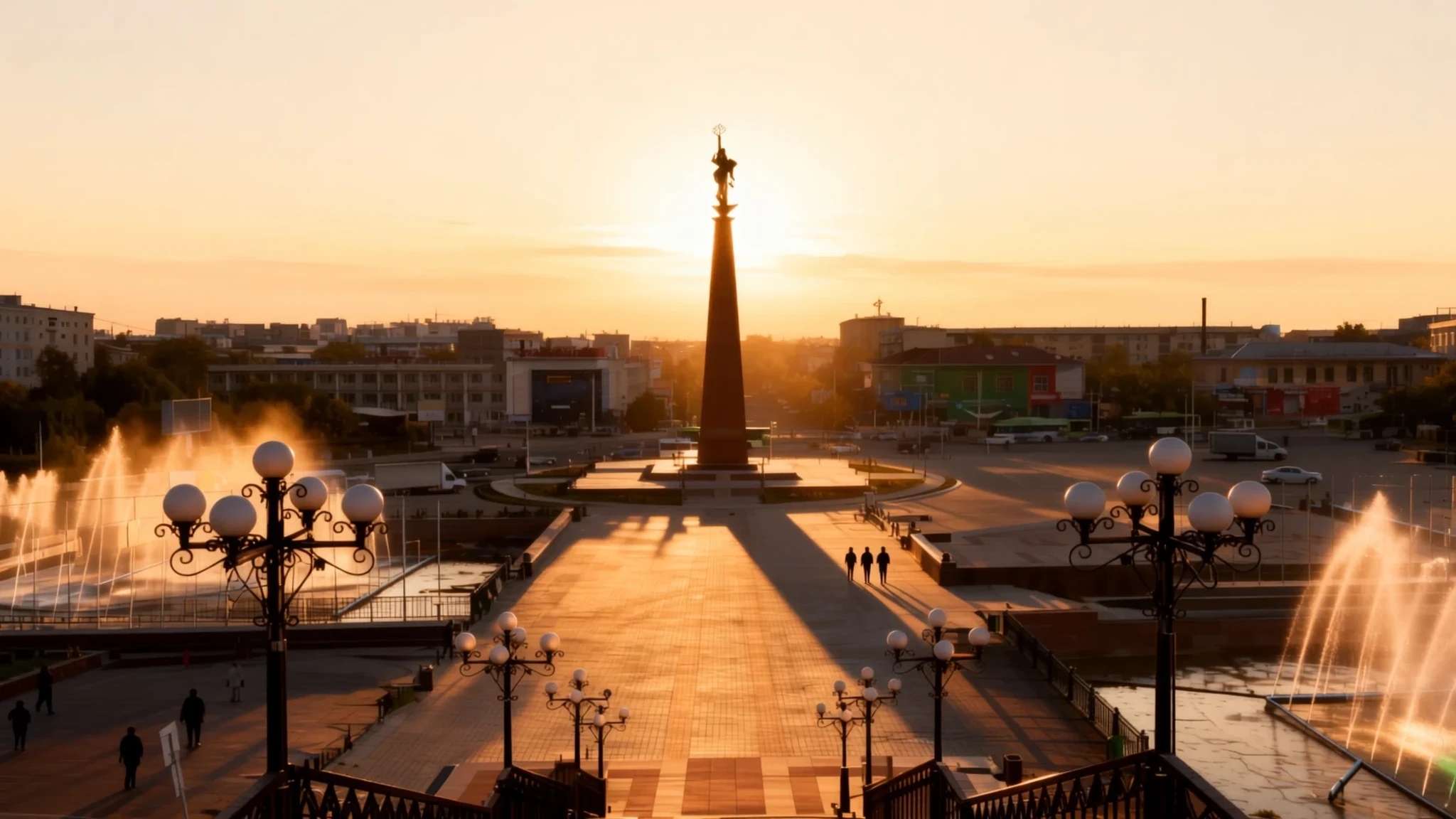
Shymkent is southern Kazakhstan's food-loving crossroads, where Kazakh, Uzbek and Russian habits meet over plov, bazaar stalls and old Silk Road ground.
The place
Shymkent sits in the far south of Kazakhstan, close to the Uzbek border, and with about 1.2 million people it is the country's third-largest city. It is administered separately from the surrounding region, a status shared only with Almaty and Astana. Tashkent is a short hop to the south, while Almaty lies a long day's journey east and Astana is a very long way north. That geography explains much of the character of the place. The population is mostly Kazakh, with sizeable Uzbek and Russian communities, and the mix shows in the street signs, the cooking, the architecture and the languages overheard at a bus stop. The city stands at about 506 metres above sea level, on the edge of the steppe, with mountains not far off. Summers are hot and dry, winters are cold, and the climate sits somewhere between continental and Mediterranean, which is why spring and autumn are kinder to walkers. Shymkent is not a city of one great monument. It is a working regional hub and rail junction, with Soviet-era parks, broad avenues, busy bazaars, a reconstructed hillfort and a reputation among other Kazakhstanis as the place to eat well. Visitors tend to use it as a base for the old pilgrimage town of Turkestan and the Silk Road settlement of Sayram, but a couple of unhurried days in the city itself repay the effort. The local government website, gov.kz/memleket/entities/shymkent, is the place to check current events.
Its story
Shymkent began, around the turn of the twelfth century according to the facts, as a caravanserai: a fortified rest stop built to protect nearby Sayram, a Silk Road trading town a few kilometres to the east. It grew into a market where Turkic nomads and settled Sogdian traders exchanged goods. Archaeologists have found burials that suggest people lived here far earlier, and Shymkent today likes to describe itself as a city with a very long past. The record is violent. The town was destroyed several times: by Mongol armies under Genghis Khan, by troops from the southern khanates, and by nomad raids. Each time, it was rebuilt. In the early nineteenth century it fell under the Khanate of Kokand, and in 1864 the Russian Empire captured it. The town was renamed Chernyaev in 1914 and took the name Chimkent in 1924, the form many older books still use. Under Russian and then Soviet rule it became known for trade and for kumis, fermented mare's milk, and in the twentieth century it was developed as an industrial centre for the south, with dozens of factories and a fast-growing population in the second half of the century. Independence brought the Kazakh spelling, Shymkent, and in 2020 the city served as Cultural Capital of the Commonwealth of Independent States. Layers of all these periods remain visible: a rebuilt citadel, Soviet mosaics, a Russian-style cathedral park and mosques old and new.
What to see
- Shym-Qala hillfort — Old town
Shym-Qala is the reconstructed citadel on the hill where settlement is thought to go back many centuries. It was destroyed and rebuilt repeatedly, and the site now holds a small museum and archaeological displays. It makes a good first stop for understanding why the city is where it is.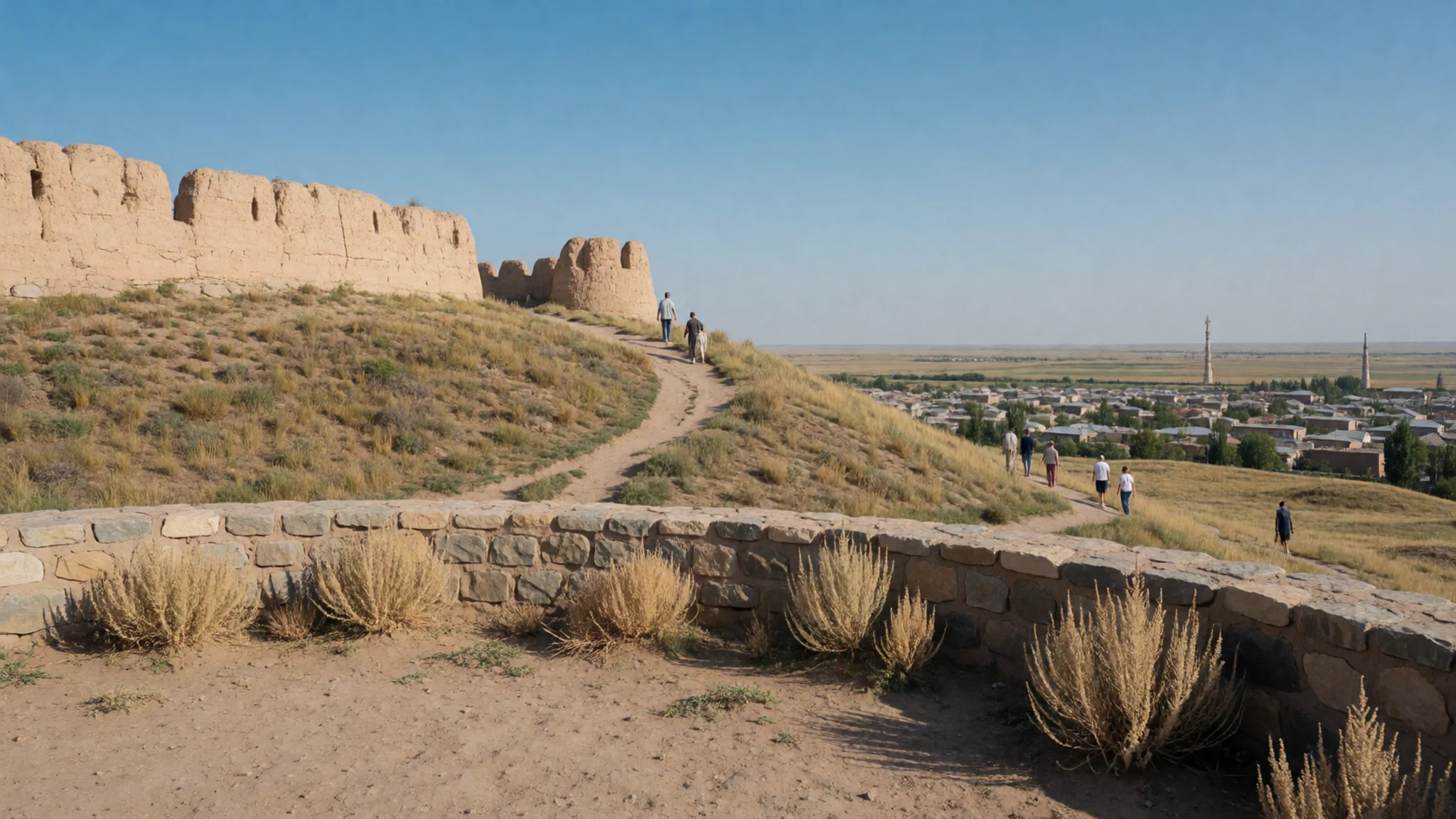
- Museum of Turkestan Region — North of the centre
This museum moved from the old centre into a newer building and holds the region's archaeological collections, which local writers rate highly. It is the best place to put the city into the wider story of southern Kazakhstan, from early settlers through Silk Road traders to the Russian period.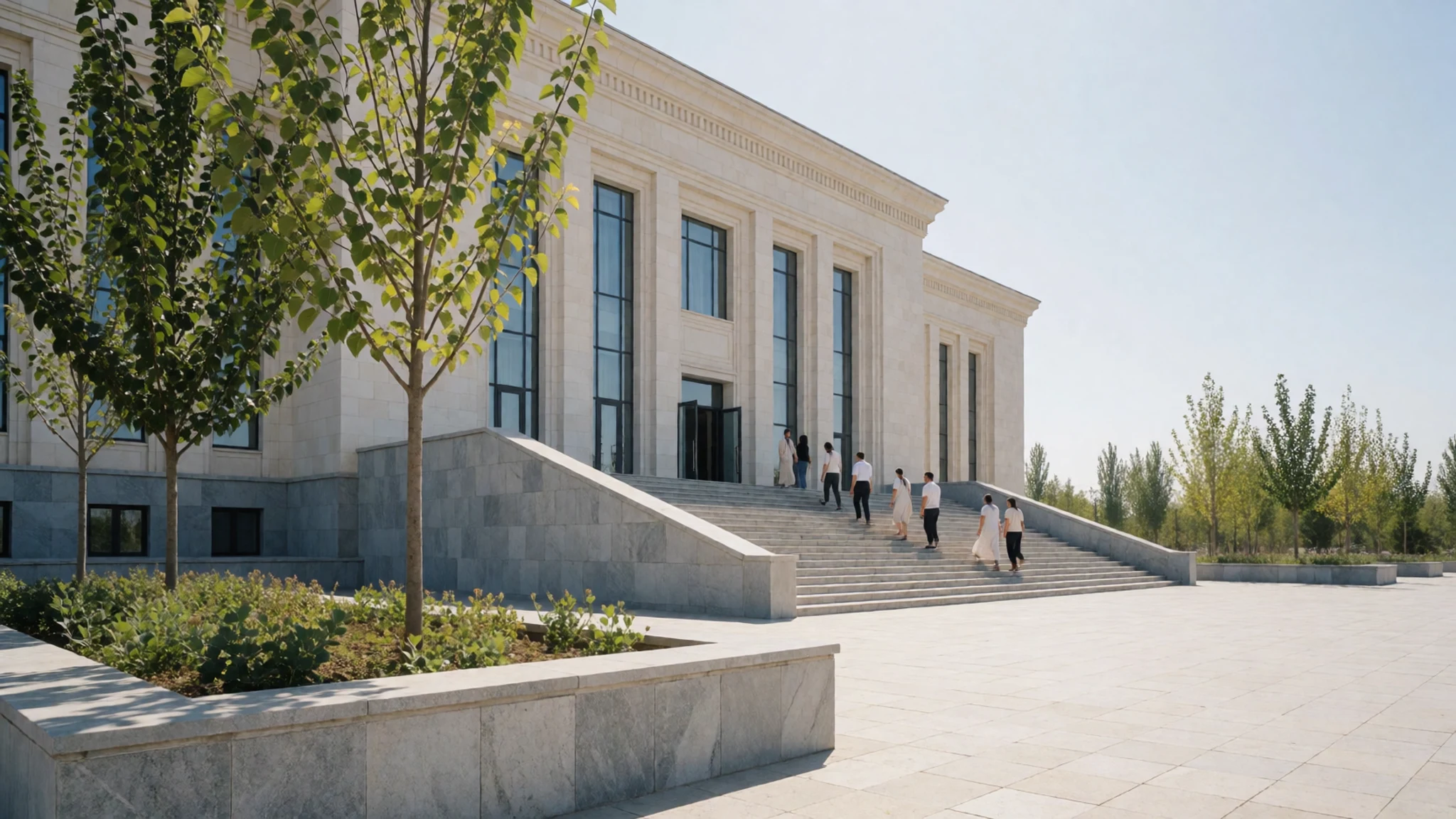
- Private Carpet Museum — Central Shymkent
A small private museum in the basement of an old Soviet building, reached through a backyard. Carpet ornament covers nearly every surface. It is a quirky, personal collection rather than a polished institution, and a good way to see the textile patterns that run through Central Asian homes.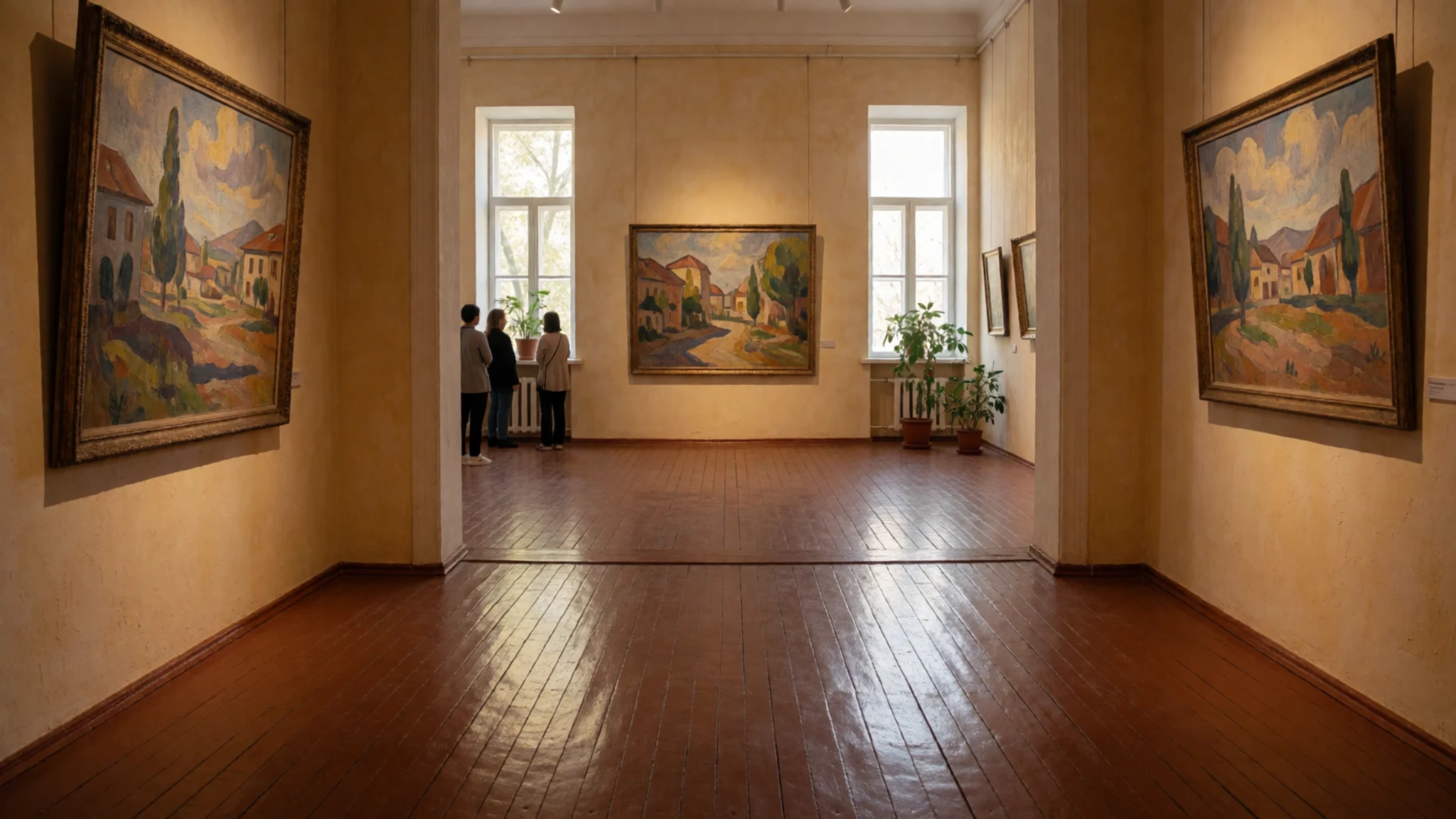
- Old mosque in the old town — Old town
A mosque dating from the late nineteenth century stands in the old part of the city, a quiet contrast to the newer, larger mosques elsewhere. It is worth a short stop for its modest scale and for the neighbourhood around it, where the older street life of Shymkent survives.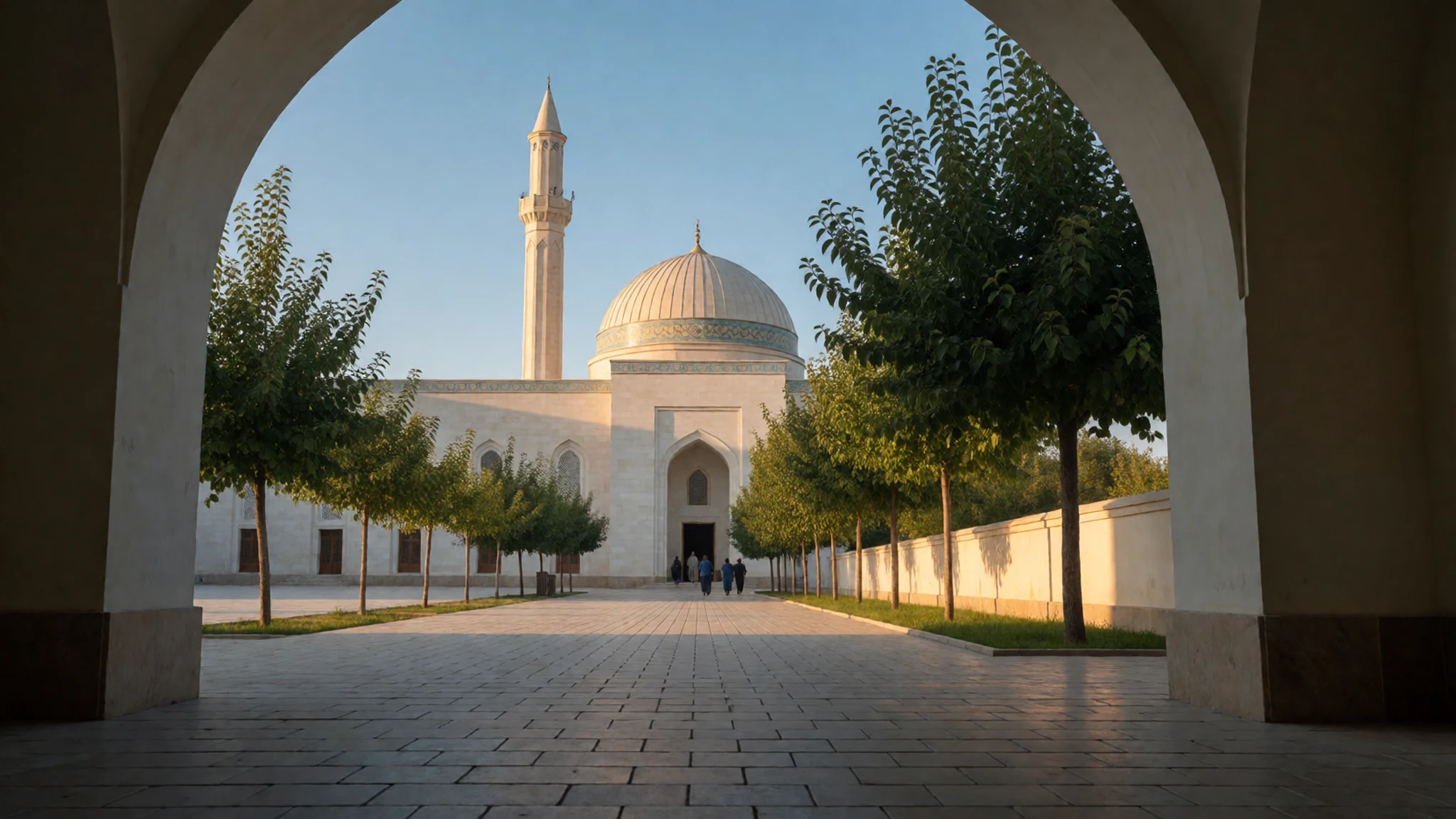
- Park Ken-Baba — Central Shymkent
Once a cathedral park, it still hides a Russian Revival church in a far corner. Some of the oaks are more than a century old. It can be noisy and crowded, especially on warm evenings and weekends, but it shows the city's Russian layer well.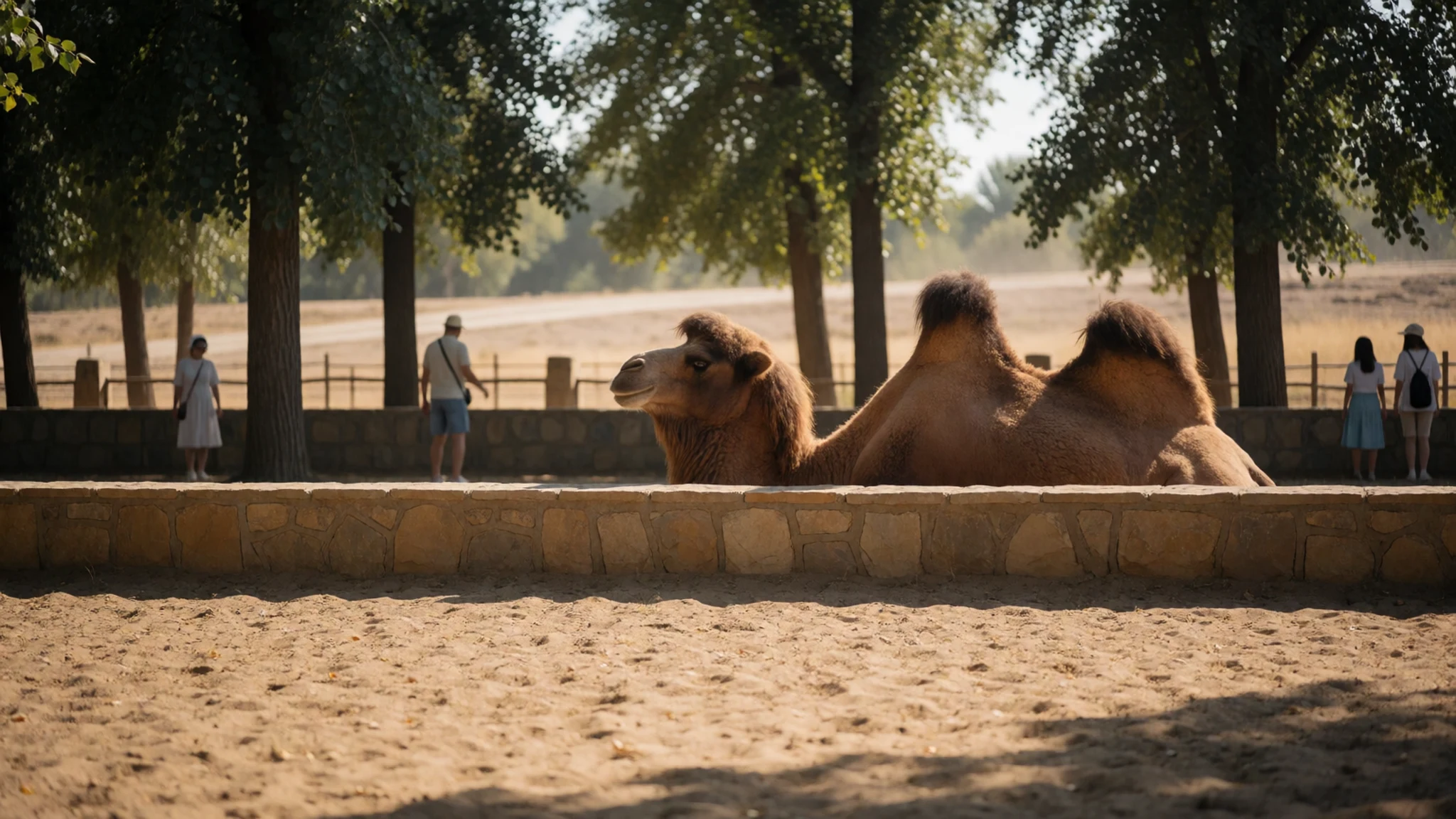
- Shymkent Zoo — North of the centre
A zoo from the Soviet era with a wide range of steppe and desert animals and plenty of shade, which matters in the summer heat. It suits families and anyone wanting a slow, shaded afternoon away from the traffic and the bazaars.
Culture
Shymkent has absorbed many influences across a history of some two thousand years: Sogdian and Turkic traders, Mongol and khanate rulers, Russian officials and Soviet planners. Today the city is mostly Kazakh, with large Uzbek and Russian communities, and daily life moves between languages and customs without much fuss. Islam is the main faith, usually worn lightly, and mosques sit alongside Orthodox churches and Soviet-era monuments. Hospitality matters a great deal. Tea is offered readily, bread is treated with respect, and a meal is as much about the company as the food. The city has a reputation across Kazakhstan for its appetite, and its bazaars are social spaces as much as shops, where people argue prices cheerfully and stop to talk. Arts life centres on a regional philharmonic and museums, and the city held the title of Cultural Capital of the Commonwealth of Independent States in 2020. Festivals and family gatherings revolve around long tables, shared dishes and toasts. Visitors will notice that older people are greeted first and given the best seat, and that guests are expected to accept at least a small portion of whatever is offered. Dress is relaxed in the city but more careful around religious places. Remove your shoes when entering a home, and cover your shoulders and knees, and your head if you are a woman, before stepping into a mosque.
What to wear
Shymkent's traditional dress comes from both Kazakh and Uzbek wardrobes. Kazakh festive wear includes the saukele, a tall embroidered bridal headdress, velvet waistcoats with gold thread, and the kimeshek headscarf worn by older women. Men wear the felt kalpak hat, and padded chapan coats appear in the colder months. Uzbek influence brings ikat silks, the bright patterned fabrics woven in nearby Fergana-valley towns, and embroidered skullcaps called doppi. Most of this appears at weddings, national holidays and festivals rather than on an ordinary weekday. Everyday clothing in the city is modern and fairly smart: jeans, shirts, dresses and trainers, with young people following regional and global trends and many older women favouring headscarves and long skirts. A visitor should dress for the climate first. Summers are hot and dry, so light cotton or linen, sun protection and a hat help, while winters are cold enough to need a proper coat, hat and gloves. Spring and autumn call for layers. For mosques, carry a scarf and wear long sleeves and trousers or a long skirt, and slip-off shoes are handy because you will be removing them often. Walking shoes with decent grip suit uneven pavements, parks and the hillfort. Modest dress is not strictly required across the city, but shorts and sleeveless tops draw more attention outside the centre and in the bazaars.
What to eat
- Plov — Bazaar stalls and roadside eateries
Rice cooked with carrot, onion and meat in a big pot, a staple of Uzbek and Kazakh tables alike. Look for it at working-people's eateries, where drivers eat, and at bazaar food stalls where it is made in large batches.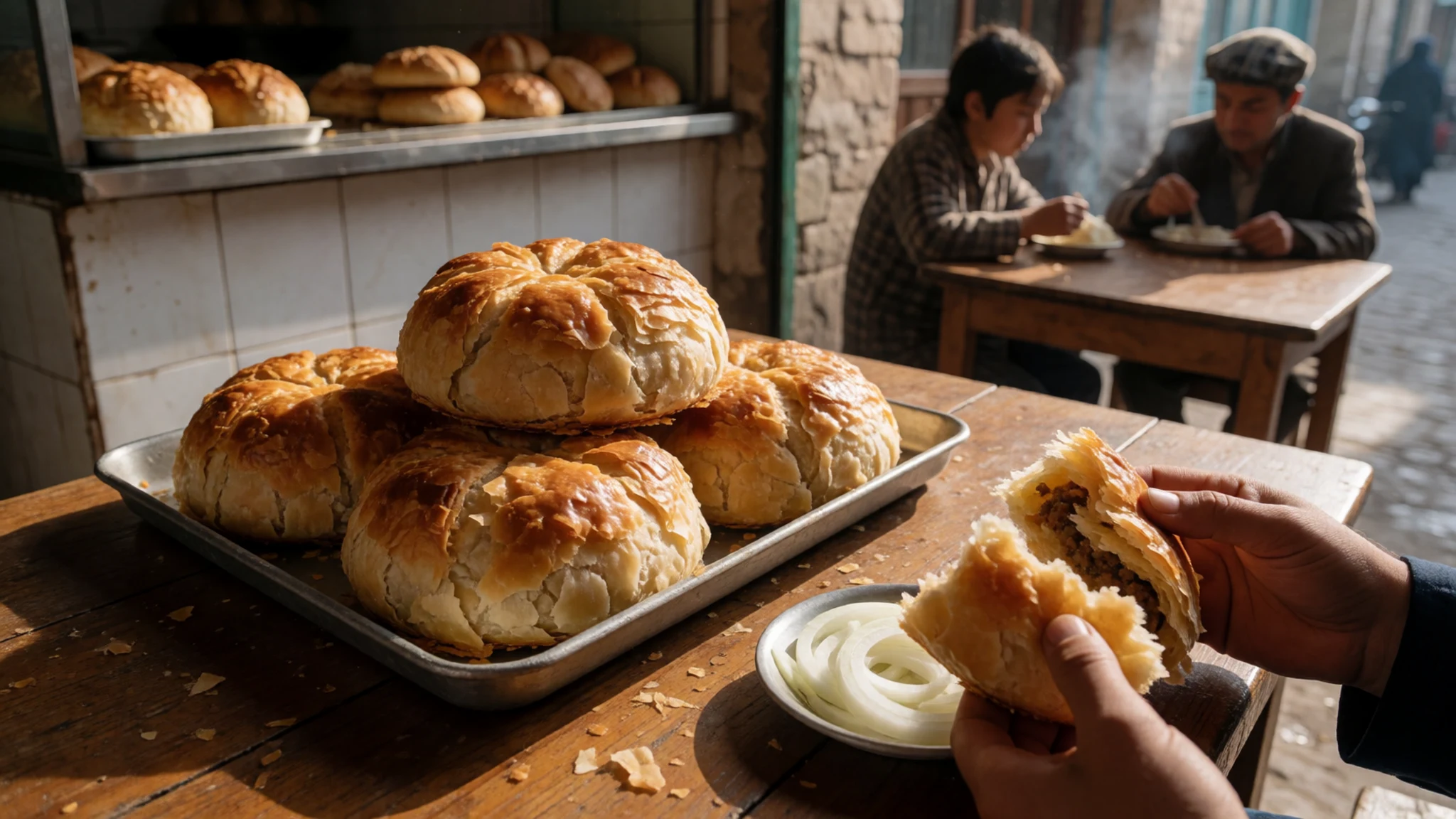
- Samsa — Bakeries and street-side ovens in the old town
Baked pastries filled with spiced meat and onion, often cooked in a clay oven. Halal bakeries sell them hot, and they make an easy breakfast or snack. A queue is a good sign that they are fresh.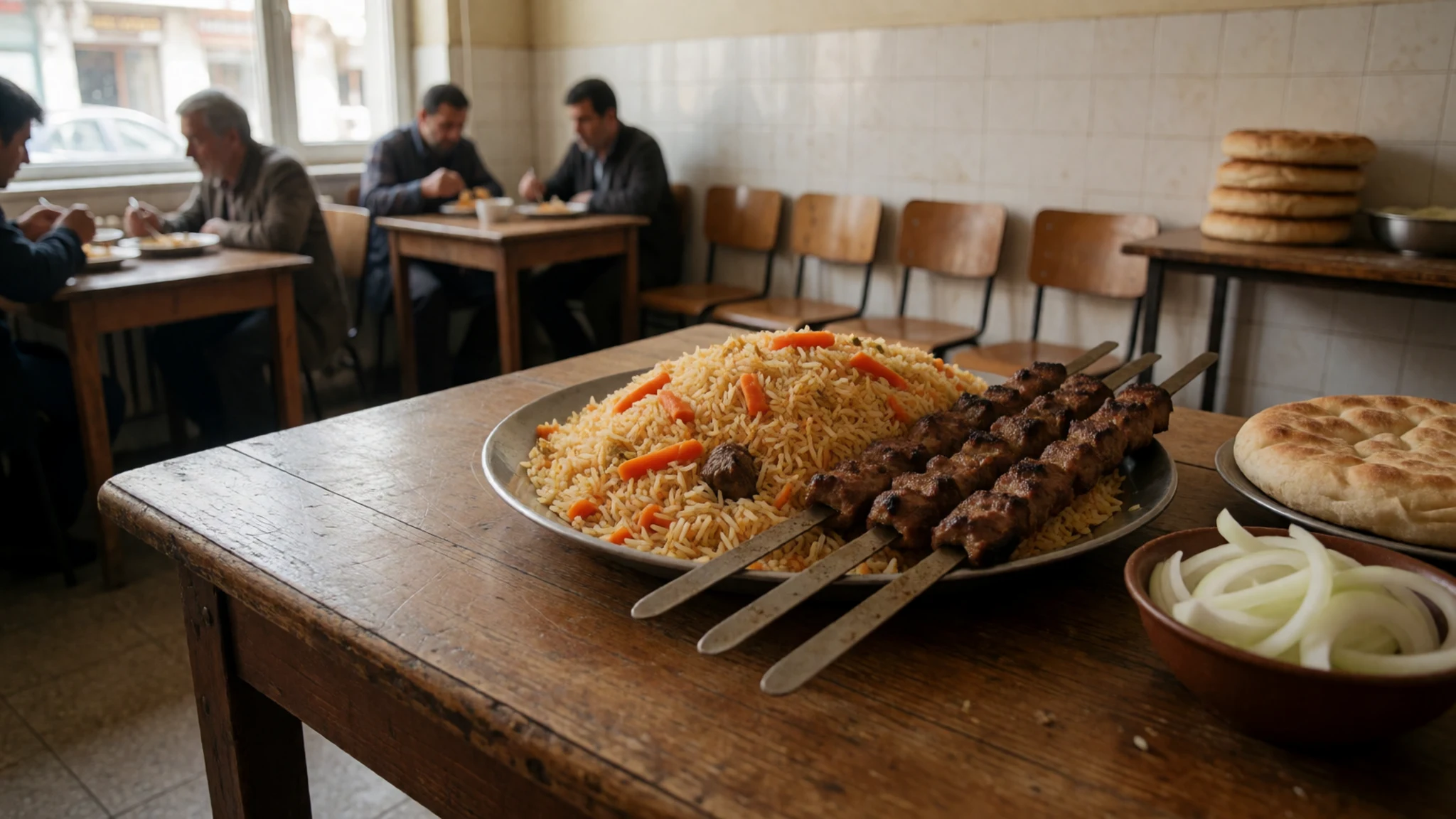
- Kebabs — Busy eateries and bazaar grill stalls
Grilled skewers of lamb or beef, served with flatbread, raw onion and tea. They are an easy cheap meal at a busy eatery, particularly in the evening when the grills are going and the pavement tables fill up. - Kumys and shubat — The city's bazaars
Fermented mare's and camel's milk, sour, fizzy and an acquired taste. They are sold mostly in bazaars. Buy from a stall with a steady stream of local customers, where turnover is high and the drink is fresher. - Uzbek-style set meals — Uzbek restaurants near the old town
Because the border is close, Uzbek cooking is well represented: soups, noodles, dumplings and grilled meat, served in restaurants with ornate Uzbek-style decoration. It is a pleasant way to taste neighbouring cuisine without leaving Kazakhstan. - Tea and bread — Tea houses and small cafés
A quiet tea house is a good place to rest between sights, with pots of black or green tea and fresh flatbread. Locals linger over it, so there is no pressure to hurry, and it is cheap.
Plan it
Best time. April–May and September–October, when the days are warm without the heat of the dry summer; July and August are hot, and winter is cold.
How long. 2–3
Getting there. Shymkent International Airport has domestic and some international flights, and the city is a major railway junction with long-distance trains, including from Almaty. Overnight buses arrive from Almaty, and buses run from Tashkent. From the bus station on the edge of town, local minibuses or a taxi reach the centre.
Budget. low
Tips
- Eat where the place is crowded; it usually means fresh food
- Carry some cash for bazaars and small eateries, plus a card for larger restaurants
- Bring water and sun protection in summer, as shade is limited in the middle of the day
- Allow a day each for Sayram and Turkestan if time permits
- Check the city's official site for events and opening times before visiting museums
Etiquette
- Remove shoes when entering a home or mosque
- Accept tea or food when it is offered, even if only a little
- Ask before photographing people, especially women and older residents
Nearby
Sources
- Wikidata Q485496 (CC0)
- Wikipedia: Shymkent (rev 1384702786) (CC BY-SA 4.0)
- Wikivoyage: Shymkent (rev 5381428) (CC BY-SA 4.0)
- Photo: Ordabasy square in Shymkent, 2023 (CC0 1.0)
- Photo: Old citadel of Shymkent (CC BY-SA 4.0)
- Photo: Arbat Shymkent (CC0 1.0)
- Photo: Tulip fountain, Shymkent (CC BY-SA 4.0)
- Photo: View of downtown Shymkent (CC BY 4.0)
- Photo: Shaikh Khalifa Mosque, Shymkent (CC BY 3.0)
- Photo: Regional philharmonic, Shymkent (Public domain)
- Photo: Tulpar Talgo at Shymkent station (CC BY-SA 4.0)


