Baikonur Cosmodrome
Baikonur Cosmodrome, Kazakhstan
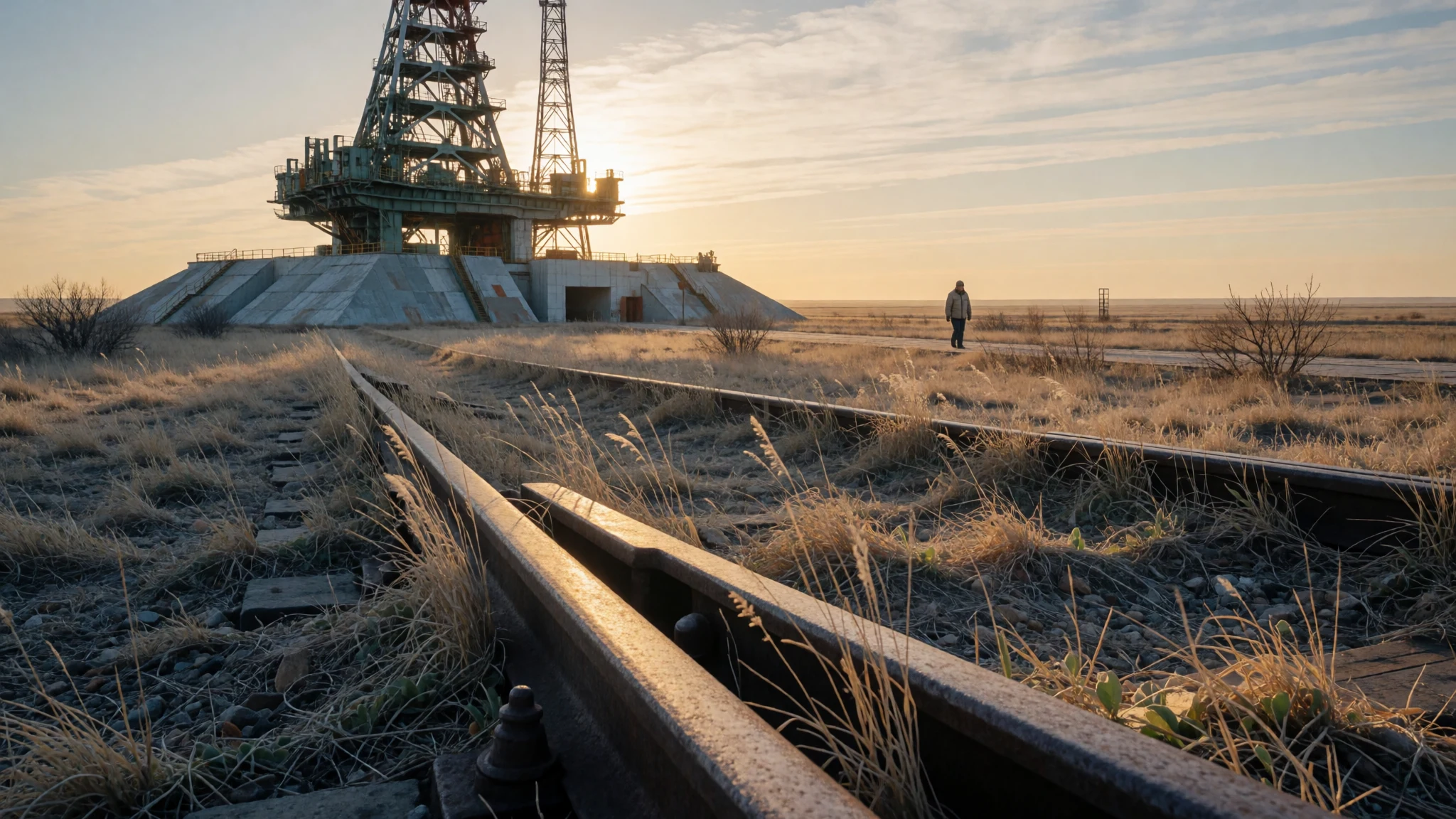
Baikonur Cosmodrome is where Sputnik and Gagarin's flight began, and it continues to launch rockets from the Kazakh steppe.
The place
Baikonur Cosmodrome sits on the flat Kazakh Steppe, about 90 metres above sea level, in a country that Russia does not govern but leases from. Russia runs the spaceport and Kazakhstan hosts it. After the Soviet Union dissolved in 1991, Russia kept control, and an agreement ratified in 2005 lets it lease the site until 2050. The nearest rail point is Töretam, a station on the Trans-Aral Railway, with the Syr Darya river to the south and the Aral Sea far to the west. Around the launch complexes stands the city of Baikonur, which is administered separately from the rest of Kazakhstan and feels more like a Russian company town than a Kazakh one: Soviet-era apartment blocks, wide dry horizons, and a skyline of gantries rather than minarets. The site was founded in 1955. It is where Russian rockets still lift off, and the landscape explains why: huge, empty and level, with very few people downrange. Summers bake, winters bite, and wind sweeps the open ground in every season. Visiting is nothing like going to an ordinary attraction. This is a working launch site, so access is controlled, and most foreign visitors arrive on arranged tours rather than turning up at a gate. Even then, programmes shift with the launch schedule, and the best-known sites can be closed on any given day. Those who do get in tend to remember the scale, the quiet between events, and how ordinary the buildings look beside what came out of them.
Its story
Baikonur Cosmodrome began as a military decision rather than a scientific one. In 1955 the Soviet defence ministry ordered a test range built in Kazakhstan, first to try out the Semyorka, the earliest missile able to cross continents. Space launches were added soon after, and the range grew into the centre of the Soviet space programme. A commission under General Vasily Voznyuk chose the location, guided by Sergey Korolyov, the chief designer who later became the driving force behind Soviet spaceflight. Their reasoning was practical. Early rocket guidance depended on radio contact with ground stations far away, so the land had to be flat and uninterrupted. Flight paths had to pass clear of towns. And a site further south gains a small boost from the Earth's spin. Tyuratam, a village in the middle of the Kazakh Steppe, ticked all three boxes. From that ground the Soviet Union launched Sputnik, the first artificial satellite, and then Vostok, carrying Yuri Gagarin as the first person in space. The pad used for both was later renamed Gagarin's Start in his honour. When the Soviet Union dissolved in 1991, the cosmodrome stayed in Russian hands, first through the Commonwealth of Independent States and then through a lease agreed with Kazakhstan, ratified in 2005 and running to 2050. Today Roscosmos and the Russian Aerospace Forces manage the site together, and its history is still visible in every pad and hangar.
What to see
- Gagarin's Start — Launch complex, Baikonur Cosmodrome
Gagarin's Start is the launch pad that sent up both Sputnik and Vostok, and it is being prepared for use as a museum, so any tour that reaches it is tightly guided. It is a steel and concrete frame in open steppe rather than a monument, which is much of its appeal. Access depends on the launch calendar.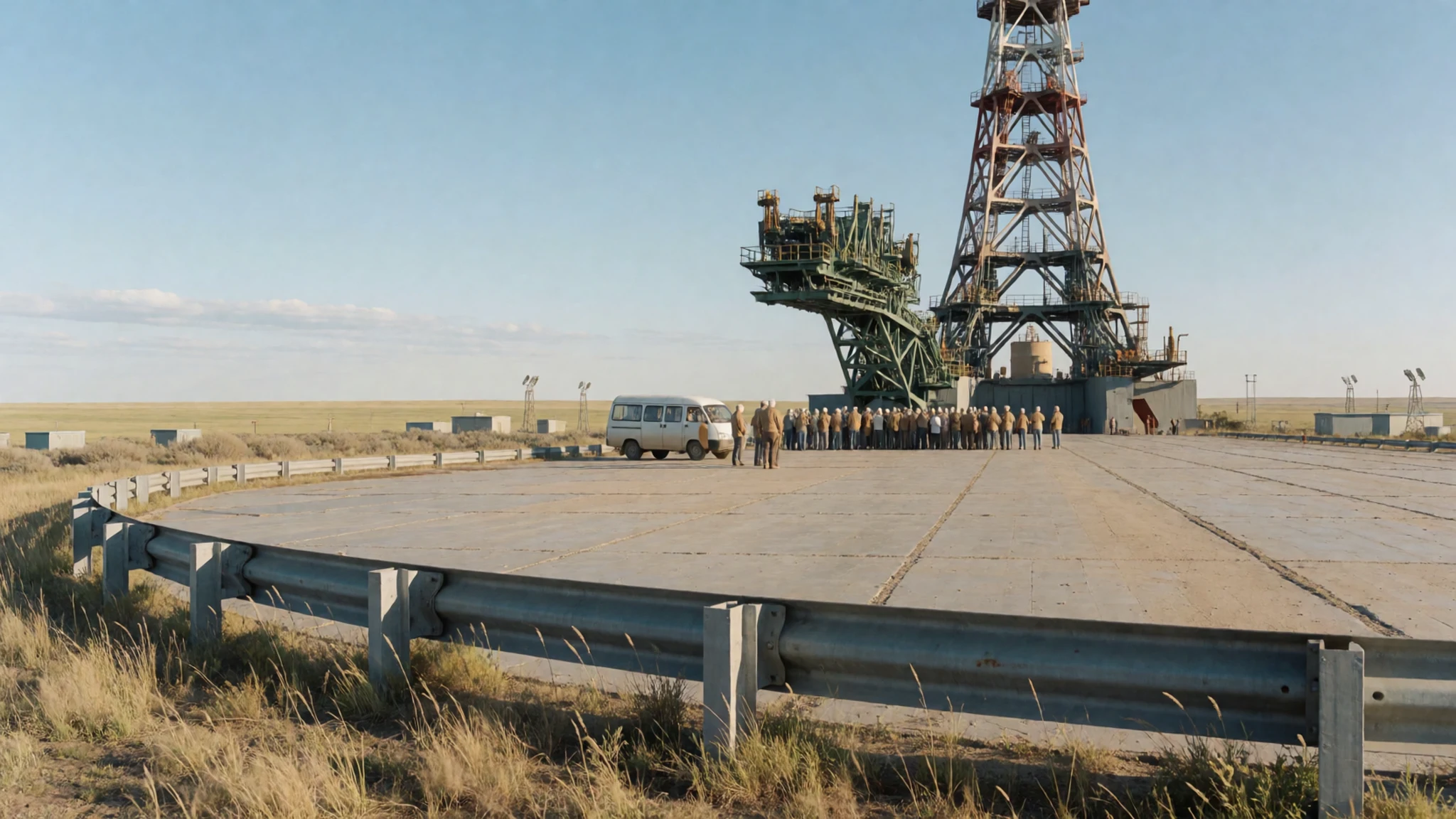
- The rocket rollout — Rail route to the pad
On a launch campaign a Soyuz rocket travels to its pad lying on a rail transporter, then is raised upright into position. Guided visitors with lucky timing may watch this slow procession across the steppe. It is quiet and unhurried: crews, vehicles and a rocket moving at walking pace, with little drama until ignition.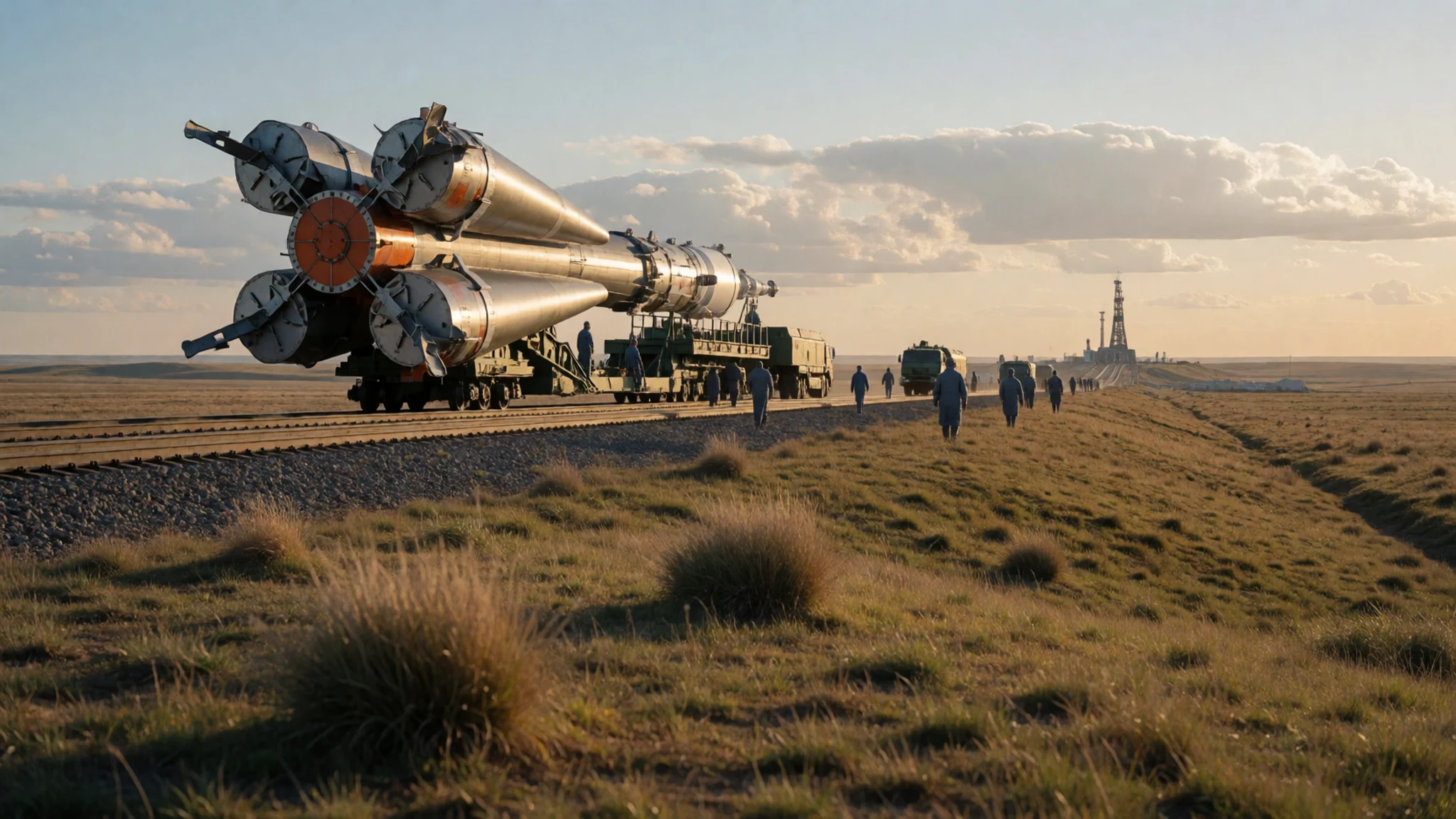
- Buran assembly hall — Technical area, Baikonur Cosmodrome
A large assembly and test building holds Soviet shuttle hardware from the Buran programme, including a test article and an unfinished orbiter. The ageing hall shows how ambitious the project was and how abruptly it ended. Entry is rare and permit-dependent, so ask your tour operator beforehand rather than assuming.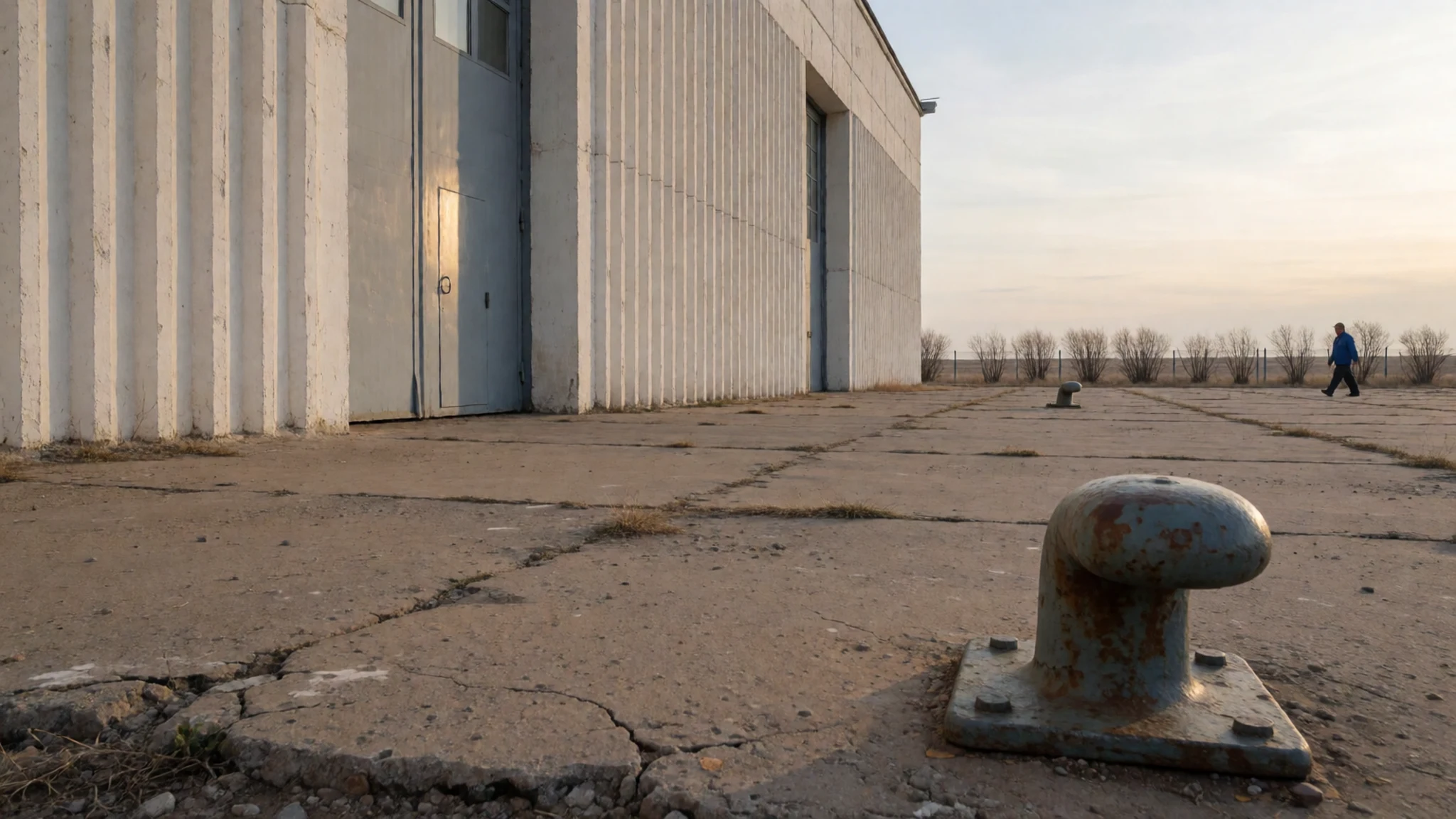
- Cosmodrome museum — Baikonur town
The museum shows the pre-flight test unit of Sputnik hanging from the ceiling, alongside a Buran test vehicle after refurbishment. Labels lean on Russian, so a guide helps a great deal. It is a calmer stop than the launch areas, though opening arrangements should be confirmed with the operator.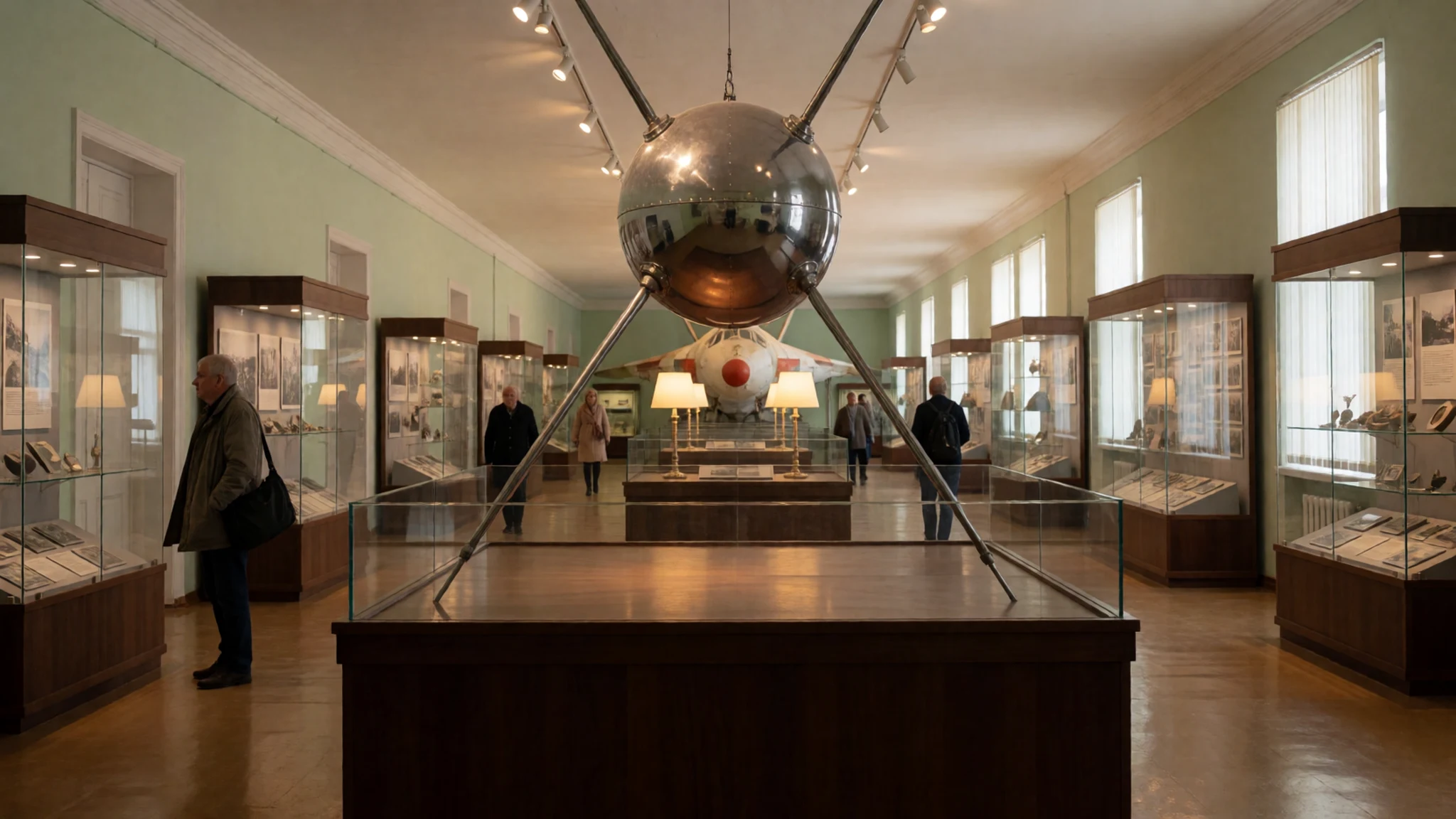
- Entrance and checkpoint — Near Töretam
The entrance checkpoint near Töretam is where visits begin, with documents and permits checked before vehicles move on. It is not a place to linger, and photography is restricted unless the guide says otherwise. Still, it marks the line between ordinary steppe and a controlled launch zone.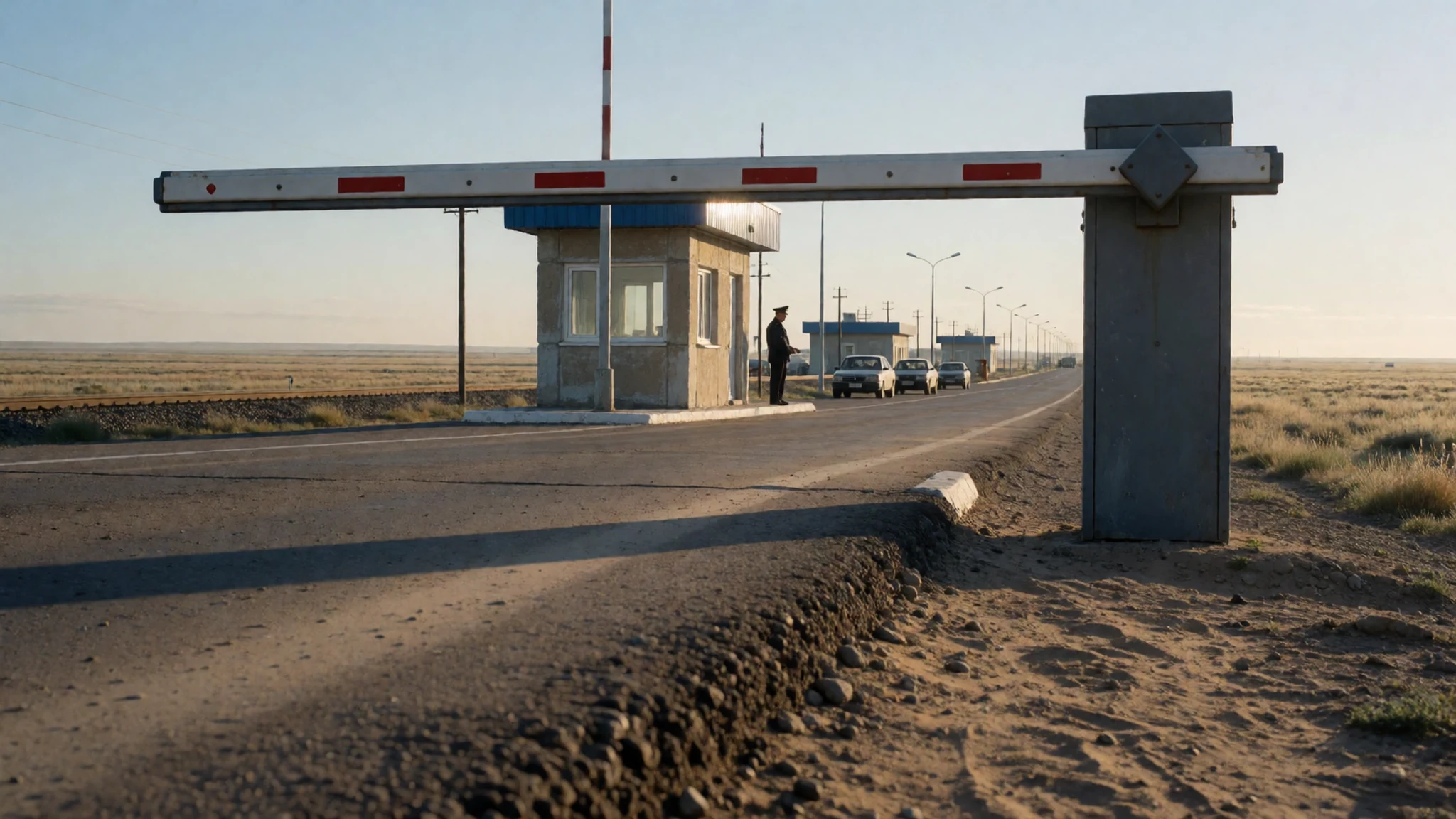
Culture
Baikonur Cosmodrome stands in Kazakhstan, but the town around it has a largely Russian-speaking, Soviet space-industry character, so visitors meet two cultures at once. Kazakh hospitality is warm and proud: guests are fed generously, tea keeps arriving, and national pride runs high, so careless jokes about the country land badly. Kazakhstan is a Muslim country, and religion is best kept out of banter. The film Borat is a sore subject for many Kazakhs and is better left unmentioned. Among cosmodrome staff, spaceflight is a source of real pride, and launches carry small rituals among crews and technicians; guides are happy to explain them to visitors who listen more than they talk. Soviet and Russian space heritage is treated with a seriousness closer to a memorial than a theme park. Nomadic tradition survives mainly through festivals, horse culture and food, because Soviet collectivisation pushed Kazakhs into settled farming, and the yurts offered to tourists are recreations rather than everyday homes. People who accept that, and ask rather than assume, usually find locals glad to talk about both the steppe and the rockets. Follow your guide's instructions about where photography is allowed, and never photograph checkpoints, uniformed staff or restricted buildings unless you have been told it is fine.
What to wear
Around Baikonur Cosmodrome, traditional Kazakh dress still tells of a life spent on horseback. Men wore the chapan, a long robe cut for riding in wool, cotton or silk, with a fur-trimmed hat such as the tymak or borik. Women wore velvet or silk dresses and embroidered waistcoats, and brides a tall beaded saukele headdress. Felt, wool and fur kept people warm on the steppe. Today these clothes mostly appear at weddings, at the spring festival of Nauryz and at other celebrations. In Baikonur and Töretam, people wear what suits the weather: practical jackets, jeans, trainers or boots, and fur-lined hats and heavy coats in winter. The town is industrial, so style is functional rather than fashionable, with suits and uniforms among cosmodrome staff. A visitor should dress for the climate and for a controlled site. In summer, wear light long sleeves, trousers, a sun hat and sunscreen; in winter, thermal layers, a windproof coat, hat and gloves. Closed, sturdy shoes matter on dusty or icy ground. Smart-casual clothes suit official meetings and tours. Modest clothing is sensible anywhere in rural Kazakhstan, and for mosques arms and legs should be covered and women should cover their hair.
What to eat
- Beshbarmak — Kazakh restaurants and family celebrations
The name means five fingers. Boiled horse meat, beef or lamb is laid over broad flat noodles with onion and potato, and it is the dish of celebrations. Portions are generous and meant for sharing among a table.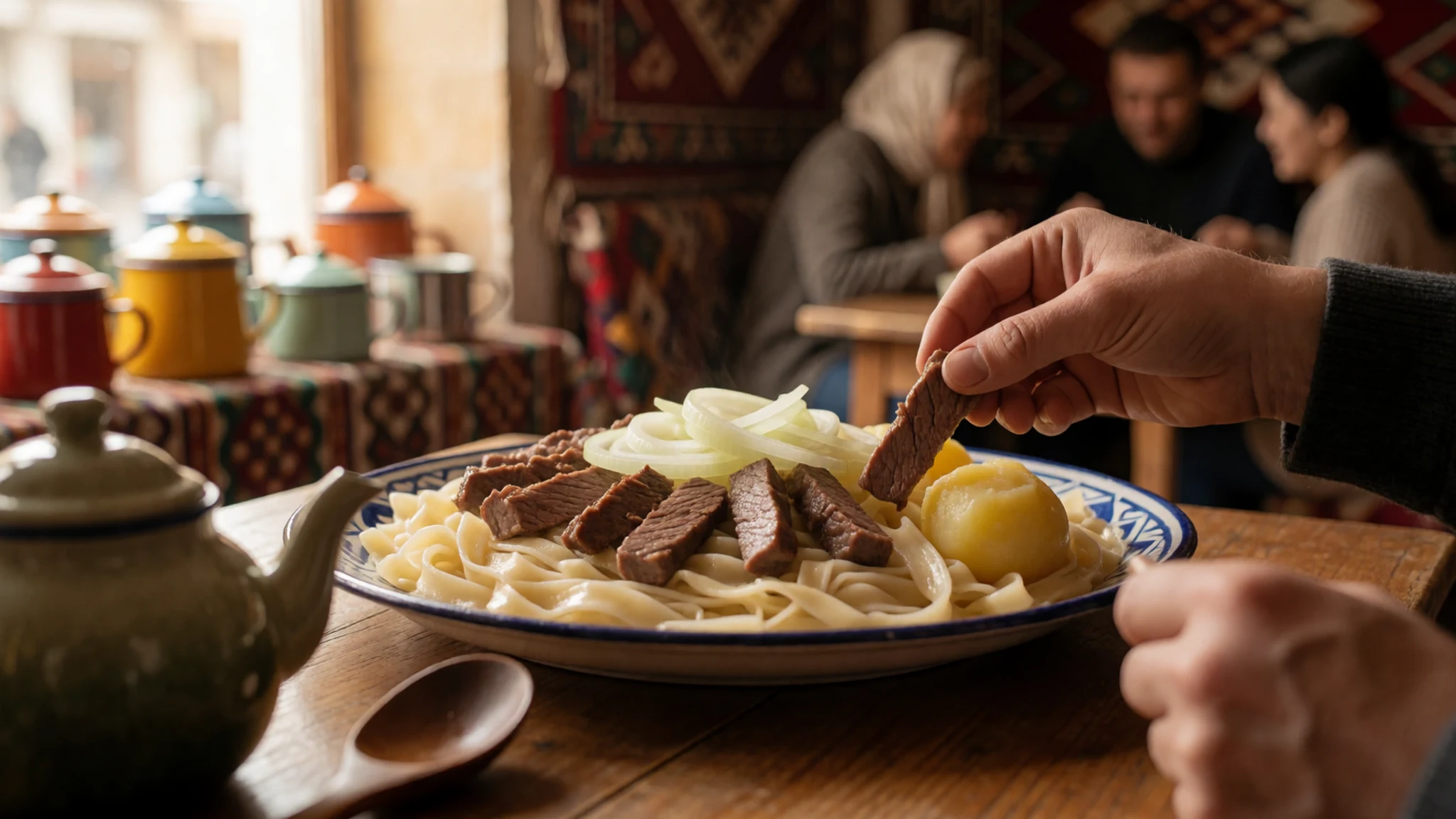
- Kazy — Kazakh restaurants and bazaar meat counters
A cured horse-meat sausage, sliced thin and usually served cold on a platter of mixed meats before the main course. It is rich and salty, so a little goes a long way. Ask if you want it served warm alongside beshbarmak.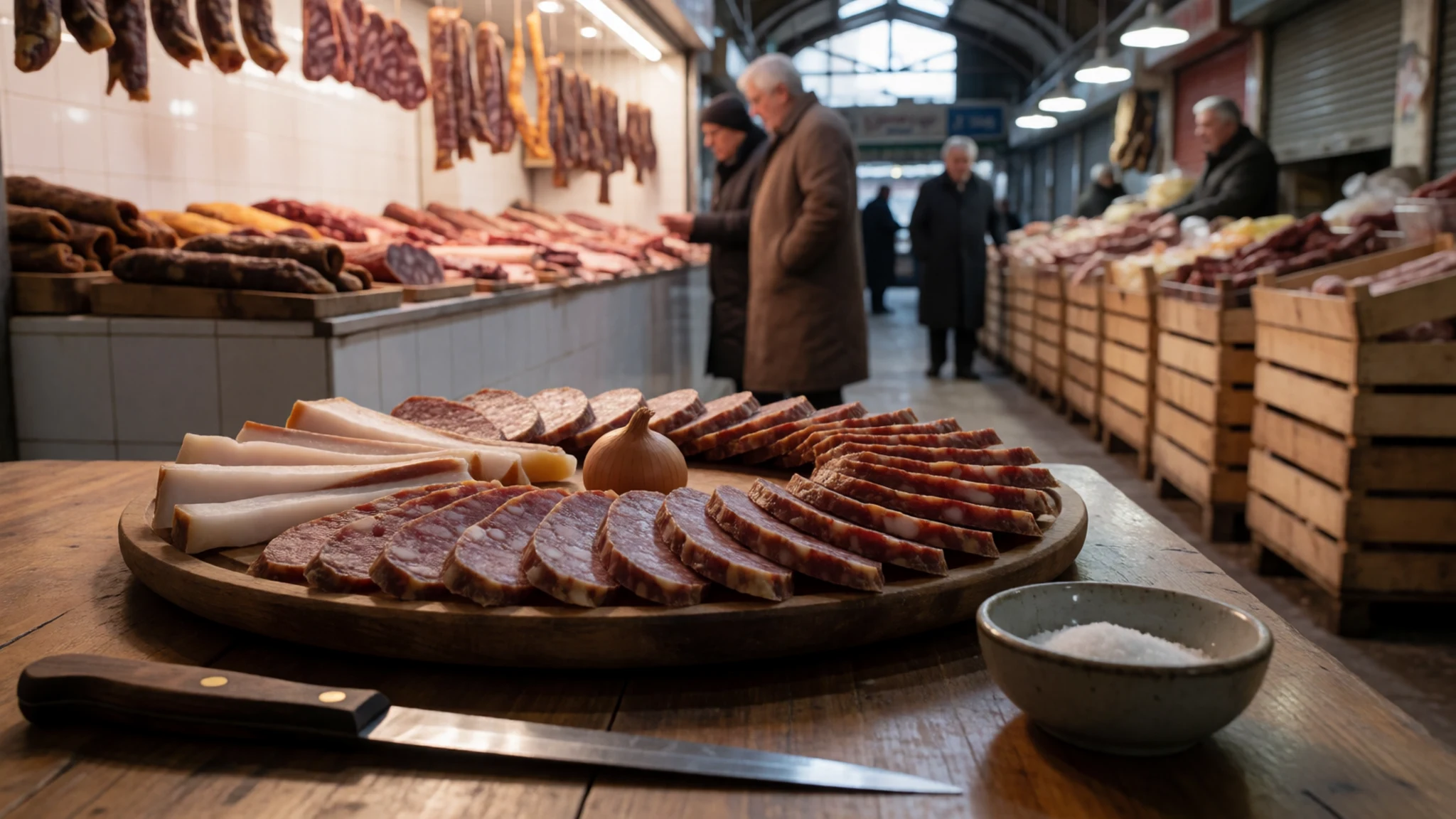
- Laghman — Canteens and tea houses in Baikonur town and Töretam
Hand-pulled wheat noodles in a savoury broth, or fried with vegetables, topped with beef or lamb, carrot and onion. It is a filling lunch and one of the easiest dishes to order without translation. - Manty — Cafés and family-run eateries in town
Large steamed dumplings stuffed with chopped meat and onion, usually served hot with sour cream. They arrive in a steaming tier and are eaten by hand or fork. Vegetarians should ask about the filling and any stock. - Baursak — Bazaars and any Kazakh table with tea
Puffy golden squares or rounds of fried dough, served with tea and put out whenever guests arrive. They are slightly sweet, best eaten warm, and often come in a bowl at the start of a meal.
Plan it
Best time. April–May and September–October, when the steppe is mild; summers are the hottest and driest, and winters are the coldest. Launch dates shape any visit, so confirm schedules before booking anything.
How long. 2–3
Getting there. Fly to Kyzylorda, the nearest regional city with commercial flights, or take the Trans-Aral rail line to Töretam station. The last stretch is by road, with transfers and permits arranged through a licensed tour operator.
Budget. high
Tips
- Book through an authorised operator well ahead, because entry to the cosmodrome needs permits and cannot be arranged on arrival
- Carry your passport at all times, as checkpoints are frequent
- Bring enough cash, since cards may not work everywhere in the town
- Pack water, sunscreen and a hat in summer, and windproof layers in winter
- Vegetarians should ask about stock, as meat is used widely in cooking
Etiquette
- Ask your guide before photographing any checkpoint, uniformed person or building
- Avoid jokes about Kazakhstan, religion or Borat
- Accept offered tea and food graciously, and follow the guide's instructions on site
Nearby
Sources
- Wikidata Q177477 (CC0)
- Wikipedia: Baikonur Cosmodrome (rev 1377848069) (CC BY-SA 4.0)
- Wikivoyage: Kazakhstan (rev 5427114) (CC BY-SA 4.0)
- Photo: Soyuz expedition 19 launch pad, Bill Ingalls (Public domain)
- Photo: Baikonur Cosmodrome Soyuz launch pad, Bill Ingalls (Public domain)
- Photo: Baikonur front gate, Nist2024 (CC BY-SA 4.0)
- Photo: Soyuz launch vehicle being transported to pad, Bill Ingalls (Public domain)
- Photo: Buran test article, Panikovskij (CC BY-SA 4.0)
- Photo: Buran at Baikonur museum, Alexander A. Karsakbayev (CC BY 3.0)
- Photo: Sputnik test model, Nist2024 (CC BY-SA 4.0)
- Photo: Baikonur entrance and checkpoint, Jialiang Gao (CC BY-SA 4.0)


