Lake Balkhash
Lake Balkhash, Kazakhstan
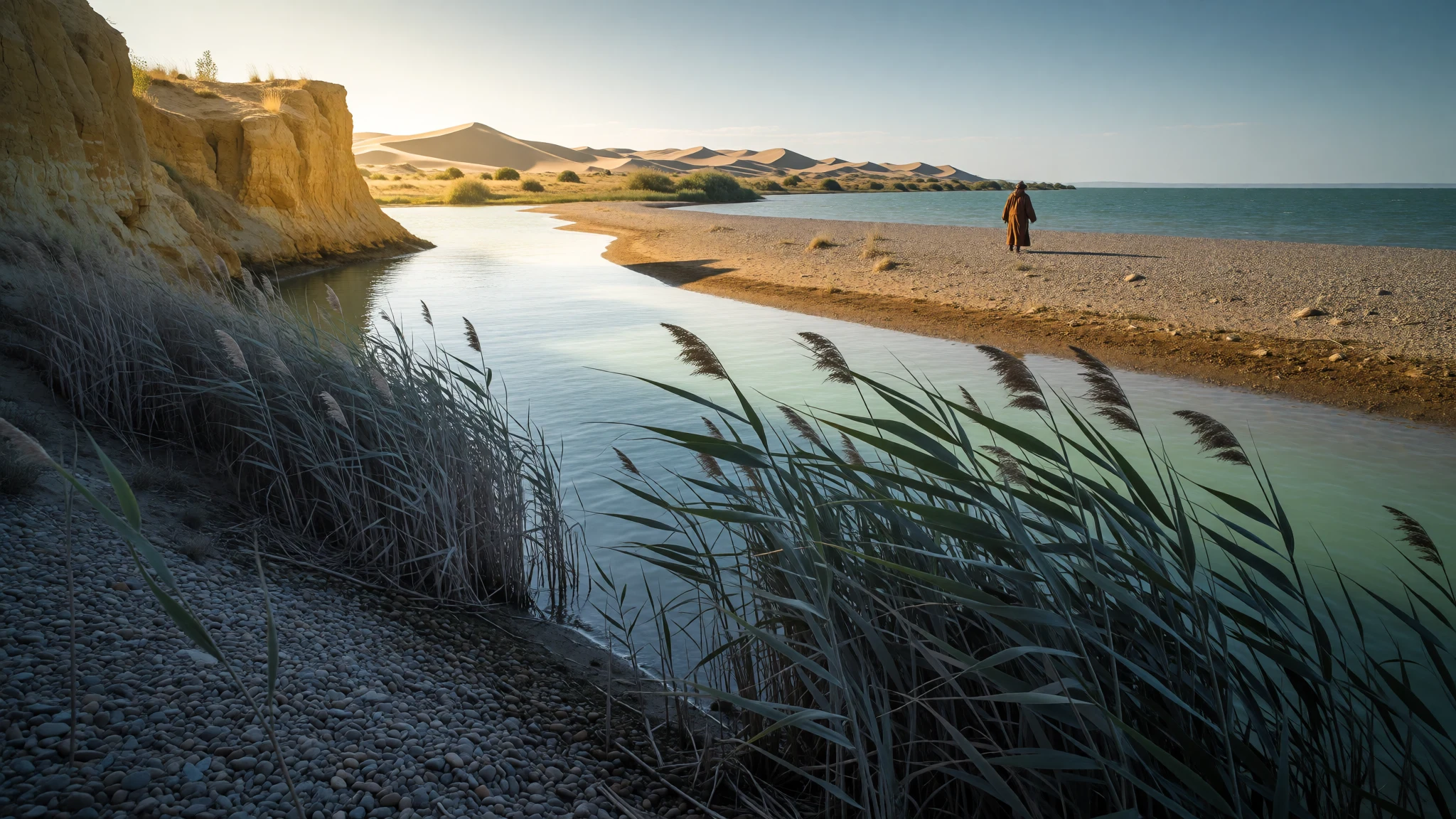
Lake Balkhash is a vast, half-fresh, half-salt lake on the Kazakh steppe, where turquoise water meets desert shore and few other travellers.
The place
Lake Balkhash lies in southeastern Kazakhstan, 342 metres above sea level, on the edge of the Central Asian steppe. It is an endorheic lake, meaning it has no outlet: whatever the rivers bring in leaves only as vapour. That gives the lake two personalities. A narrow channel, the Uzynaral strait, runs beside the Saryesik peninsula (the name means “Yellow Door” in Kazakh) and splits the water into a fresh western half and a deeper, salty eastern half. Most of the inflow comes from the Ili, topped up each spring by snow thawing in the ranges beyond the Chinese border, with the Karatal and Aksu adding their share. The Tokrau approaches from the north but dies in the sand before it touches the shore. Open water spreads across about 16,400 square kilometres, long and narrow rather than round, so the scenery shifts from stretch to stretch: reed-fringed delta country in the south, open and almost empty shoreline elsewhere. Wind is a constant companion and can whip up sizeable waves. The climate is continental, with hot, dry summers and a winter cold enough to freeze the surface. The largest town on the shore is also called Balkhash, home to about 66,000 people, and its economy rests on mining, ore processing and fishing. This is not a polished resort coast. It is a working landscape of industrial towns, fishing communities and long quiet beaches, and it is under real pressure, because water taken from its feeder rivers has shrunk the lake over the past century.
Its story
Lake Balkhash takes its name from balkas, a word shared by several Turkic languages for tussocks in marshy ground, a fair description of the reedy delta. Chinese records mention a polity around the lake from 103 BC, under the name Yibohai, and for centuries the region sat between worlds. By the 8th century, Turkic speakers called the plain between the lake and the Tian Shan Jetisu, “Seven Rivers” (Semirechye in Russian), a country where steppe herders mixed with settled farmers and townspeople. Politics followed the water. From 1759 the lake marked the north-western limit of Qing influence as both the Qing and Russian sides understood it, and in 1864 the Treaty of Tarbagatai handed the lake and its surroundings to the Russian Empire. When the Soviet Union dissolved in 1991, Balkhash became part of independent Kazakhstan. The deeper story is geological. The lake was once far bigger, and neighbours such as Alakol and Sasykkol were arms of it; earlier still, a sea reached towards the Dzungarian Alatau. The shrinking continues within living memory. An estimate for 1910 put the area at 23,464 square kilometres, and by 1946 roughly a third had gone. Diverted rivers and thirsty industry are the usual explanations, and the Aral Sea is the comparison most often made.
What to see
- The Uzynaral strait and Saryesik peninsula — Centre of the lake
The narrow strait at Saryesik peninsula is where Lake Balkhash pinches in the middle, and it is the clearest place to grasp the lake's two halves. Fresh water lies on one side and salty water on the other. Satellite images show the colour change; on the ground, expect wind, open sky and very few people.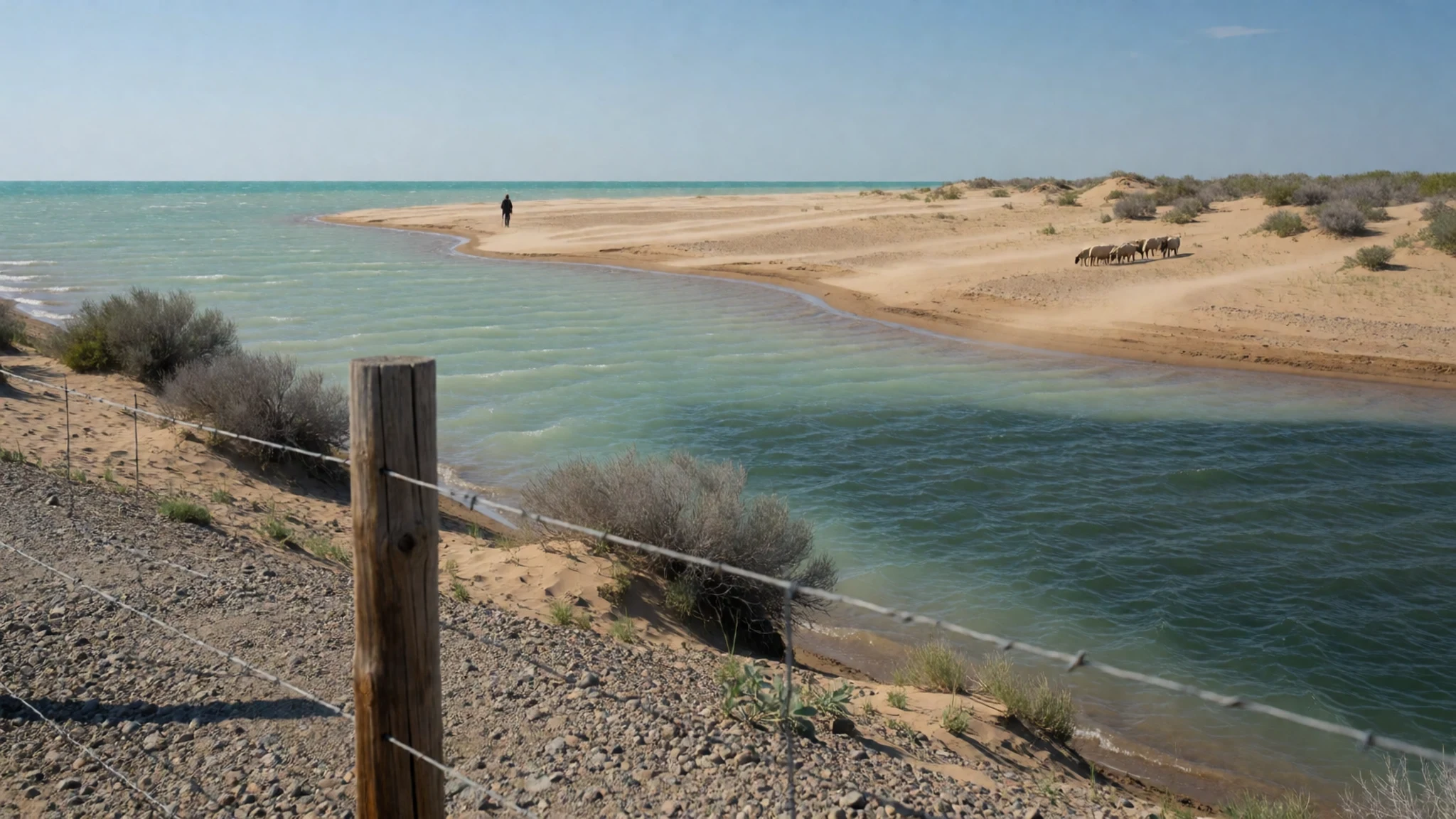
- Balkhash town waterfront — North shore
Balkhash is the main town on the lake and the easiest base for reaching the shore. It grew around mining and ore processing, so the mood is industrial rather than resort-like, but the waterfront gives a straightforward look at the lake, local anglers at work and Soviet-era town planning.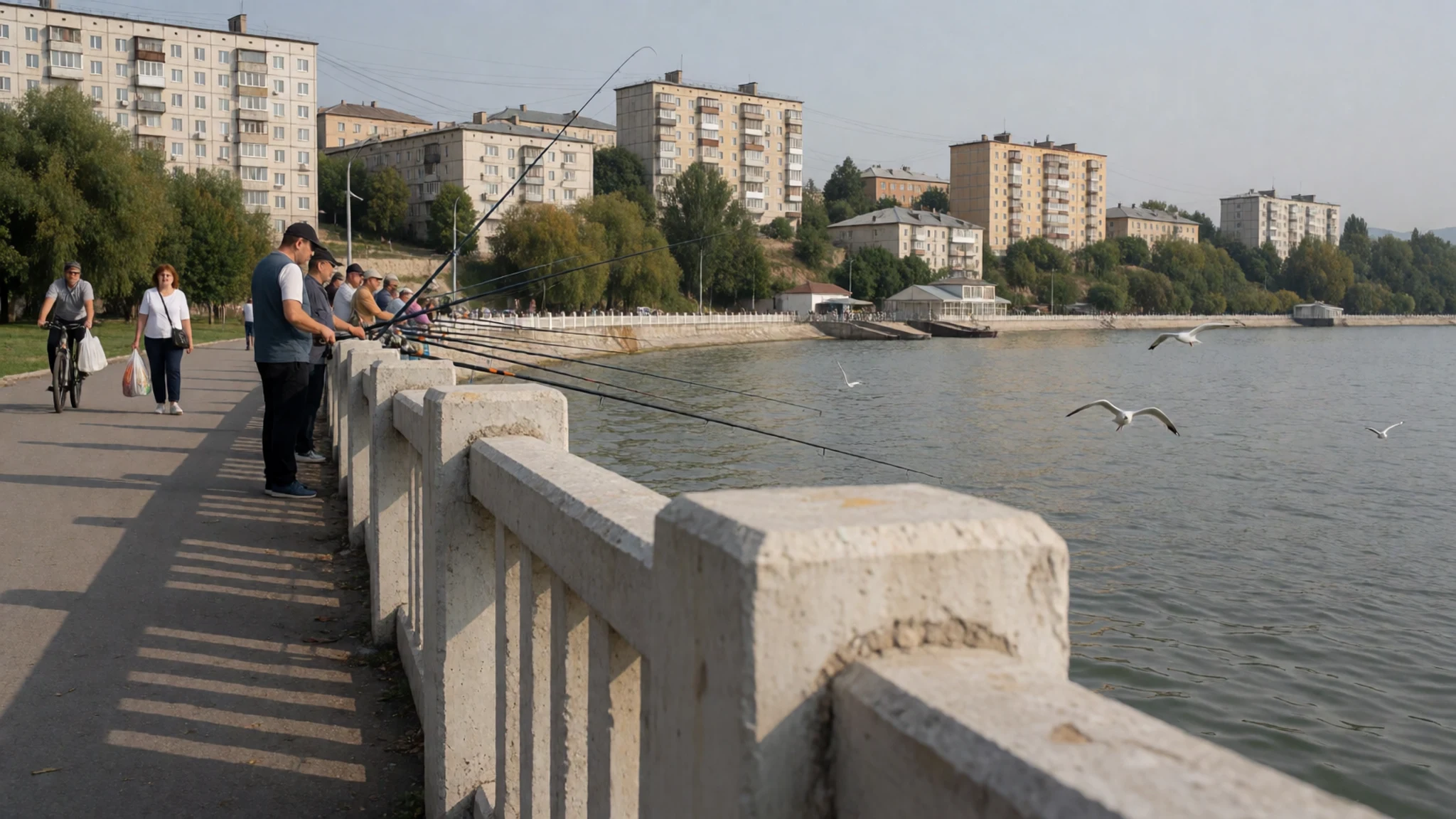
- Priozersk shoreline — Western shore
Near Priozersk, on the western, fresher side, the lake edge is quiet and open, with the water often pale turquoise on a still day. It suits a slow walk, a picnic and photography rather than a checklist. Facilities are limited, so bring food and water and check access locally.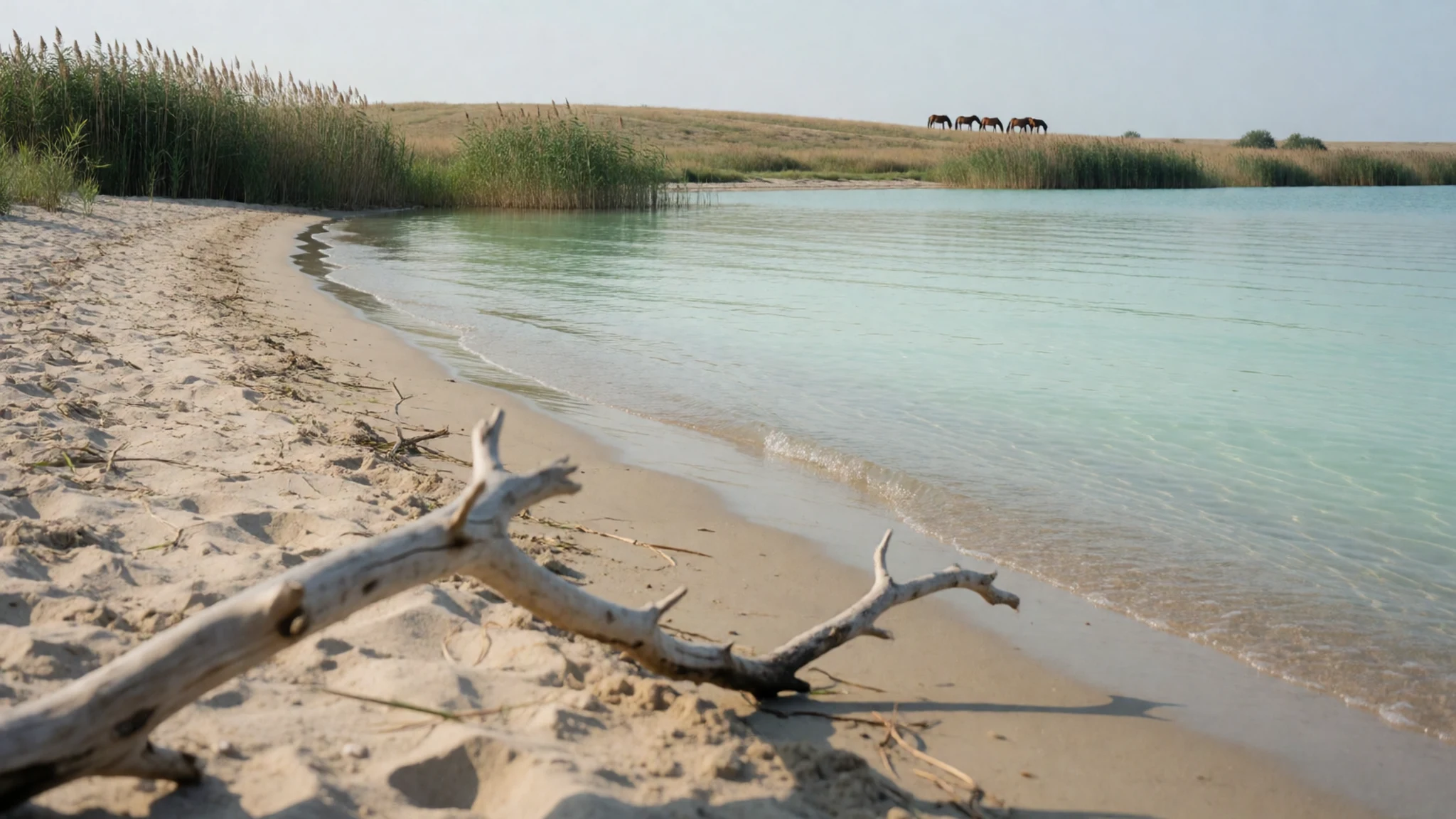
- The Ili delta — South shore
Where the Ili meets the lake, the shore dissolves into reeds, channels and marsh, the landscape that probably gave the lake its name. Birdwatchers and photographers will find it rewarding in the warmer months, though paths are informal, so a local guide or good navigation is wise. Insect repellent helps.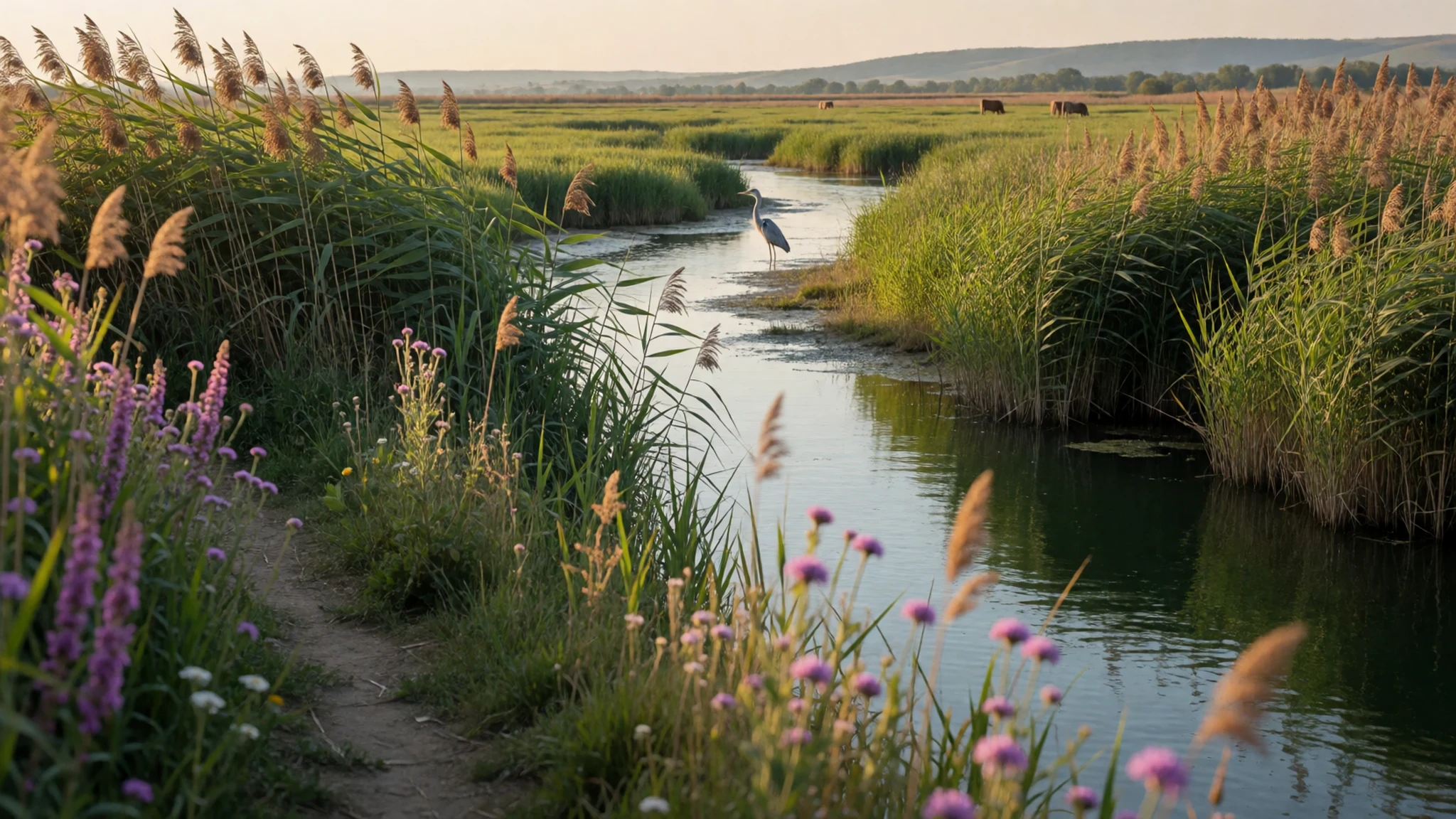
- Spring ice break — Whole lake, best from the shore near Balkhash town
Around late March and April the winter ice breaks up, and the lake changes from white to grey-blue within days. Satellite pictures show the melt moving unevenly, with the eastern half lagging behind the west. It is a cold, windy season for visiting, but a striking one for anyone who likes raw landscapes.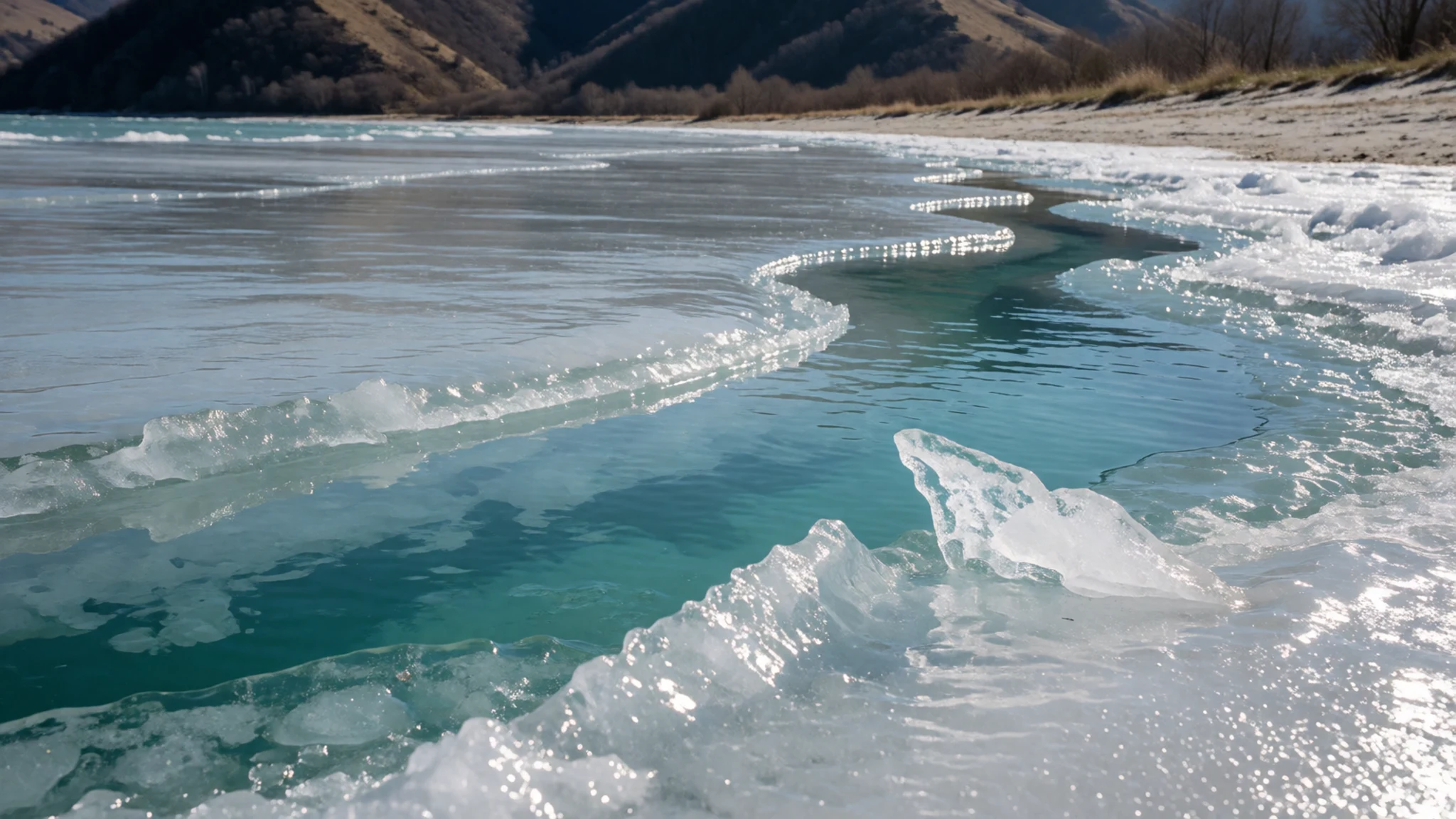
Culture
Lake Balkhash sits in the old land of Jetisu, where nomadic herders and settled townspeople have long traded, married and borrowed from each other. That mix still shows. Kazakh is the national language and Russian is widely spoken, particularly in industrial towns such as Balkhash, which grew up around mining in the Soviet period. Hospitality is central to local life. Guests are fed generously, tea is offered almost automatically, and refusing everything outright can read as cold. Fishing remains part of daily life on the shore, and in warm months families come to the water to swim, picnic and sit in the evening air. Horse culture and felt-making belong to the wider steppe tradition around the lake, even though the towns themselves look more Soviet than nomadic. Islam is the majority faith, usually worn lightly, and rural areas tend to be more conservative than the cities. Visitors will find that small talk about family, food and the weather goes down well, and that patience with slow service and long distances is part of the experience. Public displays of strong opinion on politics are best avoided with strangers. Remove your shoes at the door when invited into a home, and accept at least a cup of tea and something to eat from your host.
What to wear
Traditional Kazakh dress around Lake Balkhash belongs to the wider steppe wardrobe, built for wind, cold and horseback. Felt, known as kiiz, was made from sheep wool and used for hats, boots and household items. Men wore the chapan, a long padded or woollen robe, with a fur-trimmed hat such as the tebetei in winter. Women wore embroidered velvet waistcoats called kamzol, and brides wore the tall saukele headdress, richly ornamented with beads and silver. These outfits appear now mostly at weddings, festivals and holidays such as Nauryz, the spring new year. Day to day, people on the lake wear what is practical anywhere: jeans, trainers or boots, windproof jackets and caps, with lighter clothes in summer. Younger people in the towns dress much as they would in any Central Asian city. Visitors should dress for weather first. In summer, with highs near 30 °C, bring light long sleeves, a wide-brimmed hat, sunscreen and sandals for the water's edge, plus closed shoes for reedy or rough ground. A windproof layer is useful even in July. In winter, thermal layers, insulated boots, gloves and a warm hat are essential. Away from the beach, modest dress, with covered shoulders and knees, is polite in villages.
What to eat
- Beshbarmak — Family homes and Kazakh eateries in Balkhash town
Boiled meat, usually mutton or horse, laid over wide flat noodles with onion broth. Its name means “five fingers”, from the old way of eating it by hand. It is the Kazakh dish for guests and celebrations, found in homes and in eateries serving Kazakh cooking.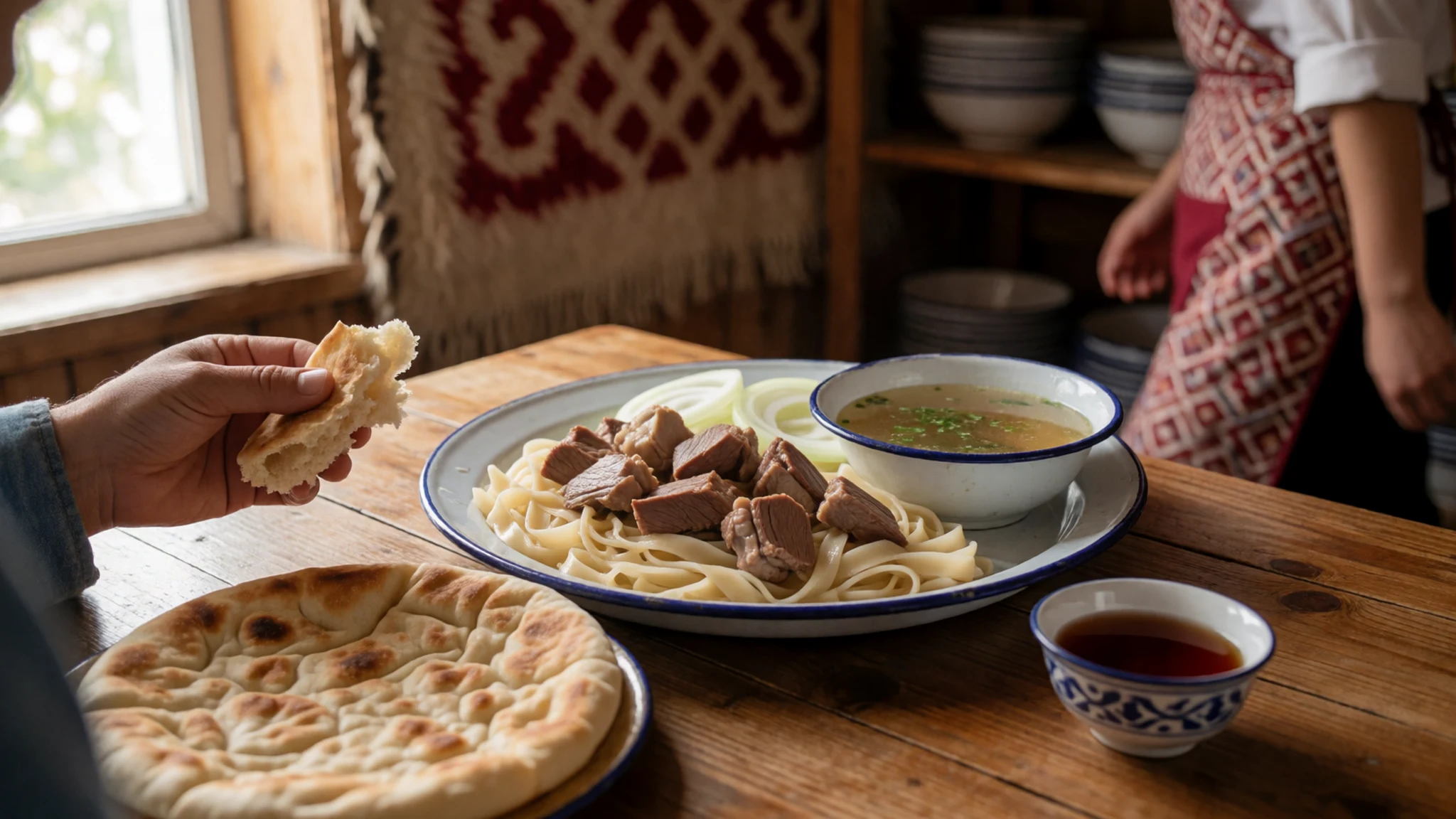
- Lake fish, smoked or fried — Roadside stalls and lakeside markets near the fishing villages
Fishing is one of the shore's main livelihoods, so fish from the lake turns up smoked, fried or in soup. Ask what is local and what has been brought in, because supply varies by season and by luck.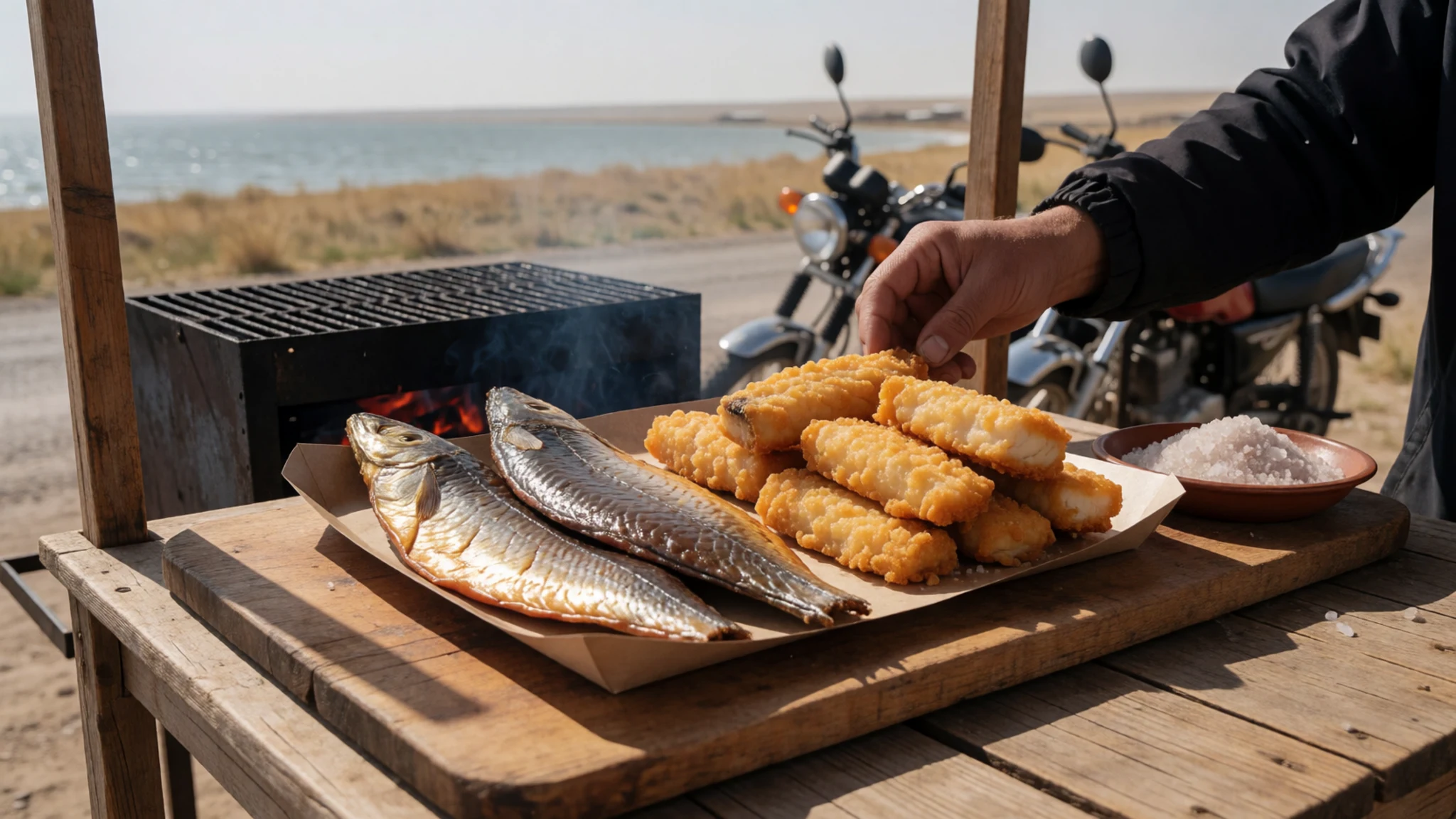
- Baursak — Town markets and bakeries
Small pieces of dough deep-fried until golden, eaten warm with tea, jam or soup. They appear at almost every table, and at celebrations they come in heaps. Bakeries and market stalls sell them fresh. - Kumys — Market stalls and rural stops, mostly in warmer months
Fermented mare's milk, lightly fizzy and sour, a drink of the steppe herders for centuries. It is a seasonal taste that divides first-time drinkers. Try a small cup before committing to more. - Shashlik — Roadside grills and town eateries
Skewered meat grilled over charcoal and served with onions, flatbread and sometimes a tomato salad. It is the easy, reliable choice after a day by the water, and found everywhere from simple roadside grills to larger eateries.
Plan it
Best time. June to September, when the lake is warm enough to swim, with July highs around 30 °C and surface water reaching about 28 °C. Winters are bitterly cold and the lake freezes, while March and April bring the ice break-up, with raw winds and few visitors.
How long. 2–3
Getting there. Almaty is the usual large gateway for Kazakhstan. From there the last leg to Balkhash town is a long journey by road, bus or train, so check current services locally before planning. Hiring a car with a driver is common for reaching quieter parts of the shore.
Budget. low
Tips
- Carry cash, since small shops, stalls and village eateries often prefer it to cards
- Stock up on water, food and fuel in town before heading to remote shoreline
- Check wind and wave conditions before swimming or boating, because the lake can turn rough
- Bring insect repellent and sun protection for reedy shores in summer
- Download offline maps, as mobile signal can fade away from the towns
Etiquette
- Take all rubbish with you from beaches and picnic spots
- Ask before photographing people, especially anglers and families
- Accept tea and food when offered in a home, and remove shoes at the door
Nearby
Sources
- Wikidata Q134485 (CC0)
- Wikipedia: Lake Balkhash (rev 1384371640) (CC BY-SA 4.0)
- NASA, STS039-085-00E Lake Balkhash, Kazakhstan April 1991 (Public domain)
- NordNordWest / Виктор_В, Location map of Kazakhstan (CC BY 3.0)
- Kmusser, Lake Balkhash drainage basin map (CC BY 3.0)
- NASA MODIS / Materialscientist, Lake Balkhash viewed from space (Public domain)
- Jacques Descloitres, MODIS Land Rapid Response Team, NASA GSFC (ice melt, 2003) (Public domain)
- Jacques Descloitres, MODIS Land Rapid Response Team, NASA GSFC (18 April, 2003) (Public domain)
- Apatzi, Lake Balkhash in spring, 22 March 2008 (CC BY 3.0)
- Nikolay Yushnikov, Lake Balkhash, near Priozersk (Public domain)
- Wikivoyage (CC BY-SA 4.0)


