Aktau
Aktau, Kazakhstan
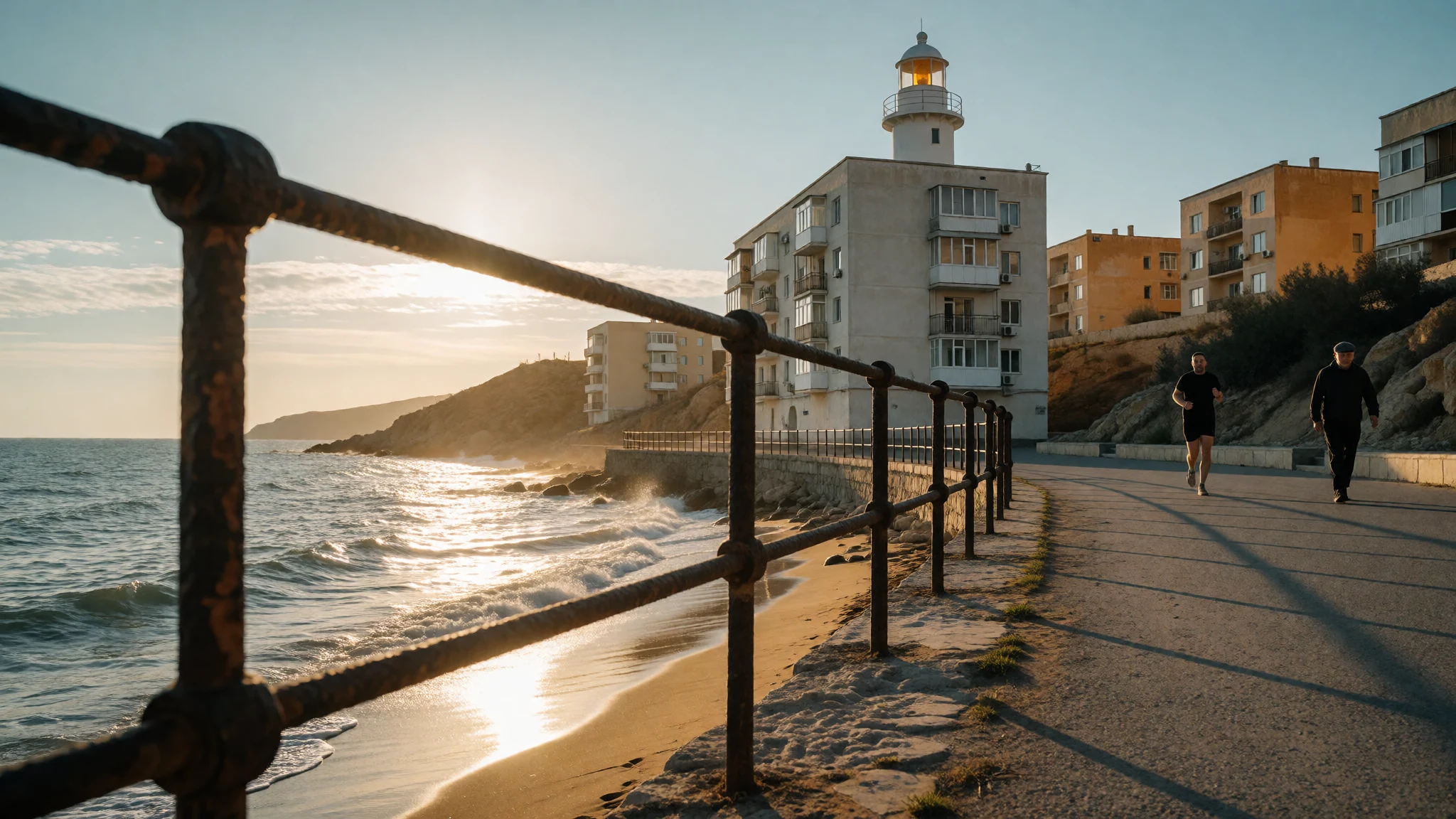
Aktau is a Soviet-built Caspian port below sea level, where desert, sea and old Sufi pilgrim country meet.
The place
Aktau sits on the eastern shore of the Caspian Sea, on the Mangyshlak Peninsula, and is the capital of the Mangystau Region in western Kazakhstan. Its name means "white mountain" in Kazakh, yet the ground here is low: the city stands about eight metres below sea level, on a dry coast with almost no natural fresh water. Roughly a quarter of a million people live here, so it is a working port and regional centre rather than a resort village. The Soviet planners who laid it out solved the water problem with a desalination plant, and the city still reads as a planned place. Locals find their way by numbered districts rather than by street names, and the wide avenues, apartment blocks and big public squares all come from that era. Where the city ends, the landscape turns to bare steppe, chalk cliffs and canyons. Mangystau translates roughly as "eternal mountains", and the region holds a deep depression near the city that is the lowest point in Kazakhstan. It is populated mostly by Kazakhs of the Aday tribe. Scattered across it are underground mosques and shrines linked to Sufi pilgrimage, among them Beket-Ata, Shakpak-Ata, Shopan-Ata and Masat-Ata, as well as natural curiosities such as Fire Mountain (Otpantau), the oases of Tamshali and Saura, and a radon hot spring with mud baths. Most visitors to the beaches come from elsewhere in Kazakhstan. Foreign travellers tend to use Aktau as a base for the desert sights rather than as a destination in its own right, and that is an honest way to see it.
Its story
The story of Aktau is really two stories: a very old, thinly peopled land and a very young city. People have lived around the Mangyshlak Peninsula since the Neolithic period, and Scythian tribes once roamed it. Settlements and tools have been found in the area. A spur of the northern Silk Road crossed the region, linking Central Asia to the Caspian, and that traffic explains the Sufi shrines and rock-cut necropolises that still draw pilgrims today. Even so, the land had few permanent residents and no real towns for centuries, almost certainly because fresh water was so scarce. That changed in 1958, when uranium prospectors set up camp on a bay where the cliffs are pale with chalk. They called the camp Melovoye, after the bay. Once mining began in earnest, the settlement was closed to outsiders and given a numbered code name in place of a proper one. Later its restrictions were lifted, it was granted town status and took the name Aktau, though for a time it carried the name of the Ukrainian national poet Taras Shevchenko. The Soviets built a nuclear power plant and a desalination plant, which turned a waterless shore into somewhere families could live. The city therefore has no medieval core, no old bazaar quarter and no ancient walls. What it has is a layered identity: a mining and industrial base, a Caspian port, and the gateway to one of Kazakhstan's most distinctive desert regions.
What to see
- Soviet plane and the war memorial — Central Aktau, near the main avenue
A Soviet-era aeroplane stands on a pedestal on the slope below the war memorial, and it makes an easy first stop. The memorial itself has an eternal flame beneath a ring of pale arches that recall the frame of a yurt. A drama theatre stands opposite, staging plays mainly in Russian.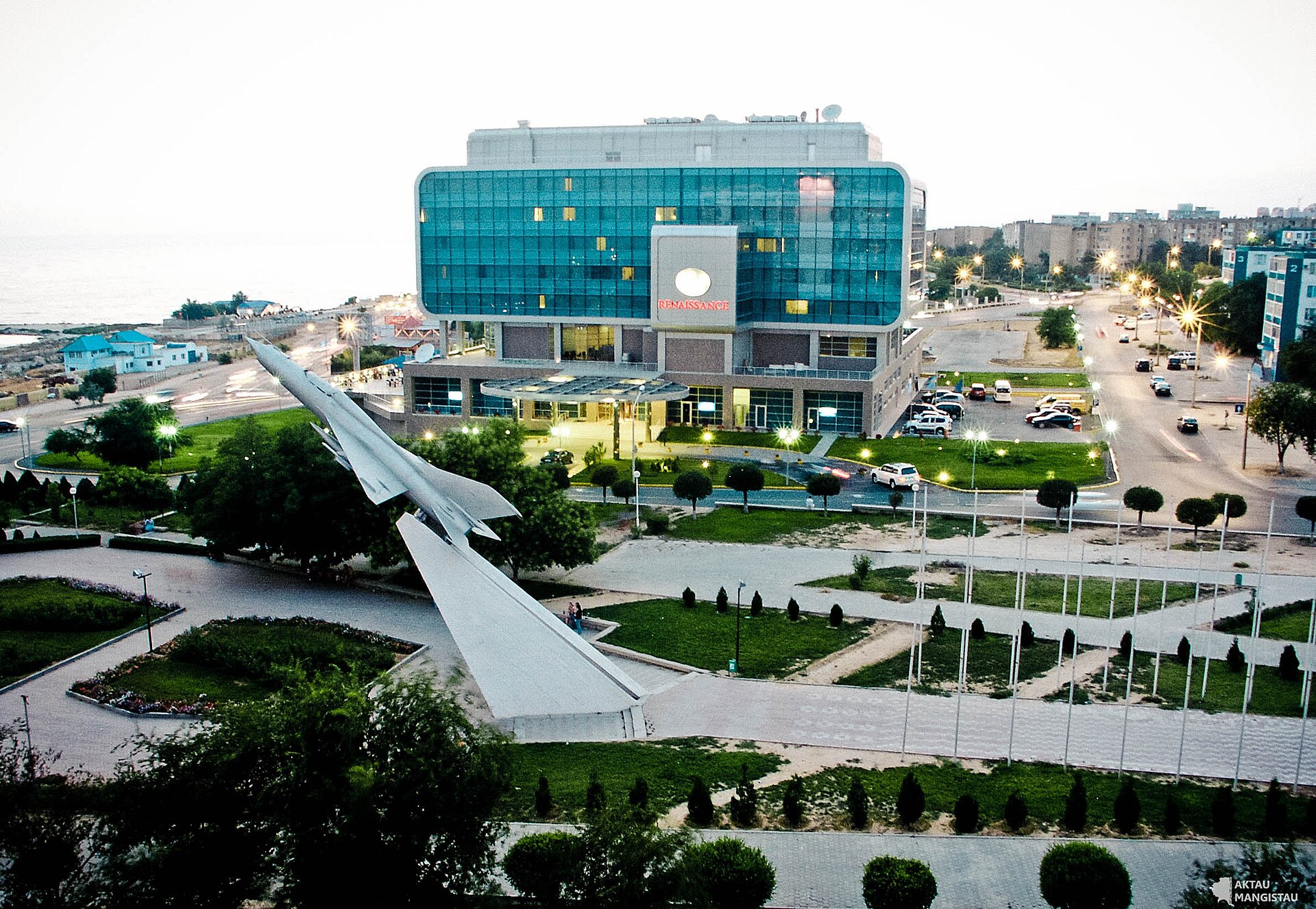
- The Caspian seafront and rooftop lighthouse — Seafront, central microdistricts
Aktau's best-known picture shows apartment blocks facing the sea, with a lighthouse built onto the roof of one of them. The seashore alternates between rocky hills and sandy beaches. Walk the waterfront in the evening, when the heat eases, and look back at the skyline from the water's edge.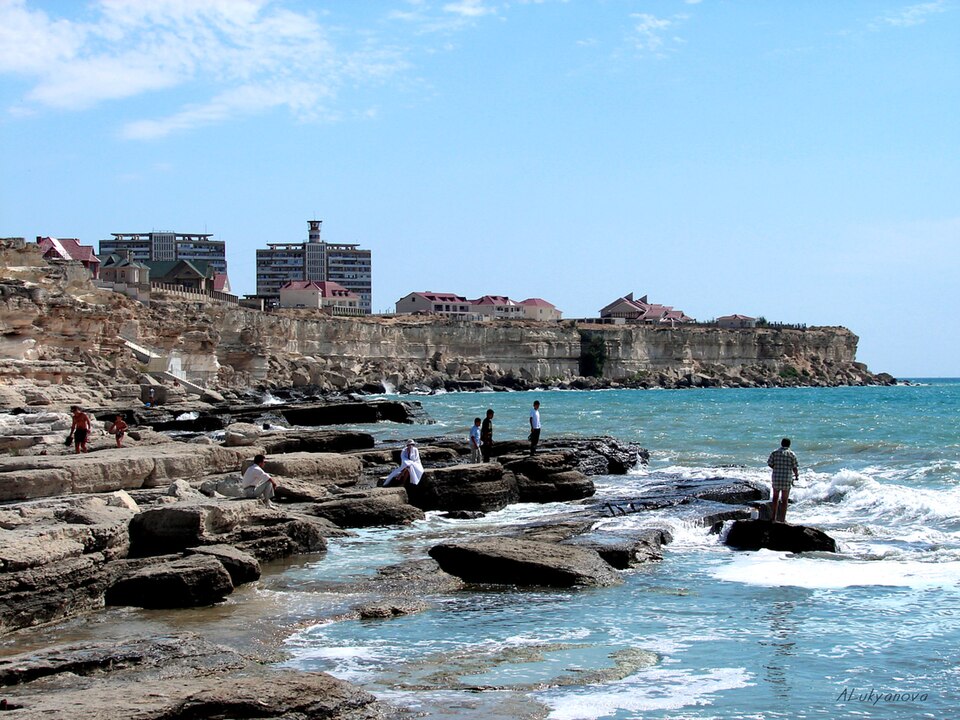
- The main avenue and shopping strip — Main avenue through the central districts
The central north–south avenue is where the city's social life gathers, with cafés, restaurants, night spots and shopping centres within easy reach of each other. It is worth a stroll to see how an ordinary Kazakh port city lives, shops and eats. Quality varies a great deal between malls.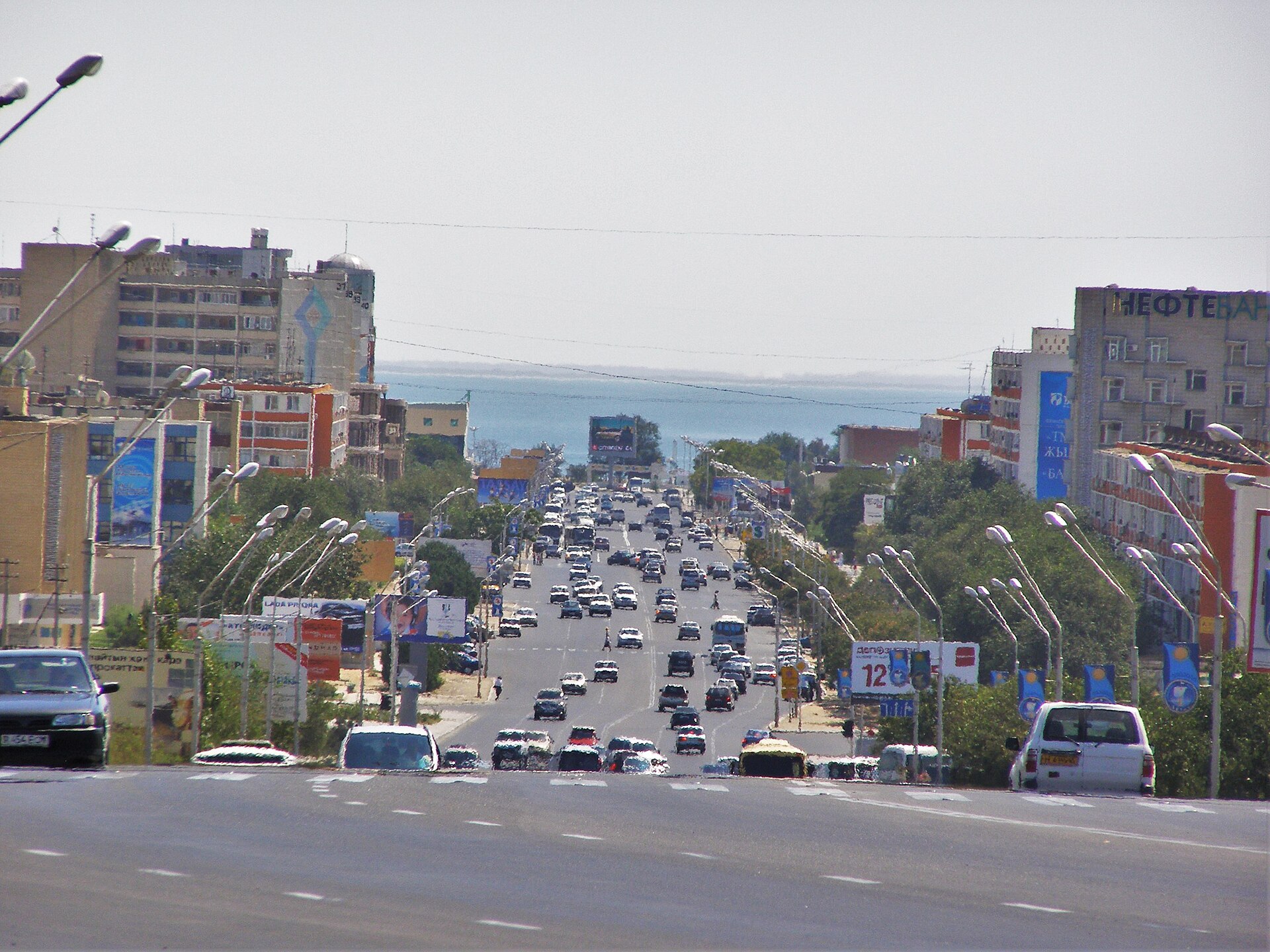
- Soviet apartment-block frescoes — Along the main road, central districts
Huge murals cover one side of several ageing Soviet apartment buildings along the main road. They are best seen from the opposite side of the street, where a quieter district gives a clear view. The paint and the concrete beneath it are weathered, which is much of their appeal.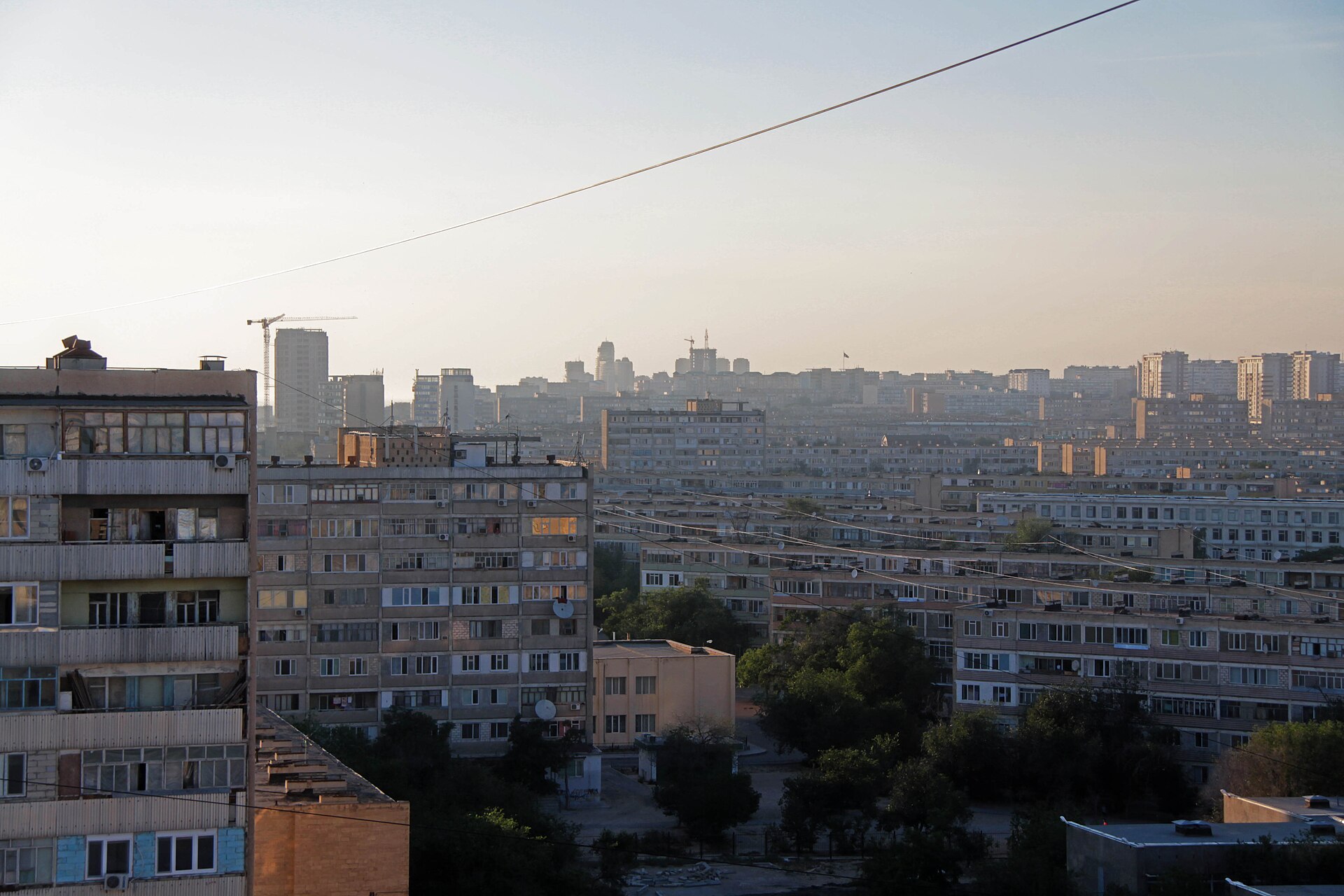
- Mangystau steppe and pilgrimage sites — Mangystau Region, outside the city
Beyond the city limits, the steppe opens into canyons, oases and Sufi shrines such as Beket-Ata. Reaching them usually means hiring a driver for the day, since distances are long and signs are few. Dusk on the open steppe is worth the effort on its own.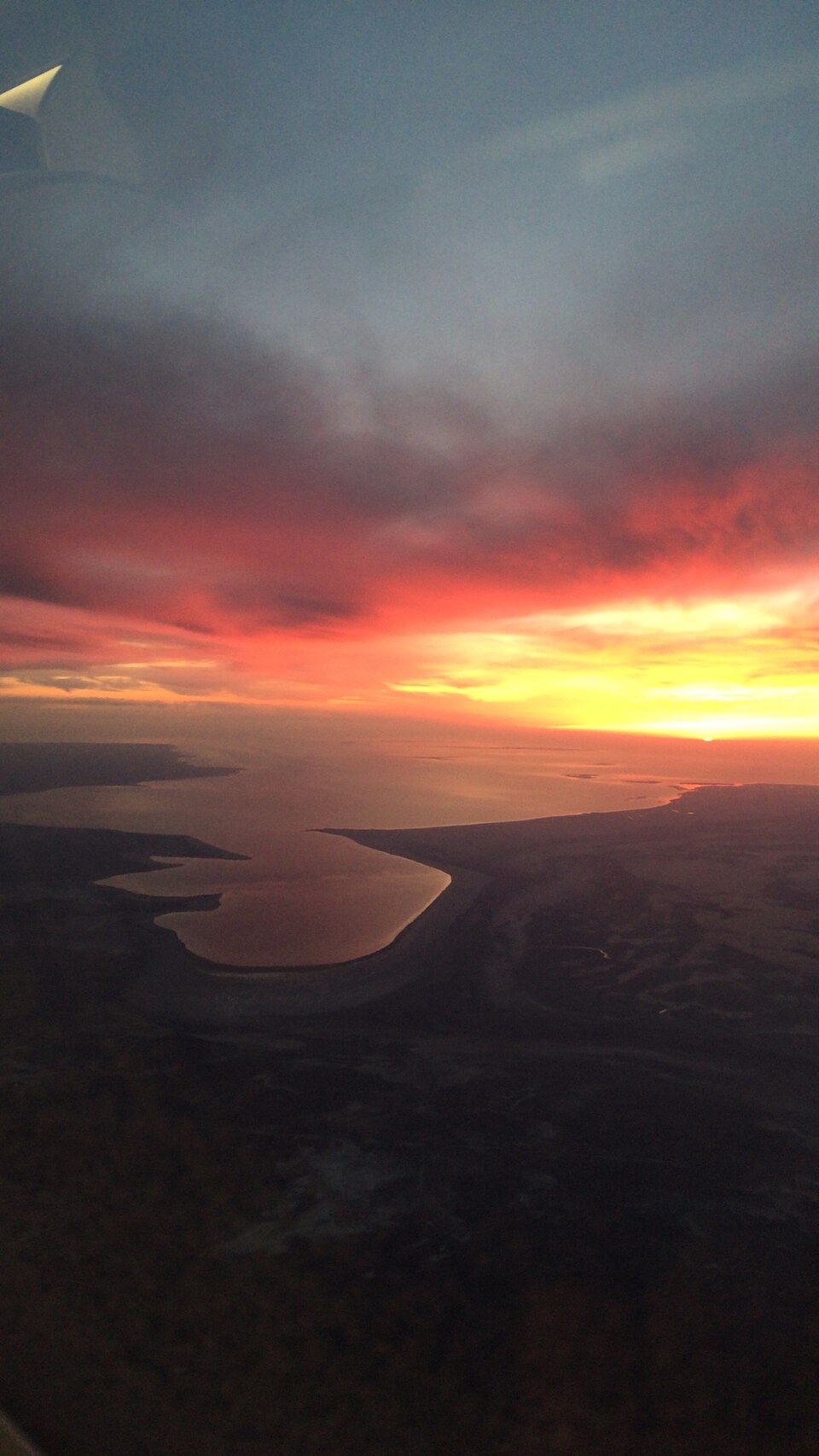
Culture
Aktau's culture is Kazakh at its root and Soviet in its shell. The Mangystau Region is home mainly to the Aday, a Kazakh tribe often described as one of the "little brother" groups in the country's history, and their hospitality, tea-drinking and respect for elders shape daily manners more than the city's modern surface suggests. Russian is widely heard alongside Kazakh, and the drama theatre stages its productions in Russian. The war memorial borrows the shape of a yurt for its arches, a small sign of how Soviet planners dressed their monuments in local forms. Faith here is largely Muslim, and the region's identity is tied to Sufi pilgrimage. Pilgrims have long visited underground mosques cut into limestone, such as Beket-Ata and Shakpak-Ata, and these remain living places of devotion rather than museums. In summer the beaches fill with families from elsewhere in Kazakhstan, and the seafront takes on an easy holiday mood, with evening walks, music and food stalls. The city is a modern, fairly relaxed place, but its surroundings are conservative and traditional, and visitors will get more from both by being a little reserved at first. At any Sufi shrine near Aktau, cover your shoulders and knees, take off your shoes before entering a prayer space, and ask before photographing worshippers.
What to wear
In Aktau, traditional dress belongs to the wider Kazakh steppe wardrobe, and it is now seen mainly at weddings, festivals and national holidays. Men's formal wear includes the chapan, a long quilted or velvet robe, and a felt hat called the kalpak. Women's festive dress uses velvet, silk and brocade, often with embroidery, and a bride may wear the tall, ornate saukele headdress. Felt and wool are the older working materials, suited to cold winters and long journeys across open ground. In daily life, people in the city wear what they would in any modern post-Soviet town: jeans, jackets, trainers, office shirts and, in the malls, smart brands. Younger residents follow international trends, while older residents often favour practical dark coats in cold weather. At the beach, swimwear is normal in the summer season, but most people cover up on the walk back into town. A visitor should dress for the climate first. Summers are warm to hot and dry, so choose breathable cotton, a hat and sunglasses. Winters are cold, so bring layers and a windproof coat. For day trips into the desert, wear closed shoes with grip for rocky, uneven ground. For shrines and villages, pack long trousers or a long skirt and a scarf or light shawl for covering shoulders and hair.
What to eat
- Shawarma — Stalls behind the central mall near the eternal flame
Aktau's everyday street snack comes in a wrapped flatbread with meat and salad. Ask for it without sauce if mayonnaise is not to your taste, using the Russian phrase "bez sousa". The most convenient stalls cluster behind the big central mall near the eternal flame. - Beshbarmak — Kazakh restaurants in the central districts
The classic Kazakh celebration dish is boiled meat served over wide flat noodles with a thin onion broth alongside. It is hearty rather than delicate, and meant to be shared. Traditional restaurants serve it, particularly when a group is eating together. - Kebabs from the firepit — Grill restaurants and bars along the main avenue
Grilled skewered meat is a safe, satisfying order in Aktau, often cooked over open coals and served with flatbread, onions and a drink. Several grill restaurants add live music or an outdoor fire to the evening. - Baursak with tea — Cafés, bakeries and family homes
Small pieces of fried dough, light and slightly sweet, appear on the table wherever tea is served. They are a good introduction to Kazakh hospitality, and are best eaten warm, dipped in jam or honey or simply on their own. - Shubat — Local markets and roadside stalls on desert routes
This tangy, fizzy fermented camel milk is a regional speciality of western Kazakhstan. It is sour and refreshing in summer heat, and takes some getting used to. Try a small cup before committing to a bottle. - Sushi, CIS style — Restaurants inside shopping malls and in newer districts
Japanese-style rolls are surprisingly popular in Aktau, adapted to local taste with cream cheese and sweet sauces. They suit travellers who want something lighter than meat and noodles, or who need a break from heavy dishes.
Plan it
Best time. May, June and September are the most comfortable months: the sea is swimmable from late spring, the days are warm rather than fierce, and the evenings are pleasant. July and August bring dry heat, though they are the main beach months. Winters are cold, with January averaging around freezing, so the desert trips are less pleasant then.
How long. 2–3
Getting there. Aktau Airport lies north of the city, and a taxi or ride-hailing app is the easiest way into town. Agree the fare before setting off, or ask your accommodation about a transfer. A city bus also serves the airport at a fraction of the cost, but waits can be long, so choose a taxi when a flight is close.
Budget. mid
Tips
- Use a ride-hailing or map app to check routes and fares, and have a backup plan if a bus does not turn up
- Hire a driver for desert and shrine day trips, since distances are long and public transport is thin
- Carry some cash as well as a card, especially for markets and small stalls
- Bring water, sun protection and a hat for the steppe, where there is little shade
- Allow slack in the schedule, because road and weather conditions can change plans
Etiquette
- Cover shoulders and knees at pilgrimage sites and remove shoes before any prayer space
- Ask before photographing people, especially worshippers and older residents
- Accept tea or food offered by hosts, and thank them warmly
Nearby
Sources
- Wikidata Q198989 (CC0)
- Wikipedia — Aktau (rev 1383830559) (CC BY-SA 4.0)
- Wikivoyage — Aktau (rev 5423789) (CC BY-SA 4.0)
- Photo: Aktau Plane (CC BY-SA 4.0)
- Photo: Aktau-city at day (CC BY 3.0)
- Photo: Aktau light house, Caspian Sea (CC BY 3.0)
- Photo: Aktau lighthouse (CC BY 3.0)
- Photo: Main street in Aktau (CC BY-SA 2.0)
- Photo: Horses in Mangystau Province (Public domain)
- Photo: Aktau Panorama21 (CC BY 3.0)
- Photo: Dusk in the steppe (CC BY-SA 4.0)


