Altyn-Emel National Park
Altyn-Emel National Park, Kazakhstan
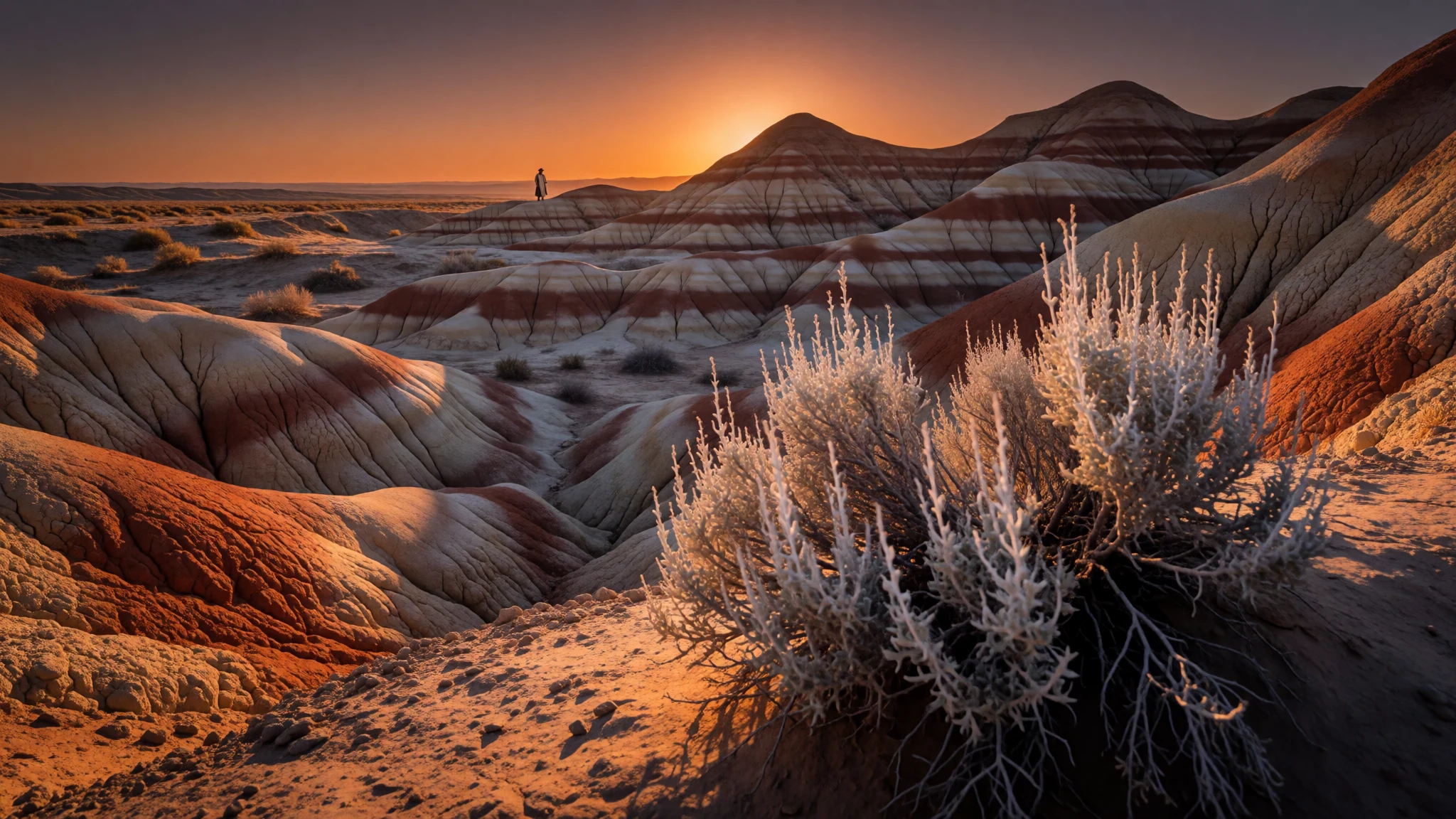
Altyn-Emel National Park gives wide Kazakh steppe, banded hills, a humming sand dune and old stone markers, reachable from Almaty.
The place
Altyn-Emel National Park sits in south-eastern Kazakhstan, in the Jetisu region, on a broad stretch of land between the Ili River and the Aktau mountain range, within reach of Lake Kapchagai. It has been protected since 1996, and the ground is mostly desert and rock, not the lush meadow that the words 'national park' bring to mind. Ecologically it belongs to the Tian Shan foothill arid steppe, which explains the look of it: grass the colour of straw, scattered scrub, and long views with very little in the way of trees. Then the land changes quickly. Banded hills in clay, rust and cream rise out of the plain, a sand dune shifts and hums in the wind, and low stone monuments mark old burial grounds. The climate is continental, with large swings between seasons and hot summers, often above 40°C, although open ground offers almost no shade. Distances are big and tracks are rough, so most visitors go in a four-wheel-drive vehicle with a driver or guide, often arranged through an operator in Almaty. Facilities are basic and the pace is slow. Photographs from the park repeat one pattern: a heavy grey sky over pale steppe, with colour only where the rock breaks through. The reward is space, silence and weather that can change the whole mood of a landscape within an hour.
Its story
The story of Altyn-Emel National Park is partly about the people who crossed this land and partly about how it came to be protected. The steppe between the Ili and the Aktau hills has long been grazing and travelling country. Turkic and Mongol nomadic groups moved through the wider region and eventually came together as the Kazakhs, a people defined by herding on horseback. Stone markers and burial mounds in the park point to even older users of the land, though the details of who built them are best left to the museum displays and the guides on site. Later the region was drawn into the Russian Empire, and in the Soviet period Kazakh herders were pushed to settle and farm. That collectivisation largely ended the old nomadic way of life inside Kazakhstan's borders, which is why a traveller hoping for living nomad camps is more likely to find yurts re-created for tourists than a continuing tradition. Kazakhstan became independent after the Soviet collapse, and in 1996 the park was established. Its formal status is that of a protected area of republican significance, and its purpose is to conserve the desert and foothill steppe, with tourism a managed, secondary activity. Today the park sits at the meeting point of those histories: a pastoral landscape that survives, crossed mostly by people who arrive in jeeps rather than on horses.
What to see
- Aktau hills — Aktau range, central park
The Aktau range is the visual centrepiece of Altyn-Emel National Park. Its hills are cut into soft bands of pale clay and mineral colour, and the pattern shifts with the light, so early morning and late afternoon give the best contrast. Walking is on loose, dry ground with no shade, so carry water and a hat.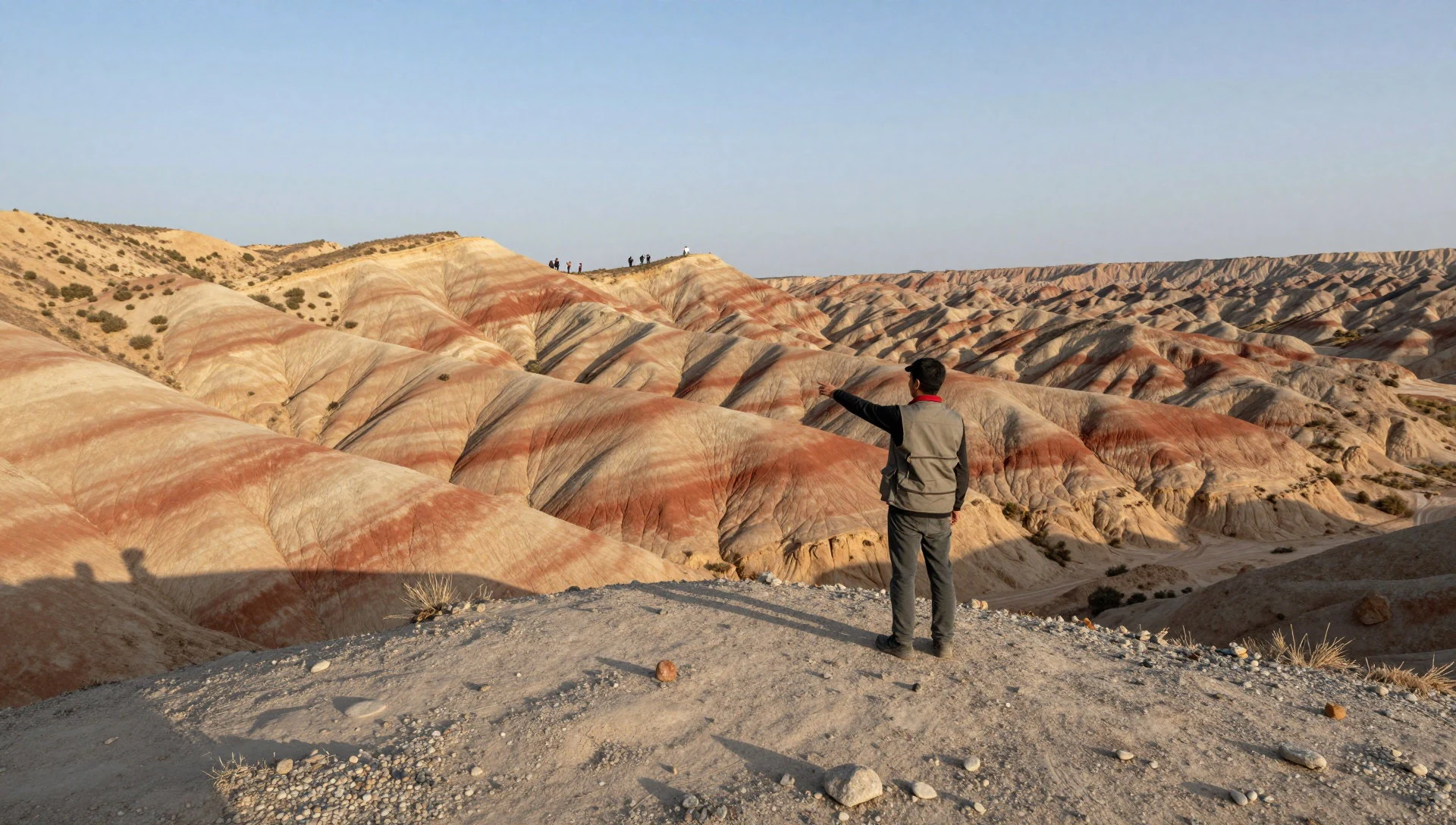
- The Singing Dune — Western part of the park
The Singing Dune in Altyn-Emel National Park is a large sand ridge standing alone in country of rock and steppe. The dune is named for a low humming that can rise from it in dry, windy weather, though its cause is still a mystery. The effect depends on dryness and wind, so treat it as a bonus rather than a promise.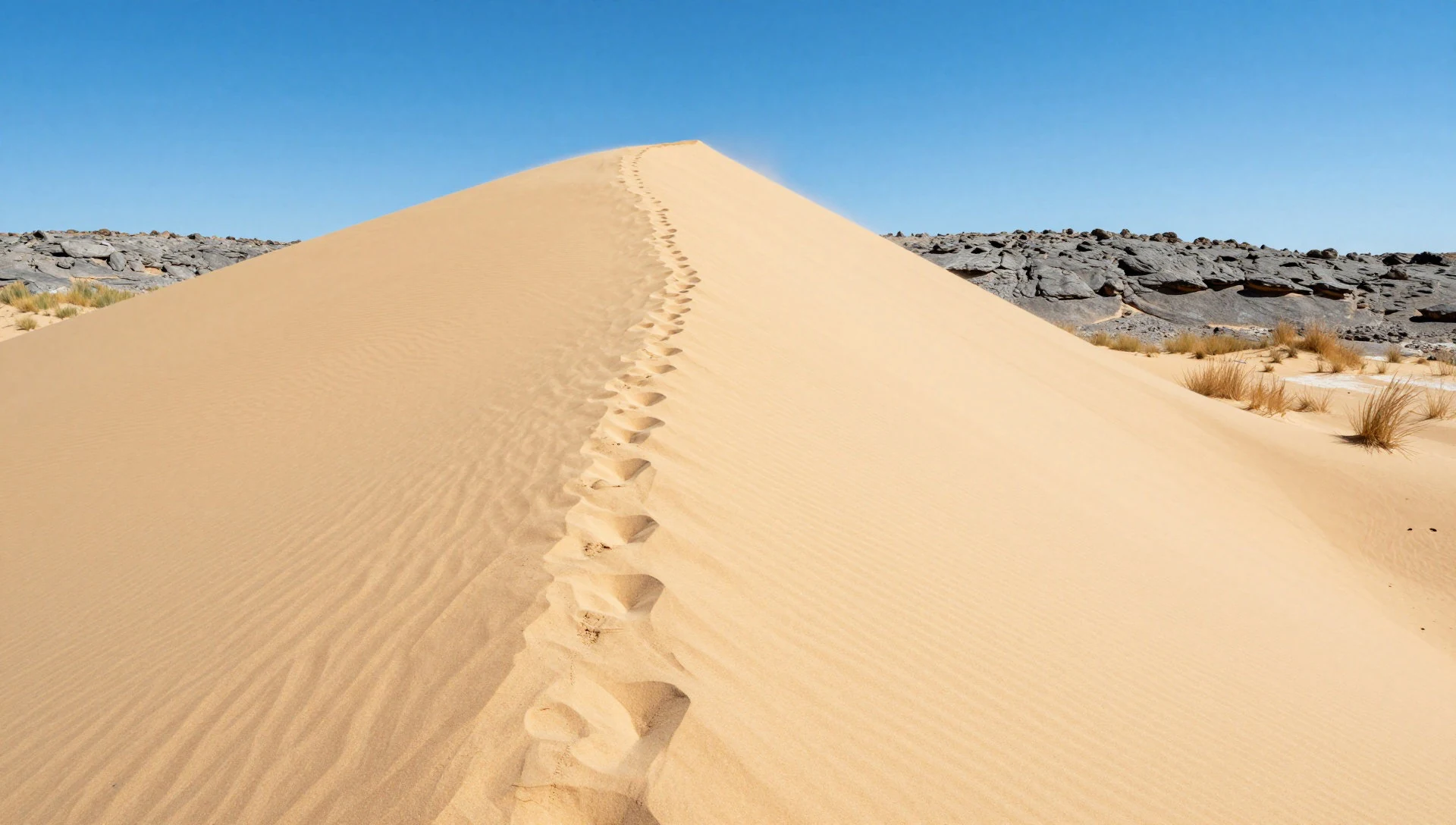
- Oshaktas stone stelae — Scattered sites on the steppe
Weathered stone stelae known as oshaktas stand in Altyn-Emel National Park, linked to old burial and memorial sites on this steppe. They are modest in scale and easy to pass without noticing, so a local guide adds a lot. Treat them as graves: photograph from a distance and never climb on or move stones.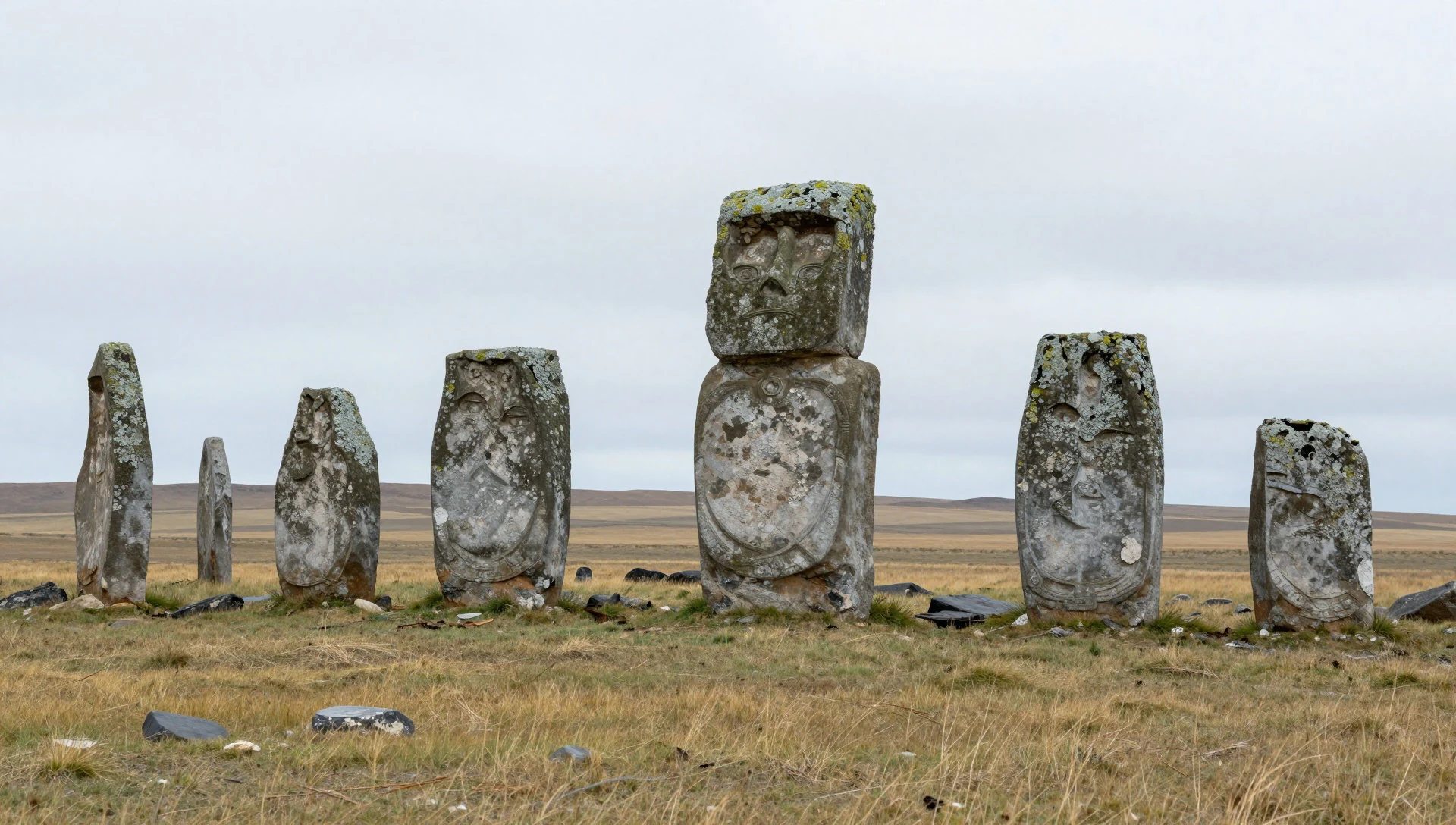
- The park museum — Park headquarters area
The museum display at Altyn-Emel National Park is a useful first stop for making sense of the landscape. Its exhibits introduce the setting and the natural and human history of the area in a few modest rooms rather than a grand building. Opening arrangements vary, so ask your operator or check with the park before relying on a visit.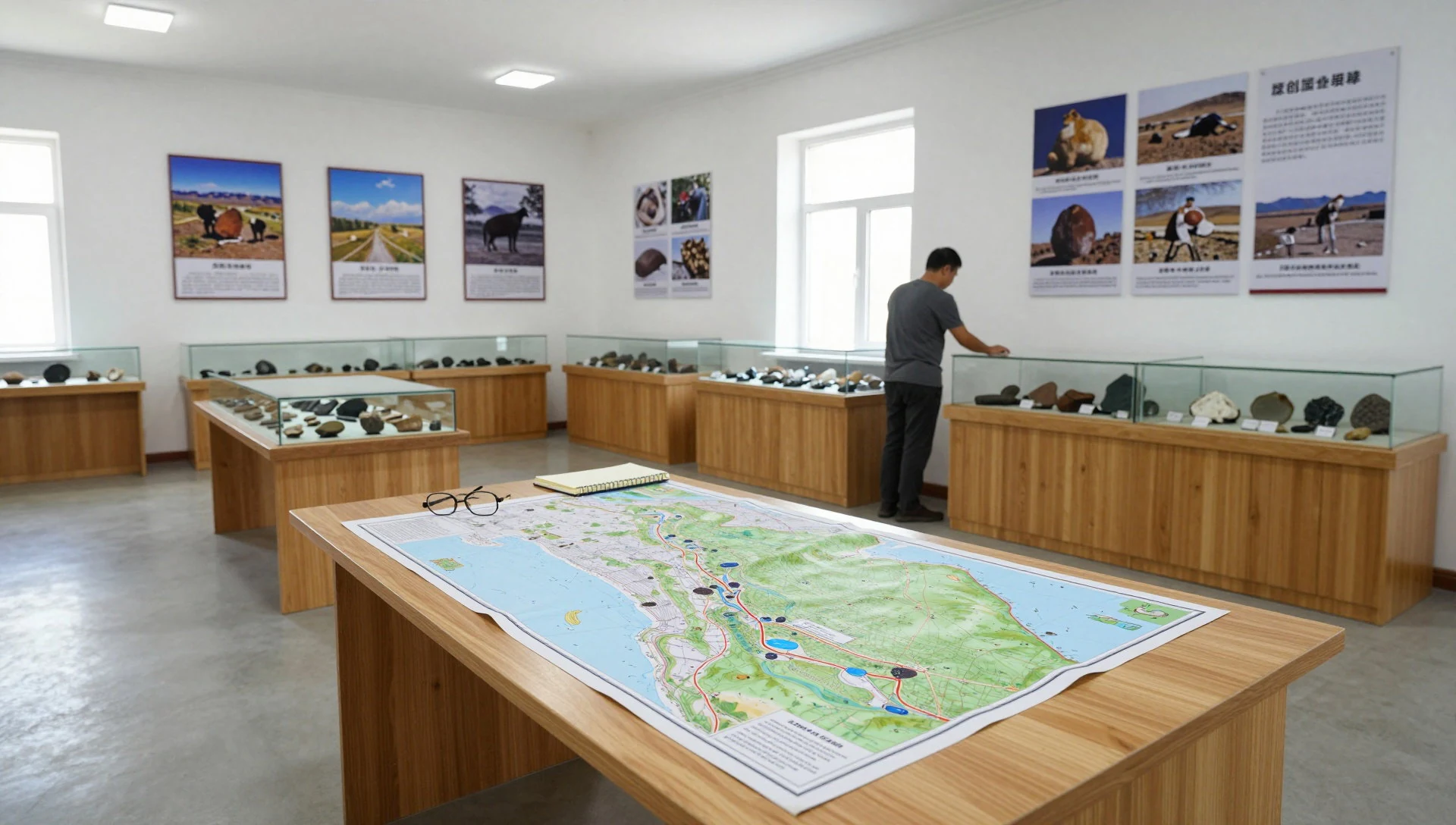
- Open steppe and storm light — Kerbulak district and the plains by the Ili
The open steppe around Altyn-Emel National Park is a sight in its own right, especially under a storm sky. Grass runs to the horizon, and rain can sweep across it in visible curtains with light breaking through at the edges. Late spring tends to be greenest; later the grass fades to straw. The long drives between sights are part of the experience.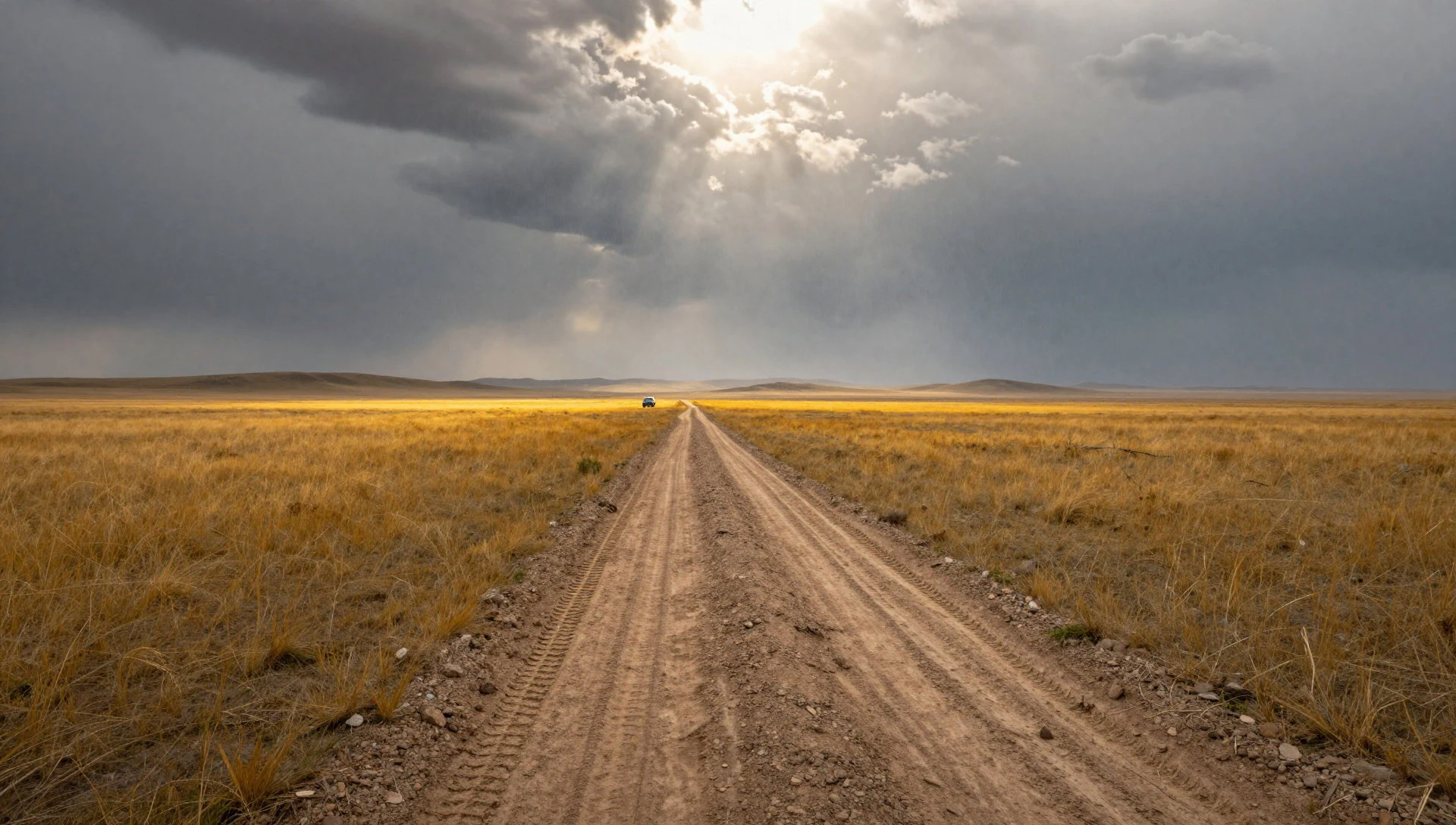
Culture
Altyn-Emel National Park lies in a country where pride in being Kazakh runs deep, and visitors tend to notice it quickly in conversation. The horse remains central to Kazakh identity and is honoured at major traditional festivals, even though the daily nomadic life that created that bond was largely ended by Soviet collectivisation. Yurts offered to tourists are re-creations, so they are best enjoyed as hospitality rather than as a window onto a living tradition. Kazakhstan is a Muslim country with a large Russian-speaking population, so Kazakh and Russian are both heard, and a few words of either are appreciated. The villages and guesthouses around the park are quieter and more traditional than Almaty, and the rangers and guides who work in the park are often the best source of local knowledge about its land and history. Politics, religion and national stereotypes are topics best left for locals to raise. Jokes about the film Borat are tired and unwelcome, and negative remarks about the country can land badly, so arguments are worth avoiding altogether. Respect for elders, patience with slow service and a modest approach to photographing people all go a long way. Ask before photographing people or their animals, and leave Borat jokes and any teasing about religion or the country unsaid.
What to wear
Altyn-Emel National Park is Kazakh country, and traditional Kazakh dress still reflects a life lived on horseback. The classic pieces are the chapan, a long padded or lined robe, the felt kalpak hat, fur-trimmed caps for cold weather, and for brides the tall ornamented saukele headdress. Wool, felt, velvet, silk and fur were the working materials, chosen for warmth and wind. Today these garments appear mainly at weddings, national festivals and folk performances rather than in daily life. What people actually wear now is ordinary and practical: jeans, shirts, fleeces and trainers in towns, with sturdier boots, jackets and headscarves or caps in rural areas where wind and dust are constant. Rangers and drivers usually dress for the weather rather than for show. A visitor should dress for open, exposed terrain. Wear layers, because continental climates swing between warm days and cool mornings and evenings, and bring a sun hat, sunglasses and a light scarf or buff for dust. Closed shoes or boots with good grip suit loose ground and rock. Villages are modest, so shorts and sleeveless tops are better kept for the trail than for guesthouse meals. There is no formal dress code in the park itself, but a windproof layer is always useful.
What to eat
- Beshbarmak — Family-run eateries in villages near the park, and restaurants in Almaty
Beshbarmak, 'five fingers', is the national dish: boiled meat, traditionally horse but often beef or lamb, laid over wide pasta with onion and potato. It is a celebration dish, and portions are generous enough to share between two or three people.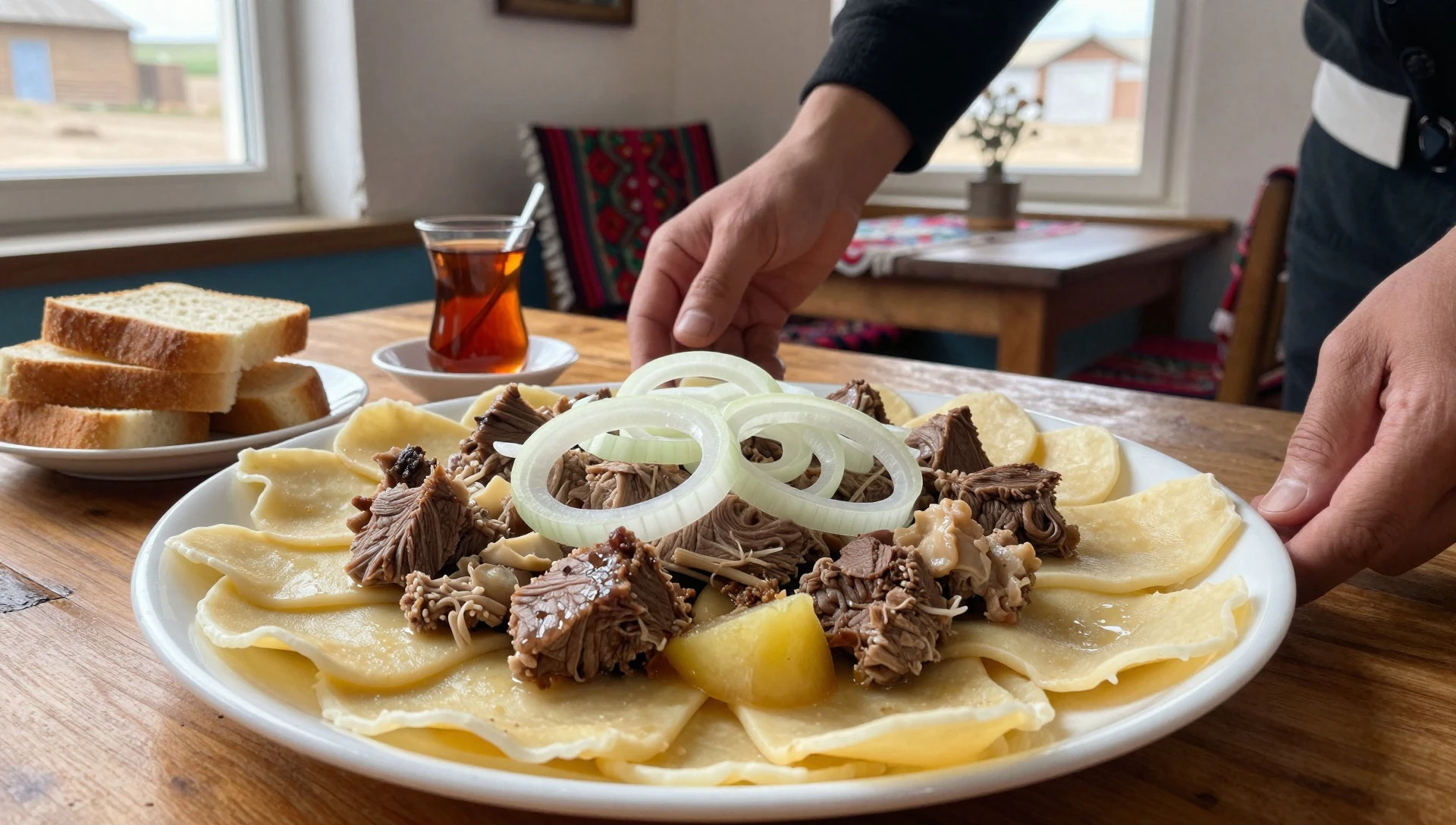
- Kazy — Restaurants and market stalls in Almaty, usually as part of a starter platter
Kazy is a handmade horse-meat sausage, served sliced and cold among a spread of cured meats, or alongside beshbarmak if requested in advance. It is rich, salty and best eaten in small slices with bread and tea.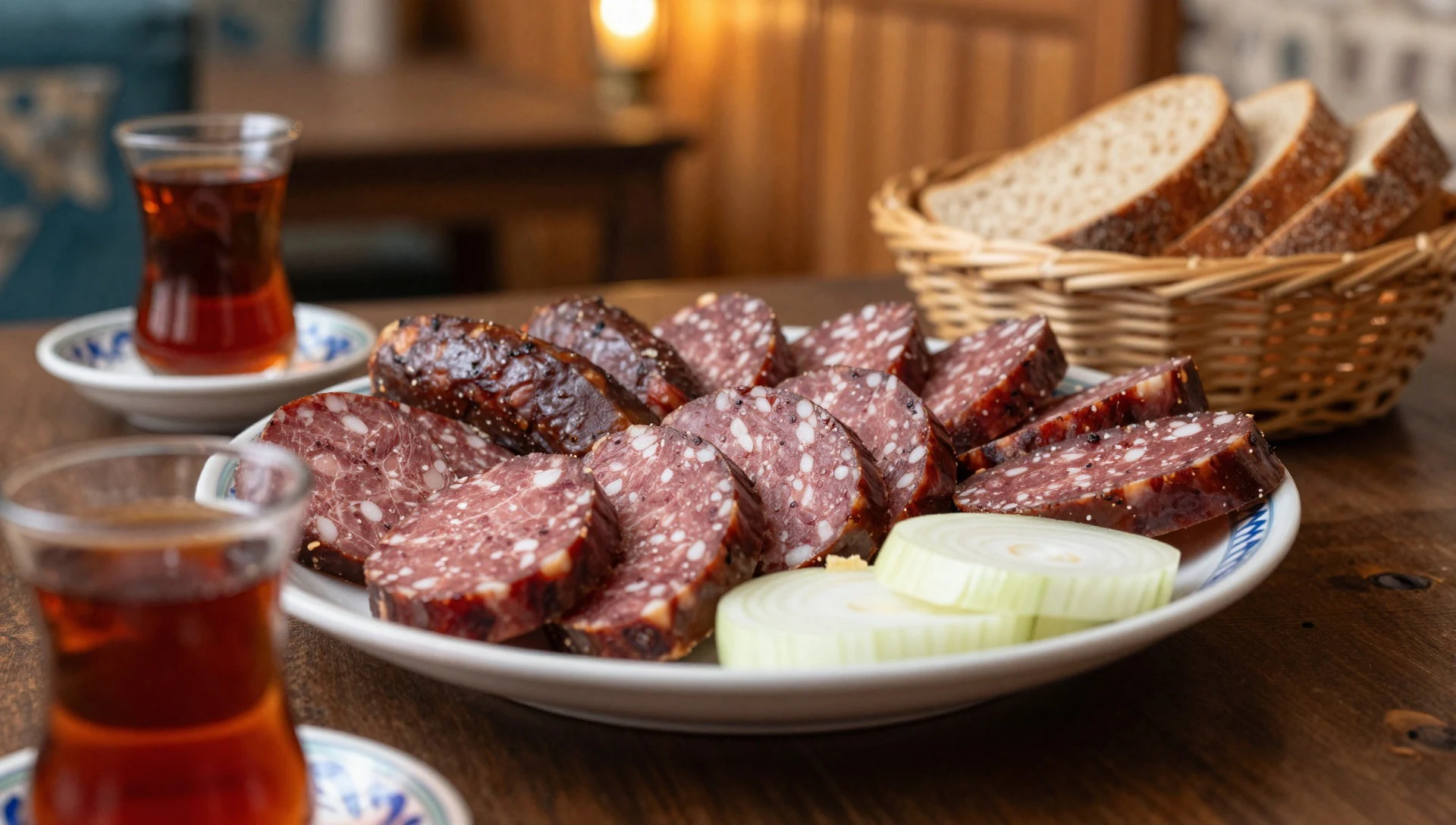
- Laghman — Roadside eateries and café-style canteens on the way to the park
Laghman is a thick, hand-pulled noodle dish with meat, carrot, onion and other vegetables, often served as a soup. It is filling and easy to find, which makes it a reliable lunch after a long drive on rough tracks. - Manty — Local cafés in the villages and towns of the Almaty region
Manty are large steamed dumplings filled with chopped meat and onion, sometimes pumpkin. They arrive hot in a stack, and are eaten with the hands or a fork, often with sour cream or vinegar-based sauce on the side. - Shashlyk — Grill stalls and outdoor eateries in towns on the approach road
Shashlyk is skewered marinated meat grilled over coals and served with flatbread and raw onion. It is simple, smoky and common in the evening, and a good choice when the day's walking has left you hungry. - Plov — Canteens and family eateries, and the food courts of Almaty bazaars
Plov is a one-pot dish of fried rice, meat and carrot, sometimes with raisins or tomato. It came to Kazakhstan from Uzbek cooking and is now a regular lunch dish. Vegetarians should ask carefully, since most dishes use meat or meat stock.
Plan it
Best time. April and May for the greenest steppe, though days are already hot, and October for the most comfortable walking, with cooler days. Summers are very hot, with highs above 40°C in July and August, and shade is scarce; winters are cold in this continental climate, so check conditions before travelling.
How long. 2–3
Getting there. Fly to Almaty, the usual gateway, then travel by road to the park, most easily with a driver, a tour operator or a hired four-wheel-drive. The last stretch is on rough tracks, and entry to the protected area is normally arranged through the park or a tour company.
Budget. mid
Tips
- Book a guide or operator in Almaty ahead of time, as independent access to the interior can be difficult
- Carry plenty of water, snacks, sun protection and warm layers, because there is little shade or shelter on the steppe
- Start early in the day for softer light on the hills and cooler walking
- Bring cash for villages and guesthouses, as card payments are less reliable away from towns
- Check current visa and entry rules for your passport before booking, and confirm park permits and access on the official park channels
Etiquette
- Stay on marked tracks and do not move, climb on or remove stones at burial and stelae sites
- Ask before photographing people, their animals or their homes
- Avoid jokes about Borat, religion or the country, and take rubbish out with you
Nearby
Sources
- Wikidata Q447047 (CC0)
- Wikipedia — Altyn-Emel National Park (rev 1362692178) (CC BY-SA 4.0)
- Wikivoyage — Kazakhstan (rev 5427114) (CC BY-SA 4.0)
- Photo 01 — Nikolai Bulykin (CC BY-SA 4.0)
- Photo 02 — Kalpak Travel (CC BY 2.5)
- Photo 03 — Stomac (CC BY 3.0)
- Photo 04 — Jjm2311 (CC BY-SA 4.0)
- Photo 05 — Jjm2311 (CC BY-SA 4.0)
- Photo 06 — Marat Rysbekov (CC BY-SA 4.0)
- Photo 07 — Jjm2311 (CC BY-SA 4.0)
- Photo 08 — Sane4o (CC BY-SA 4.0)


