Yokohama
Yokohama, Japan
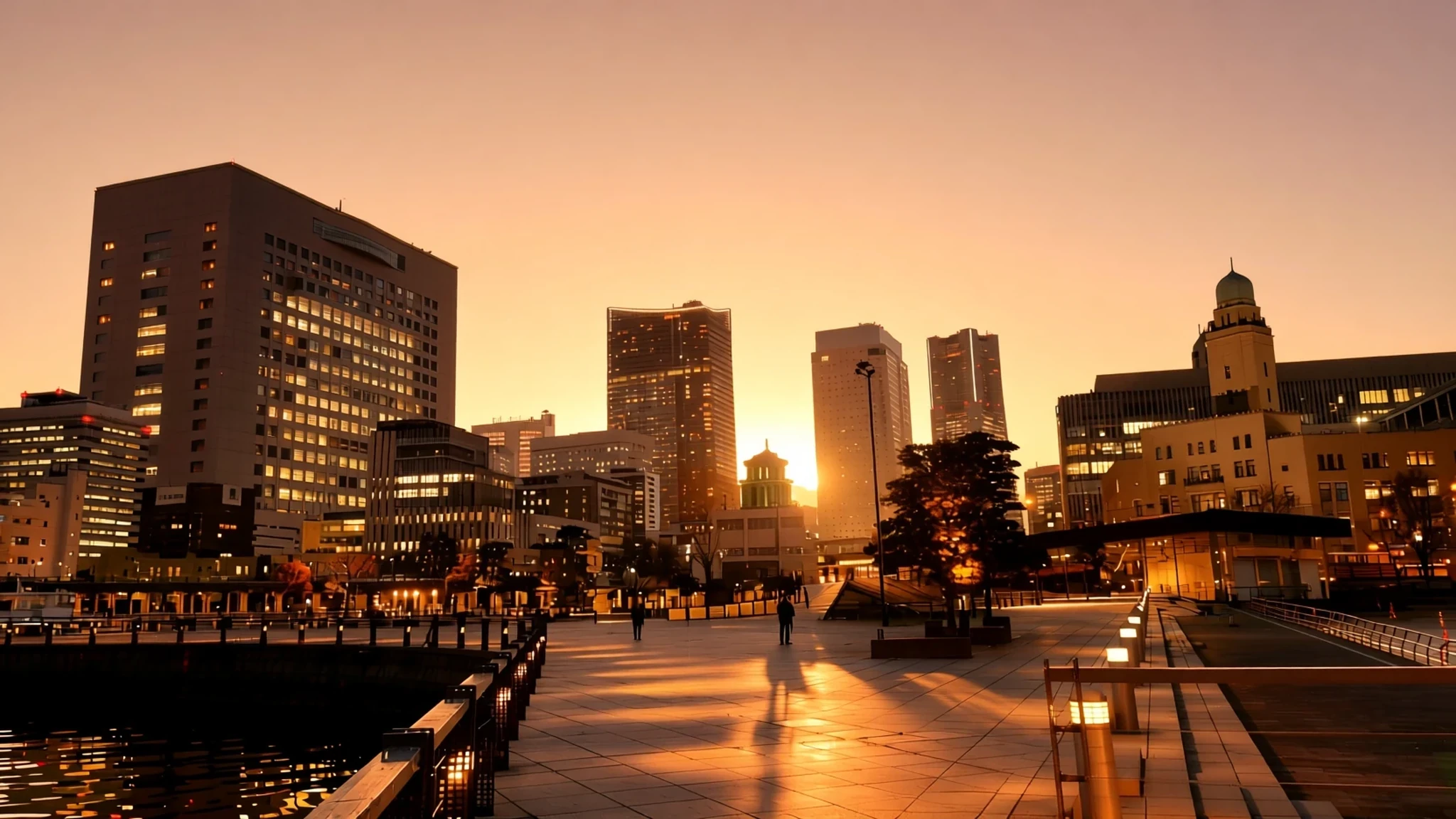
Yokohama is a harbour city of ships, Chinatown kitchens and a waterfront built for walking after dark.
The place
Yokohama stands on the western shore of Tokyo Bay in Kanagawa Prefecture, close to the capital and still a separate city with its own harbour character. The land along the water is flat and low, then climbs into the residential hills of Yamate, the Bluff. The first impression is maritime: working cranes to the north, a public promenade to the south, and a cluster of towers that grew up beside the docks rather than around a castle.
The part most visitors walk runs from Sakuragichō and Minato Mirai, around the old waterfront, to Kannai, Yamashita Park and Motomachi. Minato Mirai is a planned bay district of offices, museums, a large ferris wheel and a mall that faces the water; weekends fill the plazas, while a weekday morning can feel like a business park that happens to have a view. Kannai keeps the older commercial grid, the baseball stadium and the streets that lead into Chinatown. Yamashita Park is a long lawn and path where people sit with takeaway and watch the ships. Above the park, the Bluff is a hillside of former Western residences, churches and small museums from the foreign-settlement years.
A few blocks inland, Chinatown packs gates, red shopfronts and queues into a tight grid. Motomachi, between the park and the hill, is a narrower shopping street of bakeries and clothes shops. Out on the water the Yokohama Bay Bridge spans the port, and the southern wards continue towards Hakkeijima and the shore at Kanazawa. Subway lines and the JR Negishi and Keihin-Tōhoku lines cross the centre; the city reads best on foot along the quay, where warehouses, a ship-shaped passenger terminal and the evening skyline sit in one view.
Its story
Yokohama began as a small fishing settlement on a shallow bay, close enough to Edo to matter and far enough that the ruling Tokugawa could keep foreign ships off the capital's doorstep. When Japan agreed to open harbours to trade, this shore was chosen for the new foreign settlement. Marsh and tidal flat were filled, a grid of streets was laid out, and a town that had barely existed became a port almost at once. Merchants from China, Europe and America took plots; the Bluff above the water became the hillside of consulates and houses, and the Chinese community's streets grew into Chinatown.
Silk, tea and shipping made the young port rich. Warehouses, customs sheds and a long commercial avenue turned Kannai into the business centre, while the waterfront stayed practical: piers, bunds and the coming and going of liners. The sail-training ship Nippon Maru and the passenger ship Hikawa Maru, which later became museum pieces, belong to that working life, not to a theme park. The city learnt earthquakes the hard way when the Kantō quake wrecked the port. Rebuilding was plain and fast, and the harbour went back to work.
War brought bombing and another reconstruction. After it, shipyards, factories and rail yards held the waterfront. The later plan for Minato Mirai took a stretch of that industrial land and turned it into offices, halls and a public edge along the bay. Brick warehouses by the quay were kept and opened as shops and event halls. Yokohama is a town that kept being remade: fishing shore, treaty port, ruined port, industrial port, and now a waterfront people visit for its own sake.
What to see
- Minato Mirai — Minato Mirai, Nishi-ku
Yokohama's Minato Mirai is the modern bay district beside Sakuragichō: offices, museums, plazas and a shopping complex facing the harbour. The skyline earns the walk, especially after dark, when tower lights sit on the water and the ferris wheel at Cosmo World turns above the quay. A weekday morning leaves room on the promenade; clear weekends fill it with families.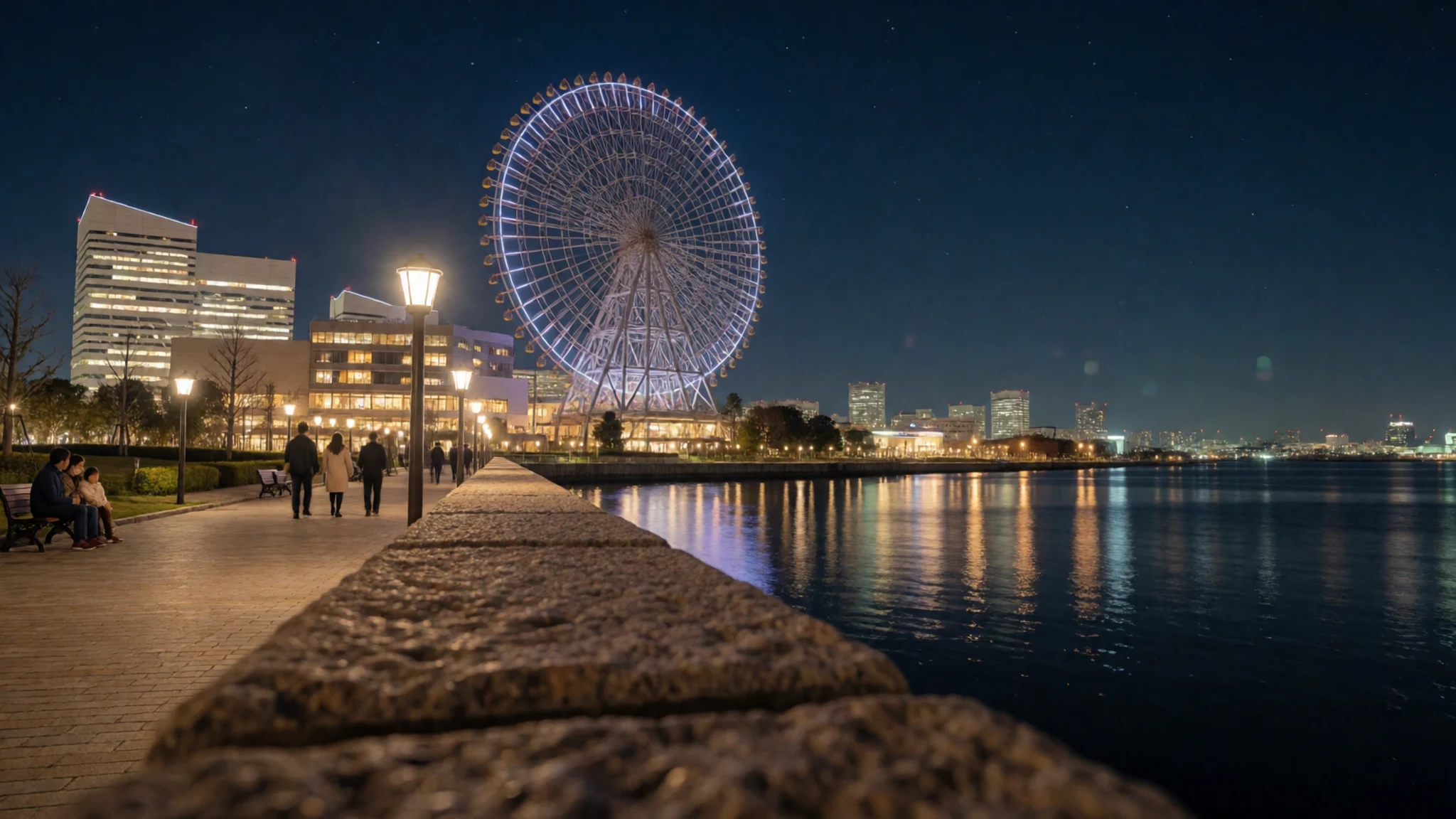
- Yamashita Park and Hikawa Maru — Yamashita Park, Naka-ku
Yamashita Park is Yokohama's long waterfront garden between the passenger terminal and the Marine Tower, a lawn and promenade where the city comes to sit, stroll and look at the bay. The preserved liner Hikawa Maru is moored along the park's edge, a passenger ship whose cabins and public rooms are now part of the walk.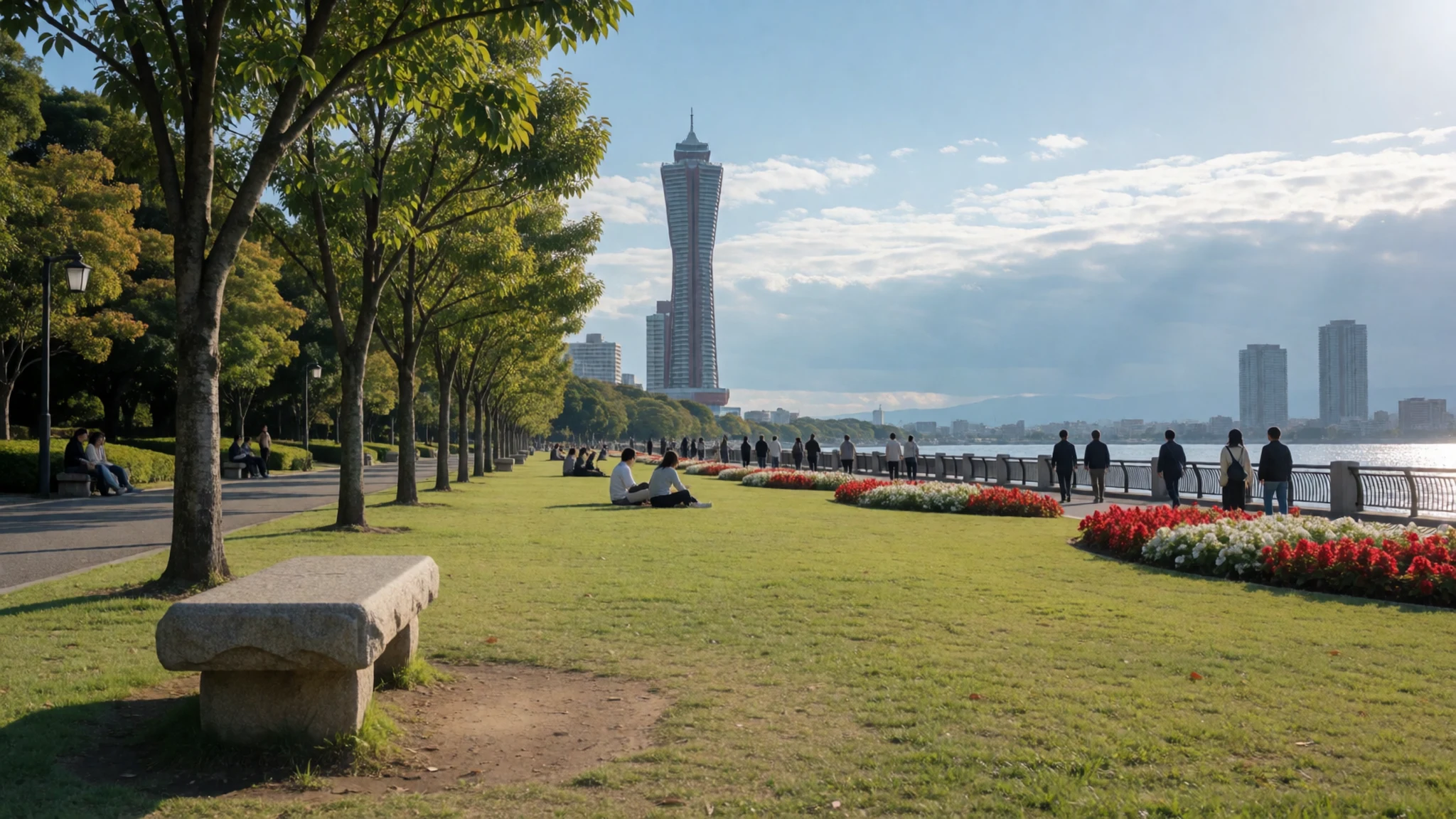
- Nippon Maru — Nippon Maru Memorial Park, Minato Mirai
Nippon Maru, docked in Yokohama at Nippon Maru Memorial Park beside Minato Mirai, is a sail-training ship with tall masts set against the towers. Decks, rigging and cabins can be boarded when the ship is open, which gives the hull a working feel beyond a harbour view. The small park around the ship frames the skyline behind the masts.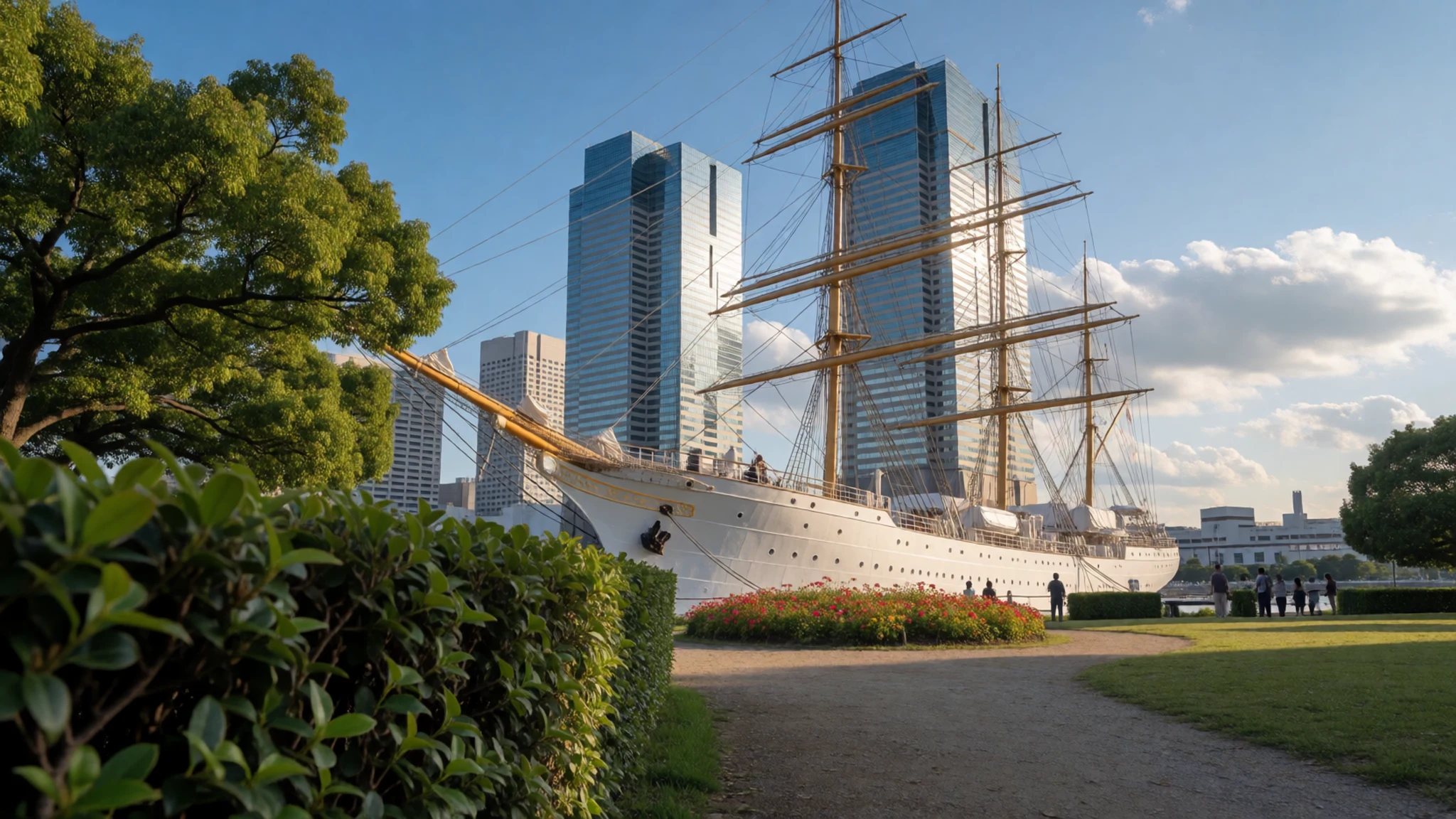
- Yokohama Marine Tower — Yamashita Park, Naka-ku
Yokohama Marine Tower rises at the harbour end of Yamashita Park, a slim lattice tower refurbished so the lower floors feel connected to the park. The viewing deck looks over the bay, the Bay Bridge and the Minato Mirai towers, a short climb compared with the hills behind the Bluff. Opening should be confirmed on the official site.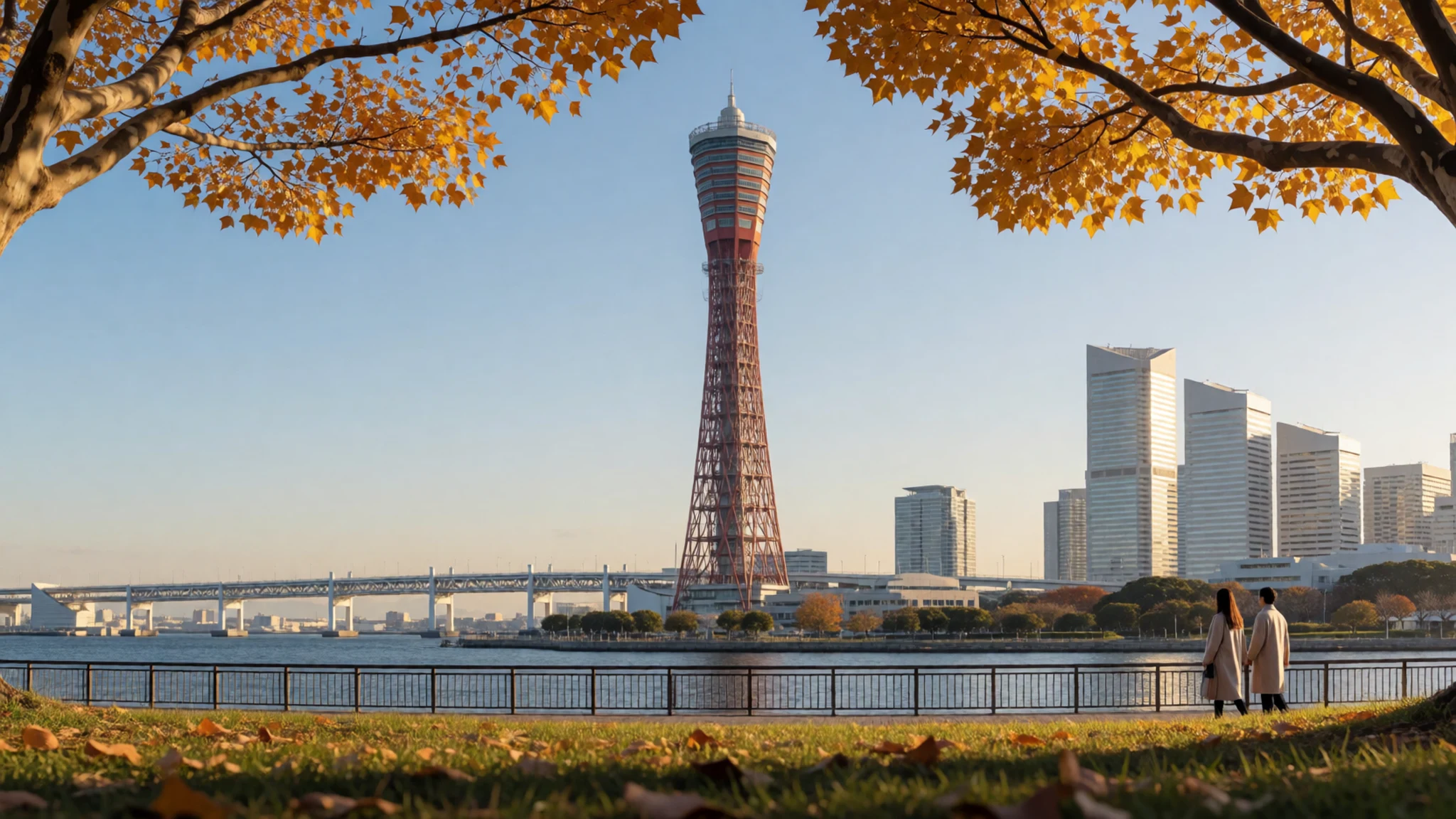
- Yokohama Chinatown — Chinatown, Naka-ku
Yokohama Chinatown, a short walk inland from Yamashita Park, is a dense grid of gates, groceries, bakeries and small dining rooms that has grown with the port since the foreign-settlement years. The streets are for eating more than for monuments: steamed buns, noodle shops and bright windows of roast meat. Evenings crowd the lanes; a weekday lunch is calmer.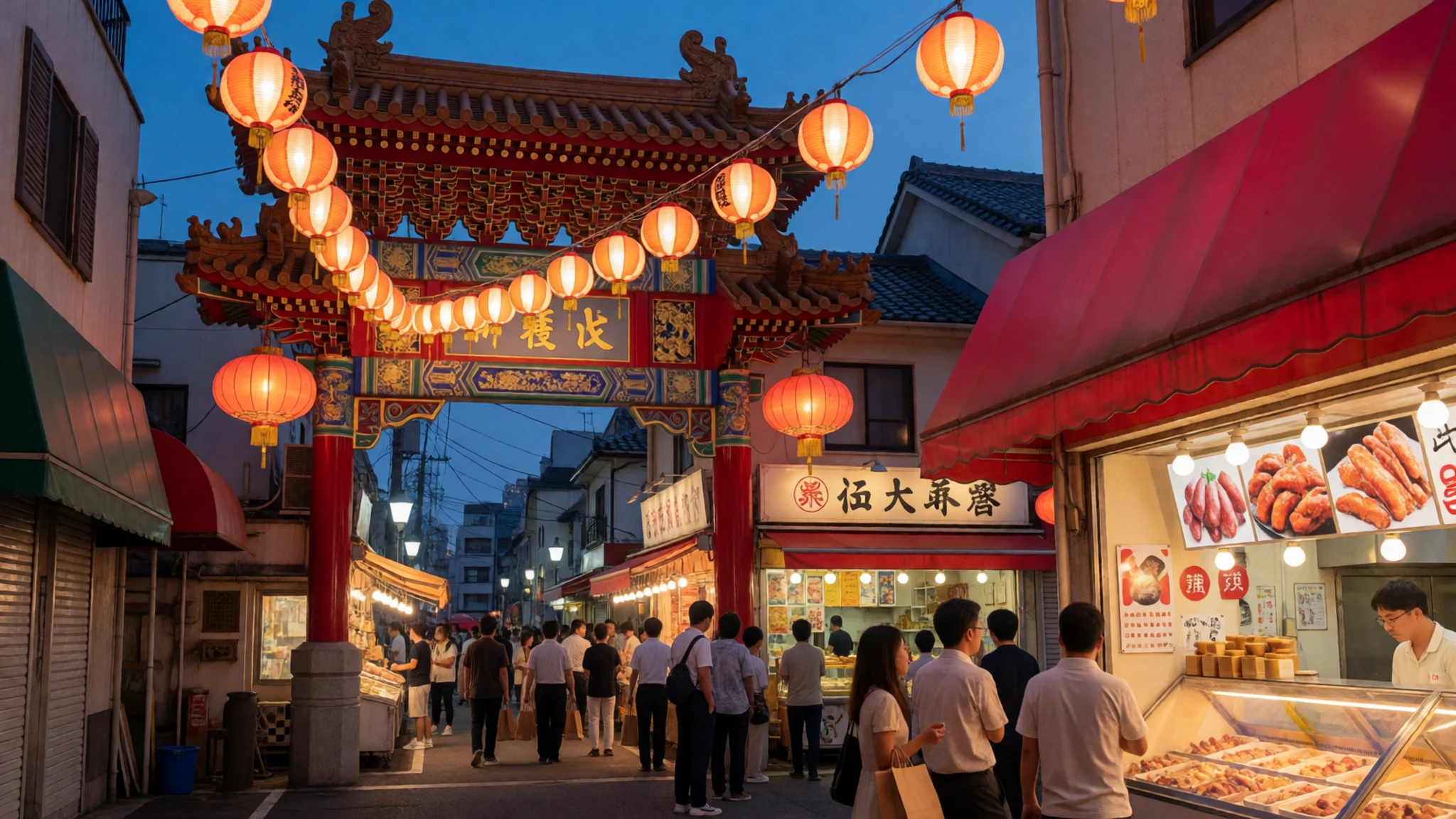
Culture
Yokohama's culture is a port culture: Japanese habits of queue, season and craft, loosened by foreign ships, Chinese merchants and sailors on shore leave. Jazz took root in the dance halls and small clubs around Kannai and has stayed; the city's jazz festival still puts bands on outdoor stages by the bay as well as in tiny rooms. Baseball at Yokohama Stadium is the civic passion that a castle town would have given to a festival float; the BayStars carry the city's name, and a night game under the lights is a local gathering, not a visitor show.
Chinatown remains a living community rather than a dining set. Kanteibyō, the temple to the god of commerce, marks the association's ground, and the New Year and lantern celebrations belong first to the people who live and trade there. Up on the Bluff, churches, a foreign cemetery and the remaining Western-style houses are kept as neighbourhood history. Down on the new waterfront, the Cup Noodles Museum treats a mass-produced snack as local folklore. The Red Brick Warehouse and the preserved ships do the same work: industry shown as memory, still in use.
In Yokohama, remove your shoes wherever a step up and a row of slippers show that the floor inside is for stockinged feet.
What to wear
Yokohama has no court costume of its own. Everyday traditional dress in the city is the same as elsewhere in Japan: kimono of silk or finer synthetic, obi tied at the back, worn for coming-of-age day, weddings, New Year shrine visits and the odd tea lesson, not for the subway. Yukata, a lighter cotton robe, comes out for summer festivals and fireworks over the harbour. The textile story here is less about a regional weave than about the port's trade in silk, which once moved through the warehouses, and about Chinese dress still seen at Chinatown festivals: embroidered jackets and cheongsam on performance days, ordinary clothes the rest of the year.
What people wear now is big-city Japanese casual. Office workers in Minato Mirai wear neat jackets and comfortable shoes; students and shoppers in Motomachi and the Queens Square mall dress in the same contemporary labels seen in Tokyo. Trainers, light coats and cross-body bags dominate the promenade. Nobody expects costume.
A visitor should dress for a damp, windy waterfront. Spring and autumn need only a light waterproof layer; summer needs breathable clothes, and winter a proper coat, because the wind off the bay cuts harder than the temperature suggests. Temples and the Bluff houses may ask for shoes to come off, so footwear that slips on and off is the practical choice. Shoes that can walk a promenade all afternoon matter more than a smart outfit.
What to eat
- Shumai — Chinatown takeaway windows
Yokohama's street shumai are open-topped pork dumplings in a thin wheat skin, steamed and eaten hot with a dab of mustard, often straight from a takeaway window. They are the Chinatown snack people buy while walking, not a full meal.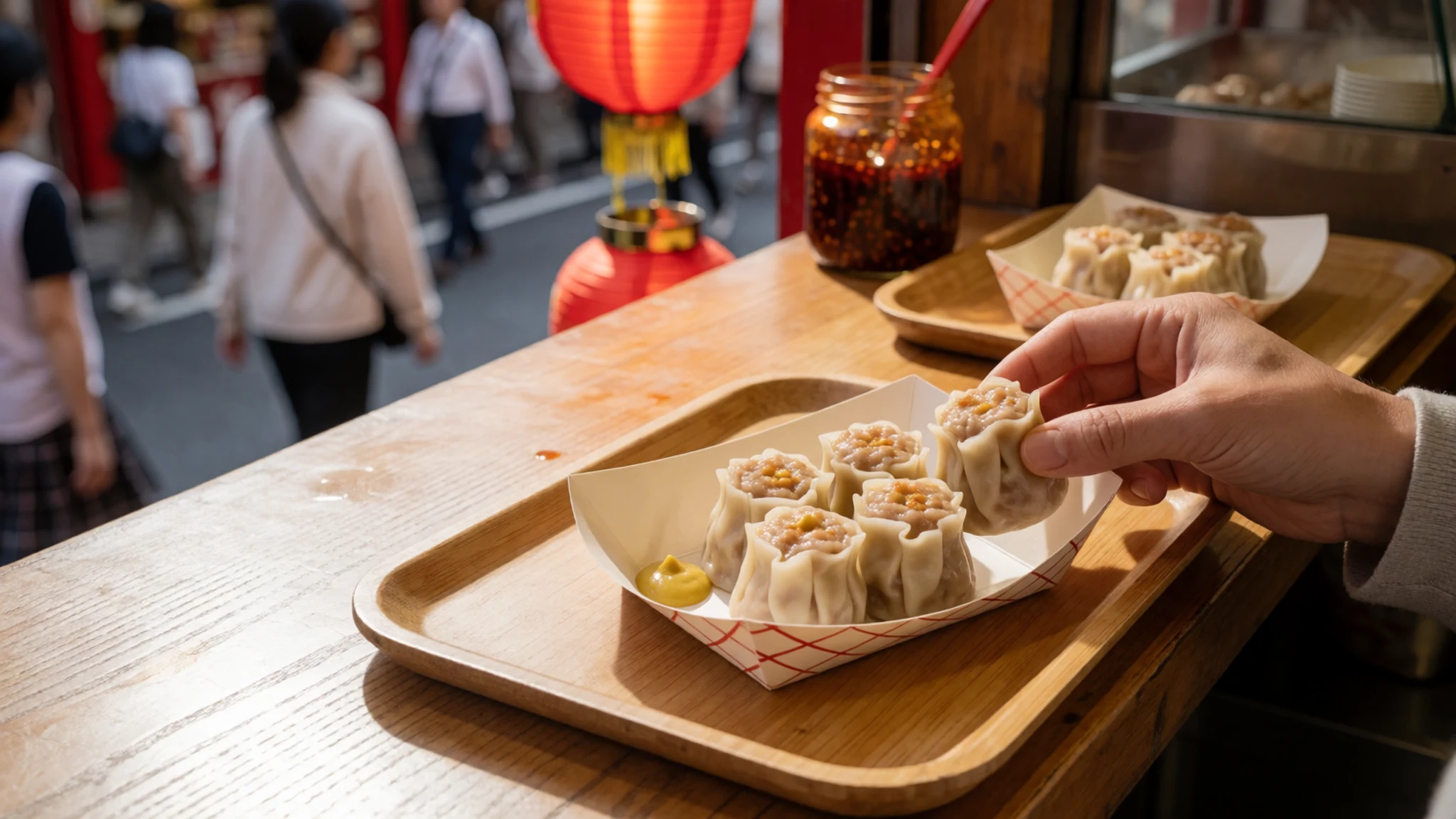
- Steamed pork buns — street stalls in Chinatown
Steamed pork buns in Yokohama Chinatown are large, soft and slightly sweet, filled with seasoned pork and kept warm in bamboo steamers on the pavement. A single bun carries a walker from the park to the next gate.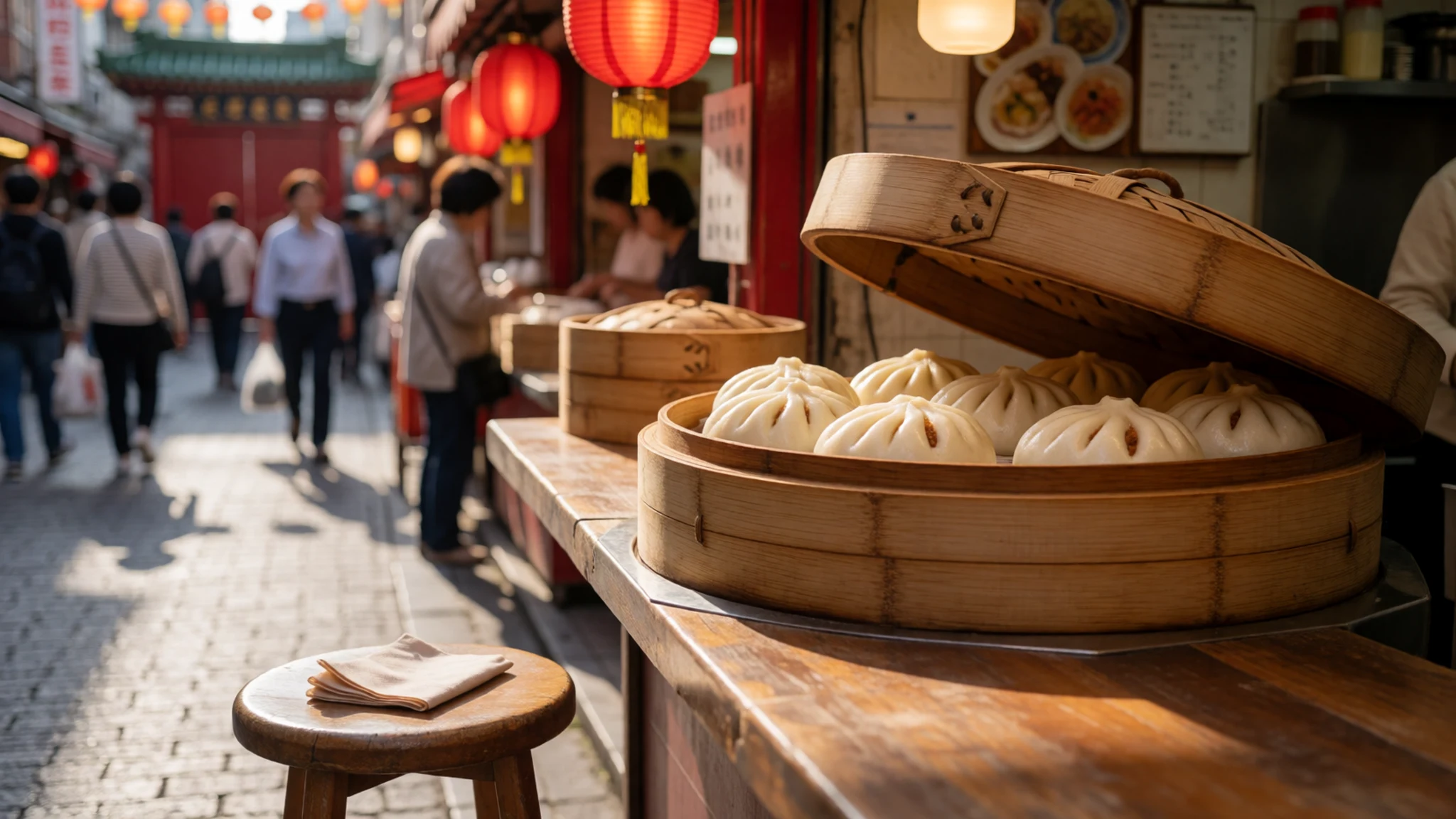
- Ie-kei ramen — ramen shops across the city
Ie-kei ramen is Yokohama's own bowl: a rich pork-bone and soy broth, straight noodles, spinach, nori and a slab of chashu, served in specialised ramen shops across the city. The result is a heavy, salty, deeply savoury lunch rather than a light soup. - Ankake yakisoba — small dining rooms in Chinatown
Thick noodles fried and coated in a glossy, savoury starch sauce are a Chinatown staple in Yokohama, sold in small dining rooms off the main gate streets. The sauce clings, the portion is large, and the dish is built for sharing after a bun on the pavement. - Motomachi bread and cake — bakeries along Motomachi and Kannai
Morning bread and cake in Yokohama carry the foreign-settlement habit: crusty loaves, melon pan and neat fruit tarts from bakeries along Motomachi and in the arcades near Kannai. It is breakfast or a walk-with-coffee, not a formal sweet course.
Plan it
Best time. Yokohama is at its easiest in February and December, when the days stay mild and the rain is lightest, and again in November, when the bay walk is cool and the hills take autumn colour. October is the wettest month, wetter than June, and August is the hottest, with July close behind, though a breeze on the promenade helps.
How long. 2–3
Getting there. Haneda is the nearest major airport, on the bay between Yokohama and the capital, with trains and limousine buses to Yokohama Station. From central Tokyo the Keihin-Tōhoku and Tōkaidō lines, and the Tōkyū Tōyoko line, reach Yokohama Station; Minato Mirai and Kannai are a short subway or local-train hop from there.
Budget. mid
Tips
- Treat weekends and harbour-firework nights as crowded, and keep weekday mornings for the promenade.
- Use a rechargeable transit card on the subway and JR rather than buying a paper ticket each time.
- Carry some cash; small Chinatown stalls and shrine offering boxes are awkward with a card alone.
- Check the official site before boarding Nippon Maru or going up the Marine Tower.
Etiquette
- Remove shoes wherever a step up and a row of slippers show that the inner floor is barefoot.
- Keep voices low on trains and stand aside to let people off before boarding.
- Ask before photographing stallholders, worshippers or performers.
Nearby
Sources
- Wikidata Q38283 (CC0)
- Wikipedia: Yokohama (CC BY-SA 4.0)
- Wikivoyage: Yokohama (CC BY-SA 4.0)